
LEAD ANALYST
Utkarsh Khirodkar is a Lead Market Research Analyst at MetaStat Insight, specializing in market intelligence, technology sector assessments, and competitive strategy.

Global Finished Lubricants and Greases Market Size, Share, By Product Type (Engine Oils, Transmission Fluids, Gear Oils, Hydraulic Fluids, Metalworking Fluids, Compressor Oils, Turbine & Circulating Oils, Greases and Others), By Base Oil / Formulation Type (Mineral-Based, Semi-Synthetic / Synthetic Blend, Synthetic-Based and Bio-Based / Renewable), By End-Use Industry (Automotive, Industrial Manufacturing & Machinery, Construction & Mining, Marine, Power Generation, Agriculture & Forestry, Oil & Gas, Food & Beverage Processing, Aerospace and Others), Industry Analysis, Growth, Trends, and Forecast, 2026-2033
Report ID
MSI-5040
Published
August, 2026
Pages
252 Pages
Format
Historical
Base year
Forecast
Forecast period
Report Details
Choose Your License
Global Finished Lubricants and Greases Market
The global Finished Lubricants and Greases market was valued at USD 148.9 billion in 2025 and is projected to reach USD 207 billion by 2033, growing at a CAGR of 4.2% over the forecast period.
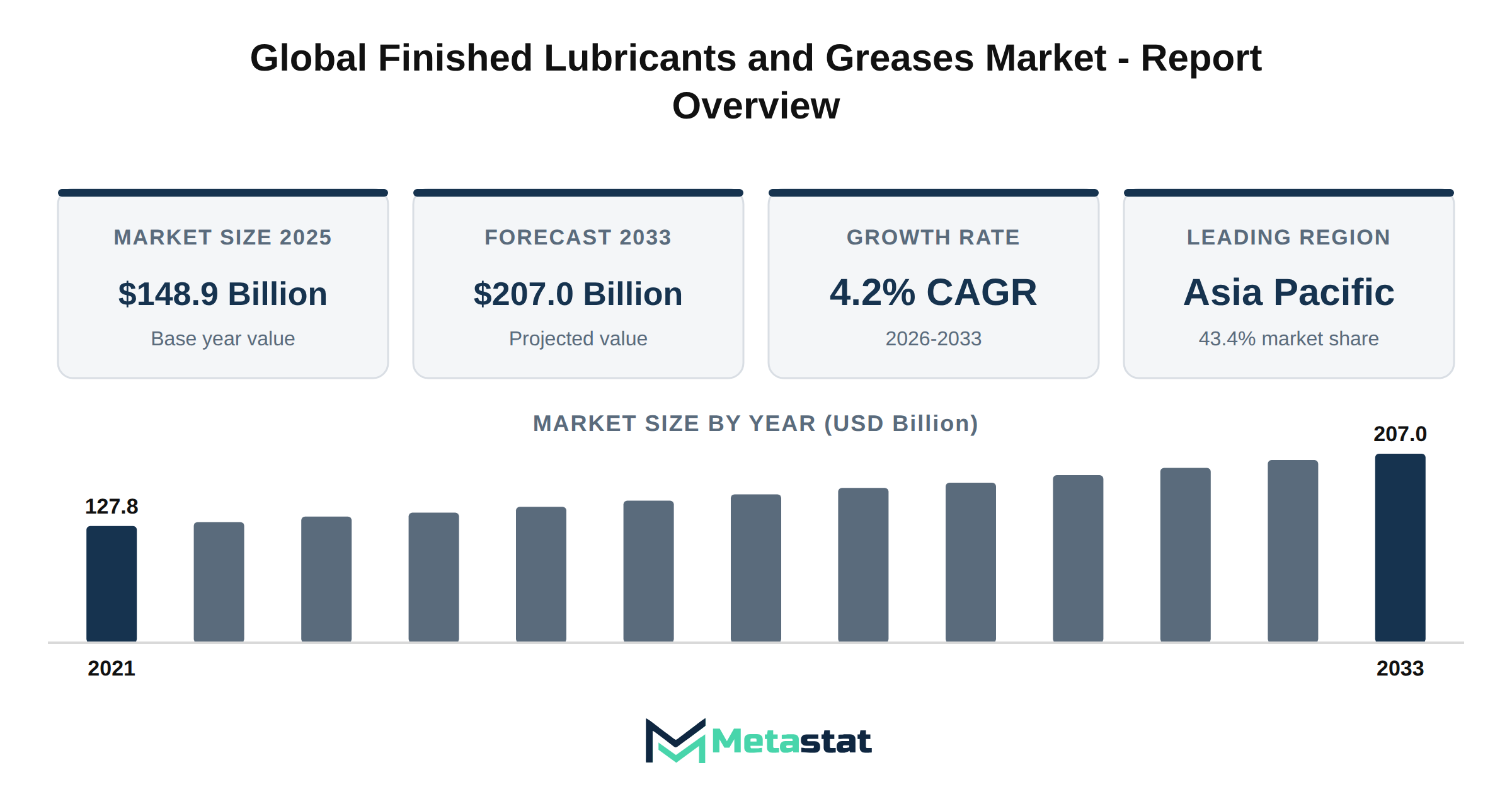
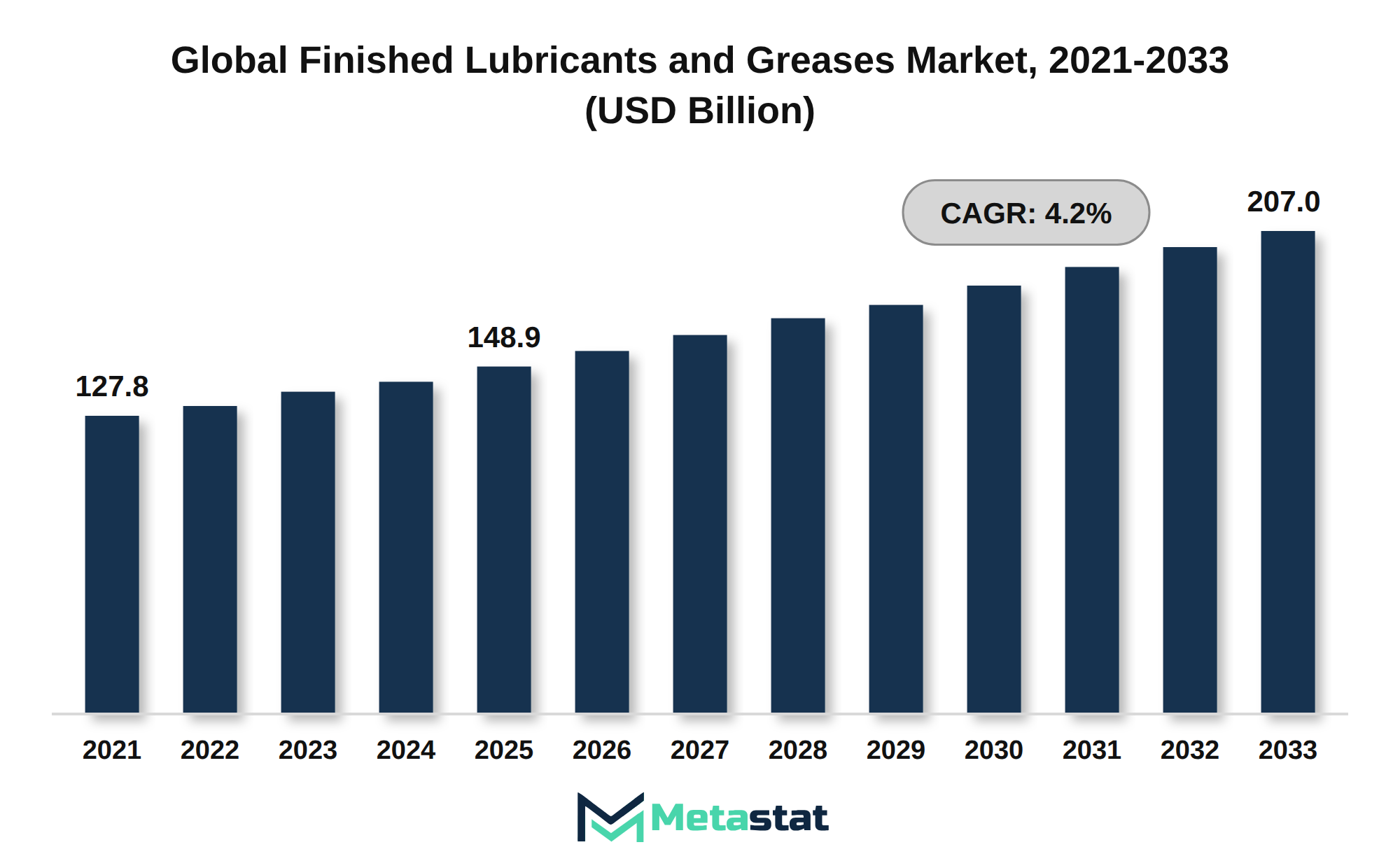
The Finished Lubricants and Greases market reached a base value of USD 148.9 billion in 2025, with projected growth to USD 207 billion by 2033. This growth represents a compound annual growth rate (CAGR) of 4.2% during the forecast period from 2026 to 2033. Historical data indicates that the market valued USD 127.8 billion in 2021, increasing to USD 132 billion in 2022, and further rising to USD 138.1 billion in 2023, followed by USD 142.4 billion in 2024.
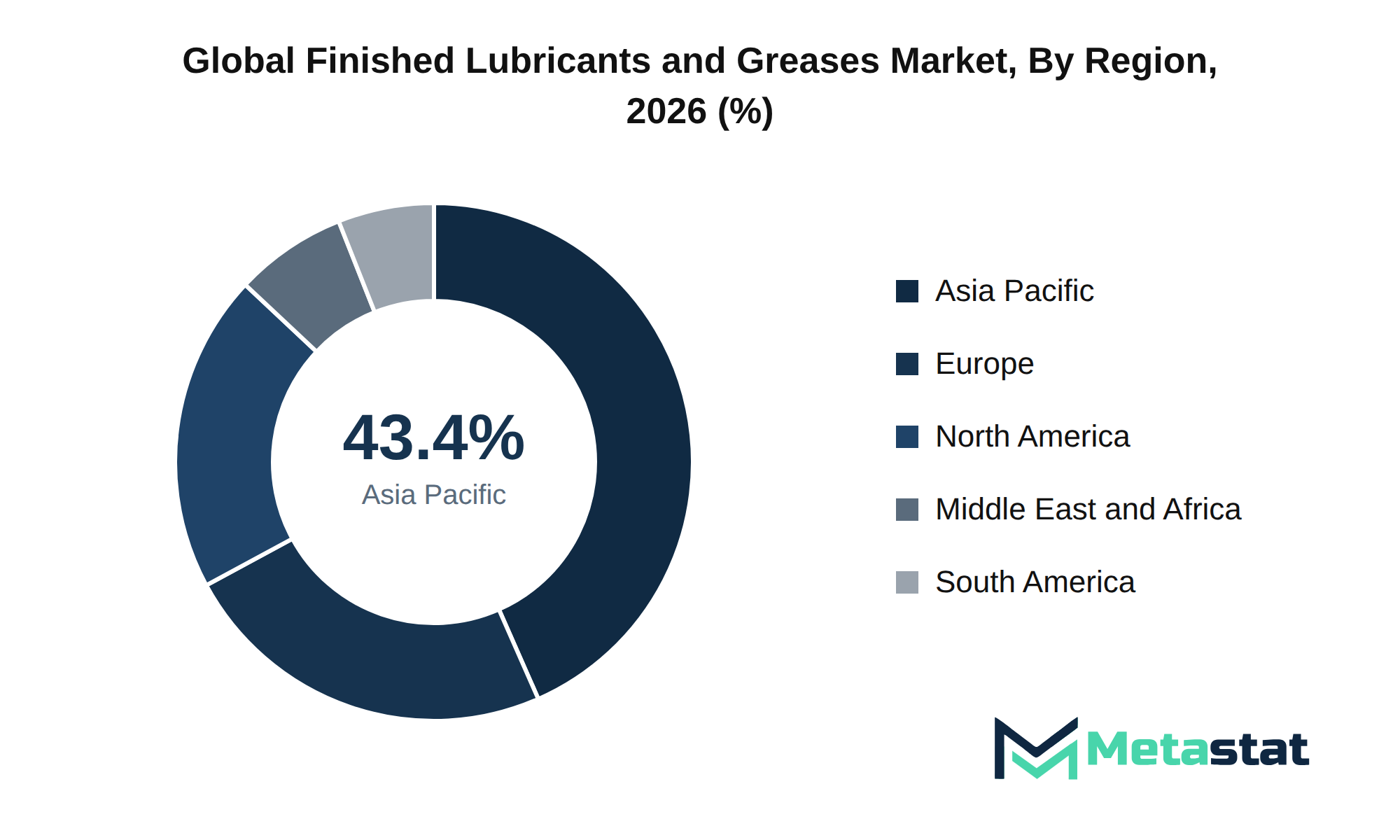
Regional distribution highlights that Asia Pacific leads with a share of 43.4%, followed by Europe at 23.7% and North America at 19.9%. South America and the Middle East and Africa contribute 6% and 7% respectively. By 2033, North America is projected to achieve a market value of USD 39.1 billion, with a CAGR of 4.2%. The Finished Lubricants and Greases market encompasses various segments, including Engine Oils, Transmission Fluids, and Gear Oils, with each segment exhibiting distinct growth patterns and dynamics.
The Finished Lubricants and Greases market experiences a complex environment influenced by various factors across its value chain. Regulatory compliance remains a crucial aspect, with manufacturers adapting to evolving standards that govern product quality and environmental impact. The geopolitical risk framework introduces complexities that affect supply chains and market stability, requiring companies to develop robust strategies to mitigate potential disruptions.
Investment in research and development trajectories plays a significant role in driving next-generation innovations within the market. Companies focus on enhancing product performance and sustainability, responding to growing consumer demand for eco-friendly solutions. The ongoing transformation toward sustainability emphasizes decarbonization and the circular economy, encouraging manufacturers to explore bio-based and renewable alternatives.
The supply chain structure reflects a multifaceted architecture, with logistics and sourcing strategies becoming increasingly sophisticated. Companies prioritize procurement practices that enhance efficiency while addressing inflationary pressures and currency volatility. This focus on optimizing operational costs aligns with the broader macroeconomic environment, where firms strategize capital allocation to navigate potential economic headwinds.
The market exhibits fragmentation, with numerous players vying for market share. M&A dynamics influence competitive positioning, allowing companies to expand their portfolios and capabilities. This strategic maneuvering enhances customer journey dynamics, ensuring that firms remain responsive to market trends and consumer preferences.
Infrastructure investments remain essential for supporting market growth, particularly in regions experiencing increasing demand. The relationship between capital expenditures and operational expenditures shapes corporate imperatives, guiding firms toward high-value recommendations that align with their long-term strategic outlook.
Increasing global economic activities significantly influence the Finished Lubricants and Greases market. Factors including GDP growth create opportunities for investments across various industries including automotive and manufacturing. Rising consumer spending power enhances demand for automotive lubricants, which support vehicle performance and longevity.
Investment in infrastructure development contributes to the demand for lubricants in industrial applications. Governments and private sectors invest in modernization projects, creating a need for high-quality lubricants in machinery and equipment. Such initiatives promote operational efficiency and productivity, directly benefiting the market.
The transition toward sustainability drives manufacturers to innovate and adopt more environmentally friendly lubricants. This shift aligns with rising consumer awareness and demand for sustainable products. Companies in the market respond to these trends by developing bio-based and renewable lubricants, further supporting market growth.
Macro-economic factors, including GDP growth and infrastructure investment, play a critical role in shaping the demand dynamics of the Finished Lubricants and Greases market. These influences drive investments and innovation, supporting long-term growth across various end-use industries.
Investment in infrastructure development drives demand in the Finished Lubricants and Greases market by enhancing production capabilities and supply chain efficiencies. Governments and private entities allocate resources toward upgrading physical facilities and digital capacities, which directly influences lubricant consumption across various industries. Growing investments in infrastructure lead to improved operational productivity, increasing the need for advanced lubricants and greases essential for maintaining machinery and equipment.
Higher infrastructure spending stimulates demand from key sectors including construction, industrial manufacturing, and automotive. These sectors require effective lubrication solutions to ensure smooth operations amid rising workloads and expanding projects. The necessity for reliable lubricants and greases in newly developed infrastructure projects emphasizes their significance in enhancing machine performance and longevity.
Investment continues to flow into infrastructure initiatives, and the Finished Lubricants and Greases market is projected to experience sustained growth. Enhanced asset modernization and capacity upgrades align with operational efficiency goals, compelling manufacturers to adopt innovative lubricant solutions that meet the evolving demands of the industry.
Regulatory tightening impacts the Finished Lubricants and Greases market by imposing stringent compliance requirements that manufacturers meet. These regulations increase operational complexities and costs for producers, hindering their ability to innovate and expand product lines. Industries including automotive and manufacturing face higher barriers to entry, deterring new entrants and slowing competition.
Macroeconomic headwinds, including inflationary pressures, contribute to rising operational costs in the market. Producers experience increased prices for raw materials, which directly affects profit margins. The impact on investment in production capabilities results in slower market growth and reduced innovation, resulting from firms allocating resources to manage these financial challenges.
Supply chain disruptions create additional obstacles for the Finished Lubricants and Greases market. Global events, including geopolitical instability, lead to shortages of critical materials and components. These challenges complicate inventory management and logistics, causing delays in product availability and negatively affecting customer satisfaction. Consequently, the market experiences a slowdown in demand and adoption.
Capital investment requirements for new production facilities and advanced technologies create barriers for smaller players in the market. The necessity for substantial financial resources limits access for many potential entrants. This results in market fragmentation, where larger companies dominate, reducing competitive dynamics and limiting choices for end-users.
Infrastructure gaps, particularly in emerging regions, restrict the distribution and accessibility of lubricants and greases. Without adequate transportation and supply chain frameworks, manufacturers face difficulties in reaching customers efficiently. This limitation constrains the potential for market growth.
Geopolitical fragmentation significantly disrupts the supply chain within the Finished Lubricants and Greases market. Increasing trade deficits and tariff friction among key regions result in increased costs and logistical challenges. Suppliers face constraints in sourcing raw materials and components necessary for production, affecting the timely delivery of products to end-users across various industries. These disruptions consequently heighten operational expenses and limit the market's ability to meet growing demand.
Technological disruptions further complicate the landscape, driven by companies navigating complex research and development integrations aimed at improving product formulations. The need for interoperability among different systems and technologies adds layers of complexity, potentially delaying product launches and reducing competitiveness. Firms face pressure to adapt to tightening global regulatory standards, which increase compliance overhead. This environment creates barriers for new entrants and existing players striving to innovate while managing regulatory risks.
The Finished Lubricants and Greases market contends with rising input cost structures, resulting from fluctuations in feedstock prices and component volatility. These unpredictable shifts create pricing compression, squeezing profit margins for manufacturers. Talent retention pressures arise from a workforce skill gap, particularly because the industry transitions towards greater automation. This talent deficit hampers the ability of firms to fully utilize technological advancements, impacting productivity and market responsiveness.
Environmental sustainability demands further complicate the scenario, driven by companies striving to align with decarbonization mandates and reduce environmental footprints. Implementing sustainable practices often requires substantial investment and retrofitting of existing infrastructure, resulting in implementation bottlenecks. These multifaceted challenges hinder growth and adaptation within the Finished Lubricants and Greases market, necessitating strategic responses from industry stakeholders to mitigate risks and capitalize on opportunities.
The Finished Lubricants and Greases market benefits significantly from advancements in technology, enhancing product performance and creating new applications. Innovations in formulation techniques, including the development of synthetic-based and bio-based lubricants, contribute to higher efficiency and sustainability. These improvements attract diverse end-use industries, particularly automotive and industrial manufacturing, which increasingly demand high-performance lubricants to optimize machinery and vehicle operations.
The drive towards digital transformation facilitates streamlined distribution and procurement processes. E-commerce platforms and digital tools enable customers to access a wider range of products, encouraging new purchasing behaviors. This shift in commercial models creates competitive pricing and enhances customer engagement, further expanding the market's reach.
The push for sustainability influences manufacturers to align products with eco-friendly practices. Increased focus on sustainability imperatives leads to investments in green technologies, creating opportunities for market participants to differentiate their offerings. Companies that successfully implement environmentally conscious practices experience improved brand loyalty and increased market penetration.
Finally, strategic consolidation activities, including mergers and acquisitions, reshape the competitive landscape of the Finished Lubricants and Greases market. By leveraging complementary strengths and resources, firms expand their product portfolios and geographic presence, ensuring growth and resilience in an evolving marketplace.
The Global Finished Lubricants and Greases market is segmented based on Product Type, Base Oil / Formulation Type, and End-Use Industry.
Valued at USD 69.3 billion in 2026, the Engine Oils segment is projected to reach USD 89 billion by 2033, at a CAGR of 3.6% during the forecast period. The growth of this segment is driven by increasing demand for high-performance lubricants across various end-use industries, particularly in the automotive sector. Improvements in engine technologies and rising vehicle production contribute significantly to this demand. Stringent regulatory compliance regarding emissions and fuel efficiency encourages manufacturers to develop advanced engine oils that enhance performance and reduce environmental impact.
The shift towards synthetic and semi-synthetic oils represents a significant trend in the market. These products offer better lubrication and thermal stability, meeting the requirements of modern engines. Increased consumer awareness regarding the benefits of high-quality lubricants supports adoption, particularly among fleet operators and automotive manufacturers looking to optimize vehicle performance and longevity. Investment in research and development facilitates product evolution, enabling producers to introduce innovative solutions that align with evolving consumer expectations and regulatory standards.
Fluctuations in raw material prices exert pressure on cost structures across the market. Manufacturers face challenges in sourcing quality base oils, which influences pricing strategies and profit margins. Strategic partnerships and investments in supply chain resilience play a crucial role in mitigating these impacts. Companies focusing on sustainable sourcing and alternative raw materials gain a competitive edge in the evolving Finished Lubricants and Greases market.
The Engine Oils segment benefits from the ongoing transition towards electric and hybrid vehicles, driving innovation in lubricant formulations tailored for these applications. Anticipated growth in electric vehicle production necessitates specialized lubricants that accommodate unique operational requirements. This strategic opportunity window presents avenues for investment and market expansion within the segment, enhancing overall market growth prospects.
Growth in the transmission fluids segment is driven by increasing demand for advanced lubricants in vehicles. The automotive industry emphasizes the importance of fuel efficiency and performance, pushing manufacturers to innovate and improve product formulations. Enhanced formulations with better thermal stability and wear protection are crucial in meeting the stringent standards set by automotive manufacturers.
Technological maturation contributes to expanding the adoption of transmission fluids. Advancements in synthetic and semi-synthetic formulations lead to superior performance characteristics, appealing to consumers seeking longevity and improved fuel economy. While vehicles become more sophisticated, the shift toward specialized fluids tailored for specific applications accelerates.
The transmission fluids segment is estimated to reach USD 17 billion by 2033, at a CAGR of 4.4% during the forecast period. This growth reflects the increasing integration of high-performance lubricants in automotive applications, driven by evolving regulations focusing on emissions and fuel efficiency. The market responds proactively to these regulatory pressures, leading to heightened investment in research and development.
Downstream applications in the automotive sector highlight a clear trend toward improved operational efficiency and reduced maintenance costs. Manufacturers focusing on performance attributes, combined with effective marketing strategies, significantly influence consumption patterns. The push for electric vehicles introduces a potential shift in fluid requirements, suggesting opportunities for manufacturers to innovate further.
While competition intensifies, pricing volatility presents challenges that impact margin pressures within the segment. Manufacturers face raw material sourcing issues, compelling them to streamline supply chain processes. Continuous evaluation of sourcing strategies becomes crucial to mitigate risks associated with supply chain disruptions while maintaining product quality and consistency.
Strategic opportunities arise from the increasing demand for bio-based and renewable transmission fluids. With sustainability becoming a focal point for consumers, manufacturers are encouraged to explore alternatives that align with environmental goals. This trend prompts investments in formulations that meet both performance standards and eco-friendly criteria, positioning manufacturers favorably within the evolving environment of the Finished Lubricants and Greases market.
Growing demand for high-performance lubricants drives the expansion of the Gear Oils segment within the Finished Lubricants and Greases market. Enhanced performance requirements in automotive and industrial applications necessitate the use of specialized gear oils designed to handle extreme conditions, including high temperatures and heavy loads.
Technological advancements in formulations contribute significantly to market growth. Innovations focusing on improved viscosity, thermal stability, and wear protection enhance product performance and enable longer intervals between oil changes. These advancements cater to the evolving needs of end-users, including automotive manufacturers and industrial machinery producers.
Regulatory compliance standards play a crucial role in shaping product offerings within the segment. Stricter environmental regulations promote the adoption of eco-friendly gear oil formulations, prompting manufacturers to innovate and align with sustainability trends. This shift toward bio-based and renewable options provides opportunities for market participants to differentiate their product lines.
The Gear Oils segment is projected to reach USD 14.9 billion by 2033. This growth projection reflects robust demand increases across various end-use industries, including automotive, industrial manufacturing, and construction. Industries increasingly prioritize operational efficiency and sustainability, making investments in high-quality gear oils essential for maintaining equipment performance and longevity.
Pricing volatility remains a challenge for manufacturers within the segment. Fluctuations in raw material costs impact profit margins, necessitating strategic sourcing and pricing strategies to navigate market pressures effectively. Manufacturers that develop resilient supply chains and agile production processes are better positioned to capitalize on growth opportunities emerging in the market.
Growth in the hydraulic fluids segment arises from the increasing reliance on hydraulic systems across various industries, particularly in construction, manufacturing, and agriculture. This segment is projected to grow at a CAGR of 4.7% during the forecast period. High demand for efficient and reliable hydraulic systems drives the need for high-quality hydraulic fluids, which enhance performance and reliability. Technological advancements are leading to the development of next-generation hydraulic fluids, offering superior performance characteristics, including improved viscosity index and thermal stability.
Regulatory compliance and environmental concerns push manufacturers to formulate hydraulic fluids that meet stringent environmental standards. Industries adopting more sustainable practices are contributing to the shift towards bio-based and renewable hydraulic fluids. Consumption trends indicate a preference for fluids that offer enhanced performance while meeting regulatory requirements, which will drive market growth. Continuous investment in infrastructure and machinery upgrades within the industrial sector further supports this segment's expansion, positioning the hydraulic fluids segment favorably within the broader Finished Lubricants and Greases market.
In the Finished Lubricants and Greases market, the Metalworking Fluids segment plays a critical role due to rising industrial activities across various sectors. These fluids are essential for cooling and lubricating metal parts, enhancing the efficiency of machining processes. The increasing focus on precision engineering and automation in industries including aerospace, automotive, and manufacturing drives demand for high-quality metalworking fluids that ensure optimal performance and extend equipment life.
Technological advancements in formulations lead to the development of next-generation metalworking fluids that offer superior properties, including improved lubricity, thermal stability, and reduced environmental impact. Regulatory compliance around environmental sustainability and worker safety significantly influences product evolution, prompting manufacturers to innovate and develop biodegradable and non-toxic solutions. The shift towards eco-friendly products opens strategic opportunity windows for companies investing in research and development.
Price volatility in raw materials affects the cost structures associated with metalworking fluids. Fluctuations in oil prices directly impact production costs, prompting producers to seek alternative sourcing strategies and innovative formulations that minimize reliance on traditional materials. Supply chain resilience remains a priority, with companies exploring diverse sourcing options and optimizing logistics to mitigate potential disruptions.
Market dynamics reflect a shift in consumption patterns, with end-users prioritizing performance and sustainability. Demand for environmentally friendly metalworking fluids continues to grow, driven by industrial policies and certifications that promote responsible manufacturing practices. Technological obsolescence affects older formulations, while the evolution of metalworking fluids aligns with the overall growth of the Finished Lubricants and Greases market.
Strong demand for energy-efficient equipment significantly influences consumption patterns in the compressor oils sub-segment of the Finished Lubricants and Greases market. Increased focus on sustainability and reduced operational costs drives end-users toward lubricants that enhance equipment performance and longevity. Industries using compressors, including manufacturing and refrigeration, prioritize lubricants that demonstrate low volatility and excellent thermal stability, resulting in strengthened long-term demand.
Technological advancements in formulation chemistry support the development of next-generation compressor oils, which improve machine efficiency and reduce energy consumption. Continuous innovation in this area creates a competitive environment, compelling manufacturers to invest in research and development. Product evolution targets enhanced lubrication properties, enabling better protection against wear and corrosion in compressor systems, which reinforces the segment's position in the market.
Regulatory compliance standards play a crucial role in shaping product formulations. Stricter environmental regulations promote the use of bio-based and renewable lubricants, pushing suppliers to adapt their offerings. This shift creates strategic opportunities for manufacturers focusing on sustainable product lines, addressing both market demand and compliance requirements, thereby increasing investment across the value chain.
Consumption shifts, driven by technological maturation, lead industries to favor synthetic and semi-synthetic compressor oils. These modern formulations offer superior performance characteristics compared to traditional mineral-based options. The increasing prevalence of automated systems in various applications demands lubricants that maintain performance under varying operational conditions, enhancing commercial adoption.
Supply chain resilience remains a vital consideration for producers in the compressor oils segment. Fluctuations in raw material availability pose challenges, necessitating flexible sourcing strategies. Addressing potential substitution risks proves essential in maintaining product integrity and performance standards, particularly in competitive markets, which limits adoption among price-sensitive buyers.
Demand for Turbine & Circulating Oils remains crucial due to their application in various industrial systems including power generation, aerospace, and manufacturing. The continuous growth in industrial activities contributes to increased consumption of these lubricants, driven by operators seeking reliable products to ensure optimal performance and longevity of machinery. Regulatory compliance regarding emissions and environmental standards shapes product development, pushing manufacturers to innovate and enhance formulations to meet stringent requirements.
Technological maturation drives investments in next-generation upgrades, resulting in enhanced product formulations that offer greater efficiency and reduced environmental impact. Continuous advancements in lubricant technology lead to increased adoption of high-performance turbine oils, which provide superior protection and efficiency in operational settings. The market benefits from consumption shifts towards synthetic and bio-based formulations, aligning with the growing emphasis on sustainability across industries.
Pricing volatility linked to raw material costs influences market dynamics, compelling manufacturers to strategize cost structures effectively. Margin pressures from fluctuating oil prices lead to increased competition among producers, prompting them to focus on product differentiation and value-added services. Supply chain resilience becomes essential. Disruptions in sourcing and logistics emerge from geopolitical factors and environmental challenges.
Strategic opportunity windows develop for companies that prioritize innovation and sustainability in their product offerings. Investment in research and development supports product evolution, allowing for the introduction of innovative solutions that cater to diverse industry needs. The Finished Lubricants and Greases market is set to experience sustained growth. Technological advancements and changing consumer preferences shape the future of turbine and circulating oils.
Growing industrial activities in sectors including automotive and manufacturing fuel demand for greases in the Finished Lubricants and Greases market. These products serve critical roles in reducing friction, wear, and heat, thus enhancing the efficiency and longevity of machinery. The push for high-performance greases aligns with advancements in engineering and manufacturing technologies, creating opportunities for suppliers to innovate formulations that offer superior performance under extreme conditions.
Regulatory compliance standards regarding emissions and environmental impact drive the production of bio-based and renewable greases, appealing to environmentally conscious consumers and industries. Manufacturers invest in research and development to create formulations that meet stringent regulations while maintaining performance. This shift towards sustainable products reflects broader consumption trends favoring eco-friendly solutions across various end-use industries.
Increased complexity in machinery design leads to specialized applications for greases, further expanding their market potential. Industries including construction and mining, which rely on heavy-duty equipment, require greases that withstand high loads and harsh environments. The evolving needs of these sectors compel producers to adapt and innovate, ensuring product offerings align with specific application requirements.
Technological maturation in lubrication technologies introduces next-generation products with enhanced properties, including improved thermal stability and extended service life. This evolution represents a strategic opportunity for companies looking to capture market share through innovative solutions. The focus on performance, efficiency, and compliance with evolving regulations positions greases because a critical component in the broader Finished Lubricants and Greases market.
Demand for chain oils, slideway oils, and refrigeration oils reflects various trends and developments in the Finished Lubricants and Greases market. End-use dynamics highlight a shift towards more efficient and environmentally friendly solutions, prompting manufacturers to innovate their product offerings. Technological maturation promotes the adoption of advanced formulations that enhance performance and contributes to an evolving product landscape.
Consumption shifts driven by industrial applications significantly influence the growth of this sub-segment. Industries including manufacturing, construction, and transportation require specialized lubricants that maximize equipment lifespan and efficiency. Regulatory compliance standards push companies to adopt higher-quality lubricants, ensuring safety and environmental sustainability.
Market participants face cost structures and pricing volatility that impact profit margins. Strategic adjustments in production and sourcing are necessary. Supply chain resilience emerges because a vital focus area, with raw material sourcing strategies influencing operational stability. Substitution risks from alternative lubricants compel producers to maintain competitive advantages through product innovation and quality assurance.
Investment in next-generation upgrades and product evolution remains critical for capturing emerging opportunities within this sub-segment. Strategic opportunity windows formed by technological advancements and changing consumer preferences present avenues for growth. Overall, the Others (Chain Oils, Slideway Oils, Refrigeration Oils) sub-segment continues to evolve, reflecting the broader trends shaping the Finished Lubricants and Greases market.
Valued at USD 85 billion in 2026, the Mineral-Based segment is projected to reach USD 101.4 billion by 2033, at a CAGR of 2.6% during the forecast period. This segment benefits from a stable demand base driven by its widespread use in various applications, including automotive and industrial sectors. Mineral-based lubricants deliver reliable performance characteristics, making them attractive for traditional machinery and vehicles. Continued investments in manufacturing processes and enhancements in product formulations support the segment's growth.
Technological maturation within the industry facilitates the development of higher-quality mineral-based lubricants that meet evolving customer demands. This shift reflects an increasing emphasis on efficiency and sustainability in the Finished Lubricants and Greases market. In conjunction with regulatory compliance requirements, manufacturers enhance their product portfolios to address these aspects, ultimately influencing market dynamics positively.
Cost structures and pricing volatility present challenges in the mineral-based segment, especially amid fluctuations in raw material prices. Suppliers focus on optimizing their sourcing strategies to maintain competitive pricing while ensuring product quality. Strategic opportunities arise from emerging markets, where infrastructure development and industrial activities drive demand for mineral-based products.
End-use dynamics indicate a shift toward higher-performance mineral-based lubricants, fueled by advancements in manufacturing technology. This evolution supports a growing trend toward improved product reliability and reduced environmental impact, aligning with regulatory expectations and market demands. The segment continues to capitalize on these trends, reinforcing its relevance in the evolving landscape of the Finished Lubricants and Greases market.
Adoption of the Semi-Synthetic / Synthetic Blend segment reflects the increasing need for high-performance lubricants that balance cost and efficiency. This segment is projected to reach USD 39.3 billion by 2033, at a CAGR of 4.8% during the forecast period. Enhanced performance characteristics, including improved thermal stability and wear protection, drive demand in several end-use industries, particularly automotive and industrial manufacturing. Increased regulatory compliance standards favor the use of semi-synthetic and synthetic blends due to their lower environmental impact compared to traditional mineral-based oils. Continuous product evolution, including formulations tailored for specific applications, supports the segment's growth. Shifts in consumption dynamics emphasize the growing preference for lubricants that extend equipment life and reduce maintenance costs. Strategic opportunities arise from technological maturation, enabling the development of next-generation products that meet stringent performance criteria. The Finished Lubricants and Greases market experiences significant momentum, with manufacturers investing in innovative solutions to enhance product offerings and address evolving consumer needs.
Increasing industrial activities across various sectors, including automotive and manufacturing, drive demand for synthetic-based lubricants, which offer superior performance characteristics and efficiency. The formulation of synthetic-based lubricants enables better thermal stability, reduced volatility, and improved lubricating properties compared to traditional options. These attributes appeal to industries seeking to enhance equipment lifespan and operational efficiency, strengthening long-term demand.
Technological advancements in synthetic lubricant formulations contribute significantly to market expansion. Continuous innovation leads to the development of high-performance products that meet stringent regulatory compliance standards, further increasing market demand. By integrating advanced additive technologies, manufacturers enhance the performance of synthetic-based lubricants in diverse applications, particularly in high-stress environments, resulting in wider commercial adoption.
Environmental considerations play a vital role in shaping consumer preferences within the Finished Lubricants and Greases market. The shift towards bio-based and renewable options alongside synthetic-based alternatives reflects a growing commitment to sustainability. This trend encourages manufacturers to invest in research and development, ensuring compliance with evolving environmental regulations while maintaining product efficacy, which influences investment across the value chain.
Strategic investment in production capabilities and supply chain resilience strengthens the position of synthetic-based lubricants in the market. By optimizing raw material sourcing and production processes, firms mitigate costs and enhance product availability. This approach supports sustained growth, with the synthetic-based segment expected to reach USD 58 billion by 2033.
Interest in sustainable solutions drives growth in the Bio-Based / Renewable segment within the Finished Lubricants and Greases market. This segment attracts attention due to its environmental benefits and increasing regulatory pressure for greener alternatives across various industries. Adoption among consumers is driven by heightened awareness of the environmental impact of synthetic lubricants, leading to a shift towards bio-based options. Companies investing in R&D for innovative formulations strengthen their product portfolios in response to consumer preferences and regulatory compliance standards.
The Bio-Based / Renewable segment is projected to grow at a CAGR of 12.5% during the forecast period. This growth reflects expanding applications in multiple end-use industries, including automotive and industrial manufacturing. With advancements in technology, production processes for bio-based lubricants improve, enhancing performance capabilities and reducing costs. Manufacturers focusing on sustainability initiatives find opportunities to capture market share and meet evolving demands of environmentally conscious consumers.
The Finished Lubricants and Greases market stands to benefit from increasing collaboration between producers and suppliers in raw material sourcing, ensuring a steady supply of bio-based inputs. Strategic investments and partnerships facilitate the development of renewable formulations, addressing growing consumer and regulatory demand for sustainable products. The market evolves, with a focus on bio-based solutions signifying a shift towards more environmentally responsible practices within the lubricants industry.
Valued at USD 72.1 billion in 2026, the automotive sector exhibits significant growth potential, projected to reach USD 91.1 billion by 2033, at a CAGR of 3.4% during the forecast period. Several factors drive this expansion, including increasing vehicle production and rising consumer demand for advanced automotive lubricants. This segment benefits from advancements in technology, particularly with the ongoing transition toward electric vehicles and the need for high-performance lubricants that enhance engine efficiency and longevity. Growth in this sector is expected to be sustained by the continuous development of innovative lubricant solutions.
Regulatory compliance regarding emissions and fuel efficiency significantly influences lubricant formulations within the automotive industry. Stricter regulations drive the adoption of synthetic and semi-synthetic lubricants, enabling manufacturers to meet performance requirements while minimizing environmental impact. Ongoing innovation in lubricant technology provides opportunities for market participants to develop next-generation products tailored to evolving consumer preferences.
Consumption shifts towards synthetic and bio-based lubricants reflect increasing awareness of sustainability and efficiency. Manufacturers invest in research and development to create formulations that provide superior performance while addressing environmental concerns. This product evolution enhances competitive dynamics within the Finished Lubricants and Greases market, promoting growth in the automotive segment.
Strategic investment in supply chain resilience and raw material sourcing strengthens the position of companies within the automotive lubricants market. Companies focus on establishing partnerships with key suppliers to mitigate risks associated with price volatility and supply chain disruptions. This approach ensures a steady flow of quality materials, enabling companies to maintain competitive pricing and solid profit margins while addressing the specific demands of the automotive sector. Enhanced supply chain strategies contribute to overall market stability.
Rapid advancements in manufacturing technology drive significant demand for lubricants within the industrial manufacturing and machinery sector. Increased focus on operational efficiency and equipment longevity pushes manufacturers to adopt high-performance lubricants, which enhance productivity levels while minimizing downtime. Facilities prioritize maintenance and equipment performance, and the adoption of specialized lubricants characterizes this segment. Balancing operational costs while improving machinery efficiency leads to a growing market for tailored lubricant solutions.
The industrial manufacturing & machinery segment is projected to reach USD 41.4 billion by 2033, at a CAGR of 4.8% during the forecast period. This expansion results from heightened automation in production processes, leading to increased reliance on effective lubrication solutions. Regulatory compliance surrounding machinery performance and emissions drives investment in high-quality lubricants that meet stringent standards. Manufacturers actively seek innovative products that enhance operational efficiency while complying with evolving environmental regulations.
Trends toward sustainability in production processes increasingly influence lubricant choices. The emphasis on bio-based and renewable lubricants aligns with corporate sustainability initiatives, leading to a shift in purchasing decisions. Manufacturers strive to reduce their environmental footprint, and the market experiences a notable change in lubricant formulations, reflecting an ongoing commitment to sustainability while maintaining performance standards. Overall, the industrial manufacturing and machinery segment remains crucial in driving the evolution of the finished lubricants and greases market.
Investment in the Construction & Mining sector drives demand for lubricants and greases, with expectations of significant growth. The Construction & Mining segment is projected to reach USD 17.6 billion by 2033. Increasing infrastructure projects and heightened mining activities contribute to this upward trend. These industries require high-performance lubricants that ensure machinery operates efficiently under extreme conditions. The expansion of these sectors results in sustained demand for specialized lubrication solutions, benefiting the Finished Lubricants and Greases market.
Increasing maritime activities globally contribute to demand for lubricants in the marine sector. This segment is projected to grow at a CAGR of 3.9% during the forecast period. Factors driving this growth include the rising need for efficient and reliable lubrication solutions in various marine applications, including shipping, fishing, and recreational boating. Enhanced performance requirements, including resistance to corrosion and oxidation, heighten the demand for advanced lubricants tailored for marine environments. Regulatory compliance reinforces the need for high-quality lubricants that meet stringent environmental standards.
Competition among suppliers in the Finished Lubricants and Greases market intensifies due to manufacturers enhancing product portfolios to address customer needs. Strategic partnerships and investments in research and development enable companies to innovate and introduce next-generation marine lubricants. Increased focus on sustainability promotes the adoption of bio-based products, aligning with environmental regulations. Overall, growth in the marine segment of the market reflects broader trends in the maritime industry aiming for efficiency and environmental responsibility.
Transition toward cleaner energy generation and increased regulatory pressure for lower emissions significantly drive lubrication requirements in the power generation sector. Technologies focused on enhancing efficiency and reducing environmental impact encourage the adoption of advanced lubricants designed for higher performance. This segment experiences a shift toward energy-efficient solutions, aligning with global sustainability goals. The demand for high-quality lubricants that ensure optimal equipment performance becomes a priority for operators in this space, leading to product evolution and innovation.
Changes in consumption patterns reflect a growing emphasis on reliability and longevity of lubricants in power generation applications. The market shows an increased focus on regulatory compliance standards, which influences product formulations to meet stringent performance criteria. Cost structures in this segment evolve due to the need for compliance with environmental regulations, contributing to pricing volatility. Emerging technologies provide opportunities for next-gen lubricant formulations that enhance operational efficiency and reduce maintenance downtime.
The ongoing development in the power generation sector highlights opportunities for investment in high-performance lubricants, reinforcing the market's resilience. Suppliers navigate a complex environment of raw material sourcing and logistics vulnerabilities to ensure a steady supply chain for these specialized products. Strategic opportunity windows appear owing to the industry's evolution, presenting avenues for companies to innovate and diversify their offerings in the Finished Lubricants and Greases market.
Growth in the Agriculture & Forestry sector relies on enhanced machinery performance and efficiency, driving demand for high-quality lubricants tailored to the unique requirements of agricultural equipment. Increased mechanization in farming operations necessitates advanced lubricants that improve operational efficiency and reduce wear and tear on machinery. The trend towards precision farming, focusing on optimizing equipment performance and soil health, further stimulates demand for specialized lubricants.
Technological advancements in lubricant formulation contribute significantly to market dynamics. Innovations in bio-based and environmentally friendly lubricants align with the agricultural sector's sustainability goals, promoting a shift towards less harmful substances that meet regulatory compliance standards. This transition enhances the appeal of bio-based options among environmentally conscious consumers and manufacturers.
Challenges within the segment include fluctuations in raw material prices and supply chain vulnerabilities, affecting production costs and pricing stability. Market participants focus on strategic partnerships and investments in research and development to enhance product offerings and mitigate these risks. While manufacturers prioritize sustainability and product evolution, the segment is projected to grow in alignment with broader trends within the Finished Lubricants and Greases market.
Investment in the Oil & Gas sector drives substantial demand for finished lubricants and greases. The focus on enhancing operational efficiency and reducing maintenance costs increases the adoption of advanced lubricants. Increased exploration and production activities worldwide necessitate reliable lubricating solutions to ensure the longevity of machinery and equipment. Regulatory compliance regarding emissions and operational standards influences the choice of products within this segment, promoting the use of high-performance lubricants that meet stringent requirements.
Shifts toward synthetic and bio-based options align with global sustainability goals. Technological maturation in product formulations enhances performance characteristics, catering to the specific needs of the Oil & Gas industry. Strategic opportunities arise from the ongoing transition to greener solutions, encouraging manufacturers to innovate their offerings. Overall, the dynamics of the Oil & Gas sector significantly impact the growth trajectory of the finished lubricants and greases market.
Within the Finished Lubricants and Greases market, demand for lubricants in the Food & Beverage Processing sector derives from the need for reliable and efficient performance in machinery that handles food products. This segment relies on lubricants that comply with stringent food safety standards and regulations, ensuring products meet health and safety compliance. Companies prioritize formulations that are safe for incidental food contact, driving innovation in product development.
Technological advancements contribute to the evolution of lubricants, with next-generation formulations that enhance performance while minimizing environmental impact. The increasing focus on sustainability influences product selection, driven by manufacturers seeking bio-based options and formulations that reduce carbon footprints. This shift signifies a response to growing consumer awareness and demand for environmentally friendly practices within the food and beverage industry.
Adoption of advanced lubricants in the Food & Beverage Processing sector reflects the trend toward automation and enhanced operational efficiency. Food processors increasingly integrate automated systems, requiring lubricants that perform under varying conditions and provide extended service life. This evolution supports growth prospects for the market, attributed to companies recognizing the benefits of investing in high-performance lubricants.
Price volatility in raw materials affects the overall cost structures within this segment, presenting challenges for manufacturers. Fluctuations in the prices of base oils and additives create margin pressures that require strategic sourcing and management practices. Many companies explore alternative sourcing options or invest in innovative supply chain solutions to enhance resilience.
The regulatory landscape significantly impacts the Food & Beverage Processing sector's lubricant choices. Compliance with food safety regulations and certifications dictates product selection, influencing demand dynamics within the broader Finished Lubricants and Greases market. Companies that effectively navigate these regulations and align their offerings with industry standards position themselves to capture opportunities in this growing segment.
Investment in the aerospace industry significantly influences the Finished Lubricants and Greases market, driven by the increasing demand for high-performance lubricants that enhance operational efficiency and extend equipment life. Technological advancements in aircraft design and manufacturing processes require lubricants that meet stringent performance standards, leading to an emphasis on product evolution and next-gen upgrades. Regulatory compliance standards play a critical role in determining lubricant specifications, necessitating formulations that adhere to both environmental and safety regulations.
The end-use dynamics in aerospace highlight a shift towards more specialized lubricants that provide superior protection and performance under extreme conditions. Companies focus on raw material sourcing strategies to secure high-quality inputs while addressing disruptions in supply chains. Cost structures become vital because manufacturers navigate pricing volatility resulting from fluctuating raw material costs and increasing competition within the market.
Strategic opportunity windows emerge for companies that prioritize investment in innovative product development and supply chain resilience. By aligning their offerings with evolving industry needs, players in the aerospace segment enhance their competitive positioning and drive growth potential within the broader Finished Lubricants and Greases market.
Growth in the Others (Railways & Specialty Transport) segment of the Finished Lubricants and Greases market stems from increasing demand for specialized lubricants that enhance performance in unique operating conditions. The expansion of railway infrastructure and specialty transport solutions supports the necessity for high-performance lubricants, which optimize the efficiency and reliability of equipment. Innovations in product formulations drive improvements in lubrication technology, leading to enhanced operational efficiencies.
Technological maturation within the segment encourages the adoption of advanced lubricants that comply with stringent regulatory standards, thus ensuring safety and environmental protection. Increased awareness of the importance of lubrication in preventing equipment wear and tear significantly influences purchasing decisions among operators in this niche segment. The market dynamics reflect a shift toward high-quality, tailored lubrication solutions that meet the specific needs of rail and specialty transport applications.
Regulatory compliance standards continue to evolve, pushing manufacturers to develop products that adhere to environmental guidelines while maintaining performance benchmarks. Investment in infrastructure projects grows, and stakeholders in the sector recognize the strategic opportunity to integrate innovative lubricants that facilitate smoother operations and reduce maintenance costs. Overall, the Others (Railways & Specialty Transport) segment presents a critical area of focus within the Finished Lubricants and Greases market, characterized by growing demand for specialized solutions that drive competitive advantage.
Based on geography, the Global Finished Lubricants and Greases market is divided into North America, Europe, Asia-Pacific, South America, Middle East, and Africa.
Growth in the North America Finished Lubricants and Greases market reflects regional demand driven by industrial activities and automotive sectors. The increasing focus on sustainability and efficiency among manufacturers generates higher demand for advanced lubricants, particularly in the United States, Canada, and Mexico. Significant investment in infrastructure modernization enhances the market's capacity to meet growing needs.
Adoption rates for high-performance lubricants in the automotive and industrial manufacturing segments demonstrate incremental growth. The push towards localized manufacturing and nearshoring initiatives strengthens supply chains and supports cross-border trade corridors. These factors contribute to the projected market size of USD 39.1 billion by the end of 2033, with a CAGR of 4.2% throughout the forecast period.
Regulatory frameworks focusing on environmental compliance further influence market dynamics in North America. Local compliance mandates drive demand for eco-friendly lubricants, especially because industries adapt to stringent regulations. Domestic market participants continue to expand their offerings, addressing the diverse needs of various sectors within the Finished Lubricants and Greases market.
Regional resource availability, including access to advanced manufacturing technologies, shapes competitive landscapes. Strategic entry barriers related to high-value replacement cycles present opportunities for growth, while foreign direct investment flows into localized manufacturing facilities enhance the market’s resilience. This combination of factors positions North America because a dynamic hub for the Finished Lubricants and Greases market, promoting robust competition and innovation.
Europe occupies a significant position in the Finished Lubricants and Greases market, accounting for 23.7% of the global share in 2025. The region's demand is driven by robust automotive and industrial sectors, with countries including Germany, France, and the UK leading in consumption. A strong focus on sustainability and regulatory compliance encourages market growth, promoting the adoption of advanced lubricant formulations.
Investment in infrastructure modernization is essential for expanding the market, particularly in manufacturing and energy sectors. Countries like Italy and Spain are experiencing increased demand due to upgrades in machinery and equipment, raising the need for high-performance lubricants. The presence of established domestic players contributes to a competitive landscape, enhancing innovation and service delivery.
Geopolitical fragmentation and the ongoing push for localized supply chains have shifted procurement strategies throughout Europe. This trend enhances localized manufacturing densities, allowing companies to respond effectively to regional demands. The focus on supply chain regionalization strengthens partnerships within the market, promoting the development of cross-border trade corridors that align with evolving market dynamics.
High-value replacement cycles and incremental growth vectors shape the landscape of the Finished Lubricants and Greases market. The emphasis on energy efficiency and performance enhancement underpins segment expansion in automotive and industrial applications. Strategic entry barriers and foreign direct investment flows highlight opportunities for players looking to capitalize on emerging market segments across the region.
The Asia Pacific region accounts for 43.4% of the Finished Lubricants and Greases market in 2025. Rapid industrialization across countries including China, India, and South Korea drives substantial demand for lubricants, particularly in automotive and industrial applications. The automotive sector in these markets experiences strong growth, supported by rising vehicle production and increasing consumer preferences for high-performance lubricants.
Infrastructure modernization initiatives contribute to the expansion of the Finished Lubricants and Greases market. Investments in transportation networks and industrial facilities enhance the demand for hydraulic fluids and gear oils, vital components in machinery and equipment. Localized manufacturing densities in Southeast Asia facilitate a swift response to regional market needs, reducing lead times and improving product availability.
The presence of domestic market participants including Sinopec Lubricant Company and Idemitsu Kosan Co., Ltd. influences competitive dynamics. These companies leverage regional resources and production capacities to enhance their market positions. Cross-border trade corridors in Asia Pacific promote the exchange of lubricants, creating growth opportunities in underpenetrated territories.
Emerging market front-runners, driven by increasing urbanization and industrial growth, present high-value replacement cycles for lubricants. The gradual shift towards synthetic and bio-based formulations aligns with evolving consumer preferences and regulatory frameworks encouraging environmental sustainability. Consequently, investments in research and development aim to innovate product formulations, further enhancing market growth.
The Asia Pacific region exhibits distinct procurement dynamics and cultural nuances influencing B2B buying behaviors. Local compliance mandates and regulatory frameworks shape purchasing decisions, requiring suppliers to adapt their strategies to meet regional standards. This adaptability creates a more competitive environment, driving advancements in product offerings within the Finished Lubricants and Greases market.
South America exhibits a diverse landscape in the Finished Lubricants and Greases market, with Brazil and Argentina emerging due to key players. The region accounts for 6.00% of the global market share in 2025, highlighting its importance in the overall dynamics of the industry. Countries within South America face unique challenges, including infrastructure gaps and varying regulatory frameworks that influence market growth.
Brazil's extensive automotive sector significantly contributes to demand for various lubricant products. The ongoing modernization of industrial facilities enhances the need for advanced lubricants and greases, particularly in manufacturing and machinery applications. Argentina, while smaller in market size, has a significant influence, with its agricultural and industrial sectors driving lubricant consumption.
Emerging trends in localized manufacturing and procurement dynamics influence competitive landscapes. Domestic market participants, including local suppliers and established international brands, adapt to cultural nuances and regional buying behaviors to strengthen their market positions. Investment in foreign direct investment (FDI) flows supports the development of production facilities, enhancing the region's capacity to meet growing demand.
Supply chain regionalization trends, including the establishment of cross-border trade corridors, facilitate the distribution of lubricants and greases throughout South America. Geopolitical considerations and trade policy shifts impact the ease of conducting business within the market. The evolving landscape necessitates a strategic approach to navigate these complexities while capitalizing on growth opportunities.
The Finished Lubricants and Greases market in the Middle East and Africa is characterized by a growing demand driven by several factors, including the increasing industrialization in Saudi Arabia and the UAE. Expansion in the automotive and industrial manufacturing sectors significantly contributes to this growth, reflecting a broader trend of modernization and infrastructure development across the region.
Saudi Arabia and the UAE demonstrate strong investments in energy and construction, increasing demand for high-performance lubricants and greases. South Africa has a significant impact on the market, with an increasing focus on sustainability and efficiency in manufacturing processes that require advanced lubricants. The region's overall market share is projected at 7.0% in 2025, indicating a substantial presence despite being smaller compared to other regions.
Emerging market front-runners actively pursue localized manufacturing and procurement strategies, enhancing supply chain resilience and operational efficiency. Geopolitical factors and regulatory frameworks influence market dynamics, driven by companies navigating compliance mandates and adapting to shifting trade policies. This environment presents both challenges and opportunities for regional players within the Finished Lubricants and Greases market.
Domestic market leaders position themselves by consolidating their offerings and enhancing distribution networks. The competitive landscape reflects a blend of established multinationals and local firms, each striving to capture market share in a diverse economic environment. The relationship between domestic resource availability and infrastructure readiness remains central to the growth of the market in this region.
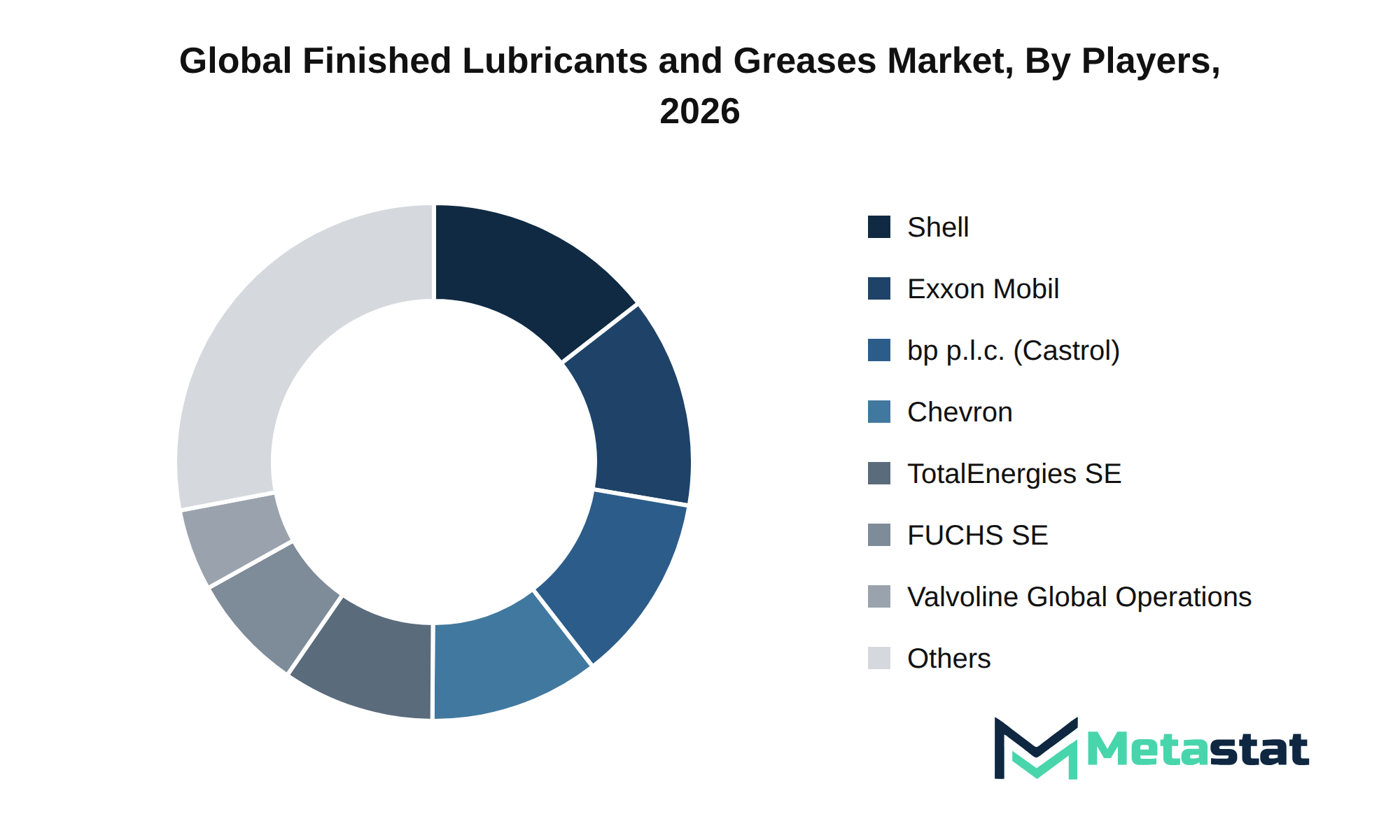
The Finished Lubricants and Greases market features a diverse set of players employing various strategies to enhance their market positions. Companies including Shell plc, Exxon Mobil Corporation, and bp p.l.c. (Castrol) leverage their established brand equity and extensive distribution networks to maintain dominance. These industry participants focus on product differentiation, offering a wide range of formulations to meet specific customer needs across different end-use sectors.
Strategic alliances and joint ventures play a significant role in the market, with firms including TotalEnergies SE and FUCHS SE forming partnerships to enhance their technological capabilities and expand their product offerings. This collaborative approach promotes innovation, allowing companies to develop proprietary technologies that contribute to competitive advantages. Supply chain integration and procurement leverage provide a foundation for cost management, enabling firms to maintain pricing architectures that align with market expectations.
In the context of the Finished Lubricants and Greases market, barriers to entry remain prominent, owing to new entrants facing challenges related to brand recognition and established distribution channels. Companies including PETRONAS Lubricants International Sdn. Bhd. and Valvoline Global Operations exemplify successful customer retention strategies, ensuring loyalty through high-quality products and effective marketing. Looking ahead, the competitive outlook suggests continued growth driven by innovation, strategic consolidation, and a focus on sustainability, positioning firms for long-term success.
Market size is forecast to rise from USD 148.9 billion in 2025 to over USD 207 billion by 2033. The base case reflects a compound annual growth rate (CAGR) of 4.2% during this forecast period. In a bull case scenario, accelerated adoption of next-generation technologies and increased demand from emerging markets could push growth rates above expected levels, establishing a stronger trajectory for the Finished Lubricants and Greases market. Conversely, in a bear case, potential geopolitical tensions and disruptions in global supply chains could hinder growth, resulting in a more subdued performance.
Macroeconomic factors and economic cycle fluctuations play critical roles in shaping downstream demand. Industrial growth directly influences consumption patterns, with sectors including automotive and industrial manufacturing driving significant demand for lubricants. While core industries mature, shifts in consumption could emerge, particularly with the integration of advanced technologies and sustainability initiatives. These developments will likely compel manufacturers to invest in research and development (R&D) and adapt product life-cycles to align with evolving consumer preferences.
Regulatory evolution serves because another important factor influencing the market, with compliance milestones and policy enforcement horizons impacting operational strategies across the value chain. Companies are expected to navigate these challenges while pursuing strategic capital allocation and infrastructure investments to maintain competitiveness. Identifying emerging white-space opportunities and addressing unmet enterprise needs will be essential for capturing high-growth pockets within the market.
Strategic imperatives including defensibility roadmaps will guide businesses in the Finished Lubricants and Greases market towards sustainable growth. Firms that prioritize adaptability and innovation while aligning with market trends will position themselves favorably in the changing environment. Enhanced focus on collaboration and strategic partnerships will further drive growth and capture value across various segments and regions.
The report strategically identifies and profiles the key market players and analyses their core competencies in each sub-segment of the Finished Lubricants and Greases market.
Report Attributes | Details |
Study Period | 2021-2033 |
Base Year | 2025 |
Estimated Year | 2026 |
Forecast Period | 2026-2033 |
Historical Period | 2021-2025 |
Growth Rate | CAGR 4.2% from 2026 to 2033 |
Revenue Unit | USD billion |
Segmentation | By Product Type, Base Oil / Formulation Type, End-Use Industry, and Region |
By Region | North America (By Product Type, Base Oil / Formulation Type, End-Use Industry, and Country)
|
Europe (By Product Type, Base Oil / Formulation Type, End-Use Industry, and Country)
| |
Asia Pacific (By Product Type, Base Oil / Formulation Type, End-Use Industry, and Country)
| |
South America (By Product Type, Base Oil / Formulation Type, End-Use Industry, and Country)
| |
Middle East and Africa (By Product Type, Base Oil / Formulation Type, End-Use Industry, and Country)
|
Find answers to common questions about this report
The Finished Lubricants and Greases market size was valued at USD 148.9 billion in 2025, according to the Metastat Insights study.
The Finished Lubricants and Greases market is projected to grow at a CAGR of 4.2% during the forecast period from 2026 to 2033.
The North America Finished Lubricants and Greases market size is estimated to reach USD 39.1 billion by 2033.
The Engine Oils segment leads the Finished Lubricants and Greases market, with a projected value of USD 89 billion by 2033. This segment's growth reflects its significant demand within the overall market.
Increasing global economic activities and infrastructure investments significantly drive the Finished Lubricants and Greases market. Enhanced consumer spending power and the transition toward sustainability further stimulate demand for high-quality lubricants across various industries, including automotive and manufacturing. These factors collectively support long-term growth and innovation in the market.
Asia Pacific holds the dominant share of the Finished Lubricants and Greases market, accounting for 43.4% of the total market in 2025.
Rising operational costs due to inflationary pressures and increased prices for raw materials hinder profitability in the Finished Lubricants and Greases market. Regulatory tightening introduces compliance complexities and costs, deterring new entrants and slowing competition. Supply chain disruptions from geopolitical instability further complicate logistics, impacting product availability and customer satisfaction.
Increasing global economic activities and infrastructure investment significantly favor product adoption in the Finished Lubricants and Greases market. Enhanced spending power among consumers boosts demand for automotive lubricants, while modernization projects create a need for high-quality lubricants in industrial applications, promoting operational efficiency and productivity.
The Finished Lubricants and Greases market is estimated to reach a valuation of USD 207 billion by 2033.
Key players operating in the Finished Lubricants and Greases market include Shell plc, Exxon Mobil Corporation, bp p.l.c. (Castrol), Chevron Corporation, TotalEnergies SE, FUCHS SE, and Valvoline Global Operations.
The analysts below cover Chemicals and Materials research at Metastat Insights.
LEAD ANALYST
Utkarsh Khirodkar is a Lead Market Research Analyst at MetaStat Insight, specializing in market intelligence, technology sector assessments, and competitive strategy.

INDUSTRY CONSULTANT - CHEMICALS & ADVANCED MATERIALS
Chemicals and Materials · Machinery & Equipment · Packaging
Amit Gadhekar Consultant for Chemicals and Materials at MetaStat Insight, directing sector-specific intelligence, research, and strategic consulting across global chemical and processing markets.
The technical breakdown of ISO 20022 migration readiness across correspondent banking corridors was remarkably thorough. Rather than treating cross-border corporate payments as a single block, the report drew a useful distinction between multilateral netting platforms and domestic instant payment rails across ASEAN economies. MetaStat Insight highlighted regulatory constraints on foreign exchange liquidity management that many publications gloss over. The research material offered practical clarity for our platform development roadmap.
Our group needed clearer visibility into out-of-autoclave processing timelines for high-temperature thermoplastic composites. MetaStat Insight delivered an objective assessment that contrasted automated fiber placement scrap rates with traditional thermoset prepreg layup cycles. The supplier landscape mapped out primary resin suppliers and tape slitting capacity across France, Germany, and Japan with solid technical accuracy. Their analyst handled our questions on precursor supply risks during an unscheduled inquiry call, providing clear, unembellished context.
Evaluating sensor fusion reliability across harsh operating environments can be tricky without field-validated data. The study on agricultural autonomous guidance systems clearly separated stereo vision setups from automotive-grade solid-state LiDAR. We appreciated the regional infrastructure analysis, specifically around RTK network density across North America and South America. During our follow-up consultation, the MetaStat Insight team walked through tier-two perception software partnerships, giving our engineering leads a practical basis for vendor shortlisting.
Explore related market intelligence reports worth reading alongside this one.