
LEAD ANALYST
Utkarsh Khirodkar is a Lead Market Research Analyst at MetaStat Insight, specializing in market intelligence, technology sector assessments, and competitive strategy.

Global Flavored Coffee Market Size, Share, By Type (Ground Coffee, Instant Coffee, Coffee Beans, Coffee Pods and Other), By Category (Organic and Conventional), By Flavor Type (Chocolate, Vanilla, Hazelnut and Other), By Distribution Channel (Supermarkets and Hypermarkets, Convenience Stores and Online Retail), Industry Analysis, Growth, Trends, and Forecast, 2026-2033
Report ID
MSI-4904
Published
August, 2026
Pages
263 Pages
Format
Historical
Base year
Forecast
Forecast period
Report Details
Choose Your License
Global Flavored Coffee Market
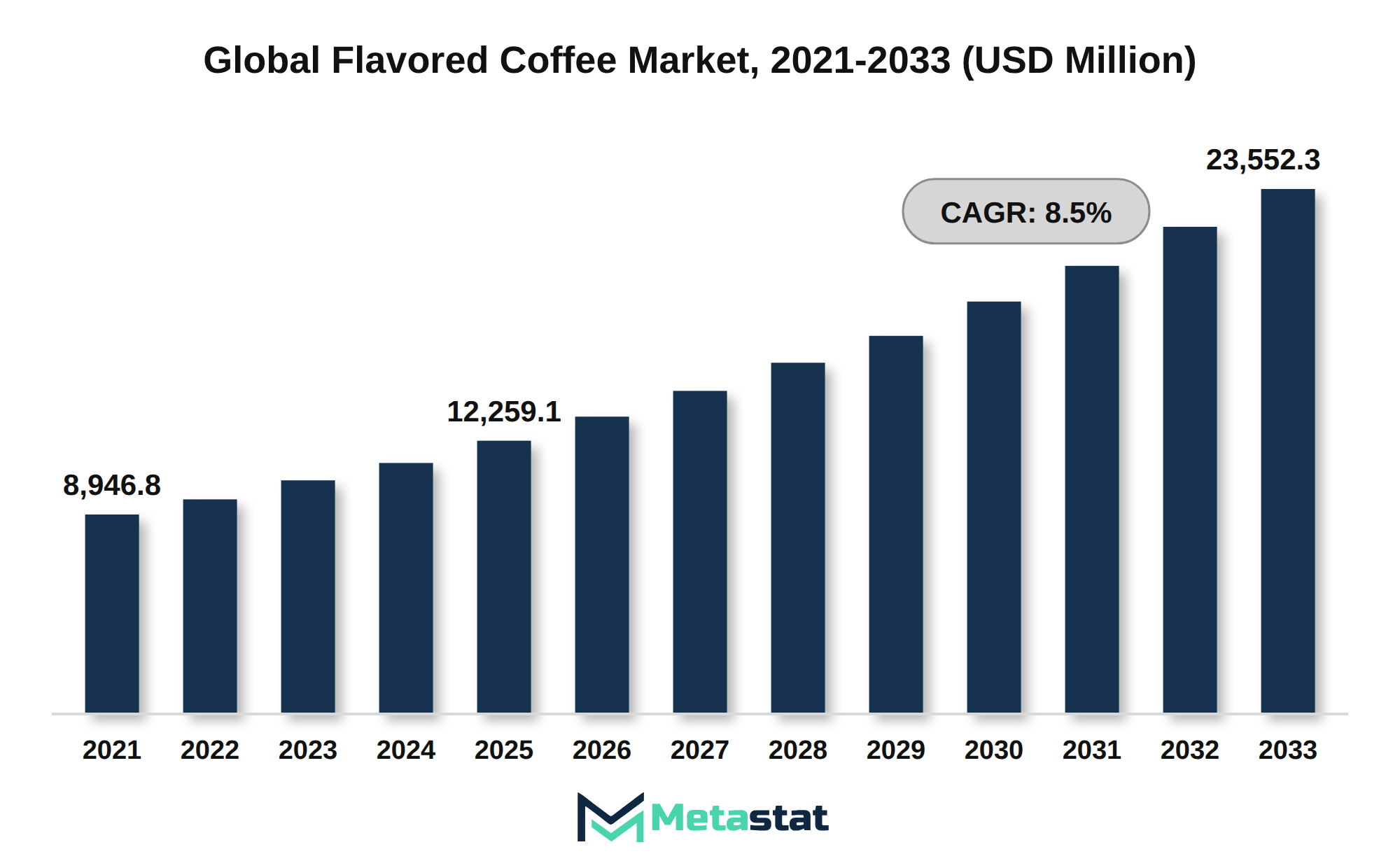
The global Flavored Coffee market was valued at USD 12,259.1 million in 2025 and is projected to reach USD 23,552.3 million by 2033, growing at a CAGR of 8.5% over the forecast period.
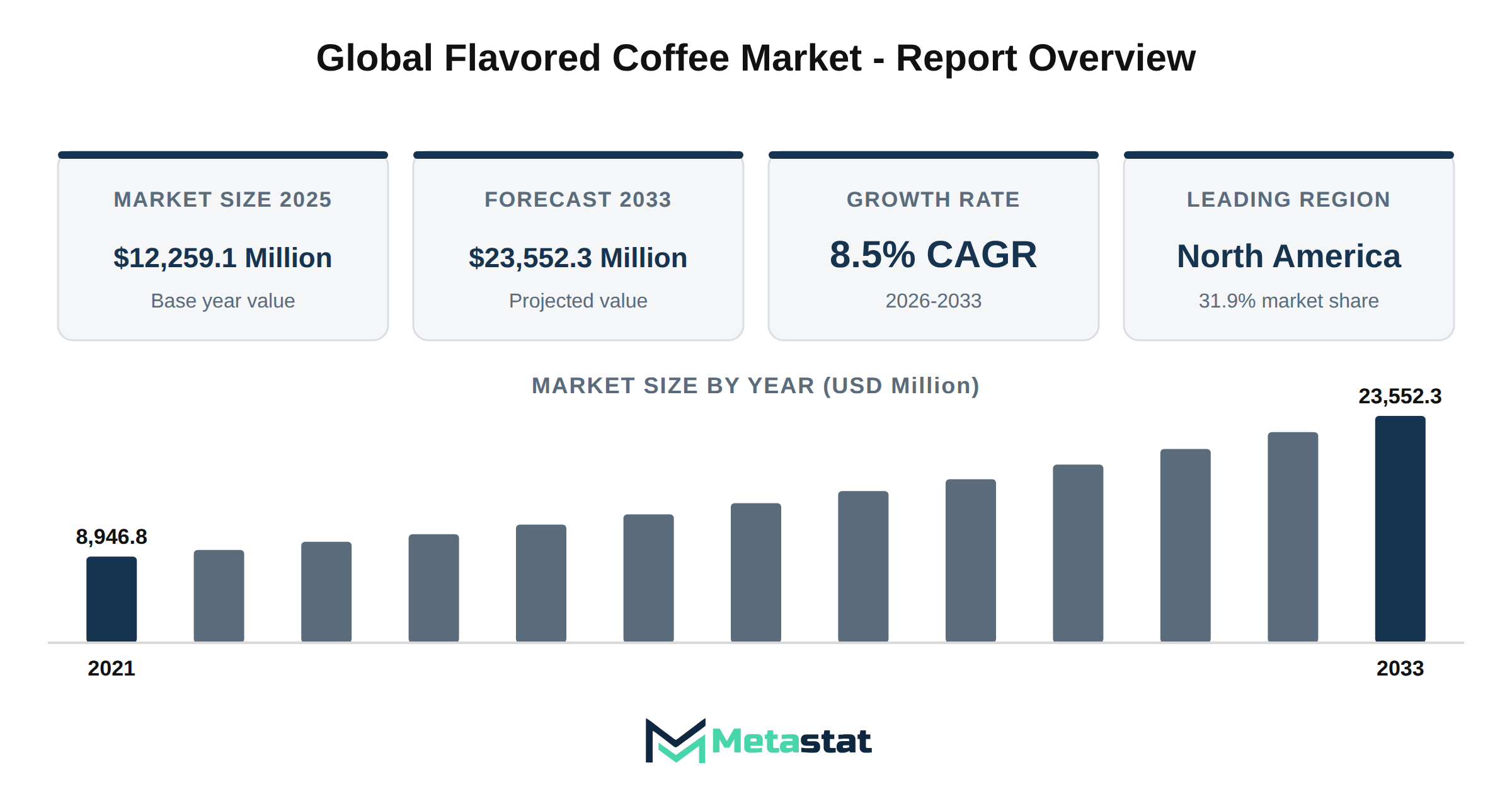
The Flavored Coffee market reached a valuation of USD 12,259.1 million in 2025, reflecting a steady growth trajectory since 2021, when the market was valued at USD 8,946.8 million. The market is projected to expand significantly, reaching USD 23,552.3 million by 2033, with a compound annual growth rate (CAGR) of 8.5% from 2026 to 2033.
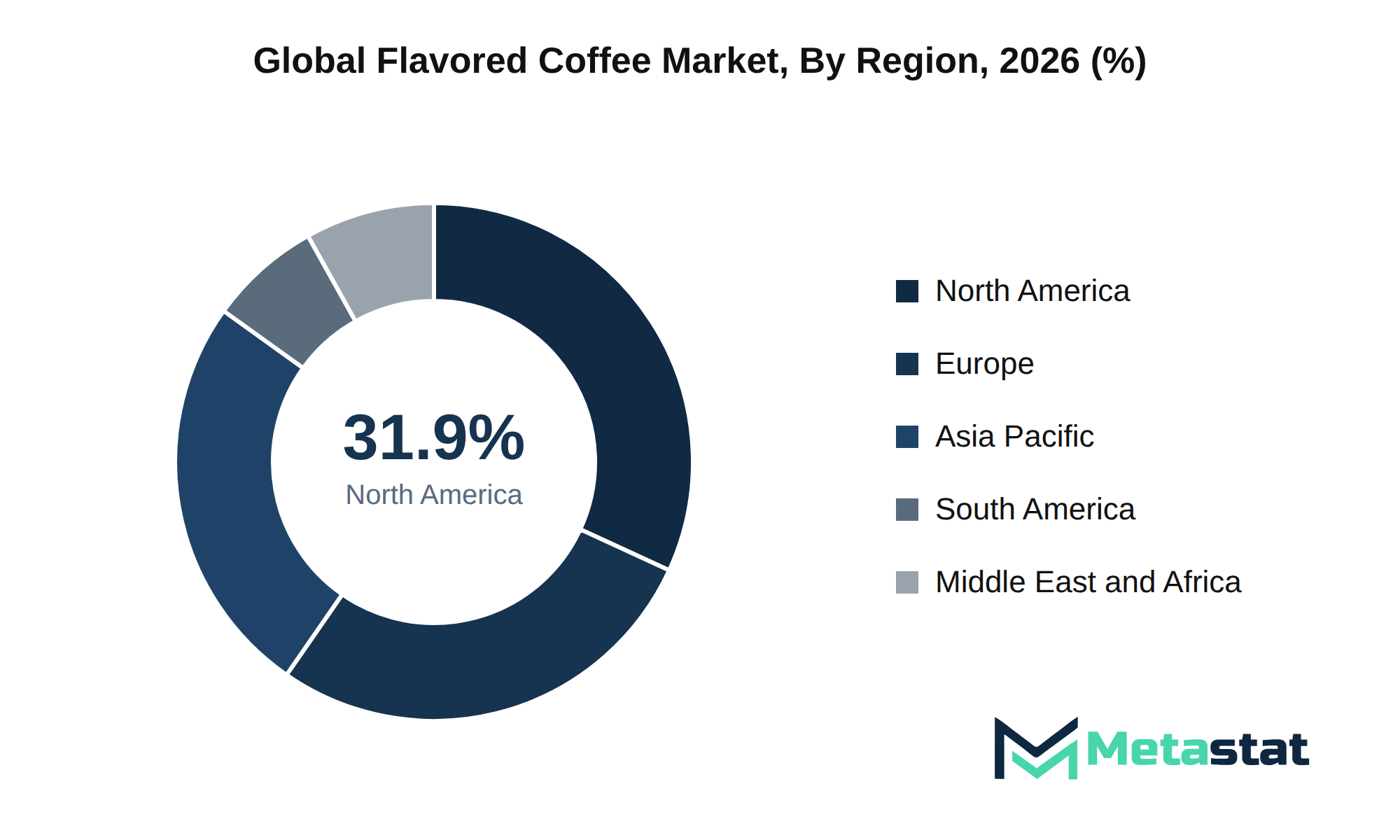
North America holds the largest market share at 31.9%, driven by increasing consumer preferences for flavored variants. Europe follows closely with a 27.8% share, while Asia Pacific captures 25.3%. South America and the Middle East and Africa account for 7% and 8.1%, respectively, reflecting diverse regional dynamics in consumer preferences and purchasing behaviors.
Segment analysis identifies diverse opportunities within the Flavored Coffee market. Ground Coffee, valued at USD 3,962.2 million in 2026, is projected to grow to USD 6,740.7 million by 2033, with a CAGR of 7.9%. Instant Coffee is anticipated to reach USD 5,885.7 million by 2033, reflecting a robust CAGR of 8.5%. Similarly, Coffee Beans and Coffee Pods exhibit growth potential, further contributing to market expansion.
The market segmentation into Organic and Conventional categories highlights a significant trend. The Organic segment, starting at USD 4,154 million in 2026, is expected to grow to USD 8,245.7 million by 2033, with a noteworthy CAGR of 10.3%. In contrast, the Conventional category is projected to reach USD 15,306.6 million by 2033, demonstrating a CAGR of 7.6%. This trend indicates a shift towards more health-conscious consumer choices.
The Flavored Coffee market faces various dynamics impacting its growth trajectory. Regulatory compliance influences production standards, particularly in the context of health and safety guidelines. Companies operating in the market integrate these regulations into their operational frameworks, influencing their manufacturing processes and product offerings. Compliance with these standards enhances brand trust and customer loyalty.
Research and development trajectories focus on innovation in flavor profiles and brewing techniques. Consumer preferences shift towards unique and diverse flavors, prompting companies to invest in R&D to meet these demands. Such investments not only support product differentiation but enhance competitive positioning within the market.
Sustainable transformation becomes a key consideration for stakeholders in the Flavored Coffee market. Companies are adopting practices that reduce environmental impact, including sourcing organic ingredients and implementing eco-friendly packaging solutions. This trend aligns with evolving consumer expectations for sustainability, driving market growth by attracting environmentally conscious buyers.
The supply chain landscape remains complex, with logistics architecture impacting product availability and pricing. Fluctuations in sourcing costs affect profit margins, requiring companies to optimize their supply chains. Strategic partnerships with suppliers mitigate risks associated with price volatility, ensuring a stable supply of key ingredients.
Market fragmentation characterizes the Flavored Coffee sector, with numerous players competing for market share. This fragmentation leads to intense competition, driving innovation and price competition. Companies that effectively differentiate their products and leverage brand loyalty achieve sustainable growth in this competitive environment.
Future strategic outlook indicates continued expansion in the Flavored Coffee market. Factors including changing consumer lifestyles, increased disposable income, and growing appreciation for flavored beverages contribute to this positive outlook. Investment in infrastructure and capital allocation towards marketing and distribution channels will further strengthen market presence and enhance revenue streams.
Overall, the Flavored Coffee market presents a dynamic environment for growth and innovation, driven by regulatory factors, consumer preferences, and competitive pressures. Stakeholders who navigate these complexities effectively capitalize on emerging opportunities and achieve long-term success.
The Flavored Coffee market experiences significant growth driven by shifting consumer preferences towards unique and diverse coffee experiences. Increasing exposure to global coffee cultures expands the demand for flavored options, attracting consumers seeking novelty in their beverage choices. This trend is particularly strong among younger demographics who prioritize flavor innovation and customization, which drives brands to develop a wider range of flavored coffee products.
Urbanization and lifestyle changes further influence consumer behaviors, with many individuals seeking convenient yet enjoyable beverage options. Busy lifestyles prompt consumers to turn to flavored coffee because a quick source of indulgence that fits into their daily routines. The rise of online retail channels enhances access to diverse flavored coffee offerings, allowing consumers to explore and purchase products that align with their taste preferences.
The market is projected to reach USD 23,552.3 million by 2033, reflecting a compound annual growth rate of 8.5 percent from the base year of 2025. This growth signifies strong investment in research and development for innovative flavors, ultimately strengthening brand positioning and market penetration. Companies that effectively tap into these shifting preferences are likely to enhance their competitive advantage and capture greater market share in the evolving Flavored Coffee market.
Recent consumer behaviors significantly impact the flavored coffee market. A growing interest in unique and innovative flavors reflects changing preferences among coffee drinkers. This trend aligns with demographic shifts, particularly among younger consumers who prioritize experiential purchases and seek diverse flavor profiles in their beverages. The increasing popularity of gourmet and specialty coffee products further supports this transition, leading to heightened competition among brands. Companies invest in product development to cater to these evolving tastes, driving revenue growth across various segments.
Urbanization contributes to the demand for flavored coffee, with consumers in metropolitan areas seeking convenient and premium options. The rise of coffee culture, fueled by social media and influencer marketing, raises consumer expectations, prompting businesses to enhance their offerings. Brands that adapt to these lifestyle changes and market preferences strengthen their market positioning. The flavored coffee market benefits from a robust environment characterized by innovation and differentiation, positioning it for sustained growth through 2033.
Inflationary pressures significantly affect the flavored coffee market, impacting both production costs and consumer spending power. Rising prices for raw materials, labor, and transportation lessen profit margins for producers, prompting price increases that deter price-sensitive consumers. This situation forces manufacturers to balance maintaining product quality while managing costs, creating operational challenges.
Consumers facing higher living expenses exhibit caution in discretionary spending, leading to reduced purchases of flavored coffee products. This trend particularly affects premium offerings, because consumers gravitate towards lower-priced alternatives during economic uncertainty. Consequently, brands relying on niche or high-end products experience slower sales growth, which affects their overall market positioning.
In addition to production costs, inflation results in increased operating expenses, which pressures companies to adjust their pricing strategies. Firms in the flavored coffee market navigate these financial challenges while maintaining competitive pricing to attract consumers. Failure to do so risks loss of market share, especially in regions where economic conditions are particularly strained.
While inflation persists, the potential for reduced consumer demand increases, subsequently slowing market growth. The flavored coffee market, valued at USD 12,259.1 million in 2025, faces challenges in reaching its projected forecast value of USD 23,552.3 million by 2033 due to these ongoing inflationary impacts. Companies are expected to adopt strategic measures to address these economic hurdles to sustain growth and profitability.
Geopolitical fragmentation significantly impacts the flavored coffee market, creating uncertainty and volatility in trade relationships. Rising trade deficits and tariff friction complicate international sourcing, leading to increased costs for suppliers. These challenges affect various stakeholders, particularly small to medium-sized enterprises that rely heavily on imported ingredients and equipment. Increased operational costs threaten margins, resulting in pricing compression that limits overall market competitiveness.
Technological disruptions complicate the market, particularly regarding research and development integrations. Companies face challenges in adopting advanced processing techniques and maintaining competitive product offerings. The necessity for interoperability among new technologies adds complexity, leading to increased costs and delayed market entry for innovative products.
Logistics disruptions stemming from geopolitical tensions contribute to supply chain instability, affecting product availability and pricing. Fluctuations in feedstock and component costs create uncertainty for manufacturers, hindering financial planning and investment. These factors limit the overall growth potential of the flavored coffee market, creating an environment where consistent supply and predictable pricing become increasingly difficult to achieve.
Environmental lifecycle footprints and decarbonization mandates introduce additional pressures on producers. Companies face rising compliance overheads associated with tightening global regulatory standards, leading to increased operational costs. Combined with talent retention pressures and workforce skill gaps, these factors constrain the ability of firms to innovate and effectively respond to changing consumer demands in the flavored coffee market.
The flavored coffee market experiences notable opportunities driven by emerging regional demands, technological disruptions, and evolving consumer preferences. North America, Europe, and Asia Pacific emerge because key regions fueling demand owing to increasing health consciousness and product innovation. The expansion of online retail channels facilitates greater accessibility, aligning with consumers' digital procurement shifts and enhancing market penetration.
Technological advancements support the development of next-generation flavored coffee products, integrating sustainability imperatives and eco-friendly practices. Innovations in production processes and flavor enhancement techniques allow suppliers to meet diverse consumer tastes while addressing environmental concerns. Companies investing in sustainable practices position themselves favorably, catering to the rising demand for organic options, projected to grow at a compound annual growth rate of 10.3% through 2033.
Strategic consolidation through mergers and acquisitions enhances the competitive landscape, allowing businesses to diversify their product portfolios and expand into niche applications. By leveraging synergies, firms increase operational efficiencies and optimize their value chains, driving growth in the flavored coffee market. The focus on local sourcing and supply chain localization aligns with consumer preferences for products that are regionally produced, further enhancing market attractiveness.
The flavored coffee market presents substantial growth opportunities through strategic innovations and regional adaptations. Companies that prioritize sustainability, technological integration, and consumer-centric approaches will capture increased market share and drive long-term profitability.
The Global Flavored Coffee market is segmented based on Type, Category, Flavor Type, and Distribution Channel.
Valued at USD 3,962.2 million in 2026, the Ground Coffee segment is projected to reach USD 6,740.7 million by 2033, with a compound annual growth rate (CAGR) of 7.9% during the forecast period. This growth results from a rising consumer preference for premium and flavored options, with an increasing number of specialty coffee shops contributing to demand. Various demographic shifts, particularly among younger consumers, emphasize the importance of unique flavor profiles and experiences associated with coffee consumption. Innovations in sourcing and roasting techniques drive product evolution, enhancing flavor diversity and quality.
The market experiences significant shifts in consumption patterns, with more consumers opting for at-home brewing methods. This trend influences the demand for ground coffee products, providing an opportunity for brands to cater to home coffee enthusiasts. Regulatory compliance regarding food safety and quality standards shapes product offerings, ensuring consumer trust. While competition intensifies, companies explore strategic avenues, including investment in direct-to-consumer channels and online retail platforms, to enhance accessibility and convenience for consumers.
Ground Coffee's growth reflects broader trends within the Flavored Coffee market, driven by increasing awareness of health benefits and premiumization, which creates a competitive landscape. The segment's expansion aligns with the preferences of consumers seeking convenience without sacrificing quality. Overall, the Ground Coffee segment's trajectory highlights the intersection of evolving consumer preferences and strategic market initiatives.
With a projected valuation of USD 5,885.7 million by 2033, the Instant Coffee segment demonstrates a significant growth trajectory, characterized by a compound annual growth rate (CAGR) of 8.5% during the forecast period. Shifting consumer preferences towards convenience and time-saving solutions drive increased demand for instant coffee products. This segment benefits from growing awareness of specialty flavors, encouraging manufacturers to innovate and expand flavor offerings.
Strategic partnerships among key players facilitate market penetration and enhance distribution networks. Companies including Starbucks Corporation and Keurig Dr Pepper Inc. focus on diversifying their product lines to meet consumer tastes, stimulating market growth. Regulatory compliance influences product standards, driving brands to invest in quality certifications that appeal to health-conscious consumers.
Price fluctuations in raw materials exert pressure on profit margins, necessitating effective cost management strategies among suppliers. The competitive landscape features companies utilizing technological advancements to streamline production processes and improve product offerings. While the Instant Coffee segment evolves, capturing new consumer segments creates additional revenue opportunities, supporting overall growth within the flavored coffee market.
Growth in the Coffee Beans segment reflects increasing consumer preference for high-quality flavored coffee options. The trend towards premiumization drives demand for specialty coffee beans that offer unique and diverse flavor profiles. This shift is evident among discerning consumers seeking to enhance their coffee experience. The rising popularity of home brewing methods influences the segment, driven by consumers investing in better quality coffee beans to replicate café-style beverages at home.
Investment in innovative processing technologies and sustainable sourcing practices supports segment expansion. Producers focus on enhancing flavor extraction techniques, resulting in improved product quality and differentiation. Adoption of organic and sustainably sourced coffee beans attracts environmentally conscious consumers, further driving growth. The segment is expected to reach USD 4,675.1 million by 2033, indicating robust market potential.
Competition within the Coffee Beans segment heightens because established brands and new entrants strive to capture market share. The pursuit of unique flavors and high-quality offerings creates a dynamic environment. The market sees significant opportunities for brands that successfully combine innovation with consumer preferences, positioning themselves favorably in the Flavored Coffee market.
Consumer preferences for convenience and innovation drive growth in the Coffee Pods segment of the Flavored Coffee market. The projected CAGR of 9.7% during the forecast period reflects increasing adoption of single-serve coffee solutions among busy professionals and households. These pods eliminate preparation time, contributing to a shift in consumption patterns that favor quick and efficient options.
Technological advancements in coffee pod design enhance product quality and flavor, attracting more consumers. Manufacturers invest in next-gen upgrades, focusing on flavor variety and pod compatibility with various brewing systems. This evolution in product offerings meets diverse consumer tastes and stimulates market demand.
Price volatility of raw materials pressures profit margins within this segment. Fluctuations in coffee bean prices impact production costs, compelling companies to innovate in sourcing strategies and packaging solutions to maintain competitiveness. Strategic investments in supply chain resilience enhance the ability to address these challenges, ensuring consistent product availability.
Regulatory compliance regarding packaging waste and sustainability drives the need for eco-friendly coffee pod solutions. Consumers increasingly prefer brands that prioritize environmentally responsible practices, contributing to a competitive edge for manufacturers who adapt to these expectations. Meeting these regulatory standards increases market share and strengthens customer loyalty.
Recent trends indicate a growing interest in specialty flavors within the flavored coffee market. Consumers increasingly seek unique taste experiences, prompting manufacturers to diversify their offerings beyond traditional flavors. This shift aligns with broader trends favoring personalization and gourmet experiences in the beverage industry.
Consumer preferences for innovative and niche flavors drive expansion in the Other sub-segment. Ingredients including exotic spices and unique fruits gain traction among adventurous coffee drinkers. This diversification caters to the evolving palate of consumers looking for novelty and excitement in their coffee choices.
Regulatory compliance and certification standards impact the development of new flavor profiles in the market. Companies prioritize transparency in sourcing and ingredient quality, enhancing brand loyalty among consumers who value ethical and sustainable practices. This focus on quality establishes a competitive advantage in attracting a discerning customer base.
The segment benefits from strategic opportunity windows created by technological advancements in flavor extraction and preservation. Innovations in processing methods enable manufacturers to enhance and maintain flavor integrity, which is crucial for the quality of coffee products in this sub-segment. Investment in next-generation upgrades positions companies to respond effectively to consumer demand trends.
Market players in the Other sub-segment face challenges related to pricing volatility and margin pressures. Fluctuations in raw material costs constrain profit margins, necessitating strategic pricing approaches to maintain competitiveness without compromising quality. Balancing cost structures while ensuring high-quality offerings remains a critical focus for manufacturers navigating this dynamic market.
The Other sub-segment of the flavored coffee market thrives on innovation, consumer preference for unique flavors, and the need for quality assurance. Continuous investment in product evolution and adherence to regulatory standards will support sustained growth within this niche area of the market.
Valued at USD 4,154 million in 2026, the organic segment is projected to reach USD 8,245.7 million by 2033, achieving a CAGR of 10.3% during the forecast period. Increasing consumer awareness regarding health and wellness drives demand for organic flavored coffee, with buyers prioritizing products free from synthetic chemicals and pesticides. This trend attracts health-conscious consumers, particularly millennials and Generation Z, who seek organic certifications and sustainable sourcing practices. The evolution of product offerings, including innovative flavors and blends, enhances the attractiveness of organic options in the flavored coffee market.
Regulatory compliance standards and certifications play a significant role in shaping consumer preferences. The market benefits from an expanding range of organic certifications that assure customers regarding product integrity and sustainability. This development builds consumer trust, leading to increased adoption of organic flavored coffee. Cost structures associated with organic production, while potentially higher than conventional methods, align with the premium pricing strategy that organic products command, contributing to higher margins in this segment.
Strategic opportunity windows arise from the growing trend of online retailing, which facilitates easier access to organic flavored coffee. This shift in distribution channels enhances market penetration, allowing producers to reach a broader customer base. Supply chain resilience remains critical, ensuring consistent sourcing of high-quality organic raw materials. The potential for collaboration with local farmers and sustainable practices mitigates risks related to raw material sourcing while enhancing brand loyalty among environmentally conscious consumers.
Conventional flavored coffee continues to demonstrate robust demand, driven by shifting consumer preferences towards familiar and traditional flavors. This segment benefits from its established market presence, appealing to consumers who favor classic taste profiles over newer trends. Strong brand loyalty within conventional offerings enhances market stability, ensuring consistent sales growth.
Market expansion catalysts include increased availability in retail channels, particularly supermarkets and hypermarkets, which facilitate consumer access. Effective marketing strategies and promotional activities increase visibility, further driving the segment's growth. Consumer awareness regarding the quality and sourcing of conventional coffee contributes to increased purchases, attributed to buyers prioritizing familiar brands associated with quality.
Technological advancements in coffee production, including improved extraction methods, enhance flavor profiles while maintaining consistency, attracting a broader customer base. The segment is projected to reach USD 15,306.6 million by 2033, at a CAGR of 7.6% during the forecast period. This growth reflects the segment's ability to adapt to evolving preferences while retaining its core identity, positioning conventional flavored coffee because a staple in the broader flavored coffee market.
Chocolate-flavored coffee continues to gain traction among consumers, driven by a growing preference for unique and indulgent flavors in beverage choices. Increased consumer interest in gourmet coffee experiences fuels demand, particularly among younger demographics seeking diverse taste options. Awareness of the health benefits associated with certain types of chocolate, including dark chocolate, enhances consumption dynamics, with consumers gravitating towards products that promise both flavor and health aspects.
Innovations in product offerings further support market growth. Manufacturers focus on incorporating high-quality cocoa beans and natural flavorings, allowing them to create richer and more satisfying chocolate profiles. This commitment to quality influences consumer purchasing decisions, with premium offerings commanding higher price points, thus impacting overall profitability within the flavored coffee market.
Increased availability of chocolate-flavored coffee through various distribution channels contributes to market expansion. Retailers, including supermarkets and online platforms, enhance accessibility, allowing consumers to explore and purchase a wider range of products. This heightened accessibility aligns with the trend of convenience, where consumers prioritize quick and easy access to preferred beverages.
Regulatory compliance and certifications play a vital role in shaping the chocolate coffee segment. Ensuring that products meet quality and safety standards is essential for brands wishing to capture market share. Consumers increasingly demand transparency regarding sourcing and production practices, prompting brands to invest in certifications that emphasize ethical sourcing and sustainability.
Overall, the chocolate sub-segment of the flavored coffee market demonstrates substantial potential for growth. Shifting consumer preferences, coupled with robust product innovations and effective marketing strategies, create a favorable environment for sustained expansion. The focus on quality and consumer engagement will be crucial for brands seeking to navigate this competitive environment successfully.
Consumer preference for vanilla-flavored coffee continues to drive demand within the flavored coffee market. The popularity of vanilla derives from its versatility and familiarity, appealing to both traditional coffee drinkers and those seeking innovative beverage options. This flavor features prominently in various coffee formats, including ground coffee and instant coffee, allowing for widespread appeal across different demographics.
While coffee consumption trends evolve, the expansion of the vanilla segment aligns with the growing interest in gourmet and specialty coffee experiences. Consumers increasingly seek unique flavor profiles and explore options beyond standard coffee offerings. This trend enables the introduction of new vanilla-based products, including blends and infused options, enhancing market diversity and consumer choice.
Technological advancements in flavor extraction and infusion processes enhance the quality of vanilla-flavored coffee, creating opportunities for product differentiation. Manufacturers invest in innovative techniques to ensure that the essence of vanilla is faithfully captured and delivered in the final product. Improvements in product quality contribute to increased customer satisfaction and brand loyalty.
Cost structures within the vanilla segment remain influenced by fluctuations in raw material prices and sourcing challenges. The dynamics of vanilla bean cultivation impact availability and pricing, with premium varieties commanding higher costs. Manufacturers strategically balance sourcing and pricing to maintain competitiveness while delivering value to consumers.
Strategic opportunity windows exist for brands to capitalize on trends in health and wellness, driven by consumers gravitating toward products perceived because natural or organic. This shift provides avenues for the development of vanilla-flavored coffees that align with health-conscious consumption patterns. Brands focusing on sustainability and ethical sourcing practices reinforce their positioning in the market, appealing to socially conscious consumers.
Overall, the ongoing evolution of consumer preferences and market dynamics positions the vanilla segment favorably within the flavored coffee market. Continued investment in product innovation, quality enhancements, and strategic marketing is expected to support sustained consumer interest and segment growth.
Growing consumer preference for hazelnut flavor enhances demand within the Flavored Coffee market. This segment benefits from unique sensory attributes that appeal to coffee drinkers seeking richer taste experiences. A shift toward indulgent flavors supports increased adoption among consumers, particularly in North America and Europe, where hazelnut-flavored options align with local preferences.
Technological advancements contribute to the evolution of hazelnut coffee products, with manufacturers exploring innovative extraction and infusion methods. These enhancements improve flavor consistency and overall quality, influencing end-use dynamics in various applications, including retail and foodservice sectors. The segment's expansion is driven by extensive marketing efforts highlighting product versatility and compatibility with popular brewing methods.
Price volatility in raw materials impacts the cost structures associated with hazelnut coffee production. Fluctuations in hazelnut supply place margin pressures on producers, affecting pricing strategies and product availability. Strategic opportunity windows emerge owing to suppliers seeking to optimize sourcing practices and enhance supply chain resilience.
Consumers increasingly prioritize premium coffee experiences. Hazelnut coffee offerings are positioned to capture significant market share. Trends indicating rising coffee consumption alongside flavor diversification signal promising growth for this segment in the coming years. The Flavored Coffee market's trajectory remains closely tied to evolving consumer preferences, regulatory compliance, and market dynamics driven by innovative product developments.
Growing consumer interest in unique and unconventional flavors drives demand within the Other segment of the Flavored Coffee market. This segment encompasses various innovative flavors that appeal to adventurous consumers, motivated by the quest for differentiation in their coffee experiences. While coffee culture evolves, the appetite for new taste experiences enhances the attractiveness of products within this category.
Adoption of these flavors is influenced by evolving taste preferences among younger generations, who prioritize novelty and variety in their beverage choices. This demographic shift creates an environment conducive to experimentation with flavors not typically associated with coffee. Consequently, companies targeting this segment focus on product development that emphasizes creativity, often incorporating exotic ingredients or cultural influences.
The rise of social media influences consumption trends, with visually appealing products gaining traction through digital marketing efforts. Flavored coffee products in the Other segment benefit from the promotion of unique flavor profiles and aesthetic presentations, enhancing consumer engagement. Companies utilize these trends to position their offerings, driven by fashionable choices, further driving sales and market penetration.
Strategically, businesses in the Flavored Coffee market align their product development initiatives with consumer insights, ensuring that their offerings meet market demands. This alignment creates better brand loyalty and repeat purchases, resulting from consumers gravitating towards brands that consistently deliver exciting flavor innovations. In this context, investment in marketing and R&D is essential for sustaining growth and competitive advantage in the Other segment.
The Other segment thrives on flavor innovation driven by consumer preferences for novelty and experimentation. The focus on unique tastes, along with strategic marketing initiatives, positions companies to capture the interest of discerning consumers seeking distinctive coffee experiences.
Consumer interest in convenience products drives the growth of flavored coffee sold through supermarkets and hypermarkets. These retail channels offer a wide variety of flavored coffee options, appealing to a diverse customer base seeking easy access to their preferred beverages. The physical presence and established distribution networks of these retailers enhance the visibility of flavored coffee brands, facilitating customer engagement and purchase decisions.
Strategic collaborations between flavored coffee producers and supermarket chains enable effective promotional activities, enhancing brand recognition. These partnerships result in targeted marketing campaigns that connect with consumers, further driving sales within this segment. Competitive pricing strategies employed by supermarkets and hypermarkets create an attractive proposition for customers, promoting higher volume sales.
Shifts in consumer preferences towards specialty and artisanal flavors influence product offerings in supermarkets and hypermarkets. Retailers adapt their inventory to include emerging flavor trends, ensuring that they cater to evolving consumer tastes. This trend highlights the importance of market responsiveness, with retailers seeking to capture consumer interest through innovation in product variety.
Technological advancements in supply chain management enhance the efficiency of flavored coffee distribution through these channels. Improved logistics and inventory management systems streamline operations, ensuring that products remain fresh and readily available to consumers. Consequently, the market benefits from reduced stockouts and increased customer satisfaction.
Regulatory compliance and quality assurance standards play a critical role in maintaining consumer trust. Supermarkets and hypermarkets prioritize sourcing products that meet safety and quality certifications, enhancing their reputation among health-conscious consumers. This commitment to quality strengthens the competitive position of retailers within the flavored coffee market, supporting long-term growth.
Flavored coffee sales through convenience stores benefit from increasing consumer demand for convenient and ready-to-consume beverages. Busy lifestyles drive consumers toward quick access to flavored coffee options, making convenience stores an attractive distribution channel. These outlets often offer a range of flavors, appealing to diverse consumer preferences and enhancing the overall shopping experience.
Technological advancements in brewing equipment and packaging solutions facilitate the effective delivery of flavored coffee in convenience stores. Innovations including single-serve pods and ready-to-drink beverages enhance product accessibility and align with consumer expectations for convenience. Continued product evolution through unique flavor offerings fuels growth within the market.
Consumer trends reflect a shift toward personalization, prompting convenience stores to adapt their flavored coffee selections in response to evolving preferences. This adaptability supports segment expansion, allowing stores to cater to specific regional tastes and trends. Flavored coffee consumption continues to rise, particularly among younger demographics seeking unique and innovative taste profiles.
Pricing volatility affects margin pressures within convenience stores, requiring strategic pricing approaches to remain competitive. Flavored coffee products often carry premium pricing due to their unique formulations, impacting consumer purchasing decisions. Maintaining competitive pricing without compromising product quality remains essential for retailers operating in this segment.
Flavored coffee's popularity in convenience stores presents opportunities for strategic investments in marketing and product placement. Engaging marketing campaigns and strategic in-store displays enhance visibility and drive sales. Capital investment in supply chain resilience and raw material sourcing further supports the growth of flavored coffee within convenience channels.
Competition among retailers intensifies due to convenience stores striving to differentiate their offerings. Unique flavor combinations and exclusive brand partnerships represent potential growth areas, encouraging retailers to explore innovative collaborations. Strategic opportunity windows arise from evolving consumer preferences, presenting avenues for growth in the flavored coffee market.
Growth in the online retail channel for flavored coffee reflects a shift in consumer purchasing behavior. Increasing reliance on e-commerce platforms has gained traction owing to convenience, accessibility, and a wider selection of products. Consumers increasingly choose online shopping to discover and purchase unique flavored coffee options, enhancing demand within the market.
Technological advancements in online retailing facilitate better user experiences, including personalized recommendations and effective payment options. This evolution supports consumer engagement and encourages repeat purchases. Retailers invest in optimized supply chains to ensure timely delivery, further enhancing customer satisfaction and loyalty.
Product evolution within the flavored coffee market sees brands launching limited editions or seasonal flavors, promoting them exclusively through online platforms. This strategy drives sales and creates a sense of urgency among consumers, encouraging immediate purchases. The online retail segment enables rapid adoption of emerging flavor trends, significantly impacting overall market dynamics.
Price competitiveness in online retail contributes to margin pressures for suppliers, who balance competitive pricing with quality and brand integrity. Promotional strategies, including discounts and bundled offers, attract price-sensitive consumers, adding complexity to pricing structures. Maintaining profitability while offering competitive prices remains a critical challenge for online retailers in the flavored coffee market.
Regulatory compliance standards play a role in shaping the online retail landscape. Adherence to food safety regulations and labeling requirements ensures consumer trust and brand loyalty. Companies engaging in e-commerce navigate these regulatory frameworks effectively, impacting operational decisions and product offerings.
Supply chain resilience remains a focal point for online retailers, particularly in response to disruptions experienced during global events. Enhancing logistics capabilities and diversifying sourcing strategies support continuity in product availability, directly influencing consumer confidence in the flavored coffee market. By investing in robust supply chain solutions, companies respond to fluctuations in demand and mitigate potential risks.
Strategic opportunity windows exist for companies capable of leveraging data analytics to understand consumer preferences better. Insights gained inform targeted marketing campaigns, leading to improved conversion rates and enhanced customer engagement. This strategic focus on data-driven decision-making positions companies favorably within the competitive environment.
Based on geography, the Global Flavored Coffee market is divided into North America, Europe, Asia-Pacific, South America, Middle East, and Africa.
North America represents a significant portion of the global Flavored Coffee market, accounting for 31.9% of the market share in 2025. The region is set to expand at a CAGR of 8.5% within the forecast period, reaching a market size (TAM) of USD 7,211.7 million by the end of 2033. Factors driving this growth include evolving consumer preferences for diverse flavors and the rising popularity of specialty coffee products. The increasing number of coffee shops and cafés enhances accessibility and availability, further fueling market expansion.
Cultural aspects play a crucial role in shaping consumer choices, with flavors including vanilla and hazelnut gaining traction among North American consumers. The convenience segment, particularly through online retail and convenience stores, experiences significant growth due to the demand for quick and easy access to flavored coffee options. Investment in local production facilities and supply chain optimization enables quicker distribution, enhancing market reach.
The competitive landscape features key players, including Starbucks Corporation, Dunkin, and Kraft Heinz Company, each striving to leverage emerging trends and preferences. Domestic market participants implement innovative marketing strategies and product diversification to capture a larger share of the growing consumer base. This dynamic environment supports sustained revenue growth and strengthens North America's position because a frontrunner in the Flavored Coffee market.
In 2025, Europe will hold a substantial share of the global flavored coffee market. Consumer trends indicate a shift towards premium and specialty flavored coffees, driven by a rising preference for unique taste experiences among consumers in countries including Germany, France, the UK, Italy, and Spain. The demand for flavored coffee in Russia and the Rest of Europe reflects increasing consumption patterns and diverse flavor preferences.
Market dynamics in Europe highlight a mature landscape with established brands and a strong presence of domestic players. Companies like Starbucks Corporation and Dunkin continue to influence growth through product innovation and strategic marketing. The regional focus on organic flavored coffee offers opportunities for expansion, aligning with health-conscious consumer trends.
Infrastructure modernization supports the effective distribution of flavored coffee products across Europe. Enhanced supply chain capabilities facilitate access to various consumer segments, contributing to market growth. Increased engagement in online retail channels enhances the availability of flavored coffee, catering to the evolving purchasing behaviors of European consumers.
Geopolitical factors and regional compliance mandates shape the competitive landscape in Europe. Localized procurement dynamics play a crucial role in determining market strategies, driven by companies adapting to cultural nuances and preferences unique to each country. This adaptability strengthens market positioning and heightens competition among players in the flavored coffee market.
The Asia-Pacific region accounts for a substantial share of the global Flavored Coffee market. Key demand drivers include rising consumer interest in convenience and flavor diversity, particularly in countries including China, India, and Australia. Growing urbanization enhances access to flavored coffee products, boosting their popularity among consumers.
Emerging market front-runners, particularly in Southeast Asia, exhibit strong growth potential due to evolving coffee consumption habits and an increasing number of specialty coffee shops. The flavor variety, including chocolate and vanilla, aligns with the local palate, driving market expansion. The adoption of innovative brewing technologies supports the growth of high-quality flavored coffee options.
Infrastructure modernization across the region facilitates improved distribution networks, enhancing product availability in both urban and rural locations. The presence of several market participants, including Starbucks Corporation and Dunkin, strengthens competition, further stimulating market dynamics. Local compliance mandates influence product formulations, ensuring alignment with consumer preferences and regulatory requirements.
Supply chain regionalization trends highlight the importance of localized manufacturing processes, allowing for cost efficiencies and tailored product offerings that cater to regional tastes. Cultural nuances significantly shape buying behaviors, with consumers increasingly seeking unique flavor experiences. The Flavored Coffee market in Asia-Pacific is poised for robust growth, driven by these factors.
Brazil and Argentina represent significant contributors to the Flavored Coffee market in South America, which accounts for 7.00% of the global market share in 2025. The increasing preference for flavored coffee among consumers in these countries stimulates growth in various segments, particularly ground coffee and instant coffee. High demand for organic options has emerged, driven by health-conscious consumers seeking natural products.
Infrastructure development across South America enhances distribution capabilities, facilitating wider accessibility to flavored coffee products. The growth of e-commerce platforms further expands market reach, aligning with shifting consumer buying behaviors. Local suppliers are responding to changes in procurement dynamics, emphasizing the need for quality and sustainability in product offerings, which strengthens their competitive position.
Cultural nuances influence flavor preferences, with consumers gravitating toward unique blends that reflect local tastes. Domestic players including Starbucks Corporation and other regional brands compete for market share by innovating flavors and enhancing product availability. Overall, the Flavored Coffee market in South America is projected to experience steady growth, supported by evolving consumer preferences and enhanced distribution channels.
The Middle East and Africa represent a notable segment of the Flavored Coffee market, contributing to the global market share in 2025. Rising disposable incomes and a growing coffee culture drive increasing demand in countries like Saudi Arabia, UAE, and South Africa. Urbanization and lifestyle changes fuel consumer interest in diverse flavor profiles, resulting in a shift towards flavored coffee options. Efforts in infrastructure modernization enhance distribution channels, allowing for wider availability of products. In South Africa, local preferences lean towards rich and robust flavors, while the UAE and Saudi Arabia reflect a trend towards unique blends and premium offerings. The market experiences a compound annual growth rate (CAGR) of 8.5%, reflecting strong growth potential through 2033. Investment in localized manufacturing and supply chain improvements supports the expansion of domestic brands, creating opportunities for market entrants. Cultural factors influence purchasing patterns, with an emphasis on convenience and quality driving growth in the segment. The presence of international brands including Starbucks Corporation and Dunkin signals competitive dynamics within the region. Local players focus on catering to regional tastes, further stimulating market development. The Flavored Coffee market in the Middle East and Africa is positioned for significant growth, driven by evolving consumer preferences and strategic investments in distribution and production capabilities.
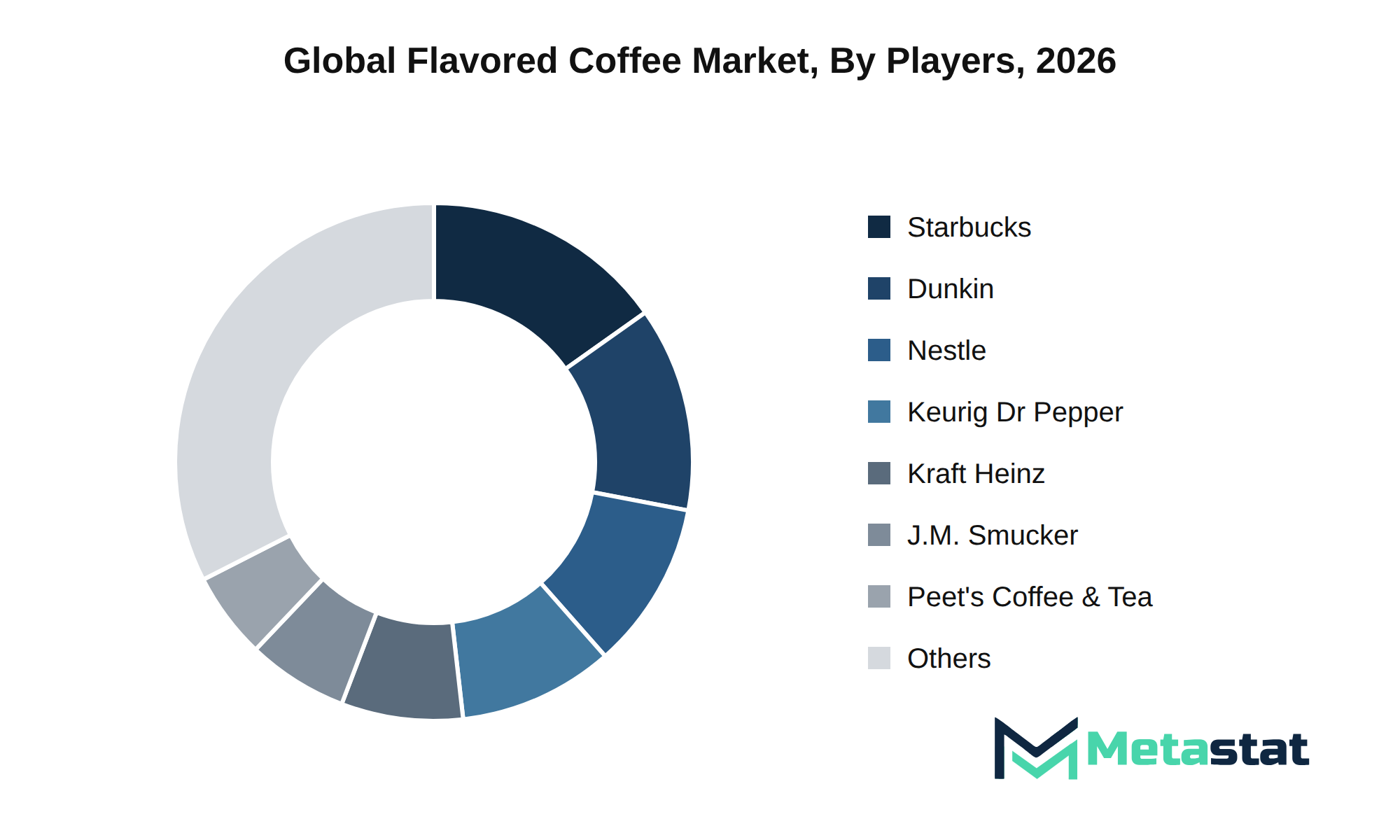
The competitive environment within the flavored coffee market features various strategic behaviors among leading players. Companies including Starbucks Corporation, Dunkin, and Keurig Dr Pepper Inc. focus on product differentiation through flavor innovation and premium offerings. This strategy enhances brand loyalty and attracts diverse consumer segments, leading to increased market penetration.
Strategic alliances and partnerships serve critical components for market players aiming to strengthen their supply chains and distribution networks. Collaborations with retailers like Peet's Coffee & Tea, Inc. and the use of online platforms broaden customer reach. Companies like Kraft Heinz Company and Kraft Heinz pursue acquisitions to expand their product portfolios and enhance competitive advantages.
Pricing strategies vary among industry participants, with several opting for competitive pricing to capture market share while others leverage premium pricing for specialty products. The emphasis on organic and innovative flavor profiles, including chocolate and hazelnut, aligns with shifting consumer preferences toward more diverse and health-conscious options.
The flavored coffee market faces challenges from new entrants and startup disruption dynamics. Established players maintain their competitive edge through strong brand equity and significant investment in marketing and product development. Future growth opportunities exist for companies that effectively address consumer demand for unique flavors and sustainable sourcing practices.
Market size is forecast to rise from USD 12,259.1 million in 2025 to over USD 23,552.3 million by 2033, achieving a compound annual growth rate (CAGR) of 8.5%. This growth reflects increasing consumer interest in flavored coffee, driven by evolving taste preferences and a growing emphasis on premium coffee products.
The base case anticipates continued investment in R&D and product innovation, enhancing market competitiveness. In a bullish scenario, heightened consumer engagement and strategic partnerships among key players including Starbucks Corporation and Dunkin contribute to rapid market expansion. Conversely, the bear case could arise from market saturation, economic downturns, or evolving health trends that discourage flavored coffee consumption.
Overall, sustained growth in the flavored coffee market indicates strong underlying demand and strategic opportunities for existing and new market participants. Focus on consumer preferences, technological advancements, and supply chain efficiencies will play a critical role in shaping future market dynamics.
The report strategically identifies and profiles the key market players and analyses their core competencies in each sub-segment of the Flavored Coffee market.
|
Report Attributes |
Details |
|
Study Period |
2021-2033 |
|
Base Year |
2025 |
|
Estimated Year |
2026 |
|
Forecast Period |
2026-2033 |
|
Historical Period |
2021-2025 |
|
Growth Rate |
CAGR 8.5% from 2026 to 2033 |
|
Revenue Unit |
USD million |
|
Segmentation |
By Type, Category, Flavor Type, Distribution Channel, and Region |
|
By Region |
North America (By Type, Category, Flavor Type, Distribution Channel, and Country)
|
|
Europe (By Type, Category, Flavor Type, Distribution Channel, and Country)
|
|
|
Asia Pacific (By Type, Category, Flavor Type, Distribution Channel, and Country)
|
|
|
South America (By Type, Category, Flavor Type, Distribution Channel, and Country)
|
|
|
Middle East and Africa (By Type, Category, Flavor Type, Distribution Channel, and Country)
|
Find answers to common questions about this report
The Flavored Coffee market size was valued at USD 12,259.1 million in 2025.
The Flavored Coffee market is projected to grow at a CAGR of 8.5% during the forecast period from 2026 to 2033.
The North America Flavored Coffee market size is estimated to reach USD 7,211.7 million by 2033.
Ground Coffee leads the Flavored Coffee market with a projected value of USD 6,740.7 million by 2033. This segment's growth reflects a compound annual growth rate of 7.9 percent.
The Flavored Coffee market experiences growth driven by shifting consumer preferences towards unique flavors, increased exposure to global coffee cultures, and urbanization. Younger demographics prioritize flavor innovation and convenience, leading brands to expand their product offerings to capture this demand. Enhanced access through online retail channels further supports market expansion.
North America holds the dominant share of the Flavored Coffee market, accounting for 31.9 percent in 2025. This region is projected to generate USD 7,211.7 million by 2033.
Inflationary pressures significantly affect the flavored coffee market by increasing production costs and reducing consumer spending power. Rising prices deter price-sensitive consumers, particularly impacting premium offerings because individuals gravitate towards lower-priced alternatives during economic uncertainty. These factors create operational challenges for manufacturers and slow market growth.
The Flavored Coffee market benefits from shifting consumer preferences towards unique flavors and diverse coffee experiences. Younger demographics prioritize flavor innovation and customization, while urbanization and lifestyle changes drive demand for convenient beverage options. Enhanced access through online retail channels further supports product adoption, positioning brands for sustained growth.
The Flavored Coffee market is estimated to reach a valuation of USD 23,552.3 million by 2033.
Key players in the Flavored Coffee market include Starbucks Corporation, Dunkin, Kraft Heinz Company, Keurig Dr Pepper Inc., Nestle, J.M. Smucker, and Peet's Coffee & Tea, Inc.
The analysts below cover Food and Beverages research at Metastat Insights.
LEAD ANALYST
Utkarsh Khirodkar is a Lead Market Research Analyst at MetaStat Insight, specializing in market intelligence, technology sector assessments, and competitive strategy.

LEAD PRINCIPAL ANALYST, PHARMA AND HEALTHCARE
Food and Beverages · Healthcare · Healthcare IT · Medical Devices
Ajay Devgire is the Lead Healthcare Analyst at MetaStat Insight, leading strategic research and market intelligence initiatives across the global healthcare domain.

SENIOR RESEARCH ANALYST
Biotechnology · Food and Beverages · Medical Devices · Packaging
Snehal Pasalkar is a Research Analyst at MetaStat Insight, operating at the intersection of life sciences research, competitive strategy, and market intelligence.
Tracking capacity expansion in single-use bioprocessing requires dependable data on raw material availability and cleanroom-grade polymer supply chains. The competitive landscape chapter gave a grounded evaluation of secondary component suppliers across North America and Asia-Pacific rather than simply reprinting press releases. Having that level of supplier benchmarking helped clarify dual-sourcing considerations for our clinical pipeline planning.
When evaluating distributed energy resource management systems, standard research summaries tend to gloss over the operational differences between front-of-the-meter utility deployments and behind-the-meter industrial sites. The MetaStat Insight report addressed those distinctions directly, especially regarding software interoperability standards and grid interconnection backlogs. The five-year market sizing across regional transmission organizations provided actionable context for our grid modernization strategy.
Most industry reports on warehouse automation bundle autonomous mobile robots and fixed conveyor installations into the same top-level numbers, which complicates advisory work. This study split the market cleanly by payload tiers, navigation technology, and fleet management software layers. The regional forecast for Western Europe gave our team defensible adoption benchmarks when evaluating capital allocation for logistics clients, saving us days of secondary data scrubbing.
Explore related market intelligence reports worth reading alongside this one.