
Global Aged Care Market
Global Aged Care Market Size, Share, By Care Setting (Residential Aged Care, Assisted Living and Senior Living Communities, Skilled Nursing and Post-Acute Care, Home-Based Aged Care), By Care Need (General Age-Related Support and Activities of Daily Living, Dementia and Alzheimer's Care, Chronic Disease Management, Post-Acute and Rehabilitation Care), By Age Group (60-74 Years, 75-84 Years, and 85 Years and Above), By Provider Ownership (For-Profit Private Providers, Not-for-Profit Providers, and Government and Public Providers), Industry Analysis, Growth, Trends, and Forecast, 2026-2033
MSI-5013
August 21, 2026
286 Pages
Historical
Base year
Forecast
Forecast period
Report Details
Comprehensive Market Analysis And Insights
Market Overview
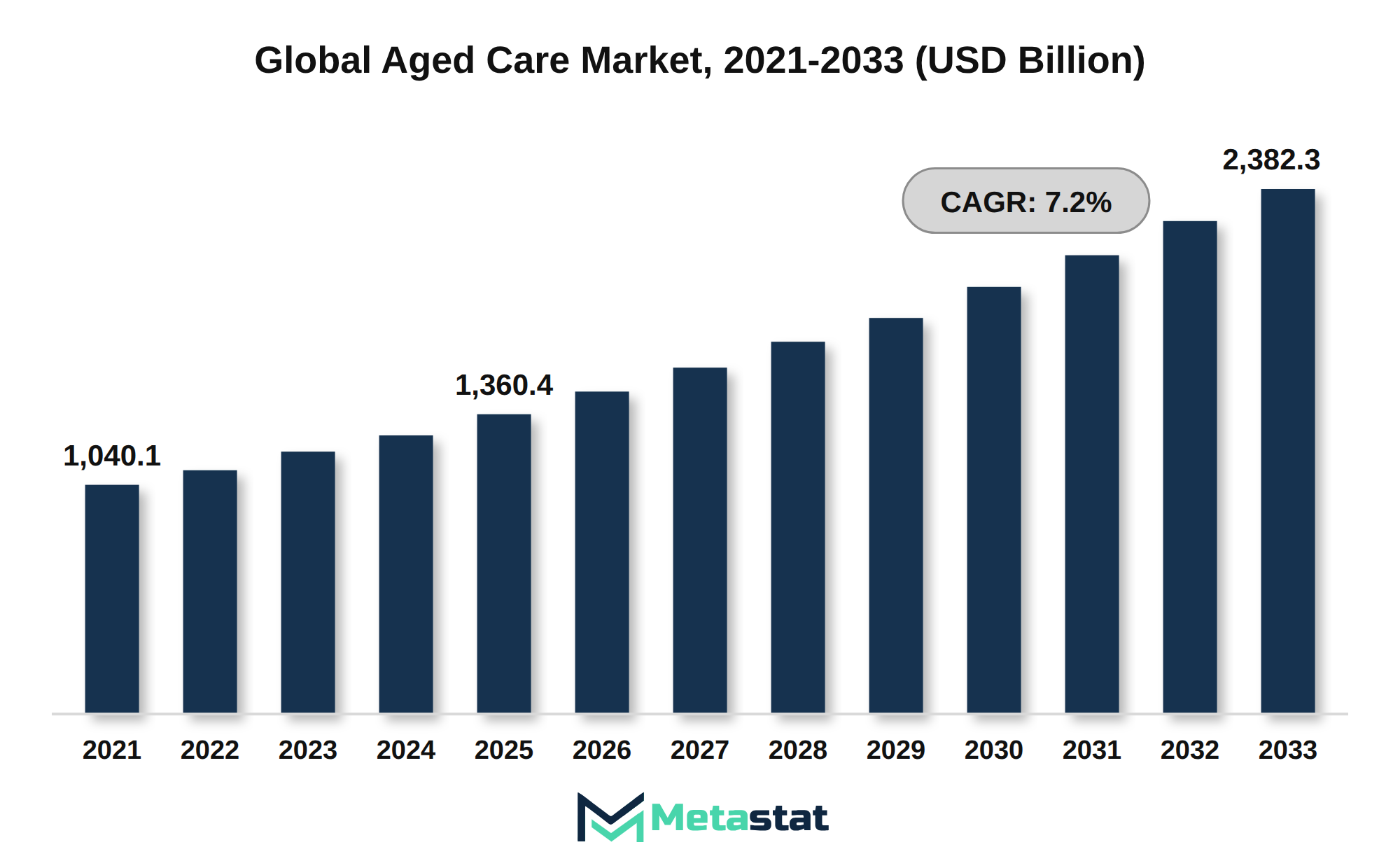
The global Aged Care market was valued at USD 1,360.4 billion in 2025 and is projected to reach USD 2,382.3 billion by 2033, growing at a CAGR of 7.2% over the forecast period.
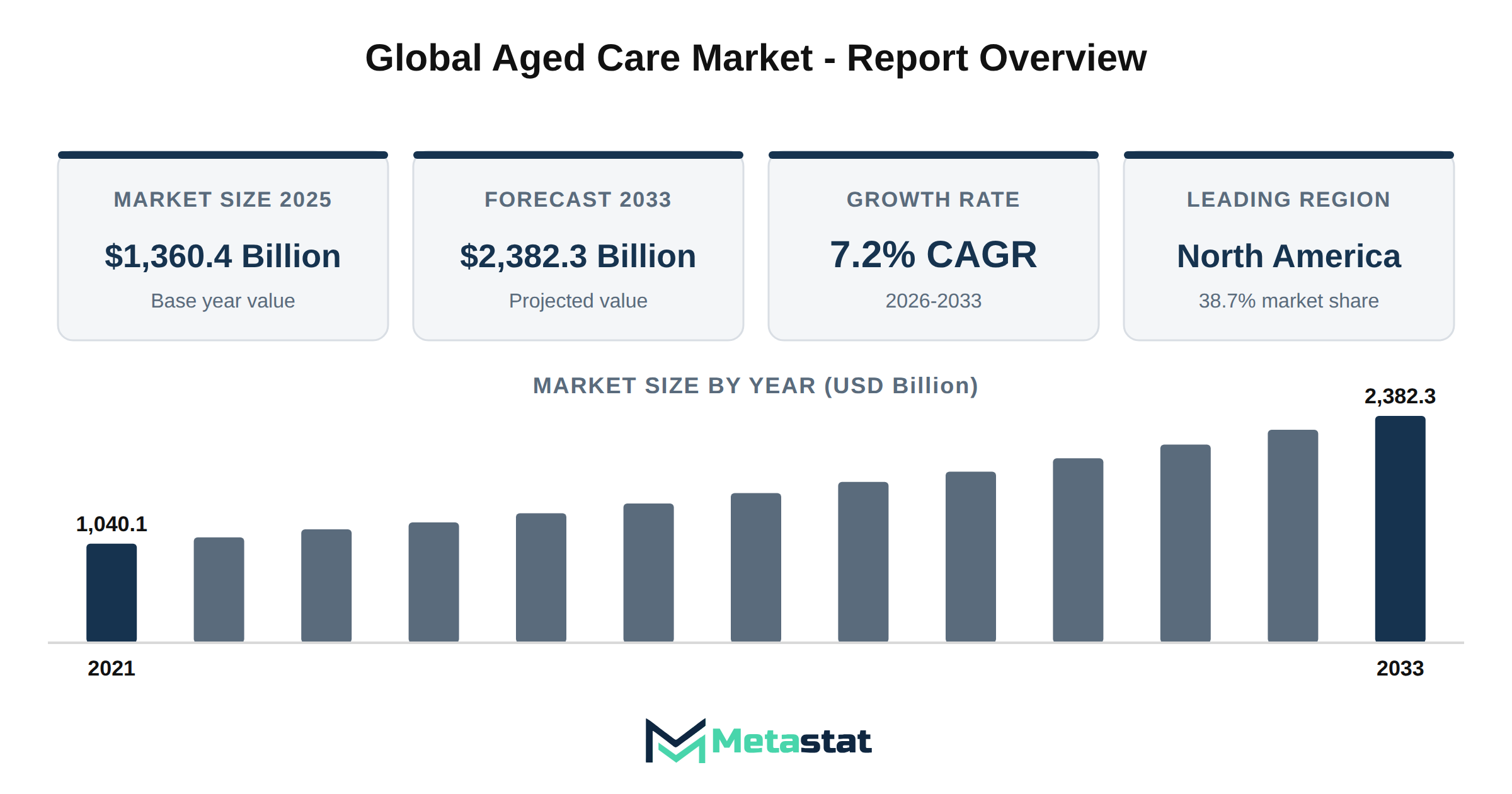
The Aged Care market experienced significant growth from USD 1,040.1 billion in 2021 to USD 1,360.4 billion in 2025, reflecting a steady increase driven by an aging population and rising demand for various care services. The market is projected to reach USD 2,382.3 billion by 2033, representing a compound annual growth rate (CAGR) of 7.2% from 2026 to 2033. This growth trajectory highlights the increasing need for comprehensive aged care solutions, particularly in regions with high elderly populations.
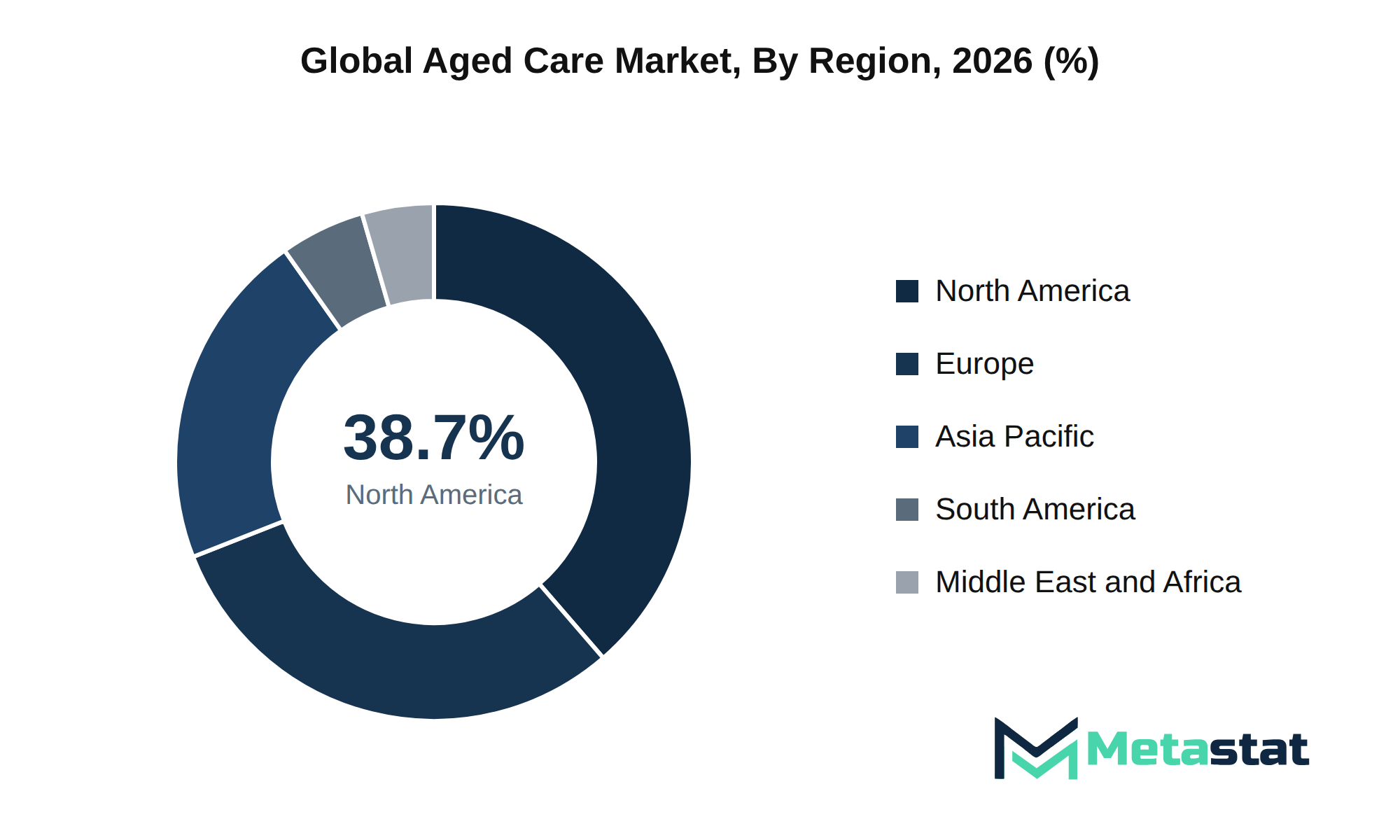
North America holds the largest share of the market at 38.7%, driven by robust healthcare infrastructure and a high percentage of elderly residents seeking professional care services. Europe follows closely with a 30.4% share, where regulations and standards promote high-quality care practices. The Asia Pacific region accounts for 21.2% of the market, reflecting a growing demand for aged care services due to demographic shifts and urbanization trends. South America and the Middle East and Africa represent smaller segments of the market, with shares of 5.3% and 4.5%, respectively, indicating potential for future growth.
Several factors contribute to the expansion of the Aged Care market. Key drivers include increasing life expectancy, rising prevalence of chronic diseases, and a greater focus on preventative care. The need for specialized services, including dementia and Alzheimer's care, is expected to grow, with projections indicating a market value of USD 466.2 billion by 2033. Home-based care solutions and assisted living facilities are gaining traction, with respective projected revenue of USD 292.1 billion and USD 295.9 billion in the same timeframe.
Investment in infrastructure and innovation significantly shapes the future of the market. Companies are focusing on enhancing service delivery through technology integration and streamlined operations, leading to more efficient care models. The competitive landscape features various players, including Epoch Elder Care, Amedisys, and Brookdale Senior Living, who actively adapt their strategies to meet the evolving demands of consumers.
The Aged Care market faces several challenges related to regulatory compliance and geopolitical risks. Various regulations govern operations, ensuring that providers maintain high standards of care and safety. Compliance with these regulations creates barriers to entry for new players, impacting market dynamics. Geopolitical factors influence investment decisions and operational strategies, particularly in regions with varying levels of political stability.
Investment in research and development is essential for advancing the market. Companies focus on next-generation innovations that enhance service delivery and improve operational efficiency. The push for sustainable transformation within the sector addresses the increasing demand for environmentally responsible practices, aligning with broader decarbonization initiatives.
The supply chain landscape within the market presents complexities that affect logistics architecture and sourcing strategies. Disruptions, whether arising from global events or localized challenges, impact service delivery and operational costs. Companies adapt their procurement strategies to mitigate risks and ensure a steady flow of resources.
Market fragmentation presents both challenges and opportunities. Numerous players operate across various segments, each vying for market share. Mergers and acquisitions are expected to shape the competitive environment, enabling firms to consolidate resources and expand their reach. This consolidation enhances the value chain, improving service offerings while optimizing operational efficiencies.
Capital allocation remains a key consideration for stakeholders in the Aged Care market. Infrastructure investments are essential to meet rising demand and improve service quality. Companies evaluate their capital expenditure and operational expenditure realities to ensure sustainable growth. Macroeconomic headwinds, including inflationary pressures and currency volatility, further influence strategic decision-making.
The future strategic outlook for the market emphasizes the importance of aligning corporate imperatives with evolving consumer expectations. High-value recommendations focus on leveraging innovation, enhancing customer journey dynamics, and investing in technology to drive growth. While the market evolves, companies that adapt to these changes position themselves for long-term success.
Market Dynamics
Shifting demographic patterns drive aged care demand
The aging population significantly drives demand in the Aged Care market, with a notable increase in the number of individuals aged 60 years and above. This demographic shift results from declining birth rates and increasing life expectancy, which places pressure on existing care systems and providers. The growing number of elderly individuals leads to increased demand for various care services, including skilled nursing, home-based care, and assisted living facilities.
Lifestyle changes among older adults contribute to evolving needs and preferences for care services. Many elderly individuals prefer to age in place, opting for home-based aged care solutions that offer greater independence and comfort. This trend necessitates the expansion of service offerings by providers in the market, ultimately enhancing overall accessibility and availability of aged care services.
The impact of shifting demographic patterns extends beyond individual preferences, influencing public and private investment in the sector. Increased demand drives strategic capital investments aimed at improving facilities, enhancing service delivery models, and introducing innovative care solutions. Consequently, the Aged Care market experiences significant growth, with projected revenues increasing from USD 1,360.4 billion in 2025 to USD 2,382.3 billion by 2033, representing a compound annual growth rate of 7.2%. This growth highlights the market's critical role in addressing the needs of an aging population.
Increased focus on innovation drives service diversification
The Aged Care market experiences accelerated growth driven by a heightened emphasis on innovation-led product and service diversification. Investment in research and development enhances the range of offerings, resulting in more tailored care solutions that address specific needs of the elderly population. The integration of proprietary technologies supports improved service delivery, attracting a broader customer base seeking high-quality care options.
Organizations within the market pursue technological advancements including automation and artificial intelligence, streamlining operations and enhancing care quality. The adoption of digital platforms facilitates communication between caregivers and clients, improving overall satisfaction and engagement. These innovations improve operational efficiency and create a competitive edge among providers in a changing environment.
With these developments, the market anticipates significant growth in revenue streams. By leveraging innovative solutions and expanding service portfolios, providers capture new segments of the population, supporting long-term sustainability and profitability in the Aged Care market.
Regulatory compliance and economic challenges
The Aged Care market contends with various challenges stemming from regulatory compliance and economic conditions. Increased regulatory scrutiny imposes significant burdens on providers, requiring adherence to evolving standards that raise operational costs and limit service flexibility. These compliance hurdles force organizations to allocate resources towards meeting legal mandates rather than enhancing service offerings or expanding capacity.
Macroeconomic headwinds, including inflationary pressures, impact the overall cost structure within the market. Rising costs of essential services and materials contribute to financial strain for care providers, adversely affecting profitability and investment potential. This scenario leads to capital stagnation, where providers hesitate to pursue growth opportunities owing to uncertain economic conditions.
Supply chain disruptions further complicate the landscape, causing delays in service delivery and increasing operational inefficiencies. Geopolitical instability introduces additional risk factors, potentially affecting investment confidence and operational stability in the market. Such challenges highlight the need for strategic adjustments in business models to navigate prevailing hurdles.
Resource scarcity, particularly in skilled labor, intensifies competition among providers. The ongoing challenge of attracting and retaining qualified personnel increases workforce overhead, impacting service quality and the ability to meet growing demand. Consequently, these issues hinder the market's overall growth trajectory, presenting significant barriers to achieving anticipated revenue targets.
Geopolitical fragmentation affects supply chains
The Aged Care market faces substantial challenges arising from geopolitical fragmentation, which disrupts supply chains and affects the availability of essential resources. Political tensions between nations lead to trade deficits and tariff friction, complicating the procurement of materials and components necessary for aged care services. Disruptions in logistics stemming from these geopolitical issues create delays in service delivery, impacting operational efficiency and ultimately the quality of care provided.
The complexity of research and development integrations further exacerbates challenges in the market. Companies struggle with interoperability friction, which hinders effective collaboration between systems and technologies vital for advancing aged care services. This situation results in increased costs associated with compliance overhead and evolving legal liabilities, which weigh heavily on market participants.
Pricing compression driven by market saturation pressures profit margins, compelling providers to find ways to maintain service quality while managing operational costs. Rising input cost structures contribute to financial strain, prompting a reevaluation of pricing strategies. The market experiences workforce skill gaps, leading to difficulties attracting and retaining qualified personnel, which complicates service delivery in a competitive environment.
Environmental lifecycle footprints and sustainability demands create additional pressure on the market. Compliance with stringent decarbonization mandates requires investment in retrofitting and infrastructure upgrades, often leading to implementation bottlenecks. Such challenges delay the introduction of new services and strain financial resources, affecting overall market growth.
Emerging regional demands drive market expansion
The Aged Care market experiences notable expansion driven by emerging regional demands. Increasing elderly populations, especially in North America and Europe, significantly influence this growth. These regions exhibit a heightened need for comprehensive care services tailored to aging individuals. The growing focus on quality care, alongside population aging, encourages investments in innovative care solutions across various settings.
Infrastructure modernization presents another opportunity for market stakeholders. Upgrading existing facilities to meet the rising demand for aged care services enhances operational efficiency and patient care quality. Modernized infrastructure supports the integration of advanced technologies, improving service delivery and resource management.
Geographical expansion into underserved regions contributes to market growth. Providers exploring new markets tap into populations with limited access to quality care. This strategy drives revenue potential and addresses critical gaps in healthcare accessibility, enhancing overall community health outcomes. The Aged Care market benefits from investments in promoting services across diverse and remote locations.
Technological disruptions, including digital transformation and next-generation innovations, reshape service delivery models. The introduction of telehealth services and smart home technologies enhances patient monitoring and accessibility. These advancements improve operational yield while meeting evolving consumer expectations for personalized care.
Sustainability imperatives rise to prominence owing to environmental consciousness influencing consumer choices. Providers aligning services with eco-friendly practices attract a growing segment of the market that values sustainability. This shift towards green transformations stimulates investment in energy-efficient infrastructure and practices within aged care facilities.
Strategic consolidation through mergers and acquisitions enhances competitive positioning within the market. Collaborations among providers enable resource sharing, operational efficiencies, and expanded service offerings. Such initiatives strengthen market presence and facilitate a broader reach, ultimately benefiting the aging population.
Shifting buying behaviors, driven by digital procurement and evolving consumer expectations, reshape the purchasing landscape. Clients prioritize convenience and quality, prompting providers to adapt their commercial models. This transition influences service delivery and operational strategies owing to the market evolving to meet these new demands.
Asset life-cycle extensions and maintenance upgrades contribute to prolonged equipment and facility usability. Investments in retrofitting existing structures ensure compliance with contemporary standards and enhance service quality. This focus on value-chain optimization allows providers to maximize their operational potential while minimizing disruptions, thus reinforcing their market position.
Market Segmentation Analysis
The Global Aged Care market is segmented based on Care Setting, Care Need, Age Group, and Provider Ownership.
By Care Setting, the market is further segmented into:
- Residential Aged Care
- Assisted Living and Senior Living Communities
- Skilled Nursing and Post-Acute Care
- Home-Based Aged Care
- Others (Community and Day Care, Continuing Care Retirement Communities, Hospice and Palliative Care Settings)
Residential Aged Care
Growth in the Residential Aged Care segment is influenced by various factors including demographic shifts and increasing healthcare awareness. With a valuation of USD 229.8 billion in 2026, the segment is projected to reach USD 345.9 billion by 2033, at a CAGR of 6% during the forecast period. An aging population drives demand for residential services tailored to the elderly, emphasizing the need for more facilities catering to this demographic. The rise in chronic illnesses among older adults further fuels demand for comprehensive care options.
Investment in technological advancements enhances service delivery within the segment. Innovations in health monitoring systems and telehealth platforms improve accessibility and efficiency of care. These advancements streamline operations and facilitate improved patient outcomes, appealing to both service providers and consumers.
Regulatory compliance standards impact operational strategies for residential aged care providers. Adhering to these standards often requires significant investment in infrastructure and staff training. Compliance enhances service quality, building consumer trust and boosting brand reputation in the market. This dynamic contributes positively to the growth of the Residential Aged Care segment.
Cost structures significantly influence pricing strategies in the market. Fluctuations in raw material costs for facility maintenance, coupled with wage pressures for skilled staff, impact the overall profitability of service providers. Strategic planning around these factors is essential for sustaining growth while ensuring affordability for consumers.
The evolving nature of the Aged Care market presents both challenges and opportunities for the Residential Aged Care segment. By leveraging technological advancements, adhering to regulatory standards, and optimizing cost structures, service providers position themselves to capitalize on the growing demand for aged care services.
Assisted Living and Senior Living Communities
Growth in the Assisted Living and Senior Living Communities segment reflects the increasing need for supportive living environments for aging populations. Population demographics indicate a significant rise in individuals aged 60 and above, driving demand for these communities. This segment is projected to reach USD 292.1 billion by 2033, at a CAGR of 7.5% during the forecast period.
Adoption of these living arrangements is influenced by lifestyle changes and preferences among seniors. Many individuals seek environments that offer not only care but social interaction and community engagement. Enhanced features including personalized care plans and a focus on wellness programs further attract residents, contributing to segment expansion.
Technological advancements play a crucial role in transforming the service offerings within this segment. Smart home technologies and telehealth solutions streamline care delivery, enhancing the living experience for residents. This integration of technology aligns with growing expectations of seniors and their families regarding safety and convenience.
Market dynamics show a shift in consumption patterns, with a growing inclination towards community-based living arrangements rather than traditional nursing facilities. This shift reflects a preference for independence while receiving necessary support, influencing investment strategies within the Aged Care market.
Regulatory compliance standards have evolved to ensure quality care in these communities. Providers face challenges related to maintaining accreditation and meeting expectations set by governing bodies. Adherence to these standards enhances credibility and attracts discerning consumers.
Cost structures within this segment are affected by rising operational expenses, including staffing and facility maintenance. Providers seek ways to optimize expenses while offering competitive pricing. Economic pressures drive a focus on achieving operational efficiencies without compromising quality.
Future opportunities within the Assisted Living and Senior Living Communities segment revolve around innovative service delivery models and enhanced care offerings. Identifying strategic partnerships and investments in technology creates competitive advantages and drives growth in this dynamic segment of the Aged Care market.
Skilled Nursing and Post-Acute Care
Growth in the Skilled Nursing and Post-Acute Care segment stems from increasing demand for specialized healthcare services among aging populations. Factors influencing adoption include advancements in medical technology, improvements in care protocols, and a greater emphasis on patient-centered approaches. Various healthcare providers, including hospitals and rehabilitation facilities, focus on integrating skilled nursing care into their offerings, enhancing overall patient outcomes and satisfaction. This segment is projected to reach USD 295.9 billion by 2033.
Technological maturation enhances service delivery within the market. Innovations including telehealth and electronic health records streamline patient management, improving accessibility and coordination of care. These advancements contribute to more efficient operations, allowing providers to focus resources on high-quality care delivery. Regulatory compliance standards and certifications drive investment in skilled nursing facilities, ensuring adherence to best practices and building trust among patients and families.
Shifts in consumption patterns reflect an increasing preference for personalized care solutions. This trend leads to a growing need for skilled nursing services tailored to individual patient requirements. The market benefits from strategic investment opportunities, particularly in areas with high population density, where the demand for skilled nursing care remains robust. Organizations focused on expanding their service offerings in skilled nursing and post-acute care are expected to achieve significant competitive advantages in the evolving landscape of the Aged Care market.
Home-Based Aged Care
Growing consumer preference for personalized care solutions drives demand for Home-Based Aged Care. This segment is experiencing significant expansion, fueled by advancements in telehealth technologies, which enable remote monitoring and consultations. Technological maturation in health information systems supports efficient communication between caregivers and healthcare providers, leading to improved patient outcomes.
Market participants respond to shifting demographics, with an increasing number of seniors preferring to age in place. This trend aligns with broader societal changes emphasizing independence and comfort in familiar environments. Evolving regulatory compliance standards regarding home care services incentivize providers to enhance service quality and maintain competitive advantages.
The Home-Based Aged Care segment is projected to grow at a CAGR of 7.7% during the forecast period. Investment in training and certification programs for caregivers strengthens the workforce, ensuring high-quality service delivery. Rising awareness about chronic disease management among older adults increases demand for tailored at-home care solutions.
The integration of artificial intelligence and automation into care processes enhances operational efficiency. Emerging technologies streamline administrative tasks, allowing caregivers to focus on patient interaction and care. While the market engages with innovative solutions, partnerships among service providers, technology firms, and healthcare organizations gain prominence, creating a collaborative ecosystem.
Overall, demand dynamics in the Home-Based Aged Care segment reflect a convergence of evolving consumer preferences, regulatory frameworks, and technological advancements. The Aged Care market adapts robustly to these factors, creating a favorable environment for sustained growth and innovation.
Others (Community and Day Care, Continuing Care Retirement Communities, Hospice and Palliative Care Settings)
Demand for community and day care services, continuing care retirement communities, and hospice and palliative care settings reflects a significant trend toward personalized and flexible age-related support. This demand arises from an increasing preference for services that allow older adults to maintain a level of independence while receiving essential care. Family members and caregivers prioritize settings that offer comprehensive support, reinforcing the need for tailored care solutions that meet individual requirements.
Adoption of these services is influenced by several catalysts, including the ongoing evolution of healthcare technology and care models. The integration of telehealth and remote monitoring tools enhances the accessibility and efficiency of care. This enables providers to offer more responsive services. Technological maturation encourages investment and innovation, leading to the development of next-generation upgrades that improve patient outcomes and care quality.
Market dynamics highlight consumption shifts, particularly among younger caregivers who increasingly favor community-based options over traditional institutional settings. This trend aligns with regulatory compliance standards that promote quality of care and patient safety. The evolving guidelines drive providers to enhance service offerings. Cost structures and pricing volatility impact the landscape, pushing providers to optimize services while maintaining affordability for clients.
Strategic opportunity windows in the market arise from unmet needs for specialized care, especially in dementia and chronic disease management. Addressing these gaps offers significant potential for growth and diversification within the aged care market. Supply chain resilience and raw material sourcing challenges shape operational strategies, influencing service delivery and overall market dynamics.
By Care Need, the market is further segmented into:
- General Age-Related Support and Activities of Daily Living
- Dementia and Alzheimer's Care
- Chronic Disease Management
- Post-Acute and Rehabilitation Care
General Age-Related Support and Activities of Daily Living
Valued at USD 577.7 billion in 2026, the General Age-Related Support and Activities of Daily Living segment is projected to reach USD 895.7 billion by 2033, reflecting a CAGR of 6.5% during the forecast period. Growth in this segment is primarily driven by the increasing prevalence of age-related conditions requiring assistance with daily activities, coupled with rising awareness of the importance of support services for the elderly population. The expansion of this segment is supported by advancements in care technologies that enhance service delivery and improve the quality of life for seniors.
Technological maturation contributes significantly to the Aged Care market, enabling the development of innovative solutions tailored to general age-related support. The integration of smart home technologies, telehealth services, and personalized care plans enhances the effectiveness of care delivery, meeting the diverse needs of seniors. This evolution encourages increased adoption among providers, leading to better health outcomes and enhanced customer satisfaction.
Consumption shifts toward home-based support solutions indicate a preference for more personalized care settings. Clients increasingly favor services that allow them to remain in familiar environments while receiving necessary assistance. This trend is supported by regulatory frameworks encouraging aging in place, driving investment in home care services and support systems.
Cost structures in this segment are influenced by the need for skilled workforce development and ongoing training to meet the demands of complex care needs. Pricing volatility arises from fluctuations in labor costs and the need for continuous technological investment. Strategic opportunity windows exist for providers who adapt their offerings to align with evolving consumer preferences and regulatory requirements, ensuring competitiveness in the market.
Dementia and Alzheimer's Care
Dementia and Alzheimer's Care segment is estimated to reach USD 466.2 billion by 2033, at a CAGR of 8.2% during the forecast period. A growing prevalence of dementia and Alzheimer's disease among the aging population drives demand for specialized care services in this sector. Increased awareness of cognitive disorders and their management encourages families to seek professional assistance, enhancing segment adoption. Technological advancements, including telemedicine and digital health solutions, play an essential role in improving care delivery and patient monitoring. These advancements lead to better outcomes and increased confidence in available services. Enhanced training and certifications for caregivers contribute to higher service quality, addressing concerns about care standards. Regulatory compliance standards concerning safety, quality, and patient rights influence the segment, promoting investment in facilities and staff training. Such regulations establish a framework for care provision, ensuring that providers meet necessary criteria to deliver effective treatment. Pricing volatility stems from fluctuating demand for services, variations in caregiver wages, and the cost of new technologies. The market faces margin pressures due to rising operational costs and the need for continuous improvement in care quality. Strategic opportunity windows arise from unmet needs in personalized care, innovative therapeutic solutions, and expanding service models. Capital investment in next-generation upgrades, including smart home technologies and specialized care environments, positions providers to address evolving consumer expectations in the Aged Care market.
Chronic Disease Management
Chronic Disease Management represents a critical segment within the Aged Care market, reflecting the increasing prevalence of chronic conditions among the aging population. The segment is expected to reach USD 471.2 billion by 2033, driven by the aging demographic requiring ongoing management of chronic diseases, including diabetes, cardiovascular conditions, and respiratory disorders. Healthcare providers prioritize tailored care plans and interventions to address these conditions, enhancing patient outcomes and improving quality of life.
Technological advancements in telehealth and remote monitoring facilitate effective management of chronic diseases, enabling healthcare providers to reach patients more efficiently. The adoption of innovative technologies streamlines data collection and provides patients with better access to their health information. This transformation allows for proactive management and timely interventions, contributing to improved patient adherence and satisfaction.
Regulatory compliance standards play a significant role in shaping the Chronic Disease Management segment. Policies aimed at enhancing patient care quality and safety encourage healthcare systems to allocate resources towards chronic disease initiatives. This regulatory landscape influences providers' operational strategies, driving investments in training and infrastructure to meet compliance requirements while maintaining competitive positioning in the market.
Cost structures within the segment are heavily influenced by the need for specialized care and ongoing treatment regimens. The emphasis on chronic disease management results in increased demand for healthcare services, leading to pricing volatility. This volatility necessitates strategic planning from providers to optimize service delivery while managing operational costs effectively.
End-use dynamics within the segment reflect a shift towards integrated care models focusing on chronic disease management and prevention. This shift encourages collaboration among healthcare providers, patients, and caregivers, creating a comprehensive support system for individuals with chronic conditions. The focus on integrated care enhances patient experiences, thereby influencing overall market growth.
Investment in chronic disease management solutions presents strategic opportunity windows for market players. The growing demand for innovative care models creates a competitive landscape where providers develop new services tailored to chronic disease management. This evolution in the market highlights the importance of adapting to shifting consumer preferences and embracing technological advancements to capture growth potential.
Post-Acute and Rehabilitation Care
Post-Acute and Rehabilitation Care segment is projected to grow at a CAGR of 7.5% during the forecast period. Primary demand drivers in this segment include an increasing prevalence of chronic diseases and a growing elderly population requiring specialized care. The Aged Care market experiences heightened interest in rehabilitation services, driven by advancements in medical technology and increasing awareness of the importance of post-acute care in recovery. These factors create significant opportunities for service providers to enhance their offerings.
Adoption of innovative rehabilitation techniques and technologies influences sector expansion. Emerging trends including telehealth for remote monitoring and virtual rehabilitation enhance accessibility and improve patient outcomes. The segment benefits from supportive regulatory frameworks that encourage investment in advanced care methodologies. The increasing focus on quality of care and patient satisfaction emphasizes the need for effective post-acute services, resulting in ongoing investment in this area.
Cost structures associated with Post-Acute and Rehabilitation Care reflect factors including staffing requirements, resource allocation, and facility maintenance. Pricing volatility results from fluctuations in demand due to seasonal variations in health needs, affecting revenue predictability for providers. Enhanced training for caregivers and investment in technology yield long-term benefits, improving operational efficiency and care quality while addressing margin pressures.
Strategic opportunity windows arise from a shift in consumer preferences toward personalized and integrated care solutions. A growing emphasis on patient-centric models influences the evolution of service delivery in the segment. Comprehensive care plans that incorporate rehabilitation services lead to improved patient outcomes and increased satisfaction, reinforcing growth within the Aged Care market.
By Age Group, the market is further segmented into:
- 60-74 Years
- 75-84 Years
- 85 Years and Above
60-74 Years
Valued at USD 721.6 billion in 2026, the 60-74 Years segment is projected to reach USD 1,114.9 billion by 2033, at a CAGR of 6.4% during the forecast period. An increase in the aging population and a rising prevalence of chronic diseases among individuals in this age group drive demand for aged care services. Growing awareness regarding the importance of specialized care solutions contributes to segment expansion, resulting in increased investment in residential and assisted living facilities tailored to this demographic.
Technological advancements enhance care delivery methods, enabling more efficient monitoring and management of health conditions, thereby supporting consumer adoption. The market experiences shifts in consumption patterns driven by families increasingly seeking support for aging relatives, propelling the demand for home-based aged care options. Regulatory compliance regarding quality standards and certifications influences providers to enhance service offerings and improve care outcomes, creating a competitive landscape that promotes innovation and expansion.
Cost structures and pricing volatility remain crucial factors affecting the market. Providers face challenges in maintaining margins while upgrading facilities and incorporating new technologies. Nevertheless, strategic opportunities exist for investment in next-generation care solutions that address the specific needs of the 60-74 age group. The capital investment outlook remains strong, driven by the necessity for enhanced care infrastructures and the increasing expectation for high-quality aged care services.
75-84 Years
Demand for aged care services among individuals aged 75-84 years reflects significant growth, driven by increasing demographic shifts and a rising prevalence of age-related health conditions. This age group often experiences complex health needs, including chronic illnesses and mobility limitations, which enhance the requirement for specialized care services. The Aged Care market observes this trend, reflecting families and caregivers seeking tailored solutions to meet the unique challenges faced by this demographic.
Projected growth in this segment aligns with overall market expansion, with the 75-84 Years segment estimated to reach USD 776.9 billion by 2033, at a CAGR of 7.4% during the forecast period. Factors contributing to this growth include advancements in care technologies, which improve the quality of life for elderly individuals, and increased investment in residential and home-based care facilities. The market benefits from innovations that enhance care delivery and enable better health outcomes for older adults.
Regulatory frameworks and funding models increasingly support age-related care initiatives, promoting access to necessary services. The enhanced focus on quality standards and compliance in the Aged Care market ensures that providers implement best practices, building trust among consumers. This trend facilitates the adoption of new care models that cater to the specific needs of the 75-84 years age group, ultimately leading to increased market demand.
85 Years and Above
In 2026, the 85 Years and Above segment will generate significant demand, with an estimated value of USD 490.5 billion by 2033. This growth is driven by an aging population and a rising prevalence of age-related health conditions, which increase the necessity for specialized care services. Increased awareness of the unique healthcare needs of this age group influences investment in tailored care solutions, making the Aged Care market increasingly responsive to these demands.
Shifts in consumption patterns reflect a growing preference for home-based and personalized care approaches instead of institutional settings. The rise in chronic diseases and cognitive impairments requires continuous monitoring and support, prompting the adoption of innovative care models. Integration of technology in care delivery enhances operational efficiency, enabling providers to offer better service levels while managing costs effectively.
The regulatory environment shapes service delivery, with compliance standards evolving to address the complexities associated with aged care. Providers face pressure to uphold quality while navigating cost structures that fluctuate due to market dynamics. These factors contribute to a competitive landscape, where firms actively seek strategic opportunities to expand their market presence and improve profitability.
The 85 Years and Above segment thrives on a confluence of demographic trends and evolving consumer needs within the Aged Care market. Attention to regulatory compliance, technological advancements, and tailored care strategies will influence the segment’s trajectory through 2033.
By Provider Ownership, the market is further segmented into:
- For-Profit Private Providers
- Not-for-Profit Providers
- Government and Public Providers
For-Profit Private Providers
For-Profit Private Providers in the Aged Care market face several demand drivers influencing growth. An aging population requiring diverse care options leads to increased demand. The rising prevalence of chronic illnesses among older adults necessitates tailored services, enhancing the appeal of for-profit offerings. Consumer willingness to pay for enhanced quality and personalized care solutions supports the expansion of this segment.
Regulatory compliance standards impact operational practices among For-Profit Private Providers. Adhering to these standards involves significant investments in training, technology, and infrastructure, influencing cost structures. Pricing volatility remains a concern, driven by factors including labor costs and fluctuating demand for services. Providers in this space continuously seek efficiencies to manage margin pressures while maintaining service quality.
Technological maturation drives innovative solutions within the Aged Care market. Next-gen upgrades, including telehealth and remote monitoring systems, enhance service delivery, catering to the needs of both providers and consumers. These advancements lead to improved operational efficiency and better patient outcomes, further driving demand for for-profit aged care services.
Strategic opportunity windows arise from shifting consumer preferences towards home-based care options. For-Profit Private Providers capitalize on this trend by diversifying their service offerings to include home care solutions. Supply chain resilience ensures reliable access to necessary resources and materials. Providers implementing robust supply chain strategies mitigate risks associated with logistics vulnerabilities and substitution threats.
In the evolving Aged Care market, the focus on capital investment outlook becomes crucial. For-Profit Private Providers that invest in innovative care models and expand their service portfolios position themselves for long-term success. This proactive approach enables adaptation to changing market dynamics and consumer expectations, ultimately contributing to the segment's growth.
Not-for-Profit Providers
In recent years, the Aged Care market has seen an increased reliance on Not-for-Profit Providers, driven by growing demand for affordable and quality care solutions. This shift arises from an aging population seeking services that prioritize care quality over profit margins. Individuals and families increasingly favor providers that align with community values and are committed to reinvesting surplus funds into care services.
Regulatory frameworks and funding mechanisms support Not-for-Profit Providers, enabling them to deliver essential services while maintaining compliance with industry standards. The emphasis on care quality and ethical considerations influences consumer choices, promoting these providers within the market. Collaborations with local governments and community organizations enhance service accessibility, expanding their reach and impact.
Technological advancements play a significant role in the evolution of Not-for-Profit Providers. Adoption of next-gen health technologies streamlines operations and improves patient outcomes. The focus on evidence-based care and outcome measurement aligns with contemporary demands for transparency and quality assurance, supporting the segment's growth within the Aged Care market.
Competition among providers drives innovation and enhances service offerings, creating strategic opportunity windows for Not-for-Profit organizations. While community needs evolve, these providers adapt, identifying white-space opportunities that address unmet needs while ensuring sustainable growth. The ongoing emphasis on collaborative care models and integrated service delivery reinforces the sector's resilience against market fluctuations.
Cost structures and pricing strategies remain critical factors for Not-for-Profit Providers. By focusing on efficient resource allocation and minimizing operational expenses, these organizations maintain competitive pricing without compromising care quality. Such strategies position them favorably within the broader Aged Care market, attracting consumers who prioritize value-driven options.
Government and Public Providers
Government and public providers within the Aged Care market play a vital role in delivering essential services to aging populations. This segment benefits from strong demand drivers, including an increasing elderly demographic and heightened awareness of age-related care needs among the public. Policies promoting accessible care support the segment's expansion, enhancing the quality and availability of aged care services.
Compliance with regulatory standards influences operations significantly. Providers face pressure to meet rigorous certification requirements, which ensure high-quality care delivery. This regulatory landscape shapes operational costs and pricing structures, necessitating continuous adaptation to maintain service excellence. Investment in technology and infrastructure remains critical. Next-generation upgrades enhance service efficiency and patient outcomes.
Shifts in consumer preferences towards community-based care solutions drive government and public providers to innovate service offerings. An enhanced focus on chronic disease management and specialized care for conditions including dementia and Alzheimer’s aligns with evolving end-use dynamics. The market's response to changing consumption patterns highlights opportunities for strategic investment and collaboration to deliver integrated care models that address diverse needs.
Public funding mechanisms support these providers, ensuring financial sustainability while delivering essential services. Understanding the intricacies of cost structures, pricing volatility, and margin pressures in this sub-segment is crucial for maintaining competitiveness. Government and public providers navigate these complexities within the broader context of the Aged Care market, reflecting ongoing demographic and technological trends.
By Region
Based on geography, the Global Aged Care market is divided into North America, Europe, Asia-Pacific, South America, Middle East, and Africa.
North America
North America Aged Care Market is set to expand at a CAGR of 7.2% within the forecast period, reaching a market size (TAM) of USD 875.5 billion by the end of 2033. The region accounts for 38.7% of the global market in 2025. Demand for aged care services stems from an aging population in the United States, Canada, and Mexico, where regulatory frameworks increasingly emphasize quality in elder care.
Infrastructure modernization across North America enhances the market's potential, with investments in technology and facility upgrades improving service quality. Emerging market front-runners, including local providers, adapt to regional purchasing behaviors and cultural nuances, creating a competitive environment that drives innovation. Supply chain regionalization initiatives facilitate localized manufacturing densities, improving responsiveness to market demands.
Growing emphasis on quality care results in high-value replacement cycles, prompting established players to innovate and expand service offerings. The market remains resilient, with continued foreign direct investment (FDI) flows highlighting confidence in North America's aging services sector. Domestic market participants invest in strategic entry barriers that support sustained growth, positioning themselves to capture emerging opportunities within the Aged Care market.
Europe
The Aged Care market in Europe experiences a significant growth trajectory, supported by an aging population and increasing demand for comprehensive care solutions. Key countries including Germany, France, the UK, Italy, Spain, Russia, and the Rest of Europe contribute significantly to this growth, with a collective share of 30.4% of the global market projected for 2025.
In Europe, demographic shifts prompt a higher demand for specialized aged care services, particularly for dementia and Alzheimer's care, which is critical given the increasing prevalence of these conditions among older adults. Rising investment in infrastructure modernization enhances service delivery, while emerging market front-runners focus on expanding their portfolios to meet evolving consumer needs.
Localized manufacturing densities facilitate efficient service provision, enabling companies to respond swiftly to market demands. The presence of established domestic players strengthens competitive dynamics, while foreign direct investment (FDI) flows signal confidence in the region's growth potential.
Geographic regulatory frameworks and local compliance mandates influence operational strategies, ensuring that providers align with regional healthcare standards. Cultural nuances impact business-to-business buying behaviors, creating unique procurement dynamics that favor localized approaches to service delivery.
The combination of these factors creates a favorable environment for the Aged Care market, highlighting challenges and opportunities for stakeholders aiming to capture market share within this evolving environment.
Asia-Pacific
The Asia-Pacific region represents a significant opportunity within the Aged Care market, contributing 21.2% of the global market share in 2025. Rapid urbanization, a growing elderly population, and increasing life expectancy create strong demand for aged care services across countries including China, Japan, India, South Korea, and Australia.
Infrastructure modernization enhances the availability and quality of aged care services. Governments across these countries are investing in healthcare facilities, enabling better access to care for aging populations. This investment is complemented by a cultural shift towards supporting elderly individuals in their communities, which drives the adoption of care services.
Segment expansion is particularly evident in home-based aged care and assisted living, responding to the preferences of families seeking personalized and flexible care options. Emerging market front-runners within Asia-Pacific, including China and India, exhibit significant growth potential due to their large populations and increasing awareness of aged care benefits.
Challenges remain in terms of supply chain regionalization and local compliance mandates that vary between countries. Domestic market participants continue to establish partnerships and consolidate resources to enhance their competitive positioning. The shifting regulatory landscape necessitates adaptive strategies for providers to remain compliant while meeting consumer expectations.
While the Aged Care market evolves, foreign direct investment (FDI) flows into the region are expected to increase, further enhancing service offerings. Localized procurement dynamics and cultural nuances influence B2B buying behaviors, shaping the strategies of providers aiming to capture market share in this growing sector.
South America
The Aged Care market in South America experiences unique dynamics influenced by demographic shifts and varying levels of service adoption. Brazil and Argentina lead the regional landscape, with an increasing elderly population driving demand for aged care services. Infrastructure modernization is essential for expanding service availability, particularly in underpenetrated territories. The market is projected to experience steady growth, supported by regional resource availability and localized procurement dynamics.
Vendor consolidation trends emerge, focusing on partnerships and strategic alliances that enhance service offerings. Domestic market participants adapt to cultural nuances, influencing B2B buying behaviors. The presence of high-value replacement cycles contributes to incremental growth vectors, reinforcing the need for ongoing investment in service quality and accessibility. South America presents valuable opportunities for growth within the global Aged Care market.
Middle East and Africa
The Aged Care market in the Middle East and Africa exhibits characteristics shaped by demographic trends, urbanization, and economic development. The aging population, particularly in countries like Saudi Arabia and the UAE, drives demand for diverse aged care services. A focus on modernization of healthcare infrastructure enhances the capacity to deliver quality care, positioning the market for growth.
Regional governments express a commitment to improving healthcare systems, supporting investment in aged care facilities and services. Cultural attitudes towards aging and care influence the design and delivery of services, emphasizing individualized care approaches that align with local values. Domestic market participants, including both government and private entities, play important roles in shaping service offerings.
While the sector evolves, underpenetrated territories in the region present significant opportunities for expansion. Investment in localized manufacturing and supply chain regionalization supports the development of tailored solutions for aged care. Increased foreign direct investment (FDI) in healthcare enhances competitiveness and drives innovation within the market.
The current share of the aged care market in the Middle East and Africa stands at 4.5% of the global total in 2025. This share reflects both the existing demand and the potential for growth in various segments, including home-based care and skilled nursing services. The market's trajectory aligns with broader economic trends, indicating a strong outlook for the coming years.
Competitive Landscape and Strategic Insights
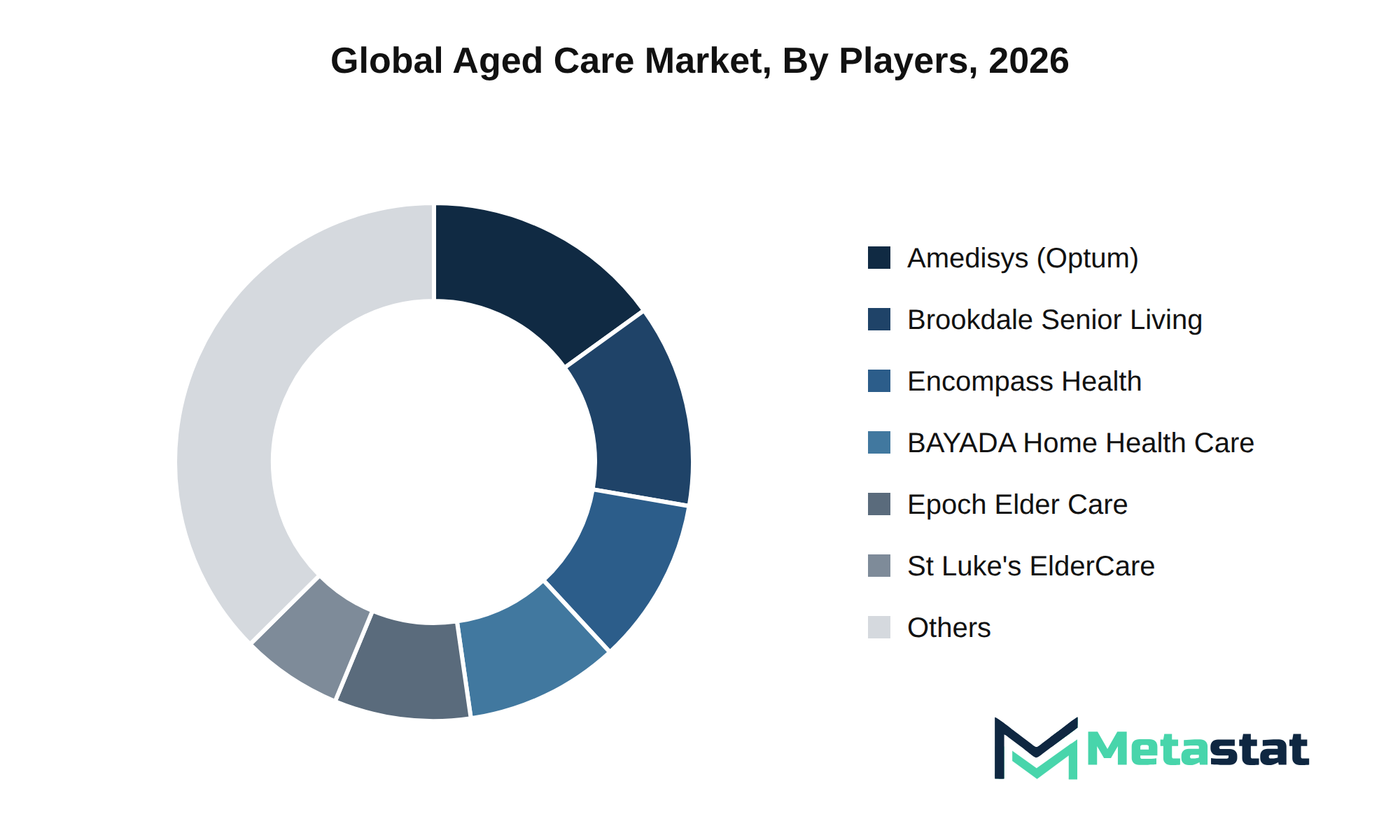
The Aged Care market demonstrates significant activity in mergers and acquisitions, with companies pursuing strategic consolidation to enhance their market positions. This trend includes providers including Epoch Elder Care and St Luke's ElderCare Ltd., which focus on expanding their service offerings and geographical reach. Companies engage in joint ventures and strategic alliances to drive innovation and adapt to changing consumer needs, emphasizing the importance of partnerships in this competitive environment.
Future outlook and strategic growth vectors
The Aged Care market features a dynamic competitive landscape driven by innovation and differentiation. Companies prioritize R&D pipelines and proprietary technology to strengthen their offerings and maintain market relevance. Providers including Amedisys (Optum) and Encompass Health Corporation leverage their intellectual property portfolios to create unique care solutions, enhancing brand equity and customer retention strategies. The market will experience continued competition from new entrants, with barriers to entry becoming increasingly significant owing to established players fortifying their positions.
Market size is forecast to rise from USD 1,360.4 billion in 2025 to over USD 2,382.3 billion by 2033. The base case reflects a growth trajectory characterized by a 7.2% compound annual growth rate (CAGR). Factors influencing this growth include macroeconomic conditions, evolving consumption patterns, and technological advancements.
In the bull case, accelerated adoption of next-generation technologies and increased investment in infrastructure could drive growth beyond current projections. Conversely, the bear case considers potential challenges including regulatory hurdles and geopolitical tensions that restrain market expansion. These dynamics highlight the importance of strategic capital allocation and responsiveness to changing market conditions.
An essential component of this market outlook involves understanding downstream demand changes. Shifts in demographics and consumer preferences create opportunities for innovation and service enhancement within the aged care market. Core industry maturation suggests a focus on efficiency and quality, which positions existing players to leverage established capabilities.
Regulatory evolution and compliance milestones present both challenges and opportunities. Stakeholders prioritize adherence to evolving policies while exploring avenues for growth in emerging markets. Geopolitical realignments and supply chain shifts further emphasize the need for flexibility and strategic planning, ensuring readiness to navigate potential disruptions.
The aged care market stands at a critical junction where executive-level strategic imperatives will define future directions. Identifying unmet enterprise needs and high-growth pockets will play a crucial role in shaping competitive strategies. A multifaceted approach that integrates these elements will enhance market positioning and drive sustainable growth.
Aged Care Market Key Segments
By Care Setting:
- Residential Aged Care
- Assisted Living and Senior Living Communities
- Skilled Nursing and Post-Acute Care
- Home-Based Aged Care
- Others (Community and Day Care, Continuing Care Retirement Communities, Hospice and Palliative Care Settings)
By Care Need:
- General Age-Related Support and Activities of Daily Living
- Dementia and Alzheimer's Care
- Chronic Disease Management
- Post-Acute and Rehabilitation Care
- Others (Palliative and End-of-Life Care, Complex Medical and Nursing Care, Mobility and Functional Support, Wellness and Preventive Ageing Support)
By Age Group:
- 60-74 Years
- 75-84 Years
- 85 Years and Above
By Provider Ownership:
- For-Profit Private Providers
- Not-for-Profit Providers
- Government and Public Providers
By Region:
- North America
- Europe
- Asia-Pacific
- South America
- Middle East and Africa
Key Global Aged Care Industry Players
- Epoch Elder Care
- St Luke's ElderCare Ltd.
- ECON Healthcare Group (One Aged Care)
- Samvedna Care
- Amedisys (Optum)
- Encompass Health Corporation
- Extendicare Inc.
- Rosewood Care Group Inc.
- Benesse Style Care Co. Ltd.
- Brookdale Senior Living Inc.
- BAYADA Home Health Care
- Nichii Gakkan Co., Ltd.
- Pacific Healthcare Nursing Homes (Entrust Healthcare Group)
- Providence Global (Providence Health and Services)
- RIEI Co., Ltd.
- SASCO Integrated Eldercare Centre
- CK Franchising, Inc. (Comfort Keepers)
- Interim HealthCare Inc.
- Home Instead, Inc.
- Right at Home
- Visiting Angels (Living Assistance Services Inc.)
- LHC Group, Inc.
Report Coverage
The report strategically identifies and profiles the key market players and analyses their core competencies in each sub-segment of the Aged Care market.
Report Attributes | Details |
Study Period | 2021-2033 |
Base Year | 2025 |
Estimated Year | 2026 |
Forecast Period | 2026-2033 |
Historical Period | 2021-2025 |
Growth Rate | CAGR 7.2% from 2026 to 2033 |
Revenue Unit | USD billion |
Segmentation | By Care Setting, Care Need, Age Group, Provider Ownership, and Region |
By Region | North America (By Care Setting, Care Need, Age Group, Provider Ownership, and Country)
|
Europe (By Care Setting, Care Need, Age Group, Provider Ownership, and Country)
| |
Asia Pacific (By Care Setting, Care Need, Age Group, Provider Ownership, and Country)
| |
South America (By Care Setting, Care Need, Age Group, Provider Ownership, and Country)
| |
Middle East and Africa (By Care Setting, Care Need, Age Group, Provider Ownership, and Country)
|
What Report Provides
- Key Company Market Share, Revenue and Ranking for the Aged Care Market
- Key Market Leaders and Their Strategic Positioning
- Full In-Depth Analysis of the Aged Care Industry
- Comprehensive Industry Statistics and Trends
- Important Changes in Market Dynamics and Influencing Factors
- Segmentation Details of the Aged Care Market
- Historical, Ongoing and Projected Market Analysis
- Key Strategies of Major Players in the Aged Care Sector
Frequently Asked Questions
Find answers to common questions about this report
The Aged Care market size was valued at USD 1,360.4 billion in 2025.
The Aged Care market is projected to grow at a CAGR of 7.2% during the forecast period from 2026 to 2033.
The North America Aged Care market size is estimated to reach USD 875.5 billion by 2033.
Residential Aged Care leads the Aged Care market with a projected value of USD 345.9 billion by 2033, based on its growth trajectory compared to other segments.
The Aged Care market is primarily driven by the aging population, resulting in increased demand for care services. Lifestyle changes among older adults, including a preference for home-based care solutions, further influence this demand. strategic investments in innovative care models enhance service delivery and address the evolving needs of the elderly population.
North America holds the dominant share of the Aged Care market, with a value of USD 875.5 billion in 2033, representing 38.7 percent of the total market.
The Aged Care market growth faces significant restraints due to increased regulatory scrutiny, economic conditions, and resource scarcity. Compliance burdens raise operational costs, while inflation and supply chain disruptions create financial strain, impacting profitability and investment potential. These challenges hinder the ability to meet growing demand and achieve anticipated revenue targets.
Increasing demand for aged care services stems from the growing elderly population and shifting preferences towards home-based care solutions. The emphasis on innovation-led product diversification and the integration of technology enhance service delivery, attracting a broader customer base seeking high-quality care options.
The Aged Care market is estimated to reach a valuation of USD 2,382.3 billion by 2033.
Key players operating in the Aged Care market include Epoch Elder Care, St Luke's ElderCare Ltd., Amedisys (Optum), Encompass Health Corporation, Brookdale Senior Living Inc., BAYADA Home Health Care, and Home Instead, Inc.
Choose Your License
Global Aged Care Market
Related Reports
Explore related market intelligence reports worth reading alongside this one.