
Global Brake Pad Wear Sensor Harness Market
Global Brake Pad Wear Sensor Harness Market Size, Share, By Vehicle Type (Passenger Cars, Light Commercial Vehicles, Heavy Trucks, Buses and Coaches, and Others), By Sensing Configuration (Single-Stage Wear Sensing, Two-Stage Wear Sensing, and Continuous / Loop-Type Wear Sensing), By Axle Location (Front Axle, Rear Axle, and Dual-Axle / Multi-Axle Systems), By Sales Channel (OEM, Independent Aftermarket, and Original Equipment Service), Industry Analysis, Growth, Trends, and Forecast, 2026-2033
MSI-4999
August 20, 2026
Updated
304 Pages
Historical
Base year
Forecast
Forecast period
Report Details
Comprehensive Market Analysis And Insights
Market Overview
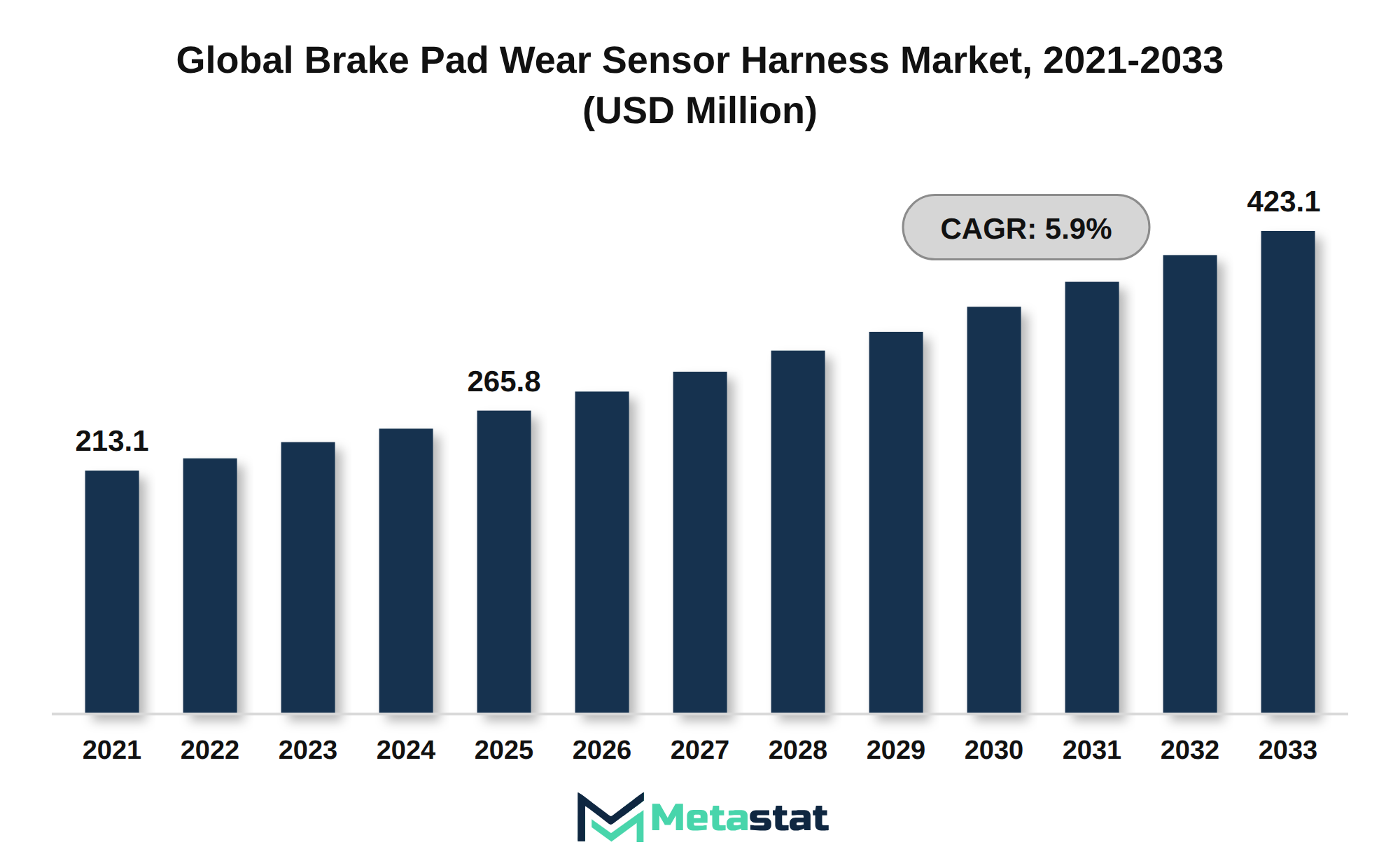
The global Brake Pad Wear Sensor Harness market was valued at USD 265.8 million in 2025 and is projected to reach USD 423.1 million by 2033, growing at a CAGR of 5.9% over the forecast period.
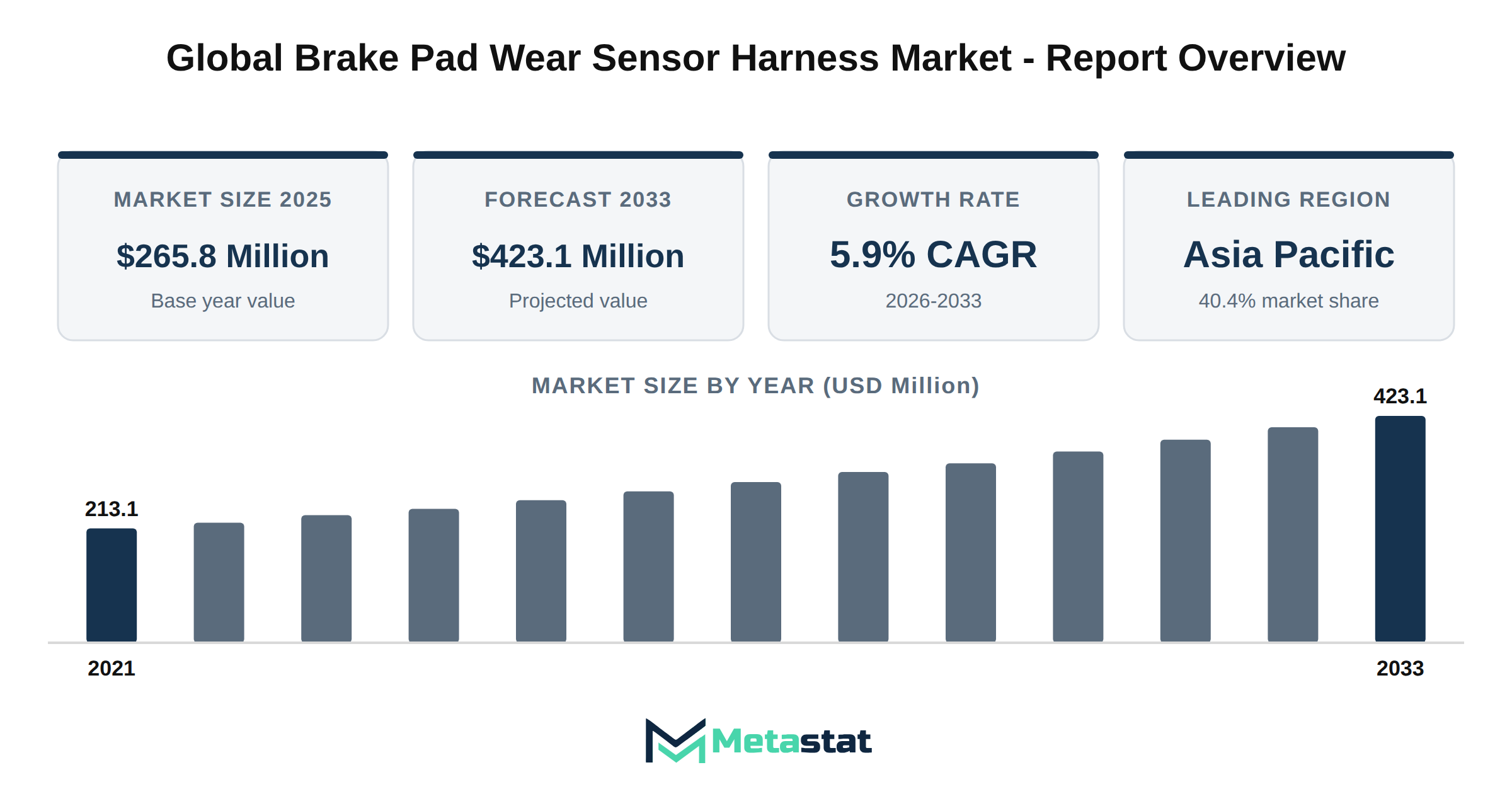
The Brake Pad Wear Sensor market has shown significant growth, reaching a valuation of USD 265.8 million in 2025. Growth during the forecast period from 2026 to 2033 projects a value of USD 423.1 million, equating to a compound annual growth rate (CAGR) of 5.9%. Historical data indicates steady growth, with values moving from USD 213.1 million in 2021 to USD 249.9 million in 2024.
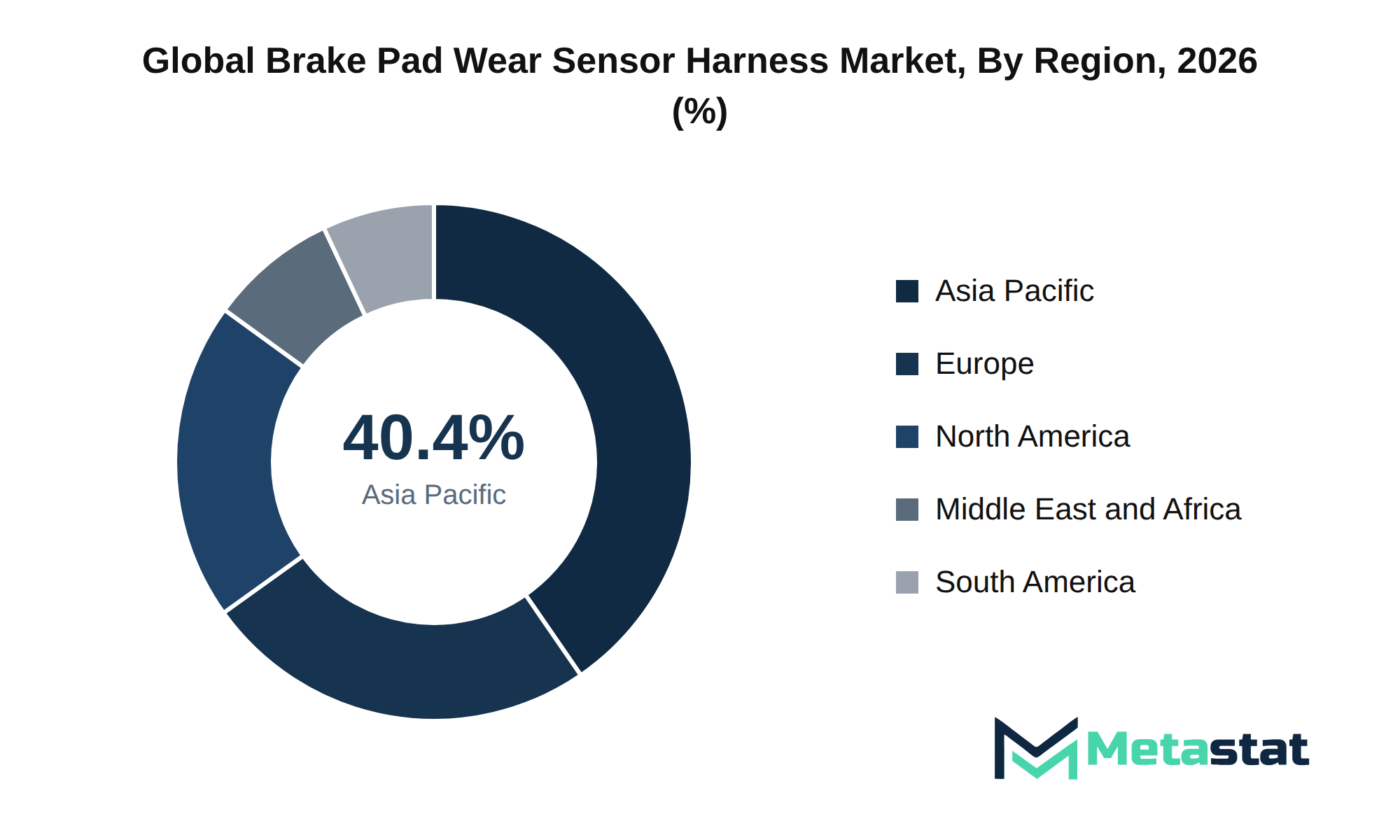
Regional distribution shows that Asia Pacific dominates the market with a share of 40.4%, followed by Europe at 24.7% and North America at 19.9%. South America and the Middle East and Africa account for smaller shares at 7% and 8%, respectively. By 2033, North America is projected to generate USD 78.3 million, reflecting a CAGR of 5.9% for the region.
Vehicle type segmentation highlights passenger cars because a significant driver, with values expected to rise from USD 192.9 million in 2026 to USD 277.5 million by 2033, translating to a CAGR of 5.3%. Light commercial vehicles are poised for growth, reaching USD 62.2 million by 2033 with a CAGR of 6.5%. Heavy trucks and buses contribute to the market, with buses experiencing a CAGR of 6.9%.
Sensing configuration segments indicate the prominence of single-stage wear sensing, expected to increase from USD 178.3 million in 2026 to USD 253 million in 2033, showing a CAGR of 5.1%. Two-stage wear sensing has a projected value of USD 102.8 million by 2033, reflecting a growth rate of 6.6%. Continuous or loop-type wear sensing is expected to contribute to market dynamics with a target value of USD 67.3 million.
The Brake Pad Wear Sensor market operates within a complex environment influenced by various factors, including regulatory compliance and geopolitical risk frameworks. Adherence to strict safety and performance standards drives manufacturers to invest in R&D, ensuring products meet evolving regulations while remaining competitive.
Disruptions within the supply chain, particularly due to global events, impact the availability and pricing of components essential for the production of brake pad wear sensors. These disruptions necessitate a reevaluation of logistics architecture and sourcing strategies, compelling companies to develop more resilient supply chains that withstand future shocks.
Market fragmentation presents opportunities for niche players and established companies alike, encouraging innovation and diversification within the industry. M&A dynamics continue to shape the market, with strategic acquisitions allowing firms to enhance technological capabilities and expand market reach.
Investment in infrastructure remains critical for the Brake Pad Wear Sensor market, with capital allocation focusing on advanced manufacturing techniques and sustainable practices. Companies prioritize capital expenditure and operational expenditure realities, balancing investment in new technologies with the need for operational efficiency.
Macroeconomic headwinds, including inflationary pressures and currency volatility, pose challenges to profitability. Fluctuations in material costs influence pricing strategies, compelling firms to adapt quickly to maintain margins while meeting customer expectations.
The future strategic outlook for the Brake Pad Wear Sensor market reflects a commitment to innovation and sustainability. Corporate imperatives include the integration of decarbonization efforts and circular economy dynamics into product development, aligning with global sustainability goals and consumer preferences.
High-value recommendations for stakeholders involve focusing on emerging technologies and sustainable practices to enhance competitive positioning while addressing the growing demand for environmentally responsible products. Emphasizing collaboration across the value chain strengthens market resilience and drives growth.
Market Dynamics
Increased consumer focus on safety features
Growing consumer emphasis on safety features significantly influences the Brake Pad Wear Sensor market. Rising awareness regarding vehicle safety has prompted manufacturers to adopt advanced safety technologies, including wear sensors that monitor brake pad conditions. This shift aligns with the increasing consumer demand for enhanced vehicle performance and reliability.
Economic factors including rising disposable incomes and changing urban lifestyles contribute to this trend. Consumers increasingly prioritize safety and performance when purchasing vehicles, leading manufacturers to integrate advanced technologies in their offerings. Consequently, the market experiences a notable uptick in demand driven by consumers seeking vehicles equipped with reliable safety features, including brake pad wear sensors.
The adoption of brake pad wear sensors not only improves safety but enhances operational efficiency. By monitoring wear conditions in real-time, vehicles provide alerts for maintenance, reducing downtime and long-term repair costs. This operational advantage drives growth in the market, with manufacturers investing more in research and development to innovate and enhance wear sensor technologies.
Technological integration fuels market growth
Technological integration significantly enhances the Brake Pad Wear Sensor Harness market by improving the efficiency and functionality of braking systems. Incorporation of advanced technologies, including artificial intelligence and automation, optimizes the performance of wear sensors, leading to improved safety and reliability in vehicles. This surge in technological adoption aligns with the increasing demand for smarter automotive solutions, particularly within passenger cars and commercial vehicles.
Investment in automation and software systems streamlines the manufacturing process, reducing production costs and improving product quality. The emphasis on digitizing legacy processes supports market participants in maintaining competitiveness and adapting to evolving consumer preferences. Enhanced data analytics capabilities provide manufacturers with insights into consumer behavior, allowing for tailored solutions that align with market demands.
Growing interest in sustainability further influences technological integration in the market. Adoption of eco-friendly materials and production practices positions manufacturers favorably against increasing environmental regulations and consumer expectations for sustainable products. This alignment with sustainability initiatives drives market growth and opens new revenue streams for companies seeking to innovate within the Brake Pad Wear Sensor Harness market.
Regulatory compliance and economic pressures
In the Brake Pad Wear Sensor market, regulatory compliance creates significant hurdles for manufacturers. Stricter regulations regarding safety, emissions, and performance lead to increased testing and certification requirements, which raise operational costs and extend product development timelines. Compliance with these regulations requires substantial capital investment, placing financial strain on companies, especially smaller players who lack the resources to adapt quickly.
Macroeconomic pressures, including inflation and supply chain disruptions, contribute to an unstable market environment. Rising material costs and labor expenses increase the overall cost of production, compelling manufacturers to either absorb the costs or pass them onto consumers, potentially suppressing sales. Economic uncertainty influences downstream demand, leading to cautious purchasing behavior among consumers and businesses alike.
Technological obsolescence presents another challenge within the market. Rapid advancements in vehicle technology render existing sensor systems outdated, requiring continuous investment in research and development. Companies face risks associated with substitution, driven by the emergence of alternative sensing technologies that divert demand away from traditional brake pad wear sensors.
Infrastructure gaps further complicate market expansion, particularly in regions with underdeveloped automotive sectors. Limited access to modern manufacturing facilities and skilled labor hinders the ability to produce high-quality components at scale. This situation restricts market entry for new players and reduces the overall competitiveness of established firms.
Overall, these factors contribute to a restrained growth trajectory in the Brake Pad Wear Sensor market, necessitating strategic planning and investment to navigate the evolving landscape effectively.
Geopolitical tensions impact supply chains
Geopolitical fragmentation presents a challenge for the Brake Pad Wear Sensor Harness market. Ongoing trade deficits and tariff friction disrupt established supply routes and create uncertainty in pricing structures. Manufacturers face increased costs resulting from the complexities of navigating international trade policies, which directly impacts profit margins.
Technological disruptions in the automotive sector further complicate the situation. The rapid evolution of vehicle technologies demands significant investments in research and development, straining resources for suppliers. This challenge is exacerbated by interoperability issues, where components from different suppliers do not seamlessly integrate, leading to potential delays and increased costs.
Logistics disruptions and supply chain instability contribute additional pressures. Fluctuations in feedstock availability and component volatility hinder the timely production of brake pad wear sensor harness systems. These factors lead to inefficiencies, resulting in higher operational costs, which ultimately affect pricing in the market.
Tightening global regulatory standards create compliance overhead that challenges manufacturers. Adapting to evolving legal liabilities requires investments in systems and processes to ensure adherence, diverting resources from other critical areas. The cumulative effect of these challenges influences overall growth and competitiveness in the Brake Pad Wear Sensor Harness market.
Emerging regional demands fuel market growth
Shifting consumer preferences across various regions drive increasing demand for the Brake Pad Wear Sensor market. In particular, the Asia Pacific region represents significant growth potential due to rapid urbanization and the expansion of automotive manufacturing capabilities. Countries including China and India experience a surge in vehicle production and sales, further increasing the need for advanced braking solutions. The rise in disposable incomes contributes to heightened consumer expectations regarding vehicle performance and safety features, pushing manufacturers to integrate advanced technologies into their offerings.
Infrastructure modernization across both developed and emerging economies enhances market opportunities. Investments in transportation infrastructure, particularly in regions prioritizing road safety, create a favorable environment for the adoption of innovative braking systems. This investment aligns with broader sustainability imperatives, driven by governments encouraging eco-friendly compliance through the adoption of advanced vehicle technologies. The integration of Brake Pad Wear Sensor solutions aligns with these initiatives, presenting strategic growth opportunities for manufacturers.
Technological disruptions, including the advancement of digital transformation in the automotive sector, reshape the market landscape. Automakers increasingly embrace connected vehicle technologies, which necessitate the incorporation of smart braking solutions. Enhanced data analytics capabilities enable manufacturers to optimize performance and reduce maintenance costs, thereby improving customer satisfaction and driving market demand.
The Brake Pad Wear Sensor market experiences growth through downstream market diversification. Manufacturers explore niche applications in specialty vehicles, including electric and hybrid models, to capture emerging market segments. Strategic consolidation through cross-industry mergers and acquisitions enhances product offerings while positioning companies competitively within the evolving landscape.
Changing buying behaviors and an increased focus on digital procurement shift the dynamics in the Brake Pad Wear Sensor market. While consumers and businesses leverage online platforms for purchasing, manufacturers adapt to these trends by enhancing their digital presence and distribution channels. This adaptation allows for greater accessibility and responsiveness to market demands, thereby supporting overall growth in the sector.
Market Segmentation Analysis
The Global Brake Pad Wear Sensor Harness market is segmented based on Vehicle Type, Sensing Configuration, Axle Location, and Sales Channel.
By Vehicle Type, the market is further segmented into:
- Passenger Cars
- Light Commercial Vehicles
- Heavy Trucks
- Buses and Coaches
- Others (Trailers and Semi-Trailers, Off-Highway and Specialty Vehicles)
Passenger Cars
Valued at USD 192.9 million in 2026, the Passenger Cars segment is projected to reach USD 277.5 million by 2033, reflecting a CAGR of 5.3% during the forecast period. Increased focus on vehicle safety and enhanced performance drives demand for brake pad wear sensor systems within this segment. Consumers and manufacturers prioritize technologies that improve braking efficiency and vehicle safety, resulting in higher adoption rates.
The evolution of automotive technologies, including the integration of advanced driver-assistance systems (ADAS), stimulates growth in the market. Enhanced sensing capabilities and real-time monitoring of brake wear contribute to improved vehicle performance and safety, aligning with consumer preferences for innovative features. Regulatory compliance regarding vehicle safety encourages manufacturers to invest in advanced braking technologies, positioning the market for substantial growth.
Downstream application trends toward electric vehicles (EVs) and hybrid vehicles introduce a shift in demand dynamics. The transition to EVs often involves different braking systems, facilitating new opportunities for brake pad wear sensor systems designed for these vehicles. This shift reflects ongoing consumption changes that align with environmental considerations and global sustainability initiatives.
Strategic opportunity windows arise from the need for continuous upgrades in braking technology. Manufacturers that invest in research and development to improve product offerings gain a competitive edge. Strong capital investment in innovative technologies enhances market penetration and drives revenue growth within the Passenger Cars segment.
Light Commercial Vehicles
Forecasts indicate the Light Commercial Vehicles segment is estimated to reach USD 62.2 million by 2033, at a CAGR of 6.5% during the forecast period. This growth reflects rising demand for efficient and reliable braking systems in light commercial vehicles. Factors influencing this demand include an increase in global trade and logistics, driving more investments in light commercial vehicle fleets that require enhanced safety features.
The ongoing evolution of automotive technologies drives advancements in the Brake Pad Wear Sensor market, particularly in light commercial vehicles. Enhanced sensing configurations and integration with advanced driver-assistance systems (ADAS) lead to improved performance and safety. Manufacturers focus on delivering innovative solutions that meet the evolving requirements of fleet operators and logistics companies.
Regulatory compliance influences the market landscape. Stricter safety standards for commercial vehicles push manufacturers to incorporate advanced braking systems, including wear sensors. This compliance drives investment in research and development, leading to the introduction of next-generation upgrades within the segment.
Cost structures related to raw materials and production processes impact the profitability of suppliers within the market. Fluctuations in raw material prices and the need for high-quality components exert pressure on margins. Strategic partnerships and streamlined supply chains are essential for manufacturers to remain competitive, ensuring resilience against pricing volatility.
Technological obsolescence continues to pose challenges, necessitating ongoing innovation to meet industry standards. Adoption of disruptive alternatives, including electric and hybrid commercial vehicles, influences market dynamics, prompting a reevaluation of existing products and strategies. This landscape presents opportunities for growth, with manufacturers focusing on eco-friendly and efficient braking solutions.
Heavy Trucks
Strong demand for Heavy Trucks in the Brake Pad Wear Sensor market stems from the growth of logistics and freight transportation sectors. Increasing regulatory standards surrounding vehicle safety and emissions drive manufacturers to enhance their offerings. The adoption of advanced braking technologies, coupled with the rising focus on fleet management efficiencies, supports market expansion. Heavy Trucks require robust and reliable sensor solutions to optimize performance, enhance safety, and reduce maintenance costs.
The Heavy Trucks segment is expected to reach USD 42.3 million by 2033. The integration of next-generation technologies, including advanced wear sensing configurations, contributes to the segment's evolution. Continuous development in sensor technology allows for improved vehicle monitoring, which increases operational efficiencies and ensures compliance with stringent regulatory requirements.
Market players invest in research and development to capitalize on strategic opportunities within the Heavy Trucks segment. Investment in innovative brake pad wear sensor solutions aids in addressing rigorous performance standards while enhancing consumer safety. Suppliers focusing on sustainable raw material sourcing and resilient supply chains position themselves to meet evolving market demands effectively.
Buses and Coaches
Investment in the Buses and Coaches segment of the Brake Pad Wear Sensor market reflects a growing focus on safety and efficiency in public transport systems. Rising passenger numbers and increasing demand for environmentally friendly transport solutions drive the adoption of advanced braking technologies. Enhanced safety standards and regulatory requirements further support the necessity for effective wear sensing solutions in this segment. The Buses and Coaches segment is projected to grow at a CAGR of 6.9% during the forecast period. Innovations in sensor technology enhance the accuracy and reliability of wear monitoring, promoting product evolution and increasing market share among suppliers. The trend towards electric and hybrid buses necessitates upgrades to existing braking systems, driving market expansion. Stakeholders navigate challenges related to raw material sourcing and pricing volatility while striving for resilient supply chain management. Strategic investments in research and development focus on next-generation upgrades that improve performance and longevity, ultimately benefiting end-users and supporting the growth trajectory of the market.
Others (Trailers and Semi-Trailers, Off-Highway and Specialty Vehicles)
Demand for trailers, semi-trailers, off-highway, and specialty vehicles drives market dynamics within the Brake Pad Wear Sensor market. Increased logistics activities, driven by e-commerce growth and urbanization trends, enhance the need for effective safety and performance features. The evolution of these vehicle types directly influences the adoption of advanced brake pad wear sensor solutions, promoting greater operational efficiency and safety standards.
Technological advancements shape the segment's evolution, with innovations in wear sensing technologies and materials enhancing product performance. The integration of next-generation upgrades, including real-time monitoring systems, supports improved vehicle diagnostics and maintenance strategies. Increased vehicle size and complexity create opportunities for specialized systems that cater to unique operational requirements.
Market dynamics reflect end-use demands, particularly in sectors reliant on heavy-duty vehicles for transportation and logistics. Regulatory compliance standards regarding safety and emissions significantly influence purchasing decisions for both manufacturers and fleet operators. Sustainable practices and materials guide product development, aligning with broader industry trends toward environmental responsibility.
Pricing volatility affects operational costs within this segment, where manufacturers navigate fluctuating raw material prices and supply chain challenges. Strategic opportunity windows arise from the need for enhanced braking safety and performance in diverse applications, reinforcing the importance of innovative solutions in the Brake Pad Wear Sensor market. The focus on capital investments in technology and production capabilities positions stakeholders to leverage emerging trends and maintain a competitive edge.
By Sensing Configuration, the market is further segmented into:
- Single-Stage Wear Sensing
- Two-Stage Wear Sensing
- Continuous / Loop-Type Wear Sensing
Single-Stage Wear Sensing
Valued at USD 178.3 million in 2026, the Single-Stage Wear Sensing segment is projected to reach USD 253 million by 2033, at a CAGR of 5.1% during the forecast period. Several factors drive demand for single-stage wear sensing technologies within the Brake Pad Wear Sensor market. Increasing vehicle safety regulations and heightened consumer awareness regarding maintenance play critical roles in promoting the adoption of these systems. Automotive manufacturers and suppliers prioritize reliability and functionality in wear sensing technology, contributing to ongoing investment in product development and upgrades.
Technological maturation influences the market landscape, with advancements in sensing technology enhancing the accuracy and efficiency of wear detection. The integration of next-gen upgrades, including real-time monitoring and data analytics, further boosts the segment's appeal to vehicle manufacturers. End-use dynamics indicate that passenger vehicles see significant uptake of single-stage wear sensing solutions, driven by improved overall safety and vehicle performance. Regulatory compliance standards established by automotive safety authorities compel manufacturers to adopt effective wear sensing systems to satisfy consumer expectations and legal requirements.
Cost structures in this segment reflect the balance between high-quality materials and competitive pricing strategies. Pricing volatility in raw materials impacts profit margins, necessitating resilient supply chain practices to mitigate risks. The Single-Stage Wear Sensing segment stands at a strategic opportunity window, with growing investments expected to enhance market competitiveness and drive revenue growth. The focus on automation and advanced manufacturing techniques facilitates a more robust supply chain, ensuring consistent product availability in the market.
Two-Stage Wear Sensing
In the evolving Brake Pad Wear Sensor market, the Two-Stage Wear Sensing segment illustrates notable growth dynamics. This segment is estimated to reach USD 102.8 million by 2033, at a CAGR of 6.6% during the forecast period. A key driver for adoption includes increasing demand for advanced braking systems that enhance vehicle safety and performance. Technological maturation in wear sensing technologies enables accurate monitoring of brake pad conditions, supporting preventive maintenance and improving overall vehicle reliability.
The segment benefits from product evolution, with manufacturers focusing on next-generation upgrades that integrate advanced sensors into braking systems. Increased awareness of vehicle safety and maintenance among consumers drives demand for efficient wear sensing solutions, particularly in passenger and commercial vehicles. Regulatory compliance standards surrounding vehicle safety further stimulate investment in Two-Stage Wear Sensing technologies, pushing manufacturers toward adopting innovative solutions that meet stringent safety requirements.
Pricing volatility in raw materials impacts overall market dynamics, necessitating strategic sourcing and cost management approaches among suppliers. The segment maintains resilience through well-established supply chains and strategic partnerships with original equipment manufacturers. While the automotive industry transitions toward more sustainable practices, the Two-Stage Wear Sensing segment is positioned to capitalize on emerging opportunities and meet evolving demands in the Brake Pad Wear Sensor market.
Continuous / Loop-Type Wear Sensing
Technological advancements in wear sensing mechanisms have driven interest in Continuous / Loop-Type Wear Sensing solutions within the Brake Pad Wear Sensor market. Manufacturers increasingly focus on enhancing the precision and reliability of these systems, which offer continuous monitoring of brake pad conditions. The development of these technologies aligns with the automotive industry’s shift towards greater safety standards and efficiency in vehicle operation.
While vehicle safety regulations become stricter, automotive manufacturers prioritize integrating advanced braking technologies. Continuous / Loop-Type Wear Sensing systems provide real-time feedback on brake pad wear, allowing for timely maintenance and replacements, thus enhancing safety and performance. This trend supports the segment's growth, driven by vehicle manufacturers recognizing the advantages of proactive maintenance solutions.
With a projected value of USD 67.3 million by 2033, this segment reflects the growing demand for advanced wear sensing configurations. Increasing adoption across various vehicle types, including passenger cars and commercial vehicles, continues to support this market segment. Investments in research and development for next-generation sensor technologies are expected to create new opportunities, ensuring sustained growth within the market.
Overall, the Continuous / Loop-Type Wear Sensing segment captures attention, reflecting manufacturers adapting to evolving consumer preferences and regulatory demands. The focus on efficiency and safety in braking systems drives innovation and expansion, reinforcing its role in the Brake Pad Wear Sensor market.
By Axle Location, the market is further segmented into:
- Front Axle
- Rear Axle
- Dual-Axle / Multi-Axle Systems
Front Axle
Increasing focus on safety in vehicle operation significantly boosts demand for brake pad wear sensors in the Front Axle segment. Adoption of advanced wear sensing technologies enhances braking performance and optimizes maintenance schedules, aligning with the automotive industry's shift towards smarter vehicle systems. This segment benefits from the growing trend of integrating telematics and driver assistance systems, which require precise monitoring of brake conditions. Consequently, manufacturers in the Brake Pad Wear Sensor market are investing in research and development to introduce innovative sensing configurations, enhancing product offerings to meet evolving consumer expectations.
Technological maturation within the automotive sector supports the expansion of wear sensor applications in commercial vehicles, especially in the Front Axle segment. Enhanced manufacturing processes reduce costs, thus allowing more competitive pricing strategies. The regulatory landscape increasingly emphasizes safety standards, driving compliance and encouraging adoption of advanced braking solutions. While vehicle electrification progresses, integration of brake systems with electric vehicles presents strategic opportunities for market participants, facilitating growth in the segment.
While consumer awareness around vehicle safety and maintenance rises, the market experiences a shift in consumption patterns, leading to increased demand for effective brake monitoring solutions. Manufacturers face pressures related to raw material sourcing and pricing volatility, which impact production costs and margins. Strategic investment in supply chain resilience emerges owing to a priority to mitigate risks associated with material shortages. The Front Axle segment remains poised for expansion, supported by ongoing innovation and heightened consumer expectations.
Rear Axle
Demand for the Rear Axle component within the Brake Pad Wear Sensor market is driven by the increasing focus on vehicle safety and enhanced braking systems. Adoption of advanced wear sensing technologies contributes to improved performance and efficiency in heavy-duty applications. The continual evolution of vehicle design and engineering emphasizes the need for reliable, high-performance braking systems, thus raising the role of rear axles in the overall braking mechanism.
Segment expansion is propelled by the rising production of trucks and buses in emerging economies, where infrastructure development promotes higher vehicle usage. The integration of next-generation upgrades in braking systems aligns with regulatory trends aimed at improving safety and emissions standards. Manufacturers invest in technological maturation, enhancing the functionalities of rear axle systems through innovations in materials and electronic components.
Cost structures in this segment reflect the complexity of modern vehicle engineering, with pricing volatility influenced by raw material sourcing and supply chain dynamics. Margin pressures arise from competition and the need for continuous innovation to meet market demands. Strategic opportunity windows emerge due to manufacturers focusing on developing more efficient supply chains and sustainable practices, ensuring resilience in the face of market fluctuations.
The Rear Axle segment stands because a critical component in the Brake Pad Wear Sensor market, with its growth trajectory aligned with broader automotive trends focused on safety, efficiency, and regulatory compliance.
Dual-Axle / Multi-Axle Systems
Technological maturation in dual-axle and multi-axle systems influences the Brake Pad Wear Sensor market significantly. Enhanced vehicle safety features drive adoption among commercial vehicle manufacturers. Regulations emphasizing safety and emission standards prompt manufacturers to integrate advanced sensing technologies into their products. These systems enable improved monitoring and maintenance, thereby reducing vehicle downtime and enhancing operational efficiency.
Investment in next-generation upgrades continues to shape the landscape. The evolution from traditional brake systems to intelligent, sensor-driven alternatives supports the demand for robust wear sensing solutions. Increased production of heavy-duty vehicles further fuels interest in this segment, driven by fleet operators prioritizing reliability and performance. The focus on cost structures highlights the need for efficient manufacturing processes to maintain competitive pricing.
Market dynamics demonstrate an alignment between consumer preferences and technological advancements. Fleet operators favor dual-axle and multi-axle systems for their enhanced load capacities and stability. Governments worldwide impose stricter regulatory compliance standards, compelling manufacturers to improve their offerings. This trend encourages innovation in design and functionality, ensuring products deliver optimal performance under diverse conditions.
By Sales Channel, the market is further segmented into:
- OEM
- Independent Aftermarket
- Original Equipment Service (OES)
OEM
OEM channels in the Brake Pad Wear Sensor market demonstrate robust engagement from vehicle manufacturers. Original Equipment Manufacturers prioritize high-quality components to ensure vehicle safety and reliability. This segment thrives due to increasing production rates in the automotive sector, driven by rising consumer demand for new vehicles, particularly in emerging markets.
Technological advancements in wear sensing techniques highlight the segment's growth potential. Manufacturers invest in next-generation upgrades that enhance the accuracy and durability of wear sensors. Enhanced performance metrics in braking systems lead to improved vehicle safety, aligning with regulatory compliance standards that emphasize safety features.
Consumption shifts towards electric vehicles and hybrid models further influence the market. OEMs adapt their offerings to include wear sensors compatible with these new vehicle types, ensuring alignment with evolving technological standards. This adaptation drives demand and opens strategic opportunity windows for manufacturers focused on innovation in wear sensor technology.
Cost structures within the OEM segment reflect the premium associated with high-quality components. Manufacturers face pricing volatility resulting from fluctuations in raw material costs, which pressure margins. Strategic partnerships with suppliers help mitigate these risks and promote supply chain resilience, ensuring a steady flow of essential materials.
Disruptive alternatives, including advanced materials or entirely new braking technologies, present challenges to traditional wear sensor components. Continuous evolution in product offerings enhances competitive positioning within the market. While automotive technology evolves, OEMs that invest in research and development for wear sensors strengthen their market presence.
Independent Aftermarket
Independent aftermarket channels for the Brake Pad Wear Sensor market reflect a growing trend towards enhanced vehicle safety and performance. Increased vehicle utilization in urban and suburban settings drives demand for reliable components that ensure optimal braking efficiency. Technological advancements in wear sensing technologies create opportunities for aftermarket players to offer upgraded solutions, improving overall vehicle safety and maintenance. Adoption of smart technologies contributes to evolving consumer preferences, emphasizing the need for high-quality and effective products in the aftermarket sector.
Regulatory compliance standards concerning vehicle safety and emissions fuel demand within the independent aftermarket. Stringent regulations compel vehicle owners to replace worn parts, leading to a consistent influx of customers seeking brake pad wear sensors. The market's resilience hinges on strong relationships between suppliers and aftermarket retailers, ensuring timely availability of products. Cost structures in this segment fluctuate due to raw material pricing and supply chain dynamics, compelling companies to adapt strategies for sustained profitability.
Technological obsolescence in older vehicles creates strategic opportunity windows for suppliers focused on providing next-generation wear sensing solutions. Continuous investment in research and development supports product evolution, aligning with shifting consumer expectations and emerging market trends. The independent aftermarket segment benefits from diverse end-use dynamics, driven by varying consumer needs across different vehicle types. This diversity creates a competitive environment where companies strive to innovate and capture market share within the Brake Pad Wear Sensor market.
Original Equipment Service (OES)
Growth in the Brake Pad Wear Sensor market is driven by increasing vehicle safety regulations and the demand for advanced driver-assistance systems (ADAS). Original Equipment Service (OES) channels are crucial in meeting these demands, owing to their provision of manufacturers with direct access to vehicle manufacturers and ensuring high-quality components. The ongoing evolution of vehicle technology necessitates collaboration between OES providers and automakers to integrate next-generation wear sensing solutions, enhancing overall vehicle performance and safety.
Adoption of sophisticated wear sensing technology within OES channels reflects broader trends in the automotive industry, including the shift towards electric and hybrid vehicles. This transition demands tailored solutions that align with new vehicle architectures and designs, prompting OES providers to innovate and upgrade their product offerings. Regulatory compliance, particularly regarding emissions and safety standards, influences market dynamics, compelling OES channels to offer solutions that meet or exceed these regulations.
Cost structures within the OES segment are influenced by raw material sourcing and pricing volatility, which affects overall operational efficiency. The need for supply chain resilience has become more evident, driving investments in logistics and inventory management to mitigate potential risks. Market participants navigate these challenges to maintain competitiveness while ensuring reliable product availability.
Strategic opportunity windows exist for OES providers looking to expand their presence in emerging markets. Demand for vehicles with advanced braking technologies is on the rise. By capitalizing on this trend, these players position themselves effectively within the Brake Pad Wear Sensor market, supporting long-term growth and sustainability.
By Region
Based on geography, the Global Brake Pad Wear Sensor Harness market is divided into North America, Europe, Asia-Pacific, South America, Middle East, and Africa.
North America
North America represents a significant portion of the Brake Pad Wear Sensor market, with a projected market size of USD 78.3 million by 2033, expanding at a CAGR of 5.9% during the forecast period. The region accounts for 19.9% of the global market in 2025, highlighting its importance.
The market in North America benefits from strong demand across various vehicle types, particularly in passenger cars, light commercial vehicles, and heavy trucks. The focus on safety and regulatory compliance in vehicle operations fuels adoption among manufacturers and consumers. Local supply chain dynamics support rapid access to advanced technologies and components needed for wear sensing.
Infrastructure modernization initiatives in the United States, Canada, and Mexico enhance the market environment by promoting investment in updated vehicle systems. Local manufacturers engage in nearshoring initiatives, increasing production capacities while reducing dependency on overseas supply chains. This approach aligns with broader trends toward resource localization and supports domestic economies.
Competitive pressures in the North American market encourage collaboration among key players. Domestic market participants invest in innovation and technology, positioning themselves to capitalize on emerging opportunities. The Brake Pad Wear Sensor market is projected to experience incremental growth due to increasing adoption rates and the availability of new technologies.
Europe
The Brake Pad Wear Sensor market in Europe accounts for 24.7% of the global market share at 2025. Countries including Germany, France, the UK, Italy, Spain, and Russia contribute significantly to this market segment. The automotive industry in Europe emphasizes advanced safety features, which drives demand for brake pad wear sensors. Increasing vehicle safety regulations require the integration of sophisticated wear sensing technologies in new vehicles.
Infrastructure modernization throughout Europe supports the expansion of the market. Countries with robust automotive manufacturing bases benefit from localized production capabilities, facilitating faster supply chain responses and reducing logistics costs. The prevalence of high-value replacement cycles in the region influences market growth, owing to vehicles aging and requiring updated components to meet performance standards.
Germany and the UK emerge because key front-runners in adopting these technologies, aided by their strong automotive sectors. Rising consumer awareness regarding vehicle maintenance and safety contributes to heightened adoption rates, creating a competitive market environment. Regional vendors invest in innovative technologies to enhance product offerings, thereby strengthening their positions in the market.
Asia-Pacific
Asia-Pacific holds a significant position in the Brake Pad Wear Sensor market, commanding a 40.4% share of the global market in 2025. Rapid urbanization and increasing vehicle production in countries including China and India enhance the demand for advanced braking solutions. The expansion of electric vehicles further drives the need for efficient wear sensing technology across the region.
Investment in infrastructure modernization supports the market's growth, with countries prioritizing upgrades in transportation networks and vehicle safety standards. Local manufacturing densities rise, resulting in reduced lead times and improved supply chain efficiencies. Vendors in this region adapt to localized procurement dynamics, aligning their strategies with cultural nuances and regional B2B buying behaviors.
Emerging market front-runners in Asia-Pacific, particularly in South Korea and Japan, demonstrate a robust demand for innovative wear sensing solutions. These countries lead in automotive technologies, committing to research and development that enhances vehicle safety and reliability. Regional competitive landscapes indicate a trend toward vendor consolidation, with domestic market participants strengthening their positions through strategic partnerships and acquisitions.
Incremental growth vectors within the market emerge from high-value replacement cycles, driven by aging vehicle fleets. The demand for continuous improvement in safety measures positions the Brake Pad Wear Sensor because a crucial component in modern vehicle designs. Regulatory frameworks across the region continue to evolve, further shaping the market's dynamics.
South America
In South America, the Brake Pad Wear Sensor market presents significant growth potential, driven primarily by increasing vehicle production rates and heightened safety regulations. Brazil and Argentina serve because key markets within this region, with Brazil accounting for the largest share attributed to its expansive automotive industry. The demand for passenger vehicles in these countries directly influences the market, supported by a growing consumer preference for advanced safety features.
Infrastructure modernization initiatives in Brazil and Argentina further support the adoption of advanced braking technologies. Local manufacturers are expanding their capabilities to meet the evolving demands of the automotive sector, enhancing the overall value of the market. The increasing penetration of global automotive players in South America contributes to competition and innovation within the Brake Pad Wear Sensor market.
Despite the positive outlook, challenges exist in the form of economic fluctuations and regional regulatory frameworks that impact compliance and production costs. Vendors navigate these dynamics carefully to capitalize on growth opportunities. Overall, the Brake Pad Wear Sensor market in South America is projected to experience steady expansion, fueled by both domestic and foreign investments in the automotive sector.
Middle East and Africa
The Brake Pad Wear Sensor market in the Middle East and Africa is projected to exhibit gradual growth, driven by increasing vehicle ownership and infrastructure development. Countries including Saudi Arabia and the UAE are investing significantly in transportation infrastructure, which enhances demand for advanced safety features in vehicles, including brake pad wear sensors. South Africa’s automotive industry is expanding, creating a market environment for innovations in vehicle safety technologies.
Adoption rates of the Brake Pad Wear Sensor in this region remain below global averages, presenting opportunities for growth. The market benefits from the gradual modernization of infrastructure and improvements in regulatory frameworks, ensuring compliance with international safety standards. Local manufacturers and suppliers position themselves to capitalize on this demand, contributing to market competitiveness and vendor consolidation trends.
The regional competitive landscape features a mix of domestic and international players, with an emphasis on localized production to enhance supply chain efficiencies. Cultural nuances and regional procurement dynamics influence purchasing behaviors, with businesses seeking reliable and innovative solutions. Cross-border trade corridors facilitate access to advanced technologies, supporting market growth in these underpenetrated territories.
Competitive Landscape and Strategic Insights
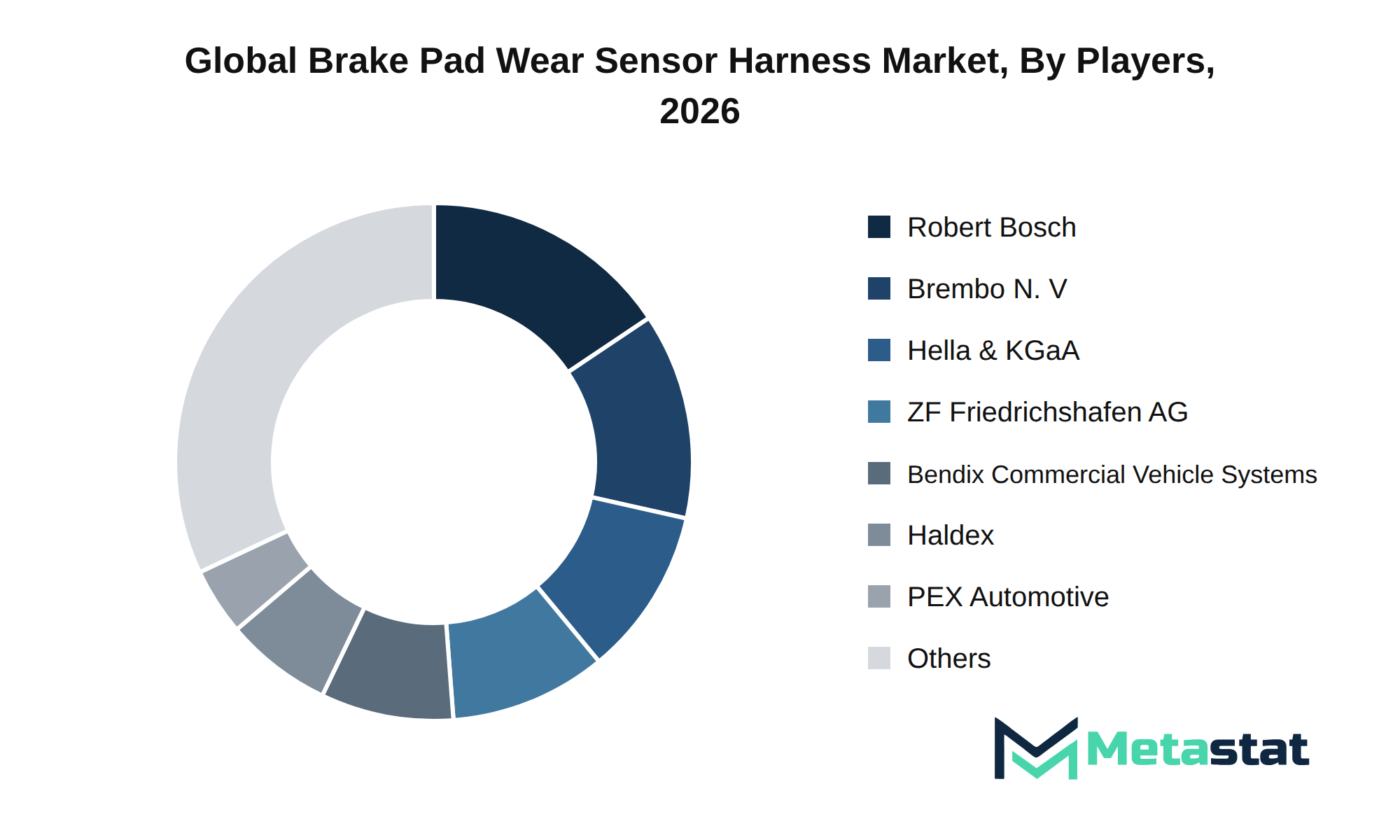
The Brake Pad Wear Sensor market features a diverse range of players focusing on strategic consolidation and innovation. Companies including Hella GmbH & Co. KGaA, Brembo N. V., and Robert Bosch GmbH engage in mergers and acquisitions to enhance their product portfolios and strengthen market positions. This strategic behavior facilitates access to new technologies and expansion into emerging markets, establishing a more competitive edge.
Research and development efforts play a crucial role in differentiating products within the market. Players like ZF Friedrichshafen AG and Bendix Commercial Vehicle Systems LLC invest significantly in advanced technology to improve the performance and reliability of their offerings. Such investments contribute to robust brand equity, enhance customer retention strategies, and lower switching costs for clients.
Partnerships and strategic alliances further influence market dynamics. Collaborations between established firms, including Haldex and PEX Automotive GmbH, create integrated value chains that optimize supply chain efficiency and procurement leverage. This ecosystem approach enables firms to respond effectively to evolving market demands, creating an environment conducive to innovation and growth.
The competitive outlook of the Brake Pad Wear Sensor market remains shaped by barriers to entry and the threat of new entrants. Established companies leverage their intellectual property portfolios and technological defensibility to maintain market share, while startups introduce disruptive innovations that challenge incumbents. This ongoing tension between established players and new entrants drives continuous advancements within the market.
Market size is forecast to rise from USD 265.8 million in 2025 to over USD 423.1 million by 2033. This growth trajectory indicates a compound annual growth rate (CAGR) of 5.9%. Several macroeconomic factors contribute to this expansion, including shifts in consumer demand, technological advancements, and regulatory changes within the automotive sector.
The bull case for the Brake Pad Wear Sensor market anticipates stronger-than-expected adoption driven by next-generation technology integration and rising awareness of vehicle safety features. In contrast, the bear case considers potential challenges stemming from global supply chain disruptions and geopolitical tensions that could affect production and distribution.
Economic cycles influence downstream demand, reflecting how fluctuations in consumer spending and business investments impact market dynamics. Core industry maturation and structural consumption shifts dictate how rapidly new technologies are embraced, influencing overall market growth and revenue potential.
Strategic capital allocation directives and infrastructure commitments play vital roles in defining future market conditions. Investment in research and development (R&D) commercialization timelines is critical to meeting evolving consumer preferences and regulatory compliance milestones.
Emerging white-space opportunities, including enhanced sensing configurations and innovative sensing technologies, present avenues for growth. Meeting unmet enterprise needs through strategic partnerships and technology integration further strengthens the market's position in the automotive ecosystem.
Brake Pad Wear Sensor Harness Market Key Segments
By Vehicle Type:
- Passenger Cars
- Light Commercial Vehicles
- Heavy Trucks
- Buses and Coaches
- Others (Trailers and Semi-Trailers, Off-Highway and Specialty Vehicles)
By Sensing Configuration:
- Single-Stage Wear Sensing
- Two-Stage Wear Sensing
- Continuous / Loop-Type Wear Sensing
By Axle Location:
- Front Axle
- Rear Axle
- Dual-Axle / Multi-Axle Systems
By Sales Channel:
- OEM
- Independent Aftermarket
- Original Equipment Service (OES)
By Region:
- North America
- Europe
- Asia-Pacific
- South America
- Middle East and Africa
Key Global Brake Pad Wear Sensor Harness Industry Players
- Hella GmbH & Co. KGaA
- Brembo N. V.
- Robert Bosch GmbH
- ZF Friedrichshafen AG
- Bendix Commercial Vehicle Systems LLC
- Haldex
- PEX Automotive GmbH
- Jiangsu Jietelong Cable Technology CO., LTD.
- Freenco Original Brake Caliper Repair Kits
- Buxton
- NAPA Echlin
- PowerStop LLC
- Ford Motor Company
- PA Products LTD (Auto Connectors)
- Mercedes-Benz USA, LLC
- Ridex GmbH
- TMD Friction Services GmbH
- TE Connectivity
- Hela Werbung GmbH
Report Coverage
The report strategically identifies and profiles the key market players and analyses their core competencies in each sub-segment of the Brake Pad Wear Sensor Harness market.
Report Attributes | Details |
Study Period | 2021-2033 |
Base Year | 2025 |
Estimated Year | 2026 |
Forecast Period | 2026-2033 |
Historical Period | 2021-2025 |
Growth Rate | CAGR 5.9% from 2026 to 2033 |
Revenue Unit | USD million |
Segmentation | By Vehicle Type, Sensing Configuration, Axle Location, Sales Channel, and Region |
By Region | North America (By Vehicle Type, Sensing Configuration, Axle Location, Sales Channel, and Country)
|
Europe (By Vehicle Type, Sensing Configuration, Axle Location, Sales Channel, and Country)
| |
Asia Pacific (By Vehicle Type, Sensing Configuration, Axle Location, Sales Channel, and Country)
| |
South America (By Vehicle Type, Sensing Configuration, Axle Location, Sales Channel, and Country)
| |
Middle East and Africa (By Vehicle Type, Sensing Configuration, Axle Location, Sales Channel, and Country)
|
What Report Provides
- Company Market Share, Revenue and Ranking for the Brake Pad Wear Sensor Harness Market
- Key Market Leaders in the Brake Pad Wear Sensor Harness Industry
- Full In-Depth Analysis of the Parent Industry
- Industry Statistics and Important Changes in Market Dynamics
- Segmentation Details of the Brake Pad Wear Sensor Harness Market
- Historical, Ongoing, and Projected Market Analysis
- Assessment of Niche Industry Developments
- Key Strategies of Major Players in the Market
Frequently Asked Questions
Find answers to common questions about this report
The Brake Pad Wear Sensor Harness market size was valued at USD 265.8 million in 2025, according to the Metastat Insights study.
The Brake Pad Wear Sensor Harness market is projected to grow at a CAGR of 5.9% during the forecast period from 2026 to 2033.
The North America Brake Pad Wear Sensor Harness market size is estimated to reach USD 78.3 million by 2033.
The Passenger Cars segment leads the Brake Pad Wear Sensor market, with a projected value of USD 277.5 million by 2033. This segment's growth reflects a compound annual growth rate of 5.3 percent from 2026 to 2033.
Growing consumer emphasis on safety features and rising awareness regarding vehicle safety drive the Brake Pad Wear Sensor market. Technological integration and demand for eco-friendly materials enhance market growth, with manufacturers innovating to meet evolving consumer preferences and regulatory standards.
Regulatory compliance presents significant challenges for manufacturers in the Brake Pad Wear Sensor market, increasing testing and certification requirements that raise operational costs. Macroeconomic pressures, including inflation and supply chain disruptions, result in higher production costs and cautious purchasing behavior among consumers, further restraining market growth.
Growing consumer emphasis on safety features and rising awareness regarding vehicle safety favor product adoption in the Brake Pad Wear Sensor market. Increased disposable incomes and changing urban lifestyles drive demand for vehicles equipped with advanced safety technologies, enhancing performance and reliability.
The Brake Pad Wear Sensor Harness market is estimated to reach a valuation of USD 423.1 million by 2033.
Key players in the Brake Pad Wear Sensor Harness market include Hella GmbH & Co. KGaA, Brembo N. V., Robert Bosch GmbH, ZF Friedrichshafen AG, Bendix Commercial Vehicle Systems LLC, and Haldex.
The Asia Pacific region holds a market share of 40.4% in the Brake Pad Wear Sensor Harness market.
Choose Your License
Global Brake Pad Wear Sensor Harness Market
Related Reports
Explore related market intelligence reports worth reading alongside this one.
Automotive Terrain Response System Market
Starting from
$2950