
Global Cardanol Market
Global Cardanol Market Size, Share, By Product Grade (Standard / Technical-Grade Cardanol, High-Purity Cardanol, Low-Color / Light-Color Cardanol, Hydrogenated Cardanol and Specialty-Modified Cardanol Grades), By Product Type (Cardanol Oil, Cardanol-Based Resins, Cardanol-Based Friction Materials, Cardanol-Based Reactive Diluents and Curing Agents and Cardanol-Based Surfactants and Specialty Derivatives), By Application (Phenolic Resins, Epoxy Curing Agents and Reactive Diluents, Coatings and Paints, Friction Materials, Adhesives and Sealants, Laminates and Composites, Surfactants and Dispersants, Rubber Compounding, Lubricants and Oil Additives and Foundry Chemicals, Agrochemical Intermediates and Electrical Insulation), By End-Use Industry (Automotive and Transportation, Construction, Paints and Coatings, Adhesives and Sealants, Electrical and Electronics, Rubber and Elastomers, Industrial Manufacturing, Marine and Protective Infrastructure, Oil and Gas and Agriculture, Foundry and Specialty Chemical Manufacturing), Industry Analysis, Growth, Trends, and Forecast, 2026-2033
MSI-5001
August 20, 2026
Updated
257 Pages
Historical
Base year
Forecast
Forecast period
Report Details
Comprehensive Market Analysis And Insights
Market Overview
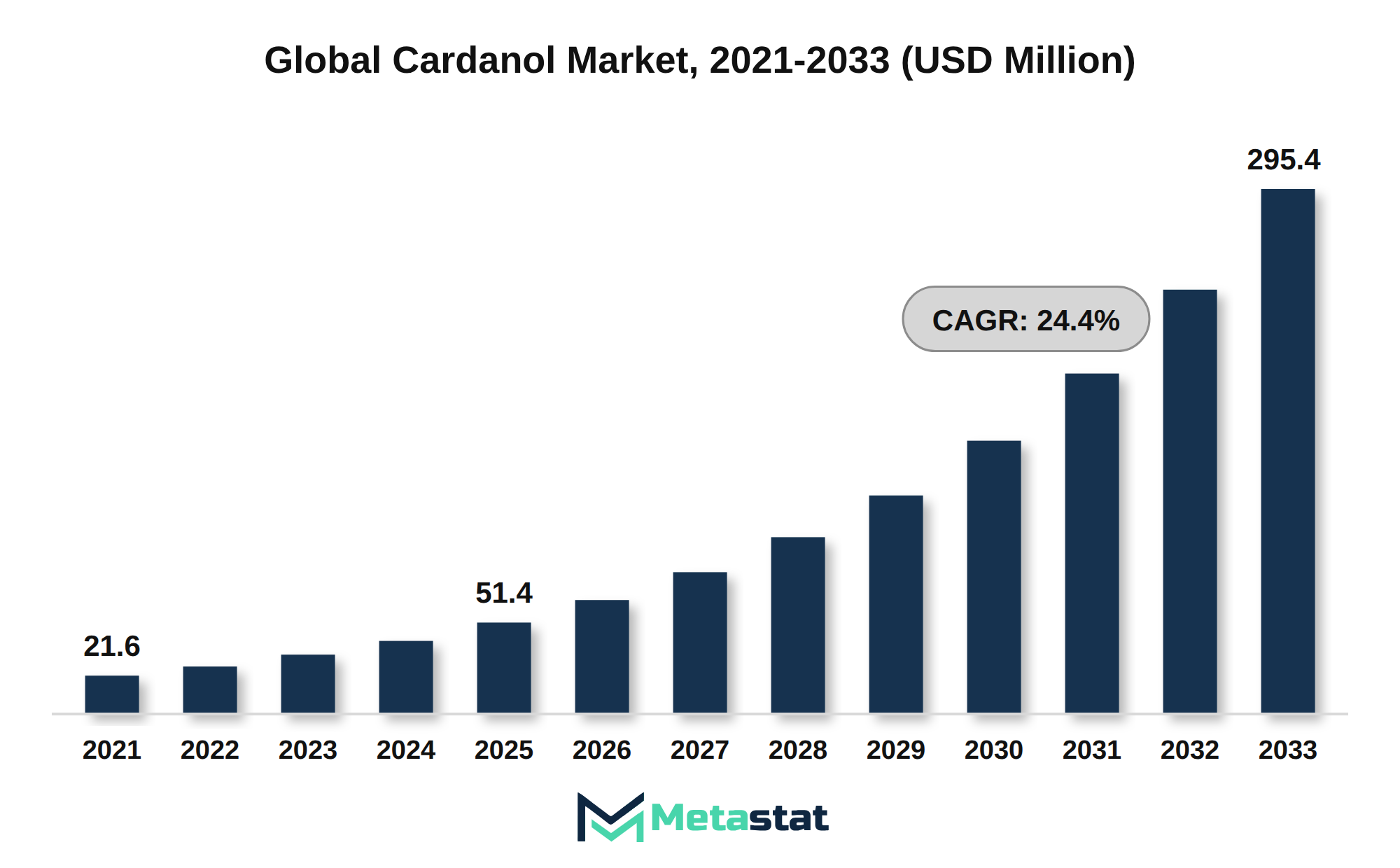
The global Cardanol market was valued at USD 51.4 million in 2025 and is projected to reach USD 295.4 million by 2033, growing at a CAGR of 24.4% over the forecast period.
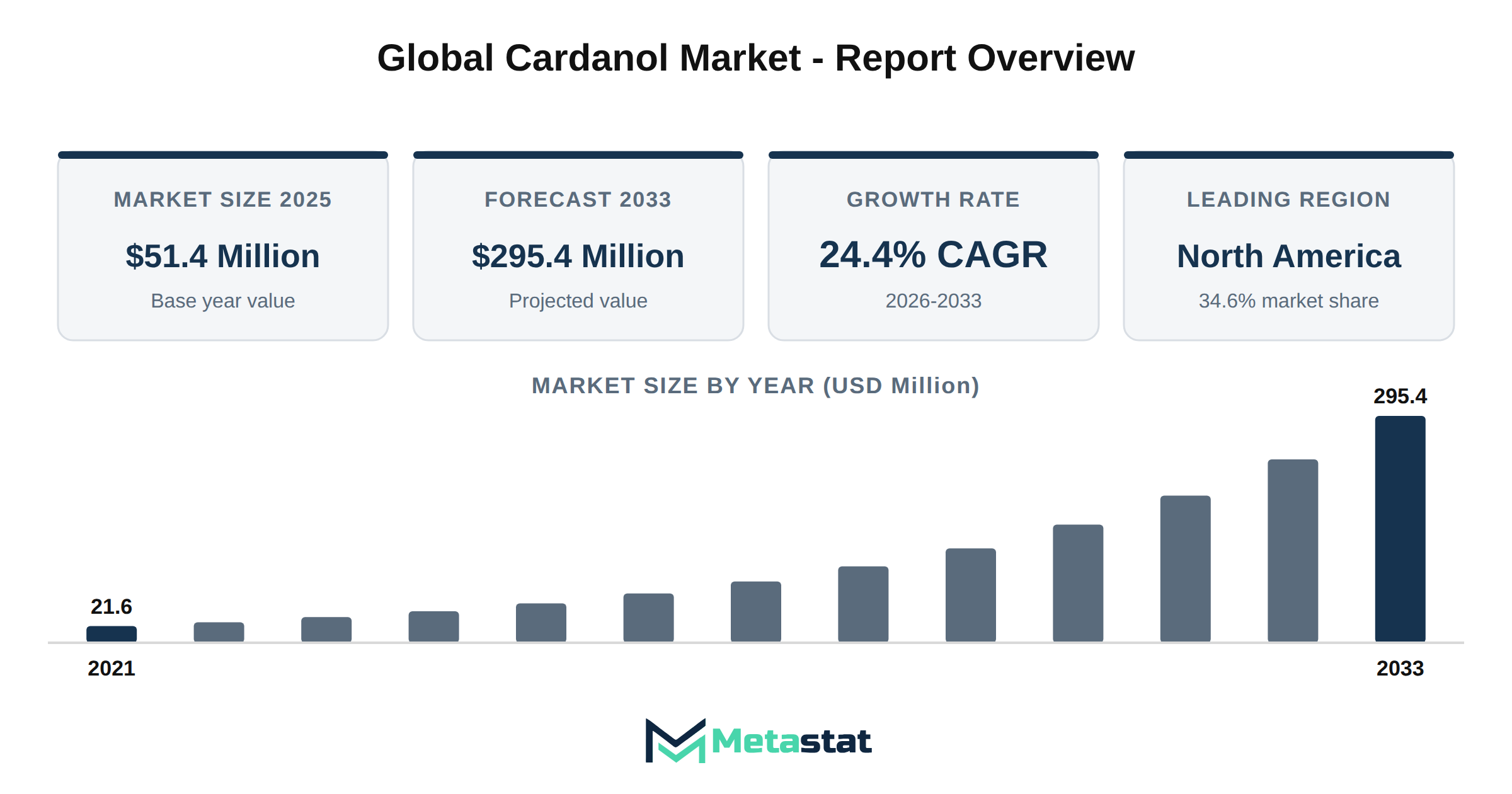
The Cardanol market reached a valuation of USD 51.4 million in 2025, reflecting an increase from USD 21.6 million in 2021. This growth trajectory indicates a compound annual growth rate (CAGR) of 24.4%, with projections estimating the market value to rise to USD 295.4 million by 2033.
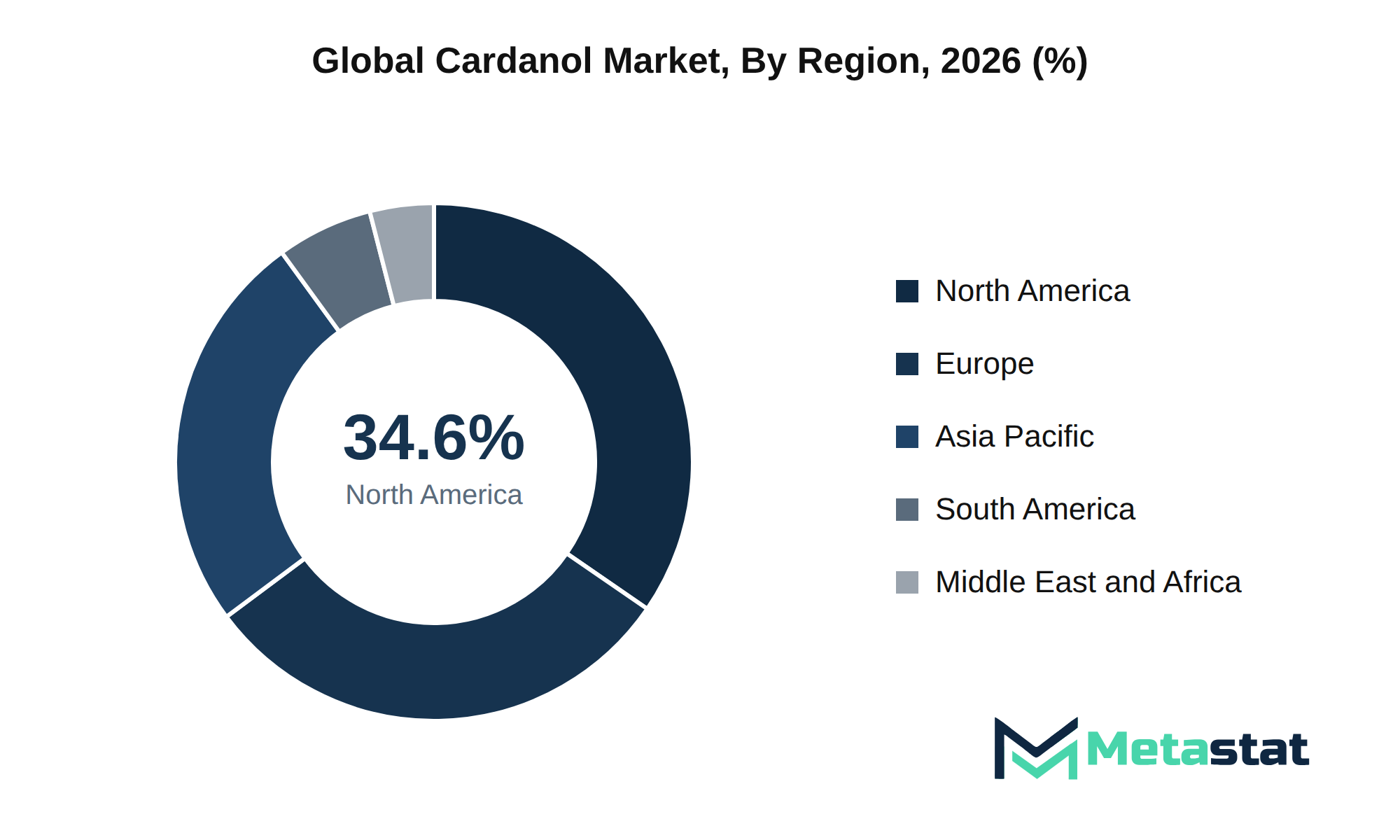
Regional dynamics show North America holding a substantial market share of 34.6%, followed by Europe at 30.2% and Asia Pacific at 25.2%. The anticipated growth in North America is projected to reach USD 92.4 million by 2033 with a CAGR of 24.4%, highlighting the region's significant role in the Cardanol market. Other regions, including South America and the Middle East and Africa, contribute smaller shares, accounting for 6% and 4%, respectively.
Growth factors within the market include increasing demand from various end-use industries, particularly in automotive and construction applications. The segment of standard and technical-grade Cardanol is set to expand from USD 35 million in 2026 to USD 155.9 million by 2033, marking a CAGR of 23.8%. Concurrently, high-purity Cardanol is projected to reach USD 51.6 million by 2033, driven by rising requirements for specialized applications.
Investment in research and development initiatives enhances innovation in product formulations and applications, increasing market competitiveness. The ongoing focus on sustainable practices aligns with decarbonization efforts and circular economy principles, leading to heightened interest in Cardanol-based solutions. Factors including inflationary pressures and currency volatility present challenges, influencing procurement strategies and market stability.
The regulatory landscape surrounding the Cardanol market influences production and distribution strategies. Compliance with environmental standards and safety regulations shapes operational frameworks for manufacturers. These regulations vary by region, requiring companies to adapt their practices to maintain market access and competitiveness.
Innovation drives research and development trajectories within the market. Companies focus on enhancing product quality and exploring applications in diverse sectors, including automotive and construction. This emphasis on next-generation technologies creates a competitive environment, encouraging firms to invest in sustainable transformation initiatives that align with global decarbonization goals.
Geopolitical factors and macroeconomic headwinds exert pressures on the supply chain landscape. Disruptions in sourcing materials necessitate adjustments in logistics architecture and procurement strategies. Value chain dynamics remain critical, with companies reassessing relationships with suppliers and distributors to optimize operations amid inflationary pressures and currency volatility.
Market fragmentation presents both challenges and opportunities. A multitude of players, including established firms and emerging entrants, contributes to a competitive atmosphere, enhancing innovation while complicating market navigation. Corporate imperatives focus on capital allocation and infrastructure investments to strengthen market positions and achieve long-term sustainability.
Future strategic outlooks for the Cardanol market reflect a commitment to addressing evolving customer demands and environmental considerations. Companies prioritize high-value recommendations to enhance operational efficiencies and strengthen market resilience in response to changing economic conditions. This approach supports long-term growth and adaptability.
Market Dynamics
Growing demand for sustainable products
Increasing awareness of environmental sustainability significantly influences the Cardanol market. Consumers actively seek eco-friendly alternatives, prompting manufacturers to adopt bio-based materials that align with sustainability trends. This shift reflects a broader movement towards reducing carbon footprints and supporting circular economy initiatives.
Investment in Cardanol production capabilities expands in response to heightened demand for sustainable raw materials across various industries, including automotive, construction, and paints and coatings. Producers experience opportunities to enhance profitability through innovation in processing technologies that improve yield and efficiency, further supporting sustainable practices.
The growth trajectory of the market reflects a compound annual growth rate (CAGR) of 24.4% from 2026 to 2033. This growth is driven by changing consumer preferences towards environmentally responsible products and increasing regulatory pressure on industries to adopt greener materials. Consequently, manufacturers investing in Cardanol production gain competitive advantages in a market increasingly focused on environmental impact.
While companies prioritize sustainability in their supply chains, the adoption of Cardanol not only meets consumer demands but strengthens brand positioning within the marketplace. The Cardanol market stands to benefit significantly from these dynamics, positioning it because a vital component in the ongoing transition toward a more sustainable economy.
Increasing urbanization drives market expansion
Urbanization significantly influences the Cardanol market by accelerating demand for construction materials and sustainable solutions. An increasing number of people migrating to urban areas raises the requirement for infrastructure development, including residential, commercial, and industrial projects. This trend generates a heightened need for versatile materials including Cardanol, which finds applications in various construction products, adhesives, and sealants.
The growing population in urban centers leads to increased consumer spending and investment in infrastructure. While cities expand, the focus shifts toward building sustainable structures that incorporate eco-friendly materials. Cardanol, deriving from cashew nut shell liquid, offers a renewable alternative to conventional petrochemical products, aligning with the preferences of environmentally conscious consumers and sector stakeholders.
Investment in urban infrastructure enhances demand for innovative materials, with Cardanol-based products presenting viable options for manufacturers looking to meet the evolving needs of the construction industry. The market is projected to experience significant growth driven by urbanization trends, where Cardanol's unique properties contribute to improved performance in applications across several end-use industries.
Regulatory challenges and compliance costs
Regulatory challenges present significant restraints on the Cardanol market, influencing the production and distribution processes. Compliance with evolving environmental standards and regulations imposes additional costs on manufacturers, affecting pricing and profit margins. Companies face pressure to invest in sustainable practices while ensuring adherence to safety and quality regulations, diverting resources from other strategic initiatives.
Capital investment requirements for upgrading facilities to meet these regulatory demands create financial strain on emerging and established players in the market. Higher operational costs, resulting from compliance expenditures, slow down growth and reduce competitiveness, particularly among smaller firms with limited financial flexibility. This situation hampers overall market growth, driven by the dual challenge of maintaining regulatory compliance and managing escalating costs.
The Cardanol market experiences pressure from macroeconomic headwinds, including inflationary trends and potential supply chain disruptions. These factors contribute to uncertainty in raw material availability and pricing, further complicating the operational landscape. Market participants navigate these complexities to sustain their position and capitalize on the growing demand for Cardanol products.
Geopolitical fragmentation and logistical challenges
Geopolitical fragmentation presents significant challenges for the Cardanol market, creating complexities in international trade and supply chain stability. Trade deficits and tariff friction complicate the procurement of raw materials, leading to increased costs for producers. These conditions hinder smooth operations and affect pricing strategies across various regions, limiting overall market growth.
Volatility in feedstock and component availability poses additional risks, impacting production schedules and supplier relationships. Disruptions in logistics further exacerbate these challenges, resulting in delays and uncertainties that diminish market competitiveness. Companies operating within the Cardanol market navigate these geopolitical dynamics, which influence growth potential and profit margins, ultimately affecting their operational efficiency.
Technological disruptions introduce both opportunities and hurdles. The complexity of research and development integrations strains resources, while interoperability concerns among different systems limit operational efficiency. In this evolving environment, talent retention pressures and workforce skill gaps challenge firms striving for innovation and adaptation, impacting their competitive positioning.
Heightened environmental standards and sustainability demands necessitate investment in infrastructure and retrofitting solutions. These requirements introduce implementation bottlenecks that slow market response to evolving consumer expectations. While the Cardanol market confronts these multifaceted challenges, ongoing assessment of geopolitical factors remains crucial for strategic planning and long-term success, influencing investment decisions and market positioning.
Emerging technologies enhance market potential
The Cardanol market experiences substantial opportunities driven by technological disruptions and innovations. Advancements in production processes create efficiencies that enhance the quality and performance of Cardanol products. This trend attracts interest from various industries, including automotive, construction, and paints and coatings, leading to increased application scope and commercial potential.
Digital transformation and evolving buying behaviors significantly influence market dynamics. Companies adopt digital procurement strategies to streamline purchasing processes, facilitating greater access to Cardanol products. This shift enables suppliers to enhance visibility and responsiveness, thereby improving customer engagement and satisfaction across sectors.
Infrastructure modernization significantly influences the market’s growth. Investments in robust manufacturing facilities and distribution networks enable suppliers to meet rising demand while maintaining product integrity. Geographical expansion into emerging markets presents further opportunities, allowing players to tap into new consumer bases and diversify revenue streams.
Strategic consolidation through mergers and acquisitions enhances market competitiveness. Industry players pursue partnerships to improve technological capabilities, optimize supply chains, and expand product portfolios. This alignment positions the market for sustained growth, catering to an increasingly eco-conscious customer base.
Sustainability imperatives shape market strategies, driving the development of eco-friendly Cardanol applications. Consumers prioritize environmentally responsible products, prompting suppliers to innovate and align with green transformations. Consequently, the Cardanol market evolves to meet these expectations, focusing on sustainable sourcing and production practices.
Market Segmentation Analysis
The Global Cardanol market is segmented based on Product Grade, Product Type, Application, and End-Use Industry.
By Product Grade, the market is further segmented into:
- Standard / Technical-Grade Cardanol
- High-Purity Cardanol
- Low-Color / Light-Color Cardanol
- Hydrogenated Cardanol
- Others (Specialty-Modified Cardanol Grades)
Standard / Technical-Grade Cardanol
Significant growth characterizes the Standard / Technical-Grade Cardanol segment, which is valued at USD 35 million in 2026 and is projected to reach USD 155.9 million by 2033, at a CAGR of 23.8% during the forecast period. This expansion results from increasing demand across various end-use industries, including automotive, construction, and coatings. The adoption of environmentally friendly materials fuels interest in this segment, driven by manufacturers seeking alternatives that align with sustainability goals.
Technological advancements enhance the production processes of standard and technical-grade cardanol, improving yield and quality while reducing costs. Innovations in refining methods contribute to better product performance, ensuring compliance with evolving regulatory standards. These improvements attract a broader range of consumers looking for durable and eco-friendly solutions.
Downstream applications drive consumption in the market, particularly in resins and adhesives, where performance and sustainability play crucial roles. Industries including paints and coatings benefit from enhanced properties of standard cardanol, including better adhesion and flexibility. This trend reflects a shift towards materials that fulfill both technical requirements and environmental responsibilities.
Price volatility affects raw material sourcing strategies for manufacturers in the standard cardanol category. Fluctuations in supply costs pressure margins, motivating companies to explore strategic partnerships and alternative sourcing options. Such measures enhance supply chain resilience and mitigate risks associated with market disruptions.
The growing emphasis on certifications and compliance with environmental regulations further influences the segment's dynamics. Industries adopting standard cardanol face increasing scrutiny regarding sustainability, encouraging investments in product certifications that demonstrate commitment to eco-friendly practices. This trend is expected to strengthen market growth and position companies favorably in increasingly competitive landscapes.
High-Purity Cardanol
Investment in the High-Purity Cardanol segment reflects a growing emphasis on advanced materials with superior performance characteristics. This segment is estimated to reach USD 51.6 million by 2033, at a CAGR of 26.5% during the forecast period. Industries increasingly adopt high-purity products to enhance the efficiency and reliability of their end applications, particularly in sectors including automotive and construction.
Technological advancements facilitate the development of high-purity grades, improving production techniques and refining processes. These enhancements contribute to better product quality, driving adoption across a range of applications from phenolic resins to epoxy curing agents. Demand dynamics in downstream applications highlight the importance of high-purity cardanol in achieving the desired performance metrics in final products.
Price pressures and margin considerations play a significant role in shaping the competitive landscape of the market. High-purity cardanol commands a premium, reflecting its specialized applications and performance benefits. Balancing costs while maintaining high-quality standards presents challenges that companies navigate through strategic sourcing and production efficiencies.
The regulatory environment increasingly prioritizes sustainability and environmental compliance, motivating producers to invest in high-purity formulations that align with these standards. Enhanced product certifications and compliance with stringent regulations contribute to market growth, establishing high-purity cardanol because a preferred choice for manufacturers aiming to meet both performance and regulatory demands.
Low-Color / Light-Color Cardanol
Growing interest in aesthetics and quality in end-use applications fuels demand for Low-Color / Light-Color Cardanol. This sub-segment, characterized by its refined appearance and low discoloration, finds significant application in industries including coatings, adhesives, and sealants. The push towards high-performance and environmentally friendly materials is driving market expansion.
Increased investments in research and development enhance product quality, leading to upgraded formulations that meet stringent industry standards. The Low-Color / Light-Color Cardanol segment is projected to reach USD 38 million by 2033. Adoption in the automotive and construction sectors, where appearance and durability are critical, reinforces the segment's growth potential.
Technological advancements contribute to the development of next-generation products, which offer improved performance characteristics. Regulatory compliance regarding environmental impact and product efficacy influences consumer preferences, driving demand within the market.
The competitive landscape presents opportunities for suppliers to innovate and differentiate their offerings, enhancing market positioning. Rising awareness of sustainability prompts producers to focus on sourcing sustainable raw materials, aligning with evolving consumer expectations and market trends.
Hydrogenated Cardanol
Hydrogenated Cardanol represents a significant opportunity within the Cardanol market, driven by enhanced properties that align with the growing demand for high-performance materials. Industries increasingly prioritize sustainability and efficiency, leading to the traction gained by hydrogenated cardanol due to its superior characteristics compared to conventional alternatives. This substance serves various applications, including specialty coatings, adhesives, and advanced composites, which benefit from its unique chemical composition.
The Hydrogenated Cardanol segment is projected to grow at a CAGR of 24.8% during the forecast period. This growth is primarily fueled by rising adoption of eco-friendly products across multiple sectors, particularly in the automotive and construction industries. Enhanced performance, coupled with regulatory incentives for sustainable practices, positions this segment favorably among manufacturers seeking innovative solutions.
Technological maturation plays a crucial role in advancing hydrogenated cardanol's market appeal. Ongoing research and development efforts lead to improved formulations and applications, enhancing product performance and expanding its footprint in various downstream applications. The anticipated evolution of product offerings contributes to market dynamics, encouraging new entrants to innovate and capture opportunities.
Cost structures and pricing volatility within the segment present challenges that industry players navigate to maintain competitive pricing. Strategic investments in raw material sourcing and supply chain resilience enhance the stability of hydrogenated cardanol production, driving further growth in the market. Competitive pressures compel manufacturers to optimize operations while meeting increasing demand for high-quality, sustainable products.
Others (Specialty-Modified Cardanol Grades)
Interest in specialty-modified Cardanol grades reflects a response to evolving market demands, particularly in industries requiring specific performance characteristics. These grades serve niche applications, emphasizing enhanced thermal stability, chemical resistance, and other tailored properties that appeal to manufacturers in sectors including automotive, construction, and coatings. The segment's expansion aligns with trends favoring high-performance materials, driving investment in research and development for innovative formulations.
Technological maturation influences the advancement of specialty-modified Cardanol grades. Ongoing research focuses on optimizing production techniques to improve yield and reduce costs, enhancing competitiveness within the cardanol market. Adoption of new processing technologies leads to refined product characteristics, increasing greater acceptance among end-users.
End-use dynamics shape the landscape for specialty-modified Cardanol grades. Industries including paints and coatings increasingly prioritize high-performance materials that offer durability and environmental compliance. This focus on quality and sustainable alternatives influences production strategies, resulting from manufacturers adapting to customer preferences.
Regulatory compliance standards impact the segment, driving innovation and formulation adjustments to meet stringent environmental guidelines. Manufacturers prioritize certifications that guarantee product safety and compliance, increasing the attractiveness of specialty-modified Cardanol grades in a competitive market.
Strategic opportunity windows emerge for manufacturers specializing in these grades. While demand for high-performance, eco-friendly materials rises, investment in specialty-modified Cardanol yields substantial returns. Companies that leverage their expertise in this area position themselves advantageously within the cardanol market, addressing both current and future consumer needs.
By Product Type, the market is further segmented into:
- Cardanol Oil
- Cardanol-Based Resins
- Cardanol-Based Friction Materials
- Cardanol-Based Reactive Diluents and Curing Agents
- Others (Cardanol-Based Surfactants and Specialty Derivatives)
Cardanol Oil
Valued at USD 19.7 million in 2026, the Cardanol Oil segment is projected to reach USD 85.4 million by 2033, exhibiting a CAGR of 23.3% during the forecast period. Factors driving demand for Cardanol Oil include its application in various industries including automotive and construction, where it serves because an effective alternative to traditional materials. Adoption of Cardanol Oil has increased owing to its eco-friendly properties, aligning with the growing emphasis on sustainable practices across multiple sectors.
Segment expansion driven by technological advancements supports the development of high-performance applications. Next-gen upgrades within the segment enhance the product's utility in critical applications like coatings, adhesives, and friction materials. End-use dynamics reflect a shift toward more sustainable and high-quality materials, prompting manufacturers to invest in Cardanol-based products.
Regulatory compliance standards have increasingly favored the adoption of eco-friendly materials, influencing manufacturers to shift towards Cardanol Oil. Price stability remains essential for market competitiveness; fluctuations in raw material costs exert pressure on margins. However, the strategic opportunity window for investments in this segment continues to expand, driven by rising demand for sustainable materials within the broader Cardanol market.
Cardanol-Based Resins
The Cardanol-Based Resins segment is estimated to reach USD 119.9 million by 2033, at a CAGR of 25.1% during the forecast period. Increasing demand for high-performance materials across various industries drives growth in this segment. Applications in automotive, construction, and coatings industries require robust adhesive properties and chemical resistance, propelling adoption. Manufacturers prioritize sustainability, and the shift towards bio-based resins enhances the segment's appeal, aligning with global trends toward eco-friendly products.
Technological advancements in resin formulation and processing techniques contribute to the segment's expansion. Innovations in production processes improve efficiency and reduce costs, incentivizing manufacturers to invest in Cardanol-based solutions. The ability to create specialized formulations tailored to specific applications strengthens market position and appeals to a broad range of end-users.
In the context of regulatory compliance, the segment benefits from certifications that assure performance and environmental safety. Compliance with stringent regulations encourages companies to opt for Cardanol-based resins, which often meet or exceed these standards. This aspect enhances consumer confidence and supports market growth.
Overall, the Cardanol market recognizes the significant role of Cardanol-Based Resins within its structure. The combination of robust demand, technological innovation, and regulatory support positions this segment favorably for future expansion, reflecting a proactive response to evolving industry needs.
Cardanol-Based Friction Materials
Growth in the Cardanol-Based Friction Materials segment stems from increasing demand in automotive and industrial applications, where high-performance materials enhance safety and efficiency. This segment, valued at USD 56.2 million by 2033, benefits from advancements in formulation technologies that improve durability and reduce wear. Manufacturers focus on product innovation to meet stringent performance standards, driving higher adoption rates across various industries.
Regulatory compliance regarding environmental standards influences production practices within this segment, prompting manufacturers to explore sustainable raw materials and processes. The shift towards eco-friendly alternatives aligns with broader market trends emphasizing sustainability, further propelling the Cardanol market. Evolving industries integrate Cardanol-based products in friction materials, presenting strategic opportunities that drive growth in sectors including automotive and construction.
Investment in research and development enhances the performance of Cardanol-based friction materials. Enhanced product characteristics lead to improved market positioning and competitive advantage, benefiting manufacturers. End-user requirements continue to shift towards high-performance and environmentally friendly materials, and the segmentation of the market is expected to expand, indicating a significant growth trajectory for Cardanol-based friction materials.
Cardanol-Based Reactive Diluents and Curing Agents
Growth in the Cardanol-Based Reactive Diluents and Curing Agents segment is driven by rising demand from the coatings, adhesives, and construction industries. The shift towards eco-friendly and sustainable products encourages manufacturers to explore alternative raw materials, enhancing the market for cardanol-based solutions. This segment exhibits a projected CAGR of 26.6% during the forecast period, reflecting heightened interest in innovative applications and formulations that leverage the unique properties of cardanol.
Technological advancements in production processes enhance the efficiency and quality of cardanol-based reactive diluents and curing agents. Manufacturers focus on developing high-purity variants to meet stringent regulatory standards, which further supports the segment's expansion. End-use dynamics shift towards high-performance materials, propelling demand for products that offer improved mechanical and thermal properties.
The Cardanol market experiences significant pressure from cost structures and pricing volatility. Fluctuations in raw material prices affect overall margins, necessitating strategic sourcing practices to mitigate risks. The segment's growth outlook remains robust, supported by increasing capital investment in sustainable technologies and growing awareness of environmental compliance across various industries.
Others (Cardanol-Based Surfactants and Specialty Derivatives)
Interest in Cardanol-Based Surfactants and Specialty Derivatives reflects the broader trend towards sustainable and environmentally friendly materials in various applications. These products align with the growing demand for biodegradable surfactants, driven by consumer awareness regarding environmental impacts. Industries including personal care, agriculture, and household cleaning increasingly adopt these surfactants due to their non-toxic properties and effectiveness in formulation.
Technological maturation enhances the appeal of Cardanol-based derivatives, driven by advancements in production methods that improve yield and quality. This evolution encourages manufacturers to explore innovative formulations that leverage the unique properties of Cardanol. Enhanced performance characteristics, including greater stability and compatibility with diverse raw materials, facilitate adoption across multiple sectors.
Downstream applications for these surfactants indicate significant growth potential. The increasing demand for high-performance cleaning agents in both industrial and consumer markets provides a favorable backdrop for expansion. Regulatory compliance with environmental standards reinforces the shift towards Cardanol-based products, aligning with global sustainability goals.
Price volatility in traditional surfactants fuels interest in Cardanol-based alternatives. Producers benefit from the ability to offer competitive pricing while maintaining high-quality standards, thereby enhancing market positioning. This strategic opportunity window opens avenues for capital investment in research and development, leading to further innovations in the Cardanol market.
By Application, the market is further segmented into:
- Phenolic Resins
- Epoxy Curing Agents and Reactive Diluents
- Coatings and Paints
- Friction Materials
- Adhesives and Sealants
- Laminates and Composites
- Surfactants and Dispersants
- Rubber Compounding
- Lubricants and Oil Additives
- Others (Foundry Chemicals, Agrochemical Intermediates, Electrical Insulation)
Phenolic Resins
Valued at USD 15.4 million in 2026, the Phenolic Resins segment is projected to reach USD 70 million by 2033, at a CAGR of 24.2% during the forecast period. Rising demand for high-performance materials in applications including automotive, construction, and coatings significantly drives this segment's growth. An increasing focus on eco-friendly and sustainable products influences manufacturers to adopt Cardanol-based phenolic resins due to their bio-based origins. The transition towards low-emission and high-efficiency technologies further increases the adoption of these resins across various industries. Innovations in processing techniques and formulations enhance the performance characteristics of phenolic resins, ensuring compliance with evolving regulatory standards. Overall, growth in the Cardanol market through the Phenolic Resins segment reflects the demand for advanced materials tailored to meet specific end-use requirements.
Epoxy Curing Agents and Reactive Diluents
Significant growth is anticipated in the Epoxy Curing Agents and Reactive Diluents segment of the Cardanol market, with an estimated value reaching USD 50.6 million by 2033, at a CAGR of 25.4% during the forecast period. Demand drivers include increasing adoption of epoxy-based products across various end-use industries, particularly in automotive and construction applications. The push towards sustainable and high-performance materials is driving innovation within this segment, leading to advancements in formulation and application techniques.
Technological maturation influences the segment, with ongoing research and development focused on enhancing the performance characteristics of epoxy curing agents. Product evolution reflects a trend towards environmentally friendly solutions, aligning with regulatory compliance standards that emphasize reduced environmental impact. The growth trajectory reflects shifts in consumption patterns where industries seek durable, efficient, and sustainable products.
Supply chain resilience is essential in maintaining the availability of raw materials necessary for production. Strategic opportunity windows present themselves through investments in production capabilities, leading to increased competitiveness in the market. While the Cardanol market continues to evolve, the Epoxy Curing Agents and Reactive Diluents segment remains poised for substantial growth, driven by demand for high-quality, innovative solutions across diverse applications.
Coatings and Paints
Rising demand for eco-friendly and high-performance coatings significantly influences growth in the Coatings and Paints segment of the Cardanol market. Increasing regulations surrounding environmental impact and safety standards drive manufacturers to seek sustainable alternatives. Cardanol, derived from cashew nutshell liquid, offers desirable properties including improved adhesion, flexibility, and chemical resistance, making it an appealing choice for various applications.
By 2033, the Coatings and Paints segment is projected to reach USD 36.3 million. This segment benefits from ongoing technological advancements that enhance the performance characteristics of Cardanol-based formulations. Innovations in product development contribute to expanding application areas, including industrial and decorative coatings that prioritize sustainability and performance.
Growing awareness among consumers about the environmental footprint of traditional coatings supports the adoption of Cardanol in this sector. End-use industries including automotive and construction increasingly favor sustainable materials, positioning Cardanol because a viable option. The market exhibits strong potential for continued growth, driven by evolving consumer preferences and stringent regulatory requirements.
Friction Materials
Friction Materials within the Cardanol market projects significant growth, driven by increasing demand for high-performance materials in various applications. The automotive and construction industries, integral to this segment, prioritize durability and efficiency, leading to heightened demand for advanced friction materials that optimize performance and enhance safety. Innovations in product formulations improve the reliability and longevity of friction materials in challenging environments, supporting this growth.
Valued at USD 19.7 million in 2026, the Friction Materials segment is projected to grow at a CAGR of 23.1% during the forecast period. This expansion reflects a strategic shift towards more sustainable and eco-friendly materials, influenced by regulatory compliance standards that emphasize environmental responsibility. Consumers increasingly prefer products that align with sustainability goals, prompting manufacturers to innovate and adapt their offerings accordingly.
Technological advancements play a crucial role in driving the evolution of friction materials. Continuous research and development efforts focus on enhancing performance characteristics while reducing environmental impact. This dynamic environment presents strategic opportunities for investment and growth within the sector, enabling companies to capitalize on emerging trends and consumer preferences.
Overall, the Friction Materials segment demonstrates strong potential for expansion within the broader Cardanol market, fueled by evolving industry dynamics and increasing focus on quality and sustainability. The trajectory of this segment highlights the importance of innovation and responsiveness to market demands, reinforcing continued relevance and competitiveness.
Adhesives and Sealants
Adhesives and Sealants represent a significant application within the Cardanol market, driven by a surge in demand for sustainable and eco-friendly materials. Increased emphasis on regulatory compliance regarding environmental impact pushes manufacturers to seek bio-based alternatives including Cardanol. This trend reflects the overall consumer shift toward greener products, significantly influencing production strategies and market dynamics.
Technological maturation in adhesive formulations allows for enhanced performance characteristics, making Cardanol-based adhesives preferable for various end-use industries. Innovations in product evolution highlight improvements in adhesion strength and durability, enabling competitive advantages. Industries prioritize efficiency and sustainability, and the demand for reliable and effective adhesive solutions is expected to rise.
End-use dynamics illustrate the growing importance of Cardanol in sectors like construction and automotive, where reliable adhesion is crucial. This application benefits from the ongoing transition toward more sustainable practices, driving consumption shifts across multiple segments. Manufacturers optimize formulations, and strategic opportunity windows emerge, allowing for enhanced market penetration and revenue growth.
Raw material sourcing and supply chain resilience play important roles in shaping the market landscape. The focus on sustainable practices influences procurement strategies, ensuring a steady supply of bio-based resources. This approach addresses potential substitution risks associated with traditional petroleum-based adhesives, reinforcing Cardanol's position in the competitive environment.
Investment in the development of Cardanol-based adhesives reflects a proactive response to market demands. Companies actively engage in research and development to enhance product offerings, aligning with consumer preferences for eco-friendly solutions. This strategy supports long-term growth and positions the Cardanol market favorably within the broader chemical industry.
Laminates and Composites
Interest in laminates and composites continues to grow within the Cardanol market, driven by increasing demand for high-performance materials across various industries. The versatility of cardanol-based formulations makes them suitable for applications requiring durability and resistance, particularly in construction and automotive sectors. Technological advancements in formulations enhance the properties of laminates and composites, enabling innovation in product development.
The shift toward sustainable materials significantly impacts the adoption of cardanol in laminates and composites. Manufacturers increasingly prioritize eco-friendly options, aligning with global sustainability goals and regulatory compliance standards. This trend influences consumer choices, resulting in a growing preference for products that reduce environmental impact.
While competition intensifies, key players in the market focus on differentiating their offerings through product evolution. Continuous investment in research and development supports the introduction of next-generation upgrades, ensuring that product performance meets the demands of end-users.
Pricing volatility remains a critical factor affecting the profitability of laminates and composites. Fluctuations in raw material costs influence final pricing, impacting both manufacturers and consumers. Strategic opportunity windows arise for companies that efficiently manage these cost structures while delivering high-quality products.
The evolving cardanol market presents strategic opportunities for players to capitalize on growth areas within laminates and composites. By leveraging advancements in technology and focusing on sustainable practices, manufacturers position themselves for success in this dynamic segment.
Surfactants and Dispersants
Increasing application of surfactants and dispersants across various industries drives significant demand within the Cardanol market. The push for more sustainable and eco-friendly products influences manufacturers to explore natural alternatives, positioning Cardanol-based surfactants favorably in the market. Technological maturation enhances product performance, addressing the needs of diverse applications, which supports long-term demand growth.
Growing awareness of environmental impact and regulatory compliance standards compels industries to adopt Cardanol-based solutions. Manufacturers in sectors including agriculture, personal care, and cleaning products seek effective surfactants that provide superior functionality while aligning with sustainability goals. This dynamic shifts consumption patterns towards renewable resources, promoting the expansion of Cardanol market segments and increasing investment across the value chain.
Investment in research and development accelerates the evolution of Cardanol-based surfactants and dispersants. Innovations in formulation and processing techniques contribute to enhanced product attributes, capturing the attention of end-users across various industries. This trend establishes strategic opportunity windows for market players looking to capitalize on advancements in product offerings, reinforcing the segment's position.
Supply chain resilience and raw material sourcing remain essential elements influencing the viability of Cardanol-based surfactants. Ensuring stable access to high-quality inputs mitigates risks associated with price volatility and margin pressures. The ability to navigate these challenges effectively positions companies to gain a competitive edge within the market, limiting adoption among price-sensitive buyers.
Rubber Compounding
Increasing demand for high-performance materials drives interest in the Rubber Compounding application of the Cardanol market. This sector benefits from advancements in technology, enhancing product attributes and performance. The automotive and transportation industries, in particular, contribute to this growth by seeking sustainable and efficient materials for tire manufacturing and other rubber products. Regulatory compliance standards, focused on reducing environmental impact, further encourage the adoption of cardanol-based components in rubber compounding.
Shifts in consumption patterns, coupled with a push for renewable materials, position Cardanol because a favorable alternative in rubber production. The sector's expansion relies on robust supply chain resilience and strategic sourcing of raw materials, which mitigates risks related to price volatility and availability. Innovations in product formulation, emphasizing performance characteristics and cost-effectiveness, enhance the competitive landscape within the Cardanol market.
Investment in capital for research and development supports technological maturation, allowing for next-generation upgrades in product offerings. This focus on innovation and sustainability aligns with evolving customer preferences for eco-friendly solutions, shaping the future of the Rubber Compounding segment.
Lubricants and Oil Additives
Demand for lubricants and oil additives within the Cardanol market reflects a shift towards sustainable and environmentally friendly solutions. This trend arises from increased regulatory pressures and consumer preferences for greener products, prompting manufacturers to explore bio-based alternatives. Enhanced performance characteristics of Cardanol derivatives, including superior lubricity and thermal stability, drive adoption in various applications.
Technological advancements contribute to the evolution of lubricants and oil additives, enabling formulations that meet stringent industry standards. The push for higher efficiency in automotive and industrial sectors supports the integration of Cardanol-based products, leading to improved operational performance. A heightened focus on reducing emissions and increasing energy efficiency aligns well with the properties of Cardanol, positioning it because a favorable option for manufacturers.
End-use dynamics in sectors including automotive and construction highlight the growing reliance on innovative lubricants that enhance machinery longevity and operational efficiency. Consumption patterns continue to shift towards high-performance materials, thereby increasing the demand for Cardanol-based solutions. This segment's expansion is further supported by a robust supply chain and the availability of raw materials, allowing manufacturers to scale production and meet market needs effectively.
Others (Foundry Chemicals, Agrochemical Intermediates, Electrical Insulation)
Growing interest in specialized applications drives demand for Cardanol in the "Others" sub-segment, which includes foundry chemicals, agrochemical intermediates, and electrical insulation. The need for high-performance and sustainable materials in various industries fuels this trend. Regulatory compliance standards increasingly emphasize eco-friendly solutions, pushing manufacturers to explore Cardanol because a viable alternative. Innovations in product formulations enhance performance characteristics, making Cardanol suitable for diverse applications. Significant opportunities arise because industries shift toward sustainable practices, expanding the overall market for Cardanol and its derivatives.
The dynamics of the end-use industries contribute to consumption shifts within this sub-segment. Increased regulations surrounding chemical safety and environmental impact influence purchasing decisions among manufacturers. Strategic opportunity windows emerge for suppliers who meet evolving compliance standards while providing high-quality Cardanol products. While companies focus on achieving greater resilience in their supply chains, sourcing raw materials that align with sustainability goals becomes essential. This focus on sustainability and regulatory adherence positions the Cardanol market favorably for the future.
By End-Use Industry, the market is further segmented into:
- Automotive and Transportation
- Construction
- Paints and Coatings
- Adhesives and Sealants
- Electrical and Electronics
- Rubber and Elastomers
- Industrial Manufacturing
- Marine and Protective Infrastructure
- Oil and Gas
- Others (Agriculture, Foundry and Specialty Chemical Manufacturing)
Automotive and Transportation
Valued at USD 17.1 million in 2026, the Automotive and Transportation segment is projected to reach USD 75.9 million by 2033, at a CAGR of 23.7% during the forecast period. This expansion aligns with the increasing emphasis on environmental sustainability within the automotive sector, driving demand for bio-based materials like Cardanol. The shift towards lightweight and more efficient automotive components further increases the adoption of Cardanol-based products, enhancing performance and reducing overall vehicle weight.
Regulatory compliance, particularly regarding emissions and environmental impact, plays a critical role in shaping the segment's growth. Manufacturers in the automotive and transportation industry actively seek materials that meet stringent environmental standards while maintaining performance characteristics. Consequently, Cardanol, with its eco-friendly attributes, presents an attractive alternative to conventional materials.
Technological advancements contribute to product evolution within this segment. Innovations in manufacturing processes enable the integration of Cardanol into various applications, including adhesives, coatings, and friction materials. These advancements address the industry's increasing demand for high-performance solutions that align with sustainability goals.
Consumer preferences are shifting towards more sustainable transportation solutions. Manufacturers are adopting Cardanol-based materials, which align with the growing demand for eco-friendly products. The focus on renewable resources within the automotive supply chain emphasizes the need for innovative materials that reduce dependence on fossil fuels.
The Cardanol market benefits from strategic opportunities related to capital investments in research and development. Investments in next-generation upgrades and product formulations facilitate the introduction of advanced Cardanol-based solutions that meet evolving market demands. This commitment to innovation supports the segment's growth trajectory, positioning manufacturers to capitalize on emerging opportunities in the automotive and transportation sector.
Construction
Projected growth within the construction segment reflects increasing investments in infrastructure and green building practices. This segment is estimated to reach USD 61.9 million by 2033, at a CAGR of 25% during the forecast period. The trend towards sustainable materials enhances the appeal of Cardanol due to its eco-friendly properties. Regulatory compliance standards emphasizing the reduction of volatile organic compounds contribute to the rising adoption of Cardanol-based products in construction applications.
Demand drivers include a heightened focus on durability and performance in construction materials. Cardanol's unique properties provide advantages in producing high-quality phenolic resins and adhesives, which are vital for various construction needs. The market for construction applications increasingly seeks materials that offer superior strength while minimizing environmental impact.
Strategic opportunity windows arise from ongoing advancements in product formulations and technologies that improve the efficiency and effectiveness of Cardanol-based materials. The shift towards innovative construction methods and sustainable practices influences consumption patterns, reinforcing the significance of the Cardanol market. Overall, growth potential in the construction segment supports broader expansion of the Cardanol market.
Paints and Coatings
Growing emphasis on high-performance and environmentally friendly coatings influences demand dynamics within the Cardanol market. This segment is characterized by increasing application in protective and decorative coatings, particularly within the construction and automotive industries. Rising regulatory standards regarding sustainability drive manufacturers to seek natural and renewable raw materials, positioning Cardanol because a favorable alternative to synthetic options.
Valued at USD 41.5 million by 2033, the Paints and Coatings segment reflects significant expansion, fueled by technological advancements in formulation and application processes. Enhanced performance characteristics of products derived from Cardanol, including improved adhesion and durability, attract various end-users striving for competitive advantages in their offerings.
Adoption of Cardanol-based materials aligns with broader market trends prioritizing sustainability and innovative formulations. Manufacturers recognize the potential for Cardanol to enhance product differentiation while meeting evolving consumer preferences. Segment expansion presents strategic opportunities for companies that leverage Cardanol's unique properties to innovate and respond to market demands effectively.
Valued at USD 15.4 million in 2026, the Adhesives and Sealants segment is projected to grow at a CAGR of 25.5% during the forecast period. This rapid growth stems from heightened demand for sustainable and high-performance adhesive solutions across various industries. The automotive and construction sectors increasingly adopt these materials, driven by the need for efficient bonding and sealing solutions that enhance durability and performance.
Technological advancements in adhesive formulations contribute significantly to market expansion, with innovations focused on improving adhesion properties and reducing environmental impact. Regulatory compliance surrounding the use of chemicals in adhesives drives manufacturers to develop eco-friendly alternatives. Companies investing in research and development to evolve product offerings position themselves favorably within the competitive environment.
The Cardanol market benefits from the growing emphasis on sustainability, leading to a shift toward bio-based adhesives that align with environmental regulations. While end-users prioritize sustainable practices, demand for Cardanol-based adhesives and sealants increases, reflecting global trends toward green chemistry. This dynamic creates opportunities for market participants to capitalize on the growing preference for eco-friendly products.
Market dynamics reflect a shift in consumption patterns, with various industries transitioning to high-performance, lower-VOC products. Increasing pressure on manufacturers to comply with stringent regulations influences product development strategies. While these trends continue, the Adhesives and Sealants segment is set to experience significant growth, reinforcing overall expansion in the Cardanol market.
Electrical and Electronics
Technological advancements in the Electrical and Electronics sector drive increasing demand for Cardanol products. The market benefits from a shift towards eco-friendly materials and sustainable practices in manufacturing processes. Innovations in high-purity Cardanol, along with the development of cardanol-based resins and friction materials, enhance product performance in electronic applications. Factors including regulatory compliance and the need for certifications emphasizing environmentally safe materials further stimulate demand. Industry players focus on integrating next-generation upgrades to maintain competitiveness and meet evolving consumer preferences.
Investment in research and development supports product evolution, allowing manufacturers to explore new applications within the sector. The pursuit of efficient and effective materials influences consumption shifts, encouraging the adoption of Cardanol solutions in various electronic components. With a growing emphasis on sustainability, businesses within the Electrical and Electronics industry recognize strategic opportunities presented by Cardanol-based products. Such dynamics illustrate the potential for growth and expansion within this sub-segment of the Cardanol market.
Rubber and Elastomers
Increasing adoption of sustainable and bio-based materials influences demand within the Rubber and Elastomers segment of the Cardanol market. Enhanced performance characteristics of Cardanol-derived products support their use in diverse applications, including automotive, construction, and consumer goods. The trend towards eco-friendly alternatives drives companies to seek materials that align with environmental regulations and consumer preferences, strengthening long-term demand.
Technological advancements in processing techniques enhance the performance of Cardanol in elastomer applications. Innovations focus on improving durability and flexibility, resulting in products that meet evolving industry standards. Heightened interest in next-generation upgrades drives manufacturers to invest in research and development to create advanced formulations, expanding the addressable base.
Downstream application dynamics indicate a shift towards high-performance rubber compounds. Industries emphasizing quality and sustainability favor Cardanol-based materials, leading to increased incorporation in various products. Regulatory compliance standards further shape market dynamics, reinforcing the demand for materials that meet stringent environmental guidelines, influencing competitive positioning.
Cost structures within the segment remain influenced by fluctuating raw material prices and production processes. Price volatility affects margins, prompting manufacturers to optimize sourcing strategies and supply chain resilience. Strategic opportunity windows present a chance for companies to expand their market presence and innovate by developing competitive products that align with emerging trends, enhancing overall market growth.
Overall, the Rubber and Elastomers segment reflects a dynamic environment within the Cardanol market, characterized by ongoing product evolution, adoption of advanced technologies, and a commitment to sustainability.
Industrial Manufacturing
Industrial manufacturing relies on the performance characteristics of Cardanol, particularly in creating environmentally sustainable products. The sector's adoption of Cardanol aligns with increasing regulatory pressure for greener alternatives in chemicals and materials. This shift reflects broader trends towards sustainability, prompting manufacturers to seek bio-based materials that meet stringent environmental standards.
The segment benefits from technological advancements that facilitate the development of high-performance materials derived from Cardanol. Innovations in product formulations lead to enhanced properties, including improved durability and resistance to chemicals. This appeals to industrial manufacturers looking to optimize their product offerings. These advancements support growth within the Cardanol market, driven by companies adapting to evolving consumer preferences for sustainable solutions.
Major end-use dynamics, including heightened awareness of environmental impact, drive consumption shifts in favor of Cardanol-based products. Manufacturers in industrial sectors prioritize materials that provide both performance and compliance with environmental regulations. This trend creates strategic opportunity windows for suppliers in the Cardanol market aiming to expand their presence in industrial applications.
Ongoing capital investments in production capabilities enhance the market’s resilience. Industrial manufacturers increase their focus on sustainable practices. Demand for Cardanol is expected to grow, driven by the need for cost-effective and eco-friendly alternatives. The combination of raw material sourcing strategies and supply chain resilience further supports the expansion of Cardanol applications within industrial manufacturing.
Marine and Protective Infrastructure
Marine and Protective Infrastructure increasingly relies on the properties of Cardanol for various applications. Demand stems from a focus on constructing resilient, long-lasting marine structures and protective coatings that withstand harsh environmental conditions. The adoption of Cardanol in this segment aligns with the industry's shift toward sustainable and eco-friendly materials, addressing regulatory pressures regarding environmental impact.
Technological maturation within the Cardanol market supports the development of innovative products suitable for marine applications. Manufacturers upgrade their offerings, while the evolution of more advanced formulations enhances performance characteristics. This trend aligns with broader consumption shifts toward high-performance materials that provide enhanced durability and protection in marine environments.
End-use dynamics highlight a growing emphasis on safety and efficiency in marine infrastructure projects. Companies investing in protective coatings seek reliable solutions that minimize maintenance costs and extend the lifespan of structures. These factors contribute to the stability of demand for Cardanol, positioning it because a viable option for marine applications within the market.
Regulatory compliance standards increasingly influence the selection of materials in protective infrastructure. With heightened scrutiny on environmental regulations, the use of Cardanol aligns with industry goals to adopt sustainable practices. This transition facilitates opportunities for companies focused on enhancing their product offerings in marine applications, benefiting from a more environmentally responsible approach.
Oil and Gas
Investments in the Oil and Gas sector significantly drive the adoption of Cardanol owing to the increasing demand for high-performance materials that enhance operational efficiency. The need for sustainable and environmentally friendly solutions influences the market, with Cardanol emerging because a viable alternative in various applications, including enhanced oil recovery and drilling fluids.
Technological maturation within the Oil and Gas industry accelerates the integration of advanced materials, driving the development of next-generation Cardanol products. Producers focus on evolving product formulations that cater to the specific requirements of oil and gas applications, ensuring compatibility with existing processes while enhancing performance.
Growing awareness of regulatory compliance and environmental standards necessitates the incorporation of bio-based materials in formulations. This shift impacts consumption patterns, because companies prioritize sustainable options, reinforcing the position of Cardanol in the market. The push for regulatory adherence drives innovations in product development, leading to an expansion of application areas.
Supply chain resilience remains critical in the Oil and Gas segment, particularly regarding raw material sourcing. Companies actively seek to diversify their supply chains to mitigate risks associated with disruptions, ensuring a stable flow of Cardanol for various applications. This strategy supports consistent product availability while addressing price volatility and margin pressures.
Strategic opportunities emerge through investments in research and development, enabling producers to explore disruptive alternatives and capitalize on high-growth segments. The evolving landscape of the Oil and Gas sector presents opportunities for white-space analysis, promoting innovative uses of Cardanol that align with industry trends and consumer preferences.
Others (Agriculture, Foundry and Specialty Chemical Manufacturing)
Significant interest in the agricultural sector supports the utilization of Cardanol, particularly owing to its bio-based properties and compatibility with various agricultural chemicals. The growing focus on sustainable agricultural practices drives demand for eco-friendly inputs, enhancing the appeal of Cardanol because a viable alternative to conventional chemicals. Foundry applications require high-performance materials, where Cardanol's unique properties, including heat resistance and stability, facilitate its adoption in manufacturing processes. Specialty chemical manufacturing increasingly integrates biobased feedstocks, presenting opportunities for Cardanol to fulfill the evolving requirements for sustainable production methods.
The Cardanol market reflects a shift towards green chemistry, with a focus on reducing environmental impact and embracing renewable resources. Regulatory compliance standards increasingly promote the use of environmentally friendly chemicals, driving the demand for Cardanol in diverse applications. This trend towards sustainability encourages manufacturers across various sectors to explore Cardanol's potential because a substitute for traditional petroleum-derived products. Such dynamics create strategic opportunity windows for investment in innovation, enabling Cardanol to carve out a significant presence in the market.
By Region
Based on geography, the Global Cardanol market is divided into North America, Europe, Asia-Pacific, South America, Middle East, and Africa.
North America
North America exhibits strong potential for the Cardanol market, with a projected expansion at a CAGR of 24.4% through the forecast period, reaching a market size of USD 92.4 million by the end of 2033. The region accounted for a 34.6% share of the global market in 2025, reflecting robust demand across various applications.
Increased focus on sustainable and bio-based materials drives the adoption of Cardanol in industries including automotive and construction. The automotive sector is expected to experience substantial growth due to rising demand for lightweight materials that enhance fuel efficiency and reduce emissions. Investment in infrastructure modernization further supports growth in the construction industry, which increasingly incorporates environmentally friendly components.
Localized manufacturing densities in the United States, Canada, and Mexico strengthen supply chain resilience, allowing for quicker response times to market trends. This regionalization of supply chains aligns with nearshoring initiatives that prioritize local production capabilities, ensuring the availability of Cardanol products and reducing dependency on international suppliers.
Domestic companies including Cardolite Corporation and Golden Cashew Products Pvt. Ltd. operate in the market, promoting competition and innovation. Strategic entry barriers, including regulatory compliance and capital investment requirements, influence the competitive dynamics within the region.
Significant foreign direct investment (FDI) flows into the North American Cardanol market enhance growth opportunities, while localized procurement dynamics exhibit unique buying behaviors influenced by cultural nuances. These regional factors contribute to the evolving market environment and highlight the expansion potential.
Europe
The Cardanol market in Europe displays significant growth potential, driven by rising demand across various end-use industries. Countries including Germany, France, and the UK lead in consumption due to their strong manufacturing bases and growing focus on sustainable materials. The construction sector, reflecting increasing investments, significantly contributes to market expansion, with an emphasis on high-performance materials driving innovation. Emerging market front-runners in Europe benefit from infrastructure modernization initiatives that increase demand for advanced materials. This momentum, combined with localized manufacturing, enhances the competitive landscape, allowing domestic players to gain market share. Regional resource availability supports growth, particularly owing to improvements in energy grid resiliency. The market's investment dynamics are influenced by foreign direct investment flows, encouraging geographic expansion for key players. Compliance with local regulations enhances market positioning, while diverse procurement dynamics reflect regional B2B buying behaviors. Current market trends indicate that the Cardanol market in Europe is positioned for incremental growth, driven by high-value replacement cycles and an increasing focus on localized production. With a market share of 30.2% in 2025, Europe plays a critical role in shaping the overall landscape of the Cardanol sector.
Asia-Pacific
The Asia-Pacific region exhibits strong potential for growth in the Cardanol market, driven by the expanding industrial base and increasing demand for bio-based materials. Countries including China, Japan, and India significantly contribute to this trend, reflecting a heightened focus on sustainability across various applications. The region's market benefits from significant investments in infrastructure modernization, facilitating improved production capabilities and distribution networks, which enhance operational efficiency.
Emerging market front-runners, including South Korea and Australia, actively adopt advanced technologies that enhance the efficiency of production processes. Rising demand for high-purity Cardanol grades aligns with the requirements of various end-use industries, including automotive, construction, and coatings. This trend illustrates an inclination towards procuring high-quality materials to meet stringent performance standards, thereby reinforcing market demand.
Localized manufacturing densities support the growth of the Cardanol market by enabling suppliers to respond effectively to regional demand, reinforcing the importance of domestic resource availability. Cultural nuances and regional B2B buying behaviors influence procurement strategies, encouraging the adoption of Cardanol in diverse applications tailored to local preferences, which enhances market penetration.
Significant foreign direct investment (FDI) flows into the region enhance competitive dynamics within the Cardanol market. Domestic market participants prioritize innovation and product development, ensuring a robust response to evolving consumer demands. The integration of localized production facilities strengthens resilience against global supply chain disruptions, further supporting market growth in the Asia-Pacific region.
South America
The Cardanol market in South America experiences unique dynamics influenced by local market conditions. Brazil and Argentina serve because the primary markets, with a combined contribution of 6.00% to the global market share in 2025. Factors driving demand include the growth of the automotive and construction sectors, which increasingly require high-performance materials. Infrastructure modernization in these countries enhances production capabilities while creating new opportunities for product adoption. The increasing focus on sustainable materials aligns with global trends, encouraging the transition toward bio-based alternatives in various applications.
Local compliance mandates and geographic regulatory frameworks shape the competitive environment. Domestic manufacturers, including those in Brazil, are becoming more prominent, responding to the growing demand for Cardanol-based products. Increased foreign direct investment (FDI) flows into the region signify confidence in market potential. Strategic entry barriers exist, including the need for localized procurement dynamics and adaptation to cultural nuances in B2B buying behaviors. The overall outlook for the Cardanol market in South America points toward gradual expansion, supported by emerging market front-runners and incremental growth vectors.
Middle East and Africa
The Cardanol market in the Middle East and Africa faces unique dynamics driven by the region's growing demand for eco-friendly and sustainable materials. Saudi Arabia and the UAE lead in industrial development, reflecting significant investments in various sectors including automotive, construction, and paints and coatings. South Africa's established manufacturing base contributes to the market, while the Rest of Middle East and Africa presents opportunities for expansion due to underpenetration.
Infrastructure modernization efforts across these countries enhance market accessibility. Increased focus on localized manufacturing reduces reliance on imports, improving regional supply chain efficiencies. Cultural nuances and regional B2B buying behaviors impact procurement strategies, with domestic market participants driving competitive pricing.
Geopolitical factors and regulatory frameworks shape the market landscape, influencing compliance mandates and trade policies. Favorable foreign direct investment flows encourage new entrants, while existing players strengthen their market positions through strategic partnerships. The Cardanol market in this region demonstrates potential for growth, supported by emerging market front-runners and high-value replacement cycles.
Competitive Landscape and Strategic Insights
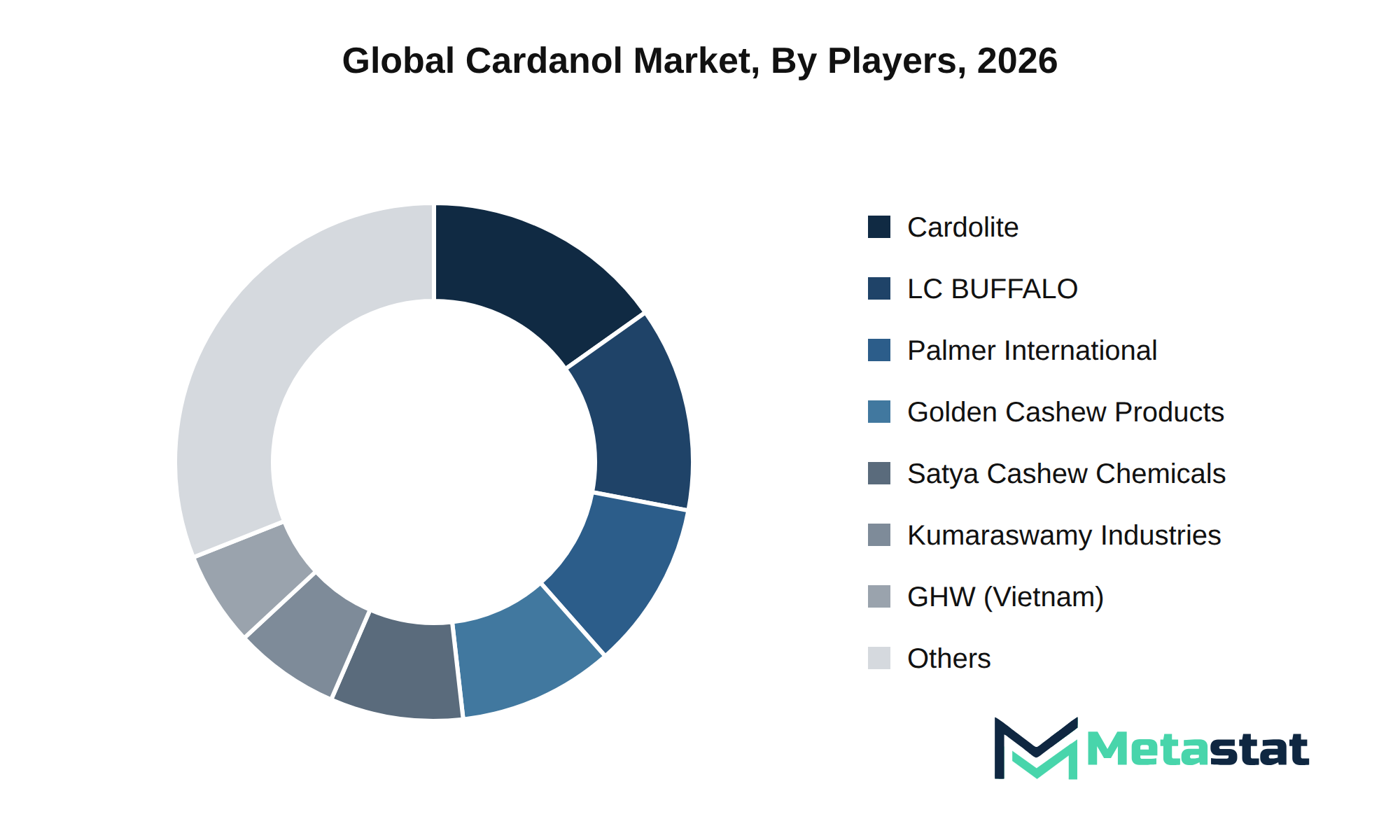
The Cardanol market experiences significant activity driven by various strategic behaviors among key players. Mergers and acquisitions, alongside strategic consolidations, shape the competitive environment, enhancing market presence and operational capabilities. Companies including Cardolite Corporation, LC BUFFALO CO., LTD, and Golden Cashew Products Pvt. Ltd. leverage these strategies to strengthen their positions and optimize resource allocation, resulting in increased market share and improved operational efficiencies.
Strategic insights
Product differentiation through innovation remains a focal point for several suppliers. Companies invest in R&D pipelines and proprietary technologies to create unique offerings that meet evolving customer demands. Players including Satya Cashew Chemicals Pvt Ltd. and Palmer International emphasize joint ventures and strategic alliances to enhance their market reach and improve their product portfolios, leading to expanded customer bases and increased competitive advantage. The presence of strong intellectual property portfolios among firms contributes to technological defensibility, creating barriers to entry for potential new entrants into the Cardanol market.
Market size is forecast to rise from USD 51.4 million in 2025 to over USD 295.4 million by 2033. This growth aligns with a strong compound annual growth rate (CAGR) of 24.4%. The base case reflects market conditions where demand from key end-use industries including automotive, construction, and paints and coatings drives consumption efficiently and sustainably. Positive macroeconomic indicators further support this scenario, with ongoing investments in infrastructure and technological advancements enhancing production capabilities.
A bullish outlook suggests accelerated growth due to increased global investments in next-generation technologies and emerging applications for Cardanol. Industries adopting innovative materials for sustainable product development could push demand significantly higher, creating a favorable environment for new entrants and existing players. A bearish scenario emerges from geopolitical tensions and regulatory challenges, potentially disrupting supply chains and impacting operational efficiencies. The market remains vigilant in navigating compliance timelines and adapting to evolving policies, ensuring alignment with environmental standards.
Ongoing research and development (R&D) initiatives play a critical role in product lifecycle management and innovation. Strategic capital allocation focused on high-growth sectors enhances market competitiveness. Stakeholders are encouraged to identify emerging white-space opportunities and unmet enterprise needs, driving future growth for the Cardanol market.
Cardanol Market Key Segments
By Product Grade:
- Standard / Technical-Grade Cardanol
- High-Purity Cardanol
- Low-Color / Light-Color Cardanol
- Hydrogenated Cardanol
- Others (Specialty-Modified Cardanol Grades)
By Product Type:
- Cardanol Oil
- Cardanol-Based Resins
- Cardanol-Based Friction Materials
- Cardanol-Based Reactive Diluents and Curing Agents
- Others (Cardanol-Based Surfactants and Specialty Derivatives)
By Application:
- Phenolic Resins
- Epoxy Curing Agents and Reactive Diluents
- Coatings and Paints
- Friction Materials
- Adhesives and Sealants
- Laminates and Composites
- Surfactants and Dispersants
- Rubber Compounding
- Lubricants and Oil Additives
- Others (Foundry Chemicals, Agrochemical Intermediates, Electrical Insulation)
By End-Use Industry:
- Automotive and Transportation
- Construction
- Paints and Coatings
- Adhesives and Sealants
- Electrical and Electronics
- Rubber and Elastomers
- Industrial Manufacturing
- Marine and Protective Infrastructure
- Oil and Gas
- Others (Agriculture, Foundry and Specialty Chemical Manufacturing)
By Region:
- North America
- Europe
- Asia-Pacific
- South America
- Middle East and Africa
Key Global Cardanol Industry Players
- Cardolite Corporation
- LC BUFFALO CO., LTD
- Golden Cashew Products Pvt. Ltd.
- Satya Cashew Chemicals Pvt Ltd.
- Palmer International
- CAT LOI CASHEW OIL PRODUCTION AND EXPORT JOINT STOCK COMPANY
- Cashew Chem India
- K Subraya Anantha Kamath and Sons
- Zantye Agro Industries
- Kumaraswamy Industries
- GHW (Vietnam) Co., Ltd
- Paladin Paints & Chemicals Pvt. Ltd.
- Resibras (Cashol)
- KGA Enterprises
- TOP CNSL Co., Ltd.
- Diamond Cashew Products
- Senesel
- Sri Devi Group
- INDUSTRIAL RESINS AND CHEMICALS (CASKYD)
- S.B.Polymer
- CNSL Industrial
Report Coverage
The report strategically identifies and profiles the key market players and analyses their core competencies in each sub-segment of the Cardanol market.
Report Attributes | Details |
Study Period | 2021-2033 |
Base Year | 2025 |
Estimated Year | 2026 |
Forecast Period | 2026-2033 |
Historical Period | 2021-2025 |
Growth Rate | CAGR 24.4% from 2026 to 2033 |
Revenue Unit | USD million |
Segmentation | By Product Grade, Product Type, Application, End-Use Industry, and Region |
By Region | North America (By Product Grade, Product Type, Application, End-Use Industry, and Country)
|
Europe (By Product Grade, Product Type, Application, End-Use Industry, and Country)
| |
Asia Pacific (By Product Grade, Product Type, Application, End-Use Industry, and Country)
| |
South America (By Product Grade, Product Type, Application, End-Use Industry, and Country)
| |
Middle East and Africa (By Product Grade, Product Type, Application, End-Use Industry, and Country)
|
What Report Provides
- Key Company Market Share, Revenue and Ranking for the Cardanol Market
- Key Market Leaders in the Cardanol Industry
- Full In-Depth Analysis of the Parent Industry
- Industry Statistics and Trends Affecting Cardanol
- Important Changes in Market Dynamics and Conditions
- Segmentation Details of the Cardanol Market
- Historical, Ongoing and Projected Market Analysis
- Key Strategies of Major Players in the Market
Frequently Asked Questions
Find answers to common questions about this report
The Metastat Insights study reveals that the Cardanol market size was valued at USD 51.4 million in 2025.
The Cardanol market is projected to grow at a CAGR of 24.4% during the forecast period from 2026 to 2033.
The North America Cardanol market size is estimated to reach USD 92.4 million by 2033.
The leading type segment in the Cardanol market is Cardanol-Based Resins, with a projected value of USD 119.9 million by 2033. This segment surpasses others in terms of revenue potential within the market.
Increasing awareness of environmental sustainability and urbanization significantly drive the Cardanol market. Consumers seek eco-friendly alternatives, prompting manufacturers to invest in sustainable raw materials, while urban infrastructure development enhances demand for versatile materials like Cardanol across various applications.
North America holds the dominant share of the Cardanol market, accounting for 34.6% in 2025. This region is projected to reach USD 92.4 million by 2033, maintaining its leading position.
Regulatory challenges significantly restrain Cardanol market growth by imposing additional costs on manufacturers to comply with evolving environmental standards. This compliance diverts resources from strategic initiatives and creates financial strain, particularly for smaller firms with limited flexibility. Higher operational costs slow growth and reduce competitiveness across the market.
Increasing awareness of environmental sustainability and urbanization significantly favor product adoption in the Cardanol industry. Consumers and manufacturers prioritize eco-friendly alternatives, while the demand for construction materials and sustainable solutions rises because urban infrastructure develops. These trends position Cardanol because a vital component in meeting evolving market needs.
The Cardanol market is estimated to reach a valuation of USD 295.4 million by 2033.
Key players operating in the Cardanol market include Cardolite Corporation, LC BUFFALO CO., LTD, Golden Cashew Products Pvt. Ltd., Satya Cashew Chemicals Pvt Ltd., Palmer International, and Cashew Chem India.
Choose Your License
Global Cardanol Market
Related Reports
Explore related market intelligence reports worth reading alongside this one.