
Global Diesel Exhaust Fluid (DEF) Market
Global Diesel Exhaust Fluid (DEF) Market Size, Share, By Vehicle Type (Passenger Cars and LCVs and HCVs), By Packaging & Delivery Format (Small Containers (Up to 10 Liters) and Medium Containers (Above 11-25 Liters) and Drums & Barrels (Above 26-250 Liters) and Intermediate Bulk Containers (Above 251-1,250 Liters) and Bulk Tanker & Fixed-Storage Supply (Above 1,251 Liters)), By Application (Construction Equipment and Agricultural Tractors and Others), By End-user (OEM and Aftermarket), Industry Analysis, Growth, Trends, and Forecast, 2026-2033
MSI-5012
August 21, 2026
Updated
280 Pages
Historical
Base year
Forecast
Forecast period
Report Details
Comprehensive Market Analysis And Insights
Market Overview
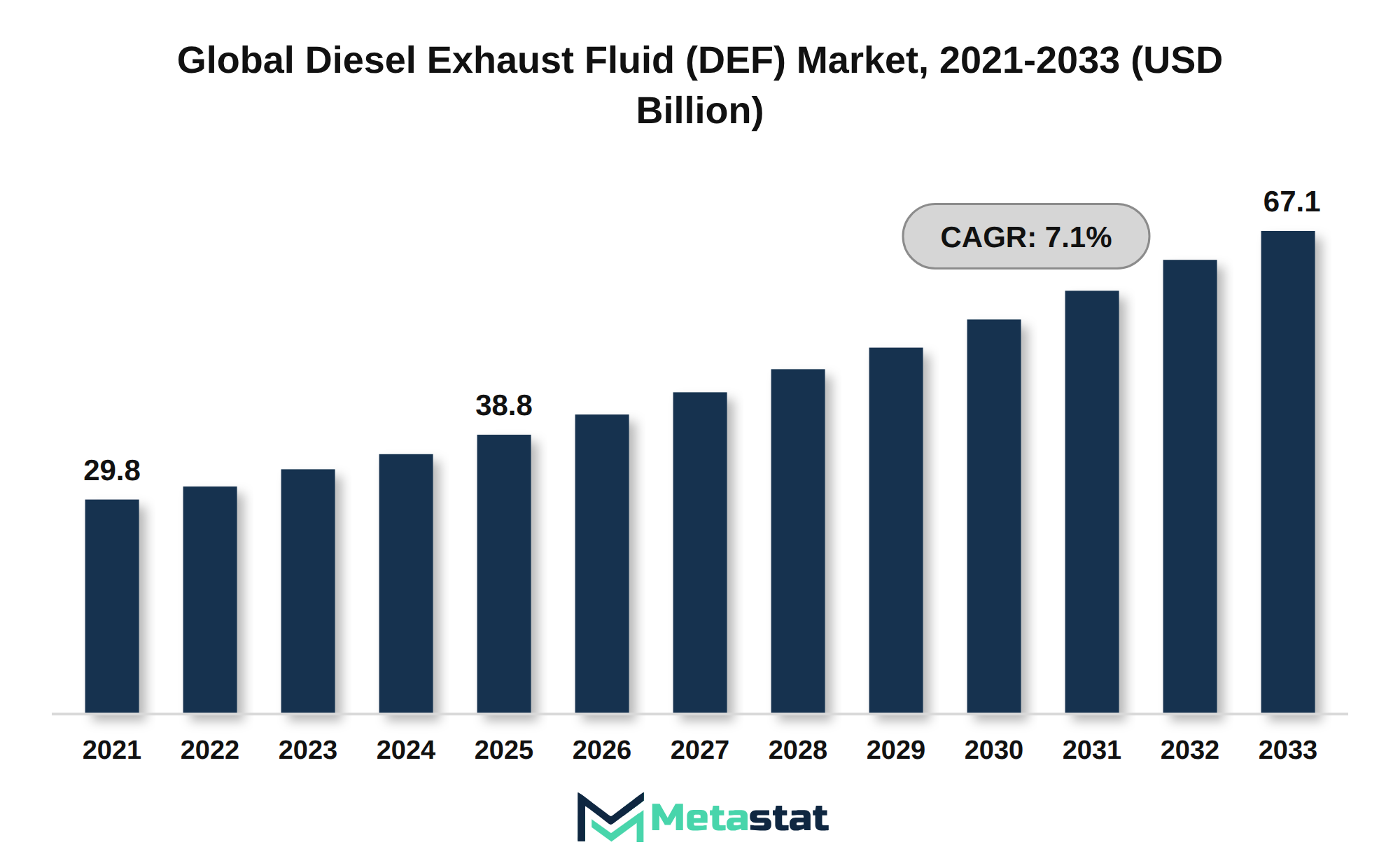
The global Diesel Exhaust Fluid (DEF) market was valued at USD 38.8 billion in 2025 and is projected to reach USD 67.1 billion by 2033, growing at a CAGR of 7.1% over the forecast period.
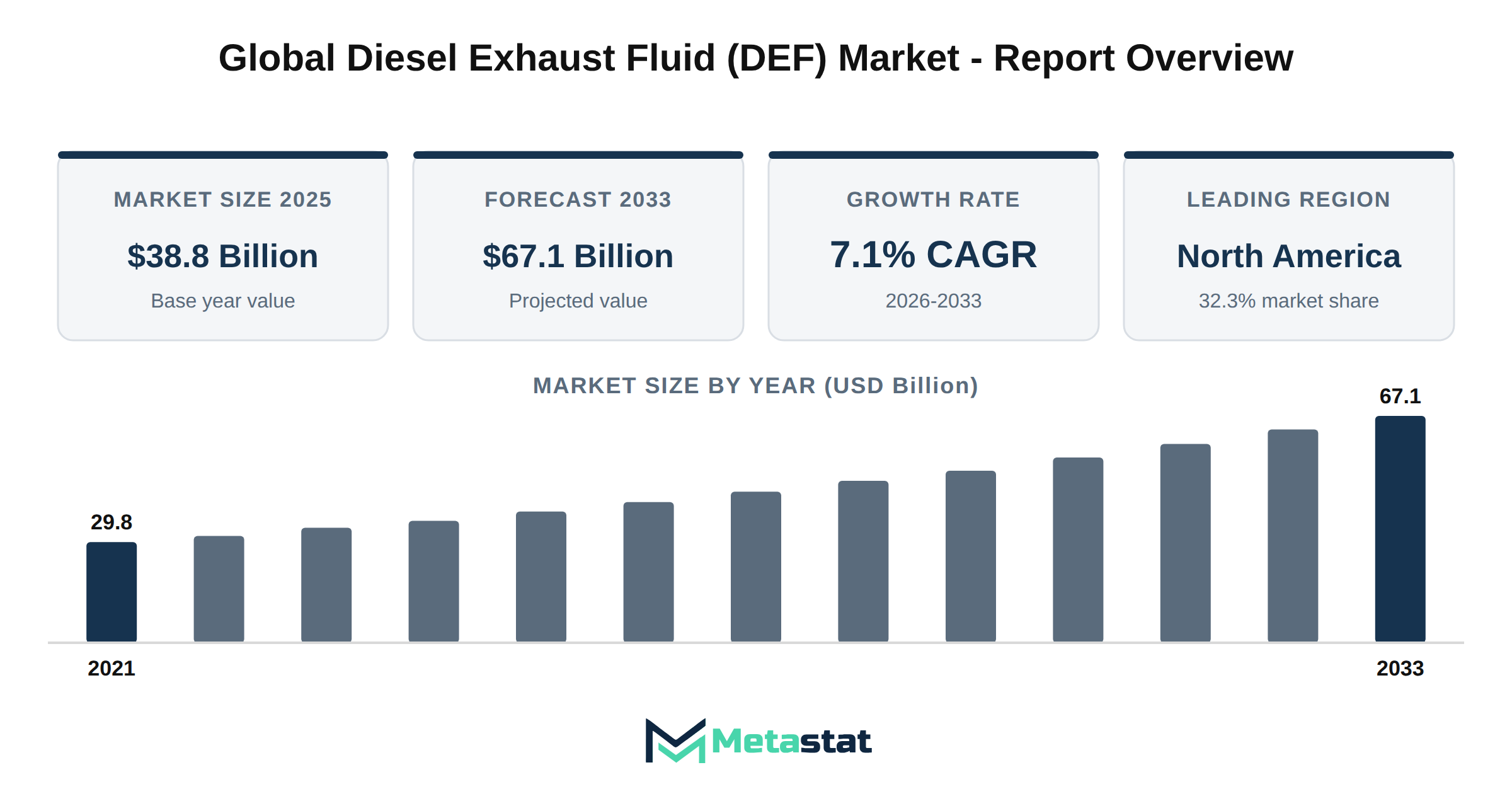
The Diesel Exhaust Fluid (DEF) market exhibits significant growth, driven by evolving regulatory frameworks and increasing adoption of Selective Catalytic Reduction (SCR) technology in vehicles. The global market value reached USD 38.8 billion in 2025, with projections indicating an increase to USD 67.1 billion by 2033, reflecting a compound annual growth rate (CAGR) of 7.1% during the forecast period. This expansion aligns with the increasing emphasis on reducing nitrogen oxide emissions to comply with stringent emission standards across various regions.
Rapid advancements in SCR technology and the growing diesel vehicle parc contribute to the demand for Diesel Exhaust Fluid. The evolution of emission standards influences manufacturers and end-users, compelling them to embrace products that ensure compliance with established regulations. In commercial vehicles, production and utilization trends highlight a shift towards more environmentally friendly options, resulting in heightened DEF consumption. Fleets optimize their operations through efficient refill economics, which directly impacts the overall demand for DEF.
The market dynamics surrounding DEF pricing and urea cost are critical. Fluctuations in urea prices affect the overall cost structure of DEF, influencing procurement strategies across various sectors. Competitive capacity in the market evolves, with key players focusing on strategic partnerships to enhance product offerings and expand market reach. Companies including Yara International ASA and CF Industries Holdings, Inc. operate in the market, emphasizing the importance of regulatory compliance and innovations in product development.
Overall, the Diesel Exhaust Fluid (DEF) market is positioned for significant growth, driven by environmental imperatives and regulatory pressures that shape strategic corporate decisions. The connection of supply chain dynamics, macroeconomic factors, and technological advancements will continue to influence market trajectories, ensuring a focused approach towards sustainable transformation in the industry.
The Diesel Exhaust Fluid (DEF) market experiences evolving dynamics influenced by several factors, including SCR penetration and diesel parc evolution. While regulatory frameworks tighten, the adoption of SCR technology across various vehicle types increases, thereby increasing the demand for DEF. This trend is evident in the growing number of diesel vehicles equipped with SCR systems, which enhances the overall fluid consumption within fleets.
Emission standards play a critical role in shaping market dynamics. Stringent regulations across regions drive manufacturers to comply with established timelines, prompting increased production and utilization of compliant vehicles. Consequently, this situation leads to a higher demand for DEF, a necessary component for meeting these emission standards.
Trends in commercial vehicle production and utilization significantly impact the market. The rise in e-commerce and the subsequent demand for efficient logistics solutions contribute to increased production rates of commercial vehicles. This surge in vehicle utilization necessitates higher DEF consumption, especially within fleets operating under rigorous emission regulations.
Economic considerations surrounding fleet DEF consumption and refill dynamics influence purchasing behaviors. Operators focus on optimizing refill cycles to manage costs effectively while ensuring compliance. These economic factors shape the operational strategies of fleet managers, prompting them to explore cost-effective refill solutions to maintain operational efficiency.
DEF pricing remains sensitive to fluctuations in urea costs, which directly affect market pricing. Urea sourcing strategies and geopolitical factors lead to price volatility, impacting the overall market landscape. Stakeholders closely monitor these dynamics to adjust procurement strategies and maintain competitive positioning.
Competitive capacity and partnership developments play a vital role in market positioning. Companies within the Diesel Exhaust Fluid (DEF) market engage in strategic partnerships to enhance supply chain efficiency and expand product offerings. Collaborations focused on innovation and sustainability drive advancements in fluid formulations, addressing the growing demand for environmentally friendly solutions.
Regulatory compliance and standards continue to evolve, posing challenges and opportunities for market participants. The landscape of geopolitical risks influences sourcing strategies, impacting supply chain resilience. Companies strategically allocate resources to mitigate risks while meeting compliance requirements, driving innovation in product development.
Research and development trajectories reflect the market's commitment to next-generation innovations. Efforts toward sustainable transformation, decarbonization, and circular economy dynamics shape the future of the Diesel Exhaust Fluid (DEF) market. Investments in R&D facilitate the development of advanced formulations that align with environmental goals while addressing performance metrics.
Supply chain dynamics emphasize the importance of logistics architecture and sourcing landscapes. Efficient supply chain management enhances the ability to respond to market demands while optimizing costs. Companies focus on strengthening supplier relationships to ensure a steady flow of DEF and maintain competitive pricing.
The market undergoes fragmentation due to the presence of numerous players, leading to varied procurement strategies and customer journey dynamics. M&A activities reflect the competitive landscape, with companies seeking to consolidate resources and expand market reach. Capital allocation strategies emphasize infrastructure investments, enhancing operational capabilities to capture growth opportunities.
Macroeconomic headwinds, including inflationary pressures and currency volatility, impact operational realities within the market. Companies adapt strategies to navigate these challenges, ensuring that financial health remains intact. The future strategic outlook for the Diesel Exhaust Fluid (DEF) market emphasizes the importance of agility and responsiveness to changing economic conditions.
Corporate imperatives drive high-value recommendations for stakeholders. Companies are advised to prioritize innovation, sustainability, and compliance to enhance competitive positioning and capitalize on emerging market trends.
Market Dynamics
Emission limits drive closed-loop adoption
The growing emphasis on emission limits significantly impacts the Diesel Exhaust Fluid (DEF) market. Stricter environmental regulations compel industries to adopt technologies that reduce nitrogen oxide emissions from diesel engines. Various sectors, including transportation and agriculture, experience heightened pressure to comply with these standards, resulting in increased demand for DEF, which plays a critical role in selective catalytic reduction systems.
The necessity for reduced emissions aligns with global trends toward sustainability and environmental responsibility, prompting investments in cleaner technologies. This transition creates a favorable climate for the DEF market, driving growth supported by end-users seeking solutions that improve compliance and operational efficiency. The financial implications for businesses adapting to these changes include potential savings in penalties and improved public image, which further encourages the adoption of DEF solutions.
In light of these factors, the market expects sustained expansion, with a projected valuation of USD 67.1 billion by 2033. The movement towards tighter emission limits not only increases demand for DEF but stimulates innovation within the sector, enhancing the focus on research and development for more efficient products and systems. Such dynamics create a robust environment for growth and investment in the Diesel Exhaust Fluid (DEF) market.
Infrastructure development drives market expansion
The Diesel Exhaust Fluid (DEF) market benefits significantly from ongoing infrastructure development initiatives across various regions. Investments in transportation networks and logistics facilities enhance the efficiency of supply chains, allowing for improved distribution of DEF products. Increased funding for infrastructure projects supports the demand for commercial vehicles, which in turn drives the need for DEF in diesel engine operations.
Growing urbanization trends further contribute to this development. Urban areas require upgraded infrastructure to accommodate rising populations and increased vehicle usage. The heightened demand for public transportation and commercial logistics increases the necessity for efficient emission control measures, fueling the DEF market.
Advancements in digital infrastructure offer opportunities for the market. The integration of smart transportation systems promotes the adoption of cleaner technologies, including efficient DEF usage. These advancements enhance operational productivity, allowing businesses to optimize their diesel engines and reduce harmful emissions in line with sustainability goals.
Overall, robust infrastructure development creates a favorable environment for the Diesel Exhaust Fluid (DEF) market, driving growth and enhancing competitive positioning among suppliers.
Regulatory challenges hinder market growth
The Diesel Exhaust Fluid (DEF) market faces significant regulatory challenges that hinder its expansion. Regulatory tightening, particularly concerning emission standards, creates compliance hurdles for producers and suppliers. These stringent mandates often result in increased operational costs, impacting pricing and availability. Suppliers absorb these costs, creating a ripple effect throughout the supply chain by adjusting pricing structures to remain compliant.
Macroeconomic headwinds, including inflationary pressures, contribute to rising costs for raw materials and production, directly affecting the market. Geopolitical instability disrupts supply chains, leading to resource scarcity and delayed deliveries, which further strain market accessibility. These factors collectively present a challenging environment for participants in the Diesel Exhaust Fluid (DEF) market and slow investment and innovation in the sector.
Capital investment requirements for compliance with evolving regulatory frameworks create additional barriers to entry. Companies require significant funding to upgrade facilities and processes, deterring new entrants from participating in the market. This trend contributes to market fragmentation, limiting competition and affecting the market's growth trajectory.
Technological obsolescence poses another challenge, with suppliers needing to continually adapt to new standards and innovations. The risk of substitution by alternative offerings complicates the competitive landscape, driven by consumers exploring different solutions to meet their needs. Together, these factors create hurdles that significantly impact the dynamics of the Diesel Exhaust Fluid (DEF) market.
Geopolitical fragmentation impacts market stability
The Diesel Exhaust Fluid (DEF) market encounters challenges stemming from geopolitical fragmentation, which disrupts trade dynamics and creates uncertainty in supply chains. Trade deficits and tariff friction contribute to increased operational costs, influencing pricing strategies across various sectors. Rising input cost structures directly affect profitability and market competitiveness for companies operating in this space.
Technological disruptions further complicate the market, necessitating complex research and development integrations. Businesses navigate friction between emerging technologies and existing systems, impacting adoption rates among manufacturers. These challenges hinder efforts to streamline production processes, thus affecting the overall growth trajectory of the Diesel Exhaust Fluid (DEF) market.
Supply chain instability results from various factors including logistics disruptions and fluctuating feedstock availability. Such volatility complicates inventory management and impacts the ability to meet market demand effectively. The evolving landscape of tightening global regulatory standards adds compliance overhead, creating additional burdens for organizations striving to meet both operational and environmental requirements in the Diesel Exhaust Fluid (DEF) market.
The Diesel Exhaust Fluid (DEF) market faces pressures from workforce skill gaps and talent retention challenges. Automation displacements in manufacturing processes require a workforce equipped with advanced technical skills. Addressing these gaps is essential for maintaining operational efficiency and enhancing firms' capacity to innovate and respond to market demands.
Environmental lifecycle footprints and sustainability demands play crucial roles in shaping strategies and market positioning. Companies that fail to meet decarbonization mandates risk losing market share. The relationship between changing downstream demands and market saturation further complicates the competitive environment, compelling organizations to adapt rapidly to shifting consumer preferences and substitution pressures in the Diesel Exhaust Fluid (DEF) market.
Emerging regional demands drive market growth
The Diesel Exhaust Fluid (DEF) market experiences robust opportunities driven by emerging regional demands across various geographies. North America and Asia Pacific show particularly strong growth potential, fueled by increasing regulatory pressures and the transition to cleaner technologies. The ongoing modernization of infrastructure in these regions facilitates the adoption of advanced technologies, further enhancing the demand for DEF. While industries prioritize sustainability and compliance with stringent emission norms, investments in efficient supply chains become essential.
Technological disruptions contribute significantly to the market landscape, with advancements in application techniques and formulations designed to enhance DEF performance. Innovations in packaging and delivery formats cater to diverse customer requirements, enabling various end-users, including OEMs and aftermarket suppliers, to optimize operational efficiencies. The market's response to evolving buying behaviors, influenced by digital procurement strategies, aligns with broader trends in commercial model transitions, emphasizing the need for effective integration of DEF within existing operations.
Increased focus on sustainability imperatives drives the demand for eco-friendly solutions, positioning DEF because a critical component for industries striving for greener transformations. The emphasis on ESG-driven alignments enhances investment attractiveness, prompting strategic consolidations and cross-industry mergers to strengthen market positioning. These dynamics promote product integration and niche application growth, creating avenues for expanded market reach. Consequently, the Diesel Exhaust Fluid (DEF) market is poised for substantial growth, characterized by adaptive strategies and a commitment to supporting ecological objectives.
Market Segmentation Analysis
The Global Diesel Exhaust Fluid (DEF) market is segmented based on Vehicle Type, Packaging & Delivery Format, Application, and End-user.
By Vehicle Type, the market is further segmented into:
- Passenger Cars
- LCVs
- HCVs
Passenger Cars
Valued at USD 7.6 billion in 2026, the Passenger Cars segment is projected to reach USD 12.8 billion by 2033, at a CAGR of 7.7% during the forecast period. Demand for Diesel Exhaust Fluid (DEF) in passenger vehicles increasingly derives from stringent emission regulations implemented globally, which compel automakers to enhance the environmental performance of their offerings. This regulatory landscape drives a shift toward vehicles equipped with advanced selective catalytic reduction (SCR) systems, which require DEF for optimal operation.
Technological maturation within the industry supports the expansion of this segment, with innovations in DEF formulations improving performance and compatibility with various vehicle models. The growing consumer preference for environmentally friendly transportation solutions drives rising adoption rates, particularly in regions with robust automotive markets including North America and Europe.
Shifts in end-use dynamics contribute to market growth, with manufacturers focusing on expanding their passenger car portfolios to include more efficient and low-emission models. Regulatory compliance standards increasingly mandate the integration of DEF in light-duty vehicles, underpinning a broader trend toward cleaner internal combustion engine technology.
Cost structures remain a critical consideration, with fluctuations in raw material prices impacting DEF production expenses. Manufacturers navigate these challenges by optimizing supply chains and exploring innovative production techniques, which enables them to maintain competitive pricing. This strategic maneuvering strengthens market positioning and enhances profit margins, facilitating investment in next-generation upgrades and product evolution.
The Passenger Cars segment of the Diesel Exhaust Fluid (DEF) market experiences heightened investment interest, particularly driven by automotive manufacturers committing to sustainability initiatives. Such commitments signify a progressive shift toward achieving long-term sustainability goals, ensuring continued demand for DEF because regulatory pressures mount.
LCVs
In the competitive landscape of the Diesel Exhaust Fluid (DEF) market, the LCVs segment is estimated to reach USD 16.8 billion by 2033, at a CAGR of 7.6% during the forecast period. The demand for LCVs is influenced by increasing regulations aimed at reducing emissions from commercial vehicles. These regulations motivate manufacturers to adopt cleaner technologies, driving the need for effective exhaust treatment solutions, including DEF, to comply with stringent standards.
Technological advancements contribute to segment expansion, with innovations in diesel engines leading to improved efficiency and reduced environmental impact. The rise in e-commerce and transportation services has further fueled demand for LCVs, driven by businesses seeking reliable and eco-friendly transportation solutions. Consequently, the market experiences robust demand from logistics and delivery companies focusing on sustainability.
End-user dynamics reflect a shift towards environmentally friendly practices, compelling manufacturers to invest in DEF. This trend highlights the importance of product evolution in meeting market expectations. The increase in agricultural and construction activities worldwide enhances the demand for LCVs, reinforcing the importance of this segment within the overall market.
Regulatory compliance standards and certifications play a significant role in shaping the landscape. While countries implement stricter emissions regulations, the adoption of DEF becomes crucial for manufacturers aiming for compliance. Cost structures and pricing volatility affect profit margins, but the continued emphasis on emissions reduction ensures a steady growth trajectory for the LCVs segment.
HCVs
Increasing emissions regulations across various sectors drive demand for Diesel Exhaust Fluid (DEF) within the HCVs segment. Companies focusing on heavy commercial vehicles actively pursue compliance with stringent emission standards, promoting the adoption of DEF because an effective solution for reducing nitrogen oxides from exhaust systems. The growth of the transportation and logistics industry enhances the requirement for advanced exhaust solutions, indicating a strong expansion trajectory for this segment.
Technological advancements have facilitated significant product evolution within the DEF market, enabling efficient formulations that improve vehicle performance while adhering to regulations. The transition towards next-generation upgrades positions HCVs to utilize innovative DEF solutions, contributing to an anticipated market value of USD 37.5 billion by 2033. Strategic opportunities arise from the growing demand for sustainable technologies, prompting investments in DEF systems that enhance operational efficiency and minimize environmental impact.
End-user dynamics significantly influence consumption shifts, with OEMs and aftermarket suppliers actively expanding their offerings to cater to evolving market needs. Regulatory compliance standards continue to shape purchasing decisions, driving manufacturers to prioritize DEF integration in their heavy vehicles. The relationship between regulatory requirements and market innovations ensures a dynamic environment for stakeholders within the HCVs segment.
Cost structures associated with DEF production and supply chain resilience remain essential considerations for industry players. Fluctuations in raw material sourcing impact pricing volatility, necessitating effective strategies to mitigate margin pressures. By addressing these challenges, stakeholders enhance their competitive positioning within the market while promoting long-term growth and sustainability.
By Packaging & Delivery Format, the market is further segmented into:
- Small Containers (Up to 10 Liters)
- Medium Containers (Above 11-25 Liters)
- Drums & Barrels (Above 26-250 Liters)
- Intermediate Bulk Containers (Above 251-1,250 Liters)
- Bulk Tanker & Fixed-Storage Supply (Above 1,251 Liters)
Small Containers (Up to 10 Liters)
Growing adoption of Diesel Exhaust Fluid (DEF) in small containers (up to 10 liters) aligns closely with rising demand for convenient and efficient solutions across various applications. This sub-segment appeals particularly to consumers and businesses seeking portable and easy-to-handle options for their DEF needs. The trend towards smaller, more manageable container sizes reflects an increasing focus on user-friendly products that enhance operational efficiency.
Product innovation significantly expands the market for small containers. Manufacturers emphasize advancements in packaging design that enhance usability and ensure compliance with regulatory standards. Enhanced delivery mechanisms, including nozzle designs and spill-proof features, support user-friendly applications, positively impacting market growth.
The regulatory landscape surrounding emissions continues to influence consumption patterns. Stricter emissions standards across multiple industries drive demand for DEF, encouraging users to purchase products in smaller, more convenient packages. Businesses adapt to compliance demands, and the small container segment benefits from enhanced accessibility and storage solutions for various end-user dynamics.
Cost structures within the small container segment remain competitive, with pricing strategies tailored to attract diverse customer bases. Raw material sourcing presents ongoing challenges, while strategic partnerships with suppliers help mitigate potential disruptions. Overall, the small container segment experiences sustained interest, with robust capital investment outlooks indicating a promising trajectory within the broader Diesel Exhaust Fluid (DEF) market.
Medium Containers (Above 11-25 Liters)
The rise in demand for medium containers (above 11-25 liters) contributes to the growth of the Diesel Exhaust Fluid (DEF) market, driven by increasing needs for convenient and efficient storage solutions. Industries including transportation and agriculture benefit from these containers, which facilitate the handling of DEF for various applications, reinforcing operational efficiency.
Adoption of medium containers aligns with the growing emphasis on environmentally compliant practices. Regulatory frameworks surrounding emissions standards push end-users towards efficient DEF usage, prompting a shift towards packaging formats that support ease of application and compliance. This change enhances accessibility for users in both the original equipment manufacturer (OEM) sector and aftermarket services, ultimately increasing market penetration.
Technological advancements in container design enhance the utility of medium containers. Innovations focus on improving durability and ensuring compliance with safety standards, which appeals to end-users seeking reliable solutions. Evolution in product features, including integrated dispensing mechanisms, further supports the segment's appeal, contributing to increased customer satisfaction.
Shifts in consumption patterns indicate a preference for medium containers among end-users seeking a balance between volume and portability. These containers effectively serve diverse applications, including agricultural equipment and construction machinery, reinforcing their critical role within the market and driving demand.
Strategic opportunities arise from the increasing focus on sustainability and environmental stewardship. Capital investment in the development of environmentally friendly packaging solutions aligns with broader market trends, promoting growth in the segment. This focus encourages manufacturers to explore sustainable materials and production processes, enhancing their competitive positioning.
Drums & Barrels (Above 26-250 Liters)
Demand for the Drums & Barrels (Above 26-250 Liters) segment within the Diesel Exhaust Fluid (DEF) market is driven by the increasing need for efficient storage and distribution of DEF among various industries. This segment supports large-scale consumers, including transportation and logistics sectors, ensuring effective supply chain operations. The growing focus on sustainability and compliance with stringent emission regulations is driving organizations toward bulk purchasing of DEF.
Technological maturation and next-generation upgrades in storage solutions enhance product evolution, making these containers more durable and effective. Innovations in materials and design contribute to improved performance, influencing downstream applications in various sectors, including agriculture and construction. The rise in construction equipment and agricultural tractors using DEF leads to higher demand for larger packaging formats.
Regulatory compliance standards create a framework that strengthens demand for reliable DEF packaging solutions. Companies investing in compliance certifications boost their operational credibility, leading to increased market share. Cost structures remain sensitive to raw material sourcing and pricing volatility, impacting margins across the market. Effective supply chain management and resilience against logistics vulnerabilities become crucial for suppliers in this segment, ensuring consistent product availability and meeting increasing consumer expectations.
Intermediate Bulk Containers (Above 251-1,250 Liters)
Growing demand for Intermediate Bulk Containers (Above 251-1,250 Liters) reflects the need for efficient storage and transportation of Diesel Exhaust Fluid (DEF). This sub-segment benefits from the increasing scale of operations within industries that rely on DEF, including the automotive and industrial sectors. A focus on emission reductions and improved vehicle efficiency drives the adoption of DEF, aligning with regulatory requirements aimed at reducing nitrogen oxides in exhaust emissions.
Technological advancements play a significant role in the enhancement of intermediate bulk containers, supporting better durability and ease of handling. Innovations in container design and material increase the appeal of this delivery format among users who prioritize efficiency and sustainability in their operations. This evolution corresponds with a broader trend in the market toward more environmentally friendly solutions.
End-use dynamics highlight the growing preference for bulk supply solutions, particularly among original equipment manufacturers (OEMs) and large fleet operators. These organizations seek reliable and sustainable DEF supply chains to meet stringent compliance standards. Increased focus on supply chain resilience drives investment in bulk delivery formats, ensuring continuity in production processes.
Strategic opportunity windows exist where companies invest in advanced logistics and storage capabilities to capture a larger share of the expanding DEF market. This proactive approach to capital investment aligns with the growth trajectory of the DEF market, driven by businesses aiming to streamline operations and improve supply chain efficiencies.
Bulk Tanker & Fixed-Storage Supply (Above 1,251 Liters)
Demand for the Bulk Tanker & Fixed-Storage Supply (Above 1,251 Liters) sub-segment within the Diesel Exhaust Fluid (DEF) market reflects evolving trends tied to large-scale applications. High-capacity storage options offer several advantages, including efficient logistics and reduced transportation costs, particularly in commercial operations where quantities required exceed standard packaging options.
Adoption of this sub-segment is driven by the increasing need for streamlined supply chains, particularly in the transportation and industrial sectors. Companies operating in these industries focus on cost efficiency, making larger storage formats attractive. The ability to store significant quantities of DEF allows for uninterrupted operations and minimizes challenges associated with frequent refills.
Regulatory compliance standards play a crucial role in shaping the sub-segment's growth trajectory. Stringent emission regulations boost demand for effective DEF solutions, prompting end-users to invest in bulk storage systems that facilitate easy access and handling. This trend indicates a substantial shift towards sustainability and adherence to environmental policies.
Technological maturation within the DEF market supports the evolution of the Bulk Tanker & Fixed-Storage Supply sub-segment. Advancements in storage materials and delivery systems enhance product integrity, ensuring that DEF remains effective during storage while minimizing losses associated with degradation. This technological progress influences the overall operational costs for users.
Opportunities for strategic investment in this sub-segment exist owing to companies seeking to enhance their supply chain resilience. Increasingly, businesses evaluate options for long-term contracts with suppliers of bulk DEF to secure stable pricing and supply reliability. Such strategies are essential for mitigating risks tied to pricing volatility and raw material sourcing.
Overall, the Bulk Tanker & Fixed-Storage Supply (Above 1,251 Liters) sub-segment within the Diesel Exhaust Fluid (DEF) market positions itself because a key player in meeting the demands of industries striving for operational efficiency and regulatory compliance.
By Application, the market is further segmented into:
- Construction Equipment
- Agricultural Tractors
- Others (Mining Equipment, Forestry Equipment)
Construction Equipment
In the construction equipment sector, stringent emissions regulations drive rising demand for Diesel Exhaust Fluid (DEF). Compliance with these regulations necessitates effective management of nitrogen oxides, a common byproduct of diesel engines used in various construction machinery. Manufacturers prioritize environmentally friendly solutions, making the adoption of DEF essential for operational compliance and enhancing equipment efficiency.
Technological advancements in construction machinery have led to the integration of more efficient engines, which further promotes the use of DEF. Enhanced engine designs reduce emissions significantly, aligning with global sustainability goals. These developments boost the market by encouraging manufacturers to invest in next-generation upgrades that support DEF usage.
Demand shifts towards equipment that incorporates DEF into its operational framework, reflecting growing awareness of environmental responsibilities among end-users. The push for cleaner machinery influences purchasing decisions, emphasizing the importance of adopting DEF for reduced emissions and improved performance. This trend is evident across various regions and has significant implications for overall market dynamics.
The construction equipment segment of the Diesel Exhaust Fluid (DEF) market benefits from stringent regulatory compliance, technological maturation, and evolving consumer preferences that prioritize sustainability. These factors collectively contribute to a robust outlook for DEF usage within this industry.
Agricultural Tractors
In the context of the Diesel Exhaust Fluid (DEF) market, the Agricultural Tractors application segment sees increasing demand driven by the need for improved compliance with stringent emissions regulations in the agricultural sector. Farmers and agricultural enterprises prioritize sustainability, resulting in heightened focus on equipment efficiency and reduced environmental impact. This shift influences purchasing decisions, pushing manufacturers to integrate advanced technologies that enhance emissions control, ultimately boosting the adoption of DEF.
Technological maturation significantly influences the growth of this segment. Innovations in agricultural machinery, including Tier 4 compliant engines, necessitate the use of Diesel Exhaust Fluid (DEF) to meet regulatory standards. The ongoing evolution of tractor designs emphasizes enhanced fuel efficiency and reduced emissions, aligning with global trends toward cleaner agricultural practices. Consequently, manufacturers invest in next-generation upgrades that streamline DEF usage, facilitating greater operational efficiency.
Consumption shifts within the agricultural industry reflect an increasing awareness of environmental impacts. Farmers recognize the operational advantages of using DEF, including improved engine performance and reduced maintenance costs associated with emissions control technologies. Regulatory compliance standards impose strict guidelines on emissions, further driving the integration of DEF into agricultural equipment, including tractors.
Cost structures within the segment highlight the importance of maintaining a balance between equipment investment and operational efficiency. Pricing volatility in raw materials and DEF poses challenges for manufacturers and end-users. Strategic opportunity windows arise for suppliers to offer competitive pricing and value-added services, enhancing customer loyalty and market penetration.
Supply chain resilience remains a critical factor in ensuring consistent availability of DEF for agricultural applications. Disruptive alternatives, including emerging engine technologies or alternative fuels, present both challenges and opportunities. Manufacturers adapt to changing market dynamics while strategically managing their product portfolios to capture emerging trends in sustainability and efficiency.
Others (Mining Equipment, Forestry Equipment)
Demand for Diesel Exhaust Fluid (DEF) in the application of mining and forestry equipment experiences significant growth owing to increasing regulatory compliance standards aimed at reducing emissions. These standards drive operators to seek solutions that meet environmental requirements while maintaining operational efficiency. The adoption of DEF in these sectors reflects a commitment to sustainability and adherence to stringent emissions regulations.
Technological maturation in diesel engine designs enhances the compatibility of DEF with modern machinery, optimizing performance and minimizing emissions. This evolution in engine technology encourages manufacturers to incorporate DEF usage in their equipment, providing a competitive advantage in an environmentally conscious market. The trend toward next-generation upgrades further advances the market, driven by companies investing in equipment that improves operational performance.
End-use dynamics in the mining and forestry sectors highlight a shift toward greater acceptance of DEF, influenced by increasing awareness of environmental impacts and operational cost savings associated with cleaner technologies. Consumption shifts toward more sustainable practices align with global initiatives aimed at reducing carbon footprints, positioning DEF because a crucial component in achieving these goals. The market benefits from a growing focus on product evolution that aligns with these changing dynamics.
Cost structures and pricing volatility related to raw materials influence market stability. Manufacturers facing challenges in sourcing raw materials for DEF production adapt their strategies to mitigate risks associated with supply chain vulnerabilities. Strategic opportunity windows arise because companies look to innovate within the DEF landscape, exploring disruptive alternatives that enhance product offerings and broaden market appeal.
Investment in research and development is crucial for the advancement of DEF applications in mining and forestry. This investment not only supports product evolution but ensures that the market retains its resilience and responsiveness to emerging needs. The outcome is a robust framework for growth within the Diesel Exhaust Fluid (DEF) market that adapts to the evolving landscape of environmental regulations and technological advancements.
By End-user, the market is further segmented into:
- OEM
- Aftermarket
OEM
Growth in the OEM segment of the Diesel Exhaust Fluid (DEF) market benefits from increasing regulatory demands for emissions reductions. Original Equipment Manufacturers (OEMs) focus on integrating DEF into their vehicles to comply with these regulations, boosting market adoption. This integration enhances product appeal and meets consumer expectations for environmentally friendly options. The demand for advanced technologies in automotive manufacturing drives innovative approaches to DEF application, making it a critical component in the production of cleaner vehicles.
Technological maturation within the automotive sector reinforces the segment's expansion. OEMs invest in next-generation upgrades to improve vehicle efficiency, which often includes enhanced DEF systems. These advancements contribute to a more sustainable transportation ecosystem, attracting environmentally conscious consumers and businesses. Strategic partnerships between OEMs and DEF suppliers enhance supply chain resilience, ensuring reliable availability of high-quality products.
Regulatory compliance standards significantly influence the OEM segment. Stricter government policies regarding emissions drive manufacturers to adopt DEF, reflecting a standard component in their products. This trend enhances the market's growth potential by creating a consistent demand for DEF across various vehicle types, including passenger cars and heavy commercial vehicles. While manufacturers strive for compliance, a shift towards more sustainable manufacturing practices emerges, leading to increased utilization of DEF in production.
Price volatility in raw materials impacts the OEM segment's cost structures. Manufacturers face challenges in securing stable pricing for DEF and its components, affecting overall production costs. Despite these pressures, the long-term benefits associated with adopting DEF outweigh short-term fluctuations in pricing. By investing in DEF technology, OEMs position themselves favorably in a competitive market focused on sustainability and regulatory compliance.
Aftermarket
Growing environmental awareness drives demand for the Aftermarket segment within the Diesel Exhaust Fluid (DEF) market. Increasing focus on maintaining vehicles' compliance with stringent emissions standards boosts the need for high-quality DEF products. This trend results in rising adoption of DEF among aftermarket auto service providers, reinforcing the importance of reliable supply chains for product availability. Enhanced product quality and competitive pricing influence purchasing decisions, contributing to an expanding aftermarket customer base. Technological advancements in DEF formulations and packaging solutions support product evolution, addressing specific requirements of end-users in various applications. The market's resilience in response to shifts in regulatory compliance standards strengthens the aftermarket's position, enabling adaptation to changing consumer preferences and expectations.
By Region
Based on geography, the Global Diesel Exhaust Fluid (DEF) market is divided into North America, Europe, Asia-Pacific, South America, Middle East, and Africa.
North America
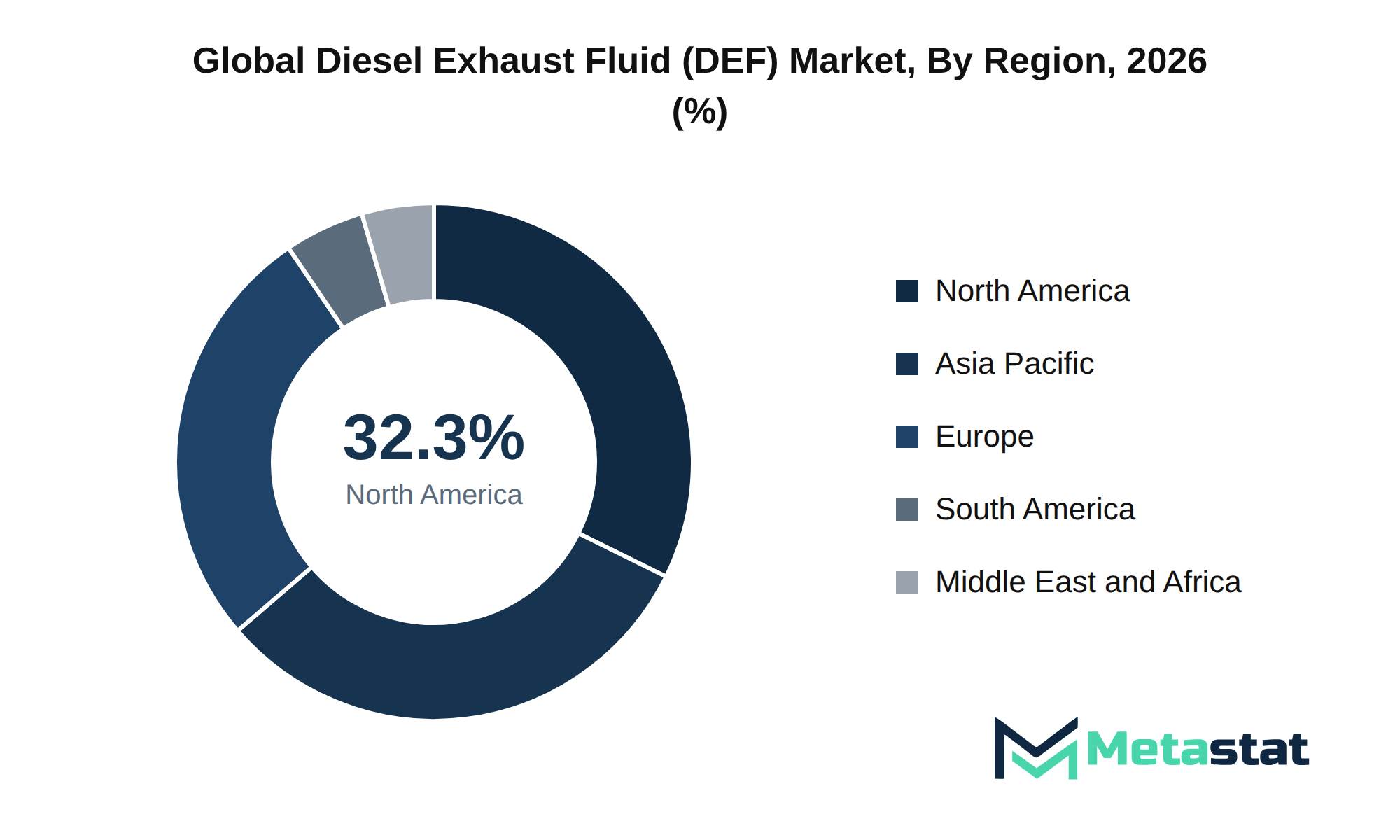
The North America Diesel Exhaust Fluid (DEF) market is set to expand at a CAGR of 7.1% within the forecast period, reaching a market size (TAM) of USD 20.5 billion by the end of 2033. This growth is driven by increasing environmental regulations that require the reduction of nitrogen oxide emissions across various vehicle types, including passenger cars, light commercial vehicles (LCVs), and heavy commercial vehicles (HCVs). The market benefits from significant demand in the United States, Canada, and Mexico, with the region commanding a share of the global market at 32.3% in 2025.
Infrastructure modernization efforts facilitate the adoption of cleaner technologies, promoting the transition to Diesel Exhaust Fluid (DEF) in various applications. Companies are investing in localized manufacturing to strengthen supply chains and meet rising demand efficiently. Emerging market front-runners in North America include established players including Yara International ASA and CF Industries Holdings, Inc., who are enhancing their production capabilities to capture market share.
Supply chain regionalization and nearshoring initiatives allow manufacturers to optimize procurement processes and reduce lead times, improving market responsiveness. Compliance with local mandates drives operational strategies, supporting the growth of the aftermarket segment because end-users seek reliable DEF solutions for ongoing maintenance and performance optimization. The competitive landscape reflects a trend toward vendor consolidation, because companies aim to enhance their market position by leveraging economies of scale and resource efficiencies.
Overall, the North America Diesel Exhaust Fluid (DEF) market exhibits significant growth potential due to regulatory pressures, technological advancements, and strategic investments in localized operations, positioning it for sustained expansion through 2033.
Europe
Europe accounts for 26.8% of the global Diesel Exhaust Fluid (DEF) market in 2025. Various countries within the region, including Germany, France, the UK, Italy, Spain, and Russia, contribute to this robust market landscape. The region's stringent environmental regulations continue to drive demand for DEF, particularly in the automotive and transportation industries.
Infrastructure modernization enhances market presence, with investments directed toward updating facilities and adopting cleaner technologies. The trend of localized manufacturing densities supports the growth of the DEF market by ensuring availability and accessibility for end-users. Replacement cycles within the heavy commercial vehicle (HCV) segment exhibit high value, prompting operators to invest in DEF for compliance with evolving emission standards.
Cross-border trade corridors facilitate DEF distribution, ensuring a steady supply chain across various countries in Europe. The competitive landscape features several domestic market participants that shape pricing and distribution strategies within the region. Vendor consolidation trends enhance operational efficiencies, allowing suppliers to leverage economies of scale in production and distribution.
Geographic regulatory frameworks and local compliance mandates significantly influence DEF adoption among end-users. The market benefits from a strong presence of established companies that prioritize sustainable practices and innovation. Overall, the DEF market in Europe is expected to experience steady growth, driven by evolving regulations and increasing environmental awareness among consumers.
Asia-Pacific
The Asia Pacific region holds a significant position within the Diesel Exhaust Fluid (DEF) market, accounting for 31.4% of the global market share in 2025. Rapid industrialization and urbanization across countries including China, India, and Japan contribute to increased demand for DEF, particularly in commercial and passenger vehicles. Stringent emissions regulations in these nations further encourage the adoption of DEF, creating an environment conducive to growth.
Local manufacturers in South Korea and Australia actively invest in production facilities to cater to the rising demand, enhancing the supply chain and reducing dependency on imports. The growing focus on environmental sustainability drives initiatives in infrastructure modernization, allowing for improved distribution networks for DEF products across Southeast Asia and other territories within the region.
Market players in Asia Pacific strategically position themselves to capture emerging opportunities through innovation and localized procurement dynamics. Domestic suppliers, combined with foreign direct investment flows, create a competitive environment that encourages vendor consolidation trends. This environment promotes incremental growth vectors, propelling the market forward in the coming years.
The increasing utilization of Diesel Exhaust Fluid (DEF) in various applications, including construction equipment and agricultural tractors, highlights the diverse opportunities within the region. Local compliance mandates and trade policy shifts play a crucial role in shaping market dynamics, ensuring that suppliers align with regulatory frameworks while addressing the specific needs of regional customers.
South America
In the South American Diesel Exhaust Fluid (DEF) market, the share of the global market in 2025 stands at 5.00%. Brazil and Argentina represent the primary markets within this region, driven by increasing vehicle ownership and modernization of transportation infrastructure. The demand for Diesel Exhaust Fluid (DEF) in these countries reflects a growing emphasis on emissions control and environmental compliance.
Investment in infrastructure modernization significantly influences the market, facilitating the distribution and availability of DEF. Emerging market front-runners, particularly in Brazil, contribute to the expansion of local production facilities to meet the rising demand. Localized procurement dynamics and cultural nuances further shape purchasing behaviors, resulting from businesses adapting to regional preferences.
Competitive landscapes in South America exhibit a mix of domestic market participants and international suppliers, with vendor consolidation trends impacting market strategies. The focus on high-value replacement cycles in urban transportation systems presents additional growth opportunities. Regional resource availability and energy grid resiliency contribute to the operational capabilities of suppliers, enhancing market stability.
Strategic entry barriers and foreign direct investment (FDI) flows create pathways for new entrants, promoting competition and innovation. Overall, the South American market for Diesel Exhaust Fluid (DEF) demonstrates incremental growth vectors supported by regulatory frameworks that promote compliance and sustainability in the automotive sector.
Middle East and Africa
The Diesel Exhaust Fluid (DEF) market in the Middle East and Africa reflects unique regional dynamics influenced by various factors. The market's share of the global landscape stands at 4.5% in 2025, highlighting a niche but growing interest in DEF applications across countries including Saudi Arabia, UAE, and South Africa.
Efforts to modernize infrastructure and increase compliance with environmental regulations play key roles in driving market growth. The increasing focus on sustainability and reduced emissions motivates industries to adopt DEF solutions, aligning with global standards for cleaner operations. The market share correlates with the region's commitment to enhancing air quality and meeting international environmental benchmarks.
Saudi Arabia and the UAE have initiated substantial investments in their industrial sectors, further boosting the demand for DEF. The emphasis on localization and strategic partnerships enhances procurement dynamics, leading to more localized manufacturing of DEF. Such initiatives improve supply chain efficiencies and response times, which are essential for industries reliant on reliable DEF supplies. South Africa’s evolving regulatory framework and industrial growth provide additional avenues for market penetration, supported by a growing awareness of environmental issues.
Competition among regional players strengthens market dynamics, with a mix of international and domestic companies driving innovation. This competitive environment promotes a diverse range of products, catering to various end-user needs, whether in OEM or aftermarket segments. The Diesel Exhaust Fluid (DEF) market exhibits signs of incremental growth, driven by high-value replacement cycles and an increasing number of vehicles equipped with selective catalytic reduction (SCR) technology, reinforcing the relevance of DEF in this region.
Competitive Landscape and Strategic Insights
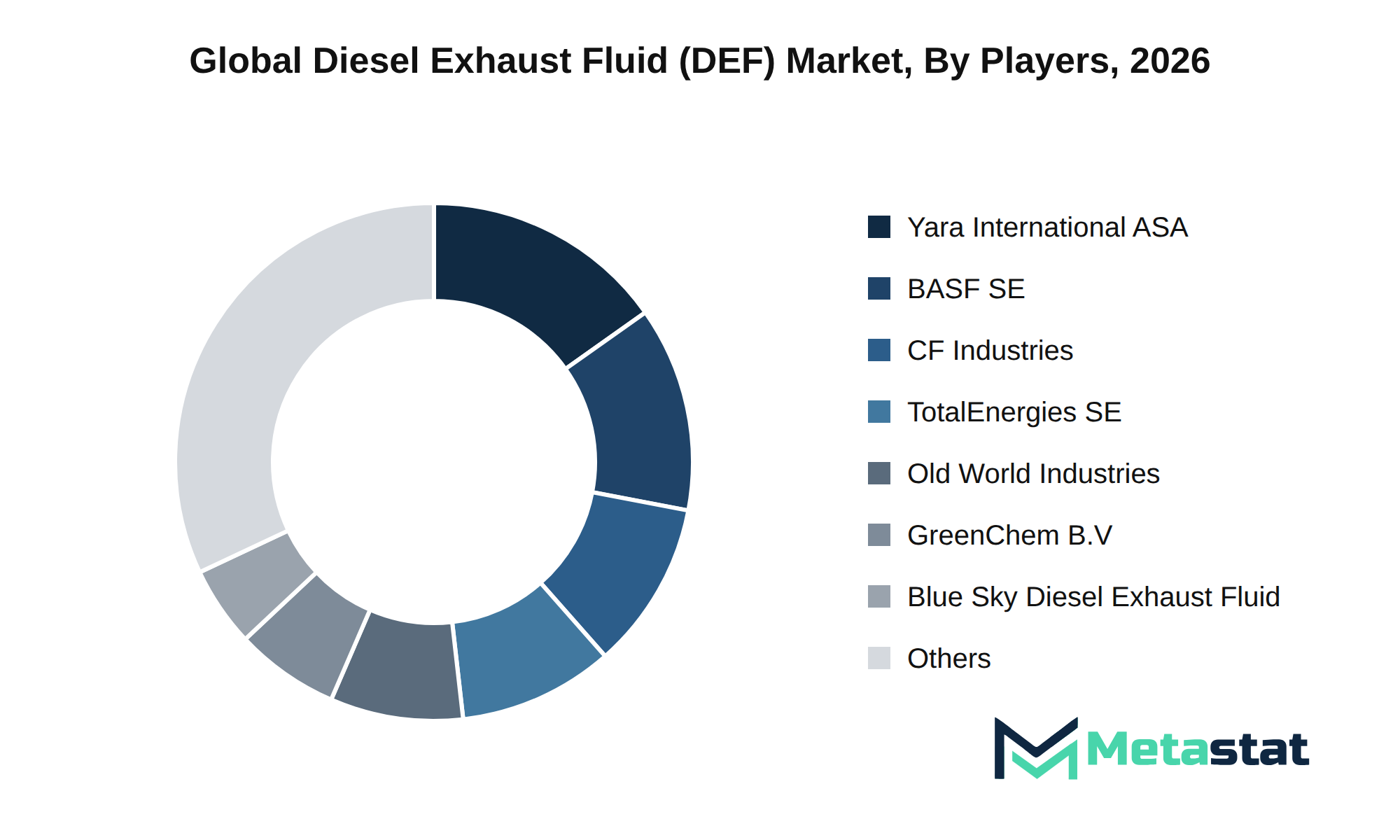
The Diesel Exhaust Fluid (DEF) market features significant participation from major players including Yara International ASA, CF Industries Holdings, Inc., and BASF SE. These companies engage in strategic consolidation activities, enhancing market share and distribution capabilities through mergers and acquisitions. This consolidation creates barriers to entry for new entrants while reinforcing the positions of established firms.
Strategic alliances and partnerships have emerged owing to vital components in the market, with players like TotalEnergies SE and PETRONAS Chemicals Group Berhad pursuing cross-industry collaborations. Such partnerships facilitate access to new technologies and broaden product offerings, ultimately improving customer retention and brand equity. The focus on research and development allows these companies to differentiate their products and maintain competitive advantages.
The competitive outlook in the Diesel Exhaust Fluid (DEF) market indicates a strong emphasis on innovation and technological defensibility. Companies prioritize the development of proprietary technology and robust intellectual property portfolios to secure their market positions. Defensive imperatives, including supply chain dominance and procurement leverage, enable key players to optimize operational efficiencies and reduce costs across their value chains.
Forecast and Future Outlook
Market size is forecast to rise from USD 38.8 billion in 2025 to over USD 67.1 billion by 2033. The base case reflects a compound annual growth rate (CAGR) of 7.1%. This growth aligns with trends in core industry maturation, where increasing adoption of sustainable practices drives demand for Diesel Exhaust Fluid (DEF) in various applications.
In a bullish scenario, heightened regulatory pressures and accelerated technological advancements could further boost demand, leading to enhanced market dynamics. A bearish scenario arises from potential geopolitical tensions or supply chain disruptions impacting production and distribution capabilities. The market's adaptability remains crucial in navigating these fluctuations.
Strategic capital allocation and infrastructure commitments play important roles in shaping the future landscape. Significant investments in R&D commercialization timelines will introduce innovative solutions, aligning with evolving compliance standards. The DEF market is expected to benefit from these structural consumption shifts, addressing unmet enterprise needs and embracing high-growth pockets.
Executive-level strategic imperatives dictate the focus on defensibility roadmaps and future growth recommendations. Continued emphasis on regulatory evolution and imminent compliance milestones will further influence market trajectories, ensuring alignment with global sustainability goals.
Diesel Exhaust Fluid (DEF) Market Key Segments
By Vehicle Type:
- Passenger Cars
- LCVs
- HCVs
By Packaging & Delivery Format:
- Small Containers (Up to 10 Liters)
- Medium Containers (Above 11-25 Liters)
- Drums & Barrels (Above 26-250 Liters)
- Intermediate Bulk Containers (Above 251-1,250 Liters)
- Bulk Tanker & Fixed-Storage Supply (Above 1,251 Liters)
By Application:
- Construction Equipment
- Agricultural Tractors
- Others (Mining Equipment, Forestry Equipment)
By End-user:
- OEM
- Aftermarket
By Region:
- North America
- Europe
- Asia-Pacific
- South America
- Middle East and Africa
Key Global Diesel Exhaust Fluid (DEF) Industry Players
- Yara International ASA
- CF Industries Holdings, Inc.
- BASF SE
- GreenChem Holding B.V.
- Blue Sky Diesel Exhaust Fluid
- Old World Industries, LLC
- TotalEnergies SE
- PETRONAS Chemicals Group Berhad
- Savita Oil Technologies (Savsol)
- Indian Oil Corporation Limited
- Bharat Petroleum Corporation Limited
- Hindustan Petroleum Corporation Limited
- Valvoline Global Operations
- Airgas, Inc.
- Chemours Company
- Cummins Inc.
- Motul S.A.
- Elofic
- McPherson Oil
- Reladyne
- Shell plc
- Dyno Nobel
Report Coverage
The report strategically identifies and profiles the key market players and analyses their core competencies in each sub-segment of the Diesel Exhaust Fluid (DEF) market.
|
Report Attributes |
Details |
|
Study Period |
2021-2033 |
|
Base Year |
2025 |
|
Estimated Year |
2026 |
|
Forecast Period |
2026-2033 |
|
Historical Period |
2021-2025 |
|
Growth Rate |
CAGR 7.1% from 2026 to 2033 |
|
Revenue Unit |
USD billion |
|
Segmentation |
By Vehicle Type, Packaging & Delivery Format, Application, End-user, and Region |
|
By Region |
North America (By Vehicle Type, Packaging & Delivery Format, Application, End-user, and Country)
|
|
Europe (By Vehicle Type, Packaging & Delivery Format, Application, End-user, and Country)
|
|
|
Asia Pacific (By Vehicle Type, Packaging & Delivery Format, Application, End-user, and Country)
|
|
|
South America (By Vehicle Type, Packaging & Delivery Format, Application, End-user, and Country)
|
|
|
Middle East and Africa (By Vehicle Type, Packaging & Delivery Format, Application, End-user, and Country)
|
What Report Provides
- Company Market Share, Revenue and Ranking for the Diesel Exhaust Fluid (DEF) Market
- Key Company Market Leaders and Their Strategies
- Full In-Depth Analysis of the Diesel Exhaust Fluid (DEF) Industry
- Industry Statistics and Important Changes in Market Dynamics
- Segmentation Details of the Diesel Exhaust Fluid (DEF) Market
- Historical, Ongoing and Projected Market Analysis
- Assessment of Niche Industry Developments in Diesel Exhaust Fluid (DEF)
- Competitive Benchmarking of Major Players in the Market
Frequently Asked Questions
Find answers to common questions about this report
The Diesel Exhaust Fluid (DEF) market size was valued at USD 38.8 billion in 2025.
The Diesel Exhaust Fluid (DEF) market is projected to grow at a CAGR of 7.1% during the forecast period from 2026 to 2033.
The North America Diesel Exhaust Fluid (DEF) market size is estimated to reach USD 20.5 billion by 2033.
The Heavy Commercial Vehicles (HCVs) segment leads the Diesel Exhaust Fluid (DEF) market, with a projected value of USD 37.5 billion by 2033. This segment's dominance reflects its significant demand compared to other vehicle types.
The Diesel Exhaust Fluid (DEF) market is driven by the growing emphasis on emission limits and stricter environmental regulations, prompting industries to adopt technologies that reduce nitrogen oxide emissions. Increased infrastructure development and urbanization trends further enhance the demand for DEF, because businesses seek solutions that improve compliance and operational efficiency.
North America holds the dominant share of the Diesel Exhaust Fluid (DEF) market, with a value of USD 20.5 billion in 2033, representing 32.3 percent of the total market.
The Diesel Exhaust Fluid (DEF) market encounters significant regulatory challenges, including stringent emission standards that increase operational costs for producers and suppliers. Geopolitical instability and macroeconomic headwinds further disrupt supply chains and raise input costs, creating a challenging environment that hinders market growth.
The Diesel Exhaust Fluid (DEF) market benefits from stringent emission regulations that drive industries to adopt cleaner technologies. Increased infrastructure development enhances supply chain efficiency, while urbanization trends increase the demand for effective emission control measures, further supporting product adoption.
The Diesel Exhaust Fluid (DEF) market is estimated to reach a valuation of USD 67.1 billion by 2033.
Key players in the Diesel Exhaust Fluid (DEF) market include Yara International ASA, CF Industries Holdings, Inc., BASF SE, GreenChem Holding B.V., Blue Sky Diesel Exhaust Fluid, and TotalEnergies SE.
Choose Your License
Global Diesel Exhaust Fluid (DEF) Market
Related Reports
Explore related market intelligence reports worth reading alongside this one.