Chemicals and Materials
Octene Copolymer Linear Low Density Polyethylene Market
Starting from
$2950

Global Mulch Film Market Size, Share, By Material Type (Conventional and Biodegradable), By Product Type (Clear Mulch Film, Black Mulch Film, Colored Mulch Film and Others), By Conventional Materials (LDPE, LLDPE, HDPE and EVA), By Biodegradable Materials (PBAT, PLA, Starch-based blends and Others), Industry Analysis, Growth, Trends, and Forecast, 2026-2033
MSI-4989
August 20, 2026
Updated
251 Pages
Historical
Base year
Forecast
Forecast period
Report Details
Comprehensive Market Analysis And Insights
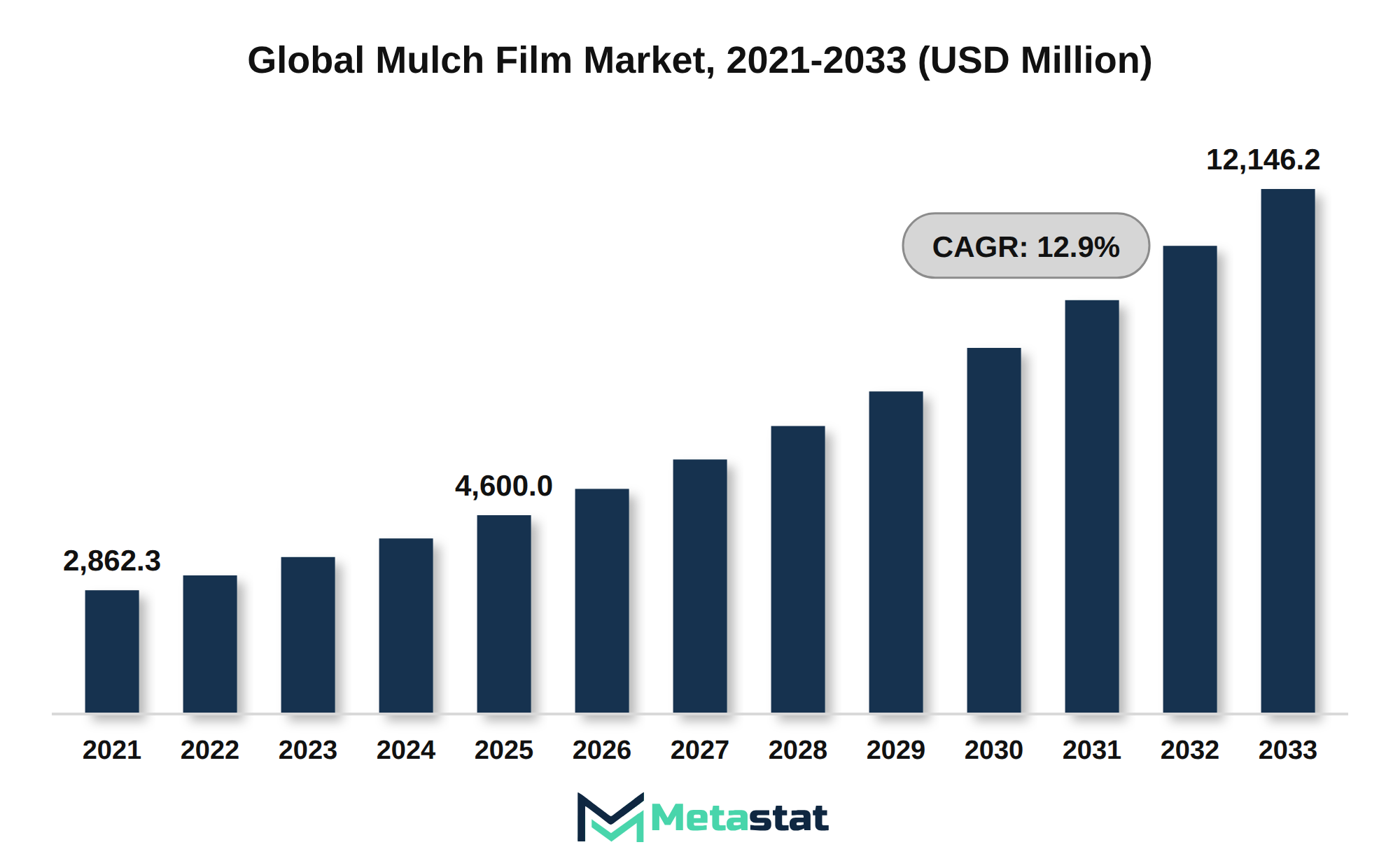
The global Mulch Film market was valued at USD 4,600 million in 2025 and is projected to reach USD 12,146.2 million by 2033, growing at a CAGR of 12.9% over the forecast period.
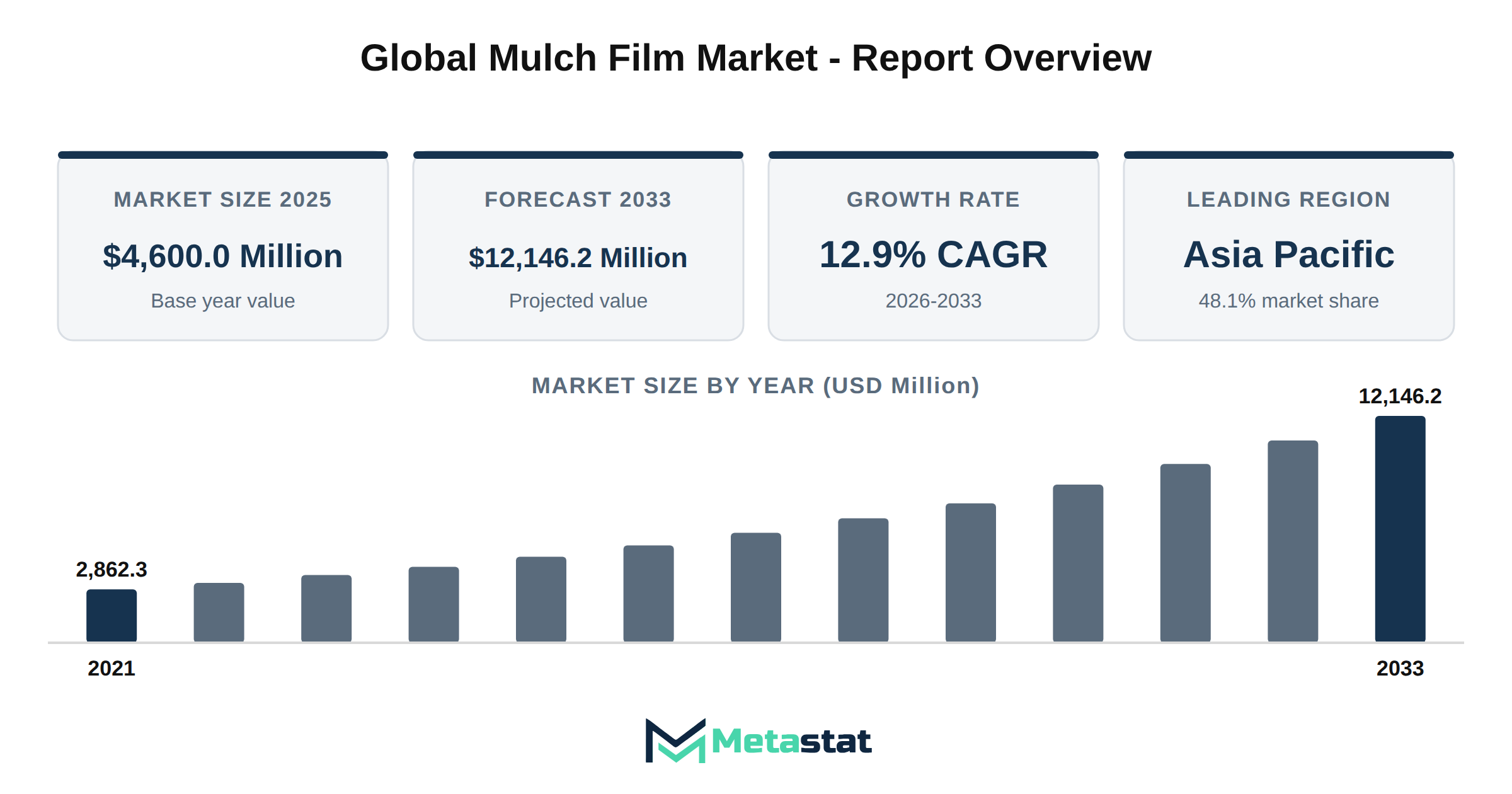
The global Mulch Film market reached a value of USD 4,600 million in 2025, reflecting an increase from USD 2,862.3 million in 2021. The market is projected to expand significantly, with an estimated value of USD 12,146.2 million by 2033, translating to a compound annual growth rate (CAGR) of 12.9% during the forecast period from 2026 to 2033.
In 2025, the market's growth trajectory is fueled by increasing agricultural activities and a rising focus on sustainable farming practices. The adoption of mulch film facilitates enhanced crop yield and effective weed management, appealing to farmers and agricultural producers. This expansion aligns with the global trend towards sustainable agricultural solutions, indicating strong growth potential.
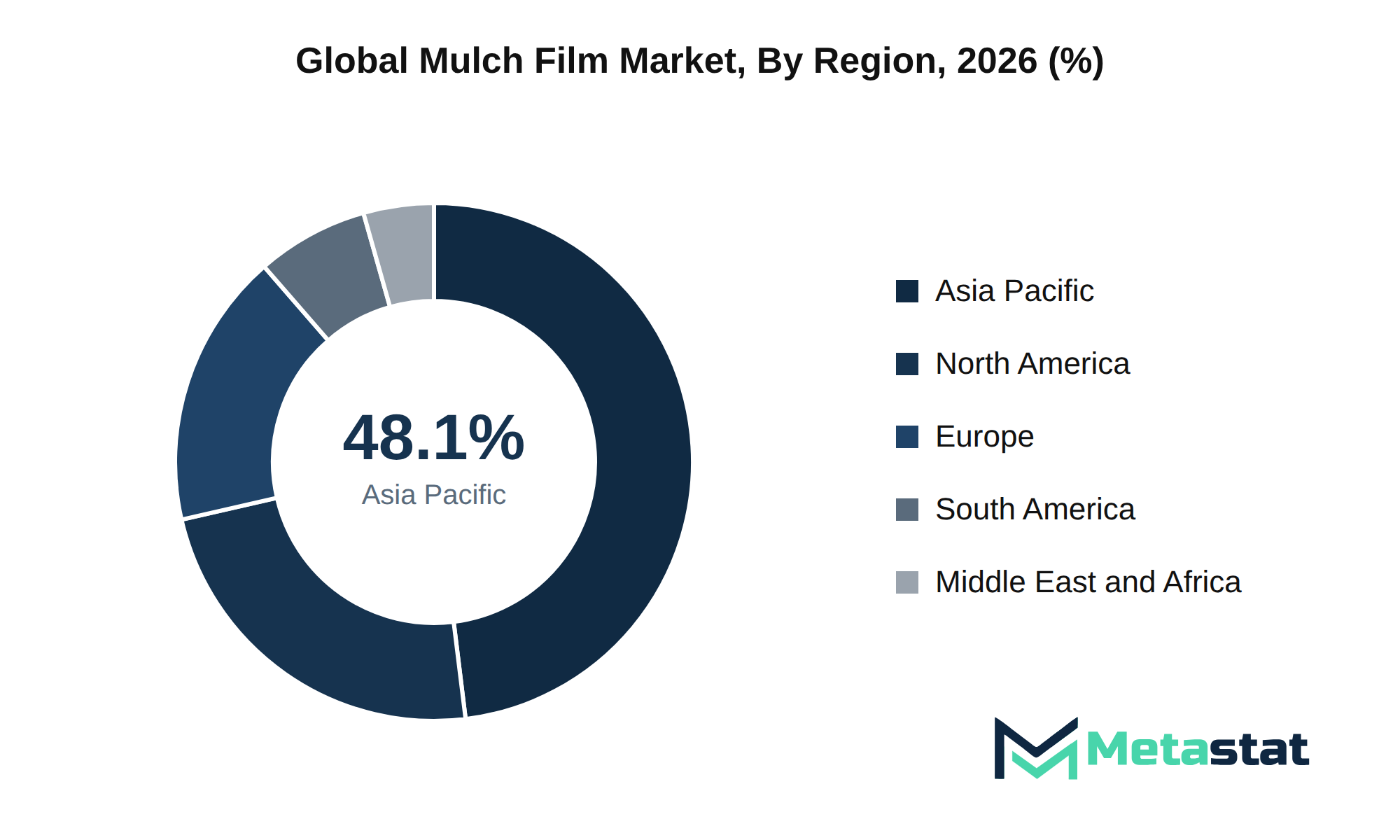
Regional analysis shows that Asia Pacific holds the largest share, accounting for 48.1% of the market in 2025. North America follows with a 23.4% share, while Europe captures 17.2%. Diverse regional dynamics stem from varying agricultural practices, climatic conditions, and regulatory frameworks that influence mulch film usage. Growing demand in these regions presents opportunities for suppliers and manufacturers to enhance their market presence.
Material type segmentation indicates that conventional mulch films dominate the market, valued at USD 3,954.9 million in 2026 and projected to reach USD 8,680.9 million by 2033. Biodegradable mulch films, while currently less prevalent, show a promising CAGR of 15.7%. Increasing awareness of environmental sustainability drives interest in biodegradable options among consumers and agricultural stakeholders.
The Mulch Film market faces an evolving environment shaped by regulatory compliance and geopolitical risk frameworks. Manufacturers and suppliers navigate these complexities to align with evolving regulations and standards, ensuring product acceptance in various regions. Compliance with environmental regulations influences material selection and production processes, driving innovations in biodegradable options.
Disruption in the market arises from advancements in R&D trajectories, enabling next-generation innovations that focus on sustainability. The shift towards biodegradable mulch films enhances the appeal of products in environmentally conscious markets, aligning with consumer preferences and regulatory mandates. These innovations have the potential to change market offerings, enhancing competitive positioning.
The transition towards sustainable transformation is evident, with decarbonization and circular economy trends gaining momentum. Industry players increasingly prioritize eco-friendly practices, integrating sustainable materials and processes into their operations. This transformation not only meets regulatory requirements but responds to growing consumer demand for sustainable products.
The supply chain structure remains intricate, with logistics architecture and sourcing strategies evolving to meet market demands. Companies optimize their supply chains by aligning with local sourcing initiatives, minimizing carbon footprints, and enhancing operational efficiencies. This strategic approach supports resilience against external shocks and market fluctuations.
Market fragmentation characterizes the Mulch Film sector, with numerous players competing across various segments. M&A dynamics reflect strategic efforts to consolidate capabilities, expand product portfolios, and enhance market reach. This consolidation allows companies to leverage synergies, reduce operational costs, and increase competitiveness in the market.
Capital allocation strategies are crucial for driving innovation and growth in the market. Companies increasingly invest in infrastructure improvements, focusing on enhancing production capabilities and expanding distribution networks. These investments are vital for maintaining competitive advantages and addressing emerging market opportunities.
Macroeconomic headwinds, including inflationary pressures and currency volatility, pose challenges for market participants. Businesses adopt strategies to mitigate these risks, focusing on cost management and operational efficiency. The ability to navigate these economic uncertainties will significantly impact future growth in the Mulch Film market.
The future strategic outlook indicates continued expansion driven by rising demand for sustainable solutions and regulatory support. Companies committed to innovation and sustainability are likely to capture significant market share, reinforcing their competitive positions. High-value recommendations focus on leveraging technological advancements and aligning with consumer trends to drive growth and profitability.
Growing awareness of sustainability and the need for environmentally friendly agricultural practices significantly influence the mulch film market. Increasing consumer preferences for biodegradable materials drive manufacturers to adopt eco-friendly solutions. The shift towards biodegradable mulch films, which incorporate materials including PBAT and PLA, is projected to accelerate market growth. This trend is especially evident in regions like Asia Pacific, where the emphasis on sustainable agricultural practices aligns with broader demographic patterns, including urbanization and changing consumer behaviors.
Investment in sustainable product development aligns with global efforts to reduce carbon footprints and promote circular economy initiatives. Companies focusing on innovation-led product diversification, including the introduction of more efficient biodegradable options, enhance their competitive positioning. Increased demand for mulch films that support soil health and reduce chemical usage further drives adoption across various agricultural sectors. This strategic alignment with sustainability initiatives reinforces long-term growth and enhances market resilience.
Investment in automation technologies significantly influences the Mulch Film market, enhancing production efficiency and reducing operational costs. Increased capital investment in advanced manufacturing processes allows producers to streamline operations and improve productivity. This shift addresses rising labor costs and the demand for consistent quality in product output, strengthening long-term demand.
Technological integration, particularly in automation and digitizing legacy processes, creates a competitive advantage for manufacturers. Companies adopting these technologies experience improved yield rates and waste reduction, contributing to higher profitability. The implementation of automated systems attracts venture funding, supporting ongoing innovation and expansion in the market.
In response to consumer demands for higher quality and eco-friendly products, the market experiences a surge in investments directed towards research and development. This focus encourages the creation of new mulch film variants, further diversifying product offerings. Consequently, stakeholders in the Mulch Film market experience increased market access and enhanced resilience against supply chain disruptions, reinforcing the segment's position.
The ongoing shift towards automation and technological advancements drives growth in the Mulch Film market. Organizations that invest in these areas position themselves to meet evolving consumer preferences while optimizing costs and operational capabilities, increasing compliance costs for participants.
The Mulch Film market experiences significant constraints due to regulatory compliance challenges and legal mandates that require manufacturers to adhere to stringent environmental standards. Compliance with evolving regulations necessitates substantial investments in updated technologies and processes, diverting resources that could contribute to market growth. These requirements create barriers for smaller players, who struggle to keep pace with larger companies capable of absorbing the associated costs.
Macroeconomic headwinds, including inflationary pressures and supply chain disruptions, further exacerbate constraints in the market. Rising costs of raw materials and transportation directly affect profitability, compelling companies to reconsider their pricing strategies. Financial challenges lead to reduced investment in innovation and capacity expansion, ultimately slowing market growth.
Technological obsolescence presents another significant restraint for the Mulch Film market. While new materials and applications emerge, manufacturers face pressure to adopt advanced technologies, which often involve substantial capital investment. Failure to innovate results in a loss of competitive edge, limiting companies' ability to meet changing customer demands.
Market fragmentation and regional adoption resistors hinder broader acceptance of mulch film products. Cultural barriers and varying agricultural practices across regions create challenges in establishing consistent market demand. These factors contribute to uneven growth rates in different geographic areas, affecting overall market dynamics.
The Mulch Film market contends with significant challenges stemming from geopolitical tensions that disrupt global supply chains. Trade deficits and tariff friction create an environment of unpredictability, affecting the availability of raw materials and increasing costs for manufacturers. This situation results in pricing compression and margin pressures, impacting profitability across the industry.
Technological disruptions further complicate the market landscape, driven by firms investing in complex research and development integrations to innovate and enhance product offerings. These advancements often face obstacles related to interoperability friction, hindering collaboration between different technologies. Firms experience delays in product rollouts, which limits market responsiveness.
The volatility of feedstock and components presents additional challenges. Fluctuations in raw material prices create uncertainty, forcing producers to navigate rising input costs while maintaining competitive pricing. Environmental lifecycle footprints and decarbonization mandates increasingly necessitate sustainable sourcing practices, adding layers of complexity to supply chain management.
Talent retention pressures and workforce skill gaps significantly impact operational efficiency in the market. Companies face heightened competition for skilled labor, limiting their capacity to implement automation and streamline processes. This workforce challenge constrains growth potential in the Mulch Film market.
Infrastructure gaps and retrofitting barriers contribute to implementation bottlenecks, obstructing the adoption of innovative technologies. While firms strive to enhance production capabilities, the need for effective solutions to address these challenges becomes essential for maintaining a competitive edge. The market's ability to overcome these obstacles will determine its growth trajectory through the forecast period.
The Mulch Film market experiences significant opportunities driven by emerging regional demands. Rapid urbanization and population growth in various regions, particularly in Asia Pacific, stimulate the need for innovative agricultural solutions. Increased focus on food production efficiency, coupled with the demand for sustainable farming practices, positions mulch film because an essential resource in addressing the challenges of modern agriculture.
Infrastructure modernization serves because a catalyst for market growth. Investments in agricultural infrastructure enhance production capabilities, improving farmers' access to advanced materials including biodegradable mulch films. Geographical expansion into developing markets opens pathways for market players to establish operations and cater to unmet needs, further driving revenue potential.
Technological disruptions in production processes enhance efficiency and reduce costs. Digital transformation within the agricultural sector creates new channels for procurement and distribution, enabling producers to optimize their supply chains. Next-generation innovations, including smart mulch films with integrated sensors, increase product utility and attract a broader customer base.
Shifts in buying behavior reflect a growing inclination towards environmentally friendly products. Consumers increasingly seek mulch films that comply with eco-friendly standards, reflecting broader sustainability imperatives in agricultural practices. This transformation aligns with ESG-driven initiatives, positioning the market for future growth.
Downstream market diversification enables strategic consolidation among key players. Cross-industry collaborations expand the potential applications of mulch films, including in landscaping and horticulture, driving growth in niche markets. M&A initiatives further enhance competitive positioning, allowing companies to leverage synergies for increased operational efficiency.
The Mulch Film market is expected to thrive due to the integration of value-chain optimization and process automation. Enhanced operational yield maximization strategies support producers in meeting rising demand while mitigating costs. Supply chain localization and import substitution frameworks strengthen market resilience, ensuring consistent supply and reduced dependency on external sources.
Asset life-cycle extensions through maintenance upgrades and retrofitting dynamics create additional avenues for growth. Companies adopting these strategies enhance product longevity and performance, attracting new customers and retaining existing ones. Overall, the combination of these factors positions the market for sustained growth and profitability.
The Global Mulch Film market is segmented based on Material Type, Product Type, Conventional Materials, and Biodegradable Materials.
Valued at USD 3,954.9 million in 2026, the Conventional segment is projected to reach USD 8,680.9 million by 2033, reflecting a CAGR of 11.9% during the forecast period. Growth in this segment stems from strong demand in agricultural applications, where conventional mulch films provide effective solutions for crop protection and yield enhancement. The segment benefits from advancements in polymer technology, enabling the development of more efficient and cost-effective materials that cater to the specific needs of farmers.
Increased adoption of conventional mulch films correlates with heightened agricultural productivity, driven by the ability of these films to retain soil moisture and regulate temperature, thereby optimizing conditions for plant growth. The market experiences significant expansion owing to rising awareness of the benefits of mulch films among growers, leading to increased usage across various crops. Consequently, the agricultural sector's focus on maximizing yields fuels demand for conventional materials, supporting a robust market outlook.
Pricing dynamics play a critical role in shaping the competitive landscape of the market. Fluctuations in raw material costs, particularly petroleum-based products, exert pressure on manufacturers, influencing pricing strategies. Producers actively seek to optimize production processes to mitigate margin pressures while ensuring product quality. While the market evolves, continued investments in research and development are expected to drive innovation, reinforcing the segment's growth trajectory.
Demand for biodegradable mulch films exhibits strong growth driven by increasing environmental awareness and a shift towards sustainable agricultural practices. The need for products that contribute to soil health and reduce plastic waste drives adoption among farmers and agricultural producers. Innovative biodegradable materials, including PBAT and PLA, support the evolution of this segment by providing effective alternatives to conventional plastic films.
Regulatory compliance standards and certifications regarding environmental impact further support market expansion. Governments and agricultural bodies promote the use of biodegradable options through incentives and educational programs, encouraging farmers to transition from traditional materials. This shift aligns with global sustainability goals, enhancing consumer preference for eco-friendly solutions.
The biodegradable segment is expected to reach USD 3,465.3 million by 2033, at a CAGR of 15.7% during the forecast period. Continued investment in research and development leads to technological maturation, resulting in more effective and affordable biodegradable mulch films. This progress highlights opportunities for producers to capture market share and meet the increasing demand for sustainable agricultural practices.
Cost structures in the biodegradable segment reflect the balance between raw material sourcing and production efficiency. While technology advances, price volatility is expected to stabilize, enhancing margins for manufacturers. Strategic opportunities arise from the potential to penetrate emerging markets where traditional mulch films dominate, positioning biodegradable options because viable and competitive products within the broader mulch film market.
Increasing demand for Clear Mulch Film stems from its effectiveness in enhancing crop yield and reducing weed growth in agricultural applications. Adoption occurs particularly in regions with high agricultural activity, where farmers seek methods to improve productivity while minimizing environmental impact. This segment benefits from awareness surrounding sustainable farming practices, driving expansion within the Mulch Film market.
Technological advancements provide additional support for Clear Mulch Film, with innovations in material properties enhancing durability and functionality. Manufacturers focus on producing films that withstand varying climatic conditions, catering to diverse agricultural needs. This evolution within the product line enhances the segment's appeal, addressing both performance and environmental considerations.
Downstream applications play a significant role in shaping market dynamics, with end-users expressing a preference for films that integrate seamlessly into existing agricultural practices. Growth in sectors including horticulture and greenhouse production further drives demand, driven by the requirement for specialized solutions that Clear Mulch Film provides. Consumption shifts towards more sustainable and efficient farming practices reinforce the segment's position within the overall market.
Regulatory compliance standards increasingly influence product development, with manufacturers navigating various certifications and policy frameworks aimed at reducing environmental impact. While regulations tighten, emphasis on biodegradable options gains traction, aligning with consumer preferences and facilitating broader market acceptance. This shift highlights the strategic opportunity windows available for producers focused on environmentally friendly alternatives.
Pricing volatility and margin pressures remain critical considerations for players in the Clear Mulch Film segment. Fluctuations in raw material costs impact pricing strategies, necessitating careful management of supply chains and cost structures. Strategic investments in sourcing and production efficiency will enhance resilience, enabling firms to navigate market challenges effectively.
Black Mulch Film is significant in the Mulch Film market, driven by its effectiveness in controlling weeds, maintaining soil moisture, and enhancing crop growth. This product's widespread adoption arises from various agricultural sectors, particularly in regions where efficient resource management is essential for sustaining yield in challenging climates.
Technological advancements support the evolution of Black Mulch Film, with innovations enhancing its durability and environmental compatibility. Next-generation films incorporate materials that reduce environmental impact while maintaining performance, appealing to environmentally conscious consumers and producers.
Market participants focus on cost structures that balance the price of raw materials against operational efficiencies. Price volatility in petroleum-based materials affects margins, prompting manufacturers to explore alternative materials that mitigate these pressures and ensure stable pricing for end-users.
Strategic opportunity windows exist for producers who invest in sustainable practices, responding to increased regulatory compliance standards regarding environmental impact. Consumers prioritize eco-friendly options, and Black Mulch Film's potential for growth in the market remains robust.
With a focus on supply chain resilience, manufacturers work to streamline logistics and raw material sourcing, minimizing vulnerabilities that could disrupt production. Continuous monitoring of market dynamics positions players to address substitution risks and competitive alternatives effectively.
Colored mulch film enhances crop yield and protects soil health. Factors driving demand include increased consumer awareness regarding sustainable agricultural practices and the visual appeal associated with colored films, which attract specific beneficial insects and repel pests. Adoption among growers evolves due to recognition of the dual benefits of aesthetics and functionality in promoting plant growth.
Technological maturation of materials offers opportunities for improved performance and durability. Innovations in polymer chemistry lead to the development of films that not only maintain their color but provide UV protection and moisture retention. These advancements support segment expansion, allowing colored mulch film to capture a larger share of the market.
Downstream applications in various crops, including vegetables and ornamental plants, highlight the versatility of colored mulch films. While the agricultural sector evolves, growers increasingly prioritize products that enhance productivity while adhering to environmental standards. Regulatory compliance regarding the use of agricultural inputs fuels the demand for colored options that meet sustainability certifications.
Pricing volatility in raw material sourcing presents challenges. Fluctuations in the cost of polymers impact profit margins for manufacturers. Strategic opportunities arise for companies that secure long-term contracts with suppliers to mitigate these risks. Increased investment in research and development focuses on creating cost-effective solutions without compromising quality.
Supply chain resilience becomes essential. Disruptions have occurred owing to global events. Companies focusing on local sourcing and flexible logistics strategies position themselves to respond efficiently to demand shifts. Colored mulch film benefits from these adaptations, ensuring consistent supply and availability for growers worldwide.
Product differentiation is essential in the Others sub-segment of the Mulch Film market. This sub-segment encompasses a range of unique mulch film products not classified under conventional or biodegradable categories. The diversity within this segment allows manufacturers to cater to specialized agricultural needs, expanding market reach and improving customer satisfaction. Continuous innovations in material science drive the evolution of these products, leading to enhanced functionality and performance in various agricultural applications.
End-use dynamics heavily influence the consumption patterns within this sub-segment. Customers increasingly seek tailored solutions that address specific agricultural challenges, including soil moisture retention and weed control. The growth of precision agriculture promotes the uptake of advanced mulch films, supporting segment expansion. Regulatory compliance and sustainability certifications establish critical benchmarks for product acceptance, creating additional demand for innovative solutions in this market.
Technological maturation facilitates the introduction of new materials and processes, positively impacting the Others sub-segment. Research and development efforts focus on enhancing product properties, including durability and biodegradability. The introduction of next-generation upgrades provides competitive advantages, attracting environmentally conscious consumers who prioritize sustainable practices. Strategic partnerships between manufacturers and agricultural stakeholders create opportunities for co-development and market penetration.
Pricing volatility presents a challenge in the market, affecting profit margins and strategic planning for suppliers. Fluctuations in raw material costs necessitate agile sourcing strategies to maintain competitive pricing. This sub-segment navigates the complexities of supply chain resilience and raw material sourcing while managing potential substitution risks from alternative products. Understanding market trends and consumer preferences enables players to capitalize on strategic opportunity windows and enhance their position within the Mulch Film market.
Interest in LDPE mulch film arises from its favorable properties including durability and flexibility, making it a preferred choice among agriculturalists. The agricultural sector drives demand due to its effectiveness in promoting soil health and enhancing crop yields. Adoption trends indicate a preference for LDPE due to its cost-effectiveness compared to alternatives.
Technological advancements enhance the performance of LDPE mulch films, encouraging manufacturers to innovate and improve product quality. The development of next-generation products, including enhanced UV resistance and thickness variations, positions this sub-segment favorably within the Mulch Film market.
End-use dynamics illustrate significant application across various crops, including fruits and vegetables, where LDPE films contribute to moisture retention and weed suppression. Regulatory compliance regarding environmental impact drives product evolution, pushing manufacturers toward sustainable practices.
Cost structures remain a consideration, with LDPE benefiting from established raw material sourcing channels. Pricing volatility in the resin market influences margins, leading producers to seek efficiencies in production processes. Strategic opportunity windows emerge where investments focus on enhancing product attributes while maintaining competitive pricing.
LLDPE, a widely used material in the Mulch Film market, benefits from its strong mechanical properties, including flexibility and durability. The adoption of LLDPE mulch films aligns with agricultural practices that emphasize enhanced crop yield and soil protection. Various sectors, particularly agriculture, exhibit growing demand for effective and economical solutions to maximize land productivity.
Technological maturation in polymer processing has led to advances that improve the performance of LLDPE mulch films. These enhancements include better UV resistance and thermal properties, which contribute to longer lifespan and effectiveness in diverse environmental conditions. The shift toward high-performance materials directly influences the evolution of product offerings within the market.
Regulatory compliance shapes the LLDPE segment. Increasingly stringent environmental regulations necessitate adherence to standards regarding plastic waste management and agricultural sustainability. This environment prompts manufacturers to innovate and improve the eco-friendliness of LLDPE products while maintaining cost competitiveness.
Pricing volatility in raw materials impacted by global supply chain dynamics affects the market. Fluctuations in LLDPE pricing due to oil price changes and geopolitical factors create challenges for manufacturers in maintaining profit margins. Resilient supply chain strategies are essential for stakeholders to mitigate these pressures and ensure stability in product availability.
Strategic opportunity windows arise from the increasing focus on sustainable agricultural practices. The potential for LLDPE to be paired with biodegradable additives presents a pathway for innovation. Such developments enhance the product's environmental profile and cater to the evolving preferences of environmentally conscious consumers in the market.
In the Mulch Film market, HDPE (High-Density Polyethylene) serves because a significant material choice due to its robust properties, including excellent tensile strength and moisture resistance. These attributes support its widespread adoption in agricultural applications, particularly in regions with varying climatic conditions. The market observes steady demand for HDPE, driven by its effectiveness in enhancing crop yield while minimizing moisture loss and weed growth.
Technological advancements in production methods enhance HDPE's appeal. Innovations aimed at increasing efficiency and reducing production costs contribute to segment expansion. The compatibility of HDPE with various agricultural practices facilitates its integration into existing systems, promoting increased adoption among farmers seeking reliable solutions.
End-use dynamics further influence the HDPE segment, with agricultural stakeholders recognizing the long-term benefits of mulch films. The shift toward sustainable practices encourages stakeholders to evaluate the environmental impact of materials, leading to a balanced consideration of both conventional and biodegradable options. Pricing volatility within raw materials impacts the overall cost structures, compelling suppliers to adopt strategies that mitigate financial pressures.
Regulatory compliance standards, particularly those focusing on environmental sustainability, shape the competitive landscape for HDPE. Manufacturers responding to these regulations position themselves strategically within the market, capturing opportunities for growth. The outlook for HDPE remains optimistic, supported by ongoing investments in technology and evolving market demands within the broader Mulch Film market.
Growth in the EVA sub-segment within the Mulch Film market aligns with the increasing emphasis on environmentally friendly agricultural practices. Producers seek materials that balance durability and sustainability, reflecting consumer preferences for biodegradable options. The shift toward EVA is driven by its capacity to enhance crop yield while minimizing environmental impact. Adoption of EVA mulch film helps farmers manage soil moisture and temperature, which are critical factors for crop health.
Technological advancements in EVA formulations improve performance in various climatic conditions. Next-generation upgrades enhance the material's resistance to UV radiation and degradation, making it a preferred choice for long-term agricultural applications. End-users benefit from EVA's versatility, which supports diverse crops and farming techniques, contributing to its appeal across different agricultural sectors.
Regulatory compliance standards increasingly favor eco-friendly materials, propelling demand for products like EVA mulch film. This trend aligns with the broader movement toward sustainable agriculture, encouraging investments in innovative solutions that meet such standards. Supply chain resilience in EVA production involves the strategic sourcing of raw materials, ensuring consistent quality while addressing potential disruptions.
Consumers exhibit greater awareness of environmental impacts, and the consumption shift toward EVA reflects broader trends in the market. The sub-segment's capital investment outlook remains positive, with opportunities for growth through strategic partnerships and technological collaborations. This proactive approach strengthens market positioning while addressing evolving consumer demands in agriculture.
Growing interest in PBAT (Polybutylene Adipate Terephthalate) within the biodegradable materials segment stems from its environmentally friendly characteristics and suitability for agricultural applications. This material effectively degrades in soil, providing significant advantages over conventional plastic films that persist in the environment. The agricultural sector increasingly prioritizes sustainable practices, driving demand for mulch films that align with eco-friendly initiatives.
Technological maturation contributes to the expansion of PBAT in the mulch film market. Manufacturers invest in research and development to enhance the properties of PBAT, focusing on improving durability and performance while maintaining biodegradability. These advancements attract attention from farmers and growers seeking effective solutions for weed control and moisture retention without compromising environmental standards.
Downstream applications play an important role in the adoption of PBAT mulch films. The increasing trend toward organic farming and sustainable agriculture fuels the need for biodegradable solutions that do not negatively impact soil health. Regulatory compliance standards further pressure growers to transition to biodegradable options, creating a conducive environment for PBAT adoption.
Cost structures associated with PBAT production influence market dynamics. Although initial production costs are higher compared to traditional materials, the long-term benefits of reduced environmental impact appeal to consumers and producers alike. Pricing volatility in raw materials necessitates strategic sourcing and production practices to ensure profitability in a competitive landscape.
Strategic opportunity windows arise from increasing consumer awareness and demand for sustainable agricultural practices. The market for PBAT mulch films is expected to grow owing to more stakeholders recognizing the benefits of transitioning from conventional plastics to biodegradable alternatives. This shift aligns with global sustainability goals, establishing PBAT because a key component of the evolving mulch film market.
In the Mulch Film market, PLA (Polylactic Acid) represents a significant development within the biodegradable materials segment. Growing consumer awareness regarding environmental sustainability drives demand for PLA due to its compostable nature and renewable sourcing from plant materials. Agricultural producers adopt PLA mulch films to align with eco-friendly practices and meet increasing consumer expectations.
Technological advancements contribute to the evolution of PLA products, enhancing their performance and usability in diverse agricultural applications. Innovations focus on improving the durability and degradation rates of PLA films, making them suitable for various crops and climates. Such enhancements boost consumer confidence and encourage broader adoption across the agricultural sector, resulting in increased market penetration.
Regulatory compliance plays an important role in supporting the use of PLA mulch films. Governments worldwide implement stringent regulations on plastic waste, prompting farmers to transition to biodegradable options like PLA. This regulatory landscape supports market growth and encourages investment in new production technologies that facilitate the generation of high-quality PLA films, strengthening the competitive position of suppliers.
While more agricultural stakeholders recognize the long-term benefits of biodegradable solutions, an upward trend in PLA adoption emerges. The market experiences a shift in consumption patterns, with growers seeking sustainable alternatives to traditional plastics. This shift emphasizes the importance of continuous innovation and effective marketing strategies to maximize market penetration and capital investment opportunities in the biodegradable segment, reinforcing long-term demand.
Biodegradable materials in the mulch film market gain traction due to rising environmental concerns and the shift towards sustainable agricultural practices. Starch-based blends exhibit significant appeal among growers seeking eco-friendly solutions, providing effective weed control while enhancing soil health through biodegradation. This segment's growth aligns with the increasing adoption of sustainable practices across various agricultural sectors.
Adoption is fueled by robust demand for biodegradable options driven by consumer preferences for environmentally friendly products. Regulatory bodies implement stringent sustainability standards, and manufacturers and growers prioritize compliance with these guidelines, further supporting the adoption of starch-based blends. The transition to these materials not only meets regulatory requirements but enhances brand image among environmentally conscious consumers.
In the context of product evolution, starch-based blends are positioned to capitalize on innovations in material formulation and processing technologies. Continuous advancements in production techniques facilitate improvements in performance characteristics, enhancing the suitability of these materials for diverse agricultural applications. This technological maturation builds confidence among users and drives market penetration.
End-use dynamics play a significant role in shaping demand, with sectors including organic farming and horticulture increasingly adopting starch-based blends. These materials provide a competitive edge by promoting sustainable practices and improving crop yields, aligning with the goals of modern agriculture. The movement towards organic practices drives growth of the segment within the mulch film market.
Cost structures associated with starch-based blends remain favorable compared to conventional materials, enhancing their attractiveness to manufacturers and end-users alike. While production techniques improve, pricing volatility decreases, contributing to margin stability for producers. The resilience of the supply chain for starch-based materials further enhances the segment’s position in the market, minimizing disruptions and ensuring consistent availability.
In the biodegradable materials segment of the Mulch Film market, the "Others" category encompasses various innovative materials that do not fall under traditional classifications. These materials are gaining traction owing to increasing environmental concerns and the drive for sustainable agricultural practices. The shift towards eco-friendly alternatives accelerates the adoption of these products among farmers and agricultural enterprises seeking to reduce their environmental footprint.
Development in this segment benefits from advancements in material technology, with ongoing research focused on enhancing the properties of these biodegradable options. This evolution supports better performance in terms of durability and decomposition rates, making them more attractive to end-users. Further, the segment experiences pressures from regulatory compliance standards aimed at reducing plastic waste, propelling investments into R&D for new biodegradable solutions.
Cost structures in this sub-segment vary significantly due to the diverse nature of materials. Pricing volatility often affects the market dynamics, with raw material sourcing influencing overall costs. The competitive landscape encourages innovation, leading to opportunities for companies willing to explore disruptive alternatives that cater to growing consumer preferences for environmentally friendly products. Strategic opportunity windows arise from this tension, resulting from producers seeking to align with sustainability goals while maximizing profit margins within the Mulch Film market.
Based on geography, the Global Mulch Film market is divided into North America, Europe, Asia-Pacific, South America, Middle East, and Africa.
Expansion of the Mulch Film market in North America is supported by strong growth in agricultural activities, particularly in the United States, Canada, and Mexico. Effective crop yields and sustainable farming practices drive demand for mulch films, enhancing adoption rates among farmers seeking eco-friendly solutions. The market is projected to expand at a CAGR of 12.9% during the forecast period, reaching a market size (TAM) of USD 2,828.8 million by the end of 2033.
Increased investment in infrastructure modernization contributes to market growth. Enhanced logistics and distribution networks facilitate the availability of various mulch film products, particularly biodegradable options. Key players in the region focus on product innovation and sustainable practices, ensuring compliance with local regulations while meeting market demand.
Regional competitive dynamics highlight the presence of domestic participants that emphasize localized procurement and tailored solutions for customers. Vendors strengthen their positions through strategic partnerships and consolidation trends, optimizing supply chains to meet the growing demand for mulch films.
Overall, the North American Mulch Film market benefits from a combination of high-value replacement cycles and incremental growth vectors. This environment creates opportunities for emerging participants and established manufacturers to capture market share while addressing regional agricultural needs.
The Mulch Film market in Europe continues to experience growth, driven by increasing agricultural practices and sustainable farming trends. Countries including Germany, France, and Italy exhibit strong adoption of mulch film, reflecting heightened awareness of the benefits linked to crop yield enhancement and soil protection. Spain and the UK contribute to this market momentum through investments in innovative agricultural technologies that enhance productivity.
The market's expansion in Europe benefits from regulatory frameworks that promote environmentally friendly practices. The push towards biodegradable mulch films aligns with these regulations, incentivizing farmers to transition from conventional materials. This shift has led to increased investment in both biodegradable and conventional material types, creating a competitive environment among manufacturers seeking to capture market share.
Regional competitive dynamics show a mix of established players and emerging companies focused on localized production strategies. Firms prioritize sourcing materials closer to their operational bases, reflecting a trend in supply chain regionalization. The emergence of domestic market participants strengthens the market by promoting localized procurement dynamics.
Infrastructure modernization continues to support the Mulch Film market in Europe. Investments in agricultural technology infrastructure facilitate better access to advanced products, enabling farmers to adopt mulch film solutions more effectively. The potential for further growth remains significant, particularly in underpenetrated territories where awareness and education about mulch film benefits require enhancement.
Asia Pacific holds a 48.1% share of the global Mulch Film market in 2025. The region's diverse agricultural landscape, characterized by significant production volumes in countries like China, India, and Japan, drives this demand. Rapid urbanization and increased agricultural activity necessitate efficient farming practices, leading to the adoption of mulch films to enhance crop productivity and resource management.
The emphasis on biodegradable mulch films reflects growing environmental awareness among consumers and agricultural stakeholders. Governments in the region promote sustainable farming practices, driving the shift towards biodegradable materials within the market. Countries including South Korea and Australia demonstrate progressive regulatory frameworks that encourage the use of eco-friendly alternatives, further stimulating market growth.
Emerging technologies and innovations in the production of mulch films enhance performance characteristics, contributing to segment expansion. In the market, the focus on material efficiency and effectiveness aligns with increasing demand for high-quality agricultural inputs. This trend presents opportunities for manufacturers to invest in research and development, thereby reinforcing their competitive edge.
Localized manufacturing and nearshoring initiatives enhance supply chain resilience, allowing companies to meet regional demand more effectively. The presence of domestic market participants including BASF SE and Novamont S.p.A. further strengthens the competitive landscape, enabling the rapid distribution of mulch films tailored to local requirements. This competitive environment encourages vendors to refine their product offerings and enhance customer engagement strategies.
While the agricultural sector in Asia Pacific continues to grow, the Mulch Film market is expected to experience significant expansion. The integration of advanced farming techniques, combined with favorable policy support and consumer trends towards sustainability, positions the region for strong growth in the coming years.
The Mulch Film market in South America is characterized by a growing interest in sustainable agricultural practices, driving demand for biodegradable options. Brazil and Argentina serve because key contributors to this market, with Brazil leading in agricultural production and innovation. The region's focus on enhancing crop yield and reducing environmental impact aligns with the adoption of innovative mulch films.
Infrastructure modernization efforts focus on improving agricultural efficiency, which supports the market's expansion. Increased investment in local manufacturing capabilities fulfills the rising demand for mulch film products. Cross-border trade corridors facilitate the distribution of mulch film products throughout the region, enhancing availability for agricultural enterprises.
Domestic market participants in Brazil and Argentina leverage local resources to produce mulch films that cater to regional agricultural needs. Competitive dynamics focus on product differentiation and technological advancements, shaping the market. The emphasis on localized procurement drives manufacturers to develop products that align with regional agricultural practices.
Energy grid resiliency and local infrastructure readiness impact the production capabilities of mulch film manufacturers, influencing market growth. Strategic entry barriers, coupled with foreign direct investment flows, enhance the competitiveness of local players. The Mulch Film market in South America reflects a blend of emerging opportunities and established market dynamics, positioning it for growth.
The Mulch Film market in the Middle East and Africa exhibits growth potential driven by emerging agricultural practices and increasing awareness of sustainable farming solutions. Countries like Saudi Arabia and the UAE are embracing modern agricultural technologies, which boosts demand for advanced mulch films that enhance crop yield and soil health. South Africa, with its large agricultural sector, shows a growing inclination towards biodegradable mulch films, aligning with global sustainability trends.
Infrastructure modernization in these regions facilitates the distribution of mulch films, while localized manufacturing densities help address supply chain challenges. The trend towards regionalization and nearshoring initiatives strengthens local production capabilities, reducing reliance on imports and enhancing responsiveness to market demand. Cross-border trade corridors significantly enhance market accessibility, particularly for smaller producers in the Rest of Middle East and Africa.
Geopolitical factors and regulatory frameworks influence market dynamics, establishing compliance mandates that drive innovation and investment. Domestic market participants leverage these conditions to consolidate their positions, creating competitive landscapes characterized by strategic partnerships and collaborations. While the market evolves, cultural nuances and regional B2B buying behaviors shape procurement strategies, creating unique opportunities for suppliers.
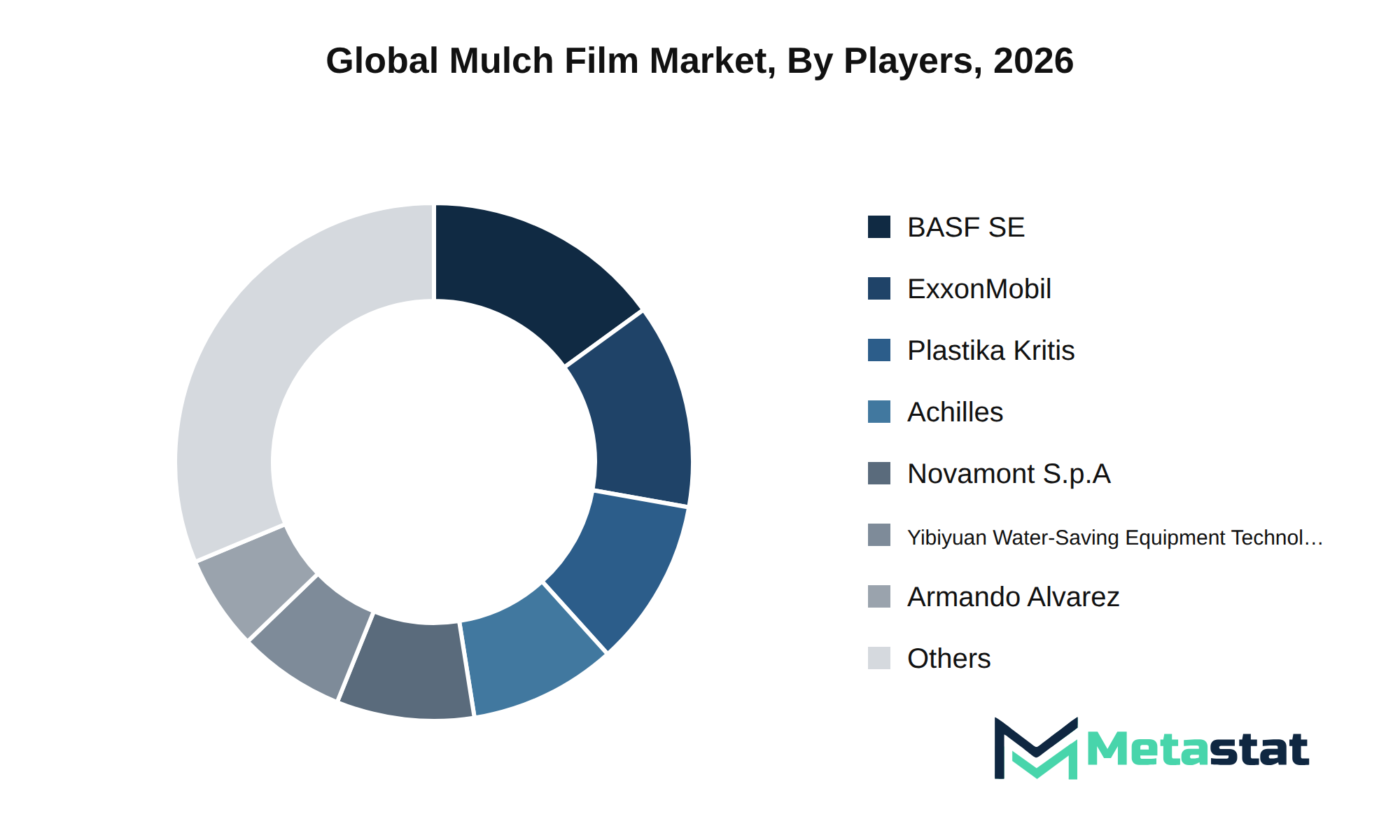
The market features significant participation from established players and emerging companies. Major companies including BASF SE, ExxonMobil Corporation, and Berry Global Inc. focus on product differentiation through advanced materials and proprietary technologies. These organizations invest heavily in research and development to maintain competitive advantages while improving their product offerings. Strategic alliances and joint ventures among players, including Novamont S.p.A. and Ginegar Plastic Products Ltd., facilitate enhanced market access and broaden product portfolios.
Regional specialty formulators, including Yibiyuan Water-Saving Equipment Technology Co., Ltd and Agri Plast Tech India Pvt. Ltd., emphasize localized production and supply chain integration to enhance procurement leverage. This strategy builds strong customer retention through tailored solutions that meet specific regional needs. Barriers to entry in the mulch film market persist due to the capital-intensive nature of production and the established brand equity of key players. Startups entering the market face challenges in competing with established companies that have substantial intellectual property portfolios and technological defensibility.
Future competitive dynamics will focus on sustainability, with biodegradable options from BioBag International AS and FKuR Kunststoff GmbH gaining prominence. The shift towards environmentally friendly products enhances the market appeal among environmentally conscious consumers. Overall, the mulch film market demonstrates growth potential driven by evolving consumer preferences and increasing agricultural efficiency demands.
Market size is forecast to rise from USD 4,600 million in 2025 to over USD 12,146.2 million by 2033. The base case projects growth at a 12.9% CAGR, reflecting increasing consumer awareness regarding sustainable agricultural practices and the environmental benefits of mulch film usage. Heightened demand arises from the growing emphasis on crop yield enhancement and soil health preservation.
In a bull case scenario, accelerated adoption of biodegradable mulch films significantly boosts market growth, supported by advancements in agricultural technology and increasing regulatory support for eco-friendly materials. Economic downturns or supply chain disruptions could impede growth, particularly affecting the procurement of raw materials required for mulch film production.
Strategic capital allocation to innovative R&D initiatives is essential for players in the mulch film market, focusing on next-generation technology integration and commercialization timelines. Regulatory evolution, including compliance milestones and policy enforcement horizons, influences operational dynamics and market entry strategies. Emerging white-space opportunities, particularly among underserved regions, require targeted investment to fulfill unmet enterprise needs and drive market penetration.
Geopolitical realignments and evolving trade corridors impact global supply chains, affecting the procurement of materials and distribution networks for mulch film manufacturers. Infrastructure commitments and capital expenditure investment vectors shape the market, influencing growth trajectories and competitive positioning. Continuous evaluation of strategic imperatives and defensibility roadmaps enhances long-term growth prospects.
The report strategically identifies and profiles the key market players and analyses their core competencies in each sub-segment of the Mulch Film market.
|
Report Attributes |
Details |
|
Study Period |
2021-2033 |
|
Base Year |
2025 |
|
Estimated Year |
2026 |
|
Forecast Period |
2026-2033 |
|
Historical Period |
2021-2025 |
|
Growth Rate |
CAGR 12.9% from 2026 to 2033 |
|
Revenue Unit |
USD million |
|
Segmentation |
By Material Type, Product Type, Conventional Materials, Biodegradable Materials, and Region |
|
By Region |
North America (By Material Type, Product Type, Conventional Materials, Biodegradable Materials, and Country)
|
|
Europe (By Material Type, Product Type, Conventional Materials, Biodegradable Materials, and Country)
|
|
|
Asia Pacific (By Material Type, Product Type, Conventional Materials, Biodegradable Materials, and Country)
|
|
|
South America (By Material Type, Product Type, Conventional Materials, Biodegradable Materials, and Country)
|
|
|
Middle East and Africa (By Material Type, Product Type, Conventional Materials, Biodegradable Materials, and Country)
|
Find answers to common questions about this report
The Mulch Film market size was valued at USD 4,600 million in 2025, according to the Metastat Insights study.
The Mulch Film market is projected to grow at a CAGR of 12.9% during the forecast period from 2026 to 2033.
The North America Mulch Film market size is estimated to reach USD 2,828.8 million by 2033.
The Conventional segment leads the Mulch Film market, with a projected value of USD 8,680.9 million by 2033. This segment's growth reflects a compound annual growth rate (CAGR) of 11.9% from 2026 to 2033.
Growing awareness of sustainability and demand for biodegradable materials significantly drive the Mulch Film market. Increased investment in automation technologies enhances production efficiency, while the focus on innovative product diversification aligns with evolving consumer preferences for eco-friendly solutions. These factors collectively support long-term growth and market resilience.
Regulatory compliance challenges and legal mandates impose significant constraints on the Mulch Film market. These requirements necessitate substantial investments in updated technologies, diverting resources from growth initiatives. macroeconomic headwinds, including inflation and supply chain disruptions, further exacerbate financial pressures and limit innovation investments.
Growing awareness of sustainability and increasing consumer preferences for biodegradable materials favor product adoption in the mulch film market. The shift towards biodegradable options, including those made from PBAT and PLA, aligns with broader demographic trends and enhances market resilience. This focus on eco-friendly solutions supports long-term growth across various agricultural sectors.
The Mulch Film market is estimated to reach a valuation of USD 12,146.2 million by 2033.
Key players in the Mulch Film market include BASF SE, Plastika Kritis S.A., Achilles Corporation, ExxonMobil Corporation, Yibiyuan Water-Saving Equipment Technology Co., Ltd, and Berry Global Inc.
The biodegradable mulch film segment is projected to grow at a CAGR of 15.7% through 2033.
Choose Your License
Global Mulch Film Market
Explore related market intelligence reports worth reading alongside this one.
Starting from
$2950