
Global Softgel Contract Manufacturing Market
Global Softgel Contract Manufacturing Market Size, Share, By Type (Gelatin-based Softgels, Vegetarian/Vegan Softgels (Hydroxypropyl Methylcellulose - HPMC), Modified Release Softgels, Enteric-coated Softgels) and By Application (Pharmaceuticals, Nutraceuticals, Cosmetics, Others), Industry Analysis, Growth, Trends, and Forecast, 2026-2033
MSI-4986
August 20, 2026
Updated
263 Pages
Historical
Base year
Forecast
Forecast period
Report Details
Comprehensive Market Analysis And Insights
Market Overview
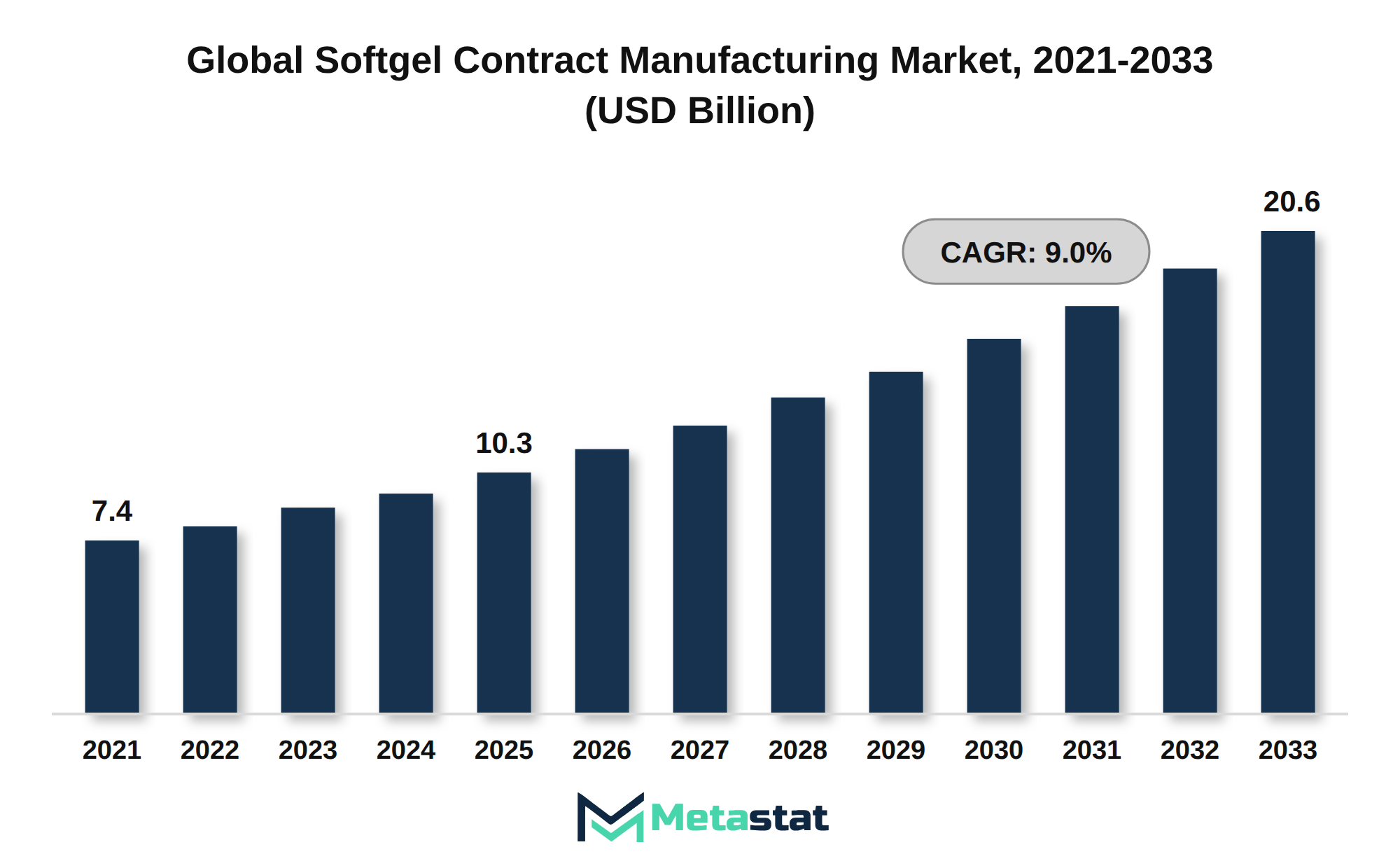
The global Softgel Contract Manufacturing market was valued at USD 10.3 billion in 2025 and is projected to reach USD 20.6 billion by 2033, growing at a CAGR of 9.0% over the forecast period.
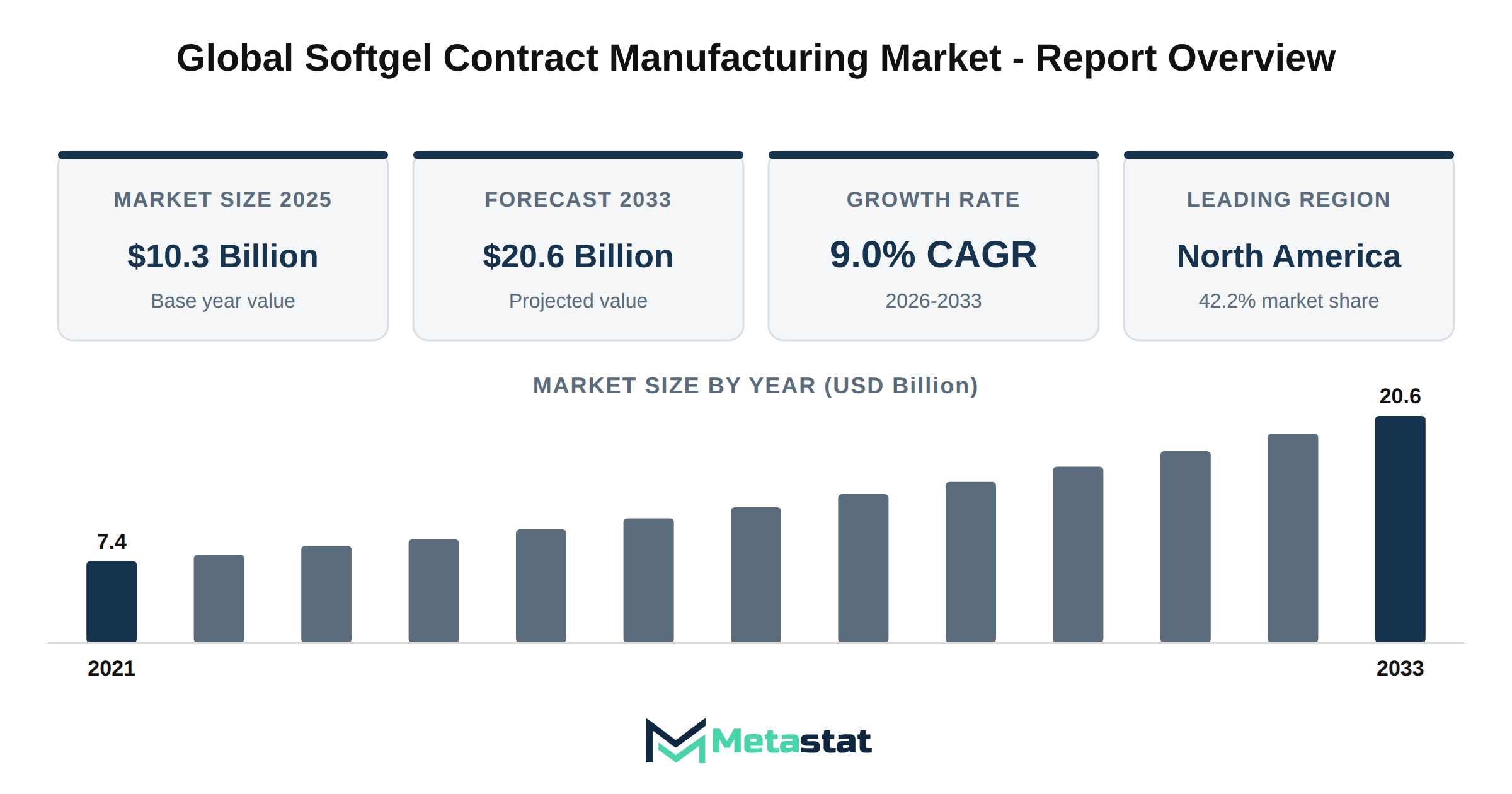
The Softgel Contract Manufacturing market reached a valuation of USD 10.3 billion in 2025, reflecting steady growth from USD 7.4 billion in 2021. The market expands significantly, reaching USD 20.6 billion by 2033, with a compound annual growth rate (CAGR) of 9 percent during the forecast period from 2026 to 2033. The continuous increase in demand for softgel products, particularly in the pharmaceuticals and nutraceuticals sectors, drives this growth trajectory.
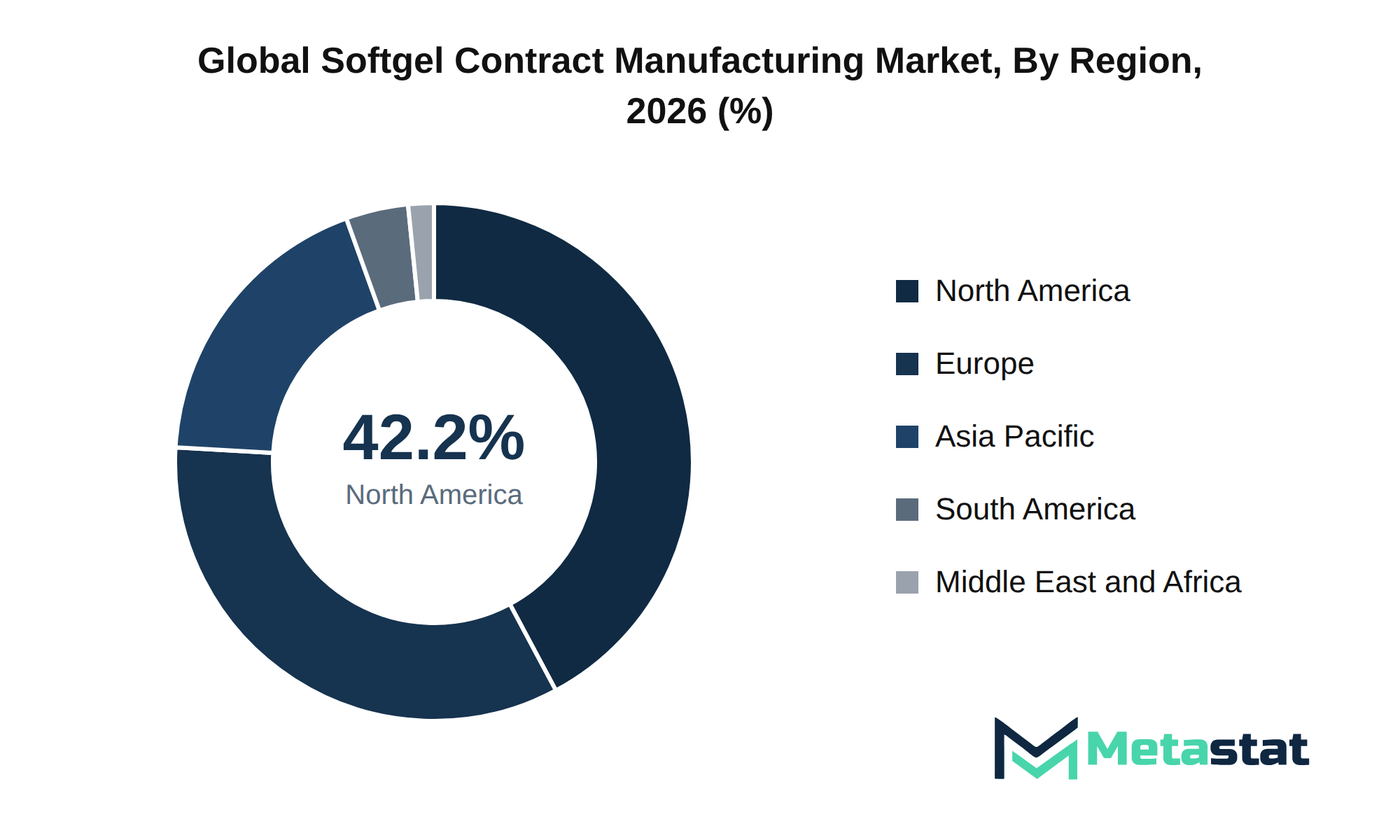
North America holds the largest market share, accounting for 42.2 percent in 2025, with expected revenue of USD 8.9 billion by 2033. This dominance results from a robust pharmaceutical industry and a rising consumer preference for softgel formulations. Europe follows, representing 33.7 percent of the market, supported by strong demand for health supplements and cosmetic applications. The Asia Pacific region contributes 18.6 percent of the market, with significant potential for growth, driven by increasing investments in healthcare and dietary supplements.
Within the market, gelatin-based softgels lead in demand, projected to grow from USD 8.3 billion in 2026 to USD 15.2 billion by 2033. The increasing popularity of vegetarian and vegan options, particularly Hydroxypropyl Methylcellulose (HPMC) softgels, supports market diversification and caters to changing consumer preferences. The pharmaceutical sector acts because a key application area, with revenues expected to rise from USD 6.6 billion in 2026 to USD 12 billion by 2033, reflecting an increasing focus on innovative drug delivery mechanisms.
The Softgel Contract Manufacturing market is influenced by several factors that shape its dynamics. Regulatory compliance establishes standards that manufacturers adhere to, ensuring product safety and efficacy. Companies operating within this space navigate complex regulatory frameworks across various regions, impacting their operational strategies and market entry approaches.
Disruption from emerging technologies and changing consumer preferences drives innovation in the market. Manufacturers invest in research and development to create next-generation softgel formulations that meet the evolving demands of healthcare and wellness sectors. This focus on innovation enhances competitive positioning among participants.
Sustainable transformation within the market reflects a broader industry shift towards environmentally friendly practices. Companies prioritize decarbonization and circular economy dynamics, integrating sustainable materials and processes into their production methods. This commitment addresses regulatory pressures and aligns with consumer expectations for eco-friendly products.
The supply chain landscape faces challenges related to logistics architecture and sourcing strategies. Manufacturers adapt to fluctuations in raw material availability and transportation costs, which influence overall production efficiency. Effective management of the supply chain enhances resilience and supports timely delivery of products to meet market demand.
Market fragmentation results from the presence of numerous participants with varying capabilities and offerings. This fragmentation creates opportunities for mergers and acquisitions, enabling companies to consolidate resources and expand their market reach. Strategic partnerships further enhance capabilities and drive innovation across the value chain.
Capital allocation trends reflect a focus on infrastructure investments, with companies prioritizing enhancements in production facilities and technologies. These investments support operational efficiency and scalability, positioning firms to respond effectively to market changes. Macroeconomic headwinds, including inflationary pressures and currency volatility, introduce additional considerations for financial planning and risk management.
The future strategic outlook for the Softgel Contract Manufacturing market hinges on adaptability and responsiveness to external factors. Corporate imperatives emphasize agility in operations, enabling companies to navigate uncertainties while capitalizing on growth opportunities. High-value recommendations for stakeholders include investing in sustainable practices, enhancing supply chain resilience, and driving innovation to remain competitive in the evolving environment.
Market Dynamics
Growing demand for nutraceuticals drives market expansion
The increasing focus on health and wellness significantly influences the Softgel Contract Manufacturing market. Factors including an aging population and rising consumer awareness regarding dietary supplements contribute to this trend. Countries with higher disposable incomes exhibit a shift in consumer behavior towards preventive healthcare, resulting in growth opportunities for manufacturers in this sector.
A surge in venture funding for companies innovating in the nutraceuticals space enhances product development and capabilities. This investment enables the introduction of diverse formulations, catering to specific health needs and preferences. The growing preference for vegetarian and vegan products further increases the demand for softgel manufacturing, driven by consumers seeking alternatives to traditional gelatin-based options.
Consumer lifestyles, prioritizing convenience and ease of use, lead to increased adoption of softgel products across various demographics. The market experiences heightened interest from pharmaceutical companies aiming to enhance medication adherence through innovative delivery systems. The integration of technology in manufacturing processes supports efficiency and cost-effectiveness, allowing suppliers to meet rising demand while optimizing production.
Overall, the convergence of health consciousness, demographic shifts, and technological advancements creates a dynamic environment for the Softgel Contract Manufacturing market. While these trends continue, market growth is projected to remain robust through the forecast period.
Rising consumer awareness accelerates market growth
Increasing consumer awareness regarding health and wellness drives significant growth in the Softgel Contract Manufacturing market. Consumers prioritize high-quality products that offer health benefits, influencing manufacturers to enhance their offerings. This trend aligns with the rising demand for nutraceuticals, where consumers seek supplements that support overall wellness and preventive health measures. Demographic shifts, particularly the aging population, contribute to a higher consumer focus on health, further stimulating the market.
The demand for transparency in ingredient sourcing and product efficacy encourages manufacturers to innovate and improve their production processes. This situation creates opportunities for companies to invest in advanced technologies that enhance product quality and operational productivity. Such innovations, including automation and artificial intelligence, lead to cost-efficient production methods, resulting in better profit margins for manufacturers. Enhanced operational capabilities support the market’s expansion, driven by companies striving to meet evolving consumer preferences.
The integration of sustainability initiatives significantly shapes consumer behavior. Consumers increasingly favor products that reflect environmental stewardship and ethical governance. Manufacturers who embrace sustainable practices attract a broader customer base and position themselves favorably in the competitive landscape. This shift toward sustainability influences investment decisions and operational strategies, contributing positively to the market's overall growth trajectory.
Regulatory constraints hinder market growth
The Softgel Contract Manufacturing market faces significant challenges stemming from regulatory constraints and compliance hurdles. Stringent regulations surrounding product safety, efficacy, and labeling impose added costs on manufacturers, impacting operational flexibility. These requirements often lead to delays in time-to-market for new products, limiting innovation and competitiveness among market participants.
Increasingly complex regulatory frameworks present barriers that smaller firms struggle to navigate, resulting in market fragmentation. Larger companies with established compliance teams absorb these costs more effectively, creating disparities in market participation. This dynamic restricts the ability of emerging players to enter the market, consolidating power within a few well-resourced firms.
Geopolitical instability and macroeconomic headwinds contribute to uncertainty in the market environment. Supply chain disruptions hinder access to essential raw materials, resulting in production delays and elevated costs. Inflationary pressures further exacerbate these challenges by increasing operational expenses, which reduce profit margins for manufacturers.
Technological obsolescence poses additional risks. Advancements in formulation and production processes demand continuous investment. Companies that fail to adopt new technologies face competitive disadvantages, impacting long-term sustainability. Consequently, the market experiences slower growth due to these intertwined factors, complicating the environment for contract manufacturers.
Geopolitical fragmentation impacts supply chain stability
The Softgel Contract Manufacturing market experiences challenges stemming from geopolitical fragmentation, affecting supply chain dynamics and operational efficiency. Trade deficits and tariff friction between countries create uncertainty for manufacturers, disrupting the flow of materials and components necessary for production. This instability leads to increased costs, complicating sourcing strategies and impacting pricing structures across the market.
Technological disruptions contribute to these challenges, driven by manufacturers adapting to innovations while managing legacy systems. Complex research and development integrations often create delays, hindering timely product launches and affecting competitiveness. Interoperability friction among different technological platforms restricts collaboration and efficiency, further complicating market operations.
The tight labor market presents another significant challenge for the industry. Workforce skill gaps and talent retention pressures hinder companies from maintaining operational capacity and responsiveness to market demands. Automation displacements lead to transitional difficulties, with businesses investing in training programs to upskill existing personnel.
Rising input costs and pricing compression exert additional pressure on profit margins, forcing manufacturers to reevaluate supply chain strategies. Environmental lifecycle footprints and sustainability demands prompt companies to seek greener alternatives, which involve retrofitting existing facilities. Infrastructure gaps and implementation bottlenecks contribute to further delays in meeting evolving legal liabilities and tightening global regulatory standards.
In response to these multifaceted challenges, the Softgel Contract Manufacturing market requires innovative solutions to enhance resilience and adaptability. Emphasizing strategic partnerships and investment in technology supports long-term sustainability and operational effectiveness, enabling companies to navigate these prevalent issues successfully.
Emerging technological disruptions create opportunities
The Softgel Contract Manufacturing market experiences significant opportunities stemming from technological advancements. Innovations in manufacturing processes, including automated production lines and enhanced quality control systems, contribute to increased efficiency and reduced operational costs. The integration of advanced technologies enables manufacturers to streamline production, thereby meeting the growing demand for high-quality and diverse softgel products.
Emerging digital procurement shifts further enhance market dynamics by allowing manufacturers to optimize supply chain management and reduce lead times for production. Digital platforms facilitate better collaboration among suppliers and buyers, enabling quicker responses to market changes and consumer preferences. This real-time responsiveness supports sustainability imperatives, aligning with the increasing focus on eco-friendly practices within the industry.
Geographical expansion driven by evolving buying behaviors presents opportunities within the market. Regions including Asia Pacific experience rising demand for softgel products, particularly in pharmaceuticals and nutraceuticals, driven by consumers seeking convenient dosage forms. This trend encourages manufacturers to explore new markets, enhancing their competitive positions through localized production capabilities and strategic partnerships.
Next-generation innovations, including vegetarian and modified release softgel formulations, cater to niche markets that value sustainable and health-oriented options. This diversification allows manufacturers to penetrate previously untapped segments, further driving market growth. The Softgel Contract Manufacturing market stands at a critical point, where technology and consumer preferences converge to create an environment ripe for expansion and innovation.
Market Segmentation Analysis
The Global Softgel Contract Manufacturing market is segmented based on Type, Application.
By Type, the market is further segmented into:
- Gelatin-based Softgels
- Vegetarian/Vegan Softgels (Hydroxypropyl Methylcellulose - HPMC)
- Modified Release Softgels
- Enteric-coated Softgels
Gelatin-based Softgels
Valued at USD 8.3 billion in 2026, the gelatin-based softgels segment is projected to reach USD 15.2 billion by 2033, reflecting a CAGR of 9% during the forecast period. Demand for gelatin-based softgels is driven by the growth of the pharmaceutical and nutraceutical sectors, where these formulations are favored for their effectiveness and consumer acceptance. Increasing consumer preference for convenient dosage forms supports this trend. Gelatin-based softgels offer an easy-to-swallow alternative compared to traditional tablets and capsules.
Regulatory compliance and certifications are critical for producers in this segment, ensuring that products meet safety and quality standards. The gelatin-based softgels segment benefits from technological advancements that facilitate the development of next-generation formulations, including modified release and enteric-coated options. These innovations enhance bioavailability and target specific areas within the digestive system, broadening the application range.
Cost structures and pricing dynamics play a significant role in shaping market performance. Raw material sourcing for gelatin remains relatively stable; however, fluctuations in pricing influence profit margins. The industry's focus on supply chain resilience has intensified. Manufacturers evaluate sourcing strategies and logistics to mitigate risks associated with material availability.
While the market evolves, the segment adapts to changing consumption patterns, particularly the shift toward natural and plant-based alternatives. This trend leads to increased interest in vegetarian and vegan softgels, creating strategic opportunity windows for producers to expand product offerings. Overall, the gelatin-based softgels segment represents a robust component of the softgel contract manufacturing market, poised for sustained growth through innovation and responsiveness to market demands.
Vegetarian/Vegan Softgels (Hydroxypropyl Methylcellulose - HPMC)
Growing demand for plant-based alternatives drives significant expansion in the Vegetarian/Vegan Softgels (Hydroxypropyl Methylcellulose - HPMC) segment. Consumer preferences increasingly shift towards health-conscious and ethical choices, resulting in a surge of interest in vegetarian and vegan dietary supplements. The segment is projected to reach USD 3.1 billion by 2033, at a CAGR of 8.9% during the forecast period.
Technological advancements enhance product formulation capabilities, improving the performance and appeal of HPMC-based softgels. These innovations facilitate the development of more effective delivery systems, increasing the attractiveness of HPMC softgels across various applications, particularly in the pharmaceuticals and nutraceuticals sectors. Health benefits prioritized by consumers drive higher adoption rates in the market.
Regulatory compliance around health and safety standards further influences this segment. Manufacturers adhere to stringent guidelines, ensuring quality and efficacy in product offerings. Compliance builds consumer trust, encouraging greater market penetration and expansion of vegetarian and vegan product lines.
Competitive dynamics reflect the growing interest in HPMC softgels, leading to increased capital investment in research and development. Participants in the Softgel Contract Manufacturing market focus on innovation and collaboration to capture market share. Such strategic initiatives position companies to respond effectively to evolving consumer preferences and market trends.
Modified Release Softgels
Growing interest in effective drug delivery systems enhances the Modified Release Softgels segment within the Softgel Contract Manufacturing market. This segment enables precise control over the timing and release of active ingredients, improving therapeutic efficacy and patient compliance. Demand for modified release formulations arises primarily from the pharmaceutical and nutraceutical industries, where convenience and dosage accuracy are critical. Increasing advancements in formulation technologies support the development of innovative modified release softgels, promoting penetration in various therapeutic areas.
Regulatory compliance standards drive manufacturers to adopt more sophisticated production methods, ensuring quality and safety in modified release formulations. These developments present strategic opportunities for companies focused on expanding their portfolios in this segment. The Modified Release Softgels segment is projected to reach USD 1.4 billion by 2033, reflecting a compound annual growth rate (CAGR) of 9.1%. This growth trajectory emphasizes the significance of continuous innovation and adaptation to meet evolving market demands.
Enteric-coated Softgels
Demand for Enteric-coated Softgels contributes significantly to the Softgel Contract Manufacturing market, driven by the increasing need for targeted drug delivery that bypasses the stomach. This demand arises particularly in the pharmaceutical sector, where such formulations enhance the effectiveness of medications by ensuring that they dissolve in the intestine rather than the stomach. Regulatory compliance plays a critical role in shaping product development, attributed to manufacturers adhering to strict guidelines governing the formulation and production of enteric-coated products.
Technological advancements improve enteric coating technologies, leading to enhancements in product performance and patient compliance. Innovations include the development of new polymer materials that optimize the coating process and enhance the stability of the active ingredients. Segment expansion is expected to gain momentum, reflecting a strong growth trajectory fueled by ongoing research and development efforts.
Increased consumer awareness regarding health benefits further influences demand, with a noticeable shift towards products that deliver enhanced bioavailability and reduced side effects. The market expands owing to pharmaceutical companies increasingly adopting these formulations to improve therapeutic outcomes. This trend aligns with rising healthcare expenditures and a growing focus on preventive medicine, which necessitates more effective drug delivery systems.
Cost structures remain a consideration, particularly regarding raw material sourcing and production efficiencies. Manufacturers invest in optimizing supply chains to mitigate pricing volatility and enhance margins. Strategic opportunities emerge within regions including North America and Europe, where a robust healthcare infrastructure supports the proliferation of these innovative products, thereby driving market growth.
By Application, the market is further segmented into:
- Pharmaceuticals
- Nutraceuticals
- Cosmetics
- Others
Pharmaceuticals
Valued at USD 6.6 billion in 2026, the Pharmaceuticals segment shows a strong trajectory, projected to reach USD 12 billion by 2033, at a CAGR of 9% during the forecast period. This growth stems from heightened demand for advanced drug delivery systems, which enhance bioavailability and patient compliance. Increasing investment in research and development across pharmaceutical companies drives innovation, leading to the creation of specialized softgel formulations that cater to diverse therapeutic areas.
Continuous advancements in manufacturing technologies play a vital role in the development of new product offerings. The adoption of technologies including automated encapsulation processes and quality control systems enhances production efficiency, ensuring consistent product quality while meeting regulatory compliance standards. These technological upgrades allow manufacturers to respond promptly to market demands and adapt to changing consumer preferences.
Regulatory frameworks significantly influence the segment, emphasizing the importance of quality and safety in pharmaceutical products. Compliance with stringent guidelines ensures that softgel formulations maintain their efficacy and safety profiles, which strengthens consumer trust. Consequently, investments in compliance initiatives and certifications become critical, driven by firms navigating the complexities of regulatory requirements.
Price volatility and margin pressures challenge the segment, stemming from fluctuating raw material costs and competition among manufacturers. Strategic partnerships and long-term contracts with suppliers enhance supply chain resilience, mitigating the impact of raw material pricing fluctuations. Firms seek to optimize their cost structures while maintaining competitive pricing, which is essential for sustaining market share in the evolving Softgel Contract Manufacturing market.
Nutraceuticals
Nutraceuticals represent a key application segment within the Softgel Contract Manufacturing market, projected to achieve USD 7.2 billion by 2033, at a CAGR of 8.9% during the forecast period. Demand drivers include increasing consumer inclination towards preventive healthcare solutions and rising prevalence of chronic diseases, prompting a shift towards dietary supplements that enhance overall health. The segment experiences expansion due to innovations in formulation and delivery methods, which meet evolving expectations of health-conscious consumers.
Ongoing technological maturation facilitates the development of next-generation softgel products, characterized by improved bioavailability and targeted delivery. Product evolution aligns with emerging trends in wellness and personalized nutrition, capturing interest from diverse consumer demographics. Regulatory compliance and certification requirements play a crucial role, ensuring product safety and efficacy, which further enhance consumer confidence.
Consumption shifts towards plant-based and vegan options reflect broader dietary trends, influencing the production landscape within the segment. Companies investing in research and development aimed at sustainable sourcing and clean-label formulations enhance competitive edge. The focus on supply chain resilience, combined with strategic opportunities arising from consumer trends, positions the nutraceuticals application segment for sustained growth within the market.
Cosmetics
Growth in the cosmetics industry significantly influences demand for softgel formulations. Innovations in skincare and beauty products drive manufacturers to seek advanced delivery systems, enhancing product efficacy and consumer satisfaction. The increasing preference for high-quality, effective cosmetic solutions pushes brands towards softgel technology, which improves absorption and benefits consumers seeking reliable results. Regulatory compliance and safety standards in cosmetics encourage manufacturers to adopt softgel formulations that provide better control over ingredient quality and dosing. Heightened consumer awareness of ingredient transparency prompts brands focusing on clean and sustainable ingredients to align their offerings with softgel manufacturing to meet market demands.
Valued at USD 1.4 billion by 2033, the cosmetics segment aligns with broader trends in personal care, where innovative product delivery creates competitive advantages. While consumer preferences shift towards multifunctional products, softgel formulations offer unique opportunities for brands to expand their portfolios. Investments in research and development for next-generation softgel products enhance market potential, allowing brands to explore new applications and formulations. This drives segment growth within the Softgel Contract Manufacturing market.
Others
Growing diversification in product applications drives the expansion of the Others sub-segment within the Softgel Contract Manufacturing market. Numerous industries, including dietary supplements, personal care, and specialty formulations, show increasing interest in softgel technology. This trend reflects a broader consumer shift towards convenience and efficacy in product delivery.
Technological advancements enhance the adaptability of softgel formulations, enabling manufacturers to respond to evolving consumer preferences. Innovations in encapsulation technologies support the development of customized solutions tailored to specific end-user requirements. These enhancements lead to the introduction of novel products that meet market demands effectively.
Regulatory compliance remains a critical factor impacting this sub-segment. Adherence to evolving standards ensures product safety and efficacy, influencing production processes and operational strategies within the market. Manufacturers navigate regulatory landscapes while prioritizing quality and consistency to maintain competitive advantages.
Market dynamics present opportunities for strategic investments in research and development. A focus on product evolution and next-generation upgrades positions players to capitalize on emerging trends and consumer preferences. Leveraging these insights enhances market presence and facilitates adaptation to shifting demands.
By Region
Based on geography, the Global Softgel Contract Manufacturing market is divided into North America, Europe, Asia-Pacific, South America, Middle East, and Africa.
North America
North America represents a significant portion of the Softgel Contract Manufacturing market, accounting for 42.2% of the global market share in 2025. The region's market is projected to expand at a CAGR of 9.0% during the forecast period, reaching a market size (TAM) of USD 8.9 billion by the end of 2033.
Demand within the region stems from a robust pharmaceuticals sector, with the application segment anticipated to reach USD 12 billion by 2033. This growth aligns with an increasing focus on health and wellness products, driving the need for innovative softgel formulations. The gelatin-based softgels segment, valued at USD 8.3 billion in 2026, plays a crucial role in meeting rising consumer expectations for high-quality delivery systems.
Investment in infrastructure modernization strengthens the region's manufacturing capabilities, enabling local production to cater to domestic and international markets. The trend of nearshoring supports localized manufacturing densities, enhancing supply chain resilience. Regulatory frameworks within North America emphasize product safety and efficacy, creating a competitive environment that encourages innovation among market participants.
Companies operating in this region include Catalent, Inc., Aenova Group, and EuroCaps, all of which contribute to the evolving market. Domestic market participants strategically invest in research and development, maintaining their competitive edge while addressing evolving consumer preferences. This investment creates a dynamic environment for softgel innovation and production, fueling continued market growth.
Europe
The Softgel Contract Manufacturing market in Europe demonstrates significant growth potential, driven by increasing demand for health supplements and pharmaceuticals. Countries including Germany, France, and the UK exhibit high consumption rates of softgel products, reflecting a strong consumer inclination towards convenient dosage forms. Spain and Italy are emerging significant markets, with rising investments in research and development enhancing local production capabilities.
Regulatory frameworks within Europe influence market dynamics, enforcing stringent quality and safety standards that manufacturers comply with. Manufacturers in this region prioritize adherence to local compliance mandates to maintain market access. The competitive landscape features several key players, including Catalent, Inc., Aenova Group, and Capsugel, each striving to innovate and expand their product offerings.
Infrastructure modernization efforts further support the market, with investments in localized manufacturing facilities increasing. This trend enhances supply chain resilience and reduces reliance on cross-border trade corridors, positioning Europe because a self-sufficient region for softgel production. The ongoing shift towards localized procurement dynamics strengthens the market, allowing for quicker response times to consumer demands. Overall, the combination of these factors positions the European market because a leader in the global softgel industry.
Asia-Pacific
The Softgel Contract Manufacturing market in the Asia-Pacific region plays a significant role in the overall market, with a projected market share of 18.6% in 2025. Demand for softgel products increases owing to rising health consciousness and the growing preference for convenient dosage forms, particularly in the pharmaceutical and nutraceutical sectors. Key players in this region include China, Japan, India, South Korea, Australia, and Southeast Asia, each contributing to the dynamic market.
Competitive pressures drive innovation in manufacturing processes, leading to the development of advanced softgel formulations. Partnerships between local manufacturers and global suppliers enhance the distribution networks, enabling better access to end-users. Localized procurement dynamics influence the supply chain, allowing manufacturers to adapt offerings to meet specific regional requirements.
Investment in infrastructure modernization supports the expansion of manufacturing capabilities and improves operational efficiencies. Emerging market front-runners leverage foreign direct investment (FDI) to strengthen their market positions, while high-value replacement cycles within established firms drive incremental growth. Cultural nuances and regional B2B buying behaviors significantly impact the sales strategies of vendors operating in the market.
With continued emphasis on compliance with local regulations and mandates, the competitive landscape reflects a blend of mature market dynamics and growth potential. The Asia-Pacific region presents substantial opportunities for expansion within the Softgel Contract Manufacturing market, positioning itself because a critical player in the global industry.
South America
South America represents a smaller segment within the Softgel Contract Manufacturing market, accounting for 3.9% of the global share in 2025. Brazil and Argentina serve because the primary markets in the region, with various factors shaping demand dynamics. The rise in health consciousness among consumers in these countries influences the growing interest in nutraceuticals, driving the need for softgel products.
Infrastructure modernization supports growth in the market. Investments in production facilities and improvements in local supply chains enhance operational efficiencies, enabling manufacturers to meet the increasing demand. The region's competitive landscape features local players focusing on localized procurement, which aligns with consumer preferences for regionally sourced products.
The Softgel Contract Manufacturing market in South America experiences gradual growth, driven by rising health awareness and an increasing inclination toward preventative healthcare solutions. Regional variations in cultural nuances affect purchasing behaviors, impacting how products are marketed and distributed. Local compliance mandates and regulations shape operational strategies and influence entry barriers for new players seeking to establish a presence in South America.
Middle East and Africa
The Softgel Contract Manufacturing market in the Middle East and Africa presents unique dynamics influenced by various factors. With a market share of 1.6% in 2025, regional growth is supported by rising demand for pharmaceuticals and nutraceuticals, emphasizing the need for effective drug delivery systems. Countries including Saudi Arabia and the UAE invest in healthcare infrastructure modernization, enhancing production capabilities and increasing accessibility to innovative softgel solutions.
Localization of manufacturing and procurement processes strengthens the market's resilience against global supply chain disruptions. Strategic initiatives to enhance domestic capabilities increase competition within the region, attracting investments from global players. Regional competitiveness stems from an increasing focus on compliance with local regulations and tailored solutions that meet specific market requirements.
Cross-border trade corridors facilitate the movement of goods, contributing to market expansion. Ongoing geopolitical fragmentation influences trade policies, presenting challenges and opportunities for market players. South Africa and other territories enhance their capacities, and the implementation of localized manufacturing densities supports the evolving dynamics of the softgel market.
Competitive Landscape and Strategic Insights
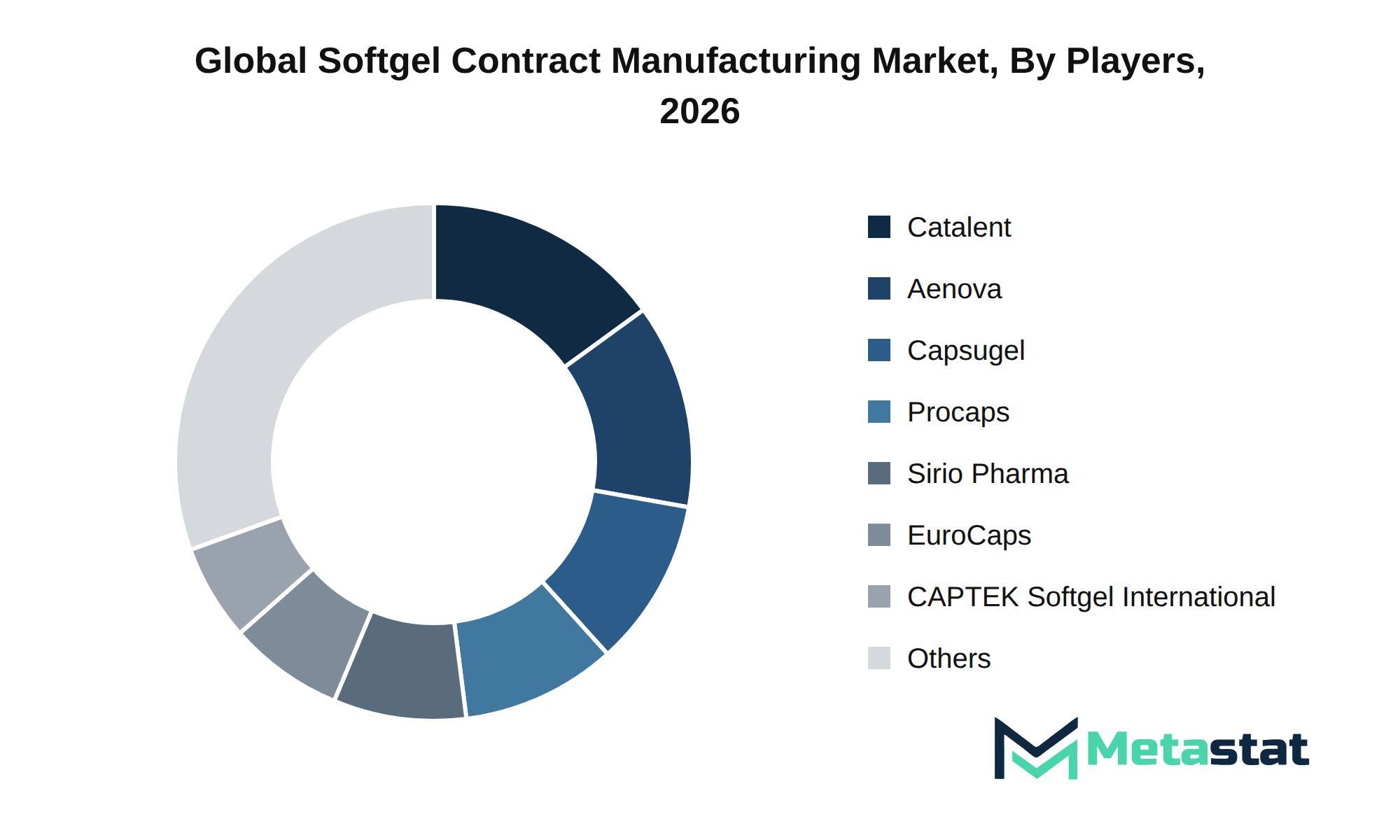
The Softgel Contract Manufacturing market experiences significant competitive dynamics driven by mergers, acquisitions, and strategic consolidations among key players. Companies including Catalent, Inc. and Aenova Group actively pursue partnerships to enhance their product offerings and expand market reach. This strategic behavior drives innovation and aligns with changing consumer preferences, facilitating growth in various applications, particularly in pharmaceuticals and nutraceuticals.
Market positioning and differentiation
Product differentiation remains critical in the market, with players including Procaps Group and Capsugel focusing on unique formulations and delivery methods to enhance customer appeal. Research and development initiatives play a vital role, with firms investing in proprietary technologies to establish competitive advantages. Strategic alliances, including joint ventures between companies including Fuji Capsule Co., Ltd. and Thermo Fisher Scientific Inc. (Patheon), highlight the importance of collaboration in addressing evolving market demands.
The competitive outlook for the Softgel Contract Manufacturing market reflects robust barriers to entry, driven by established brand equity and intellectual property portfolios held by significant players. Companies including Elder Pharmaceuticals and Sirio Pharma leverage their existing market presence to retain customers, while switching costs remain a consideration for clients evaluating alternative suppliers. Overall, the market demonstrates a rich environment for strategic opportunities, poised for continued growth through innovation and collaboration.
Forecast and Future Outlook
Market size is forecast to rise from USD 10.3 billion in 2025 to over USD 20.6 billion by 2033. The base case anticipates growth at a 9.0% CAGR, reflecting increasing demand across various applications including pharmaceuticals and nutraceuticals. The bull case indicates potential for accelerated growth driven by technological advancements and innovations in softgel formulations, while the bear case highlights risks posed by regulatory challenges and geopolitical tensions that hinder expansion.
The macroeconomic landscape influences the softgel contract manufacturing market. Economic cycles influence consumer spending and healthcare expenditures, impacting demand for softgel products. Shifts in downstream demand occur owing to consumers increasingly preferring better-quality health supplements and personalized medications. Core industries continue to mature, creating new needs for innovative delivery systems, while structural consumption shifts towards plant-based alternatives signal evolving preferences.
Integration of next-generation technologies into manufacturing processes enhances efficiency and product quality. R&D commercialization timelines affect how quickly new products enter the market, and established product life cycles necessitate ongoing innovation to meet changing consumer expectations. Regulatory evolution remains crucial, with compliance milestones guiding industry practices and ensuring safety and efficacy.
Geopolitical realignments and evolving trade corridors influence global supply chain dynamics. Strategic capital allocation directives and infrastructure commitments direct investments toward developing manufacturing capabilities and expanding production facilities. High-growth pockets identified in emerging markets provide opportunities for stakeholders to capture unmet enterprise needs in regions with increasing healthcare demands.
Executive-level strategic imperatives focus on safeguarding market position through robust defensibility roadmaps. Future growth recommendations emphasize the necessity for adaptability in response to market changes, ensuring businesses maintain competitive advantages in this dynamic environment.
Softgel Contract Manufacturing Market Key Segments
By Type:
- Gelatin-based Softgels
- Vegetarian/Vegan Softgels (Hydroxypropyl Methylcellulose - HPMC)
- Modified Release Softgels
- Enteric-coated Softgels
By Application:
- Pharmaceuticals
- Nutraceuticals
- Cosmetics
- Others
By Region:
- North America
- Europe
- Asia-Pacific
- South America
- Middle East and Africa
Key Global Softgel Contract Manufacturing Industry Players
- Catalent, Inc.
- Aenova Group
- Capsugel
- Procaps Group
- EuroCaps
- Sirio Pharma
- AlderBiochem
- Elder Pharmaceuticals
- Fuji Capsule Co., Ltd.
- CAPTEK Softgel International, Inc.
- Soft Gel Technologies, Inc.
- Robinson Pharma, Inc.
- Best Formulations, Inc.
- Thermo Fisher Scientific Inc. (Patheon)
- Strides Pharma Science Limited
- MEDGEL Co., Ltd.
- Hunan ER-KANG Pharmaceutical Co., Ltd.
- Curtis Health Caps S.A.
Report Coverage
The report strategically identifies and profiles the key market players and analyses their core competencies in each sub-segment of the Softgel Contract Manufacturing market.
|
Report Attributes |
Details |
|
Study Period |
2021-2033 |
|
Base Year |
2025 |
|
Estimated Year |
2026 |
|
Forecast Period |
2026-2033 |
|
Historical Period |
2021-2025 |
|
Growth Rate |
CAGR 9.0% from 2026 to 2033 |
|
Revenue Unit |
USD billion |
|
Segmentation |
By Type, Application, and Region |
|
By Region |
North America (By Type, Application, and Country)
|
|
Europe (By Type, Application, and Country)
|
|
|
Asia Pacific (By Type, Application, and Country)
|
|
|
South America (By Type, Application, and Country)
|
|
|
Middle East and Africa (By Type, Application, and Country)
|
What Report Provides
- Company Market Share, Revenue and Ranking for the Softgel Contract Manufacturing Market
- Key Market Leaders and Their Competitive Positioning
- Full In-Depth Analysis of the Parent Industry Trends
- Industry Statistics and Important Changes in Market Dynamics
- Segmentation Details of the Softgel Contract Manufacturing Market
- Historical, Ongoing and Projected Market Analysis
- Assessment of Niche Industry Developments and Opportunities
- Key Strategic Recommendations for Market Participants
Frequently Asked Questions
Find answers to common questions about this report
The Softgel Contract Manufacturing market size was valued at USD 10.3 billion in 2025.
The Softgel Contract Manufacturing market is projected to grow at a CAGR of 9.0% during the forecast period from 2026 to 2033.
The North America Softgel Contract Manufacturing market size is estimated to reach USD 8.9 billion by 2033.
Gelatin-based softgels lead the Softgel Contract Manufacturing market, with a projected value of USD 15.2 billion by 2033. This segment shows significant growth potential, driven by increasing demand in various applications.
Increasing consumer awareness regarding health and wellness significantly drives the Softgel Contract Manufacturing market. The aging population and rising demand for nutraceuticals, coupled with preferences for vegetarian and vegan products, create substantial growth opportunities for manufacturers. advancements in technology enhance production efficiency, supporting the market's expansion.
North America holds the dominant share of the Softgel Contract Manufacturing market, with a projected value of USD 8.9 billion in 2033, representing 42.2 percent of the total market.
The Softgel Contract Manufacturing market faces significant challenges from regulatory constraints and compliance hurdles, which impose added costs and limit operational flexibility. Geopolitical instability and macroeconomic pressures contribute to supply chain disruptions and inflationary costs, further complicating the market environment. These factors hinder growth and innovation, particularly for smaller firms navigating complex regulations.
Increasing consumer awareness regarding health and wellness significantly favors product adoption in the Softgel Contract Manufacturing market. The aging population and a shift towards preventive healthcare drive demand for high-quality nutraceuticals, while preferences for vegetarian and vegan products further enhance softgel adoption across various demographics.
The Softgel Contract Manufacturing market is estimated to reach a valuation of USD 20.6 billion by 2033.
Key players in the Softgel Contract Manufacturing market include Catalent, Inc., Aenova Group, Capsugel, Procaps Group, EuroCaps, and Sirio Pharma.
Choose Your License
Global Softgel Contract Manufacturing Market
Related Reports
Explore related market intelligence reports worth reading alongside this one.