
Global Tightening Process Monitoring Market
Global Tightening Process Monitoring Market Size, Share, By Product Type (Integrated Tightening Control Systems, Standalone Tightening Controllers and Monitoring Units, Tightening Monitoring Software, Torque and Torque-Angle Measurement Systems, Bolt Tension and Preload Monitoring Systems, Automated Tightening Monitoring Systems and Other (Inspection and Traceability Tools)), By Monitoring Parameter (Torque, Torque and Angle, Torque and Time, Torque and Speed, Force and Displacement, Bolt Tension / Preload and Multi-Parameter Monitoring), By Deployment Mode (Manual / Handheld Systems, Semi-Automated Systems, Automated / Robotic Systems, Multi-Spindle Systems and Field / Maintenance Systems), By End-use Industry (Automotive, Aerospace and Defense, Electronics and Electrical Equipment, Industrial Machinery and Heavy Equipment, Energy and Power Generation, Construction and Infrastructure, Shipbuilding and Marine, Appliances and HVAC and Others (Medical Devices, Railways, Recreational Vehicles and Specialty Manufacturing)), Industry Analysis, Growth, Trends, and Forecast, 2026-2033
MSI-5034
August 25, 2026
308 Pages
Historical
Base year
Forecast
Forecast period
Report Details
Comprehensive Market Analysis And Insights
Market Overview
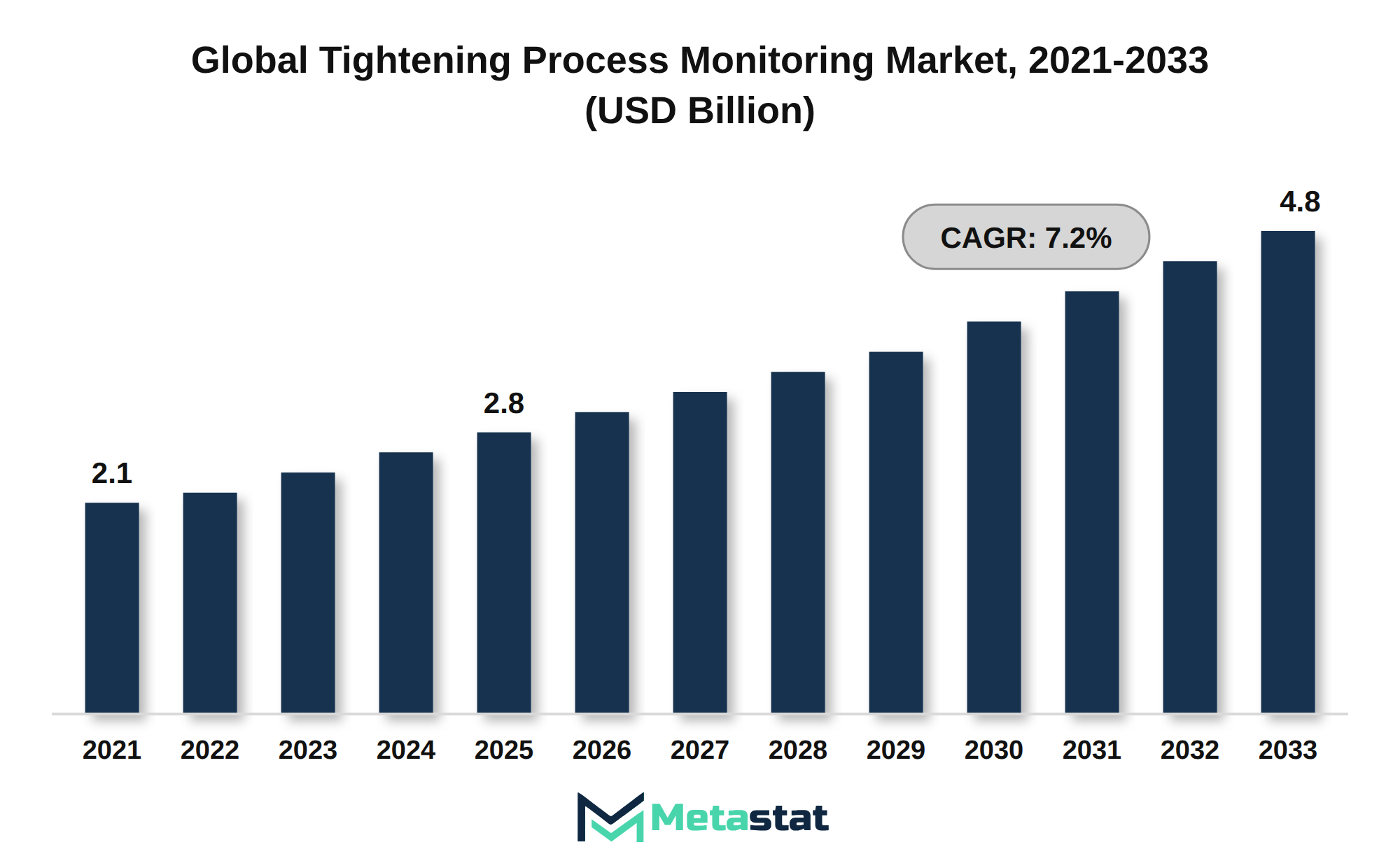
The global Tightening Process Monitoring market was valued at USD 2.8 billion in 2025 and is projected to reach USD 4.8 billion by 2033, growing at a CAGR of 7.2% over the forecast period.
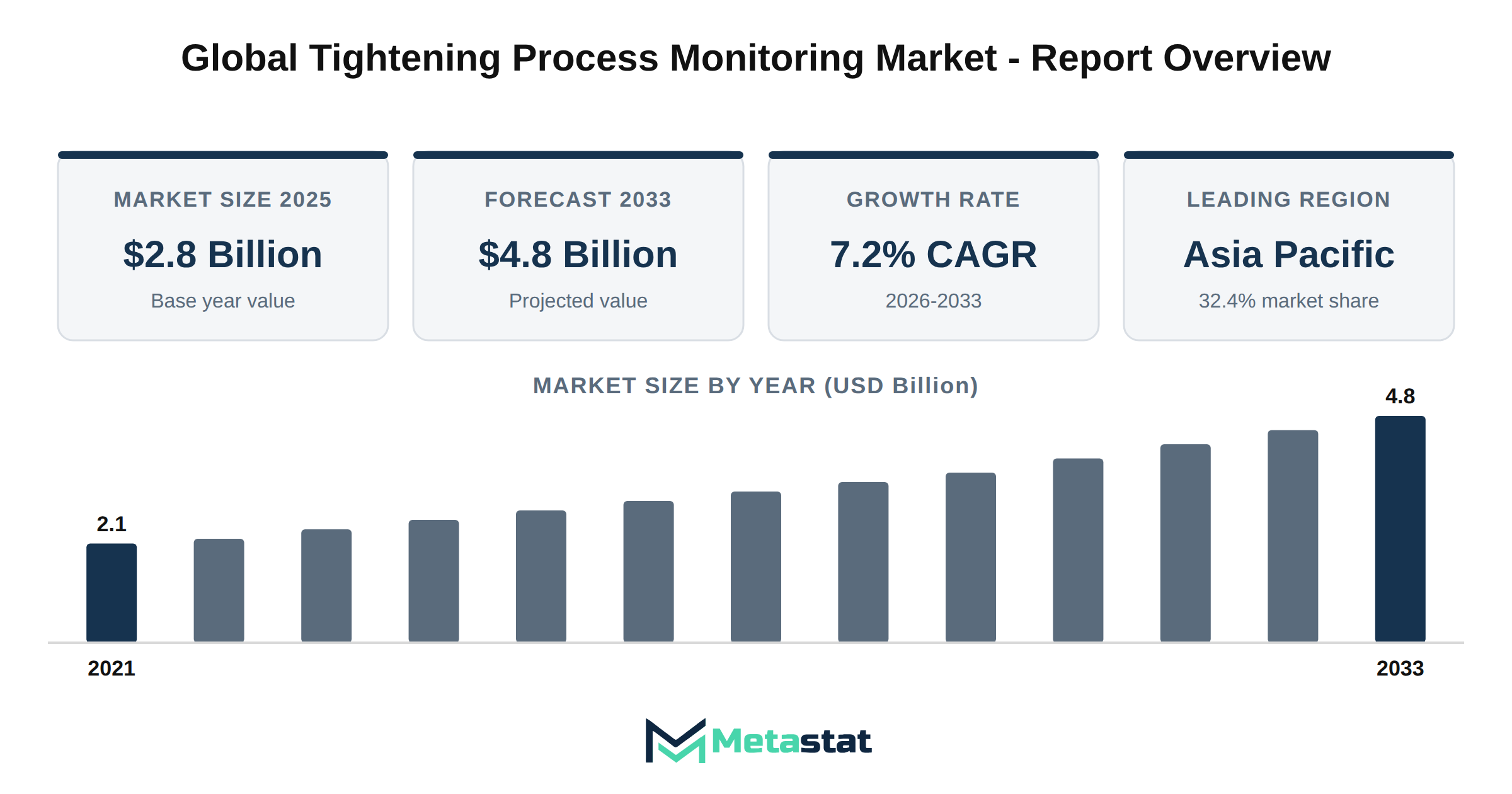
The Tightening Process Monitoring market achieved a valuation of USD 2.8 billion in 2025, following consistent growth from USD 2.1 billion in 2021. The market is projected to reach USD 4.8 billion by 2033, representing a compound annual growth rate (CAGR) of 7.2%. This growth trajectory reflects increasing demand for precision and reliability in manufacturing processes across various industries.
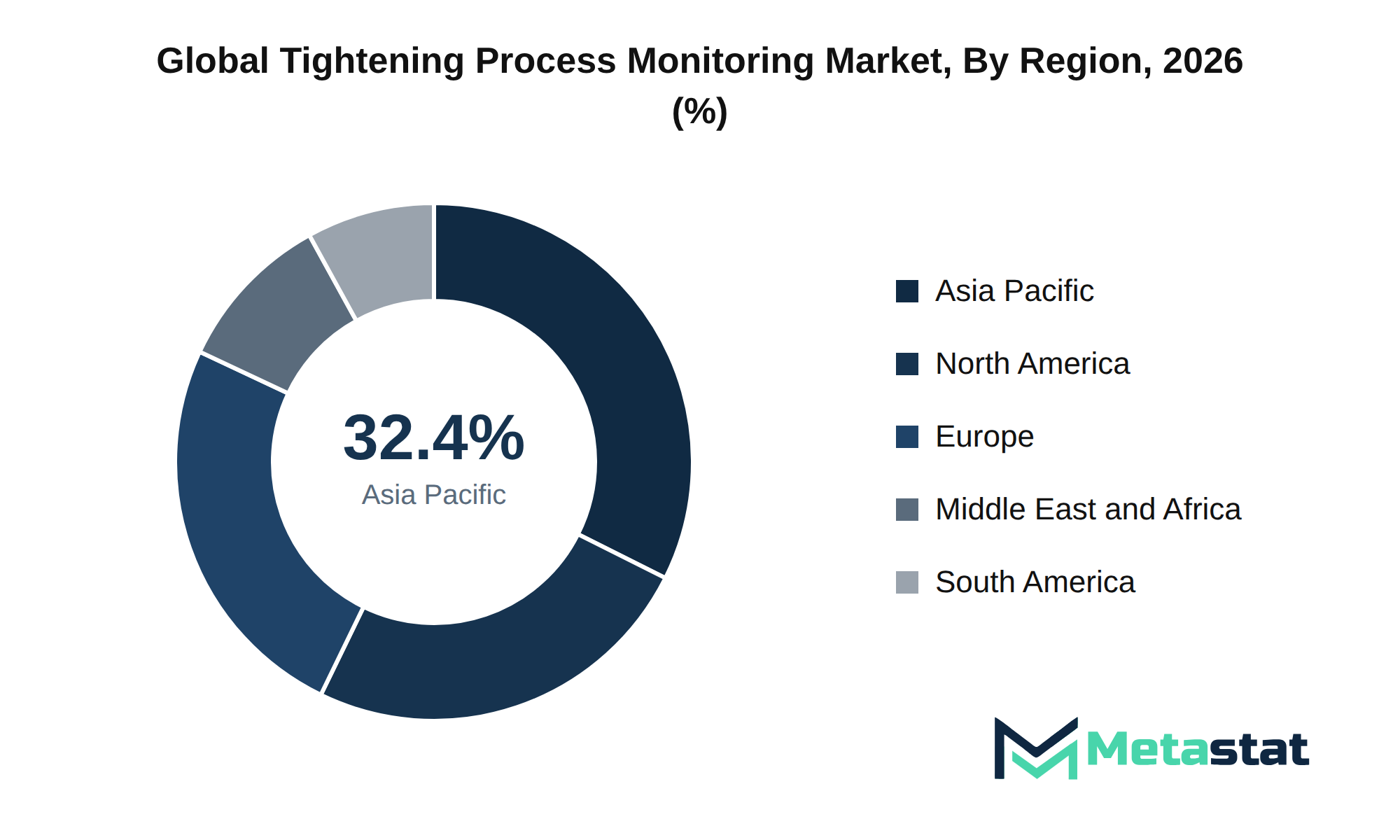
Regional dynamics illustrate the distribution of market share, with Asia Pacific leading at 32.4%, followed by North America and Europe, each holding 24.8%. The significant market presence in Asia Pacific stems from robust manufacturing sectors and technological advancements within the region. North America, with a projected market value of USD 1.1 billion by 2033, experiences continuous investments in automation and advanced manufacturing technologies.
Product segmentation includes diverse offerings, including Integrated Tightening Control Systems, which are expected to grow from USD 0.6 billion in 2026 to USD 1 billion by 2033, with a CAGR of 6.5%. Standalone Tightening Controllers and Monitoring Units are anticipated to reach USD 0.8 billion by 2033, achieving a CAGR of 6.9%. These advancements in product types demonstrate the industry's commitment to enhancing operational efficiency and ensuring compliance with stringent quality standards.
The Tightening Process Monitoring market experiences increasing adoption in end-use industries including automotive and aerospace & defense, with projected growth rates of 7% and 8.3%, respectively. These sectors demand high levels of accuracy and reliability in fastening processes, driving investments in advanced monitoring systems. Integration of next-generation technologies, including IoT and AI, supports real-time monitoring and data analysis, further enhancing operational standards and product quality.
The Tightening Process Monitoring market experiences significant advancements driven by various factors that shape its environment. Regulatory compliance influences manufacturers to align with industry standards, affecting product development and market entry strategies. The stringent requirements in sectors including automotive and aerospace demand innovative solutions that enhance quality assurance and operational efficiency.
Disruptive technologies contribute to the evolution of the market, with research and development trajectories focusing on automation and real-time monitoring capabilities. The rise of next-generation innovations, including integrated tightening control systems and automated monitoring solutions, positions industry players to achieve competitive advantages. Sustainable transformation initiatives further influence product offerings, with an increasing emphasis on decarbonization and circular economy dynamics shaping market strategies.
The supply chain landscape remains an important consideration, driven by logistics architecture that adapts to changing demands and sourcing landscapes. Collaboration among stakeholders enhances the overall efficiency of the value chain, while market fragmentation prompts companies to explore mergers and acquisitions to strengthen their market presence. Procurement processes evolve in response to shifting customer journey dynamics, emphasizing the importance of understanding end-user needs and preferences.
Capital allocation strategies reflect the need for infrastructure investments to support growth trajectories. The relationship between capital expenditures and operational expenditures defines financial realities for companies operating within the market. Macroeconomic headwinds, including inflationary pressures and currency volatility, challenge profitability and necessitate strategic adjustments to maintain financial health.
The future strategic outlook for the Tightening Process Monitoring market indicates strong growth potential, driven by ongoing technological advancements and evolving end-user requirements. Corporate imperatives center on agility and responsiveness to market trends, allowing companies to remain competitive in an increasingly dynamic environment. High-value recommendations include prioritizing innovation, enhancing regulatory compliance efforts, and investing in sustainable practices to capitalize on emerging opportunities.
Market Dynamics
Investment in automation enhances operational efficiency
Increasing investment in automation significantly enhances operational efficiency within the Tightening Process Monitoring market. Industries recognize the advantages of integrating advanced technologies, streamlining production processes and reducing manual errors. This transition to automated systems reflects a broader trend towards digital transformation across manufacturing sectors.
Companies adopt integrated tightening control systems and tightening monitoring software to optimize operations. This shift boosts the demand for sophisticated tightening solutions, enabling firms to maintain high-quality standards while minimizing production costs. The automotive and aerospace industries, in particular, benefit from these advancements, with precision and reliability being critical in their manufacturing processes.
The market is projected to grow at a compound annual growth rate (CAGR) of 7.2% from 2026 to 2033, driven by the increasing need for cost-effective and efficient operational practices. Organizations lean towards automation and improved efficiency, intensifying competition and encouraging further innovations in tightening technologies.
Increased focus on operational productivity
Rising demand for enhanced operational productivity fuels growth in the Tightening Process Monitoring market. Companies across various industries emphasize optimizing processes and improving efficiency to maintain competitiveness. This trend stems from increasing pressure to reduce production costs while enhancing product quality. Organizations invest in advanced tightening monitoring solutions that facilitate precise control and tracking of assembly processes.
The shift towards automation and digital transformation significantly influences operational productivity. Tightening monitoring systems integrate advanced technologies including artificial intelligence and software solutions, allowing real-time data analysis and improving decision-making. By adopting such technologies, organizations experience increased throughput and reduced cycle times, leading to higher profitability across sectors like automotive and aerospace.
Investment in tightening process monitoring aligns with broader initiatives aimed at resource stewardship and sustainability. Companies that prioritize operational productivity often implement strategies that minimize waste and decrease carbon footprints. The market benefits from this shift, driven by environmentally conscious practices that attract investment and drive demand for innovative tightening solutions.
Overall, the focus on operational productivity enhances the performance of businesses and contributes to the ongoing expansion of the Tightening Process Monitoring market. Organizations striving for greater efficiency will find that the integration of advanced monitoring technologies plays a crucial role in meeting these objectives.
Regulatory compliance challenges inhibit growth
The Tightening Process Monitoring market encounters significant hurdles stemming from regulatory compliance challenges. Stricter regulations surrounding safety and quality standards increase operational burdens on manufacturers. These constraints result in higher costs, driven by firms investing in compliance-related technologies and processes, diverting funds from innovation and growth initiatives.
Compounding the issue, macroeconomic headwinds, including inflationary pressures and supply chain disruptions, create a challenging environment for market participants. Rising costs and resource scarcity impact profitability, compelling companies to strategize carefully regarding capital investments. This situation limits the ability of firms to expand their offerings within the tightening process monitoring landscape.
Technological obsolescence poses risks within the market. Rapid advancements in technology necessitate ongoing investments in system upgrades. Failure to adapt to these changes threatens competitive positioning, leading to potential market share loss. Organizations confronted with high capital investment requirements struggle to maintain technological relevance, restricting overall market growth.
Market fragmentation presents another obstacle. Diverse regional adoption rates and varying compliance requirements hinder standardized solutions. Firms operating in multiple regions grapple with differing regulations, complicating product deployment. This complexity results in slower market penetration, impacting the overall growth trajectory within the tightening process monitoring market.
Market challenge: Supply chain instability impacts growth
The Tightening Process Monitoring market faces considerable challenges stemming from supply chain instability. Disruptions in logistics and the fluctuation of feedstock and component availability create significant hurdles for manufacturers. These disruptions often lead to delays in production timelines, affecting the ability of companies to meet customer demand efficiently.
Increasing complexity in research and development integrations further complicates the landscape, requiring greater coordination among suppliers. Interoperability friction among different systems heightens the challenge, leading to inefficiencies that impact overall market performance. Manufacturers in the tightening process monitoring space address these issues to maintain competitive positioning.
Pricing compression remains a critical concern. Heightened pressures on profit margins arise from rising input costs, compelling companies to find innovative measures to sustain profitability. The rapid pace of technological advancements requires continuous investment, adding to the financial strain on businesses.
Workforce skill gaps in the tightening process monitoring sector present another challenge. The need for skilled technicians and engineers rises alongside the advanced technologies adopted in production processes. Addressing these skill gaps is essential to prevent operational bottlenecks that hinder growth.
The Tightening Process Monitoring market's growth trajectory hinges on overcoming these multifaceted challenges. Companies that successfully navigate supply chain disruptions, workforce skill deficiencies, and pricing pressures position themselves for sustainable growth in the evolving landscape.
Emerging technological innovations drive market growth
The Tightening Process Monitoring market stands poised for growth driven by emerging technological innovations and digital transformation. The proliferation of advanced monitoring solutions enhances precision and efficiency, attracting industries including automotive and aerospace. Organizations increasingly adopt integrated tightening control systems and automated solutions, influenced by the rising demand for robust production processes.
Infrastructure modernization across various sectors facilitates the adoption of next-generation technologies. Investments in automated and robotic systems streamline operations and minimize human error, resulting in improved production outcomes. The need for enhanced monitoring capabilities in dynamic manufacturing environments drives the market forward, reinforcing the significance of these technologies.
Geographical expansion into emerging markets further contributes to market growth. Regions including Asia Pacific exhibit increasing demand for tightening process monitoring solutions due to rapid industrialization and a focus on improving manufacturing standards. This trend opens avenues for market players to establish a foothold in these growing economies.
Sustainability imperatives influence market dynamics, driven by industries aligning with eco-friendly practices. Companies increasingly focus on integrating environmental, social, and governance (ESG) principles into their operations, leading to the development of sustainable tightening solutions. This alignment with sustainability goals not only meets consumer expectations but enhances competitive positioning within the market.
The Tightening Process Monitoring market anticipates significant opportunities driven by evolving buying behaviors. The shift towards digital procurement and commercial model transitions reflects the changing landscape of purchasing practices. Organizations seek technology that supports integration and efficiency, prompting suppliers to innovate and adapt their offerings accordingly.
Investments in asset life-cycle extensions and maintenance upgrades provide additional growth avenues. Companies recognize the importance of retrofitting existing systems with advanced monitoring technologies, ensuring operational longevity and optimized performance. This focus on enhancing the operational yield of machinery reinforces the market's relevance in a competitive environment.
Market Segmentation Analysis
The Global Tightening Process Monitoring market is segmented based on Product Type, Monitoring Parameter, Deployment Mode, and End-use Industry.
By Product Type, the market is further segmented into:
- Integrated Tightening Control Systems
- Standalone Tightening Controllers & Monitoring Units
- Tightening Monitoring Software
- Torque & Torque-Angle Measurement Systems
- Bolt Tension & Preload Monitoring Systems
- Automated Tightening Monitoring Systems
- Other (Inspection & Traceability Tools)
Integrated Tightening Control Systems
Valued at USD 0.6 billion in 2026, the Integrated Tightening Control Systems segment is projected to reach USD 1 billion by 2033, at a CAGR of 6.5% during the forecast period. Investments in advanced automation and real-time monitoring capabilities drive growth in this segment. The increasing need for precision in assembly processes, particularly within sectors including automotive and aerospace, fuels demand for integrated solutions that enhance efficiency and accuracy. Technological maturation plays a critical role, with developments in software and hardware facilitating integration of tightening controls into existing systems.
Next-generation upgrades, including improved data analytics and connectivity, support the evolution of tightening process monitoring. The integration of Internet of Things (IoT) technologies expands application possibilities, enabling remote monitoring and predictive maintenance. End-use dynamics reflect a strong push towards automation, with manufacturers seeking to minimize human error and optimize production workflows. Regulatory compliance standards in various industries influence the adoption of integrated tightening control systems, necessitating enhanced tracking and documentation of fastening processes to meet safety and quality assurance requirements.
Cost structures associated with integrated solutions present both challenges and opportunities. While initial investments are significant, long-term savings through reduced labor costs and improved quality control create a favorable financial outlook for businesses. Pricing volatility in tech-driven markets affects consumer behavior and purchasing strategies, necessitating adaptability among suppliers. Strategic opportunity windows arise owing to manufacturers increasingly recognizing the value of integrated solutions in maintaining competitive advantage within the tightening process monitoring market.
With demand for reliable and efficient fastening solutions on the rise, the Integrated Tightening Control Systems segment positions itself because a key player in the overall tightening process monitoring market. The focus on enhanced automation, compliance, and technological advancement secures a positive growth trajectory in the years ahead.
Standalone Tightening Controllers & Monitoring Units
Standalone Tightening Controllers & Monitoring Units segment is estimated to reach USD 0.8 billion by 2033, at a CAGR of 6.9% during the forecast period. The ongoing push for automation across various industries drives demand for standalone tightening controllers and monitoring units, which enhance precision in fastening applications. Industries including automotive and aerospace seek to improve assembly line efficiency and product quality, contributing to this segment's growth. Technological advancements facilitate the integration of these controllers with existing systems, further encouraging adoption.
Regulatory compliance standards regarding product safety and quality significantly influence the segment’s expansion. Companies invest in standalone tightening solutions to meet these stringent requirements, ensuring operational consistency and reducing liability risks. With the market evolving, next-generation upgrades, including digital connectivity and automated reporting features, provide users with valuable insights into tightening processes, resulting in better decision-making and higher productivity.
Pricing volatility in raw materials and component sourcing presents challenges for manufacturers within this segment. Strategic opportunities exist for players to innovate and offer cost-effective solutions that meet the demanding needs of end users. The Tightening Process Monitoring market remains optimistic, supported by strong demand for standalone tightening controllers and monitoring units and evolving industry dynamics.
Tightening Monitoring Software
Growing recognition of the importance of data-driven decision-making has strengthened the demand for Tightening Monitoring Software within the Tightening Process Monitoring market. This segment is projected to reach USD 0.7 billion by 2033, reflecting an increase in adoption across various industries. The integration of advanced software solutions facilitates real-time monitoring and analysis, enhancing operational efficiency and product quality.
Technological advancements play an essential role in the expansion of this segment. Innovations in software capabilities enable more precise monitoring of tightening processes, which is critical for industries including automotive and aerospace. Increased regulatory compliance standards further drive the need for robust monitoring solutions that ensure consistency and reliability across production lines.
Economic factors influence pricing structures and margin pressures within this segment. Volatility in software development costs and the ongoing demand for next-generation upgrades create opportunities for vendors to strengthen their market presence. The strategic focus on capital investment in software enhancements aligns with the evolving needs of end-users, ensuring that the Tightening Process Monitoring market remains competitive and responsive.
Torque & Torque-Angle Measurement Systems
Growth in the Tightening Process Monitoring market aligns with the increasing need for precision and reliability across various industries. The demand for Torque & Torque-Angle Measurement Systems stems from their ability to enhance quality assurance and compliance with regulatory standards. Industries including automotive and aerospace, which require high levels of accuracy and repeatability in fastening processes, drive adoption.
Technological advancements contribute significantly to this segment's expansion. The integration of smart technologies and connectivity features in measurement systems enables real-time data analysis and monitoring, improving operational efficiency. Continuous evolution in product offerings enhances functionality, leading to increased market interest.
Torque & Torque-Angle Measurement Systems segment is projected to grow at a CAGR of 7.9% during the forecast period. This growth reflects the shifting focus towards automation and digital transformation in manufacturing processes. End-users prioritize systems that offer high adaptability to different applications and environments.
Regulatory compliance regarding safety and performance standards creates an imperative for adopting advanced measurement systems. Cost structures within the segment remain competitive, with manufacturers focusing on optimizing efficiencies to mitigate pricing volatility. The market's dynamic nature highlights the importance of investment in research and development to maintain a technological edge.
Strategic opportunity windows emerge owing to industries seeking to enhance their tightening processes with innovative solutions. The relationship between evolving consumer demands and technological maturation presents significant potential for growth within the Torque & Torque-Angle Measurement Systems segment. Expanding applications across sectors including industrial machinery and heavy equipment further reinforce the segment's robust outlook.
Bolt Tension & Preload Monitoring Systems
Increased focus on bolt tension and preload monitoring systems reflects the push for precision in manufacturing. Industries including automotive and aerospace require rigorous adherence to safety standards and production quality, driving demand for reliable monitoring solutions. These systems enhance the integrity of assemblies, minimizing the risk of failure in critical applications, which supports long-term demand in these sectors.
Technological maturation drives a shift toward advanced bolt tension and preload monitoring systems. Innovations in sensor technology and data analytics improve the accuracy and reliability of measurements, making these systems indispensable for manufacturers seeking to enhance operational efficiency. The ongoing evolution of product offerings introduces next-generation upgrades that integrate seamlessly with existing frameworks, ensuring compatibility and ease of implementation, which strengthens market adoption.
End-use dynamics, particularly in high-stakes sectors like aerospace and automotive, place significant emphasis on the importance of robust monitoring systems. Compliance with evolving regulatory standards influences the adoption of these technologies, ensuring that manufacturers adhere to safety protocols. The intense focus on quality assurance and risk mitigation further increases investments in this segment, reinforcing the competitive position of suppliers.
Consumption shifts towards automated solutions reflect a broader trend within the tightening process monitoring market. Organizations increasingly recognize the value of integrating these monitoring systems into automated production lines, enhancing both productivity and consistency. While companies strive for operational excellence, the emphasis on real-time data and advanced analytics continues to gain traction, reinforcing the role of bolt tension and preload monitoring systems in the market and expanding the addressable base.
Automated Tightening Monitoring Systems
Automated Tightening Monitoring Systems represent a vital segment within the Tightening Process Monitoring market, reflecting advancements in automation technology that enhance precision and reliability in tightening applications. The increasing complexity of manufacturing processes drives demand for these systems, driven by industries seeking to improve quality control and reduce operational risks associated with manual tightening methods.
The expansion of this segment is influenced by technological maturation, with innovations enabling the integration of advanced sensors and data analytics. These features facilitate real-time monitoring and adaptive responses, leading to improved performance in critical applications including automotive assembly and aerospace manufacturing. End-use industries increasingly prioritize automation to ensure compliance with stringent safety and quality standards, further propelling market expansion.
Consumption shifts towards automated solutions occur owing to the growing emphasis on efficiency and operational excellence. Companies investing in automation technologies gain a competitive edge, aligning with broader industry trends. Consequently, strategic opportunities emerge for suppliers to innovate and differentiate their offerings within this segment.
Pricing volatility affects the market, driven by fluctuations in raw material costs and supply chain dynamics. Suppliers face margin pressures that compel them to enhance operational efficiencies and optimize resource allocation. The market for automated tightening monitoring systems evolves, challenging stakeholders to adapt and innovate within a competitive environment.
Other (Inspection & Traceability Tools)
Growing emphasis on inspection and traceability within manufacturing processes drives demand for tools that enhance quality assurance and compliance with industry standards. Industries including automotive, aerospace, and electronics increasingly prioritize precision and accountability in production. This focus on quality increases the need for sophisticated inspection and traceability solutions, ensuring that products meet regulatory requirements and operational benchmarks.
Technological advancements support the evolution of inspection and traceability tools, enabling greater integration with existing systems. The market for Tightening Process Monitoring benefits from innovations that improve data accuracy and facilitate real-time monitoring. These technological enhancements allow manufacturers to streamline processes, enhance product quality, and reduce waste. Improvements in these areas contribute to better operational margins.
Regulatory compliance standards influence the adoption of inspection and traceability tools across various sectors. Stringent guidelines necessitate robust monitoring solutions, prompting organizations to invest in technologies that ensure compliance and mitigate risks. This shift results in increased market activity, driven by companies seeking to align with evolving regulations while maintaining competitiveness in their respective industries.
Consumer preferences increasingly lean towards transparent and high-quality products, further driving demand for effective inspection and traceability mechanisms. Companies that prioritize these tools gain a competitive edge, building trust among consumers and strengthening brand loyalty. This evolving consumer mindset leads to broader acceptance of innovative monitoring technologies within the market.
Strategic investment in inspection and traceability tools positions companies to capitalize on emerging opportunities and respond to market demands effectively. While industries evolve, the Tightening Process Monitoring market stands to expand, driven by a continuous need for accuracy, compliance, and operational excellence. This strategic focus will yield significant returns, resulting from organizations enhancing their monitoring capabilities and operational efficiencies.
By Monitoring Parameter, the market is further segmented into:
- Torque
- Torque & Angle
- Torque & Time
- Torque & Speed
- Force & Displacement
- Bolt Tension / Preload
- Multi-Parameter Monitoring
Torque
Valued at USD 0.8 billion in 2026, the Torque segment is projected to reach USD 1.3 billion by 2033, at a CAGR of 6.2% during the forecast period. Several factors drive demand for torque monitoring solutions, including the increasing necessity for precision in manufacturing processes across various end-use industries. The automotive and aerospace sectors particularly emphasize stringent torque specifications, enhancing the need for effective monitoring systems. This trend contributes to higher adoption rates of torque monitoring technologies in these industries.
Segmentation within the market shows a clear focus on technological maturation and next-gen upgrades, particularly in integrated systems that streamline monitoring processes. Innovations in software solutions that enhance torque measurement accuracy and data analytics capabilities support segment expansion. These developments align with the broader industry shift toward automation, where real-time monitoring of torque values plays a critical role in operational efficiency.
Regulatory compliance standards significantly shape the demand dynamics within the torque segment. While industries face increasing scrutiny regarding safety and quality control, investments in reliable torque monitoring systems become essential. Buyers recognize the necessity of meeting these regulatory standards to mitigate risks associated with product failures and recalls.
Pricing volatility in raw materials and components challenges profit margins within the market. However, strategic investment in supply chain resilience and effective sourcing strategies alleviates these pressures. Companies within the market continuously explore opportunities for cost optimization, allowing for competitive pricing while maintaining high-quality monitoring solutions.
Overall, the Torque segment within the Tightening Process Monitoring market reflects a strong growth trajectory driven by technological advancements, regulatory pressures, and evolving end-user demands. While industries prioritize precision and compliance, the market for torque monitoring solutions expands to meet these critical needs.
Torque & Angle
Growth in the Torque & Angle segment reflects a strong emphasis on precision in assembly processes across various industries. Increasing complexity in product designs drives demand for advanced monitoring solutions that ensure optimal torque and angle during tightening operations. This segment is projected to reach USD 1.1 billion by 2033, at a CAGR of 7.6% during the forecast period.
Technological maturation in tightening process monitoring supports enhanced accuracy and reliability in torque measurements. Industries including automotive and aerospace increasingly adopt these solutions to comply with stringent quality standards. Regulatory compliance standards drive the adoption of torque and angle monitoring systems, ensuring consistent performance and safety in critical applications.
Consumption shifts towards smart manufacturing practices drive the integration of advanced technologies, facilitating real-time monitoring and data analytics. The market benefits from a growing need for efficiency, reducing downtime and enhancing productivity. Strategic opportunity windows arise from innovations that improve user experience and adaptability, positioning the Torque & Angle segment favorably within the tightening process monitoring market.
Torque & Time
Analysis of the Torque & Time segment demonstrates growth potential, with a projected value of USD 0.5 billion by 2033. Key drivers include increasing demand for precise monitoring techniques across various industries, particularly in automotive and aerospace applications. The need for accurate torque applications enhances product reliability and safety, aligning with stringent regulatory compliance standards. Ongoing technological maturation, including advancements in monitoring equipment, facilitates the adoption of these systems, promoting quicker and more efficient tightening processes.
Expansion catalysts within the segment arise from next-gen upgrades that incorporate advanced digital solutions and real-time data analysis. This evolution in product offerings satisfies the growing need for operational efficiency and heightened accuracy in manufacturing settings. The tightening process monitoring market shows increased interest in platforms that integrate torque and time parameters, providing manufacturers with comprehensive oversight of operational performance.
Regulatory compliance and certifications contribute to market growth by ensuring that tightening processes meet industry standards. Price volatility and margin pressures related to raw materials impact strategic opportunities within this segment, pushing manufacturers to explore innovative solutions that optimize cost structures. The Torque & Time sub-segment represents a significant opportunity for investors aiming to capitalize on evolving tightening process monitoring systems.
Torque & Speed
Increasing demand for precision in assembly processes drives interest in the Torque & Speed sub-segment within the Tightening Process Monitoring market. This segment focuses on the integration of advanced monitoring technologies that enhance the accuracy and efficiency of tightening applications. Key factors contributing to growth include evolving industry standards emphasizing quality control and the need for real-time data insights during manufacturing operations.
The adoption of smart manufacturing practices across various end-use industries accelerates the uptake of torque and speed monitoring solutions. These technologies enable manufacturers to optimize production processes while maintaining compliance with regulatory standards. Advancements in sensor technology and data analytics enhance the ability to measure and control tightening parameters, leading to improved product quality and operational efficiency.
The Torque & Speed segment is projected to grow at a CAGR of 7% during the forecast period. Increased investment in automation and robotics within the manufacturing sector further supports the expansion of this segment. The market environment encourages collaboration among technology providers, strengthening the development of innovative solutions that cater to the evolving needs of industries including automotive, aerospace, and electronics.
Overall, the Torque & Speed segment reflects a critical area of growth within the Tightening Process Monitoring market, driven by the continuous quest for operational excellence and the adoption of next-generation technologies.
Force & Displacement
In recent years, the adoption of Force & Displacement monitoring technologies has gained traction across various industries owing to heightened safety and quality assurance standards. Increased focus on precision in critical applications, particularly within aerospace and automotive sectors, has driven demand for effective monitoring solutions. These technologies ensure that components meet specified tolerances, thereby reducing the risk of failure in high-stakes environments. The emphasis on compliance with regulatory frameworks further drives the growth of the Tightening Process Monitoring market, because manufacturers seek to align their processes with industry standards.
Technological advancements in sensors and data analytics have facilitated the evolution of Force & Displacement monitoring systems. Next-generation upgrades offer improved accuracy and real-time data processing, enhancing the overall efficiency of tightening processes. While organizations increasingly prioritize automation and integration within their operations, the need for sophisticated monitoring solutions becomes more pronounced. The market benefits from these advancements, positioning Force & Displacement technologies because essential components in modern manufacturing practices.
The growing significance of interconnected systems in production environments prompts the exploration of new applications for Force & Displacement monitoring. These technologies contribute to streamlining operations, minimizing errors, and supporting a culture of continuous improvement. The integration of Force & Displacement monitoring within larger systems facilitates data-driven decision-making, enabling manufacturers to adapt swiftly to market demands and operational challenges.
End-use dynamics play a crucial role in the market's trajectory. Industries including automotive and aerospace, which require high levels of accuracy and reliability, increasingly adopt Force & Displacement monitoring technologies. The rising complexity of manufacturing processes necessitates robust monitoring solutions that ensure consistent performance and adherence to quality standards. Demand for precise tightening solutions intensifies, and investment in Force & Displacement monitoring systems is expected to rise, further strengthening the Tightening Process Monitoring market.
Bolt Tension / Preload
Increasing emphasis on bolt tension and preload monitoring systems highlights their critical role in ensuring the integrity and safety of various applications. Demand for these systems arises from industries where precise measurements of tension and preload are essential for maintaining quality and performance standards. The automotive and aerospace industries particularly drive this demand due to their stringent safety regulations and the necessity for reliable fastening solutions.
Technological advancements enable the development of more sophisticated bolt tension and preload monitoring solutions, enhancing their functionality and ease of use. Integration with automated systems and advanced software platforms allows efficient data collection and analysis, facilitating improved decision-making for manufacturers. This trend reflects the broader shift towards smart manufacturing and Industry 4.0 practices, where real-time data and analytics play a significant role in operational efficiency.
End-use dynamics indicate a growing willingness to invest in advanced monitoring solutions. Manufacturers increasingly recognize the long-term benefits of adopting these systems, including reduced maintenance costs, minimized downtime, and improved product quality. Regulatory compliance standards further motivate investments in bolt tension and preload monitoring systems, owing to the essential nature of adherence to safety and performance criteria.
Competition within the Tightening Process Monitoring market intensifies because more players enter the segment, introducing innovative products to capture market share. Strategic opportunity windows emerge for manufacturers who leverage technological advancements and meet evolving customer demands. Continuous investment in research and development remains crucial for companies aiming to maintain a competitive edge and address the needs of diverse industries.
Multi-Parameter Monitoring
Technological advancements drive significant momentum in the Multi-Parameter Monitoring sub-segment of the Tightening Process Monitoring market. Adoption of these systems enhances accuracy and reliability within various industrial applications, particularly in sectors demanding precise assembly standards, including automotive and aerospace. The integration of multiple monitoring parameters allows for more comprehensive data analysis, enabling operators to detect and address potential issues in real time. Growing regulatory compliance standards further encourage the implementation of such systems, driven by companies striving to meet stringent quality assurance requirements.
Investment in next-generation upgrades supports the evolution of Multi-Parameter Monitoring solutions. Manufacturers increasingly prioritize interoperability and connectivity, facilitating integration with existing systems. Companies benefit from heightened operational efficiency and reduced error rates, which translate into cost savings and improved product quality.
The market experiences consumption shifts driven by evolving end-use dynamics. Industries focusing on sustainability and energy efficiency demand advanced monitoring systems that contribute to reduced waste and optimized resource utilization. Supply chain resilience is significant, with organizations investing in robust monitoring solutions to mitigate risks associated with material sourcing and logistics vulnerabilities. The strategic opportunity windows for Multi-Parameter Monitoring align closely with the growing emphasis on process automation and data analytics, positioning this sub-segment for continued growth within the Tightening Process Monitoring market.
By Deployment Mode, the market is further segmented into:
- Manual / Handheld Systems
- Semi-Automated Systems
- Automated / Robotic Systems
- Multi-Spindle Systems
- Field / Maintenance Systems
Manual / Handheld Systems
Manual / Handheld Systems segment is valued at USD 0.8 billion in 2026 and is projected to reach USD 1.2 billion by 2033, at a CAGR of 5.6% during the forecast period. This segment benefits from a surge in demand for efficient and portable tightening solutions across various industries. Increased automation in manufacturing processes drives the adoption of these systems, enhancing precision and reliability in assembly operations. The growing trend toward remote monitoring and control further increases interest in manual and handheld systems, enabling operators to maintain quality standards effectively.
Technological advancements in battery life and wireless communication significantly enhance the functionality and ease of use of these systems. Industries including automotive and aerospace increasingly favor manual and handheld systems due to their flexibility and adaptability to diverse applications. Consequently, investment in next-generation upgrades and product evolution ensures that these tools remain competitive within the Tightening Process Monitoring market. Stringent regulatory compliance standards drive manufacturers to adopt systems that provide accurate measurements and data reporting.
Logistics vulnerabilities and supply chain resilience directly affect the availability of essential components for these systems. Suppliers navigate challenges related to raw material sourcing, creating opportunities for strategic partnerships to mitigate risks. Companies focused on developing innovative tightening solutions gain a competitive edge, enabling them to address the dynamic needs of the market effectively. The segment's growth reflects broader consumption shifts, with end-users prioritizing products that enhance operational efficiency and reduce downtime.
Semi-Automated Systems
Semi-Automated Systems segment is estimated to reach USD 1.1 billion by 2033, at a CAGR of 7.2% during the forecast period. Growing demand for greater efficiency and precision in manufacturing processes fuels interest in this segment. Industries including automotive and aerospace increasingly adopt semi-automated solutions to enhance productivity and maintain high-quality standards. Regulatory compliance regarding safety and performance standards drives investment in these systems, ensuring that manufacturers meet necessary benchmarks. Technological advancements, including smart sensors and IoT integration, enable effective data collection and process optimization, enhancing operational effectiveness.
Several factors contribute to the expansion of the Semi-Automated Systems segment. Increasing complexity of assembly processes requires more sophisticated monitoring and control solutions. Investments in automation technologies align with the growing trend of digital transformation across various sectors. Rising labor costs prompt manufacturers to seek solutions that reduce reliance on manual operations while maintaining high accuracy in tightening applications. The market's competitive environment supports ongoing innovation, pushing suppliers to develop next-generation products that meet evolving customer needs.
Automated / Robotic Systems
Growth in Automated / Robotic Systems aligns with rising demand for efficiency and precision in manufacturing processes. The deployment of these systems streamlines operations, reduces labor costs, and enhances quality control. Industries including automotive, aerospace, and electronics increasingly adopt robotic tightening solutions due to their ability to deliver consistent results while minimizing human error.
The segment is projected to reach USD 1.3 billion by 2033. Advancements in robotics and automation technologies drive manufacturers to seek ways to integrate these systems into existing operations. This integration facilitates better tracking of production metrics and compliance with regulatory standards, leading to improved overall operational efficiency.
Downstream applications benefit significantly from the precision offered by automated systems. Increased focus on quality assurance in critical sectors, including aerospace and defense, influences investment in tightening process technologies. Consequently, heightened competition among suppliers characterizes the tightening process monitoring market, with each striving to enhance system capabilities and operational performance.
Technological maturation in robotics contributes to expanding market opportunities. The continual evolution of these solutions ensures alignment with diverse industry needs, reflecting shifts towards smart manufacturing. Strategic investments in automation represent a significant opportunity for players seeking to establish a strong position in the tightening process monitoring market.
Multi-Spindle Systems
Adoption of Multi-Spindle Systems in the Tightening Process Monitoring market aligns with the increasing demand for efficiency and precision in manufacturing operations. This segment is projected to grow at a CAGR of 8% during the forecast period, driven by the need for improved productivity and reduced assembly time in various end-use industries. Multi-Spindle Systems enable simultaneous tightening of multiple fasteners, resulting in enhanced operational efficiency.
Technological maturation contributes to the segment's growth, with advancements leading to more sophisticated systems that offer better performance and integration capabilities. These systems support various applications, including automotive and aerospace sectors, where precision and reliability are essential. Evolving regulatory compliance standards and certifications push manufacturers to adopt advanced tightening solutions, facilitating the segment's expansion.
Cost structures associated with Multi-Spindle Systems have become increasingly favorable, driven by technological advancements that lower production expenses. Pricing volatility remains a consideration, but the long-term benefits of reduced labor costs and increased output contribute positively to investment decisions. The Tightening Process Monitoring market reflects a shift towards automated solutions that enhance quality control measures and reduce human error.
Strategic opportunity windows exist for manufacturers focusing on innovation and product evolution, with Multi-Spindle Systems representing a critical component in streamlining operations across various sectors. A strong capital investment outlook positions this segment for growth in the coming years.
Field / Maintenance Systems
Increasing focus on maintenance efficiency within various industries drives demand for Field / Maintenance Systems in the Tightening Process Monitoring market. These systems enable real-time monitoring of tightening processes, enhancing operational reliability. Adoption is pronounced across sectors where equipment uptime is critical, including automotive, aerospace, and industrial machinery.
Technological maturation is essential for expanding this segment. Advancements in sensor technology and data analytics facilitate more accurate monitoring and predictive maintenance capabilities, ensuring that these systems meet the rigorous demands of modern manufacturing environments. Next-generation upgrades focus on integrating artificial intelligence and machine learning, providing users with enhanced predictive insights.
Product evolution continues to shape the segment, with an emphasis on scalability and user-friendly interfaces. These developments enable integration into existing workflows, improving user experiences and operational outcomes. Downstream applications in areas like assembly lines and maintenance workshops emphasize the importance of efficient monitoring solutions.
End-use dynamics highlight a shift towards automated solutions that improve precision and reduce labor costs. Regulatory compliance standards around safety and quality assurance further support the uptake of advanced monitoring systems. Consequently, investments in Field / Maintenance Systems are expected to rise, driven by the need for compliance with industry-specific regulations.
Supply chain resilience remains a key consideration for the adoption of these systems. Raw material sourcing challenges and potential logistics vulnerabilities influence the operational readiness of field systems. Organizations actively seek strategies to mitigate substitution risks and technological obsolescence, ensuring that their monitoring solutions remain competitive.
Strategic opportunity windows emerge due to manufacturers looking to enhance their operational capabilities. The focus on capital investment in digital technologies aligns with the growing recognition of the importance of advanced monitoring solutions in both improving efficiency and maintaining high quality standards within the tightening process monitoring landscape.
By End-use Industry, the market is further segmented into:
- Automotive
- Aerospace & Defense
- Electronics & Electrical Equipment
- Industrial Machinery & Heavy Equipment
- Energy & Power Generation
- Construction & Infrastructure
- Shipbuilding & Marine
- Appliances & HVAC
- Others (Medical Devices, Railways, Recreational Vehicles, Specialty Manufacturing)
Automotive
Valued at USD 0.9 billion in 2026, the Automotive segment is projected to reach USD 1.5 billion by 2033, at a CAGR of 7% during the forecast period. Increasing automation within the automotive industry enhances demand for advanced tightening process monitoring solutions. Manufacturers focus on enhancing assembly accuracy and efficiency, driving adoption of sophisticated tightening controls. Stringent regulatory compliance standards in automotive production necessitate implementation of these monitoring systems, ensuring product quality and safety.
Investments in next-generation automotive technologies, including electric and autonomous vehicles, create significant opportunities for the tightening process monitoring market. The push for higher performance standards leads to evolving product requirements, stimulating development of innovative tightening monitoring solutions. Manufacturers seek to address challenges related to cost structures and pricing volatility, aligning strategies with technological advancements and market trends. This dynamic environment drives continuous evolution in tightening process monitoring products, optimizing operational performance and compliance.
Aerospace & Defense
Aerospace and Defense applications emphasize precision and reliability, driving demand for tightening process monitoring solutions. Increasing regulatory standards and the need for compliance create additional pressure on manufacturers to ensure product integrity, safety, and performance. This segment is projected to reach USD 0.7 billion by 2033, at a CAGR of 8.3% during the forecast period.
Technological advancements enhance the capabilities of monitoring systems, enabling real-time feedback and data analysis. This evolution supports the integration of advanced materials and construction techniques in aerospace applications, where demand for lightweight and high-strength components rises. The Tightening Process Monitoring market benefits from these trends, driven by manufacturers seeking to implement solutions that improve efficiency and reduce errors in assembly.
The Aerospace and Defense sector increasingly adopts automated and robotic systems for tightening processes. This shift reduces human error and enhances productivity while complying with stringent safety and quality standards. In this environment, investments in next-generation upgrades and evolving products remain crucial for maintaining competitive advantages.
Electronics & Electrical Equipment
In the Tightening Process Monitoring market, the Electronics & Electrical Equipment segment is positioned for notable growth, with an expected value of USD 0.6 billion by 2033. This increase stems from rising demand for high-precision components in electronic devices, which necessitates advanced tightening processes and monitoring systems.
Key drivers include the proliferation of smart electronics and the growing trend toward automation within manufacturing processes. These factors demand greater accuracy and efficiency, compelling manufacturers to integrate sophisticated tightening solutions. The segment benefits from enhancements in tightening monitoring software and automated systems, which streamline operations and improve product reliability, strengthening long-term demand.
Technological maturation in this sector drives innovation, leading to the introduction of next-generation upgrades that enhance performance and reduce operational costs. Increased regulatory compliance requirements for quality assurance in electronics manufacturing increase the need for effective tightening process monitoring solutions, widening commercial adoption.
The continuous evolution of the Electronics & Electrical Equipment segment, driven by technological advancements and heightened quality standards, significantly contributes to the overall expansion of the Tightening Process Monitoring market, reinforcing the segment's position.
Industrial Machinery & Heavy Equipment
Growth within the Industrial Machinery & Heavy Equipment segment aligns with increasing demands for precision and efficiency in manufacturing processes. This segment is projected to grow at a CAGR of 6.6% during the forecast period, reflecting a shift towards advanced monitoring capabilities in equipment. The integration of tightening process monitoring systems enhances operational reliability and reduces the likelihood of assembly errors, leading to higher productivity levels. Adoption of these systems supports compliance with regulatory standards and improves overall safety in industrial applications.
Technological advancements within the segment focus on next-generation upgrades, which enhance measurement accuracy and data analysis capabilities. Innovations in torque and torque-angle measurement systems specifically benefit machine operators by providing real-time feedback, allowing for immediate adjustments. Such upgrades are crucial for maintaining competitiveness in the tightening process monitoring market, driven by manufacturers seeking to optimize production quality and minimize downtime.
The segment's expansion is driven by rising investments in industrial automation and machinery upgrades. Industry players increasingly recognize the importance of monitoring solutions that provide comprehensive oversight of tightening applications. Capital investment in these technologies not only enhances product offerings but creates strategic growth opportunities, positioning companies favorably within the tightening process monitoring market.
Energy & Power Generation
Growing emphasis on energy efficiency and sustainability within the Energy and Power Generation sector drives demand for advanced tightening process monitoring solutions. Investment in renewable energy sources encourages the adoption of precise assembly techniques, enhancing operational efficiency and reducing waste. Technological maturation supports the deployment of integrated tightening control systems, offering comprehensive real-time data analytics for improved decision-making.
Regulatory compliance standards influence the market, driven by stringent guidelines surrounding safety and quality control that necessitate the implementation of reliable monitoring systems. Manufacturers prioritize automation to streamline processes, reduce labor costs, and manage margin pressures. Continuous innovations in tightening technology facilitate upgrades to existing systems, enabling companies to adapt to evolving industry requirements.
Downstream applications within the energy sector leverage tightening process monitoring to ensure reliability and safety in critical infrastructure. Consumption shifts towards more integrated solutions provide strategic opportunities for market players to enhance their product offerings. Suppliers focusing on raw material sourcing and supply chain resilience position themselves favorably in this competitive environment.
Investment in next-generation monitoring technologies provides a pathway for capturing emerging market segments, driving overall growth in the Tightening Process Monitoring market. Strategic opportunity windows arise from the increasing complexity of energy systems, requiring sophisticated monitoring solutions that meet diverse operational needs.
Construction & Infrastructure
In the Construction & Infrastructure sector, rigorous safety standards and compliance regulations drive adoption of tightening process monitoring solutions. Enhanced quality control measures significantly influence demand within this segment, ensuring structural integrity in construction projects. The integration of advanced monitoring technologies contributes to improved operational efficiency and reduction of manual errors, creating a preference for automated and semi-automated systems. Investment in infrastructure development globally strengthens the market, creating opportunities for innovation in tightening solutions. The need for precise torque measurements aligns with industry demands for higher safety standards, propelling advancements in torque measurement systems.
Strategic initiatives focused on sustainability within construction practices further enhance the relevance of tightening process monitoring solutions. The emphasis on reliable assembly processes supports the ongoing evolution of product offerings, catering to emerging needs in this dynamic environment. Next-generation upgrades enable businesses to improve productivity and reduce risks associated with improper tightening techniques. The market's trajectory reflects ongoing improvements in tightening technologies, providing significant value to stakeholders in the construction and infrastructure sectors.
Shipbuilding & Marine
Shifts in global demand for advanced shipbuilding technologies significantly influence the Tightening Process Monitoring market. The shipbuilding and marine sector relies on precision fastening and monitoring solutions to enhance safety and reliability in vessel construction and maintenance. Increasing complexity in marine engineering necessitates tighter quality controls, directly driving investments in tightening process monitoring systems.
While the industry evolves, regulatory compliance and certification requirements become critical, motivating manufacturers to adopt sophisticated monitoring systems. The focus on improved operational efficiency increases demand for next-generation upgrades in tightening technologies. Enhanced integration of software and hardware solutions enables data flow, optimizing maintenance practices and reducing operational costs.
Investment in sustainable practices within the shipbuilding sector encourages the adoption of innovative tightening solutions. The market experiences heightened interest in automated and robotic systems that improve efficiency and reduce labor costs while maintaining high-quality standards. This transformation creates strategic opportunities for suppliers to introduce advanced offerings tailored to this niche market.
Overall, technological maturation in tightening process monitoring systems has established a foundation for growth in the shipbuilding and marine segment of the market. Manufacturers face pressure to innovate continuously and adapt to changing customer demands, ensuring they remain competitive in this dynamic environment.
Appliances & HVAC
In the Appliances and HVAC sector, numerous factors contribute to the demand for tightening process monitoring solutions. The rising need for energy-efficient and reliable appliances drives manufacturers to implement advanced monitoring systems. These systems play a crucial role in ensuring product quality and compliance with stringent regulatory standards.
Technological maturation enables the integration of next-generation tightening control systems within appliances and HVAC equipment. Enhanced monitoring capabilities improve performance and reduce the risk of failures. Manufacturers increasingly prioritize product evolution to meet consumer expectations for durability and efficiency.
Shifts in consumption patterns reflect a growing preference for smart appliances. Integration of smart technology into HVAC systems creates opportunities for tighter quality control and monitoring during production. This trend shapes the tightening process monitoring market.
Regulatory compliance standards impose additional pressure on manufacturers to adopt effective monitoring solutions. Compliance with these standards enhances product reliability and minimizes the risk of recalls or safety issues. Consequently, businesses allocate resources toward capital investments in tightening process monitoring technologies to maintain competitive advantage.
Supply chain resilience becomes a critical focus area for manufacturers in the Appliances and HVAC sector. Raw material sourcing challenges and logistical vulnerabilities directly impact production timelines and costs. Companies that effectively navigate these challenges through innovative monitoring solutions create strategic opportunities.
Others (Medical Devices, Railways, Recreational Vehicles, Specialty Manufacturing)
Demand for tightening process monitoring in the Others segment, encompassing medical devices, railways, recreational vehicles, and specialty manufacturing, reflects specific industry requirements for precision and reliability. Innovations in these sectors emphasize the importance of maintaining high-quality manufacturing standards, driving investments in advanced monitoring technologies. Growing regulatory compliance requirements fuel demand, pressing manufacturers to adopt stringent quality assurance measures.
The segment's expansion aligns with increasing focus on technological maturation and upgrades across various applications. Enhanced product evolution results in more integrated and automated solutions, satisfying the diverse needs of end-user industries. This evolution contributes to shifting consumption patterns, where clients prioritize advanced functionalities and smart technologies within their operations. Strong competition among suppliers stimulates innovation and efficiency, ensuring relevant offerings remain accessible to various markets.
In the context of supply chain resilience, manufacturers within this segment face challenges related to raw material sourcing and logistics vulnerabilities. Strategic opportunity windows emerge owing to businesses seeking to diversify supply chains and mitigate potential disruptions. Continuous advancements in technology lead to the introduction of disruptive alternatives, further influencing market dynamics. Overall, the tightening process monitoring market experiences a trajectory of growth driven by these critical factors.
By Region
Based on geography, the Global Tightening Process Monitoring market is divided into North America, Europe, Asia-Pacific, South America, Middle East, and Africa.
North America
The North America Tightening Process Monitoring market is projected to expand at a CAGR of 7.2% within the forecast period, reaching a market size (TAM) of USD 1.1 billion by the end of 2033. This growth stems from a combination of factors, including increased demand for high-precision manufacturing in the United States, Canada, and Mexico. Industries including automotive and aerospace emphasize the need for reliable tightening solutions, driving investments in advanced monitoring technologies.
Regional dynamics highlight a strong emphasis on infrastructure modernization and localized manufacturing, creating a conducive environment for the adoption of advanced tightening solutions. The market benefits from high-value replacement cycles, where aging equipment necessitates upgrades to maintain operational efficiency and compliance with evolving industry standards.
Competitive pressures in North America lead to enhanced focus on supply chain regionalization and nearshoring initiatives. These strategies involve relocating manufacturing closer to end-users, which reduces lead times and improves responsiveness to market demands. Domestic market participants actively pursue vendor consolidation trends to strengthen their competitive position and enhance service offerings across various end-use sectors.
The tightening process monitoring market experiences favorable conditions due to local compliance mandates and regulatory frameworks that prioritize quality and safety. These frameworks compel manufacturers to implement robust monitoring solutions, further driving market adoption. The North America market stands poised for significant growth, supported by a confluence of demand drivers and strategic initiatives that align with trends in global manufacturing.
Europe
Europe represents a significant portion of the Tightening Process Monitoring market. Demand drivers in this region include a strong emphasis on manufacturing precision and safety regulations, particularly in countries including Germany, France, and the UK. The automotive and aerospace sectors particularly influence growth, fueled by stringent quality standards and the requirement for reliable fastening technologies.
Regional market dynamics indicate a mature environment with established players focusing on enhanced product offerings and technological advancements. The increasing adoption of automated and semi-automated systems reflects a trend towards efficiency and cost-effectiveness within manufacturing processes. Investments in infrastructure modernization contribute to the expansion of tightening process monitoring solutions across various industries.
Germany stands out because a key player, driven by its robust industrial base and commitment to innovation. France and the UK follow closely, benefiting from strong defense and aerospace industries that necessitate high levels of precision. Emerging markets within Europe, particularly in Eastern countries, represent underpenetrated territories with growing demand for advanced tightening solutions.
Supply chain regionalization is evident, with local manufacturing densities rising to support demand and minimize lead times. This trend aligns with nearshoring initiatives, enhancing operational efficiency and cost management. Key players focus on vendor consolidation and strategic partnerships to enhance market presence and streamline offerings.
Cultural nuances across Europe influence procurement dynamics, leading to varying B2B buying behaviors. Emphasis on localized solutions accommodates specific regional requirements. Overall, the Tightening Process Monitoring market in Europe is poised for growth, driven by innovation, compliance with regulatory frameworks, and increasing demand for reliable fastening solutions across diverse industries.
Asia-Pacific
The Asia-Pacific region represents a significant opportunity within the Tightening Process Monitoring market, accounting for a 32.4% share of the global market in 2025. Key demand drivers include rapid industrialization and increasing automation across various sectors, especially in countries including China and India. The automotive and electronics industries in these markets necessitate advanced tightening solutions for enhanced precision and efficiency.
Investment in infrastructure modernization and local manufacturing capabilities supports growth across the region. Countries like Japan and South Korea exhibit mature market dynamics with established players enhancing product offerings through technological innovations. Southeast Asia emerges because an underpenetrated territory, displaying potential for incremental growth vectors owing to local enterprises adopting tightening process monitoring solutions.
Cross-border trade corridors and regional supply chain initiatives facilitate collaboration, enabling domestic players to expand their reach. Local procurement dynamics reflect a growing preference for established vendors, contributing to competitive landscapes in the market. Companies including Atlas Copco Group and Bosch Rexroth AG position themselves strategically to cater to the increasing demand for tightening process monitoring across diverse industries in the region.
Continued focus on compliance with local regulations and quality standards influences the purchasing decisions of businesses in the Asia-Pacific region. While companies adapt to these requirements, the market anticipates steady demand growth for tightening process monitoring solutions, driven by both technological advancements and evolving customer needs.
South America
The Tightening Process Monitoring market in South America shows promising growth potential, driven by an increasing focus on quality and efficiency in manufacturing sectors. Brazil and Argentina serve because key players within this market, with Brazil emerging because the dominant force owing to its extensive industrial base and proactive regulatory environment. Investment in infrastructure modernization enhances the market landscape, enabling further adoption of tightening process monitoring solutions.
The region exhibits a unique dynamic characterized by localized procurement behaviors and cultural nuances that influence purchasing decisions. Industries adapt to demands for higher precision and reliability, particularly in automotive and industrial machinery sectors. The market benefits from high-value replacement cycles, further stimulating demand for advanced monitoring systems.
Challenges related to geopolitical fragmentation and regulatory frameworks impact market dynamics, yet these factors create opportunities for regional vendors to enhance their competitive positions. The increasing trend towards nearshoring initiatives aligns with the growth of localized manufacturing densities, positioning South America because a strategic area for investment in tightening process monitoring solutions.
Forecasts indicate a sustained growth trajectory for the market, reflecting a combination of emerging opportunities and evolving industry requirements. While manufacturers prioritize efficiency and accuracy, the tightening process monitoring sector is expected to expand significantly across South America, further reinforcing the region's role in the global market.
Middle East and Africa
In the Middle East and Africa, the Tightening Process Monitoring market encounters various dynamics that influence growth and adoption. Key demand drivers include the increasing focus on infrastructure modernization and high-value replacement cycles in critical industries including automotive and aerospace. Countries like Saudi Arabia and the UAE prioritize advanced manufacturing capabilities, enhancing the demand for tightening process monitoring solutions.
Localized manufacturing densities and initiatives in nearshoring support market expansion, creating opportunities for domestic players to meet regional requirements. South Africa leads in adopting modern tightening technologies, with significant investments directed towards upgrading manufacturing facilities. The Rest of Middle East and Africa remains underpenetrated, indicating potential for future growth owing to market players exploring untapped opportunities.
Geopolitical fragmentation introduces complexities in supply chain management, requiring vendors to navigate regulatory frameworks and local compliance mandates. This landscape encourages vendor consolidation trends, where market participants expand their presence through strategic partnerships. In this evolving environment, cultural nuances and regional B2B buying behaviours shape procurement dynamics, influencing how companies approach the market.
The Middle East and Africa region demonstrates strong growth potential within the Tightening Process Monitoring market, driven by modernization efforts and increasing demand for advanced manufacturing solutions. Regional resource availability and energy grid resiliency further enhance this trajectory, creating a favorable environment for investment and expansion.
Competitive Landscape and Strategic Insights
Competitive Landscape
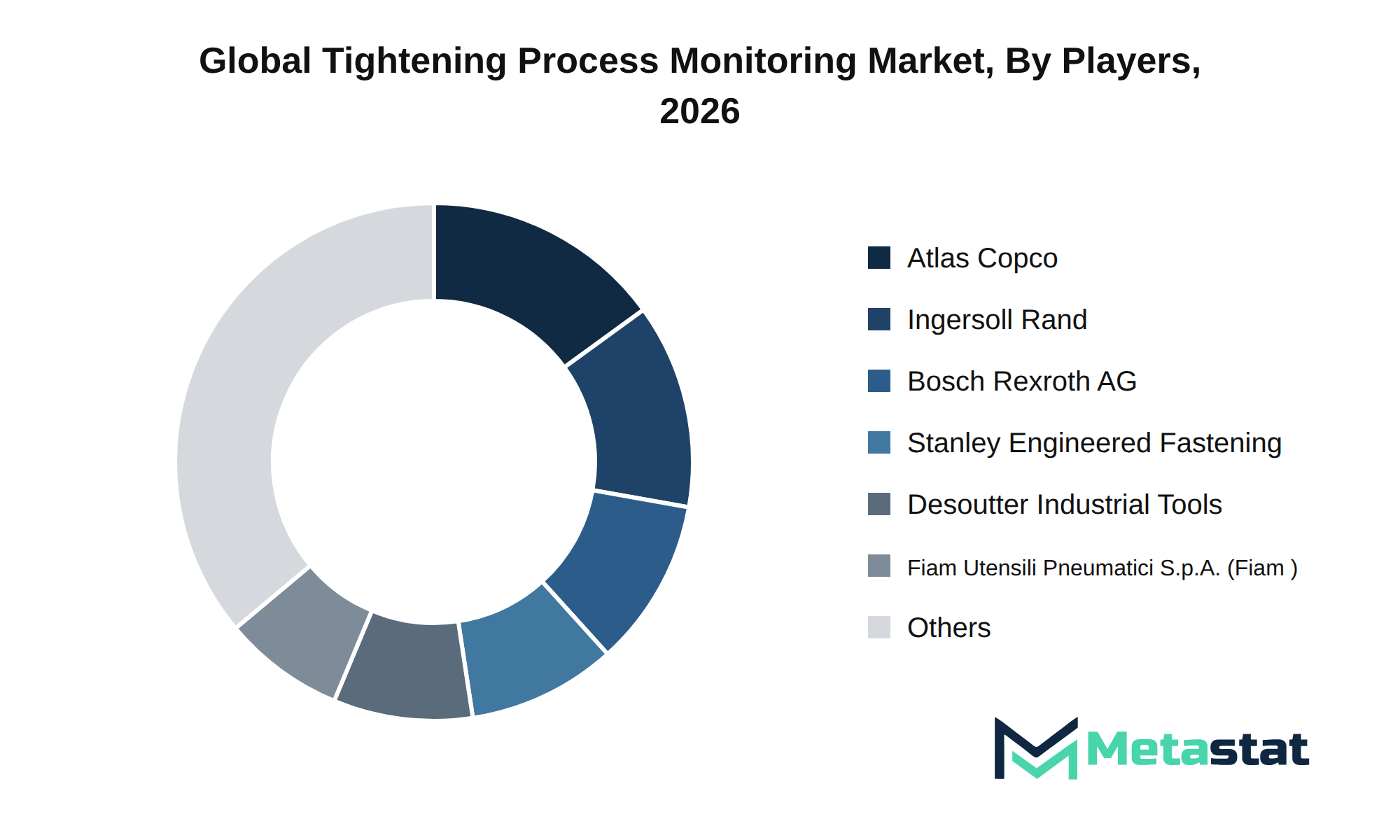
The Tightening Process Monitoring market features significant activity among leading players. Companies including Atlas Copco Group, Bosch Rexroth AG, and Ingersoll Rand Inc. engage in strategic alliances and joint ventures to enhance their market presence and technological capabilities. These partnerships focus on developing innovative solutions and expanding product differentiation, which supports competitive positioning within the market.
Strategic Insights
While companies invest in research and development pipelines, they strengthen their proprietary technology moats, ensuring long-term competitiveness. Firms like Desoutter Industrial Tools and Mountz, Inc. emphasize supply chain dominance and procurement leverage, allowing for cost efficiencies and enhanced customer retention strategies. The market experiences continuous evolution with barriers to entry growing, driven by established players' intellectual property portfolios and technological defensibility strategies.
Forecast and Future Outlook
Market size is forecast to rise from USD 2.8 billion in 2025 to over USD 4.8 billion by 2033. The projected compound annual growth rate (CAGR) is 7.2%. This growth reflects several macroeconomic factors, including increasing demand for advanced tightening solutions across various industries, particularly automotive and aerospace. Strategic capital allocation and significant commitments to infrastructure development drive the adoption of tightening process monitoring technologies.
In a favorable scenario, the market experiences accelerated growth due to advancements in next-generation technologies and increased investments in research and development. Companies focusing on innovation and product lifecycle management capture emerging white-space opportunities, responding to unmet enterprise needs and high-growth pockets. In contrast, a less favorable scenario could arise from geopolitical realignments and evolving trade corridors that disrupt supply chains. Such developments impact investment strategies and operational efficiencies.
Regulatory evolution and compliance milestones remain critical in shaping market dynamics, driven by companies navigating enhanced enforcement horizons and shifting policies. Firms with a proactive approach to regulatory compliance and strategic imperatives position themselves favorably. Overall, the tightening process monitoring market is poised for significant growth, driven by structural consumption shifts and increasing operational efficiency demands across key industries.
Tightening Process Monitoring Market Key Segments
By Product Type:
- Integrated Tightening Control Systems
- Standalone Tightening Controllers & Monitoring Units
- Tightening Monitoring Software
- Torque & Torque-Angle Measurement Systems
- Bolt Tension & Preload Monitoring Systems
- Automated Tightening Monitoring Systems
- Other (Inspection & Traceability Tools)
By Monitoring Parameter:
- Torque
- Torque & Angle
- Torque & Time
- Torque & Speed
- Force & Displacement
- Bolt Tension / Preload
- Multi-Parameter Monitoring
By Deployment Mode:
- Manual / Handheld Systems
- Semi-Automated Systems
- Automated / Robotic Systems
- Multi-Spindle Systems
- Field / Maintenance Systems
By End-use Industry:
- Automotive
- Aerospace & Defense
- Electronics & Electrical Equipment
- Industrial Machinery & Heavy Equipment
- Energy & Power Generation
- Construction & Infrastructure
- Shipbuilding & Marine
- Appliances & HVAC
- Others (Medical Devices, Railways, Recreational Vehicles, Specialty Manufacturing)
By Region:
- North America
- Europe
- Asia-Pacific
- South America
- Middle East and Africa
Key Global Tightening Process Monitoring Industry Players
- Atlas Copco Group
- Bosch Rexroth AG
- Stanley Engineered Fastening
- Ingersoll Rand Inc.
- Desoutter Industrial Tools
- Estic Corporation
- Mountz, Inc.
- Fiam Utensili Pneumatici S.p.A. (Fiam Group)
- Tohnichi Mfg. Co., Ltd. (Tohnichi)
- Bossard Group
- SCHAAF GmbH & Co.KG
- GEDORE Group (Gedore Tool Group)
- TRAXX Group
- Enerpac (Enerpac Tool Group Corp.)
- New World Technologies Inc.
- PROMESS Montage
- WEBER Schraubautomaten GmbH
- DEPRAG SCHULZ GmbH u. Co. KG
- Nitto Kohki Co., Ltd.
Report Coverage
The report strategically identifies and profiles the key market players and analyses their core competencies in each sub-segment of the Tightening Process Monitoring market.
Report Attributes | Details |
Study Period | 2021-2033 |
Base Year | 2025 |
Estimated Year | 2026 |
Forecast Period | 2026-2033 |
Historical Period | 2021-2025 |
Growth Rate | CAGR 7.2% from 2026 to 2033 |
Revenue Unit | USD billion |
Segmentation | By Product Type, Monitoring Parameter, Deployment Mode, End-use Industry, and Region |
By Region | North America (By Product Type, Monitoring Parameter, Deployment Mode, End-use Industry, and Country)
|
Europe (By Product Type, Monitoring Parameter, Deployment Mode, End-use Industry, and Country)
| |
Asia Pacific (By Product Type, Monitoring Parameter, Deployment Mode, End-use Industry, and Country)
| |
South America (By Product Type, Monitoring Parameter, Deployment Mode, End-use Industry, and Country)
| |
Middle East and Africa (By Product Type, Monitoring Parameter, Deployment Mode, End-use Industry, and Country)
|
What Report Provides
- Company Market Share, Revenue and Ranking for the Tightening Process Monitoring Market
- Key Market Leaders in the Tightening Process Monitoring Industry
- Full In-Depth Analysis of the Parent Tightening Process Monitoring Industry
- Industry Statistics and Important Changes in Market Dynamics
- Segmentation Details of the Tightening Process Monitoring Market
- Historical, Ongoing and Projected Market Analysis for Tightening Process Monitoring
- Assessment of Niche Industry Developments in Tightening Process Monitoring
- Key Strategic Recommendations for Tightening Process Monitoring Market Players
Frequently Asked Questions
Find answers to common questions about this report
The Tightening Process Monitoring market size was valued at USD 2.8 billion in 2025, according to the Metastat Insights study.
The Tightening Process Monitoring market is projected to grow at a CAGR of 7.2% during the forecast period from 2026 to 2033.
The North America Tightening Process Monitoring market size is estimated to reach USD 1.1 billion by 2033.
The segment of Integrated Tightening Control Systems leads the Tightening Process Monitoring market, with a projected value of USD 1 billion by 2033. This figure reflects the highest anticipated revenue among the product type segments.
Increasing investment in automation significantly enhances operational efficiency within the Tightening Process Monitoring market. The shift towards digital transformation and advanced tightening solutions drives demand, particularly in the automotive and aerospace industries, where precision and reliability are essential. The market is projected to grow at a compound annual growth rate (CAGR) of 7.2% from 2026 to 2033.
The Tightening Process Monitoring market faces significant hurdles from regulatory compliance challenges, macroeconomic headwinds, and technological obsolescence. Stricter regulations increase operational burdens and costs, while inflation and supply chain disruptions limit profitability and growth. high capital investment requirements hinder firms from maintaining technological relevance, further restraining market expansion.
Increasing investment in automation and advanced technologies significantly enhances operational efficiency, driving product adoption in the Tightening Process Monitoring market. Industries, particularly automotive and aerospace, prioritize precise control and tracking to optimize processes while reducing production costs and maintaining high-quality standards.
The Tightening Process Monitoring market is estimated to reach a valuation of USD 4.8 billion by 2033.
Key players in the Tightening Process Monitoring market include Atlas Copco Group, Bosch Rexroth AG, Stanley Engineered Fastening, Ingersoll Rand Inc., Desoutter Industrial Tools, and Estic Corporation.
The tightening process monitoring market is projected to grow at a compound annual growth rate (CAGR) of 7.2% from 2026 to 2033.
Choose Your License
Global Tightening Process Monitoring Market
Related Reports
Explore related market intelligence reports worth reading alongside this one.