
LEAD ANALYST
Utkarsh Khirodkar is a Lead Market Research Analyst at MetaStat Insight, specializing in market intelligence, technology sector assessments, and competitive strategy.

Global Vapor Degreasing Solvent Market Size, Share, By Solvent Chemistry (Chlorinated Solvents, Brominated Solvents, Fluorinated Solvents, Hydrocarbon Solvents, Modified Alcohol and Hydrocarbon Solvents and Others), By Application (Industrial Equipment Cleaning, Electronics Cleaning, Aerospace Cleaning, Automotive Component Cleaning, Medical Device Cleaning and Others), By End-Use Industry (Manufacturing, Automotive, Aerospace & Defense, Electronics, Healthcare and Others), By Cleaning Process (Open-Top Vapor Degreasing, Closed-Loop and Vacuum Vapor Degreasing, Co-Solvent and Bi-Solvent Degreasing and Ultrasonic Vapor Degreasing), Industry Analysis, Growth, Trends, and Forecast, 2026-2033
Report ID
MSI-4814
Published
July, 2026
Updated
Pages
254 Pages
Format
Report Details
Choose Your License
Global Vapor Degreasing Solvent Market
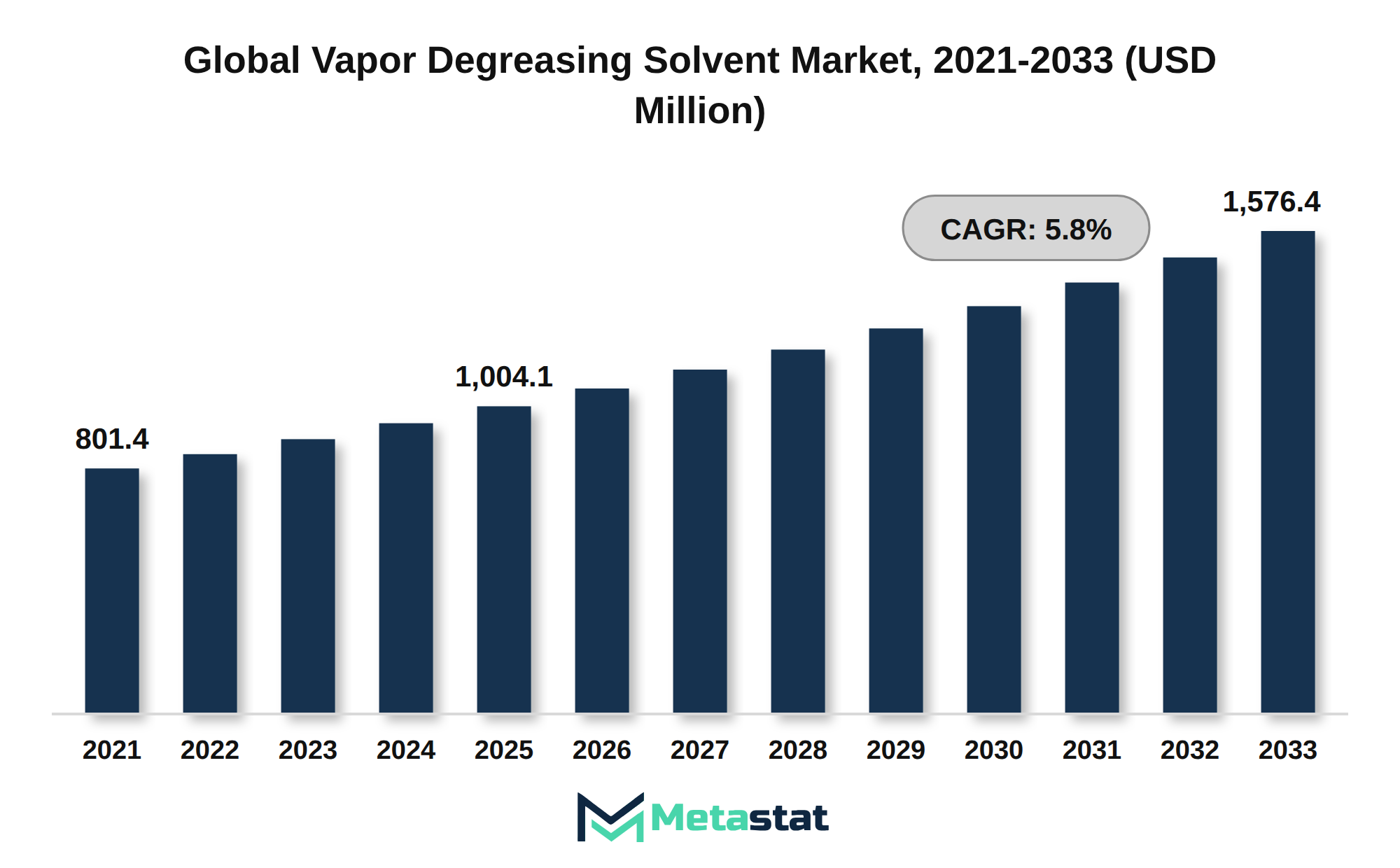
The global Vapor Degreasing Solvent market was valued at USD 1,004.1 million in 2025 and is projected to grow at a CAGR of 5.8% during the forecast period, reaching USD 1,576.4 million by 2033.
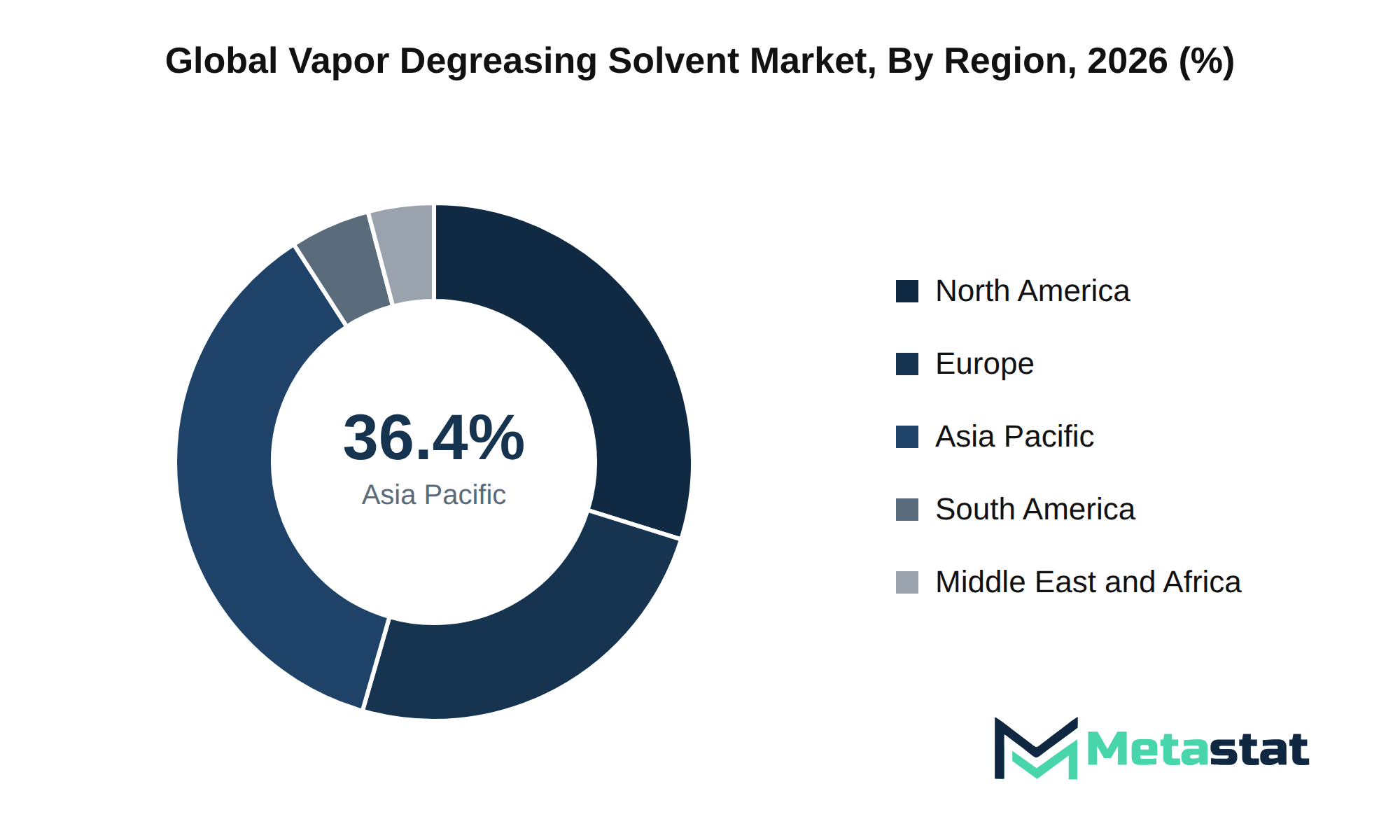
The Vapor Degreasing Solvent market is positioned for significant growth, with a base value of USD 1,004.1 million in 2025, projected to reach USD 1,576.4 million by 2033, reflecting a compound annual growth rate (CAGR) of 5.8%. The regional distribution highlights North America holding a substantial market share of 29.8% in 2025, with the United States leading this segment as the primary contributor in 2026.
North America’s dominance in the Vapor Degreasing Solvent market is evident due to its robust industrial base, particularly in sectors such as manufacturing and electronics. The region's growth is supported by increasing demand for cleaning solvents that meet stringent regulatory standards. As industries focus on enhancing operational efficiency, the need for effective cleaning solutions has become critical. The market's expansion in North America is anticipated to align with technological advancements and innovations in vapor degreasing processes.
In the context of regulatory compliance, manufacturers are increasingly required to adhere to evolving environmental standards. This has led to a shift towards greener alternatives and safer chemical formulations within the Vapor Degreasing Solvent market. Regulatory frameworks are crucial as they dictate the types of solvents that can be used, pushing companies to innovate and adopt sustainable practices. As a result, market players are investing in research and development to create products that comply with regulations and enhance cleaning efficiency.
The trajectory of research and development in the Vapor Degreasing Solvent market is focused on next-generation innovations. Companies are exploring advanced formulations that improve cleaning capabilities while minimizing environmental impact. This emphasis on innovation is critical as industries seek to enhance productivity and maintain compliance with environmental regulations. The introduction of novel cleaning processes, such as closed-loop and vacuum vapor degreasing, is expected to drive market growth, offering enhanced efficiency and reduced solvent consumption.
The rise in demand for high-precision cleaning applications, particularly in electronics and aerospace, is fueling the development of specialized solvents. The electronics cleaning segment, for instance, is projected to grow significantly, driven by the stringent requirements for contamination-free components. This trend is likely to encourage further investment in R&D to develop solvents that cater specifically to these high-stakes applications.
As sustainability becomes a focal point for many industries, the Vapor Degreasing Solvent market is witnessing a transformation towards more sustainable practices. Companies are increasingly adopting circular economy principles, focusing on reducing waste and recycling solvents. This shift is beneficial for the environment and presents opportunities for cost savings and operational efficiencies. The integration of sustainable practices into the value chain is becoming a competitive advantage for market participants, as customers increasingly prefer environmentally friendly solutions.
In addition, decarbonization efforts are influencing the development of vapor degreasing technologies. Companies are exploring alternatives that minimize carbon footprints, aligning with global sustainability goals. This focus on reducing environmental impact is likely to shape product offerings and operational strategies in the coming years, positioning the market to meet both regulatory demands and consumer preferences.
The Vapor Degreasing Solvent market faces complexities related to supply chain resilience and logistics architecture. Disruptions in global supply chains, stemming from geopolitical tensions or pandemic-related factors, can significantly impact the availability of raw materials essential for solvent production. Companies in the market must adapt their sourcing strategies to mitigate these risks. This may involve diversifying suppliers and considering local sourcing options to enhance supply chain stability. Fluctuations in the prices of raw materials can affect production costs, necessitating careful management of procurement vectors to maintain competitive pricing.
Capital allocation in the Vapor Degreasing Solvent market is influenced by both operational expenditures and the necessity for infrastructure investments. As the market anticipates growth from USD 1,004.1 million in 2025 to USD 1,576.4 million by 2033, companies will need to invest in modernizing facilities and upgrading technology to meet rising demand. This includes adopting advanced cleaning technologies that improve efficiency and compliance with evolving regulatory standards. Such investments may require a careful balance between CapEx and OpEx, ensuring that companies can sustain their operations while pursuing growth opportunities.
Macroeconomic conditions play a vital role in shaping the business environment for the Vapor Degreasing Solvent market. Inflationary pressures can lead to increased costs for both production and distribution, affecting overall profitability. Companies must navigate these challenges while responding to currency volatility that may impact international trade dynamics. Fluctuations in currency exchange rates can influence pricing strategies and profit margins, especially for manufacturers relying on imported materials or exporting products. Understanding these macroeconomic headwinds is essential for strategic planning and operational adjustments.
Research and development trajectories in the Vapor Degreasing Solvent market are vital for next-generation innovations. Companies are increasingly focusing on developing more sustainable and efficient solvent formulations that comply with stricter environmental regulations. This includes exploring alternative solvent chemistries that reduce ecological footprints and enhance cleaning performance. The drive towards innovation not only meets regulatory demands but also addresses growing consumer preferences for environmentally friendly products. Collaborative efforts among industry players, research institutions, and regulatory bodies are critical in advancing these innovations.
In recent years, increasing awareness of environmental concerns has led to stricter solvent emission regulations. These regulations focus on limiting volatile organic compounds (VOCs) and toxic emissions from industrial processes. As a result, end-users, particularly in sectors such as manufacturing and electronics, are actively seeking alternatives that comply with these regulations. This shift has increased the demand for closed-loop vapor degreasing systems, which not only minimize emissions but also improve cleaning efficiency and sustainability. The transition to these systems signals a clear demand shift towards technologies that support environmental compliance while maintaining operational effectiveness.
The impact of solvent emission limits is felt most intensely in North America and Europe, where regulatory frameworks are particularly stringent. In these regions, industries such as automotive, aerospace, and electronics are investing significantly in upgrading their cleaning processes to adhere to evolving standards. As a result, these markets are expected to drive the growth of the Vapor Degreasing Solvent market, with North America projected to reach a market value of USD 438.9 million by 2033. This trend reflects a broader commitment to sustainability and regulatory compliance among businesses, ultimately influencing their choice of solvents and cleaning systems.
For suppliers in the Vapor Degreasing Solvent market, this shift presents both challenges and opportunities. Companies must adapt their product offerings to meet new regulatory standards while emphasizing the benefits of closed-loop systems. Suppliers that invest in research and development to create innovative, compliant products will likely gain a competitive edge. Partnerships with end-users to facilitate the transition to these advanced cleaning solutions can enhance supplier visibility and strengthen market positions. With the market expected to grow at a CAGR of 5.8% from the base year to 2033, suppliers must be proactive in addressing regulatory demands and aligning their strategies accordingly.
Automation and digital integration across various industries are significantly influencing the Vapor Degreasing Solvent market. As companies invest in advanced technologies, they seek efficient cleaning solutions that align with automated processes and digitized workflows. This shift is compelling manufacturers to adopt vapor degreasing solvents that not only enhance cleaning efficacy but also integrate seamlessly with modern equipment. The growing emphasis on operational efficiency prompts organizations to transition from traditional cleaning methods to automated vapor degreasing systems, creating greater demand for these solvents. In turn, this transformation in operational paradigms drives market growth, as businesses recognize the advantages of faster processing times and reduced labor costs associated with automated solutions.
The impact of this trend is particularly pronounced in regions such as North America and Asia Pacific, where industrial automation and smart manufacturing are gaining momentum. In North America, the emphasis on enhancing productivity and reducing downtime in manufacturing operations increases the adoption of advanced cleaning technologies. Companies are increasingly investing in closed-loop and vacuum vapor degreasing systems, resulting in higher demand for vapor degreasing solvents. Meanwhile, Asia Pacific is witnessing rapid industrialization, prompting manufacturers to upgrade their cleaning processes to meet international standards. This regional shift toward automation and digital integration creates substantial opportunities for growth in the vapor degreasing solvent market.
For suppliers, the increasing demand for automated cleaning solutions necessitates the development of versatile and effective vapor degreasing solvents that cater to these evolving needs. Manufacturers are encouraged to innovate and enhance their product offerings, ensuring compatibility with state-of-the-art equipment and processes. As automation continues to reshape industrial operations, suppliers that can provide tailored solutions are likely to gain a competitive edge in the market. This scenario emphasizes the importance of strategic partnerships with technology providers, enabling suppliers to stay ahead in a changing environment.
The Vapor Degreasing Solvent market faces significant constraints due to high capital investment requirements and rising operating costs associated with solvent production and application. These factors stem from the need for advanced technologies and compliance with stringent environmental regulations, which demand significant upfront financial commitments from manufacturers and users alike. Businesses are increasingly burdened by the costs of upgrading equipment to meet these regulations, which further constrains market growth.
Segments most affected include the manufacturing and electronics cleaning industries, which are projected to experience growth rates of 3.9% and 7.3%, respectively, during the forecast period. Despite these growth rates, the high initial costs can limit the adoption of vapor degreasing solutions, particularly in regions such as North America and Europe. For instance, North America commands a regional share of 29.8% in the market, but the substantial investment needed for compliance and efficiency upgrades can deter new entrants and small to medium-sized enterprises from participating significantly.
To navigate these challenges, companies are exploring cost-reduction strategies, such as improving operational efficiencies and adopting alternative cleaning methods. These workarounds often fall short of fully mitigating the impact of high capital requirements. While some firms are shifting towards closed-loop systems, the initial setup costs remain a barrier. Many businesses in the Vapor Degreasing Solvent market continue to face operational limits that strain growth potential and hinder comprehensive adoption across various segments.
Firms in the Vapor Degreasing Solvent market face the operational challenge of balancing effective cleaning processes with the growing demand for environmentally sustainable practices. The increasing focus on reducing environmental impact, coupled with stringent regulatory requirements, places pressure on manufacturers to adopt greener technologies. This shift often necessitates investment in new systems that comply with decarbonization mandates, which can complicate operational workflows and increase costs. The need to adapt to evolving sustainability demands can divert resources away from core operations.
The challenge is particularly pronounced in regions with stricter environmental regulations, such as Europe and North America, where companies are under greater scrutiny to minimize their carbon footprints. High compliance overhead in these regions can lead to higher operational costs for firms that must integrate sustainability into their existing processes. In contrast, firms in regions with less stringent regulations may not face the same level of operational friction, which can create discrepancies in market performance and competitive positioning.
In response to these challenges, many companies are implementing strategies to enhance their sustainability profiles, which often involve significant capital expenditures. Investments in advanced technologies, such as closed-loop systems, can help firms reduce emissions and waste, but they also require substantial upfront costs. These expenditures may impact profit margins in the short term as firms navigate the transition to greener alternatives. The ongoing need for workforce training to operate and maintain new equipment adds another layer of financial pressure, highlighting the complexity of addressing the environmental lifecycle footprints while maintaining competitiveness in the Vapor Degreasing Solvent market.
The Vapor Degreasing Solvent market is experiencing a notable shift fueled by the increasing demand for more efficient and environmentally friendly cleaning solutions across various industries. Factors such as modernization of infrastructure, technological innovations, and heightened regulatory scrutiny on solvent emissions are driving this change. As global manufacturing and electronics sectors expand, there is a growing necessity for effective cleaning processes that ensure product integrity and compliance with eco-friendly standards. Companies are increasingly seeking out vapor degreasing solvents that meet operational needs while aligning with sustainability imperatives.
Market players positioned to capture this opportunity will need to invest in research and development to produce advanced solvents that cater to specific applications, such as electronics and aerospace cleaning. Adoption of innovative cleaning processes, particularly closed-loop and vacuum vapor degreasing systems, is also vital to meet evolving buyer expectations. Organizations that can integrate green technologies with their solvent solutions will have a competitive edge. This capability will likely require partnerships across the supply chain to enhance product offerings and ensure compliance with stringent environmental regulations.
The timing of this market opportunity is critical, as the Vapor Degreasing Solvent market is poised for growth. However, as more companies recognize the benefits of sustainable practices, the window for capturing this opportunity may close swiftly. Firms that delay adaptation may find themselves at a disadvantage as competitors leverage early investment in innovative, eco-friendly cleaning solutions. Therefore, immediate action is essential for market participants aiming to thrive in this evolving environment.
The Global Vapor Degreasing Solvent market is segmented based on Solvent Chemistry, Application, End-Use Industry, and Cleaning Process.
Valued at USD 216.6 million in 2026, the Chlorinated Solvents segment is projected to reach USD 250.5 million by 2033, reflecting a compound annual growth rate (CAGR) of 2.1% during the forecast period. This growth is driven by increasing adoption in sectors requiring high-precision cleaning processes, such as electronics and aerospace, where chlorinated solvents effectively remove contaminants without damaging sensitive components.
Regulatory compliance is important in shaping the future of chlorinated solvents. As manufacturers seek to align with stringent environmental regulations, there is a growing focus on developing formulations that maintain efficacy while minimizing harmful emissions. Companies are investing in technological maturation and product evolution to meet these changing standards.
Cost structures within this segment are influenced by raw material sourcing and logistics. Fluctuations in the prices of chlorine and other inputs can lead to pricing volatility, impacting profit margins. As the market evolves, businesses must navigate these challenges while also considering substitution risks from emerging alternatives that may offer greener solutions or enhanced performance.
Strategically, the Chlorinated Solvents segment presents opportunity windows for innovation and market expansion. As manufacturers look to enhance the sustainability of their operations, investments in next-generation upgrades and cleaning technologies are likely to drive demand. This focus on innovation will help ensure that the segment remains resilient amid evolving market dynamics in the Vapor Degreasing Solvent market.
By 2033, the Brominated Solvents segment is projected to achieve a market size of USD 152.6 million, growing at a CAGR of 3.8% during the forecast period. This growth is primarily driven by the increasing demand for effective cleaning solutions in various industries, including manufacturing and electronics. Brominated solvents are recognized for their superior cleaning capabilities, particularly in applications requiring precision and thoroughness.
As technological advancements continue to mature, the adoption of brominated solvents is expected to evolve alongside next-generation cleaning methodologies. This evolution includes improvements in formulations that enhance performance while addressing environmental concerns. The market has also seen a shift towards sustainable practices, prompting manufacturers to innovate and develop brominated solvents that comply with stringent regulatory standards.
End-use dynamics indicate a robust demand from sectors that require stringent cleanliness standards, including aerospace and automotive industries. This segment's expansion is reinforced by regulatory compliance standards that necessitate effective cleaning agents, increasing the overall consumption of brominated solvents. The market could face pressures from substitution risks, as industries explore alternative cleaning technologies that may offer lower environmental impacts.
Overall, the Brominated Solvents segment is well-positioned within the broader Vapor Degreasing Solvent market, benefiting from both established demand and evolving technological landscapes that support its growth trajectory.
By 2033, the Fluorinated Solvents segment is projected to reach USD 705 million. This growth reflects an increasing demand for solvents characterized by their effectiveness in cleaning and degreasing applications, especially in high-precision sectors such as electronics and aerospace. As industries prioritize cleaner and safer alternatives, fluorinated solvents are gaining traction due to their favorable performance characteristics and efficiency in removing contaminants.
The adoption rates for fluorinated solvents are supported by technological advancements, which continuously enhance their formulations and applications. Innovations in product design improve their environmental profiles, aligning with regulatory compliance standards that increasingly favor low-impact solutions. Manufacturers are investing in research to develop next-generation fluorinated solvents that meet stringent criteria while maintaining operational efficiency.
Consumption shifts towards fluorinated solvents can be seen in their growing use in industrial cleaning processes. The market is witnessing a transition from traditional cleaners to more specialized products that offer superior performance and reduced toxicity. This trend is further driven by evolving end-use dynamics, particularly in the manufacturing and electronics sectors, where precision cleaning is critical.
Cost structures and margin pressures associated with raw material sourcing and pricing volatility also challenge the segment. Companies must navigate these challenges while maintaining product availability and competitiveness in the growing Vapor Degreasing Solvent market.
Projected to experience a compound annual growth rate of 5.1% during the forecast period, the Hydrocarbon Solvents segment is gaining traction in the Vapor Degreasing Solvent market. Key drivers contributing to this growth include the increasing adoption of hydrocarbon solvents in various end-use sectors, particularly manufacturing and automotive, where precision cleaning is essential. As industries continue to emphasize operational efficiency and compliance with stringent environmental regulations, the demand for effective cleaning solutions like hydrocarbon solvents is expected to rise.
Technological advancements further influence the segment, as next-generation formulations and product innovations enhance the performance and safety profiles of hydrocarbon solvents. This evolution not only leads to better cleaning outcomes but also helps in meeting regulatory compliance standards, which are becoming increasingly stringent across multiple regions.
In addition, supply chain resilience remains crucial for the Hydrocarbon Solvents segment. Ensuring reliable raw material sourcing and efficient logistics are vital for managing costs and maintaining steady supply levels. Companies are likely to invest in strategic opportunities that mitigate risks associated with supply chain disruptions while optimizing operational costs.
Overall, the Hydrocarbon Solvents segment is positioned for sustained growth as it meets the evolving needs of various industries, emphasizing efficiency, compliance, and innovation within the broader Vapor Degreasing Solvent market.
Modified alcohol and hydrocarbon solvents play a notable role in the Vapor Degreasing Solvent market, primarily driven by their effectiveness in cleaning applications across diverse industries. The increasing focus on stringent regulatory compliance standards has prompted companies to seek solvents that meet environmental requirements while still delivering optimal cleaning performance. This need is influencing adoption rates, as manufacturers prioritize solvents that align with sustainability goals.
Technological maturation in solvent formulations has led to advancements in modified alcohol and hydrocarbon solvents, enhancing their efficacy and safety profiles. These developments cater to industries that demand high-performance cleaning solutions, particularly in electronics and aerospace. As end-use dynamics shift towards more sophisticated applications, the evolution of these solvents is critical for maintaining competitive advantages in the market.
Price volatility and cost structures significantly impact the segment, as raw material sourcing remains a challenge. Fluctuations in the prices of base materials can pressure profit margins, compelling manufacturers to innovate and optimize their formulations. The threat of substitution by disruptive alternatives necessitates continuous investment in research and development to ensure that modified alcohol and hydrocarbon solvents remain viable solutions for modern cleaning processes.
Strategic opportunity windows are emerging as companies seek to capitalize on these advancements. By investing in next-generation upgrades, businesses can enhance their offerings and adapt to the evolving demands of the market, ultimately positioning themselves for sustained growth in this segment.
This sub-segment encompasses various solvent chemistries that do not fall under the more defined categories of chlorinated, brominated, fluorinated, or hydrocarbon solvents. These residual products often cater to specific niche applications and represent unique formulations that may be employed in specialized cleaning processes. As a result, their demand remains limited, contributing to their classification as 'Others' within the Vapor Degreasing Solvent market. Factors such as regulatory compliance, cost variations, and supply chain dynamics further influence the adoption rates of these solvents, which can hinder broader market penetration.
Valued at USD 308.8 million in 2026, the Industrial Equipment Cleaning segment is projected to reach USD 401.5 million by 2033, reflecting a compound annual growth rate of 3.8% during the forecast period.
Primary demand drivers for this segment include the continuous need for effective cleaning solutions within various manufacturing processes. Industries are increasingly adopting vapor degreasing solvents due to their efficiency in removing contaminants from industrial equipment, thus enhancing operational efficiency and maintaining equipment longevity. The trend toward high-precision manufacturing increases the demand for solvents that can meet stringent cleanliness standards.
Technological maturation contributes to the growth of this segment, as advancements in solvent formulations and cleaning processes improve efficacy and safety. The evolution of next-generation products, designed to tackle specific cleaning challenges, also contributes to segment expansion. As companies embrace innovative cleaning technologies, the market for vapor degreasing solvents is likely to evolve, creating opportunities for manufacturers to capture additional market share.
Regulatory compliance standards surrounding environmental impact are increasingly influencing the adoption of vapor degreasing solvents. Adherence to these regulations often necessitates the use of certified cleaning products, prompting manufacturers to invest in compliant solutions. This shift indicates a preference for high-quality solvents that align with sustainability objectives.
As the market evolves, potential substitution risks may arise from the development of alternative cleaning technologies or solvents. Companies must remain vigilant of these disruptive innovations, ensuring that their offerings remain competitive within the broader cleaning solutions market.
The Electronics Cleaning segment is expected to achieve a value of USD 446.6 million by 2033, reflecting a compound annual growth rate (CAGR) of 7.3% during the forecast period. This growth is driven by increasing demand for precision cleaning solutions in the electronics manufacturing sector, where stringent cleanliness standards are crucial to product reliability and performance.
Technological advancements play a significant role in this segment's expansion. Manufacturers increasingly adopt next-generation cleaning technologies that enhance efficiency while minimizing environmental impact. The introduction of advanced solvents that comply with regulatory standards ensures that companies can meet both performance and compliance requirements.
The shift towards miniaturization in electronic components necessitates effective cleaning methods that prevent residue buildup, which could impact device functionality. As electronic devices become more sophisticated, the demand for effective cleaning solutions is likely to rise, further propelling market growth.
Cost pressures also influence the pricing dynamics within this segment. Companies are focused on optimizing cleaning processes to maintain profitability without compromising quality. This trend promotes innovation in cleaning chemistries and methods, enabling firms to meet market demands while enhancing operational efficiency.
Overall, the Electronics Cleaning segment within the Vapor Degreasing Solvent market is positioned for significant growth, driven by technological advancements, evolving end-use dynamics, and stringent regulatory standards.
By 2033, the Aerospace Cleaning segment is expected to reach USD 243.6 million. Growth in this sub-segment is driven by the stringent regulatory compliance standards governing the aerospace industry. These standards necessitate high levels of cleanliness in components to ensure safety and performance, prompting manufacturers to adopt advanced cleaning solutions. As aerospace technologies evolve, there is an increased demand for next-generation cleaning solvents that maintain effectiveness while being environmentally compliant.
Technological maturation is also a critical factor, as innovations in solvent chemistry enhance cleaning efficiency and effectiveness. The introduction of next-gen upgrades, including improved vapor degreasing processes, allows for better handling of complex geometries found in aerospace components. This trend is further supported by the increasing adoption of automated cleaning processes, which streamline operations and reduce labor costs.
Cost structures within this sub-segment also play a significant role, as manufacturers seek to balance cleaning effectiveness with budget constraints. Pricing volatility in raw materials may impact profit margins, necessitating a focus on supply chain resilience and strategic sourcing. The exploration of disruptive alternatives may present challenges, as companies evaluate the long-term viability of various solvent chemistries.
The Vapor Degreasing Solvent market is poised for significant advancements, with a clear trajectory towards sustainable and efficient cleaning solutions tailored for the aerospace sector. This segment's expansion is indicative of broader shifts in industrial cleaning practices across the industry.
Automotive Component Cleaning is projected to experience a compound annual growth rate (CAGR) of 4.8% during the forecast period. This growth is propelled by increasing demand for efficient and environmentally friendly cleaning solutions in the automotive sector. As manufacturers strive to enhance production efficiency and ensure compliance with stringent regulations, the adoption of vapor degreasing solvents is becoming more widespread.
Technological advancements play a significant role in this segment's development. Innovations in solvent chemistry and cleaning processes are enhancing the effectiveness and safety of automotive component cleaning. The shift towards closed-loop and vacuum vapor degreasing techniques is expected to gain traction, owing to their efficiency in minimizing solvent waste while maintaining high cleaning standards.
Regulatory compliance is a critical factor influencing market dynamics. Stricter environmental regulations are driving the automotive industry to adopt solvents that meet eco-friendly standards. This necessitates a continuous evolution of cleaning products and processes to align with regulatory requirements, further supporting market growth.
Pricing volatility and cost pressures are notable challenges within this segment. Fluctuations in raw material prices can impact the overall cost structure of vapor degreasing solvents, affecting profit margins for manufacturers. Strategic opportunities in the automotive sector provide avenues for capital investments and innovations that can mitigate these pressures and enhance competitiveness in the market.
In the Vapor Degreasing Solvent market, the medical device cleaning application is driven by stringent regulatory compliance and the need for precision in cleaning processes. As this sector evolves, the adoption of advanced cleaning methods is essential to meet these high standards. Companies are increasingly focusing on technological maturation, which allows for the development of next-generation cleaning solvents that enhance efficiency while reducing environmental impact.
Adoption rates in medical device cleaning are influenced by the growing demand for safer and more effective cleaning solutions. As manufacturers strive for product evolution, there is a noticeable shift towards solvents that offer compatibility with various materials used in medical devices. This trend highlights the importance of understanding end-use dynamics and consumption shifts within the market.
Regulatory compliance remains a critical aspect, as the medical device industry must adhere to various certifications. These standards necessitate the use of solvents that not only meet performance criteria but also align with safety and environmental regulations. As a result, the market is experiencing increased scrutiny regarding substance use, leading to the gradual replacement of older technologies with innovative alternatives.
Supply chain resilience is another important consideration, particularly in sourcing raw materials for the production of cleaning solvents. Logistics vulnerabilities can impact availability and pricing, prompting manufacturers to explore strategic opportunity windows to enhance their operational capabilities. In this context, the medical device cleaning segment stands poised for continued growth as it adapts to an evolving regulatory and technological environment.
This residual category encompasses applications of vapor degreasing solvents that do not fall within the defined segments of industrial equipment, electronics, aerospace, or automotive cleaning. It includes niche cleaning processes specific to less common industries or unique client requirements. The residual nature of this category can be attributed to the diversity of applications that may not be widely adopted or may require highly specialized formulations. This sub-segment may experience specific regulatory compliance and operational challenges, impacting its growth potential. As various industries evolve, opportunities for expansion in the Vapor Degreasing Solvent market could arise within this group, depending on technological advancements and changing market needs.
Valued at USD 299.1 million in 2026, the Manufacturing segment is projected to reach USD 392.2 million by 2033, growing at a compound annual growth rate (CAGR) of 3.9% during the forecast period. This growth is driven by the increasing demand for high-precision components across various manufacturing sectors. As industries aim for greater efficiency and quality in production processes, the adoption of vapor degreasing solvents becomes vital for cleaning and maintaining machinery and parts.
Technological maturation is important in shaping the manufacturing environment. Advances in solvent formulations and application methods lead to improved cleaning efficacy and reduced environmental impact. As regulations around solvent use tighten, manufacturers are likely to invest in next-generation upgrades that ensure compliance while enhancing operational efficiency. Regulatory compliance standards, including stringent emissions regulations in many regions, compel manufacturers to adopt eco-friendly solvents, further increasing the demand for innovative vapor degreasing solutions.
Cost structures within the segment are also evolving, influenced by raw material sourcing and pricing volatility. Manufacturers face pressure to manage costs effectively without compromising on quality. Supply chain resilience remains crucial, as disruptions can impact the availability of key raw materials used in solvent formulations. Consequently, strategic investments in supply chain optimization will be essential for maintaining competitiveness in the market.
As the manufacturing sector continues to grow, the consumption of vapor degreasing solvents is expected to expand. This segment's developments reflect broader trends in the market, including shifts towards sustainability and operational excellence.
By 2033, the automotive segment is estimated to reach USD 250.7 million, growing at a compound annual growth rate of 5% during the forecast period. This growth can be attributed to the increasing demand for efficient cleaning solutions within the automotive industry, driven by advanced manufacturing processes and the need for stringent quality control measures. As automotive manufacturers strive for higher precision and cleaner components, the adoption of vapor degreasing solvents is becoming more prevalent.
Technological maturation in cleaning processes also contributes to the segment's expansion. Innovations in solvent formulations and application techniques enhance the effectiveness of vapor degreasing solvents, making them more appealing to automotive manufacturers. Evolving regulatory compliance standards reinforce the necessity for effective cleaning methods that minimize environmental impact while ensuring product quality.
Cost structures and pricing volatility are important factors affecting the market dynamics of vapor degreasing solvents in the automotive sector. Manufacturers are increasingly pressured to optimize their cleaning processes while managing operational costs, thus impacting sourcing strategies and pricing models. As a result, the industry is witnessing a push towards solutions that offer both efficiency and cost-effectiveness.
Supply chain resilience remains a critical consideration. Disruptions in raw material sourcing can affect the availability and pricing of vapor degreasing solvents, necessitating a strategic focus on logistics and supplier partnerships. As the automotive segment continues to evolve, strategic opportunity windows for investment in advanced cleaning technologies emerge, creating opportunities for future growth in the market.
By 2033, the Aerospace & Defense segment is expected to reach USD 230.8 million. This growth is driven by several factors, including rising regulations and increased demand for high-performance cleaning solutions. As the aerospace and defense sectors continue to prioritize precision and quality, the adoption of vapor degreasing solvents is becoming more prevalent. Many manufacturers are shifting towards next-generation cleaning technologies that enhance efficiency while meeting stringent compliance standards.
Additionally, the evolution of aircraft designs and materials necessitates advanced cleaning techniques to ensure optimal performance and safety. The growing emphasis on sustainability and environmental compliance also influences the selection of solvents in this sector. As regulatory frameworks tighten, companies are urged to adopt cleaning solutions that align with environmental standards, thus propelling market expansion.
Cost structures in this segment remain complex, affected by fluctuations in raw material prices and margin pressures. These factors compel manufacturers to seek innovative solutions that optimize costs without compromising on quality. Consequently, the vapor degreasing solvent market is experiencing a significant transformation, driven by strategic investments aimed at enhancing operational efficiency and maintaining competitive advantages.
Projected to grow at a compound annual growth rate of 7.3% during the forecast period, the Electronics segment of the Vapor Degreasing Solvent market is poised for significant expansion. This growth is primarily driven by the increasing complexity of electronic components and the demand for high-purity cleaning processes. As manufacturers push for more advanced technologies, the need for effective cleaning solvents has become crucial for maintaining product quality and operational efficiency.
The push toward next-generation electronic products is a key factor influencing this segment. Innovations in semiconductor manufacturing and miniaturization of components require stringent cleaning standards. Adoption rates for vapor degreasing solvents are high in this sector due to their effectiveness in removing contaminants without damaging sensitive components. Ongoing advancements in solvent formulations enhance performance and compliance with environmental regulations.
Regulatory compliance is another vital aspect impacting the Electronics segment. Stricter regulations governing the use of solvents in manufacturing processes ensure that companies are increasingly turning to sustainable and environmentally friendly options. This shift not only helps in meeting compliance standards but also aligns with the industry's broader sustainability goals. The supply chain dynamics associated with raw materials continue to evolve, presenting both challenges and opportunities.
As the market grows, strategic opportunities for investment and expansion emerge. Companies that adapt to the changing environment and focus on innovative cleaning solutions will likely gain a competitive edge in the electronics sector, highlighting the critical role of vapor degreasing solvents in modern manufacturing processes.
Healthcare applications of vapor degreasing solvents are critical for maintaining high standards in cleanliness and sterilization. As precision in medical manufacturing is essential, the adoption of these solvents is driven by the need for thorough cleaning of medical devices and equipment. The increasing regulatory compliance standards in the healthcare sector further drive the demand, as manufacturers must adhere to stringent guidelines that dictate cleanliness and safety. This focus on regulatory compliance not only influences current practices but also supports segment expansion as new certifications emerge.
Technological maturation is important in the evolution of vapor degreasing solvents used in healthcare. Innovations in solvent formulations aim to enhance effectiveness while minimizing environmental impact. Next-generation upgrades are transforming traditional cleaning processes, enabling more efficient and effective cleaning solutions. These advancements are essential as healthcare providers face ongoing pressure to improve operational efficiency and patient safety.
Additionally, supply chain resilience remains a concern for the healthcare segment. Challenges related to raw material sourcing and logistics can disrupt the availability of high-quality solvents. Companies are exploring alternative sourcing strategies to mitigate potential vulnerabilities within the supply chain. This dynamic environment highlights the necessity for strategic opportunity windows, enabling firms to capitalize on emerging trends and maintain competitive advantages in the market.
Overall, the healthcare segment emphasizes the importance of advanced cleaning processes, compliance with regulations, and the impact of technological innovations, all of which contribute to the growth of the vapor degreasing solvent market.
This sub-segment aggregates applications of vapor degreasing solvents that do not distinctly fit into the other established categories. Industries such as healthcare and niche manufacturing often employ these solvents for specialized cleaning needs. The lack of significant volume in these applications contributes to their classification as residual. Regulatory compliance and specific performance standards may also limit the adoption of these solvents in certain sectors. Consequently, the Others segment remains an area of limited growth within the broader vapor degreasing solvent market, reflecting its tailored applications and niche use cases.
Valued at USD 313.3 million in 2026, the Open-Top Vapor Degreasing segment is anticipated to grow to USD 372.4 million by 2033, reflecting a compound annual growth rate (CAGR) of 2.5% during the forecast period. This segment finds wide application in industries requiring efficient cleaning processes for metal parts and assemblies, particularly in manufacturing and automotive sectors.
The drive for adopting open-top vapor degreasing technology is largely influenced by its effectiveness in removing oils, greases, and contaminants from complex geometries, which is crucial for maintaining product quality. As manufacturing processes evolve, next-generation upgrades in solvent formulations are expected to enhance cleaning performance and reduce environmental impact. This aligns with the market's emphasis on sustainability, pushing manufacturers to use eco-friendlier solvents while ensuring compliance with regulatory standards.
Challenges, such as pricing volatility and cost structures specific to the segment, are pressing concerns for stakeholders. The pressures on margins compel manufacturers to optimize their processes and materials. A focus on supply chain resilience is also critical, as disruptions in raw material sourcing can impact production capabilities. Overall, the Open-Top Vapor Degreasing segment is positioned for steady growth within the broader Vapor Degreasing Solvent market, driven by advancements in technology and evolving industry demands.
By 2033, the Closed-Loop and Vacuum Vapor Degreasing segment is estimated to reach USD 558.8 million, growing at a compound annual growth rate of 8.2% during the forecast period. This segment benefits from advancements in technology and increased efficiency, making it attractive for industries that require high-precision cleaning processes. The rising adoption of stringent regulatory compliance standards further drives demand, as manufacturers seek to minimize environmental impacts while maintaining product quality.
Cost structures in this segment are influenced by the ongoing shift toward environmentally friendly solvents. As companies transition to more sustainable practices, the market sees a growing emphasis on cost-effective solutions that do not compromise on performance. The evolution of vapor degreasing technology allows for enhanced capabilities, contributing to the segment's growth.
Supply chain resilience is important for ensuring the availability of high-quality raw materials needed for closed-loop and vacuum vapor degreasing processes. As industries expand, securing reliable sources of these materials becomes increasingly critical. The strategic opportunity windows arising from evolving consumer preferences and regulatory demands position this segment favorably within the broader Vapor Degreasing Solvent market.
By 2033, the Co-Solvent and Bi-Solvent Degreasing segment is expected to reach USD 292.3 million. This segment’s growth is driven by its effectiveness in cleaning complex geometries and delicate parts, particularly in sectors like aerospace and electronics where precision is essential. As manufacturing processes become increasingly sophisticated, the need for solvents that can effectively remove contaminants without damaging components is critical.
Technological advancements play a significant role in this segment. Innovations in solvent chemistry have led to the development of co-solvent systems that enhance cleaning efficiency while reducing environmental impact. These next-generation solvents often comply with stricter regulatory standards, aligning with the industry's push for sustainable practices. Such compliance is not just a regulatory requirement but also a market differentiator, as customers become more conscious of environmentally friendly solutions.
Cost structures are another important aspect. The pricing volatility of raw materials used in co-solvent and bi-solvent formulations can influence overall market dynamics. Companies are focusing on supply chain resilience to mitigate these pressures. As a result, firms are investing in local sourcing and alternative materials to maintain profitability while ensuring consistent supply lines. This strategic approach helps companies navigate the challenges posed by fluctuating costs.
In the broader context of the Vapor Degreasing Solvent market, the Co-Solvent and Bi-Solvent Degreasing segment represents a strategic opportunity for manufacturers looking to innovate and capture a growing market share. Increased adoption across multiple end-use industries indicates a strong demand trajectory.
Ultrasonic Vapor Degreasing is expected to experience a compound annual growth rate of 6.8% during the forecast period. This growth is driven by advancements in ultrasonic technology, which enhances cleaning efficiency and precision in various applications, particularly in high-precision manufacturing sectors. The adoption of ultrasonic degreasing is gaining momentum due to its ability to effectively remove contaminants from complex geometries and delicate components without causing damage. As industries increasingly prioritize cleanliness and compliance with stringent regulatory standards, ultrasonic methods are becoming a preferred choice for critical cleaning processes.
In addition, the market sees a shift towards environmentally friendly practices, prompting manufacturers to seek out solvents that align with new sustainability goals. Ultrasonic vapor degreasing accommodates this demand by minimizing solvent use while maximizing cleaning effectiveness. The integration of next-generation upgrades in ultrasonic systems is expected to support segment growth. This includes enhancements in energy efficiency and automation, which can streamline operations and reduce labor costs.
Regulatory compliance remains an important factor, as businesses must navigate stringent cleaning requirements across various industries, including aerospace and electronics. This regulatory landscape encourages investment in ultrasonic technologies, ensuring that manufacturers meet both performance and environmental compliance. As a result, the Ultrasonic Vapor Degreasing segment is well-positioned for significant growth within the broader Vapor Degreasing Solvent market.
This category aggregates niche applications of vapor degreasing solvents that do not fit neatly into the more defined segments. These applications may involve specialized cleaning processes or unique end-use scenarios that do not generate significant volume or market share. Residual applications often arise from emerging technologies or specific requirements that influence user preferences. As a result, the segment remains less prominent within the overall vapor degreasing solvent market. The lack of standardized products and processes further contributes to its residual nature, as companies may prioritize more established applications for investment and development.
Based on geography, the Global Vapor Degreasing Solvent market is divided into North America, Europe, Asia-Pacific, South America, Middle East, and Africa.
North America is projected to see considerable growth in the Vapor Degreasing Solvent market, with an expected compound annual growth rate (CAGR) of 5.8% throughout the forecast period, reaching a market size of USD 438.9 million by 2033. The region accounted for 29.8% of the global market share in 2025, highlighting its significance in the overall market.
Key demand drivers in North America include the increasing focus on industrial equipment cleaning and stringent regulatory requirements for cleaning processes. This region benefits from advanced manufacturing capabilities and a strong emphasis on innovation. As companies strive to enhance efficiency, adoption rates of vapor degreasing solvents are on the rise, particularly in high-precision industries such as aerospace and electronics.
Infrastructure modernization is crucial for the region's growth. Investments in facilities and technologies that support cleaner and more efficient manufacturing processes are expanding the market's reach. Localized manufacturing densities and nearshoring initiatives contribute to the increased utilization of vapor degreasing solvents, as companies seek to streamline operations closer to their end markets.
The competitive landscape in North America features a mix of domestic and international players, with established companies leading the market. These entities focus on vendor consolidation trends and strategic partnerships to enhance their market presence. Key market leaders continually innovate their offerings to cater to evolving customer needs, driving incremental growth vectors across various segments.
Local compliance mandates and geographic regulatory frameworks also shape the market dynamics. Adherence to environmental regulations and safety standards is crucial for manufacturers, influencing their choice of cleaning solvents. As companies navigate these requirements, the demand for effective and compliant vapor degreasing solvents is expected to increase, further propelling market growth in North America.
Europe's share of the global Vapor Degreasing Solvent market indicates a significant presence in this industry. Countries such as Germany, France, the UK, Italy, Spain, and Russia contribute prominently to market dynamics. The region benefits from high-value replacement cycles driven by established manufacturing sectors, pushing adoption rates for advanced cleaning processes.
Infrastructure modernization is a critical factor in Europe, as many companies are investing in updated facilities to enhance productivity and efficiency. This modernization supports the shift toward more sustainable and effective cleaning solutions, particularly in the automotive and aerospace sectors. The trend toward localized manufacturing and nearshoring initiatives further increases demand, as businesses seek to streamline operations and reduce reliance on distant supply chains.
The competitive landscape in Europe includes domestic market leaders who are well-positioned to capitalize on these growth opportunities. Vendor consolidation trends are evident as companies aim to strengthen their market presence and enhance service offerings. The region's regulatory frameworks necessitate compliance with local standards, which impacts procurement dynamics and influences purchasing decisions among businesses.
Cultural nuances in B2B buying behaviors across countries like Germany and France also play a role in shaping market strategies. Companies must adapt to these preferences to effectively engage with clients and maximize sales potential. Understanding the regional landscape is essential for manufacturers aiming to penetrate or expand within this market.
With a focus on strategic entry barriers and Foreign Direct Investment (FDI) flows, opportunities for geographic expansion remain promising. Overall, the European Vapor Degreasing Solvent market is poised for incremental growth, driven by a combination of technological advancements and a strong emphasis on compliance and sustainability.
Asia-Pacific represents a significant share of the global Vapor Degreasing Solvent market, accounting for 36.4% in 2025. This region is characterized by strong growth driven by emerging market front-runners such as China and India, which are increasing their investments in manufacturing and industrial processes. As these economies modernize their infrastructure, the demand for vapour degreasing solvents is expected to rise, particularly in sectors like electronics cleaning and automotive component cleaning.
Countries like Japan and South Korea have mature market dynamics, where high-value replacement cycles are prevalent. Established industries in these nations often seek advanced cleaning solutions to enhance operational efficiency, further propelling market growth. The incremental expansion of segments such as industrial equipment cleaning will provide new avenues for vendors in the region.
Localized manufacturing densities in Asia-Pacific are also influencing the supply chain dynamics. Nearshoring initiatives are becoming common as companies look to streamline their operations, thus increasing the availability of vapour degreasing solvents. This shift allows for better responsiveness to local demand, reducing lead times and costs associated with imported materials.
Geographic regulatory frameworks play an essential role in shaping market trends. Compliance mandates in countries like Australia and Japan often dictate the types of solvents and cleaning processes that can be used, pushing manufacturers to adopt more environmentally friendly options. These regulations not only ensure safety but also create opportunities for innovation in the market.
Regional competitive dynamics are evolving, with domestic market leaders emerging as key players. Companies are consolidating to enhance their market presence and better serve the diverse needs of customers across Asia-Pacific. As vendor consolidation trends continue, the market is set to experience increased competition and innovation, positioning the region as an important area for the growth of the vapor degreasing solvent market.
Brazil and Argentina are key players in the Vapor Degreasing Solvent market, which is anticipated to account for a 5.00% share of the global market in 2025. Emerging market dynamics, particularly in Brazil, are driving demand for advanced cleaning solutions across various sectors. The automotive and electronics industries are particularly influential, as they require precision cleaning processes to ensure product integrity and performance. Adoption rates in these sectors indicate a growing preference for vapor degreasing techniques due to their efficiency and effectiveness in removing contaminants.
Infrastructure modernization remains a significant factor for growth in South America. Investments in new manufacturing facilities and the upgrading of existing ones are expected to increase the demand for vapor degreasing solvents. As businesses pivot toward more sustainable practices, the emphasis on high-quality cleaning processes becomes increasingly critical. This trend is particularly evident in Brazil, where industrial expansion is supported by both domestic and foreign investments.
Localized procurement dynamics in the region illustrate cultural nuances in B2B buying behaviors. Companies often prioritize local suppliers who understand regulatory frameworks and compliance mandates. This approach helps streamline operations and ensures that businesses remain aligned with local practices and preferences. Regional resource availability, particularly in Brazil, influences the procurement strategies of manufacturers, as they seek reliable and sustainable solvent options.
Geopolitical factors also play a role in shaping the market dynamics in South America. Cross-border trade corridors facilitate the movement of goods and services, while tariff impacts can influence pricing and availability of vapor degreasing solvents. Understanding these elements is essential for manufacturers and suppliers looking to optimize their operations and expand their reach in the region. The interplay of these factors creates a complex environment that requires careful navigation by industry participants.
The Middle East and Africa region represents a small portion of the global Vapor Degreasing Solvent market in 2025. This region is distinguished by its emerging market front-runners, particularly Saudi Arabia and the UAE, where infrastructure modernization drives growth. These countries are investing significantly in refining their manufacturing processes, which increases the demand for high-quality vapor degreasing solvents.
In South Africa, the demand is driven by the automotive and electronics industries, which require reliable cleaning solutions for their components. The existing underpenetrated territories in the Rest of Middle East and Africa indicate potential for market growth, supported by a gradual shift towards more advanced cleaning technologies. Local manufacturers are increasingly recognizing the importance of adopting modern vapor degreasing techniques to improve product quality and operational efficiency.
Geographic regulatory frameworks play a critical role in shaping the market dynamics. Compliance with stringent environmental regulations drives the adoption of eco-friendly solvents in the region. This shift aligns with global trends towards sustainability, encouraging local industries to seek out advanced vapor degreasing solutions that meet both performance and regulatory standards.
Localized procurement dynamics and cultural nuances influence B2B buying behaviors across the region. Companies are increasingly looking for suppliers who can offer tailored solutions that meet local needs while ensuring consistent supply. In addition, foreign direct investment (FDI) flows into the region are enhancing local manufacturing densities, which supports the growth of the market.
As the infrastructure continues to develop, the market is positioned for incremental growth. The adoption of advanced cleaning processes, such as closed-loop and vacuum vapor degreasing, is expected to gain traction as companies prioritize efficiency and sustainability. Overall, the Middle East and Africa market exhibits strong potential for growth in the Vapor Degreasing Solvent market, driven by both demand and supply-side innovations.
The Vapor Degreasing Solvent market features a diverse competitive landscape, characterized by a mix of established players and emerging companies. Major corporations such as The Chemours Company, Solstice Advanced Materials, and AGC Chemicals maintain a significant presence, leveraging their extensive product portfolios and robust distribution networks. These companies often engage in strategic consolidations to enhance their market positioning and achieve economies of scale. Mergers and acquisitions within this sector allow firms to expand their technological capabilities and customer bases, thereby increasing their competitive edge.
Pricing strategies in the market reflect the varied cost structures and competitive dynamics among players. Established firms tend to adopt value-based pricing models that align with the quality and performance of their products. In contrast, smaller companies may focus on cost leadership to penetrate niche segments. The ongoing innovation in product formulation, particularly with fluorinated solvents, highlights the importance of R&D activities in differentiating offerings. As companies strive to meet regulatory requirements and environmental standards, investments in proprietary technology will continue to shape product differentiation strategies.
Barriers to entry in the Vapor Degreasing Solvent market include high capital requirements for manufacturing and stringent regulatory approvals. New entrants face challenges in establishing brand equity and gaining customer trust, particularly in industries that necessitate high precision and clean processes, such as aerospace and electronics. However, innovative startups may disrupt established market players by introducing eco-friendly and efficient cleaning solutions, potentially altering the competitive dynamics.
Value chain integration remains crucial for companies looking to enhance their procurement leverage and streamline operations. Firms such as Daikin Industries, Ltd. and Westlake Corporation exemplify integrated strategies, ensuring control over raw material sourcing and production processes. This integration can lead to cost efficiencies and greater product quality, providing a competitive advantage in the market.
Customer retention strategies are essential in maintaining market share amid increasing competition. Companies invest in building long-term relationships through superior customer service and tailored solutions. Switching costs in the Vapor Degreasing Solvent market can be significant due to the specialized nature of the products and the importance of compliance with industry standards. This creates a favorable environment for established players, as customers may be reluctant to change suppliers.
Intellectual property portfolios play a vital role in positioning companies within the Vapor Degreasing Solvent market. Firms focus on securing patents related to innovative cleaning technologies and formulations to safeguard their competitive advantages. This emphasis on technological defensibility is likely to shape future product development and market strategies.
The outlook for the Vapor Degreasing Solvent market is optimistic, with a projected compound annual growth rate (CAGR) of 5.8% from 2026 to 2033. Companies must remain vigilant in addressing defensive imperatives, such as responding to regulatory changes and evolving customer preferences. Strategic growth vectors will include expanding into emerging markets, enhancing product offerings, and forming strategic alliances to support innovation. Overall, the competitive landscape will continue to evolve, driven by technological advancements and shifts in customer demand.
The Vapor Degreasing Solvent market is poised for significant growth, with market size expected to rise from USD 1,004.1 million in 2025 to over USD 1,576.4 million by 2033, reflecting a compound annual growth rate (CAGR) of 5.8%. This growing trend is driven by downstream demand transformations in various industries, particularly in manufacturing and electronics cleaning applications.
In the bull case, robust advancements in next-generation technology integration will likely accelerate market growth, particularly in the aerospace and automotive sectors. Increased investment in R&D could lead to innovative degreasing solutions that meet stringent regulatory compliance standards. A favorable geopolitical climate and evolving trade corridors may enhance global supply chain efficiency, benefiting the market overall.
Conversely, the bear case suggests that economic downturns could slow capital expenditures across key industries. A potential shift towards alternative cleaning methods might also reduce demand for traditional vapor degreasing solvents. Regulatory changes could impose stricter compliance requirements, resulting in increased operational costs for manufacturers, which may hinder market growth.
Companies should focus on strategic capital allocation to strengthen their positions in the Vapor Degreasing Solvent market. This includes investing in infrastructure commitments and exploring high-growth pockets, particularly in regions experiencing increasing industrial activity, such as Asia Pacific. Qualifying suppliers outside concentrated regions will mitigate risks associated with supply chain disruptions.
Organizations should prioritize compliance with imminent regulatory evolution timelines. By proactively addressing policy enforcement horizons, companies can stay ahead of compliance challenges, thereby securing their market position. Firms can also explore emerging white-space opportunities, addressing unmet enterprise needs through innovative product offerings tailored to specific industry requirements.
To sustain the base case growth forecast, market participants must enhance collaboration with stakeholders across the supply chain. Strengthening relationships with key suppliers will ensure access to the latest solvent innovations and help navigate any regulatory challenges that may arise. Maintaining flexibility in operations will allow organizations to adapt to fluctuating market conditions effectively.
The report strategically identifies and profiles the key market players and analyses their core competencies in each sub-segment of the Vapor Degreasing Solvent market.
|
Report Attributes |
Details |
|
Study Period |
2021-2033 |
|
Base Year |
2025 |
|
Estimated Year |
2026 |
|
Forecast Period |
2026-2033 |
|
Historical Period |
2021-2025 |
|
Growth Rate |
CAGR 5.8% from 2026 to 2033 |
|
Revenue Unit |
USD million |
|
Sales Volume Unit |
Kilotons |
|
Segmentation |
By Solvent Chemistry, Application, End-Use Industry, Cleaning Process, and Region |
|
By Region |
North America (By Solvent Chemistry, Application, End-Use Industry, Cleaning Process, and Country)
|
|
Europe (By Solvent Chemistry, Application, End-Use Industry, Cleaning Process, and Country)
|
|
|
Asia Pacific (By Solvent Chemistry, Application, End-Use Industry, Cleaning Process, and Country)
|
|
|
South America (By Solvent Chemistry, Application, End-Use Industry, Cleaning Process, and Country)
|
|
|
Middle East and Africa (By Solvent Chemistry, Application, End-Use Industry, Cleaning Process, and Country)
|
Find answers to common questions about this report
The Vapor Degreasing Solvent market size was valued at USD 1,004.1 million in 2025, according to the Metastat Insights study.
The Vapor Degreasing Solvent market is expected to grow at a CAGR of 5.8% during the forecast period from 2026 to 2033.
According to Metastat Insights analysis, the North America Vapor Degreasing Solvent market size is projected to reach USD 438.9 million by 2033.
Fluorinated solvents lead the Vapor Degreasing Solvent market, with a projected value of USD 705 million by 2033. This figure surpasses other segments in the same category.
Key drivers for the Vapor Degreasing Solvent market include increasing awareness of environmental concerns leading to stricter regulations on volatile organic compounds (VOCs) and toxic emissions. This shift compels industries, especially in manufacturing and electronics, to seek compliant cleaning solutions that enhance efficiency and sustainability.
High capital investment requirements and rising operating costs associated with solvent production and application are restraining the Vapor Degreasing Solvent market growth. The need for advanced technologies and compliance with stringent environmental regulations leads to significant upfront financial commitments, limiting adoption, particularly in North America and Europe.
Increasing awareness of environmental concerns and stricter solvent emission regulations are favoring product adoption in the vapor degreasing solvent industry. This demand is particularly evident in North America and Europe, where industries are investing in closed-loop vapor degreasing systems to enhance cleaning efficiency while complying with regulatory standards.
The Vapor Degreasing Solvent market is estimated to reach a valuation of USD 1,576.4 million by 2033.
Key players in the Vapor Degreasing Solvent market include The Chemours Company, Solstice Advanced Materials, AGC Chemicals, MicroCare, LLC, Enviro Tech International, Inc., and Inventec Performance Chemicals. These companies are recognized for their contributions to the industry and their innovative approaches to vapor degreasing solutions.
The Electronics Cleaning segment is expected to grow at a CAGR of 7.3% during the forecast period.
The analysts below cover Chemicals and Materials research at Metastat Insights.
LEAD ANALYST
Utkarsh Khirodkar is a Lead Market Research Analyst at MetaStat Insight, specializing in market intelligence, technology sector assessments, and competitive strategy.

INDUSTRY CONSULTANT - CHEMICALS & ADVANCED MATERIALS
Chemicals and Materials · Machinery & Equipment · Packaging
Amit Gadhekar Consultant for Chemicals and Materials at MetaStat Insight, directing sector-specific intelligence, research, and strategic consulting across global chemical and processing markets.
Last Updated: August, 2026
Ambulatory surgical centers have very different purchasing cycles for robotic-assisted surgery platforms than major hospital networks. The MetaStat Insight study focused squarely on capital expenditure depreciation, procedural reimbursement pathways, and surgeon training overhead. That operational clarity made it much simpler to validate multi-year procedure growth forecasts against actual ambulatory center adoption patterns.
When planning edge sensor rollouts across refinery environments, generic IoT reports typically miss the harsh-environment certification bottlenecks. MetaStat Insight gave an objective evaluation of ATEX and Class 1 Division 2 hardware availability, along with realistic five-year maintenance cycle cost projections. The comparison of wireless mesh versus private cellular backhaul helped our team pressure-test network reliability models for remote processing facilities.
In the biological seed treatment space, registration timelines vary drastically between the European Union, Brazil, and North America. The MetaStat Insight research handled these cross-border regulatory barriers with genuine nuance, mapping commercialization pathways alongside historical field adoption rates. The segmentation between microbial strains and biochemical active ingredients was particularly well structured.
Explore related market intelligence reports worth reading alongside this one.