
Global Wealth Management and Investment Advisory Software Market
Global Wealth Management and Investment Advisory Software Market Size, Share, By Solution Type (Portfolio Management, Accounting & Performance Reporting, Financial Planning & Investment Advisory, Trading, Rebalancing & Order Management, Client Lifecycle Management, CRM & Digital Engagement, Risk, Compliance & Regulatory Management, Data Aggregation, Analytics & Investment Intelligence, Fee Billing, Revenue & Operations Management, and Others), By Deployment Model (Cloud / Software-as-a-Service (SaaS) and On-Premises), By End User (Private Banks, Retail & Universal Banks, Independent Wealth & Asset Management Firms, Financial Advisory & RIA Firms, Broker-Dealers & Securities Firms, Family Offices, Trust Companies, and Others), By Organization Size (Small & Medium-Sized Enterprises and Large Enterprises), Industry Analysis, Growth, Trends, and Forecast, 2026-2033
MSI-4984
August 19, 2026
Updated
299 Pages
Historical
Base year
Forecast
Forecast period
Report Details
Comprehensive Market Analysis And Insights
Market Overview
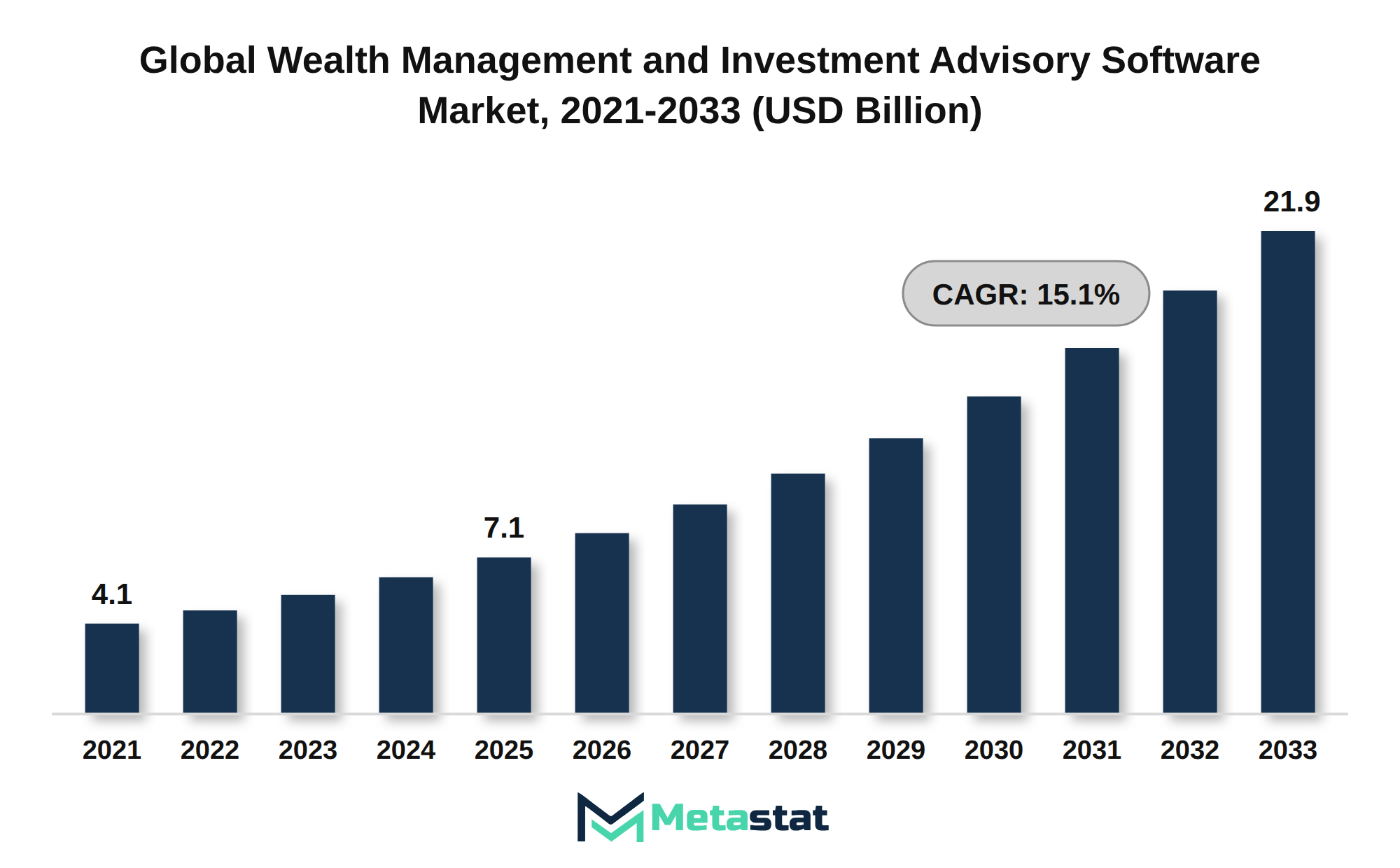
The global Wealth Management and Investment Advisory Software market was valued at USD 7.1 billion in 2025 and is projected to reach USD 21.9 billion by 2033, growing at a CAGR of 15.1% over the forecast period.
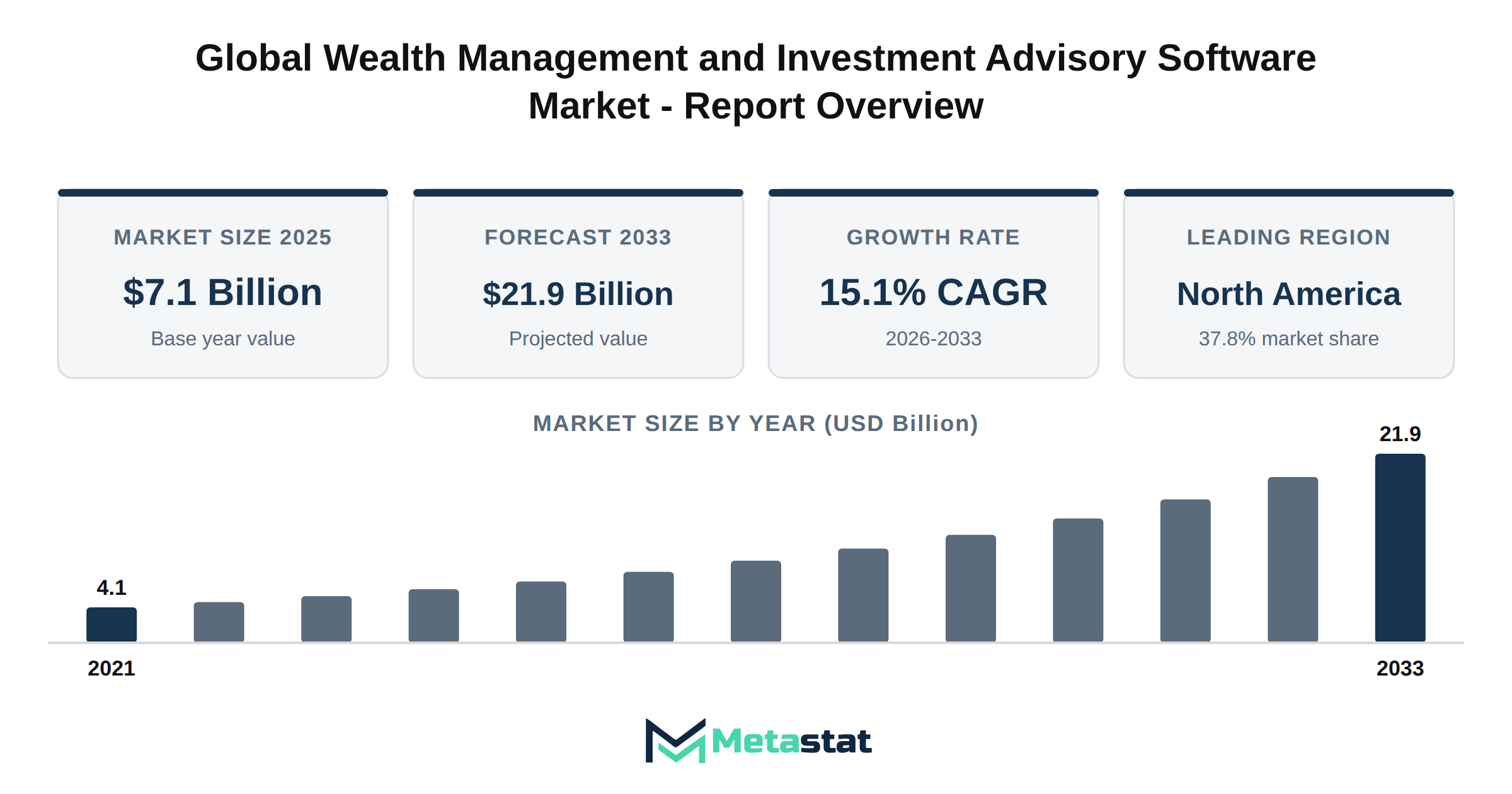
The Wealth Management and Investment Advisory Software market exhibits significant growth potential, driven by increasing demand for advanced financial management solutions. The market's value reached USD 7.1 billion in 2025, reflecting a consistent upward trajectory since 2021 when it was valued at USD 4.1 billion. By 2033, the market is projected to achieve a value of USD 21.9 billion, translating to a robust CAGR of 15.1% during the forecast period from 2026 to 2033.
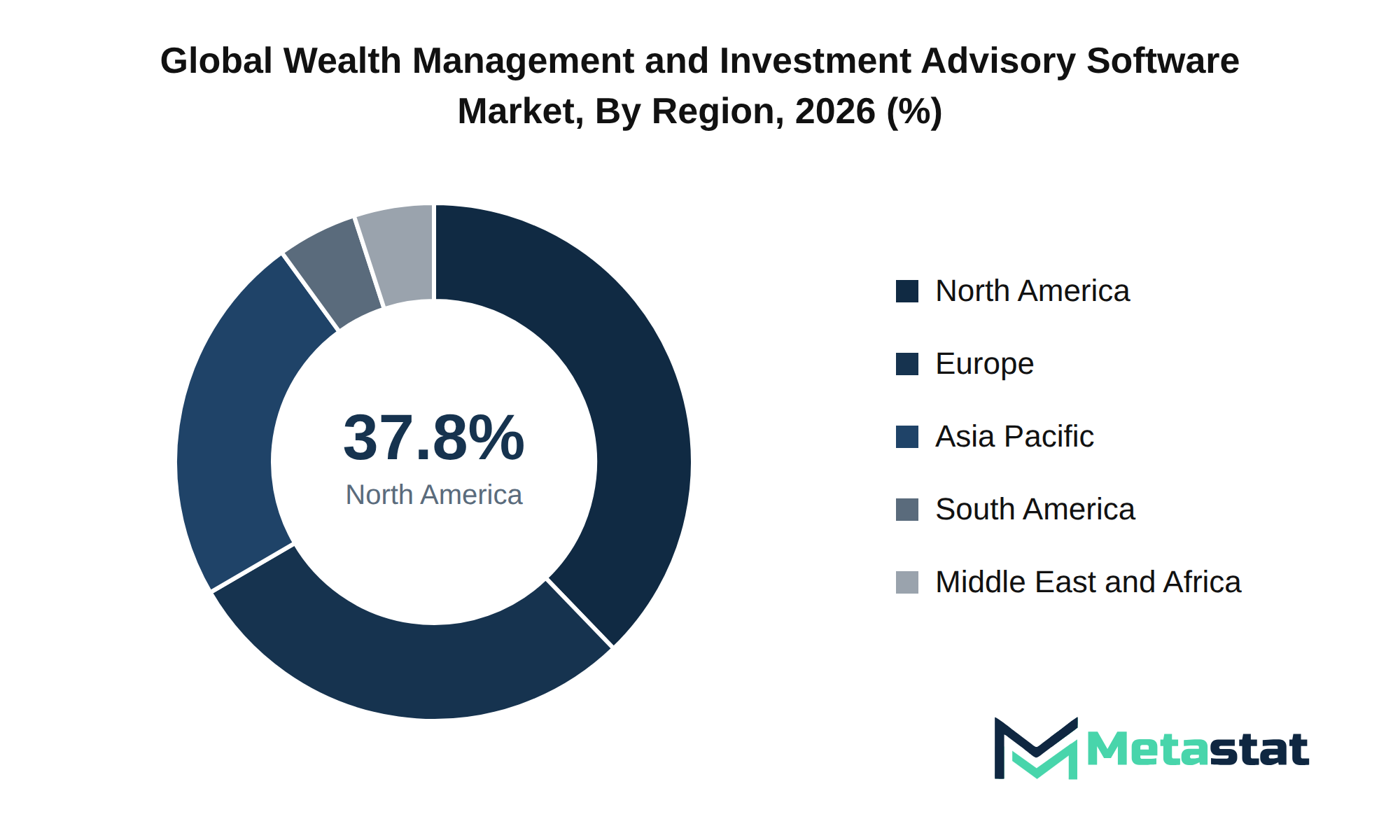
In the Wealth Management and Investment Advisory Software market, the North American region holds the largest share, accounting for 37.8% of the total market value. By 2033, North America's market value is anticipated to reach USD 7.8 billion, maintaining a CAGR of 15.1%. Europe follows closely with a 28.8% share, while Asia Pacific represents 23.4%. The market fragmentation across regions indicates varying levels of technological adoption and regulatory environments, influencing the deployment and integration of software solutions.
Growth in the market is fueled by the increasing adoption of cloud-based solutions and software-as-a-service (SaaS) models, which enhance operational efficiency and scalability. The deployment model segment demonstrates a projected CAGR of 16.8%, growing from USD 4.4 billion in 2026 to USD 13 billion by 2033. This shift towards cloud solutions aligns with ongoing digital transformation across financial institutions, enabling real-time data access and streamlined client interactions.
Investment in innovative technologies, including artificial intelligence and machine learning, shapes the competitive landscape. Financial institutions increasingly leverage these technologies to provide personalized investment strategies and enhance client engagement. The demand for portfolio management, accounting, and performance reporting tools is expected to grow significantly, with a projected value increase from USD 2 billion in 2026 to USD 5.1 billion by 2033, reflecting a CAGR of 14%.
The Wealth Management and Investment Advisory Software market faces a complex landscape influenced by regulatory compliance and market fragmentation. Regulatory frameworks necessitate adherence to evolving standards, compelling firms to invest in software solutions that ensure compliance and mitigate risk. This demand for compliance-oriented software enhances the competitive positioning of suppliers that offer robust solutions tailored to meet these requirements.
Next-generation innovation plays a critical role in driving market growth. Firms increasingly prioritize research and development trajectories to create advanced tools that enhance customer experience and optimize financial decision-making processes. This focus on innovation creates a competitive environment where agility and technological advancement determine market leadership.
Sustainable transformation is emerging, driven by a vital consideration in the Wealth Management and Investment Advisory Software market. Firms incorporate sustainability into their business strategies, aligning software capabilities with environmental objectives. This shift not only addresses regulatory requirements but attracts clients prioritizing sustainable practices.
Macroeconomic headwinds, including inflationary pressures and currency volatility, impact operational costs and influence investment decisions within the market. Firms adapt their strategies to navigate these challenges effectively, ensuring resilience in their operations while maximizing growth opportunities.
The future strategic outlook for the Wealth Management and Investment Advisory Software market emphasizes the importance of capital allocation and infrastructure investments. Allocating resources efficiently enables firms to enhance their technological capabilities and expand their service offerings, ensuring sustained growth and competitive advantage in the evolving landscape.
Market Dynamics
Digital transformation accelerates software adoption
Digital transformation acts because a significant driver for the Wealth Management and Investment Advisory Software market. Organizations increasingly prioritize automation and advanced technologies, enhancing operational efficiency and customer engagement. This shift towards digitizing legacy processes allows firms to streamline workflows, reduce errors, and provide superior client experiences.
The transition to cloud-based solutions, particularly Software-as-a-Service (SaaS), supports agile responses to market demands and evolving client expectations. With a growing emphasis on data analytics and artificial intelligence, wealth management firms leverage these tools to improve decision-making, create more personalized services, and enhance risk assessment capabilities.
Investment in technology addresses current operational challenges while positioning firms for future growth. The market expands owing to firms increasingly recognizing the importance of integrating innovative solutions to stay competitive and meet the demands of a rapidly changing environment.
The shift towards digital platforms facilitates better resource allocation and improved cost efficiency. By optimizing processes and enhancing service delivery, firms gain a significant advantage in attracting and retaining clients, directly influencing growth trajectories within the Wealth Management and Investment Advisory Software market.
Infrastructure development drives software modernization
The Wealth Management and Investment Advisory Software market benefits from increased infrastructure development and asset modernization initiatives. Upgrading physical and digital capacities enhances operational efficiencies, directly impacting the ability of firms to deliver innovative services. Investments in technology infrastructure enable organizations to streamline processes, improve client engagement, and maintain a competitive edge.
The ongoing modernization of financial services infrastructure, supported by public and private spending, creates an environment conducive to adopting advanced software solutions. Enhanced network capabilities and upgraded facilities promote the integration of automation and artificial intelligence, leading to significant improvements in productivity. Financial institutions prioritizing infrastructure development achieve cost-efficient operations, resulting in higher profitability.
This focus on modernization significantly shapes consumer expectations within the Wealth Management and Investment Advisory Software market. Clients increasingly seek personalized and responsive services, necessitating a robust technological foundation. Firms investing in infrastructure not only meet these demands but position themselves for sustainable growth amid evolving market dynamics.
Regulatory compliance and economic challenges
The Wealth Management and Investment Advisory Software market encounters significant challenges stemming from regulatory compliance and macroeconomic conditions. Regulatory tightening creates additional requirements for firms to adhere to, leading to increased operational complexities and potential delays in software deployment. Compliance hurdles necessitate continuous updates and adaptations to software solutions, inflating costs and straining resources, which impacts smaller firms disproportionately.
Macroeconomic headwinds, including inflationary pressures and capital stagnation, restrict investment in new technologies and upgrades. The costs associated with maintaining compliance, coupled with rising operational expenses, hinder many firms from expanding their software capabilities. This financial strain particularly affects smaller and medium-sized enterprises, which often lack the necessary capital to invest in comprehensive wealth management solutions.
The market faces challenges related to skilled labor deficiencies and talent gaps. The demand for qualified professionals in wealth management and investment advisory services is high, yet the available workforce does not meet this demand. This shortage limits firms' ability to effectively implement and apply advanced software solutions, significantly impacting productivity and service delivery.
Concerns regarding data security and privacy constrain market growth. Firms invest in robust security measures to protect sensitive client information, diverting funds from technological advancements and software enhancements. The Wealth Management and Investment Advisory Software market addresses these challenges to achieve sustainable growth and maintain competitiveness in a changing environment.
Geopolitical fragmentation limits market stability
The Wealth Management and Investment Advisory Software market faces challenges stemming from geopolitical fragmentation, which disrupts international trade and increases operational complexity. Heightened trade deficits and tariff friction create an uncertain environment for software providers, impacting costs and market dynamics. Clients, particularly those in regions with stringent regulatory conditions, experience difficulty adjusting to fluctuating compliance expectations and evolving legal liabilities, leading to increased overhead and operational burdens.
Technological disruptions further complicate market conditions, driven by firms striving to integrate advanced solutions within their existing systems. Complex research and development integrations hinder the rapid deployment of new technologies, slowing growth trajectories within the sector. Interoperability friction among various software platforms impedes data sharing, which diminishes the overall user experience and affects client satisfaction.
The market encounters pressures from pricing compression and margin constraints, primarily driven by rising input costs and competitive pressures. Talent retention pressures arise from workforce skill gaps, particularly in technical areas including cybersecurity and data analytics. Automation displacements contribute to workforce instability, further complicating operational efforts.
Environmental lifecycle footprints and sustainability demands increasingly influence market strategies, compelling firms to adopt greener practices. Infrastructure gaps and retrofitting barriers obstruct the implementation of new technologies, prolonging the timeline for upgrades and expansions. Intellectual property protection deficits and cybersecurity vulnerabilities expose firms to risks, complicating their operational landscape in the Wealth Management and Investment Advisory Software market.
Changing downstream demands and market saturation increase the urgency for differentiation among service providers. These multifaceted challenges necessitate strategic responses to enhance agility and adapt to ongoing market changes effectively.
Emerging technologies drive market growth
The Wealth Management and Investment Advisory Software market experiences accelerated growth driven by emerging technologies that reshape service delivery and enhance client engagement. Technologies including artificial intelligence, machine learning, and data analytics enable financial institutions to offer personalized investment solutions and streamline operational processes. Adoption of these technologies leads to significant improvements in client acquisition and retention strategies, resulting in increased revenue streams.
Geographical expansion stands because a crucial factor in capturing emerging market demands. Growing economies in Asia Pacific and South America present substantial opportunities for software providers seeking to establish a foothold in untapped regions. By tailoring solutions to meet local preferences and regulatory requirements, companies gain competitive advantages and expand their market share.
Digital transformation initiatives further enhance the Wealth Management and Investment Advisory Software market by improving operational efficiencies. Investment in cloud-based solutions facilitates scalable infrastructure and supports remote access for financial advisors and clients. This shift enables firms to lower costs and improve agility in responding to market changes, ultimately driving growth.
Sustainability trends and environmental, social, and governance (ESG) considerations influence market dynamics. Increasing client awareness regarding responsible investing practices compels financial institutions to integrate ESG factors into their service offerings. This trend creates a more robust market for wealth management software that aligns with clients' ethical preferences, broadening the appeal of investment advisory services.
Strategic consolidation through mergers and acquisitions allows established players to diversify their portfolios and enhance technological capabilities. By integrating niche applications that cater to specific client needs, firms create comprehensive solutions that attract a broader customer base. This strategy strengthens positions within the Wealth Management and Investment Advisory Software market while encouraging innovation.
The evolving buying behaviors of clients contribute to the market's dynamism. Enhanced digital procurement platforms streamline the purchasing process, enabling clients to access services with minimal friction. This evolution in consumer expectations pushes firms to adapt quickly, resulting in a more competitive landscape that emphasizes speed and efficiency.
Overall, the interaction of these factors creates a favorable environment for the Wealth Management and Investment Advisory Software market. Organizations that embrace technological advancements, adapt to regional demands, and respond to shifting client preferences stand ready to thrive in this sector.
Market Segmentation Analysis
The Global Wealth Management and Investment Advisory Software market is segmented based on Solution Type, Deployment Model, End User, and Organization Size.
By Solution Type, the market is further segmented into:
- Portfolio Management, Accounting & Performance Reporting
- Financial Planning & Investment Advisory
- Trading, Rebalancing & Order Management
- Client Lifecycle Management, CRM & Digital Engagement
- Risk, Compliance & Regulatory Management
- Data Aggregation, Analytics & Investment Intelligence
- Fee Billing, Revenue & Operations Management
- Others (Tax Optimization, Document Management & Workflow Tools)
Portfolio Management, Accounting & Performance Reporting
Valued at USD 2 billion in 2026, the Portfolio Management, Accounting & Performance Reporting segment is projected to reach USD 5.1 billion by 2033, reflecting a CAGR of 14% during the forecast period. Growth in this segment is driven by increasing demand for robust portfolio management solutions, particularly from private banks and asset management firms seeking to enhance client satisfaction and operational efficiency. Regulatory compliance standards further contribute to demand, necessitating advanced accounting and performance reporting features to meet evolving financial regulations.
Ongoing technological maturation in the Wealth Management and Investment Advisory Software market facilitates the adoption of next-gen upgrades, including artificial intelligence and machine learning capabilities, which improve data analytics and investment intelligence. This evolution enhances the accuracy of performance reporting, thereby attracting customers who prioritize data-driven decision-making. The integration of cloud solutions streamlines deployment processes, making sophisticated tools accessible to a broader range of firms, including small and medium-sized enterprises.
Downstream applications emphasize the importance of comprehensive reporting and accounting features, leading to shifts in consumption patterns among end-users. Independent wealth and asset management firms increasingly opt for integrated solutions that offer client lifecycle management alongside performance reporting tools. This trend signals a strategic opportunity window for software providers to innovate and expand their offerings to capture emerging customer demands, ultimately driving revenue growth in the segment.
Cost structures related to technology deployment and ongoing maintenance represent key factors influencing pricing strategies within the segment. Competition among software providers intensifies, contributing to pricing volatility that impacts profit margins. To sustain competitive positioning and enhance margins, providers focus on developing scalable solutions that deliver high value without significantly increasing operational costs.
Financial Planning & Investment Advisory
Significant growth in the Financial Planning & Investment Advisory segment stems from increased client demand for personalized financial solutions. A rise in high-net-worth individuals seeking tailored investment strategies and financial planning services drives this trend. Adoption of advanced analytical tools enables advisory firms to enhance service offerings, leading to improved client satisfaction and retention.
Technological advancements play a critical role in segment expansion. Innovations in artificial intelligence and data analytics facilitate deeper insights into client behaviors and preferences, enabling firms to offer more relevant advice. The integration of these technologies supports scalability, allowing firms to cater to a broader range of clients without proportional increases in operational costs.
Regulatory compliance influences market dynamics. Stricter guidelines surrounding financial advisory practices compel firms to invest in robust compliance solutions, ensuring adherence to evolving standards while maintaining operational efficiency. Such investments create challenges and opportunities, spurring innovation and driving up demand for sophisticated financial planning software.
The Financial Planning & Investment Advisory segment is estimated to reach USD 3.9 billion by 2033, at a CAGR of 15.8% during the forecast period. Continuous evolution of consumer preferences toward more engaging and transparent investment processes highlights the importance of adaptive strategies in the financial advisory landscape.
The Wealth Management and Investment Advisory Software market evolves, and the Financial Planning & Investment Advisory segment reflects a microcosm of broader industry trends. Increasing demands for personalized advice, technological integration, and regulatory adaptation will shape the competitive landscape, supporting sustained growth in the coming years.
Trading, Rebalancing & Order Management
Growth in the Trading, Rebalancing & Order Management segment reflects the increasing demand for efficient and automated solutions within the Wealth Management and Investment Advisory Software market. Financial institutions prioritize enhanced operational efficiency and the need for compliance and risk management solutions, driving the adoption of advanced trading platforms. Technological maturation contributes to segment expansion, driven by new functionalities and integrations with artificial intelligence and machine learning that improve trading strategies, promote real-time data analytics, and facilitate effective decision-making processes.
Investment firms and asset managers experience pressure to adapt to shifting market dynamics, prompting a focus on portfolio rebalancing capabilities. This trend results in a push for solutions that streamline workflows and optimize transaction costs. Regulatory compliance requirements further necessitate sophisticated order management systems to ensure adherence to evolving standards. Market volatility encourages firms to invest in tools that enhance agility in trading and rebalancing processes, which supports the segment's growth trajectory.
The Trading, Rebalancing & Order Management segment is expected to reach USD 2.6 billion by 2033. Strategic opportunity windows arise from the emphasis on digital transformation, driving investments in next-generation platforms. The wealth management sector’s commitment to upgrading existing systems and integrating new technologies establishes the foundation for sustained growth. The market remains poised for continued innovation and heightened competition among solution providers focused on addressing the evolving challenges and demands of their clients.
Client Lifecycle Management, CRM & Digital Engagement
Rapid advancements in technology drive demand for Client Lifecycle Management, CRM & Digital Engagement solutions within the Wealth Management and Investment Advisory Software market. These solutions enhance engagement with clients through streamlined processes and personalized services. A strong focus on improving customer experience encourages financial institutions to invest in modernized systems that facilitate better client interactions, ultimately leading to increased client retention and satisfaction.
The Client Lifecycle Management, CRM & Digital Engagement segment is projected to grow at a CAGR of 16.1% during the forecast period. This growth results from the ongoing shift towards digital platforms, where financial institutions leverage sophisticated tools to manage customer relationships effectively. Increased adoption of data analytics and artificial intelligence within these tools enhances predictive capabilities, allowing firms to tailor offerings based on individual client needs and preferences.
Regulatory compliance standards exert significant influence on the market, prompting financial institutions to adopt comprehensive solutions that ensure adherence to evolving regulations. Such compliance not only mitigates risks but builds trust among clients, driving the demand for advanced client management solutions. While competition intensifies, firms recognize the necessity of investing in robust Client Lifecycle Management systems to maintain a competitive edge.
The market's evolution reflects a shift towards integrated digital experiences. Enhanced functionalities, including automated reporting and real-time communication, become essential for organizations aiming to improve operational efficiency. Consequently, financial institutions prioritize strategic investments in next-generation upgrades to equip themselves with the tools necessary for navigating the complexities of modern wealth management.
Risk, Compliance & Regulatory Management
In the evolving landscape of financial services, regulatory compliance remains a critical concern for firms within the Wealth Management and Investment Advisory Software market. Increasing scrutiny from regulatory bodies drives demand for robust Risk, Compliance & Regulatory Management solutions, which streamline compliance processes and reduce exposure to risks associated with regulatory breaches. Financial institutions, including private banks and independent wealth management firms, actively seek sophisticated tools that enhance their ability to meet stringent compliance standards while maintaining operational efficiency.
Technological advancements play a significant role in the expansion of this segment. Innovations including artificial intelligence and machine learning facilitate the development of next-generation compliance solutions, enabling firms to respond proactively to regulatory changes. The integration of these technologies enhances the agility of compliance frameworks, allowing organizations to adapt swiftly to new regulations while minimizing potential penalties.
Investments in Risk, Compliance & Regulatory Management reflect a broader strategic shift towards proactive risk management. The increasing complexity of regulatory environments, coupled with heightened consumer expectations for transparency, positions compliance management because a key differentiator in the market. Firms prioritizing these solutions not only enhance their compliance posture but strengthen client trust, ultimately contributing to sustained market growth.
The emphasis on regulatory compliance within the Wealth Management and Investment Advisory Software market highlights the necessity for advanced Risk, Compliance & Regulatory Management solutions. While firms navigate an increasingly complex regulatory landscape, the demand for innovative technologies and strategic compliance frameworks is expected to drive significant growth in this segment.
Data Aggregation, Analytics & Investment Intelligence
Investment intelligence relies on sophisticated data aggregation and analytics capabilities that provide wealth management firms with critical insights. The necessity for data-driven decision-making fuels demand for advanced analytical tools, enabling firms to enhance portfolio performance and optimize client engagement. Regulatory compliance standards increasingly require robust reporting and risk management practices, compelling firms to adopt comprehensive solutions that streamline data integration and analysis.
Technological maturation within the industry enhances the functionality and accessibility of investment intelligence solutions. Innovations in artificial intelligence and machine learning drive upgrades, allowing firms to leverage big data for predictive analytics and improved investment strategies. This evolution attracts investment from firms seeking to remain competitive and expand their service offerings.
Downstream applications of these solutions impact various end-user dynamics, including private banks, independent wealth management firms, and financial advisory firms. The need for customized insights and tailored client experiences drives the adoption of data aggregation and analytics technologies. Consumption shifts toward more personalized financial services highlight the importance of real-time data access and comprehensive reporting capabilities.
Strategic opportunity windows arise due to market players focusing on enhancing their analytics offerings. Capital investment in data analytics tools stands critical for firms aiming to differentiate themselves in a competitive landscape. Continuous innovation and the integration of advanced technologies will shape the future trajectory of the Wealth Management and Investment Advisory Software market, ensuring sustained growth and development within this essential sub-segment.
Fee Billing, Revenue & Operations Management
Demand for Fee Billing, Revenue & Operations Management solutions stems from financial institutions striving for enhanced operational efficiency and compliance with evolving regulatory standards. Increasing complexity in fee structures has led organizations to seek sophisticated software that automates billing processes, ensuring accuracy and transparency for clients and stakeholders. The market benefits from a growing emphasis on revenue optimization, which drives investment in advanced capabilities that facilitate real-time revenue tracking and reporting.
Technological maturation in the Wealth Management and Investment Advisory Software market drives innovation in fee billing solutions. Integration with other financial systems enhances functionality, allowing firms to streamline operations and minimize errors. The expanding ecosystem of digital tools encourages collaboration among providers, resulting in improved product offerings and customer satisfaction.
Investment in next-generation upgrades across the segment emphasizes the importance of adapting to changing market dynamics. Financial institutions prioritize solutions that not only meet current demands but provide scalability for future growth. The trend towards subscription models and usage-based pricing creates opportunities for software providers to innovate their offerings and enhance their competitive positioning within the market.
End-use dynamics reflect a shift towards improved customer experience, with institutions focusing on transparency and efficiency in fee management. Regulatory compliance standards increasingly influence software development, compelling providers to incorporate features that ensure adherence to industry regulations. This focus on compliance builds trust with clients, thereby enhancing customer retention and loyalty.
While competition intensifies, firms face pressures related to cost structures, pricing volatility, and margin pressures. Strategic opportunity windows emerge for software providers that excel in delivering tailored solutions that address specific market needs. By leveraging technology to enhance operational capabilities, companies navigate challenges effectively and secure their position within the Wealth Management and Investment Advisory Software market.
Others (Tax Optimization, Document Management & Workflow Tools)
Demand for tax optimization, document management, and workflow tools within the Wealth Management and Investment Advisory Software market increases due to financial institutions seeking to enhance operational efficiency and regulatory compliance. Adoption of advanced software solutions facilitates streamlined processes, allowing firms to manage vast amounts of data and documentation more effectively. This segment benefits from rising focus on regulatory compliance standards, driving organizations to invest in tools that ensure adherence to evolving policies.
Technological maturation drives the development of innovative features within this sub-segment, enhancing product evolution and end-user dynamics. Organizations prioritize solutions that integrate seamlessly with existing systems, addressing consumption shifts towards comprehensive financial service platforms. Cost structures continue to influence purchasing decisions, with firms weighing the long-term benefits of investing in sophisticated solutions against initial expenditures.
Strategic opportunity windows arise because financial institutions look for ways to leverage technology to improve client service and reduce operational risks. The presence of disruptive alternatives in the market pushes established players to innovate and differentiate their offerings. Robust competition among suppliers encourages a healthy ecosystem, prompting investments in next-generation upgrades that enhance the functionality of tax optimization, document management, and workflow tools.
By Deployment Model, the market is further segmented into:
- Cloud / Software-as-a-Service (SaaS)
- On-Premises
- Hybrid
Cloud / Software-as-a-Service (SaaS)
Valued at USD 4.4 billion in 2026, the Cloud / Software-as-a-Service (SaaS) segment is projected to reach USD 13 billion by 2033, at a CAGR of 16.8% during the forecast period. Rapid adoption of SaaS solutions results from the growing preference for cloud-based services among financial institutions and advisory firms. Flexibility, scalability, and lower initial investment costs drive this trend, enabling organizations to enhance operational efficiency while improving service delivery.
Increased regulatory compliance requirements necessitate robust data management and reporting capabilities, further fueling demand for SaaS solutions within the Wealth Management and Investment Advisory Software market. Next-gen upgrades in technology contribute to the continuous evolution of these software solutions, enabling firms to leverage advanced analytics, artificial intelligence, and machine learning for improved decision-making and client engagement.
Competition among key players in the market supports innovation, resulting in enhanced features and functionalities tailored to meet the unique needs of various customer segments, including private banks, independent wealth management firms, and family offices. Growth in this segment reflects a broader trend towards digitalization in financial services, enhancing the customer experience through personalized and efficient service delivery.
Cost structures associated with SaaS deployment tend to be more favorable compared to traditional on-premises systems, which often involve significant upfront investments and ongoing maintenance expenses. The strategic opportunity for capital investment in this segment remains strong, driven by anticipated growth across different regions and the increasing recognition of the benefits offered by cloud solutions. Overall, the Cloud / Software-as-a-Service (SaaS) segment represents a significant component of the evolving Wealth Management and Investment Advisory Software market.
On-Premises
Demand for On-Premises solutions in the Wealth Management and Investment Advisory Software market reflects organizations' preference for maintaining control over their data and systems. Clients in regulated industries, including banking and finance, prioritize security and compliance, driving this preference. This segment addresses the need for customized software solutions that align with specific operational requirements.
The On-Premises segment is projected to reach USD 4.3 billion by 2033, at a CAGR of 9.2% during the forecast period. Growth relies on ongoing investments in technology and infrastructure, enabling organizations to optimize operations and enhance service delivery. Firms increasingly adopt next-generation upgrades, focusing on improving the overall client experience while ensuring compliance with regulatory standards.
Cost structures associated with On-Premises deployments often involve higher initial investments and ongoing maintenance expenses. Long-term benefits of enhanced security and data control contribute to overall operational efficiency. This segment’s evolution reflects a growing recognition of the importance of tailored solutions in meeting the unique demands of various end-users, including private banks and independent wealth management firms.
Hybrid
Growing interest in flexible deployment options drives the expansion of the Hybrid segment within the Wealth Management and Investment Advisory Software market. Organizations seeking to balance the benefits of cloud solutions with on-premises capabilities increasingly favor hybrid models. This trend reflects the demand for enhanced security, control over sensitive data, and the ability to scale operations efficiently.
Increased regulatory scrutiny and compliance requirements reinforce the need for adaptable software solutions. Firms in the market face pressure to navigate complex regulations while maintaining operational efficiency. Hybrid models support firms in meeting these challenges by enabling them to tailor their approaches according to specific compliance needs.
Technological advancements further enhance the growth of the Hybrid segment. Integration of next-generation technologies, including artificial intelligence and machine learning, improves the capabilities of hybrid solutions. These technologies enhance data analysis, risk management, and client engagement, contributing to the overall attractiveness of hybrid deployment models.
The Hybrid segment is expected to reach USD 4.7 billion by 2033. Investment in hybrid solutions reflects a strategic opportunity window for providers aiming to capture a share of the evolving market. Overall, the combination of regulatory demands, technological evolution, and changing client expectations positions the hybrid deployment model because a critical player in the future of the Wealth Management and Investment Advisory Software market.
By End User, the market is further segmented into:
- Private Banks
- Retail & Universal Banks
- Independent Wealth & Asset Management Firms
- Financial Advisory & RIA Firms
- Broker-Dealers & Securities Firms
- Family Offices
- Trust Companies
- Others (Pension & Insurance Wealth Units, Digital Wealth Providers)
Private Banks
Private banks play a crucial role in the Wealth Management and Investment Advisory Software market, driven by the increasing demand for personalized financial services. High-net-worth individuals seek tailored solutions, which leads to an uptick in software adoption to enhance client relationships and improve investment performance.
Regulatory compliance standards influence operational practices within private banks, necessitating the integration of advanced technologies to meet evolving requirements. This shift towards compliance management and risk assessment enhances the attractiveness of software solutions that streamline these processes.
Technological maturation creates a competitive environment, prompting private banks to invest in next-gen upgrades and product evolution. These investments support enhanced data analytics capabilities, enabling banks to provide insightful financial advice and optimize portfolio management.
Strategic opportunity windows arise due to private banks increasingly embracing cloud-based solutions, allowing for scalable and flexible deployment models. Adoption of Cloud / Software-as-a-Service (SaaS) significantly enhances operational efficiency while reducing costs associated with traditional infrastructure.
Heightened competition among private banks drives innovation and consumption shifts towards integrated solutions that encompass client lifecycle management, performance reporting, and financial planning. This competitive dynamic shapes the market, compelling banks to continuously evolve their service offerings.
Investment in advanced technologies including artificial intelligence and machine learning aids private banks in improving operational efficiency and delivering enhanced customer experiences. These technological advancements strengthen client engagement, which is essential in a market characterized by increasing client expectations.
Overall, the Wealth Management and Investment Advisory Software market benefits from the strategic initiatives undertaken by private banks, aligning their operations with industry trends and consumer demands. This alignment positions private banks effectively for future growth within the sector.
Retail & Universal Banks
Retail and universal banks increasingly adopt Wealth Management and Investment Advisory Software to enhance operational efficiency and client engagement. Primary demand drivers include the need for streamlined processes and improved customer experience. The segment experiences growth due to rising complexity in financial services and increased competition, prompting banks to invest in advanced software solutions.
Technological maturation supports the segment's evolution, with next-generation upgrades providing enhanced functionalities including artificial intelligence and machine learning capabilities. These advancements facilitate better risk management and compliance with regulatory standards. Product evolution focuses on delivering integrated solutions that accommodate diverse financial needs, ultimately leading to higher customer satisfaction.
End-use dynamics reflect a shift towards more personalized banking services, driven by consumer expectations for tailored financial advice. Regulatory compliance standards impose additional pressures on retail and universal banks to adopt comprehensive software solutions that ensure adherence to evolving regulations. Consequently, banks prioritize investments in technologies that support compliance while enhancing operational resilience.
Pricing volatility and margin pressures specific to the segment influence strategic decisions on software procurement. Retail and universal banks seek solutions that optimize cost structures while delivering robust performance. The supply chain for software solutions adapts to emerging needs, focusing on resilience and the ability to integrate with existing systems.
Strategic opportunity windows arise from ongoing digital transformation initiatives, providing avenues for banks to leverage innovative technologies. This push towards modernization enables banks to explore new business models and enhance competitive positioning within the Wealth Management and Investment Advisory Software market.
Independent Wealth & Asset Management Firms
Demand for Wealth Management and Investment Advisory Software among Independent Wealth & Asset Management Firms stems from the increasing need for personalized client services and efficient portfolio management. The ongoing shift towards digital solutions emphasizes the necessity for firms to adopt advanced technology that enhances client engagement and improves operational efficiency.
Technological maturation plays a significant role in expanding this segment, with firms seeking next-generation upgrades to traditional software. Integration of artificial intelligence and machine learning into wealth management systems provides enhanced capabilities for data analysis and investment strategies, thus driving the adoption of innovative solutions. Firms face pressures to remain competitive, prompting investments in sophisticated software that optimize client interactions and investment outcomes.
Regulatory compliance standards present significant challenges for Independent Wealth & Asset Management Firms. Adherence to evolving regulations necessitates robust software solutions that manage risk and ensure transparency in operations. Compliance-related features within software packages enable firms to maintain regulatory standards while streamlining processes.
Cost structures and pricing volatility impact the operational strategies of wealth management firms. Increased competition intensifies the pressure to offer value-driven services while managing costs effectively. Strategic opportunities arise for software providers that deliver cost-effective solutions without compromising functionality.
Continued investment in technology results in enhanced supply chain resilience and the ability to address disruptive alternatives. Independent Wealth & Asset Management Firms that capitalize on strategic technology upgrades position themselves for success in a changing market. The Wealth Management and Investment Advisory Software market benefits from this trend, reflecting an overall growth trajectory in the coming years.
Financial Advisory & RIA Firms
Financial Advisory and RIA Firms represent a significant portion of the Wealth Management and Investment Advisory Software market, driven by increasing demand for tailored investment solutions and personalized financial planning. These firms prioritize client-centric services, necessitating advanced software solutions that streamline operations and enhance customer engagement.
Technological maturation within this segment facilitates next-gen upgrades, enabling firms to leverage artificial intelligence and machine learning for improved analytics and decision-making. Product evolution, including the integration of comprehensive financial planning tools, enhances the ability to respond to diverse client needs while ensuring regulatory compliance standards are met.
End-use dynamics indicate a shift towards digital platforms, with clients increasingly preferring online interaction and remote access to financial services. This trend influences firms to adopt robust software solutions, focusing on user experience and operational efficiency. Consumption shifts towards subscription-based models exemplify a strategic opportunity window for service providers aiming to capture market share through innovative pricing structures and flexible deployment options.
Pricing volatility and margin pressures stemming from market competition require firms to optimize their cost structures. Investing in scalable software solutions enhances operational resilience and adaptability to market fluctuations. Strategic investments in technology cultivate competitive advantages and align with the evolving preferences of clients in the Wealth Management and Investment Advisory Software market.
Broker-Dealers & Securities Firms
Increasing complexity in financial regulations drives demand within Broker-Dealers and Securities Firms for advanced Wealth Management and Investment Advisory Software. These firms require robust solutions to ensure compliance with regulatory standards while enhancing operational efficiency. The imperative for streamlined processes and risk management cultivates a strong adoption of software that manages intricate compliance requirements.
Technological maturation significantly influences the adoption of sophisticated software solutions. Enhanced features, including real-time data analytics and integration capabilities, facilitate better decision-making processes for Broker-Dealers and Securities Firms. The transition towards next-generation upgrades ensures that these firms remain competitive in a fast-evolving market.
Cost structures and pricing volatility significantly influence purchasing decisions in this sub-segment. Effective risk management and compliance tools contribute to operational sustainability, providing strategic opportunities for investment in the latest software solutions. Firms experience enhanced margins through improved efficiency and reduced operational overhead.
Downstream applications of Wealth Management and Investment Advisory Software expand the capabilities of Broker-Dealers and Securities Firms, allowing them to offer personalized investment strategies and tailored client services. This adaptability leads to shifts in consumption patterns driven by firms seeking to differentiate themselves in a saturated market.
In the pursuit of regulatory compliance and operational excellence, the Broker-Dealers and Securities Firms segment is positioned for further growth within the Wealth Management and Investment Advisory Software market. This sector's strategic focus on technology upgrades and regulatory adherence will continue to shape its development in the coming years.
Family Offices
Growth in the Family Offices segment of the Wealth Management and Investment Advisory Software market aligns with increasing wealth concentration among high-net-worth individuals. Demand arises from the need for personalized financial solutions, estate planning, and investment management tailored to unique family needs. The expansion of this segment is driven by the complexities associated with managing family assets, necessitating specialized software for portfolio management and reporting.
Technological advancements play a significant role in the adoption of innovative solutions within Family Offices. Next-generation software integrates artificial intelligence and data analytics, enhancing decision-making capabilities and creating efficiencies in operations. The increasing emphasis on regulatory compliance and risk management further supports the uptake of sophisticated financial tools tailored for family wealth management.
Increased competition among Family Offices creates a drive for efficiency and innovation. Firms explore ways to differentiate their services through enhanced client engagement and superior reporting capabilities. This focus on client experience increases the demand for advanced software solutions that facilitate effective communication and provide analytics-driven insights.
Overall, the Family Offices segment reflects a strategic opportunity within the broader Wealth Management and Investment Advisory Software market. The integration of technology not only meets compliance standards but addresses the unique challenges faced by family wealth managers. Capital investment in this sector remains robust, ensuring continued innovation and responsiveness to market needs.
Trust Companies
Trust companies prioritize robust regulatory compliance and risk management strategies, which drive demand for Wealth Management and Investment Advisory Software. These entities require specialized tools to navigate complex regulations and ensure adherence to evolving compliance standards. The increasing complexity of financial regulations necessitates advanced features in software solutions, enhancing operational efficiency while mitigating risk exposure.
The shift towards digital transformation influences the adoption of innovative software solutions among trust companies. Enhanced capabilities in client engagement, performance reporting, and financial planning improve decision-making and operational agility. The incorporation of advanced analytics and reporting tools strengthens their ability to provide personalized services to clients, enhancing overall satisfaction and retention.
Trust companies experience pressure on cost structures and pricing volatility due to competitive market dynamics. Investment in next-gen upgrades and technological advancements allows these entities to remain competitive while optimizing service delivery. The strategic opportunity lies in leveraging technology to streamline operations, reduce costs, and enhance service offerings within the Wealth Management and Investment Advisory Software market.
Trust companies benefit from product evolution that aligns with changing consumer preferences and technological advancements. Increasing consumer demand for digital solutions encourages these firms to explore innovative software options, enhancing operational capabilities while meeting client expectations. This trend reinforces growth potential within the market.
Others (Pension & Insurance Wealth Units, Digital Wealth Providers)
Pension and insurance wealth units, along with digital wealth providers, represent a unique segment within the Wealth Management and Investment Advisory Software market. The increasing complexity of financial products and services drives these entities to seek advanced software solutions that enhance operational efficiency and customer engagement. Innovations in technology facilitate the integration of modern tools, enabling these firms to adapt to the rapidly changing financial landscape.
Regulatory compliance remains a significant factor influencing software adoption among pension and insurance wealth units. Stricter regulations necessitate robust compliance frameworks, compelling organizations to invest in software that ensures adherence to legal standards while minimizing operational risks. This focus on compliance creates a demand for sophisticated reporting and monitoring tools, supporting risk management and operational integrity.
Digital wealth providers evolve alongside customer expectations, particularly regarding user experience and accessibility. The shift toward digital solutions promotes the evolution of user interfaces and personalized services, allowing these providers to cater to a wider audience. Enhanced client engagement through digital platforms creates opportunities for growth, pushing firms to seek software that integrates effective communication and service delivery.
Cost pressures in the financial services sector necessitate strategic investments in technology that optimize operational expenditures. Firms in this segment prioritize software capable of streamlining processes and reducing overhead costs, ultimately enhancing profitability. By adopting comprehensive software solutions, pension and insurance wealth units and digital wealth providers position themselves for long-term success in the competitive market.
By Organization Size, the market is further segmented into:
- Small & Medium-Sized Enterprises
- Large Enterprises
Small & Medium-Sized Enterprises
Small and medium-sized enterprises (SMEs) increasingly seek advanced solutions in the Wealth Management and Investment Advisory Software market. Primary demand drivers include the necessity for efficient portfolio management and financial planning, which support SMEs in providing tailored financial advice to their clients. Adoption of these software solutions enhances operational efficiency, allowing SMEs to compete effectively against larger financial institutions.
Technological maturation drives segment expansion, with next-generation upgrades offering enhanced features like data analytics and client engagement tools. These innovations enable SMEs to evolve their service offerings, thus improving client satisfaction and retention. Regulatory compliance remains a critical factor, owing to SMEs navigating complex financial regulations, highlighting the importance of robust compliance management modules within software solutions.
Pricing volatility affects cost structures, compelling SMEs to adopt scalable solutions that align with their budgetary constraints. Strategic opportunity windows emerge due to software vendors introducing more affordable and flexible deployment options, enabling SMEs to leverage advanced technology without significant capital expenditure. Continued capital investment in innovative software solutions positions SMEs to enhance their market presence and adapt to evolving client demands.
The shift toward digital engagement further influences consumption patterns, with clients expecting easy access to financial information and services. Regulatory compliance standards drive the need for SMEs to invest in solutions that not only meet current requirements but are adaptable for future changes. This investment landscape emphasizes the importance of aligning software capabilities with the strategic goals of SMEs in the Wealth Management and Investment Advisory Software market.
Large Enterprises
Investment strategies among large enterprises increasingly prioritize advanced financial planning and advisory capabilities. The growing complexity of financial markets drives demand for sophisticated tools that enhance portfolio management and performance reporting. Competition within the Wealth Management and Investment Advisory Software market intensifies due to large enterprises seeking integrated solutions that streamline operations and improve client engagement.
Regulatory compliance standards exert pressure on large enterprises, necessitating robust risk management frameworks and analytics. Adherence to evolving regulations promotes investment in technology that ensures compliance while maintaining operational efficiency. The focus on technological maturation facilitates the adoption of next-gen upgrades, aligning with the strategic objectives of these enterprises.
The evolution of products tailored for large enterprises reflects shifting consumption patterns and the need for comprehensive data analytics. Solutions that support fee billing and revenue management stand out because essential components in meeting the operational demands of these companies. Capital investment outlooks indicate a continued commitment to enhancing technological capabilities, further enhancing their competitive positions within the market.
By Region
Based on geography, the Global Wealth Management and Investment Advisory Software market is divided into North America, Europe, Asia-Pacific, South America, Middle East, and Africa.
North America
North America exhibits strong growth in the Wealth Management and Investment Advisory Software market, with an anticipated expansion at a CAGR of 15.1% throughout the forecast period. By the end of 2033, the market is projected to reach a size of USD 7.8 billion. This region represents 37.8% of the global market share in 2025, emphasizing its critical role in the overall market.
The presence of established financial institutions and a high concentration of wealth significantly drives demand within this market. The United States, Canada, and Mexico host many private banks, retail banks, and independent wealth management firms that seek advanced software solutions to enhance service offerings and ensure compliance with evolving regulations.
Emerging market front-runners in North America capitalize on innovative deployment models, particularly cloud-based solutions, which provide flexibility and scalability. Increasing pressure for digital transformation among financial services firms accelerates the shift toward Software-as-a-Service platforms, further expanding the market.
Localized procurement dynamics and cultural nuances in the region influence B2B buying behaviors, prompting vendors to tailor offerings to meet the unique needs of the market. High-value replacement cycles for legacy systems contribute to continuous investment in modern software solutions, ensuring institutions maintain competitive advantages.
Strategic entry barriers, including stringent regulatory frameworks and compliance mandates, shape operational strategies for new entrants. These factors highlight the importance of understanding the regional landscape for successful market penetration, ultimately creating a robust environment for growth in the Wealth Management and Investment Advisory Software market.
Europe
The Wealth Management and Investment Advisory Software market in Europe demonstrates significant potential, driven by robust demand for innovative financial solutions and regulatory compliance. Countries including Germany, France, and the UK exhibit strong adoption rates, influenced by their advanced financial services infrastructure and a growing emphasis on digital transformation within the sector.
Investment in cloud-based solutions increasingly attracts attention, with firms prioritizing scalability and flexibility in their operations. The market experiences notable growth in segments like Financial Planning and Investment Advisory, driven by increasing client expectations for personalized services and advanced analytical tools.
Germany and the UK serve because market frontrunners, supported by a mature financial landscape and a concentration of leading service providers. Regulatory frameworks across the region require adherence to strict compliance standards, compelling firms to invest in comprehensive software solutions to meet local mandates.
Cultural nuances influence regional buying behaviors, with localized procurement dynamics shaping supplier selection. The presence of established domestic players creates an environment of competition, driving innovation and technological advancements throughout the market.
Infrastructure modernization is essential for capitalizing on emerging opportunities, particularly in underpenetrated territories within Southern and Eastern Europe. The market outlook remains positive, with a projected growth trajectory fueled by continued investment and the increasing adoption of Wealth Management and Investment Advisory Software.
Asia-Pacific
The Asia-Pacific region holds a share of 23.4% in the Wealth Management and Investment Advisory Software market in 2025. Countries including China, Japan, India, South Korea, and Australia exhibit robust adoption of these solutions, driven by increasing wealth management needs among affluent individuals and corporates. The rise of independent wealth and asset management firms contributes to the market's growth, with these firms seeking innovative software solutions to enhance client engagement and operational efficiency.
Infrastructure modernization occurs at a rapid pace across the region, facilitating the adoption of cloud-based software solutions. Growing urbanization and an expanding middle class increase the demand for comprehensive financial planning and investment advisory services. The dynamic financial landscape in the Asia-Pacific region is characterized by increasing regulatory scrutiny, which compels financial institutions to adopt advanced compliance and risk management tools.
Emerging markets in Southeast Asia and India show substantial growth potential, driven by rising disposable incomes and a shift towards digital financial services. Increased foreign direct investment flows into the region further stimulate market expansion, promoting competition among local and international software providers. The competitive landscape features both established players and new entrants, intensifying the race for market share.
Localized procurement dynamics shape the purchasing behavior of financial institutions, with firms prioritizing solutions that address specific regional challenges. Cultural nuances influence the adoption of Wealth Management and Investment Advisory Software, driven by institutions tailoring their offerings to cater to diverse client needs. With these factors in play, the market for Wealth Management and Investment Advisory Software in the Asia-Pacific region is poised for sustained growth through 2033.
South America
The Wealth Management and Investment Advisory Software market in South America exhibits unique characteristics driven by regional dynamics. Brazil and Argentina are the primary markets, accounting for a notable share of 5.0% of the global market value in 2025. The adoption of advanced financial solutions continues to grow, supported by increasing demands for efficient portfolio management and regulatory compliance.
Infrastructure modernization efforts in these countries enhance the accessibility of wealth management services. Local firms prioritize cloud-based solutions, responding to rising demand for flexibility and scalability in deployment models. Growing interest in digital engagement and client lifecycle management further supports market expansion.
Emerging players within the region focus on localized strategies to address specific client needs. A trend towards client-centric solutions is evident, with firms adapting services to accommodate cultural nuances and regional buying behaviors. These efforts contribute to a competitive environment that drives innovation and efficiency in service delivery within the market.
The South American market for Wealth Management and Investment Advisory Software is projected to grow, driven by infrastructure improvements, tailored client solutions, and a strong emphasis on compliance and technological adaptation.
Middle East and Africa
The Wealth Management and Investment Advisory Software market in the Middle East and Africa experiences unique dynamics influenced by regional economic development and regulatory frameworks. Countries including Saudi Arabia and the UAE display increasing demand for advanced wealth management tools driven by economic diversification efforts and growing affluence among the population. South Africa represents another key player in this market, with a robust financial services sector seeking modernization through technology adoption.
Investment in infrastructure modernization plays a critical role in facilitating growth opportunities within the region. Countries like Saudi Arabia prioritize digital transformation initiatives, which support the adoption of cloud-based solutions in wealth management. This transition enables financial institutions to streamline operations and enhance client engagement through improved digital interfaces.
Local compliance mandates and regulations shape the market landscape, compelling firms to invest in solutions that ensure adherence to regional laws. An increase in cross-border trade corridors further encourages the need for effective wealth management and investment advisory solutions. The underpenetrated territories in the region present significant opportunities for market growth, with firms increasingly seeking to expand their services to meet the demands of diverse client bases.
Regional competitive dynamics highlight several domestic firms that strengthen their positions through strategic partnerships and localized procurement practices. Cultural nuances in buying behaviors influence decision-making processes among financial institutions, emphasizing the need for tailored solutions in a growing market.
Overall, the Wealth Management and Investment Advisory Software market in the Middle East and Africa exhibits strong potential for growth, driven by ongoing economic developments, compliance requirements, and the demand for advanced technological solutions.
Competitive Landscape and Strategic Insights
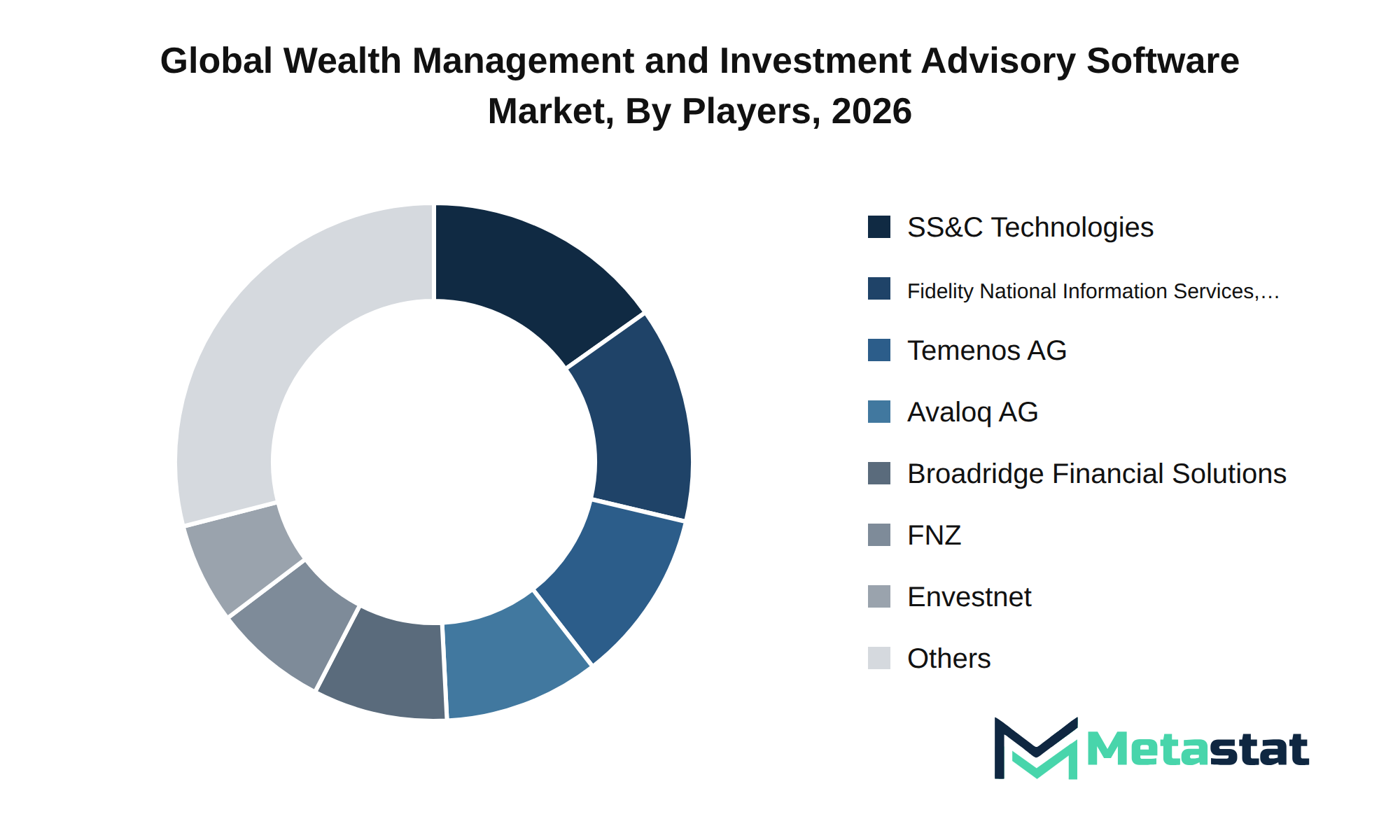
Competitive dynamics in the Wealth Management and Investment Advisory Software market center around strategic consolidation and partnerships among key players. Companies including Avaloq Group AG, Temenos AG, and SS&C Technologies Holdings, Inc engage in mergers and acquisitions to enhance their service offerings and expand market share. These actions aim to create competitive advantages through integrated solutions that cater to evolving client needs.
Product differentiation constitutes a critical focus, with companies innovating in areas like portfolio management, financial planning, and digital engagement. Firms including Fidelity National Information Services, Inc (FIS) and Broadridge Financial Solutions, Inc have established robust research and development pipelines aimed at introducing advanced features that enhance user experience. Strategic alliances and joint ventures strengthen the capabilities of players like Envestnet, Inc and SEI Investments Company, thereby widening their market reach.
Barriers to entry present challenges for new entrants in the Wealth Management and Investment Advisory Software market, owing to established players leveraging brand equity and customer retention strategies. Switching costs associated with existing software ecosystems discourage clients from transitioning to newcomers. The competitive landscape suggests that maintaining technological defensibility through intellectual property portfolios remains vital for long-term success.
The future competitive outlook for the market involves continuous innovation and adaptation to market demands, with companies focusing on growth vectors including enhanced customer service and integration of advanced technology. Firms like InvestCloud, Inc, Objectway SpA, and Orion Advisor Solutions, Inc play significant roles in shaping market trends through their comprehensive solutions.
Forecast and Future Outlook
Market size is forecast to rise from USD 7.1 billion in 2025 to over USD 21.9 billion by 2033. The Wealth Management and Investment Advisory Software market experiences significant growth driven by macroeconomic scenarios that influence downstream demand and core industry maturation. Structural consumption shifts arise owing to firms adapting to next-generation technology integration, enhancing operational efficiency and customer engagement.
Research and development commercialization timelines contribute to the introduction of innovative solutions, promoting competition among market players. Regulatory evolution and imminent compliance milestones shape operational frameworks, compelling firms to invest in systems that ensure adherence to changing policies. Geopolitical realignments and evolving trade corridors alter market dynamics, necessitating strategic capital allocation directives to optimize infrastructure commitments and capital expenditure investment vectors.
Emerging white-space opportunities present unmet enterprise needs within the Wealth Management and Investment Advisory Software market. High-growth pockets identified through executive-level strategic imperatives encourage investments in tailored solutions that address specific client requirements. Defensibility roadmaps guide firms in navigating competitive pressures while maintaining growth trajectories, positioning the market for robust future expansion.
Wealth Management and Investment Advisory Software Market Key Segments
By Solution Type:
- Portfolio Management, Accounting & Performance Reporting
- Financial Planning & Investment Advisory
- Trading, Rebalancing & Order Management
- Client Lifecycle Management, CRM & Digital Engagement
- Risk, Compliance & Regulatory Management
- Data Aggregation, Analytics & Investment Intelligence
- Fee Billing, Revenue & Operations Management
- Others (Tax Optimization, Document Management & Workflow Tools)
By Deployment Model:
- Cloud / Software-as-a-Service (SaaS)
- On-Premises
- Hybrid
By End User:
- Private Banks
- Retail & Universal Banks
- Independent Wealth & Asset Management Firms
- Financial Advisory & RIA Firms
- Broker-Dealers & Securities Firms
- Family Offices
- Trust Companies
- Others (Pension & Insurance Wealth Units, Digital Wealth Providers)
By Organization Size:
- Small & Medium-Sized Enterprises
- Large Enterprises
By Region:
- North America
- Europe
- Asia-Pacific
- South America
- Middle East and Africa
Key Global Wealth Management and Investment Advisory Software Industry Players
- Avaloq Group AG
- Temenos AG
- SS&C Technologies Holdings, Inc
- Fidelity National Information Services, Inc (FIS)
- FNZ Group
- Broadridge Financial Solutions, Inc
- Envestnet, Inc
- SEI Investments Company
- InvestCloud, Inc
- Objectway SpA
- Orion Advisor Solutions, Inc
- Addepar, Inc
- Profile Software
- Comarch SA
- additiv AG
- Finfox Software and Technology AG
- QPLIX GmbH
- Croesus
- dgt Inc
- ERI
- Bravura Solutions Limited
- GBST
- FA Solutions Oy
- CREALOGIX AG
- Tindeco Financial Services AG
Report Coverage
The report strategically identifies and profiles the key market players and analyses their core competencies in each sub-segment of the Wealth Management and Investment Advisory Software market.
Report Attributes | Details |
Study Period | 2021-2033 |
Base Year | 2025 |
Estimated Year | 2026 |
Forecast Period | 2026-2033 |
Historical Period | 2021-2025 |
Growth Rate | CAGR 15.1% from 2026 to 2033 |
Revenue Unit | USD billion |
Segmentation | By Solution Type, Deployment Model, End User, Organization Size, and Region |
By Region | North America (By Solution Type, Deployment Model, End User, Organization Size, and Country)
|
Europe (By Solution Type, Deployment Model, End User, Organization Size, and Country)
| |
Asia Pacific (By Solution Type, Deployment Model, End User, Organization Size, and Country)
| |
South America (By Solution Type, Deployment Model, End User, Organization Size, and Country)
| |
Middle East and Africa (By Solution Type, Deployment Model, End User, Organization Size, and Country)
|
What Report Provides
- Key Company Market Share, Revenue and Ranking for Wealth Management and Investment Advisory Software
- Key Market Leaders in Wealth Management and Investment Advisory Software
- Full In-Depth Analysis of the Parent Industry
- Industry Statistics for Wealth Management and Investment Advisory Software
- Important Changes in Market Dynamics and Trends
- Segmentation Details of the Wealth Management and Investment Advisory Software Market
- Historical, Ongoing and Projected Market Analysis
- Key Strategies of Major Players in the Market
Frequently Asked Questions
Find answers to common questions about this report
The Wealth Management and Investment Advisory Software market size was valued at USD 7.1 billion in 2025.
The Wealth Management and Investment Advisory Software market is projected to grow at a CAGR of 15.1% during the forecast period from 2026 to 2033.
The North America Wealth Management and Investment Advisory Software market size is estimated to reach USD 7.8 billion by 2033.
The segment "Portfolio Management, Accounting & Performance Reporting" leads the Wealth Management and Investment Advisory Software market, with a projected value of USD 5.1 billion by 2033. This segment's growth reflects a compound annual growth rate (CAGR) of 14% during the forecast period.
Digital transformation, driven by automation and advanced technologies, enhances operational efficiency and customer engagement in the Wealth Management and Investment Advisory Software market. The transition to cloud-based solutions and increased investment in data analytics and artificial intelligence enables firms to improve decision-making and deliver personalized services, positioning them for sustainable growth.
North America holds the dominant share of the Wealth Management and Investment Advisory Software market, with a figure of USD 7.8 billion projected for 2033, representing 37.8 percent of the total market.
The Wealth Management and Investment Advisory Software market faces significant challenges from regulatory compliance and macroeconomic conditions, which increase operational complexities and inflate costs. skilled labor deficiencies and concerns regarding data security and privacy hinder firms' ability to expand software capabilities and invest in technological advancements.
Increased emphasis on digital transformation and automation significantly favors product adoption in the Wealth Management and Investment Advisory Software market. Organizations prioritize advanced technologies to enhance operational efficiency and improve client engagement, driving the need for innovative software solutions. Investments in infrastructure modernization further support the integration of advanced tools, positioning firms for sustainable growth.
The Wealth Management and Investment Advisory Software market is estimated to reach a valuation of USD 21.9 billion by 2033.
Key players in the Wealth Management and Investment Advisory Software market include Avaloq Group AG, Temenos AG, SS&C Technologies Holdings, Inc, Fidelity National Information Services, Inc (FIS), FNZ Group, Broadridge Financial Solutions, Inc, and Envestnet, Inc.
Choose Your License
Global Wealth Management and Investment Advisory Software Market
Related Reports
Explore related market intelligence reports worth reading alongside this one.