
LEAD ANALYST
Utkarsh Khirodkar is a Lead Market Research Analyst at MetaStat Insight, specializing in market intelligence, technology sector assessments, and competitive strategy.

India Commercial HVAC Market Size, Share, By Type (Air Handling Units (AHU), Chillers, Variable Refrigerant Flow (VRF), Ductable Systems and Others (Packaged/Rooftop Units, Precision Air Conditioning Systems, Fan Coil Units and Evaporative Cooling Systems)), By Application (Offices, Malls, Hotels, Hospitals and Others (Educational Institutions, Airports & Transportation Hubs, Data Centers and Retail Stores)), By Square Footage (Less than 5,000 Sq. Ft., 5,000 - 20,000 Sq. Ft., 20,000 - 50,000 Sq. Ft., 50,000 - 200,000 Sq. Ft., 200,000 - 500,000 Sq. Ft. and More than 500,000 Sq. Ft.), By Installation Type (New Construction and Replacement & Retrofit), Industry Analysis, Growth, Trends, and Forecast, 2026-2033
Report ID
MSI-5200
Published
September, 2026
Pages
302 Pages
Format
Historical
Base year
Forecast
Forecast period
Report Details
Choose Your License
India Commercial HVAC Market
The India Commercial HVAC market was valued at USD 4,120.1 million in 2025 and is projected to reach USD 8,212 million by 2033, growing at a CAGR of 9.0% over the forecast period.
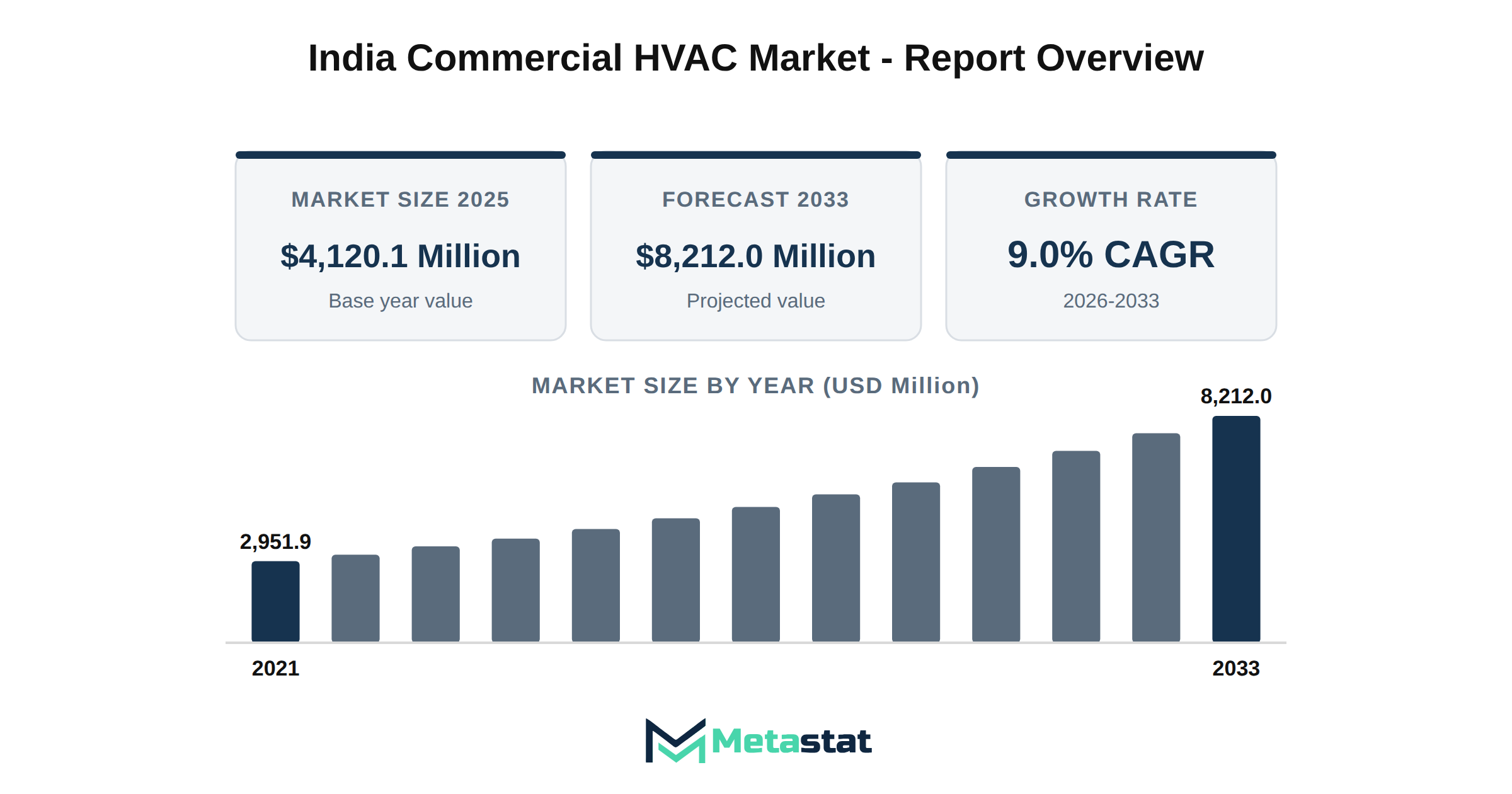
The India Commercial HVAC market reached USD 4,120.1 million in 2025, reflecting a strong growth trajectory with a projected value of USD 8,212 million by 2033. This growth translates to a compound annual growth rate (CAGR) of 9% during the forecast period. Historical data indicates a steady increase in market value, starting from USD 2,951.9 million in 2021 and rising to USD 3,767.1 million in 2024.
Energy efficiency remains a critical focus within the market, driven by compliance with energy codes, BEE standards, and green building mandates that promote the adoption of environmentally friendly HVAC solutions. The transition towards sustainable practices aligns with global decarbonization efforts and circular economy dynamics, influencing consumer preferences and regulatory frameworks.
High-growth critical infrastructure sectors, including data centers, healthcare, and transit hubs, significantly contribute to market expansion. These sectors demand advanced HVAC systems that ensure optimal operational efficiency and climate control, enhancing performance and reliability in critical environments.
System architecture transitions from traditional chillers to commercial Variable Refrigerant Flow (VRF) systems reflect evolving consumer preferences and technological advancements. This shift enhances energy efficiency and operational flexibility, catering to diverse application needs across commercial spaces.
The domestic manufacturing landscape is evolving, with supply chain localization and the Production-Linked Incentive (PLI) scheme impacting market dynamics. Enhancements in local manufacturing capabilities are expected to reduce dependence on imports, streamline logistics, and optimize the value chain.
Smart automation and the emergence of Cooling-as-a-Service (CaaS) models transform market offerings, aligning with consumer demands for flexible and cost-effective solutions. Investments in innovative technologies and retrofits improve operational efficiency while ensuring compliance with evolving standards and regulatory requirements.
Energy efficiency regulations, including Energy Codes, BEE Standards, and Green Building Mandates (ECBC/ECSBC), significantly influence the India Commercial HVAC market. These standards drive investments in energy-efficient technologies, promoting a shift towards sustainable HVAC solutions compliant with stringent environmental criteria. Compliance with these regulations enhances operational efficiency and reduces long-term operating costs for end-users across various sectors.
The growing demand for high-performance critical infrastructure, particularly in data centers, healthcare facilities, and transit hubs, drives the market forward. These sectors require reliable HVAC systems to maintain optimal environmental conditions, ensuring the safety and comfort of occupants while supporting technological advancements. Increased investments in these areas reflect a strategic shift towards modernizing infrastructure, further stimulating market growth.
The transition in system architecture from traditional chillers to commercial Variable Refrigerant Flow (VRF) systems marks a notable trend within the market. VRF systems offer enhanced flexibility and energy efficiency, catering to diverse building designs and operational demands. This architectural evolution aligns with the broader industry movement towards integrated and smart HVAC solutions, contributing to significant energy savings and improved climate control.
Domestic manufacturing and supply chain localization have become essential in shaping the market landscape. Government initiatives including Production-Linked Incentive (PLI) schemes promote local production, reducing dependence on imports. This localization strategy strengthens the supply chain, encourages innovation, and enhances competitive positioning within the India Commercial HVAC market.
The integration of smart automation technologies and the emergence of Cooling-as-a-Service (CaaS) models reflect a shift towards more adaptable and user-centric HVAC solutions. These innovations facilitate real-time monitoring and optimization of HVAC systems, improving energy management and operational efficiency. Regulatory compliance remains essential in this context, ensuring that new technologies align with established standards and environmental goals.
Ongoing disruptions in global supply chains and geopolitical risks necessitate a reassessment of sourcing strategies within the market. Companies increasingly focus on diversifying their supply chains to mitigate risks associated with inflationary pressures and currency volatility. This strategic approach enhances resilience against market fluctuations while encouraging long-term sustainability.
Overall, the India Commercial HVAC market is poised for significant growth, driven by regulatory mandates, infrastructure investments, and technological advancements. The focus on sustainability and energy efficiency shapes the competitive dynamics and strategic direction of industry players over the forecast period.
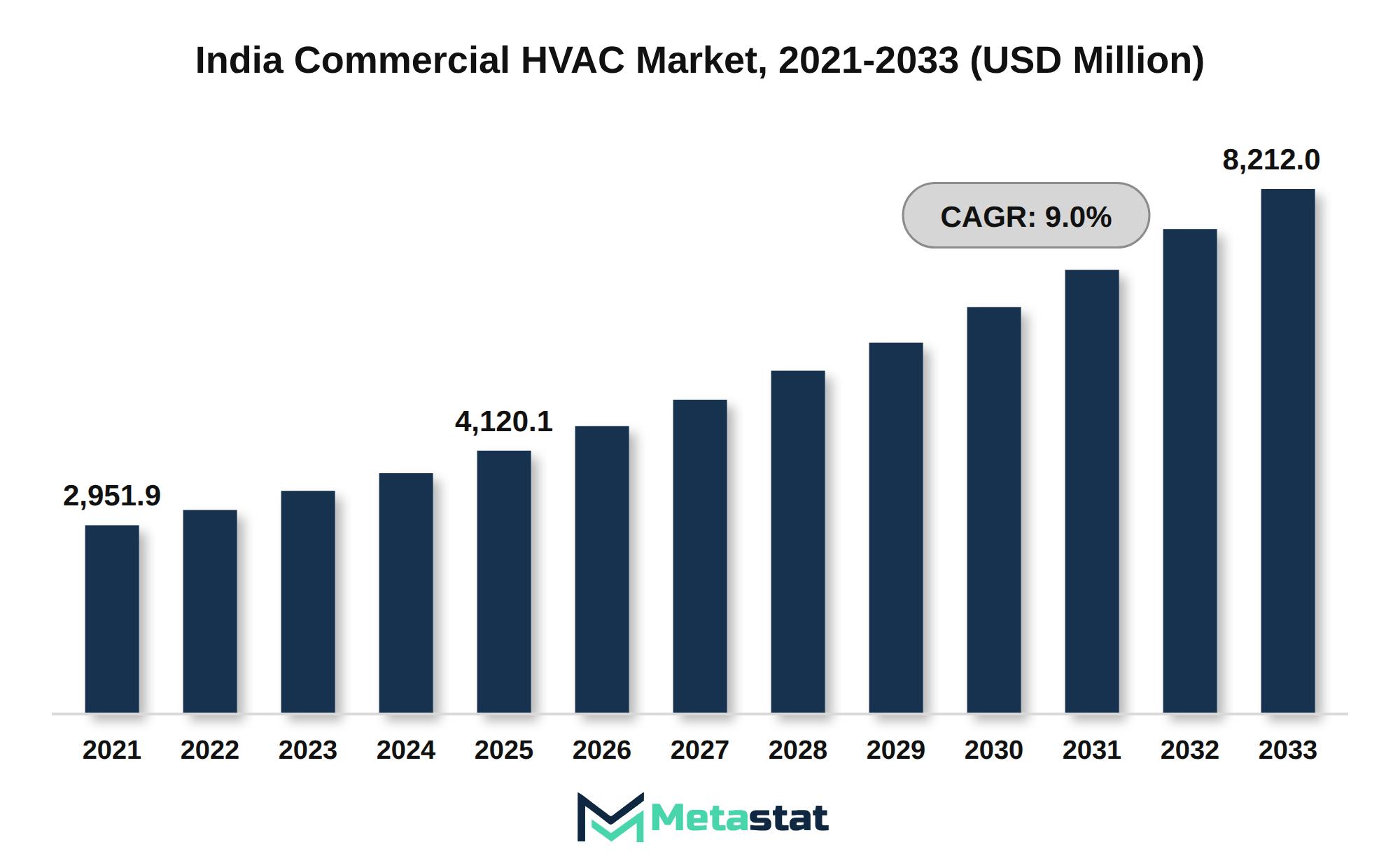
Strong macro-economic factors contribute to the growth of the India Commercial HVAC market. Increased GDP growth stimulates capital investment in various sectors, resulting in higher demand for HVAC systems. Elevated levels of urbanization lead to expanded infrastructure projects, creating a greater need for efficient heating, ventilation, and air conditioning solutions. Favorable interest rates support financing options for businesses, encouraging investment in new HVAC systems.
Digital transformation and technological integration enhance operational efficiency in the market. The adoption of automation and artificial intelligence enables businesses to optimize energy consumption and improve system performance. This shift attracts investments in HVAC technologies that promote sustainability and resource stewardship, aligning with global trends toward carbon footprint reduction and eco-friendly operations.
Consumer behavior shifts due to changing demographic patterns, including aging populations and urbanization, create new demands for advanced HVAC solutions. Businesses increasingly focus on enhancing indoor air quality, leading to a preference for systems that offer healthier environments. These trends contribute to the overall growth of the market and position it favorably for future expansion.
Investment in infrastructure development and asset modernization significantly influences the India Commercial HVAC market. Upgrading facilities and implementing modern HVAC technologies support energy efficiency initiatives, reducing operational costs. Businesses prioritizing cost-efficiency and productivity drive the demand for innovative HVAC solutions, expected to increase through 2033.
The evolving landscape of the India Commercial HVAC market reflects a significant shift towards technological integration, with automation, artificial intelligence, and software adoption driving operational efficiency. Businesses increasingly invest in digital tools that streamline processes, reduce manual interventions, and enhance real-time monitoring of HVAC systems. This integration contributes to improved reliability and performance of commercial HVAC systems, meeting heightened consumer expectations.
Automation technologies optimize energy usage, leading to substantial cost savings. Smart HVAC solutions enable precise temperature control and adaptive scheduling, lowering energy bills and minimizing waste. The implementation of AI in HVAC systems supports predictive maintenance, which reduces downtime and prolongs equipment lifespan, enhancing overall productivity.
The adoption of these technologies aligns with the growing emphasis on sustainability within the India Commercial HVAC market. Firms prioritize solutions that enhance performance while contributing to reducing the carbon footprint, appealing to environmentally conscious consumers. The drive for improved operational productivity through technological integration positions the market for growth, responding to economic pressures and consumer demands for efficiency and sustainability.
The India Commercial HVAC market faces significant challenges owing to stringent regulatory requirements that impose barriers to entry and compliance for various stakeholders. Compliance hurdles associated with evolving environmental standards create additional operational complexities for manufacturers and installers, leading to increased costs of doing business. These compliance requirements often demand advanced technologies and processes, which strain the financial resources of smaller firms trying to compete.
Macroeconomic headwinds, including inflationary pressures and supply chain disruptions, further complicate the market environment. Rising material costs and logistical challenges delay project timelines, affecting the overall demand for commercial HVAC systems. Geopolitical instability in the region exacerbates these issues, limiting investment flows and resulting in a cautious approach from potential buyers.
High capital investment requirements for HVAC systems pose another significant restraint. Organizations hesitate to invest in new systems, especially in sectors like hospitality and retail, where return on investment timelines are lengthy. This hesitation leads to slower adoption rates, impacting overall market growth. Escalating operating costs linked to energy consumption and maintenance further challenge market participants, prompting a reevaluation of existing operational practices.
The market is subject to technological obsolescence, with rapid advancements in HVAC technologies. Firms lagging in updates face substitution risks from more innovative solutions offered by competitors, which diminish their market share. Infrastructure gaps in certain regions of India, combined with connectivity deficits, hinder efficient project deployment, pushing back timelines and increasing costs.
Lastly, the availability of skilled labor remains a pressing issue. Gaps in technical expertise limit the capacity of companies to implement and maintain advanced HVAC systems effectively. This skill shortage constrains growth potential in the India Commercial HVAC market, resulting from organizations struggling to find qualified personnel capable of meeting complex installation and operational demands.
Geopolitical fragmentation increasingly disrupts the India Commercial HVAC market. Trade deficits and tariff friction result in increased costs for imported components and technologies. Suppliers face challenges in maintaining competitive pricing, which directly impacts profit margins. Technological disruptions complicate the integration of advanced HVAC solutions, requiring significant investment in research and development to remain competitive.
Supply chain instability heightens these challenges, with logistics disruptions affecting the timely delivery of essential components. The market experiences volatility in feedstock prices, further straining operational budgets. Evolving regional regulatory standards introduce compliance overhead that requires additional resources and planning, impacting the flexibility of market participants.
Deficits in intellectual property protection expose companies to risks, leading to hesitance in investment and innovation. Cybersecurity risks and data vulnerabilities threaten the stability of operations, prompting companies to allocate resources to protect their interests. The cumulative effect of these factors hinders growth potential in the market, compelling stakeholders to adapt to an increasingly complex environment.
The India Commercial HVAC market experiences significant opportunities driven by emerging regional demands and technological innovations. Rapid urbanization and infrastructure modernization create a strong need for efficient heating, ventilation, and air conditioning solutions. Industries including retail and hospitality, which require temperature control for customer comfort, increasingly invest in advanced HVAC systems. This trend contributes to a projected market value of USD 8,212 million by 2033, reflecting a compound annual growth rate (CAGR) of 9% from 2026 to 2033.
Technological disruptions play a crucial role in shaping market dynamics. The integration of smart technologies and IoT solutions enhances operational efficiency and allows real-time monitoring and control. These advancements appeal to businesses aiming to reduce energy consumption and improve sustainability practices. The growing emphasis on green transformations aligns with global sustainability imperatives, encouraging the adoption of eco-friendly HVAC solutions that meet stringent environmental standards.
Further opportunities arise from shifts in buying behavior and digital procurement practices among consumers. Buyers increasingly prefer online platforms for purchasing HVAC systems, influenced by the convenience of accessing product information and comparing options. This trend encourages manufacturers to adopt digital strategies that enhance customer engagement and streamline sales processes, ultimately driving growth in the India Commercial HVAC market.
Investment in product integration and niche application growth creates a competitive landscape. Manufacturers specializing in tailored solutions for specific industries, including healthcare and education, experience heightened demand. These applications require HVAC systems that comply with specific environmental standards and operational requirements, further supporting market expansion.
The India Commercial HVAC market is segmented based on Type, Application, Square Footage, and Installation Type.
Valued at USD 1,035.2 million in 2026, the Air Handling Units (AHU) segment is projected to reach USD 1,868.2 million by 2033, achieving a CAGR of 8.8% during the forecast period. This growth stems from various demand drivers, including increasing investments in infrastructure development, rising urbanization rates, and the growing need for energy-efficient systems in commercial buildings. Adoption of AHUs in diverse applications, including offices, hospitals, and malls, contributes significantly to the segment's expansion. The emphasis on indoor air quality and ventilation further increases demand, driven by building owners seeking to ensure compliance with health standards and improve occupant comfort.
Technological maturation significantly influences the segment's dynamics. Recent innovations in AHU designs focus on enhancing energy efficiency and simplifying installation processes. Next-generation upgrades, including IoT integration and smart controls, allow for real-time monitoring and optimization of HVAC systems. Such advancements appeal to end-users who prioritize energy savings and operational efficiency. Evolving regulatory compliance standards push manufacturers to adopt more sustainable practices, creating a competitive environment within the India Commercial HVAC market.
Pricing volatility in raw material sourcing impacts the cost structure of AHUs. Manufacturers face pressures from fluctuating material costs, which influence final prices for customers. Strategic opportunity windows arise because companies explore alternative materials that offer cost advantages while maintaining performance standards. Downstream applications provide pathways for growth, with the rising trend of green building certifications driving demand. While businesses prioritize sustainability, the AHU segment is positioned for robust expansion, supported by ongoing investments and evolving consumer preferences.
Demand for chillers in the India Commercial HVAC market is driven by rising temperatures and the need for efficient cooling solutions in various applications. Increasing urbanization and the expansion of commercial spaces, including offices and malls, fuel the adoption of advanced cooling technologies. Regulatory compliance regarding energy efficiency and environmental standards enhances the demand for chillers that meet these requirements.
The chillers segment is projected to reach USD 2,189.3 million by 2033, at a CAGR of 8.4% during the forecast period. Continuous technological advancements, including the integration of IoT for enhanced monitoring and control, play a vital role in driving segment growth. Adoption of next-generation chillers that offer improved energy efficiency and reduced operational costs strengthens market positioning among stakeholders.
End-use dynamics highlight the importance of chillers in sectors including healthcare, hospitality, and commercial real estate. Hospitals require precise temperature control for medical equipment and patient comfort, significantly contributing to demand. Malls and hotels represent substantial markets for chillers, seeking reliable cooling solutions to enhance customer satisfaction and operational efficiency.
Pricing volatility remains a critical factor, influenced by raw material costs and global supply chain dynamics. Strategic opportunity windows exist for manufacturers focusing on innovation and product evolution, enabling them to capture market share in a competitive environment. The India Commercial HVAC market evolves with investments in research and development aimed at next-gen upgrades essential for maintaining relevance in this growing sector.
Growth in the Variable Refrigerant Flow (VRF) segment stems from increasing demand for energy-efficient climate control solutions in commercial settings. This segment leverages advancements in technology, enabling systems that use less energy while providing optimal performance levels. Rapid urbanization and commercial expansion in India drive the need for sophisticated HVAC solutions, particularly in offices, malls, and hospitals, sectors characterized by high cooling loads and stringent performance requirements.
Technological maturation within the VRF systems enhances adoption rates, particularly due to improved system control and flexibility. Integration with smart building technologies supports operational efficiency, allowing building managers to optimize energy consumption and reduce costs. Market players focus on next-generation upgrades, ensuring compatibility with modern infrastructure and evolving consumer preferences.
The Variable Refrigerant Flow segment is projected to reach USD 2,446.4 million by 2033. Factors driving this expansion include rising awareness of energy conservation, increased investment in commercial real estate, and favorable government policies promoting sustainable practices.
End-use dynamics within the India Commercial HVAC market indicate a shift towards VRF solutions, particularly among large-scale commercial projects. Hospitals and educational institutions prioritize VRF systems for their ability to deliver precise temperature control and energy efficiency. Regulatory compliance standards, including energy codes and sustainability certifications, further incentivize the adoption of these systems.
Cost structures within the VRF segment continue to evolve, influenced by raw material sourcing and supply chain resilience. The market anticipates pricing volatility due to fluctuations in component availability and manufacturing costs. Strategic opportunity windows arise for manufacturers investing in innovation and sustainable practices, positioning themselves favorably against disruptive alternatives in the HVAC sector.
Growth in the ductable systems segment stems from increasing demand for flexible and efficient air distribution solutions in various commercial applications. This segment is projected to grow at a CAGR of 8.6% during the forecast period. Rising awareness of energy efficiency drives the adoption of innovative ducting technologies that enhance system performance. Commercial spaces including offices and malls increasingly favor ductable systems for their ability to provide uniform cooling and heating, contributing to enhanced occupant comfort.
The competitive landscape for ductable systems features companies investing in technological advancements to improve product offerings. Innovations in materials and designs support better integration with existing HVAC systems, making these options attractive to end-users. Shifts in consumer preferences toward healthier indoor environments push demand for advanced filtration and air quality management solutions, reinforcing the ductable systems' value proposition in the India Commercial HVAC market.
Regulatory compliance standards focusing on sustainability and energy efficiency shape the market's direction. Manufacturers responding to these standards gain a competitive edge through certifications that validate their product performance and environmental impact. Overall, the ductable systems segment holds significant potential within the broader context of the India Commercial HVAC market, driven by evolving end-use dynamics and ongoing investments in infrastructure development.
Shifts in consumer preferences towards energy-efficient and environmentally friendly solutions drive demand for packaged and rooftop units, precision air conditioning systems, fan coil units, and evaporative cooling systems within the India Commercial HVAC market. The increasing emphasis on sustainability influences commercial establishments to adopt systems that minimize energy consumption while maintaining optimal indoor climate conditions.
Technological advancements in smart HVAC systems enhance operational efficiency and expand the appeal of these products. Real-time monitoring capabilities allow users to optimize energy usage, leading to cost savings and improved performance. Consequently, the integration of next-generation upgrades aligns with regulatory compliance standards and supports the growth of this sub-segment.
Investment in infrastructure development supports expansion within this sub-segment. A rising number of commercial projects, including malls, hotels, and offices, increases the need for reliable HVAC solutions, driving adoption rates. The market experiences substantial contributions from various end-use sectors, propelling increased consumption of these systems.
Regulatory compliance regarding emissions and energy efficiency reinforces the shift towards advanced HVAC technologies. Companies in the sector adapt to these standards, ensuring product evolution aligns with consumer expectations. Continuous innovation in system performance, durability, and ease of installation enhances market competitiveness.
Supply chain resilience is essential for maintaining product availability and cost efficiency. Manufacturers focus on securing reliable raw material sourcing while addressing logistics vulnerabilities. Rising demand for sustainable solutions expands strategic opportunity windows for companies willing to innovate and adapt to changing market dynamics.
The India Commercial HVAC market reflects a significant trend towards adopting alternative technologies and systems that address both current and future demands. Recognizing these factors enables firms to capitalize on growth opportunities while navigating challenges associated with pricing volatility and margin pressures.
Valued at USD 1,562.5 million in 2026, the Offices segment is projected to reach USD 2,755.1 million by 2033, at a CAGR of 8.4% during the forecast period. Demand for HVAC systems in office environments stems from the increasing focus on energy-efficient solutions and the need for improved indoor air quality. The growing emphasis on energy efficiency influences new construction and renovation projects, prompting businesses to invest in advanced systems that reduce energy consumption and enhance comfort levels.
Technological maturation significantly drives segment growth, with innovations in HVAC systems including smart controls and IoT integration enabling better energy management. The adoption of these technologies enhances operational efficiency and aligns with sustainability goals, attracting investment from companies committed to environmental responsibility.
Increasing awareness around employee well-being drives demand for comfortable working environments, leading businesses to prioritize HVAC upgrades. Regulatory compliance, including adherence to energy efficiency standards, further fuels the push for modern systems in new office developments and retrofitting projects. These factors contribute to a dynamic market where the Offices segment in the India Commercial HVAC market shows strong growth potential.
Malls represent a significant application segment within the India Commercial HVAC market, driven by increasing demand for temperature control and air quality in shopping environments. This segment is estimated to reach USD 1,914.2 million by 2033, at a CAGR of 9.1% during the forecast period. A growing preference for ambient comfort in malls enhances the need for advanced HVAC solutions, leading to increased investments from property developers and retail operators.
Expansion of malls across urban areas increases the demand for efficient HVAC systems tailored to large public spaces. Rising foot traffic in these facilities necessitates robust air management to ensure comfort and meet regulatory compliance standards. The shift towards energy-efficient systems aligns with consumer expectations and legislative requirements, thereby influencing purchasing decisions.
Technological advancements in HVAC systems, including smart controls and automated climate management, support growth in the malls segment. These innovations enhance operational efficiency and reduce energy consumption, contributing to lower operating costs in the long term. The competitive landscape encourages manufacturers to focus on product evolution, with next-gen upgrades that address emerging consumer needs and preferences.
The market exhibits resilience against external shocks, given the strategic importance of malls in modern retail. Ongoing capital investment in infrastructure and technology positions stakeholders to leverage upcoming opportunities effectively. Overall, the strong growth trajectory of the malls segment reflects broader trends within the India Commercial HVAC market, reinforcing its critical role in contemporary commercial environments.
Increasing travel and tourism activities in India drive demand for HVAC solutions in hotels. Enhanced guest experience and comfort have become vital for hotel operators, leading to significant investments in advanced HVAC systems. The shift towards energy-efficient and sustainable technologies aligns with regulatory compliance standards, promoting the adoption of next-generation HVAC solutions.
The hotels segment is expected to reach USD 1,536.5 million by 2033. The market demonstrates a strong growth trajectory due to rising disposable incomes and changing consumer preferences towards luxury accommodations. The evolution of products to meet specific hotel requirements, including quieter systems and improved air quality, further supports segment expansion.
Technological maturation, including smart building technologies and integrated systems, enhances operational efficiency in hotels. Adoption of these innovations not only reduces energy consumption but optimizes maintenance costs, contributing to improved profit margins. The market experiences heightened competition driven by leading players striving to introduce innovative solutions, positioning themselves advantageously within the India Commercial HVAC market.
Investment in energy-efficient systems serves because a strategic opportunity window for stakeholders. The ability to meet strict regulatory standards becomes crucial for long-term viability. Overall, the hotels segment reflects a dynamic relationship of demand drivers and operational considerations, shaping the future of the India Commercial HVAC market.
Growth in the Hospitals segment aligns with increasing health infrastructure investments across India. Hospitals require advanced HVAC solutions to maintain strict temperature and air quality standards, directly impacting patient care and operational efficiency. The projected growth at a CAGR of 10% during the forecast period highlights the segment's significance within the India Commercial HVAC market.
Technological advancements significantly influence adoption rates in this segment. Hospitals prioritize energy-efficient systems that reduce operational costs and address environmental sustainability concerns. Enhanced control systems improve air quality, ensuring compliance with health regulations, thus increasing the segment's appeal to facility managers and stakeholders.
Investment in smart HVAC solutions marks a critical trend within hospitals. The integration of IoT technologies supports real-time monitoring and management of HVAC systems, optimizing performance and minimizing downtime. This evolution positions hospitals to respond effectively to dynamic healthcare demands while enhancing patient comfort.
Market dynamics reflect an increasing need for reliability and performance in HVAC systems due to rising patient volumes and stringent regulatory compliance standards. Facilities seeking to provide superior patient experiences invest in high-quality systems that meet these requirements, driving demand within the segment.
The Hospitals segment's growth is driven by the need for modernization and upgrades of existing HVAC systems. Many facilities face pressure to enhance energy efficiency and reduce operational costs. This shift towards advanced systems supports the overall expansion of the market, ensuring stakeholders remain competitive and compliant with evolving healthcare standards.
Valued at USD 2,502.8 million in 2026, the New Construction segment is projected to reach USD 4,726 million by 2033, at a CAGR of 9.5% during the forecast period. Demand for innovative HVAC solutions arises from the increasing number of commercial construction projects across India. Urbanization and infrastructural development drive significant investments in new buildings, necessitating efficient heating, ventilation, and air conditioning systems.
Regulatory compliance and energy efficiency standards enhance the segment's growth, compelling builders to adopt advanced HVAC technologies. Technological maturation enables the introduction of next-generation products, enhancing operational efficiency and reducing energy costs. The focus on sustainability influences investment in energy-efficient systems, aligning with global environmental goals.
Competitive dynamics in the market encourage manufacturers to innovate continuously, offering products that meet diverse customer needs. The New Construction segment benefits from strategic partnerships between suppliers and construction companies, facilitating streamlined project execution and implementation of advanced HVAC solutions. This collaborative approach enhances market penetration and expands consumer reach.
Investment in smart building technologies represents a significant opportunity, reflecting shifts in consumer preferences toward automated and connected systems. Such technology integration improves operational efficiency and provides long-term cost savings for end-users. The evolving landscape of the India Commercial HVAC market positions the New Construction segment for sustained growth, driven by these demand factors and strategic advancements.
Demand for the Replacement & Retrofit segment in the India Commercial HVAC market derives from ongoing infrastructure upgrades and the necessity for improved energy efficiency. Businesses across various sectors prioritize retrofitting existing systems to enhance performance and reduce operational costs. The segment benefits from governmental initiatives promoting energy-efficient solutions and environmental sustainability, contributing to regulatory compliance and certification opportunities.
Growth for the Replacement & Retrofit segment aligns with technological advancements in HVAC systems, allowing for more efficient solutions that meet modern standards. Upgrades to older systems enhance overall performance and contribute to a reduction in energy consumption. The segment is projected to reach USD 3,486 million by 2033, at a CAGR of 8.3% during the forecast period.
Investment in this segment reflects a strategic opportunity for stakeholders in the market, driven by businesses recognizing the importance of optimizing HVAC systems. Emphasis on sustainability and operational efficiency drives demand for advanced systems, positioning the market favorably for continued expansion in the coming years.
The competitive landscape of the India Commercial HVAC market reflects a dynamic environment characterized by strategic consolidation and the presence of established players. Companies engage in various go-to-market strategies, focusing on product differentiation and proprietary technology moats to maintain competitive advantages. Significant players including Blue Star Limited, Daikin India, and Carrier India leverage their extensive R&D pipelines to innovate and enhance efficiency in their offerings.
Strategic alliances and joint ventures between companies underpin efforts to expand market reach and improve product offerings. Partnerships between manufacturers like Honeywell Building Technologies India and Siemens AG facilitate access to advanced technologies and operational efficiencies, enhancing the overall value proposition. The presence of formidable brands including Mitsubishi Electric Corporation and LG Electronics India creates substantial barriers to entry for new competitors, reinforcing existing market positions.
Customer retention strategies play a vital role in sustaining market share, with established players implementing loyalty programs and service excellence initiatives. Companies including Godrej and Boyce Manufacturing Company Limited focus on brand equity dynamics to strengthen customer relationships and minimize switching costs, providing them with a competitive edge in the market.
Overall, the competitive outlook for the India Commercial HVAC market indicates a robust environment where established firms continuously adapt and innovate to address evolving market demands. Anticipated growth vectors will shape the future landscape, compelling companies to navigate challenges while seizing emerging opportunities for expansion.
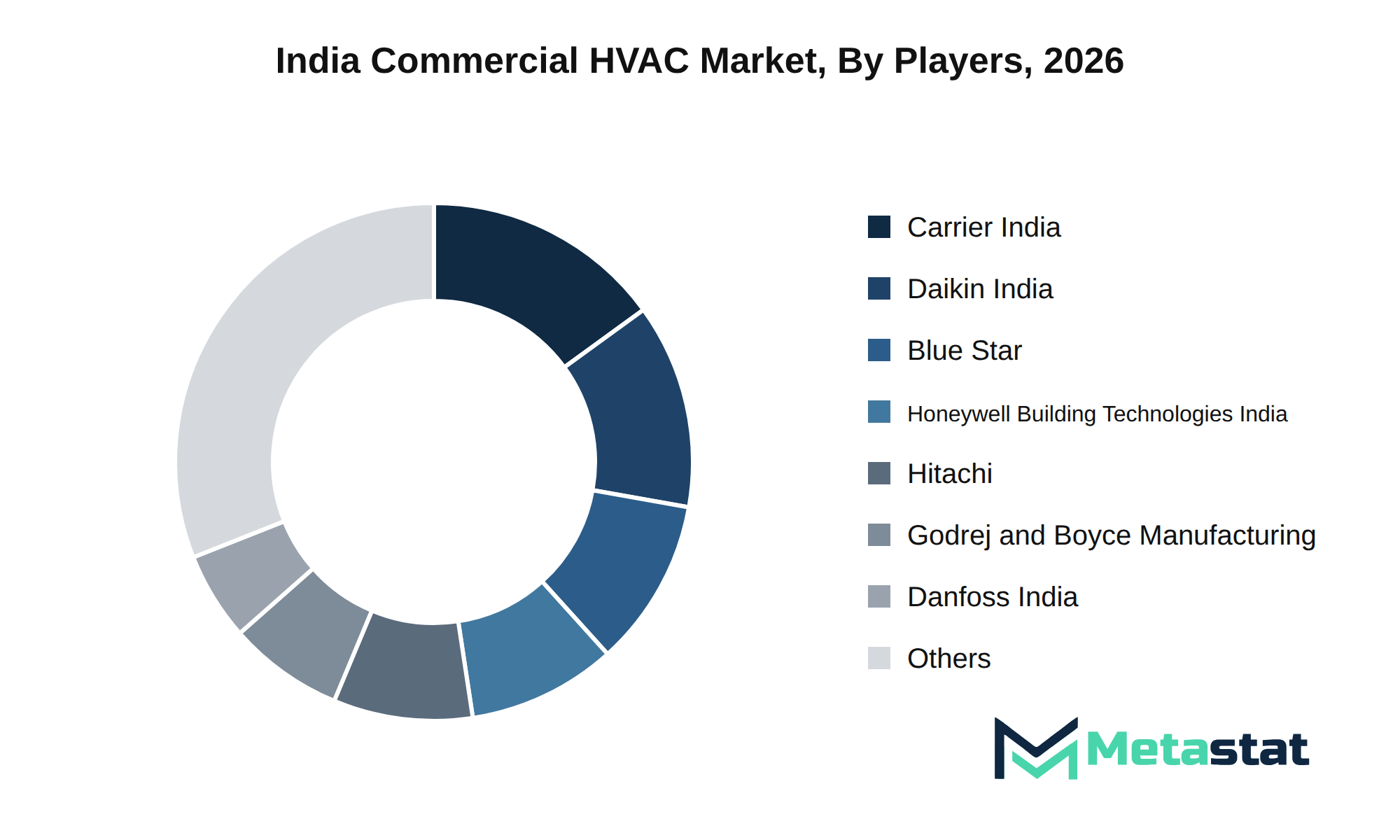
Market size is forecast to rise from USD 4,120.1 million in 2025 to over USD 8,212 million by 2033. This growth reflects a solid CAGR of 9.0%, driven by various macroeconomic factors and evolving market dynamics.
The India Commercial HVAC market experiences robust demand stemming from increasing industrialization and urbanization. The expansion of infrastructure projects and the rising number of commercial establishments significantly contribute to this demand. Economic cycles influence capital expenditures, leading businesses to invest in efficient HVAC systems during periods of growth while tightening budgets during downturns.
Strategic capital allocation and infrastructure commitments play crucial roles in shaping market trends. Government policies focused on energy efficiency and sustainability encourage investments in next-generation technology, reflecting a shift towards more advanced HVAC solutions. Compliance with regulatory standards and imminent policy enforcement will drive market participants to innovate and adapt their offerings to meet evolving requirements.
Simultaneously, geopolitical realignments and evolving trade corridors impact supply chain dynamics, influencing the availability and pricing of key components necessary for HVAC systems. The integration of research and development efforts into product life cycles allows companies to address unmet enterprise needs while identifying high-growth pockets within the market.
The India Commercial HVAC market is on an upward trajectory, supported by a combination of economic growth, regulatory evolution, and technological advancements. Businesses are encouraged to navigate these changes strategically to capitalize on emerging opportunities and ensure long-term growth.
The report strategically identifies and profiles the key market players and analyses their core competencies in each sub-segment of the Commercial HVAC market.
|
Report Attributes |
Details |
|
Study Period |
2021-2033 |
|
Base Year |
2025 |
|
Estimated Year |
2026 |
|
Forecast Period |
2026-2033 |
|
Historical Period |
2021-2025 |
|
Growth Rate |
CAGR 9.0% from 2026 to 2033 |
|
Revenue Unit |
USD million |
|
Segmentation |
By Type, Application, Square Footage, Installation Type, and Region |
Find answers to common questions about this report
The India Commercial HVAC market size was valued at USD 4,120.1 million in 2025, according to the Metastat Insights study.
The Commercial HVAC market is projected to grow at a CAGR of 9.0% during the forecast period from 2026 to 2033.
The Variable Refrigerant Flow (VRF) segment leads the India Commercial HVAC market with a projected value of USD 2,446.4 million by 2033. This figure surpasses other segments based on the forecasted growth and market share.
Key drivers for the India Commercial HVAC market include strong macro-economic factors, urbanization, and favorable interest rates that stimulate demand. Technological integration, particularly automation and artificial intelligence, enhances operational efficiency and attracts investments focused on sustainability and improved indoor air quality. These factors collectively position the market for significant growth through 2033.
Significant challenges restrain the India Commercial HVAC market growth, including stringent regulatory requirements that increase compliance costs and operational complexities. High capital investment requirements and inflationary pressures further deter organizations from investing in new systems, while a shortage of skilled labor limits the effective implementation and maintenance of advanced HVAC technologies.
Strong macro-economic factors, including increased GDP growth and urbanization, drive demand for HVAC systems. Favorable interest rates facilitate business investments in advanced technologies, while a focus on enhancing indoor air quality and sustainability aligns with consumer preferences, further promoting product adoption in the India Commercial HVAC market.
The Commercial HVAC market is estimated to reach a valuation of USD 8,212 million by 2033.
Key players in the India Commercial HVAC market include Blue Star Limited, Carrier India, Daikin India, Honeywell Building Technologies India, Johnson Controls, LG Electronics India, Mitsubishi Electric Corporation, and Voltas Limited.
Chillers are projected to reach a value of USD 2,189.3 million by 2033, growing at a compound annual growth rate of 8.4%.
The malls application segment is expected to grow at a compound annual growth rate of 9.1%, reaching USD 1,914.2 million by 2033.
The analysts below cover Machinery & Equipment research at Metastat Insights.
LEAD ANALYST
Utkarsh Khirodkar is a Lead Market Research Analyst at MetaStat Insight, specializing in market intelligence, technology sector assessments, and competitive strategy.

INDUSTRY CONSULTANT - CHEMICALS & ADVANCED MATERIALS
Chemicals and Materials · Machinery & Equipment · Packaging
Amit Gadhekar Consultant for Chemicals and Materials at MetaStat Insight, directing sector-specific intelligence, research, and strategic consulting across global chemical and processing markets.

PRINCIPAL CONSULTANT - QUALITY SYSTEMS & COMPLIANCE
Electronics and Semiconductor · Machinery & Equipment · Professional Services
Omkar Phadtare is an Industry Consultant at MetaStat Insight, specializing in quality systems, regulatory compliance, and standards benchmarking to drive data-driven market intelligence and strategic industry research.

ENERGY & INFRASTRUCTURE INDUSTRY CONSULTANT
Automotive and Transportation · Electronics and Semiconductor · Energy and Power · Machinery & Equipment
Saurabh Vasant Ganvir consults for Energy & Infrastructure Industry at MetaStat Insight, specializing in renewable energy, solar EPC, and electric vehicle (EV) infrastructure markets.

LEAD CONSULTANT - COMMUNICATION, TELECOM, AND IT
Electronics and Semiconductor · Information & Technology · Machinery & Equipment · Professional Services
Ravindra Sathe Consultants for Communication, Telecom, and IT at MetaStat Insight. He leads the firm's industry research initiatives across telecommunications infrastructure, digital connectivity, enterprise networking, and emerging information technology domains.
When evaluating distributed energy resource management systems, standard research summaries tend to gloss over the operational differences between front-of-the-meter utility deployments and behind-the-meter industrial sites. The MetaStat Insight report addressed those distinctions directly, especially regarding software interoperability standards and grid interconnection backlogs. The five-year market sizing across regional transmission organizations provided actionable context for our grid modernization strategy.
Most industry reports on warehouse automation bundle autonomous mobile robots and fixed conveyor installations into the same top-level numbers, which complicates advisory work. This study split the market cleanly by payload tiers, navigation technology, and fleet management software layers. The regional forecast for Western Europe gave our team defensible adoption benchmarks when evaluating capital allocation for logistics clients, saving us days of secondary data scrubbing.
Analyzing the transition from natural gas to green hydrogen in iron ore reduction requires realistic infrastructure timelines. Meta stat insight supplied a detailed regional assessment of DRI plant conversion costs and scrap metal availability in North America and Western Europe. Their report carefully examined pellet quality specs and electrical grid access constraints without making oversimplified market assumptions. The research material served as a practical reference during internal technology roadmap discussions.
Explore related market intelligence reports worth reading alongside this one.