
LEAD ANALYST
Utkarsh Khirodkar is a Lead Market Research Analyst at MetaStat Insight, specializing in market intelligence, technology sector assessments, and competitive strategy.

India Electric Tractor Market Size, Share, By Power Source (Battery Electric, Hybrid Electric and Plug-in Hybrid Electric), By Power Output (Less than 50 HP, 50-100 HP, 100-150 HP and More than 150 HP), By Battery Technology (Lithium Iron Phosphate (LFP), Nickel Manganese Cobalt (NMC) Lithium-Ion and Others (Sodium-Ion and Emerging Battery Chemistries)), By Function (Agriculture & Forestry, Industrial and Utility), Industry Analysis, Growth, Trends, and Forecast, 2026-2033
Report ID
MSI-5174
Published
September, 2026
Pages
272 Pages
Format
Historical
Base year
Forecast
Forecast period
Report Details
Choose Your License
India Electric Tractor Market
The India Electric Tractor market was valued at USD 392.9 million in 2025 and is projected to reach USD 5,933.6 million by 2033, growing at a CAGR of 40.4% over the forecast period.
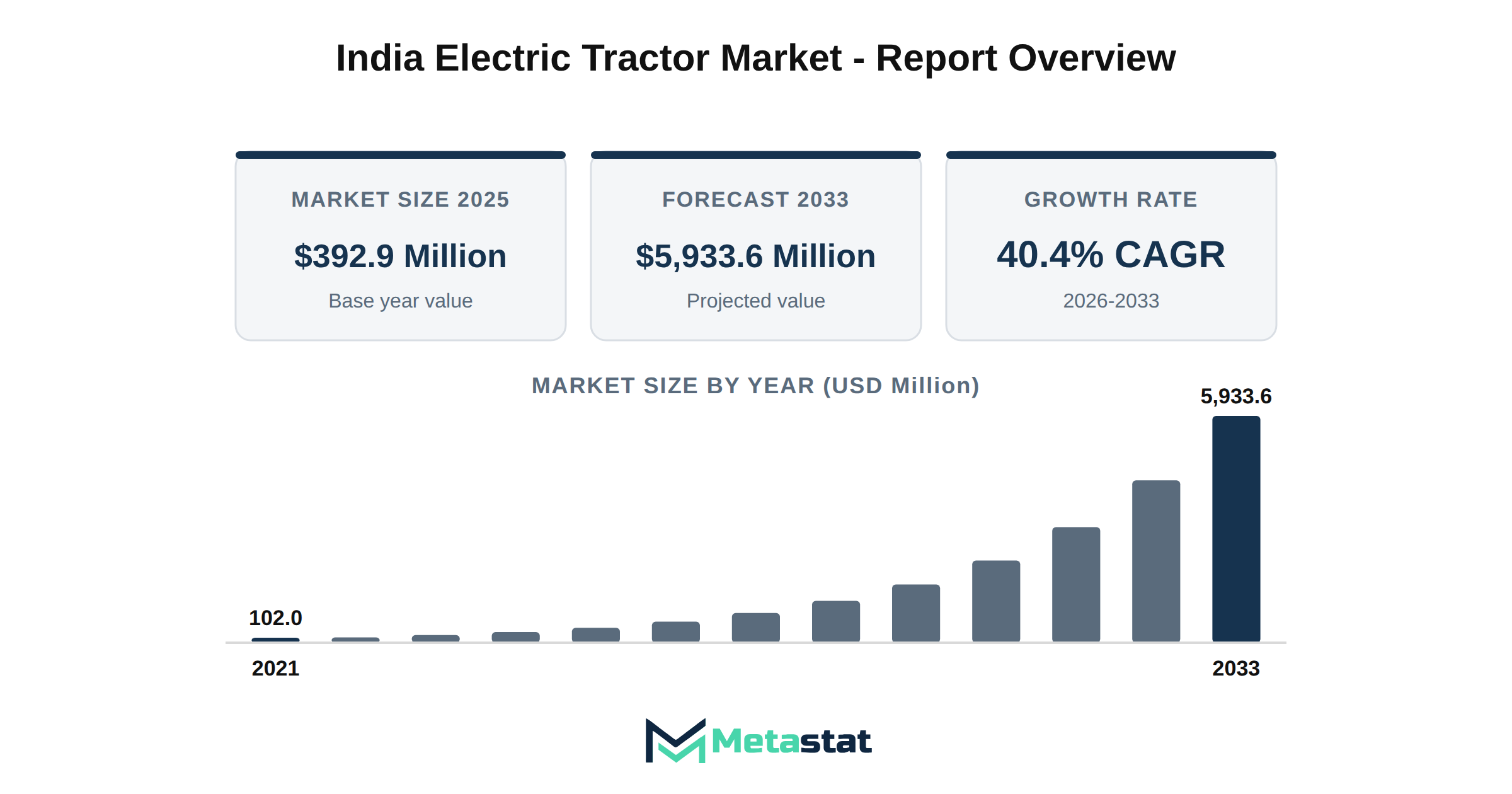
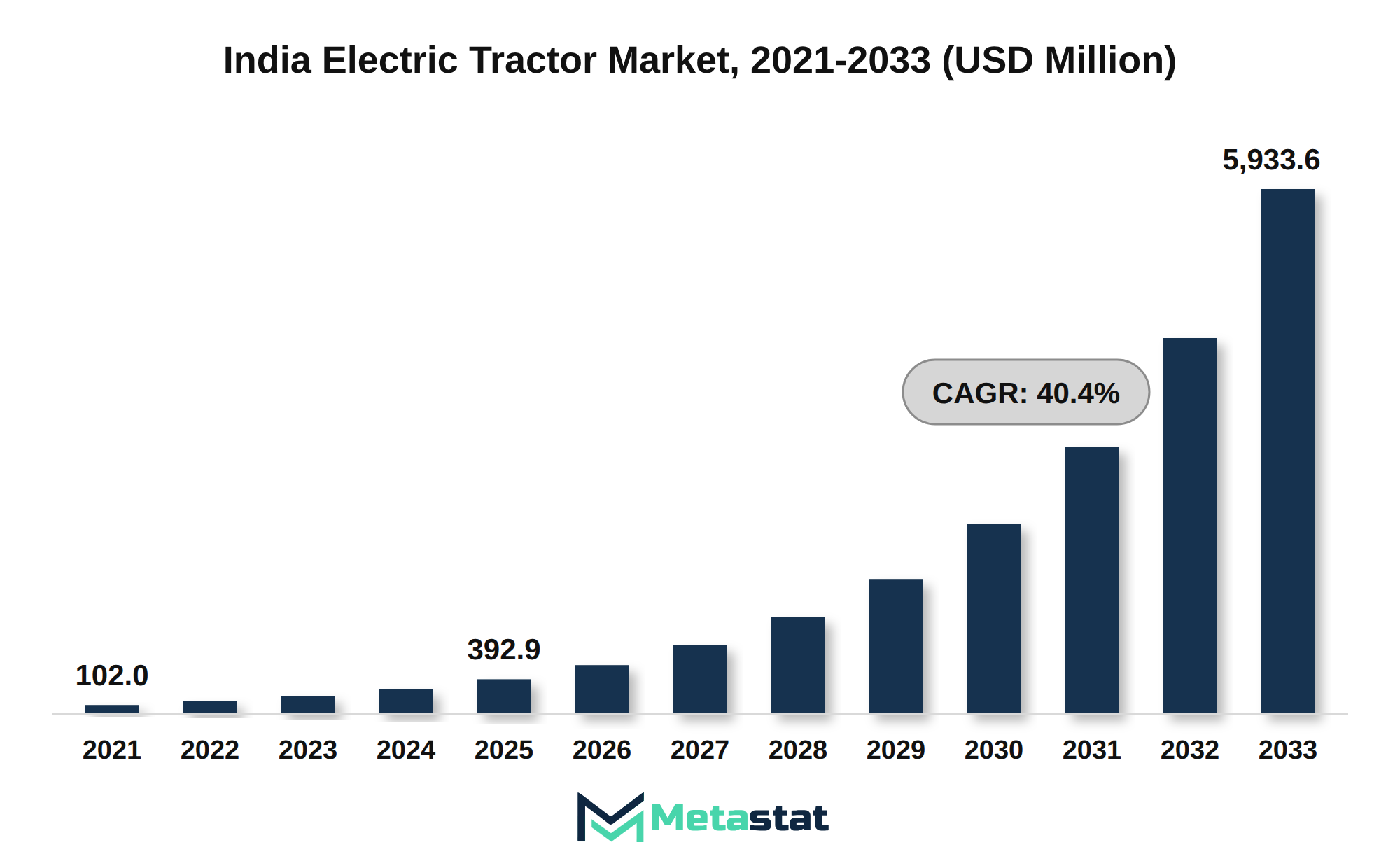
The India Electric Tractor market reached a value of USD 392.9 million in 2025. This market is projected to grow significantly, with an estimated value of USD 5,933.6 million by 2033, reflecting a compound annual growth rate (CAGR) of 40.4% during the forecast period from 2026 to 2033. Historical data indicates a steady increase in market value, starting from USD 102 million in 2021, USD 142.3 million in 2022, USD 200.3 million in 2023, and USD 279.1 million in 2024.
Electric tractor adoption across various sectors is driven by rising demand for sustainable farming practices and advancements in battery technology. The transition towards electric tractors aligns with the Indian government's push for cleaner agricultural practices. The focus on total cost of ownership (TCO) economics highlights potential savings on fuel and maintenance costs, making electric tractors an attractive option for farmers.
Autonomous and connected tractor technologies are gaining traction within the market, enhancing operational efficiency and crop yield. These innovations support precision agriculture, which is crucial for meeting the growing food demand in India. The integration of smart farming solutions positions electric tractors favorably in the competitive environment.
Charging infrastructure remains a critical factor for widespread adoption. The readiness of the rural grid for electric tractors influences the feasibility of charging stations in agricultural areas. Investment in charging infrastructure is essential to facilitate efficient operation and encourage adoption among farmers.
Original equipment manufacturers (OEMs) are launching new electric tractor models that cater to diverse agricultural requirements. Through competitive benchmarking, these players aim to differentiate themselves by offering advanced features and improved performance. The market landscape is fragmented, with numerous companies striving to capture market share through innovation and strategic partnerships.
Indian farm duty-cycle requirements significantly influence the design and functionality of electric tractors. Tractors designed to meet specific agricultural tasks enhance efficiency and productivity. Compliance with homologation standards and access to subsidies stimulate the market by easing financial burdens associated with new technology adoption.
Battery thermal management and fast charging solutions play a crucial role in the performance of electric tractors. Efficient battery systems contribute to extended operational hours and reduced downtime, aligning with the demands of modern farming practices. The advancement of battery technologies, including Lithium Iron Phosphate (LFP) and Nickel Manganese Cobalt (NMC), supports the growth of the market.
The dealer, service, and financing ecosystem supports electric tractor adoption by providing necessary infrastructure and expertise. Regulatory compliance and adherence to standards ensure the safety and reliability of electric tractors. Understanding geopolitical risk frameworks becomes crucial for players navigating the complexities of the market.
Electric tractor adoption in India is driven by the increasing focus on sustainable agricultural practices and the need for cost-effective farming solutions. The total cost of ownership (TCO) for electric tractors demonstrates significant advantages over conventional tractors, particularly in fuel savings and maintenance costs. Farmers experience long-term benefits from electric tractors, which support the transition to eco-friendly farming methods.
The emergence of autonomous and connected tractors represents a significant shift in the agricultural landscape. These innovations enhance operational efficiency and provide farmers with advanced data analytics, enabling precision farming techniques. The integration of technology in electric tractors aligns with the market's growth trajectory, attracting investment and encouraging development.
Charging infrastructure plays a critical role in the widespread adoption of electric tractors. The readiness of rural grids to support electric vehicle charging stations influences deployment rates. Investments in charging infrastructure are essential to ensure accessibility and convenience for farmers, promoting increased adoption of electric tractors across India.
OEM launches contribute to the competitive dynamics within the market. Several manufacturers are introducing innovative electric tractor models tailored to the unique needs of Indian farmers. Competitive benchmarking among key players highlights varying strategies for market penetration and product differentiation, shaping the overall competitive landscape.
Indian farm duty-cycle requirements necessitate the development of electric tractors that perform effectively across diverse agricultural tasks. Understanding these requirements informs manufacturers about design specifications and performance metrics essential for meeting farmer expectations. Adapting to these demands is vital for maintaining relevance in the evolving market.
Homologation, subsidies, and policy frameworks significantly influence the market. Government initiatives aimed at promoting electric vehicles provide financial incentives that encourage farmers to adopt electric tractors. These supportive policies facilitate market growth by lowering the initial cost barrier associated with purchasing electric tractors.
Battery thermal management systems and fast charging capabilities are crucial for enhancing the performance and reliability of electric tractors. Advanced technologies that manage battery temperatures ensure optimal functioning and longevity, addressing concerns about battery performance in varying climatic conditions. Fast charging infrastructure will further enhance usability, making electric tractors more appealing to farmers.
The dealer, service, and financing ecosystem supports market expansion by providing necessary support and financial options to end-users. A robust service network ensures that farmers have access to maintenance and repair services, which is essential for operational continuity. Financial institutions offering tailored financing solutions enhance affordability, driving the adoption of electric tractors.
Market fragmentation presents both challenges and opportunities for players in the industry. With numerous manufacturers competing for market share, differentiation through innovation and customer engagement becomes vital. Strategic partnerships and mergers and acquisitions reshape the landscape, creating synergies and enhancing competitive positioning.
Infrastructure investments, inflationary pressures, and currency volatility impact the market's growth trajectory. Key players navigate these economic factors to sustain profitability while addressing fluctuations in material costs. Future strategic outlooks emphasize the importance of adaptability and innovation in response to these challenges.
Corporate imperatives focus on sustainability and technology adoption, guiding investment decisions and operational strategies. Companies operating in the India Electric Tractor market prioritize research and development to encourage next-generation innovations that meet evolving agricultural demands. High-value recommendations for stakeholders include enhancing collaboration across the supply chain and investing in sustainable practices that align with market trends.
The expansion of the India Electric Tractor market correlates with significant capital investment in agriculture and transportation sectors. Public and private spending on electric vehicle infrastructure enhances technological integration, enabling farmers to adopt advanced electric tractors. This investment impacts the affordability and accessibility of electric tractors, aligning with the growing demand for sustainable farming solutions.
Focus on operational productivity drives farmers to seek innovative solutions that improve efficiency and reduce costs. Favorable interest rates and rising GDP growth facilitate venture funding for electric tractor manufacturers. The market experiences a surge in new technologies aimed at improving agricultural yields and minimizing environmental impact.
Consumer awareness regarding sustainability fuels the demand for electric tractors, compelling manufacturers to innovate and diversify product offerings. The ongoing digital transformation within agriculture supports the integration of automation and smart technologies, further stimulating market growth. The India Electric Tractor market benefits from these macro-economic factors, ensuring a prosperous future in sustainable farming practices.
Digital transformation significantly impacts the India Electric Tractor market, enhancing operational efficiency and enabling advanced capabilities. The integration of automation and artificial intelligence streamlines processes, reduces overhead costs, and improves productivity. Adoption of software solutions for data management and analytics allows manufacturers to optimize performance and make informed decisions based on real-time insights.
Investment in digital tools aligns with evolving consumer behaviors, where buyers increasingly prefer technologically advanced products. The market's focus on sustainability and resource stewardship drives companies to adopt eco-friendly practices, contributing to a reduced carbon footprint. Emphasizing these digital advancements ensures competitiveness and attracts a broader customer base, driving growth in the market over the forecast period.
Companies enhancing their digital infrastructure strengthen resilience and adapt to dynamic market conditions. The surge in venture funding for innovative projects reflects a promising capital investment environment, propelling advancements in electric tractor technology. Ongoing digital transformation initiatives support increased adoption rates and a significant rise in demand for electric tractors through 2033.
The India Electric Tractor market faces significant challenges due to regulatory compliance hurdles. Stringent compliance requirements increase operational complexity and add to the overall costs for manufacturers. These compliance mandates require extensive testing and certification processes that delay product launches and reduce competitiveness. This situation affects smaller players disproportionately, leading to market fragmentation and limiting their ability to scale effectively.
Macroeconomic headwinds exert additional pressure on the market, with inflationary pressures contributing to higher production costs. Rising material and labor costs impact profitability, forcing manufacturers to make difficult choices regarding pricing and investment in new technologies. This economic environment deters investment in the electric tractor sector and hinders growth prospects.
Supply chain disruptions have become commonplace, further complicating operational logistics. These disruptions create delays in sourcing components necessary for electric tractor production, impacting delivery timelines and customer satisfaction. Manufacturers face challenges in maintaining consistent production levels, which restricts market supply and affects overall growth.
Infrastructure gaps present another significant restraint. Limited charging infrastructure for electric vehicles, including tractors, restricts their practicality and adoption in rural areas. Insufficient connectivity affects potential buyers' willingness to transition to electric models, resulting in slower market penetration.
High capital investment requirements further limit market growth. The initial costs associated with advanced electric tractors deter many farmers and businesses from making the switch from traditional tractors, particularly in a price-sensitive market. The financial burden associated with investing in new technology slows down adoption rates.
Talent gaps in skilled labor pose challenges for manufacturers seeking to innovate and maintain production efficiency. Difficulty in finding qualified personnel to operate and maintain electric tractors contributes to operational inefficiencies, impacting competitiveness within the market. These factors collectively hinder the potential for rapid growth in the India Electric Tractor market.
The India Electric Tractor market faces challenges stemming from geopolitical fragmentation, which disrupts supply chains and leads to trade deficits. Ongoing tariff friction between nations complicates the procurement of critical components, impacting production timelines and cost structures. This scenario creates uncertainty for manufacturers and suppliers, affecting their ability to plan and invest in capacity expansion.
Technological disruptions pose another challenge by altering the environment in which electric tractors operate. Rapid advancements in battery technologies and automation necessitate continuous research and development efforts, straining resources for companies. The complexities associated with integrating new technologies lead to interoperability friction, hampering collaboration among key industry players.
Pricing compression and margin pressures emerge due to significant issues in the market. Rising input costs for materials and components heighten operational expenses, compelling manufacturers to reconsider pricing strategies. These pressures challenge profitability and hinder investment in new projects, limiting growth potential in the India Electric Tractor market.
Workforce skill gaps exacerbate these challenges, since advancements in technology require specialized knowledge and training. The difficulty in retaining skilled talent complicates efforts to maintain operational efficiency and adopt new technologies. This skill shortage could delay the transition towards more advanced electric tractor models.
Environmental considerations represent another layer of complexity. Stricter sustainability demands and decarbonization mandates necessitate investments in eco-friendly practices and technologies. The market navigates these regulatory landscapes, potentially leading to implementation bottlenecks and increased compliance overhead.
Logistics disruptions and supply chain instability, driven by external economic factors, further complicate the market dynamics. Companies remain agile and adaptable to overcome these hurdles while ensuring a reliable supply of electric tractors that meet evolving market demands.
The India Electric Tractor market shows substantial opportunities owing to rising regional demands for sustainable agricultural practices. The increasing focus on eco-friendly technologies aligns with an urgent need for reduced emissions and enhanced productivity within the agricultural sector. While farmers adopt electric tractors, operational costs decline, positively affecting profitability and encouraging further investment in sustainable practices.
Infrastructure modernization supports market expansion. Enhanced charging infrastructure and power supply reliability support the operation of electric tractors. This modernization facilitates broader adoption across various agricultural regions, allowing farmers to transition from traditional tractors to electric alternatives, thus improving efficiency and lowering dependency on fossil fuels.
Technological disruptions emerge driven by significant catalysts in the market. Innovations in battery technology, particularly with Lithium Iron Phosphate (LFP) and Nickel Manganese Cobalt (NMC) lithium-ion batteries, enhance the performance and range of electric tractors. These advancements encourage producers to invest in next-generation electric vehicles, thereby increasing market penetration and diversifying product offerings.
Strategic consolidation within the industry drives competitive advantage and enhances market accessibility. Collaborations among manufacturers and tech firms focus on integrating advanced technologies into electric tractors, establishing a robust ecosystem that promotes innovation. This consolidation expands the market reach and improves the supply chain, creating a more resilient and responsive market structure.
Evolving buying behaviors reflect a shift towards digital procurement and commercial model transitions. Farmers increasingly seek information online, resulting in enhanced access to electric tractor solutions. This trend drives competition among suppliers, encouraging innovation and leading to the introduction of tailored products that meet specific farmer needs.
Ultimately, the India Electric Tractor market experiences growth supported by multifaceted opportunities rooted in sustainability, technological advancements, and strategic industry dynamics. This environment positions the market favorably for future expansion and alignment with broader agricultural goals.
The India Electric Tractor market is segmented based on Power Source, Power Output, Battery Technology, and Function.
Valued at USD 505.6 million in 2026, the Battery Electric segment is projected to reach USD 5,512.9 million by 2033, at a CAGR of 40.7% during the forecast period. Expanding demand for electric tractors stems from a growing emphasis on sustainable agricultural practices, coupled with government initiatives promoting electric vehicles to reduce carbon emissions. Adoption of Battery Electric tractors aligns with increasing fuel costs, leading to significant operational savings for farmers and agricultural businesses. Technological advancements in battery efficiency and charging infrastructure further enhance the appeal of this segment, enabling longer working hours and reduced downtime.
Favorable regulatory compliance standards and incentives for electric vehicle adoption support the segment's growth. The market experiences a shift in consumption patterns, with farmers seeking more efficient, eco-friendly solutions tailored to modern farming needs. Strategic investments in next-generation upgrades, including enhanced battery technologies like Lithium Iron Phosphate (LFP), support segment evolution and address performance expectations. This trend attracts new participants to the market, intensifying competition and driving down prices.
While the India Electric Tractor market evolves, primary demand drivers include improved battery performance, enhanced utilities for agriculture, and rising awareness of environmental sustainability. Robust capital investment outlook supports ongoing innovations and product development, ensuring the market remains competitive and meets the diverse needs of end-users. The Battery Electric segment stands poised for substantial growth, contributing significantly to the overall dynamics of the India Electric Tractor market.
Demand for hybrid electric tractors in the India Electric Tractor market is gaining momentum due to increasing awareness of sustainable agricultural practices and government support for electrification. Incentives and subsidies set forth by regulatory bodies enhance adoption rates among farmers and agricultural businesses, facilitating a shift towards eco-friendly solutions. Segment expansion is supported by advancements in battery technology, which enhance the efficiency and performance of hybrid electric tractors, ultimately driving their acceptance in various agricultural applications.
Hybrid electric tractors offer flexibility in power usage, providing farmers with the ability to switch between electric and traditional fuel sources. This dual functionality appeals to a broad range of operators, including those in regions where charging infrastructure remains underdeveloped. The segment is expected to reach USD 267.6 million by 2033, at a compound annual growth rate of 36% during the forecast period. This growth reflects the segment's strategic position within the overall market, responding to evolving consumer preferences and technological advancements.
Investment in hybrid electric tractor technology continues to surge, driven by the necessity for reduced operational costs and environmental sustainability. The cost structure of hybrid electric tractors typically demonstrates a favorable total cost of ownership over time, considering savings on fuel and maintenance. Manufacturers are actively enhancing their product lines to incorporate next-generation features, ensuring competitiveness in an evolving marketplace. This innovation cycle creates a robust pipeline for future product evolution, aligning with trends within the India Electric Tractor market.
Plug-in Hybrid Electric vehicles are projected to capture a notable share of the India Electric Tractor market, reaching USD 153.1 million by 2033. This segment's growth is attributed to increasing consumer awareness regarding environmental sustainability and the demand for efficient agricultural equipment. The shift toward hybrid solutions aligns with the evolving preferences of farmers seeking to optimize their operations while minimizing carbon emissions.
Technological maturation plays a critical role in enhancing the performance and reliability of plug-in hybrid electric tractors. Innovations in battery technology and energy management systems directly contribute to improving efficiency and reducing operating costs. Manufacturers continue to invest in research and development, focusing on next-generation upgrades that boost the capabilities of these tractors.
Adoption within the agriculture and forestry sectors reflects a broader trend towards sustainable farming practices. End-users increasingly recognize the advantages of plug-in hybrid electric tractors for specific applications, including field operations that require versatility and power. Evolving consumption patterns within the market indicate a shift towards hybrid solutions driven by a cost-effective and environmentally friendly alternative.
Regulatory compliance standards increasingly drive the demand for plug-in hybrid electric tractors, encouraging manufacturers to align their products with government policies aimed at promoting cleaner technologies. Certifications related to emissions and energy efficiency enhance the appeal of these tractors, positioning them favorably in the market.
The alignment of cost structures with consumer expectations remains essential for manufacturers. Pricing volatility of raw materials impacts production costs, influencing the final pricing strategy for plug-in hybrid electric tractors. Companies that effectively manage supply chain resilience and raw material sourcing maintain competitive pricing while addressing margin pressures.
Strategic opportunity windows continue to emerge within the market owing to the evolving environment. The growing focus on sustainable agricultural practices presents avenues for investment and innovation, particularly in regions where traditional fuel sources remain prevalent. The India Electric Tractor market stands to benefit significantly from transitions toward plug-in hybrid solutions, reflecting broader trends in sustainable machinery.
Valued at USD 393.2 million in 2026, the sub-segment of less than 50 HP is projected to reach USD 4,020.6 million by 2033, reflecting a compound annual growth rate of 39.4% during the forecast period. Strong demand stems from the growing emphasis on sustainable agricultural practices, which influences farmers to adopt electric tractors for various applications. Rising awareness of environmental impact and cost benefits associated with electric power sources significantly contribute to this trend.
Technological maturation enhances the performance and efficiency of electric tractors in the market. Continuous advancements in battery technology improve energy density and reduce charging times, making electric tractors more appealing to farmers. Government incentives and policies aimed at reducing emissions further encourage adoption in the agricultural sector.
Product evolution within the less than 50 HP segment reflects a shift towards optimizing power output for specific agricultural tasks. This evolution caters to the requirements of small to medium-sized farms, which demand efficient and versatile machinery. An increasing focus on utility and adaptability leads to broader acceptance of electric tractors among traditional users.
End-use dynamics show a significant shift in consumer preferences towards eco-friendly options. The agriculture and forestry sectors increasingly prioritize sustainability, prompting a rise in electric tractor adoption. Consequently, this shift influences market growth and encourages manufacturers to invest in innovative solutions that cater to evolving consumer needs.
Regulatory compliance standards impose additional pressure on manufacturers to innovate and enhance their offerings. Stricter emissions regulations drive the development of cleaner technologies, pushing the market towards more efficient electric options. This environment encourages competition, compelling companies to refine their products to meet the standards while maximizing profitability.
Supply chain resilience remains critical for maintaining steady growth in the market. Effective raw material sourcing strategies enable manufacturers to mitigate risks associated with price volatility and material shortages. Strategic partnerships with suppliers ensure consistent access to quality components, enhancing production capabilities and supporting market expansion.
Significant growth characterizes the 50-100 HP segment within the India Electric Tractor market, which is estimated to reach USD 1,307.8 million by 2033, at a CAGR of 41.9% during the forecast period. This expansion results from increasing adoption of electric tractors for medium-scale farming operations, driven largely by rising environmental awareness and the push for sustainable agricultural practices. Enhanced performance capabilities, combined with favorable government policies and incentives, encourage farmers to transition from traditional tractors to electric alternatives.
Technological advancements in battery efficiency and power output drive further interest in this segment. Innovations in battery technology enable tractors to operate for extended periods on a single charge, meeting the demands of diverse agricultural tasks. The continued integration of smart features, including telemetry and automated systems, enhances productivity and efficiency, appealing to a broad range of end-users in the agriculture sector.
Rising operational costs associated with fuel and maintenance for conventional tractors contribute to the segment's growth. Electric tractors offer lower operating expenses, positioning them because an attractive alternative for farmers focused on cost-effectiveness. The market benefits from an evolving ecosystem of suppliers and support services, ensuring smooth transitions for end-users adapting to electric technology in their farming operations.
Regulatory compliance standards and sustainability certifications further reinforce the demand for electric tractors. Policies promoting reduced carbon emissions and incentives for adopting cleaner technologies create a favorable landscape for the market's growth. While the segment evolves, strategic investments in infrastructure and charging facilities will likely support further acceleration, enhancing the 50-100 HP segment's role in the broader India Electric Tractor market.
The strong growth trajectory of the 100-150 HP sub-segment in the India Electric Tractor market reflects evolving agricultural practices that prioritize efficiency and productivity. Increasing adoption of advanced technologies drives demand for electric tractors, particularly among medium-sized farms that require higher power output for diverse applications. The integration of modern battery technologies, including Lithium Iron Phosphate, enhances the performance and efficiency of tractors, attracting buyers seeking sustainable farming solutions. Investment in infrastructure and supportive government policies facilitate the expansion of this market segment, encouraging more farmers to transition from conventional to electric tractors. Rising fuel costs and a growing emphasis on environmental sustainability contribute to the appeal of electric tractors, enabling farmers to reduce operational expenses while adhering to regulatory compliance standards. The 100-150 HP segment is projected to reach USD 422.5 million by 2033. This increase signals a strategic opportunity for manufacturers to innovate and enhance product offerings, catering to the evolving needs of end-users in the agricultural sector. While competition intensifies, continuous improvement in battery technology and electrification will significantly shape the segment's future.
Projected to grow at a CAGR of 47.3% during the forecast period, the More than 150 HP sub-segment within the India Electric Tractor market presents a compelling narrative for stakeholders. Increasing demand arises from agricultural operations that require robust power output for demanding tasks, including plowing and heavy lifting. The shift toward electric tractors aligns with broader sustainability goals, driving increased investments in this sub-segment. Technological maturation and advancements in battery technology directly influence product evolution, enhancing performance and operational efficiency.
End-use dynamics show a significant inclination toward high-power electric tractors, shifting consumption patterns because traditional diesel options gradually decline. Regulatory compliance standards that emphasize emissions reduction further support adoption, compelling manufacturers and consumers to consider electric alternatives. Strategic opportunity windows expand because companies introduce next-gen upgrades, incorporating smart technologies that allow for better performance monitoring and remote operation.
By 2033, the More than 150 HP segment is expected to capture attention with substantial market value, reflecting an overall positive outlook within the India Electric Tractor market. Capital investment in this segment remains critical, promoting innovation and addressing potential margin pressures. While the market evolves, companies that effectively navigate these dynamics will secure a competitive edge, positioning themselves favorably in a rapidly growing market.
Lithium Iron Phosphate (LFP) segment is valued at USD 436.4 million in 2026 and is projected to reach USD 4,855.4 million by 2033, at a CAGR of 41.1% during the forecast period. The growth of this segment is driven by increasing demand for efficient and sustainable power solutions in the agriculture sector. Adoption of electric tractors featuring LFP technology enhances operational efficiency while reducing environmental impact, aligning with global sustainability goals.
The market experiences significant expansion catalysts due to technological maturation in battery technologies, which leads to improved performance and cost-effectiveness. Continuous innovations in LFP technology contribute to enhanced energy density and reduced charging times, making these tractors more appealing to end-users across various applications.
Downstream applications in the agriculture and forestry sectors benefit from the transition to electric solutions, because operators seek to comply with stricter emissions regulations. This shift in consumption patterns signals a substantial move towards eco-friendly practices, which enhances the overall attractiveness of the India Electric Tractor market.
Cost structures associated with LFP batteries are becoming more favorable because manufacturers scale production, driving down prices and expanding profit margins. Pricing volatility of raw materials has less impact on LFP batteries compared to other technologies, providing a stable supply chain and ensuring resilience in the market.
Investment opportunities arise from strategic windows identified within the segment, particularly focusing on sustainability initiatives. Capital investments in lithium iron phosphate technology will likely boost market penetration and lead to further advancements, resulting in enhanced competition among players within the India Electric Tractor market.
Increasing investment in electric tractor technologies significantly influences the Nickel Manganese Cobalt (NMC) Lithium-Ion segment within the India Electric Tractor market. This segment, characterized by its efficient energy density and thermal stability, drives the growing demand for high-performance agricultural machinery. The anticipated market value for this segment is USD 774.9 million by 2033, reflecting a compound annual growth rate of 36.3% during the forecast period. The emphasis on sustainability and reduced carbon emissions fuels the transition from traditional fuel-powered tractors to electric alternatives, driving extensive adoption in the agricultural sector.
Technological advancements play a crucial role in enhancing the performance and reliability of NMC Lithium-Ion batteries. Continuous research and development efforts focus on improving battery life, reducing charging times, and enhancing power output, leading to a significant evolution of electric tractors. These advancements increase adoption rates among farmers seeking efficient and environmentally friendly solutions for their operations. Growing consumer awareness regarding environmental impact and operational efficiency presents a favorable landscape for the market.
The NMC Lithium-Ion segment benefits from strategic opportunities presented by government policies promoting electric vehicle adoption. Incentives, subsidies, and regulatory frameworks supporting electric vehicle infrastructure contribute to a favorable business environment. Collaboration between manufacturers and technology firms drives innovation, ensuring the segment remains competitive. Innovations in battery technology create opportunities for differentiation, enhancing the overall value proposition to consumers within the India Electric Tractor market.
Price volatility in raw materials poses challenges to maintaining profitable margins within the segment. Fluctuations in lithium and cobalt prices impact production costs, necessitating agile supply chain strategies to mitigate risks. Manufacturers actively explore alternative materials and recycling initiatives to address potential supply chain vulnerabilities. By investing in supply chain resilience, players in the market position themselves to navigate these challenges effectively, ensuring sustainable growth in the NMC Lithium-Ion segment.
Emerging battery chemistries, including Sodium-Ion, represent a strategic opportunity within the India Electric Tractor market. This segment is expected to reach USD 303.2 million by 2033, highlighting a growing inclination towards innovative energy storage solutions. The adoption of alternative battery technologies aligns with the increasing demand for sustainable farming practices and the necessity for cost-effective energy storage in agricultural applications.
Technological maturation enables advancements in energy density and overall efficiency. The market experiences robust interest from agricultural equipment manufacturers focusing on product evolution to meet consumer demands for low-maintenance and cost-efficient solutions. Regulatory compliance standards and certifications push the industry towards environmentally friendly alternatives, further accelerating the adoption of Sodium-Ion and other emerging battery technologies.
Competition within the market intensifies because companies explore the integration of next-generation upgrades that enhance performance metrics. The shift in consumption towards efficient and sustainable energy sources creates a favorable environment for the growth of this segment. Strategic investment in research and development facilitates the exploration of disruptive alternatives, driving innovation and expanding market share.
Valued at USD 460.9 million in 2026, the Agriculture & Forestry segment is projected to reach USD 4,808 million by 2033, at a CAGR of 39.8% during the forecast period. Strong demand for sustainable farming practices drives the adoption of electric tractors within this segment, reflecting a shift towards eco-friendly agricultural solutions. Technological advancements enhance the efficiency and performance of electric tractors, positioning them because essential tools in modern agriculture.
Increasing focus on reducing greenhouse gas emissions influences manufacturers to innovate and introduce electric tractors tailored for agriculture and forestry applications. This shift aligns with global sustainability goals, attracting investments into the market and encouraging farmers to transition from traditional diesel-powered tractors. Enhanced productivity and reduced operational costs emerge because critical advantages for users adopting electric tractors, contributing to the segment's growth trajectory.
Policy initiatives promoting clean energy adoption and supporting electric vehicle infrastructure further support the segment's expansion. Regulatory compliance standards regarding emissions and fuel efficiency play an important role in shaping market dynamics, driving demand for electric tractors. While the Agriculture & Forestry sector continues to evolve, investments in electric tractor technologies are expected to yield significant benefits for end-users, strengthening the India Electric Tractor market.
Significant growth in the Industrial segment of the India Electric Tractor market reflects increasing demand for efficient and sustainable farming solutions within the industrial sector. This growth is driven by advancements in agricultural practices, where electric tractors enhance productivity and reduce operational costs. The adoption of electric tractors in industrial applications focuses on minimizing environmental impact while optimizing performance. Factors including technological maturation, product evolution, and government incentives further support segment expansion.
Among the various drivers, regulatory compliance standards play a crucial role, enabling businesses to leverage electric tractors while adhering to environmental mandates. The segment is expected to reach USD 649.1 million by 2033, at a CAGR of 43.4% during the forecast period. This growth trajectory highlights strong interest from industries seeking to transition towards greener alternatives, ensuring long-term sustainability in their operations. While electric tractor technologies continue to mature, the Industrial segment is projected to advance significantly.
Utility applications account for a significant portion of the India Electric Tractor market, with expectations to reach USD 476.5 million by 2033. The increasing emphasis on sustainable agricultural practices and efficient utility operations drives demand for electric tractors in this segment. Several industries, including municipal services and utility management, seek to reduce carbon footprints while enhancing productivity. By adopting electric tractors, these sectors benefit from lower operational costs and reduced emissions, aligning with global sustainability goals.
Investment in advanced battery technologies significantly influences the utility segment. Lithium Iron Phosphate (LFP) and other emerging battery chemistries provide high energy densities and longer lifecycles, catering to the operational demands of utility applications. The shift towards electric solutions reflects broader trends in regulatory compliance, where stricter emissions standards and incentives for electric vehicle adoption contribute to increased market penetration. Consequently, stakeholders across various industries are incentivized to transition from traditional fossil fuel-powered machinery to electric alternatives.
The utility segment's growth aligns with a broader trend in the India Electric Tractor market, where environmental considerations and technological advancements reshape industry dynamics. End-users benefit from enhanced performance and reliability, positioning electric tractors because key assets in utility operations. This segment presents a clear pathway for future investment and innovation, highlighting the market's potential in the coming years.
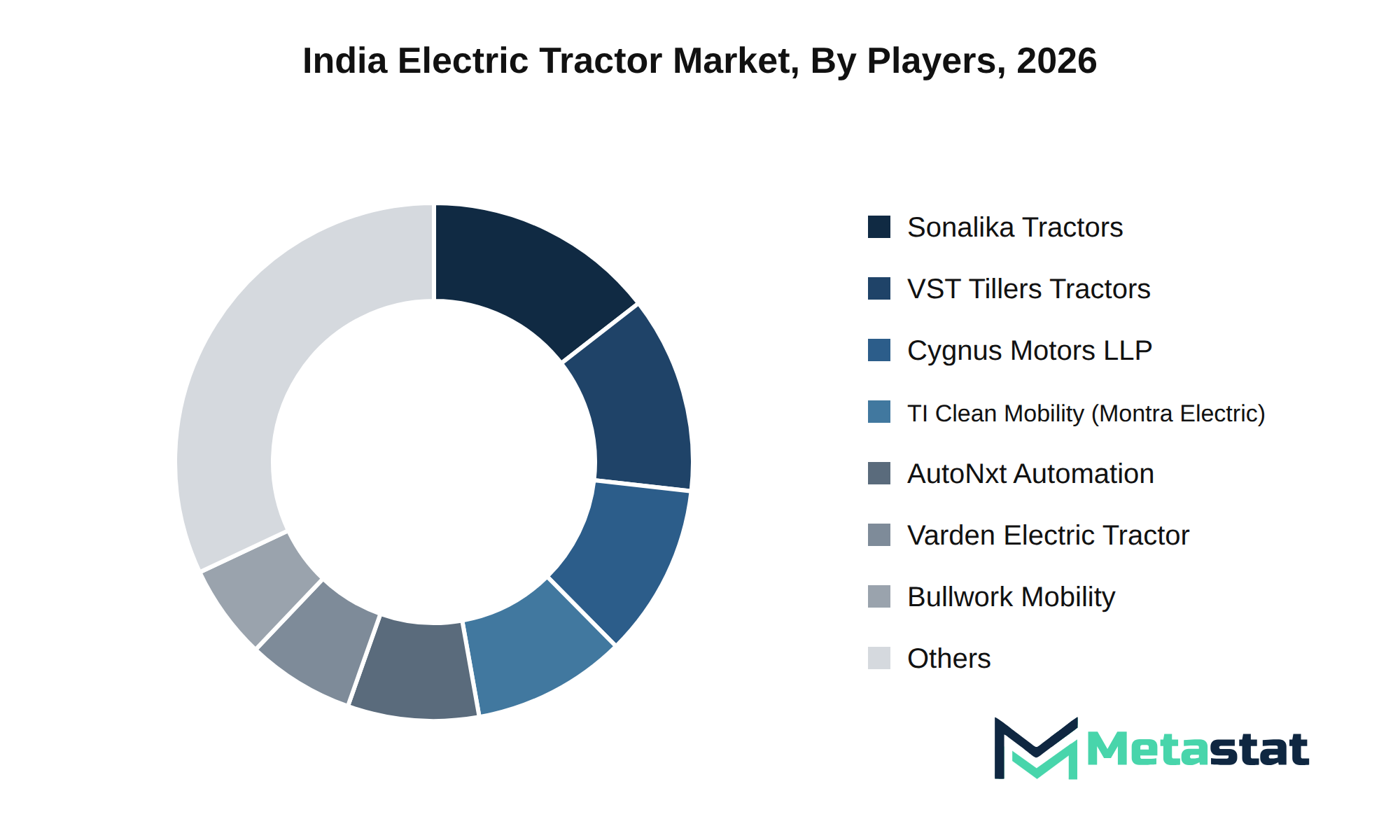
The India Electric Tractor market features a dynamic competitive landscape with several players focusing on product differentiation and strategic alliances to enhance their market positions. Companies including Cygnus Motors LLP, AutoNxt Automation Pvt. Ltd., and Sonalika Tractors invest significantly in research and development, leading to innovative product offerings and technological advancements. This focus on proprietary technology strengthens their competitive edge in the market.
Strategic consolidation through mergers and acquisitions is significant, with firms like CNH Industrial N.V. and Mahindra & Mahindra Ltd. actively pursuing partnerships to expand their market reach. These companies leverage extensive supply chains and procurement capabilities to enhance operational efficiency and reduce costs.
Value chain integration remains vital, with several firms pursuing cross-industry partnerships that enable them to diversify product lines and capture new customer segments. The market landscape faces threats from new entrants leveraging innovative business models, which could disrupt established players. Consequently, companies focus on customer retention strategies and enhancing brand equity dynamics to maintain loyalty and market share.
Overall, the competitive outlook for the India Electric Tractor market indicates ongoing investment in technology and strategic growth vectors that will shape the future landscape. Companies are positioned to capitalize on emerging opportunities through focused efforts in product development and strategic collaborations.
Market size is forecast to rise from USD 392.9 million in 2025 to over USD 5933.6 million by 2033. This represents a significant growth trajectory at a compound annual growth rate (CAGR) of 40.4%. The base case reflects a strong market environment fueled by increasing demand for electric tractors, driven by technological advancements and growing awareness of sustainable agricultural practices.
In a bullish scenario, accelerated adoption of next-generation technologies and favorable government policies could lead to higher growth rates, enhancing market dynamics. Conversely, the bearish outlook considers potential challenges including disruptions in supply chains and regulatory hurdles that impede growth. Overall, the India Electric Tractor market demonstrates robust potential, reflecting various macroeconomic factors and evolving industry trends.
The report strategically identifies and profiles the key market players and analyses their core competencies in each sub-segment of the Electric Tractor market.
Report Attributes | Details |
Study Period | 2021-2033 |
Base Year | 2025 |
Estimated Year | 2026 |
Forecast Period | 2026-2033 |
Historical Period | 2021-2025 |
Growth Rate | CAGR 40.4% from 2026 to 2033 |
Revenue Unit | USD million |
Segmentation | By Power Source, Power Output, Battery Technology, Function, and Region |
Find answers to common questions about this report
The Electric Tractor market size in India was valued at USD 392.9 million in 2025.
The Electric Tractor market is projected to grow at a CAGR of 40.4% during the forecast period from 2026 to 2033.
The Battery Electric segment leads the India Electric Tractor market with a projected value of USD 5,512.9 million by 2033, representing the largest share based on power source.
Key drivers for the India Electric Tractor market include significant capital investment in agriculture and transportation sectors, which enhances infrastructure and technology adoption. Increased consumer awareness regarding sustainability and the ongoing digital transformation within agriculture further stimulate demand for electric tractors, promoting efficiency and reducing operational costs.
The India Electric Tractor market growth faces challenges from regulatory compliance hurdles, which increase operational complexity and costs for manufacturers. supply chain disruptions and limited charging infrastructure hinder adoption, while high capital investment requirements deter farmers from transitioning to electric models. These factors collectively restrict market expansion.
Significant capital investment in agriculture and transportation sectors enhances the affordability and accessibility of electric tractors. Increased consumer awareness regarding sustainability drives demand, while ongoing digital transformation supports the integration of automation and smart technologies, further stimulating market growth. These factors collectively favor the adoption of electric tractors in India.
The Electric Tractor market is estimated to reach a valuation of USD 5,933.6 million by 2033.
Key players in the India Electric Tractor market include Cygnus Motors LLP, AutoNxt Automation Pvt. Ltd., Sonalika Tractors, TI Clean Mobility Private Limited (Montra Electric), VST Tillers Tractors Limited, Mahindra & Mahindra Ltd., Escorts Kubota Limited, and TAFE (Tractors and Farm Equipment Limited).
The battery electric segment is projected to grow from USD 505.6 million in 2026 to USD 5,512.9 million by 2033, reflecting a CAGR of 40.7.
The power output segment of less than 50 HP is anticipated to expand from USD 393.2 million in 2026 to USD 4,020.6 million by 2033, achieving a CAGR of 39.4.
The analysts below cover Agriculture research at Metastat Insights.
LEAD ANALYST
Utkarsh Khirodkar is a Lead Market Research Analyst at MetaStat Insight, specializing in market intelligence, technology sector assessments, and competitive strategy.
Ambulatory surgical centers have very different purchasing cycles for robotic-assisted surgery platforms than major hospital networks. The MetaStat Insight study focused squarely on capital expenditure depreciation, procedural reimbursement pathways, and surgeon training overhead. That operational clarity made it much simpler to validate multi-year procedure growth forecasts against actual ambulatory center adoption patterns.
When planning edge sensor rollouts across refinery environments, generic IoT reports typically miss the harsh-environment certification bottlenecks. MetaStat Insight gave an objective evaluation of ATEX and Class 1 Division 2 hardware availability, along with realistic five-year maintenance cycle cost projections. The comparison of wireless mesh versus private cellular backhaul helped our team pressure-test network reliability models for remote processing facilities.
In the biological seed treatment space, registration timelines vary drastically between the European Union, Brazil, and North America. The MetaStat Insight research handled these cross-border regulatory barriers with genuine nuance, mapping commercialization pathways alongside historical field adoption rates. The segmentation between microbial strains and biochemical active ingredients was particularly well structured.
Explore related market intelligence reports worth reading alongside this one.
Starting from
$2950