
LEAD ANALYST
Utkarsh Khirodkar is a Lead Market Research Analyst at MetaStat Insight, specializing in market intelligence, technology sector assessments, and competitive strategy.

Italy Luxury Residential Real Estate Market Size, Share, By Type (Villas and Landed Houses, Apartments and Condominiums, Branded Residences and Stand-alone Residences), By Cities (Rome, Venice, Milan, Naples, Florence and Other Cities), Industry Analysis, Growth, Trends, and Forecast, 2026-2033
Report ID
MSI-4895
Published
August, 2026
Pages
295 Pages
Format
Historical
Base year
Forecast
Forecast period
Report Details
Choose Your License
Italy Luxury Residential Real Estate Market
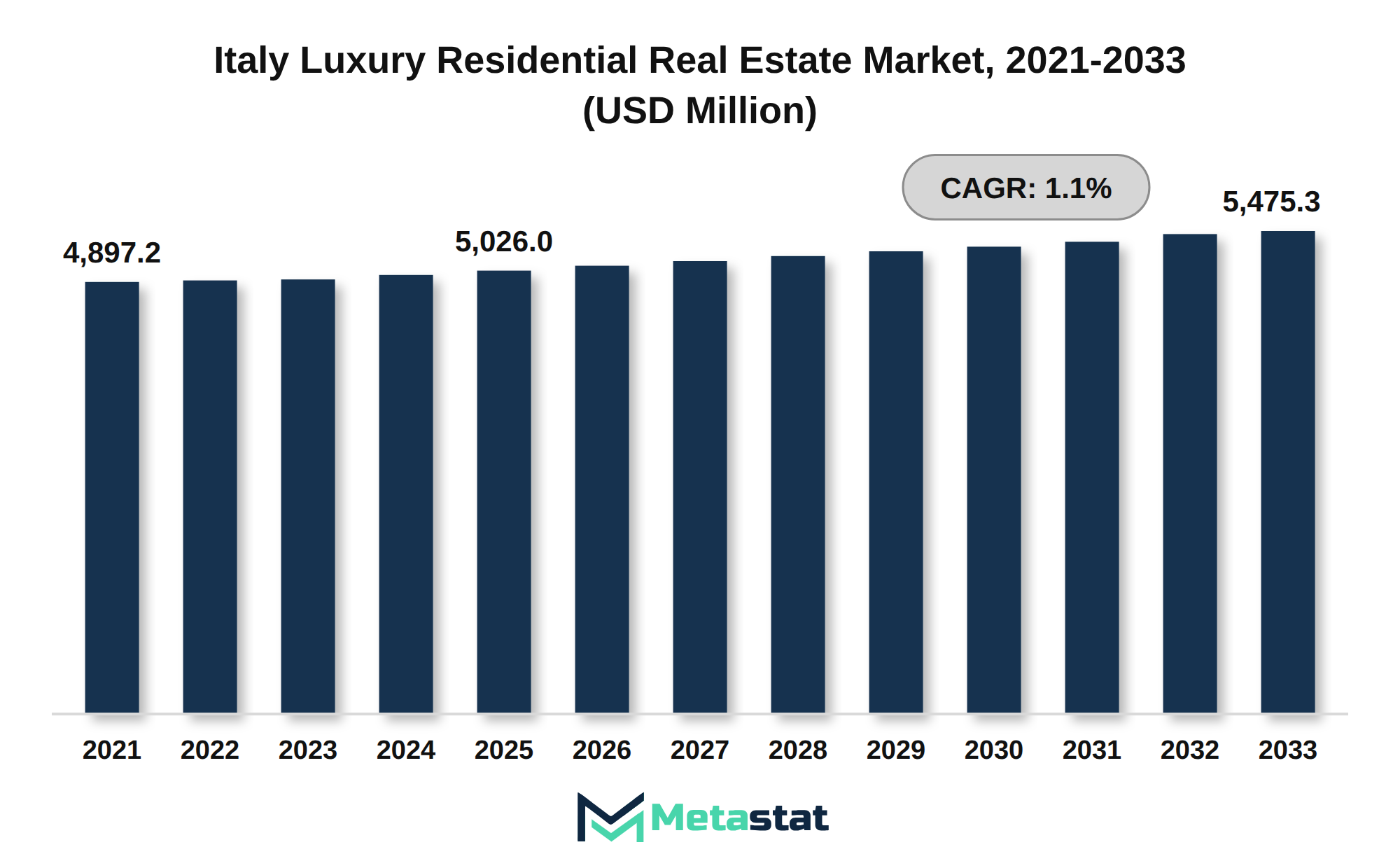
The Italy Luxury Residential Real Estate market was valued at USD 5,026 million in 2025 and is projected to reach USD 5,475.3 million by 2033, growing at a CAGR of 1.1% over the forecast period.
The Italy Luxury Residential Real Estate market experienced a base value of USD 5,026 million in 2025. The market is projected to reach USD 5,475.3 million by 2033, reflecting a compound annual growth rate (CAGR) of 1.1 percent from 2026 to 2033. Historical data shows that the market value increased from USD 4,897.2 million in 2021 to USD 4,926.5 million in 2023, with a base year value of USD 5,026 million in 2025.
Different segments contribute distinctively to the market. Villas and landed houses represent 1 percent, apartments and condominiums account for 2 percent, branded residences contribute 3 percent, and stand-alone residences hold 4 percent of market share. The segment of branded residences is anticipated to achieve a value of USD 504.9 million by 2033. The growth trajectories of various cities indicate significant activity, with Rome projected to rise from USD 1,089.4 million in 2026 to USD 1,147.8 million by 2033, while Venice targets USD 646.4 million within the same timeframe.
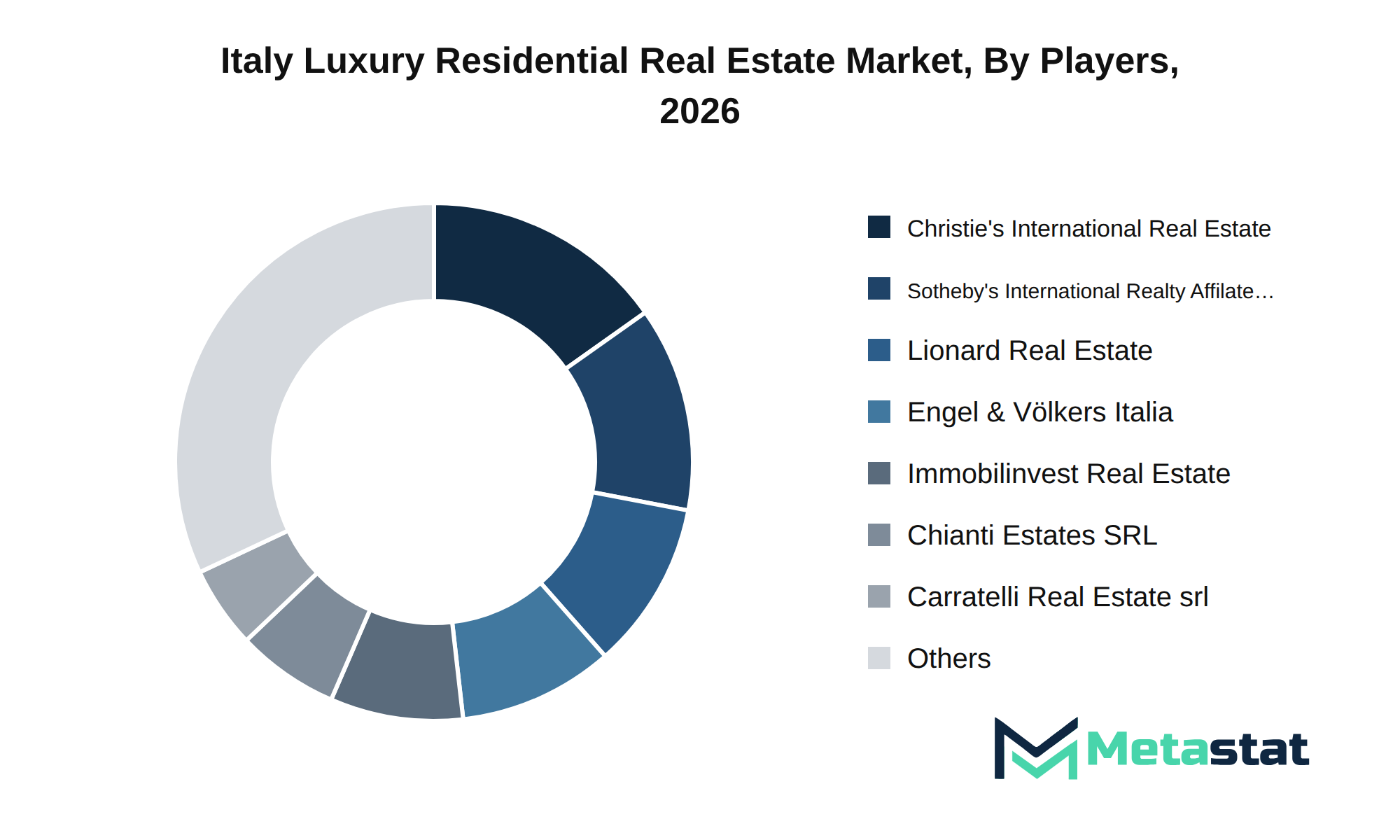
Key players within the Italy Luxury Residential Real Estate market include Christie's International Real Estate, Sotheby's International Realty Affiliates LLC, Immobilinvest Real Estate, Chianti Estates SRL, Carratelli Real Estate SRL, Lionard Real Estate Inc, Abode Srl, Engel & Völkers Italia, Tiberimmobiliare, and Casa & Country Italian Property. These firms operate in the market, shaping competitive dynamics and market strategies, enhancing their reach and operational efficiency.
The Italy Luxury Residential Real Estate market experiences distinct trends influenced by various factors. The increasing interest in luxury properties in urban centers, particularly Rome and Milan, drives demand. These cities attract both domestic and international buyers seeking high-value investments, blending historic charm with modern amenities. The growth in tourism and expatriate populations enhances the appeal of luxury real estate, leading to a competitive environment among developers and real estate agents.
Investment in sustainable and energy-efficient buildings has emerged because a critical focus area. Buyers increasingly prioritize properties that adhere to eco-friendly standards, reflecting a shift towards sustainable living. This trend not only aligns with consumer preferences but contributes to the long-term value of properties. Developers that incorporate green technologies and design principles into their offerings gain a competitive edge in a crowded market.
Challenges including inflationary pressures and currency volatility impact the market's dynamics. Rising costs associated with construction materials and labor affect profit margins for developers. These economic factors necessitate strategic adjustments in pricing and project timelines. Despite these challenges, the overall outlook for the market remains positive, with steady growth projected through 2033 owing to ongoing demand for luxury residential properties.
The competitive landscape features key players, including Christie's International Real Estate and Sotheby's International Realty Affiliates LLC, that continuously adapt to market shifts. These companies leverage their established brands and networks to enhance visibility and attract high-net-worth individuals. Their strategies focus on providing personalized services and exclusive listings, catering to discerning buyers in the luxury segment.
The Italy Luxury Residential Real Estate market presents opportunities fueled by urbanization, sustainability trends, and a robust competitive environment. The anticipated growth trajectory reflects both the resilience of the market and the evolving preferences of luxury property buyers.
The Italy Luxury Residential Real Estate market benefits from macro-economic factors, particularly GDP growth and capital investments. Economic recovery following downturns encourages increased disposable income, driving demand for luxury properties. Sustained GDP growth influences buyer confidence, resulting in greater investments in high-end residential real estate. Favorable interest rates enhance affordability, enabling more individuals to invest in luxury properties.
Venture funding aimed at real estate development supports market growth. Increased public-private spending further facilitates infrastructure improvements, enhancing the attractiveness of luxury neighborhoods. These investments generate additional growth opportunities, particularly in urban areas where demand for luxury housing is rising.
Shifting demographic patterns, including urbanization and an aging population, contribute to the expanding luxury residential real estate segment. An increasing number of affluent buyers seek properties that offer convenience and lifestyle enhancements. Evolving buyer preferences emphasize desirable amenities, prompting developers to adapt their offerings to meet market demands, ultimately influencing the overall trajectory of the market.
Investment in infrastructure development significantly influences the Italy Luxury Residential Real Estate market. Enhanced transportation networks and urban revitalization projects improve access to affluent neighborhoods, attracting buyers seeking premium properties. The expansion of airports, railways, and roadways facilitates increased tourism and business activities, creating demand for luxury residential options in key cities including Milan and Rome.
The modernization of public amenities and services, including healthcare, education, and recreational facilities, raises the appeal of certain regions. Buyers prioritize lifestyle factors, favoring locations with upgraded infrastructure. This trend highlights the importance of investing in infrastructure to enhance the value of residential properties within the market, driving growth through improved living conditions.
While urbanization continues, the emphasis on sustainable development and resource stewardship becomes crucial. Projects focused on eco-friendly building practices and smart technology integration contribute to the desirability of luxury residences. This shift influences buyer preferences, ensuring that properties align with modern values regarding sustainability and efficiency. Consequently, ongoing infrastructure developments lead to increased investment opportunities, strengthening the market's overall growth potential.
The Italy Luxury Residential Real Estate market faces significant regulatory challenges that impede growth. Complex compliance requirements and legal mandates create hurdles for developers and investors, often leading to delays in project approvals and increased operational costs. Regulatory frameworks result in lengthy processes for securing necessary permits, which impacts the timely delivery of residential properties.
Macroeconomic headwinds, including inflationary pressures, further strain the market. Rising costs for materials and labor contribute to increased project budgets, deterring investment in new developments. Geopolitical instability and supply chain disruptions exacerbate these challenges, creating uncertainty in property acquisition and development timelines.
The market contends with capital stagnation, where investment in luxury residential projects declines due to perceived risks associated with regulatory compliance and economic fluctuations. This environment limits opportunities for emerging developers, reducing overall market competitiveness.
Infrastructure gaps, including inadequate transportation and connectivity in certain regions, further restrict market expansion. These limitations affect accessibility to high-demand areas, impacting buyer sentiment and overall market attractiveness.
Such challenges, combined with skilled labor deficiencies and escalating operating costs, contribute to an overall sense of caution among investors in the Italy Luxury Residential Real Estate market. The cumulative effect of these restraints creates conditions where growth is slower than potential demand would suggest, leading to a need for strategic navigation of regulatory and economic complexities.
Geopolitical fragmentation presents notable challenges in the Italy Luxury Residential Real Estate market. Increased uncertainty surrounding international relations and trade agreements creates a climate of hesitance among potential investors. Investors often reassess their commitments in response to perceived risks, leading to fluctuations in demand for luxury properties. This environment inhibits stable growth projections and results in a contraction of investment inflows.
Trade deficits and tariff friction further complicate the landscape. Elevated tariffs on imported materials increase construction costs, directly impacting the pricing strategies of luxury residential developments. Buyers face higher prices, deterring investments in the sector. Consequently, the market experiences downward pressure on margins, affecting overall profitability for developers and investors.
Technological disruptions pose challenges in the sector. The rapid advancement of building technologies necessitates continuous investment in R&D to remain competitive. Firms face difficulties integrating new technologies while managing existing infrastructures, leading to implementation bottlenecks. Such hurdles delay project timelines and increase costs, ultimately impacting market performance.
Environmental sustainability demands shape the operational framework for developers in the Italy Luxury Residential Real Estate market. Compliance with evolving standards requires investments in sustainable building practices and technologies. The transition to greener alternatives strains financial resources and complicates project feasibility, particularly in a market where margins are already under pressure.
Supply chain instability contributes to delays and increased costs. Disruptions in logistics affect the availability of materials and skilled labor essential for luxury residential projects. The resulting project delays lead to missed opportunities and reduce market competitiveness. Consequently, firms struggle to meet growing consumer expectations while maintaining profitability.
The Italy Luxury Residential Real Estate market experiences significant opportunities stemming from emerging regional demands and evolving buyer preferences. Increased interest in well-located properties, particularly in cities like Rome, Milan, and Venice, drives competition among buyers, enhancing the desirability of luxury residences. This trend results from a growing affluent population seeking premium living experiences. Such shifts highlight a clear path for developers to capitalize on changing demands through targeted property offerings.
Infrastructure modernization supports the market's expansion by improving accessibility to luxury neighborhoods. Enhanced transport systems and urban development initiatives create more attractive environments for high-net-worth individuals, boosting demand for luxury properties. Investment in infrastructure results in improved property values, providing both economic and aesthetic benefits. These developments contribute to a favorable market outlook through 2033, with growth in segments like apartments and condominiums projected to reach USD 1,657.3 million.
The market benefits from technological disruptions that facilitate digital transformation in property transactions. Innovative platforms enable streamlined buying processes, increasing efficiency for both buyers and sellers. Digital procurement shifts allow buyers to explore properties remotely, broadening the potential market reach for luxury real estate professionals. Embracing these technological advancements strengthens competitive positions and enhances customer experiences.
Sustainability imperatives and green transformations drive a growing preference for eco-friendly properties. Increasing awareness of environmental issues motivates buyers to seek residences that reflect their values. Luxury developments emphasizing sustainability appeal to environmentally conscious consumers and often command premium prices. This dynamic introduces opportunities for property developers to integrate eco-friendly designs into their projects, aligning with emerging market demands.
Strategic consolidation through partnerships and M&A initiatives supports market growth. Collaboration among real estate firms enables resource sharing and expertise exchange, enhancing service offerings. This consolidation creates a more robust competitive landscape, allowing firms to capitalize on market trends effectively. The integration of niche applications and product diversification further supports expansion within the Italy Luxury Residential Real Estate market.
The Italy Luxury Residential Real Estate market is segmented based on Type, Cities.
Valued at USD 2,084 million in 2026, the Villas and Landed Houses segment is projected to reach USD 2,197.7 million by 2033, representing a CAGR of 0.8% during the forecast period. Demand for this segment stems from an increasing preference for spacious living environments and privacy, appealing to affluent buyers seeking luxury and exclusivity. High-net-worth individuals often prioritize these properties for vacation homes or primary residences, contributing to steady demand within the Italy Luxury Residential Real Estate market.
Factors driving growth include a resurgence in tourism and international investments in Italian real estate. Cities renowned for their heritage, including Florence and Rome, attract significant interest from foreign buyers, fueling market activity. Gradual improvements in infrastructure and local amenities enhance the appeal of villas and landed houses in both urban and rural areas.
While the segment experiences growth, challenges persist, including regulatory compliance and rising construction costs. Developers face pressures related to land acquisition and building regulations, impacting profit margins. Despite these challenges, strategic opportunities emerge through the renovation and modernization of existing properties, catering to evolving buyer preferences.
Investments in sustainable building practices are anticipated to gain traction, aligning with consumer expectations for environmentally friendly living spaces. The market benefits from a diverse array of prominent players, including Christie's International Real Estate and Engel & Völkers Italia, who drive innovation and adapt to changing market dynamics.
Demand for luxury apartments and condominiums in Italy stems from various factors, including urbanization, shifting demographics, and rising disposable incomes. Increased interest in metropolitan living, particularly among affluent buyers, provides a strong foundation for this segment. Young professionals and retirees seeking prime locations drive demand, influencing developments in major cities including Milan and Rome.
Adoption of sustainable construction practices and smart home technologies influences market dynamics. Environmental concerns and the need for energy efficiency lead developers to incorporate modern features, enhancing property value and appeal. Regulatory compliance with sustainability standards encourages builders to innovate and invest in next-generation upgrades.
Market expansion for this segment is evident, supported by ongoing urban revitalization projects and infrastructure improvements. Cities are enhancing public transport and amenities, increasing the attractiveness of luxury residential offerings. This trend is expected to sustain growth, with the segment projected to reach USD 1,657.3 million by 2033, at a CAGR of 1.4% during the forecast period.
Investment in luxury apartments and condominiums attracts significant capital, reinforcing the market's resilience against economic fluctuations. Developers seek strategic opportunities to differentiate their offerings, focusing on unique designs and prime locations. This competitive environment drives innovation, ensuring steady demand in the Italy Luxury Residential Real Estate market.
Investment in branded residences within the Italy Luxury Residential Real Estate market reflects a growing demand for luxury living experiences. High-net-worth individuals increasingly seek exclusive properties that offer prestigious brands and services. The increasing demand drives the development of branded residences, which often feature high-quality amenities and distinctive architectural designs that appeal to affluent buyers.
Market expansion is supported by a rise in the number of wealthy individuals globally. Factors including increasing disposable income, a shift in consumer preferences towards luxury experiences, and the desire for investment in unique properties contribute to this growth. Branded residences provide an appealing option for buyers seeking both lifestyle enhancements and investment opportunities.
By 2033, the branded residences segment is projected to reach USD 504.9 million. This growth reflects ongoing investment in luxury developments, strategic partnerships with renowned brands, and a focus on delivering high-quality living environments. The market anticipates continued interest from buyers looking for distinctive lifestyles combined with investment potential within the luxury residential sector.
In addition, technological advancements in property management and smart home features enhance the appeal of branded residences. Buyers increasingly value modern conveniences that offer security, energy efficiency, and integrated technology. These developments lead to increased demand for properties that align with contemporary lifestyle expectations, making branded residences an attractive investment option.
The competitive environment in the branded residences market involves various established players, including Christie's International Real Estate and Sotheby's International Realty Affiliates LLC. These companies operate in the market, actively promoting luxury listings and facilitating transactions, contributing to market visibility and buyer engagement. Strategic marketing efforts and brand collaborations enhance the appeal of branded residences, driving market growth.
Growth in the stand-alone residences segment reflects an evolving preference for spacious luxury living among affluent buyers. Increasing wealth and changing lifestyles are driving demand for larger homes that provide privacy and exclusivity. This segment appeals particularly to families and individuals seeking expansive living spaces in exclusive locations across Italy. High-net-worth individuals actively seek properties that offer unique architectural features and substantial outdoor areas, reinforcing their desire for a luxurious living environment. Developers focus on enhancing property attributes and amenities, boosting the market's appeal.
The stand-alone residences segment is projected to grow at a CAGR of 1% during the forecast period. Investment in stand-alone homes aligns with a broader trend toward greater customization and personalization in luxury residential properties. Buyers value unique features that reflect personal tastes, contributing to sustained interest in this segment. Strategic opportunities arise from ongoing urban development initiatives, increasing the availability of desirable locations for these residences. The market for stand-alone residences is expected to thrive, driven by a combination of evolving consumer preferences and targeted investment in high-quality properties.
Valued at USD 1,089.4 million in 2026, the Rome segment is projected to reach USD 1,147.8 million by 2033, at a CAGR of 0.7% during the forecast period. This growth is attributed to several factors influencing the Italy Luxury Residential Real Estate market. Strong demand for luxury properties in Rome stems from a combination of domestic and international buyers seeking high-quality living spaces in a historically rich and culturally significant city.
Key drivers include the sustained interest in upscale living, international investments, and a growing population of affluent individuals attracted to the city's unique lifestyle and amenities. Significant urban development projects enhance appeal, providing modernized infrastructures that meet the expectations of luxury buyers. The luxury real estate sector in Rome benefits from its iconic status because a tourist destination, which strengthens rental demand and boosts property values.
Cost structures and pricing volatility remain critical factors for investors and developers in the market. Economic fluctuations and geopolitical uncertainties impact purchasing decisions and investment confidence. Regulatory compliance standards shape the market, because adherence to local building codes and historical preservation requirements influences development timelines and costs.
Strategic opportunities arise for developers focusing on sustainable and innovative design in luxury residential projects, capturing the attention of discerning buyers. Raw material sourcing and supply chain resilience play crucial roles in shaping project feasibility and profitability, ensuring that developers deliver high-quality properties on schedule. The Rome segment stands poised for growth within the broader context of the Italy Luxury Residential Real Estate market, driven by a combination of enduring demand, evolving buyer preferences, and strategic investment positioning.
Luxury residential real estate demand in Venice is driven by a blend of historical significance and contemporary allure. The city's unique charm attracts affluent buyers, particularly in the market for upscale properties. An increase in international tourism and an appreciation for Venice's cultural heritage fuel interest in luxury real estate. Wealthy buyers seek properties that offer exclusive access to the city's iconic waterways and historical architecture, enhancing the desirability of this segment.
Market expansion for luxury properties in Venice is influenced by ongoing urban regeneration projects and infrastructure improvements. These initiatives enhance connectivity and accessibility, making the city more appealing to potential buyers. The preservation of Venice's distinct character while integrating modern amenities supports the growth of this segment. The rise in remote working arrangements enables more individuals to consider secondary residences in desirable locations like Venice.
Competitive pressures in the Italy Luxury Residential Real Estate market prompt real estate firms to adapt their strategies. Enhanced marketing efforts, tailored services, and personalized experiences for clients become critical. Key players, including Christie's International Real Estate and Sotheby's International Realty Affiliates LLC, operate in the market to attract discerning buyers. The Venice segment is projected to reach USD 646.4 million by 2033, with a CAGR of 0.7% during the forecast period.
Investment in sustainability and eco-friendly luxury properties gains traction. Buyers increasingly prioritize energy-efficient features and environmentally responsible materials, aligning with global sustainability trends. This shift influences property development and renovation, offering opportunities for developers to cater to evolving consumer preferences. Consequently, the Venice luxury residential real estate segment demonstrates resilience and adaptability, positioning itself favorably in the overall market.
Trends in the Milan segment of the Italy Luxury Residential Real Estate market reflect strong demand driven by affluent buyers seeking premium properties. High-income individuals and foreign investors express increasing interest in luxury assets, contributing to the segment's growth. The city's status because a financial and cultural hub attracts a diverse clientele, enhancing the appeal of luxury residential offerings.
Urban regeneration projects, coupled with infrastructural improvements, support segment expansion. Such developments raise the desirability of neighborhoods, positioning Milan because an attractive destination for luxury real estate. Significant investment in both commercial and residential sectors further drives growth, creating a dynamic real estate environment.
Market observers note the importance of sustainability in shaping consumer preferences. Eco-friendly features in luxury homes attract buyers concerned with environmental impacts, reflecting a broader trend toward responsible consumption. This shift influences developers to incorporate sustainable practices, enhancing the market's overall appeal.
Pricing structures face fluctuations due to economic factors, impacting affordability and investment strategies. Luxury properties in Milan command higher prices, yet the market maintains resilience due to consistent demand from affluent buyers. Consequently, the segment is expected to reach USD 1,085.7 million by 2033, underscoring its significant role within the Italy Luxury Residential Real Estate market.
Growth in the Naples segment benefits from increased interest in luxury living spaces among affluent buyers. A rise in local tourism and investments in urban development enhances the appeal of properties in this region. Affluent locals and international investors drive demand for premium residential offerings, with buyers drawn to Naples' historical significance and coastal allure. The projected CAGR of 1.3% during the forecast period reflects a steady expansion in interest, supported by rising disposable incomes and a strong desire for lifestyle upgrades. The Italy Luxury Residential Real Estate market remains attractive, with opportunities for developers to meet the evolving preferences of a discerning clientele.
Investments in luxury properties face challenges, including regulatory hurdles and fluctuating market conditions. However, strategic opportunities arise for developers focused on sustainability and energy-efficient designs. These factors appeal to environmentally conscious consumers, enhancing property values and long-term investment potential. Ensuring compliance with evolving regulatory standards becomes crucial for market players navigating the competitive environment. The resilience of the supply chain in sourcing high-quality materials is essential for maintaining profitability within this segment.
Florence attracts significant interest in the luxury residential real estate market, primarily driven by its rich cultural heritage and appeal because a historical destination. The city's artistic and architectural significance attracts high-net-worth individuals seeking both investment opportunities and lifestyle enhancements. Demand stems from affluent buyers looking for second homes, vacation properties, or primary residences in a city renowned for its beauty and charm. Investment in luxury properties in Florence benefits from ongoing urban development initiatives aimed at enhancing infrastructure and services, further enhancing its appeal. The segment's growth reflects an increasing trend in urban living, where buyers prioritize access to cultural amenities, fine dining, and elite educational institutions. Regulatory factors play a role in shaping the market dynamics. Policies promoting sustainable development and the preservation of Florence's historical sites influence property values and buyer interest. Compliance with these regulations ensures that new developments align with the city's heritage, maintaining its aesthetic integrity. Price volatility remains a concern, influenced by economic conditions and buyer sentiment. However, Florence's status because a sought-after destination provides resilience against broader market fluctuations. This resilience is reflected in stable demand patterns that support a healthy investment landscape. Overall, the Florence segment contributes to the broader Italy Luxury Residential Real Estate market by offering unique opportunities that cater to discerning buyers seeking quality and exclusivity in one of the world's most iconic cities.
Interest in the Other Cities sub-segment reflects an evolving environment within the Italy Luxury Residential Real Estate market. Enhanced connectivity and investment in local infrastructure increase property appeal outside major urban centers, attracting buyers seeking luxury residences in serene environments. Increasing demand for lifestyle-oriented living spaces drives residential development in these areas, appealing particularly to affluent individuals and families desiring a balance between tranquility and accessibility.
Luxury real estate in cities beyond the major hubs like Rome, Milan, and Venice benefits from regional characteristics and cultural heritage, which attract both domestic and international buyers. This sub-segment experiences a rise in interest from individuals seeking second homes or vacation properties, capitalizing on the unique offerings of Italy's diverse locales. The growth of remote work further supports this trend, allowing individuals to reside in less densely populated areas while maintaining professional commitments.
Investment in local amenities and services enhances the attractiveness of properties in Other Cities. Buyers recognize the value of quality schools, healthcare facilities, and recreational options, which contribute to a higher standard of living. Regulatory compliance standards play a role in development, driven by local governments implementing policies to ensure sustainable growth and preservation of cultural heritage.
Pricing dynamics in Other Cities vary significantly based on local demand and supply factors. While several areas experience upward pressure on prices due to increased demand, others maintain competitive pricing to attract buyers. This balance of pricing volatility influences overall margins for developers and property owners, shaping investment strategies across the market.
Capital investment outlook remains positive for the Other Cities sub-segment. Developers and investors recognize the strategic opportunity windows presented by emerging markets within the region. An emphasis on sustainable practices and modern amenities aligns with broader consumption shifts observed in the luxury sector, further enhancing the relevance of this sub-segment in the Italy Luxury Residential Real Estate market.
The Italy Luxury Residential Real Estate market features a competitive environment shaped by various strategic behaviors among key players. Companies like Christie's International Real Estate and Sotheby's International Realty Affiliates LCC emphasize brand equity and customer retention strategies, strengthening their market positions through established reputations and premium service offerings.
Market participants engage in strategic alliances and partnerships, enhancing their service portfolios and expanding geographic reach. For example, Engel & Völkers Italia and Lionard Real Estate Inc focus on creating cross-industry partnerships that improve their competitive edge. This collaboration creates a richer customer experience and drives demand for high-end properties.
Barriers to entry exist, particularly in urban centers like Milan and Venice, where established players command significant market share. New entrants face challenges in differentiating their offerings and gaining customer trust, impacting their ability to penetrate the market effectively. The competitive landscape requires players to adopt innovative marketing and pricing strategies to secure and grow their market presence.
Looking forward, the market is projected to experience modest growth, with a forecast value of USD 5,475.3 million by 2033. This outlook encourages ongoing investment in product differentiation and technological advancements, ensuring that companies within the Italy Luxury Residential Real Estate market remain agile in responding to evolving consumer demands.
Market size is forecast to rise from USD 5,026 million in 2025 to over USD 5,475.3 million by 2033. The base case reflects an average growth rate, with a compound annual growth rate (CAGR) of 1.1% from 2025 through 2033. Fluctuations will occur, influenced by macroeconomic scenarios, changing consumer behaviors, and evolving industry dynamics.
The bull case anticipates accelerated growth driven by increased demand for luxury properties, enhanced investment in urban infrastructure, and attractive financing options. This scenario positions the Italy Luxury Residential Real Estate market for significant expansion, focusing on high-demand cities including Rome and Milan. The bear case suggests potential downturns related to economic instability, regulatory challenges, and shifts in consumer preferences that could hinder growth.
Key factors influencing future performance include advancements in technology integration, ongoing research and development initiatives, and the maturation of core industry offerings. These elements will shape the competitive landscape, impacting player strategies and leading to strategic capital allocation directed toward high-growth opportunities within the market.
The Italy Luxury Residential Real Estate market is set for steady progression, with ongoing investments and evolving consumer demands shaping the path for stakeholders. These dynamics will define market trajectories through the forecast period, guiding strategic imperatives and future growth initiatives.
The report strategically identifies and profiles the key market players and analyses their core competencies in each sub-segment of the Luxury Residential Real Estate market.
|
Report Attributes |
Details |
|
Study Period |
2021-2033 |
|
Base Year |
2025 |
|
Estimated Year |
2026 |
|
Forecast Period |
2026-2033 |
|
Historical Period |
2021-2025 |
|
Growth Rate |
CAGR 1.1% from 2026 to 2033 |
|
Revenue Unit |
USD million |
|
Segmentation |
By Type, Cities, and Region |
Find answers to common questions about this report
The Luxury Residential Real Estate market in Italy was valued at USD 5,026 million in 2025.
The Italy Luxury Residential Real Estate market is projected to grow at a CAGR of 1.1% during the forecast period from 2026 to 2033.
Villas and Landed Houses lead the Italy Luxury Residential Real Estate market, with a projected value of USD 2,197.7 million by 2033. This segment surpasses other types, including Apartments and Condominiums, which are expected to reach USD 1,657.3 million in the same year.
The key drivers for the Italy Luxury Residential Real Estate market include GDP growth, increased disposable income, and favorable interest rates, which enhance buyer confidence and affordability. infrastructure improvements and shifting demographic patterns, including urbanization and an aging population, further stimulate demand for luxury properties.
The Italy Luxury Residential Real Estate market experiences growth restraints from regulatory challenges, rising construction costs due to inflation, and geopolitical instability. These factors lead to project delays, increased operational costs, and hesitance among investors, ultimately limiting market competitiveness and slowing growth despite strong demand.
Factors favoring product adoption in the Italy Luxury Residential Real Estate market include GDP growth, increased disposable income, and favorable interest rates. Enhanced infrastructure and shifting demographic patterns, including urbanization and an aging population, further drive demand for luxury properties, aligning with evolving buyer preferences for convenience and lifestyle enhancements.
The Luxury Residential Real Estate market is estimated to reach a valuation of USD 5,475.3 million by 2033.
Key players in the Italy Luxury Residential Real Estate market include Christie's International Real Estate, Sotheby's International Realty Affiliates LLC, Immobilinvest Real Estate, Chianti Estates SRL, Carratelli Real Estate SRL, Lionard Real Estate Inc, and Engel & Völkers Italia.
Demand for luxury residential properties in Italy is driven by increased disposable income and buyer confidence due to GDP growth. Affluent buyers seek properties that offer desirable amenities and lifestyle enhancements.
Cities including Rome, Milan, and Venice experience significant growth in luxury residential real estate. By 2033, Rome's market is projected to reach USD 1,147.8 million, while Venice is expected to reach USD 646.4 million.
The analysts below cover Banking & Finance research at Metastat Insights.
LEAD ANALYST
Utkarsh Khirodkar is a Lead Market Research Analyst at MetaStat Insight, specializing in market intelligence, technology sector assessments, and competitive strategy.

PRINCIPAL CONSULTANT - ENTERPRISE AI & EMERGING TECHNOLOGIES
Banking & Finance · Electronics and Semiconductor · Energy and Power · Healthcare IT · Information & Technology · Professional Services
Vijay Gunti is a Principal Consultant at MetaStat Insight, bringing over two decades of experience across enterprise digital transformation, technology strategy, and intelligent systems.
Tracking ceramic matrix composite adoption in high-bypass aero engines requires strict attention to material qualification cycles and FAA airworthiness testing milestones. The MetaStat Insight team provided a detailed timeline of silicon carbide fiber manufacturing capacity and commercial foundry lead times. Having clear visibility into upstream thermal barrier coating supply helped us stress-test our long-term component procurement strategy.
Transitioning ultra-class mining haul trucks to alternative power requires concrete data on remote hydrogen refueling infrastructure economics. The report evaluated megawatt-scale electrolyzer installation expenses, onsite storage safety mandates, and heavy-duty fuel cell stack degradation under continuous duty cycles. That technical rigor helped our engineers benchmark realistic total operating cost horizons for off-highway fleet decarbonization.
Enterprise zero-trust network rollouts are often slowed down by multi-cloud transit latency and proprietary hardware retirement schedules. This study provided realistic total cost of ownership models comparing cloud-delivered security edge solutions against traditional hardware refreshes. The analysis of contract renewal lengths and software maintenance fees gave us clear visibility into enterprise replacement cycles over the next three to five years.
Explore related market intelligence reports worth reading alongside this one.