
LEAD ANALYST
Utkarsh Khirodkar is a Lead Market Research Analyst at MetaStat Insight, specializing in market intelligence, technology sector assessments, and competitive strategy.

Global Language Services Market Size, Share, By Service Type (Translation Services, Localization Services, Interpretation Services, Multilingual Content Management Services, and Others (Transcreation Services and Language Data & AI Training Services)), By Technology (Human Translation, Machine Translation, Neural Machine Translation, Generative AI Translation and Content Adaptation, and Others (AI-Powered Translation Quality Assurance, Translation Management Systems, and Computer-Assisted Translation Tools)), By Deployment Model (Cloud-based, On-premises, and Hybrid), By End-user Industry (Information Technology and Software, Media and Entertainment, Healthcare and Life Sciences, BFSI, Retail and E-commerce, Manufacturing and Industrial, Government and Public Sector, Legal Services, Travel and Hospitality, and Others (Education, Telecommunications, and Energy and Utilities)), Industry Analysis, Growth, Trends, and Forecast, 2026-2033
Report ID
MSI-4848
Published
August, 2026
Pages
298 Pages
Format
Historical
Base year
Forecast
Forecast period
Report Details
Choose Your License
Global Language Services Market
The global Language Services market was valued at USD 79.7 billion in 2025 and is projected to reach USD 146.5 billion by 2033, growing at a CAGR of 7.9% over the forecast period.
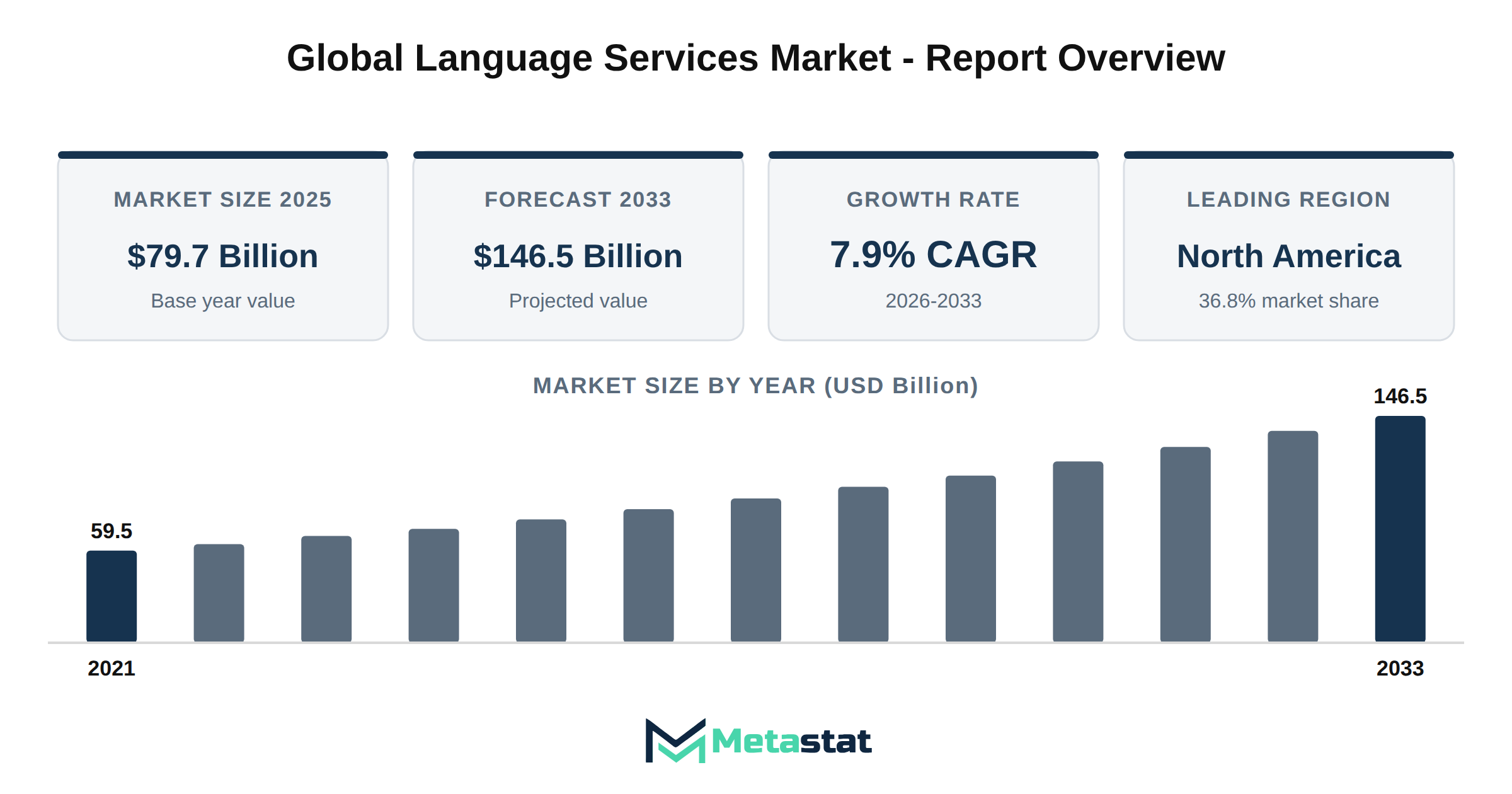
The Language Services market is projected to experience significant growth, expanding from USD 79.7 billion in 2025 to USD 146.5 billion by 2033, achieving a compound annual growth rate (CAGR) of 7.9%. Historical data indicates an increase from USD 59.5 billion in 2021 to USD 73.6 billion in 2024, reflecting a steady upward trend in demand for language services.
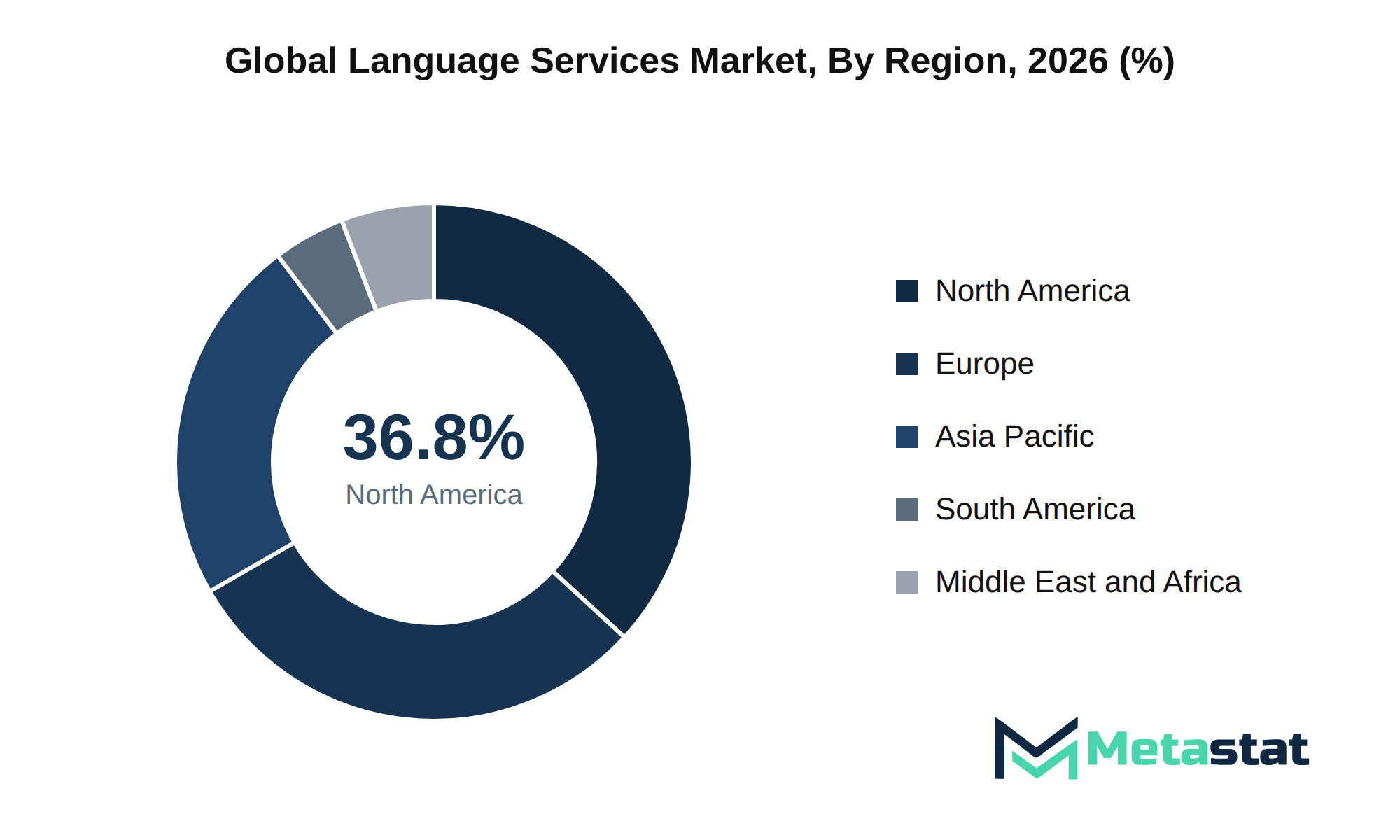
North America holds the largest market share at 36.8%, followed by Europe at 29.8% and Asia Pacific at 23%. Growth in these regions is driven by increased globalization, necessitating efficient language translation, localization, and multilingual content management services. The region's market value in 2033 is projected to reach USD 51 billion, supported by a CAGR of 7.9%.
Factors influencing market dynamics include advancements in technology, evolving localization strategies, and the rise of AI-driven translation methods. Demand for multilingual content management services is expected to grow, reflecting a broader trend toward global communications and accessibility.
Competitive benchmarking highlights key players in the Language Services market, including LanguageCheck.ai, RWS Holdings plc, and TransPerfect. These companies expand their offerings through innovation and strategic partnerships, contributing to overall market expansion.
Emerging opportunities in the market focus on R&D trajectories, next-gen innovation, and sustainable transformation. The drive for decarbonization and circular economy dynamics shapes how businesses approach their language service needs.
The Language Services market experiences significant shifts driven by advancements in technology and changing customer demands. AI-driven translation trends, particularly the rise of machine translation and neural machine translation, reshape the market, enhancing efficiency and accuracy. These developments cater to industries including Information Technology, Media, and Healthcare, which require rapid and reliable language solutions.
Localization strategies increasingly focus on cultural nuances and regional preferences, ensuring that content connects with diverse audiences. This approach generates demand across sectors, particularly in Retail and E-commerce, where effective communication enhances customer engagement. Multilingual content management emerges because a critical service, addressing the challenges of maintaining consistency across various languages and platforms.
Competitive benchmarking becomes essential in this evolving market, allowing firms to identify best practices and refine their offerings. The market fragmentation presents both challenges and opportunities, with numerous players striving to differentiate themselves through innovative solutions and superior service delivery.
Emerging opportunities arise from sustainable transformation initiatives, focusing on decarbonization and circular economy dynamics. Companies increasingly prioritize environmental responsibility within their operations, influencing procurement and supply chain strategies. Capital allocation towards infrastructure investments supports these initiatives, enabling firms to enhance their operational capabilities.
Macroeconomic headwinds, inflationary pressures, and currency volatility present challenges that impact pricing strategies and profitability. Firms that adapt effectively to these conditions position themselves favorably for future growth. The strategic outlook for the Language Services market indicates ongoing investment in R&D trajectories and next-generation innovations, fostering enhanced service offerings and market expansion.
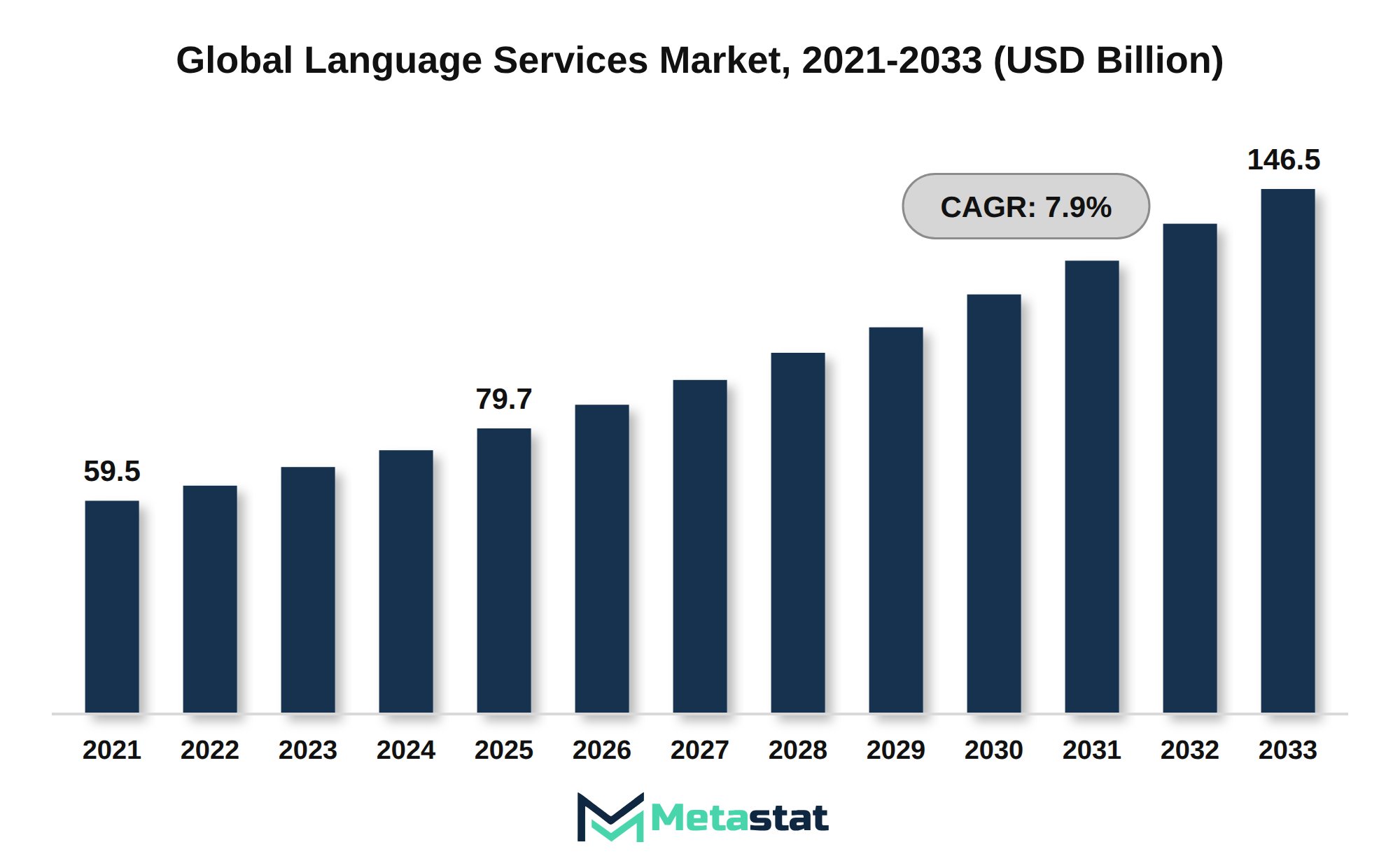
The Language Services market experiences accelerated growth driven by digital transformation initiatives across various sectors. Organizations increasingly prioritize technology adoption to enhance communication and streamline processes, driving demand for language services that facilitate these changes. The adoption of automation, artificial intelligence, and advanced software tools reflects a broader trend toward embracing digital solutions, which improves operational efficiency.
Industries including Information Technology and Media & Entertainment show heightened investment in language services, aligning with their objectives for global outreach and localization strategies. This digital shift allows for more efficient development and delivery of multilingual content, directly impacting market revenue. While companies leverage technology to meet the demands of diverse consumer bases, the market is projected to experience significant expansion, with revenue expected to reach USD 146.5 billion by 2033, growing at a compound annual growth rate of 7.9%.
The emphasis on digitizing legacy processes becomes critical for organizations seeking to stay competitive. By integrating modern language solutions into their digital frameworks, businesses enhance their capability to serve a global audience. This trend influences the overall growth trajectory of the Language Services market, reflecting that enhanced communication tools and strategies become integral to operational success.
Technological integration significantly influences the Language Services market, enhancing operational efficiency and effectiveness across various sectors. Organizations increasingly adopt automation, artificial intelligence, and software solutions to digitize legacy processes, streamline workflows and optimize resource allocation. This trend results in improved turnaround times and cost reductions, benefiting industries reliant on localization, translation, and interpretation services.
In particular, the integration of generative AI technology transforms content adaptation and translation workflows, enabling faster and more accurate language services. With artificial intelligence, companies leverage machine translation and neural machine translation, which enhance the quality and scalability of services. While these technologies evolve, they reduce the dependency on human translation, although human oversight remains critical for maintaining quality and contextual relevance.
Investment in this technology correlates with increasing public and private funding, supporting the expansion of language services that cater to diverse and globalized markets. The Language Services market is projected to reach USD 146.5 billion by 2033, demonstrating a compound annual growth rate of 7.9% during the forecast period. This growth reflects rising demand for multilingual content and the necessity for businesses to communicate effectively with an increasingly diverse customer base.
The drive for technological integration within the language services sector enhances service efficiency and supports firms in meeting evolving consumer behaviors and demands. Adapting these advanced technologies ensures that organizations remain competitive, ultimately driving sustained growth and substantial market opportunities.
The Language Services market faces significant restraint from regulatory compliance hurdles and macroeconomic headwinds. Stricter regulatory frameworks regarding data privacy, intellectual property protection, and content localization requirements create challenges for service providers. Compliance with these regulations incurs additional costs and operational complexities that several companies struggle to absorb. This situation limits market participation and growth.
Macroeconomic factors contribute to an environment of capital stagnation and inflationary pressures, hindering investment in language services. Many companies in the market experience reduced budgets for localization and translation services, impacting their ability to maintain competitive offerings. This trend is prominent in industries sensitive to economic fluctuations, including media and entertainment. Reduced spending on content adaptation leads to decreased demand for language services.
Supply chain disruptions and geopolitical instability introduce uncertainty into operations, affecting the timely delivery of language services. Companies reliant on global supply chains for resources encounter delays and increased costs, deterring clients. This instability results in fragmented market dynamics, with certain regions experiencing slower adoption rates.
Competition from alternative offerings and technological advancements presents challenges for traditional language service providers. The rise of automated solutions, including machine translation and generative AI, introduces substitution risks that pressure pricing and service differentiation. These factors contribute to market saturation, making it imperative for language service companies to innovate and adapt to remain relevant.
The Language Services market confronts significant challenges stemming from geopolitical fragmentation and increasing trade friction. These conditions disrupt the flow of services across borders, leading to heightened tariffs and trade deficits. While businesses expand internationally, uncertainty regarding trade policies complicates planning and coordination, particularly for multinational corporations relying on effective communication across regions.
Technological disruptions further complicate the landscape. Rapid advancements in automation and machine translation alter traditional workflows, creating pressures on workforce skills. Talent retention becomes a critical concern, with many firms facing difficulties attracting and maintaining qualified personnel capable of meeting evolving market demands. This skill gap directly impacts service quality and delivery timelines, affecting overall market competitiveness.
Logistics disruptions contribute to increased operational costs, impacting pricing strategies across the market. Supply chain instability, driven by external factors including natural disasters and geopolitical tensions, hampers efficient service delivery. Companies experience difficulties in sourcing materials and maintaining consistent workflow processes, resulting in delays and elevated prices that deter potential clients.
Rising input costs and compliance overhead associated with tightening global regulatory standards impose additional financial burdens on service providers. Adhering to these standards involves significant investment in quality control and legal consultations, which diverts resources from customer-facing initiatives. Consequently, these challenges limit growth prospects and intensify competition among service providers striving to optimize operational efficiency while navigating a complex regulatory environment.
The Language Services market faces multifaceted challenges that require strategic adaptation. Geopolitical factors, technological advancements, and economic pressures will shape the landscape, influencing market dynamics and competitive positioning.
The Language Services market anticipates significant opportunities arising from emerging technologies including generative AI and advanced machine learning. These technologies enhance translation accuracy and streamline workflows, contributing to increased efficiency for service providers and end-users. The ongoing digital transformation across various sectors, including healthcare, finance, and media, fuels demand for innovative language solutions tailored to diverse industries.
Infrastructure modernization is essential in expanding market reach. Investments in cloud-based solutions enable service providers to offer scalable and effective language services, catering to clients with varying needs. This shift encourages organizations to adopt multilingual strategies, enhancing customer engagement and satisfaction.
Geographical expansion represents another key opportunity. Developing regions experience rising demand for language services, driven by globalization and increased cross-border trade. Companies recognize the necessity of localized content to penetrate new markets effectively. This trend influences growth in the Asia Pacific and South American regions, where a growing middle class and digital adoption enhance market potential.
Strategic consolidation through mergers and acquisitions influences the competitive landscape. Companies pursue partnerships to broaden service offerings, improve operational efficiencies, and gain access to new technologies. This trend allows players to enhance their market positions while catering to evolving client expectations.
Sustainability imperatives and ESG-driven alignments promote eco-friendly practices within the industry. Organizations increasingly prioritize compliance with environmental standards, leading to the incorporation of green transformations in service delivery. This focus not only enhances corporate reputation but aligns with consumer preferences for environmentally responsible businesses.
Overall, these factors contribute to a positive growth trajectory for the Language Services market. The anticipated CAGR of 7.9% from 2026 to 2033 indicates a dynamic industry responding to evolving technological, environmental, and market demands.
The Global Language Services market is segmented based on Service Type, Technology, Deployment Model, and End-user Industry.
Valued at USD 38.3 billion in 2026, the Translation Services segment is projected to reach USD 61.5 billion by 2033, achieving a CAGR of 7% during the forecast period. Increasing globalization drives demand for translation services across various sectors, particularly in legal, healthcare, and technology industries. Organizations seek to connect with diverse audiences, necessitating accurate and culturally relevant translations. The rise in e-commerce and digital content further fuels this demand, driven by businesses expanding their operations internationally.
Technological advancements play a significant role in the segment's growth. The integration of machine translation and artificial intelligence enhances translation efficiency and reduces turnaround times. These innovations complement human translators, enabling faster service delivery while maintaining quality. End-users increasingly adopt hybrid approaches, combining advanced technologies with skilled linguists to improve accuracy and context in translations.
Competition within the market intensifies due to more players entering the arena, offering specialized services tailored to specific industries and regional needs. Strategic partnerships and mergers among key players result in expanded service offerings and improved market reach. Companies invest in training and certification programs to ensure high-quality outputs, addressing the growing demand for compliance with industry standards.
Forecasted growth in the Translation Services segment highlights the importance of capital investment in technology and infrastructure. Firms prioritize enhancing service capabilities and expanding their global footprint to capture untapped markets. Continuous shifts in consumer preferences towards localized content further enhance the segment's potential for sustained growth within the broader Language Services market.
Significant growth in the Localization Services segment reflects increasing global demand for tailored content adaptation. Organizations prioritize the integration of their products and services into diverse markets, driving the localization trend. Factors influencing adoption include the expansion of e-commerce and digital platforms, which require effective communication across multiple languages and cultures.
Technological maturation enhances the capabilities of localization services. Innovations in artificial intelligence and machine learning facilitate efficient translation processes, allowing companies to meet consumer expectations for high-quality and culturally relevant content. This evolution creates opportunities for service providers to differentiate their offerings, thereby expanding their market share.
Increased investment in localization efforts correlates with shifts in consumer consumption patterns. Global audiences increasingly favor localized content, leading businesses to allocate more resources towards this area. Regulatory compliance standards and certification requirements further encourage organizations to adopt localization services, ensuring products and communications align with local norms and expectations.
The Localization Services segment is projected to reach USD 35.8 billion by 2033, at a CAGR of 9.1% during the forecast period. This growth trajectory highlights the importance of localization in the broader Language Services market. Companies that effectively respond to the demand for localized content enhance their competitive positioning and profitability.
Overall, the strategic opportunity windows presented by the Localization Services segment support enhanced customer engagement and improved market penetration. Organizations investing in localization strategies position themselves to capitalize on emerging trends within the global marketplace.
Growth in the interpretation services segment is driven by globalization and the increasing need for effective communication across diverse languages. Demand arises from various industries including healthcare, legal services, and international business, where accurate interpretation is essential for facilitating communication. The rising prevalence of international conferences and events further contributes to the demand for interpretation services, resulting from organizations seeking to ensure clear understanding among participants from different linguistic backgrounds.
Technological advancements significantly enhance the delivery of interpretation services. Innovations including remote interpretation and video conferencing platforms enable providers to offer services in real-time, expanding their reach and efficiency. Artificial intelligence and machine learning technologies continue to evolve, influencing the way interpretation services are delivered, reducing costs and improving accuracy.
Regulatory compliance standards in various sectors influence the implementation of interpretation services, particularly in healthcare and legal environments. Ensuring adherence to these standards becomes essential, owing to organizations facing penalties for non-compliance. In this context, effective interpretation services help organizations navigate complex regulatory landscapes, enhancing operational efficiency and service delivery.
Cost structures within the interpretation services segment reflect the need for skilled interpreters and the investment in technology. Pricing volatility occurs due to fluctuations in demand and the availability of qualified interpreters, impacting profit margins for service providers. The segment is projected to reach USD 15.8 billion by 2033, indicating strong growth potential and increasing market opportunities.
Strategic investment in training and technological upgrades remains critical for sustaining competitiveness in the interpretation services segment. Companies investing in next-generation technology and interpreter certification programs position themselves to meet evolving client needs and capture market share. Overall, the interpretation services segment demonstrates significant growth, driven by demand dynamics and technological maturation within the language services market.
Growth in the Multilingual Content Management Services segment reflects increasing demand for efficient handling and distribution of multilingual content across diverse platforms. This demand results from the globalization of businesses, which necessitates accurate and timely communication in multiple languages. Industries including information technology, media, and e-commerce actively seek solutions that enhance their competitive edge through effective content management strategies.
Technological advancements play a significant role in segment expansion, enabling the adoption of automation tools and artificial intelligence to streamline content workflows. Enhanced capabilities in machine translation and content adaptation support organizations in maintaining high-quality standards while managing larger volumes of content. These technological developments create strategic opportunities for service providers to expand their offerings and improve service efficiency.
Pricing dynamics within this segment exhibit volatility, influenced by the costs of raw materials, technology integration, and increasing competition among service providers. Margin pressures arise from balancing quality and cost-effectiveness while meeting the evolving expectations of clients. Companies that prioritize investment in innovative technologies and strategic partnerships reinforce their market positions.
The Multilingual Content Management Services segment is projected to grow at a CAGR of 10.3% during the forecast period. This growth trajectory highlights the increasing reliance on multilingual content solutions. Businesses pursue international markets and aim to enhance customer engagement across language barriers.
Regulatory compliance standards continue to shape service offerings, particularly in industries like healthcare and finance where accurate and culturally appropriate translations are crucial. Adhering to these standards ensures that organizations maintain credibility and trust with their stakeholders, directly impacting service demand and market growth.
Translation quality assurance and linguistic validation play a critical role in ensuring that translated content meets the required standards of accuracy and cultural relevance. A growing emphasis on quality in the Language Services market drives demand, with businesses increasingly recognizing the value of linguistically validated content for effective communication and market expansion. Industries including healthcare, technology, and finance particularly benefit from high-quality translations, where precision is essential.
Rapid technological advancements significantly influence the enhancement of translation quality assurance processes. The integration of artificial intelligence and machine learning tools facilitates more efficient quality checks and validations, allowing for quicker turnaround times without compromising accuracy. This evolution in technology creates strategic opportunities for service providers to invest in next-generation solutions that improve operational efficiency and reduce costs associated with manual oversight. The advancement in technology is projected to drive growth in this segment.
End-use dynamics contribute to a shift in consumption patterns, with businesses seeking comprehensive solutions that include both translation and validation services. Regulatory compliance standards in various industries further necessitate rigorous quality assurance measures. While global markets expand, the need for linguistically validated content becomes more critical, ensuring that organizations comply with local regulations while maintaining brand integrity across diverse cultural landscapes. This trend signifies a robust demand for quality assurance services.
Pricing volatility poses challenges within the segment, particularly due to fluctuating costs associated with skilled linguists and technology investments. Providers focus on optimizing cost structures to remain competitive while maintaining high-quality standards. Margin pressures resulting from increased competition compel service providers to innovate continuously, seeking ways to offer enhanced value without sacrificing service quality. This competitive environment drives the need for effective pricing strategies.
Supply chain resilience in translation quality assurance and linguistic validation remains essential for successful operational execution. Effective raw material sourcing, including access to qualified linguists and advanced technology, directly impacts service delivery. Disruptive alternatives, including fully automated translation tools, present challenges while prompting service providers to demonstrate the irreplaceable value of human oversight in ensuring cultural and contextual accuracy. Maintaining this balance is crucial for future success.
Demand for transcreation and language data services is driven by the increasing globalization of brands seeking to connect with diverse audiences. These services enable organizations to adapt their messaging while maintaining brand identity across different cultures and languages. The growth of digital content consumption further increases demand for transcreation services, driven by businesses aiming for culturally relevant content that appeals to local markets.
Adoption of language data and AI training services is supported by advancements in artificial intelligence and machine learning. Companies leverage these services to enhance their AI models and improve language processing accuracy. This trend is particularly evident in tech-driven industries, where the need for high-quality language data becomes crucial for developing effective AI applications.
Technological maturation in AI and language processing drives segment expansion. Increased investments in machine learning algorithms and natural language processing technologies enhance the capabilities of transcreation and language data services. These advancements create strategic opportunity windows for providers to offer innovative solutions that meet evolving market demands.
End-use dynamics play a significant role in shaping the market. Industries including media and entertainment, marketing, and e-commerce increasingly rely on transcreation to ensure their content connects in different cultural contexts. This shift highlights a consumption pattern that prioritizes localized content, driving growth within the segment.
Pricing volatility impacts the cost structures of transcreation and language data services. Fluctuations in demand lead to varying pricing strategies, creating margin pressures for providers. To mitigate these effects, companies focus on building more resilient supply chains and optimizing their service offerings.
Regulatory compliance standards surrounding language accuracy and data protection have become critical for market players. Adhering to these standards ensures that providers maintain credibility and trust with their clients. Companies that prioritize compliance are better positioned to capture market share and enhance their reputation in the industry.
Strategic investment in technology and workforce development will influence the long-term outlook of the segment. Companies that invest in training and development initiatives are likely to enhance their service offerings and improve operational efficiencies, ultimately gaining a competitive advantage in the market.
Significant growth in the Human Translation segment reflects increasing demand for high-quality, nuanced language services. Valued at USD 48.7 billion in 2026, the market is projected to reach USD 71.8 billion by 2033, at a CAGR of 5.7% during the forecast period. This expansion results from the ongoing globalization of businesses, which drives the need for accurate and contextually relevant translations across various industries.
Adoption trends illustrate a strong preference for human translation within sectors that prioritize quality over speed. Industries including healthcare and legal services require precise translations to ensure compliance with regulatory standards and to communicate effectively with diverse populations. The emphasis on cultural nuances and emotional resonance in translated content enhances the demand for skilled human translators, differentiating this segment from machine translation alternatives.
The segment experiences notable catalysts, including technological maturation and the integration of advanced tools that streamline the translation process. Next-generation upgrades, including AI-assisted translation tools, support human translators by improving efficiency and accuracy. These advancements not only enhance productivity but broaden the scope of services offered, enabling providers to cater to a wider array of client needs.
Consumption shifts towards personalized and localized content drive revenue growth within the market. Businesses increasingly recognize the importance of connecting with their audiences in a culturally relevant manner, prompting investments in high-quality human translation services. Evolving end-use dynamics, particularly in the media and entertainment sector, emphasize the need for creative translations that retain original intent and style.
Cost structures within the Human Translation segment reflect a balance between quality and operational efficiency. While the segment faces margin pressures from rising labor costs and competitive pricing strategies, the value derived from high-quality translations justifies the investment for organizations emphasizing brand integrity and customer engagement. Ongoing strategic opportunity windows emerge from this balance, attracting investments in talent development and training programs for translators.
The Human Translation segment stands because a critical component of the Language Services market, driven by demand for quality, technological advancements, and the need for culturally attuned communication across various industries.
Growth in the Machine Translation (MT) segment reflects ongoing advancements in artificial intelligence and natural language processing technologies. Increasing demand for quick and efficient translation solutions drives organizations to adopt MT services, particularly in industries where rapid content generation and localization are critical, including technology, e-commerce, and media. This shift towards automation allows businesses to reduce operational costs while maintaining high levels of productivity.
Technological maturation contributes significantly to the expansion of the market. Innovations in neural machine translation enhance translation accuracy and contextual understanding, attracting a wider range of users. The integration of MT solutions within various platforms and applications supports efficient workflow processes, reinforcing their role in business operations across diverse sectors.
Investment in next-generation upgrades plays a crucial role in shaping the future of the segment. Organizations keen on leveraging advanced MT capabilities seek to improve customer engagement and streamline content delivery, aligning their strategies with the demands of an increasingly globalized marketplace. This focus on continuous improvement positions the segment for sustained growth and development.
By 2033, the Machine Translation (MT) segment is projected to reach USD 26.1 billion, at a CAGR of 9.1% during the forecast period. Such figures signal robust opportunities for key players to enhance their offerings and cater to evolving consumer needs. Companies that invest in innovative technologies and scalable solutions are likely to enhance their competitive advantage within the language services market.
End-use dynamics play a crucial role in determining the trajectory of the market. Industries like healthcare, finance, and government increasingly rely on MT to facilitate communication across language barriers, enabling better service delivery and compliance with regulatory standards. This growing reliance on MT solutions highlights the segment's importance in enhancing operational efficiencies and meeting global demands.
Significant advancements in technology drive the growth of Neural Machine Translation (NMT). These systems leverage artificial intelligence and deep learning algorithms, enhancing translation accuracy and efficiency. Businesses across various sectors, including Information Technology and Healthcare, adopt NMT for its ability to handle complex language tasks and provide rapid, high-quality translations. Increasing demand for global communication and the necessity for localization in marketing strategies advance the segment.
NMT systems experience rapid technological maturation, evolving alongside other forms of machine translation. Continuous improvements in algorithms and processing power lead to better contextual understanding and nuanced translations. Companies investing in NMT benefit from reduced operational costs and improved customer satisfaction, leading to enhanced competitive positioning in the Language Services market.
The segment is projected to reach USD 19.2 billion by 2033, reflecting a commitment to capital investment in advanced translation technologies. Firms recognize the strategic opportunity windows presented by NMT, prompting investment in next-generation upgrades and product evolution. This sector's growth aligns with consumption shifts toward faster and more efficient translation solutions, ensuring firms remain competitive in an increasingly interconnected global market.
Growth in the Generative AI Translation & Content Adaptation segment reflects increasing demand for advanced translation solutions. This segment is projected to grow at a CAGR of 17.5% during the forecast period, driven by technological advancements and rising integration of artificial intelligence in language processing. Industries including Information Technology, Media & Entertainment, and Healthcare increasingly adopt these technologies to enhance operational efficiency and improve customer engagement. The introduction of innovative tools and applications in this domain supports product evolution, enabling businesses to adapt content swiftly and accurately to cater to diverse markets.
Demand drivers include the necessity for rapid localization of content and the growing trend of globalization, which requires businesses to communicate effectively across multiple languages. The expansion of e-commerce and digital media increases the need for efficient content adaptation strategies. Market participants face challenges from pricing volatility and margin pressures, compelling them to innovate continuously. Strategic investments in next-generation technologies strengthen competitive positioning while addressing cost structure concerns.
End-use dynamics highlight the importance of strategic opportunity windows, driven by organizations leveraging generative AI capabilities to streamline translation workflows and enhance user experiences. Regulatory compliance and certification standards shape operational practices, ensuring that quality remains a priority. The resilience of the supply chain and sourcing strategies directly influence the ability to deliver timely and effective services. Overall, the segment demonstrates significant growth potential, driven by strategic investments and an increasing focus on technological maturation and product evolution.
Strong demand for cloud-based language services drives significant growth in this segment. The increasing reliance on remote work and global collaboration accelerates the shift towards cloud solutions, which offer flexibility and scalability for businesses of all sizes. Industries including Information Technology, Media and Entertainment, and Healthcare increasingly adopt cloud-based language services to streamline operations and enhance communication across diverse languages. The segment's expansion contributes to its projected value of USD 49.9 billion in 2026, with expectations to reach USD 93.5 billion by 2033, at a CAGR of 9.4%.
Technological maturation plays a critical role in the cloud-based segment's growth. Advancements in artificial intelligence and machine learning improve translation quality and efficiency, leading to higher adoption rates among organizations. Enhanced features, including real-time collaboration and integration with existing platforms, enable effective user experiences, leading to increased demand for cloud-based solutions. While businesses prioritize innovation and agility, cloud-based language services gain traction in various sectors, enhancing the overall dynamics of the Language Services market.
Segment growth reflects a steady increase in demand for language services tailored to specific client needs and regulatory environments. The surge in digital transformation across various industries drives organizations to adopt on-premises solutions for enhanced data security and customization. Enterprises in sectors including healthcare, finance, and legal services prioritize these solutions to address stringent regulatory compliance standards and protect sensitive information.
On-premises deployment offers organizations greater control over their language services, aligning with internal IT frameworks and governance policies. This model caters to clients requiring personalized workflows and data handling processes, building trust and reliability in service delivery. The segment's expansion is further supported by advancements in technology, facilitating higher efficiency and improved user experiences in translation and localization tasks.
Cost structures associated with on-premises deployment influence decision-making. While initial investments for infrastructure are significant, the long-term return on investment justifies expenditures. Businesses experience reduced operational costs through streamlined processes and enhanced performance, contributing positively to overall margins.
The on-premises segment is projected to reach USD 26.7 billion by 2033, at a CAGR of 4.6% during the forecast period. This growth trajectory reflects the increasing adoption of customized language solutions that align with specific industry requirements and organizational strategies within the Language Services market.
Growth within the hybrid deployment model reflects increasing demand for flexible and scalable language services solutions. Adoption of hybrid models arises from organizations seeking to balance on-premises control with the advantages of cloud-based services. Industries including information technology, healthcare, and media benefit from this flexibility, enabling them to tailor solutions that meet specific operational requirements while leveraging cost efficiencies. The integration of advanced technologies, including artificial intelligence and machine learning, enhances the capabilities of hybrid language services, facilitating greater efficiency and accuracy in translation and localization processes.
Investment in hybrid models signifies a strategic shift towards more adaptable language services. While organizations navigate evolving market conditions, the ability to use both cloud and on-premises resources provides a competitive edge. This dynamic allows companies to respond to fluctuating demand and diverse customer needs effectively. The hybrid segment is projected to reach USD 26.4 billion by 2033, indicating significant growth and reinforcing its position within the broader language services market.
Growth in language services within the Information Technology & Software sector stems from increasing digital transformation across industries. This transformation generates demand for localization and translation services, driven by businesses expanding their global reach. Significant advancements in cloud technology enhance the scalability and efficiency of language services, allowing for rapid adaptation to diverse market needs.
The implementation of next-generation technologies, including artificial intelligence and machine learning, plays a critical role in service evolution. These technologies streamline workflows and improve service accuracy, influencing downstream applications including software localization and user interface translation. Companies within the sector prioritize compliance with regulatory standards, ensuring that products and services meet localized requirements, which is crucial for market penetration.
Cost structures within the Information Technology & Software segment face challenges, particularly related to the integration of advanced technologies and maintaining quality assurance. Pricing volatility impacts the operational margins of language service providers, necessitating strategic adjustments to remain competitive. Investment in technological infrastructure and talent development is expected to determine long-term profitability and market position.
Shifts in consumption patterns highlight the growing preference for real-time translation and multilingual content management. This trend reflects a broader demand for effective user experiences across digital platforms. Strategic opportunity windows emerge because businesses seek robust language solutions that enhance global collaboration and customer engagement, emphasizing the importance of flexibility and innovation in service offerings.
Supply chain resilience is essential in addressing potential disruptions, including changes in raw material sourcing or external factors impacting service delivery. Disruptive alternatives, while posing risks, open avenues for innovation. Language service providers that embrace technological advancements and adapt to evolving market dynamics are well-positioned to capitalize on the expanding language services market.
Growth in the Media & Entertainment sector stems from the increasing demand for localized content across various platforms, including streaming services, video games, and social media. This demand reflects the need for accurate and culturally relevant translations that enhance user engagement and satisfaction.
Adoption of advanced language services is fueled by technological maturation, particularly in machine learning and artificial intelligence. These technologies enable more efficient content adaptation, ensuring that media products connect with diverse audiences while maintaining the original intent of the creators.
Investment in next-generation upgrades plays a critical role in expanding the capabilities of language service providers. Enhanced tools for real-time translation and localization facilitate quicker turnaround times, which aligns with the rapid nature of the Media & Entertainment industry.
Downstream application trends highlight an increasing focus on interactive and immersive content, necessitating specialized language services that cater to unique formats including virtual reality and augmented reality experiences. This shift influences how language services are structured and delivered, creating new opportunities for providers.
Regulatory compliance standards continue to impact the sector, especially regarding content accessibility and intellectual property rights. Providers navigate these complexities to ensure that localized media adheres to local laws and cultural expectations.
Cost structures have evolved due to technological innovations that reduce long-term operational costs while maintaining quality. This shift allows providers to offer competitive pricing without compromising service delivery, enhancing market attractiveness.
Strategic opportunity windows emerge owing to surging demand for multilingual content, driven by globalization and the expansion of digital platforms. This phenomenon creates fertile ground for language service providers to strengthen their market position and expand their service offerings.
The Media & Entertainment segment of the Language Services market faces dynamic changes driven by technological advancements, regulatory pressures, and evolving consumer preferences. These factors contribute to a competitive landscape characterized by continued growth and innovation.
In the Healthcare & Life Sciences segment, demand for language services stems from the need for accurate communication in clinical settings, regulatory compliance, and patient engagement. The sector experiences consistent growth driven by various factors, including the expansion of telemedicine and global health initiatives that require multilingual support. Increased cross-border collaboration in clinical research and the development of pharmaceuticals drive a need for precise translation of technical documents, patient information, and regulatory submissions.
Adoption of advanced technologies, including Machine Translation and AI-driven linguistic validation, supports the efficiency and accuracy of language services. These technological advancements enhance the capability to manage large volumes of data and ensure compliance with regulations in different regions. The integration of AI and natural language processing in healthcare applications promotes better communication with diverse patient populations, ultimately improving health outcomes.
Regulatory compliance standards heavily influence the operational dynamics within this segment. Organizations adhere to strict guidelines set by health authorities, necessitating the use of certified language services that align with industry standards. This regulatory environment drives demand for specialized translation and localization services tailored to the unique requirements of the healthcare ecosystem.
Next-generation upgrades in software platforms facilitate streamlined workflows and enhance collaboration among stakeholders, allowing for faster project turnaround and improved service delivery. The development of these technologies leads to the emergence of innovative solutions that address specific needs within the sector, including remote patient monitoring, telehealth consultations, and electronic health records management.
With an increasing focus on patient-centered care, healthcare providers are shifting towards multilingual communication strategies that improve patient engagement and satisfaction. This shift generates a strategic opportunity window for language service providers to develop tailored solutions that address the unique needs of healthcare organizations, thereby expanding their market presence and driving growth in the sector.
Supply chain resilience and cost structures in the Healthcare & Life Sciences segment continue to evolve. Language service providers navigate complex regulations and ensure quality while managing pricing volatility and margin pressures. Strategic partnerships and collaborations with healthcare organizations enhance service offerings, improve operational efficiency, and contribute to sustaining competitive advantage in the market.
Overall, the Healthcare & Life Sciences segment represents a vital component of the Language Services market, characterized by its unique demands, regulatory requirements, and technological advancements. A focus on delivering high-quality, compliant language services positions providers for success in meeting the growing needs of this sector.
Growth within the BFSI sector reflects an increasing demand for accurate and timely language services, driven by the need for effective communication in a highly regulated environment. Regulatory compliance standards have heightened the importance of multilingual capabilities, ensuring that financial institutions effectively convey information across diverse markets. The adoption of advanced technologies, including machine translation and AI-driven solutions, enhances efficiency and accuracy, which are crucial in financial transactions and documentation.
Continued emphasis on customer experience within the BFSI sector promotes investments in localization and translation services. Language services facilitate customer interactions, enabling institutions to cater to diverse demographics. The evolution of digital banking and online services necessitates a robust framework for multilingual support, influencing the overall growth of the Language Services market.
Pricing volatility and margin pressures specific to the BFSI sector create challenges that affect operational costs. Institutions prioritize cost-efficient language solutions to maintain competitiveness while meeting regulatory requirements. Strategic opportunity windows arise from the increasing focus on digital transformation, compelling financial organizations to integrate comprehensive language services into their operations.
Supply chain resilience shapes language service strategies within the BFSI sector. Disruptive alternatives, including automated translation tools, present opportunities for enhancing service delivery and reducing turnaround times. Investments in next-gen upgrades and product evolution remain crucial, ensuring that language services adapt to emerging trends and regulatory changes.
Retail and e-commerce sectors increasingly rely on language services to enhance customer engagement and streamline operations. Demand for multilingual content arises from the necessity to cater to diverse consumer bases across geographical boundaries. Companies invest in translation and localization services to deliver personalized shopping experiences, which strengthens brand loyalty and drives sales. Advanced technology aids in meeting these demands through improved accuracy and speed in service delivery.
The shift towards digital shopping has intensified competition among retailers, leading to a heightened emphasis on effective communication strategies across multiple languages. Adoption of language services directly correlates with the growing need for localized marketing campaigns and user-friendly online platforms. This trend enhances customer satisfaction by ensuring that consumers receive relevant information in their preferred language.
Regulatory compliance with language accessibility standards further influences the focus on language services within the retail and e-commerce sectors. Adhering to these standards not only facilitates smoother operations but expands market reach. Companies that prioritize compliance often experience improved customer trust and brand reputation, which translates into increased revenue streams.
Technological advancements contribute to the evolution of language services, enabling enhanced capabilities including real-time translation and artificial intelligence-driven content adaptation. These developments allow retailers to implement next-generation upgrades effectively, ensuring that they remain competitive in the market. Strategic investments in technology lead to significant operational efficiencies and cost reduction.
Overall, the dynamics of the retail and e-commerce industries create a robust environment for language services, driving growth opportunities and enhancing the market. The focus on consumer-centric strategies drives the continuous demand for these services, positioning them because critical components for success in the language services market.
Demand for language services within the manufacturing and industrial sectors experiences a notable increase driven by globalization and the need for companies to communicate effectively across diverse markets. Expansion into new geographical areas generates a requirement for language services that facilitate effective interaction with local customers, suppliers, and partners.
The adoption of advanced technologies significantly influences this segment. Automation and artificial intelligence in production and logistics require accurate translation and localization services to maintain operational efficiency. These technologies support the integration of language services into various processes, enhancing communication within multinational companies.
Strategic investment in product development and localization efforts serves because a catalyst for segment growth. Companies increasingly recognize the importance of tailoring their offerings to meet the specific preferences and cultural nuances of different markets. This trend enhances customer engagement and promotes brand loyalty, ultimately driving revenue growth within the manufacturing and industrial sectors.
Regulatory compliance standards play a crucial role in shaping demand for language services. Companies operating in highly regulated environments ensure that all materials, including manuals and safety instructions, are accurately translated to comply with local laws and standards. This necessity creates a consistent demand for language services, supporting ongoing market expansion.
Cost structures and pricing volatility impact language service providers because they navigate the competitive environment. Fluctuations in raw material prices and increased operational costs pressure service providers to optimize their pricing models while maintaining service quality. Companies focused on efficiency and cost-effectiveness in their supply chains leverage language services to enhance communication with international partners, minimizing delays and misunderstandings.
Overall, the manufacturing and industrial segment within the language services market reflects a dynamic environment characterized by technological advancements, strategic investments, and compliance requirements that shape demand and fuel growth opportunities.
Growth in the Government & Public Sector segment reflects increasing demand for language services driven by the need for effective communication across diverse populations. Regulatory compliance shapes this demand, owing to government entities requiring precise translations and localization to meet legal and policy standards. Enhanced focus on accessibility ensures that information reaches all demographics, further prompting the uptake of language services.
Technological maturation contributes to the expansion of the segment. The introduction of advanced translation technologies, including Neural Machine Translation (NMT) and Generative AI, supports government agencies in delivering timely and accurate information. These technologies facilitate quick adaptations to changing regulations and policies, enhancing response times and operational efficiency.
Investment in strategic upgrades ensures government entities remain competitive and effective in their operations. The push for digital transformation has prompted agencies to adopt cloud-based language services, which provide scalable and flexible solutions to handle varying demands. This shift aligns with broader trends towards modernization and efficiency within public sector operations, fostering a more responsive and capable environment.
Challenges within the segment include budget constraints and varying priorities among governmental departments. Despite these pressures, the emphasis on multicultural outreach and engagement has driven a sustained requirement for language services. This trend positions the Government & Public Sector because a critical end-user industry within the Language Services market, ensuring growth and continuous demand for tailored linguistic solutions.
Demand for language services within the legal sector reflects a variety of drivers. Increasing globalization results in legal firms requiring services that bridge linguistic gaps, ensuring compliance with international regulations and laws. Clients now expect legal documentation and proceedings to be available in multiple languages, enhancing access and understanding. This shift drives an uptick in the need for translation and localization services tailored for legal contexts, including contracts, treaties, and case law.
Technological advancements play a crucial role in the evolution of legal services. The integration of artificial intelligence and machine learning into legal translation processes enhances accuracy and efficiency, allowing legal professionals to focus on more complex tasks. The legal services segment benefits from the rapid maturation of technology, leading to an increase in the use of translation management systems and automated workflows that streamline operations.
Regulatory compliance standards exert a significant influence on market dynamics. Legal practitioners face increased pressure to adhere to strict guidelines, particularly in multinational dealings where language precision holds critical importance. This environment drives demand for certified translation services, ensuring that translations meet industry standards and are legally recognized in various jurisdictions.
Cost structures within legal services reflect the specialized nature of the work involved. Legal translation often involves higher costs due to the necessity of involving qualified legal experts for accurate interpretations. Pricing volatility arises from fluctuating demand and the requirement for specialized knowledge, impacting margins across service providers.
Strategic opportunity windows become apparent owing to legal firms expanding their reach into emerging markets. Developing countries show a growing need for legal translation services, driven by increased foreign investment and cross-border transactions. Language service providers that effectively cater to these markets position themselves for significant growth within the broader language services market.
Consumption shifts within the legal sector highlight a growing preference for comprehensive language service solutions. Law firms increasingly favor partnerships with language service providers that offer a full suite of services - from document translation to interpretation - enabling them to maintain consistency and quality across all legal communications. This trend emphasizes the importance of adaptability in service offerings to meet the evolving needs of legal professionals.
Increasing globalization drives demand for language services within the travel and hospitality sector. Factors including the rise in international travel, diverse cultural experiences, and the need for personalized customer interactions contribute significantly to this demand. Companies within this segment prioritize effective communication to enhance customer experience and satisfaction.
Challenges in the travel and hospitality industry include fluctuating travel trends and economic uncertainties, which impact service demands. Companies are increasingly adopting advanced language solutions to improve operations and enhance service offerings. The expansion of online travel platforms and mobile applications further emphasizes the need for multilingual support, enabling businesses to cater to a broader audience.
Technological advancements play a critical role in shaping the market by supporting next-gen upgrades, including AI-driven translation tools and localization services. These technologies facilitate rapid adaptation to changing customer preferences and ensure that content aligns with local cultures, enhancing overall engagement.
Shifts in consumer behavior towards online bookings and digital interactions necessitate robust language solutions. Businesses increasingly focus on creating multilingual experiences across various platforms, from websites to customer service channels. This emphasis on accessibility creates a competitive advantage, driving growth within the market.
Compliance with local regulations and standards enhances trust and credibility for businesses operating in diverse markets. Adhering to regional certifications ensures that companies meet language requirements, thereby minimizing risks associated with miscommunication. This aspect becomes particularly significant in sectors including tourism, where compliance greatly influences customer perceptions.
Investments in language services enhance operational efficiency and improve profit margins across the travel and hospitality sector. By leveraging language solutions, companies reduce costs associated with miscommunication and improve customer retention through tailored experiences. The strategic focus on language services within this sector is projected to continue driving growth and innovation.
The education, telecommunications, and energy and utilities sectors exhibit robust demand for language services, driven by globalization and the need for effective communication across diverse languages and cultures. Educational institutions increasingly require translation and localization services to ensure accessibility and comprehension of learning materials for students from various linguistic backgrounds. This trend reflects the expansion of language services in the educational sector, attributed to institutions seeking to enhance the learning experience and facilitate academic engagement.
In telecommunications, the demand for multilingual support and localization of content has intensified, particularly with the growth of digital platforms and global connectivity. Providers focus on language services to deliver accurate information and improve user engagement across different regions. This requirement encourages investment in language solutions that enhance customer interaction and satisfaction.
The energy and utilities sector reflects a growing focus on regulatory compliance, which necessitates precise communication in multiple languages. Companies operating in this space invest in language services to ensure adherence to local laws and standards, enhancing their operational efficiency and market reach. The integration of language solutions enables these companies to communicate technical information effectively to stakeholders, promoting transparency and trust.
Overall, the education, telecommunications, and energy and utilities sectors contribute to the ongoing evolution of the Language Services market, emphasizing the importance of multilingual communication in a globalized economy. Companies within these industries increasingly recognize the strategic value of language services, driving sustained growth and innovation in the market.
Based on geography, the Global Language Services market is divided into North America, Europe, Asia-Pacific, South America, Middle East, and Africa.
North America exhibits significant growth potential within the Language Services market, driven by increasing demand for diverse language solutions across various industries. The region accounts for 36.8% of the global market in 2025, highlighting its dominant position. The projected market size is set to reach USD 51 billion by the end of 2033, with a compound annual growth rate (CAGR) of 7.9% throughout the forecast period.
The United States, Canada, and Mexico represent key players in this market, with substantial investments in technology and infrastructure modernizations enhancing service delivery. High demand for translation and localization services primarily stems from the technology and e-commerce sectors. The shift towards cloud-based deployment models facilitates access to language services, driving operational efficiencies and improving turnaround times. Localization services are anticipated to experience the highest growth rate, supported by the increasing need for tailored content across different cultural contexts.
Competitive dynamics in the North American market reflect a mix of established firms and emerging players. Companies including TransPerfect and Lionbridge Technologies, LLC operate in the market, maintaining substantial market shares by leveraging advanced technologies including Neural Machine Translation (NMT) and Generative AI Translation to enhance service offerings. The competitive landscape remains dynamic, with companies pursuing strategic partnerships and innovations to capture market share and address evolving customer needs.
Europe represents a significant portion of the global Language Services market, accounting for 29.8% in 2025. This region experiences strong demand driven by multiple factors, including the growing need for localized content and compliance with regulatory requirements. Key countries, including Germany, France, the UK, Italy, and Spain, display robust adoption rates, reflecting a shift toward more nuanced language solutions across various sectors.
Germany and the UK lead in spending on translation and localization services, with industries including Information Technology, Media & Entertainment, and Healthcare driving investments in language services. These countries prioritize infrastructure modernization and nearshoring initiatives, enhancing their competitive position in the market. Spain and Italy follow suit, expanding their language service offerings to cater to domestic and cross-border trade requirements.
Emerging markets within Europe show increasing opportunities for language service providers. Russia and the Rest of Europe exhibit underpenetrated territories that present avenues for growth. Localized procurement dynamics and cultural nuances influence B2B buying behaviors, requiring vendors to adapt their strategies. This adaptability enables firms to align with regional market demands, enhancing their service offerings and positioning within the market.
Investment in technology, including machine translation and generative AI, contributes to the evolving landscape of language services in Europe. Growth in cloud-based deployment models supports scalability and accessibility for businesses. Competitive pressures within the region compel suppliers to innovate and consolidate their offerings, impacting pricing strategies and service quality.
The Asia-Pacific region, contributing 23.00% to the global Language Services market in 2025, displays varied dynamics across its countries. Rapid urbanization, coupled with a growing middle class, fuels demand for language services in China and India, particularly within the e-commerce and technology sectors. Japan's mature market demonstrates a strong preference for high-quality translation and localization services, driven by its advanced technological landscape and cultural nuances.
South Korea exhibits a notable interest in multilingual content management, enabling businesses to engage effectively with diverse customer bases. Australia serves because a strategic hub for language services, benefiting from its diverse population and heightened demand for interpretation services. Southeast Asia presents an emerging market with increasing adoption of localization services, driven by digital transformation and regional integration initiatives.
Infrastructure modernization across the region enhances the operational capabilities for language service providers. The rise of cloud-based solutions facilitates on-demand access to translation and localization resources. Geopolitical factors influence cross-border trade corridors, impacting demand and operational costs for language services. Domestic market participants, including firms including TransPerfect and Lionbridge Technologies, adapt their strategies to cater to local procurement dynamics and cultural preferences.
Overall, the evolving landscape in Asia-Pacific reflects a combination of mature market dynamics and emerging growth opportunities within underpenetrated territories. The region's language services market is poised for incremental growth, supported by increased foreign direct investment and a focus on localized solutions to enhance customer engagement.
Growth in the Language Services market within South America demonstrates significant potential, with Brazil and Argentina leading the regional demand. Brazil commands a share of the market, supported by a growing economy and an increasing number of businesses requiring translation and localization services. Argentina follows closely, benefiting from a strong technology sector that enhances the need for language solutions.
The demand for translation services is driven by the expanding e-commerce landscape in Brazil, resulting in an increased requirement for multilingual content. The rise of local companies entering international markets necessitates interpretation services, providing a competitive edge in cross-border engagements. This trend increases the need for localization services tailored to diverse consumer preferences.
Infrastructure modernization plays a critical role in shaping the market dynamics, with advancements in digital platforms facilitating easier access to language services. The proliferation of cloud-based solutions enhances operational efficiency for local companies, enabling them to adopt language services seamlessly. Consequently, firms experience reduced costs and improved turnaround times.
Emerging market front-runners in South America are focusing on localized procurement dynamics. Cultural nuances influence B2B buying behaviors, impacting service preferences across industries. The demand for language services among sectors including Media & Entertainment, BFSI, and Travel & Hospitality reflects regional consumer trends and business needs. Market players adapt to these trends to maintain competitiveness.
Overall, South America contributes to the global Language Services market in 2025. With a forecasted compound annual growth rate (CAGR) of 7.9% through 2033, the region's language services sector presents a dynamic opportunity for investment and expansion.
The Middle East and Africa region accounts for several market participants in the global Language Services market in 2025. Economic diversification efforts in countries including Saudi Arabia and the UAE support increased demand for language services across multiple sectors, including tourism, technology, and finance. South Africa exhibits a growing need for these services, driven by its multicultural environment and increasing foreign investment.
Infrastructure modernization and investments in education create opportunities for language service providers to expand their offerings. Enterprises in the region increasingly seek localized content to engage with diverse customer bases effectively. The rise of e-commerce has further increased the demand for localization services, driven by businesses aiming to cater to multiple languages and cultural nuances.
Emerging market front-runners, including Saudi Arabia and the UAE, create a competitive landscape characterized by both local and international players. The presence of established companies supports market growth while enabling new entrants. Language service providers that prioritize cultural understanding and compliance with regional regulations position themselves favorably to capture market share.
Nearshoring initiatives in the region contribute to localized manufacturing densities, enhancing the demand for language services. Businesses increasingly recognize the importance of language in improving customer experiences and facilitating cross-border trade. Increased foreign direct investment flows into sectors including technology create additional demand for translation and localization services.
Understanding regional B2B buying behaviors and cultural nuances becomes essential for firms seeking to thrive in this diverse market. Localized procurement dynamics influence purchasing decisions, emphasizing the need for providers to tailor their offerings accordingly. Companies that adapt to these dynamics enhance their competitive advantage and build long-term relationships with clients.
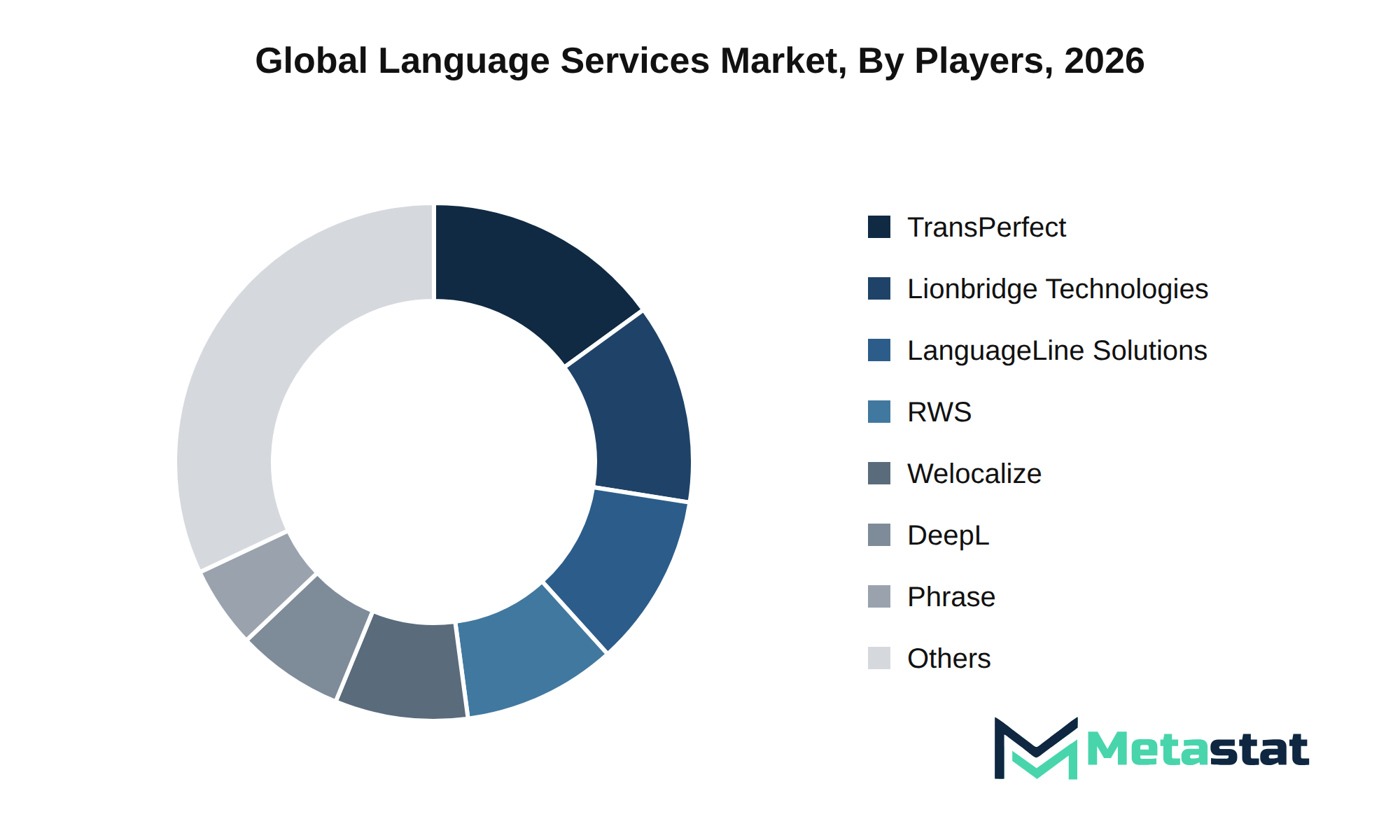
The competitive environment within the Language Services market features a mix of established players and innovative newcomers. Strategic consolidation through mergers and acquisitions remains a prominent aspect, enhancing capabilities and expanding service offerings. Companies including TransPerfect, Lionbridge Technologies, and Welocalize pursue aggressive growth strategies to strengthen their market positions by integrating complementary services and technologies.
Partnership ecosystems form another critical aspect, with industry participants engaging in collaborations to improve service delivery and broaden market reach. The presence of firms like LanguageLine Solutions and Acolad illustrates the trend of cross-industry partnerships aimed at meeting diverse client needs. Investment in proprietary technology and R&D pipelines further differentiates key market players. Companies including DeepL and LanguageCheck.ai lead the charge in developing advanced machine translation and AI-driven solutions, ensuring a competitive edge.
Barriers to entry in the Language Services market stem from established brand equity and customer retention strategies employed by incumbents. Switching costs for clients, particularly in sectors like healthcare and legal services, increase the importance of maintaining high service levels and reliability. Firms like Smartling, Inc. and XTM International focus on enhancing client relationships through tailored solutions and responsive support, strengthening their client bases while facing growing competition.
Looking towards the future, the Language Services market anticipates continued growth driven by increasing globalization and digital transformation across industries. Emerging players and technology innovators will influence market dynamics, while established firms focus on defensive strategies to protect market share and ensure sustainable growth.
Market size is forecast to rise from USD 79.7 billion in 2025 to over USD 146.5 billion by 2033, reflecting a compound annual growth rate (CAGR) of 7.9%. Under a bullish scenario, accelerated adoption of next-generation technologies and increased investments in language services will drive a stronger growth trajectory. In contrast, a bearish outlook could emerge from economic downturns and regulatory challenges, leading to potential slowdowns in demand across various industries.
The evolving dynamics of the Language Services market involve macroeconomic scenario planning and shifts in downstream demand. Core industries continue to mature, prompting organizations to embrace innovation and enhance their service offerings. Integration of next-generation technology, including machine translation and generative AI, is vital for organizations aiming to meet rising consumer expectations and improve operational efficiency.
Regulatory evolution timelines and compliance milestones impact strategic capital allocation directives within the market. Increased emphasis on compliance often leads to higher operational costs for suppliers while driving demand for language services across sectors. Geopolitical realignments and evolving trade corridors reshape global supply chains, affecting service delivery models and operational strategies.
Investment in infrastructure commitments and capital expenditure will create emerging opportunities and address unmet enterprise needs. The market's adaptability will result in the identification of high-growth pockets, driven by executive-level strategic imperatives and defensibility roadmaps.
The report strategically identifies and profiles the key market players and analyses their core competencies in each sub-segment of the Language Services market.
|
Report Attributes |
Details |
|
Study Period |
2021-2033 |
|
Base Year |
2025 |
|
Estimated Year |
2026 |
|
Forecast Period |
2026-2033 |
|
Historical Period |
2021-2025 |
|
Growth Rate |
CAGR 7.9% from 2026 to 2033 |
|
Revenue Unit |
USD billion |
|
Segmentation |
By Service Type, Technology, Deployment Model, End-user Industry, and Region |
|
By Region |
North America (By Service Type, Technology, Deployment Model, End-user Industry, and Country)
|
|
Europe (By Service Type, Technology, Deployment Model, End-user Industry, and Country)
|
|
|
Asia Pacific (By Service Type, Technology, Deployment Model, End-user Industry, and Country)
|
|
|
South America (By Service Type, Technology, Deployment Model, End-user Industry, and Country)
|
|
|
Middle East and Africa (By Service Type, Technology, Deployment Model, End-user Industry, and Country)
|
Find answers to common questions about this report
The Language Services market size was valued at USD 79.7 billion in 2025, according to the Metastat Insights study.
The Language Services market is projected to grow at a CAGR of 7.9% during the forecast period from 2026 to 2033.
The North America Language Services market size is estimated to reach USD 51 billion by 2033.
Translation Services leads the Language Services market with a value of USD 38.3 billion in 2026. This segment is projected to grow to USD 61.5 billion by 2033, reflecting a significant increase in demand.
The Language Services market experiences accelerated growth driven by digital transformation initiatives, with organizations prioritizing technology adoption to enhance communication. Key sectors, including Information Technology and Media & Entertainment, invest heavily in language services to support global outreach and localization strategies, contributing to an expected market revenue of USD 146.5 billion by 2033.
North America holds the dominant share of the Language Services market, accounting for 36.8 percent in 2025. This region is projected to generate USD 51 billion by 2033.
The Language Services market growth faces significant restraints from regulatory compliance hurdles, macroeconomic factors, and geopolitical fragmentation. Stricter regulations increase operational costs, while inflationary pressures limit budgets for localization services, particularly in sensitive industries. supply chain disruptions and competition from automated solutions challenge traditional service providers.
Accelerated growth in the Language Services market results from digital transformation initiatives across various sectors. Organizations prioritize technology adoption to enhance communication and streamline processes, driving demand for language services that support these changes. The integration of automation, artificial intelligence, and advanced software tools improves operational efficiency and aligns with the objectives of industries including Information Technology and Media & Entertainment.
The Language Services market is estimated to reach a valuation of USD 146.5 billion by 2033.
Key players in the Language Services market include RWS Holdings plc, TransPerfect, Lionbridge Technologies, LLC, LanguageLine Solutions, Welocalize, and Acolad.
The analysts below cover Professional Services research at Metastat Insights.
LEAD ANALYST
Utkarsh Khirodkar is a Lead Market Research Analyst at MetaStat Insight, specializing in market intelligence, technology sector assessments, and competitive strategy.

PRINCIPAL CONSULTANT - ENTERPRISE AI & EMERGING TECHNOLOGIES
Banking & Finance · Electronics and Semiconductor · Energy and Power · Healthcare IT · Information & Technology · Professional Services
Vijay Gunti is a Principal Consultant at MetaStat Insight, bringing over two decades of experience across enterprise digital transformation, technology strategy, and intelligent systems.

PRINCIPAL CONSULTANT - QUALITY SYSTEMS & COMPLIANCE
Electronics and Semiconductor · Machinery & Equipment · Professional Services
Omkar Phadtare is an Industry Consultant at MetaStat Insight, specializing in quality systems, regulatory compliance, and standards benchmarking to drive data-driven market intelligence and strategic industry research.

LEAD CONSULTANT - COMMUNICATION, TELECOM, AND IT
Electronics and Semiconductor · Information & Technology · Machinery & Equipment · Professional Services
Ravindra Sathe Consultants for Communication, Telecom, and IT at MetaStat Insight. He leads the firm's industry research initiatives across telecommunications infrastructure, digital connectivity, enterprise networking, and emerging information technology domains.
Evaluating secondary resin quality across post-consumer packaging streams requires reliable technical segmentation. MetaStat Insight delivered an objective assessment that distinguished between extrusion-grade flake pricing and optical sorting throughput limitations across Western Europe. The competitive positioning breakdown for licensed depolymerization technology providers answered several questions during our feedstock feasibility audit. Their team clarified regional trade restrictions on mixed plastic scrap quickly when our team submitted follow-up requests.
Evaluating sovereign cloud deployments for core banking platforms demands a clear view of data residency regulations and migration exit strategies. MetaStat Insight delivered an exhaustive review of regional latency tolerances, mainframe decommission milestones, and third-party vendor concentration risk. The regulatory compliance mapping across European and Asian financial jurisdictions gave our team a dependable baseline for multi-cloud infrastructure discussions.
Replacing petrochemical surfactants with bio-based alternatives requires realistic timelines on industrial precision fermentation scaling. The market research broke down commercialization timelines, feedstock sugar price sensitivities, and regional cosmetic ingredient regulatory approvals in Europe and East Asia. That supplier readiness mapping gave our formulations team reliable context when comparing renewable chemical sourcing roadmaps.
Explore related market intelligence reports worth reading alongside this one.