
LEAD ANALYST
Utkarsh Khirodkar is a Lead Market Research Analyst at MetaStat Insight, specializing in market intelligence, technology sector assessments, and competitive strategy.

Global Loyalty, Rewards and Incentive Management Market Size, Share, By Offering (Loyalty and Incentive Management Software Platforms, Managed Program Operations, Strategy, Design and Advisory Services, Integration, Implementation and Support Services, Rewards, Payments and Fulfillment Services), By Program Audience (B2C Consumers, B2B Customers and Business Accounts, Channel Partners, Resellers and Distributors, Indirect Sales Representatives and Dealer Staff, Employees and Internal Sales Teams, Others), By Deployment Model (Cloud-Based / SaaS, On-Premises and Hybrid), By End-Use Industry (Retail and E-Commerce, Banking, Financial Services and Insurance, Travel and Hospitality, Foodservice and Restaurants, Consumer Packaged Goods, Telecommunications, Automotive and Mobility, Technology, Electronics and Industrial Manufacturing, Healthcare and Life Sciences, Others), Industry Analysis, Growth, Trends, and Forecast, 2026-2033
Report ID
MSI-5268
Published
September, 2026
Pages
310 Pages
Format
Historical
Base year
Forecast
Forecast period
Report Details
Market Valuation: Valued at $13.6 Billion in 2025, projected to reach $30.8 Billion by 2033 at a 10.8% CAGR.
Dominant Segment: The Loyalty & Incentive Management Software Platforms segment leads the market, projected to grow from USD 6.4 billion in 2026 to USD 13.7 billion by 2033, driven by increasing consumer focus on personalized experiences.
Geographic Lead: The Asia-Pacific region is expected to exhibit the fastest growth due to rising middle-class populations and increasing disposable incomes, fostering demand for loyalty programs.
What's Inside: This report provides a comprehensive analysis of the competitive landscape, market dynamics, and detailed forecasts from 2026 to 2033, covering various segments and deployment models.
Emerging Technologies: Technological advancements, particularly in cloud-based solutions and AI, are reshaping the market by enhancing customer engagement and operational efficiency.
Investment Trends: Digital transformation investments are driving market growth, with companies increasingly adopting advanced technologies to enhance loyalty program effectiveness.
Choose Your License
Global Loyalty, Rewards and Incentive Management Market
The global Loyalty, Rewards and Incentive Management market was valued at USD 13.6 billion in 2025 and is projected to reach USD 30.8 billion by 2033, growing at a CAGR of 10.8% over the forecast period.
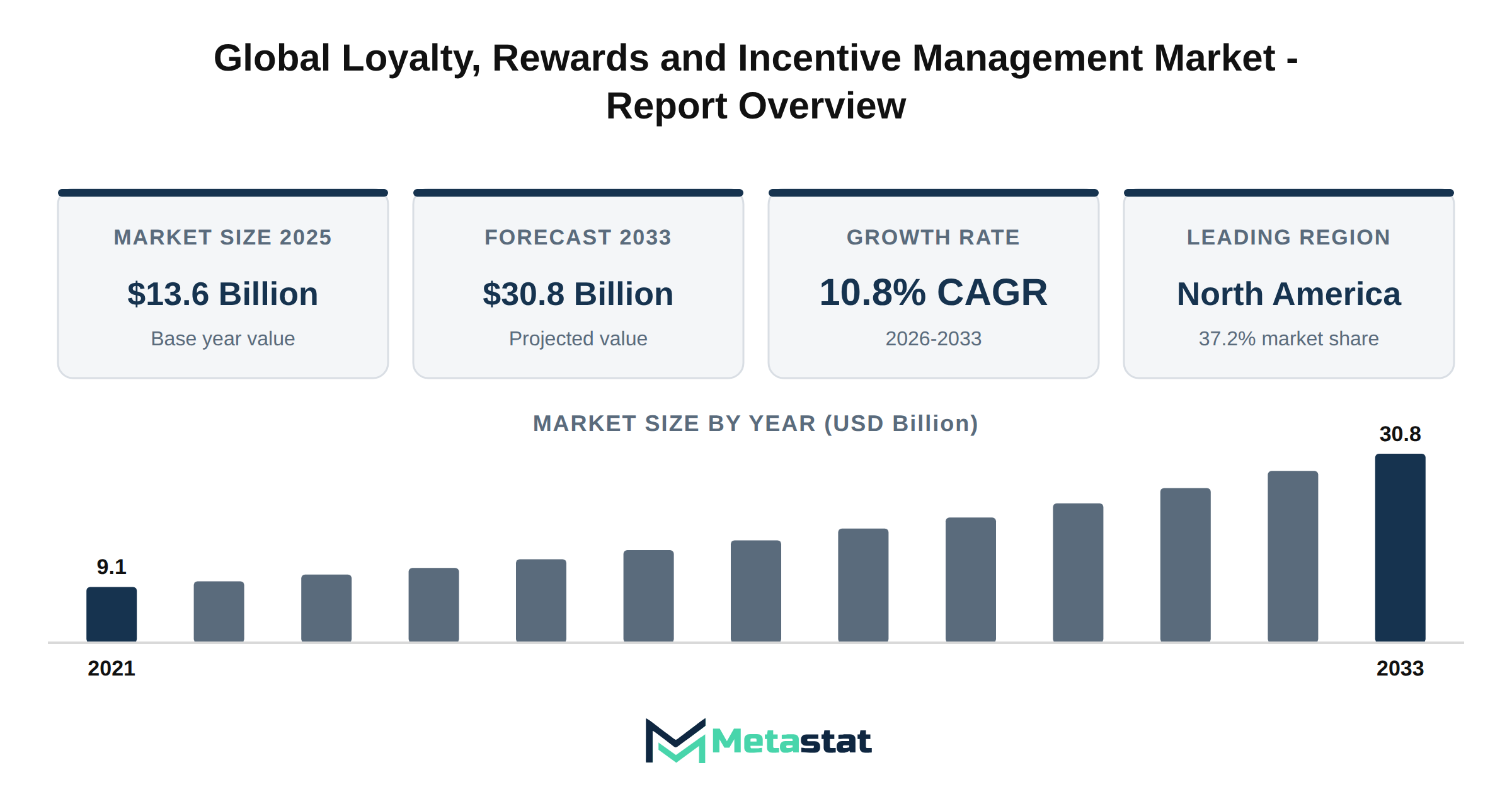
The Loyalty, Rewards and Incentive Management market recorded a base value of USD 13.6 billion in 2025 and is projected to reach USD 30.8 billion by 2033, reflecting a compound annual growth rate (CAGR) of 10.8% from 2026 to 2033. Historical data shows growth from USD 9.1 billion in 2021 to USD 12.2 billion in 2024, indicating a strong upward trajectory.
Incorporating artificial intelligence into loyalty programs enhances personalization strategies. This transformation allows businesses to tailor rewards based on individual customer preferences and behavior, which increases engagement and satisfaction across various sectors.
Omnichannel loyalty programs integrate multiple touchpoints for customers, creating a cohesive experience. This approach enables businesses to engage customers consistently across platforms, which builds loyalty and enhances retention rates.
Channel partner incentives evolve, moving towards innovative strategies that extend beyond traditional rewards. Companies increasingly focus on providing value-added services and support to strengthen partnerships and drive mutual growth.
Cloud-based solutions streamline loyalty program management, allowing enterprises to deploy and scale programs quickly. This shift to cloud-based platforms supports flexibility and cost-effectiveness, which encourages widespread adoption across industries.
Real-time rewards systems enable immediate gratification for customers, aligning with their expectations for swift recognition and benefits. Instant redemption options contribute to higher participation rates, enhancing overall program effectiveness.
Implementing gamification elements within loyalty programs increases participation and engagement. By introducing game-like mechanics, businesses motivate customers and partners to interact more frequently with programs, which drives loyalty.
The Loyalty, Rewards and Incentive Management market continues to evolve, reflecting changing consumer preferences and technological advancements. Companies that adapt to these trends position themselves favorably for future growth and market share expansion.
AI-powered personalization reshapes strategies within the Loyalty, Rewards and Incentive Management market. Leveraging advanced algorithms and customer data, organizations enhance user experiences and engagement, driving loyalty through tailored offerings.
Omnichannel loyalty programs facilitate customer engagement and retention across multiple touchpoints. By integrating online and offline channels, businesses create cohesive experiences that connect with consumers, leading to increased participation and brand loyalty.
Channel partner incentives expand beyond traditional rewards programs, focusing on collaboration and mutual growth. This shift enhances partner relationships while driving shared business objectives, resulting in increased revenue potential for both parties.
Cloud-based loyalty platforms accelerate enterprise adoption due to their flexibility and scalability. Organizations embrace these solutions to streamline operations and enhance customer interactions, thereby improving overall program performance.
Real-time rewards and instant redemption transform customer expectations in the market. Customers increasingly seek immediate gratification, prompting businesses to innovate reward fulfillment processes and enhance satisfaction levels.
Gamification strategies increase participation across customer and partner loyalty programs. By incorporating game-like elements, companies encourage engagement and motivate users to interact more frequently, enhancing loyalty program effectiveness.
Data analytics significantly improve loyalty program ROI and customer lifetime value. Businesses analyze customer behavior and preferences, allowing for more strategic decision-making and targeted marketing efforts, ultimately boosting program performance.
Hyper-personalized offers strengthen the effectiveness of loyalty programs. Tailoring rewards and communications to individual preferences builds deeper connections with customers, enhancing overall engagement and retention.
API-first loyalty platforms enable efficient commerce ecosystem integration. By allowing easy connections between various applications, businesses enhance their loyalty strategies, creating more efficient and responsive customer experiences.
Mobile wallets and digital rewards expand loyalty program accessibility. With the growing adoption of mobile technology, organizations leverage these tools to engage customers, making participation more convenient and attractive.
B2B loyalty and channel incentive programs gain strategic importance. Organizations recognize the value of building loyalty among business clients and partners, driving sustained relationships and increasing market competitiveness.
AI-driven fraud detection strengthens security within loyalty and rewards programs. By implementing advanced technologies, businesses safeguard customer data and maintain trust, crucial elements in building loyalty.
Reward fulfillment and digital payout innovations improve engagement in loyalty programs. Streamlined processes and new technologies enhance customer interactions, resulting in increased program participation and satisfaction.
Customer data platforms enhance loyalty program personalization. By centralizing customer information, organizations develop more targeted marketing strategies, leading to improved engagement and loyalty outcomes.
Subscription-based loyalty models create new recurring engagement opportunities for businesses. These models encourage ongoing customer interactions, building deeper relationships and increased lifetime value.
Retail and e-commerce demand drives the adoption of loyalty management platforms. Businesses recognize the value of loyalty strategies in enhancing customer retention and driving sales growth in a competitive landscape.
BFSI loyalty programs expand through personalized rewards and digital engagement strategies. Financial institutions leverage these approaches to enhance customer satisfaction and build long-term loyalty among clients.
Travel and hospitality loyalty programs evolve toward flexible rewards systems. This evolution reflects changing consumer preferences for more adaptable and personalized offerings, driving customer engagement and retention.
Privacy regulations reshape loyalty data collection and personalization efforts. Organizations adapt their strategies to comply with regulations while maintaining effective customer engagement and program effectiveness.
Loyalty platform consolidation drives partnerships, acquisitions, and ecosystem expansion. Industry players seek synergies and collaborative opportunities to enhance their offerings and expand market reach.
North America leads enterprise loyalty technology adoption, supported by robust infrastructure and a competitive market environment. This region continues to set trends and benchmarks for effective loyalty strategies.
Asia Pacific emerges because a high-growth market for loyalty and incentive management solutions. Increasing digitalization and consumer engagement strategies contribute to the region's rapid expansion and adoption of innovative loyalty programs.
Integration of generative AI transforms loyalty campaign design and member engagement. Businesses leverage AI to create more personalized and effective campaigns, enhancing customer experiences and loyalty.
Loyalty program liability and reward cost optimization become strategic priorities for organizations. Efficient management of these aspects ensures sustainable program success and long-term customer retention.
Future growth opportunities in unified loyalty, rewards, and incentive management platforms present significant potential for businesses. Companies focusing on integrated solutions enhance their competitive positioning in the evolving market.
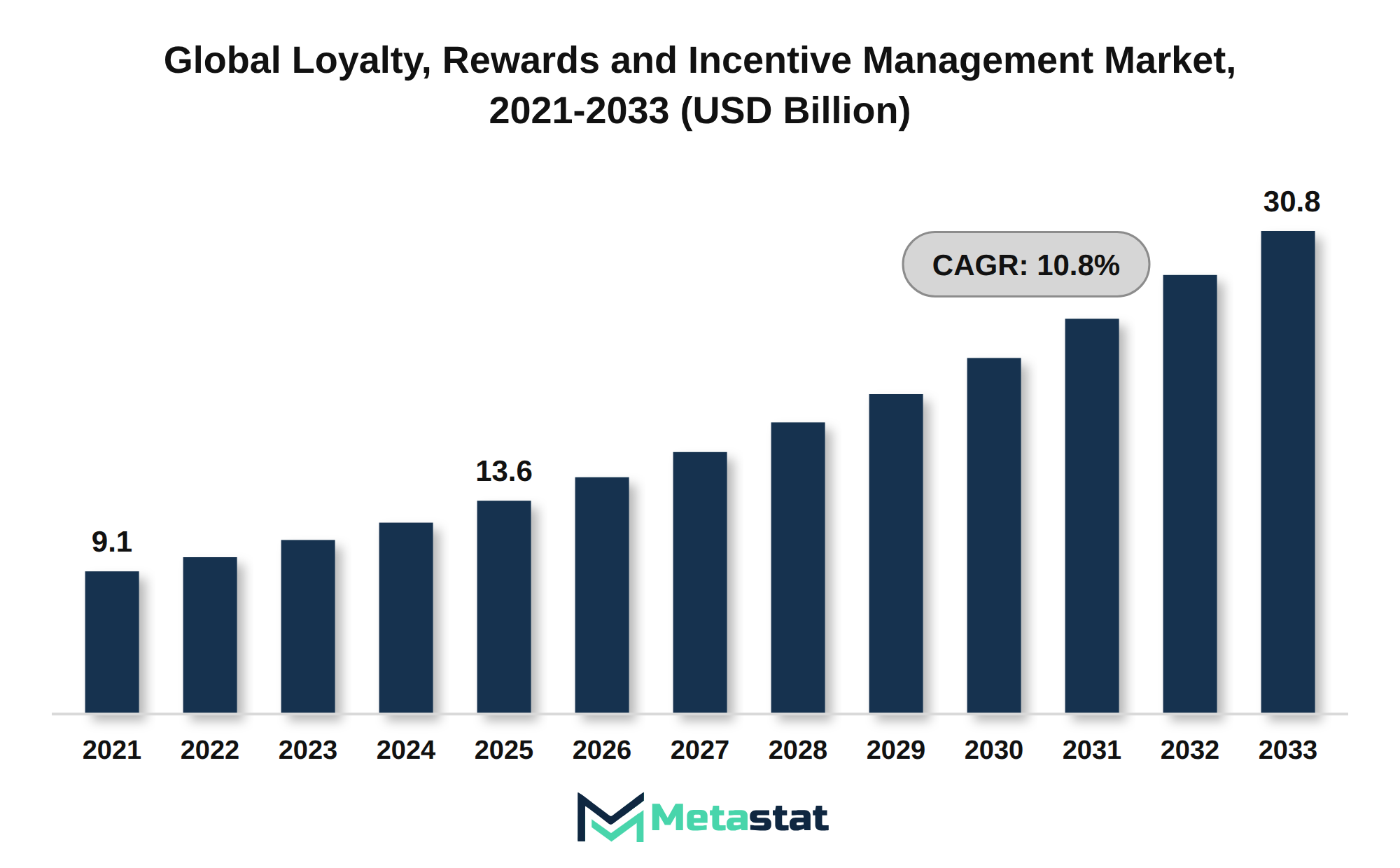
Digital transformation drives substantial investment within the Loyalty, Rewards and Incentive Management market, reshaping customer engagement and enhancing operational efficiency. Companies increasingly adopt advanced technologies, including automation and artificial intelligence, to streamline processes and improve customer interactions. These technological integrations enable businesses to collect and analyze customer data effectively, tailoring rewards and incentives to meet individual preferences. The emphasis on personalized experiences aligns with evolving consumer behaviors, particularly among younger demographics who prioritize effective interactions and instant gratification.
Capital investment environments contribute significantly to the expansion of the market, with favorable interest rates encouraging companies to allocate resources toward loyalty programs and incentive strategies. Increasing GDP growth in various regions enhances consumer spending power, further driving demand for loyalty and rewards initiatives. Organizations recognize the importance of building customer loyalty in a competitive landscape; therefore, investments in digital tools and platforms become essential to maintain market relevance.
Investment in digital transformation enhances customer experiences and supports operational productivity through process optimization. By adopting cloud-based solutions, businesses reduce overhead costs and improve scalability, enabling them to respond swiftly to market changes. This shift toward digital solutions supports the market's growth trajectory, positioning companies to capitalize on emerging opportunities and demands.
Changing consumer behaviors significantly impact the Loyalty, Rewards and Incentive Management market, prompting organizations to refine their engagement strategies. Factors including aging populations, urbanization, and shifts in purchasing preferences drive businesses to adopt more personalized and targeted approaches. These evolving preferences demand innovative solutions that enhance customer experiences and build loyalty.
In response to these shifts, businesses increasingly invest in loyalty programs that align with consumer expectations. The market benefits from a growing focus on creating engaging interactions across various touchpoints. Leveraging data analytics and customer insights enables organizations to develop tailored offerings that connect with distinct consumer segments. This strategy enhances customer retention and encourages repeat purchases, ultimately driving revenue growth.
The integration of technology further supports this transformation, enabling real-time engagement and personalized communication. Effective loyalty programs capitalize on digital platforms to reach consumers where they spend their time, ensuring that incentives align with customers' lifestyle choices and preferences. Businesses achieve greater operational efficiency while building deeper connections with their audiences.
Regulatory compliance presents significant challenges within the Loyalty, Rewards and Incentive Management market. Companies face increasing scrutiny concerning data protection and privacy regulations, raising operational complexities and costs. The necessity for adherence to these regulations leads to heightened expenses related to compliance measures, diverting resources away from core business functions.
Macroeconomic headwinds, including inflationary pressures, compound the financial strain on market participants. Rising costs of goods and services create challenges in maintaining competitive pricing while fulfilling regulatory obligations. The resulting price sensitivity among consumers decreases program participation, further impacting revenue streams.
Market fragmentation emerges due to varying regulatory standards across regions, complicating operational strategies for businesses catering to multiple markets. Adapting to these diverse regulatory environments requires substantial investment in compliance frameworks, hindering agility and responsiveness in the changing environment.
Technological advancements carry the risk of obsolescence, where existing systems fall short of meeting new regulatory requirements. Companies continually invest in upgrading their technologies to align with these standards. Failure to do so results in fines and reputational damage, further constraining growth potential.
Navigating the regulatory landscape and associated compliance hurdles constrains the operational capabilities of companies within the Loyalty, Rewards and Incentive Management market. This dynamic generates significant costs that affect competitiveness and overall market growth.
Geopolitical fragmentation presents significant challenges within the Loyalty, Rewards and Incentive Management market. Increasing trade deficits and tariff frictions complicate cross-border operations, hindering global collaboration and driving up costs. These factors create a complex environment for businesses operating internationally, where compliance with varying regional regulations becomes burdensome, resulting in increased operational expenses.
Technological disruptions further complicate market dynamics. Rapid advancements in technology lead to interoperability friction, affecting the integration of diverse systems and platforms. This lack of effective integration delays program implementation, impacting overall efficiency and customer experience, which results in lost revenue opportunities.
Supply chain instability poses additional risks. Volatility in feedstock and component availability disrupts operations, leading to increased input costs. Rising costs compress pricing structures, exerting pressure on profit margins across the industry. Logistics disruptions challenge timely delivery and program execution, creating further obstacles to market growth and customer satisfaction.
The evolving landscape of cybersecurity risks and data vulnerabilities heightens the urgency for robust security measures. While companies increasingly rely on digital platforms, the potential for data breaches and associated legal liabilities escalates, leading to higher compliance overhead. This landscape necessitates ongoing investment in cybersecurity and data protection strategies, further stretching resources and diverting funds from other critical initiatives.
The Loyalty, Rewards and Incentive Management market faces significant challenges from talent retention pressures and workforce skill gaps. Companies struggle to attract and retain skilled professionals capable of navigating the complexities of modern loyalty programs. This talent shortage limits the ability to innovate and respond effectively to shifting market demands, hindering growth potential. Addressing these challenges requires strategic investments and a focus on building resilience within operations to maintain competitiveness and drive sustainable growth.
Overall, the combination of geopolitical fragmentation, technological disruptions, and supply chain instability creates a challenging environment for the Loyalty, Rewards and Incentive Management market. Addressing these challenges requires strategic investments and a focus on building resilience within operations to maintain competitiveness and drive sustainable growth.
Technological disruptions significantly influence the Loyalty, Rewards and Incentive Management market, enhancing customer engagement and operational efficiency. The rapid adoption of cloud-based solutions and advanced analytics enables organizations to personalize rewards and incentives effectively, catering to individual consumer preferences. This shift aligns with the increasing demand for digital experiences, particularly among B2C consumers, who prioritize convenience and value in loyalty programs. The growing trend towards integration of AI and machine learning further supports this evolution by optimizing program performance and enhancing customer interactions.
Geographical expansion introduces new opportunities for the market, fueled by emerging regional demands in Asia Pacific and South America. These regions exhibit rising middle-class populations and increasing disposable incomes, leading to a stronger focus on customer retention strategies. Businesses in these areas are projected to adopt loyalty programs to differentiate themselves in competitive markets, thereby contributing to the overall growth of the Loyalty, Rewards and Incentive Management market.
Next-generation innovations, including gamification and social engagement features, enhance consumer interactions with loyalty programs. These innovations promote customer participation and encourage repeat business, ultimately driving program effectiveness. Companies integrating such features expect enhanced customer loyalty, translating into increased revenue streams. This focus on consumer-centric approaches is anticipated to support the market's long-term growth trajectory.
Sustainability imperatives and ESG-driven alignments influence purchasing decisions, prompting businesses to adopt eco-friendly practices in loyalty initiatives. Companies that prioritize sustainable rewards options connect with environmentally conscious consumers, enhancing brand loyalty and customer trust. This strategic alignment with evolving consumer values contributes to the attractiveness of loyalty programs, thus supporting market expansion.
The Loyalty, Rewards and Incentive Management market experiences significant momentum due to ongoing digital procurement shifts and commercial model transitions. Organizations are increasingly embracing digital channels for loyalty program management, supporting operational efficiency and improved customer engagement. These trends reflect the broader movement towards adopting innovative technologies that streamline processes and maximize operational yield.
The Global Loyalty, Rewards and Incentive Management market is segmented based on Offering, Program Audience, Deployment Model, and End-Use Industry.
Loyalty & Incentive Management Software Platforms segment is valued at USD 6.4 billion in 2026 and is projected to reach USD 13.7 billion by 2033, at a CAGR of 11.5% during the forecast period. Increasing consumer focus on personalized experiences drives demand for these platforms, influencing businesses to implement more effective loyalty strategies that enhance customer engagement and retention. Adoption of advanced analytics within the market enhances decision-making, enabling organizations to tailor rewards programs that align with customer preferences and behaviors.
The push for integration with omnichannel retail strategies further supports the expansion of loyalty platforms. Companies increasingly seek solutions that provide integrated experiences across various customer touchpoints, leading to a stronger emphasis on loyalty and incentive management tools. Technological maturation, particularly in artificial intelligence and machine learning, facilitates next-gen upgrades that optimize reward systems and improve user experience.
End-use dynamics indicate that sectors including retail and e-commerce significantly influence growth within the Loyalty, Rewards and Incentive Management market. Businesses strive to leverage loyalty platforms to differentiate themselves in competitive landscapes, responding to evolving consumer expectations for value-driven purchasing experiences. Regulatory compliance and data privacy standards remain crucial, pushing organizations to adopt platforms that ensure adherence while managing customer data responsibly.
Strategic opportunity windows emerge from understanding consumption shifts, driven by businesses increasingly prioritizing sustainable and ethical practices in rewards programs. The segment faces challenges related to pricing volatility and margin pressures, demanding continuous innovation and value creation to maintain competitiveness. Investments in loyalty and incentive management software platforms are projected to increase, reflecting a positive outlook for growth and development within this segment.
Managed Program Operations segment is estimated to reach USD 6.6 billion by 2033, at a CAGR of 10.3% during the forecast period. This segment benefits from increasing demand for efficient program management solutions across various industries. Enhanced technological capabilities enable companies to streamline operations, reduce manual processes, and improve customer engagement. These advancements attract businesses looking for competitive advantages, reinforcing the segment’s expansion.
Various factors drive adoption within the Loyalty, Rewards and Incentive Management market. Growing emphasis on customer retention and satisfaction prompts organizations to invest in managed program operations. Companies seek sophisticated strategies that integrate data analytics and customer insights, enhancing the effectiveness of loyalty programs. Increased focus on personalized experiences further influences the uptake of advanced program management solutions.
Technological maturation significantly influences segment growth. Rapid advancements in cloud-based solutions create opportunities for scalable program management offerings. Businesses recognize the importance of agile and adaptable solutions, aligning with shifts in consumer behavior and expectations. This trend encourages organizations to adopt managed program operations, ensuring they remain relevant in a dynamic marketplace.
The segment's trajectory reflects the relationship between end-use dynamics and consumption shifts. Retail, banking, and travel industries increasingly leverage managed program operations to build loyalty and maximize customer experiences. Tailored solutions addressing the unique demands of each industry create avenues for growth within the market.
Cost structures and pricing volatility affect the segment's competitive landscape. Companies navigating these constraints often seek managed program operations that optimize resource allocation and improve margins. Investments in technology further enhance operational efficiencies, enabling firms to deliver better value to end-users while maintaining profitability.
Strategic opportunity windows arise owing to businesses adapting and enhancing their loyalty initiatives. Enhanced operational capabilities allow organizations to be more responsive to changing market conditions, promoting resilience in managed program operations. Consequently, firms increasingly prioritize capital investments in this segment, anticipating significant returns through improved customer loyalty and engagement.
Growth in the Strategy, Design & Advisory Services segment of the Loyalty, Rewards and Incentive Management market reflects increasing demand for tailored solutions that enhance customer engagement and loyalty. Businesses across various industries seek expert guidance to develop effective loyalty programs that align with strategic objectives. This need for specialized services stems from rising competition and the necessity to build stronger customer relationships through personalized experiences.
By 2033, the segment is projected to reach USD 3.4 billion, driven by the integration of innovative technologies and evolving consumer expectations. Companies prioritize the development of comprehensive loyalty strategies that leverage data analytics and customer insights. This trend facilitates the design of programs that connect with target audiences, ensuring higher retention rates and increased customer lifetime value.
Technological maturation supports the evolution of the services, allowing for next-gen upgrades that incorporate advanced analytics, machine learning, and automation. These advancements enable businesses to track customer behaviors more effectively, tailoring loyalty initiatives for maximum impact. Organizations recognize the importance of adaptability. The demand for advisory services that guide the implementation of these technologies continues to rise.
Shifts in consumption patterns, influenced by digital transformation, necessitate a proactive approach to loyalty programs. The pandemic prompted changes in consumer behavior, prompting businesses to rethink strategies to maintain relevance in a rapidly changing market. Advisory services play an essential role in helping organizations navigate these shifts, ensuring loyalty initiatives remain effective.
While the market evolves, regulatory compliance standards and the need for ethical data usage influence the design of loyalty programs. Companies seek expertise in navigating these complexities, ensuring strategies comply with emerging regulations while maintaining consumer trust. Strategic opportunity windows emerge for firms that deliver comprehensive, compliant solutions that build loyalty and drive engagement.
Integration, Implementation & Support Services within the Loyalty, Rewards and Incentive Management market represents a critical component for organizations seeking efficient deployment of loyalty programs. The projected growth rate of this segment at a CAGR of 10% during the forecast period highlights strong demand for effective integration solutions that streamline operations and enhance user experiences.
Technological maturation drives the adoption of advanced support services, enabling companies to leverage cloud-based platforms for greater scalability and flexibility. This shift supports organizations in optimizing their loyalty strategies and increasing engagement among consumers. Enhanced integration capabilities create effective interactions across various touchpoints, facilitating a smoother onboarding process for both clients and end-users.
Increasing complexity of consumer expectations necessitates robust support services, which enhance the overall effectiveness of loyalty initiatives. Companies operating in the retail and e-commerce sectors particularly benefit from tailored integration services that improve customer satisfaction and retention rates. The rise of digital and cloud solutions contributes to a competitive edge, encouraging firms to invest in next-generation support offerings.
While organizations recognize the value of Loyalty, Rewards and Incentive Management, demand for integration, implementation, and support services continues to escalate. Enhanced program management capabilities help businesses navigate evolving market dynamics while capitalizing on opportunities for growth. Consequently, the segment is poised for significant expansion within the broader context of industry development.
Focus on rewards, payments, and fulfillment services within the Loyalty, Rewards and Incentive Management market highlights several key dynamics. Increased consumer expectations for personalized experiences drive demand for innovative solutions in this sub-segment. Businesses prioritize creating efficient reward systems that enhance customer engagement and loyalty. The evolution of technology enables organizations to improve fulfillment processes, enhancing operational efficiency and reducing turnaround times.
Technological maturation facilitates the transition to more sophisticated payment solutions, including mobile wallets and contactless transactions. Integration with various platforms allows businesses to offer diverse rewards programs, catering to different customer preferences. While companies adopt these advanced systems, competition intensifies, pushing providers to deliver high-quality services while maintaining cost-effectiveness.
Shifts in consumer behavior toward digital interactions shape the offerings in the market. The rise of e-commerce and online transactions necessitates robust fulfillment capabilities, encouraging investments in automation and real-time tracking systems. Regulatory compliance standards increasingly influence operational practices, prompting businesses to adopt secure payment technologies to protect consumer data.
Challenges related to pricing volatility and margin pressures persist, compelling providers to optimize their cost structures. Strategic opportunity windows emerge for innovative solutions that address these challenges, particularly in sectors including retail and e-commerce, which drive significant demand for rewards and fulfillment services. Overall, the rewards, payments, and fulfillment services sub-segment reflects a market that aligns with broader trends in the Loyalty, Rewards and Incentive Management market.
Valued at USD 7.1 billion in 2026, the B2C Consumers segment is projected to reach USD 13.6 billion by 2033, reflecting a CAGR of 9.8% during the forecast period. Increased emphasis on customer loyalty drives strong demand for innovative reward systems, prompting businesses to adopt advanced technologies. Enhanced customer engagement through personalized incentives leads to higher retention rates, benefiting brands across various sectors. Retail and e-commerce industries significantly contribute to this growth, driven by companies leveraging loyalty programs to attract and retain customers. Evolving consumer expectations for engaging experiences further fuel market expansion, pushing organizations to invest in robust loyalty solutions. The Loyalty, Rewards and Incentive Management market adapts to these dynamics, with providers enhancing their offerings to meet the demands of B2C consumers. This segment positions itself strategically, focusing on digital transformation and customer-centric initiatives to secure ongoing growth and competitiveness within the broader market.
Increasing investment in tailored loyalty programs drives growth within the B2B Customers & Business Accounts segment of the Loyalty, Rewards and Incentive Management market. This segment is estimated to reach USD 6.2 billion by 2033, at a CAGR of 11.8% during the forecast period. Businesses prioritize customer retention and engagement strategies, making the implementation of effective loyalty programs essential. The rise of digital platforms facilitates interactions between businesses and their clients, enhancing loyalty program effectiveness and driving repeat business.
Technological advancements, including the integration of advanced analytics and customer relationship management tools, enhance the capabilities of loyalty programs. These technologies allow businesses to gather insights into customer behavior, leading to more personalized offerings and improved customer experiences. Consequently, businesses recognize the value of loyalty initiatives in building long-term relationships with their clients.
Market participants actively explore strategic partnerships to enhance their service offerings. Collaborations with technology providers enable firms to leverage innovative solutions and optimize their loyalty programs. This collaborative approach contributes to significant growth in the segment, aligning with the broader trends observed in the Loyalty, Rewards and Incentive Management market.
Adoption of cloud-based loyalty solutions gains momentum, driven by the need for flexibility and scalability. Businesses increasingly favor Software because a Service (SaaS) models, which reduce upfront costs and provide ongoing support. Organizations allocate resources more effectively, enhancing their overall operational efficiency and driving demand within the segment.
Strong growth in the Channel Partners, Resellers & Distributors segment reflects the increasing importance of strategic collaborations in the Loyalty, Rewards and Incentive Management market. These partnerships enhance market reach and drive customer engagement, creating significant value for businesses. The segment is projected to reach USD 5.1 billion by 2033.
Adoption of innovative technologies and platforms serves because a primary demand driver for this segment. Businesses increasingly leverage data analytics and automation to optimize loyalty programs, providing personalized experiences for customers. This technological maturation facilitates integration of loyalty initiatives across various channels, strengthening collaborations among channel partners.
Emerging trends, including the rise of e-commerce and digital marketplaces, contribute to segment expansion. Retailers and service providers emphasize creating robust loyalty programs that appeal to both B2C consumers and B2B customers. These dynamics drive demand for tailored solutions that enhance customer loyalty and retention.
Regulatory compliance standards influence the operations of channel partners and distributors. Adhering to data privacy regulations and industry guidelines ensures consumer trust and builds long-term partnerships. Consequently, organizations invest in compliance-driven technologies to navigate these challenges effectively.
Cost structures and pricing volatility impact strategic decision-making within this segment. Companies actively seek ways to enhance operational efficiency while maintaining competitive pricing. This focus on cost management enhances profitability, enabling firms to invest in next-gen upgrades that improve their offerings in the market.
Overall, the Channel Partners, Resellers & Distributors segment significantly influences the future of the Loyalty, Rewards and Incentive Management market, driven by evolving consumer preferences and technological advancements.
Growth in the Indirect Sales Representatives & Dealer Staff segment reflects an evolving landscape within the Loyalty, Rewards and Incentive Management market. This segment is projected to grow at a CAGR of 11.5% during the forecast period, driven by increasing demand for enhanced customer engagement strategies and effective channel partner management. The rise of digital tools and platforms supports this growth, enabling more efficient communication and incentives tailored to specific audiences.
Investment in training and development for indirect sales representatives strengthens their ability to utilize loyalty programs, ultimately enhancing customer retention rates. Businesses increasingly recognize the importance of these representatives in reaching broader markets, driving the adoption of loyalty solutions designed specifically for indirect sales channels. This focus on optimizing indirect sales efforts positions companies to capitalize on growth opportunities, improving overall market performance.
Technological advancements fuel the development of next-generation loyalty tools, including mobile applications and data analytics, which enable indirect sales representatives to track engagement and adjust strategies in real time. Consequently, companies investing in improved technologies and training for this segment realize greater operational efficiencies and enhanced customer satisfaction. The trajectory of the Loyalty, Rewards and Incentive Management market aligns with these advancements, reinforcing the critical role that indirect sales representatives and dealer staff play in building long-term customer relationships.
Investment in employee engagement programs drives interest in the Employees & Internal Sales Teams segment within the Loyalty, Rewards and Incentive Management market. Companies increasingly recognize the value of rewarding internal staff for performance improvements and loyalty. By implementing structured incentive programs, organizations enhance productivity and morale among employees, which directly contributes to overall operational success.
Technological maturation in the market supports the deployment of advanced analytics tools and platforms, enabling organizations to better track performance metrics and tailor incentives accordingly. This data-driven approach allows for precise alignment of rewards with specific employee achievements, creating a culture of recognition and engagement. Enhanced employee satisfaction often translates to improved customer service, creating a beneficial cycle that improves business performance.
Expansion catalysts include the growing emphasis on employee retention strategies amid competitive labor markets. Companies seek innovative ways to maintain a motivated workforce, driving demand for incentive management solutions. The integration of mobile platforms into loyalty programs helps streamline communication and enhance accessibility for employees, further promoting participation in incentive initiatives.
Adoption of cloud-based solutions facilitates scalability and flexibility in the management of incentive programs. Organizations benefit from reduced upfront costs and the ability to quickly adapt programs to evolving business needs. Such solutions contribute to resilience in operations, allowing companies to adjust strategies in response to market fluctuations.
While the market evolves, continuous upgrades to incentive platforms become essential. Business leaders prioritize next-generation capabilities that include gamification and personalized reward experiences, enhancing engagement levels among employees. Understanding changing consumption patterns allows organizations to pivot quickly and reallocate resources effectively.
Compliance with regulatory standards ensures that incentive programs remain competitive and efficient while adhering to legal frameworks. Organizations face scrutiny regarding employee-related expenses, emphasizing the need for transparent and fair incentive structures. Strategic opportunity windows arise due to organizations adapting to emerging trends, reinforcing the importance of capital investments in robust incentive management solutions.
Growth in the "Others (Affiliates, Professional Members, Communities)" segment of the Loyalty, Rewards and Incentive Management market arises from the increasing focus on community engagement and collaborative marketing efforts. Affiliates and professional members contribute significantly to brand visibility and customer loyalty, enabling businesses to tap into established networks and relationships. This segment thrives on the need for businesses to create deeper connections with their audiences through personalized interactions and targeted promotions.
Technological maturation enhances the expansion of this segment, driven by advancements in data analytics and customer relationship management systems that improve the ability to track engagement and measure outcomes effectively. The adoption of next-generation upgrades allows businesses to refine their approaches, tailoring incentives to specific community needs and preferences, thereby driving higher participation rates.
Consumer demand for authentic engagement with brands encourages businesses to invest in loyalty programs that support community-building initiatives. This trend highlights the shift towards experiential rewards, where the focus lies not solely on transactions but on creating a sense of belonging among users. Overall, the evolution of this segment reflects the dynamic nature of consumer behavior and the ongoing transformation within the Loyalty, Rewards and Incentive Management market.
Significant growth characterizes the Cloud-Based / SaaS segment within the Loyalty, Rewards and Incentive Management market. Valued at USD 9.9 billion in 2026, this segment is projected to reach USD 21.7 billion by 2033, reflecting a CAGR of 11.9% during the forecast period. The increasing demand for flexible, scalable solutions drives adoption among businesses seeking to enhance customer engagement and streamline operational processes.
Technological maturation serves because a catalyst for segment expansion, with advancements in cloud infrastructure enabling improved data analytics and integration capabilities. Enhanced customer insights facilitate personalized marketing strategies, leading to better retention rates. The shift towards digital channels across industries further accelerates consumption patterns, with businesses increasingly favoring cloud-based platforms for their agility and cost-effectiveness.
End-use dynamics indicate a strong inclination towards deploying loyalty programs that leverage data-driven decision-making. Retail and e-commerce sectors particularly benefit from these solutions, utilizing cloud technology to optimize customer experiences and build brand loyalty. The ongoing evolution of products aligns with market trends, ensuring offerings remain relevant and effective in addressing consumer needs.
Regulatory compliance standards drive demand for robust data security and privacy measures within cloud-based solutions. Companies investing in these systems enhance their ability to meet compliance requirements, thereby gaining a competitive advantage. Overall, the Cloud-Based / SaaS segment of the Loyalty, Rewards and Incentive Management market exemplifies growth potential, driven by technological advancements, changing consumer behaviors, and regulatory frameworks.
Market dynamics in the On-Premises segment reflect a growing interest in integrated solutions that provide enhanced control over loyalty programs. The transition towards these systems stems from rising demand for data security and tailored customer experiences. Industries including banking, financial services, and retail seek robust solutions that manage customer interactions seamlessly. Investments in this segment are projected to yield significant returns.
The On-Premises segment is estimated to reach USD 4.6 billion by 2033, at a CAGR of 6.3% during the forecast period. This growth trajectory signifies a steady shift in preference from cloud-based solutions to locally deployed systems, driven by concerns over data privacy and regulatory compliance. Companies adopting these solutions benefit from increased customization capabilities that align with unique business processes.
Technological maturation enhances segment advancement, with continuous upgrades improving system functionalities and integration capabilities. The demand for tailored solutions fuels product evolution, allowing businesses to adapt their loyalty strategies to meet evolving consumer expectations. This adaptability supports the overall expansion of the Loyalty, Rewards and Incentive Management market, influencing competitive positioning across various industries.
Loyalty, Rewards and Incentive Management market dynamics indicate a notable rise in the hybrid deployment model segment, projected to reach USD 4.5 billion by 2033. This segment benefits from the flexibility offered by hybrid solutions, allowing organizations to combine cloud-based and on-premises systems to meet diverse operational requirements.
One primary demand driver for hybrid models is the increasing integration of digital and traditional marketing strategies, enhancing customer engagement. Businesses across various sectors recognize the value of versatile strategies that leverage existing infrastructure while exploring new technology. This trend highlights the importance of adaptability in strategies aimed at retaining customer loyalty.
Technological maturation facilitates the adoption of hybrid solutions. Innovations in cloud computing and data analytics enhance operational efficiency. Companies in retail and financial services prioritize hybrid deployments to optimize customer interaction and streamline operations. The ongoing evolution of products within the Loyalty, Rewards and Incentive Management market further supports this shift by offering tailored solutions that meet specific client needs.
End-use dynamics indicate strong demand for hybrid models among businesses focused on balancing cost efficiency with robust customer engagement strategies. Investment in hybrid systems allows firms to leverage the strengths of both cloud and on-premises environments, addressing concerns over data security and compliance while maximizing operational flexibility. This dual approach promotes growth across various sectors, fueling demand for innovative loyalty programs.
Valued at USD 4.1 billion in 2026, the Retail & E-Commerce segment is projected to reach USD 8 billion by 2033, at a CAGR of 10% during the forecast period. Growth within this segment is driven by increasing consumer demand for personalized shopping experiences and enhanced customer engagement strategies. Retailers and e-commerce platforms invest in advanced loyalty programs to improve customer retention and brand loyalty, leading to higher customer lifetime value.
Adoption of data analytics and artificial intelligence facilitates improved insights into consumer behavior, enabling retailers to tailor loyalty offerings effectively. The shift toward digital shopping channels and mobile commerce increases the need for innovative loyalty solutions, transforming traditional reward structures into more dynamic, customer-centric models. Enhanced digital experiences appeal to tech-savvy consumers, significantly impacting loyalty spending.
Regulatory compliance standards surrounding consumer data protection and privacy prompt retailers to adopt more robust loyalty management systems, which ensure security while leveraging data for personalized marketing. This evolving landscape encourages investment in loyalty, rewards, and incentive management solutions, reinforcing competitive positioning within the market. The Retail & E-Commerce segment is positioned for substantial growth, driven by these factors that highlight the importance of effective loyalty strategies in enhancing consumer experience and driving revenue growth.
Investment in innovative loyalty programs significantly impacts the Banking, Financial Services & Insurance segment, enhancing customer retention and engagement. The sector's rapid digital transformation drives demand for personalized offerings, improving customer experiences. Financial institutions increasingly prioritize integrating advanced loyalty solutions into their service portfolios to differentiate themselves in a competitive landscape. Technology maturation facilitates the development of next-generation platforms, allowing for tailored rewards that meet evolving consumer expectations.
A focus on regulatory compliance standards shapes program structures within this segment, emphasizing transparency and security in customer interactions. The segment is projected to reach USD 6.3 billion by 2033, at a CAGR of 11.1% during the forecast period. Pricing volatility and margin pressures influence operational decisions, prompting organizations to seek efficient solutions that maximize customer loyalty while managing costs effectively. Strategic opportunity windows emerge for technology providers that deliver scalable, compliant, and user-friendly loyalty platforms within this dynamic market.
Increased competition among financial service providers necessitates the continuous evolution of loyalty offerings. Downstream applications of loyalty programs enhance customer relationships, resulting in greater customer lifetime value. The Loyalty, Rewards and Incentive Management market shows a strong correlation between innovative loyalty strategies and improved financial performance, positioning the Banking, Financial Services & Insurance segment for sustained growth.
Investments in loyalty programs within the Travel & Hospitality segment drive significant consumer engagement, leading to a projected market value of USD 3.5 billion by 2033. The demand for personalized travel experiences influences program adoption among businesses, enhancing customer retention and satisfaction. Technological advancements, including mobile applications and data analytics, facilitate the evolution of loyalty strategies, allowing companies to tailor offerings to individual consumer preferences.
Consumer behavior reflects a shift towards digital interactions, prompting companies to enhance their online engagement strategies through advanced loyalty management systems. This trend aligns with the broader dynamics of the Loyalty, Rewards and Incentive Management market, where integration of next-gen technologies supports operational efficiency and customer experience. Regulatory compliance within the Travel & Hospitality sector shapes program structures, ensuring adherence to industry standards.
While the market expands, competition intensifies, encouraging companies to innovate their loyalty offerings. Enhanced data collection and analysis capabilities provide opportunities for strategic collaborations, enabling firms to refine their loyalty programs. The Travel & Hospitality segment's growth trajectory reflects the increasing emphasis on customer-centric approaches, aligning with overall trends in the Loyalty, Rewards and Incentive Management market.
Investment in loyalty programs within the Foodservice & Restaurants segment reflects a growing recognition of the importance of customer retention in a competitive market. This strategic focus aims to enhance customer experiences and build brand loyalty, leading to an increased willingness among consumers to engage with brands offering loyalty incentives.
The Foodservice & Restaurants segment is projected to grow at a CAGR of 11.3% during the forecast period. The adoption of technology-driven solutions, including mobile apps and digital rewards, facilitates consumer engagement, creating a more personalized interaction with brands. Enhanced customer insights derived from data analytics inform the customization of loyalty programs, driving stronger customer connection and satisfaction.
Expansion catalysts include shifting consumer preferences towards dining experiences that provide value and rewards. Brands that effectively integrate rewards into their service models capture market share by appealing to a more engaged customer base. Regulatory compliance standards governing promotional marketing shape program design, ensuring adherence while enabling creative customer engagement strategies.
Cost structures within the Foodservice & Restaurants segment impact pricing strategies for loyalty programs. Fluctuations in food and operational costs pressure margins, compelling restaurants to assess program profitability while maintaining customer attraction. Strategic investment in loyalty initiatives signals a commitment to long-term customer relationships, positioning brands favorably within the Loyalty, Rewards and Incentive Management market.
The focus on consumer engagement through loyalty programs continues to evolve, adapting to technological advancements and shifting market dynamics. By aligning loyalty strategies with consumer expectations and operational realities, brands within the Foodservice & Restaurants segment create a more resilient customer base, enhancing retention and driving revenue growth.
Consumer Packaged Goods represent a vital area within the Loyalty, Rewards and Incentive Management market. Shifting consumer preferences toward experiential rewards and personalized offerings drive demand in this segment. Brands increasingly focus on customer engagement and loyalty initiatives to enhance brand loyalty and build long-term relationships with consumers.
Adoption of advanced loyalty technologies and digital platforms contributes to segment growth. The trend toward omnichannel experiences influences how brands engage with consumers, ensuring consistent messaging across various platforms. Integration of artificial intelligence and data analytics enhances the ability to deliver targeted promotions and personalized rewards, further appealing to consumer preferences.
Regulatory compliance standards and certifications relevant to consumer protection and data privacy impact the strategies employed within this segment. Compliance with these standards ensures consumer trust, which is essential for effective loyalty programs. Brands investing in robust compliance frameworks benefit from increased consumer confidence, ultimately supporting market growth.
Cost structures within the Consumer Packaged Goods segment are influenced by the need for continuous innovation and marketing expenditures aimed at attracting and retaining consumers. Pricing volatility in raw materials pressures margins, prompting brands to optimize their loyalty strategies to maintain profitability. Effective management of these factors enables brands to remain competitive in the evolving environment of the Loyalty, Rewards and Incentive Management market.
Strategic opportunities arise from the growing preference for sustainability and social responsibility. Brands that align their loyalty programs with these values capture consumer interest and differentiate themselves in a crowded market. The focus on sustainable practices in loyalty initiatives addresses consumer expectations and builds brand loyalty, leading to increased market share.
Investment in advanced telecommunications infrastructure enhances demand for loyalty programs in this sector. Telecom companies leverage data analytics to personalize customer interactions, driving engagement and retention. Competitive pressure compels firms to differentiate through innovative loyalty strategies, attracting both B2C consumers and B2B customers.
Emerging technologies, including 5G and AI, facilitate the evolution of loyalty programs by enabling real-time rewards and personalized offers. Enhanced customer experiences align with the shift towards integrated digital services, which strengthens customer relationships. Regulatory compliance regarding data privacy and security influences the development of loyalty initiatives, ensuring consumer trust and engagement.
Market expansion within telecommunications relies on strategic partnerships and collaborations that optimize resource sharing and enhance service offerings. Supply chain resilience becomes crucial for managing costs while navigating pricing volatility. Overall, growth within the telecommunications sector significantly contributes to the broader Loyalty, Rewards and Incentive Management market through increased investment in customer-centric strategies.
Demand for loyalty programs within the Automotive & Mobility segment reflects a growing need for automotive brands to enhance customer engagement and retention. Increased competition within the sector drives companies to adopt innovative loyalty strategies that differentiate their offerings. Investments in technology, including mobile applications and data analytics, enable automotive brands to deliver personalized experiences, boosting consumer satisfaction and driving repeat purchases.
Adoption of loyalty programs aligns with shifting consumer preferences towards more integrated and efficient experiences. Automotive companies increasingly focus on creating multi-channel loyalty initiatives that encompass not only vehicle purchases but services including maintenance and financing. These strategies create a deeper connection between consumers and brands, promoting long-term loyalty.
Regulatory compliance and environmental standards in the automotive industry influence loyalty program development. Brands demonstrating a commitment to sustainability and social responsibility attract environmentally conscious consumers. This trend highlights the importance of aligning loyalty initiatives with corporate social responsibility efforts, enhancing brand perception in the market.
Technological advancements play a critical role in the evolution of loyalty programs within the sector. The integration of advanced data analytics tools allows automotive companies to gain insights into customer behaviors, preferences, and spending patterns. This intelligence informs more effective targeting and rewards structures, driving customer engagement and increasing program participation.
Strategic opportunities arise from the continuous evolution of automotive technologies, including electric vehicles and autonomous driving. Loyalty programs supporting these innovations capture the interest of tech-savvy consumers, further expanding the market's reach. By leveraging the unique attributes of their offerings, automotive brands strengthen their competitive positioning in the Loyalty, Rewards and Incentive Management market.
Strong demand for loyalty and rewards initiatives fuels adoption within the Technology, Electronics & Industrial Manufacturing sector. Companies recognize the importance of customer retention strategies to enhance brand loyalty and drive repeat business. The competitive landscape in this segment urges firms to implement innovative solutions that address customer needs more effectively, leading to the expansion of their loyalty programs.
Technological maturation significantly influences the evolution of loyalty solutions. Businesses invest in next-generation upgrades to improve customer engagement and streamline operational processes. Enhanced data analytics capabilities enable organizations to better understand consumer behavior, leading to more personalized offerings and increased customer satisfaction.
Regulatory compliance standards impact the design of loyalty programs, ensuring that they meet legal requirements related to data privacy and consumer protection. Adherence to these standards enhances trust among customers, promoting long-term relationships and encouraging participation in loyalty initiatives.
Strategic opportunity windows arise owing to firms seeking to distinguish themselves through unique loyalty offerings. The Loyalty, Rewards and Incentive Management market benefits from increased capital investment focused on innovative technologies that facilitate program execution and evaluation. This investment supports businesses in optimizing their strategies and maximizing the value derived from their loyalty programs.
Market dynamics indicate a shift toward digital solutions, with organizations adopting cloud-based models to enhance flexibility and scalability. This shift aligns with broader consumption trends driven by customers preferring digital interactions and rewards delivery through mobile applications and online platforms. The integration of technology into loyalty programs presents a critical factor for achieving competitive advantage in the market.
Investment in the Healthcare & Life Sciences sector emphasizes the importance of loyalty programs that enhance patient engagement and retention. Primary demand drivers include the increasing need for personalized services and improved patient experiences. Organizations prioritize enhancing their loyalty initiatives to meet evolving consumer expectations in a highly competitive environment.
Technological maturation influences the development of innovative solutions tailored for this sector. Next-generation upgrades in data analytics and artificial intelligence facilitate the creation of more effective loyalty programs. These advancements enable healthcare providers to analyze patient behavior and preferences, leading to targeted offerings that enhance loyalty.
End-use dynamics within this segment reflect a shift toward value-based care models. Providers seek to incentivize patients to engage in preventive care and adherence to treatment plans, contributing to reduced costs and improved health outcomes. Regulatory compliance standards play a crucial role in shaping how these programs are structured, ensuring alignment with healthcare policies and practices.
Organizations face challenges related to pricing volatility and margin pressures, particularly regarding program implementation and management costs. However, strategic opportunities arise from the ongoing digital transformation within the sector. Capital investment outlook shows a commitment to integrating loyalty programs that align with broader healthcare objectives, further enhancing the market's potential.
Overall, the Loyalty, Rewards and Incentive Management market in the Healthcare & Life Sciences segment demonstrates significant growth opportunities attributed to organizations adapting to changing consumer behaviors and regulatory landscapes.
In the Loyalty, Rewards and Incentive Management market, the "Others" segment encapsulates industries including Energy & Utilities, Media & Entertainment, Education, and Professional Services. Technological advancements significantly influence this segment, driving the adoption of innovative loyalty solutions tailored to diverse consumer needs. The demand for personalized engagement in Media & Entertainment exemplifies the necessity of loyalty programs to enhance customer retention and satisfaction.
Regulatory compliance standards within the Energy & Utilities sector necessitate robust loyalty frameworks that promote customer loyalty while adhering to industry regulations. The education sector increasingly recognizes the value of loyalty initiatives to enhance student engagement and retention. Expanding these programs across various sectors presents strategic opportunities for companies operating in the market, allowing them to capture underserved audiences and enhance their competitive positioning.
Consumer expectations evolve rapidly, prompting companies in the market to adapt their offerings. Recognizing consumption shifts toward digital engagement highlights the importance of integrating next-generation upgrades into loyalty programs. While industries seek to enhance their customer relationship strategies, capital investment in loyalty solutions ensures alignment with emerging trends and consumer preferences. This proactive approach strengthens market presence and promotes sustainable growth across diverse applications.
Based on geography, the Global Loyalty, Rewards and Incentive Management market is divided into North America, Europe, Asia-Pacific, South America, Middle East, and Africa.
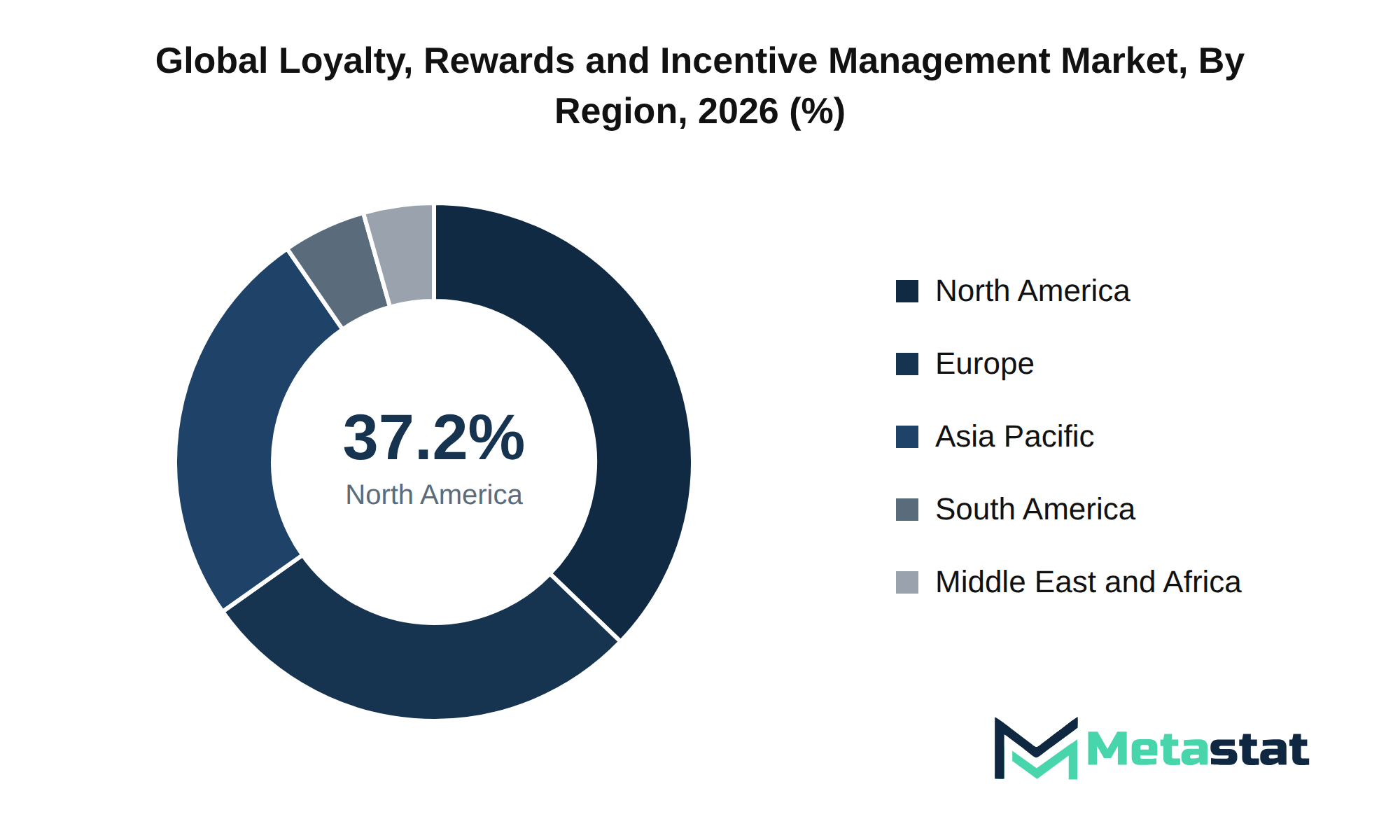
North America demonstrates significant potential within the Loyalty, Rewards and Incentive Management market, set to expand at a CAGR of 10.8% within the forecast period, reaching a market size (TAM) of USD 10.8 billion by the end of 2033. This region accounted for a significant share of the global market in 2025, underscoring its importance in driving overall demand.
The increasing adoption of loyalty programs across various sectors, particularly in retail and e-commerce, stems from a competitive landscape that encourages businesses to enhance customer engagement and retention. Key players in the United States, Canada, and Mexico strategically invest in innovative loyalty solutions, contributing to accelerated market growth.
Technological advancements and the shift towards cloud-based solutions facilitate the expansion of loyalty initiatives, which are critical in improving operational efficiency and customer experience. The integration of data analytics into loyalty programs enables businesses to tailor rewards and incentives effectively, appealing to diverse consumer preferences.
Domestic market leaders leverage localized procurement dynamics and cultural nuances to strengthen their competitive advantage. This adaptability allows them to better meet the unique demands of North American consumers, positioning the region because a frontrunner in the Loyalty, Rewards and Incentive Management market.
The Loyalty, Rewards and Incentive Management market in Europe represents a substantial share, accounting for 28.0% of the global market in 2025. The region experiences robust demand for loyalty programs driven by competitive retail landscapes, especially in countries including Germany, France, the UK, Italy, and Spain. Increasing consumer expectations regarding personalized experiences and rewards contribute to this dynamic. Businesses in these countries focus on enhancing customer engagement through innovative loyalty initiatives. Emerging front-runners in the market include organizations leveraging data analytics to tailor loyalty offerings to specific consumer preferences. Local compliance mandates and regional regulatory frameworks further shape the strategies of vendors operating in Europe, ensuring alignment with consumer protection laws and data privacy regulations. The region's mature market dynamics reflect established customer loyalty practices, with brands continuously investing in enhancements and updates to their loyalty systems. Incremental growth vectors arise from integrating advanced technologies including artificial intelligence and machine learning into loyalty platforms, optimizing user experiences. Localized procurement dynamics impact purchasing behaviors, with companies in Europe emphasizing the importance of cultural nuances in their loyalty strategies. The Loyalty, Rewards and Incentive Management market shows potential for growth driven by businesses adapting to evolving consumer preferences and navigating the competitive landscape, ensuring sustained engagement and brand loyalty.
The Loyalty, Rewards and Incentive Management market in the Asia Pacific region exhibits significant growth potential. Strong consumer engagement and an increasing focus on customer retention strategies drive demand for loyalty programs in countries like China, Japan, and India. The rapid digital transformation across various sectors in these nations supports the adoption of innovative loyalty solutions, enhancing customer experiences and building brand loyalty.
Emerging markets within Southeast Asia and Australia demonstrate a growing appetite for sophisticated loyalty management solutions. Local businesses strive to capture and maintain customer loyalty due to rising competition, leading to an expansion in loyalty program offerings tailored to regional preferences and behaviors. The market benefits from a younger demographic that embraces digital platforms, encouraging brands to invest in technology-driven loyalty initiatives.
Infrastructure modernization continues to play a crucial role in the region's market dynamics. Enhanced connectivity and advancements in technology facilitate the deployment of cloud-based loyalty solutions, allowing businesses to streamline operations and improve customer engagement. Localized manufacturing densities contribute to the growth of the market. Companies seek to establish a presence in high-density urban areas to better serve the customer base.
Regional competitive landscapes reflect a mix of domestic market leaders and global players striving for market share. Companies leverage strategic partnerships and vendor consolidation trends to enhance their service offerings and improve scalability. Domestic brands often adapt their loyalty programs to align with cultural nuances, ensuring that initiatives appeal to local consumers.
The increasing flow of foreign direct investment (FDI) into the region signals confidence in the growth prospects of the Loyalty, Rewards and Incentive Management market. Investors recognize the potential for significant returns by capitalizing on the evolving landscape of customer loyalty, driven by both technological advancements and shifting consumer expectations.
The Loyalty, Rewards and Incentive Management market in South America reflects significant growth potential, driven by increasing consumer engagement and the rising importance of brand loyalty. Countries like Brazil and Argentina serve because the primary markets, with local businesses recognizing the value of loyalty programs in enhancing customer retention and boosting sales. The region's cultural emphasis on customer relationships creates a conducive environment for the implementation of loyalty strategies.
Investment in digital technologies enhances the expansion of the market. Cloud-based solutions and mobile applications improve customer interaction, allowing businesses to create personalized experiences that connect with consumers. This technological adoption aligns with the growing trend of modernization across various sectors, positioning the market for continued growth.
Regional dynamics illustrate a competitive landscape where domestic players are increasingly focusing on innovative offerings to capture market share. The presence of local vendors, alongside international players, promotes a diverse range of loyalty solutions tailored to specific customer needs. This competition drives advancements in service quality and program effectiveness, benefiting all stakeholders.
Despite the positive outlook, challenges including economic fluctuations and varying regulatory frameworks across countries impact market growth. Companies operating within the region navigate these complexities while capitalizing on emerging opportunities to sustain progress in the Loyalty, Rewards and Incentive Management market. Overall, the combination of cultural nuances, technological advancements, and competitive strategies positions South America because an attractive region for investment in loyalty solutions.
The Loyalty, Rewards and Incentive Management market in the Middle East and Africa presents significant growth opportunities driven by the rising adoption of loyalty programs among various industries. This region's market share reached 4.4% of the global total in 2025, highlighting its emerging role within the overall market. Saudi Arabia and the UAE stand out because key contributors to market expansion, with investments in digital transformation initiatives influencing loyalty program development.
Infrastructure modernization enhances the market's capabilities. Countries like South Africa are investing in technology upgrades, creating a conducive environment for loyalty and rewards solutions. Local businesses increasingly recognize the value of these programs in building customer loyalty and engagement, contributing to positive market dynamics.
Emerging market front-runners exhibit heightened interest in loyalty strategies that cater to diverse consumer preferences. Cultural nuances shape B2B buying behaviors, requiring tailored approaches to effectively engage with businesses and consumers. The demand for localized solutions reinforces the necessity for market players to adapt their offerings to meet regional needs.
Competition within the market intensifies because domestic leaders expand their footprints. Increased foreign direct investment (FDI) flows into the region further stimulate market growth, presenting opportunities for new entrants. The evolving supply chain landscape and nearshoring initiatives enhance the availability of resources, positioning the market for sustained development.
Strategic entry barriers, including regulatory frameworks and compliance mandates, influence market dynamics. Navigating these local requirements remains crucial for vendors aiming to establish a strong presence. Overall, the Loyalty, Rewards and Incentive Management market in the Middle East and Africa is poised for significant growth, driven by a combination of technological advancements, cultural engagement, and increasing demand for innovative loyalty solutions.
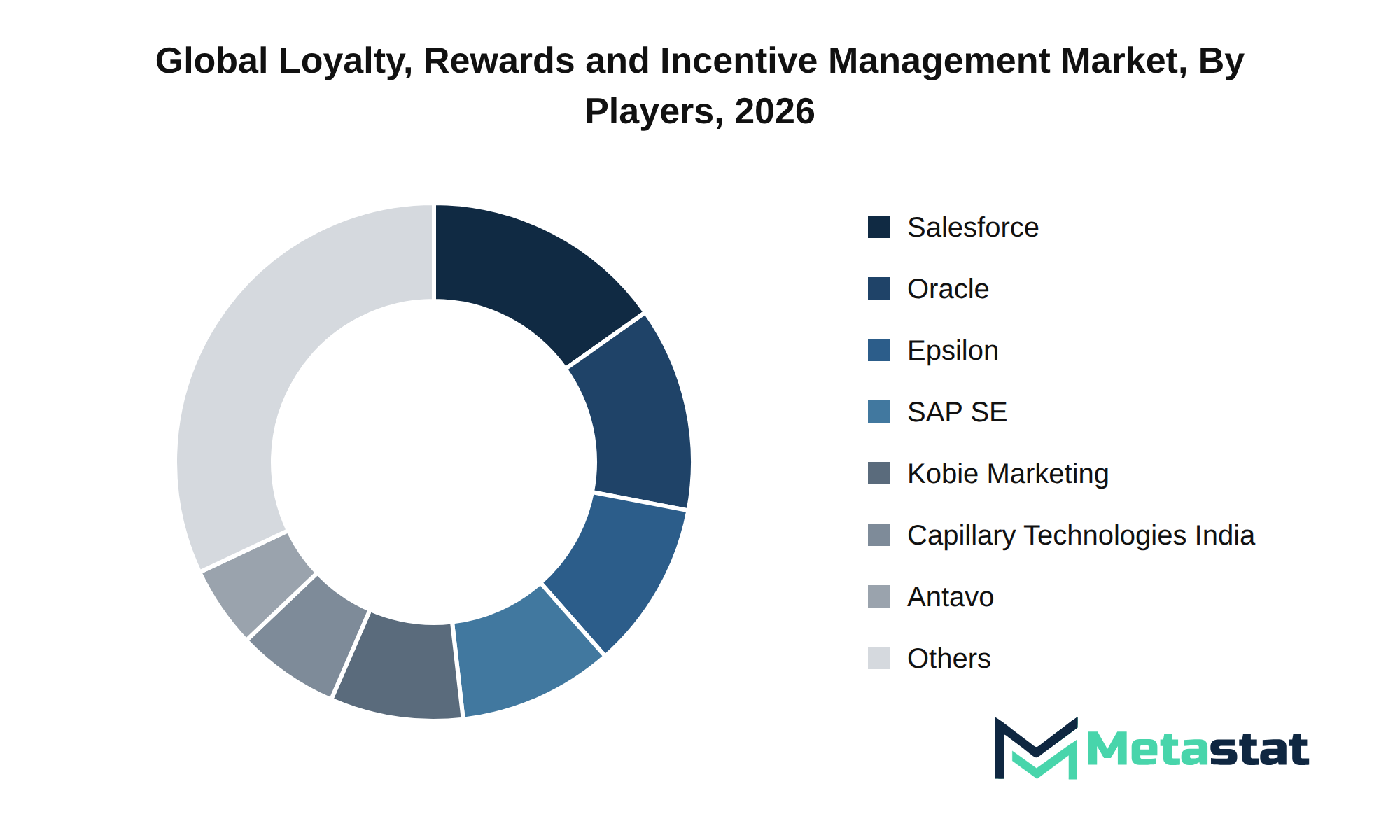
The Loyalty, Rewards and Incentive Management market experiences significant competitive dynamics characterized by mergers, acquisitions, and strategic consolidation among key players. Companies including Salesforce, Inc., Oracle Corporation, and Capillary Technologies India Limited pursue growth through strategic alliances and joint ventures, enhancing their market position and extending their service offerings.
Product differentiation remains crucial in the market, with firms like Epsilon and Antavo Limited investing in proprietary technology moats to maintain competitive advantages. Research and development initiatives focus on creating innovative solutions tailored for various customer segments including B2C consumers and B2B customers. This drive for innovation enhances brand equity and customer retention strategies across the industry.
Barriers to entry for new entrants consist of established intellectual property portfolios held by companies including SAP SE and Bond Brand Loyalty Inc., which protect their market share. The threat of startup disruption remains present, prompting incumbents to continuously evolve their go-to-market strategies and pricing architectures to remain competitive.
The future competitive outlook within the market suggests that players will emphasize value chain integration and procurement leverage to optimize operational efficiency. Companies like PAR Technology Corporation and Paytronix Systems, Inc. focus on enhancing supply chain dominance, which further strengthens their market presence. Overall, the competitive landscape signifies a robust environment where strategic growth vectors dictate the direction of the Loyalty, Rewards and Incentive Management market.
Market size is projected to rise from USD 13.6 billion in 2025 to over USD 30.8 billion by 2033. This growth reflects a robust 10.8% compound annual growth rate (CAGR), driven by various macroeconomic factors and evolving market dynamics.
The Loyalty, Rewards and Incentive Management market will experience shifts due to changing downstream demand and technological advancements. Organizations increasingly adopt next-generation technology to enhance customer engagement and program efficiency. Accelerated R&D commercialization timelines enable faster integration of innovative solutions into existing frameworks.
Regulatory evolution and compliance milestones shape operational parameters. Companies in the market remain vigilant in adapting to new policies and enforcement horizons, which impact strategic capital allocation and investment vectors. Geopolitical realignments and shifts in trade corridors could disrupt supply chains, necessitating a reevaluation of sourcing and operational strategies.
Emerging white-space opportunities exist within underserved sectors, presenting high-growth pockets for enterprises willing to invest in tailored loyalty programs. Identifying unmet enterprise needs enables organizations to develop defensible roadmaps for sustained growth in a competitive landscape. Strategic imperatives focused on customer retention and value-driven engagement become essential to navigate the evolving market environment.
The report strategically identifies and profiles the key market players and analyses their core competencies in each sub-segment of the Loyalty, Rewards and Incentive Management market.
Report Attributes | Details |
Study Period | 2021-2033 |
Base Year | 2025 |
Estimated Year | 2026 |
Forecast Period | 2026-2033 |
Historical Period | 2021-2025 |
Growth Rate | CAGR 10.8% from 2026 to 2033 |
Revenue Unit | USD billion |
Segmentation | By Offering, Program Audience, Deployment Model, End-Use Industry, and Region |
By Region | North America (By Offering, Program Audience, Deployment Model, End-Use Industry, and Country)
|
Europe (By Offering, Program Audience, Deployment Model, End-Use Industry, and Country)
| |
Asia Pacific (By Offering, Program Audience, Deployment Model, End-Use Industry, and Country)
| |
South America (By Offering, Program Audience, Deployment Model, End-Use Industry, and Country)
| |
Middle East and Africa (By Offering, Program Audience, Deployment Model, End-Use Industry, and Country)
|
Find answers to common questions about this report
The Loyalty, Rewards and Incentive Management market size was valued at USD 13.6 billion in 2025.
The Loyalty, Rewards and Incentive Management market is projected to grow at a CAGR of 10.8% during the forecast period from 2026 to 2033.
The North America Loyalty, Rewards and Incentive Management market size is estimated to reach USD 10.8 billion by 2033.
The segment of Loyalty & Incentive Management Software Platforms leads the market, with a projected value of USD 13.7 billion by 2033. This segment demonstrates the highest growth potential compared to other segments in the industry.
Digital transformation drives substantial investment in the Loyalty, Rewards and Incentive Management market, enhancing customer engagement and operational efficiency. Companies adopt advanced technologies, including automation and artificial intelligence, to streamline processes and tailor rewards to individual preferences, thereby increasing demand for loyalty initiatives.
North America holds the dominant share of the Loyalty, Rewards and Incentive Management market, with a value of USD 10.8 billion projected for 2033, representing 37.2 percent of the total market.
Regulatory compliance challenges restrain growth within the Loyalty, Rewards and Incentive Management market, because companies face increased scrutiny regarding data protection and privacy regulations. These complexities raise operational costs and divert resources from core functions, while macroeconomic headwinds, including inflation, further strain financial capabilities and reduce program participation.
Increasing investment in digital transformation drives product adoption within the Loyalty, Rewards and Incentive Management market. Companies leverage advanced technologies to enhance customer engagement and operational efficiency, while favorable capital investment environments and rising GDP growth support consumer spending power, further fueling demand for loyalty initiatives.
The Loyalty, Rewards and Incentive Management market is estimated to reach a valuation of USD 30.8 billion by 2033.
Top players operating in the Loyalty, Rewards and Incentive Management market include Salesforce, Inc., Oracle Corporation, Capillary Technologies India Limited, Comarch SA, Kobie Marketing, Inc., and Epsilon.
The analysts below cover Banking & Finance research at Metastat Insights.
LEAD ANALYST
Utkarsh Khirodkar is a Lead Market Research Analyst at MetaStat Insight, specializing in market intelligence, technology sector assessments, and competitive strategy.

PRINCIPAL CONSULTANT - ENTERPRISE AI & EMERGING TECHNOLOGIES
Banking & Finance · Electronics and Semiconductor · Energy and Power · Healthcare IT · Information & Technology · Professional Services
Vijay Gunti is a Principal Consultant at MetaStat Insight, bringing over two decades of experience across enterprise digital transformation, technology strategy, and intelligent systems.
Standard industry briefs frequently blur the operational distinctions between isobaric pressure exchangers and centrifugal turbines. In this study, MetaStat Insight categorized mega-scale desalination tenders across the GCC and Mediterranean basins by membrane replacement frequencies and salinity tolerances. Their primary research helped us evaluate local content requirements in Saudi Arabia and the UAE without relying on marketing literature. We found the segment-level equipment replacement estimates grounded and well-reasoned throughout.
The technical breakdown of ISO 20022 migration readiness across correspondent banking corridors was remarkably thorough. Rather than treating cross-border corporate payments as a single block, the report drew a useful distinction between multilateral netting platforms and domestic instant payment rails across ASEAN economies. MetaStat Insight highlighted regulatory constraints on foreign exchange liquidity management that many publications gloss over. The research material offered practical clarity for our platform development roadmap.
Our group needed clearer visibility into out-of-autoclave processing timelines for high-temperature thermoplastic composites. MetaStat Insight delivered an objective assessment that contrasted automated fiber placement scrap rates with traditional thermoset prepreg layup cycles. The supplier landscape mapped out primary resin suppliers and tape slitting capacity across France, Germany, and Japan with solid technical accuracy. Their analyst handled our questions on precursor supply risks during an unscheduled inquiry call, providing clear, unembellished context.
Explore related market intelligence reports worth reading alongside this one.