
LEAD ANALYST
Utkarsh Khirodkar is a Lead Market Research Analyst at MetaStat Insight, specializing in market intelligence, technology sector assessments, and competitive strategy.

Global Maritime Methanol Market Size, Share, By Type (Conventional Fossil-Based Methanol, Blue / Low-Carbon Methanol, Bio-Methanol, E-Methanol), By Vessel Type (Container Ships, Tankers, Bulk Carriers, Ro-Ro & Ro-Pax / Ferries, Cruise & Passenger Ships, General Cargo & Multipurpose Vessels, Offshore & Service Vessels, Others (Tugs, Inland Waterway Vessels, Fishing Vessels)), Industry Analysis, Growth, Trends, and Forecast, 2026-2033
Report ID
MSI-4932
Published
August, 2026
Pages
306 Pages
Format
Historical
Base year
Forecast
Forecast period
Report Details
Choose Your License
Global Maritime Methanol Market
The global Maritime Methanol market was valued at USD 1,612.7 million in 2025 and is projected to reach USD 4,442.8 million by 2033, growing at a CAGR of 13.5% over the forecast period.
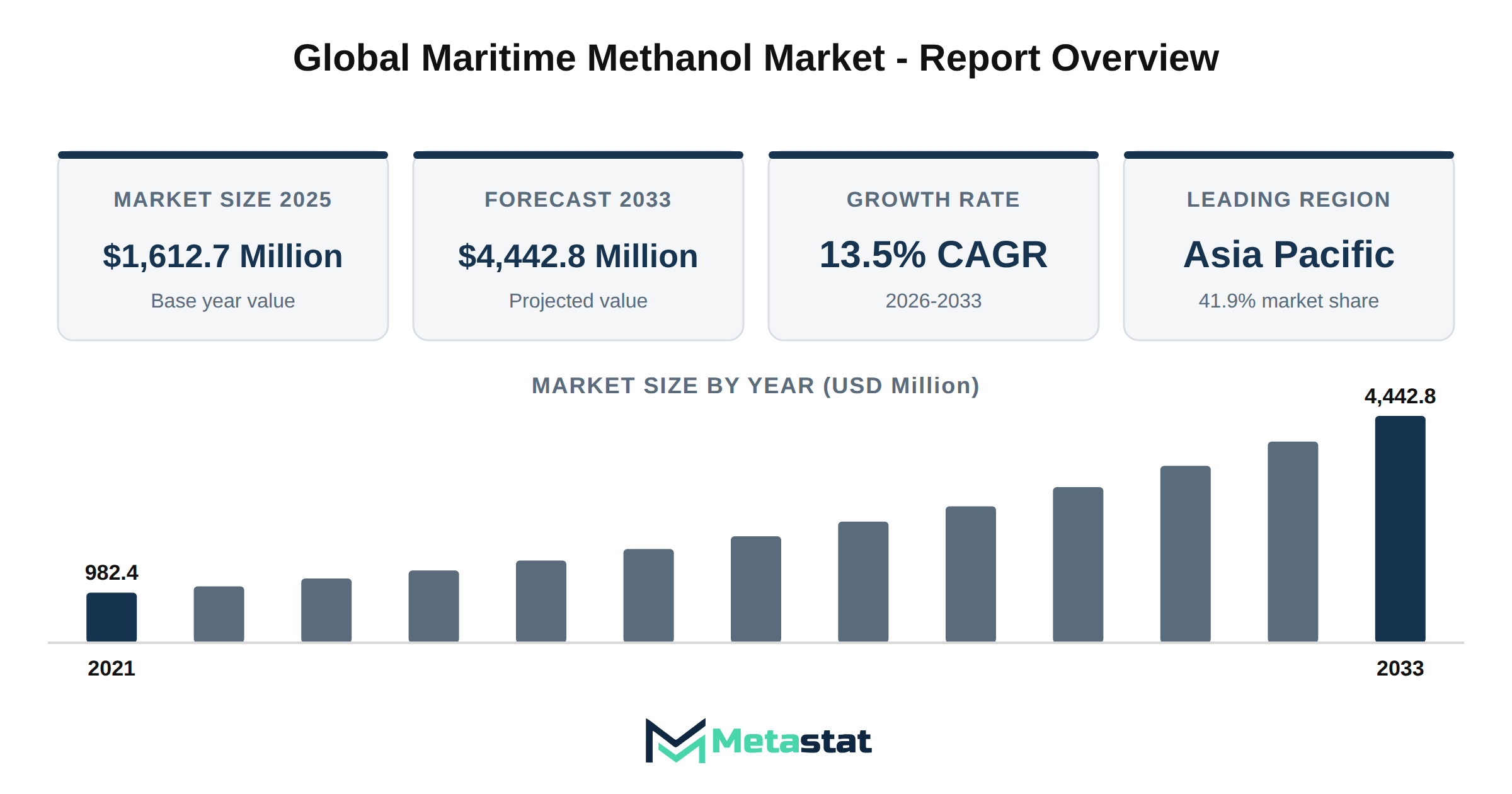
The Maritime Methanol market reached a value of USD 1,612.7 million in 2025, following a steady increase from USD 982.4 million in 2021. Projections indicate a significant growth trajectory, with the market expected to achieve USD 4,442.8 million by 2033, reflecting a compound annual growth rate (CAGR) of 13.5% during the forecast period.
Adoption trends in shipping reflect a significant shift towards alternative fuels, driven by the need for decarbonization and compliance with regulatory frameworks established by the International Maritime Organization (IMO). This transition impacts the demand-supply balance, resulting from traditional fuel sources facing increasing scrutiny and regulatory pressures.
The supply chain structure within the Maritime Methanol market is evolving, with strategic investments aimed at infrastructure enhancements and technology development. This evolution enables the integration of low-carbon fuels into existing logistics architectures, supporting a sustainable transformation across maritime operations.
Geopolitical risk frameworks play a crucial role in shaping import and export flows, influencing sourcing dynamics and market fragmentation. The relationship between regulatory compliance and next-generation innovation highlights the importance of research and development in driving the market forward.
Infrastructure investments are critical for meeting the emerging demands of the Maritime Methanol market. Companies are reallocating capital towards high-value recommendations that emphasize sustainability and operational efficiency, addressing macroeconomic headwinds and inflationary pressures.
The adoption of maritime methanol aligns with broader trends in shipping and alternative fuels, driven by the urgent need for decarbonization and sustainability in the maritime sector. Increasing regulatory pressure from the International Maritime Organization (IMO) and various national maritime strategies compels operators to transition towards more sustainable fuel options. Compliance with these regulations positions companies favorably within the evolving market environment, influencing their operational strategies and investment decisions.
The supply chain structure within the maritime methanol market exhibits complexity, involving multiple stakeholders from production to end-users. Import and export flows significantly impact the availability and pricing of methanol, with regions including Asia Pacific emerging due to key players in the global supply chain. The demand-supply balance reflects a growing reliance on methanol because a cleaner fuel alternative, shaping procurement strategies and logistics architecture to accommodate changing market dynamics.
Technological developments play a crucial role in enhancing the efficiency and viability of methanol because a maritime fuel. Innovations in production processes and fuel cell technologies contribute to the overall sustainability of the sector. Research and development trajectories focus on next-generation innovations, driving advancements in methanol production and utilization. These developments align with corporate imperatives to enhance environmental performance and meet regulatory compliance.
Market fragmentation persists, with various players competing across the value chain. Mergers and acquisitions (M&A) dynamics reflect strategic moves to consolidate capabilities and strengthen market positioning. The capital allocation landscape reveals significant investments in infrastructure, aimed at expanding production capacities and developing supply chains tailored for methanol distribution.
Macroeconomic headwinds, including inflationary pressures and currency volatility, introduce challenges that impact operational costs and pricing strategies within the market. However, companies that strategically navigate these challenges capitalize on opportunities for growth and expansion in the maritime methanol sector. The future strategic outlook indicates a sustained emphasis on sustainable transformation and circular economy dynamics, driving continued investment in low-carbon alternatives and reshaping the competitive environment.
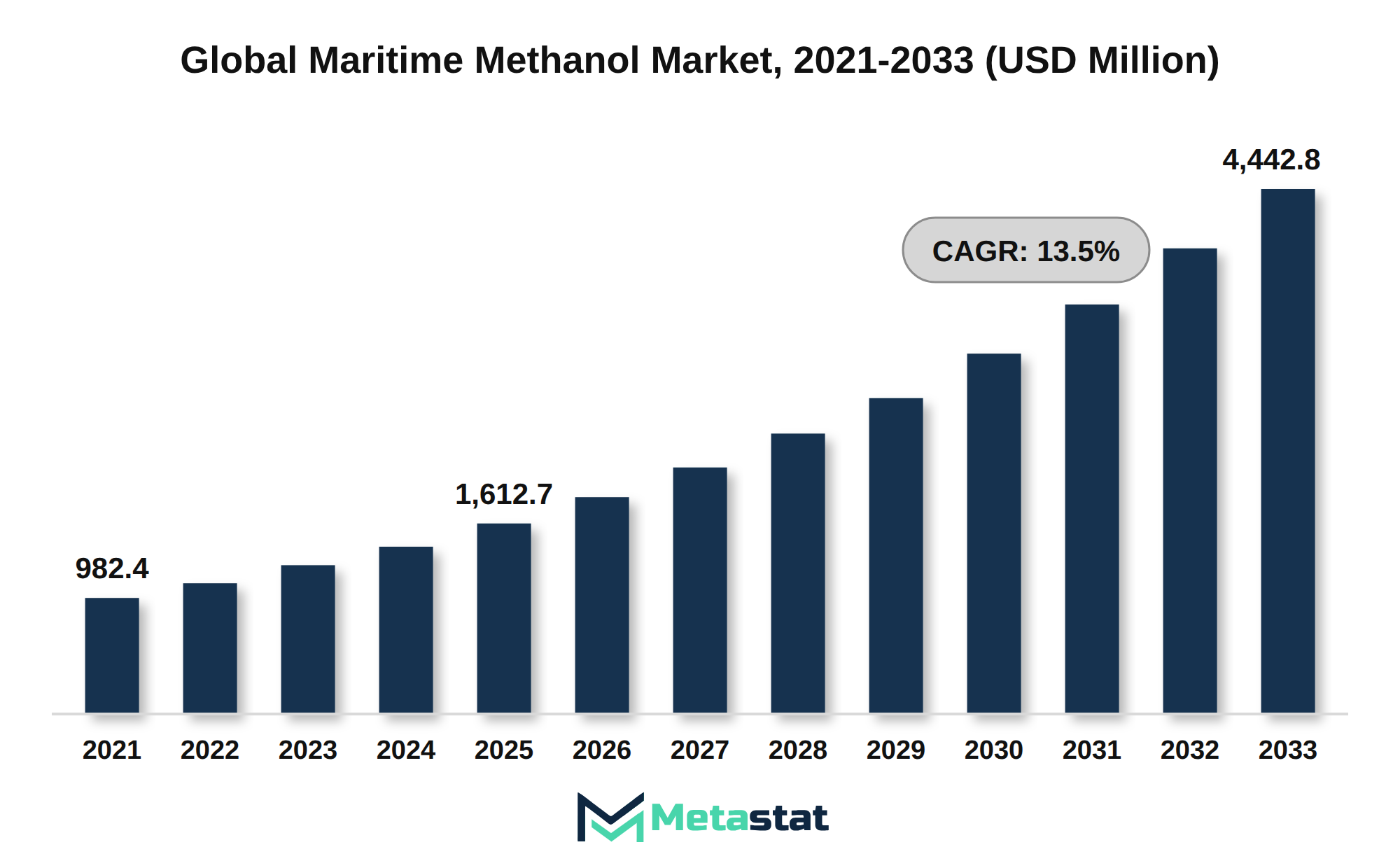
The Maritime Methanol market experiences growth driven by increasing emission limits imposed on maritime operations. Stricter environmental regulations implemented by countries to combat climate change prompt shipping companies to seek cleaner fuel alternatives to meet specified targets. This trend pushes operators towards adopting methanol, recognized for its lower carbon emissions compared to traditional fuels.
Investment in low-carbon technologies supports this transition, with capital flowing into research and development aimed at improving methanol production methods. Financial incentives for cleaner energy sources enhance this commitment, encouraging investment in infrastructure and technology necessary for production and distribution. Consequently, companies position themselves to capitalize on the shift towards more sustainable shipping practices.
The trend towards sustainability influences buyer preferences and leads to a greater emphasis on environmental, social, and governance (ESG) criteria. While the market evolves, stakeholders increasingly prioritize eco-friendly solutions, aligning operations with global sustainability goals. This shift drives growth in the Maritime Methanol market and enhances competitive positioning among industry players seeking to differentiate through sustainable practices.
Investment in infrastructure significantly influences the growth of the Maritime Methanol market. Enhanced port facilities and shipping lanes, along with modernized vessel capabilities, facilitate the adoption of maritime methanol because a viable fuel alternative. The increasing focus on sustainability encourages governments and private entities to allocate resources towards developing infrastructure that supports low-carbon energy solutions.
While countries prioritize infrastructure upgrades to meet environmental targets, the market sees a direct benefit from improved logistics and supply chain efficiency. Investments in advanced technology drive the construction of energy-efficient refueling stations and support systems for methanol-powered vessels. This development enhances operational productivity and reduces overall costs associated with fuel-transition initiatives.
The market experiences growth attributed to heightened capital investments from both public and private sectors. A favorable investment climate, driven by an emphasis on environmental, social, and governance (ESG) mandates, supports the development of a sustainable energy ecosystem. While infrastructure continues to evolve, the Maritime Methanol market is anticipated to expand, offering new opportunities for stakeholders involved in the transition towards cleaner maritime fuels.
The Maritime Methanol market faces significant challenges due to high capital investment requirements, which hinder participation from smaller enterprises. Initial costs associated with developing methanol production facilities, processing technologies, and infrastructure investments exceed expectations, creating barriers for potential entrants. This situation disproportionately affects smaller firms that lack sufficient financial resources and operational scale, resulting in concentrated market dynamics that favor larger corporations.
Escalating operating costs related to production and logistics exacerbate the situation. Fluctuations in raw material prices, labor costs, and energy expenditures increase financial pressures on operators. In an industry where margins are critical, these escalating costs restrict competitiveness and impede profitability. This trend leads to a slowdown in the market's overall growth trajectory.
In addition to financial constraints, technological obsolescence presents a challenge within the Maritime Methanol market. While advancements in alternative fuels and energy sources continue to evolve, companies relying on outdated technologies face heightened risks. The necessity to invest in continuous innovation and modernization adds another layer of financial strain, complicating the market environment.
Overall, high capital investment requirements and associated operational costs create a challenging environment for the Maritime Methanol market, impacting growth opportunities and limiting market participation.
Geopolitical fragmentation significantly influences the Maritime Methanol market by creating uncertainties in trade dynamics and supply chains. Tensions between nations result in trade deficits, tariff friction, and increased costs for raw materials. These factors contribute to market volatility, challenging suppliers to maintain consistent pricing and profitability. The complex integration of technologies within the industry complicates collaboration among stakeholders, creating friction that hinders effective resource sharing.
Rising input costs and margin pressures pose additional challenges for market participants. The need for skilled labor remains critical, yet workforce skill gaps and talent retention pressures restrict operational efficiency. High costs associated with compliance and evolving legal liabilities create a cumbersome regulatory environment, forcing companies to allocate resources toward meeting tightening global standards. These compliance challenges impact overall growth potential in the market.
Logistical disruptions and supply chain instability hinder timely delivery and impact production schedules. Companies navigate these complications to secure a competitive advantage in the Maritime Methanol market. Environmental lifecycle footprints and decarbonization mandates further pressure companies to adapt their practices, adding layers of complexity to operational strategies.
Infrastructure gaps, retrofitting barriers, and implementation bottlenecks create significant obstacles for new entrants and established players alike. These limitations delay the adoption of innovative technologies that support sustainability and efficiency. The combination of these factors shapes the competitive environment, influencing the potential for growth within the market.
The Maritime Methanol market experiences favorable conditions owing to emerging regional demands that emphasize sustainable fuel solutions. Increasing pressure from various industries to meet stringent environmental standards accelerates interest in low-carbon alternatives. This shift is particularly pronounced in regions including Asia Pacific, where rapid industrial growth generates significant energy requirements. The trend toward sustainability aligns with global efforts to reduce carbon emissions, prompting investment in methanol-based technologies.
Infrastructure modernization enhances the adoption of maritime methanol. Upgrading existing facilities and developing new terminals specifically designed for methanol handling improves supply chain efficiency and accessibility. Regions investing in modernization efforts see increased operational capabilities, facilitating smoother transitions to cleaner fuels. This development creates a conducive environment for investments in the Maritime Methanol market.
Technological disruptions reshape the operational landscape, with advancements in methanol synthesis and storage technologies driving market viability. Innovations in blue and green methanol production techniques significantly lower carbon footprints, appealing to environmentally conscious stakeholders. The digital transformation within supply chains enhances procurement processes, making it easier for companies to adopt methanol because a primary fuel source.
Sustainability imperatives continue to influence purchasing decisions, with buyers prioritizing eco-friendly compliance. This trend encourages companies to reassess their energy sources, prompting a shift towards methanol-powered vessels. Maritime fleet operators increasingly recognize the long-term benefits of adopting cleaner fuels, leading to a diversification of applications and an expansion of market segments.
The Maritime Methanol market's landscape reflects ongoing shifts in buyer behavior driven by the need for sustainable solutions. Strategic consolidation and partnerships between industry players lead to enhanced product integration and market penetration. These collaborations enable firms to leverage complementary technologies and resources, further strengthening their positions in the market.
The Global Maritime Methanol market is segmented based on Type, Vessel Type.
Valued at USD 1,251.6 million in 2026, the Conventional Fossil-Based Methanol segment is projected to reach USD 2,163.2 million by 2033, at a CAGR of 8.1% during the forecast period. This segment serves because a critical component in the Maritime Methanol market, driven primarily by the global push for cleaner energy sources and regulatory pressures aimed at reducing carbon emissions. The increasing emphasis on sustainability in marine transportation fuels significantly impacts adoption rates, because ship operators seek compliant alternatives that meet stringent environmental standards.
Investment in production facilities and advancements in extraction technologies facilitate the growth of conventional fossil-based methanol. These factors lead to improved production efficiency, reducing overall costs and expanding market reach. The demand dynamics in this segment reflect a shift towards cleaner fuels, with conventional fossil-based methanol offering a transitional solution for various vessel types, especially in regions with limited access to alternative fuels.
Pricing volatility remains a concern within the segment, influenced by fluctuations in raw material costs and geopolitical factors affecting supply chains. Operators face margin pressures, because they balance the need for competitive pricing with the investment required for compliance with evolving regulations. Nonetheless, the anticipated growth and strategic opportunities within the Maritime Methanol market suggest a resilient outlook for conventional fossil-based methanol, positioning it because a viable option for marine fuel supply.
Increasing environmental regulations drive demand for Blue / Low-Carbon Methanol, particularly among stakeholders prioritizing sustainability. This segment offers a viable alternative to conventional fossil fuels, aligning with the industry’s shift towards lower carbon emissions. Significant investment in technology further enhances growth, improving production efficiency and expanding capabilities. The transition to low-carbon alternatives reflects broader market dynamics, with stakeholders actively seeking innovative solutions to meet regulatory compliance and consumer preferences.
Blue / Low-Carbon Methanol segment is estimated to reach USD 293.7 million by 2033, at a CAGR of 17% during the forecast period. The demand for cleaner fuel options continues to rise, driven by the maritime industry's commitment to reducing its carbon footprint. Increased adoption among various vessel types highlights the segment's growth potential, positioning it because a critical component in the broader Maritime Methanol market.
Increasing focus on sustainability and environmental regulations drives strong demand for bio-methanol within the Maritime Methanol market. This renewable alternative offers a lower carbon footprint compared to conventional fuels, making it attractive for companies aiming to meet stringent emission targets. While shipping industries worldwide emphasize eco-friendly practices, the adoption of bio-methanol is expected to accelerate.
Investment in bio-methanol production technologies supports segment expansion. Advancements in production processes, including the use of biomass and waste feedstocks, enhance the economic feasibility of bio-methanol. This evolution attracts significant capital investment from stakeholders eager to capitalize on growth opportunities.
Bio-methanol segment is expected to reach USD 1,305.8 million by 2033. The ongoing shift towards circular economy principles reinforces the bio-methanol market's position, with companies actively exploring innovative applications in various maritime sectors. This demand shift aligns with global efforts to reduce reliance on fossil fuels and promote renewable energy sources.
Regulatory compliance standards increasingly favor bio-methanol, enhancing its competitive edge. Governments worldwide enforce policies incentivizing the use of lower-emission fuels, creating a favorable market environment. This regulatory landscape encourages companies in the maritime sector to transition toward sustainable fuel options, strengthening the business case for bio-methanol adoption.
Emerging technologies in bio-methanol production help mitigate traditional cost structures and pricing volatility. Innovations in enzymatic processes and fermentation techniques contribute to improved yield and efficiency, leading to a more stable pricing model. Such advancements position bio-methanol because a viable alternative, ensuring resilience against potential supply chain vulnerabilities.
The strategic opportunity windows for bio-methanol are broad, reflecting growing consumer preferences for sustainable shipping practices. Companies integrating bio-methanol into their energy strategies will benefit from enhanced market share in the coming years. This upward trajectory indicates a clear direction for the maritime industry focused on sustainable progress.
E-Methanol segment is projected to grow at a CAGR of 28.5% during the forecast period. Demand for E-Methanol stems from the shipping industry's shift towards sustainable fuel alternatives. This transformation aligns with global efforts to reduce greenhouse gas emissions and comply with increasingly stringent environmental regulations. Shipowners and operators recognize the need for cleaner fuel sources to meet these obligations, fueling E-Methanol's adoption.
The segment benefits from advancements in production technologies, supporting increased efficiency and lower costs. E-Methanol's production involves using renewable energy sources, enhancing its appeal among environmentally conscious consumers. This technological maturation drives investment in production facilities, which further stimulates market growth.
Downstream applications of E-Methanol span various vessel types, including container ships and tankers. The versatility of E-Methanol makes it suitable for a range of maritime operations, broadening its market appeal. Increased consumption of E-Methanol reflects growing acceptance among shipbuilders and operators, who pursue operational efficiency alongside sustainability goals.
Pricing volatility in the renewable energy sector influences E-Methanol's market dynamics. Fluctuations in raw material costs pressure profit margins, necessitating strategic pricing approaches. Despite these challenges, E-Methanol remains a strong candidate for investment owing to the market's evolution.
Strategic opportunities arise from regulatory compliance frameworks that favor low-carbon alternatives. Financial incentives and subsidies enhance E-Methanol's competitive position against traditional fossil fuels. The market's trajectory reflects a commitment to sustainable practices, reinforcing the importance of E-Methanol in the broader Maritime Methanol market.
Valued at USD 716 million in 2026, the Container Ships segment is projected to reach USD 1,866 million by 2033, at a CAGR of 14.7% during the forecast period. This growth results from intensified demand for efficient and environmentally friendly shipping solutions. Increasing regulatory pressures surrounding emissions in the maritime industry drive vessel operators to adopt methanol because a cleaner alternative fuel. Container shipping, a significant contributor to global trade, sees heightened scrutiny regarding its environmental impact, compelling operators to explore advanced fuel options.
Technological advancements in methanol production and engine design continue to enhance the viability of methanol because a maritime fuel. Innovations in Blue and Bio-Methanol production processes contribute to the reduced carbon footprint associated with container ships. Adoption of these fuels supports fleet modernization efforts, aligning with stricter emissions regulations while enhancing operational efficiency.
Waste-to-energy technologies and renewable feedstock sourcing offer new opportunities for sustainable methanol production, further appealing to environmentally conscious shipping companies. The push for compliance with international standards accelerates investment in new methanol-capable vessels, strengthening market presence. The increasing prevalence of low-carbon fuels in maritime applications highlights the strategic importance of capital investments in the sector.
The Container Ships segment within the Maritime Methanol market positions itself for expansive growth driven by regulatory demands, technological advancements, and a growing emphasis on sustainability. This alignment with global trade dynamics reinforces its role in the future of maritime transport.
Investment in the tankers sub-segment of the Maritime Methanol market remains robust, driven by increasing demand for cleaner fuel alternatives. The adoption of methanol because a marine fuel aligns with evolving regulatory compliance standards focused on emissions reduction, compelling operators to transition towards low-carbon solutions. This transition supports the segment's growth trajectory, characterized by a projected market value of USD 710.9 million by 2033, at a CAGR of 12% during the forecast period.
The ongoing technological maturation in marine fuel technologies enhances operational efficiency, incentivizing shipowners to invest in methanol-powered vessels. The urgency to address climate change further increases investment in next-generation upgrades, with tankers expected to play a significant role in decarbonizing the maritime sector. Adoption among bulk carriers and container ships highlights the segment's strategic importance in achieving sustainability targets set by international maritime organizations.
Pricing volatility in traditional fossil fuels influences cost structures for operators, making methanol an attractive alternative. This trend creates strategic opportunity windows for suppliers of methanol, because financial pressures from fluctuating fuel prices could drive demand towards more stable, lower-carbon options. Overall, the tankers segment exemplifies a critical area of growth within the broader Maritime Methanol market, driven by regulatory pressures, technological advancements, and shifting consumer expectations towards greener shipping solutions.
Growing environmental concerns and regulatory pressures fuel the demand for alternative fuels, including methanol, in the maritime sector. Bulk carriers, which transport significant volumes of goods, present a strategic opportunity for the adoption of maritime methanol due to a cleaner fuel source. Increased emphasis on reducing greenhouse gas emissions prompts shipping companies to explore low-carbon alternatives, contributing to the overall growth of the market.
Technological advancements in methanol production, including blue and bio-methanol, enhance the viability of this fuel for bulk carriers. The transition to maritime methanol aligns with the shipping industry's commitment to sustainability, driven by international regulations aimed at lowering emissions. Bulk carriers stand to benefit from these developments, owing to mounting pressure to comply with stringent environmental standards.
Valued at USD 644.2 million by 2033, the Bulk Carriers segment signifies a critical component in the broader Maritime Methanol market. Investment in this segment supports the integration of next-generation upgrades, enabling a shift towards more efficient fuel consumption. While adoption of maritime methanol expands, bulk carriers will increasingly play a significant role in demonstrating the commercial viability of this alternative fuel.
The market for bulk carriers is expected to evolve with strategic partnerships among industry players, focusing on enhancing supply chains and securing reliable raw material sourcing. A collaborative approach strengthens the resilience of supply chains while addressing potential risks associated with logistics vulnerabilities and disruptive alternatives. This collaborative effort creates a conducive environment for the growth of the Bulk Carriers segment within the Maritime Methanol market.
Significant growth is projected for the Ro-Ro & Ro-Pax / Ferries sub-segment, with a CAGR of 14% during the forecast period. This expansion results from rising demand for sustainable shipping solutions, spurred by regulatory pressures and consumer expectations for greener transportation options. Increasing investment in retrofitting existing vessels and building new methanol-powered ferries enhances operational efficiency and meets stringent emissions regulations.
The Maritime Methanol market benefits from advancements in technology that facilitate the adoption of methanol because a marine fuel. These innovations create opportunities for ferry operators to transition from traditional fuels to low-emission alternatives. Enhanced fuel efficiency and reduced carbon footprints present a strong case for investors in this segment, driving further capital inflow and development.
Regulatory compliance standards, particularly in regions with stringent environmental policies, influence the dynamics of the market. Operators investing in methanol infrastructure position themselves favorably, aligning with global energy transition goals. The increasing emphasis on decarbonization in maritime operations enhances the attractiveness of methanol solutions, improving market penetration.
Valued at USD 0 million in 2026, the Ro-Ro & Ro-Pax / Ferries segment reflects the shifting landscape of maritime transportation. Strategic opportunity windows for investments arise from evolving customer preferences and the need for environmentally responsible practices in marine logistics.
Growing interest in sustainability within the cruise and passenger ship sector influences the adoption of maritime methanol, driven by a cleaner fuel alternative. This segment aligns with the maritime industry's objectives to reduce greenhouse gas emissions and adhere to stricter international regulations. Enhanced fuel efficiency and lower operational costs serve because primary motivators for ship owners transitioning to methanol-powered vessels.
Technological advancements in methanol engine design facilitate the integration of this fuel type within cruise and passenger ships, providing potential upgrades for existing fleets. This evolution in fuel technology supports the market's expansion, driving investments into research and development for more efficient and environmentally friendly solutions. The increasing availability of low-carbon and bio-methanol sources presents opportunities for ship operators aiming to enhance sustainability practices.
Regulatory compliance remains a crucial factor influencing the cruise and passenger ship segment. Stringent emissions regulations from international bodies encourage shipbuilders and operators to adopt alternative fuels, including maritime methanol, to meet environmental standards. The market experiences shifting consumption patterns, resulting from consumers increasingly demanding eco-friendly travel options, prompting operators to prioritize greener fuel sources.
Capital investment outlooks within this sub-segment indicate a positive trend, with stakeholders recognizing the strategic benefits of investing in methanol technology. Supply chain resilience is critical because the industry navigates raw material sourcing challenges, ensuring a steady supply of methanol fuels. The cruise and passenger ship segment significantly shapes the future of the maritime methanol market, contributing to a cleaner and more sustainable shipping industry.
Growth in the Maritime Methanol market reflects an increasing shift towards cleaner fuel alternatives in the shipping industry. Demand drivers include rising regulatory pressures focused on emissions reduction and the transition to sustainable energy sources. The segment for General Cargo & Multipurpose Vessels aligns with these trends, driven by ship owners seeking to comply with stringent environmental standards while maintaining operational efficiency.
Technological maturation enhances the adoption of methanol because a marine fuel. Innovations in methanol engine technology improve performance and efficiency, making it a viable option for various vessel types. Adoption of methanol by General Cargo & Multipurpose Vessels relies on the successful integration of these advanced technologies, which address concerns over fuel compatibility and operational reliability.
Investment in next-generation upgrades enhances the appeal of methanol because a fuel choice. Ship operators recognize the potential for lower lifecycle costs associated with methanol compared to traditional fossil fuels. This recognition supports market growth by encouraging the adoption of methanol-powered vessels.
Consumption shifts toward lower-carbon fuels drive the evolution of the market. General Cargo & Multipurpose Vessels benefit from this shift, influenced by operators prioritizing sustainability to appeal to environmentally conscious consumers and stakeholders. Regulatory compliance standards further incentivize this transition by creating a competitive landscape for cleaner fuels.
Supply chain resilience is crucial for the successful implementation of methanol because a fuel. Raw material sourcing strategies ensure consistent availability of methanol, while logistics vulnerabilities impact supply chain efficiency. Addressing these challenges enhances the overall reliability of the market.
Strategic opportunity windows exist for companies engaging in the production and distribution of methanol. The relationship between regulatory compliance, technological advancements, and market demand creates an environment ripe for innovation and investment in the Maritime Methanol market.
Investment in the Offshore & Service Vessels segment of the Maritime Methanol market reflects a shift toward sustainable practices and energy sources. Demand for these vessels rises owing to operators seeking to comply with stringent regulatory frameworks aimed at reducing emissions. Offsetting traditional fuel use, methanol presents an attractive alternative, supporting operational efficiency while addressing regulatory demands.
Technological advancements enhance vessel design and performance, facilitating the adoption of maritime methanol solutions. Next-generation upgrades focusing on energy efficiency and reduced environmental impact encourage stakeholders to invest in fleet modernization. The market observes a trend of integrating methanol-powered engines, which contributes to overall operational efficiency and long-term sustainability goals.
Consumption patterns within the offshore and service vessel sector are shifting towards cleaner energy options driven by both environmental standards and market expectations. While stakeholders prioritize sustainability, methanol's role becomes increasingly significant within this context. The need for compliance with evolving regulatory requirements increases demand for innovative, low-carbon fuel alternatives.
Strategic opportunities exist for companies to capitalize on investments in the Offshore & Service Vessels segment. The potential for enhanced supply chain resilience and raw material sourcing efficiency offers pathways to mitigate risks associated with traditional fuels. The competitive landscape is evolving, with a growing number of firms recognizing the commercial viability of methanol in offshore operations.
Technological obsolescence of older vessels presents an opportunity for market expansion. Operators upgrade fleets to align with environmental standards. The integration of maritime methanol fuels aligns with broader industry trends toward sustainability and operational excellence. While investment in this sub-segment increases, the market position of methanol strengthens, ultimately leading to a significant shift in vessel operation dynamics.
Increasing interest in sustainable maritime solutions drives demand for the sub-segment "Others (Tugs, Inland Waterway Vessels, Fishing Vessels)" within the Maritime Methanol market. Tugs and inland waterway vessels play a vital role in regional transportation and logistics, emphasizing efficiency and reduced environmental impact. Fishing vessels, facing scrutiny over emissions, pursue cleaner alternatives to traditional fuels. This shift aligns with global efforts to reduce greenhouse gas emissions and adhere to stricter marine fuel regulations.
Technological advancements in methanol production, including the development of low-carbon and bio-methanol solutions, support industry growth. These innovations enhance the environmental profile of tugs, inland waterway vessels, and fishing vessels, appealing to operators seeking compliance with emerging regulations. The trend toward electrification and hybrid solutions influences adoption in this sub-segment, enabling vessels to optimize fuel efficiency and operational performance.
Regulatory compliance and certification requirements shape the market landscape for alternative fuels in maritime applications. Operators in these vessel types navigate complex frameworks while managing cost structures and pricing volatility. Investment in cleaner technologies and fuels like methanol offers a strategic opportunity for operators to enhance competitiveness in an increasingly regulated environment.
Capital investment in research and development drives innovation in this segment, especially in the context of transitioning away from fossil fuels. Strategic partnerships among key players in the maritime sector enhance collaboration and expedite the availability of methanol-based solutions. Such partnerships improve supply chain resilience and address challenges related to raw material sourcing and logistics vulnerabilities, ultimately benefiting the market.
Based on geography, the Global Maritime Methanol market is divided into North America, Europe, Asia-Pacific, South America, Middle East, and Africa.
North America Maritime Methanol market shows promising growth, expanding at a CAGR of 13.5% within the forecast period, reaching a market size (TAM) of USD 574.5 million by the end of 2033. This growth stems from increasing investments in infrastructure modernization and a shift toward more sustainable fuel options.
The market benefits from a robust presence of domestic players in the United States, Canada, and Mexico, promoting regional supply chain optimization and localized manufacturing densities. Increased focus on reducing carbon emissions aligns with government initiatives in these countries, enhancing the market's attractiveness. Local compliance mandates further drive the adoption of Maritime Methanol, particularly in sectors including shipping and transportation.
Emerging market front-runners are investing in innovative technologies, improving the competitive landscape. The potential for high-value replacement cycles reinforces the market's growth trajectory. Cross-border trade corridors facilitate the movement of goods, enhancing market dynamics and increasing the availability of Maritime Methanol in North America.
The Maritime Methanol market in Europe is characterized by significant adoption of low-carbon and bio-methanol solutions, driven by stringent environmental regulations and a strong commitment to sustainability. Key countries including Germany, France, the UK, Italy, and Spain play a key role in shaping market dynamics, with a combined share of 30.3% of the global market in 2025.
Investment in infrastructure modernization and cross-border trade corridors facilitates the expansion of supply chains within the region. The presence of established domestic players enhances competition, while localized procurement dynamics influence purchasing decisions. Cultural nuances in B2B buying behaviors further shape the market.
Germany and the UK are emerging front-runners in the adoption of Blue / Low-Carbon Methanol, supported by government incentives and initiatives aimed at reducing carbon emissions. The focus on energy transition and innovation in maritime applications contributes to incremental growth across the region.
With ongoing investment in localized manufacturing and infrastructure readiness, the market is expected to experience significant growth through emerging technologies and improved operational efficiencies. Overall, the Maritime Methanol market in Europe stands poised for substantial expansion, reflecting alignment with the broader goals of the energy transition and climate action initiatives.
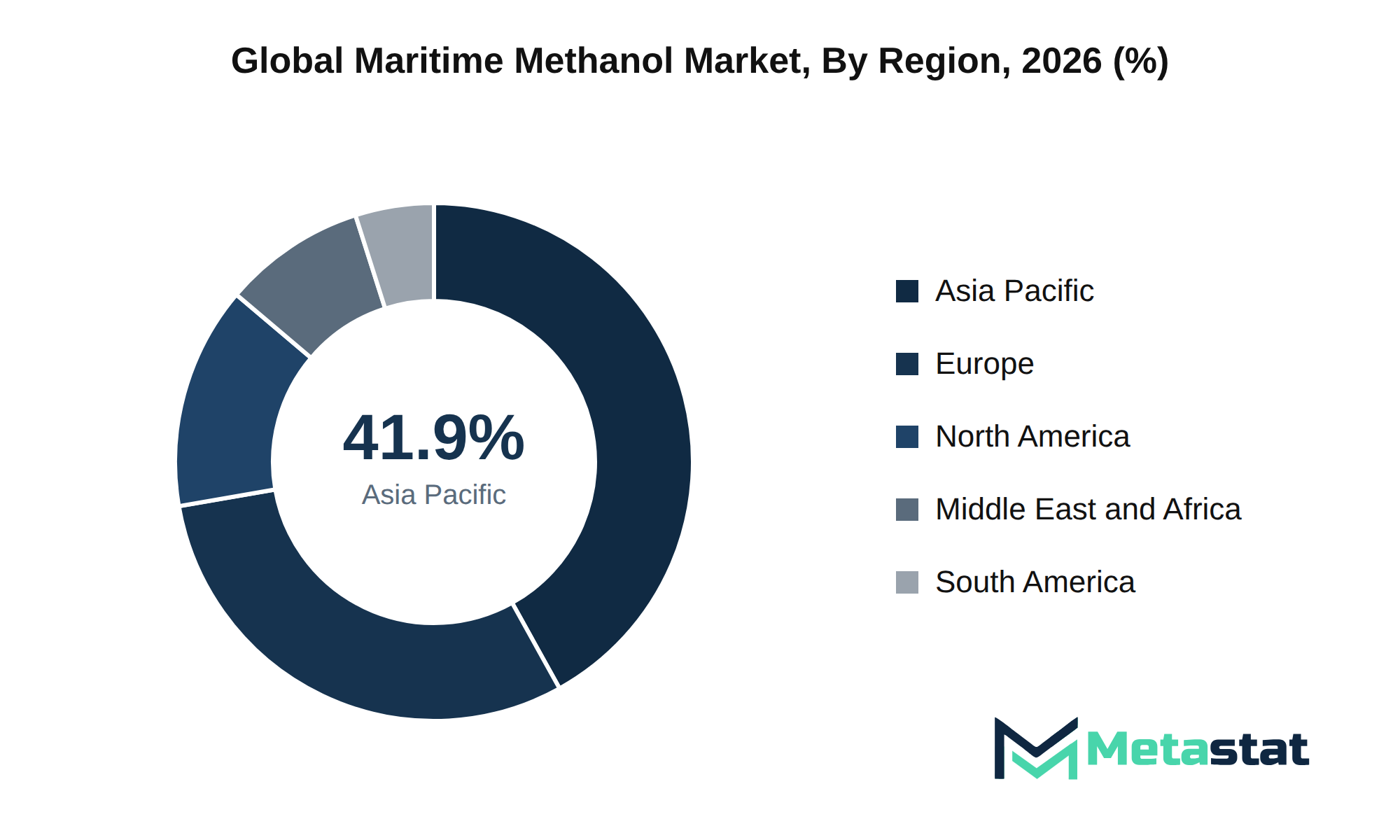
Asia-Pacific represents a share of the global Maritime Methanol market, accounting for 41.9% in 2025. The region benefits from robust demand driven by heightened industrial activity and a focus on cleaner energy sources. Countries including China, Japan, and India exhibit strong adoption rates for alternative fuels, supported by national policies encouraging the transition to low-carbon solutions. Local infrastructure modernization efforts enhance market growth, facilitating the transition to methanol because a marine fuel.
In China, the government promotes sustainable practices and has invested in expanding methanol production facilities. Japan's commitment to reducing greenhouse gas emissions creates a favorable environment for Blue / Low-Carbon Methanol adoption. India's maritime sector experiences incremental growth, with several stakeholders recognizing the benefits of methanol-based fuels. South Korea's maritime industry advances technology and supports the development of methanol-powered vessels.
Emerging market front-runners, including Southeast Asia, identify underpenetrated territories with potential for growth in Maritime Methanol consumption. The region's diverse shipping activities create a demand for cleaner fuels, aligning with global sustainability goals. Local suppliers and manufacturers are stepping up to meet this demand, establishing procurement dynamics tailored to regional needs. The combination of domestic market participants and foreign direct investment flows creates a competitive landscape ripe for innovation and expansion.
With increasing geopolitical fragmentation influencing cross-border trade corridors, the Maritime Methanol market in Asia-Pacific is expected to benefit from localized manufacturing densities and nearshoring initiatives. These factors, along with strategic entry barriers, guide foreign players towards capitalizing on the region's opportunities. Overall, the developments in Asia-Pacific contribute significantly to the growth trajectory of the Maritime Methanol market through 2033.
Growth within the Maritime Methanol market in South America reflects a strong focus on cleaner fuels, driven by increasing environmental regulations and the need for sustainable shipping solutions. Brazil and Argentina lead the region, demonstrating commitment to transitioning towards lower carbon emissions, which supports the adoption of methanol because a marine fuel. The existing infrastructure in these countries accommodates the introduction of methanol technology, although modernization remains necessary to fully capitalize on this shift.
Investment in local production facilities and supply chain enhancements significantly influences market dynamics. Brazil's extensive maritime industry, combined with Argentina's growing push towards renewable energy, creates an environment ripe for the adoption of methanol-based solutions. This evolving situation positions the market effectively against traditional fossil fuels while meeting international shipping standards.
Cross-border trade corridors within South America enhance the potential for Maritime Methanol adoption. Strategic partnerships and collaborations among regional players, including local suppliers and international firms, create opportunities for growth. The anticipated rise in demand for methanol fuel across various vessel types further strengthens the market's foundation for future expansion.
The Maritime Methanol market in the Middle East and Africa represents a developing sector with significant growth potential. The region's share of the global market indicates notable interest in alternative fuel sources. Countries including Saudi Arabia and the UAE invest heavily in low-carbon technologies, driven by environmental goals and regulatory frameworks promoting sustainable practices.
In South Africa, the demand for Maritime Methanol aligns with broader efforts to enhance energy security and reduce carbon emissions. The potential for localized manufacturing and regional supply chains supports the market. Initiatives in infrastructure modernization focus on integrating low-carbon alternatives into maritime operations, strengthening the operational capacity of local players.
Emerging players in the market are positioned to capitalize on the increasing emphasis on sustainability. The ongoing development of domestic production capabilities and the establishment of cross-border trade corridors strengthen the supply chain. Geopolitical considerations further influence market dynamics, encouraging investments in localized solutions and increasing competition among regional vendors, which enhances market resilience.
The competitive landscape features both established and new entrants, contributing to an environment that promotes innovation and efficiency. Regional resource availability influences operational strategies, while cultural nuances shape B2B buying behaviors, creating unique dynamics in the procurement process. These factors establish a solid foundation for growth within the Maritime Methanol market in the Middle East and Africa, reinforcing long-term demand and expanding the addressable market.
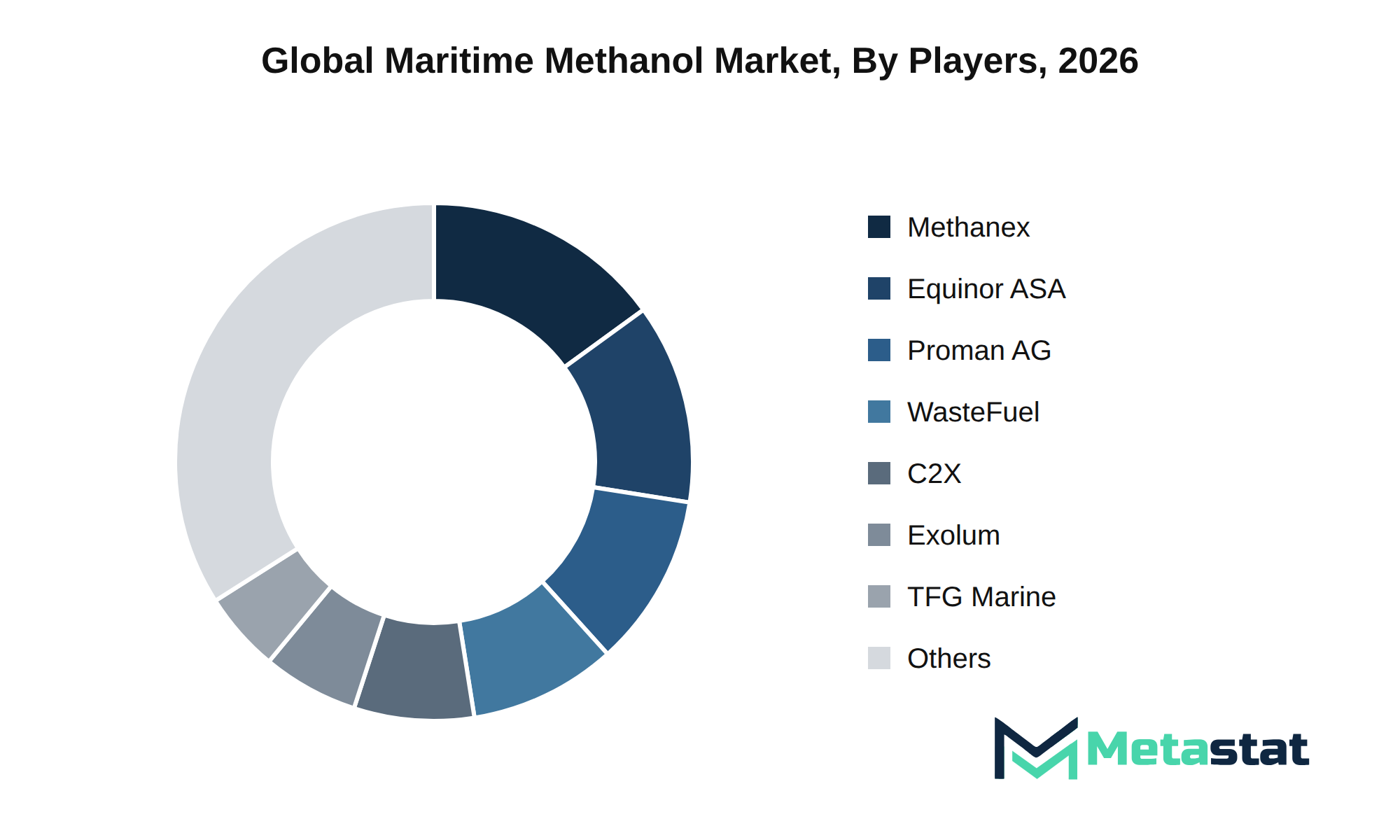
The competitive landscape of the Maritime Methanol market reflects a diverse array of strategies among key players. Companies including Methanex Corporation, Proman AG, and Equinor ASA engage in strategic consolidation and partnerships to enhance their market position. These alliances focus on research and development pipelines and proprietary technology to create differentiated products that meet evolving customer demands.
Firms like European Energy A/S and WasteFuel Inc. leverage their intellectual property portfolios to create barriers to entry, strengthening their competitive foothold. This focus on technological defensibility, coupled with effective customer retention strategies and brand equity dynamics, significantly shapes the market. The market continues to evolve, influenced by these strategies and the constant threat of new entrants disrupting established participants.
Market size is forecast to rise from USD 1,612.7 million in 2025 to over USD 4,442.8 million by 2033. The base case reflects a compound annual growth rate (CAGR) of 13.5%. Bull case scenarios suggest accelerated growth driven by favorable regulatory frameworks and increased investments in sustainable maritime practices, leading to higher adoption rates of methanol because a marine fuel. Conversely, the bear case anticipates potential challenges including fluctuating crude oil prices and slower-than-expected technological advancements, which could hinder market expansion.
Macroeconomic factors, including global supply chain shifts and geopolitical realignments, significantly influence the maritime methanol market. Rising demand from various maritime sectors, driven by stringent environmental regulations, increases the need for low-carbon and green alternatives. Regulatory timelines for compliance and enforcement of emissions standards create urgency among firms to integrate next-generation technologies and enhance R&D capabilities. Strategic capital allocations toward infrastructure commitments improve operational efficiencies and widen market access.
Emerging white-space opportunities in the market present avenues for growth, particularly in segments like blue and bio-methanol. These segments benefit from increasing consumer and corporate emphasis on sustainability. Addressing unmet enterprise needs in these areas increases competitive advantages and drives innovation. Executive-level strategic imperatives focus on developing defensibility roadmaps that align with evolving market dynamics and consumer preferences, ensuring sustained growth and resilience within the market.
The report strategically identifies and profiles the key market players and analyses their core competencies in each sub-segment of the Maritime Methanol market.
Report Attributes | Details |
Study Period | 2021-2033 |
Base Year | 2025 |
Estimated Year | 2026 |
Forecast Period | 2026-2033 |
Historical Period | 2021-2025 |
Growth Rate | CAGR 13.5% from 2026 to 2033 |
Revenue Unit | USD million |
Segmentation | By Type, Vessel Type, and Region |
By Region | North America (By Type, Vessel Type, and Country)
|
Europe (By Type, Vessel Type, and Country)
| |
Asia Pacific (By Type, Vessel Type, and Country)
| |
South America (By Type, Vessel Type, and Country)
| |
Middle East and Africa (By Type, Vessel Type, and Country)
|
Find answers to common questions about this report
The Maritime Methanol market size was valued at USD 1,612.7 million in 2025, according to the Metastat Insights study.
The Maritime Methanol market is projected to grow at a CAGR of 13.5% during the forecast period from 2026 to 2033.
The North America Maritime Methanol market size is estimated to reach USD 574.5 million by 2033.
The Conventional Fossil-Based Methanol segment leads the Maritime Methanol market, with a projected value of USD 2,163.2 million by 2033. This segment's growth reflects a compound annual growth rate of 8.1% from 2026 to 2033.
The key drivers for the Maritime Methanol market include increasing emission limits imposed on maritime operations and the growing emphasis on sustainability. Stricter environmental regulations compel shipping companies to adopt cleaner fuel alternatives, while investment in low-carbon technologies and infrastructure enhances the viability of methanol because a fuel source.
Asia Pacific holds the dominant share of the Maritime Methanol market, accounting for 41.9% in 2025. This region's substantial share reflects its leading position compared to North America, Europe, South America, and the Middle East and Africa.
High capital investment requirements and escalating operational costs significantly restrain the Maritime Methanol market's growth. Smaller enterprises face barriers due to initial costs for production facilities and infrastructure, while rising raw material prices and compliance expenses further limit competitiveness and profitability for all market participants.
Increasing emission limits imposed on maritime operations drive the adoption of methanol because a cleaner fuel alternative. Investment in low-carbon technologies and infrastructure enhances the transition, while financial incentives for cleaner energy sources support this shift. The emphasis on sustainability aligns operations with global environmental goals, promoting growth in the Maritime Methanol market.
The Maritime Methanol market is estimated to reach a valuation of USD 4,442.8 million by 2033.
Key players in the Maritime Methanol market include Methanex Corporation, Proman AG, Equinor ASA, European Energy A/S, WasteFuel Inc., C2X Ltd., and SunGas Renewables Inc.
The analysts below cover Automotive and Transportation research at Metastat Insights.
LEAD ANALYST
Utkarsh Khirodkar is a Lead Market Research Analyst at MetaStat Insight, specializing in market intelligence, technology sector assessments, and competitive strategy.

ENERGY & INFRASTRUCTURE INDUSTRY CONSULTANT
Automotive and Transportation · Electronics and Semiconductor · Energy and Power · Machinery & Equipment
Saurabh Vasant Ganvir consults for Energy & Infrastructure Industry at MetaStat Insight, specializing in renewable energy, solar EPC, and electric vehicle (EV) infrastructure markets.
Assessing 200mm wafer transition schedules and substrate supply bottlenecks requires precise technical intelligence. MetaStat Insight supplied an actionable breakdown comparing planar and trench MOSFET architectures across automotive and industrial drive markets. The regional capacity estimates for Asia-Pacific foundries helped clarify lead-time uncertainties during our strategic planning session. When we needed additional clarification on high-purity raw material sourcing, their analyst team responded with helpful context within twenty-four hours.
Tracking maintenance cycle demand for secondary flight display units and terrain collision avoidance systems across regional jet fleets involves complex aftermarket dynamics. MetaStat Insight provided practical analysis separating airline retrofit programs from OEM forward-fit production schedules in North America and Southeast Asia. The supplier matrix highlighted component obsolescence timelines without resorting to vague generalizations. The dataset served as a dependable reference during our annual program review meetings.
Evaluating secondary resin quality across post-consumer packaging streams requires reliable technical segmentation. MetaStat Insight delivered an objective assessment that distinguished between extrusion-grade flake pricing and optical sorting throughput limitations across Western Europe. The competitive positioning breakdown for licensed depolymerization technology providers answered several questions during our feedstock feasibility audit. Their team clarified regional trade restrictions on mixed plastic scrap quickly when our team submitted follow-up requests.
Explore related market intelligence reports worth reading alongside this one.
Starting from
$2950