
LEAD ANALYST
Utkarsh Khirodkar is a Lead Market Research Analyst at MetaStat Insight, specializing in market intelligence, technology sector assessments, and competitive strategy.

Global Metals and Minerals Testing, Inspection and Certification (TIC) Market Size, Share, By Service Type (Testing Services, Inspection Services and Certification Services), By Sourcing Type (In-house and Outsourced), By Commodity Type (Precious Metals & Platinum Group Metals, Ferrous Ores, Concentrates & Ferroalloys, Non-Ferrous Base Metals & Ores (Copper, Lead, Zinc, Nickel, Cobalt, Tin), Critical Minerals & Rare Earths (Lithium, Graphite, REEs, Tantalum, Niobium, Tungsten), Coal, Coke & Other Solid Energy Minerals, Industrial Minerals & Aggregates, Fertilizer Minerals, Steel & Semi-Finished/Finished Metal Products, Scrap, Recycled Metals & E-Scrap and Others (Uranium, Gemstones and Specialty Mineral Materials), Industry Analysis, Growth, Trends, and Forecast, 2026-2033
Report ID
MSI-5004
Published
August, 2026
Pages
265 Pages
Format
Historical
Base year
Forecast
Forecast period
Report Details
Choose Your License
Global Metals and Minerals Testing, Inspection and Certification (TIC) Market
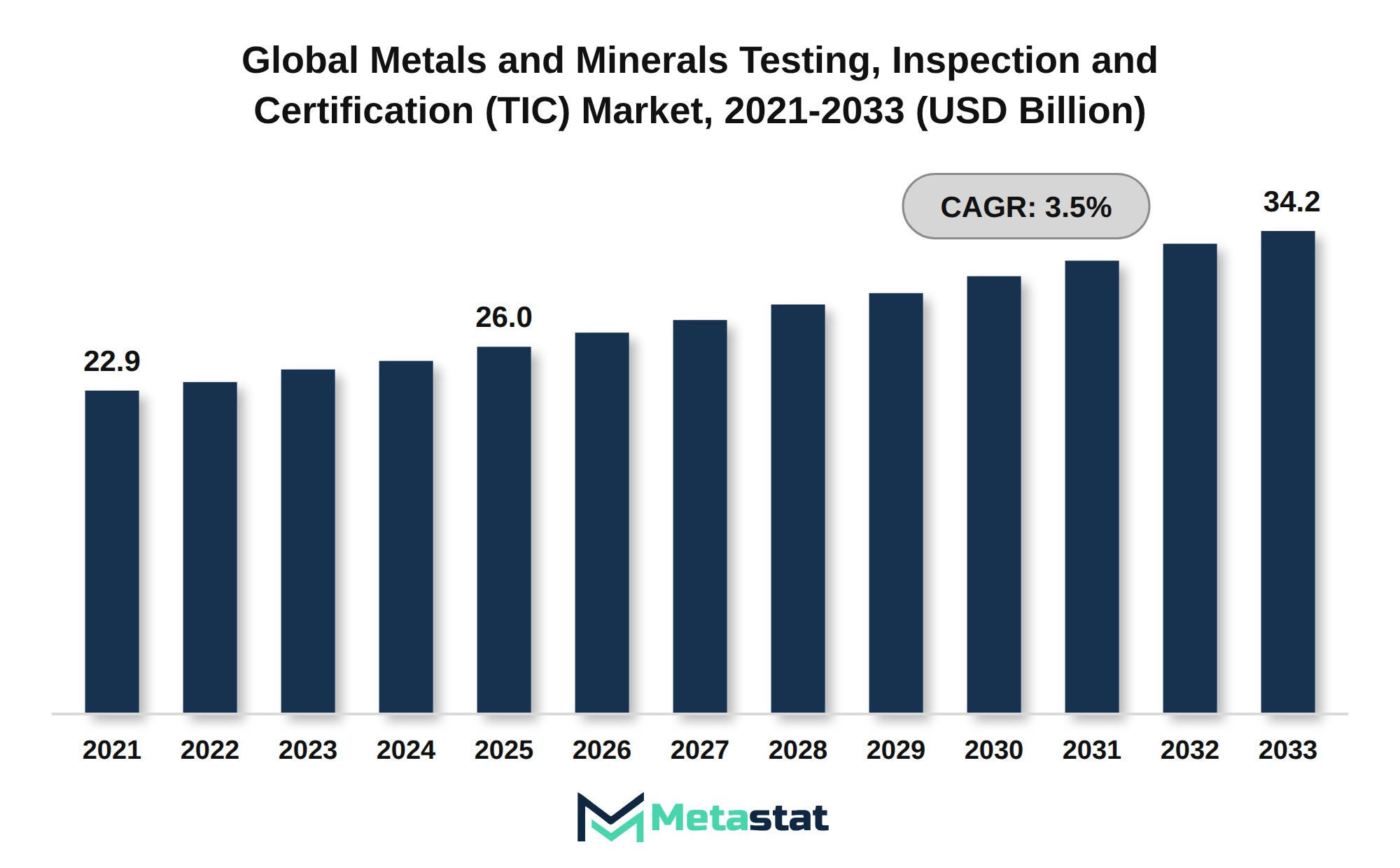
The global Metals and Minerals Testing, Inspection and Certification (TIC) market was valued at USD 26 billion in 2025 and is projected to reach USD 34.2 billion by 2033, growing at a CAGR of 3.5% over the forecast period.
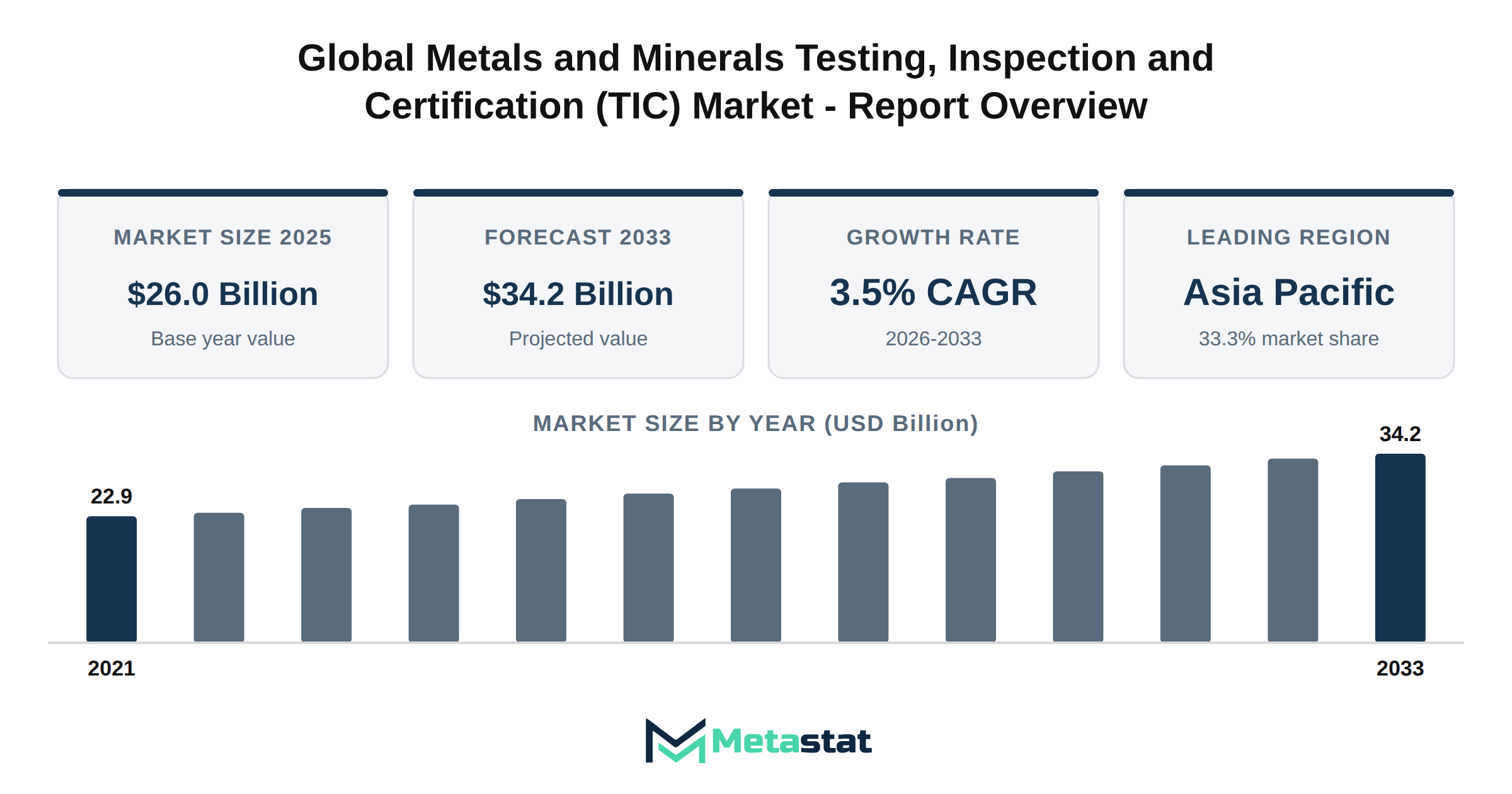
The Metals and Minerals Testing, Inspection and Certification (TIC) market is projected to grow from USD 26 billion in 2025 to USD 34.2 billion by 2033, reflecting a compound annual growth rate (CAGR) of 3.5%. Historical data shows the market was valued at USD 22.9 billion in 2021, increasing to USD 25 billion in 2024 and reaching USD 26 billion in 2025.
Growth in the market is driven by rising demand for testing services, inspection services, and certification services across various industries. Testing services are expected to grow from USD 12.5 billion in 2026 to USD 16.5 billion in 2033, representing a CAGR of 4%. Inspection services will reach USD 11.6 billion by 2033, with a CAGR of 2.8%, while certification services will contribute significantly to the overall market value.
Increasing emphasis on responsible sourcing and ESG verification reshapes the competitive landscape. Companies prioritize sustainable practices and compliance with environmental regulations, which drives demand for TIC services. The expansion of critical minerals testing capacity aligns with the global push towards renewable energy sources and technological advancements.
Laboratory automation and turnaround optimization play crucial roles in enhancing operational efficiency within the market. Companies invest in digital inspection and e-certification adoption, enabling faster and more accurate reporting. This shift towards automation improves service delivery and enhances the overall customer experience.
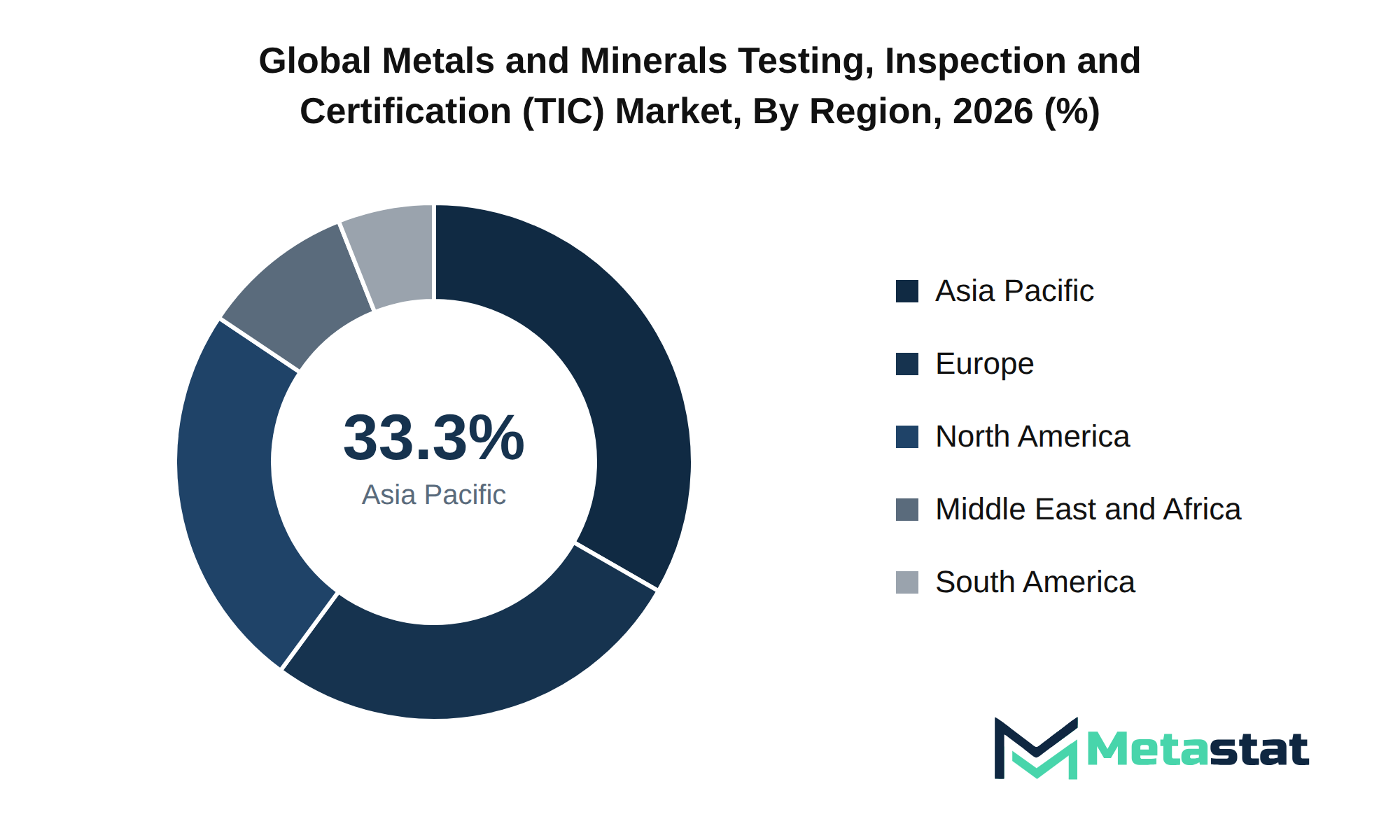
North America, Europe, and Asia Pacific represent significant shares of the market, with Asia Pacific holding the largest share at 33.3%. The region's extensive industrial base and growing investments in mining and minerals drive demand for TIC services. North America and Europe follow, accounting for 24.3% and 26.8% of the market, respectively, reflecting established regulatory frameworks and a focus on quality assurance.
Mine-site laboratory outsourcing models have gained traction within the Metals and Minerals Testing, Inspection and Certification (TIC) market. This shift arises from the need for operational efficiency and cost reduction, allowing organizations to focus on core competencies while leveraging specialized laboratory services. The outsourcing trend enhances scalability and improves the capacity to meet fluctuating demand in various sectors, including mining and minerals processing.
Accreditation and assay method benchmarking play a critical role in ensuring the integrity and reliability of testing results. Companies within the market face increasing pressure to comply with stringent regulatory standards and industry best practices. Adopting robust accreditation processes enhances credibility and builds trust among stakeholders, ultimately leading to better market positioning and client retention.
Laboratory automation and turnaround optimization are essential components contributing to increased efficiency in the TIC market. Implementing automated systems reduces human error, shortens processing times, and enhances data accuracy. These advancements support higher throughput and improved service delivery, meeting the growing expectations of clients across various industries.
Digital inspection and e-certification adoption reflect a broader trend towards digitization in the TIC market. These technologies facilitate real-time data access, streamline reporting processes, and enhance transparency between clients and service providers. The trend aligns with the increasing demand for efficiency and speed in certification processes, ultimately benefiting both parties involved.
Critical minerals testing capacity expansion has emerged due to a strategic focus within the market. With the rising demand for electric vehicle batteries and renewable energy technologies, testing services for critical minerals including lithium and cobalt have become increasingly vital. This expansion positions companies to capitalize on growth opportunities in the green energy sector.
Responsible sourcing and ESG verification have become essential within the Metals and Minerals Testing, Inspection and Certification (TIC) market. Stakeholders increasingly prioritize sustainability and ethical practices, driving companies to implement stringent sourcing protocols. This focus enhances brand reputation and meets the demands of environmentally conscious consumers.
TIC pricing and contracting models continue to evolve in response to changing market dynamics. Organizations are exploring flexible pricing structures to accommodate varying service needs and project scopes. This adaptability strengthens long-term partnerships and supports consistent revenue streams in a competitive landscape.
Laboratory network expansion and M&A strategies significantly influence the TIC market. Companies actively pursue mergers and acquisitions to enhance service offerings, increase market reach, and achieve economies of scale. Such strategies enable businesses to adapt to market fragmentation and enhance their competitive edge.
Regulatory compliance, standards, and geopolitical risk frameworks remain critical considerations for organizations operating in the TIC market. Companies navigate complex compliance landscapes to ensure adherence to local and international regulations. This vigilance mitigates potential disruptions and enhances operational resilience.
Disruption in the market, driven by technological advancements and evolving consumer demands, necessitates a proactive approach to R&D trajectories. Companies focusing on next-gen innovation enhance their product offerings and service capabilities, positioning themselves favorably for future growth.
Sustainable transformation, decarbonization, and circular economy dynamics shape the strategic outlook for the Metals and Minerals Testing, Inspection and Certification market. Organizations embracing sustainability initiatives differentiate themselves and attract environmentally conscious clients, ultimately contributing to long-term profitability.
The supply chain landscape and logistics architecture significantly impact the TIC market's operational framework. Companies optimize their supply chains to enhance responsiveness and efficiency in service delivery. This optimization aligns with the overall goal of maintaining competitive advantages and meeting client expectations.
Market fragmentation, M&A dynamics, and the value chain influence competitive positioning within the TIC market. Companies that effectively manage their procurement strategies and customer journey dynamics enhance their market presence. Capital allocation and infrastructure investments remain key drivers for long-term success, particularly in the face of macroeconomic headwinds and inflationary pressures.
Currency volatility presents ongoing challenges for organizations in the TIC market. Companies implement strategies to mitigate risks associated with fluctuating exchange rates, ensuring financial stability and operational continuity. This focus on financial resilience supports sustained growth and adaptability in an evolving market environment.
The future strategic outlook for the Metals and Minerals Testing, Inspection and Certification market emphasizes the importance of corporate imperatives and high-value recommendations. Companies prioritizing strategic investments and aligning their operations with market trends are better positioned to navigate uncertainties and capitalize on emerging opportunities.
Increased capital investment significantly influences the Metals and Minerals Testing, Inspection and Certification (TIC) market. Favorable economic conditions, including GDP growth and low interest rates, encourage businesses to allocate funds into testing, inspection, and certification services. This investment targets sectors including mining, construction, and manufacturing, where safety and compliance standards require regular testing and certification.
Venture funding has become vital for startups and established firms focusing on innovative testing technologies. This trend leads to greater efficiency and productivity across operations, enhancing the value proposition for end-users. Integrating advanced digital technologies enables companies to streamline processes and reduce costs associated with traditional testing methods.
The growth in capital investment correlates with rising demand for effective quality assurance in the industry. Infrastructure development projects expand globally, and the need for comprehensive TIC services escalates. This demand drives new opportunities for companies operating in the market, presenting pathways for revenue growth and increasing market penetration through enhanced service offerings.
The integration of digital technologies into the Metals and Minerals Testing, Inspection and Certification (TIC) market drives significant improvements in operational efficiency and service delivery. Organizations increasingly adopt automation, artificial intelligence, and advanced software solutions, enabling faster and more accurate testing, inspection, and certification processes. This transformation lowers operational costs while enhancing productivity, allowing firms to respond swiftly to market demands.
Technological integration provides opportunities for resource optimization and process streamlining, which directly influences competitiveness. By digitizing legacy systems and implementing innovative solutions, companies within the TIC market achieve substantial gains in accuracy, reliability, and compliance with industry standards. Enhanced data analytics capabilities further support better decision-making and risk management, ensuring that organizations maintain a robust position in the evolving market.
Increased investment in digital transformation initiatives aligns with broader trends within the TIC market, where firms prioritize efficiency and cost-effectiveness. The positive impact of these technologies is evident in improved turnaround times and service quality, capturing the attention of various sectors reliant on testing and certification services. Consequently, this digital shift significantly influences growth prospects and overall market adoption.
Regulatory compliance presents significant operational constraints within the Metals and Minerals Testing, Inspection and Certification (TIC) market. Stringent regulations require firms to invest heavily in compliance-related activities, which raises operational costs. These factors create barriers for smaller firms that struggle to meet the evolving standards while competing with larger, well-established players in the market.
Ongoing geopolitical instability contributes to uncertainty in regulatory environments. Firms face challenges in aligning their operations with varying regulations across different regions, which complicates the compliance process and increases the risk of legal repercussions. This fragmentation discourages investment in new technologies and services, further restricting growth opportunities in the market.
Resource scarcity adds another layer of complexity, arising from limited access to critical minerals needed for testing and certification processes. This scarcity drives up procurement costs, which ultimately impacts service pricing. Inflationary pressures exacerbate financial constraints, limiting firms' abilities to invest in necessary infrastructures, including testing facilities and advanced technologies.
Overall, these regulatory compliance hurdles and economic pressures hinder market expansion and create challenges for firms aiming to innovate and remain competitive in the Metals and Minerals Testing, Inspection and Certification (TIC) market.
Geopolitical fragmentation contributes to instability within the Metals and Minerals Testing, Inspection and Certification (TIC) market. Trade deficits and tariff friction disrupt established supply routes, leading to increased costs and delays in the delivery of essential materials and services. These disruptions affect various industries reliant on accurate testing and certification, heightening the demand for reliable service providers capable of navigating these complexities.
Technological disruptions create additional challenges, with rapid advancements in testing methodologies requiring continuous integration and adaptation. Companies face pressures related to compliance overhead and evolving legal liabilities, complicating operational procedures and increasing costs. Adhering to tightening global regulatory standards affects smaller players disproportionately, limiting their competitiveness in the market.
Rising input costs stemming from fluctuating feedstock and component prices compress profit margins for service providers. Workforce skill gaps emerge because a critical challenge, with a growing need for trained personnel capable of operating advanced technologies within testing, inspection, and certification processes. Talent retention pressures complicate staffing, because companies compete for skilled professionals in a tightening labor market.
Environmental lifecycle footprints and sustainability demands shape industry practices, pushing companies toward decarbonization mandates and eco-friendly initiatives. These requirements introduce retrofitting barriers and implementation bottlenecks, challenging firms to balance compliance with cost-effectiveness while attempting to innovate within the Metals and Minerals Testing, Inspection and Certification (TIC) market.
Intellectual property protection deficits and cybersecurity risks expose companies to potential data vulnerabilities, increasing operational risks. Changing downstream demands and market saturation contribute to heightened competition, compelling firms to distinguish their offerings amid the pressures of substitution vectors. This competitive landscape influences growth strategies within the market.
Regional demands for enhanced testing, inspection, and certification services in the Metals and Minerals Testing, Inspection and Certification (TIC) market drive notable growth opportunities. Rapid industrialization, particularly in Asia Pacific, increases the need for stringent quality assurance and compliance measures. Countries including China and India invest heavily in infrastructure modernization, which further increases demand for TIC services. This investment trajectory improves operational efficiency and safety standards across various sectors, including mining and manufacturing, strengthening long-term demand for TIC solutions.
Geographical expansion across emerging markets presents additional opportunities for TIC providers. Increased mineral exploration and extraction activities in regions including South America and Africa create a pressing requirement for reliable testing and certification services. The growing focus on sustainable practices and eco-friendly compliance aligns with global trends, stimulating interest in TIC solutions that support environmental, social, and governance (ESG) imperatives, thereby widening the addressable base for TIC providers.
Technological disruptions and digital transformation reshaping the market landscape enhance operational efficiencies and customer engagement. Innovations in automation and data analytics streamline processes, enabling TIC companies to offer faster and more accurate results. Such advancements improve service delivery, which in turn influences customer satisfaction and retention, reinforcing the competitive position of TIC firms.
Strategic consolidation, through mergers and acquisitions, allows TIC players to diversify their product offerings and strengthen market positioning. This consolidation encourages cross-industry collaborations, where value-chain optimization becomes essential. Firms actively seek partnerships that enhance capabilities and expand service portfolios to meet evolving client demands, increasing investment across the value chain.
The growing trend of downstream market diversification further increases the TIC market. Clients increasingly require integrated solutions that encompass testing, inspection, and certification across various commodities. This diversification generates new revenue streams and strengthens long-term client relationships, enhancing overall market growth.
Supply chain localization efforts become critical amid global disruptions. Companies prioritize developing local testing and certification capabilities to mitigate risks associated with import dependencies. This strategic shift not only enhances operational resilience but aligns with sustainability goals, providing a competitive edge in the Metals and Minerals Testing, Inspection and Certification (TIC) market.
The Global Metals and Minerals Testing, Inspection and Certification (TIC) market is segmented based on Service Type, Sourcing Type, and Commodity Type.
Valued at USD 12.5 billion in 2026, the Testing Services segment is projected to reach USD 16.5 billion by 2033, at a CAGR of 4% during the forecast period. Demand in this segment arises from the need for accurate and reliable testing methodologies across various industries, particularly in mining, construction, and manufacturing. Industries increasingly require stringent quality control measures, driving the adoption of advanced testing services to meet regulatory and safety standards.
Technological maturation influences this segment. The introduction of next-generation testing methodologies, including automated and digital solutions, enhances the efficiency and accuracy of testing processes. Investment in evolving technologies supports the expansion of service capabilities, responding to complex material requirements and industry challenges.
Downstream application of testing services creates demand across diverse commodities, including precious metals, non-ferrous metals, and critical minerals. Compliance with international certifications and standards increases the necessity for robust testing services, reinforcing the segment's growth within the Metals and Minerals Testing, Inspection and Certification (TIC) market.
Cost structures are influenced by factors including technological advancements and raw material sourcing challenges. Pricing volatility in raw materials directly impacts operational margins for service providers. Despite these pressures, the segment exhibits resilience, attracting investment aimed at enhancing service quality and expanding market reach.
Strategic opportunity windows emerge owing to evolving regulatory frameworks, increasing the importance of compliance in testing services. The segment's growth trajectory aligns with the trends in the Metals and Minerals Testing, Inspection and Certification (TIC) market, highlighting the critical role of testing in maintaining industry standards and driving market expansion.
Demand for Inspection Services within the Metals and Minerals Testing, Inspection and Certification (TIC) market stems from heightened regulatory compliance requirements and the need for quality assurance across various industries. This segment supports sectors including mining, energy, and manufacturing, where rigorous adherence to standards ensures operational integrity and product safety. Inspection Services provide critical verification processes that enhance supply chain resilience, driving client trust and market credibility.
Technological advancements play a significant role in expanding the Inspection Services segment. Next-gen upgrades, including automation and enhanced data analytics, optimize inspection procedures, increasing efficiency and accuracy. The growing emphasis on sustainability fuels demand for services that ensure compliance with environmental regulations, positively influencing market dynamics. Inspection Services are expected to reach USD 11.6 billion by 2033, at a CAGR of 2.8% during the forecast period.
While consumption patterns evolve, industries exhibit an increasing preference for certified inspection services that guarantee product quality and safety. Regulatory frameworks around environmental impact and safety standards compel organizations to invest in reliable inspection processes. The market experiences consistent growth driven by these factors, creating strategic opportunity windows for service providers in aerospace, automotive, and construction sectors.
Cost structures within the Inspection Services segment reflect the imperative for highly trained personnel and advanced technology. Pricing volatility linked to raw material sourcing and technological improvements impacts operational margins and competitive positioning. Continuous pressure to improve service efficiency and maintain cost-effectiveness incentivizes players within the market to innovate and adapt to changing market conditions.
Overall, the Inspection Services segment contributes significantly to the overall growth trajectory of the Metals and Minerals Testing, Inspection and Certification (TIC) market, enhancing the sector's robustness and operational efficiency. Investment in this segment remains critical due to companies seeking to align with best practice standards and client expectations.
Certification within the Metals and Minerals Testing, Inspection and Certification (TIC) market experiences heightened demand driven by regulatory compliance and evolving industry standards. Companies increasingly seek certification to ensure product quality and safety, aligning with stringent regulations across various industries, including construction, automotive, and energy. This segment is projected to reach USD 6.1 billion by 2033, reflecting a growing emphasis on meeting international and local standards.
Increasing globalization necessitates that businesses adhere to diverse certification requirements, influencing operational practices. While industries adopt advanced technologies, the need for updated certification processes becomes critical. Technological maturation enables the development of specialized certifications, allowing companies to differentiate themselves in competitive markets. Certification enhances the credibility of products, building consumer trust and expanding market reach.
Downstream applications of certification services are crucial for sectors including mining, where compliance with environmental and safety standards remains a priority. The rising focus on sustainability and responsible sourcing further drives demand for certification services, because organizations prioritize environmentally friendly practices. This shift towards sustainability positions the certification segment for significant growth, aligning with global trends toward greater corporate responsibility.
Strategic opportunity windows exist for companies providing innovative certification solutions tailored to specific industry needs. Investing in next-generation certification technologies improves efficiency and reduces costs associated with compliance processes. This investment supports the continuous evolution of the certification landscape, ensuring that services remain relevant and effective in addressing emerging challenges within the market.
In-house sourcing within the Metals and Minerals Testing, Inspection and Certification (TIC) market reflects a strategic choice by companies prioritizing control over testing processes and results. This approach enhances operational efficiency and aligns with internal quality assurance frameworks, allowing firms to maintain high standards in compliance and regulatory adherence. Industries that heavily rely on in-house capabilities include mining, metals processing, and manufacturing, where consistent quality and traceability play crucial roles in meeting both client and regulatory demands.
Technological maturation drives interest in in-house solutions, particularly driven by advancements in analytical techniques and automation tools that enhance testing precision and speed. The implementation of next-generation upgrades facilitates improved data management and real-time reporting, allowing companies to respond swiftly to quality issues and process adjustments. Such technological evolution provides a competitive edge, enabling organizations to optimize production and minimize downtime.
Regulatory compliance standards significantly influence in-house testing protocols, compelling firms to invest in advanced equipment and skilled personnel. By maintaining their own testing facilities, companies mitigate risks associated with outsourcing, including potential lapses in compliance and variability in service quality. This strategic choice aligns with increased scrutiny from regulatory bodies, ensuring adherence to industry-specific certifications and standards.
Cost structures and pricing volatility remain critical considerations for firms operating within this segment. In-house facilities entail substantial initial investments; however, the long-term benefits of enhanced quality control and reduced dependency on third-party services often justify these expenditures. Maintaining in-house capabilities affords companies greater flexibility in resource allocation and operational adjustments, allowing for a more agile response to market fluctuations.
Supply chain resilience emerges because a significant advantage of in-house sourcing. Organizations equipped with their own testing facilities quickly adapt to changes in raw material sourcing and manage potential disruptions more effectively. This capability reduces reliance on external suppliers, thereby enhancing overall service continuity and stability. Overall, in-house sourcing within the Metals and Minerals Testing, Inspection and Certification (TIC) market presents strategic opportunities for firms willing to invest in technological advancements and robust compliance frameworks.
Outsourcing testing, inspection, and certification processes within the Metals and Minerals Testing, Inspection and Certification (TIC) market reflects a strategic approach to enhance operational efficiency and reduce costs. Organizations increasingly recognize the advantages of outsourcing to specialized service providers, enabling them to focus on core business activities while accessing advanced expertise and technologies. This trend is supporting growth in service adoption across multiple industries, including mining, energy, and construction, where regulatory compliance and quality assurance play critical roles.
Technological advancements drive the need for next-generation upgrades in outsourced services. Adoption of innovative solutions, including automated testing systems and data analytics, enhances service accuracy and speed. These developments align with evolving industry standards and consumer expectations, positioning outsourcing because a viable option for companies aiming to maintain competitiveness in the market.
End-use dynamics exhibit a significant shift towards sustainability and environmentally responsible practices within the Metals and Minerals Testing, Inspection and Certification (TIC) market. Increased regulatory scrutiny surrounding environmental impacts necessitates rigorous testing and certification, further propelling the demand for outsourced services. Companies leveraging these services demonstrate compliance with standards and enhance their reputational standing.
Cost structures associated with outsourcing present both challenges and opportunities. While initial investment in third-party services appears high, long-term savings from reduced operational overheads and improved efficiency often offset those expenses. Pricing volatility in raw materials and fluctuating service costs impacts margins, compelling organizations to evaluate their sourcing strategies and optimize supplier relationships to mitigate risks.
Strategic opportunity windows emerge because firms seek to enhance their service portfolios and expand into new markets. Service providers that focus on developing tailored solutions for specific commodities or regulatory requirements position themselves favorably. This focus on specialization drives revenue growth and improves market penetration in the competitive landscape of the Metals and Minerals Testing, Inspection and Certification (TIC) market.
Growing interest in the Precious Metals & Platinum Group Metals sub-segment stimulates demand for testing, inspection, and certification services within the Metals and Minerals Testing, Inspection and Certification (TIC) market. This interest arises from the increasing applications of precious metals in various industries, including electronics, healthcare, and renewable energy, which require stringent quality assurance measures. The adoption of advanced technologies for extraction and processing enhances the need for reliable TIC services, ensuring compliance with regulatory standards that govern safety and quality.
Segment expansion rallies around the rising prices of precious metals, attracting investment and encouraging exploration activities in new mining operations. These dynamics lead to heightened demand for thorough inspections and certifications to validate the quality and authenticity of mined materials. End-use dynamics reflect a shift towards sustainability and ethical sourcing, prompting manufacturers to seek TIC services that align with corporate social responsibility objectives.
Pricing volatility significantly influences operational strategies for businesses involved in the sub-segment. Fluctuations in metal prices impact profit margins and influence sourcing strategies, compelling companies to enhance supply chain resilience. Regulatory compliance standards necessitate regular audits and certifications, reinforcing the importance of TIC services in maintaining market access and consumer trust.
Strategic opportunity windows arise from technological advancements in testing methodologies, allowing for more efficient and accurate assessments. Companies continuously evaluate their processes and adopt next-generation upgrades to meet evolving market needs. This forward-looking approach positions stakeholders to leverage emerging trends and capitalize on growing demand for precious metals.
Growing demand for ferrous ores, concentrates, and ferroalloys stems from their critical applications in steel production and other industrial processes. Industries reliant on these materials, including automotive, construction, and manufacturing, drive significant consumption. Technological advancements in extraction and processing techniques enhance efficiency, enabling operators to meet increased production requirements while adhering to strict environmental standards.
Regulatory compliance influences operations within the steel industry, prompting a focus on sustainability and resource management. The introduction of stringent regulations increases the need for robust testing, inspection, and certification processes. This ensures that ferrous ores and their derivatives meet quality and environmental benchmarks, ultimately affecting supply chain dynamics and market competitiveness.
Pricing volatility poses challenges for stakeholders in the market. Fluctuations in raw material costs impact profitability, necessitating strategic pricing strategies to maintain margins. Companies involved in sourcing ferrous ores and ferroalloys face pressures to optimize their procurement processes, balancing cost with quality and availability.
Strategic opportunities arise from ongoing shifts in consumption patterns and technological maturation. The growing emphasis on recycling and the use of alternative materials creates opportunities for innovation. This evolution encourages investments in next-generation technologies and processes aimed at enhancing product offerings and operational resilience. The focus on these advancements supports the industry's adaptation to changing market demands.
Overall, the ferrous ores, concentrates, and ferroalloys segment remains integral to the Metals and Minerals Testing, Inspection and Certification (TIC) market, driven by demand from various industries, regulatory frameworks, and the pursuit of operational excellence.
Demand for Non-Ferrous Base Metals and Ores remains strong, driven by their critical roles in various industrial and technological applications. The automotive, electronics, and construction sectors heavily rely on metals including copper, lead, zinc, nickel, cobalt, and tin for product development and manufacturing processes. Increased usage of electric vehicles and renewable energy technologies fuels the need for these metals, particularly copper and cobalt, essential in batteries and electrical components.
Technological advancements in extraction and processing technologies enhance the efficiency and sustainability of sourcing non-ferrous metals. Innovations in recycling processes further improve supply, allowing companies to recover valuable materials while reducing waste. Such improvements position the segment for growth within the Metals and Minerals Testing, Inspection and Certification (TIC) market.
Regulatory compliance and environmental standards exert influence on the segment, prompting companies to prioritize responsible sourcing and sustainable practices. Adherence to stringent regulations impacts cost structures, requiring investment in testing and certification services to ensure compliance with evolving standards. The increasing demand for TIC services specifically tailored to non-ferrous metals enhances market opportunities for service providers.
Pricing volatility in the commodities market poses challenges for stakeholders, impacting margins and investment decisions. Fluctuating prices necessitate a strategic approach to sourcing and inventory management. Companies seek to mitigate risks associated with procurement. This dynamic environment highlights the importance of reliable TIC services that ensure quality assurance and compliance, ultimately supporting the long-term viability of the segment within the market.
Given the rising geopolitical tensions and trade policies, supply chain resilience emerges because a crucial consideration for companies operating in this segment. Diversifying sources and strengthening partnerships across regions contributes to stability in supply chains, reducing vulnerability to disruptions. Such strategies align with the growing emphasis on local sourcing and sustainable practices, shaping the future of the non-ferrous base metals and ores market.
Demand for Critical Minerals & Rare Earths, including Lithium, Graphite, REEs, Tantalum, Niobium, and Tungsten, has intensified due to the increasing adoption of electric vehicles (EVs), renewable energy technologies, and advanced electronics. Industries including automotive, energy, and telecommunication are expanding their reliance on these materials, driving the need for rigorous testing, inspection, and certification services to ensure quality and compliance with evolving regulatory standards. The market experiences significant growth catalysts from technological advancements that enhance extraction and processing efficiency.
End-use dynamics show a shift towards sustainable practices, compelling manufacturers to seek certification for responsible sourcing and environmental compliance. Strengthening relationships between suppliers and certification bodies promotes supply chain transparency and resilience. Pricing volatility remains a critical concern influenced by geopolitical factors and changing demand patterns, impacting margins and operational strategies across the sector.
Strategic opportunity windows arise from increasing environmental regulations and the urgency to transition to a circular economy, encouraging investments in recycling and sustainable practices. The market's evolution reflects a critical focus on innovation and product development, with emerging technologies continuously reshaping standards for testing and certification. Stakeholders actively seek to navigate challenges related to raw material sourcing, identifying disruptive alternatives and addressing substitution risks to maintain competitiveness in the Metals and Minerals Testing, Inspection and Certification (TIC) market.
Growing interest in renewable energy sources increases demand for Coal, Coke & Other Solid Energy Minerals within the Metals and Minerals Testing, Inspection and Certification (TIC) market. These minerals serve critical roles in energy production and industrial processes, leading to increased investments in testing and certification to ensure compliance with regulatory standards.
Technological advancements in extraction and processing contribute to the evolution of this sub-segment. Enhanced methods improve resource recovery and reduce environmental impacts, encouraging adoption among industry stakeholders. With regulatory frameworks evolving, robust inspection and certification processes ensure adherence to environmental standards, driving demand among producers and suppliers.
End-use dynamics illustrate a shift towards cleaner energy solutions, impacting the consumption of coal and coke. Demand shifts towards lower-emission products prompt manufacturers to seek certification for compliance with international standards. This trend highlights the significant role of testing and inspection services in maintaining market competitiveness and securing access to emerging markets.
Cost structures and pricing volatility present challenges within this sub-segment. Fluctuations in raw material prices influence overall operational costs, compelling companies to optimize their testing and certification processes. Strategic opportunities arise from investments in innovative technologies that enhance efficiency and reduce costs, positioning businesses favorably against competition.
Strategic opportunity windows emerge owing to companies navigating the changing context of energy production. Capital investment in advanced technologies supports the resilience of supply chains and mitigates risks associated with substitution and disruption. The evolving market context necessitates a proactive approach to testing, inspection, and certification, ensuring compliance and promoting sustainable growth in the sector.
Strengthening demand for industrial minerals and aggregates emerges from various sectors, including construction, manufacturing, and agriculture. Increased urbanization and infrastructure development projects drive the need for these materials, leading to greater testing, inspection, and certification (TIC) requirements. Regulations surrounding quality and safety standards significantly influence purchasing decisions, compelling companies to seek reliable TIC services.
Technological advancements enhance the precision and efficiency of testing methods, promoting market expansion. Innovative testing technologies, including automated systems and remote monitoring, support quicker turnaround times and improved accuracy in results. End-users, particularly in the construction sector, prioritize compliance with environmental regulations, contributing to the demand for certified products.
Pricing volatility in raw materials affects the overall cost structures for producers. Fluctuations in demand for industrial minerals and aggregates impact profitability, leading companies to focus on cost management strategies. Effective procurement practices and robust supplier relationships are essential for navigating price fluctuations, ensuring the smooth operation of projects in the Metals and Minerals Testing, Inspection and Certification (TIC) market.
Supply chain resilience represents a critical factor in maintaining consistent product availability. Disruptive events, including natural disasters or geopolitical tensions, significantly impact sourcing and logistics. Companies that invest in diversified sourcing strategies mitigate risks associated with supply chain vulnerabilities, allowing for more stable operations within the TIC market.
Strategic opportunities arise from increasing global demand for sustainable practices. Firms that prioritize environmentally friendly mining and processing techniques enhance their competitive position. Regulatory compliance standards increasingly emphasize sustainability, compelling players in the market to adapt their operations accordingly. Capital investment in green technologies boosts operational efficiency while aligning with evolving consumer preferences.
Growing agricultural activities drive demand for fertilizer minerals within the Metals and Minerals Testing, Inspection and Certification (TIC) market. The increasing focus on sustainable farming practices compels producers to seek reliable testing and certification services to ensure product quality and compliance with regulatory standards. End-users, including agricultural producers and fertilizer manufacturers, require assurance regarding the safety and efficacy of fertilizer minerals, leading to higher adoption rates of testing and inspection services.
Technological advancements in analytical methods enhance the accuracy and efficiency of testing services. Innovations in testing equipment and methodologies improve product evaluation, which reinforces the necessity for rigorous certification processes. This focus on technological maturation supports segment expansion within the market.
Regulatory compliance significantly impacts the fertilizer minerals segment, driven by strict guidelines that govern the use and quality of fertilizers. Compliance with these regulations acts because a catalyst for growth, compelling manufacturers to invest in testing and certification services to meet these standards. Such investments help mitigate risks associated with non-compliance, thereby protecting brand reputations and building consumer trust.
While agricultural practices evolve and consumer preferences shift towards organic and sustainably sourced products, the demand for high-quality fertilizer minerals continues to increase. The integration of testing and inspection services into supply chains enhances product integrity, which is crucial in maintaining competitive advantages in the market.
Interest in the Steel & Semi-Finished/Finished Metal Products segment stems from robust industrial activity across various sectors, including construction, automotive, and manufacturing. The demand for high-quality steel products directly correlates with the expansion of infrastructure projects and the automotive industry's recovery. Investment in advanced manufacturing technologies enhances production efficiency, driving the need for rigorous testing, inspection, and certification processes.
Regulatory compliance standards impose stringent requirements on the quality and safety of steel products. Achieving certifications ensures compliance and enhances market competitiveness. The market experiences shifts towards more sustainable production practices, resulting in the incorporation of recycled materials and eco-friendly processes. Consequently, testing and certification evolve to accommodate these changes, ensuring that new products meet industry standards and consumer expectations.
Pricing volatility remains a challenge in the steel sector, influenced by fluctuating raw material costs and geopolitical factors. Margin pressures from rising operational costs necessitate strategic investments in technology and process optimization. Enhanced supply chain resilience through robust sourcing strategies mitigates risks associated with raw material availability and transportation disruptions. Technological obsolescence poses a threat, compelling players to invest in next-generation upgrades and innovations to maintain competitiveness.
Strategic opportunity windows exist for companies focusing on niche markets within the steel sector, particularly in specialty steels and customized products. Continuous advancements in testing methodologies and inspection technologies support the evolution of the market. Capital investment outlook remains positive, driven by anticipated growth in demand for high-quality steel products and the need for compliance with evolving regulatory standards.
The Steel & Semi-Finished/Finished Metal Products segment significantly influences the Metals and Minerals Testing, Inspection and Certification (TIC) market. Continuous innovation, regulatory compliance, and strategic investments will shape the segment's future trajectory.
Increasing focus on sustainability drives interest in scrap, recycled metals, and e-scrap within the Metals and Minerals Testing, Inspection and Certification (TIC) market. Regulatory pressures emphasize environmentally friendly practices, compelling industries to manage waste efficiently and reduce their carbon footprint. Consequently, businesses actively seek reliable testing and certification services for recycled materials to ensure compliance with environmental standards.
Technological advancements facilitate higher recovery rates and better assessment of scrap materials. Innovations in sorting and processing technologies enhance the quality of recycled metals, leading to greater acceptance in various industries including construction and manufacturing. This evolution in product quality supports downstream applications, encouraging manufacturers to adopt recycled alternatives.
Shifting consumption patterns reflect a growing preference for sustainable materials. While consumers demand environmentally responsible products, manufacturers respond by incorporating recycled metals into their supply chains. This trend aligns with broader corporate social responsibility initiatives, reinforcing the importance of third-party verification of material quality and sustainability claims.
Pricing volatility in primary metal markets influences demand for scrap and recycled materials. Fluctuating prices prompt manufacturers to explore cost-effective alternatives, boosting the appeal of recycled content. Increased competition among players drives investments in technology and innovation to enhance processing capabilities and maintain profitability.
The ongoing transition towards a circular economy emphasizes the importance of supply chain resilience. Establishing reliable sources of scrap materials and improving logistics capabilities becomes essential for organizations aiming to maintain consistent production flows. Companies strategically position themselves to capitalize on the growing demand for recycled materials while addressing potential supply chain vulnerabilities.
The scrap, recycled metals, and e-scrap segment within the Metals and Minerals Testing, Inspection and Certification (TIC) market experiences growth due to regulatory compliance, technological advancements, evolving consumer preferences, and pricing dynamics. These factors create significant opportunities for industry players to enhance their offerings and adapt to the rapidly changing market.
Interest in uranium, gemstones, and specialty mineral materials drives growth within the Metals and Minerals Testing, Inspection and Certification (TIC) market. Regulatory compliance standards in various regions establish stringent requirements for testing and certification, especially concerning radioactive materials including uranium. This regulatory landscape necessitates rigorous testing protocols to ensure safety and adherence to international guidelines.
The increasing demand for gemstones and specialty minerals, driven by the jewelry and technology sectors, highlights the importance of reliable and accurate testing methods. Industries using these materials seek assurance of quality and authenticity, creating the need for professional certification services. Technological advancements in testing methodologies enhance the ability to assess the purity and properties of these materials effectively.
Economic factors, including pricing volatility, impact the sourcing strategies for these commodities. Fluctuations in market prices create challenges for producers who require consistent quality assurance. Maintaining supply chain resilience becomes critical, particularly for rare and high-value materials. Innovations in extraction and processing techniques introduce opportunities for enhanced product evolution, enabling suppliers to meet market needs more efficiently.
Investment in research and development within this sub-segment enhances competitiveness in the market. Strategic opportunities arise from partnerships between testing laboratories and mineral producers, encouraging collaboration for improved service delivery. The focus on certifications and compliance further strengthens market positioning, ensuring that stakeholders meet industry standards while capitalizing on growth prospects.
Based on geography, the Global Metals and Minerals Testing, Inspection and Certification (TIC) market is divided into North America, Europe, Asia-Pacific, South America, Middle East, and Africa.
The North America Metals and Minerals Testing, Inspection and Certification (TIC) market is set to expand at a CAGR of 3.5% within the forecast period, reaching a market size (TAM) of USD 7.8 billion by the end of 2033. Strong regulatory frameworks in the United States, Canada, and Mexico create a compliance-driven environment for testing and certification services. This landscape encourages companies to prioritize quality assurance and adhere to local standards, ensuring market growth.
Increased investment in infrastructure modernization enhances the capacity of local testing and certification facilities. These advancements support the rising demand for robust inspection and certification services across various commodities. The ongoing trend of nearshoring initiatives contributes to localized manufacturing densities, resulting in efficient supply chains and reduced lead times.
Domestic market participants, including SGS SA and Bureau Veritas Minerals, enhance competitive dynamics and drive innovation in the market. Strategic entry barriers and foreign direct investment (FDI) flows into the region promote the development of new testing methodologies and technologies.
Overall, the distinct characteristics of the North American market position it because a vital player in the global Metals and Minerals Testing, Inspection and Certification (TIC) market, influencing regional trends and shaping the future of the industry.
Europe accounts for 26.8% of the global Metals and Minerals Testing, Inspection and Certification (TIC) market in 2025. Countries including Germany, France, the UK, Italy, Spain, and Russia demonstrate strong demand for testing, inspection, and certification services. Increasing regulatory requirements and environmental mandates heighten the need for compliance and assurance within this sector, further driving growth.
The market benefits from established infrastructures and localized manufacturing densities, which facilitate efficient service delivery and operational effectiveness. European economies display robust investment in modernization and technological upgrades, enhancing service capabilities and attracting foreign direct investment (FDI) flows.
In particular, the testing services segment is projected to experience significant expansion, fueled by rising environmental and safety standards. The certification services sector ensures product quality and regulatory compliance among suppliers aiming for market entry. This landscape promotes a competitive environment where local compliance mandates influence procurement dynamics and operational strategies of domestic vendors.
Geopolitical factors contribute to the market dynamics, with regional trade corridors facilitating cross-border trade. However, ongoing geopolitical fragmentation impacts supply chain stability, compelling businesses to adapt their strategies. Firms operating within the market continually assess regional resource availability and energy grid resiliency, ensuring operational continuity despite external pressures.
The Asia-Pacific region represents a significant portion of the Metals and Minerals Testing, Inspection and Certification (TIC) market, accounting for 33.3% of the global share in 2025. The presence of major economies including China, Japan, and India drives this market's growth, supported by robust industrial activities and increasing investment in infrastructure modernization. Rapid urbanization and industrialization across Southeast Asia contribute to heightened demand for testing, inspection, and certification services.
Investment in renewable energy initiatives enhances demand for critical minerals and rare earth elements, particularly in nations like Australia and China. The expansion of mining operations in these countries strengthens the market, with companies focusing on compliance with local regulations and safety standards. Increasing emphasis on quality assurance and environmental sustainability continues to influence the procurement strategies of various sectors, including construction, manufacturing, and natural resources.
Regional supply chain dynamics reflect a trend toward localized manufacturing and procurement, which aligns with global shifts toward nearshoring. Countries within Asia-Pacific are enhancing their capabilities in metals and minerals testing, inspection, and certification services to cater to domestic and international markets. This transition supports competitive advantages for local players, enhancing their positions in the market.
Growing awareness of regulatory compliance and safety standards fuels investment in TIC services across the region. Domestic market participants, including SGS SA and Intertek Group plc, are expanding their geographical footprints by establishing partnerships and leveraging their expertise in diverse commodities. This strategy addresses local demand and enhances operational efficiencies throughout the supply chain.
Overall, the Asia-Pacific region's focus on infrastructure development, regulatory adherence, and regional resource availability positions it because a key player in the global Metals and Minerals Testing, Inspection and Certification (TIC) market. Continued advancements in technology and methodologies for testing and inspection are expected to drive future growth, ensuring that the region remains competitive in an evolving market.
South America represents a niche segment within the Metals and Minerals Testing, Inspection and Certification (TIC) market, accounting for a 6.00% share of the global market in 2025. Economic activities in Brazil and Argentina drive demand for testing, inspection, and certification services owing to increased investments in the mining sector and resource extraction. The region's rich mineral deposits, particularly in precious metals and non-ferrous base metals, enhance the attractiveness of TIC services.
Infrastructure modernization efforts in Brazil and Argentina facilitate improved efficiency in mining operations, thereby creating a conducive environment for TIC providers. The availability of local resources and the need for compliance with regulatory standards further encourage domestic players to enhance their service offerings. Brazil's extensive mining landscape supports a robust demand for inspection services, while Argentina's growth in lithium production positions it because a key player in the certification segment of the market.
Emerging market front-runners in South America leverage foreign direct investment flows to improve operational capabilities and expand service portfolios. Localized manufacturing densities contribute to an increased focus on compliance with geographic regulatory frameworks, impacting purchasing behaviors among regional players. The presence of domestic market participants, coupled with vendor consolidation trends, enhances competitive dynamics within the market.
The Metals and Minerals Testing, Inspection and Certification (TIC) market in the Middle East and Africa demonstrates unique dynamics driven by regional resource availability and growing infrastructure investments. Countries including Saudi Arabia, the UAE, and South Africa exhibit significant demand for testing and inspection services, spurred by ongoing economic diversification and industrial development initiatives. Local compliance mandates and regulatory frameworks support these trends, ensuring that companies adhere to international standards.
Investment in energy grid resiliency and modernization of local infrastructure enhances the operational capabilities of testing and inspection providers. The market, which accounts for 9.6% of the global share in 2025, presents opportunities for domestic market participants to consolidate their positions through strategic partnerships and localized procurement strategies. Emerging market front-runners benefit from geopolitical fragmentation, improving regional supply chain resiliency and cross-border trade corridors.
High-value replacement cycles for mining and industrial equipment drive incremental growth within the market. Companies operating in regions like South Africa leverage their resource-rich environments to expand service offerings, while the UAE and Saudi Arabia focus on enhancing their testing capabilities to meet growing local demand. The region's cultural nuances and B2B buying behaviors influence procurement decisions, leading to localized solutions that align with specific market needs.
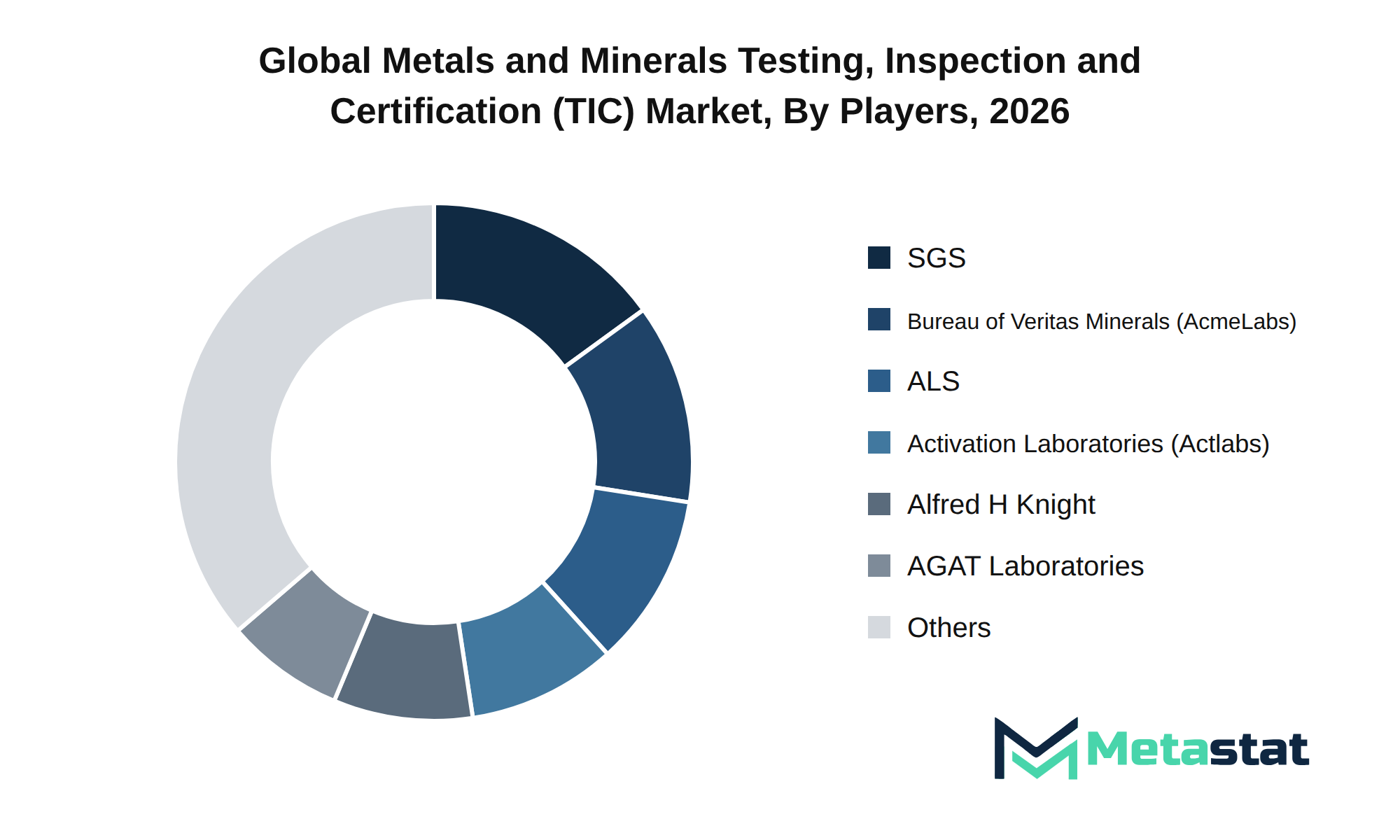
The competitive landscape of the Metals and Minerals Testing, Inspection and Certification (TIC) market reflects a dynamic environment shaped by strategic alliances, mergers, and acquisitions. Companies including SGS SA, DNV AS, and Intertek Group plc engage in strategic consolidation to enhance their market share and capabilities. These moves improve operational efficiencies and expand service offerings, particularly in testing and inspection services.
The market observes significant collaboration among key players, driving innovation through joint ventures and partnerships. For instance, collaborations involving companies like Bureau of Veritas Minerals (AcmeLabs) and Eurofins Scientific SE highlight the importance of integrating diverse expertise to provide comprehensive solutions. This approach strengthens their competitive positioning and enhances their ability to address complex customer needs.
Pricing architectures across the market exhibit variability, with companies leveraging value-based pricing strategies to maintain profitability amid competitive pressures. Leading firms including ALS Limited and Applus+ Servicios Tecnológicos SL implement customer retention strategies that emphasize brand equity and technological differentiation. These strategies help them navigate pricing challenges and sustain long-term customer relationships.
Barriers to entry play a significant role in shaping competitive dynamics within the Metals and Minerals Testing, Inspection and Certification (TIC) market. Established players benefit from existing customer bases, regulatory compliance expertise, and extensive service networks. This environment creates challenges for new entrants seeking to disrupt the market. However, innovation in proprietary technologies and research and development pipelines offers avenues for disruptive growth.
The future competitive outlook emphasizes the importance of intellectual property portfolios due to companies striving to protect their innovations and maintain technological defensibility. Firms like AGAT Laboratories Ltd and Core Laboratories NV focus on enhancing their research capabilities to drive product differentiation and value creation. This emphasis on innovation positions them favorably in the evolving market.
Market size is forecast to rise from USD 26 billion in 2025 to over USD 34.2 billion by 2033. The base case anticipates a 3.5% compound annual growth rate (CAGR) during this period, reflecting increasing demand in various sectors. The metals and minerals testing, inspection and certification (TIC) market will likely experience growth driven by several factors.
Structural shifts in consumption patterns, influenced by next-generation technology integration and evolving regulatory landscapes, shape market dynamics. Increased compliance requirements and enforcement horizons drive investments in testing and certification services. Geopolitical realignments and shifts in global trade corridors affect supply chain strategies, presenting challenges and opportunities for market participants.
Investment in research and development remains critical, with commercialization timelines for innovative technologies expected to affect product life cycles. Strategic capital allocation directives guide firms toward high-growth pockets and unmet enterprise needs, enabling the creation of new service offerings tailored to emerging market demands.
In the face of these developments, companies in the metals and minerals testing, inspection and certification (TIC) market focus on building defensibility roadmaps to navigate an evolving landscape. Executives prioritize proactive measures to ensure compliance and maintain competitive advantage in an increasingly complex market environment.
The report strategically identifies and profiles the key market players and analyses their core competencies in each sub-segment of the Metals and Minerals Testing, Inspection and Certification (TIC) market.
Report Attributes | Details |
Study Period | 2021-2033 |
Base Year | 2025 |
Estimated Year | 2026 |
Forecast Period | 2026-2033 |
Historical Period | 2021-2025 |
Growth Rate | CAGR 3.5% from 2026 to 2033 |
Revenue Unit | USD billion |
Segmentation | By Service Type, Sourcing Type, Commodity Type, and Region |
By Region | North America (By Service Type, Sourcing Type, Commodity Type, and Country)
|
Europe (By Service Type, Sourcing Type, Commodity Type, and Country)
| |
Asia Pacific (By Service Type, Sourcing Type, Commodity Type, and Country)
| |
South America (By Service Type, Sourcing Type, Commodity Type, and Country)
| |
Middle East and Africa (By Service Type, Sourcing Type, Commodity Type, and Country)
|
Find answers to common questions about this report
The Metals and Minerals Testing, Inspection and Certification (TIC) market size was valued at USD 26 billion in 2025, according to the Metastat Insights study.
The Metals and Minerals Testing, Inspection and Certification (TIC) market is projected to grow at a CAGR of 3.5% during the forecast period from 2026 to 2033.
The North America Metals and Minerals Testing, Inspection and Certification (TIC) market size is estimated to reach USD 7.8 billion by 2033.
Testing Services leads the Metals and Minerals Testing, Inspection and Certification (TIC) market, with a projected value of USD 16.5 billion by 2033. This segment outpaces Inspection Services and Certification Services, which are expected to reach USD 11.6 billion and USD 6.1 billion, respectively, by the same year.
Increased capital investment significantly influences the Metals and Minerals Testing, Inspection and Certification (TIC) market, driven by favorable economic conditions and rising demand for effective quality assurance. The integration of advanced digital technologies enhances operational efficiency and service delivery, while ongoing infrastructure development projects create new opportunities for revenue growth and market penetration.
Asia Pacific holds the dominant share of the Metals and Minerals Testing, Inspection and Certification (TIC) market, accounting for 33.3% in 2025. This region's significant share reflects its extensive industrial activities and demand for testing, inspection, and certification services.
Regulatory compliance presents significant operational challenges, raising costs and creating barriers for smaller firms. Geopolitical instability and resource scarcity further complicate operations, driving up procurement costs and limiting investment in necessary infrastructure. These factors collectively hinder market expansion and create difficulties for firms striving to innovate within the Metals and Minerals Testing, Inspection and Certification (TIC) market.
Increased capital investment significantly influences product adoption within the Metals and Minerals Testing, Inspection and Certification (TIC) market. Favorable economic conditions, including GDP growth and low interest rates, encourage businesses to invest in testing and certification services, particularly in sectors like mining, construction, and manufacturing, where compliance and safety standards necessitate regular testing.
The Metals and Minerals Testing, Inspection and Certification (TIC) market is estimated to reach a valuation of USD 34.2 billion by 2033.
Key players in the Metals and Minerals Testing, Inspection and Certification (TIC) market include SGS SA, AGAT Laboratories Ltd, ALS Limited, Bureau of Veritas Minerals (AcmeLabs), Intertek Group plc, and Element Materials Technology Group Ltd.
The analysts below cover Chemicals and Materials research at Metastat Insights.
LEAD ANALYST
Utkarsh Khirodkar is a Lead Market Research Analyst at MetaStat Insight, specializing in market intelligence, technology sector assessments, and competitive strategy.

INDUSTRY CONSULTANT - CHEMICALS & ADVANCED MATERIALS
Chemicals and Materials · Machinery & Equipment · Packaging
Amit Gadhekar Consultant for Chemicals and Materials at MetaStat Insight, directing sector-specific intelligence, research, and strategic consulting across global chemical and processing markets.
Transitioning ultra-class mining haul trucks to alternative power requires concrete data on remote hydrogen refueling infrastructure economics. The report evaluated megawatt-scale electrolyzer installation expenses, onsite storage safety mandates, and heavy-duty fuel cell stack degradation under continuous duty cycles. That technical rigor helped our engineers benchmark realistic total operating cost horizons for off-highway fleet decarbonization.
Enterprise zero-trust network rollouts are often slowed down by multi-cloud transit latency and proprietary hardware retirement schedules. This study provided realistic total cost of ownership models comparing cloud-delivered security edge solutions against traditional hardware refreshes. The analysis of contract renewal lengths and software maintenance fees gave us clear visibility into enterprise replacement cycles over the next three to five years.
Scaling antibody-drug conjugate manufacturing hinges on contract manufacturing availability for high-potency active ingredients. The MetaStat Insight analysis looked closely at global cleanroom slot constraints, bioconjugation batch failure rates, and supply chain redundancies between the US, Europe, and India. The supplier capability matrix proved genuinely useful for our team when mapping secondary source options across our clinical pipeline.
Explore related market intelligence reports worth reading alongside this one.
Starting from
$2950