
LEAD ANALYST
Utkarsh Khirodkar is a Lead Market Research Analyst at MetaStat Insight, specializing in market intelligence, technology sector assessments, and competitive strategy.

Middle East Insurance TPA Market Size, Share, By Type of Service Provided (Claims Handling and Settlement, Policy Administration, Underwriting Support Services, Risk and Compliance Management, Customer and Broker Communication Management, Medical Review and Case Management, Subrogation and Litigation Support), By Insurance Line (Business Property Insurance, Specialist Motor Insurance, Reinsurance Support Services, Specialty Insurance Administration, Marine Claims and Support Services, General Commercial Insurance, Professional Indemnity Insurance, Others), By Region (Saudi Arabia, United Arab Emirates, Qatar, Kuwait, Bahrain, Oman, Rest of Middle East), Industry Analysis, Growth, Trends, and Forecast, 2026-2033
Report ID
MSI-4966
Published
August, 2026
Pages
309 Pages
Format
Historical
Base year
Forecast
Forecast period
Report Details
Choose Your License
Middle East Insurance TPA Market
The Middle East Insurance TPA market was valued at USD 5,076.1 million in 2025 and is projected to reach USD 11,451.1 million by 2033, growing at a CAGR of 10.7% over the forecast period.
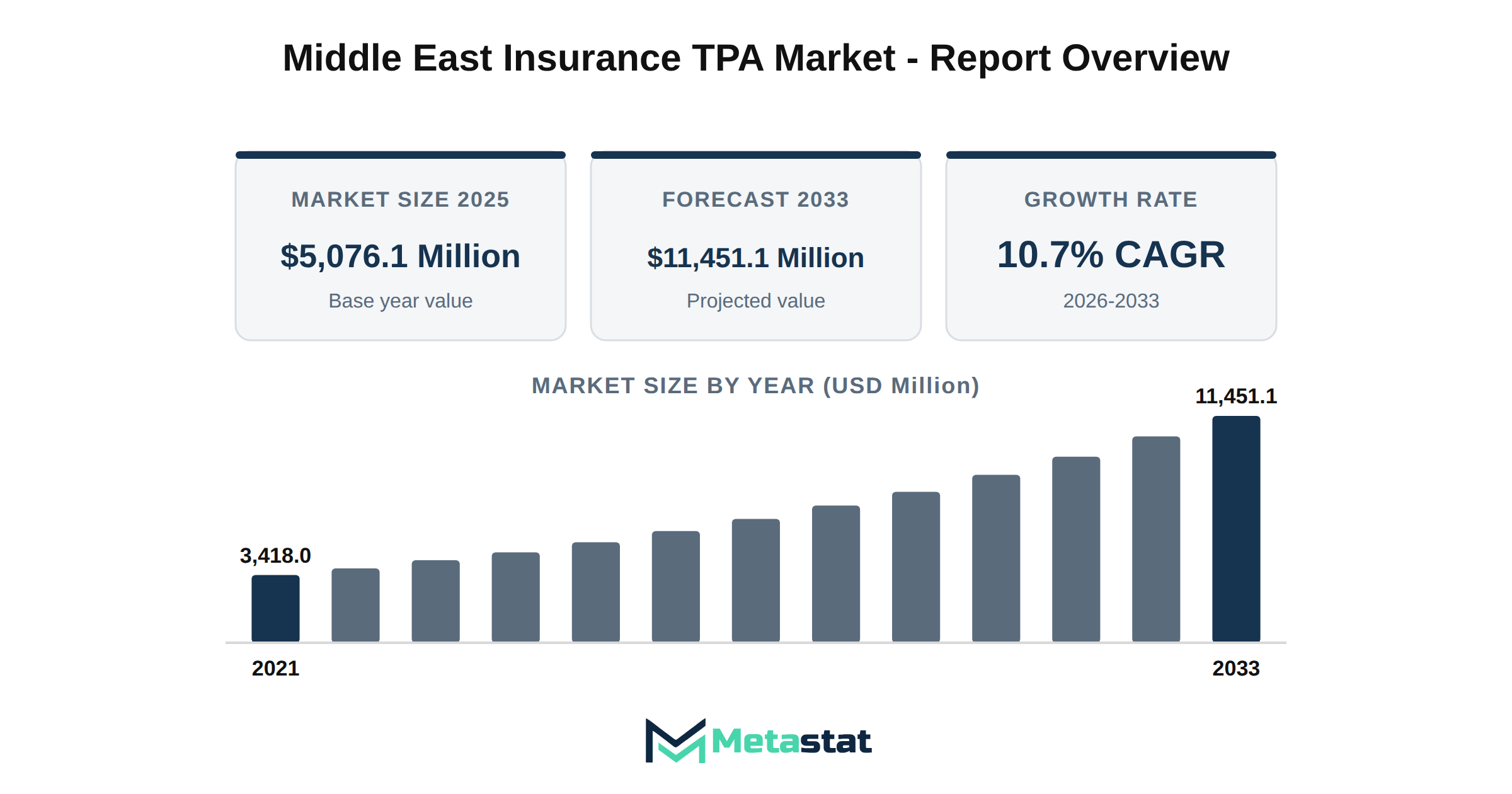
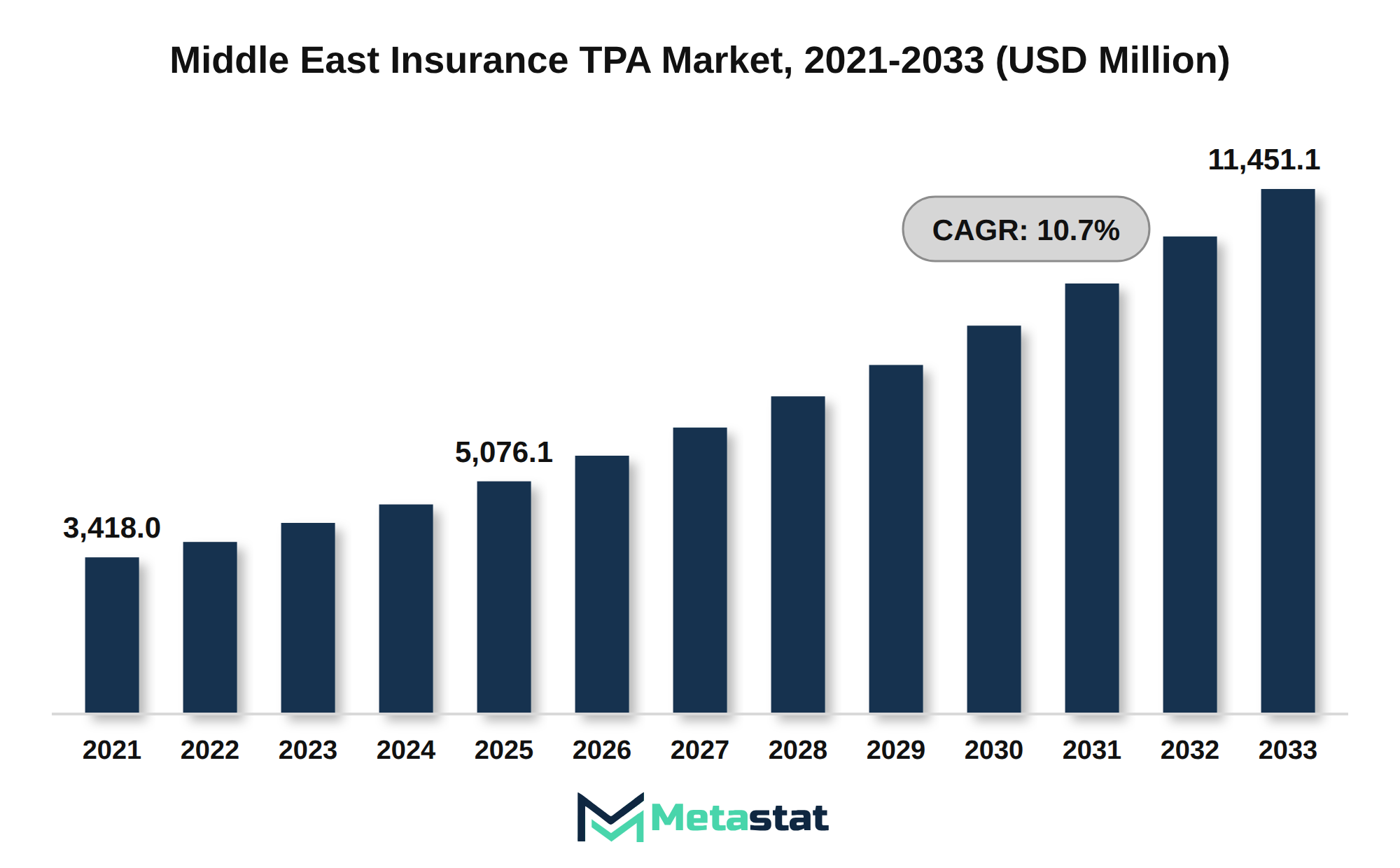
The Middle East Insurance TPA market achieved a value of USD 5,076.1 million in 2025, displaying a consistent growth trajectory since its value of USD 3,418 million in 2021. The market is projected to expand significantly, reaching USD 11,451.1 million by 2033, reflecting a compound annual growth rate (CAGR) of 10.7%. This growth is driven by increasing demand for Third Party Administration services across the region, particularly in claims handling, policy administration, and underwriting support services.
In terms of segment performance, the claims handling and settlement segment is expected to experience substantial growth, increasing from USD 1,884.4 million in 2026 to USD 3,565.9 million by 2033, with a CAGR of 9.5%. Policy administration will experience notable expansion, reaching USD 2,065.8 million by 2033, supported by a CAGR of 10%. Underwriting support services and risk and compliance management contribute to the market's overall growth, with the latter segment showing a robust CAGR of 13.1%.
Regional dynamics play a significant role in shaping the Middle East Insurance TPA market. Saudi Arabia is anticipated to lead the market, expanding from USD 1,774.3 million in 2026 to USD 3,786.9 million by 2033, driven by a CAGR of 11.4%. The United Arab Emirates follows closely, projected to reach USD 2,899.4 million by 2033, supported by a CAGR of 9.9%. Qatar and Kuwait exhibit potential growth opportunities, enhancing the overall market landscape.
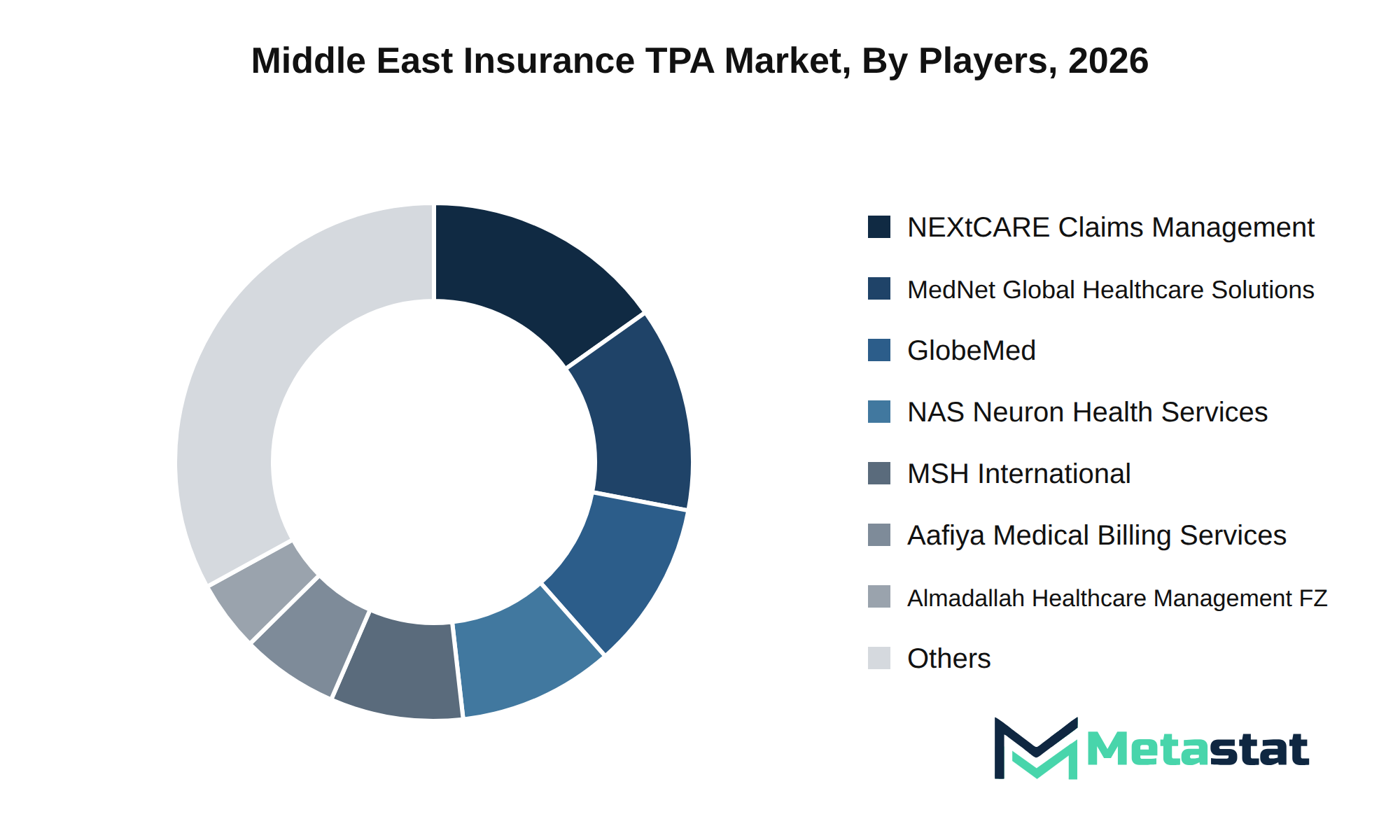
Market players, including NEXtCARE Claims Management LLC, MedNet Global Healthcare Solutions LLC, and GlobeMed Group, operate in the market and are strategically positioned to capitalize on these growth trends. Their initiatives in service innovation, regulatory compliance, and customer experience enhance their competitive positioning within the market, driving further adoption and expansion of TPA services across the region.
The Middle East Insurance TPA market faces various factors influencing its growth trajectory. Regulatory compliance, along with standards set in the insurance industry, shapes operational frameworks. These regulations require adherence to specific guidelines, impacting how service providers operate and manage risk. The geopolitical landscape further complicates operations, introducing challenges that necessitate agile responses to maintain compliance and stability.
Disruption within the market stems from technological advancements that reshape service offerings. R&D trajectories focus on next-generation innovations, driving efficiency and enhancing customer experiences. These innovations include digital platforms that streamline processes, thereby improving service delivery and engagement. Sustainable transformation initiatives within the market align with global trends toward decarbonization and circular economy dynamics, creating a more resilient industry.
Market fragmentation results from the diverse range of service providers, each catering to specific client needs. This fragmentation presents opportunities for mergers and acquisitions, which consolidate market share and enhance capabilities. The value chain within the market illustrates the interconnectedness of various players, highlighting how procurement and customer journey dynamics influence overall performance. This interconnectedness shapes strategic partnerships and collaborative efforts that drive growth.
Capital allocation remains a critical consideration for stakeholders, driven by the necessity of infrastructure investments to support growth. The balance between CapEx and OpEx realities dictates how companies allocate resources to remain competitive. Macroeconomic headwinds, including inflationary pressures and currency volatility, pose challenges that require strategic foresight and adaptation. The future strategic outlook for the Middle East Insurance TPA market emphasizes the importance of corporate imperatives that focus on agility, innovation, and responsiveness to market demands.
The Middle East Insurance TPA market experiences significant growth driven by increasing consumer demand for personalized insurance services. Changing demographics, urbanization, and evolving customer preferences contribute to this trend. An aging population necessitates tailored health and life insurance solutions that address specific needs, while urbanization leads to diverse lifestyle choices requiring distinct insurance coverage. The market responds to these developments by enhancing service offerings and using technology to streamline customer interactions, resulting in improved client satisfaction and retention.
Technological integration is essential in meeting these demands. The adoption of advanced digital tools, automation, and artificial intelligence allows providers to offer customized solutions efficiently, enhancing service delivery and operational productivity. Digitizing legacy processes enables companies within the market to improve responsiveness to consumer needs, leading to increased engagement and loyalty. Innovation-led product diversification supports companies in creating niche offerings that connect with specific consumer segments, ultimately driving revenue growth.
This focus on personalization and technology positions the Middle East Insurance TPA market for sustained expansion. Increased investment in digital transformation initiatives reflects the commitment of providers to align with consumer expectations, resulting in a more agile and competitive landscape. Companies that effectively utilize these market dynamics maximize growth opportunities and enhance their market share.
The Middle East Insurance TPA market experiences rapid growth driven by digital transformation initiatives. The integration of advanced technologies including artificial intelligence (AI) and automation streamlines processes, reducing operational inefficiencies. These technologies enhance claims processing and improve customer engagement through better communication management. The focus on digitizing legacy systems allows providers to adapt to changing consumer demands effectively.
Investment in digital infrastructure supports operational productivity and cost-efficiency initiatives, creating a competitive environment among service providers. Enhanced data analytics capabilities enable firms to offer tailored solutions that align with evolving consumer preferences. This technological shift facilitates improved risk management and compliance adherence, further strengthening the market's position within the broader insurance ecosystem.
With ongoing advancements in technology, the Middle East Insurance TPA market is expected to experience continued growth. The emphasis on operational efficiency and customer-centric services drives investment in innovative solutions, positioning companies to meet market demands more effectively. While the sector evolves, the integration of digital capabilities will significantly shape its competitive environment.
The Middle East Insurance TPA market experiences challenges related to regulatory complexities that impede growth. Compliance hurdles stemming from varying legal mandates across different countries result in increased operational burdens for service providers. These complexities often require significant investments in legal expertise and compliance infrastructure, which constrain capital resources and divert funds away from innovation. Regulatory environments lack uniformity, leading to fragmented market dynamics that complicate operations and limit scalability for businesses operating in multiple jurisdictions.
Macroeconomic headwinds, including inflationary pressures and economic instability, create uncertainties that affect investment decisions in the market. Rising costs for labor and raw materials contribute to escalating operating expenses, further straining the financial resources of firms. Supply chain disruptions linked to geopolitical instability limit access to essential inputs and services, creating bottlenecks in operations. These factors collectively influence the strategic choices made by companies within the market, leading to a cautious approach toward expansion and innovation.
Talent gaps in skilled labor pose further challenges, resulting from companies struggling to find professionals equipped with the necessary expertise to navigate the evolving regulatory landscape. This shortage of skilled workers slows down operations and hampers the ability of firms to effectively implement compliance measures. With the Middle East Insurance TPA market facing these intertwined challenges, companies adopt strategic approaches to address regulatory complexities and secure sustainable growth in a competitive environment.
The Middle East Insurance TPA market encounters significant challenges owing to geopolitical fragmentation and trade deficits. Political instability within the region disrupts cross-border operations and complicates trade relations, leading to increased tariffs and trade restrictions. These factors result in higher operational costs and reduced profit margins for service providers seeking to navigate complex regulatory environments.
Technological disruptions create additional hurdles for companies operating in the market. Rapid advancements in technology necessitate continuous investment in research and development, leading to high integration costs and potential interoperability friction among various systems. This situation complicates the implementation of advanced technology solutions, which are essential for maintaining competitiveness in the market.
Input cost structures exert further pressure on the market. Fluctuations in feedstock prices, driven by geopolitical tensions and supply chain instability, contribute to volatile operating expenses. Rising costs create a challenging environment for firms attempting to balance pricing strategies while enhancing service offerings. Consequently, companies operating within the Middle East Insurance TPA market face critical decisions regarding resource allocation and operational efficiency.
Market saturation poses another challenge, because increasing competition in the Middle East Insurance TPA market intensifies the pressure to differentiate services. Firms adapt to changing downstream demands, which require innovative service delivery and responsiveness to client needs. This competitive environment leads to pricing compression, forcing companies to reassess their value propositions to maintain market share.
The Middle East Insurance TPA market benefits from increasing regional demands, particularly in response to rising healthcare costs and evolving consumer expectations. The need for efficient claims management and administrative support in the insurance sector drives demand for third-party administrators. Enhanced healthcare infrastructure and a growing emphasis on customer experience influence this trend, leading to significant opportunities for service providers.
Geographical expansion further drives growth in the market, particularly in emerging economies within the region. Saudi Arabia and the United Arab Emirates represent key markets, with substantial growth projected through 2033. Investment in healthcare facilities and technology in these countries supports the adoption of comprehensive insurance solutions, enhancing the market's potential.
Technological disruptions and digital transformation significantly influence operational frameworks within the market. Advanced data analytics, artificial intelligence, and automation streamline processes, allowing for faster claims processing and improved customer engagement. The integration of new technologies positions companies to respond swiftly to changing consumer needs and supports market growth.
Sustainability imperatives and green transformations play a crucial role in shaping market dynamics. Increasing awareness of environmental, social, and governance (ESG) factors influences both consumer choices and corporate strategies. Companies within the Middle East Insurance TPA market align their offerings with these principles, enhancing their appeal to a broader customer base.
Strategic consolidation and cross-industry mergers contribute to heightened competition and innovation. Collaboration between insurance providers and technology firms leads to the creation of integrated solutions that meet diverse client needs. This trend toward product integration enhances service delivery and supports the market's overall expansion.
Value-chain optimization and process automation enhance operational yield, driving efficiencies across service providers. Companies focus on refining their service delivery models, ensuring competitiveness in the growing market. The emphasis on maintaining high standards, combined with evolving buying behaviors, positions the market for continued growth and adaptability.
The Middle East Insurance TPA market is segmented based on Type of Service Provided, Insurance Line, and Region.
Valued at USD 1,884.4 million in 2026, the Claims Handling & Settlement segment is projected to reach USD 3,565.9 million by 2033, at a CAGR of 9.5% during the forecast period. This growth is attributed to several key factors, including increasing insurance penetration and the rising complexity of claims processes. Enhanced digital solutions and automation streamline claims management, improving efficiency and reducing turnaround times for service providers and clients. The trend toward regulatory compliance motivates businesses to adopt comprehensive claims handling services, ensuring adherence to evolving legal standards.
Technological advancements drive the evolution of the segment, with innovations in data analytics and artificial intelligence offering improved risk assessment and fraud detection. These advancements enhance operational efficiency, benefiting both insurance companies and policyholders. The growing focus on customer satisfaction fuels demand for efficient claims processing, encouraging insurers to invest in specialized outsourcing services. Businesses increasingly recognize the strategic value of claims handling, leading to robust expansion in this segment of the Middle East Insurance TPA market.
Significant growth in the Policy Administration segment reflects strong demand for efficient management of insurance policies and customer interactions. Regulatory compliance standards and technological maturation drive this demand, compelling insurers to adopt advanced systems for better policy handling. This shift ensures improved service delivery and operational efficiency, which are critical in a competitive environment.
By 2033, the Policy Administration segment is expected to reach USD 2,065.8 million, at a CAGR of 10% during the forecast period. Enhanced customer experiences and streamlined operations result from integrating next-generation upgrades and product evolution in policy management systems. These developments create a more responsive insurance environment, catering to the growing needs of clients across the Middle East Insurance TPA market.
While the market evolves, consumption shifts toward more automated and user-friendly policy administration solutions. The emphasis on digital transformation creates strategic opportunity windows for providers that leverage technology to enhance service offerings. Overall, the combination of increasing demand and evolving technological capabilities positions the Policy Administration segment for growth in the coming years.
Growth in the Underwriting Support Services segment stems from increasing demand for comprehensive risk management solutions. The expansion of businesses across the Middle East Insurance TPA market fuels the need for robust underwriting processes that enhance operational efficiency and reduce claim-related losses. Adoption of advanced analytics and automation technologies supports insurers in making data-driven decisions, thereby improving underwriting accuracy and risk assessment capabilities.
Technological maturation influences this segment, with innovations in machine learning and artificial intelligence facilitating the development of next-gen underwriting tools. These tools streamline workflows and enhance the processing of complex insurance applications. The market experiences an increasing emphasis on regulatory compliance standards, prompting insurers to invest in solutions that improve their adherence to evolving regulations and industry standards.
The Underwriting Support Services segment is expected to reach USD 1,274.5 million by 2033, reflecting a strong compound annual growth rate (CAGR). Companies that invest in strategic technology upgrades position themselves to capture growing opportunities driven by market evolution. Increased competition among service providers encourages continuous improvement and product evolution, ensuring the delivery of tailored solutions to diverse client needs.
Shifts in end-use dynamics drive further investment in underwriting support services. Clients increasingly seek customized policies and faster claim resolutions, prompting insurers to enhance their service offerings. Strategic opportunity windows arise from emerging market trends, enabling providers to differentiate themselves through innovation and superior customer service, which contributes to overall growth within the market.
Growth in the Risk & Compliance Management segment aligns with increasing demand for effective regulatory adherence among insurance providers. Stakeholders in the Middle East Insurance TPA market focus on enhancing compliance measures, influenced by evolving regulatory frameworks and the necessity for transparent operations. Organizations prioritize risk mitigation strategies, which drive investment in compliance solutions to safeguard against legal and financial penalties.
Expanding complexities in industry regulations require TPA providers to offer comprehensive services that support clients through compliance challenges. Organizations emphasize the importance of operational integrity and reliability, prompting a rise in demand for tailored risk management solutions. This dynamic supports the segment's growth, projected at a CAGR of 13.1% during the forecast period, driven by stakeholders seeking to navigate compliance landscapes effectively.
Technological advancements drive innovation in compliance management services, enabling providers to deliver streamlined solutions that integrate advanced analytics and reporting capabilities. Investments in technology enhance operational efficiency, allowing organizations to respond swiftly to regulatory changes, which ultimately strengthens their market position. Consequently, the market's ability to adapt to shifting regulatory environments significantly influences long-term growth and investment strategies.
In the Middle East Insurance TPA market, Customer & Broker Communication Management serves because a critical component that supports the interaction between clients and insurance providers. This segment faces increasing demand driven by the need for effective communication strategies that enhance customer satisfaction and retention. The growing complexity of insurance products and services necessitates clear information exchange, strengthening relationships between customers and brokers.
Technological advancements facilitate the evolution of communication tools, leading to enhanced customer experiences. Adoption of digital platforms and mobile applications allows for real-time updates and streamlined communication processes. These innovations promote increased operational efficiency and contribute to improved service delivery.
Regulatory compliance standards play a significant role in shaping communication management practices. Adherence to these standards ensures transparency and builds trust among stakeholders. While the market evolves, companies that prioritize effective communication strategies position themselves advantageously to navigate compliance challenges while simultaneously enhancing their reputation.
Strategic investment in communication management capabilities opens new opportunities within the market. Firms that emphasize this segment leverage their strengths to differentiate themselves in a competitive environment. Increased focus on Customer & Broker Communication Management ultimately contributes to long-term growth and stability in the Middle East Insurance TPA market.
Increasing complexity in healthcare services drives demand for Medical Review & Case Management (for Medical Malpractice) within the Middle East Insurance TPA market. This sub-segment addresses the need for expert evaluation of medical cases, ensuring quality and compliance with regulatory standards. The growing prevalence of medical malpractice claims requires efficient management processes, enhancing the operational efficiency of insurance companies. Technological maturation in data analytics and case management systems supports the optimization of this segment, enabling timely and informed decision-making.
Collaborative efforts between medical professionals and insurance providers enhance the effectiveness of case management. Regulatory compliance standards impose stringent requirements on service providers, encouraging adoption of advanced case management solutions. The focus on quality assurance and risk mitigation drives investment in innovative technologies, leading to improved outcomes. Increased scrutiny on healthcare providers further increases demand for robust medical review systems, aligning with broader trends observed in the market.
End-use dynamics show a shift towards integrated solutions that streamline communication between various stakeholders involved in medical malpractice cases. Enhanced consumer awareness regarding rights highlights the importance of thorough case management practices. Rising operational costs challenge service providers to enhance efficiency through strategic investments in new technologies and staff training. This segment's evolution reflects ongoing changes within the Middle East Insurance TPA market, highlighting the critical role of effective management strategies in addressing the complexities of medical malpractice.
Demand for Subrogation & Litigation Support in the Middle East Insurance TPA market is driven by the increasing complexity of claims processes and a heightened focus on compliance and risk mitigation. Organizations pursue robust support services to navigate the intricacies of litigation and subrogation, which have become essential for optimizing claim recoveries and minimizing financial exposure. The adoption of advanced technologies, including case management systems and data analytics, enhances operational efficiency and improves outcomes in litigation scenarios. Enhanced collaboration among stakeholders, including insurers, claims adjusters, and legal experts, creates a more streamlined approach to litigation and subrogation processes.
Regulatory compliance standards exert significant influence on the market, compelling providers to enhance their service offerings to align with evolving legal requirements. Investments in training, certification, and technological upgrades serve because catalysts for segment expansion, positioning firms to respond effectively to market demands. The increasing prevalence of complex claims, particularly in sectors including healthcare and commercial property, highlights the necessity for specialized support services in subrogation and litigation.
The market presents strategic opportunity windows for service providers to differentiate themselves through value-added offerings. Emphasizing transparency, efficiency, and measurable outcomes contributes to competitive advantage in a landscape where client expectations continue to rise. Capital investment outlook remains positive, driven by the need for enhanced service capabilities and technology integration, aligning with broader trends in the Middle East Insurance TPA market.
Valued at USD 994.6 million in 2026, the Business Property Insurance segment is projected to reach USD 1,851.6 million by 2033, with a compound annual growth rate (CAGR) of 9.3% during the forecast period. Growth in this segment is driven by increasing demand for property coverage among businesses seeking to mitigate risks associated with physical assets. The rising number of enterprises in the region, alongside expanding commercial activities, increases the need for comprehensive insurance solutions.
Adoption of Business Property Insurance reflects broader trends in economic development, where companies prioritize risk management. Regulatory compliance standards and certifications influence operational decisions, encouraging firms to invest in property insurance. An evolving landscape of threats, including natural disasters and economic volatility, raises the necessity for robust insurance coverage. This heightened awareness among businesses creates a supportive environment for growth in the segment.
Technological advancements in insurance practices enhance service delivery and customer engagement. The integration of digital platforms facilitates streamlined processes, enabling faster claims handling and improved communication between insurers and clients. Consequently, businesses experience heightened efficiency and satisfaction in managing insurance needs. Strategic opportunity windows arise from increasing competition, prompting firms to innovate their service offerings and cater to evolving client preferences.
The Business Property Insurance segment within the Middle East Insurance TPA market benefits from a convergence of factors that drive demand. Economic growth, regulatory influences, and technological advancements contribute to a positive outlook for this segment, with significant expansion anticipated through 2033.
Acceleration in the Specialist Motor Insurance (including Fleet) segment reflects growing consumer preferences for comprehensive vehicle coverage and fleet management solutions. Increasing vehicle ownership rates and urbanization in the Middle East contribute to this demand, particularly in markets like Saudi Arabia and the United Arab Emirates. The segment is projected to reach USD 1,951.3 million by 2033, with a CAGR of 11.4% during the forecast period. Enhanced safety regulations and technological advancements in automotive systems fuel product evolution, driving insurers to innovate coverage options. These developments align with shifts in consumer expectations for more customized insurance plans and responsive claims processes.
Heightened attention to regulatory compliance and risk management strategies influences growth within this segment. Insurers adapt their offerings to meet evolving standards, ensuring that policy structures remain competitive while managing costs effectively. Strategic investments in technology enable companies to streamline operations, reduce claims processing times, and enhance customer experiences. This efficiency translates directly into improved margins for operators in the market, positioning them to capitalize on emerging opportunities.
Increasing penetration of telematics and data analytics in underwriting processes supports the market's expansion. Insurers leverage these technologies to assess risks more accurately, which aligns with a growing emphasis on personalized pricing. The integration of smart technologies into vehicles enhances the ability of insurers to monitor driving behavior and provide tailored coverage solutions. This trend signals a shift in how the market approaches risk assessment and customer engagement.
Reinsurance Support Services exhibits growth driven by increasing complexities in the regulatory environment and evolving client demands in the insurance sector. Enhanced regulatory compliance standards necessitate robust support systems, propelling the need for specialized reinsurance services. Focusing on minimizing risks and optimizing financial outcomes, stakeholders in the Middle East Insurance TPA market recognize the critical role of these services.
By 2033, the segment is expected to reach USD 1,256.2 million, highlighting its significance within the broader market. This growth correlates with a heightened emphasis on risk management strategies, which demand innovative solutions tailored to unique industry needs. Market participants invest in technology to streamline operations and enhance service delivery, driving the adoption of advanced reinsurance support systems.
End-use dynamics significantly influence the uptake of reinsurance support services, particularly among businesses seeking comprehensive coverage solutions. The evolving landscape of insurance lines, including Business Property and Specialist Motor Insurance, necessitates the integration of efficient reinsurance services to address complex claims and enhance operational efficiency. Such integration creates strategic opportunities for market players, supporting long-term growth and sustainability.
Growth in the Specialty Insurance Administration segment aligns with evolving regulatory requirements and increasing demand for customized insurance solutions. With a projected CAGR of 12.5% during the forecast period, the segment is positioned to capitalize on the rising complexity of risk management and compliance in the Middle East Insurance TPA market.
Market participants focus on technological advancements to enhance service delivery, ensuring compliance with industry regulations. Innovations in data analytics and digital platforms facilitate efficient claim processing and improve customer engagement. This trend increases operational efficiency and enhances the overall customer experience, driving demand for specialized insurance administration services.
Strategic investments in training and development of personnel, alongside the implementation of advanced software solutions, lead to improved accuracy in claim assessments and policy management. The emphasis on customer-centric approaches enhances retention rates, further contributing to market expansion. Growing recognition of the importance of tailored insurance solutions primes the sector for significant growth.
Increasing demand for Marine Claims & Support Services in the Middle East Insurance TPA market aligns with the region's growing shipping and maritime activities. Factors including rising cargo traffic and heightened awareness of marine risks drive insurance uptake among businesses involved in maritime operations. Investments in advanced technologies for tracking and managing marine assets enhance the efficiency and effectiveness of handling claims related to marine incidents.
Adoption of next-generation upgrades within this sub-segment emphasizes improved risk assessment and mitigation strategies. Companies increasingly leverage data analytics and IoT (Internet of Things) solutions to monitor marine assets, facilitating timely responses to incidents and enhancing overall claim management. Regulatory compliance standards specific to the maritime industry strengthen the emphasis on robust claims processes, ensuring that service providers deliver necessary support to their clients.
Cost structures related to Marine Claims & Support Services reflect the complexity of the maritime environment. Pricing volatility driven by fluctuating shipping rates and regulatory changes poses challenges for service providers, impacting their margins. To counter these pressures, TPA firms focus on enhancing their operational efficiencies and service offerings, positioning themselves favorably in a competitive landscape.
Strategic opportunity windows are emerging owing to market players exploring partnerships and collaborations to expand their service capabilities. By integrating comprehensive marine claims management services with other insurance offerings, firms enhance their value propositions. This integration not only attracts new clients but positions them to capture a larger share of the market.
Interest in General Commercial Insurance within the Middle East Insurance TPA market stems from evolving business requirements and regulatory compliance standards. Increased awareness of risk management drives demand for comprehensive coverage solutions tailored to diverse sectors, including manufacturing, retail, and logistics.
Adoption of technology plays a critical role in segment expansion, with advancements enabling quicker claims processing and enhancing customer experience. Next-gen upgrades lead to streamlined operations, allowing companies to manage risks more effectively while addressing client needs.
End-use dynamics highlight a shift toward personalized insurance solutions. Businesses focus on operational resilience, aligning with changing consumption patterns where organizations prioritize insurance products that offer flexibility and adaptability.
Technological maturation drives innovation in underwriting practices, improving pricing accuracy and enhancing overall service delivery. Companies invest in data analytics and artificial intelligence to refine risk assessment methodologies, positioning themselves competitively within the market.
Strategic opportunity windows emerge owing to organizations seeking to navigate increasing competition and pricing volatility in the insurance landscape. Focus on building strong relationships with clients and brokers contributes to long-term sustainability.
Policy headwinds, including regulatory changes, impact operational strategies for firms operating in this space. Navigating compliance requirements demands agility and extensive knowledge of local regulations, which affect cost structures and overall efficiency.
Supply chain resilience remains vital within General Commercial Insurance. Businesses face logistical vulnerabilities and shifting market demands. Companies that prioritize robust risk management frameworks position themselves more favorably in a competitive environment.
The Middle East Insurance TPA market continues to evolve, with firms actively exploring white-space analysis opportunities to enhance product offerings. Strategic capital investment in innovation and technology is expected to drive the segment's growth in the coming years.
In the Middle East Insurance TPA market, growth in the Professional Indemnity Insurance segment emerges from rising awareness of the need for protection against legal liabilities faced by professionals. Increasing incidences of malpractice claims across various industries significantly influence demand for this insurance type. Enhanced regulatory requirements regarding professional liability further stimulate adoption among service providers seeking compliance. Technological advancements in underwriting and claims management streamline processes, contributing to improved service offerings. Professionals across sectors, including healthcare, legal, and financial services, recognize the importance of safeguarding their practices against potential claims, driving consumption shifts in this segment. Investment in risk management solutions and enhanced compliance measures supports segment expansion. Ongoing efforts to educate professionals about the benefits of Professional Indemnity Insurance facilitate market penetration. The evolving landscape of professional responsibilities and associated risks indicates a strategic opportunity window for insurers to innovate and adapt products to meet changing client needs, further reinforcing the position of this segment within the broader market.
Segment growth for Saudi Arabia demonstrates strong demand, with a valuation of USD 1,774.3 million in 2026, projected to reach USD 3,786.9 million by 2033, at a CAGR of 11.4% during the forecast period. This expansion results from several factors, including an increase in insurance awareness and the need for efficient claims processing. Enhanced regulatory frameworks and consumer expectations influence the demand dynamics, compelling players within the Middle East Insurance TPA market to adapt and innovate.
Investment in technological solutions significantly impacts the market landscape. Advanced platforms for claims handling and policy administration streamline operations, contributing to improved efficiency and customer satisfaction. The increasing adoption of digital tools facilitates better management of underwriting support services, risk assessment, and compliance measures, ensuring alignment with evolving regulatory standards.
The rising complexity of insurance products continues to drive the market, driven by businesses seeking comprehensive coverage to mitigate risks. This trend particularly benefits companies offering specialized services tailored to various sectors, including healthcare and automotive. Overall, the growth trajectory of the Saudi Arabian segment within the Middle East Insurance TPA market indicates a robust opportunity for stakeholders to capitalize on emerging trends.
Projected growth in the United Arab Emirates segment reflects an estimated reach of USD 2,899.4 million by 2033, with a CAGR of 9.9% during the forecast period. Rising healthcare expenditures and an expanding insurance market drive demand for Third Party Administrators (TPAs) in this region. The market benefits from technological advancements that enhance service delivery and operational efficiency, encouraging the adoption of innovative insurance solutions.
Increased consumer awareness of insurance products contributes to market growth, driven by individuals seeking comprehensive coverage options. Competitive pressures prompt insurance providers to improve their service offerings, leading to greater collaboration with TPAs. This trend enhances claims processing and policy administration, further strengthening the role of TPAs in the market.
Regulatory compliance plays a critical role in shaping operational strategies for TPAs within the United Arab Emirates. The evolving regulatory landscape necessitates adherence to strict standards, influencing operational costs and pricing structures. While organizations navigate these complexities, strategic partnerships with TPAs become essential to ensure compliance and optimize service delivery.
Investment in technology infrastructure facilitates improved data management and analytics capabilities for TPAs. This technological maturation enhances service delivery and adds value for insurance providers, thereby expanding the market's potential. Overall, the United Arab Emirates segment reflects positive growth prospects, supported by increased demand for effective insurance administration solutions within the Middle East Insurance TPA market.
Projected growth within the Qatar segment of the Middle East Insurance TPA market highlights significant opportunities for expansion. This segment reflects increasing demand driven by regulatory compliance standards and evolving customer expectations. The rise in healthcare services and advancements in technology promote more efficient management of claims and underwriting processes, enhancing overall service delivery.
Technological maturation influences the operational dynamics of the segment, with next-gen upgrades facilitating automation and improving customer engagement. Adoption of digital solutions, alongside an increased focus on data analytics, supports better decision-making and risk assessment, positioning players to respond effectively to market changes. Regulatory frameworks in Qatar promote transparency and efficiency, further propelling growth in the insurance TPA landscape.
Rising consumer awareness regarding insurance products has led to shifts in consumption patterns, emphasizing the importance of tailored offerings and customer-centric services. This evolving landscape creates strategic opportunity windows for providers looking to enhance their market presence. Overall, the Qatar segment represents a vital component of the broader Middle East Insurance TPA market, with prospects for sustained growth driven by technological advancements and changing consumer demands.
Kuwait's segment achieves a projected growth rate of 9.5% during the forecast period, driven by increasing demand for efficient claims handling and policy administration services. Rising awareness of regulatory compliance standards influences the adoption of advanced technological solutions. Stakeholders in the insurance sector benefit from enhanced operational efficiencies and improved customer experience, creating a favorable environment for investment in third-party administration services.
This growth trajectory reflects a strategic opportunity window, with firms emphasizing the need for effective integration of underwriting support services and risk compliance management. An enhanced focus on customer and broker communication management fuels demand for innovative solutions, providing competitive advantages in the Middle East Insurance TPA market.
Investment in next-generation upgrades aligns with the evolving needs of end-users, enabling substantial shifts in consumption patterns. The increasing integration of digital solutions contributes to a robust market outlook, with stakeholders positioned to leverage technological advancements for growth in Kuwait's segment.
Market dynamics in Bahrain reflect a growing interest in insurance third-party administration (TPA) services, driven by evolving regulatory frameworks and increasing demand for efficient claims handling. The rise in consumer awareness surrounding insurance products fuels adoption, creating opportunities for TPA providers to enhance service offerings and improve customer satisfaction.
Investment in technology serves because a significant catalyst for growth within the Bahrain market. Technological advancements enable streamlined processes for claims processing and policy administration, enhancing operational efficiency. This evolution supports TPA providers in meeting the rising expectations of clients, ensuring compliance with local regulations while optimizing service delivery.
Changes in consumer behavior influence end-use dynamics within the market. A shift towards digital platforms facilitates greater accessibility and transparency in insurance transactions, driving the demand for innovative TPA solutions. Consumers increasingly seek comprehensive and user-friendly services, prompting TPA providers in Bahrain to position themselves to capture this market potential through tailored offerings.
Regulatory compliance standards present both challenges and opportunities for TPA companies operating in Bahrain. Adhering to local regulations requires continuous investment in training and development, ensuring staff remain knowledgeable about changing compliance requirements. This commitment enhances the credibility of TPA providers and builds trust among clients, ultimately driving market growth.
Strategic investment in capital projects will define the competitive landscape within the Middle East Insurance TPA market. Companies recognizing the importance of technological integration and operational resilience are likely to secure a stronger foothold in Bahrain. By addressing current market demands and anticipating future trends, TPA providers navigate the evolving landscape and enhance their service offerings.
The Middle East Insurance TPA market experiences growth in Oman driven by increasing awareness of the importance of insurance services. Rising prevalence of health issues and regulatory changes mandating comprehensive health coverage contribute to this trend. Adoption of technology in insurance processes enhances efficiency and improves customer satisfaction, further encouraging growth in the market.
Oman's insurance segment benefits from an evolving regulatory framework that emphasizes compliance. This framework creates a favorable environment for insurance providers to expand their service offerings. The emergence of new technologies facilitates enhanced operational capabilities, allowing firms to maintain competitive edges through better customer engagement and streamlined service delivery.
Investment in the sector aligns with global trends towards digital transformation. Integration of next-generation solutions, including artificial intelligence and data analytics, enhances claims processing and risk assessment. These advancements position the market for substantial growth, ultimately driving improvements in service provision and consumer trust.
Regional dynamics in the Rest of Middle East segment influence growth within the Middle East Insurance TPA market. Factors driving demand include rising awareness of the importance of insurance transparency and accountability among businesses and consumers. This shift encourages organizations to seek third-party administrators (TPAs) that enhance efficiency in claims processing and policy management.
Technological advancements significantly impact segment expansion. The adoption of digital solutions improves customer engagement through streamlined communication and faster claims processing, attracting clients seeking efficient services. The integration of next-generation technologies, including artificial intelligence and data analytics, enhances operational efficiency, supporting market growth.
Regulatory compliance plays a critical role in shaping market dynamics. Stricter regulatory frameworks drive companies to seek expert guidance from TPAs to navigate the complexities of insurance compliance. This trend results in increased demand for specialized services that ensure adherence to evolving regulations.
Investment in capacity development strengthens market resilience. Companies focus on enhancing their service offerings to capture market share and address growing customer needs. This strategic focus on innovation enhances competition and promotes service evolution, positioning the segment for sustained growth.
Continual shifts in consumer preferences further impact the market. A growing inclination towards customized insurance solutions drives demand for TPAs that provide tailored services. This evolution highlights the necessity for flexibility in service offerings to meet diverse client requirements across various sectors.
Overall, the Rest of Middle East segment exhibits significant potential within the Middle East Insurance TPA market, driven by technological maturation, regulatory compliance challenges, and evolving consumer expectations. These factors contribute to a robust framework for growth and expansion within the industry.
This segment is valued at USD 5,634.3 million in 2026 and is projected to reach USD 11,451.1 million by 2033, at a CAGR of 10.7% during the forecast period. The growth of this segment reflects increasing demand for comprehensive insurance third-party administration services across the region. Factors driving demand include the need for efficient claims processing, policy administration, and enhanced risk management practices. Industries requiring these services encompass healthcare, automotive, and commercial sectors, leading to heightened focus on regulatory compliance.
Technological advancements play a crucial role in shaping the market. Adoption of digital platforms facilitates streamlined communication between insurers and stakeholders, improving customer satisfaction and operational efficiency. Investment in next-generation upgrades enhances service delivery, ensuring organizations meet evolving consumer expectations. The market benefits from increasing healthcare expenditure, alongside a surge in motor insurance and property coverage needs, which creates further opportunities for growth.
Strategic partnerships and collaborations among key market participants drive innovation and expand service offerings, contributing to competitive positioning within the Middle East Insurance TPA market. Companies that effectively leverage these relationships enhance their market reach and capitalize on emerging trends. Emphasis on customer-centric solutions and tailored services positions the market for sustained growth and resilience in the face of economic fluctuations.
The competitive landscape of the Middle East Insurance TPA market exhibits a trend towards strategic consolidation and partnerships among key players. Companies including NEXtCARE Claims Management LLC, GlobeMed Group, and MedNet Global Healthcare Solutions LLC focus on forming strategic alliances to enhance service offerings and expand market reach. The collaboration among these firms facilitates the integration of advanced technologies, improving efficiency and customer satisfaction.
Pricing architectures in the market reflect a competitive dynamic, with players like MSH International and Aafiya Medical Billing Services LLC implementing flexible pricing models to attract diverse clientele. Customer retention strategies remain essential, driven by companies developing programs that emphasize brand equity and loyalty, ensuring sustained revenue streams. The presence of significant barriers to entry, combined with established firms leveraging intellectual property portfolios, creates a challenging environment for new entrants.
Looking ahead, the Middle East Insurance TPA market is projected to experience growth driven by evolving customer demands and regulatory changes. Strategic growth vectors for established players will likely involve further integration within the value chain and investments in proprietary technology to maintain competitive advantages. Meanwhile, the threat of startup disruption remains, necessitating ongoing adaptation and innovation among incumbents.
Market size is forecast to rise from USD 5,076.1 million in 2025 to over USD 11,451.1 million by 2033. The base case reflects this growth at a compound annual growth rate (CAGR) of 10.7%. Several factors influence this trajectory, including macroeconomic conditions and evolving demand structures. Economic cycles and downstream demand changes shape the competitive landscape within the Middle East Insurance TPA market, driving investments and innovations in service delivery.
Technological advancements play a vital role in this expansion. Integration of next-generation technologies enhances operational efficiencies and supports the development of new insurance products. R&D commercialization timelines dictate the pace at which innovative solutions enter the market, creating a more dynamic environment for providers. While the industry matures, regulatory evolution and compliance milestones emerge, impacting operational frameworks and strategic planning for firms involved in the market.
Geopolitical realignments and shifting trade corridors affect supply chain dynamics, creating new opportunities for strategic capital allocation. Infrastructure commitments and capital expenditure (CapEx) investment vectors align with the growth trajectory of the market, ensuring adequate support for emerging needs. High-growth pockets exist within specific regional segments, including Saudi Arabia and the United Arab Emirates, where demand for insurance services accelerates.
Overall, the Middle East Insurance TPA market presents a positive outlook driven by shifting demand patterns, technological integration, and strategic investments. Future growth recommendations focus on targeting unmet enterprise needs while adapting to evolving regulatory landscapes and capitalizing on emerging opportunities.
The report strategically identifies and profiles the key market players and analyses their core competencies in each sub-segment of the Insurance TPA market.
|
Report Attributes |
Details |
|
Study Period |
2021-2033 |
|
Base Year |
2025 |
|
Estimated Year |
2026 |
|
Forecast Period |
2026-2033 |
|
Historical Period |
2021-2025 |
|
Growth Rate |
CAGR 10.7% from 2026 to 2033 |
|
Revenue Unit |
USD million |
|
Segmentation |
By Type of Service Provided, Insurance Line, Region, and Region |
Find answers to common questions about this report
The Insurance TPA market size in the Middle East was valued at USD 5,076.1 million in 2025.
The Insurance TPA market is projected to grow at a CAGR of 10.7% during the forecast period from 2026 to 2033.
The segment leading the Middle East Insurance TPA market is Claims Handling & Settlement, with a projected value of USD 3,565.9 million by 2033. This segment surpasses others in terms of revenue generation within the market.
The Middle East Insurance TPA market is driven by increasing consumer demand for personalized insurance services, influenced by changing demographics and urbanization. Technological integration, including automation and artificial intelligence, enhances service delivery and operational productivity, allowing providers to effectively meet evolving consumer preferences.
Regulatory complexities restrain growth in the Middle East Insurance TPA market, with varying legal mandates across countries increasing operational burdens. These challenges require significant investments in compliance infrastructure, diverting resources from innovation. Geopolitical fragmentation and trade deficits complicate operations, resulting in higher costs and reduced profit margins for service providers.
Increasing consumer demand for personalized insurance services drives product adoption in the Middle East Insurance TPA market. Factors including changing demographics, urbanization, and evolving customer preferences necessitate tailored solutions, enhancing service offerings and operational productivity through technological integration. This focus on customization positions companies for sustained growth and improved client satisfaction.
The Insurance TPA market is estimated to reach a valuation of USD 11,451.1 million by 2033.
Key players in the Middle East Insurance TPA market include NEXtCARE Claims Management LLC, MedNet Global Healthcare Solutions LLC, NAS Neuron Health Services, GlobeMed Group, MSH International, and Aafiya Medical Billing Services LLC.
The Claims Handling & Settlement segment is projected to grow at a CAGR of 9.5%, increasing from USD 1,884.4 million in 2026 to USD 3,565.9 million by 2033.
Saudi Arabia demonstrates the highest growth, with a CAGR of 11.4%, increasing from USD 1,774.3 million in 2026 to USD 3,786.9 million by 2033.
The analysts below cover Banking & Finance research at Metastat Insights.
LEAD ANALYST
Utkarsh Khirodkar is a Lead Market Research Analyst at MetaStat Insight, specializing in market intelligence, technology sector assessments, and competitive strategy.

PRINCIPAL CONSULTANT - ENTERPRISE AI & EMERGING TECHNOLOGIES
Banking & Finance · Electronics and Semiconductor · Energy and Power · Healthcare IT · Information & Technology · Professional Services
Vijay Gunti is a Principal Consultant at MetaStat Insight, bringing over two decades of experience across enterprise digital transformation, technology strategy, and intelligent systems.
When planning edge sensor rollouts across refinery environments, generic IoT reports typically miss the harsh-environment certification bottlenecks. MetaStat Insight gave an objective evaluation of ATEX and Class 1 Division 2 hardware availability, along with realistic five-year maintenance cycle cost projections. The comparison of wireless mesh versus private cellular backhaul helped our team pressure-test network reliability models for remote processing facilities.
In the biological seed treatment space, registration timelines vary drastically between the European Union, Brazil, and North America. The MetaStat Insight research handled these cross-border regulatory barriers with genuine nuance, mapping commercialization pathways alongside historical field adoption rates. The segmentation between microbial strains and biochemical active ingredients was particularly well structured.
Our team was tracking whether regional recycling infrastructure could realistically absorb the growing volume of lithium iron phosphate batteries over the next decade. The report did a solid job separating announced hydrometallurgical plant capacity from active, permitted operational throughput. That distinction made the feedstock availability projections and regional recovery rate models far more credible than standard commercial overviews.
Explore related market intelligence reports worth reading alongside this one.