
LEAD ANALYST
Utkarsh Khirodkar is a Lead Market Research Analyst at MetaStat Insight, specializing in market intelligence, technology sector assessments, and competitive strategy.

Global Nonwoven Fabrics Market Size, Share, By Technology (Spunbond, Spunlace / Hydroentangled, Needle-Punched, Meltblown, Airlaid, Wetlaid, Stitchbonded and Others (Flashspun, Electrospun)), By Fiber Material (Polypropylene, Polyester (PET), Polyethylene, Polyamide, Wood Pulp, Cotton and Other Natural Fibers and Others (PLA, Aramid, PPS, PTFE, Polyimide)), By Product Durability (Disposable Nonwoven and Durable Nonwoven), By Application (Filtration, Hygiene Products, Medical and Healthcare, Automotive Components, Geotextiles, Construction Materials and Others (Furniture, Bedding, Packaging and Electrical Applications)), Industry Analysis, Growth, Trends, and Forecast, 2026-2033
Report ID
MSI-5057
Published
August, 2026
Pages
289 Pages
Format
Historical
Base year
Forecast
Forecast period
Report Details
Choose Your License
Global Nonwoven Fabrics Market
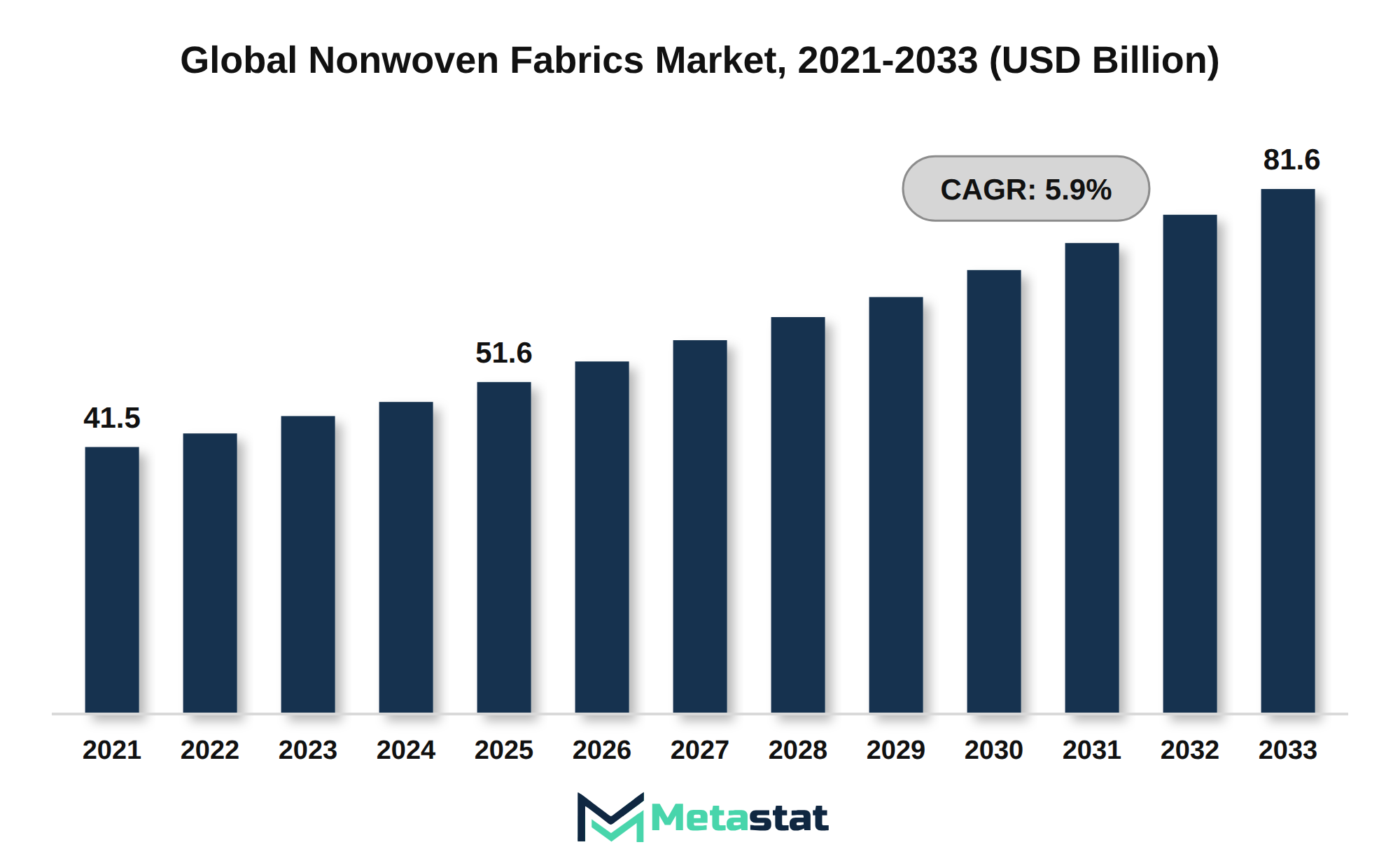
The global Nonwoven Fabrics market was valued at USD 51.6 billion in 2025 and is projected to reach USD 81.6 billion by 2033, growing at a CAGR of 5.9% over the forecast period.
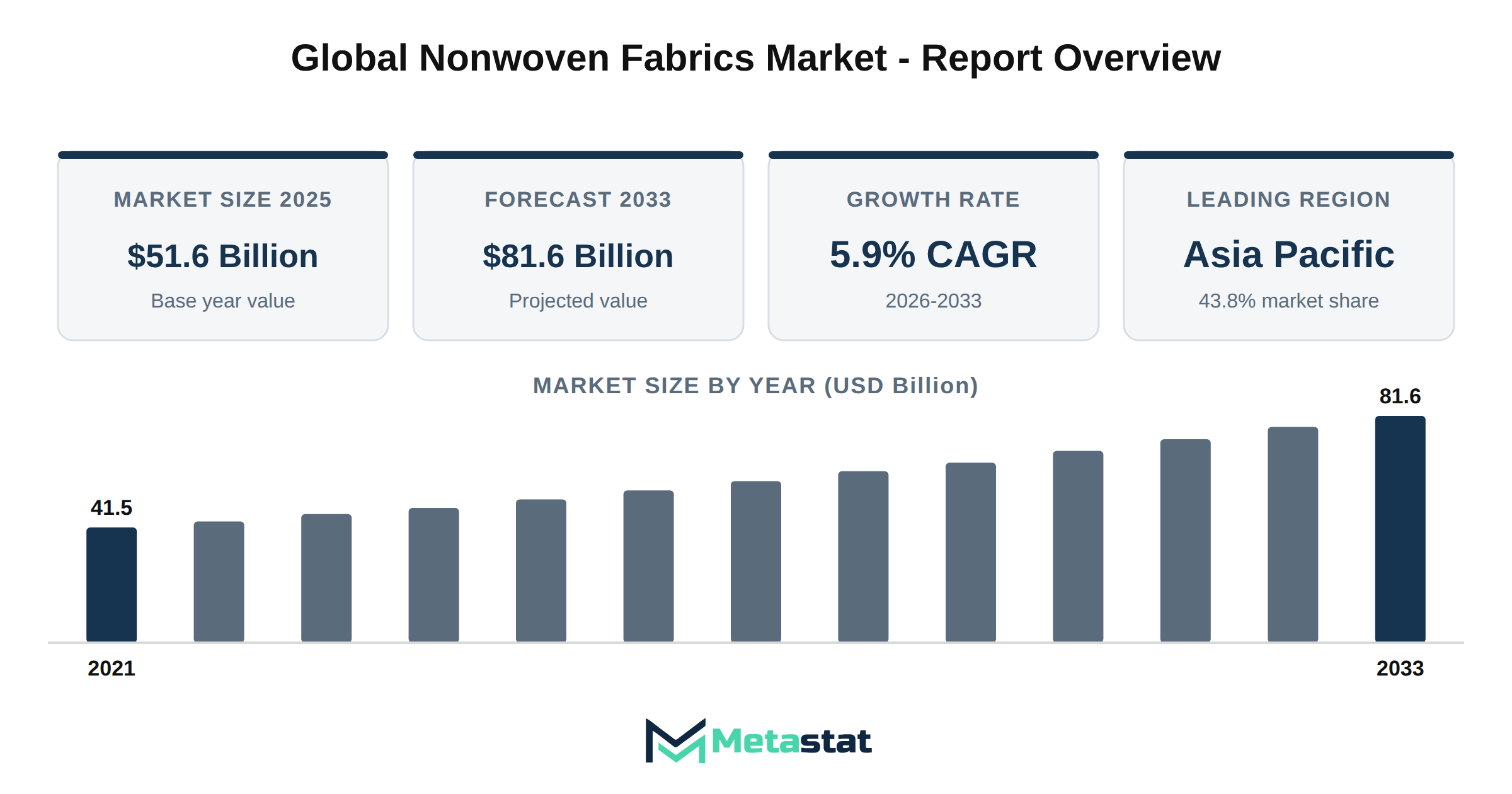
The global Nonwoven Fabrics market reached a valuation of USD 51.6 billion in 2025, with projections indicating growth to USD 81.6 billion by 2033. This growth trajectory reflects a compound annual growth rate (CAGR) of 5.9% over the forecast period.
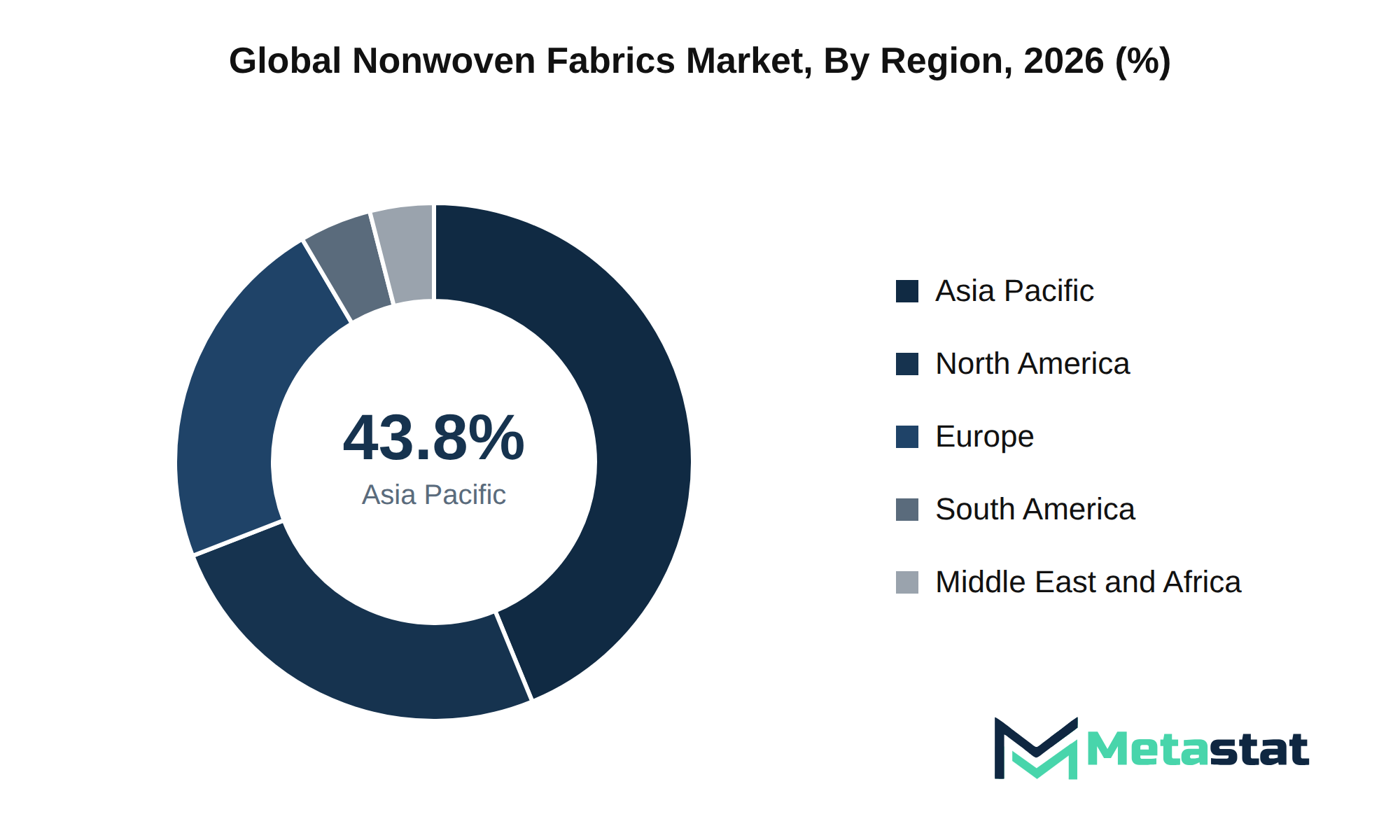
Regional analysis shows that Asia Pacific dominates the market with a share of 43.8%, followed by North America at 25.3% and Europe at 22.4%. The remaining share is distributed across South America and the Middle East and Africa, contributing 4.5% and 4% respectively. By 2033, the North American market is projected to reach USD 19.5 billion, maintaining a CAGR of 5.9% during the forecast period.
In terms of technology segments, the Spunbond technology holds significant market value, projected to rise from USD 21.9 billion in 2026 to USD 32.3 billion by 2033, reflecting a CAGR of 5.7%. The Spunlace and Hydroentangled segment is anticipated to reach USD 12.8 billion by 2033, demonstrating a robust CAGR of 6.4%. Meanwhile, the Needle-Punched and Meltblown technologies are expected to experience growth, with the former reaching USD 10.8 billion and the latter exhibiting a CAGR of 6.7%.
Examining fiber material, Polypropylene is projected to expand from USD 30.2 billion in 2026 to USD 45.6 billion by 2033, achieving a CAGR of 6%. Polyester (PET) is set to reach USD 12.7 billion, while Polyethylene and Polyamide will contribute significantly to the market's diversity in material options.
The product durability segment shows a clear trend toward Disposable Nonwoven products, which are expected to grow from USD 35.8 billion in 2026 to USD 54.4 billion by 2033, corresponding to a CAGR of 6.2%. Meanwhile, the Durable Nonwoven segment, while growing to USD 27.2 billion, will do so at a slower pace, with a CAGR of 5.3%.
The Nonwoven Fabrics market experiences significant growth driven by increasing demand across various sectors, including hygiene products, medical applications, and filtration systems. The rise in population and the subsequent demand for healthcare products drive this growth. Increasing awareness regarding environmental sustainability further influences the shift towards nonwoven materials, which offer advantages over traditional fabrics. Innovations in technology enhance the production efficiency and versatility of nonwoven fabrics, providing new applications in diverse industries.
Regulatory compliance and standards play an essential role in shaping market dynamics. Stringent guidelines regarding product safety and environmental impact drive manufacturers to adopt sustainable practices. Companies increasingly invest in research and development (R&D) to create next-generation innovations that align with these regulations. The focus on decarbonization and circular economy dynamics prompts the industry to explore eco-friendly materials and processes, leading to a more sustainable future.
The supply chain landscape undergoes transformation driven by companies focusing on optimizing logistics architecture and sourcing strategies. Increased competition and market fragmentation contribute to a dynamic environment where mergers and acquisitions (M&A) become prevalent. Strategic partnerships and collaborations enhance companies' capabilities, enabling them to respond effectively to customer demands and market fluctuations. This environment fosters innovation and adaptability among market players.
Macroeconomic headwinds, including inflationary pressures and currency volatility, pose challenges for the market. Companies navigate these complexities by adjusting capital allocation and infrastructure investments. The focus on operational efficiency becomes critical because firms seek to balance capital expenditures (CapEx) and operational expenditures (OpEx). Future strategic outlooks emphasize the importance of adaptability and resilience in a fluctuating economic environment.
The Nonwoven Fabrics market benefits from robust economic growth, particularly in developing nations. Rising GDP levels enhance consumer purchasing power, leading to increased demand for diverse applications including hygiene products and filtration materials. Government prioritization of infrastructure development and capital investments supports the construction and automotive sectors, further propelling market growth.
Investment in technological advancements significantly influences the production of nonwoven fabrics. Companies integrate automation and digital solutions to streamline processes and improve operational efficiency. This technological integration enhances productivity and reduces production costs, allowing manufacturers to offer competitive pricing that stimulates demand across various segments.
Consumer behavior plays a critical role in shaping market dynamics. Urbanization trends lead to evolving lifestyle preferences, driving demand for disposable nonwoven products. The growing focus on sustainability encourages manufacturers to adopt eco-friendly practices, aligning product offerings with consumer expectations for environmentally responsible materials. This focus on sustainability contributes positively to the market's long-term growth trajectory.
The Nonwoven Fabrics market experiences growth fueled by advancements in technological integration, particularly in automation and digitization. Companies adopt artificial intelligence and software solutions to optimize production processes, enhancing operational productivity while reducing costs. By streamlining legacy systems, manufacturers improve efficiency and minimize labor requirements, directly impacting profitability.
This integration extends to supply chain management, where real-time data analytics and automated systems enhance decision-making capabilities. Enhanced visibility into operations allows for better resource allocation and inventory management, addressing challenges in supply chain resilience. These efficiencies contribute significantly to market expansion and attract new investments.
Technological advancements lead to innovation in product offerings, enabling manufacturers to develop new nonwoven materials catering to diverse applications. This innovation drives revenue growth and aligns with evolving consumer preferences for sustainable and high-performance products. Overall, technological integration serves because a key driver for the Nonwoven Fabrics market, influencing both operational strategies and customer engagement.
Regulatory tightening presents a notable restraint within the Nonwoven Fabrics market. Compliance hurdles associated with environmental regulations impose additional costs on producers, impacting operational viability and profit margins. Stringent measures necessitate investments in cleaner technologies, which not be feasible for all players, particularly smaller firms lacking financial resources.
Macroeconomic headwinds further compound these challenges. Capital stagnation and inflationary pressures create a climate of uncertainty, leading to reluctance in making substantial investments in production capacity or innovation. These economic conditions ultimately restrict growth opportunities across various segments within the market.
Supply chain disruption and geopolitical instability contribute to market fragmentation, complicating the distribution of nonwoven fabrics. This fragmentation often results in inconsistent product quality and delivery timelines, diminishing customer satisfaction and trust. Consequently, downstream demand for nonwoven fabrics faces challenges owing to industries experiencing delays and rising prices, which hinder their purchasing decisions.
Resource scarcity, particularly concerning key raw materials, raises operational costs. Manufacturers in the market encounter difficulties in sourcing necessary inputs, leading to increased prices that are likely passed on to end-users. Such dynamics slow growth by reducing consumption across various applications.
Skilled labor deficiencies impose constraints. The market requires a workforce adept in advanced manufacturing techniques and technologies. Limitations in talent availability hinder productivity, causing delays in project timelines and increased labor costs. This situation impacts the competitive positioning of firms.
Geopolitical fragmentation introduces significant challenges within the Nonwoven Fabrics market, impacting global supply chains and trade dynamics. Heightened trade deficits and tariff friction disrupt established procurement strategies, leading to increased production costs for manufacturers. The resulting supply chain instability constrains the availability of raw materials and finished goods, affecting timely market delivery.
Technological disruptions complicate research and development (R&D) integrations, creating hurdles for companies to innovate and adapt products to meet evolving market demands. Companies face challenges surrounding interoperability, hindering the integration of new technologies into existing operations. Fluctuations in feedstock and component costs contribute to pricing volatility, influencing overall market pricing structures and profit margins.
Logistics disruptions, driven by geopolitical tensions, increase operational risks. Tightening global regulatory standards heighten compliance overhead. Companies experience rising input costs, exacerbating margin pressures and driving the need for strategic cost management. Workforce skill gaps emerge because a barrier to adopting advanced technologies, impacting talent retention and productivity across the market.
Environmental lifecycle footprints raise sustainability demands from customers and regulators, forcing companies to adapt their practices to align with decarbonization mandates. Infrastructure gaps limit the ability to retrofit existing facilities to meet new standards, creating implementation bottlenecks. Intellectual property protection deficits and rising cybersecurity risks add layers of complexity, exposing companies to potential vulnerabilities that undermine competitive positions.
Changing downstream demands further challenge the Nonwoven Fabrics market. Saturation and substitution pressures emerge from alternative materials. Companies navigate these multifaceted pressures to maintain their market relevance, highlighting the ongoing necessity for strategic agility within this evolving environment.
The Nonwoven Fabrics market experiences expansion driven by the emergence of innovative applications across various industries. Increasing investments in healthcare, particularly in hygiene products and medical applications, highlight the rising demand for high-performance nonwoven materials. This demand stems from a growing awareness of hygiene and infection control, leading to enhanced product development focused on safety and effectiveness.
Infrastructure modernization acts because a catalyst for market growth by requiring advanced materials that contribute to efficiency and sustainability. Investments in construction and automotive sectors call for durable, lightweight, and high-performance nonwoven solutions. The shift towards sustainability enhances this effect, with manufacturers increasingly aligning their production practices with eco-friendly initiatives.
Geographical expansion opportunities arise from the growing consumption of nonwoven products in emerging markets. Countries in Asia Pacific, particularly China and India, experience a strong upward trajectory in market growth. Increased urbanization and a rapidly growing population in these regions drive demand for diverse applications, including automotive components and filtration products.
Technological disruptions enhance product capabilities, providing avenues for innovation in nonwoven materials. Advancements in manufacturing processes, including spunbond and meltblown technologies, enable the production of high-quality nonwoven fabrics while minimizing costs. This technical evolution supports the market's expansion by offering versatility across various applications.
Digital transformation within procurement practices contributes to changing buying behaviors, influencing how end-users source nonwoven products. The adoption of digital platforms streamlines supply chain management, expanding market reach and improving operational efficiency. Such transitions change commercial models, aligning with the evolving expectations of customers.
Strategic consolidation and cross-industry mergers present significant opportunities for market players. Companies seeking to diversify their portfolios achieve enhanced growth through collaborations that drive innovation and expand product offerings. The consolidation trend enables firms to optimize resource allocation and strengthen competitive positions.
While sustainability imperatives gain prominence, businesses increasingly focus on eco-friendly compliance and policy alignment. This shift encourages the adoption of sustainable practices across the value chain, promoting the use of recycled and biodegradable materials in nonwoven fabric production. Such initiatives align with consumer preferences, supporting long-term market growth.
Overall, the Nonwoven Fabrics market anticipates significant growth driven by emerging applications and evolving industry dynamics, positioning itself for sustained expansion in the foreseeable future.
The Global Nonwoven Fabrics market is segmented based on Technology, Fiber Material, Product Durability, and Application.
Growth within the Spunbond segment reflects increasing demand from various industries, particularly in hygiene products and medical applications. Valued at USD 21.9 billion in 2026, this segment is projected to reach USD 32.3 billion by 2033, at a CAGR of 5.7% during the forecast period. Factors driving this expansion include technological advancements that enhance production efficiency and performance characteristics of spunbond fabrics. Investment in production capabilities and infrastructure further supports market progress, enabling suppliers to meet rising consumer expectations for quality and sustainability.
Continued innovations in product design and functionality fuel the adoption of spunbond fabrics in diverse applications. The regulatory landscape, emphasizing safety and environmental compliance, shapes production practices and sourcing strategies. Rising concerns regarding waste management and the lifecycle of materials motivate suppliers to explore eco-friendly alternatives and develop next-generation spunbond products. Competition intensifies, compelling manufacturers to focus on cost structures and pricing strategies that optimize margins while ensuring product durability and performance.
The Spunbond segment's response to economic fluctuations remains significant. Volatility in raw material sourcing and supply chain disruptions challenge pricing stability. However, strategic opportunity windows arise owing to demand shifts toward sustainable materials and innovative applications. End-use dynamics across sectors indicate a robust future for the Spunbond segment within the broader Nonwoven Fabrics market, characterized by resilience and adaptability.
Growing awareness regarding the benefits of Spunlace / Hydroentangled nonwoven fabrics drives demand within various sectors. Applications in hygiene products, medical supplies, and filtration systems highlight the segment's relevance in addressing specific industry needs. The adaptability of these fabrics allows for enhanced performance in diverse environments, catering to both consumer and industrial markets.
Increased investment in product innovation and advancements in manufacturing technology contribute to accelerated segment expansion. Companies actively pursue next-generation upgrades, improving durability and performance characteristics of Spunlace / Hydroentangled products. The shift towards sustainable and eco-friendly materials aligns with evolving consumer preferences and regulations, promoting market growth.
The Spunlace / Hydroentangled segment is estimated to reach USD 12.8 billion by 2033, at a CAGR of 6.4% during the forecast period. The versatility of these materials in applications ranging from hygiene to construction strengthens demand. The market entry of new players seeking to capitalize on untapped opportunities enhances competition and encourages further innovations.
Regulatory compliance standards and certifications related to safety and environmental impact influence product development strategies. Manufacturers focus on sourcing high-quality raw materials to ensure compliance, thus enhancing overall product integrity. Challenges related to pricing volatility and cost structures persist, with firms adjusting strategies to optimize profit margins while maintaining competitive pricing.
Overall, the Spunlace / Hydroentangled segment significantly influences the Nonwoven Fabrics market, reflecting dynamic consumer demands and technological advancements. Continuous monitoring of industry trends and proactive strategic investments will be essential for companies aiming to capture market share and drive future growth.
Growth in the Needle-Punched segment aligns with increasing demand for durable, high-performance fabrics across various applications. Industries including automotive, filtration, and construction drive this demand, emphasizing the need for reliable materials that deliver strong and resilient performance. Factors contributing to the segment's expansion include technological maturation and advancements in production processes, enhancing product quality while reducing costs.
Investment in research and development supports next-generation upgrades, leading to innovative products tailored to meet specific end-use requirements. The Needle-Punched segment is anticipated to reach USD 10.8 billion by 2033, reflecting a strong trajectory for future growth. Increased focus on regulatory compliance and sustainability standards influences manufacturers to adopt eco-friendly raw materials, further enhancing market prospects.
Downstream applications highlight the versatility of needle-punched fabrics, with significant usage in hygiene products, medical applications, and geotextiles. The ongoing evolution of consumer preferences toward lightweight, durable materials influences consumption patterns, prompting manufacturers to adapt their offerings to meet market expectations. The outlook for this segment remains positive, driven by sustained demand and strategic opportunities for innovation.
Demand for the Meltblown segment arises from its extensive applications in filtration, medical, and hygiene products. This segment is essential in producing high-efficiency particulate air (HEPA) filters, crucial for combating air pollution and ensuring air quality. The increasing focus on health standards drives the adoption of Meltblown fabrics, particularly in the medical mask industry during health crises.
Technological maturation within the Meltblown segment allows for improved production techniques, resulting in higher quality and more efficient materials. Continuous advancements in manufacturing processes enhance the segment's competitive edge and facilitate growth. The segment is projected to grow at a CAGR of 6.7% during the forecast period. This growth corresponds with rising demand from the healthcare sector, where nonwoven materials provide essential barriers against pathogens and contaminants.
Regulatory compliance regarding product standards for medical and hygiene applications drives investment in the Meltblown segment. Manufacturers face pressure to meet stringent health regulations, driving innovation and development of advanced fabrics. The regulatory landscape influences raw material sourcing, with a preference for high-quality, compliant inputs that ensure product safety and efficacy.
Raw material availability and cost fluctuations present challenges within the Meltblown segment. Price volatility for polypropylene, the primary material used in Meltblown production, affects overall profit margins. Strategic sourcing and long-term contracts with suppliers become vital to mitigate risks associated with procurement and pricing. This strategy enhances supply chain resilience, enabling manufacturers to maintain production levels despite market fluctuations.
Looking ahead, capital investment in Meltblown technology presents significant opportunities. Companies are expected to enhance manufacturing capabilities, aligning with market demand for innovative products. This strategic focus on next-generation upgrades positions the segment to capitalize on emerging trends in sustainability and performance, ultimately driving growth within the Nonwoven Fabrics market.
Demand for Airlaid technology within the Nonwoven Fabrics market experiences strong momentum driven by its versatility across various applications, particularly in hygiene products and medical supplies. The unique characteristics of Airlaid fabric, including high absorbency and softness, cater to the needs of consumers seeking comfort and performance in these critical sectors.
Adoption of Airlaid technology is influenced by advancements in manufacturing processes that enhance product quality and production efficiency. Innovations in this segment facilitate the creation of lighter, thinner materials that do not sacrifice durability, appealing to manufacturers aiming to optimize their offerings and reduce costs.
End-use dynamics play a significant role in shaping demand for Airlaid products. The healthcare industry’s emphasis on hygiene and safety drives the need for high-performance materials, while growth in the personal care sector supports the expansion of Airlaid applications in products like diapers and feminine hygiene items. This trend highlights the importance of product evolution to meet emerging consumer preferences.
Regulatory compliance standards regarding safety and environmental impact further influence the Airlaid segment. Manufacturers investing in environmentally friendly raw materials and adhering to industry certifications position themselves favorably within the market, appealing to a growing segment of eco-conscious consumers.
Capital investment outlook remains positive for Airlaid technology. Companies increasingly recognize the strategic opportunities presented by this segment. Continued investments in research and development, along with efficient raw material sourcing, enhance supply chain resilience, positioning the market for sustained growth during the forecast period.
Demand for Wetlaid nonwoven fabrics stems from their versatility and specific applications across various industries. This technology excels in producing lightweight, absorbent materials suitable for hygiene products, medical applications, and filtration systems. The demand for high-performance fabrics in the healthcare sector, particularly for surgical gowns and masks, fuels expansion in this sub-segment. Evolving consumer preferences for sustainable and high-quality products drive manufacturers to innovate within Wetlaid technology, enhancing product performance and eco-friendliness.
Technological maturation shapes the Wetlaid segment. Continuous advancements in production techniques lead to improved efficiency, lower production costs, and enhanced product characteristics. Investment in next-generation upgrades facilitates the development of innovative materials, catering to increasingly specific customer requirements. This trend supports growth in applications and strengthens the competitive positioning of suppliers in the Nonwoven Fabrics market.
Regulatory compliance and certification standards significantly influence the Wetlaid segment. Stricter guidelines regarding product safety and environmental impacts push manufacturers to adopt more sustainable practices and materials. Navigating these regulations requires strategic planning and investment, impacting cost structures and overall pricing strategies. Consequently, shifts in regulation trigger adaptation within the supply chain, prompting suppliers to explore alternative raw materials.
Market dynamics for Wetlaid nonwoven fabrics reflect consumption shifts toward eco-conscious products. Increased awareness among consumers regarding environmental issues drives demand for sustainable alternatives, incentivizing manufacturers to adopt responsible sourcing practices. This transformation in purchasing behavior encourages innovation and investments in sustainable technologies, ultimately enhancing market resilience.
Strategic opportunity windows emerge within the Wetlaid segment, driven by growing applications in emerging markets. The demand for filtration and hygiene products in regions with expanding populations presents significant growth potential. Manufacturers looking to capitalize on these opportunities focus on product evolution and market expansion strategies to remain competitive in the evolving Nonwoven Fabrics market.
Growth within the Stitchbonded segment aligns with the increasing demand for high-performance nonwoven fabrics in various applications. Key drivers include the need for lightweight, durable, and versatile materials that meet stringent requirements across industries. The expansion of this segment benefits from advancements in production technologies, enhancing the efficiency and quality of stitchbonded fabrics. Significant applications in the automotive and construction sectors fuel demand by prioritizing weight reduction and material durability.
Technological maturation enables the development of innovative products, allowing manufacturers to introduce next-gen upgrades that improve performance and sustainability. Evolution in product design contributes to the adaptability of stitchbonded fabrics for multiple uses, including insulation and sound absorption. Regulatory compliance standards increasingly emphasize environmental sustainability, prompting manufacturers to focus on incorporating eco-friendly materials and production methods. These dynamics shape end-use applications and influence consumption patterns, driving growth in the market.
Pricing volatility arises from fluctuations in raw material costs and supply chain vulnerabilities, impacting margin pressures across the segment. Strategic opportunity windows emerge owing to manufacturers investing in research and development to explore disruptive alternatives, further driving innovation. Overall, the Stitchbonded segment of the Nonwoven Fabrics market demonstrates a robust trajectory, characterized by expanding applications and a significant push towards sustainable production practices.
Innovations in Flashspun and Electrospun technologies have positioned this sub-segment because a focal point for advancements within the Nonwoven Fabrics market. These manufacturing methods facilitate the production of fabrics with unique attributes including enhanced strength, lightweight composition, and strong filtration capabilities. Increasing applications in sectors including healthcare, filtration, and apparel highlight the versatility of these materials.
Technological maturation drives adoption across various industries, with producers emphasizing the scalability of Flashspun and Electrospun processes. Next-generation upgrades, including improvements in production efficiency and material properties, enable companies to meet rising consumer demands while maintaining cost-effectiveness. Consumer preferences for lighter and more functional materials influence the trajectory of this sub-segment.
Product evolution continues because manufacturers explore new applications and compositions, enhancing performance characteristics. Regulatory compliance standards in industries like healthcare and automotive necessitate the adoption of high-quality nonwoven fabrics, creating a favorable environment for growth in this segment. While end-use dynamics shift towards sustainable and biodegradable options, producers increasingly focus on developing eco-friendly Flashspun and Electrospun solutions.
Consumption shifts driven by changing consumer behavior highlight the need for innovation in the market. Manufacturers face price volatility and margin pressures, necessitating strategic management of raw material sourcing and production processes. Maintaining supply chain resilience becomes essential to mitigate risks associated with logistics vulnerabilities and material shortages.
Strategic opportunity windows exist for players investing in disruptive alternatives that challenge traditional manufacturing methods. Continued research into the potential for new applications enhances the competitive environment, driving innovation. The Flashspun and Electrospun segment remains a vital area of focus, with substantial implications for the future of the Nonwoven Fabrics market.
Valued at USD 30.2 billion in 2026, the Polypropylene segment is projected to reach USD 45.6 billion by 2033, reflecting a CAGR of 6% during the forecast period. This growth is attributed to increasing applications across multiple industries, including hygiene products, medical supplies, and automotive components. The lightweight and durable characteristics of polypropylene make it an attractive choice for manufacturers, particularly in the production of disposable nonwoven fabrics.
Technological advancements in production processes drive segment expansion, enabling improved product performance and cost efficiency. Continued investments in next-generation technologies enhance the process of creating polypropylene-based nonwovens, strengthening the market's competitive position. End-use dynamics shift towards sustainable and multifunctional materials, with polypropylene positioned favorably to meet these evolving demands.
Regulatory compliance standards influence market conditions, particularly regarding environmental impact and material safety. Adherence to these standards shapes product development and marketing strategies, promoting innovation within the segment. Emerging markets exhibit significant consumption shifts, with rising demand for polypropylene reinforcing growth prospects in developing economies.
The Polypropylene segment within the Nonwoven Fabrics market demonstrates robust potential for growth, driven by increasing demand across various applications, technological advancements, and evolving regulatory landscapes.
Growth in the Polyester (PET) segment aligns with its increasing applications across various industries, particularly in hygiene products and medical applications. This segment is projected to reach USD 12.7 billion by 2033, at a CAGR of 5.5% during the forecast period. Rising demand for lightweight, durable, and cost-effective materials drives market players to explore advancements in manufacturing technologies, contributing to enhanced product performance. Technological maturation facilitates the introduction of next-generation upgrades, improving the quality and functionality of Polyester (PET) fabrics.
Shifts in consumption patterns toward sustainable and eco-friendly products influence the evolution of this segment. Regulatory compliance standards and certifications emphasize the need for lower environmental impact, motivating manufacturers to innovate while adhering to these guidelines. Ongoing development of disruptive alternatives, including bio-based materials, introduces competition and requires established players to adapt their strategies to maintain market relevance.
Investment in research and development remains critical for capturing strategic opportunity windows. Market participants focus on optimizing supply chain resilience and raw material sourcing to mitigate vulnerabilities. With the Polyester (PET) segment anticipated to experience steady growth, companies are positioned to benefit from expanding end-use dynamics in the Nonwoven Fabrics market.
Demand for polyethylene nonwoven fabrics drives significant market activity due to their lightweight, durable, and cost-effective properties. These attributes generate strong interest across various end-use applications, including hygiene products and medical supplies. The segment is projected to reach USD 5.7 billion by 2033, reflecting ongoing investments in production capacity and technological advancements.
Adoption of polyethylene nonwoven materials aligns with shifts toward sustainable practices, driven by manufacturers exploring bio-based alternatives to traditional petroleum-based sources. This evolution in sourcing supports compliance with emerging regulatory standards that emphasize environmental responsibility. The shift toward polyethylene contributes to competitive pricing strategies while enhancing profitability across the supply chain.
Technological maturation in production techniques enhances the quality and performance of polyethylene nonwoven fabrics. Innovations in manufacturing processes enable greater design flexibility and functionality, allowing suppliers to cater to evolving consumer preferences in various applications. These advancements shape the future of the nonwoven fabrics market.
Increased focus on product durability ensures polyethylene remains a viable choice for disposable and durable nonwoven applications. This trend supports consistent demand growth, driven by a broad range of industries, including automotive, construction, and filtration. The polyethylene segment exemplifies the dynamic nature of the nonwoven fabrics market, reflecting both current trends and future opportunities.
Growth within the Polyamide sub-segment aligns with increasing applications in automotive, medical, and hygiene products, driven by its strength and durability. The rising focus on lightweight and high-performance materials enhances demand across various industries. Polyamide's resistance to abrasion and chemicals supports its adoption in specialized applications, positioning it favorably within the Nonwoven Fabrics market.
Investment in next-generation upgrades and technological maturation supports the segment’s expansion. Manufacturers are exploring innovative production techniques, enhancing product properties while optimizing cost structures. This development enhances efficiency and sustainability, catering to the evolving requirements of downstream applications.
Regulatory compliance and certifications surrounding safety and environmental standards influence market dynamics. Adherence to stringent regulations enhances product acceptance in sectors including healthcare and construction, reinforcing demand for Polyamide nonwovens. The segment is projected to grow at a CAGR of 5% during the forecast period, reflecting confidence in its market potential.
Consumption shifts towards sustainable and high-performance materials indicate a strategic opportunity window for Polyamide. The segment's resilience against price volatility and supply chain vulnerabilities adds to its attractiveness for manufacturers aiming to mitigate risks. Overall, the Polyamide sub-segment is expected to continue evolving, driven by innovation and expanding applications within the market.
Recent trends in the Nonwoven Fabrics market indicate a rising interest in Wood Pulp because a fiber material. This growth results from increased environmental awareness and demand for sustainable products. Wood Pulp offers a renewable source for nonwoven fabrics, attracting industries aiming for eco-friendly solutions.
Adoption of Wood Pulp aligns with various applications across sectors including hygiene products, medical, and automotive components. Industries transitioning towards biodegradable options find Wood Pulp advantageous owing to its natural origin and potential for reduced environmental impact.
Technological advancements in production processes enhance the viability of Wood Pulp within the market. Innovations in manufacturing techniques allow for improved performance characteristics, supporting the development of high-quality nonwoven products. This evolution drives further interest from manufacturers looking to incorporate more sustainable materials into their offerings.
Regulatory frameworks increasingly favor sustainable practices, contributing to Wood Pulp's market relevance. Compliance with stringent environmental regulations encourages manufacturers to seek renewable alternatives, reinforcing Wood Pulp’s role in the evolving landscape of nonwoven fabrics.
Concerns regarding supply chain resilience and raw material sourcing present challenges for Wood Pulp. Fluctuations in raw material availability impact pricing and production stability. Strategic investments and partnerships within the supply chain mitigate these risks, promoting a more reliable flow of materials.
Wood Pulp faces competition from synthetic fibers and other natural alternatives. The challenge lies in balancing performance and sustainability while addressing consumer preferences. By emphasizing the environmental benefits and potential innovations, market participants position Wood Pulp favorably against disruptive alternatives.
Future capital investments in Wood Pulp technology and production facilities indicate a strategic opportunity window. Expanding production capabilities and enhancing product offerings accelerate market penetration, driving demand for this sustainable fiber material in the Nonwoven Fabrics market.
Growing interest in sustainable materials drives demand for Cotton & Other Natural Fibers within the Nonwoven Fabrics market. Natural fibers offer biodegradable properties, appealing to environmentally conscious consumers and manufacturers. This segment aligns with trends toward sustainable production practices and eco-friendly products, strengthening long-term demand.
Technological advancements enhance the performance and versatility of Cotton & Other Natural Fibers. Innovations in processing techniques, including improved fiber bonding and blending, contribute to the segment's attractiveness for various applications. Increased functionality and durability of products featuring natural fibers expand their appeal across different sectors, resulting in wider commercial adoption.
End-use dynamics indicate a shift toward incorporating natural fibers in hygiene products, medical applications, and automotive components. Rising demand for eco-friendly options across these industries supports growth. Regulatory compliance and certifications related to sustainability standards drive adoption of Cotton & Other Natural Fibers in the market, influencing investment across the value chain.
Cost structures within the segment experience pressures from fluctuating raw material prices and sourcing challenges. Suppliers invest in optimizing supply chain resilience to mitigate risks associated with price volatility. Strategic opportunities arise for manufacturers to enhance product offerings by integrating Cotton & Other Natural Fibers into diverse applications, creating pathways for growth.
Interest in nonwoven fabrics derived from alternatives like PLA, Aramid, PPS, PTFE, and Polyimide demonstrates significant demand drivers primarily stemming from their unique properties and applications. These materials often exhibit high performance in specialty applications, particularly in filtration and medical sectors, which enhances their adoption across various industries. The versatility of these fibers facilitates numerous product innovations, contributing to a situation where manufacturers actively seek integration into advanced technologies.
Ongoing technological maturation of these materials supports growth in the Nonwoven Fabrics market, driven by companies exploring enhancements in production techniques that improve efficiency and reduce costs. Downstream applications, particularly in filtration and protective gear, require high standards of performance, which influences manufacturers' choices regarding raw materials. A strong competitive environment emerges, encouraging investments in next-generation upgrades that promise improved functionality and durability.
Regulatory compliance standards focus on safety and environmental impact, compelling manufacturers to align with evolving regulations. This alignment not only influences material selection but drives the demand for certifications that ensure product quality and consumer safety. Cost structures and pricing volatility within this sub-segment often reflect market dynamics, impacting margins and overall profitability for suppliers.
Strategic opportunity windows present themselves owing to industries continuously shifting toward sustainable raw materials and innovative applications. The potential for disruptive alternatives encourages manufacturers to reassess their product portfolios, creating a robust environment for investment and growth. Strategic analyses of market trends highlight the importance of adapting to consumer preferences, which increasingly favor environmentally friendly materials.
In the Disposable Nonwoven segment, the market is valued at USD 35.8 billion in 2026 and is projected to reach USD 54.4 billion by 2033, at a CAGR of 6.2% during the forecast period. The increasing demand for hygiene products, medical applications, and disposable personal protective equipment drives growth in this segment. Technological advancements contribute to enhanced product performance and efficiency, encouraging manufacturers to adopt innovative processes. The adoption of environmentally friendly materials influences consumption shifts, reflecting rising consumer preferences for sustainable options.
Regulatory compliance standards dictate product quality and safety, boosting demand within the Disposable Nonwoven market. Fluctuations in raw material prices impact cost structures and create margin pressures, necessitating strategic procurement practices among producers. Supply chain resilience becomes crucial in mitigating logistics vulnerabilities and ensuring product availability. This segment's expansion aligns with the increasing focus on health and safety measures, particularly following global health crises, creating opportunities for investment in production capacity and technology upgrades.
Steady growth in the Durable Nonwoven segment reflects increasing demand across various applications, particularly in hygiene products, medical supplies, and automotive sectors. This demand results from a shift toward higher quality materials that enhance performance and longevity. The segment is estimated to reach USD 27.2 billion by 2033, at a CAGR of 5.3% during the forecast period.
Technological maturation drives innovation within the market, with companies investing in next-generation upgrades that improve product performance and sustainability. This evolution aligns with regulatory compliance standards emphasizing environmentally friendly practices and the need for certifications that validate product quality. While companies adapt to these changes, evolving cost structures create significant concerns, influencing pricing volatility and margin pressures within the segment.
Disruptive alternatives and substitution risks persist, urging firms to enhance supply chain resilience and raw material sourcing strategies. Strong competition among players creates strategic opportunity windows, encouraging firms to leverage technological advancements and capitalize on evolving consumer preferences. The Durable Nonwoven segment reflects a changing environment that will continue to shape the trajectory of the Nonwoven Fabrics market.
Increasing environmental concerns and stringent regulations surrounding air quality and pollution have heightened demand for filtration applications within the Nonwoven Fabrics market. Filtration products employ nonwoven fabrics due to their superior filtration efficiency, lightweight nature, and cost-effectiveness. Industries including automotive, healthcare, and water treatment increasingly adopt these materials to enhance performance and comply with regulatory standards, strengthening long-term demand.
Technological advancements play a significant role in shaping the filtration segment. Innovations in nonwoven manufacturing processes, including advanced meltblown and spunbond technologies, improve the ability to produce high-performance filtration media. These upgrades enable manufacturers to create materials tailored to specific applications, enhancing filtration capability across various sectors and increasing competitive positioning.
While the demand for clean air and water intensifies, the market experiences a shift towards more efficient filtration solutions. This trend reflects a growing consumer preference for sustainable and high-efficiency products, further driving innovation and investment in the filtration segment. The need for compliance with safety and environmental regulations drives the development of new filtration technologies, shaping the future of the Nonwoven Fabrics market and expanding the addressable base.
Cost structures within the filtration segment reflect the varying quality and materials used in production. Premium nonwoven fabrics that offer superior filtration properties often demand higher prices, while budget options exist for less critical applications. Pricing volatility arises from fluctuations in raw material costs, necessitating strategic sourcing and supply chain resilience to mitigate potential margin pressures and reinforce market stability.
Disruptive alternatives, including advancements in traditional filtration systems, pose challenges to the nonwoven filtration segment. However, ongoing investments in research and development help address these risks by leading to the introduction of next-generation nonwoven materials with enhanced properties. The continuous evolution of filtration technology opens strategic opportunity windows for manufacturers within the market, supporting long-term growth.
Market dynamics in the hygiene products segment reflect a growing emphasis on health and sanitation, driving demand for nonwoven fabrics. Factors contributing to this trend include the increasing use of personal protective equipment and the expansion of disposable hygiene products. Rising awareness regarding hygiene standards accelerates adoption across various applications, particularly within healthcare and consumer goods.
Technological advancements enhance the functionality of nonwoven fabrics, enabling improved performance in absorbency, filtration, and softness. Innovations in materials and production processes support the development of next-generation products that meet evolving consumer expectations. This evolution creates an environment that supports segment expansion, attracts investment, and encourages new entrants into the market.
Shifts in consumption patterns, rooted in changing lifestyles and demographic trends, play a crucial role in the growth trajectory of the hygiene products segment. Increased urbanization and a rising middle-class population contribute to heightened demand for personal hygiene products, creating significant opportunities for manufacturers. Regulatory compliance further shapes product offerings, with stringent standards guiding the materials and processes used in production.
Cost structures and pricing strategies remain critical considerations for stakeholders in the hygiene products segment. Fluctuations in raw material prices influence overall production costs, necessitating agile sourcing strategies to mitigate margin pressures. Strategic opportunity windows emerge for firms that leverage innovative materials and efficient manufacturing practices. This approach allows firms to capitalize on the expanding nonwoven fabrics market.
Increasing demand for nonwoven fabrics in the healthcare sector stems from the rising emphasis on hygiene and infection control. Ongoing global health challenges highlight the importance of protective gear including masks, gowns, and drapes made from nonwoven materials. Hospitals and healthcare facilities increasingly rely on these products for their disposable nature and effectiveness in preventing contamination, reinforcing long-term demand.
Technological advancements in nonwoven fabric production enhance product performance, including improved filtration capabilities and comfort. Manufacturers invest in next-generation technologies to develop materials that cater specifically to medical applications, driving innovation within the segment. The continual evolution of products in this space aligns with the increasing sophistication of healthcare requirements, expanding the addressable base.
Regulatory compliance influences the adoption of nonwoven fabrics in the medical field. Stringent standards and certifications ensure that products meet safety and performance benchmarks, influencing buyer decisions. Healthcare providers increasingly prioritize certified materials to guarantee the safety and efficacy of their medical supplies, strengthening market competition.
Cost structures in the medical sector reflect the high value placed on quality and reliability. While the initial investment in advanced nonwoven fabrics is significant, their long-term benefits in terms of durability and performance provide a compelling business case. The market continues to see growth opportunities driven by this balance of cost and quality, increasing investment across the value chain.
Supply chain resilience remains a focus for manufacturers serving the healthcare sector, particularly in the wake of global disruptions. Ensuring a steady flow of raw materials and maintaining logistics integrity are vital for meeting the rising demands of the market. Strategic partnerships and local sourcing initiatives increasingly mitigate risks associated with longer supply chains, enhancing operational efficiency.
Increasing demand for lightweight materials in the automotive sector drives growth in the Automotive Components sub-segment of the Nonwoven Fabrics market. Manufacturers prioritize weight reduction to enhance fuel efficiency and lower emissions, leading to higher adoption of nonwoven fabrics that offer desirable properties including durability, flexibility, and acoustic insulation.
Technological advancements fuel segment expansion, with innovations in production methods enhancing the performance characteristics of nonwoven materials. These materials often replace traditional substrates in various automotive applications, including interior linings, insulation, and soundproofing. The shift towards more sustainable manufacturing practices influences the segment, with producers integrating eco-friendly fibers and recycling initiatives into their processes.
Regulatory compliance remains a critical factor, with increasing emphasis on emissions standards and safety regulations impacting material selection in automotive applications. This trend accelerates demand for nonwoven fabrics that meet or exceed industry standards, ensuring manufacturers remain competitive while adhering to regulatory frameworks.
Shifts in consumer preferences contribute to the dynamics of the Automotive Components sub-segment, with a growing inclination towards electric and hybrid vehicles influencing the types of materials used. Manufacturers focus on developing nonwoven fabrics tailored specifically for the needs of emerging vehicle technologies, supporting the overall growth trajectory of the Nonwoven Fabrics market.
Rising applications of geotextiles in various sectors, including construction and civil engineering, drive demand for nonwoven fabrics. These materials offer excellent durability and performance in soil stabilization, erosion control, and filtration, making them essential in infrastructure projects. The increasing focus on sustainable construction practices further boosts interest in geotextiles, driven by alignment with eco-friendly building initiatives. Regulatory compliance standards regarding environmental impact influence the market, encouraging the adoption of nonwoven fabrics that meet specific criteria for performance and sustainability.
Advancements in production technologies enhance the functionality and application range of geotextiles. Innovations in fiber technology and manufacturing processes enable the development of next-generation geotextiles that provide improved strength and resistance to degradation. This technological maturation supports market growth by expanding product offerings and improving cost-effectiveness. Consumption shifts towards more sustainable and efficient materials in construction highlight the importance of geotextiles, which serve vital roles in various projects while addressing environmental concerns.
The market landscape for geotextiles benefits from strategic opportunity windows, particularly in regions focusing on infrastructure development. Investment in construction and civil engineering projects contributes to heightened demand for nonwoven fabrics, emphasizing the need for resilience in supply chains and raw material sourcing. Challenges related to pricing volatility and margin pressures are present, particularly in sourcing high-quality raw materials. Effective management of these factors, combined with a growing emphasis on sustainable practices, shapes the future of geotextiles within the nonwoven fabrics market.
Increasing demand for nonwoven fabrics in construction applications reflects a focus on lightweight, cost-effective, and durable solutions. The construction sector experiences a shift towards materials that enhance performance and sustainability, which aligns with the evolving needs of builders and developers. Product evolution in this segment emphasizes innovations that improve strength, insulation, and moisture resistance, catering to modern building requirements and reinforcing long-term demand.
Technological maturation in the fabric manufacturing processes enables the production of high-quality nonwovens tailored for construction materials. Adoption of advanced technologies, including hydroentanglement and needle-punching, enhances the structural integrity and versatility of nonwoven fabrics. These developments contribute to a broader range of applications within the construction industry, including roofing, insulation, and geotextiles, expanding the addressable base for manufacturers.
Regulatory compliance standards increasingly influence material selection in construction. Stricter building codes and environmental regulations encourage the use of nonwoven fabrics that meet sustainability criteria. This trend reinforces the demand for materials that fulfill functional requirements and contribute to eco-friendly construction practices, strengthening market adoption.
Cost structures within the construction market demonstrate sensitivity to raw material prices and labor costs. Fluctuations in the supply of raw materials, including polypropylene and polyester, impact pricing volatility and margin pressures for manufacturers. Strategic opportunity windows arise for companies that optimize their sourcing strategies, ensuring competitive pricing and reliable delivery to meet demand in the nonwoven fabrics market, enhancing overall competitiveness.
Interest in nonwoven fabrics for applications in furniture, bedding, packaging, and electrical sectors continues to grow. This segment benefits from evolving consumer preferences towards lightweight, versatile, and cost-effective materials. Enhanced durability and functionality of nonwoven fabrics drive adoption across various applications, particularly in the packaging industry, where lightweight materials gain traction, strengthening long-term demand.
Technological advancements in manufacturing processes contribute significantly to the evolution of this segment. Innovations in nonwoven technologies, including advanced bonding techniques, enhance the performance characteristics of these materials, thereby expanding their utility in diverse applications. Continued exploration of next-generation materials and processes creates opportunities for growth within the Nonwoven Fabrics market, increasing investment across the value chain.
The shift towards sustainability influences consumer choices, prompting manufacturers to explore eco-friendly alternatives. Nonwoven fabrics derived from recycled or biodegradable sources appeal to environmentally conscious consumers, driving demand. Regulatory compliance regarding packaging waste and sustainability further supports this trend, pushing manufacturers to innovate and adapt product offerings, reinforcing the segment's position.
End-use dynamics highlight the increasing integration of nonwoven fabrics in various sectors, particularly within packaging and bedding applications. The adaptability of nonwoven materials allows for customization, catering to specific industry requirements. While the market continues to evolve, exploration of disruptive alternatives and strategic opportunity windows remains crucial for stakeholder success, widening the addressable base.
Based on geography, the Global Nonwoven Fabrics market is divided into North America, Europe, Asia-Pacific, South America, Middle East, and Africa.
North America exhibits significant growth in the Nonwoven Fabrics market, driven by increasing demand across various sectors, including hygiene products, healthcare, and automotive applications. The region's robust infrastructure and high manufacturing capabilities position it favorably for expanding market share. The market is projected to expand at a CAGR of 5.9% during the forecast period, reaching a market size (TAM) of USD 19.5 billion by the end of 2033.
In 2025, North America accounts for a 25.3% share of the global market. A combination of regional resource availability and energy grid resiliency supports the production of nonwoven fabrics, creating a competitive environment among local players. The presence of established companies enhances market dynamics, while localized procurement strategies adapt to cultural preferences and regional B2B buying behaviors.
Geopolitical factors and trade policies contribute to the regional landscape, influencing supply chain regionalization and nearshoring initiatives that prioritize domestic manufacturing. These dynamics create opportunities for market participants to enhance operational efficiencies while meeting local compliance mandates. The overall outlook for the Nonwoven Fabrics market in North America reflects a mature market poised for incremental growth driven by high-value replacement cycles and emerging market front-runners.
The Nonwoven Fabrics market in Europe reflects significant growth opportunities driven by various factors, including a strong emphasis on sustainability and innovation in manufacturing processes. Countries including Germany, France, the UK, Italy, and Spain exhibit robust demand for nonwoven materials, particularly in hygiene products and medical applications. This demand results from evolving consumer preferences towards high-quality, durable, and eco-friendly products.
Germany and France lead in technological advancements, enhancing production efficiency and product quality. These nations benefit from modernized infrastructure, which supports rapid adoption of innovative nonwoven technologies. Italy and Spain's growing focus on efficient manufacturing aligns with increasing requirements for disposable nonwovens in healthcare and hygiene sectors.
Russia presents an emerging opportunity within the market, driven by increased investments in local manufacturing and an expanding consumer base. The rest of Europe contributes to market growth, with rising awareness of the benefits of nonwoven fabrics in various applications, including automotive, filtration, and construction materials.
Regional compliance with environmental regulations creates a competitive landscape focused on sustainability. The market is characterized by a consolidation trend among domestic participants and a shift towards localized procurement dynamics. This evolution positions the European market to address both local and cross-border trade corridors effectively, enhancing its global standing.
Overall, the Nonwoven Fabrics market in Europe reflects a blend of maturity and innovation, enabling incremental growth through high-value replacement cycles and emerging application opportunities. Continued emphasis on quality and sustainability is expected to drive future advancements and market expansion in the region.
Asia-Pacific represents a significant opportunity within the Nonwoven Fabrics market, accounting for 43.8% of the global market share in 2025. The region's robust industrial base, coupled with a rapidly expanding middle class, fuels demand in various sectors, including hygiene products, medical applications, and automotive components.
China operates in the market, with substantial investments in manufacturing capabilities and technological advancements. Japan, known for its high-quality standards, increasingly adopts nonwoven solutions in healthcare and hygiene, driving the market's growth. India experiences a surge in demand driven by urbanization and rising disposable incomes, while South Korea enhances its production capabilities to meet local and export requirements.
Emerging markets in Southeast Asia present untapped potential, especially in disposable nonwoven applications due to growing awareness of hygiene and health products. Infrastructure modernization initiatives across the region improve local production and distribution networks, enhancing accessibility to nonwoven fabrics.
Regional competitive landscapes feature several domestic leaders including Freudenberg Performance Materials and Suominen Corporation, which enhance their market presence through strategic partnerships and localized manufacturing. With ongoing supply chain regionalization trends, companies are actively pursuing nearshoring initiatives to optimize production and reduce lead times, ultimately driving the expansion of the market.
Investment in research and development continues to drive innovation in nonwoven technologies, leading to the introduction of advanced materials and applications. The demand for sustainable and eco-friendly products further supports market growth, aligning with the region's environmental goals and consumer preferences.
Growth in the Nonwoven Fabrics market in South America finds strong support from increasing applications across various sectors, particularly in hygiene and medical products. Brazil and Argentina serve because the primary markets, driven by rising demand for innovative and cost-effective solutions in these areas. Ongoing infrastructure modernization efforts enhance production capabilities and distribution networks, supporting the region's growth trajectory.
The presence of domestic players alongside multinational corporations strengthens competition within the market. Local companies focus on tailoring their products to meet regional preferences, influencing procurement dynamics and buying behaviors. Increased localization in manufacturing processes, combined with cross-border trade initiatives, contributes to expanding market potential by providing closer access to key markets.
Despite a modest share of 4.5% of the global market in 2025, the Nonwoven Fabrics market in South America demonstrates promising growth prospects. Continued foreign direct investment flows into the region highlight confidence in its market potential. The anticipated evolution of regulatory frameworks will refine compliance mandates, further encouraging investment and expansion within this market.
The Nonwoven Fabrics market in the Middle East and Africa reflects unique dynamics shaped by regional demand drivers. Growth in this region is supported by increasing applications in the healthcare and hygiene sectors, driven by rising population health awareness and the ongoing need for protective materials. In Saudi Arabia and the UAE, significant investments in healthcare infrastructure and modernization initiatives enhance demand, particularly for disposable nonwoven products.
South Africa exhibits a growing emphasis on localized manufacturing, influenced by increasing procurement from domestic suppliers. This trend contributes to strengthening local supply chains and enhancing market accessibility. Cultural nuances impact purchasing behaviors, with a shift toward sustainable and eco-friendly materials becoming more prevalent among consumers.
Long-term growth potential exists in the Rest of Middle East and Africa, where market penetration remains relatively low. The focus on regional manufacturing capabilities and the adaptation of products to meet local needs enhances competitiveness. The region's resource availability and investment in infrastructure modernization support these growth vectors, positioning the market for advancements in the coming years.
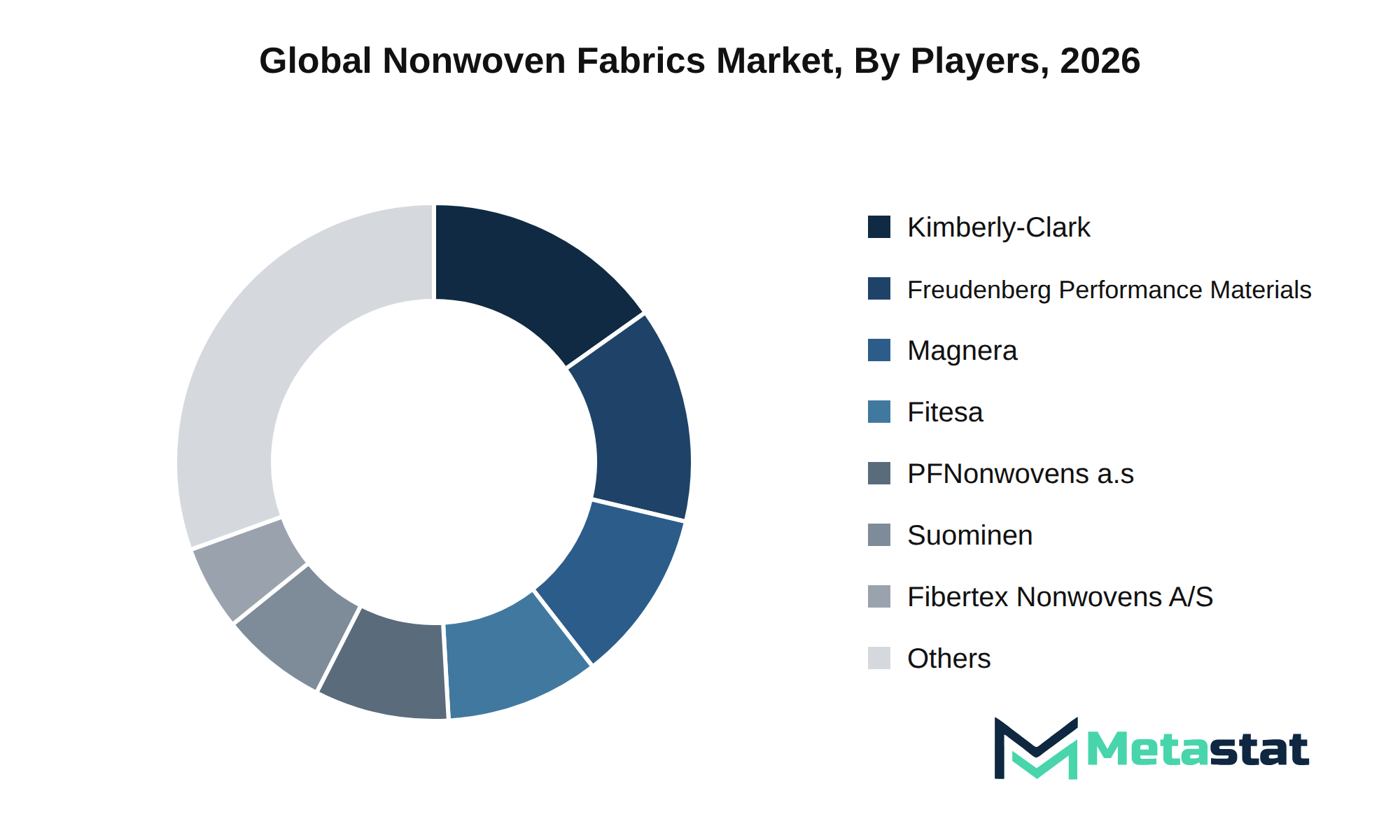
The Nonwoven Fabrics market experiences significant dynamics driven by strategic consolidation and mergers and acquisitions (M&A). Companies including Magnera Corporation and Freudenberg Performance Materials engage in strategic alliances and joint ventures to enhance market position and expand product offerings. This collaborative approach encourages innovation and enables firms to leverage proprietary technologies while improving their R&D pipelines.
Key players like Kimberly-Clark Corporation and Fitesa S.A. implement robust go-to-market strategies that emphasize product differentiation and customer retention. These strategies facilitate brand equity dynamics and create barriers to entry for new entrants, ensuring stability within the market. Competitive pricing architectures further enable established companies to maintain market share against emerging competitors.
The growing focus on sustainability and technological defensibility leads to increased investment in intellectual property (IP) portfolios among major players, including Toray Industries, Inc. and DuPont de Nemours, Inc. This investment strengthens their competitive outlook and prepares them for evolving market demands. Overall, ongoing competitive pressures require companies to adopt defensive imperatives and strategic growth vectors to thrive in a rapidly changing environment.
Firms like Ahlstrom and JNC Corporation exemplify this adaptability, integrating value chains and enhancing supply chain dominance to optimize procurement leverage.
Market size is forecast to rise from USD 51.6 billion in 2025 to over USD 81.6 billion by 2033. The base case anticipates growth at a 5.9% CAGR, driven by advancements in production technologies and increasing applications across various industries. In the bull case scenario, a surge in demand for sustainable and innovative nonwoven solutions could accelerate market growth further, while the bear case reflects challenges related to supply chain disruptions and regulatory changes that hinder expansion.
The Nonwoven Fabrics market undergoes transformation due to macroeconomic conditions, with shifts in consumer behavior influencing downstream demand. Emerging technologies and research and development activities significantly impact product lifecycles, prompting companies to adapt quickly to market needs. Regulatory changes and compliance milestones play a crucial role in shaping market dynamics, requiring firms to align strategies with evolving standards.
Geopolitical realignments and changing trade corridors affect global supply chains, influencing the availability of raw materials and production costs. Strategic capital allocation and infrastructure investments support growth opportunities in high-demand regions. Companies focusing on unmet enterprise needs identify high-growth pockets, enhancing competitive positioning and overall market share.
The report strategically identifies and profiles the key market players and analyses their core competencies in each sub-segment of the Nonwoven Fabrics market.
Report Attributes | Details |
Study Period | 2021-2033 |
Base Year | 2025 |
Estimated Year | 2026 |
Forecast Period | 2026-2033 |
Historical Period | 2021-2025 |
Growth Rate | CAGR 5.9% from 2026 to 2033 |
Revenue Unit | USD billion |
Segmentation | By Technology, Fiber Material, Product Durability, Application, and Region |
By Region | North America (By Technology, Fiber Material, Product Durability, Application, and Country)
|
Europe (By Technology, Fiber Material, Product Durability, Application, and Country)
| |
Asia Pacific (By Technology, Fiber Material, Product Durability, Application, and Country)
| |
South America (By Technology, Fiber Material, Product Durability, Application, and Country)
| |
Middle East and Africa (By Technology, Fiber Material, Product Durability, Application, and Country)
|
Find answers to common questions about this report
The Nonwoven Fabrics market size was valued at USD 51.6 billion in 2025, according to the Metastat Insights study.
The Nonwoven Fabrics market is projected to grow at a CAGR of 5.9% during the forecast period from 2026 to 2033.
The North America Nonwoven Fabrics market size is estimated to reach USD 19.5 billion by 2033.
The Spunbond segment leads the Nonwoven Fabrics market, with a projected value of USD 32.3 billion by 2033. This segment's growth reflects its significant share compared to other technology segments.
Key drivers for the Nonwoven Fabrics market include robust economic growth in developing nations, which enhances consumer purchasing power and drives demand for applications including hygiene products and filtration materials. Technological advancements in automation and digital solutions streamline production processes, improve efficiency, and reduce costs, stimulating market growth.
Asia Pacific holds the dominant share of the Nonwoven Fabrics market, accounting for 43.8% in 2025. This region's significant share reflects its extensive manufacturing capabilities and demand across various applications.
Regulatory tightening restrains Nonwoven Fabrics market growth by imposing compliance costs on producers, affecting profit margins. Macroeconomic headwinds, including capital stagnation and inflationary pressures, create uncertainty and reluctance in making substantial investments. Supply chain disruptions and resource scarcity complicate market dynamics, increasing operational costs and hindering growth opportunities.
Robust economic growth in developing nations enhances consumer purchasing power, driving demand for diverse applications including hygiene products and filtration materials. Technological advancements, particularly in automation and digital solutions, streamline production processes, reduce costs, and enable manufacturers to offer competitive pricing, further stimulating product adoption across various segments.
The Nonwoven Fabrics market is estimated to reach a valuation of USD 81.6 billion by 2033.
Key players operating in the Nonwoven Fabrics market include Magnera Corporation, Freudenberg Performance Materials, Kimberly-Clark Corporation, Fitesa S.A., PFNonwovens a.s., Suominen Corporation, and DuPont de Nemours, Inc.
The analysts below cover Chemicals and Materials research at Metastat Insights.
LEAD ANALYST
Utkarsh Khirodkar is a Lead Market Research Analyst at MetaStat Insight, specializing in market intelligence, technology sector assessments, and competitive strategy.

INDUSTRY CONSULTANT - CHEMICALS & ADVANCED MATERIALS
Chemicals and Materials · Machinery & Equipment · Packaging
Amit Gadhekar Consultant for Chemicals and Materials at MetaStat Insight, directing sector-specific intelligence, research, and strategic consulting across global chemical and processing markets.
Assessing commercial microgrid software adoption requires looking past top-level installation numbers and examining utility interconnection queues. The research provided verifiable data on average permitting timelines, tariff structures, and battery storage integration costs across regional utility territories. That grounded perspective was valuable for our team when building five-year demand projections for industrial microgrid controllers.
Ambulatory surgical centers have very different purchasing cycles for robotic-assisted surgery platforms than major hospital networks. The MetaStat Insight study focused squarely on capital expenditure depreciation, procedural reimbursement pathways, and surgeon training overhead. That operational clarity made it much simpler to validate multi-year procedure growth forecasts against actual ambulatory center adoption patterns.
When planning edge sensor rollouts across refinery environments, generic IoT reports typically miss the harsh-environment certification bottlenecks. MetaStat Insight gave an objective evaluation of ATEX and Class 1 Division 2 hardware availability, along with realistic five-year maintenance cycle cost projections. The comparison of wireless mesh versus private cellular backhaul helped our team pressure-test network reliability models for remote processing facilities.
Explore related market intelligence reports worth reading alongside this one.