
LEAD ANALYST
Utkarsh Khirodkar is a Lead Market Research Analyst at MetaStat Insight, specializing in market intelligence, technology sector assessments, and competitive strategy.

North America Ventilation System Market Size, Share, By Type (Air Handling Units (AHU), Dedicated Outdoor Air Systems (DOAS), Energy Recovery Ventilators (ERV), Heat Recovery Ventilators (HRV), Make-Up Air Units (MUA) and Others), By Airflow Capacity (Up to 300 CFM, 301 to 1,000 CFM, 1,001 to 3,000 CFM, 3,001 to 10,000 CFM and Above 10,000 CFM), By Energy Recovery Technology (Rotary Energy Wheel, Fixed-Plate Heat Exchanger / Energy Core, Heat Pipe Energy Recovery and Others), By Region (US and Canada), Industry Analysis, Growth, Trends, and Forecast, 2026-2033
Report ID
MSI-5324
Published
September, 2026
Pages
251 Pages
Format
Historical
Base year
Forecast
Forecast period
Report Details
Market Valuation: Valued at $11,971 Million in 2025, projected to reach $23,002.9 Million by 2033 at a 8.4% CAGR.
Dominant Segment: The Dedicated Outdoor Air Systems (DOAS) segment leads the market, projected to reach USD 4,517.8 million by 2033, driven by increasing awareness of indoor air quality and energy efficiency.
Geographic Lead: The US is the dominant region, expected to grow from USD 12,025.3 million in 2026 to USD 21,116.7 million by 2033, fueled by regulatory compliance and a focus on sustainable construction.
What's Inside: This report provides a comprehensive analysis of the North America Ventilation System market, including detailed segments by type, airflow capacity, and energy recovery technology, along with competitive insights and future forecasts.
Emerging Technologies: The market is set to benefit from advancements in automation and IoT systems, which enhance operational capabilities and improve energy efficiency, driving innovation and investment.
Market Dynamics: The market faces challenges from high capital investment requirements and geopolitical fragmentation, which impact supply chain stability and operational costs.
Choose Your License
North America Ventilation System Market
The North America Ventilation System market was valued at USD 11,971 million in 2025 and is projected to reach USD 23,002.9 million by 2033, growing at a CAGR of 8.4% over the forecast period.
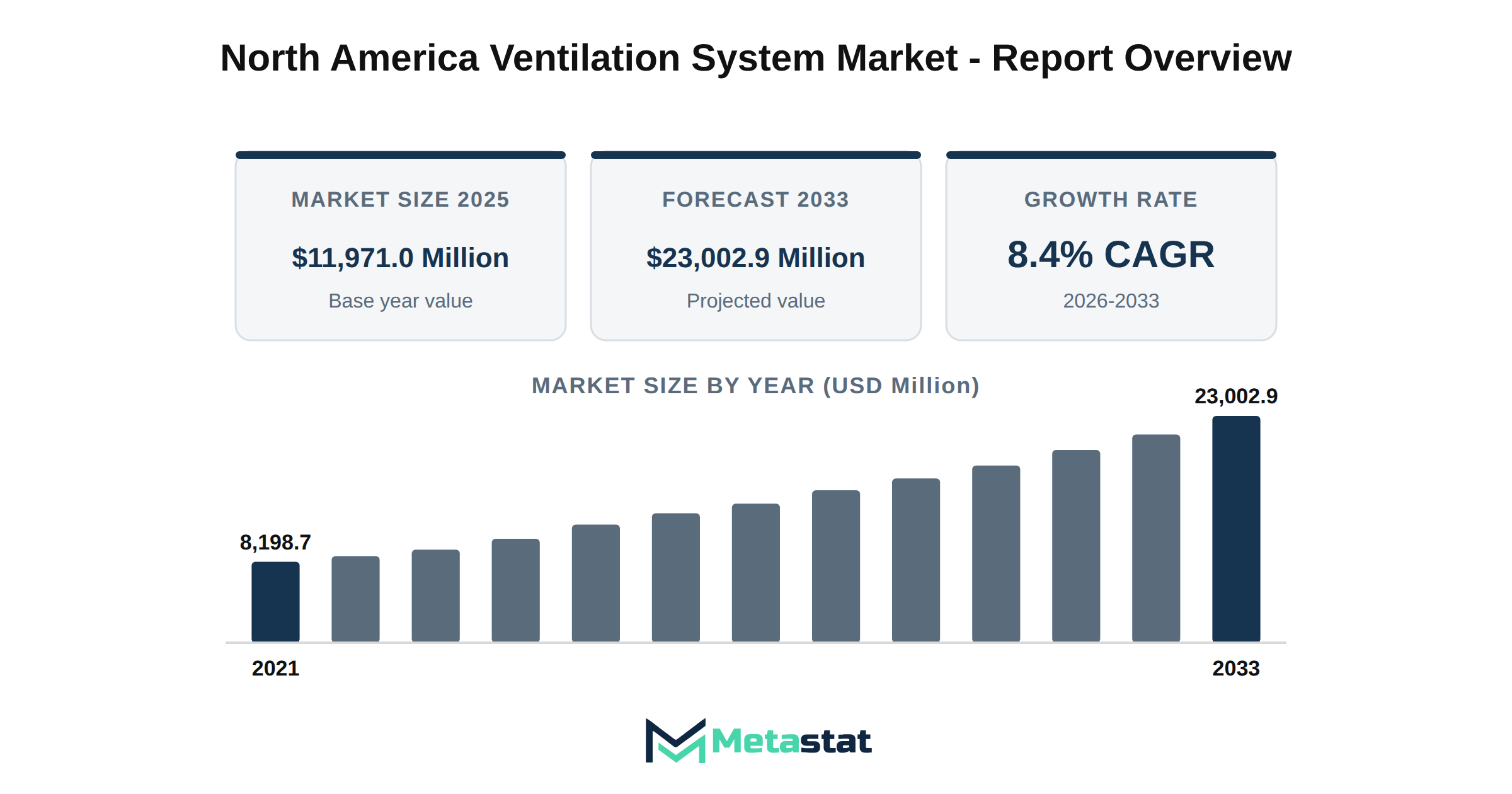
The North America Ventilation System market valuation reached USD 11,971 million in 2025 and is projected to expand to USD 23,002.9 million by 2033, reflecting a compound annual growth rate (CAGR) of 8.4%. The historical valuation shows growth from USD 8,198.7 million in 2021, increasing to USD 10,543 million in 2024, which highlights the consistent upward trend in demand for ventilation systems across various sectors.
Decarbonization mandates and adherence to ASHRAE standards significantly influence commercial retrofits. These regulations drive investments in energy-efficient solutions that improve indoor air quality while reducing carbon emissions. The ongoing push towards sustainable building practices supports the long-term growth of the market.
Demand for energy recovery ventilators (ERV) sees significant traction in cold-climate regions of the United States and Canada. These systems offer efficient temperature regulation and energy savings, catering to the specific needs of buildings in harsh weather conditions. The adoption of ERVs aligns with rising energy costs and environmental concerns, increasing market penetration.
Integration of smart ventilation controls and IoT sensors transforms indoor air quality management in commercial buildings. These technologies allow for real-time monitoring and adjustments to ventilation performance, ensuring optimal air quality while minimizing energy consumption. The trend towards smart building solutions enhances operational efficiency and attracts investment in the market.
Residential HVAC electrification and heat pump integration shape system specifications, driving the need for advanced ventilation solutions. The growing preference for electric heating systems aligns with sustainability initiatives, prompting manufacturers to innovate and enhance their product offerings to meet evolving consumer expectations. This trend supports the market's expansion, driven by homeowners seeking efficient and environmentally friendly HVAC systems.
Preparedness for wildfire smoke events increases demand for high-efficiency HEPA filtration systems. These filters play a critical role in maintaining indoor air quality during smoke incidents, particularly in vulnerable regions. The heightened awareness of air quality issues increases the importance of effective ventilation systems, contributing positively to the market outlook.
Industrial ventilation requirements grow across advanced manufacturing and electric vehicle (EV) battery facilities. These sectors necessitate robust ventilation solutions to manage airborne contaminants and ensure worker safety. The market’s responsiveness to industrial demands creates opportunities for growth, particularly in specialized applications.
Trends in supply chain localization and domestic production for air handling units enhance market resilience and responsiveness. Manufacturers increasingly focus on local sourcing to mitigate disruptions and streamline operations. This shift supports the market's stability while promoting the growth of regional manufacturing capabilities.
Mergers, acquisitions, and strategic consolidations within the HVAC sector shape the competitive landscape. Industry players pursue partnerships to expand their market reach and enhance product portfolios, leading to a more concentrated market environment. This trend encourages innovation and competitiveness among leading companies in the North America Ventilation System market.
The North America Ventilation System market is experiencing a significant shift driven by decarbonization mandates and evolving standards, particularly from ASHRAE. These regulatory changes accelerate commercial retrofits, compelling building owners to upgrade ventilation systems to meet stringent energy efficiency and indoor air quality requirements. This transformation strongly impacts sectors focused on sustainability, pushing toward innovative solutions that enhance operational performance while minimizing environmental impact.
Demand for energy recovery ventilators is robust in cold-climate regions of the United States and Canada. These systems provide effective ventilation while reducing energy consumption, which aligns with the growing emphasis on energy efficiency. The market's response to climate-specific challenges positions energy recovery ventilators because critical components in enhancing building performance, particularly in regions facing extreme temperature variations.
Smart ventilation controls and IoT sensors are changing indoor air quality management within commercial buildings. These technologies enable real-time monitoring and optimization of air quality, ensuring a healthier environment for occupants. The integration of smart technologies not only improves comfort but supports energy savings, reflecting the market's shift toward intelligent building solutions.
The trend of electrification in residential HVAC systems, alongside the integration of heat pumps, significantly influences system specifications. This shift aligns with broader decarbonization efforts and enhances system efficiency. The North America Ventilation System market responds to these changes by promoting advanced technologies that accommodate evolving energy sources and regulatory frameworks.
Wildfire smoke preparedness is becoming increasingly crucial, particularly in regions susceptible to wildfires. The demand for high-efficiency HEPA filtration systems rises in response to air quality concerns during wildfire seasons. This requirement highlights the market's adaptability to emerging environmental challenges, emphasizing the importance of effective filtration solutions in maintaining indoor air quality.
Industrial ventilation requirements are evolving rapidly across advanced manufacturing and electric vehicle battery facilities. These sectors demand specialized ventilation solutions to manage unique operational challenges and ensure worker safety. The market's response to these requirements drives innovation and investment in tailored ventilation technologies that enhance productivity and compliance with safety regulations.
Supply chain localization and domestic production trends are influencing the air handling units segment. The focus on local sourcing enhances the resilience of supply chains while reducing lead times and costs. This trend reflects a broader commitment within the North America Ventilation System market to strengthen domestic manufacturing capabilities in response to global supply chain disruptions.
Mergers, acquisitions, and strategic consolidations among HVAC manufacturers are reshaping the competitive landscape. These activities create opportunities for enhanced product offerings and market reach, enabling companies to leverage synergies and innovate more effectively. The resulting market concentration creates a dynamic environment where competition drives technological advancements and efficiency improvements.
Regulatory decarbonization targets and net-zero building codes are significant in driving technology adoption within the market. Companies aligning their strategies with these regulations enhance their competitive positioning and ensure compliance with evolving standards. This alignment reflects a proactive approach to meeting future market demands while supporting broader environmental goals.
The lifecycle cost analysis of demand-controlled ventilation deployments reveals significant ROI potential, making these systems attractive investments for building owners. By optimizing energy consumption and improving indoor air quality, demand-controlled systems contribute to long-term operational savings. This emphasis on financial viability reinforces the market's appeal to stakeholders focused on sustainability and efficiency.
Sub-regional growth opportunities exist across the US Sunbelt and Canadian urban centers. These areas present unique market dynamics, driven by population growth and increasing urbanization. The North America Ventilation System market capitalizes on these opportunities by tailoring solutions to meet the distinctive needs of diverse local markets.
Future technology outlooks indicate a focus on next-generation air purification, sound attenuation, and predictive maintenance solutions. These advancements aim to enhance indoor environments and operational efficiency. The market's commitment to innovation positions it favorably for sustained growth and adaptation to evolving consumer preferences and regulatory landscapes.
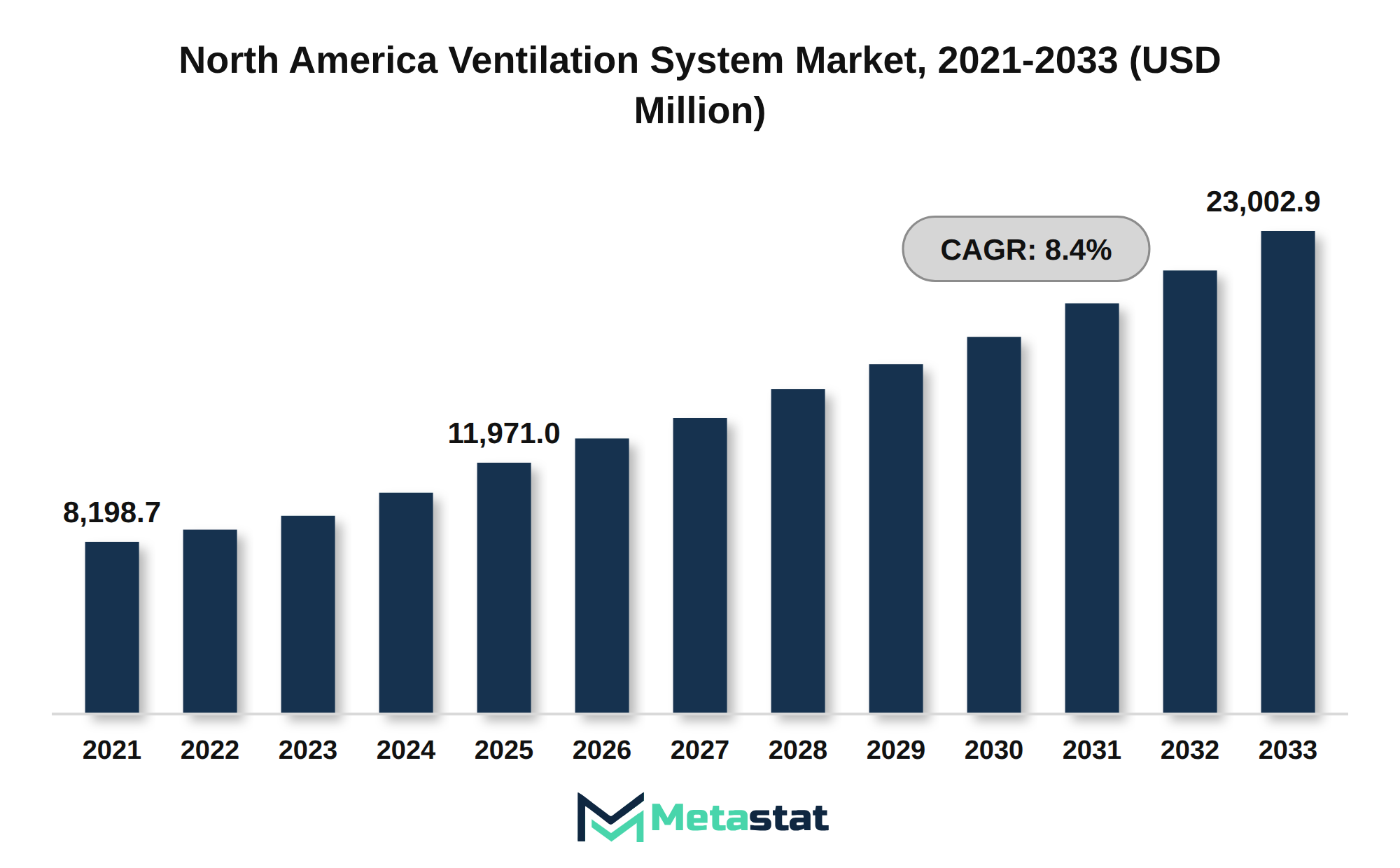
The North America Ventilation System market experiences significant growth driven by heightened awareness of energy efficiency. Organizations across various sectors recognize the importance of complying with energy-saving regulations, which encourages the adoption of advanced ventilation technologies. This shift aligns with broader macroeconomic trends emphasizing sustainability, cost reduction, and operational productivity.
Investments in energy-efficient systems, including Energy Recovery Ventilators (ERV) and Dedicated Outdoor Air Systems (DOAS), reflect this growing focus. These systems enhance indoor air quality while minimizing energy consumption, appealing to both commercial and residential customers. Demand for these technologies supports expanded market opportunities, facilitating greater revenue generation for manufacturers and suppliers.
Rising energy costs, coupled with reduced operational expenditures, motivate organizations to invest in modern ventilation solutions. This trend results in increased competition within the market, prompting continuous innovations and improvements in product offerings. Overall, the emphasis on energy efficiency significantly influences the growth trajectory of the North America Ventilation System market.
Automation plays a critical role in enhancing operational efficiency within the North America Ventilation System market. The integration of advanced technologies, including artificial intelligence and machine learning, enables businesses to optimize their processes, reducing time and labor costs. These advancements lead to streamlined production and improved system performance, allowing companies to respond swiftly to market demands and operational challenges.
The growing emphasis on digital transformation boosts investments in automation technologies. This trend aligns with the increasing need for competitive differentiation and cost management among industry players. Enhanced automation not only improves productivity but contributes to better resource management, supporting the overall sustainability goals of organizations in the market.
Specific sectors, including commercial and industrial applications, significantly benefit from automation integration. These sectors experience heightened efficiency, resulting in lower operational costs and improved service delivery. With an expanded focus on automation, the North America Ventilation System market is poised for significant growth driven by companies capitalizing on these technological advancements to enhance their operational capabilities.
High capital investment requirements present a notable restraint for the North America Ventilation System market. Companies face significant costs associated with the installation and maintenance of advanced ventilation systems, which deter investment from smaller players and hinder market entry. The requirement for specialized equipment and technology complicates these capital challenges, leading to delays in project initiation and completion.
Escalating operating costs compound the issue, impacting profitability for stakeholders across the supply chain. Rising energy prices, coupled with increased labor expenses, contribute to the financial burden on companies operating within the market. This scenario results in a cautious approach to expansion and innovation, affecting the overall market growth trajectory.
Supply chain disruptions have intensified during recent years, resulting in longer lead times for critical components. These disruptions exacerbate delays in project execution, limiting the ability of firms to respond to growing demand in a timely manner. Consequently, potential clients seek alternative solutions or postpone investments in ventilation systems, further slowing market momentum.
Macroeconomic headwinds, including inflationary pressures and geopolitical instability, introduce uncertainty within the market. Fluctuations in material costs and potential disruptions in trade affect pricing strategies and result in volatile market conditions. This uncertainty influences purchasing decisions, leading to a conservative outlook among buyers.
Technological obsolescence remains a concern for companies seeking to maintain competitive advantages. The rapid pace of technological advancement necessitates ongoing investment in research and development, adding to the capital strain. Firms that fail to keep pace with emerging technologies lose market share to more agile competitors, impacting overall market dynamics. The combination of these factors creates a challenging environment for stakeholders in the North America Ventilation System market.
Geopolitical fragmentation poses challenges to the North America Ventilation System market by disrupting supply chain stability, complicating logistics, and increasing costs. Trade deficits and tariff friction create uncertainty, impacting the availability of essential components and raw materials. Market players face heightened risks associated with sourcing feedstocks, resulting in volatility that directly affects production timelines and pricing structures.
The complexity of research and development integrations exacerbates these challenges. Companies within the market encounter interoperability friction when collaborating with international partners, leading to delays in product development and a burden on operational efficiency. This situation strains resources and increases compliance overhead, resulting from companies navigating evolving legal liabilities and tightening regional regulatory standards.
In addition, rising input costs and pricing compression contribute to margin pressures, prompting companies to reassess their operational strategies. The North America Ventilation System market addresses workforce skill gaps and talent retention pressures, which hinder innovation and adaptability. Sustainability demands and decarbonization mandates require significant investment in environmentally friendly technologies, complicating market dynamics.
Infrastructure gaps and retrofitting barriers delay the implementation of advanced systems, limiting market penetration and growth potential. Companies face intellectual property protection deficits and cybersecurity risks that threaten their competitive edge and data integrity. Overall, these factors create a challenging environment for stakeholders within the North America Ventilation System market, necessitating strategic planning and resource allocation to mitigate risks and enhance stability.
The North America Ventilation System market is positioned to benefit significantly from emerging technologies that enhance operational capabilities and improve energy efficiency. The integration of advanced automation and IoT systems allows for real-time monitoring and optimization of ventilation processes, leading to reduced energy consumption and operational costs. This technological disruption attracts investments, encouraging innovation within the market and enabling suppliers to offer more sophisticated solutions tailored to specific customer needs.
Infrastructure modernization drives demand for updated ventilation systems. Aging infrastructure across commercial and industrial sectors necessitates upgrades to meet current standards and improve indoor air quality. The focus on sustainable building practices further enhances the adoption of energy-efficient solutions, creating opportunities for growth in the North America Ventilation System market.
Technological advancements in energy recovery systems, including rotary energy wheels and fixed-plate heat exchangers, contribute to improved environmental compliance and reduced operational costs. These innovations align with sustainability imperatives, encouraging businesses to adopt eco-friendly practices and comply with evolving regulations. The shift towards greener technologies enhances the overall market dynamics, driving demand for products that support environmental goals.
Increasing emphasis on digital transformation influences purchasing behaviors within the market. Evolving buyer preferences lean towards solutions that provide greater visibility and control over ventilation processes, leading to a rise in digital procurement strategies. This transition reflects a broader trend towards enhanced efficiency and optimization across industries.
Strategic consolidation and partnerships among manufacturers strengthen market positioning and expand product offerings. Collaborations focused on research and development enhance the capacity for innovation, enabling companies to meet the diverse needs of various sectors. This trend creates a competitive landscape where suppliers innovate and diversify their portfolios to capture emerging opportunities.
Overall, the North America Ventilation System market stands poised for substantial growth, driven by a combination of technological advancements, infrastructure upgrades, and a commitment to sustainable practices. These factors collectively create a robust environment for investment and innovation, positioning the market for continued expansion through 2033.
The North America Ventilation System market is segmented based on Type, Airflow Capacity, Energy Recovery Technology, and Region.
Valued at USD 3,803.2 million in 2026, the Air Handling Units (AHU) segment is projected to reach USD 6,094.6 million by 2033, reflecting a CAGR of 7% during the forecast period. The growth of this segment derives from increasing demand for improved indoor air quality and energy-efficient solutions across various industries. The ongoing transition towards smart buildings emphasizes the importance of advanced AHU systems equipped with integrated controls and monitoring technologies, further driving segment expansion.
Technological maturation enhances the efficiency and reliability of AHUs. Innovations including variable air volume (VAV) systems and advanced filtration technologies align with stringent regulatory compliance standards and energy efficiency mandates. The rise in green building certifications stimulates demand for AHUs, driven by their contribution to energy savings and sustainable building practices.
Shifts in consumption patterns driven by health and safety concerns have led to heightened awareness regarding the role of ventilation systems in mitigating airborne contaminants. Consequently, end-users prioritize systems that not only maintain comfort but enhance overall health and productivity. This trend influences the growth trajectory of the North America Ventilation System market, particularly in sectors including commercial buildings, healthcare facilities, and educational institutions.
Pricing volatility and margin pressures within the AHU segment emerge from fluctuating raw material costs and supply chain vulnerabilities. Manufacturers focus on enhancing supply chain resilience by diversifying sourcing strategies and investing in local production capabilities. Strategic opportunities arise from the increasing need for retrofitting existing installations with next-generation upgrades, enabling companies to capture additional revenue streams.
With ongoing investments in infrastructure and construction, the AHU segment is well-positioned to thrive in the evolving North America Ventilation System market. Encouraging capital investment outlooks further reinforce the segment's growth potential, particularly within urban development projects and greenfield initiatives.
Demand for Dedicated Outdoor Air Systems (DOAS) is rising, driven by increasing awareness of indoor air quality and energy efficiency. Regulatory compliance standards, emphasizing ventilation and air quality in commercial and residential buildings, fuel adoption across various sectors, including healthcare and education. Technological maturation within the market enables the introduction of next-generation systems that optimize energy use and enhance cost-effectiveness for end-users.
The Dedicated Outdoor Air Systems (DOAS) segment is projected to reach USD 4,517.8 million by 2033, at a CAGR of 10.4% during the forecast period. This segment benefits from continuous product evolution, integrating innovative features including smart controls and energy recovery mechanisms. The growing focus on sustainability and energy efficiency accelerates market growth, providing strategic opportunity windows for manufacturers to introduce advanced solutions.
Adoption patterns show a shift towards energy-efficient systems, responding to heightened consumer awareness regarding environmental impact and energy savings. End-use dynamics reflect a growing preference for systems that reduce operational costs while meeting regulatory mandates. The market's competitive landscape encourages capital investment and facilitates research and development initiatives to address evolving consumer demands.
Growing emphasis on energy efficiency drives the demand for Energy Recovery Ventilators (ERV) within the North America Ventilation System market. Industries increasingly adopt ERVs to reduce operational costs while improving indoor air quality. The segment is expected to reach USD 4,945.6 million by 2033, reflecting a commitment to sustainable building practices and energy conservation initiatives. Regulatory compliance standards surrounding energy efficiency further enhance adoption, owing to buildings striving to meet increasingly stringent requirements.
Technological advancements enhance the capabilities of ERVs, enabling next-generation upgrades that promise improved performance and reliability. Continuous product evolution ensures that ERVs remain relevant in an evolving market. The segment's expansion is driven by integration within various applications, particularly in commercial and industrial facilities, where demand for efficient ventilation solutions is robust.
Shifts in consumption patterns towards healthier indoor environments indicate a significant opportunity for the segment. End-use dynamics demonstrate a strong preference for systems that not only ventilate but recover energy, reducing waste and maximizing efficiency. Cost structures associated with ERVs continue to evolve, driven by competition among suppliers encouraging pricing stability and innovation.
Strategic opportunity windows arise from increasing consumer awareness regarding energy management and sustainability. Market players are well-positioned to capitalize on these trends, with investments directed towards enhancing supply chain resilience and developing robust sourcing strategies. The ERV segment plays a significant role in the North America Ventilation System market, reflecting a growing recognition of the value these systems provide in both environmental and economic contexts.
Heat Recovery Ventilators (HRV) segment is projected to grow at a CAGR of 6.9% during the forecast period. Increasing focus on energy efficiency and sustainable building practices drives demand within the North America Ventilation System market. Adoption of HRVs allows for the recovery of heat from exhaust air, enhancing overall system efficiency while reducing operational costs. This trend is significant among industries that prioritize environmental sustainability and energy conservation, including commercial buildings and residential developments.
Technological advancements in HRV systems contribute to market expansion by integrating smart controls and improved designs that enhance user experience and operational efficiency. The evolution of products emphasizes user-friendliness and adaptability to various building types, facilitating wider application across diverse sectors. Regulatory compliance standards promoting energy-efficient technologies influence purchasing decisions, further propelling market demand.
Cost structures associated with HRV systems indicate a balance between initial investment and long-term savings, appealing to budget-conscious consumers and businesses. Increased competition within the market supports innovation and drives down prices, making HRVs more accessible. Strategic opportunities arise for manufacturers to capitalize on growing awareness of indoor air quality and the importance of ventilation in health and comfort.
By 2033, the HRV segment is expected to generate substantial revenue, reflecting the ongoing shift toward energy-efficient solutions in the North America Ventilation System market. This growth trajectory highlights the critical role of HRVs in meeting regulatory demands and consumer expectations, reinforcing their position in future market dynamics.
In recent years, the Make-Up Air Units (MUA) segment has attracted attention owing to an increasing focus on indoor air quality and energy efficiency. These units provide essential ventilation in various applications, including commercial kitchens and industrial facilities, addressing the need for fresh air to replace exhausted air. Demand drivers include regulatory compliance with air quality standards and growing awareness of the health impacts of air quality, prompting end-users to invest in MUA solutions to ensure a safer environment.
Technological advancements facilitate the development of next-generation MUA systems by incorporating features including advanced filtration and energy recovery capabilities. This evolution enhances product efficiency, leading to reduced operational costs for end-users. The integration of smart technologies into MUAs enables real-time monitoring of air quality, allowing facilities to optimize energy consumption and airflow based on current requirements. Consequently, these enhancements contribute to the segment's growth, driven by businesses adapting to evolving standards and consumer preferences.
Regulatory compliance standards significantly influence the adoption of MUAs, because stricter guidelines on air quality and ventilation drive companies to upgrade their systems. This trend results in increased capital investments in modern units that comply with the latest regulations. Fluctuations in raw material costs and supply chain vulnerabilities impact pricing and availability, prompting manufacturers to secure reliable sourcing strategies to maintain competitive margins. The segment's resilience in overcoming these challenges indicates a positive outlook within the North America Ventilation System market.
While the market evolves, executives are encouraged to explore strategic opportunities that arise from consumer demands for healthier environments. By investing in advanced technologies and ensuring compliance with regulatory standards, stakeholders in the Make-Up Air Units segment enhance their market position and drive future growth.
Several factors influence the growth of the Others sub-segment within the North America Ventilation System market. Increasing demand for specialized ventilation solutions in commercial and industrial environments drives expansion. Unique applications requiring specific configurations fuel this growth, which enhances overall system performance and energy efficiency. Technological advancements support the introduction of innovative products, meeting evolving regulatory standards and customer expectations.
Adoption of next-generation upgrades plays a critical role in the sub-segment, driven by companies prioritizing energy-efficient designs. These advancements lower operational costs while improving indoor air quality, creating a competitive advantage. The shift towards environmentally friendly solutions leads to increased investment in sustainable technologies across various sectors.
End-use dynamics indicate a significant trend towards improved air quality and sustainability. Industries are increasingly mindful of regulatory compliance, leading to heightened scrutiny of ventilation systems. This trend enhances market attractiveness, because companies seek certification for environmentally friendly products.
Price volatility and margin pressures challenge manufacturers in the Others sub-segment. Fluctuations in raw material costs affect overall pricing strategies, influencing competitive positioning. Companies navigating these challenges enhance their supply chain resilience through strategic partnerships and innovative sourcing practices.
Opportunities for growth remain abundant, particularly in regions focusing on technological advancements and sustainability. Capital investment outlooks suggest potential for increased research and development, positioning companies for long-term success. The evolving landscape of the North America Ventilation System market continues to create significant strategic opportunity windows for players within the Others sub-segment.
Valued at USD 1,533 million in 2026, the Up to 300 CFM segment is projected to reach USD 2,525 million by 2033, at a CAGR of 7.4% during the forecast period. Increased focus on energy efficiency drives the adoption of ventilation systems within various sectors, particularly commercial and residential buildings. The growing trend toward sustainable construction practices emphasizes systems that optimize indoor air quality while minimizing energy consumption, making this segment particularly attractive for new installations. Next-generation upgrades incorporating advanced technologies, including smart controls and variable speed drives, enhance system performance and meet regulatory compliance standards in energy efficiency.
Market participants experience pressures from fluctuating raw material prices, impacting cost structures and margins. Producers navigate these challenges while maintaining product quality and performance standards. The strategic opportunity window for this segment presents avenues for innovation, particularly in energy recovery technologies, which continue to evolve to meet increasing consumer expectations and regulatory demands. Overall, the Up to 300 CFM segment significantly contributes to the North America Ventilation System market, reinforcing the overall growth and evolution of the industry.
Valued at USD 3,808.5 million by 2033, the 301 to 1,000 CFM segment experiences a compound annual growth rate (CAGR) of 7.6% during the forecast period. Demand for this segment arises from various industries seeking enhanced indoor air quality and energy efficiency. The growing focus on health and safety standards drives the adoption of effective ventilation solutions across commercial and residential sectors.
Technological advancements in airflow management support market expansion within the 301 to 1,000 CFM segment. Innovations in energy recovery systems and smart control technologies enhance system performance and reduce operational costs. Manufacturers increasingly integrate next-generation upgrades, including IoT connectivity, into their products to meet evolving customer requirements, strengthening competitive positions.
Regulatory compliance standards, including energy efficiency regulations, influence purchasing decisions within the market. Companies prioritize systems that comply with stringent environmental standards, leading to higher demand for energy-efficient ventilation solutions. The pursuit of sustainable practices compels end-users to invest in advanced ventilation systems.
Competitive pressures and pricing volatility challenge suppliers in this segment. Cost structures affected by raw material pricing and labor costs impact profit margins. Strategic opportunities arise for manufacturers focusing on innovation and expanding product offerings to capture market share in the North America Ventilation System market.
Demand within the 1,001 to 3,000 CFM segment continues to strengthen, driven by the rising need for efficient ventilation solutions in medium to large commercial and industrial applications. Increasing awareness regarding air quality and regulatory compliance pushes manufacturers and facility operators to seek systems that ensure optimal air exchange rates while minimizing energy consumption. In this segment, innovation focusing on advanced technologies, including energy recovery options, contributes significantly to market growth.
Investment in next-generation upgrades enhances the operational capabilities of ventilation systems within this airflow capacity range. Manufacturers respond to heightened end-user demands for sustainability by integrating features that reduce environmental impact and improve energy efficiency. The North America Ventilation System market benefits from this shift, with expectations for the 1,001 to 3,000 CFM segment reaching USD 6030.6 million by 2033.
Increased penetration of energy-efficient designs and user-friendly interfaces supports segment expansion. Downstream applications across sectors including healthcare, education, and hospitality further drive the demand for reliable and effective ventilation solutions. The market's growth trajectory aligns closely with the pursuit of enhanced indoor air quality, positioning this segment because a critical component of the broader North America Ventilation System market.
Significant growth in the 3,001 to 10,000 CFM segment occurs owing to increasing demand for efficient and high-capacity ventilation solutions in commercial and industrial applications. The segment is projected to grow at a CAGR of 8.9% during the forecast period. Factors driving this demand include rising energy costs and stringent regulatory requirements focused on indoor air quality and energy efficiency. Industries including manufacturing, healthcare, and educational institutions exhibit heightened interest in advanced ventilation systems that effectively manage airflow and energy consumption.
Technological advancements in energy recovery methods enhance the appeal of products within this segment. Innovations in design and functionality, including smart controls and integration with building management systems, promote adoption among end-users. The growing emphasis on sustainability and environmental responsibility influences purchasing decisions, compelling organizations to invest in systems that align with corporate sustainability goals.
Organizations seek to optimize operational efficiency. The North America Ventilation System market reflects a shift toward higher airflow capacities, with the 3,001 to 10,000 CFM segment emerging because a vital component of this evolution. Increased capital investments in infrastructure and energy-efficient technologies are anticipated, leading to long-term growth opportunities for manufacturers and suppliers in this market segment.
Growth in the Above 10,000 CFM segment aligns with the increasing focus on high-capacity ventilation solutions for large commercial and industrial applications. Significant demand arises from sectors including manufacturing, healthcare, and large-scale hospitality, where maintaining air quality is a priority. The trend toward energy efficiency drives investments in advanced technologies, encouraging upgrades to more efficient systems.
Technological maturation plays a critical role in enhancing product performance and energy savings. Innovations in materials and design improve energy recovery efficiency, making these systems more attractive to end-users. Increased regulatory compliance regarding air quality and energy consumption boosts adoption rates, compelling businesses to modernize their existing infrastructure.
Cost structures within this segment reflect the high initial investment required for implementation. Operational savings in energy consumption and maintenance offset these costs over time. Pricing volatility associated with raw materials influences overall market dynamics, necessitating strategic approaches to procurement and inventory management.
The North America Ventilation System market continues to evolve. Strategic opportunity windows emerge because businesses seek solutions to meet regulatory standards. Companies that adapt to changing market conditions through innovative designs and efficient systems position themselves favorably within the competitive landscape. Capital investment in this segment remains robust, aligning with the broader trend of prioritizing sustainable and efficient building practices.
Valued at USD 4,753.2 million in 2026, the Rotary Energy Wheel segment is projected to reach USD 8,531.4 million by 2033, at a CAGR of 8.7% during the forecast period. Primary demand drivers for this segment include increasing regulatory standards for energy efficiency and sustainable building practices across various sectors. Adoption occurs predominantly in commercial buildings, where energy recovery systems contribute to substantial cost savings through reduced energy consumption.
Segment expansion accelerates due to the maturation of technology, leading to enhanced performance and lower operational costs. Continuous upgrades and innovations in rotary energy wheel designs improve energy recovery ratios, making these systems attractive for modern HVAC applications. End-use dynamics reflect an ongoing shift towards greener technologies, with businesses focusing on sustainable solutions to meet environmental standards.
Cost structures exhibit resilience due to advancements in manufacturing processes, resulting in reduced pricing volatility. Margin pressures arise from fierce competition among key participants in the North America Ventilation System market, emphasizing the importance of strategic investments in R&D. The Rotary Energy Wheel segment presents significant strategic opportunities for manufacturers to capture market share through innovation and enhanced product offerings.
Increasing demand for energy-efficient solutions drives growth in the Fixed-Plate Heat Exchanger / Energy Core segment within the North America Ventilation System market. This segment is estimated to reach USD 9,751.8 million by 2033, at a CAGR of 9.3% during the forecast period. Heightened awareness regarding environmental sustainability and regulatory compliance standards encourages adoption of advanced energy recovery technologies. The focus on reducing operational costs enhances the appeal of Fixed-Plate Heat Exchangers, which optimize energy consumption in HVAC systems.
Innovations in this technology, including enhanced thermal performance and reduced maintenance requirements, contribute to its market expansion. The growing emphasis on indoor air quality across various industries, including healthcare and commercial buildings, further increases demand for these energy recovery systems. Stricter regulations regarding energy efficiency compel facilities to prioritize the implementation of solutions that align with compliance standards, driving the Fixed-Plate Heat Exchanger / Energy Core segment's growth.
Investment in new construction and retrofitting existing buildings with energy-efficient systems supports market growth. The segment's success hinges on the integration of next-gen upgrades and smart technology, facilitating better performance and user control. Overall, the Fixed-Plate Heat Exchanger / Energy Core segment stands out because a vital contributor to the overall North America Ventilation System market, driven by a combination of technological advancements and increasing demand for sustainability.
Expansion of the Heat Pipe Energy Recovery segment reflects a growing focus on energy efficiency within the North America Ventilation System market. This segment is supported by advancements in technology and increasing regulatory emphasis on reducing energy consumption in commercial and industrial applications. Organizations actively seek solutions that improve energy recovery, thereby enhancing overall system performance while reducing operational costs. The segment is projected to reach USD 1,549.8 million by 2033, driven by heightened demand from sectors prioritizing sustainability and compliance with stringent energy regulations.
Investment in modern energy recovery technologies has become crucial for organizations aiming to optimize their HVAC systems. The shift toward sustainable practices and the need for improved indoor air quality continue to influence adoption rates. Increasing end-user awareness regarding the benefits of energy-efficient systems drives demand for Heat Pipe Energy Recovery solutions. Strategic opportunities arise from the potential for next-generation upgrades that enhance performance and efficiency while addressing evolving market dynamics.
Demand for energy recovery technologies in the North America Ventilation System market is expanding due to increasing regulatory requirements for energy efficiency and sustainability. The Others segment within the Energy Recovery Technology category is projected to grow at a CAGR of 6.2% during the forecast period. This growth results from heightened awareness regarding indoor air quality and the adoption of advanced energy recovery solutions in various applications, including commercial and residential buildings.
Investment in innovative technologies fuels market dynamics, enabling businesses to enhance operational efficiencies while adhering to compliance standards. The focus on reducing energy consumption and overall operational costs drives demand. Consequently, manufacturers prioritize developing versatile solutions that cater to diverse market requirements, thereby enhancing competitive positioning.
Technological maturation continues to shape the market for energy recovery solutions, leading to next-generation upgrades that incorporate smarter functionalities. This evolution aligns with growing consumer expectations for improved performance and lower environmental impact. Increased capital investment in research and development further supports these advancements, ensuring that end-users benefit from enhanced technology offerings in the market.
While demand for energy-efficient solutions escalates, the Others segment remains poised for growth opportunities, contributing to the overall expansion of the North America Ventilation System market. Insights into consumer preferences and shifts in consumption patterns will guide strategic decisions, enabling stakeholders to adapt effectively in a dynamic marketplace.
Valued at USD 12,025.3 million in 2026, the US segment is projected to reach USD 21,116.7 million by 2033, at a CAGR of 8.4% during the forecast period. The demand for ventilation systems in the US stems from a growing focus on energy efficiency and environmental sustainability. Regulatory compliance standards push industries to adopt advanced ventilation solutions that enhance indoor air quality while minimizing energy consumption. The construction sector, which includes both residential and commercial projects, acts because a significant driver for ventilation system adoption, particularly with the increasing emphasis on healthier living environments.
Technological maturation plays a critical role in shaping the US market dynamics. Innovations including smart ventilation systems and advanced energy recovery technologies attract customers seeking to modernize their facilities. The integration of IoT devices into ventilation systems allows for real-time monitoring and management, further enhancing operational efficiency. Adoption of next-generation upgrades, including automated controls and energy-efficient designs, aligns with consumer expectations for improved performance and reduced operational costs.
End-use dynamics reflect a shift towards more stringent energy regulations and the need for sustainable building practices. Growing awareness of health and wellness in indoor environments drives demand for high-quality air solutions, particularly in commercial and institutional applications. The market experiences increasing consumption shifts because businesses prioritize investments in ventilation systems that contribute to greener operations while addressing employee health concerns.
While the market evolves, pricing volatility and margin pressures emerge. Fluctuations in raw material costs impact overall pricing strategies of manufacturers. Strategic opportunity windows arise because companies seek to differentiate themselves through product innovation and enhanced service offerings. Capital investment outlook remains optimistic, with stakeholders willing to invest in advanced technologies that promise long-term savings and compliance with regulatory standards.
Canada's involvement in the North America Ventilation System market reflects a significant upward trajectory driven by various factors. Economic growth and increasing urbanization in the region enhance the demand for efficient ventilation solutions across residential, commercial, and industrial sectors. Regulatory pressures regarding indoor air quality and energy efficiency further increase this need, prompting businesses and homeowners to invest in modern ventilation systems.
Market expansion within Canada centers around advancements in technology that lead to the adoption of energy-efficient products. Innovations in energy recovery ventilators, coupled with an increasing focus on sustainability, position these technologies because preferred choices for consumers. The segment is estimated to reach USD 1,886.2 million by 2033, at a CAGR of 8.1% during the forecast period.
Investment in smart ventilation solutions emerges because a key trend influencing market dynamics. Enhanced connectivity and automation in ventilation systems appeal to consumers seeking improved control over energy consumption and indoor air quality. The integration of these systems with smart home technologies aligns with the growing trend of home automation, creating new avenues for growth within the market.
Competition within the Canada segment intensifies because established players and new entrants vie for market share. Companies focus on differentiating their offerings through innovation and customer service, ensuring alignment with evolving consumer expectations. The market reflects a commitment to continuous improvement and responsiveness to regulatory changes, facilitating sustained growth in the coming years.
The North America Ventilation System market experiences significant competitive dynamics driven by mergers, acquisitions, and strategic consolidations. Leading players including Trane Technologies plc, Carrier Global Corporation, and Daikin U.S. Corporation pursue aggressive growth strategies through collaborations and partnerships, enhancing their market positions and operational efficiencies.
Product differentiation remains a crucial strategy, with companies investing in proprietary technology and R&D pipelines to develop advanced systems tailored to diverse customer needs. Firms like Greenheck Fan Corporation and Fantech focus on enhancing energy efficiency and integrating innovative features into their offerings.
Barriers to entry in the market are substantial due to established brand equity and competitive pricing architectures. New entrants face challenges in gaining market share against well-established companies like Nortek Air Solutions, LLC and Panasonic Corporation of North America, which leverage extensive distribution networks and customer retention strategies.
The future competitive outlook for the North America Ventilation System market is shaped by ongoing technological advancements and evolving consumer preferences. Companies including Broan-NuTone LLC and AAON, Inc. explore cross-industry partnerships to enhance service offerings and expand market reach.
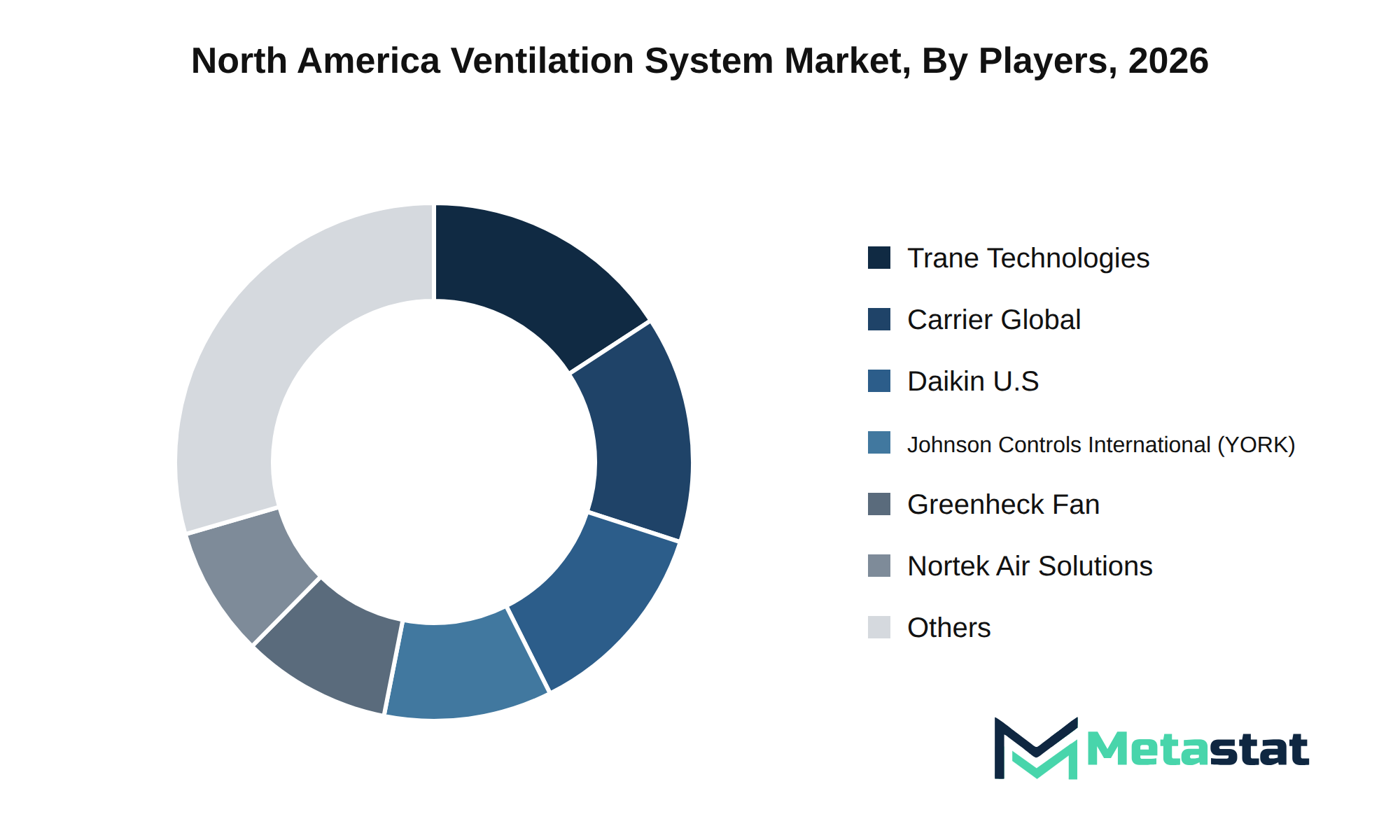
Market size is forecast to rise from USD 11,971 million in 2025 to over USD 23,002.9 million by 2033. This growth reflects an 8.4% CAGR, driven by several interconnected factors impacting the North America Ventilation System market.
Current macroeconomic conditions indicate an upward trajectory for the market, supported by increasing investments in infrastructure and the growing demand for energy-efficient ventilation solutions. Industries including construction, healthcare, and manufacturing experience heightened consumption due to evolving regulatory standards aimed at improving indoor air quality. Advancements in next-generation technologies, including smart ventilation systems and IoT integration, enhance operational efficiency and drive market adoption.
The bull case suggests accelerated growth driven by rapid technological advancements and comprehensive regulatory support, stimulating innovation in product development and market entry. Conversely, the bear case hinges on potential geopolitical tensions and trade realignments impacting supply chains, which could introduce uncertainties in production and distribution processes.
Strategic capital allocation towards research and development and emerging white-space opportunities contributes to the market's growth potential. This reflects a clear alignment with executive-level strategic imperatives prioritizing enhanced ventilation technologies in response to heightened consumer demand for better air quality and energy efficiency.
The report strategically identifies and profiles the key market players and analyses their core competencies in each sub-segment of the Ventilation System market.
Report Attributes | Details |
Study Period | 2021-2033 |
Base Year | 2025 |
Estimated Year | 2026 |
Forecast Period | 2026-2033 |
Historical Period | 2021-2025 |
Growth Rate | CAGR 8.4% from 2026 to 2033 |
Revenue Unit | USD million |
Segmentation | By Type, Airflow Capacity, Energy Recovery Technology, Region, and Region |
Find answers to common questions about this report
The North America Ventilation System market size was valued at USD 11,971 million in 2025.
The Ventilation System market is projected to grow at a CAGR of 8.4% during the forecast period from 2026 to 2033.
The leading type segment in the North America Ventilation System market is Air Handling Units (AHU), with a projected value of USD 6,094.6 million by 2033. This segment surpasses others in terms of market size and growth potential.
The North America Ventilation System market experiences growth driven by heightened awareness of energy efficiency and the adoption of advanced ventilation technologies. Investments in energy-efficient systems, including Energy Recovery Ventilators and Dedicated Outdoor Air Systems, enhance indoor air quality while minimizing energy consumption, appealing to both commercial and residential customers.
High capital investment requirements and significant installation costs deter smaller players from entering the North America Ventilation System market. Supply chain disruptions and geopolitical fragmentation further complicate logistics and increase costs, impacting production timelines and pricing strategies. These factors contribute to a cautious approach among companies, affecting overall market growth.
Heightened awareness of energy efficiency drives product adoption within the North America Ventilation System market. Organizations increasingly recognize the importance of complying with energy-saving regulations, leading to investments in advanced technologies like Energy Recovery Ventilators and Dedicated Outdoor Air Systems that enhance indoor air quality while reducing energy consumption.
The Ventilation System market is estimated to reach a valuation of USD 23,002.9 million by 2033.
Key players in the North America Ventilation System market include Trane Technologies plc, Carrier Global Corporation, Daikin U.S. Corporation, Greenheck Fan Corporation, Fantech, and Johnson Controls International plc (YORK).
The United States leads the North America Ventilation System market, generating approximately USD 12,025.3 million in 2026.
Energy Recovery Ventilators are projected to reach USD 4,945.6 million by 2033.
The analysts below cover Machinery & Equipment research at Metastat Insights.
LEAD ANALYST
Utkarsh Khirodkar is a Lead Market Research Analyst at MetaStat Insight, specializing in market intelligence, technology sector assessments, and competitive strategy.

INDUSTRY CONSULTANT - CHEMICALS & ADVANCED MATERIALS
Chemicals and Materials · Machinery & Equipment · Packaging
Amit Gadhekar Consultant for Chemicals and Materials at MetaStat Insight, directing sector-specific intelligence, research, and strategic consulting across global chemical and processing markets.

PRINCIPAL CONSULTANT - QUALITY SYSTEMS & COMPLIANCE
Electronics and Semiconductor · Machinery & Equipment · Professional Services
Omkar Phadtare is an Industry Consultant at MetaStat Insight, specializing in quality systems, regulatory compliance, and standards benchmarking to drive data-driven market intelligence and strategic industry research.

ENERGY & INFRASTRUCTURE INDUSTRY CONSULTANT
Automotive and Transportation · Electronics and Semiconductor · Energy and Power · Machinery & Equipment
Saurabh Vasant Ganvir consults for Energy & Infrastructure Industry at MetaStat Insight, specializing in renewable energy, solar EPC, and electric vehicle (EV) infrastructure markets.

LEAD CONSULTANT - COMMUNICATION, TELECOM, AND IT
Electronics and Semiconductor · Information & Technology · Machinery & Equipment · Professional Services
Ravindra Sathe Consultants for Communication, Telecom, and IT at MetaStat Insight. He leads the firm's industry research initiatives across telecommunications infrastructure, digital connectivity, enterprise networking, and emerging information technology domains.
Ambulatory surgical centers have very different purchasing cycles for robotic-assisted surgery platforms than major hospital networks. The MetaStat Insight study focused squarely on capital expenditure depreciation, procedural reimbursement pathways, and surgeon training overhead. That operational clarity made it much simpler to validate multi-year procedure growth forecasts against actual ambulatory center adoption patterns.
When planning edge sensor rollouts across refinery environments, generic IoT reports typically miss the harsh-environment certification bottlenecks. MetaStat Insight gave an objective evaluation of ATEX and Class 1 Division 2 hardware availability, along with realistic five-year maintenance cycle cost projections. The comparison of wireless mesh versus private cellular backhaul helped our team pressure-test network reliability models for remote processing facilities.
In the biological seed treatment space, registration timelines vary drastically between the European Union, Brazil, and North America. The MetaStat Insight research handled these cross-border regulatory barriers with genuine nuance, mapping commercialization pathways alongside historical field adoption rates. The segmentation between microbial strains and biochemical active ingredients was particularly well structured.
Explore related market intelligence reports worth reading alongside this one.