
LEAD ANALYST
Utkarsh Khirodkar is a Lead Market Research Analyst at MetaStat Insight, specializing in market intelligence, technology sector assessments, and competitive strategy.

Global Online Dating Market Size, Share, By Service Type (Online Dating Apps, Online Dating Websites, Online Matchmaking Services, Online Matrimonial Platforms, and Social Dating and Dating-Community Platforms), By Revenue Model (Subscription-Based, Ad-Supported, Freemium, and Others), By Platform Type (Mobile Applications and Web-based Platforms), By User Demographics (18-24 Years, 25-34 Years, 35-44 Years, 45-54 Years, and 55 Years and Above), Industry Analysis, Growth, Trends, and Forecast, 2026-2033
Report ID
MSI-4892
Published
August, 2026
Pages
273 Pages
Format
Historical
Base year
Forecast
Forecast period
Report Details
Choose Your License
Global Online Dating Market
The global Online Dating market was valued at USD 3.7 billion in 2025 and is projected to reach USD 7.8 billion by 2033, growing at a CAGR of 9.6% over the forecast period.
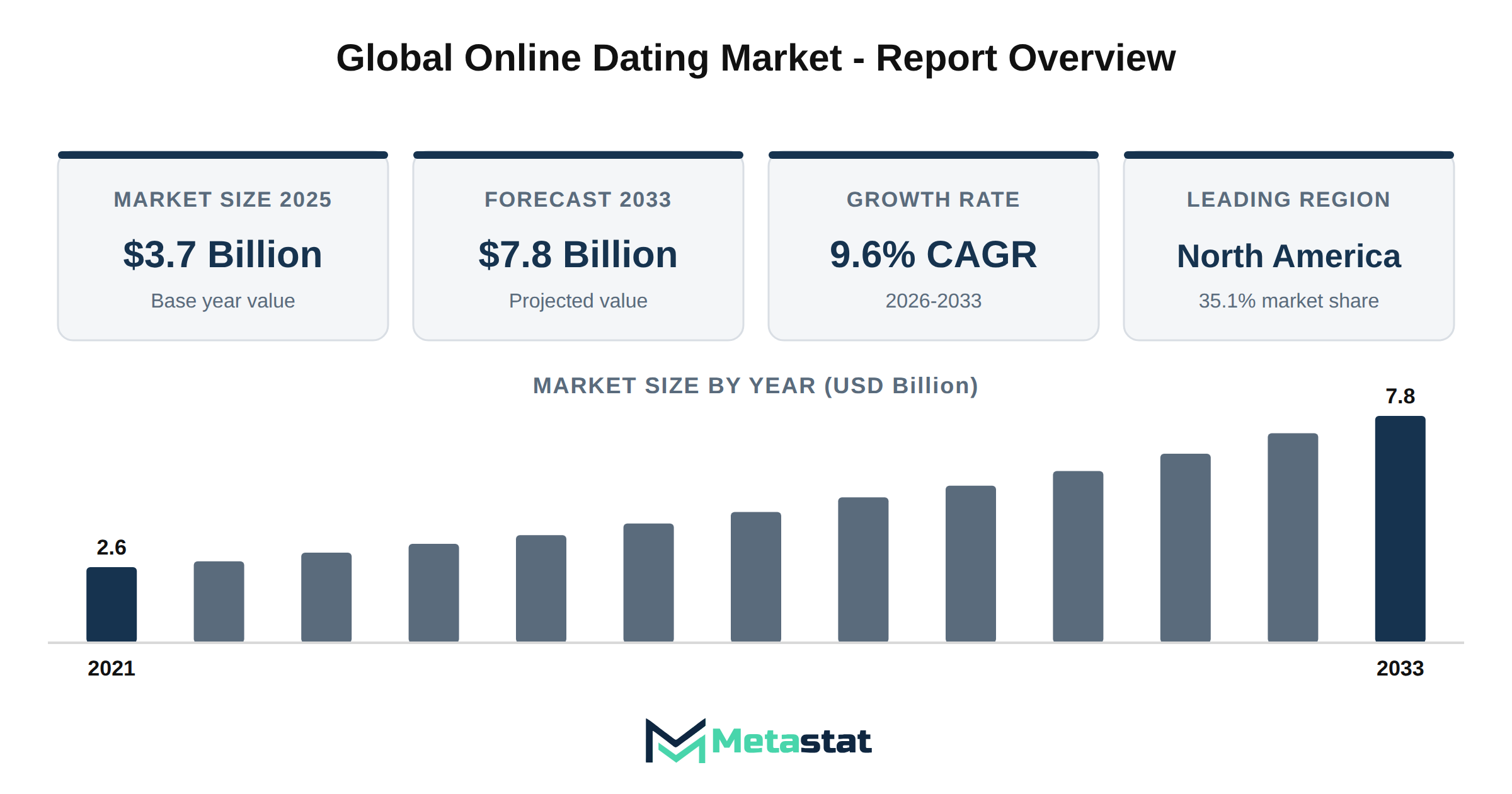
The Online Dating market is projected to grow from USD 3.7 billion in 2025 to USD 7.8 billion by 2033, reflecting a compound annual growth rate (CAGR) of 9.6%. Historical data indicates steady growth, with the market valued at USD 2.6 billion in 2021, USD 2.8 billion in 2022, USD 3.1 billion in 2023, and USD 3.4 billion in 2024.
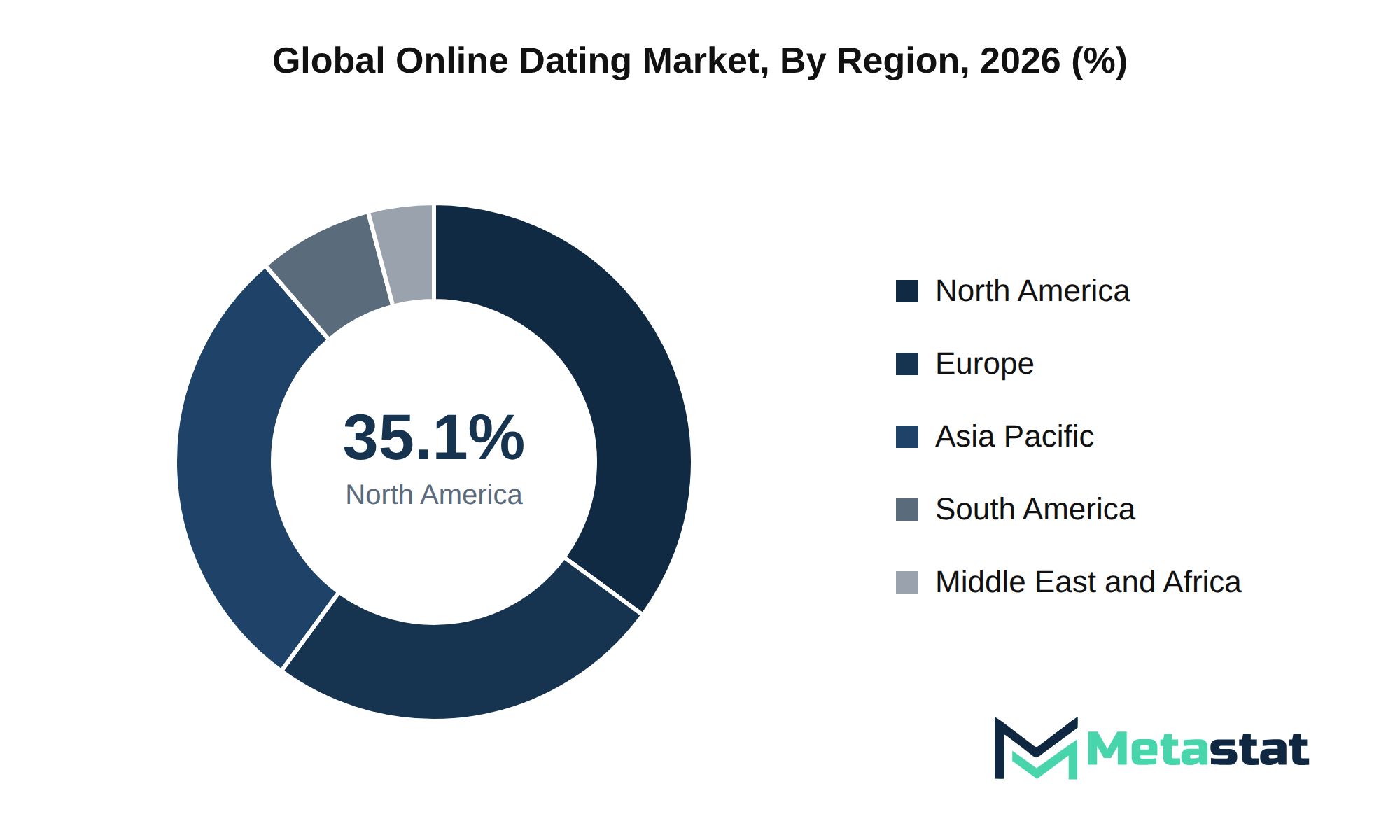
North America represents the largest regional share, accounting for 35.1% of the market, followed by Asia Pacific at 28.7% and Europe at 25%. Increasing user engagement and the proliferation of mobile dating applications drive demand across various demographics.
Service types within the market include Online Dating Apps, Online Dating Websites, Online Matchmaking Services, and Online Matrimonial Platforms. Online Dating Apps are expected to grow from USD 2.7 billion in 2026 to USD 4.9 billion by 2033, demonstrating a CAGR of 9.2%. Online Dating Websites will reach USD 0.7 billion by 2033, with a CAGR of 7.9%.
Revenue models are diversifying with Subscription-Based services projected to increase from USD 1.9 billion in 2026 to USD 3.6 billion by 2033, representing a CAGR of 9.8%. Ad-Supported models are projected to reach USD 1.7 billion by 2033, maintaining a CAGR of 7.7%.
The Online Dating market experiences significant transformations driven by technological advancements and changing consumer preferences. The rise of mobile applications enhances accessibility and convenience for users, leading to increased engagement and subscription rates. The growing popularity of online matchmaking services highlights a shift in how individuals seek relationships, moving away from traditional methods. This evolution attracts a younger demographic, particularly those aged 18-34, who find value in digital interactions and curated matchmaking experiences.
Regulatory compliance and data privacy concerns represent critical factors influencing market dynamics. Stricter regulations surrounding user data protection necessitate that platforms implement robust security measures. Consequently, companies incur additional costs to maintain compliance, impacting operational budgets and profit margins. Adapting to these regulations builds trust among users, further driving market growth.
Macro-economic factors including inflationary pressures and currency volatility affect consumer spending patterns, influencing the subscription-based revenue model. Economic instability prompts users to reconsider discretionary expenses, impacting subscription renewals. However, the market continues to expand, driven by the increasing demand for virtual dating experiences and the willingness of consumers to invest in premium services.
Investment in R&D is crucial for advancing next-generation innovations within the market. Companies focus on enhancing user experiences through advanced algorithms and artificial intelligence to facilitate better matches. Such innovations contribute to customer satisfaction, which in turn enhances user retention and revenue growth in the Online Dating market.
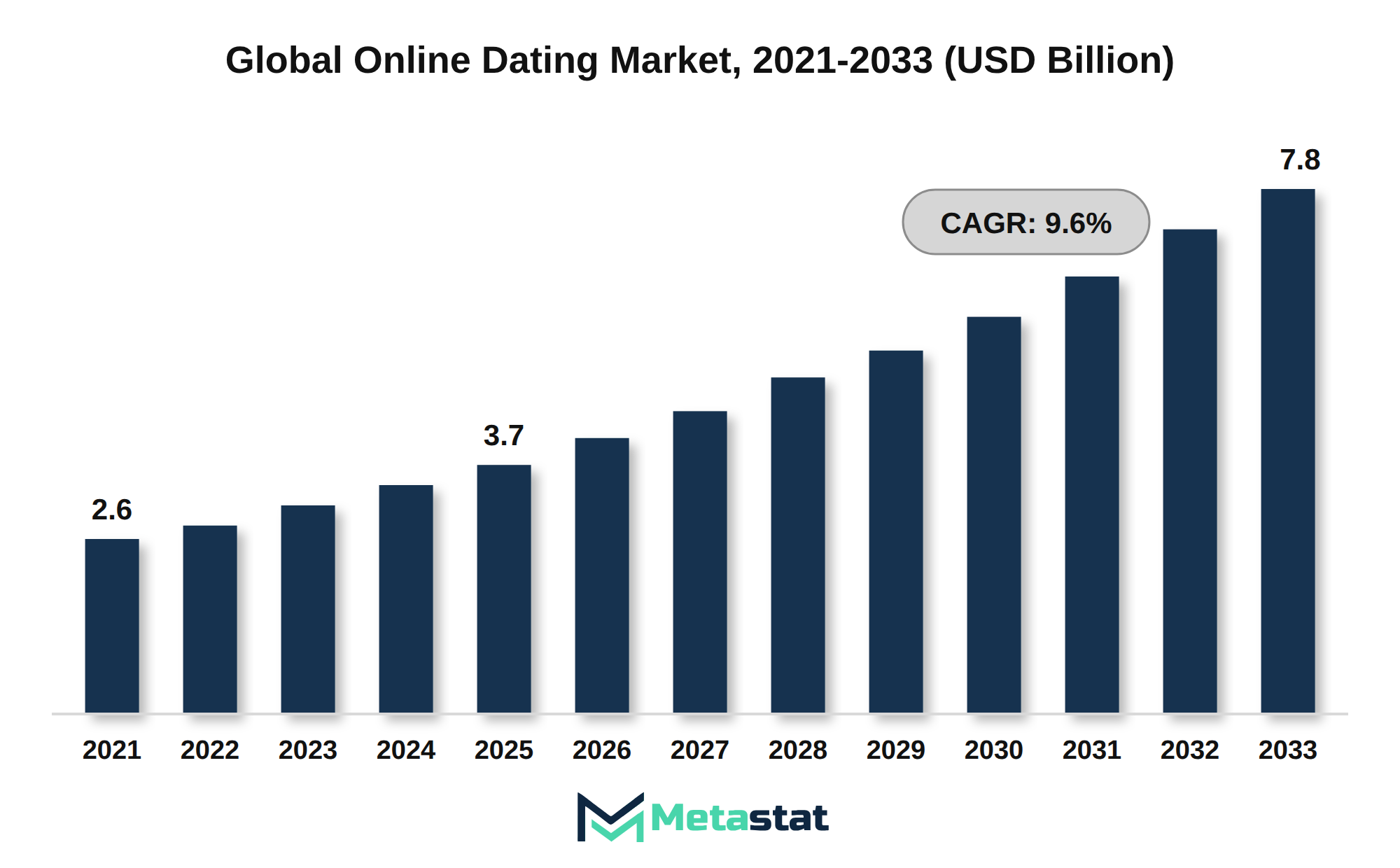
The Online Dating market experiences significant growth driven by the acceleration of digital transformation across various sectors. The shift towards online platforms continues to reshape consumer engagement, with more individuals using mobile applications and web-based platforms for dating services. This trend results from advancements in technology, particularly in automation and artificial intelligence, which enhance user experiences and streamline matchmaking processes.
Increased smartphone penetration and internet accessibility drive the adoption of online dating services. The growing reliance on technology for social interaction influences demand from diverse demographics, particularly younger users. The market benefits from evolving consumer behaviors that prioritize convenience and accessibility, enabling users to connect with potential partners at any time and place.
Investment in digital infrastructure improves user engagement and retention, which increases the demand for innovative features in dating apps. Companies that integrate advanced algorithms and personalized matchmaking capabilities gain competitive advantages, leading to enhanced user satisfaction and loyalty. The Online Dating market is projected to reach USD 7.8 billion by 2033, reflecting a compound annual growth rate (CAGR) of 9.6% from 2026 to 2033.
The Online Dating market experiences notable growth driven by shifting demographic patterns, particularly in urbanization and changing lifestyle choices. Increasing numbers of individuals in urban settings seek convenient and efficient ways to build connections, enhancing demand for online dating solutions. Aging populations, particularly in developed regions, contribute to a rise in dating service usage, attributed to older adults increasingly embracing digital platforms to seek companionship.
Consumer behavior trends highlight the importance of adaptability in catering to diverse age groups and preferences. Providers that align their services with the evolving needs of various demographics, including younger generations who prioritize mobile applications, significantly enhance their market share. This strategic focus on user experience and accessibility leads to broader acceptance among different age cohorts, driving overall market growth.
Technological advancements support this demographic shift by facilitating interactions and enhancing user engagement through personalized experiences. The integration of AI and automation in matchmaking processes allows platforms to cater to diverse user preferences effectively. This technological integration translates into improved customer satisfaction and retention, further reinforcing the market's growth trajectory.
While the market continues to evolve, understanding and addressing the underlying demographic shifts will remain crucial for companies aiming to capitalize on new opportunities. Investment in user-friendly applications and tailored services will likely enhance competitive positioning, leading to sustained revenue growth and market expansion in the Online Dating sector.
Regulatory tightening and compliance hurdles pose significant challenges to the Online Dating market. Increased scrutiny surrounding user data protection and privacy mandates creates a complex environment for service providers, leading to heightened operational costs and potential legal ramifications. Businesses that fail to meet these compliance requirements face fines or operational shutdowns, impacting their market presence and profitability.
Macroeconomic headwinds further complicate market dynamics. Inflationary pressures and resource scarcity contribute to rising operational costs, discouraging new entrants and existing players from pursuing expansion. These economic factors create a challenging environment for growth, particularly for startups and smaller companies with limited capital reserves.
Technological obsolescence presents another restraint. Rapid advancements in technology compel companies to continuously innovate to remain competitive. Failure to adapt to emerging trends results in decreased market relevance and potential loss of customer base. This necessity for constant investment in technology places a financial burden on businesses operating within the market.
Infrastructure gaps and connectivity deficits hinder market penetration. In regions lacking robust digital infrastructure, potential users face challenges accessing online dating platforms, limiting market reach. Deployment bottlenecks in these areas lead to slower adoption rates and reduced market growth.
Data security vulnerabilities and privacy concerns contribute to consumer hesitation in engaging with online dating services. Incidents of data breaches erode consumer trust, leading to decreased user engagement and potential revenue loss for companies. Addressing these issues requires significant investment in security measures, further straining operational budgets.
Fragmentation within the market complicates user experience and service differentiation. The presence of numerous platforms overwhelms potential users, making it difficult for any single service to capture significant market share. Cultural barriers and regional adoption resistors exacerbate this fragmentation, creating varied market conditions that require tailored approaches to user engagement and marketing strategies.
Geopolitical fragmentation significantly impacts the Online Dating market, resulting in increased uncertainty for service providers. Ongoing tensions between nations disrupt cross-border operations, complicating partnerships and investments. Consequently, companies face difficulties in expanding their user base and adapting to diverse regulatory environments.
Trade deficits and tariff friction exacerbate operational challenges within the market. Increased costs associated with international transactions affect pricing strategies, leading to margin pressures for service providers. Users experience higher subscription fees or reduced features, impacting overall satisfaction and retention.
Technological disruptions contribute to operational instability in the Online Dating market. Rapid advancements in technology necessitate continuous investment in infrastructure and platform development. Firms that struggle to integrate new technologies effectively lose competitive advantages, resulting in decreased market share.
Supply chain instability poses additional challenges. Fluctuations in feedstock and component availability disrupt service delivery. Such challenges lead to inconsistent user experiences, ultimately driving potential customers to alternative platforms. Companies prioritizing supply chain resilience position themselves better to navigate these disruptions.
Workforce skill gaps and talent retention pressures hinder market growth. The need for skilled personnel in technology development and customer service remains high, yet companies struggle to attract and retain top talent. Addressing these workforce challenges is essential for enhancing operational effectiveness and meeting evolving user demands.
Environmental lifecycle footprints and sustainability demands continue to influence market dynamics. Users increasingly seek platforms that prioritize environmental responsibility, compelling companies to adopt sustainable practices. Firms failing to address these expectations could face reputational damage and user attrition.
Overall, the Online Dating market confronts a complex set of challenges stemming from geopolitical issues, technological advancements, and evolving consumer expectations. Successfully navigating these obstacles requires strategic investments, innovative solutions, and a focus on sustainability and talent development.
The Online Dating market presents significant opportunities stemming from emerging regional demands and evolving consumer preferences. Increased internet penetration and smartphone adoption in developing regions enhance accessibility to online dating platforms, driving user engagement. These factors contribute to a notable rise in user numbers, particularly among younger demographics seeking diverse dating experiences.
Infrastructure modernization further supports this market expansion. Advancements in mobile network capabilities and data protection regulations create a secure environment for users, encouraging participation in online dating platforms. Enhanced user experiences lead to sustained growth in subscription-based and ad-supported revenue models, reflecting changing consumer behaviors.
Technological disruptions fuel innovation within the market. Integration of artificial intelligence and machine learning improves matchmaking algorithms, delivering personalized experiences that attract new users. Such advancements enhance competitiveness among providers, resulting in increased investment and the introduction of niche applications tailored to specific audiences.
Strategic consolidation through mergers and acquisitions plays a critical role in shaping the market landscape. These initiatives allow companies to expand their service offerings and geographic reach, creating a diversified portfolio that appeals to varied user segments. Downstream market diversification supports revenue growth, driven by providers introducing complementary services aimed at enhancing user engagement.
The Online Dating market experiences notable shifts in buyer behaviors, driven by digital procurement trends. This transition indicates a preference for mobile applications over traditional web-based platforms, aligning with the increasing demand for convenience and accessibility among users. Continuous enhancements in user interfaces and features drive user loyalty and engagement.
Value-chain optimization and process automation enhance operational efficiency for market players. Streamlined operations reduce costs associated with customer acquisition and retention, allowing providers to focus on innovation and user satisfaction. Such strategies support long-term growth and improve competitive positioning within the evolving market environment.
The Global Online Dating market is segmented based on Service Type, Revenue Model, Platform Type, and User Demographics.
Valued at USD 2.7 billion in 2026, the Online Dating Apps segment is projected to reach USD 4.9 billion by 2033, achieving a CAGR of 9.2% during the forecast period. Increasing smartphone penetration and shifting consumer preferences towards mobile applications drive growth in this segment. Users favor convenience and accessibility, leading to a surge in app downloads and active user engagement. The market benefits from ongoing technological advancements, including improved algorithms and enhanced user interfaces, which enable better matchmaking experiences.
Expanding functionalities in online dating apps, including video dating and integrated social media features, enhance user interaction and satisfaction. This product evolution attracts a broader demographic, including younger audiences seeking innovative dating solutions. The regulatory landscape surrounding data privacy and user safety influences compliance strategies, prompting companies to adopt stringent measures to protect user information. Adapting to these regulations enhances consumer trust and loyalty, which are critical for sustained growth in the market.
The economic environment significantly impacts consumer spending behavior regarding subscription services within the Online Dating Apps segment. Fluctuating pricing strategies, including tiered subscriptions and ad-supported models, create diverse revenue streams while catering to varying user preferences. Companies continuously seek strategic opportunities to invest in marketing and partnerships that increase visibility and user acquisition, driving further market expansion. These dynamics position the segment for strengthening long-term demand in the evolving Online Dating market.
Significant growth in the Online Dating Websites segment stems from increasing user demand for convenient and accessible platforms to find partners. Enhanced internet connectivity and smartphone penetration facilitate user engagement, particularly among younger demographics, driving the adoption of these online platforms. A growing trend towards online interactions influences consumer preferences, prompting more users to turn to websites for dating purposes.
Investment in technological advancements enhances user experience through improved matching algorithms and user interfaces. The shift towards personalized matchmaking services and features like video profiles creates a competitive edge for service providers. Innovations attract users seeking more meaningful connections, with platforms increasingly focusing on user safety and privacy to build trust.
Market expansion is evident, driven by demographic shifts and increasing acceptance of online relationships. Users across various age groups, particularly those aged 18 to 34, actively engage with online dating services, contributing to a broader customer base. The Online Dating Websites segment is projected to reach USD 0.7 billion by 2033, at a CAGR of 7.9% during the forecast period.
Regulatory considerations surrounding data privacy and user protection present challenges and opportunities. Compliance with evolving regulations enhances user confidence and encourages platform credibility. Consequently, companies prioritizing compliance and transparency are likely to gain a competitive advantage in the market.
Overall, ongoing innovation, user-centric features, and strategic investment strategies position the Online Dating Websites segment for sustained growth within the broader Online Dating market. The combination of a growing user base and technological advancements indicates a promising trajectory for this segment over the next several years.
Significant growth in the Online Matchmaking Services segment reflects changing consumer preferences towards personalized dating experiences. Increased demand for tailored matchmaking services, driven by busy lifestyles and a desire for meaningful connections, supports this trend. Individuals seeking more serious relationships now prefer professional matchmaking over traditional online dating. The rising popularity of these services encourages investments in technology and infrastructure to enhance user experience, ensuring better matches and higher satisfaction rates.
The segment is expected to reach USD 0.8 billion by 2033, illustrating the robust potential within the Online Dating market. While consumers become more discerning, service providers focus on leveraging data-driven algorithms and user insights to refine matchmaking processes. Investments in technology and platform enhancements drive operational efficiencies and improve user engagement, establishing a competitive edge.
Continued innovation in user interfaces and matchmaking algorithms positions companies favorably amid evolving market dynamics. High investment in marketing strategies targeting specific demographics increases visibility and user acquisition. The combination of these factors creates a dynamic environment for growth, positioning the Online Matchmaking Services segment because a central component of the broader Online Dating market.
Growth in the Online Matrimonial Platforms segment reflects increasing consumer interest in personalized matchmaking services. This trend arises from cultural shifts that emphasize traditional values and specific relationship goals, particularly in regions where arranged marriages remain prevalent. Internet penetration and smartphone usage support the adoption of these platforms, facilitating access to a larger pool of potential partners.
Technological advancements play a crucial role in this expansion. Enhanced algorithms improve matchmaking accuracy, improving user satisfaction and retention. Innovations in user experience, including video profiles and virtual matchmaking events, attract a diverse demographic, including users seeking serious commitments.
Market players invest in marketing strategies targeting specific cultural and demographic segments, creating tailored experiences that align with users' preferences. Subscription models, particularly in this segment, capitalize on users seeking premium services, contributing to overall revenue growth. The Online Dating market sees a projected growth in this segment at a CAGR of 10.6% during the forecast period, indicating significant momentum and potential for continued expansion.
Regulatory compliance influences the operational landscape for online matrimonial platforms. Adhering to data protection laws ensures user privacy, building trust and encouraging greater participation. This attention to regulation supports long-term growth, positioning companies favorably in a competitive market.
Investment in user education about platform functionalities and safety measures enhances overall user experience. The result is increased customer loyalty, leading to higher customer lifetime value. Strategic opportunity windows arise from the market's continued evolution, driven by shifting consumer behaviors and technological maturation.
Adoption of Social Dating and Dating-Community Platforms benefits from a growing desire for community engagement among users. Individuals increasingly seek connections beyond traditional dating, exploring friendships or shared interests through these platforms. The social aspect drives the demand for features that emphasize interaction, creating a sense of belonging. Enhanced functionalities, including group chats and community forums, contribute to platform attractiveness, catering to users' needs for meaningful interactions.
Segment expansion draws support from technological advancements that enable effective social networking experiences. Improvements in mobile application capabilities facilitate easier access and user engagement, driving the popularity of these platforms. The integration of social networking features enhances user experiences, promoting longer engagement periods and increasing user retention. Next-gen upgrades focusing on personalization and data-driven matchmaking enhance user satisfaction, supporting continued growth in this area.
Regulatory compliance remains a vital aspect, particularly regarding user privacy and data protection. Platforms navigate complex regulations to maintain user trust and safeguard sensitive information. Compliance with evolving standards requires significant investment in security measures, impacting cost structures. Pricing volatility arises from the need for continuous technological upgrades and compliance costs, influencing overall profitability within the segment.
Strategic opportunity windows exist due to users seeking more niche communities and specialized dating experiences, which lead to innovative product evolution. Platforms focusing on specific demographics or interests capture underserved markets, enhancing market penetration. Capital investment in emerging technologies, including artificial intelligence for personalized matchmaking, signifies an effort to stay competitive. Supply chain resilience is critical in maintaining service quality, ensuring platforms effectively manage user expectations while adhering to operational standards.
Valued at USD 1.9 billion in 2026, the subscription-based segment is projected to reach USD 3.6 billion by 2033, reflecting a compound annual growth rate (CAGR) of 9.8% during the forecast period. Primary demand drivers stem from the increasing preference for personalized and flexible dating options, with users seeking better matches through enhanced features provided by subscription services. Adoption of subscription-based models occurs widely among young adults and professionals prioritizing quality interactions over free services.
Segment expansion catalysts include the integration of advanced artificial intelligence and machine learning technologies, resulting in improved matchmaking algorithms that enhance user experience. Technological maturation facilitates the development of intuitive interfaces and effective payment systems, driving user retention. Subscription models deliver consistent revenue streams for providers and enable the continuous evolution of service offerings, ensuring competitiveness within the market.
End-use dynamics indicate a growing willingness among consumers to invest in premium services that offer exclusive features and better opportunities for meaningful connections. Consumption shifts reveal a trend towards mobile applications, where users increasingly prefer subscription-based models for convenience and accessibility. Regulatory compliance, particularly in data protection and privacy, influences cost structures, prompting companies to invest in secure payment systems and user data management.
Pricing volatility remains a concern, with fluctuations in user acquisition costs impacting profit margins. However, capital investment outlooks support the segment's growth, driven by a robust influx of venture capital into innovative platforms. Strategic opportunity windows arise from the ongoing demand for niche dating services and personalized matchmaking, highlighting the segment's potential for significant revenue generation within the online dating market.
Significant growth within the Ad-Supported segment of the Online Dating market reflects increasing consumer engagement with free-to-use platforms. Advertising partnerships with various brands and services contribute to revenue generation, allowing users to access features without subscription fees. This model attracts a diverse user demographic, including younger generations who prefer free applications over paid alternatives. The integration of targeted advertising enhances user experience by presenting relevant ads, increasing the effectiveness of marketing campaigns for advertisers. Competition among platforms drives innovation and feature development, strengthening user retention and engagement. The Ad-Supported segment is projected to reach USD 1.7 billion by 2033, at a CAGR of 7.7% during the forecast period.
Growth in the freemium segment reflects a strategic shift among consumers, driven by demand for accessible dating options without upfront payments. The proliferation of mobile applications enhances user engagement, facilitating broader adoption across various demographics. Significant technological advancements support the development of features that attract users to premium offerings, fueling revenue opportunities for providers. Competitive pressure among industry players incentivizes continuous innovation, leading to enhanced user experiences. With an anticipated market value of USD 1.3 billion by 2033, the segment exemplifies the evolving dynamics of the Online Dating market, where users prioritize flexibility and cost-effectiveness in their dating choices.
Growth within the Others (Virtual Credits & In-App Purchases, and Concierge & Personalized Matchmaking Fees) segment reflects the increasing integration of virtual credits and personalized services within the Online Dating market. The rising consumer preference for tailored matchmaking experiences drives demand for concierge services and premium in-app features, enhancing user engagement and satisfaction. Adoption of these innovative offerings attracts a broader audience, particularly among younger demographics seeking unique dating experiences. Enhanced user experiences through virtual credits facilitate monetization strategies that allow platforms to diversify revenue streams beyond traditional subscription models.
This segment is projected to grow at a CAGR of 10.4% during the forecast period, indicating strong market potential. The interest in personalized matchmaking services highlights a shift in consumer expectations, where users prioritize quality interactions over sheer quantity. Providers that successfully implement advanced algorithms and personalized recommendations differentiate themselves in a competitive landscape, capturing a larger share of the demand. The expansion of this segment contributes to the overall growth trajectory of the Online Dating market, driven by platforms that continue to innovate and refine their service offerings.
Valued at USD 3.6 billion in 2026, the Mobile Applications segment is projected to reach USD 6.7 billion by 2033, reflecting a CAGR of 9.4% during the forecast period. Increasing smartphone penetration and the growing preference for mobile-based interactions among users drive demand for mobile applications in the Online Dating market. User convenience, immediate access, and enhanced user experience offered by mobile applications stimulate adoption among diverse demographics.
Technological advancements, including AI-powered matchmaking algorithms and enhanced user interface designs, contribute to the segment's expansion. Continuous updates and feature enhancements attract users, leading to higher engagement levels. Strategic partnerships among key players, including Match Group, LLC and Bumble Inc., focus on improving user acquisition and retention through innovative features that cater to evolving user preferences, driving competition in the segment.
Consumers increasingly prefer mobile applications due to their on-the-go convenience, resulting in a shift from traditional web-based platforms. This transition influences the competitive dynamics within the market, driven by companies investing heavily in mobile application development to capture a larger share of the growing user base. Regulatory compliance regarding user data privacy and security remains a significant consideration, shaping the features and functionalities of mobile applications.
Strategic opportunities exist for growth in regions with emerging market potential, particularly in Asia Pacific, where user adoption is expanding rapidly. Investment in next-gen technologies and innovative marketing strategies positions companies favorably to capitalize on trends associated with mobile applications in the Online Dating market.
Growth in the Web-based Platforms segment reflects increasing consumer preference for user-friendly and accessible online dating solutions. Rising internet penetration and advancements in web technologies enable the development of more interactive and engaging platforms, attracting users across diverse demographics. Younger generations, particularly those aged 18-34, exhibit a strong inclination toward web-based services, driving demand and leading to enhanced product offerings.
Intensifying competition among key players, including Match Group, LLC, Bumble Inc., and ParshipMeet Group, drives innovation and diversification of services within the online dating ecosystem. Companies invest in next-generation upgrades, ensuring improved user experiences through features including personalized matchmaking, enhanced privacy controls, and advanced algorithms. These developments build customer loyalty and drive revenue growth within the market.
The Web-based Platforms segment is projected to reach USD 1.1 billion by 2033, at a CAGR of 10.8% during the forecast period. This growth trajectory suggests significant potential for sustained investments in technology and marketing strategies, further expanding the market's reach and enhancing its competitive landscape. Such strategic initiatives are critical in addressing user preferences for convenience and connectivity in the online dating space.
Young adults aged 18 to 24 represent a key demographic within the Online Dating market. This age group shows a strong inclination toward using mobile applications, which provide a user-friendly interface and instantaneous connectivity. The proliferation of smartphones and social media has further facilitated their engagement with online dating platforms, enhancing their comfort with digital interactions.
Trends among this demographic indicate a preference for casual dating and networking, often prioritizing fun and social connections over serious relationships. While online dating evolves, platforms cater specifically to the desires and interests of younger users, incorporating features like gamification and social sharing to attract attention.
Technological advancements significantly influence this segment, with the integration of artificial intelligence and machine learning enhancing user experiences through personalized recommendations and matchmaking. The emergence of next-gen upgrades ensures that platforms continually adapt to meet the changing preferences of this age group.
Marketing strategies targeting 18 to 24-year-olds rely heavily on social media channels and influencer partnerships, which appeal well to younger audiences. User-generated content and authenticity play crucial roles in attracting this demographic, reflecting their desire for platforms that align with their values and lifestyle.
While this demographic continues to grow, their engagement with the Online Dating market will likely drive innovation and expansion within the sector. The combination of social behaviors, technological advancements, and targeted marketing strategies highlights the significance of the 18 to 24 years segment in the overall online dating market.
Individuals aged 25-34 represent a significant demographic in the Online Dating market, driven by a growing emphasis on online interactions and relationships. This age group experiences increasing engagement in digital matchmaking platforms due to heightened comfort with technology and the desire for meaningful connections. A cultural shift toward online dating, fueled by social media and mobile technology, supports the expansion of this segment.
Adoption of online dating services within this demographic reflects evolving lifestyle preferences, with users seeking convenience and a broader dating pool. Insights into user behavior indicate a trend towards mobile applications, aligning with the preference for quick and accessible solutions. This transition marks a critical phase in the technological maturation of the market, enhancing user experiences through innovative features and functionalities.
Consumer expectations push for continuous product evolution, prompting platforms to integrate advanced algorithms and personalized recommendations. This evolution aligns with the growing interest in niche dating services that cater to specific interests and lifestyles, further diversifying the offerings in the market. The expansion catalysts for this segment encompass the rise of social dating platforms, which create a sense of community among users.
Next-gen upgrades and technological advancements significantly influence user engagement, with features including video dating and augmented reality enhancing the interaction experience. The competitive landscape encourages platforms to prioritize user safety and satisfaction, ensuring compliance with regulatory standards. This focus on security attracts users who prioritize trust and transparency in their online interactions.
Consumption shifts within this demographic reflect a willingness to invest in subscription-based services, providing revenue stability for providers. Pricing strategies reflect the balance of affordability with service quality, influencing user retention and satisfaction levels. Strategic opportunity windows emerge owing to platforms exploring innovative marketing strategies to attract and retain users.
Overall, the 25-34 years demographic is a key contributor in shaping the Online Dating market, driving growth through their distinct preferences and behaviors. Their engagement with technology positions them because key contributors to the market's evolution, presenting opportunities for providers to tailor their offerings and enhance user experiences.
Growing interest in the Online Dating market among individuals aged 35 to 44 has resulted from changing social dynamics and increased acceptance of online relationships. This demographic often seeks serious relationships, driving demand for platforms that offer stability and long-term connections. The integration of advanced algorithms enhances user experience, tailoring matches to preferences and behaviors, which appeals to this age group.
Technological advancements play a crucial role in attracting this demographic. Users aged 35 to 44 increasingly engage with mobile applications due to convenience and accessibility. The rise of online matrimonial platforms specifically caters to the desire for more traditional, serious partnerships, further diversifying the market offerings.
Competition within the market drives innovation and product evolution. Participants in the Online Dating market continuously adapt their services to meet the expectations of this age group, emphasizing features that promote safety, user verification, and personalized experiences. This segment's specific needs influence pricing strategies, with subscription-based models predominating due to higher willingness to pay for quality matches.
Consumption shifts reflect broader societal trends toward digital interaction, especially among professionals looking to balance busy lifestyles with personal relationships. Regulatory compliance and standards have begun to shape industry practices, ensuring user safety and data protection, which enhances trust among users in this demographic.
Strategic opportunity windows within the market highlight the potential for growth driven by capital investment in technology and user experience enhancement. This age group represents a valuable segment for targeted marketing campaigns, positioning firms to better align their offerings with the unique demands of users aged 35 to 44.
Individuals aged 45-54 represent a significant demographic within the Online Dating market, driven by changing societal norms and increasing acceptance of online relationship platforms. This age group increasingly seeks companionship and dating opportunities, resulting from lifestyle changes, increased internet accessibility, and a growing number of single individuals within this cohort. Adoption rates are influenced by the desire for meaningful relationships and the convenience that online platforms offer.
Segment expansion catalysts include advancements in technology, particularly in mobile applications and user-friendly interfaces that enhance accessibility for users in this age range. The maturation of online dating technologies, along with the introduction of features tailored to older users, contributes to higher engagement levels. Next-gen upgrades that prioritize safety and privacy play a critical role in gaining the trust of this demographic, creating a sense of security while using dating platforms.
Consumption patterns show a shift toward subscription-based models, reflecting a preference for premium services that offer enhanced features and better matching algorithms. This demographic values the quality of matches over quantity, indicating a willingness to invest in services that promise genuine connections. End-user dynamics highlight a trend toward more personalized experiences, with platforms evolving to cater to specific interests and relationship goals of users aged 45-54.
The 45-54 age group influences a dynamic segment within the Online Dating market, characterized by increased demand for tailored services and a commitment to meaningful relationships through digital platforms. This ongoing evolution presents strategic opportunity windows for market players to enhance their offerings and expand their reach within this valuable demographic.
Individuals aged 55 years and above exhibit distinct preferences within the Online Dating market. The increasing focus on meaningful connections drives demand in this demographic, significantly influenced by changing societal norms surrounding dating and relationships. Enhanced digital literacy among older adults facilitates engagement with various platforms, contributing to the segment's growth. Technological maturation enhances user experiences, driven by platforms increasingly incorporating features designed for simplicity and accessibility, catering to the unique needs of older users. Enhanced safety features and comprehensive support systems build trust, encouraging more individuals to participate actively in online dating. Consumption shifts reflect a desire for companionship, influencing the adoption of various services, including online matchmaking and matrimonial platforms. This demographic often seeks long-term relationships rather than casual encounters, impacting the types of services that thrive in this segment. Regulatory compliance standards affect operational practices within the market, ensuring safety and user protection, which aligns with the priorities of older users. The cost structures of platforms targeting this demographic often reflect the desire for quality over quantity, with a focus on personalized services. Overall, the strategic opportunity windows within the 55 years and above segment highlight a growing interest in relationship-building among older adults, indicating sustained potential for growth in the Online Dating market.
Based on geography, the Global Online Dating market is divided into North America, Europe, Asia-Pacific, South America, Middle East, and Africa.
North America exhibits a flourishing Online Dating market, projected to reach a size of USD 2.5 billion by the end of 2033, expanding at a CAGR of 9.6% throughout the forecast period. The region holds a substantial share of the global market in 2025, underscoring its importance in shaping the industry's trajectory.
In this region, the prevalence of mobile applications and web-based platforms drives user engagement. Online Dating Apps, in particular, demonstrate strong growth, with a projected increase from USD 2.7 billion in 2026 to USD 4.9 billion by 2033, reflecting a CAGR of 9.2%. Subscription-Based revenue models experience similar momentum, expected to grow from USD 1.9 billion in 2026 to USD 3.6 billion by 2033, achieving a CAGR of 9.8%.
Demographic trends indicate that younger age groups, particularly those aged 18-34, demonstrate a higher engagement level with online dating services. This demographic shift drives innovation within the market, prompting platforms to enhance user experiences and tailor offerings to meet evolving preferences. The robust competition among key players, including Match Group, LLC, Bumble Inc., and Meta, encourages continuous improvement and expansion in service offerings.
Cultural nuances within the United States, Canada, and Mexico contribute to varying user behaviors and preferences in the Online Dating market. Localized strategies and marketing approaches are essential to effectively reach and engage diverse consumer bases across the region. This focus on personalization and cultural relevance creates avenues for sustained market growth and increased adoption of online dating solutions.
The Online Dating market in Europe represents a significant portion of the global landscape, accounting for 25.00% of the market share in 2025. Countries including Germany, France, the UK, Italy, Spain, and Russia drive this growth through evolving consumer preferences and increasing digital engagement among various demographics.
Germany leads in user engagement with a robust base of online dating applications and websites, supported by a cultural acceptance of digital interactions. France follows closely, where a blend of traditional values and modern dating practices contributes to demand for innovative matchmaking services. The UK exhibits a rapidly growing user base, particularly among younger demographics, creating a competitive environment for service providers.
Italy and Spain show rising adoption rates of mobile applications, reflecting a shift in consumer behavior towards on-the-go connectivity and convenience. Russia presents unique opportunities, given its diverse population and increasing internet penetration, which enhances the potential for market expansion. The Rest of Europe segment indicates a gradual increase in online dating adoption, driven by awareness of digital platforms that continues to spread across less saturated markets.
Europe represents a dynamic region for the Online Dating market, characterized by diverse consumer preferences and varying adoption rates. The ongoing development of localized services and tailored offerings positions this region for sustained growth in the coming years.
Asia-Pacific represents a significant portion of the global Online Dating market. The region experiences growth driven by the increasing use of mobile applications, particularly in countries like China and India. High smartphone penetration, evolving social norms, and a young population fuel demand for online dating services. The rise of urbanization and the busy lifestyles of individuals in metropolitan areas enhance the appeal of online platforms for finding partners.
Countries including Japan and South Korea exhibit mature market dynamics, where established brands maintain a strong presence. Emerging markets in Southeast Asia and Australia demonstrate substantial potential for expansion, driven by changing cultural perceptions and the introduction of innovative matchmaking features. Local players leverage unique regional characteristics and preferences to cater to users, thereby enhancing market penetration.
Investment in localized marketing strategies and partnerships with regional platforms enables the growth of domestic vendors. The competitive landscape comprises global companies and local startups, creating healthy competition within the market. This environment encourages continuous improvement in service offerings while ensuring diverse options for consumers.
Infrastructure modernization and increasing internet accessibility play a crucial role in supporting market growth. A robust digital ecosystem facilitates the integration of advanced technologies, including artificial intelligence, enhancing user experiences. Ongoing trends in foreign direct investment (FDI) and strategic entry barriers create opportunities for both domestic and international players to establish a foothold in new markets.
The Online Dating market in South America shows a growing trend, capturing a share of the global market in 2025. Brazil and Argentina stand out due to key players within this region reflecting diverse consumer preferences and cultural dynamics. Increasing smartphone penetration and internet accessibility contribute to an expanding user base, facilitating the adoption of digital platforms for dating. The rise of mobile applications aligns with the demand for convenience and connectivity, enhancing user engagement. Emerging trends in social interactions and relationship building increase the relevance of online dating services, particularly among younger demographics. The market's growth is driven by a combination of localized content and tailored offerings that connect with regional consumers. Strategic investments in user experience and platform innovation further position players to capitalize on the shifting landscape. Competitive dynamics within the market demonstrate a mix of established brands and innovative start-ups. This environment encourages continuous improvement in service offerings and user engagement strategies, enhancing market penetration. A focus on subscription-based models and ad-supported revenue streams provides additional avenues for growth, catering to varying consumer preferences. Overall, the South American Online Dating market demonstrates significant potential for expansion and increased market share through 2033.
The Online Dating market in the Middle East and Africa is poised for growth, with a projected market share of the global total by 2025. Factors driving this expansion include technological advancements, increasing smartphone penetration, and growing acceptance of online dating among various demographics.
Saudi Arabia and the UAE represent key markets within the region, fueled by a young population that increasingly engages with mobile applications for dating. Cultural shifts toward more liberal social interactions contribute to higher adoption rates. South Africa further highlights significant growth potential, driven by rising internet accessibility and a diverse population open to various dating platforms.
The market benefits from a mix of service types, including online matchmaking services and matrimonial platforms, catering to local preferences. Subscription-based revenue models dominate, while ad-supported and freemium models complement the overall landscape. Emerging players and established companies compete to capture market share, leading to an evolving competitive environment.
Investment in infrastructure modernization supports the sector, with improved internet connectivity enhancing market penetration in underrepresented territories. Local compliance mandates and cultural nuances influence procurement dynamics, shaping how businesses approach market entry. Overall, the region presents lucrative opportunities for growth in the Online Dating market.
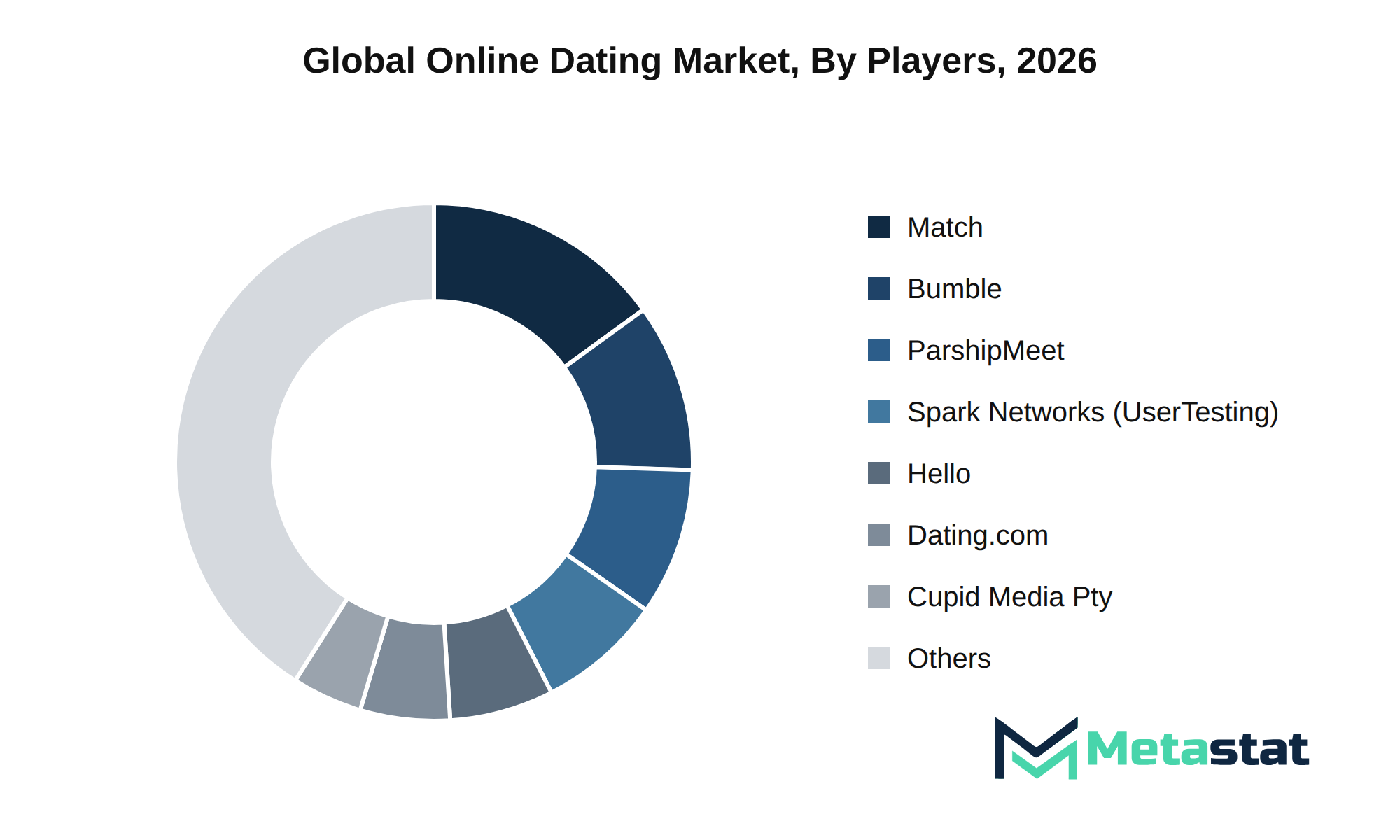
The Online Dating market features a dynamic competitive landscape marked by strategic consolidation and varied commercial models. Key players, including Match Group, LLC and Bumble Inc., dominate through subscription-based revenue models, while emerging rivals like Hily and happn introduce innovative features to capture niche user segments.
Product differentiation remains crucial, with companies including Shaadi.com and Matrimony.com focusing on online matrimonial services to cater to specific demographics. Platforms like Meta leverage their extensive user bases to enhance brand equity and maintain customer retention strategies, reinforcing their positions in the market.
Technological advancements drive competitive advantages, with firms investing in proprietary technology and R&D pipelines to enhance user experience. This trend is evident in mobile applications that facilitate interactions, positioning them because essential tools for user engagement. Strategic alliances and cross-industry partnerships continue to reshape the market, allowing players to expand their offerings and enhance value propositions.
Barriers to entry remain significant, with established brands benefiting from strong brand loyalty and intellectual property portfolios. The future competitive outlook indicates heightened rivalry, particularly among subscription-based models, because companies strive for greater market share. The strategic growth vectors outlined in the Online Dating market illustrate the evolving dynamics and competitive positioning of key industry players.
Market size is forecast to rise from USD 3.7 billion in 2025 to over USD 7.8 billion by 2033, achieving a CAGR of 9.6%. Various factors influence this growth trajectory. Increasing adoption of mobile applications and online platforms enhances user engagement within the Online Dating market. Shifting consumer preferences towards digital interactions contribute to market expansion.
The base case anticipates steady growth, reflecting continuous advancements in technology and user experience. In the bull case, robust demand for innovative features and services accelerates investment in R&D and marketing initiatives, further driving market performance. Conversely, the bear case highlights potential challenges, including regulatory scrutiny and economic fluctuations that could hinder growth.
Investment in next-generation technology integration remains a key driver. Enhanced matchmaking algorithms and data analytics create deeper user connections, positioning companies to meet evolving consumer expectations. Strategic capital allocation towards mobile platform development and infrastructure improvements strengthens overall market competitiveness.
Geopolitical realignments and evolving trade corridors impact global supply chain dynamics within the Online Dating market. Companies increasingly seek opportunities in emerging markets, capitalizing on unmet enterprise needs and high-growth pockets. Future growth recommendations emphasize the importance of adapting to changing consumer demographics and preferences to sustain competitive advantages.
The report strategically identifies and profiles the key market players and analyses their core competencies in each sub-segment of the Online Dating market.
Report Attributes | Details |
Study Period | 2021-2033 |
Base Year | 2025 |
Estimated Year | 2026 |
Forecast Period | 2026-2033 |
Historical Period | 2021-2025 |
Growth Rate | CAGR 9.6% from 2026 to 2033 |
Revenue Unit | USD billion |
Segmentation | By Service Type, Revenue Model, Platform Type, User Demographics, and Region |
By Region | North America (By Service Type, Revenue Model, Platform Type, User Demographics, and Country)
|
Europe (By Service Type, Revenue Model, Platform Type, User Demographics, and Country)
| |
Asia Pacific (By Service Type, Revenue Model, Platform Type, User Demographics, and Country)
| |
South America (By Service Type, Revenue Model, Platform Type, User Demographics, and Country)
| |
Middle East and Africa (By Service Type, Revenue Model, Platform Type, User Demographics, and Country)
|
Find answers to common questions about this report
The Online Dating market size was valued at USD 3.7 billion in 2025.
The Online Dating market is projected to grow at a CAGR of 9.6% during the forecast period from 2026 to 2033.
The North America Online Dating market size is estimated to reach USD 2.5 billion by 2033.
Online Dating Apps lead the market with a projected value of USD 4.9 billion by 2033, significantly surpassing other segments including Online Dating Websites and Online Matchmaking Services.
The key drivers for the Online Dating market include the acceleration of digital transformation, increased smartphone penetration, and changing demographic patterns. Advancements in technology, particularly in automation and artificial intelligence, enhance user experiences, while evolving consumer behaviors prioritize convenience and accessibility, driving demand across diverse demographics.
North America holds the dominant share of the Online Dating market, accounting for USD 2.5 billion in 2033, representing 35.1 percent of the total market. This significant share positions North America because the leading region in this sector.
Regulatory tightening and compliance hurdles significantly restrain Online Dating market growth. Increased scrutiny surrounding user data protection leads to heightened operational costs, while macroeconomic headwinds, including inflation and resource scarcity, discourage expansion efforts. technological obsolescence necessitates continuous innovation, placing financial burdens on companies within the market.
Significant factors favoring product adoption in the Online Dating market include the acceleration of digital transformation and increased smartphone penetration. Advancements in technology, particularly automation and artificial intelligence, enhance user experiences, while evolving consumer behaviors prioritize convenience and accessibility, driving demand across diverse demographics.
The Online Dating market is estimated to reach a valuation of USD 7.8 billion by 2033.
Top players operating in the Online Dating market include Match Group, LLC, Bumble Inc., ParshipMeet Group, Spark Networks, and Hily. Other notable participants are Shaadi.com, Matrimony.com, and eharmony Inc.
The analysts below cover Information & Technology research at Metastat Insights.
LEAD ANALYST
Utkarsh Khirodkar is a Lead Market Research Analyst at MetaStat Insight, specializing in market intelligence, technology sector assessments, and competitive strategy.

PRINCIPAL CONSULTANT - ENTERPRISE AI & EMERGING TECHNOLOGIES
Banking & Finance · Electronics and Semiconductor · Energy and Power · Healthcare IT · Information & Technology · Professional Services
Vijay Gunti is a Principal Consultant at MetaStat Insight, bringing over two decades of experience across enterprise digital transformation, technology strategy, and intelligent systems.

LEAD CONSULTANT - COMMUNICATION, TELECOM, AND IT
Electronics and Semiconductor · Information & Technology · Machinery & Equipment · Professional Services
Ravindra Sathe Consultants for Communication, Telecom, and IT at MetaStat Insight. He leads the firm's industry research initiatives across telecommunications infrastructure, digital connectivity, enterprise networking, and emerging information technology domains.
Evaluating secondary resin quality across post-consumer packaging streams requires reliable technical segmentation. MetaStat Insight delivered an objective assessment that distinguished between extrusion-grade flake pricing and optical sorting throughput limitations across Western Europe. The competitive positioning breakdown for licensed depolymerization technology providers answered several questions during our feedstock feasibility audit. Their team clarified regional trade restrictions on mixed plastic scrap quickly when our team submitted follow-up requests.
Evaluating sovereign cloud deployments for core banking platforms demands a clear view of data residency regulations and migration exit strategies. MetaStat Insight delivered an exhaustive review of regional latency tolerances, mainframe decommission milestones, and third-party vendor concentration risk. The regulatory compliance mapping across European and Asian financial jurisdictions gave our team a dependable baseline for multi-cloud infrastructure discussions.
Replacing petrochemical surfactants with bio-based alternatives requires realistic timelines on industrial precision fermentation scaling. The market research broke down commercialization timelines, feedstock sugar price sensitivities, and regional cosmetic ingredient regulatory approvals in Europe and East Asia. That supplier readiness mapping gave our formulations team reliable context when comparing renewable chemical sourcing roadmaps.
Explore related market intelligence reports worth reading alongside this one.