
LEAD ANALYST
Utkarsh Khirodkar is a Lead Market Research Analyst at MetaStat Insight, specializing in market intelligence, technology sector assessments, and competitive strategy.

Poland Courier, Express, and Parcel (CEP) Market Size, Share, By Business Model (Business-to-Business (B2B), Business-to-Consumer (B2C), Customer-to-Customer (C2C)), By Destination (Domestic and International), By Service Type (Courier Services, Express Services, and Parcel Services), By End User (Services (BFSI- Banking, Financial Services and Insurance), Wholesale and Retail Trade (E-commerce), Manufacturing, Construction and Utilities, and Others (Healthcare and Hospitality)), Industry Analysis, Growth, Trends, and Forecast, 2026-2033
Report ID
MSI-5202
Published
September, 2026
Pages
268 Pages
Format
Historical
Base year
Forecast
Forecast period
Report Details
Choose Your License
Poland Courier, Express, and Parcel (CEP) Market
The Poland Courier, Express, and Parcel (CEP) market was valued at USD 4,529.8 million in 2025 and is projected to reach USD 5,695.7 million by 2033, growing at a CAGR of 2.9% over the forecast period.
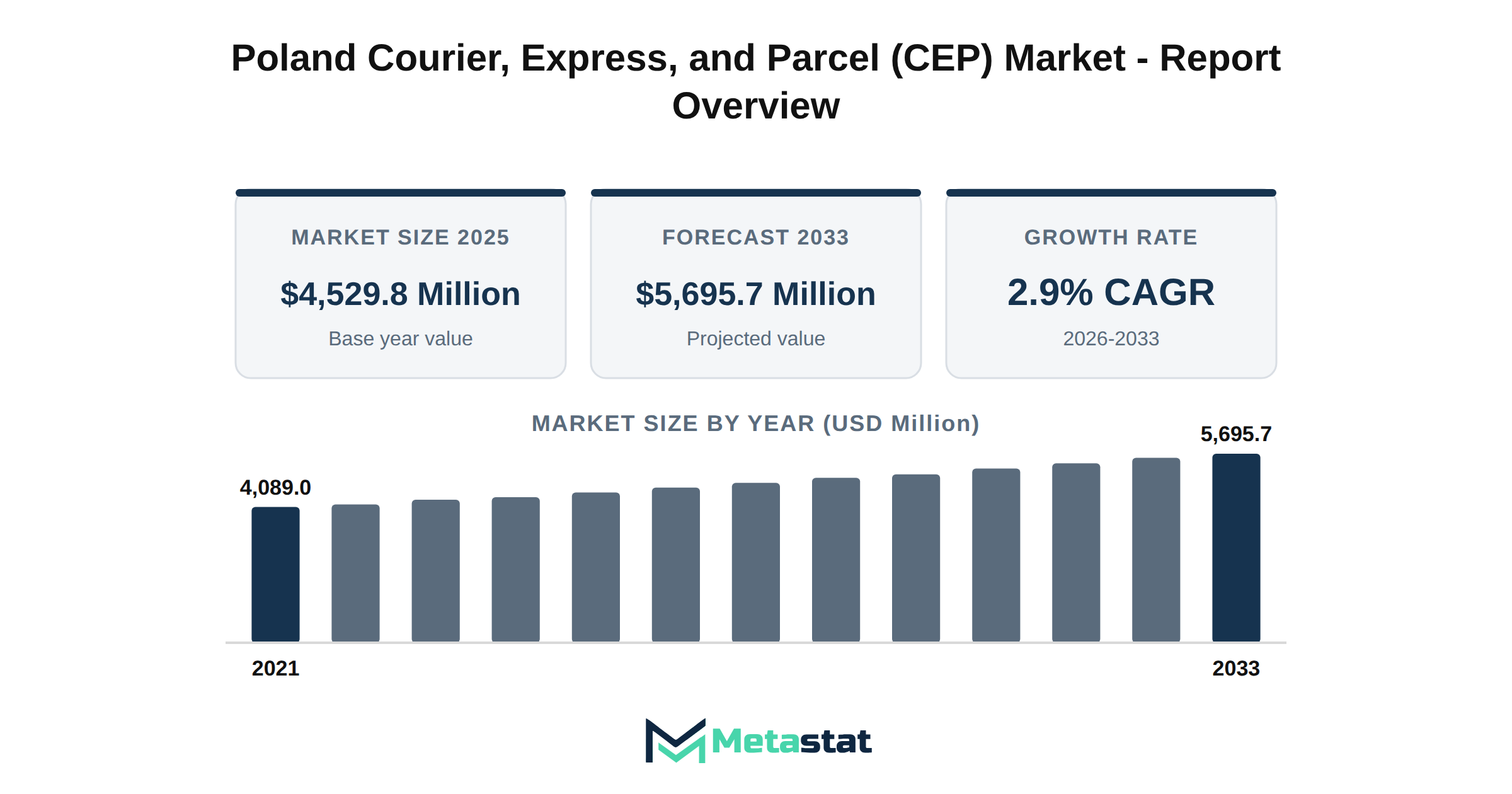
The Poland Courier, Express, and Parcel (CEP) market reached a valuation of USD 4,529.8 million in 2025. Projections indicate growth, with the market anticipated to achieve USD 5,695.7 million by 2033, reflecting a compound annual growth rate (CAGR) of 2.9% during the forecast period from 2026 to 2033. Historical data shows steady growth from USD 4,089 million in 2021 to USD 4,386.4 million in 2024, establishing a solid foundation for future expansion.
In terms of market segmentation, the Business-to-Consumer (B2C) segment holds the largest share at 57.2%, followed by Business-to-Business (B2B) at 33.5% and Customer-to-Customer (C2C) at 9.3%. The B2C segment is projected to expand significantly, with a growth rate of 3.3% leading to a value of USD 3,358.7 million by 2033. The B2B segment is set for growth, reaching USD 1,650 million in the same year, with a CAGR of 1%. The C2C segment will reach USD 686.9 million by 2033.
Geographically, the domestic segment is expected to increase from USD 3,646.2 million in 2026 to USD 4,221.1 million by 2033, indicating a CAGR of 2.1%. The international segment exhibits a higher growth potential, projected to reach USD 1,474.6 million by 2033, with a CAGR of 5.3%. This divergence in growth rates highlights the evolving dynamics of the Poland Courier, Express, and Parcel (CEP) market, reflecting stabilizing domestic demand while international opportunities expand.
Service type segmentation shows that Parcel Services dominates the market, with an expected value of USD 2,958.3 million by 2033. Express Services, valued at USD 1,548.1 million, will experience growth at a CAGR of 2.9%. Courier Services will reach USD 1,189.3 million, growing at a rate of 1.3% during the forecast period. This diversification in service types reflects the market's adaptability to changing consumer preferences.
The Poland Courier, Express, and Parcel (CEP) market faces increasing pressure from inflationary trends that influence operational costs across the supply chain. Economic fluctuations impact pricing structures, prompting companies to adjust strategies for maintaining profitability. Price adjustments directly affect consumer spending patterns, resulting in shifts in demand for various services.
Geopolitical risks, including trade tensions and regulatory changes, shape the operational landscape within the market. Companies navigate evolving compliance requirements and adapt to new standards that emerge from international agreements. These dynamics create uncertainties, impacting investment decisions and market positioning.
Investment in infrastructure remains crucial for enhancing service capabilities. Companies focus on developing efficient logistics architectures that support faster delivery times and improved customer experience. Strategic allocation of capital toward technological advancements, including automation and data analytics, positions players to respond effectively to market demands.
The evolution of customer journey dynamics significantly influences service expectations. Growing consumer preferences for real-time tracking and convenient delivery options drive innovation across the market. Companies that prioritize customer-centric approaches gain competitive advantages, enhancing loyalty and repeat business.
Sustainable transformation continues to gain traction, with firms increasingly prioritizing decarbonization initiatives. Efforts to implement circular economy practices not only align with global sustainability goals but enhance operational efficiencies. Adoption of eco-friendly practices appeals to environmentally conscious consumers, influencing purchasing decisions.
Research and development trajectories focus on next-generation innovations, including the integration of artificial intelligence and machine learning into logistics operations. These technologies enhance forecasting accuracy and optimize route planning, ultimately leading to cost reductions and service improvements.
The competitive landscape within the Poland Courier, Express, and Parcel (CEP) market is characterized by fragmentation, with numerous players vying for market share. Mergers and acquisitions serve because strategies for growth, enabling companies to expand their service offerings and geographical reach. Strategic partnerships enhance operational capabilities and broaden service portfolios, strengthening resilience in a dynamic market environment.
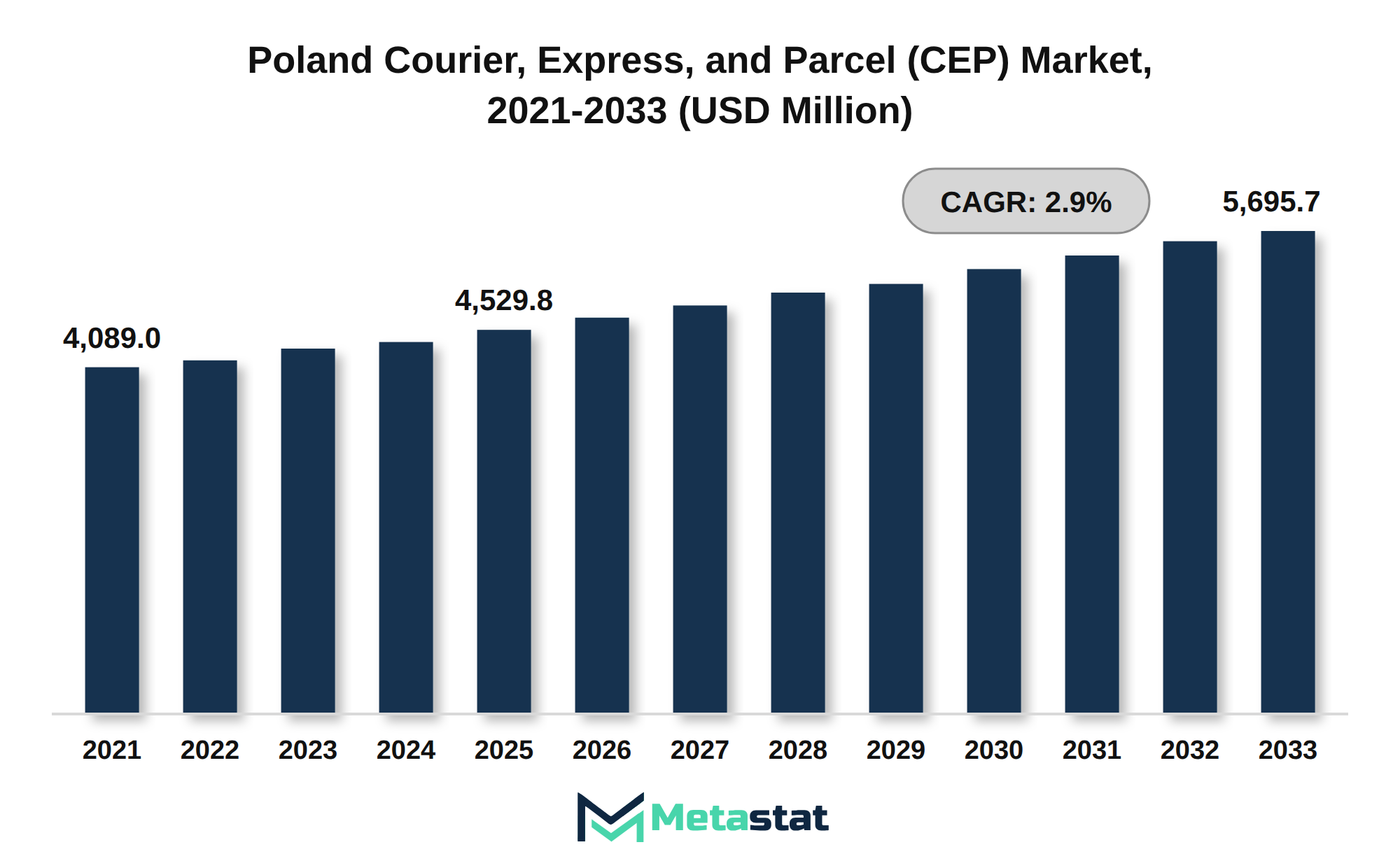
The Poland Courier, Express, and Parcel (CEP) market experiences notable growth due to macro-economic factors, particularly improvements in GDP growth and capital investment environments. Rising disposable incomes drive increasing consumer spending, which fuels demand for shipping services. The growth of e-commerce, alongside a shift in consumer behaviors toward online shopping, enhances demand for delivery services. This trend is supported by venture funding in logistics technology, contributing to the development and modernization of delivery infrastructure.
Investment in technological integration, including automation and digitization efforts, boosts operational productivity and cost efficiency across the market. Companies prioritize streamlining processes through software adoption and advanced logistics management systems. Enhanced efficiency reduces operational costs and improves service quality, meeting evolving consumer expectations. Such advancements contribute to a more competitive landscape within the Poland Courier, Express, and Parcel (CEP) market.
The increasing emphasis on sustainability initiatives influences market dynamics. Companies adopting eco-friendly practices and reducing carbon footprints align with shifting consumer preferences toward responsible consumption. This strategic focus on sustainability enhances brand loyalty and attracts a broader customer base, contributing to market growth.
Investment in infrastructure development significantly impacts the Poland Courier, Express, and Parcel (CEP) market. Upgrading physical and digital assets creates enhanced network capabilities, ultimately allowing suppliers to improve delivery speed and efficiency. These enhancements cater to the growing demand for rapid logistics solutions, particularly within the Business-to-Consumer (B2C) segment, which represents a substantial portion of market revenue.
While urbanization accelerates, the demand for improved logistics networks increases. Investment in modern transportation systems and advanced warehousing facilities supports timely deliveries, which directly influences customer satisfaction. Market players that invest in infrastructure development gain a competitive advantage, ensuring they meet rising consumer expectations and adapt to evolving buying preferences.
The commitment to infrastructure modernization supports regional trade by creating more efficient trade corridors. This development enhances market access, allowing companies to expand their operational reach. The focus on infrastructure development acts because a vital mechanism driving growth in the Poland Courier, Express, and Parcel (CEP) market, enabling businesses to navigate emerging opportunities effectively.
The Poland Courier, Express, and Parcel (CEP) market faces challenges stemming from stringent regulatory compliance requirements. These regulations often entail comprehensive documentation, reporting, and operational adjustments that increase both time and financial investments for businesses. Compliance with these regulations typically demands significant resources, which divert focus from core operational efficiencies and customer service enhancements.
The financial burden associated with compliance impacts smaller operators disproportionately, limiting their ability to compete effectively in the market. Larger companies absorb these costs more easily, yet the cumulative effect of regulatory compliance on operational budgets leads to higher service prices across the board. Consequently, the market experiences pressure on profit margins, affecting overall growth prospects.
Market fragmentation remains a concern, with varying compliance standards across regions complicating operations for companies. Variability in regulatory frameworks creates a complex situation that disrupts service delivery and limits market participation. These compliance hurdles contribute to stagnation in market expansion, resulting from uncertainties around investment decisions linked to evolving regulatory environments.
The regulatory compliance landscape significantly hinders the Poland Courier, Express, and Parcel (CEP) market, creating operational complexities and economic pressures that challenge growth trajectories. Firms operating in this environment navigate these constraints while seeking to maintain competitiveness while facing rising costs and compliance requirements.
The Poland Courier, Express, and Parcel (CEP) market encounters challenges from geopolitical fragmentation, which impacts supply chain stability. These tensions create uncertainty in trade relationships, leading to potential tariff friction that affects operational costs and pricing strategies. The resulting trade deficits manifest in increased expenses for logistics providers, hampering their ability to maintain competitive pricing.
Technological disruptions introduce additional complexities, driven by firms striving to integrate advanced systems while managing interoperability challenges. Many logistics companies face hurdles in aligning diverse technologies across their operations, which delay service delivery and impair customer satisfaction. Customer expectations evolve rapidly, placing pressure on providers to adapt swiftly to remain relevant.
Rising input costs contribute to margin pressures within the market. Suppliers experience volatility in feedstock pricing, which affects operational budgets and profitability. Market players address these challenges by exploring cost-effective solutions, but the need for talent retention becomes evident, particularly in skilled roles that require specialized knowledge for efficient operations.
These factors complicate the overall environment for the Poland Courier, Express, and Parcel (CEP) market. Continuous monitoring of geopolitical developments is essential to navigate these challenges and ensure sustained growth. Addressing workforce skill gaps and investing in training will enhance operational resilience in the face of ongoing disruptions and shifting market demands.
Emerging demands within the Poland Courier, Express, and Parcel (CEP) market present significant opportunities for growth. Increasing online shopping trends drive the Business-to-Consumer (B2C) segment, projected to reach USD 3,358.7 million by 2033, reflecting a compound annual growth rate of 3.3%. Complementing this trend, the rise in e-commerce stimulates the need for efficient delivery solutions, benefiting logistics providers that improve service efficiency and customer satisfaction.
Infrastructure modernization enhances service capabilities. Investments in technological advancements streamline operations, enabling faster and more reliable delivery services. Logistics firms adopting automated solutions improve operational yields, positively impacting profitability. Domestic services are expected to grow from USD 3,646.2 million in 2026 to USD 4,221.1 million by 2033, indicating a compound annual growth rate of 2.1%.
Geographical expansion remains another key opportunity. Providers focusing on international service offerings leverage increasing global trade volumes. The international segment is projected to achieve a compound annual growth rate of 5.3% through 2033, with revenues expected to reach USD 1,474.6 million. This growth aligns with the broader trend of businesses seeking to tap into new markets and diversify their customer base.
The ongoing digital transformation of the logistics sector enhances operational efficiency and customer engagement. Companies implementing advanced digital procurement shifts adapt to changing consumer behaviors and preferences. Evolving buyer tendencies toward online interactions compel companies prioritizing digital channels to capture a more substantial share of the market.
Next-generation innovations and sustainability imperatives increasingly shape the market. Investments in eco-friendly practices and green transformations enable companies to align with evolving consumer expectations regarding environmental responsibility. Firms focusing on sustainability enhance their competitive stance, responding effectively to market demands for greener solutions.
The Poland Courier, Express, and Parcel (CEP) market offers diverse opportunities driven by emerging trends, infrastructure modernization, technological advancements, geographical expansion, and sustainability initiatives. Providers strategically adapting to these trends will benefit from enhanced growth and profitability in the coming years.
The Poland Courier, Express, and Parcel (CEP) market is segmented based on Business Model, Destination, Service Type, and End User.
Valued at USD 1,540.9 million in 2026, the Business-to-Business (B2B) segment is projected to reach USD 1,650 million by 2033, with a CAGR of 1% during the forecast period. Various primary demand drivers influence this segment, including the increasing reliance on efficient logistics solutions by businesses striving to streamline operations and enhance customer service. The evolution of e-commerce and online marketplaces further accelerates demand for reliable B2B delivery services, positioning logistics providers because critical partners in ensuring timely and accurate shipments.
Adoption hinges on technological advancements that facilitate integration of logistics services into existing business frameworks. The shift towards digitalization among companies increases the requirement for sophisticated tracking and management systems, improving visibility throughout the supply chain. Enhanced data analytics capabilities drive more informed decision-making, optimizing routes and reducing delivery times, thus benefiting businesses across various sectors.
Segment expansion finds catalysts in the growing emphasis on sustainability and eco-friendly practices. Many companies prioritize partnerships with logistics providers committed to reducing carbon footprints, influencing contract decisions within the Poland Courier, Express, and Parcel (CEP) market. Compliance with evolving regulatory standards further shapes operational strategies, compelling logistics firms to adapt their offerings in alignment with industry requirements.
Cost structures and pricing volatility present challenges specific to the B2B segment. Fluctuations in fuel prices and labor costs impact profit margins, necessitating effective cost management strategies among service providers. Continuous investment in technology and innovation emerges because a strategic opportunity window, enabling firms to differentiate themselves while maintaining competitive pricing. The emphasis on resilience within supply chains further highlights the importance of reliable logistics solutions, particularly for businesses navigating complex procurement and distribution networks.
Overall, the B2B segment within the Poland Courier, Express, and Parcel (CEP) market demonstrates steady growth potential, driven by evolving consumer expectations, technological maturation, and a focus on sustainability. Companies that proactively address these dynamics position themselves for success because they navigate the competitive landscape.
Growth within the Business-to-Consumer (B2C) segment of the Poland Courier, Express, and Parcel (CEP) market reflects rising e-commerce activity, which drives demand for efficient delivery services. Increasing consumer expectations for fast and reliable shipping options contribute to this expansion, pushing companies to provide innovative solutions that enhance customer satisfaction. This segment is projected to reach USD 3,358.7 million by 2033, at a CAGR of 3.3% during the forecast period.
The willingness of consumers to engage in online shopping accelerates the adoption of B2C delivery services. Retailers prioritize last-mile delivery capabilities to meet the growing demand for timely order fulfillment. E-commerce evolution compels businesses to leverage advanced technologies, including real-time tracking and automated delivery systems, to compete effectively in the market.
Regulatory compliance and sustainability practices shape the B2C segment's dynamics. Stricter regulations on environmental impacts encourage companies to adopt greener delivery solutions. Investments in electric vehicles and carbon-neutral initiatives signal a commitment to sustainability, appealing to environmentally conscious consumers. This strategic focus meets regulatory requirements while enhancing brand reputation and customer loyalty.
Price sensitivity among consumers influences purchasing decisions, impacting the pricing strategies of companies within the market. Competitive pressures necessitate a balancing act between maintaining profitability and offering attractive pricing options. Companies optimizing their cost structures while providing value-added services position themselves for success in this evolving landscape. A focus on customer experience and operational efficiency remains crucial for capturing growth opportunities.
Growth in the Customer-to-Customer (C2C) segment derives from rising e-commerce activity and changing consumer behaviors. Increased reliance on digital platforms for personal transactions drives demand, particularly among younger demographics who prioritize speed and convenience in deliveries. This segment aligns closely with the growth of social commerce, where consumers engage in peer-to-peer sales, further expanding opportunities in the market.
Technological advancements, including mobile applications and user-friendly interfaces, facilitate efficient booking and tracking processes for C2C shipments. Enhanced user experiences contribute to higher customer satisfaction and retention, ultimately driving segment growth. Competitive pricing strategies and value-added services enable businesses to attract more users, strengthening their position within the market.
The C2C segment is projected to reach USD 686.9 million by 2033. This growth reflects increasing adoption across various consumer groups, further supported by evolving delivery options and logistics solutions tailored to individual needs. Strategic initiatives by service providers focusing on enhancing operational efficiency and expanding their service portfolio influence market dynamics.
Regulatory compliance and standards play a significant role in shaping the operational landscape for C2C services. Adherence to local regulations ensures trust and reliability among users, facilitating smoother transactions in the market. While service providers navigate these compliance measures, they enhance their ability to capture market share and meet consumer expectations.
Domestic shipping is essential in the Poland Courier, Express, and Parcel (CEP) market, valued at USD 3,646.2 million in 2026 and projected to reach USD 4,221.1 million by 2033, at a CAGR of 2.1 percent during the forecast period. Primary demand drivers include increasing reliance on e-commerce platforms and growing expectations for rapid delivery services. The rise of online shopping has led to an expansion in domestic logistics requirements, compelling service providers to enhance operational efficiencies and service offerings.
Technological maturation within the sector facilitates the adoption of advanced tracking systems and automated processes, further optimizing shipping times and customer satisfaction. The segment experiences significant transformation with next-generation upgrades in delivery infrastructure, allowing for enhanced service reliability. Product evolution, including the introduction of environmentally friendly delivery options, supports the segment's appeal to eco-conscious consumers.
End-use dynamics indicate a diverse clientele, spanning various industries including retail and healthcare, each requiring tailored logistics solutions. Consumption shifts towards faster delivery options create opportunities for providers specializing in high-velocity services. Regulatory compliance standards increasingly shape operational practices, necessitating adherence to both national and international guidelines.
Pricing volatility remains a challenge, influenced by fluctuating fuel costs and labor market conditions. Margin pressures compel providers to innovate while maintaining cost-effective service offerings. The Domestic segment exhibits resilience despite logistics vulnerabilities, reinforcing the importance of strategic partnerships within the supply chain. This adaptability positions the market favorably for continued growth and investment opportunities through 2033.
Growth within the International segment of the Poland Courier, Express, and Parcel (CEP) market reflects the increasing demand for cross-border logistics and delivery services. Factors driving this demand include the expansion of global e-commerce and the need for efficient supply chain solutions. Businesses seek reliable international shipping options to facilitate their operations, influencing purchasing decisions and contributing to segment growth.
The International segment is estimated to reach USD 1,474.6 million by 2033, at a CAGR of 5.3% during the forecast period. This growth results from the rise of online shopping, where consumers expect fast and affordable international shipping options. The regulatory environment, including trade agreements and tariffs, significantly shapes the landscape for international shipping services.
Technological advancements, including tracking systems and automated logistics platforms, enhance operational efficiency in the international segment. These innovations improve the customer experience, allowing for real-time updates on shipping status and facilitating smoother customs processes. Investment in technological infrastructure positions providers to capture a larger share of the growing demand for international shipping.
Competition among players in the market intensifies owing to firms innovating and enhancing their service offerings to attract customers. Strategic partnerships and alliances among operators enable them to expand their reach and provide comprehensive solutions to meet diverse customer needs. This competitive environment drives continuous improvement in service quality and pricing strategies, further stimulating growth in the International segment of the market.
Growth in the Courier Services segment reflects shifting consumer preferences towards fast and reliable delivery options. Valued at USD 1,090.2 million in 2026, the segment is projected to reach USD 1,189.3 million by 2033, at a CAGR of 1.3% during the forecast period. The increase in e-commerce activities contributes significantly to this demand, driven by businesses seeking reliable courier solutions to meet customer expectations for rapid shipping and delivery.
Technological advancements play a crucial role in shaping the Courier Services segment within the Poland Courier, Express, and Parcel (CEP) market. Integration of digital platforms and real-time tracking systems enhances operational efficiency while improving customer experiences. Investments in technologies streamline processes, reduce delivery times, and enhance service reliability.
Cost structures within the segment face pressures from rising operational costs, including labor and fuel expenses. Pricing volatility, influenced by external economic factors and competition, challenges providers in maintaining profitability. Strategic responses, including optimizing delivery routes and leveraging technology, become essential for maintaining margins.
Regulatory compliance standards impact operational frameworks, necessitating adherence to evolving guidelines. Certification processes ensure service quality, further influencing market positioning among providers. Strategic opportunity windows arise because businesses adapt to changing regulations and consumer demands, enabling targeted investments to capture market share.
Raw material sourcing remains essential, particularly regarding packaging solutions, because sustainability becomes a priority for consumers. The segment's resilience relies on efficient supply chain management, mitigating risks associated with logistics vulnerabilities and potential disruptions. Ongoing analysis of substitution risks and disruptive alternatives remains vital for future growth and stability within the market.
Express Services within the Poland Courier, Express, and Parcel (CEP) market is expected to reach USD 1,548.1 million by 2033, at a CAGR of 2.9% during the forecast period. Demand for these services stems from the evolution of e-commerce, which necessitates swift and reliable delivery options. Businesses increasingly rely on express solutions to enhance customer satisfaction and maintain competitiveness in a digital marketplace. The penetration of advanced technologies, including real-time tracking and automated logistics systems, contributes to the efficiency and appeal of express services, enabling firms to meet consumer expectations for timely deliveries.
Strategic investment in logistics infrastructure supports the expansion of this segment, enhancing capacity and service quality. The growing preference for same-day and next-day deliveries creates a robust environment for express services. The shift in consumer behavior toward instant gratification drives demand, compelling service providers to refine their offerings continually. E-commerce players, particularly in retail, represent significant users of express services, driving substantial growth through increased order volumes.
Regulatory compliance and standards influence the operational landscape, necessitating ongoing investments in technology and training. Cost pressures linked to fuel prices and labor impact margins, prompting service providers to explore innovative solutions to maintain profitability. With a focus on enhancing service levels and operational efficiency, the market positions itself for sustained growth and resilience against competitive pressures.
Parcel Services demonstrate growth within the Poland Courier, Express, and Parcel (CEP) market, with expectations to reach USD 2,958.3 million by 2033. This growth results from increasing consumer demand for efficient delivery solutions, driven primarily by the expansion of e-commerce and online retail sectors. Businesses require logistics capabilities to cater to shifting consumer preferences, particularly in last-mile delivery.
Technological advancements enhance the capabilities of parcel delivery services, including automation and real-time tracking features. Such innovations improve operational efficiency and customer satisfaction, creating a competitive edge for providers. Investment in technology facilitates better resource management and cost efficiency, essential for sustaining profitability in a competitive environment.
End-user dynamics play a significant role in shaping demand within the segment. The wholesale and retail trade, particularly e-commerce, emerges because the primary driver of parcel service growth. This sector's transition to digital platforms increases parcel volumes, requiring logistics companies to adapt quickly and efficiently. Regulatory compliance remains a crucial factor influencing operations, because companies adhere to evolving standards while ensuring service reliability.
Overall, the Parcel Services segment within the market stands to benefit from a favorable combination of technological maturation, growing consumer expectations, and expanding e-commerce activities. These elements create strategic opportunities for existing players while inviting new entrants to participate in the market.
Valued at USD 725.9 million in 2026, the Services (BFSI- Banking, Financial Services and Insurance) segment is projected to reach USD 574.1 million by 2033, reflecting a CAGR of -3.3% during the forecast period. The decline in value stems from evolving customer expectations and the increasing shift toward digital solutions, which reduces dependence on traditional courier methods within the banking and financial services subsector. Adoption of advanced technologies, including blockchain and artificial intelligence, influences transaction efficiency, while regulatory compliance standards drive the demand for secure and reliable delivery options.
Increased competition within the sector pressures pricing structures and profit margins, compelling service providers to innovate continuously. Investments in automated systems and next-generation upgrades enhance service offerings and streamline operations. While consumption shifts toward digital banking and e-commerce, the market experiences a transition in the types of services required, focusing more on rapid, secure deliveries of sensitive documents and packages.
Cost structures continue to evolve due to the necessity for compliance with stringent regulatory requirements, prompting firms to seek cost-effective solutions without compromising service quality. The Services (BFSI- Banking, Financial Services and Insurance) segment exemplifies dynamic shifts in demand influenced by technological advancements, competitive pressures, and changing customer preferences within the Poland Courier, Express, and Parcel (CEP) market.
Demand within the Wholesale and Retail Trade (E-commerce) segment reflects the increasing prevalence of online shopping, which significantly impacts the Poland Courier, Express, and Parcel (CEP) market. This shift towards digital commerce fuels the need for efficient delivery services, creating opportunities for growth and expansion in the segment. The estimated market value of this segment is projected to reach USD 2,843.3 million by 2033, at a CAGR of 4.3% during the forecast period. E-commerce firms require swift and reliable logistics solutions to meet consumer expectations for rapid delivery, resulting in a surge in demand for CEP services.
Technological advancements contribute to the segment’s expansion, including enhanced tracking systems and automated delivery processes. These innovations optimize the customer experience and increase operational efficiency. The continued evolution of e-commerce platforms drives increased consumer spending, translating to higher volumes of packages requiring delivery. Logistics providers invest in scaling their capabilities to accommodate this growth, ensuring alignment with market demands.
Regulatory compliance and standards play crucial roles in shaping operational practices within the Wholesale and Retail Trade (E-commerce) segment. Adherence to regulations ensures that delivery services maintain high standards of safety and reliability, which are essential for consumer trust. The integration of sustainable practices in logistics operations attracts attention, aligning with the growing demand for environmentally responsible solutions.
Economic factors influence pricing dynamics and margin pressures within the segment. Fluctuations in fuel costs and transportation rates directly affect operational expenditures for logistics providers. Strategic partnerships and collaborations between e-commerce companies and CEP providers emerge driven by critical initiatives to mitigate costs and improve service offerings.
Overall, the Wholesale and Retail Trade (E-commerce) segment demonstrates robust potential for growth within the Poland Courier, Express, and Parcel (CEP) market, driven by evolving consumer behaviors, technological advancements, and regulatory developments. The segment's focus on enhancing delivery efficiency and adapting to market requirements positions it favorably for future expansion.
Investment in the Manufacturing, Construction and Utilities segment drives significant demand for the Poland Courier, Express, and Parcel (CEP) market. This segment is expected to reach USD 1,587.4 million by 2033. The ongoing evolution in construction projects and manufacturing processes requires timely delivery of materials and equipment, enhancing reliance on efficient logistics solutions. Increasing construction activities, particularly in urban areas, boost demand for reliable and swift shipping services tailored to meet the specific needs of this sector.
Advancements in technology and automation within manufacturing processes enhance operational efficiency. Companies continuously integrate sophisticated inventory management systems, driving more precise logistics coordination and reducing delivery times. The trend toward just-in-time inventory practices further emphasizes the necessity for dependable courier and parcel services, supporting growth in this segment.
Challenges including fluctuating material costs and regulatory compliance requirements impact the overall cost structures within the Manufacturing, Construction and Utilities segment. Inflationary pressures and unstable pricing in raw materials affect profit margins, compelling businesses to seek cost-effective logistics solutions. Nonetheless, the sector maintains resilience by adapting strategies to optimize supply chain management and minimize disruptions.
While investments in infrastructure escalate, opportunities within this segment are expected to expand. Increased collaboration between logistics providers and construction firms supports tailored solutions that enhance delivery efficiency. This strategic alignment reinforces growth in the Poland Courier, Express, and Parcel (CEP) market, positioning it to meet the evolving demands of the manufacturing and construction landscape.
Growth within the Others (Healthcare, Hospitality) segment is driven by increasing demands for timely delivery of medical supplies and healthcare products. The healthcare industry relies on efficient logistics to ensure patient care and operational efficiency, while the hospitality sector seeks reliable delivery services for catering, supplies, and guest services. Adoption of advanced tracking technologies enhances service reliability, contributing to overall market growth.
The Others (Healthcare, Hospitality) segment is projected to grow at a CAGR of 3% during the forecast period. This growth reflects a strategic opportunity for delivery service providers to cater to the specific needs of these sectors. Investments in technology and infrastructure strengthen supply chain resilience, enabling providers to navigate the complexities of healthcare logistics and hospitality requirements.
Increasing regulatory compliance standards within the healthcare industry necessitate stringent delivery protocols, impacting operational costs and pricing strategies. Delivery service providers that adapt to these regulations gain a competitive edge in the market. The evolving landscape of healthcare and hospitality highlights the critical need for reliable courier, express, and parcel services that effectively support business operations.
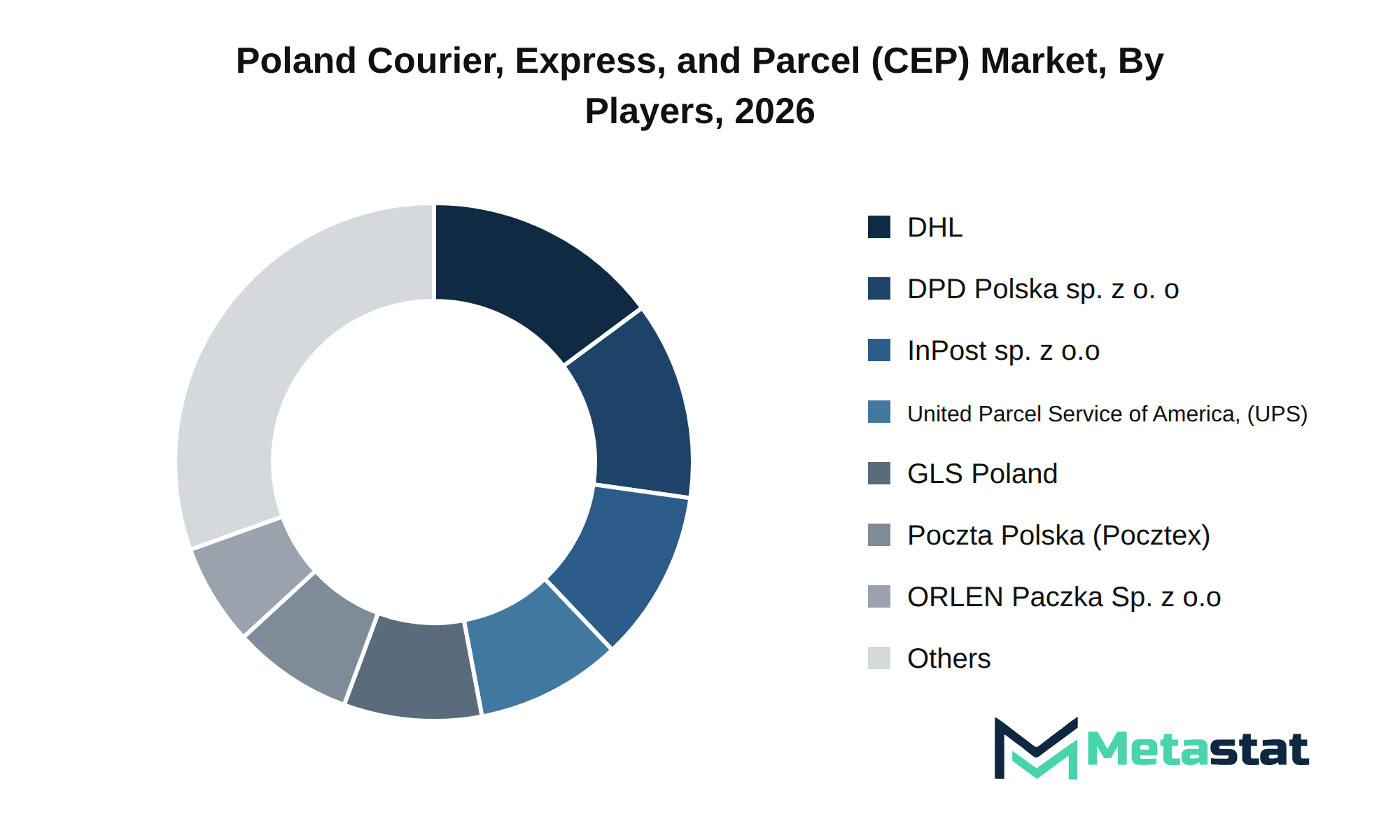
Competitive dynamics in the Poland Courier, Express, and Parcel (CEP) market illustrate a complex relationship among established players and emerging entrants. Major companies including DPD Polska sp. z o. o., DHL Group, FedEx, and United Parcel Service of America, Inc. (UPS) engage in strategic consolidation and partnerships, enhancing their market positioning.
These companies focus on enhancing operational efficiencies through mergers and acquisitions, which strengthen their geographic reach and service capabilities. InPost sp. z o.o., GLS Poland, and Poczta Polska S.A. (Pocztex) emphasize customer retention strategies and brand equity dynamics, further enhancing their competitive advantage. Pricing architectures vary significantly among players, with several adopting aggressive pricing models to attract end-users in the Business-to-Consumer (B2C) segment.
Players differentiate through proprietary technology and product offerings tailored to market demands. Companies like ORLEN Paczka Sp. z o.o. and Meest Post Sp. z o.o. invest in research and development to create advanced logistics solutions. Collaboration among firms facilitates innovation, enhancing service efficiency and creating a robust value chain within the market. Overall, the competitive landscape reflects ongoing shifts driven by strategic alliances and evolving customer needs.
Market size is forecast to rise from USD 4,529.8 million in 2025 to over USD 5,695.7 million by 2033. The base case indicates a growth trajectory with a compound annual growth rate (CAGR) of 2.9%. Various factors influence this outlook, including macroeconomic conditions, evolving consumer preferences, and advancements in technology.
In a bullish scenario, robust economic growth, increased e-commerce activities, and heightened consumer spending drive demand for the Poland Courier, Express, and Parcel (CEP) market. Enhanced logistics capabilities and digital transformation within the sector improve operational efficiencies. This positive momentum enables players to expand their market presence and capitalize on emerging opportunities.
Conversely, a bearish outlook arises from potential economic downturns, supply chain disruptions, or regulatory challenges that hinder growth. Economic uncertainties could dampen investment in logistics infrastructure and technology integration, leading to stagnation in the market. Adaptation to regulatory changes remains critical, influencing compliance and cost structures across the CEP landscape.
Next-generation technological integration, including automation and data analytics, plays a significant role in shaping the operational landscape. Companies investing in these technologies enhance service delivery, improve customer satisfaction, and achieve competitive advantages. Strategic capital allocation and infrastructure investment remain essential for driving growth in the market.
Overall, the relationship among economic conditions, technology trends, and regulatory frameworks will shape the future of the Poland Courier, Express, and Parcel (CEP) market. Companies that align their strategies with these dynamics will be well-positioned to navigate challenges and seize opportunities for expansion.
The report strategically identifies and profiles the key market players and analyses their core competencies in each sub-segment of the Courier, Express, and Parcel (CEP) market.
Report Attributes | Details |
Study Period | 2021-2033 |
Base Year | 2025 |
Estimated Year | 2026 |
Forecast Period | 2026-2033 |
Historical Period | 2021-2025 |
Growth Rate | CAGR 2.9% from 2026 to 2033 |
Revenue Unit | USD million |
Segmentation | By Business Model, Destination, Service Type, End User, and Region |
Find answers to common questions about this report
The Courier, Express, and Parcel (CEP) market size in Poland was valued at USD 4,529.8 million in 2025.
The Courier, Express, and Parcel (CEP) market is projected to grow at a CAGR of 2.9% during the forecast period from 2026 to 2033.
The Business-to-Consumer (B2C) segment leads the Poland Courier, Express, and Parcel (CEP) market, with a projected value of USD 3,358.7 million by 2033. This segment represents the largest share compared to the Business-to-Business (B2B) and Customer-to-Customer (C2C) segments.
Key drivers for the Poland Courier, Express, and Parcel (CEP) market include GDP growth, increased consumer spending, and the expansion of e-commerce. Investment in logistics technology and infrastructure development further enhances operational efficiency, while a focus on sustainability aligns with consumer preferences, contributing to market growth.
The Poland Courier, Express, and Parcel (CEP) market faces challenges from stringent regulatory compliance requirements, which increase operational costs and divert resources from core efficiencies. Geopolitical fragmentation and rising input costs further complicate the landscape, leading to higher service prices and margin pressures for logistics providers.
Notable factors favoring product adoption in the Poland Courier, Express, and Parcel (CEP) market include rising consumer spending, driven by increased disposable incomes, and the growth of e-commerce, which enhances demand for delivery services. investment in technology and infrastructure modernization supports operational efficiency, further encouraging adoption.
The Courier, Express, and Parcel (CEP) market is estimated to reach a valuation of USD 5,695.7 million by 2033.
Key players in the Poland Courier, Express, and Parcel (CEP) market include DPD Polska sp. z o. o., DHL Group, FedEx, United Parcel Service of America, Inc. (UPS), InPost sp. z o.o., GLS Poland, and Poczta Polska S.A. (Pocztex).
The Business-to-Consumer segment is projected to reach USD 3,358.7 million by 2033, reflecting a compound annual growth rate of 3.3%.
The International destination segment is expected to grow at a compound annual growth rate of 5.3%, reaching USD 1,474.6 million by 2033.
The analysts below cover Automotive and Transportation research at Metastat Insights.
LEAD ANALYST
Utkarsh Khirodkar is a Lead Market Research Analyst at MetaStat Insight, specializing in market intelligence, technology sector assessments, and competitive strategy.

ENERGY & INFRASTRUCTURE INDUSTRY CONSULTANT
Automotive and Transportation · Electronics and Semiconductor · Energy and Power · Machinery & Equipment
Saurabh Vasant Ganvir consults for Energy & Infrastructure Industry at MetaStat Insight, specializing in renewable energy, solar EPC, and electric vehicle (EV) infrastructure markets.
Analyzing the transition from natural gas to green hydrogen in iron ore reduction requires realistic infrastructure timelines. Meta stat insight supplied a detailed regional assessment of DRI plant conversion costs and scrap metal availability in North America and Western Europe. Their report carefully examined pellet quality specs and electrical grid access constraints without making oversimplified market assumptions. The research material served as a practical reference during internal technology roadmap discussions.
Integrating zero-trust access controls across legacy electronic health record systems involves complex compliance overhead. Team produced an analysis that clearly separated identity governance and administration tools from privileged access management platforms. Their evaluation of HIPAA and GDPR compliance features across cloud native solutions gave our architecture group clear baseline criteria. The custom data request regarding biometric authentication adoption in hospital networks was returned promptly with clear documentation.
Evaluating calorific value requirements and air permit compliance across municipal waste facilities requires localized data. Metastat Insight structured their analysis around operational throughput capacity and feedstock composition variations in Latin America and Eastern Europe. Their competitive mapping of sorting equipment vendors helped clarify technology differences between optical separators and heavy media systems. The study provided an objective baseline during our capital expenditure reviews.
Explore related market intelligence reports worth reading alongside this one.
Starting from
$2950