
LEAD ANALYST
Utkarsh Khirodkar is a Lead Market Research Analyst at MetaStat Insight, specializing in market intelligence, technology sector assessments, and competitive strategy.

Global Real Estate Investment Management Market Size, Share, By Investment Strategy (Core, Core Plus, Value-Add, Opportunistic), By Property Type (Industrial & Logistics, Residential & Multifamily, Office, Retail, Hospitality, Data Centers, Healthcare & Life Sciences, Student Housing, Others (Self-Storage, Mixed-Use, Specialty Real Estate)), By Investor Type (Pension Funds, Insurance Companies, Sovereign Wealth Funds, Endowments & Foundations, Banks & Financial Institutions, Asset Managers & Fund-of-Funds, Family Offices & Private Wealth, Others (Corporate Investors, Charitable Institutions)), Industry Analysis, Growth, Trends, and Forecast, 2026-2033
Report ID
MSI-5153
Published
September, 2026
Pages
310 Pages
Format
Historical
Base year
Forecast
Forecast period
Report Details
Choose Your License
Global Real Estate Investment Management Market
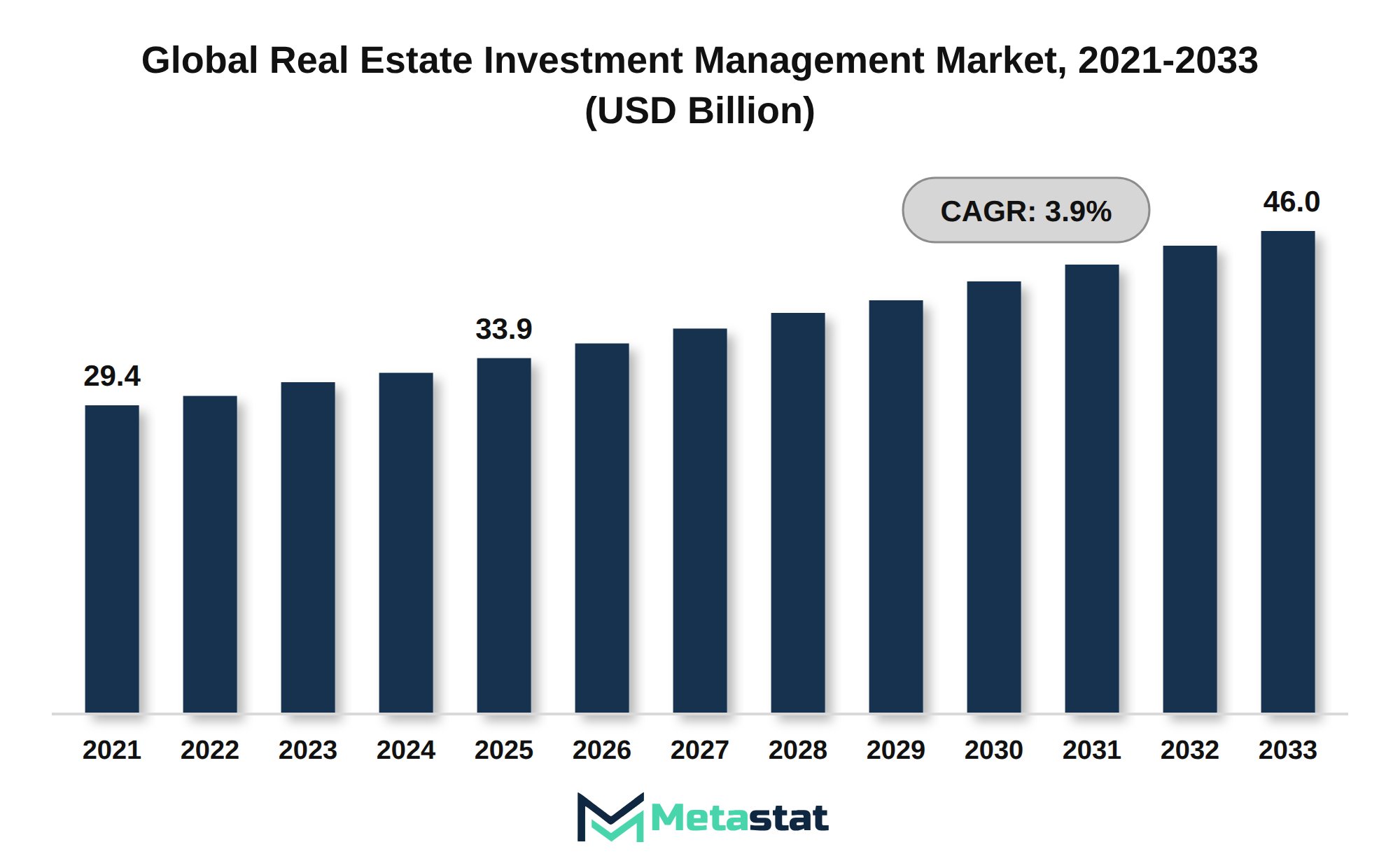
The global Real Estate Investment Management market was valued at USD 33.9 billion in 2025 and is projected to reach USD 46 billion by 2033, growing at a CAGR of 3.9% over the forecast period.
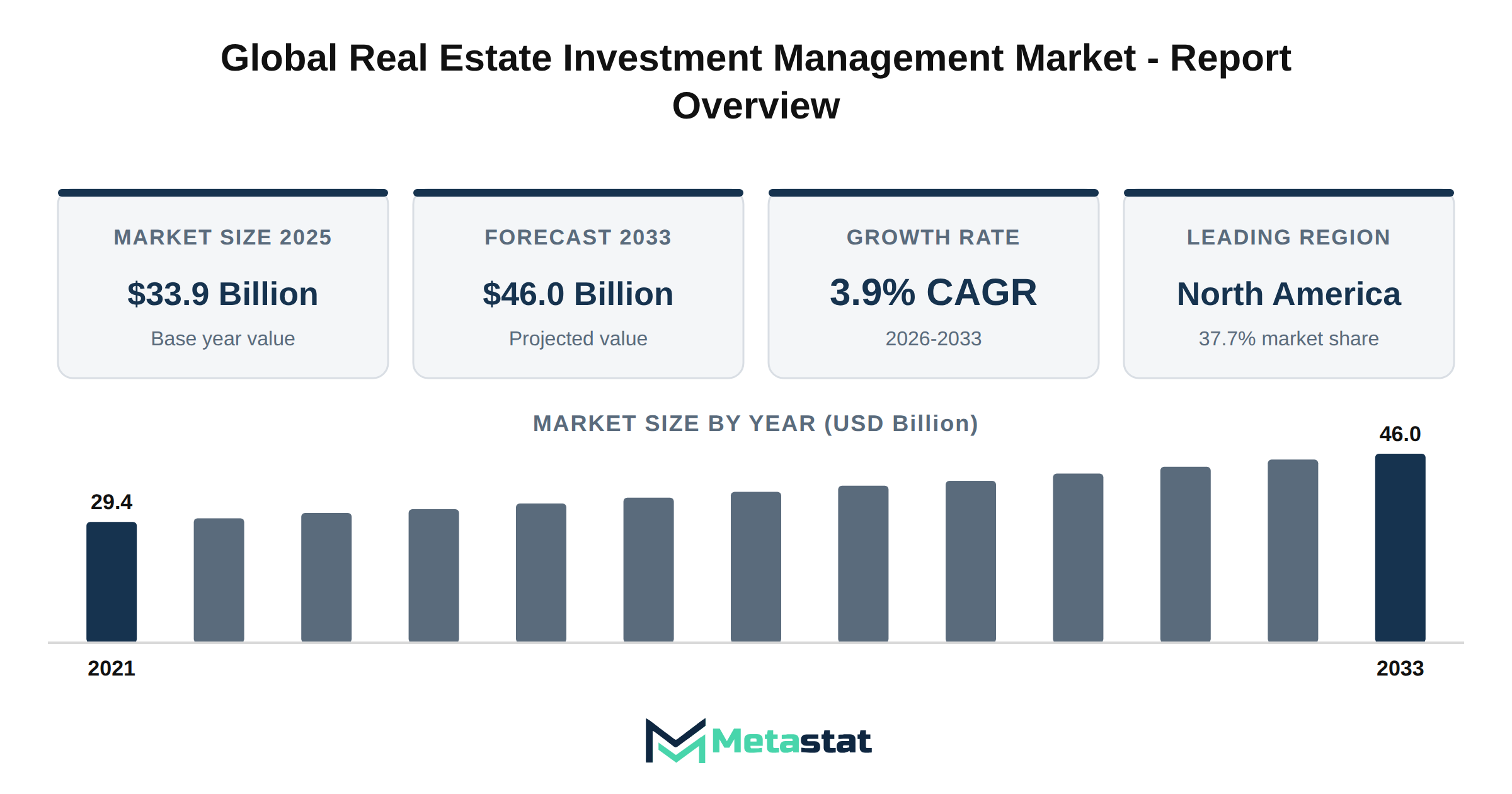
The Real Estate Investment Management market demonstrates a significant growth trajectory, with a projected value of USD 46 billion by 2033, up from USD 33.9 billion in 2025. This increase reflects a compound annual growth rate (CAGR) of 3.9%. The market has shown consistent growth from USD 29.4 billion in 2021 to USD 31.6 billion in 2023, indicating a steady upward trend.
Institutional investors increasingly allocate capital to real estate, driven by the asset class's resilience and potential for long-term returns. This trend results in strategic rebalancing, where investors adjust portfolios to optimize performance against market fluctuations. Institutional capital continues to flow into various property types, enhancing the market's depth and stability.
Cross-border capital flows have shifted, with increased interest from foreign investors in North American and European markets. This influx reflects investors seeking diversified portfolios and stable returns amid geopolitical uncertainties. The competition to attract this capital intensifies among markets, influencing investment strategies and opportunities.
Fundraising activities remain robust, contributing to a substantial pool of dry powder available for deployment in the Real Estate Investment Management market. This capital accumulation enables firms to pursue attractive investment opportunities, particularly in emerging sectors, thereby enhancing market competitiveness and growth potential.
Shifting preferences in capital allocation between equity and debt financing characterize the current landscape. Investors increasingly favor flexible financing structures that align with their risk profiles and return expectations. This shift impacts the overall capital stack and influences transaction dynamics within the market.
Asset Under Management (AUM) competition intensifies because firms strive to outperform benchmarks and demonstrate value to investors. Performance metrics play a crucial role in attracting new capital, prompting managers to innovate and enhance operational efficiencies. This focus on performance creates a competitive environment, driving growth in the market.
Manager consolidation trends reflect a strategic response to market pressures, where firms merge or acquire to enhance capabilities and expand their investment platforms. This consolidation enables firms to leverage economies of scale, improve service offerings, and increase market share, shaping the future of the Real Estate Investment Management market.
Institutional allocation trends reflect a growing emphasis on diversification and risk management among investors. The ongoing rebalancing of portfolios indicates a shift towards higher allocations in real estate, supported by the asset class's resilience and potential for stable returns.
Cross-border capital flows exhibit significant shifts, with increased investments in emerging markets driven by institutional investors seeking higher yields. This trend highlights the evolving landscape of global investment strategies, where regions including Asia Pacific attract attention for their growth potential.
Fundraising dynamics in the real estate investment management market show a robust increase in dry powder, reflecting strong capital commitments from investors. This influx of capital supports new fund launches and provides opportunities for strategic acquisitions within the market.
Equity-debt capital allocation reflects ongoing adjustments in financing strategies, with many firms leveraging both equity and debt to optimize their capital structures. This approach enhances liquidity and supports investment in high-potential real estate opportunities.
Competitive benchmarking among asset managers focuses on assets under management (AUM) and performance metrics, influencing investment decisions and strategies. Firms that consistently outperform their peers attract greater investor interest and capital inflow.
Manager consolidation trends indicate a movement towards platform expansion, where larger firms acquire smaller competitors to enhance service offerings and operational efficiencies. This consolidation improves innovation and competitive positioning within the market.
Regulatory compliance remains a critical concern for firms operating in the real estate investment management market. Adherence to evolving regulations and standards ensures sustainable practices and mitigates risks associated with investments.
Market fragmentation persists despite consolidation efforts, leading to a diverse range of investment strategies and opportunities. This fragmentation allows niche players to thrive while larger firms pursue broader market strategies.
Future strategic outlooks emphasize the importance of adapting to changing market dynamics, including sustainability initiatives and technological advancements. Firms that prioritize innovative solutions and sustainable practices strengthen their market position and appeal to socially conscious investors.
The Real Estate Investment Management market experiences growth driven by macro-economic factors, including GDP growth and capital investment environments. The current economic climate encourages increased venture funding and public-private spending power, enhancing the overall investment landscape.
Growing economies lead to higher disposable incomes, stimulating demand for real estate investments. Investors allocate funds towards diverse real estate strategies, capitalizing on opportunities in both established and emerging markets. An upward trajectory for the market results from investment strategies adapting to shifting economic conditions.
Investment in infrastructure projects further fuels demand within the Real Estate Investment Management market. Governments and private entities prioritize modernizing physical and digital assets, creating additional opportunities for investment managers to deploy capital effectively. This modernization contributes to improved operational efficiencies and enhances returns for investors.
The anticipated GDP growth in various regions boosts investor confidence, encouraging long-term commitments to real estate assets. This environment promotes a healthy expansion of the market, supporting various investment strategies tailored to capitalize on evolving economic conditions.
Infrastructure development significantly influences the Real Estate Investment Management market by enhancing the investment climate for real estate projects. Increased public and private spending on infrastructure improvements, including transportation, utilities, and digital services, creates a robust environment for real estate investments. Enhanced infrastructure leads to improved accessibility, which adds value to properties and attracts potential investors.
Investment in infrastructure supports economic growth, increasing property values and driving demand for various property types, particularly in urban areas. This trend directly correlates with the expansion of the market, driven by improved infrastructure that attracts businesses and residents, further stimulating investment opportunities. Increased demand for residential, commercial, and industrial properties emerges from this development, contributing to the overall growth of the Real Estate Investment Management market.
Infrastructure enhancements boost operational productivity for existing properties. Businesses benefit from improved logistics and lower transportation costs, increasing their profitability. Such efficiencies encourage higher levels of investment in real estate, further supporting the market's growth trajectory.
Regulatory pressures and compliance hurdles significantly constrain the Real Estate Investment Management market's growth potential. Increasing regulatory demands often lead to heightened operational costs for firms striving to meet compliance standards. These costs shift investment strategies and reduce overall profitability, particularly for smaller players in the market.
Macroeconomic headwinds, including inflationary pressures and capital stagnation, hinder market expansion. Elevated interest rates diminish investor appetite for real estate, impacting capital inflows and financing conditions. Consequently, firms face challenges in securing necessary funding for new projects, which affects their ability to capitalize on emerging opportunities.
Geopolitical instability and resource scarcity further complicate the operational landscape. These factors disrupt supply chains, delay project timelines, and inflate costs associated with construction materials and labor. The market experiences heightened competition for limited resources, suppressing growth and increasing the risk of project delays.
Technological obsolescence poses another challenge, particularly for firms reliant on outdated systems. Companies that fail to adopt modern technologies experience inefficiencies and struggle to remain competitive. This trend creates a divide between well-established firms employing advanced solutions and those lagging behind, resulting in market fragmentation.
Cultural barriers and regional adoption resistors present obstacles to expansion in diverse markets. Variations in investment preferences, regulatory environments, and market maturity levels complicate the entry strategies of foreign players. These challenges limit the ability of the Real Estate Investment Management market to achieve uniform growth across different regions, ultimately affecting its long-term prospects.
Geopolitical fragmentation significantly influences the Real Estate Investment Management market by introducing uncertainties and complexities in investment strategies. Heightened trade deficits and tariff friction create barriers for cross-border investments, impacting strategic decisions for institutional investors. The market experiences disruptions stemming from technological advancements and the complexities of research and development integrations, which affect operational agility and investment timelines.
Logistics disruptions and supply chain instability complicate market dynamics, leading to inconsistent project execution and increased costs. Tightening global regulatory standards contribute to compliance overhead, intensifying the burden on managers to align their strategies with evolving legal liabilities. These factors collectively exert pressure on pricing, compressing margins and challenging profitability across the sector.
Workforce skill gaps and automation displacements present additional challenges, undermining talent retention efforts and operational continuity. Environmental lifecycle footprints and sustainability demands necessitate increased investment in retrofitting and innovative solutions, hindering short-term growth. These factors ultimately constrain the potential of the Real Estate Investment Management market, requiring adaptive strategies to navigate an increasingly fragmented investment landscape.
The Real Estate Investment Management market benefits from emerging regional demands characterized by a robust appetite for diversified investment strategies. Infrastructure modernization projects across regions fuel significant capital inflows, enhancing the attractiveness of various property types. Geographical expansion in developing markets offers investors a chance to tap into previously underserved segments, creating new revenue streams.
Technological disruptions and digital transformation significantly reshape investment management practices. Innovations in property technology improve operations and enhance investor engagement, contributing to more efficient decision-making processes. Sustainability imperatives push firms towards greener investment strategies, aligning with environmental, social, and governance (ESG) criteria, which strengthens investor confidence and broadens appeal.
The integration of new technologies into investment practices promotes operational yield maximization. Automation of processes reduces overhead costs while optimizing asset life cycles through effective maintenance and retrofitting dynamics. Increased focus on asset management and performance monitoring ensures sustainable returns for investors, providing a competitive edge in the market.
Strategic consolidation continues to manifest because firms pursue cross-industry mergers and acquisitions. This trend allows for resource sharing and diversification, enhancing market positioning. The evolving behaviors of investors, influenced by digital procurement shifts, highlight a growing preference for efficient transaction processes, prompting firms to adapt their commercial models accordingly.
Ultimately, the combination of these factors supports advancements in the Real Estate Investment Management market, creating a conducive environment for sustained growth and innovation. The pursuit of niche applications and downstream market diversification further enriches investment opportunities, aligning with contemporary market demands.
The Global Real Estate Investment Management market is segmented based on Investment Strategy, Property Type, and Investor Type.
Valued at USD 13.1 billion in 2026, the Core segment of the Real Estate Investment Management market is projected to reach USD 15.6 billion by 2033, achieving a CAGR of 2.5% during the forecast period. Growth within this segment primarily stems from increasing investor interest in stable and predictable income streams, which core investments provide. Institutional investors, including pension funds and insurance companies, prioritize these assets for their lower risk profile, contributing to heightened demand.
Adoption of Core investment strategies is supported by a favorable economic environment and low interest rates, encouraging investment in secure property types. Enhanced technological maturation facilitates more efficient property management practices, driving operational efficiencies that attract investors. Evolving consumer preferences for urban living and sustainable developments align with Core strategies, reinforcing the segment's relevance in current market dynamics.
Downstream applications show a shift towards properties that meet changing demands, particularly in urban centers. Regulatory compliance standards promoting sustainability influence investment decisions, with Core investments often aligning well with these initiatives. Cost structures remain stable, although pricing volatility in the broader real estate market poses challenges, particularly for new entrants seeking to establish a foothold.
Supply chain resilience enhances investor confidence by ensuring consistent returns through diversified portfolios. Overall, the Core segment stands to benefit from strategic opportunity windows created by demographic trends and economic stability, enhancing its role within the Real Estate Investment Management market.
Investment in the Core Plus segment aligns with a growing preference for assets that offer a balance between risk and return. Investors are drawn to this strategy due to its potential for enhanced cash flow and value appreciation, appealing to institutional investors including pension funds and insurance companies. This segment is estimated to reach USD 11.9 billion by 2033, at a CAGR of 4.3% during the forecast period. Factors driving this growth include an increased focus on workforce housing and sustainable developments, alongside the expanding demand for industrial and logistics properties. Developers are responding by diversifying portfolios to include Core Plus properties that provide stable income streams while leveraging operational efficiencies.
Market dynamics reflect a shift towards mixed-use developments, which deliver both residential and commercial benefits. The emphasis on urbanization and the desire for integrated living spaces enhance the attractiveness of Core Plus investments. Regulatory compliance, particularly concerning environmental standards, plays an important role in shaping investment strategies within this segment. Adherence to such standards mitigates risks and enhances the long-term value of properties, reinforcing investor confidence in the market.
Economic indicators suggest that interest rates will remain relatively stable, creating an environment conducive to real estate investments. Cost structures within the Core Plus segment remain competitive, with investors prioritizing value creation through strategic upgrades and enhancements. Margin pressures are effectively managed by focusing on operational efficiencies and innovative property management solutions. Consequently, the market for Core Plus investment strategies is positioned for sustained growth, aligning with broader trends within the Real Estate Investment Management market.
Investment in the Value-Add segment aligns with strategies to enhance property performance through targeted renovations and operational improvements. This approach attracts investors seeking attractive returns by repositioning assets in favorable markets. Demand stems from changing tenant preferences for modernized spaces, increasing the appeal of properties that offer enhanced amenities and sustainability features.
Market dynamics indicate that value-add strategies effectively address the evolving needs of end-users across various industries. Growth in this segment is supported by a strong pipeline of capital seeking opportunities to boost asset values through strategic enhancements. Properties that align with sustainability goals and technological advancements gain traction among investors because the market adapts to shifting consumer behaviors.
Value-Add segment is expected to reach USD 11.5 billion by 2033. This projected growth reflects the ongoing commitment from institutional investors to allocate funds toward properties that demonstrate solid potential for appreciation through value-add initiatives. The market's focus on enhancing existing assets contributes to overall portfolio resilience and performance.
Increased competition in urban centers drives developers to pursue value-add projects, enhancing the segment's attractiveness. Strategic partnerships with local contractors and service providers streamline renovation efforts, reducing timelines and costs. This collaborative approach promotes efficient project execution, enabling quicker returns on investment and enhancing the overall market appeal.
Technological maturation enables innovative approaches to property upgrades, enhancing operational efficiency and improving tenant experiences. While the market continues to evolve, the integration of smart technologies and sustainable practices will shape the future of value-add investments, driving sustained interest and commitment from investors in the Real Estate Investment Management market.
Investment in the Opportunistic segment focuses on high-risk, high-reward strategies that appeal to investors seeking to capitalize on market inefficiencies. This segment is projected to grow at a CAGR of 4.7% during the forecast period. Factors driving demand include shifting market conditions that create unique investment opportunities in underperforming assets or distressed properties. The potential for substantial returns attracts various investor types, including institutional investors who value diversification within their portfolios.
Segment expansion relies on the maturation of investment strategies that emphasize agility and responsiveness to emerging trends. Increased access to data analytics and market intelligence enhances decision-making processes for investors. Continuous evolution in product offerings, particularly in alternative asset classes, supports this segment's growth by providing tailored solutions that meet specific investor needs. Enhanced data access improves strategic planning.
Consumption shifts towards opportunistic investments reflect broader economic conditions and market sentiment. Investors exhibit a growing appetite for innovative financing structures that allow for greater flexibility in asset management. Regulatory compliance and evolving certification standards create additional considerations, influencing investor strategies and capital allocation within the market.
Pricing volatility in real estate impacts acquisition costs and the expected return on investment in the Opportunistic segment. Companies operating within this space face margin pressures due to competition for prime assets and the necessity to manage operational costs effectively. Strategic opportunity windows arise from evolving market dynamics, compelling investors to reassess their portfolios and explore alternative investments.
Long-term capital investment outlook remains robust, with a steady influx of funds directed towards opportunistic strategies. This trend reflects a shift in investor confidence, supporting sustained growth in the market. Enhanced supply chain resilience and improved raw material sourcing strategies contribute to the attractiveness of the Opportunistic segment, positioning it because a key area for future investment growth within the broader Real Estate Investment Management market.
Valued at USD 8.4 billion in 2026, the Industrial & Logistics segment is projected to reach USD 11.4 billion by 2033, at a CAGR of 4.6% during the forecast period. Increasing demand for e-commerce and rapid urbanization drive the growth of this segment, pushing investors to focus on warehousing and distribution centers. The rise of omnichannel retailing requires logistics facilities to be strategically located, ensuring proximity to major consumer markets. Investment strategies in this segment adapt to evolving consumer behaviors, emphasizing the necessity of flexible and scalable warehouse solutions.
Technological advancements enhance the efficiency of Industrial & Logistics operations. Automation and smart technologies facilitate inventory management and streamline supply chain processes, contributing to cost-effectiveness. Regulatory compliance with environmental standards influences investment decisions, driven by developers seeking sustainable building practices and energy-efficient systems. This focus on compliance aligns with increasing consumer expectations for sustainable practices in the Real Estate Investment Management market.
Investment in logistics properties reflects a strategic opportunity window owing to companies prioritizing supply chain resilience. Stakeholders recognize the importance of logistics vulnerabilities and raw material sourcing in maintaining operational stability. The growing trend toward nearshoring and reshoring reshapes investment strategies, presenting avenues for diversification and risk mitigation within the sector. The market continues to evolve, with dynamic shifts in consumption and end-use dynamics ensuring that the Industrial & Logistics segment remains a focal point for investors.
Growth in the Residential & Multifamily segment reflects increasing demand for affordable and diverse housing options. Urbanization trends drive population shifts toward metropolitan areas, intensifying the need for multifamily units. This demand surge positions the segment to capture significant investment, with a projected value reaching USD 10.5 billion by 2033, at a CAGR of 4.3% during the forecast period.
Adoption of innovative construction techniques and sustainable building practices contributes to operational efficiency, enhancing investor appeal. Integration of technology, including smart home systems, improves tenant experiences and increases property competitiveness. High occupancy rates in urban centers further incentivize investment in this segment, driven by stakeholders seeking stable returns.
Regulatory measures, including zoning laws and building codes, influence project timelines and cost structures. Compliance with sustainability certifications provides a competitive edge, aligning with growing consumer preferences for environmentally friendly living spaces. The market benefits from these dynamics, highlighting strategic opportunity windows for capital investment and expansion in the Residential & Multifamily segment.
Demand for office spaces continues to evolve, influenced by shifts in work patterns and corporate strategies. The trend toward hybrid work environments drives the need for flexible and adaptable office solutions. Companies prioritize modern, amenity-rich, and well-located office spaces to attract talent and enhance productivity. Technological advancements contribute to the transformation of office environments, with smart building technologies enhancing efficiency and tenant experiences. The focus on sustainability impacts office space design, with increasing emphasis on energy efficiency and environmentally friendly materials.
Investment in the office segment reflects confidence in the long-term viability of urban workspaces despite challenges posed by remote working trends. By 2033, the office segment is projected to reach USD 6.9 billion. This growth results from ongoing demand for office space, particularly in urban centers where businesses seek to establish a presence. Corporate expansion, alongside a resurgence in economic activity, supports continued investment in office properties.
Office spaces adapt to changing tenant expectations, integrating technology and sustainability to remain competitive. The market anticipates further evolution in office offerings to meet diverse client needs. This includes the incorporation of flexible layouts and advanced technological infrastructure. Regulatory compliance regarding building standards and environmental impact will shape development strategies. Ongoing capital investment in the office segment reflects a robust outlook for the market.
Retail real estate investments reflect the evolving nature of consumer behavior and shopping patterns. Growth in this segment derives from the resurgence of in-person shopping experiences and the adaptation of retail spaces to accommodate experiential offerings. Demand drivers include the integration of digital platforms with physical stores, pushing investments toward omnichannel strategies that enhance customer engagement. The retail segment is projected to expand at a CAGR of 1.4% during the forecast period.
Technological advancements further influence the retail landscape, enabling property managers to leverage data analytics for optimizing operations and understanding customer preferences. This evolution enhances the value proposition of retail properties, making them more attractive to investors. Downstream applications include mixed-use developments, combining retail with residential and leisure spaces, contributing to overall market growth.
Regulatory compliance standards surrounding safety and environmental impact shape operational costs and investment decisions within the retail segment. Investment in sustainable infrastructure, including energy-efficient systems and green building certifications, enhances retail property appeal while aligning with consumer demand for sustainable practices. This emphasis on sustainability supports a favorable investment environment, promoting long-term growth within the market.
Hospitality properties increasingly attract investor attention within the Real Estate Investment Management market owing to rising travel demand and changing consumer preferences. The recovery of the global tourism industry enhances occupancy rates and revenue per available room, contributing to a favorable investment climate. Growth in leisure travel, coupled with a resurgence in business travel, fuels this demand, prompting investments in both new construction and renovations of existing assets.
Technological advancements enhance the guest experience, making properties more appealing to potential visitors. Implementation of contactless technology, smart room controls, and digital concierge services improves customer satisfaction and operational efficiency. Investors observe these technological upgrades because crucial differentiators, leading to higher returns on investment.
Regulatory compliance influences the hospitality sector. Stricter health and safety standards post-COVID-19 drive operational changes and capital expenditures. Adapting to these regulations ensures properties remain competitive and compliant, which positively influences investor confidence and market attractiveness.
Price volatility in the hospitality market, influenced by factors including fluctuating tourism rates and economic conditions, poses challenges for investors. Maintaining price stability and offering competitive rates without sacrificing quality is critical for sustaining profitability. Investors analyze these dynamics closely, because they directly impact revenue projections and investment viability.
Strategic opportunities arise from evolving consumer preferences, including the growing demand for sustainable and eco-friendly lodging options. Properties incorporating sustainable practices appeal to environmentally conscious travelers, creating a niche market that attracts new investment. This shift encourages investors to explore innovative approaches to property management and development to align with changing consumer expectations.
Rapid advancements in technology significantly drive demand for data centers within the Real Estate Investment Management market. Increased reliance on cloud computing, big data, and Internet of Things (IoT) applications necessitates robust infrastructures that support high-performance computing and data storage solutions. Enterprises increasingly shift towards digital transformation, making efficient and scalable data centers a critical factor in investment strategies.
Investment in data centers benefits from the growing trend towards sustainability. Operators prioritize energy-efficient designs and renewable energy sources to meet environmental regulations and consumer expectations. This shift towards green data centers enhances appeal among institutional investors focused on long-term value creation, aligning with broader sustainability goals.
Segment expansion catalysts include the rising prevalence of artificial intelligence and machine learning, which require substantial processing capabilities. The proliferation of remote work and online services fuels the demand for data centers, reflecting changing end-use dynamics in various sectors, including finance, healthcare, and retail. This evolving landscape presents significant opportunities for capital investment in state-of-the-art facilities.
Technological maturation results in continuous upgrades and enhancements of existing data center infrastructures. Next-gen upgrades prioritize enhanced security measures, cooling systems, and automation technologies, ensuring that facilities remain competitive and capable of handling increasing data loads efficiently. These advancements contribute to the overall resilience of the supply chain by minimizing risks associated with equipment failure and downtime.
Regulatory compliance standards increasingly influence data center operations, with many regions enforcing stringent guidelines around data privacy and security. Certification programs focusing on energy efficiency, including LEED and ENERGY STAR, shape investment decisions. Firms seek to differentiate themselves in a competitive market. Adherence to such standards mitigates risks while enhancing marketability and attracting environmentally conscious investors.
Pricing volatility impacts cost structures within the data center segment. Fluctuations in energy prices and raw material costs affect profit margins, prompting operators to implement strategies that optimize operational efficiency. This includes investing in advanced technologies that streamline energy consumption and reduce overhead costs, improving financial performance.
Strategic opportunity windows arise from the increasing importance of edge computing and the expansion of 5G networks. These developments require localized data processing solutions, driving demand for smaller, decentralized data centers. Such shifts present unique investment opportunities for firms looking to capitalize on the evolving landscape of the Real Estate Investment Management market.
Increasing investments in healthcare infrastructure drive demand for the Healthcare & Life Sciences sub-segment within the Real Estate Investment Management market. Stakeholders prioritize wellness-focused environments that promote patient care efficiency and operational effectiveness. The evolution of biopharmaceuticals and advanced medical technologies necessitates specialized facilities, creating opportunities for tailored real estate solutions.
Technological advancements impact the design and function of healthcare properties, with smart building technologies enhancing operational performance. The growing emphasis on digital health solutions further shapes facility requirements, encouraging the development of multi-functional spaces that accommodate diverse healthcare needs. Adopting telehealth and remote monitoring solutions alters traditional space utilization. This shift drives demand for adaptable real estate frameworks.
Regulatory compliance significantly shapes investments in this sub-segment, necessitating adherence to stringent health and safety standards. Investors face challenges related to evolving certifications and codes, influencing property development timelines and costs. Strategic location selection becomes critical, affecting accessibility to healthcare services and patient flow. Compliance requirements impact property valuation.
Returning patients to healthcare facilities post-pandemic highlights an ongoing shift towards integrated health services, prompting demand for facilities that combine outpatient and inpatient care. This trend enhances demand for spaces designed to optimize patient experiences while accommodating future healthcare delivery models. The market continues to respond to these evolving needs and drives growth opportunities in the Healthcare & Life Sciences sub-segment.
Increasing interest in student housing emerges from rising enrollment rates in higher education institutions and a growing preference for off-campus living options among students. This demand drives investment in purpose-built student accommodation, reflecting a shift toward more flexible living arrangements that align with students' lifestyles. Educational institutions and private investors recognize the potential for consistent rental yields in this segment, attracting capital investment aimed at meeting the evolving needs of students.
Adoption of innovative designs and amenities in student housing contributes to enhanced living experiences. Property developers focus on integrating technology and sustainability features, catering to students seeking modern, environmentally friendly accommodations. This trend aligns with broader societal shifts toward sustainability and social responsibility, influencing investment strategies within the Real Estate Investment Management market.
The focus on operational efficiencies becomes critical in the student housing segment. Investors prioritize cost management and value optimization to navigate fluctuating market conditions. Understanding the financial dynamics of student housing investment, including pricing strategies and margin considerations, remains essential for stakeholders aiming to secure competitive advantages.
Strategic opportunities arise from demographic shifts, with increased demand for student housing in urban centers and areas with high concentrations of educational institutions. Investors evaluate potential for growth in this segment, identifying locations with favorable market conditions and strong rental demand. While competition intensifies, understanding end-use dynamics and consumption shifts among students is essential for effective market positioning.
Regulatory compliance standards influence development processes within the student housing sector. Navigating zoning laws, safety regulations, and sustainability certifications requires careful consideration to mitigate risks associated with investment. Stakeholders in the Real Estate Investment Management market remain vigilant to adapt to changing regulatory landscapes while capitalizing on growth opportunities.
Interest in the "Others" sub-segment, encompassing Self-Storage, Mixed-Use, and Specialty Real Estate, aligns with evolving consumer preferences and urban development trends. Increasing urban population density drives demand for mixed-use properties, which integrate residential, commercial, and retail spaces. This integration creates engaging community environments that attract residents and businesses alike.
Technological advancements enhance the operational efficiency of self-storage facilities through smart access controls, online management systems, and improved security measures. Such innovations respond to the growing need for flexible storage solutions, particularly in densely populated urban areas. The trend toward remote work further increases interest in mixed-use developments, providing convenient access to amenities and supporting a sense of community.
Regulatory compliance regarding zoning laws and residential development standards significantly influences investment strategies within this sub-segment. Investors closely monitor governmental policies that impact land use and building codes, which facilitate or hinder project timelines. In addition, evolving consumer behavior toward sustainability drives interest in eco-friendly construction practices within the mixed-use properties.
Capital investment outlooks for this segment show potential for growth driven by developers seeking opportunities in underutilized urban areas. Effective utilization of available land through mixed-use developments not only maximizes space but offers a solution to housing shortages. The strategic opportunity for investments in self-storage facilities highlights changing lifestyles, where transient living and downsizing become more prevalent.
Overall, the "Others" sub-segment within the Real Estate Investment Management market holds significant promise, reflecting shifts in consumer preferences, technological innovations, and regulatory landscapes that shape urban development and investment strategies.
Pension funds represent a significant force within the Real Estate Investment Management market, valued at USD 9.4 billion in 2026 and projected to reach USD 11.3 billion by 2033, at a CAGR of 2.8% during the forecast period. Demand in this segment stems from the need for stable, long-term returns, prompting pension funds to diversify their portfolios through real estate investments.
Investment strategies among pension funds increasingly focus on core and value-add properties, which provide both income generation and capital appreciation. This shift towards real estate arises from the desire to hedge against inflation and achieve better risk-adjusted returns compared to traditional fixed-income assets.
Regulatory compliance and evolving investment strategies further influence pension fund participation in the market. While regulations regarding investment allocations evolve, pension funds explore new real estate opportunities, including sustainable and environmentally responsible developments. This trend aligns with broader investment mandates emphasizing ESG (Environmental, Social, and Governance) criteria.
Market dynamics impact the sourcing and allocation of capital within this segment. Pension funds face pressures from rising interest rates and inflation, prompting a strategic reevaluation of investments. Real estate investments in sectors demonstrating resilience, including industrial and logistics properties, attract attention due to their strong performance in fluctuating economic conditions.
Overall, the prospects for pension funds within the Real Estate Investment Management market indicate steady growth driven by strategic diversification and adaptation to evolving market conditions. The sector's focus on stable, long-term investments positions it favorably in the shifting economic landscape.
Insurance companies emerge because significant participants in the Real Estate Investment Management market, focusing on strategic asset allocation to maximize returns and minimize risks. Their investment strategies often align with long-term liabilities, creating a stable demand for real estate investments that provide consistent income streams. This segment is projected to reach USD 8.7 billion by 2033, at a CAGR of 3.2% during the forecast period.
Regulatory compliance poses a critical factor influencing investment decisions within this segment, because insurance companies face strict guidelines governing their investment portfolios. These regulations drive a preference for diversified real estate assets that align with risk management practices. The evolution of market dynamics leads to a heightened focus on sustainability and ESG (Environmental, Social, and Governance) criteria, pushing insurers to invest in properties that meet these standards.
Technological advancements further enhance investment strategies within the segment, allowing for improved data analytics and predictive modeling. These tools enable insurance companies to assess market trends and property valuations more accurately, optimizing portfolio management. Investment in technology becomes crucial for insurers aiming to maintain a competitive edge in the market.
Consumer preferences influence investment patterns, with growing interest in residential, industrial, and logistics properties. This shift reflects changing demographics and urbanization trends, which drive demand for multifamily housing and logistics facilities. Insurance companies position themselves strategically to capture these opportunities, ensuring alignment with emerging market needs.
Overall, the insurance companies segment continues to adapt to evolving market conditions, leveraging regulatory frameworks, technological innovations, and consumer trends to enhance investment strategies within the Real Estate Investment Management market.
Investment from Sovereign Wealth Funds in the Real Estate Investment Management market focuses on stable, long-term returns. This segment attracts significant capital due to the increasing need for diversification in investment portfolios. The demand for reliable income streams drives the allocation of funds towards real estate assets, which are perceived because less volatile compared to other asset classes. By 2033, this segment is projected to reach USD 7.4 billion, reflecting a commitment to maintaining strong returns amid fluctuating market conditions.
In recent years, Sovereign Wealth Funds have shown a growing interest in various real estate sectors, including residential and commercial properties. These investments stem from a strategic shift towards tangible assets that offer both yield and capital appreciation. Increased participation in real estate enhances the overall investment strategy, providing a hedge against inflation and economic uncertainty.
The market continues to experience transformation driven by innovative investment strategies and evolving market dynamics. With a focus on long-term growth, Sovereign Wealth Funds contribute to the overall expansion of the Real Estate Investment Management market, ensuring stability and resilience within the investment landscape.
Investment in the Endowments & Foundations segment occurs due to a commitment to long-term asset growth and stability. These institutions prioritize sustainable and socially responsible investment strategies, aligning with evolving investor preferences. The focus on real estate adds an essential layer of diversification to portfolios, providing a hedge against market volatility.
The Endowments & Foundations segment is projected to grow at a CAGR of 4% during the forecast period. The rise in funding from educational and charitable institutions significantly contributes to the expansion of this market segment. Increased financial allocations towards real estate investments result from a heightened understanding of potential returns and benefits associated with long-term property ownership.
Investor confidence in the performance of real estate assets strengthens this segment's position within the broader Real Estate Investment Management market. A growing emphasis on alternative investments attracts capital, highlighting the importance of this segment in achieving diversified investment objectives. Regulatory compliance and evolving market dynamics shape the strategies adopted by Endowments and Foundations, ensuring alignment with institutional goals.
Investment by banks and financial institutions represents a significant aspect of the Real Estate Investment Management market. These entities increasingly seek diversification within their portfolios, turning to real estate due to its stability and attractive returns compared to traditional investments. The demand for real estate by banks is influenced by the need for yield in a low-interest-rate environment, prompting these institutions to allocate significant capital towards properties and real estate-focused funds.
Regulatory frameworks play a crucial role in shaping investment strategies within the banking sector. Institutions adhere to guidelines that dictate their capital allocation, often favoring real estate investments that align with risk management protocols. Consequently, banks and financial institutions exhibit a strategic approach when integrating real estate into their portfolios, focusing on opportunities that enhance long-term value while minimizing risk exposure.
A growing emphasis on sustainability and environmental, social, and governance (ESG) factors influences the investment decisions of banks and financial institutions. These entities increasingly pursue properties that meet ESG criteria, reflecting the expectations of stakeholders and clients regarding responsible investment practices. This trend towards sustainable investing aligns with broader market shifts, positioning banks favorably in a competitive environment.
Technological advancements impact how banks and financial institutions engage with the Real Estate Investment Management market. Innovations in property technology enhance data analytics and asset management efficiencies, facilitating informed decision-making processes. This evolution allows banks to better assess investment opportunities, optimize property performance, and respond swiftly to market dynamics.
Overall, the integration of banks and financial institutions within the Real Estate Investment Management market highlights their critical role in driving capital towards properties, enhancing portfolio diversification, and promoting sustainable investment practices. This segment's ability to adapt to regulatory changes, embrace technological advancements, and align with evolving market trends positions it because a resilient and influential component of the broader investment landscape.
Asset managers and fund-of-funds play a critical role in the Real Estate Investment Management market, driven by a diverse range of primary demand factors. These entities focus on maximizing investment returns for their clients while navigating the complexities of real estate markets. The expansion of this sub-segment hinges on several catalysts, including increasing demand for diversified portfolios and the necessity for investment strategies tailored to evolving market conditions. Technological maturation within the financial services sector has heightened the efficiency of asset management operations, allowing for better analysis and decision-making.
Next-generation upgrades in data analytics and risk assessment tools facilitate improved portfolio performance and client satisfaction. Investment strategies evolve, with a noticeable shift towards sustainable and responsible investing, aligning with investor preferences for environmental, social, and governance (ESG) criteria. Downstream applications of these investments extend across various property types, influencing choices in sectors including industrial and logistics, residential multifamily, and healthcare.
Consumption shifts reflect changing demographics and urbanization trends, prompting asset managers to adapt their portfolios accordingly. Regulatory compliance standards further shape operational practices, necessitating a keen awareness of local and international laws governing real estate investments. Cost structures impose pressures on margins, compelling asset managers to optimize processes while ensuring competitiveness in pricing. Volatility in property valuations presents challenges and opportunities, influencing strategic decision-making in asset allocation.
Considerations surrounding supply chain resilience and raw material sourcing impact investment strategies, especially in sectors reliant on construction and development. Substitution risks arise owing to market dynamics shifting, requiring asset managers to remain vigilant to disruptive alternatives. Technological obsolescence poses a challenge, necessitating continuous investment in innovative solutions to maintain market relevance. Strategic opportunity windows emerge, driven by market trends and investor preferences, providing avenues for growth within this segment. Overall, the asset managers and fund-of-funds sub-segment remains integral to the broader Real Estate Investment Management market, reflecting the complexity and dynamism of real estate investments.
Interest in Family Offices & Private Wealth investments within the Real Estate Investment Management market stems from several primary demand drivers, including wealth preservation and income generation. These entities seek stable, long-term investments that yield consistent returns, aligning with their financial objectives. The increasing complexity of family wealth has led to greater emphasis on diversification, encouraging allocations to real estate assets.
Investment strategies for Family Offices and Private Wealth incorporate advanced technological solutions to streamline portfolio management and enhance decision-making processes. Next-gen upgrades allow these investors to leverage data analytics and market insights, improving their ability to identify lucrative opportunities within the market.
Regulatory compliance standards significantly influence investment decisions, necessitating careful consideration of legal frameworks governing real estate transactions. These regulations create challenges and opportunities; navigating them effectively leads to substantial competitive advantages. Consumption shifts related to evolving lifestyle preferences drive demand for various property types, including residential and commercial, impacting the overall investment landscape.
Pricing volatility remains a critical factor for Family Offices and Private Wealth, affecting cost structures and margin pressures associated with real estate investments. Investors prioritize thorough market analysis to mitigate risks and capitalize on favorable price movements. This strategic approach enhances resilience against market fluctuations while positioning investors to seize emerging opportunities.
The ongoing evolution of the Family Offices & Private Wealth segment within the Real Estate Investment Management market highlights the growing importance of effective capital allocation strategies. With a focus on sustainable investment practices, these entities contribute to the overall growth and development of the market.
Investment from corporate investors and charitable institutions plays a nuanced role within the Real Estate Investment Management market. These entities seek stable, long-term returns, often aligning their investment strategies with socially responsible objectives. The growing emphasis on sustainable investing and environmental, social, and governance (ESG) criteria has heightened interest from these investor types, pushing them to explore opportunities within real estate that contribute positively to communities.
Capital allocation from corporate investors focuses on high-quality assets that promise resilience in a fluctuating economic environment. Charitable institutions prioritize properties that generate steady cash flows while supporting their philanthropic missions. This strategic alignment enhances the appeal of real estate investments, providing both financial benefits and social impact.
Investment criteria continue to evolve, reflecting trends in tenant demand, urban development, and regulatory frameworks. Corporate investors frequently assess the quality of property management and tenant relationships during their evaluation processes, ensuring that investments align with their overall risk profiles. Charitable institutions increasingly incorporate real estate into their diversified portfolios, recognizing its potential to deliver affirmative financial returns while supporting community-oriented initiatives.
While the market adapts to changing economic conditions, corporate investors and charitable institutions will likely find new opportunities in emerging property types, including mixed-use developments and affordable housing projects. These segments align with broader societal needs and drive attractive returns in the context of growing urbanization and demographic shifts. Strategic partnerships within the Real Estate Investment Management market further enhance their capabilities, promoting collaboration to maximize value and impact.
Investment in the sub-segment categorized under "By, the market is further segmented into" reflects a growing trend among institutional investors seeking diverse opportunities within the Real Estate Investment Management market. This segment is valued at USD 35.3 billion in 2026 and is projected to reach USD 46 billion by 2033, at a CAGR of 3.9% during the forecast period. The increasing preference for real estate assets that offer stable returns and inflation protection contributes to the expansion. Institutional investors actively pursue exposure to real estate due to its potential for long-term growth and income generation.
Regulatory compliance standards and evolving investment strategies influence the dynamics of this segment. Institutional entities continuously adapt to new regulations while focusing on risk management and portfolio diversification. These factors enhance the appeal of real estate investments, driving demand for this sub-segment. In the context of the overall market, this trend emphasizes the importance of strategic investment approaches and alignment with market conditions, shaping the future landscape of the Real Estate Investment Management market.
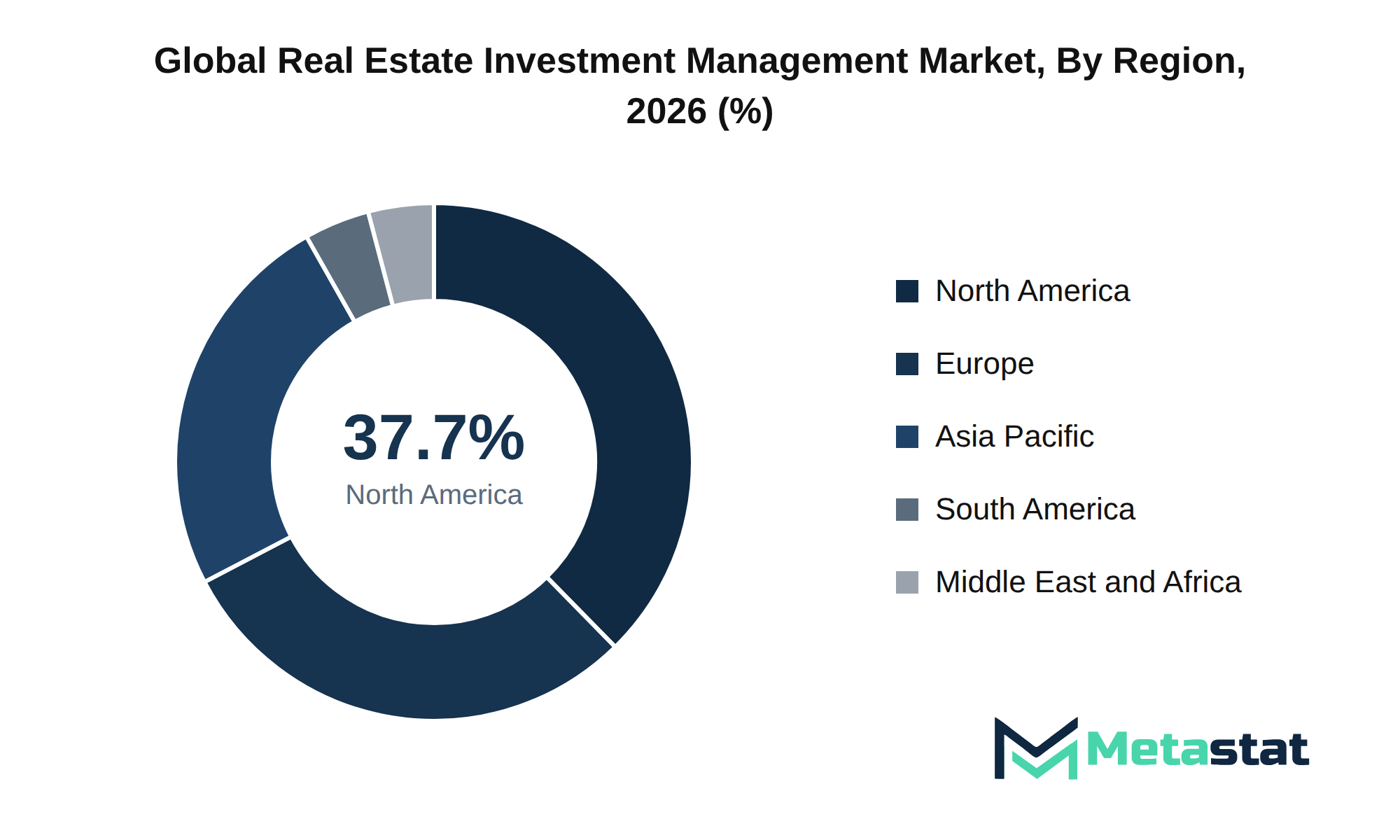
Based on geography, the Global Real Estate Investment Management market is divided into North America, Europe, Asia-Pacific, South America, Middle East, and Africa.
Investment in the North America Real Estate Investment Management market reflects strong growth, supported by a combination of high-value replacement cycles and mature market dynamics. The expansion of the market is driven by increasing demand for diverse property types, particularly in industrial and logistics sectors. Significant investments from pension funds and insurance companies contribute to the market's overall strength, creating an environment conducive to continued growth.
The market is projected to expand at a CAGR of 3.9% during the forecast period, reaching a market size (TAM) of USD 16.1 billion by the end of 2033. The share of the global market in 2025 stands at 37.7%, emphasizing the region's influential role in shaping overall market trends. A strategic focus on localized procurement dynamics, alongside an emphasis on infrastructure modernization, supports continued investment and adoption within this sector.
Geographic regulatory frameworks and local compliance mandates significantly influence market behavior, driving investment strategies tailored to regional needs. The presence of established domestic market participants facilitates vendor consolidation trends, enhancing competitive advantages. Unique cultural nuances and B2B buying behaviors across the United States, Canada, and Mexico further shape the landscape, creating opportunities for growth and innovation in the Real Estate Investment Management market.
The Real Estate Investment Management market in Europe demonstrates strong growth potential, driven by a combination of economic recovery and increased investor confidence. Countries including Germany, France, and the UK lead the charge, reflecting robust demand across various property types. Factors influencing this demand include evolving regulatory environments and an influx of foreign direct investment (FDI), which enhances market attractiveness. Infrastructure modernization across Europe facilitates better connectivity and access to essential services, thereby increasing property values. High-value replacement cycles within aging assets create opportunities for investment in urban renewal projects, especially in major metropolitan areas. The competitive landscape in Europe features several domestic market participants, including established firms that leverage localized procurement dynamics to cater to specific regional needs. Cultural nuances and regional B2B buying behaviors significantly impact investment strategies, leading to tailored approaches in different countries. Overall, the market in Europe is poised for incremental growth driven by emerging market front-runners and strategic entry barriers that favor established players. This evolution highlights the region's potential, reflecting a significant contributor to the global Real Estate Investment Management market.
The Asia-Pacific region is essential in the Real Estate Investment Management market, accounting for a 24.5% share in 2025. This substantial share reflects the growing demand for diversified property investments across countries including China, Japan, India, South Korea, and Australia. Rapid urbanization and population growth increase the demand for residential and multifamily properties, influencing the investment strategies adopted by various investors.
Countries within this region benefit from an evolving regulatory environment that encourages foreign direct investment (FDI) and facilitates smoother market entry for international players. The diversity in investor types, including pension funds and insurance companies, creates a competitive environment. Rising interest in industrial and logistics properties enhances investment opportunities, supported by the growth of e-commerce and supply chain optimization initiatives.
Emerging markets, particularly India and Southeast Asia, represent underpenetrated territories ripe for investment. Infrastructure modernization continues to attract both domestic and foreign investment, driving incremental growth in the overall market. The projected compound annual growth rate (CAGR) of 3.9% from 2026 to 2033 indicates strong long-term potential for real estate investments within this evolving environment.
The Real Estate Investment Management market in South America presents unique opportunities and challenges. With a market share of 4.1% projected for 2025, Brazil and Argentina emerge because key players in this region, with the rest of South America contributing to overall growth. Increasing urbanization and economic development drive demand for real estate investments, particularly in urban centers.
Infrastructure modernization significantly shapes the market landscape. Growing investments in transportation and utilities enhance accessibility to various property types, encouraging investor interest in industrial, residential, and commercial segments. The alignment of local regulations with global standards supports cross-border investments, motivating domestic and foreign stakeholders to explore opportunities in the region.
Cultural nuances and regional buying behaviors influence investment strategies among local investors. Understanding these dynamics is crucial for foreign entities seeking to enter the South American market. Localized procurement dynamics contribute to the emergence of domestic market leaders, which further strengthens the competitive landscape.
Despite the potential, underpenetrated territories remain a challenge. Identifying these areas and investing in their development could create additional growth vectors. The Real Estate Investment Management market stands poised for incremental expansion, driven by strategic entry barriers and foreign direct investment flows aimed at capitalizing on the region's growth potential.
The Real Estate Investment Management market in the Middle East and Africa reflects a developing landscape characterized by a share of 4.1% of the global market in 2025. Saudi Arabia and the UAE lead the region, with significant investment opportunities driven by rapid urbanization and economic diversification initiatives. Local compliance mandates and regulatory frameworks play essential roles in shaping market dynamics, influencing investment strategies and operational approaches.
Infrastructure modernization significantly impacts growth, with an increasing focus on real estate projects that support urban development and enhance economic activity. Emerging market front-runners in this region highlight the importance of localized procurement dynamics and cultural nuances that influence investor behavior and decision-making. Gradual market expansion is driven by cross-border trade corridors and foreign direct investment flows, creating a conducive environment for growth.
Domestic market participants operate within a competitive landscape that encourages vendor consolidation trends. Incremental growth vectors emerge from high-value replacement cycles in aging properties, providing opportunities for investment in modernization and refurbishment. While energy grid resiliency and local infrastructure readiness improve, the market becomes more appealing to both domestic and international investors.
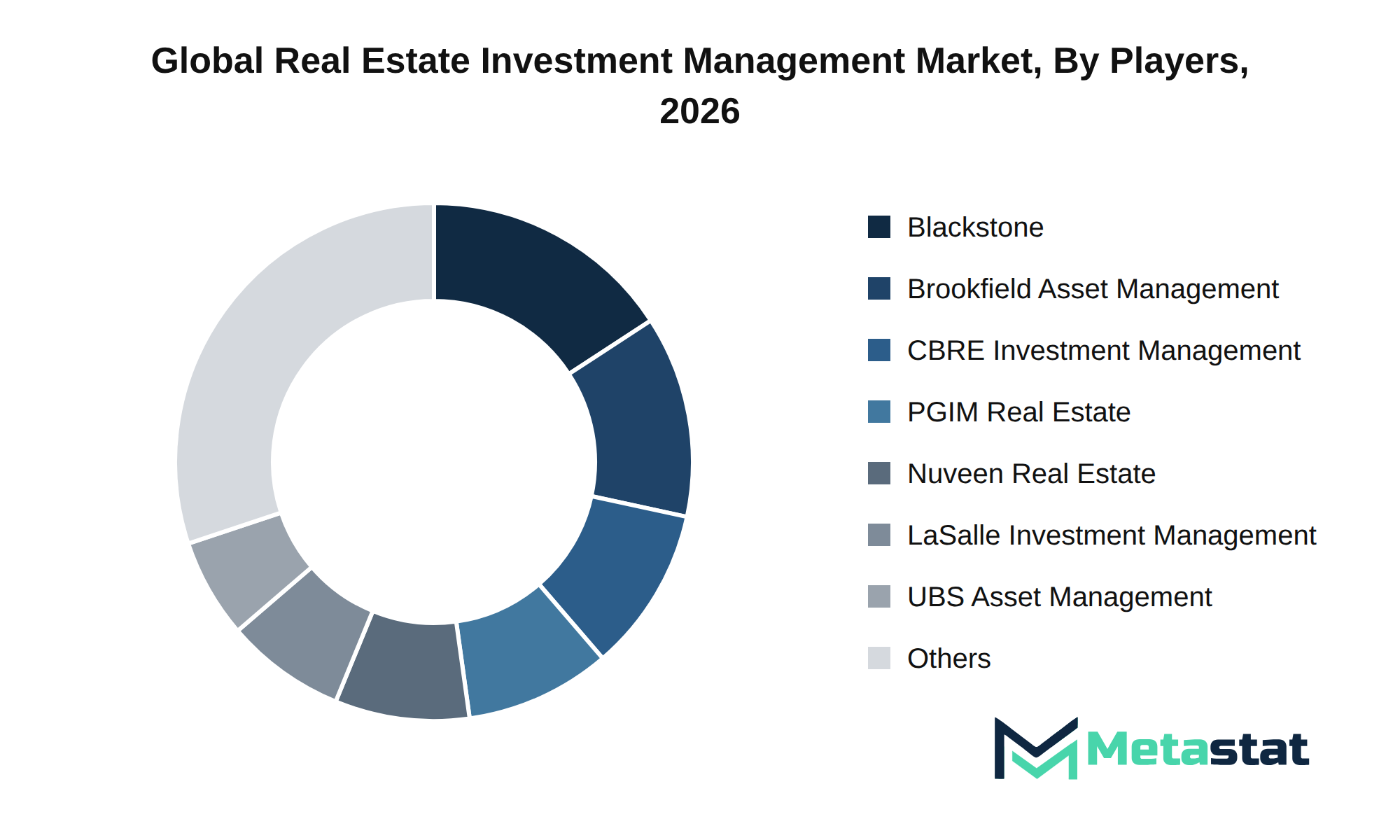
The Real Estate Investment Management market experiences significant activity characterized by strategic alliances and joint ventures among key players. Companies including Blackstone Inc., Brookfield Asset Management Ltd., and CBRE Investment Management pursue partnerships to enhance market presence and leverage resources across different sectors.
Mergers and acquisitions play a vital role in shaping the competitive landscape, with firms like PGIM Real Estate and Nuveen Real Estate consolidating assets to broaden portfolios. This trend facilitates greater operational efficiency and expands geographic reach, allowing participants to respond effectively to market demands.
Pricing architecture remains crucial, with companies implementing innovative commercial models to attract diverse investors. Competition emphasizes customer retention strategies, focusing on brand equity and switching costs to maintain loyalty among institutional investors, including pension funds and insurance companies.
Future competitive dynamics in the Real Estate Investment Management market will increasingly depend on technological advancements and proprietary technology moats. Firms invest in research and development to enhance offerings, increasing resilience against potential disruptions from new entrants. Strategic growth vectors focus on value chain integration and supply chain dominance to ensure long-term success.
Market size is forecast to rise from USD 33.9 billion in 2025 to over USD 46 billion by 2033. The base case reflects a growth trajectory with a compound annual growth rate (CAGR) of 3.9%. This scenario anticipates steady demand from institutional investors, particularly pension funds and insurance companies, which seek stable returns in real estate assets.
In a bull case scenario, increased capital inflow from sovereign wealth funds and expanding international investment could enhance overall market growth. Enhanced technological integration within property management and investment strategies drives operational efficiencies, enabling stakeholders to capitalize on emerging opportunities. The bear case highlights potential challenges arising from economic downturns, rising interest rates, or geopolitical tensions, which restrict capital availability and dampen investment enthusiasm.
While the real estate investment management market evolves, attention toward regulatory compliance and policy enforcement will intensify. Strategic capital allocation directives alongside infrastructure investments will shape the competitive landscape, impacting players' positioning within the market. Companies that prioritize next-generation technology integration secure competitive advantages and address unmet enterprise needs, positioning themselves favorably in high-growth pockets.
The outlook for the real estate investment management market reflects a balanced view of growth opportunities and challenges. By understanding the macroeconomic scenario and adapting to structural shifts in demand and regulation, stakeholders build defensibility roadmaps that ensure sustainable growth in the evolving market.
The report strategically identifies and profiles the key market players and analyses their core competencies in each sub-segment of the Real Estate Investment Management market.
Report Attributes | Details |
Study Period | 2021-2033 |
Base Year | 2025 |
Estimated Year | 2026 |
Forecast Period | 2026-2033 |
Historical Period | 2021-2025 |
Growth Rate | CAGR 3.9% from 2026 to 2033 |
Revenue Unit | USD billion |
Segmentation | By Investment Strategy, Property Type, Investor Type, and Region |
By Region | North America (By Investment Strategy, Property Type, Investor Type, and Country)
|
Europe (By Investment Strategy, Property Type, Investor Type, and Country)
| |
Asia Pacific (By Investment Strategy, Property Type, Investor Type, and Country)
| |
South America (By Investment Strategy, Property Type, Investor Type, and Country)
| |
Middle East and Africa (By Investment Strategy, Property Type, Investor Type, and Country)
|
Find answers to common questions about this report
The Real Estate Investment Management market size was valued at USD 33.9 billion in 2025, according to the Metastat Insights study.
The Real Estate Investment Management market is projected to grow at a CAGR of 3.9% during the forecast period from 2026 to 2033.
The North America Real Estate Investment Management market size is estimated to reach USD 16.1 billion by 2033.
The Core segment leads the Real Estate Investment Management market, with a projected value of USD 15.6 billion by 2033. This segment's growth reflects a compound annual growth rate of 2.5 percent from 2026 to 2033.
Key drivers for the Real Estate Investment Management market include GDP growth, increased capital investment, and infrastructure development. These factors enhance investor confidence and stimulate demand for diverse real estate strategies, particularly in urban areas. The modernization of physical and digital assets further supports the overall investment landscape.
North America holds the dominant share of the Real Estate Investment Management market, with a value of USD 16.1 billion projected for 2033, representing 37.7 percent of the total market.
Regulatory pressures and compliance hurdles significantly restrain growth in the Real Estate Investment Management market by increasing operational costs and shifting investment strategies. Macroeconomic headwinds, including inflation and high interest rates, diminish investor appetite and hinder capital inflows, while geopolitical instability complicates operational dynamics and project execution. These factors collectively suppress market expansion and profitability.
Growing economies and increased public-private spending power enhance the investment landscape, driving demand for real estate investments. Investment in infrastructure projects further supports adoption by creating opportunities for investment managers to deploy capital effectively, improving operational efficiencies and returns for investors.
The Real Estate Investment Management market is estimated to reach a valuation of USD 46 billion by 2033.
Key players in the Real Estate Investment Management market include Blackstone Inc., Brookfield Asset Management Ltd., CBRE Investment Management, PGIM Real Estate, Nuveen Real Estate, and LaSalle Investment Management.
The analysts below cover Banking & Finance research at Metastat Insights.
LEAD ANALYST
Utkarsh Khirodkar is a Lead Market Research Analyst at MetaStat Insight, specializing in market intelligence, technology sector assessments, and competitive strategy.

PRINCIPAL CONSULTANT - ENTERPRISE AI & EMERGING TECHNOLOGIES
Banking & Finance · Electronics and Semiconductor · Energy and Power · Healthcare IT · Information & Technology · Professional Services
Vijay Gunti is a Principal Consultant at MetaStat Insight, bringing over two decades of experience across enterprise digital transformation, technology strategy, and intelligent systems.
Ambulatory surgical centers have very different purchasing cycles for robotic-assisted surgery platforms than major hospital networks. The MetaStat Insight study focused squarely on capital expenditure depreciation, procedural reimbursement pathways, and surgeon training overhead. That operational clarity made it much simpler to validate multi-year procedure growth forecasts against actual ambulatory center adoption patterns.
When planning edge sensor rollouts across refinery environments, generic IoT reports typically miss the harsh-environment certification bottlenecks. MetaStat Insight gave an objective evaluation of ATEX and Class 1 Division 2 hardware availability, along with realistic five-year maintenance cycle cost projections. The comparison of wireless mesh versus private cellular backhaul helped our team pressure-test network reliability models for remote processing facilities.
In the biological seed treatment space, registration timelines vary drastically between the European Union, Brazil, and North America. The MetaStat Insight research handled these cross-border regulatory barriers with genuine nuance, mapping commercialization pathways alongside historical field adoption rates. The segmentation between microbial strains and biochemical active ingredients was particularly well structured.
Explore related market intelligence reports worth reading alongside this one.