
LEAD ANALYST
Utkarsh Khirodkar is a Lead Market Research Analyst at MetaStat Insight, specializing in market intelligence, technology sector assessments, and competitive strategy.

Global Self-Cleaning Coatings Market Size, Share, By Type (Photocatalytic / Photoactivated Self-Cleaning, Superhydrophobic / Lotus-Effect Self-Cleaning, Hydrophilic / Superhydrophilic Water-Sheeting, Low-Adhesion / Oleophobic Dirt-Release, Anti-Static / Electrostatic Dust-Repellent, Hybrid / Multi-Action Self-Cleaning), By Chemistry (Acrylic & Methacrylic, Silicone & Siloxane, Fluoropolymer, Polyurethane & Polyurea, Silicate-Bound Mineral, Sol-Gel / Organic-Inorganic Hybrid, Metal-Oxide / Ceramic), By Substrate (Glass, Concrete & Cementitious Materials, Brick, Masonry & Natural Stone, Ceramic & Porcelain, Metals, Plastics & Polymer Composites, Textiles & Fibers, Wood), By End-Use Industry (Building & Construction, Solar & Renewable Energy, Automotive, Aerospace, Marine, Rail & Mass Transit, Industrial Equipment & Infrastructure, Consumer Electronics & Displays, Textiles & Apparel), Industry Analysis, Growth, Trends, and Forecast, 2026-2033
Report ID
MSI-5237
Published
September, 2026
Pages
289 Pages
Format
Historical
Base year
Forecast
Forecast period
Report Details
Market Valuation: Valued at $2,868.1 Million in 2025, projected to reach $6,707.5 Million by 2033 at a 11.2% CAGR.
Dominant Segment: The Photocatalytic / Photoactivated Self-Cleaning segment leads the market, driven by its ability to decompose organic pollutants using light energy, appealing to industries focused on sustainability.
Geographic Lead: North America is identified as a key growth corridor for self-cleaning coatings, fueled by increasing investments in renewable energy infrastructure and stringent environmental regulations.
What's Inside: The report provides a comprehensive analysis of market dynamics, competitive landscape, and detailed segmentation by type, chemistry, substrate, and end-use industry, covering the forecast period from 2026 to 2033.
Increased Focus on Sustainability Initia: The market is significantly influenced by the growing public awareness of environmental issues, driving demand for self-cleaning coatings that minimize maintenance and resource consumption.
High Capital Investment Requirements: High initial costs associated with advanced self-cleaning technologies pose a challenge for market penetration, particularly among smaller businesses and startups.
Choose Your License
Global Self-Cleaning Coatings Market
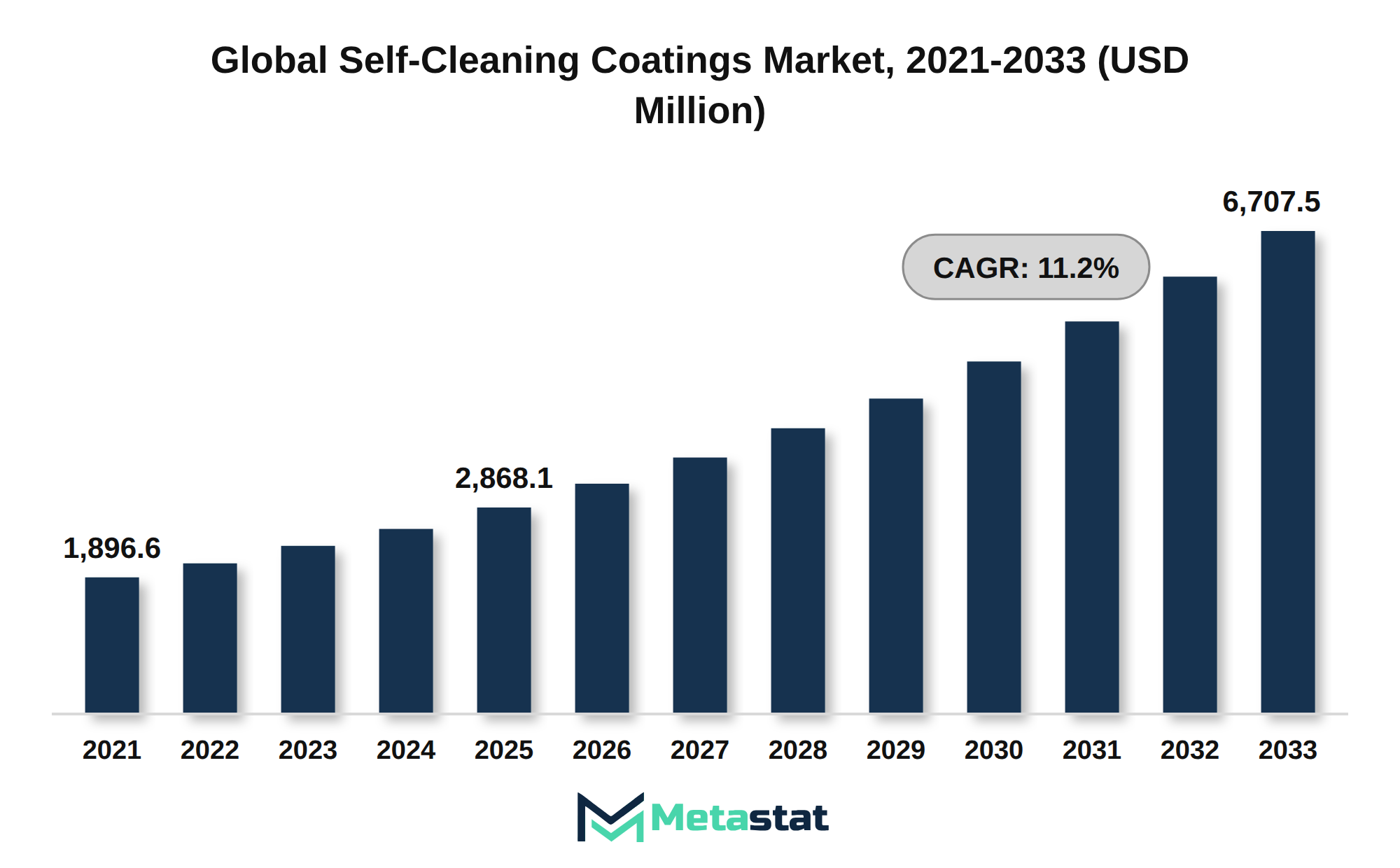
The global Self-Cleaning Coatings market was valued at USD 2,868.1 million in 2025 and is projected to reach USD 6,707.5 million by 2033, growing at a CAGR of 11.2% over the forecast period.
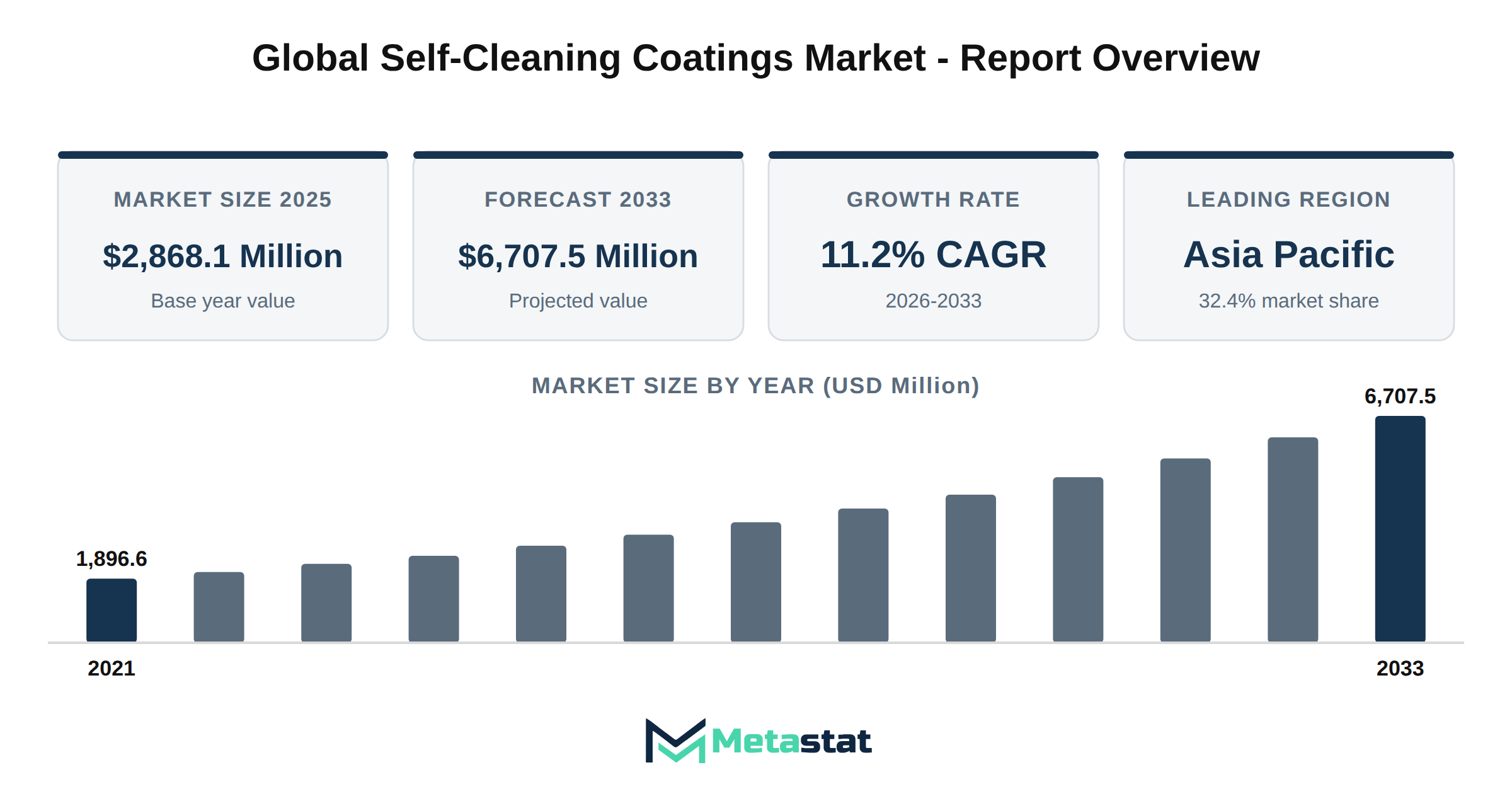
The global Self-Cleaning Coatings market reached a valuation of USD 2,868.1 million in the base year of 2025, with projections indicating a significant increase to USD 6,707.5 million by the end of the forecast period in 2033. This growth represents a compound annual growth rate (CAGR) of 11.2% over the forecast duration from 2026 to 2033. Historical data shows steady market expansion, starting from USD 1,896.6 million in 2021 and experiencing consistent year-on-year growth.
Several factors drive the accelerating adoption of self-cleaning surface technologies across various industries. The demand for hydrophilic versus hydrophobic coatings presents distinct dynamics in the market. Hydrophilic coatings attract moisture, providing effective cleaning properties, while hydrophobic coatings repel water and dirt, offering alternative functionalities. Innovations in titanium dioxide and advanced nanomaterials significantly influence the development of photocatalytic formulations, enhancing their efficiency and usability.
Renewable energy infrastructure, particularly solar panels, acts because a primary catalyst for the adoption of self-cleaning glass coatings. The architectural and construction sectors contribute to this growth through the incorporation of smart facades, exterior cladding, and glazing applications. Integration of self-cleaning coatings in the automotive and aerospace industries focuses on anti-soiling coatings for sensors, windshields, and exterior surfaces, enhancing performance and maintenance efficiency.
Despite the positive outlook, supply chain bottlenecks, raw material volatility, and manufacturing scalability challenges present hurdles for market participants. Regulatory compliance regarding environmental impact and volatile organic compound (VOC) standards influences the chemistry of coatings, necessitating adaptations in formulation. Emerging startups and R&D patent activity indicate a strong innovation environment, driven by strategic venture capital inflows, which are critical for future advancements in the market.
Market consolidation and the presence of key manufacturers shape competition, with strategies including strategic partnerships to enhance product offerings and market reach. Regional dynamics play a significant role, with North America, Europe, and Asia-Pacific identified because growth corridors and commercial hotspots for self-cleaning coatings.
The Self-Cleaning Coatings market continues to experience significant growth, driven by various factors influencing industrial adoption of self-cleaning surface technologies. Advancements in hydrophilic and hydrophobic coatings demonstrate differing demand dynamics and functional performance, catering to diverse applications. Innovations involving titanium dioxide and advanced nanomaterials play a crucial role in shaping photocatalytic formulations, enhancing efficiency and effectiveness.
Renewable energy infrastructure, particularly in solar panel applications, serves because a primary catalyst for self-cleaning glass coatings. The architectural and construction sector drives demand for smart facades, exterior cladding, and glazing applications, emphasizing the need for functional and aesthetically pleasing solutions. Integration of anti-soiling coatings in automotive and aerospace sectors addresses challenges faced by sensors, windshields, and exterior surfaces, promoting enhanced performance.
Supply chain bottlenecks, raw material volatility, and manufacturing scalability challenges pose obstacles to market expansion. Regulatory compliance and environmental considerations influence coating chemistry, ensuring adherence to VOC standards and promoting sustainable practices. Emerging startups fuel innovation through R&D patent activity and strategic venture capital inflows, contributing to the competitive landscape.
Regional market dynamics highlight growth corridors and commercial hotspots in North America, Europe, and Asia-Pacific. Each region presents unique opportunities and challenges, shaping the competitive environment. Commercial barriers to mass adoption, including durability benchmarks, application costs, and recoating cycles, require strategic attention to facilitate broader market penetration.
Next-generation smart coatings, featuring superhydrophobic, self-healing, and multi-functional surface innovations, represent the future of the market. Continuous focus on regulatory compliance, standards, and regional risk frameworks influences market dynamics. While the market evolves, organizations adapt to disruption, R&D trajectories, and sustainable transformation initiatives, ensuring alignment with decarbonization and circular economy dynamics.
Growing emphasis on emission limits influences the adoption of self-cleaning coatings across numerous industries. Enhanced regulatory frameworks and public awareness regarding environmental sustainability create a demand for products that contribute to reduced maintenance and resource efficiency. This trend particularly influences sectors including building and construction, where sustainable practices align with construction standards and consumer preferences.
Investment in self-cleaning coatings represents a strategic decision to meet environmental goals while improving operational efficiency. The self-cleaning coatings market benefits from increased capital investments driven by firms seeking technologies that minimize environmental impact and operational costs. The focus on sustainability enhances the appeal of these coatings, attracting investments from various stakeholders.
Organizations adopting innovative coatings enhance their market competitiveness by offering sustainable solutions that satisfy evolving consumer behaviors. The self-cleaning coatings market is projected to expand, with significant growth anticipated because stakeholders prioritize eco-friendly options that align with global sustainability objectives.
The ongoing trend toward sustainability significantly impacts the Self-Cleaning Coatings market. Growing public awareness of environmental issues drives demand for products that minimize maintenance and resource consumption. Companies adopting self-cleaning technologies benefit from reduced labor costs and improved operational efficiency. This shift aligns with broader environmental, social, and governance (ESG) mandates that prioritize ethical governance and carbon footprint reduction.
Investment in sustainable technologies reflects a macro-economic response to changing consumer behaviors and preferences. Consumers increasingly favor products that support eco-friendly practices and contribute to a circular economy. While companies integrate these values into their offerings, the market anticipates expansion, with projections indicating a rise from USD 2,868.1 million in 2025 to USD 6,707.5 million by 2033. The anticipated compound annual growth rate (CAGR) of 11.2 percent highlights the viability and relevance of self-cleaning coatings in the evolving landscape.
In this context, manufacturers focusing on research and development (R&D) for innovative self-cleaning solutions will likely gain a competitive edge. These advancements enhance product performance and align with consumer demands for sustainability, ultimately driving growth in the market.
High capital investment requirements present a significant restraint in the Self-Cleaning Coatings market. The initial costs associated with the development and application of advanced coatings deter potential adopters, particularly in regions with limited financial resources. Smaller businesses or startups struggle to allocate sufficient budgets for integrating self-cleaning technologies, resulting in slower market penetration.
Escalating operating costs further complicate the financial landscape. Manufacturers face rising raw material prices and labor costs, impacting the overall pricing strategies for self-cleaning coatings. These factors lead to tight margins, compelling companies to adjust their product offerings or withdraw from less profitable segments.
Technological obsolescence poses another challenge for the market. Rapid advancements in coating technologies necessitate continuous investments in research and development to keep pace with industry innovations. Companies that do not invest adequately in upgrading their offerings risk falling behind competitors, hindering their market presence.
Market fragmentation and cultural barriers contribute to adoption challenges. Diverse consumer preferences across various regions slow acceptance of self-cleaning coatings. This fragmentation complicates marketing efforts and increases the resources required for effective outreach, further constraining growth in the Self-Cleaning Coatings market.
Geopolitical fragmentation and trade deficits present notable challenges for the Self-Cleaning Coatings market. Rising tariffs and trade barriers disrupt the flow of materials and components crucial for production. Manufacturers face increased costs related to sourcing raw materials, which influences pricing strategies across the market. The complexity of navigating international trade regulations adds to operational burdens, often resulting in extended lead times and reduced supply chain efficiency.
Technological disruptions further complicate the landscape, driven by companies striving to integrate advanced R&D into their existing processes. This complex integration often results in higher development costs that impact profit margins. Technological advancements require a skilled workforce capable of managing sophisticated production methods; however, skill gaps hinder the adoption of these innovations.
Environmental sustainability demands impose another layer of complexity. Companies address evolving regulatory standards and compliance overhead, which directly affect operational expenses. Balancing sustainability goals with profitability challenges companies to invest in eco-friendly materials while maintaining competitive pricing in the market. The need for constant innovation and adaptation to changing downstream demands creates pressures on firms to remain relevant, affecting overall growth trajectories.
The Self-Cleaning Coatings market experiences opportunities through rapid advancements in technology. Innovations in photocatalytic and superhydrophobic coatings enhance the efficacy of self-cleaning properties, attracting interest from various sectors. Industries including building and construction, automotive, and renewable energy increasingly adopt these technologies to improve maintenance efficiency and reduce operational costs.
Technological disruptions facilitate the integration of self-cleaning coatings into next-generation products. Manufacturers leverage advanced formulations and application methods to enhance product performance while meeting evolving consumer demands for sustainability. This integration leads to a diversification of applications, creating niche markets for specific use cases, including in high-performance architectural surfaces and solar panel maintenance.
Geographical expansion significantly impacts market growth. Emerging economies in Asia Pacific and Latin America show rising demand for self-cleaning coatings, driven by rapid urbanization and infrastructure modernization. The growing middle class in these regions supports investments in advanced building materials and technologies, further propelling the market forward.
Strategic consolidation and partnerships among key players facilitate resource sharing and technology transfer. Collaborations enable companies to enhance their product portfolios, improve market reach, and navigate competitive pressures effectively. This trend enhances the market's long-term sustainability and growth potential.
Lastly, evolving buying behaviors influenced by digital transformation impact the procurement process. Increased reliance on online platforms for sourcing self-cleaning coatings streamlines purchasing decisions, allowing customers to access a wider range of products and suppliers. This shift contributes to a more dynamic market environment, enhancing competition and driving innovation.
The Global Self-Cleaning Coatings market is segmented based on Type, Chemistry, Substrate, and End-Use Industry.
Valued at USD 1,069 million in 2026, the Photocatalytic / Photoactivated Self-Cleaning segment is projected to reach USD 2,094.1 million by 2033, reflecting a CAGR of 10.1% during the forecast period. Demand for this segment arises from industries focusing on sustainability and environmental compliance. The ability of photocatalytic coatings to decompose organic pollutants using light energy enhances their appeal in various applications.
Advancements in material science drive innovations in photocatalytic technologies, resulting in enhanced performance and durability. This evolution leads to increased adoption across sectors including construction, automotive, and renewable energy. The construction industry experiences significant growth from these coatings, which improve the longevity and aesthetic quality of surfaces while reducing maintenance costs.
Regulatory pressures regarding emissions and environmental safety increase demand for photocatalytic solutions. Compliance with stringent regulations motivates manufacturers to integrate these coatings into their product offerings. Ongoing research and development activities focusing on next-generation photocatalytic materials contribute to segment expansion, providing strategic opportunities for market participants.
Cost structures within this segment are influenced by raw material sourcing and technological advancements. Manufacturers face pricing pressures due to fluctuations in raw material costs, necessitating efficient supply chain management practices. Strategic investments in research and product development offer a pathway to mitigate these challenges while enhancing product offerings within the Self-Cleaning Coatings market.
Rapid advancements in nanotechnology and material science drive the growth of the Superhydrophobic / Lotus-Effect Self-Cleaning segment within the Self-Cleaning Coatings market. Consumers increasingly seek surfaces that repel water and dirt, enhancing cleanliness and durability. Industries including building and construction benefit significantly from these coatings, which improve maintenance efficiency and reduce cleaning costs. The anticipated market value of USD 1,811 million by 2033 reflects a robust CAGR of 12.6% during the forecast period, highlighting consumer demand for innovative solutions.
Technological maturation drives ongoing product evolution within this segment. Manufacturers focus on enhancing the durability and effectiveness of superhydrophobic coatings, with developments in chemical formulations and application techniques. This evolution supports downstream applications across various end-use industries, including automotive and solar energy, where surface cleanliness impacts functionality and aesthetics. Regulatory compliance standards further emphasize the need for sustainable and low-maintenance solutions, driving adoption across diverse sectors.
Pricing volatility in raw materials influences market dynamics, pushing manufacturers to explore alternative sourcing strategies. Strategic opportunity windows emerge due to companies investing in research and development to enhance product performance while managing cost structures. The resilience of the supply chain within the Superhydrophobic / Lotus-Effect Self-Cleaning segment positions it well for future growth, overcoming potential disruptions and substitution risks from traditional cleaning methods.
Growing demand for efficient cleaning solutions in various industries drives the Hydrophilic / Superhydrophilic Water-Sheeting segment within the Self-Cleaning Coatings market. This segment is expected to reach USD 1,132.9 million by 2033, reflecting a strong growth trajectory driven by increasing awareness of environmental sustainability and health standards. Enhanced performance characteristics of hydrophilic coatings, including superior water-shedding capabilities, support their adoption in sectors including building and construction, automotive, and aerospace.
The trend towards technological maturation facilitates innovations in formulation and application techniques, further supporting segment expansion. Emerging technologies focusing on advanced surface treatments enhance product longevity and effectiveness. Evolving regulatory compliance standards regarding emissions and cleanliness contribute to heightened interest in self-cleaning solutions across various industries.
Strategic investments in research and development by key players aim to improve product performance while addressing cost structures and pricing volatility. These developments position the market for continued growth, with favorable consumption shifts towards sustainable materials driving demand for hydrophilic solutions. The Hydrophilic / Superhydrophilic Water-Sheeting segment exemplifies a critical area of opportunity within the broader Self-Cleaning Coatings market, positioning stakeholders for enhanced revenue potential in the coming years.
Projected growth in the Low-Adhesion / Oleophobic Dirt-Release segment at a CAGR of 9.9% during the forecast period reflects increasing demand for coatings that provide effective dirt and water resistance. This demand arises from industries including automotive and building construction, where maintaining surface cleanliness is essential for aesthetic and functional reasons. The ability of low-adhesion coatings to repel dirt and oils enhances surface performance and reduces maintenance costs, making them attractive to end-users.
Technological maturation contributes significantly to this segment's expansion, with innovations in material science enabling the development of advanced formulations that enhance dirt-release properties. The evolution of products in this category, particularly those incorporating nanotechnology, results in superior performance characteristics that meet the growing expectations of consumers for durability and efficiency. The self-cleaning coatings market benefits from these advancements, creating a competitive landscape among manufacturers seeking to differentiate their offerings.
Exploration of downstream applications demonstrates strong potential for the Low-Adhesion / Oleophobic Dirt-Release segment. Industries including solar energy and consumer electronics increasingly integrate these coatings to improve product longevity and reduce upkeep. Regulatory compliance standards focusing on sustainability and reduced environmental impact drive adoption further, driven by manufacturers seeking solutions that fulfill both performance and ecological criteria.
Pricing volatility and margin pressures specific to this segment arise from fluctuating raw material costs, particularly for high-performance polymers and additives. Manufacturers face challenges in maintaining competitive pricing while ensuring product quality, which influences overall market dynamics. Despite these pressures, strategic investment in R&D and supply chain resilience remains crucial for companies targeting growth within the self-cleaning coatings market.
Growing awareness of static electricity's effects on operational efficiency drives interest in Anti-Static / Electrostatic Dust-Repellent coatings within the Self-Cleaning Coatings market. Industries including electronics, aerospace, and automotive prioritize protective solutions that mitigate dust accumulation and enhance performance longevity. Enhanced product offerings and advancements in formulation significantly contribute to this segment's evolution.
Technological maturity of electrostatic dust-repellent solutions accelerates adoption across various applications. Next-generation upgrades focus on improving performance characteristics, ensuring compatibility with diverse substrates, and enabling integration into existing systems. Manufacturers invest in research and development to drive innovation, enhancing market competitiveness and addressing specific end-use requirements.
Regulatory compliance standards emphasizing the reduction of airborne contaminants support market growth. Companies within this segment prioritize adherence to these regulations, mitigating potential liabilities while improving product appeal to environmentally conscious consumers. Strategic opportunity windows arise from the intersection of evolving technology and regulatory demands, positioning players to capitalize on new market dynamics.
Supply chain resilience plays a critical role in maintaining a steady flow of raw materials essential for production. Challenges related to sourcing and logistics require strategic partnerships and robust risk management strategies to ensure continuity. Addressing these factors effectively strengthens the competitive position of manufacturers while enhancing product availability in the market.
Overall, the Anti-Static / Electrostatic Dust-Repellent segment contributes to the broader expansion of the Self-Cleaning Coatings market, with its unique capabilities aligning with evolving consumer needs and industry trends.
Hybrid and multi-action self-cleaning coatings represent a convergence of advanced technologies that enhance performance across various applications. The integration of multiple self-cleaning mechanisms meets diverse demands in industries including building and construction, automotive, and aerospace. Products in this segment evolve rapidly, incorporating features that enhance durability and efficiency. This evolution appeals to end-users seeking reliable solutions.
Adoption of hybrid self-cleaning coatings surfaces from increased awareness of environmental sustainability and regulatory compliance in multiple markets. Customers show preference for solutions that reduce maintenance costs and prolong the lifespan of surfaces. This demand reflects a broader trend toward eco-friendly products, driving investment in research and development within the sector.
Technological advancements contribute significantly to segment expansion. Ongoing innovation in material science leads to the development of coatings that combine hydrophobic and photocatalytic properties, optimizing performance by maximizing dirt and grime removal. Enhanced product formulations reduce environmental impact while improving aesthetic appeal, further appealing to both consumers and industries.
End-use dynamics play a critical role in shaping the hybrid segment's growth. Applications in solar panels and renewable energy infrastructure highlight the importance of maintaining efficiency and cleanliness in energy generation. Increased construction activity and renovation projects prioritize the adoption of coatings that minimize upkeep, directly influencing market demand for self-cleaning coatings.
Consumption shifts toward high-performance and multifunctional products reflect changing consumer preferences. The market is characterized by a notable increase in hybrid formulations that address various surface challenges, including dirt accumulation and staining. This trend encourages manufacturers to enhance product offerings, leading to increased competition and innovation within the market.
Cost structures associated with hybrid coatings reflect their advanced technology and raw material requirements. Manufacturers face challenges in balancing pricing strategies while maintaining margins, particularly in a competitive landscape. Strategic opportunity windows emerge because companies seek to differentiate their products through quality and performance enhancements, positioning themselves favorably within the self-cleaning coatings market.
Acrylic & Methacrylic coatings represent a vital segment within the Self-Cleaning Coatings market, valued at USD 724.7 million in 2026 and projected to reach USD 1,415.9 million by 2033, at a CAGR of 10% during the forecast period. The growing emphasis on eco-friendly solutions boosts demand for these coatings across multiple industries, including building and construction, automotive, and solar energy. Manufacturers prioritize sustainability and durability, driving innovation in chemical formulations and performance attributes.
Technological maturation has led to enhanced product performance, resulting in greater efficiency in self-cleaning applications. Developments in acrylic and methacrylic chemistry enable these coatings to exhibit superior self-cleaning properties, appealing to end-users seeking low-maintenance solutions. This trend aligns with the increasing awareness of environmental sustainability, prompting a shift towards materials that reduce resource consumption and maintenance efforts.
Regulatory compliance continues to influence market dynamics, with stricter standards on emissions and environmental impact driving the adoption of self-cleaning coatings. Certifications for eco-friendly products enhance market visibility, leading to increased demand from environmentally conscious consumers and industries. Consequently, companies investing in research and development of acrylic and methacrylic solutions gain a competitive edge in the expanding market.
Cost structures associated with acrylic and methacrylic coatings maintain a favorable outlook, driven by advancements in raw material sourcing and production methods contributing to pricing stability. The market experiences minimal volatility, allowing for predictable financial planning and capital investment strategies. Strategic opportunity windows arise from ongoing product evolution, addressing specific end-use applications and consumer demands.
Overall, the Acrylic & Methacrylic segment reflects significant growth potential within the Self-Cleaning Coatings market, driven by technological advancements, regulatory compliance, and evolving consumer preferences. This segment's robust outlook encourages manufacturers to enhance their product offerings and capitalize on emerging market trends.
Demand for silicone and siloxane-based self-cleaning coatings is rising due to their superior performance and durability in various applications. These coatings exhibit excellent hydrophobic and oleophobic properties, making them effective in repelling dirt, water, and other contaminants. Industries including construction, automotive, and electronics leverage these materials for their self-cleaning capabilities, significantly reducing maintenance costs and labor. Growth in the silicone and siloxane segment stems from the increasing emphasis on sustainability and environmental consciousness among consumers and businesses. Enhanced regulatory compliance concerning environmental standards supports adoption, driving manufacturers to invest in innovative technologies.
The silicone and siloxane segment is projected to reach USD 1,341.5 million by 2033, at a CAGR of 12.5% during the forecast period. Key factors influencing this growth include technological advancements that enable improved formulation and enhanced performance characteristics. The continuous evolution of product offerings, including the introduction of next-generation upgrades, expands the application scope and enhances market penetration. While end-use industries gravitate towards more efficient and sustainable solutions, the market experiences significant shifts in consumption patterns, favoring high-performance silicone and siloxane coatings.
Fluoropolymer coatings represent a critical segment within the Self-Cleaning Coatings market, expected to reach USD 670.7 million by 2033. These coatings exhibit unique properties that enhance self-cleaning capabilities, making them suitable for various applications. The demand for fluoropolymer coatings arises from their strong resistance to staining and chemical degradation, catering to industries requiring durable and low-maintenance surfaces.
Technological maturation within the fluoropolymer segment facilitates its adoption, with ongoing research and development aimed at enhancing performance characteristics. Innovations in formulation and processing techniques continue to improve the efficacy of these coatings, appealing to end-user industries including automotive and aerospace, where high-performance materials are essential. The trend towards sustainability and environmental regulations further drives interest in self-cleaning technologies, driven by fluoropolymer coatings that offer solutions that reduce water and chemical usage during cleaning processes.
Market expansion catalysts include the increasing focus on improving surface functionality and longevity, particularly in outdoor applications where exposure to elements is significant. The versatility of fluoropolymer coatings allows their integration into various substrates, enhancing their attractiveness for builders and manufacturers. While industries shift towards advanced materials that reduce maintenance costs and improve lifespan, the fluoropolymer segment is poised for growth within the evolving landscape of self-cleaning technologies.
Growing interest in environmentally friendly materials increases the adoption of Polyurethane & Polyurea in the Self-Cleaning Coatings market. Valued at USD 724.7 million in 2026, this segment is projected to grow at a CAGR of 9.9% during the forecast period. The focus on sustainable solutions aligns with regulatory compliance standards, encouraging industries to seek innovative coating options. Advances in material science enhance the performance characteristics of Polyurethane & Polyurea coatings, leading to increased demand across various applications.
Incorporating Polyurethane & Polyurea coatings in end-use industries including building and construction, along with automotive and aerospace, drives significant market growth. Their superior durability and resistance to environmental factors contribute to their appeal. Cost structures related to raw materials and production processes affect pricing strategies, influencing market dynamics. The introduction of next-generation upgrades and product evolution continues to attract investment, enhancing competitive positioning in the market.
Supply chain resilience influences the performance of this segment. Fluctuations in raw material prices and sourcing challenges impact overall profitability. Effective management of raw material prices and sourcing challenges influences market positioning and creates opportunities for growth. Strategic windows for investment remain open, providing potential for innovation and expansion within the Polyurethane & Polyurea segment of the Self-Cleaning Coatings market.
Increasing interest in sustainable and environmentally friendly solutions supports the demand for silicate-bound mineral self-cleaning coatings. These coatings incorporate natural materials, aligning with consumer preferences for eco-conscious products. Industries including construction and automotive adopt this technology, driven by durability and low maintenance requirements.
Technological advancements enhance the performance of silicate-bound mineral coatings, promoting wider adoption across various applications. Innovations in formulation contribute to improved adhesion and resistance to harsh environmental conditions, adding to their appeal. Ongoing research into new formulations enhances cleaning efficiency while maintaining environmental safety.
End-use dynamics in sectors including building and construction emphasize the need for coatings that provide both functionality and aesthetic appeal. Silicate-bound mineral coatings deliver robust performance, leading to increased usage in architectural applications. Regulatory compliance standards favor products that minimize environmental impact, positioning these coatings favorably in the market.
Investment in product evolution characterizes the silicate-bound mineral segment, with manufacturers focusing on next-generation upgrades that enhance performance attributes. Strategic opportunity windows arise from market shifts toward lower environmental footprints, with silicate-bound mineral coatings offering a compelling solution. Growth in the self-cleaning coatings market reflects the segment's resilience and adaptability to changing consumer preferences.
Technological maturation plays a significant role in the adoption of Sol-Gel / Organic-Inorganic Hybrid coatings within the Self-Cleaning Coatings market. These coatings offer advantages, including enhanced durability, ease of application, and superior self-cleaning properties. The demand for sustainable and efficient solutions in various industries supports their growth, particularly in the building and construction sector, where the emphasis on energy efficiency and reduced maintenance costs is critical.
Upgrades in product formulations contribute to the evolution of Sol-Gel coatings, leading to more effective dirt-repellent characteristics. End-use dynamics highlight a growing preference for environmentally benign materials, aligning with regulatory compliance standards that favor sustainable options. This shift influences consumption patterns among consumers and industrial users who prioritize performance and environmental impact.
Supply chain resilience impacts raw material sourcing for Sol-Gel coatings, ensuring availability and reducing vulnerabilities. The potential for substitution risks arises from the advancement of alternative self-cleaning technologies, but the distinct benefits of Sol-Gel formulations help maintain their position within the market. Strategic opportunity windows exist for manufacturers to innovate and improve the performance characteristics of these coatings, driving further investment and creating competitive advantages.
Growing interest in advanced materials enhances the importance of Metal-Oxide / Ceramic coatings within the Self-Cleaning Coatings market. These coatings provide superior dirt-repelling properties, which significantly benefit applications in commercial and industrial settings. Their effectiveness in maintaining clean surfaces without the need for aggressive chemical cleaners aligns with increasing environmental regulations focused on sustainability and reduced chemical use.
Technological maturation accelerates the adoption of Metal-Oxide / Ceramic coatings, driven by innovations in application methods and formulations. These advancements ensure better performance, durability, and cost-effectiveness, making them attractive to manufacturers. Industries including building and construction increasingly incorporate these coatings for exterior surfaces, enhancing aesthetic appeal and longevity.
Shifts in consumption patterns favor products that deliver both efficiency and environmental benefits. In the Self-Cleaning Coatings market, demand for sustainable solutions drives the development of Metal-Oxide / Ceramic coatings. Supportive regulatory frameworks encourage manufacturers to invest in this segment, anticipating increased market penetration and competitiveness.
Strategic opportunity windows arise owing to industries prioritizing performance and sustainability. The resilience of the supply chain for raw materials used in Metal-Oxide / Ceramic coatings reduces potential disruptions, ensuring stability and growth. Manufacturers position themselves to capitalize on market trends, driving ongoing innovation and competitiveness in this segment.
Specialty polymers, including epoxy formulations, find application in a variety of self-cleaning coatings. Demand arises from the unique properties of these materials, which enhance durability and cleaning efficacy in diverse environments. The versatility of specialty polymers enables their incorporation into coatings used across multiple industries, including automotive and construction.
Technological advancements contribute to the evolution of these materials, resulting in improved performance characteristics. Manufacturers focus on product evolution to meet the demands of the self-cleaning coatings market. This evolution supports the development of coatings that provide enhanced resistance to environmental factors, thus extending the lifespan of coated surfaces and reducing maintenance requirements.
End-use dynamics significantly influence the adoption of specialty polymers. Industries including automotive and building and construction increasingly adopt these coatings due to their ability to reduce maintenance costs and enhance aesthetic appeal. Regulatory compliance standards drive innovation, pushing manufacturers to develop coatings that align with environmental regulations and sustainability goals.
Pricing volatility impacts market dynamics, influencing raw material sourcing strategies. Manufacturers work to maintain competitive pricing while ensuring product quality, which affects margins. Strategic opportunities arise from advancements in production techniques, allowing manufacturers to optimize their offerings for the self-cleaning coatings market. This optimization enhances overall market competitiveness and supports long-term growth.
Supply chain resilience remains a critical aspect in the production of specialty polymer-based coatings. Manufacturers prioritize robust sourcing strategies to mitigate risks associated with raw material availability. This approach supports product consistency and enhances competitiveness within the self-cleaning coatings market, ensuring reliable supply for end-users.
Valued at USD 885.1 million in 2026, the glass sub-segment is projected to reach USD 1,771.3 million by 2033, at a CAGR of 10.4% during the forecast period. Demand for self-cleaning glass coatings stems from their ability to reduce maintenance costs and enhance durability in residential and commercial applications. Key industries including building and construction actively seek coatings that promote energy efficiency and improve aesthetics. This demand drives significant growth in this segment.
Technological advancements continue to play a crucial role in the evolution of self-cleaning glass coatings. Innovations in photocatalytic and superhydrophobic technologies enhance performance. Increased adoption across various applications creates strategic opportunity windows for manufacturers, encouraging investments in research and development aimed at producing next-generation coatings that align with changing consumer preferences.
Regulatory compliance standards increasingly emphasize the need for sustainable materials, influencing the glass segment of the self-cleaning coatings market. Consumers prioritize environmentally friendly options, prompting manufacturers to adapt their product offerings. Growth in the renewable energy sector, particularly in solar applications, supports higher demand for self-cleaning glass driven by the need for efficient energy generation.
Pricing volatility in raw materials affects the cost structures within the glass segment. Fluctuations in the availability of key materials including silicates impact production costs. This situation pressures profit margins. Manufacturers navigate these challenges while focusing on supply chain resilience and efficient sourcing strategies to maintain competitive pricing in the market.
Investment in the Concrete & Cementitious Materials sub-segment experiences strong momentum, driven by increasing applications of self-cleaning coatings in construction and infrastructure. This segment is estimated to reach USD 1,408.6 million by 2033, at a CAGR of 11.8% during the forecast period. The rise in urbanization and the growing focus on maintaining aesthetic appeal increase demand from the building and construction industry. Enhanced durability and reduced maintenance costs associated with self-cleaning coatings increase adoption among contractors and building owners.
Technological advancements in formulation and application processes contribute to segment expansion. Innovations in polymer chemistry lead to improved adhesion and longevity, making self-cleaning coatings more appealing for concrete surfaces. Regulatory compliance concerning environmental standards influences the transition to sustainable materials, further stimulating market interest. The demand for self-cleaning solutions in architectural applications aligns with the broader trends in green building practices.
Ongoing research and product development introduce next-generation upgrades, enhancing the performance characteristics of self-cleaning coatings. Enhanced product functionalities, including resistance to UV degradation and improved self-cleaning efficiency, significantly influence downstream application sectors. While the market evolves, manufacturers focus on optimizing cost structures to remain competitive, ensuring that pricing volatility does not hinder growth.
The Concrete & Cementitious Materials segment positions itself because a strategic opportunity within the broader Self-Cleaning Coatings market, attracting investments and driving innovation. Continuous improvements in raw material sourcing and supply chain resilience enhance the segment's capability to respond to fluctuating market demands. This proactive approach positions the segment for sustainable growth in the coming years.
Demand for self-cleaning coatings in the Brick, Masonry & Natural Stone sub-segment reflects the growing focus on maintaining aesthetic and functional surfaces in construction and architectural applications. The segment is expected to reach USD 670.7 million by 2033, driven by increasing demand for materials that require minimal maintenance while providing durability and longevity. Adoption of advanced coating technologies enhances the market's appeal to builders and architects, leading to steady growth.
Technological advancements contribute significantly to product evolution, enabling the development of coatings that effectively resist dirt and stains. The ability of these coatings to maintain surface integrity enhances their appeal to industries focused on sustainability and efficiency. Regulatory compliance standards favor environmentally friendly products, further driving the adoption of self-cleaning coatings in this market.
End-use dynamics play a significant role in shaping demand, particularly within the building and construction industry, where aesthetic considerations and functionality are critical. Consumption shifts towards high-performance materials support growth in this sub-segment, with increasing investments in infrastructure projects influencing demand patterns. Overall, the Brick, Masonry & Natural Stone segment contributes positively to the growth of the self-cleaning coatings market.
Growth in the Ceramic & Porcelain segment aligns with the increasing demand for high-performance coatings in various applications. The segment is projected to grow at a CAGR of 12.3% during the forecast period. This growth results from advancements in coating technologies that enhance durability and ease of maintenance. Manufacturers focus on developing products that meet the evolving needs of end-users, particularly in the building and construction sector, where aesthetic appeal and longevity are essential.
Shifts in consumer preferences toward low-maintenance surfaces drive demand for self-cleaning capabilities. The ability of ceramic and porcelain surfaces to resist dirt accumulation reduces maintenance costs and enhances the overall user experience. Regulatory compliance standards concerning hygiene and cleanliness in various sectors, including healthcare and food service, further support the expansion of this segment within the Self-Cleaning Coatings market.
Investments in research and development play a crucial role in the evolution of ceramic and porcelain coatings. Innovations in formulation chemistry contribute to better performance, expanding their applicability across different substrates. Strategic partnerships among manufacturers facilitate the introduction of next-generation products, catering to diverse market needs and enhancing competitive positioning in the market.
Overall, the Ceramic & Porcelain segment's expansion reflects a robust response to changing consumer expectations and technological advancements, positioning it for growth within the broader Self-Cleaning Coatings market.
Growing adoption of self-cleaning coatings in the Metals sub-segment stems from several factors, including enhanced durability and resistance to environmental degradation. Industries requiring high-performance coatings for metal substrates benefit significantly from technological advancements in coating formulations that improve self-cleaning capabilities. These advancements enable the development of coatings that resist dirt accumulation while protecting against corrosion and oxidation.
Demand from downstream applications, particularly in the automotive and aerospace sectors, drives interest in innovative self-cleaning solutions. Regulatory compliance regarding environmental standards increases the need for sustainable coating alternatives, with companies seeking to enhance product longevity while minimizing maintenance costs. This dynamic facilitates the integration of self-cleaning coatings into metal surfaces, aligning with broader sustainability goals.
Strategic opportunities arise from advancements in raw material sourcing and supply chain resilience. Manufacturers focus on enhancing supply chain efficiencies to mitigate risks associated with fluctuating raw material prices. Consequently, companies involved in the Self-Cleaning Coatings market emphasize strategic partnerships and innovation to remain competitive and responsive to market demands. This approach ensures a proactive stance in addressing market fluctuations.
Next-generation upgrades, driven by investments in research and development, lead to the evolution of product offerings tailored for the unique properties of metal substrates. These developments aim to address specific challenges including adhesion and durability, resulting in enhanced performance metrics over traditional coatings. Continuous investment in this segment contributes to a positive outlook for self-cleaning coatings in the metals sector.
Growing adoption of self-cleaning coatings in the Plastics & Polymer Composites sub-segment aligns with trends in various industries seeking to enhance product longevity and reduce maintenance costs. Primary demand drivers include the increasing emphasis on sustainability and environmental compliance, leading manufacturers to invest in advanced coating technologies that offer self-cleaning properties. Segment expansion is supported by technological maturation, which enables innovations that improve coating performance and durability.
Product evolution in this area features the development of advanced formulations that enhance adhesion and resistance to environmental factors, catering to specific end-use applications. Downstream applications in sectors including automotive, consumer electronics, and packaging contribute to heightened demand for self-cleaning coatings, facilitating improved functionality and user satisfaction. Regulatory compliance standards influence product formulation, prompting manufacturers to pursue certifications that verify environmental safety and effectiveness.
Consumption shifts toward more sustainable and efficient materials enhance the market's growth trajectory, creating strategic opportunity windows for manufacturers to introduce next-generation upgrades. Supply chain resilience supports maintaining consistent material availability and managing costs, while raw material sourcing strategies focus on securing high-quality ingredients to mitigate risks associated with market volatility. Overall, the dynamics within this sub-segment reflect a robust outlook for the Self-Cleaning Coatings market, driven by increasing innovation and evolving consumer preferences.
Increasing applications of self-cleaning coatings in textiles and fibers result from rising consumer preferences for low-maintenance solutions. Demand for advanced textiles, particularly in industrial and consumer markets, drives innovation. Adoption of self-cleaning technologies enhances durability, reduces cleaning frequency, and improves overall lifecycle performance, appealing to manufacturers focused on enhancing product value.
Advancements in coating technologies contribute significantly to product evolution within the textiles and fibers segment. Integration of properties including hydrophobicity and oleophobicity improves performance. Innovations in polymer chemistry support the development of fabrics that repel dirt and stains, leading to a competitive edge in the market.
Strict regulatory compliance standards regarding textile safety and environmental impact influence product formulation and innovation. Manufacturers increasingly seek certifications that align with sustainability goals, further propelling investment in self-cleaning technologies. The emphasis on meeting eco-conscious consumer demands enhances opportunities for growth within this segment.
Supply chain resilience remains critical in sourcing raw materials for textiles and fibers. Fluctuations in pricing for key inputs, alongside logistics vulnerabilities, necessitate strategic planning for manufacturers. Efficient raw material sourcing strategies mitigate risks associated with substitution pressures from traditional cleaning methods, ensuring continued competitiveness in the self-cleaning coatings market.
Innovation in wood coatings remains crucial for enhancing the aesthetic and functional qualities of wooden surfaces. Demand for self-cleaning coatings in wood aligns with increasing consumer preferences for low-maintenance solutions, particularly in residential and commercial sectors. The application of advanced technologies leads to improvements in durability and resistance to environmental stressors, ensuring longevity and performance.
Wood substrates benefit from the integration of self-cleaning properties, which significantly reduce the frequency of maintenance and cleaning required. This trend appeals particularly well to consumers seeking sustainable living solutions, because self-cleaning coatings enhance the lifespan of wooden materials while minimizing resource consumption during upkeep. The self-cleaning coatings market continues to experience an influx of innovative formulations, adapting to evolving industry standards and consumer expectations.
Regulatory compliance in building codes and environmental standards influences product development within the wood sub-segment. Manufacturers focus on ensuring that their offerings meet safety and environmental certifications, promoting wider acceptance among architects and builders. Competitive pricing strategies alongside technological advancements contribute to a positive growth outlook for the self-cleaning coatings market in the wood substrate segment.
Investment in research and development drives the evolution of products designed for wood applications. This strategic focus not only enhances performance but addresses potential challenges posed by competitive substitutes. While awareness of the benefits of self-cleaning coatings grows, the market for wood applications is positioned for substantial expansion.
Growing applications of self-cleaning coatings in rubber, paper, and specialty substrates highlight a shift towards versatile and innovative material use. Demand drivers for this sub-segment include advancements in manufacturing processes and an increasing focus on improving product performance characteristics. The integration of self-cleaning properties provides enhanced functionality in diverse settings, creating opportunities for producers to broaden their portfolios.
Technological evolution facilitates the development of coatings that exhibit superior cleaning capabilities and durability. Increased interest in specialized applications in industries including automotive and construction drives growth within this area. Such coatings offer enhanced protection against contaminants, thereby improving longevity and reducing maintenance costs for end-users.
Regulatory compliance standards influence the adoption of self-cleaning coatings across various sectors, further pushing manufacturers to innovate. The necessity for products that meet environmental and safety regulations shapes the strategic direction of the Self-Cleaning Coatings market, prompting investment in research and development.
Consumption shifts towards sustainable and efficient solutions drive demand for coatings that enhance the utility of rubber, paper, and specialty substrates. This trend highlights the importance of developing tailored formulations that meet specific performance criteria while addressing environmental concerns. The growing focus on sustainability positions this sub-segment for significant growth in the coming years.
Valued at USD 952.5 million in 2026, the Building & Construction segment is projected to reach USD 1,917 million by 2033, at a CAGR of 10.5% during the forecast period. Increasing urbanization and infrastructure development drive demand for self-cleaning coatings in this sector. The focus on reducing maintenance costs and improving durability motivates builders and contractors to adopt advanced materials. Innovations in self-cleaning technologies, including photocatalytic and superhydrophobic coatings, enhance surface performance, promoting self-cleaning properties that contribute to longer-lasting aesthetics and functionality.
Strong environmental regulations and sustainability mandates influence the selection of materials in construction projects. Compliance with these standards often leads to the adoption of eco-friendly coatings, including self-cleaning options that reduce reliance on harsh cleaning agents. The Building & Construction segment demonstrates significant growth potential due to the increasing integration of self-cleaning coatings in new developments and renovations. This segment reflects a shift in consumer preferences toward low-maintenance building solutions, enhancing overall market dynamics.
Advancements in chemical formulations and application methods continue to evolve within the self-cleaning coatings market. The growing demand for aesthetic and functional improvements in building materials drives innovation in product development. Increased awareness of the benefits of self-cleaning technologies encourages more stakeholders in the building and construction industry to explore these solutions, reinforcing market expansion.
Increased focus on sustainable energy solutions drives demand for self-cleaning coatings within the Solar & Renewable Energy segment. The sector's growth aligns with rising investments in solar technology, where self-cleaning properties enhance efficiency and maintenance of solar panels. By minimizing dirt accumulation, these coatings improve energy output, presenting significant advantages for manufacturers and operators.
The Solar & Renewable Energy segment is expected to reach USD 872 million by 2033, at a CAGR of 14.5% during the forecast period. Enhanced performance standards and regulatory pressures regarding sustainability further increase the need for advanced coating solutions. While the market evolves, continuous innovation in coating technologies ensures that self-cleaning coatings remain integral in maintaining system efficacy.
This segment's expansion reflects broader trends in renewable energy adoption, emphasizing the role of self-cleaning coatings in optimizing resource utilization. The market's trajectory appears robust, supported by growing awareness of environmentally friendly solutions and the operational efficiencies they provide.
Increasing investment in the automotive sector drives demand for self-cleaning coatings, valued at USD 931.7 million by 2033. Innovations in vehicle design and functionality necessitate advanced materials that enhance both aesthetic appeal and functionality. Consumers prioritize easy maintenance and longevity in vehicles, leading to heightened interest in coatings that resist dirt and grime accumulation.
Technological maturation within the automotive segment of the self-cleaning coatings market presents opportunities for manufacturers. Advancements in coating chemistry, particularly in superhydrophobic and photocatalytic formulations, contribute to improved performance and durability. These developments align with the growing demand for sustainable solutions within the automotive industry, promoting environmentally friendly practices and compliance with regulations.
Key players in the market strategically emphasize the importance of product evolution to meet the changing needs of consumers. The shift towards electric vehicles and autonomous driving technology creates opportunities for enhanced coatings that protect critical components and improve overall vehicle efficiency. This trend generates significant interest from manufacturers seeking to differentiate their offerings in a competitive landscape.
End-use dynamics in the automotive sector reflect a broader consumption shift towards premium materials. Automotive manufacturers increasingly adopt self-cleaning coatings to enhance vehicle aesthetics, durability, and value. This strategic pivot enables manufacturers to cater to evolving consumer preferences while addressing regulatory compliance standards that promote eco-friendly practices.
Cost structures within the automotive segment present challenges, particularly related to raw material sourcing and pricing volatility. Manufacturers face pressure to optimize production processes while maintaining competitive pricing. Strategic partnerships and investments in supply chain resilience play a crucial role in mitigating these challenges, ensuring a steady flow of materials essential for production.
Overall, the automotive segment in the self-cleaning coatings market is poised for growth, driven by technological advancements, evolving consumer preferences, and the need for sustainable solutions. Strategic opportunity windows emerge for manufacturers who adapt to market trends and enhance their product offerings to remain competitive.
Investment in the aerospace sector drives significant demand for self-cleaning coatings, which enhance the performance and longevity of aircraft components. The aerospace segment is projected to grow at a CAGR of 10.4% during the forecast period. A rising focus on lightweight materials and fuel efficiency supports the adoption of advanced coatings, which improve cleanliness and reduce maintenance costs associated with traditional coatings. Increasing regulatory standards regarding safety and environmental impact prompt manufacturers to explore innovative solutions, contributing to market growth.
The integration of self-cleaning technologies into aerospace applications provides strategic advantages, including enhanced durability and resistance to contaminants. This sector increasingly requires high-performance coatings capable of withstanding extreme environmental conditions, making self-cleaning properties desirable. With the aerospace industry evolving, investment in research and development for next-generation self-cleaning coatings remains essential for maintaining competitive advantages within the market.
Increasing adoption of self-cleaning coatings within the marine sector stems from heightened awareness of maintenance costs and the long-term benefits of reduced cleaning requirements for vessels. Operators of marine vessels recognize the advantages of self-cleaning technologies that enhance efficiency and maintain aesthetic appeal while navigating diverse environmental conditions.
Technological advancements drive segment expansion, focusing on innovations that include enhanced durability and environmental resistance. Manufacturers invest in research and development to create next-generation products that meet the specific needs of marine applications, ensuring compatibility with various substrates, including metals and composites.
Regulatory compliance standards increasingly influence the selection of self-cleaning coatings in the marine industry. Stricter environmental regulations prompt maritime operators to seek eco-friendly solutions that minimize the environmental impact associated with traditional cleaning methods.
Strategic opportunities arise within the marine segment due to intensifying demand for sustainable practices. This trend encourages manufacturers to explore unique formulations tailored to meet the specific needs of marine environments.
Raw material sourcing continues to evolve, focusing on sustainable and high-performance materials that support the development of effective self-cleaning coatings. Supply chain resilience remains crucial for ensuring consistent availability of these materials, addressing potential vulnerabilities inherent in global supply chains.
Pricing volatility in raw materials impacts manufacturers' cost structures, necessitating efficient sourcing and production strategies. These dynamics influence market positioning, prompting companies to refine their pricing strategies to maintain competitive advantage within the self-cleaning coatings market.
Technological advancements in the Rail & Mass Transit sub-segment stimulate significant interest in self-cleaning coatings, particularly owing to the need for reduced maintenance and enhanced durability of materials used in trains and related infrastructure. The pursuit of cleaner environments in public transportation systems influences the adoption of these innovative coatings, providing an effective solution to combat grime and pollutants that accumulate on surfaces. The drive towards sustainable practices within the transit sector encourages investment in self-cleaning coatings within broader environmental initiatives.
End-use dynamics reflect a shift towards longer-lasting materials that enhance aesthetic appeal while minimizing upkeep efforts. This trend aligns with the growing emphasis on operational efficiency and cost reduction among transit authorities. Regulatory compliance continues to play a critical role, because authorities seek to meet stringent environmental standards through the use of eco-friendly materials like self-cleaning coatings.
Supply chain resilience remains vital for ensuring consistent availability of raw materials essential for producing high-quality coatings. Evaluation of raw material sourcing strategies enhances stability and mitigates risk against potential disruptions. The market experiences a range of strategic opportunity windows, including collaborations between manufacturers and transit operators, aimed at tailoring solutions that address specific challenges faced in the rail and mass transit sectors. These partnerships are crucial for developing targeted approaches that meet the unique needs of the industry.
While technological maturation progresses, next-generation upgrades in coating formulations advance the effectiveness of self-cleaning properties. Product evolution focuses on combining multiple functions within a single coating solution, appealing to transit authorities seeking comprehensive performance enhancements. Continuous investment in research and development drives innovation in this segment, ensuring alignment with the evolving demands of the broader self-cleaning coatings market.
Investment in industrial equipment and infrastructure drives significant demand for self-cleaning coatings owing to their ability to enhance durability and reduce maintenance costs. Technological maturation in coating applications supports this trend, with advancements in formulations improving performance and longevity. Industries increasingly prioritize energy efficiency and sustainable practices, prompting adoption of self-cleaning coatings that meet regulatory compliance standards while minimizing environmental impact.
The dynamic nature of construction projects necessitates high-performance materials, creating opportunities for self-cleaning coatings in various applications. Stakeholders in this sector benefit from reduced cleaning and maintenance expenses, which aligns with broader consumption shifts towards cost-effective solutions. Regulatory frameworks support the integration of innovative technologies, reinforcing the viability of self-cleaning coatings within industrial settings.
Capital investment in modernizing infrastructure enhances prospects for self-cleaning coatings, because firms seek materials that contribute to long-term operational efficiency. Strategic opportunity windows emerge from the need for effective solutions that address persistent dirt accumulation and maintenance challenges in industrial environments. The self-cleaning coatings market evolves, driven by these factors that facilitate broader adoption across industrial equipment and infrastructure applications.
Demand for self-cleaning coatings in consumer electronics and displays arises from the ongoing trend toward innovative designs and enhanced functionality. Incorporating self-cleaning properties provides manufacturers a competitive edge by reducing maintenance costs and improving product longevity. With electronics evolving rapidly, a strong impetus exists for coatings that ensure devices maintain their aesthetic appeal and performance over time.
Technological advancements significantly shape this sub-segment. Continuous evolution of materials and application techniques enhances the effectiveness of self-cleaning coatings, making them more appealing to manufacturers in the electronics industry. Increased consumer awareness regarding product maintenance and longevity drives demand within this end-use sector, benefiting the market for self-cleaning coatings.
Regulatory compliance standards related to environmental sustainability contribute to the growth of self-cleaning coatings in consumer electronics. Manufacturers seek to align with eco-friendly practices, and integrating self-cleaning technologies aligns with broader industry goals. This trend encourages investment opportunities and stimulates innovation, further propelling the market for self-cleaning coatings.
The consumer electronics and displays sub-segment of the self-cleaning coatings market demonstrates strong growth potential driven by technological advancements, consumer demand for maintenance-free products, and regulatory compliance initiatives. This segment reflects a robust intersection of innovation and practicality, enhancing its relevance in the current marketplace.
Shifts in consumer preferences toward innovative, low-maintenance fabrics drive interest in self-cleaning coatings for textiles and apparel. The demand for functional textiles, particularly in active and outdoor wear, propels manufacturers to adopt self-cleaning technologies that enhance durability and ease of care. These coatings reduce the frequency of washing, aligning with sustainability goals and lessening the environmental impact associated with textile production and maintenance.
Technological advancements in coating formulations support the integration of self-cleaning properties into fabrics without compromising comfort or aesthetics. The evolution of these materials leads to enhanced performance attributes, including stain resistance and antimicrobial properties, appealing to both consumers and manufacturers. Increased collaboration between textile manufacturers and coating providers encourages innovation, streamlining the development of next-generation products tailored for specific applications.
In this dynamic environment, regulatory compliance for sustainable practices and safety standards shapes the market landscape. Certifications for eco-friendly materials gain importance, influencing purchasing decisions across the textiles and apparel industry. While brands prioritize sustainable practices, self-cleaning coatings support compliance with environmental regulations while offering value-added benefits to end-users.
Market dynamics reflect heightened competition among textile companies to differentiate their products. With growing consumer awareness around functionality and sustainability, brands leveraging self-cleaning technologies position themselves advantageously in the market. Investments in research and development to explore new coating applications and functionalities remain crucial for maintaining a competitive edge.
Demand for self-cleaning coatings in the healthcare, appliances, and household goods sub-segment stems from increasing consumer awareness regarding hygiene and cleanliness. The emphasis on maintaining sanitary conditions within healthcare settings drives the adoption of advanced coating solutions that facilitate easy cleaning and reduce microbial growth on surfaces. Manufacturers of appliances and household goods recognize the value of integrating self-cleaning technologies to enhance product longevity and consumer satisfaction.
Technological maturation within the self-cleaning coatings market drives innovation and product evolution. Enhanced formulations and application methods allow for increased efficiency and effectiveness of coatings across various surfaces. These advancements support the growth of the segment, driven by end-users seeking reliable solutions that simplify maintenance and improve usability.
Regulatory compliance standards increasingly influence the selection and application of self-cleaning coatings within this sub-segment. Manufacturers prioritize environmentally friendly solutions to adhere to stringent regulations and appeal to environmentally conscious consumers. This trend opens strategic opportunity windows for companies that focus on sustainable product development and innovation.
The dynamic nature of consumer preferences drives consumption shifts in the market. A growing trend toward smart homes and connected appliances introduces new possibilities for self-cleaning technologies. Consequently, manufacturers explore integration with IoT-enabled devices, enhancing user convenience and creating value-added features for consumers.
Strategic investments in this sub-segment reflect a commitment to improving product offerings and gaining a competitive edge. Companies increasingly allocate resources toward research and development, focusing on next-generation upgrades and disruptive alternatives that reshape the market. This focus on innovation ensures that manufacturers of household goods continue to meet evolving consumer demands while expanding their market reach.
Based on geography, the Global Self-Cleaning Coatings market is divided into North America, Europe, Asia-Pacific, South America, Middle East, and Africa.
The North America Self-Cleaning Coatings market is projected to experience significant growth, expanding at a CAGR of 11.2% within the forecast period, reaching a market size (TAM) of USD 1,967.3 million by the end of 2033. Demand in this region is primarily driven by increasing applications in the building and construction industry, where innovative solutions enhance building aesthetics and lower maintenance costs.
In the United States, Canada, and Mexico, regional dynamics reflect a strong inclination towards self-cleaning technologies, supported by infrastructure modernization initiatives and the need for efficient, sustainable solutions. The market benefits from a diverse range of end-use applications, including aerospace and automotive, which require high-performance coatings.
Strategic entry barriers for new entrants include established domestic market participants and a competitive landscape characterized by ongoing vendor consolidation trends. Local compliance mandates and geographic regulatory frameworks influence market dynamics, shaping product offerings and technological advancements.
Cross-border trade corridors enhance market accessibility, facilitating the movement of raw materials and finished products. The ongoing trend of nearshoring initiatives fuels localized manufacturing densities, enabling faster response times and improved supply chain efficiencies.
Overall, the North America Self-Cleaning Coatings market demonstrates significant growth potential, driven by evolving consumer preferences, regulatory compliance, and a strong impetus for innovation across various industries.
Europe represents 26.8% of the Self-Cleaning Coatings market, accounting for global sales in 2025. Countries including Germany, France, the UK, Italy, Spain, and Russia contribute to this dynamic market landscape, characterized by increasing demand driven by infrastructure modernization and a focus on sustainability.
Investment in green building practices and energy-efficient solutions drives growth within the market. Enhanced regulations regarding construction materials in key countries stimulate the adoption of self-cleaning coatings, particularly in the building and construction sector, where aesthetics and functionality are essential.
Emerging trends in localized manufacturing and procurement dynamics support market development, allowing businesses to respond quickly to regional demands. Increased emphasis on compliance with strict environmental guidelines and local market preferences influences purchasing decisions, creating a favorable environment for self-cleaning coatings.
Several domestic market participants operate within Europe, establishing robust supply chains that ensure product availability. This competitive landscape encourages innovation, with companies investing in research and development to enhance product performance and expand offerings in advanced coatings technology.
Future growth in the region relies on the expansion of high-value replacement cycles and incremental growth vectors. The market is projected to continue evolving, addressing shifting consumer preferences while capitalizing on the opportunities presented by emerging technologies.
Asia-Pacific represents a significant portion of the Self-Cleaning Coatings market, accounting for 32.4% of the global market share in 2025. Rapid urbanization and infrastructure development across countries including China, India, and Japan drive demand for self-cleaning coatings, particularly in the construction and automotive sectors. The increasing focus on sustainable building solutions enhances the adoption of these coatings, especially in regions like Southeast Asia.
Investment in renewable energy projects, particularly solar initiatives, significantly influences the market's growth potential. Countries within Asia-Pacific are modernizing their infrastructure, creating opportunities for self-cleaning coatings in various applications, including glass facades and solar panels. The region’s diverse substrate materials, including concrete and glass, facilitate wide-ranging applications for coatings.
Local manufacturing densities contribute to competitive pricing and enhance procurement efficiency within the market. Several domestic players actively participate in the self-cleaning coatings landscape, driving innovation and catering to region-specific demands. The presence of established companies alongside emerging market participants supports a dynamic competitive environment, which is essential for sustained growth.
Regional differences in compliance mandates and cultural nuances significantly influence B2B buying behaviors, shaping the procurement strategies of businesses. Countries like South Korea and Australia exhibit strong market dynamics, driven by high-value replacement cycles and a preference for advanced materials. These factors contribute to an incremental growth trajectory within the Asia-Pacific self-cleaning coatings market.
Geopolitical considerations and cross-border trade corridors affect market dynamics, leading to both opportunities and challenges in the region. Despite potential disruptions, the ongoing trend towards localized manufacturing and nearshoring initiatives positions the market favorably for future growth. Strategic entry barriers and foreign direct investment flows in Asia-Pacific highlight the region's importance in the global self-cleaning coatings landscape.
The South American Self-Cleaning Coatings market exhibits considerable growth potential driven by various factors. Brazil and Argentina emerge because key countries, with investments in infrastructure modernization and construction activities that stimulate demand for self-cleaning coatings. The increasing emphasis on sustainable building practices contributes to the adoption of innovative technologies within the construction sector.
Regional players in South America focus on localized manufacturing and procurement strategies, aligning with trends favoring nearshoring initiatives. This strategy enhances access to self-cleaning coatings while catering to specific market needs. Increased awareness regarding the benefits of self-cleaning technologies within residential and commercial properties drives demand for coatings, particularly among builders and contractors.
The market experiences competitive dynamics shaped by domestic leaders and emerging players seeking to establish their foothold. A blend of cultural nuances and regional procurement behaviors influences purchasing decisions, creating unique opportunities for suppliers to engage with local businesses. Overall, the South American Self-Cleaning Coatings market is poised for incremental growth, supported by infrastructure development and evolving consumer preferences.
The Self-Cleaning Coatings market in the Middle East and Africa is characterized by an increasing focus on modernization and sustainability across various sectors. Countries like Saudi Arabia and the UAE emphasize infrastructure development, driving demand for advanced coating solutions that enhance maintenance efficiency and aesthetic appeal. South Africa's construction and renewable energy sectors significantly contribute to market growth, driven by companies seeking environmentally friendly alternatives that reduce the need for frequent cleaning.
Localized manufacturing and procurement dynamics in the region support the market's expansion. The presence of domestic players provides competitive advantages, while regional supply chain initiatives enhance collaboration among suppliers and manufacturers. The market experiences gradual adoption due to varying levels of awareness and investment in innovative technologies, particularly in underpenetrated territories.
Investment in the Self-Cleaning Coatings market aligns with broader economic growth initiatives, emphasizing energy efficiency and sustainability. Cross-border trade corridors facilitate access to advanced technologies and materials, enhancing the capabilities of regional manufacturers. Ongoing efforts to modernize infrastructure and promote environmentally responsible practices are expected to shape the future of the market.
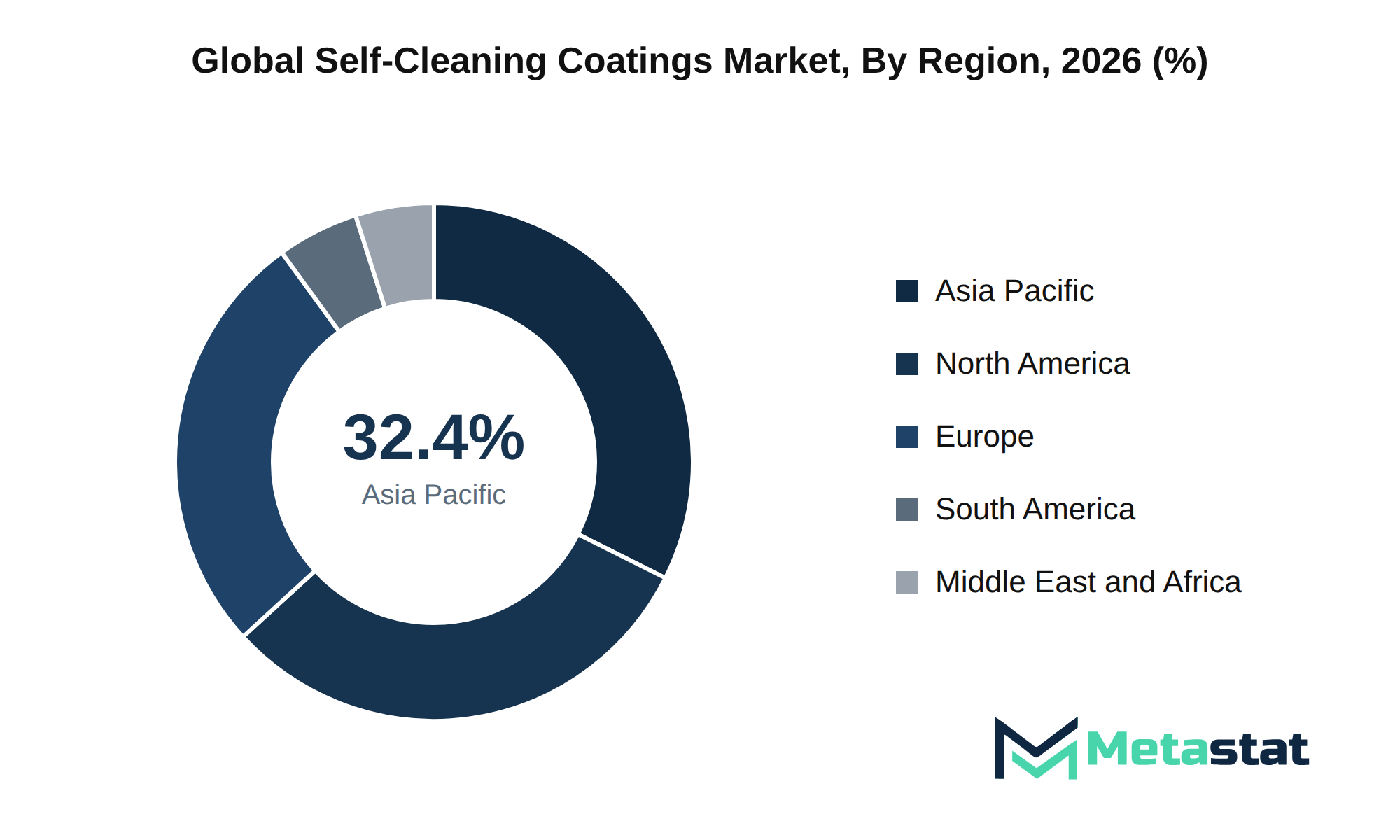
The Self-Cleaning Coatings market displays a diverse competitive landscape, characterized by strategic alliances and joint ventures among key players. Companies including 3M Company, DuPont de Nemours, Inc., and BASF SE leverage extensive research and development capabilities to introduce innovative products that meet emerging customer needs.
Product differentiation is significant in the market, with manufacturers focusing on specialized formulations tailored for various substrates and end-use industries. For instance, firms like Akzo Nobel N.V. and Mitsubishi Chemical Corporation emphasize proprietary technologies to enhance product performance and establish a competitive edge. The presence of multiple chemistry types, including acrylic and methacrylic, alongside silicone and siloxane formulations, contributes to a broad spectrum of applications, driving growth across sectors including building and construction, automotive, and renewable energy.
Barriers to entry in the Self-Cleaning Coatings market include established brand equity and the necessity for significant investment in research and development. New entrants face challenges in gaining market share due to strong customer loyalty exhibited toward established players like The Sherwin-Williams Company and PPG Industries, Inc. Startups demonstrate unique value propositions and advanced technological capabilities to disrupt traditional market dynamics.
Looking ahead, the competitive outlook for the Self-Cleaning Coatings market indicates ongoing strategic consolidation among industry leaders, aiming to enhance supply chain dominance and procurement leverage. Companies like Hempel A/S and Kansai Paint Co., Ltd. continue to explore opportunities for growth through mergers and acquisitions, ensuring positions within the evolving market.
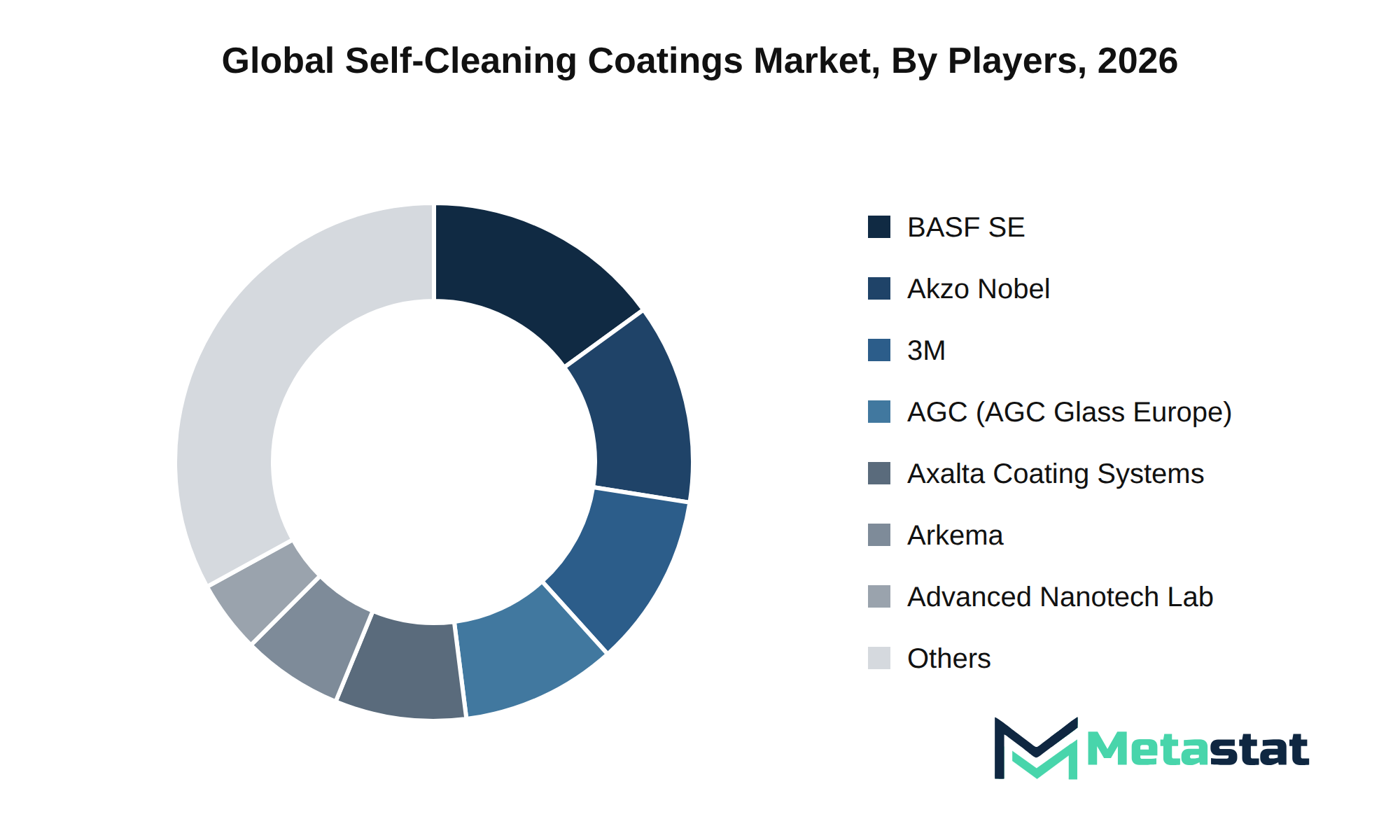
Market size is forecast to rise from USD 2,868.1 million in 2025 to over USD 6,707.5 million by 2033. This substantial increase reflects an 11.2% CAGR during the period, driven by the growing adoption of self-cleaning technologies across various industries.
In the base case scenario, the self-cleaning coatings market experiences steady growth, attributed to increased investments in research and development and advancements in technology integration. New applications within sectors including building and construction, automotive, and renewable energy fuel demand for innovative solutions.
The bull case scenario envisions accelerated growth due to rapid technological advancements and heightened regulatory support for environmentally friendly materials. This scenario anticipates a surge in adoption rates, resulting in significant market penetration and increased revenue for key participants within the industry.
The bear case centers on economic downturns, which could lead to reduced capital expenditures and delayed project timelines. Such conditions hamper growth in the self-cleaning coatings market, with businesses prioritizing essential spending over innovative investments.
The self-cleaning coatings market stands poised for significant evolution, influenced by macroeconomic factors, downstream demand shifts, and technological advancements. Strategic capital allocation, along with proactive compliance with regulatory developments, enhances competitiveness and drives future growth opportunities.
The report strategically identifies and profiles the key market players and analyses their core competencies in each sub-segment of the Self-Cleaning Coatings market.
Report Attributes | Details |
Study Period | 2021-2033 |
Base Year | 2025 |
Estimated Year | 2026 |
Forecast Period | 2026-2033 |
Historical Period | 2021-2025 |
Growth Rate | CAGR 11.2% from 2026 to 2033 |
Revenue Unit | USD million |
Segmentation | By Type, Chemistry, Substrate, End-Use Industry, and Region |
By Region | North America (By Type, Chemistry, Substrate, End-Use Industry, and Country)
|
Europe (By Type, Chemistry, Substrate, End-Use Industry, and Country)
| |
Asia Pacific (By Type, Chemistry, Substrate, End-Use Industry, and Country)
| |
South America (By Type, Chemistry, Substrate, End-Use Industry, and Country)
| |
Middle East and Africa (By Type, Chemistry, Substrate, End-Use Industry, and Country)
|
Find answers to common questions about this report
The Self-Cleaning Coatings market size was valued at USD 2,868.1 million in 2025, according to the Metastat Insights study.
The Self-Cleaning Coatings market is projected to grow at a CAGR of 11.2% during the forecast period from 2026 to 2033.
The North America Self-Cleaning Coatings market size is estimated to reach USD 1,967.3 million by 2033.
The Superhydrophobic / Lotus-Effect Self-Cleaning segment leads the Self-Cleaning Coatings market, with a projected value of USD 1,811 million by 2033. This segment demonstrates the highest growth potential compared to others.
Growing emphasis on emission limits and enhanced regulatory frameworks drive the adoption of self-cleaning coatings. Industries including building and construction prioritize sustainable practices, aligning with consumer preferences for eco-friendly solutions. This trend encourages investment in innovative coatings that improve operational efficiency while minimizing environmental impact.
North America holds the dominant share of the Self-Cleaning Coatings market, accounting for 30.8% of the total market. This region is projected to reach USD 1,967.3 million by 2033.
High capital investment requirements significantly restrain growth in the Self-Cleaning Coatings market. Initial costs for developing and applying advanced coatings deter potential adopters, particularly smaller businesses. rising raw material prices and labor costs further complicate the financial landscape, impacting pricing strategies and market penetration.
Growing emphasis on emission limits and enhanced regulatory frameworks drive the adoption of self-cleaning coatings. Increased public awareness of environmental sustainability and the alignment of these coatings with consumer preferences in sectors like building and construction further support their market penetration.
The Self-Cleaning Coatings market is estimated to reach a valuation of USD 6,707.5 million by 2033.
Key players in the Self-Cleaning Coatings market include 3M Company, Akzo Nobel N.V., BASF SE, DuPont de Nemours, Inc., Mitsubishi Chemical Corporation, and Nippon Paint Holdings Co., Ltd.
The analysts below cover Chemicals and Materials research at Metastat Insights.
LEAD ANALYST
Utkarsh Khirodkar is a Lead Market Research Analyst at MetaStat Insight, specializing in market intelligence, technology sector assessments, and competitive strategy.

INDUSTRY CONSULTANT - CHEMICALS & ADVANCED MATERIALS
Chemicals and Materials · Machinery & Equipment · Packaging
Amit Gadhekar Consultant for Chemicals and Materials at MetaStat Insight, directing sector-specific intelligence, research, and strategic consulting across global chemical and processing markets.
In the biological seed treatment space, registration timelines vary drastically between the European Union, Brazil, and North America. The MetaStat Insight research handled these cross-border regulatory barriers with genuine nuance, mapping commercialization pathways alongside historical field adoption rates. The segmentation between microbial strains and biochemical active ingredients was particularly well structured.
Our team was tracking whether regional recycling infrastructure could realistically absorb the growing volume of lithium iron phosphate batteries over the next decade. The report did a solid job separating announced hydrometallurgical plant capacity from active, permitted operational throughput. That distinction made the feedstock availability projections and regional recovery rate models far more credible than standard commercial overviews.
Tracking capacity expansion in single-use bioprocessing requires dependable data on raw material availability and cleanroom-grade polymer supply chains. The competitive landscape chapter gave a grounded evaluation of secondary component suppliers across North America and Asia-Pacific rather than simply reprinting press releases. Having that level of supplier benchmarking helped clarify dual-sourcing considerations for our clinical pipeline planning.
Explore related market intelligence reports worth reading alongside this one.