
LEAD ANALYST
Utkarsh Khirodkar is a Lead Market Research Analyst at MetaStat Insight, specializing in market intelligence, technology sector assessments, and competitive strategy.

Global Smart Parking Systems Market Size, Share, By Hardware Type (Pucks, Cameras & LPRs, Smart Meters, Signage and Parking Gates), By Software (Parking Guidance System, Analytics Solutions, Service Outlook, Consulting Service and Mobile App Parking Service), By Parking Type (On-street and Off-street), By Application (Commercial, Government and Transport / Transit), Industry Analysis, Growth, Trends, and Forecast, 2026-2033
Report ID
MSI-5074
Published
August, 2026
Pages
298 Pages
Format
Historical
Base year
Forecast
Forecast period
Report Details
Choose Your License
Global Smart Parking Systems Market
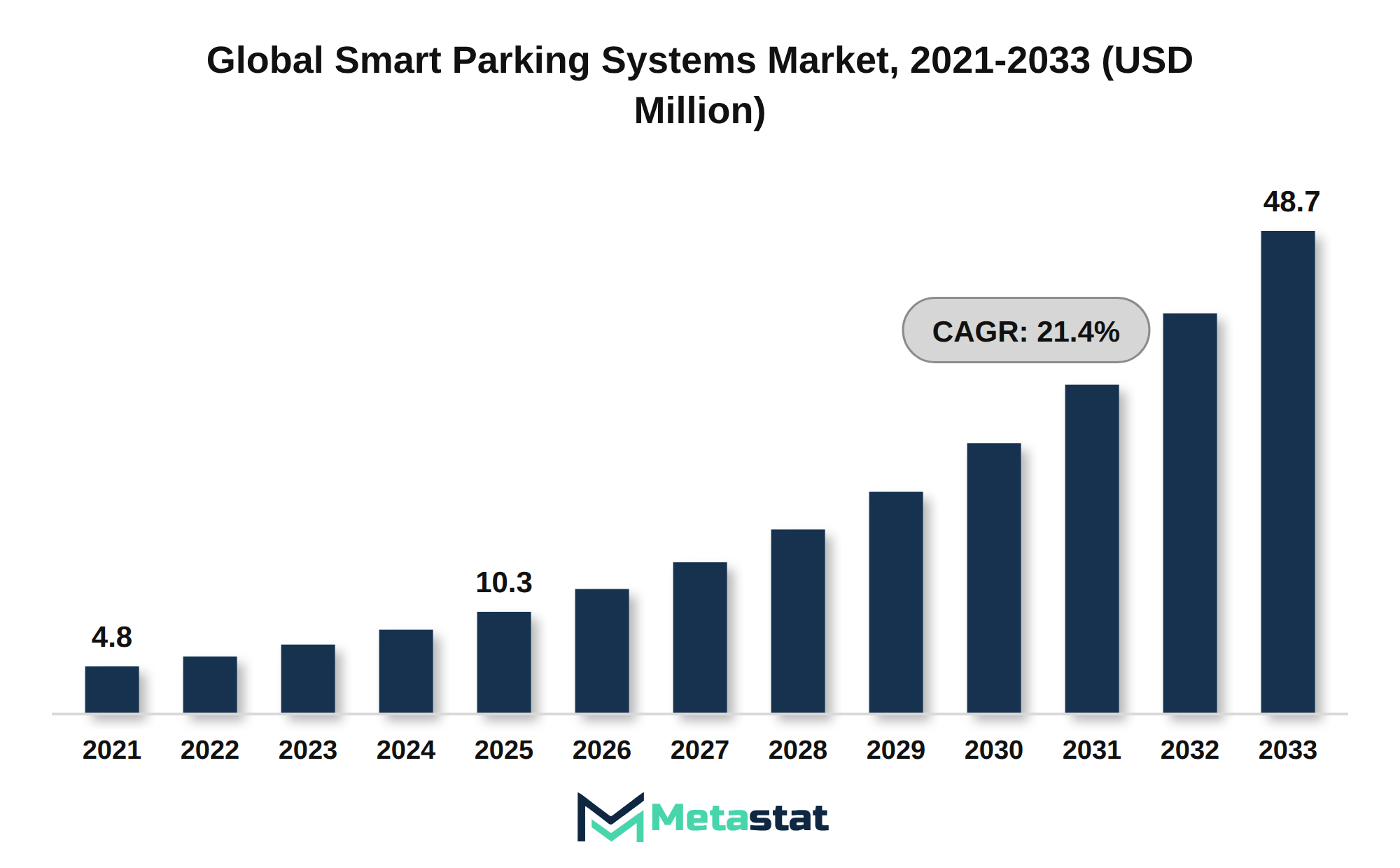
The global Smart Parking Systems market was valued at USD 10.3 million in 2025 and is projected to reach USD 48.7 million by 2033, growing at a CAGR of 21.4% over the forecast period.
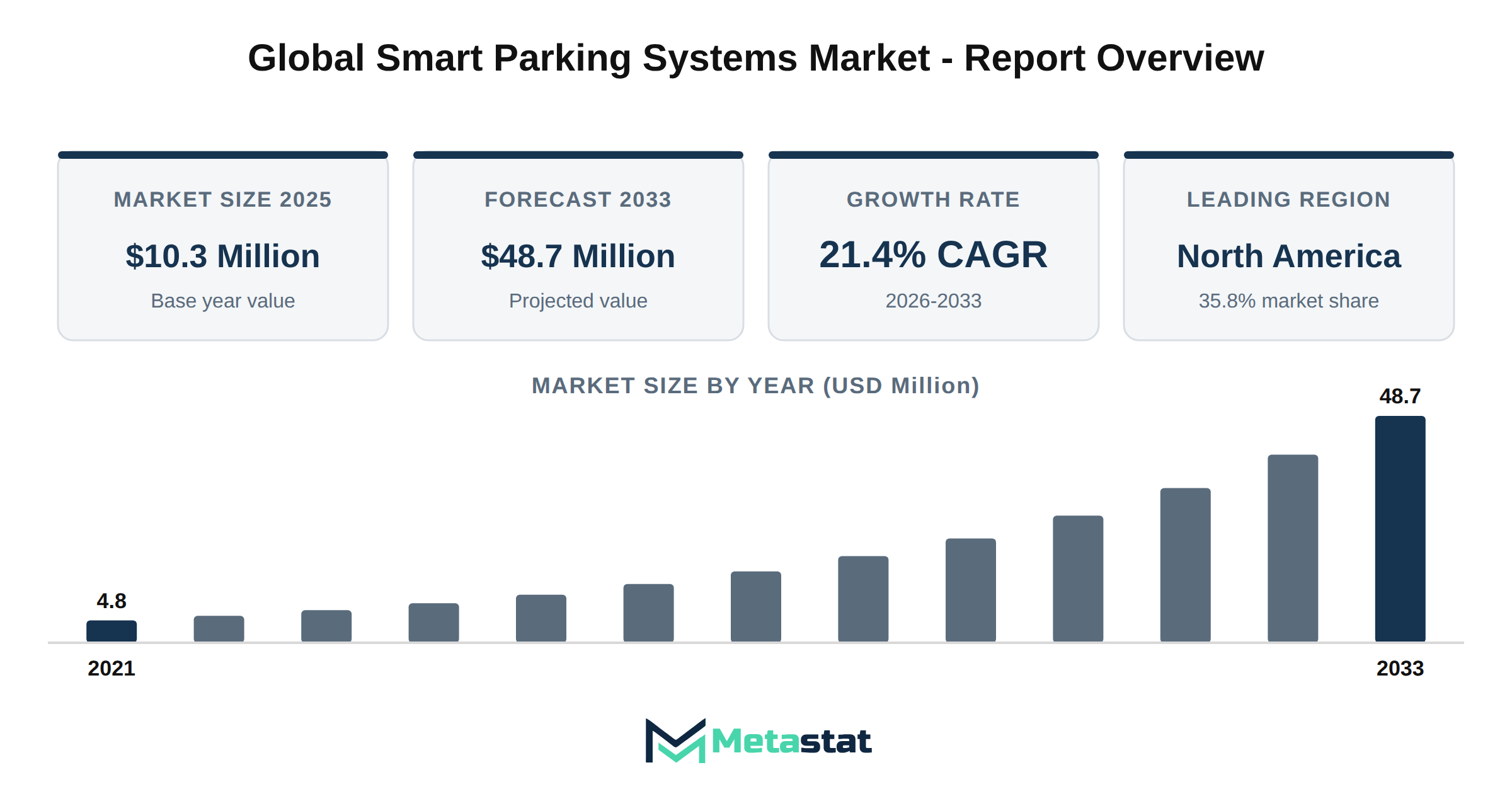
The Smart Parking Systems market, valued at USD 10.3 million in 2025, is projected to reach USD 48.7 million by 2033, reflecting a compound annual growth rate (CAGR) of 21.4%. Historical data shows market growth from USD 4.8 million in 2021 to USD 8.5 million in 2024, indicating a steady increase in adoption and investment in smart parking technologies.
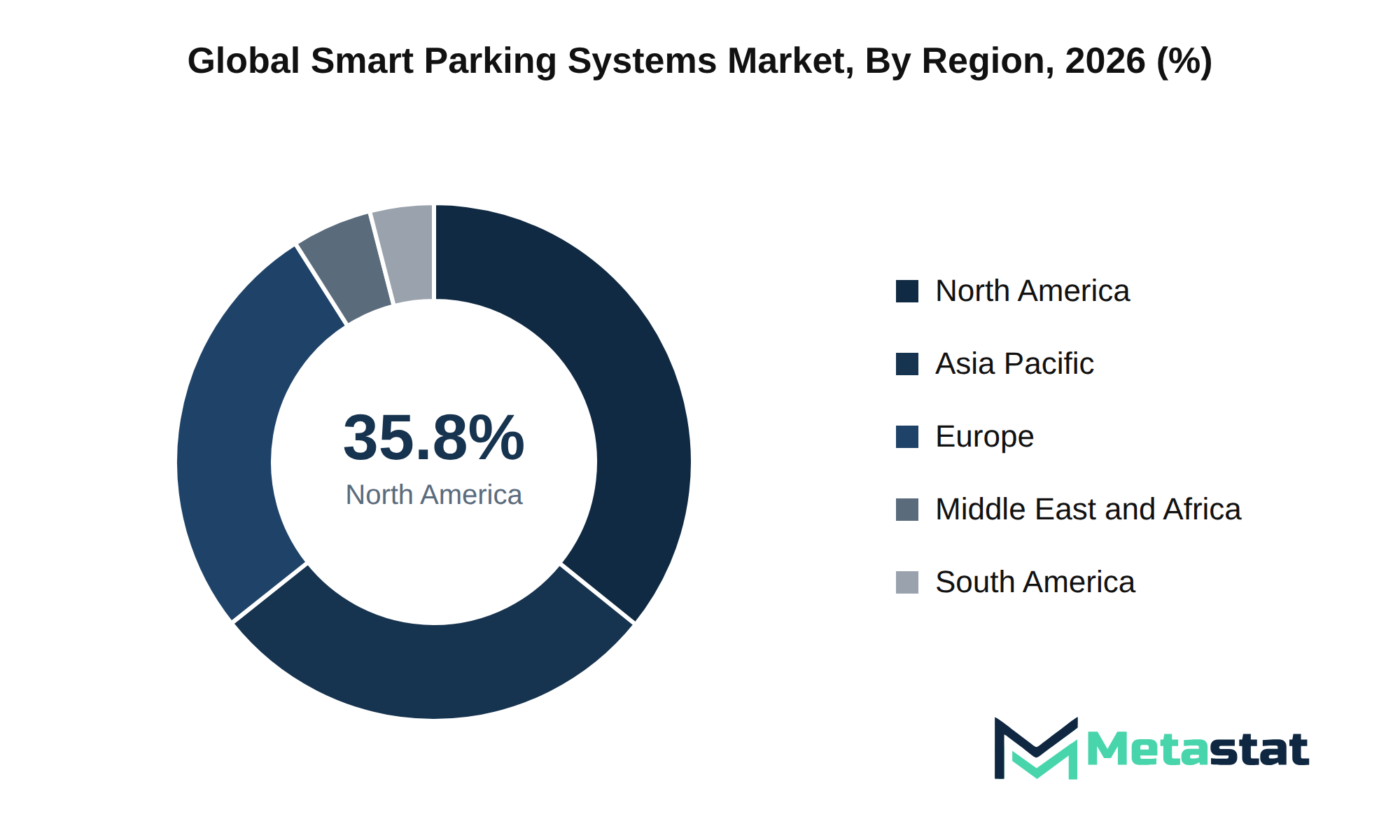
North America leads the market with a share of 35.8%, followed by Asia Pacific at 28.5% and Europe at 26.7%. The North American segment is expected to generate USD 16.3 million by 2033, maintaining a CAGR of 21.4%. This regional dominance stems from advanced infrastructure, high consumer demand for smart solutions, and significant investments in smart city projects.
In terms of product segments, hardware types including Cameras & LPRs are anticipated to grow significantly, reaching USD 17 million by 2033, with a CAGR of 23%. Wireless sensors, categorized because Pucks, will expand from USD 2.9 million in 2026 to USD 9.7 million in 2033, indicating a strong shift towards advanced monitoring technologies. Software solutions like Analytics Solutions are projected to reach USD 10.7 million by 2033, with a CAGR of 23.4%, reflecting the increasing importance of data-driven decision-making in parking management.
The Smart Parking Systems market faces a shifting environment driven by technological advancements and evolving consumer preferences. Regulatory compliance influences market strategies, attributed to companies aligning their offerings with standards that promote safety and efficiency. Compliance with these regulations builds consumer trust and drives adoption across various segments.
Next-generation innovations in the Smart Parking Systems market focus on enhancing user experience and operational efficiency. Advanced analytics and artificial intelligence integration enable real-time data processing, allowing better decision-making for parking management. These innovations attract investments and spur growth, particularly in urban environments where congestion and space optimization are critical challenges.
Sustainability initiatives impact the market, with a growing emphasis on decarbonization and circular economy dynamics. Companies increasingly adopt eco-friendly practices in their operations and product designs, reflecting consumer demand for sustainable solutions. This transition creates opportunities for businesses to differentiate themselves and enhance brand loyalty through responsible practices.
The supply chain structure in the Smart Parking Systems market faces challenges related to sourcing and logistics architecture. Fluctuations in material availability and transportation costs influence pricing strategies and operational efficiencies. Companies that streamline their supply chains and invest in strategic partnerships strengthen their competitive positions.
The market's fragmentation presents both challenges and opportunities. Numerous players, including established firms and startups, contribute to a competitive environment that encourages innovation. Mergers and acquisitions enable companies to expand their portfolios and enter new markets, further shaping the competitive dynamics.
Infrastructure investments will define the future strategic outlook of the Smart Parking Systems market. Governments and private entities increasingly allocate capital towards developing smart city initiatives, creating a robust foundation for market growth. This focus on infrastructure enhances the customer journey, improving access to parking facilities and overall user satisfaction.
Rapid urbanization contributes significantly to the growth of the Smart Parking Systems market. In densely populated areas, the demand for efficient parking solutions intensifies due to limited parking spaces and increasing vehicle ownership. Urban centers experience heightened traffic congestion, prompting city planners and municipalities to seek innovative parking management solutions that optimize space use. Consequently, smart parking systems, which employ advanced technologies including sensors and analytics, gain traction in these regions to improve user experience and streamline parking operations, reinforcing long-term demand.
The shift in consumer behavior toward digital solutions fuels the adoption of smart parking technologies. Consumers increasingly prefer convenient parking experiences, leading to a demand for mobile applications that offer real-time information about available spaces. This trend encourages investments in smart parking systems that integrate digital platforms, allowing users to reserve and pay for parking remotely. The integration of such features enhances user satisfaction and maximizes revenue potential for parking operators, expanding the addressable base.
The growing focus on sustainability in urban environments influences the expansion of smart parking systems. Cities aim to reduce carbon footprints and enhance resource efficiency through sustainable practices. Smart parking solutions facilitate this goal by promoting better traffic flow and minimizing the time vehicles spend searching for parking. This reduction in idling time translates to lower emissions, aligning with environmental objectives and further driving the market's growth.
The Smart Parking Systems market experiences growth driven by a heightened emphasis on operational productivity and cost-efficiency initiatives. Businesses increasingly prioritize labor optimization and process streamlining, aiming to reduce overhead and margin pressure. This focus facilitates the adoption of smart parking technologies, which enhance efficiency in resource allocation and management.
Digital transformation plays a critical role in this context, with organizations integrating automation and artificial intelligence into their parking systems. By digitizing legacy processes, companies improve service delivery while reducing operational costs. The adoption of innovative software solutions and advanced analytics supports these efforts, enabling real-time data insights that optimize parking operations.
In parallel, macro-economic factors, including GDP growth and increased capital investment environments, contribute to expanding budgets for smart parking solutions. Public and private spending power influences the market, creating an environment conducive to investments in technological advancements. This economic backdrop, combined with evolving consumer behaviors and urbanization trends, significantly impacts the Smart Parking Systems market, pushing stakeholders toward integrating advanced solutions that enhance user experience and streamline operations.
The Smart Parking Systems market experiences significant constraints due to regulatory pressures and compliance hurdles. These regulations impose stringent requirements on product standards, data privacy, and operational protocols. Companies face challenges in adapting their technologies to meet these evolving legal frameworks, increasing operational complexity and costs. The additional burden of compliance diverts resources that support innovation and market expansion.
Macroeconomic headwinds, including inflationary pressures and supply chain disruptions, hinder growth in the market. Rising costs of materials and components, coupled with geopolitical instability, create uncertainty that impacts investment and procurement decisions. Companies struggle to manage capital expenditures, limiting the deployment of new systems and technologies.
Infrastructure gaps and connectivity deficits present barriers to widespread adoption of smart parking solutions. Many regions lack the necessary digital infrastructure to support advanced parking technologies, which restricts market growth opportunities. Deployment bottlenecks arise from the need for skilled labor and talent in the sector, impacting project execution timelines.
Data security vulnerabilities and privacy concerns create additional hurdles for market participants. Customers increasingly demand transparency regarding data handling practices, and failure to address these concerns leads to reputational damage and decreased adoption rates. The Smart Parking Systems market faces ongoing challenges related to market fragmentation and cultural barriers that inhibit regional adoption efforts.
Slowing downstream demand in certain areas and the maturation of the industry cycle contribute to market saturation. Companies within the market confront heightened competition, which pressures pricing strategies and profit margins. This environment necessitates a focus on differentiation and value creation to maintain market position.
The Smart Parking Systems market encounters significant challenges stemming from geopolitical fragmentation and trade deficits, resulting in tariff friction. These conditions disrupt the supply chain, increasing costs for manufacturers and creating uncertainty for potential investors. This environment complicates market entry for new players, hindering overall growth potential.
Technological disruptions exacerbate these challenges, particularly in research and development integrations. Companies in the market face difficulties in aligning multiple technologies, complicating the development of advanced smart parking solutions. This complexity leads to delays in product launches, reducing competitive advantage.
Interoperability friction emerges from the integration of various systems, demanding a higher level of collaboration among technology providers. Without standardized protocols, different smart parking systems struggle to communicate effectively, resulting in inefficiencies that deter customers from adopting these solutions.
The market faces rising input cost structures due to component volatility. Fluctuations in raw material prices directly impact production expenses, leading to pricing compression and margin pressures for suppliers. Workforce skill gaps hinder the deployment of sophisticated solutions, contributing to implementation bottlenecks.
Environmental pressures, including decarbonization mandates and sustainability demands, force companies to reconsider their operational strategies. Balancing compliance with these requirements while ensuring profitability places further strain on market players. Ongoing pressures challenge existing operations and inhibit innovation efforts in developing greener technologies.
Intellectual property protection deficits and cybersecurity risks present further challenges. The market requires robust measures to safeguard proprietary technologies and customer data from breaches. Inadequate protections deter investment and stifle the growth of new entrants, ultimately limiting the expansion of the Smart Parking Systems market.
The Smart Parking Systems market experiences substantial opportunities driven by emerging regional demands. North America leads the market, accounting for 35.8 percent of the total market share. The increasing need for efficient urban parking solutions, coupled with infrastructure modernization initiatives, supports significant investments in smart parking technologies, driving growth across the region.
Technological disruptions play an important role in shaping the market landscape. Innovations including advanced sensors, camera systems, and mobile applications enhance the functionality and user experience of smart parking solutions. These developments align with the digital transformation trends across various sectors, prompting businesses to adopt integrated parking solutions that streamline operations and improve customer satisfaction.
Geographical expansion remains a critical factor influencing market dynamics. Rapid urbanization in Asia Pacific, which holds a growing share of the market, creates demand for innovative parking solutions. Countries including China, Japan, and India experience increased investments in smart city initiatives and infrastructure upgrades, driving the adoption of smart parking systems.
Sustainability imperatives further contribute to market opportunities. The focus on eco-friendly parking solutions aligns with global environmental goals, encouraging the development of green technologies within the market. This trend enhances parking systems that reduce carbon footprints and promote efficient resource utilization.
Strategic consolidation and cross-industry collaborations emerge, driven by additional pathways for growth. Partnerships between technology providers and municipalities facilitate the integration of smart parking solutions within existing urban infrastructures. These collaborations create synergies that enhance the market's value proposition while diversifying product offerings.
The Smart Parking Systems market stands at a significant crossroads of opportunity. Emerging regional demands, technological advancements, and sustainability initiatives collectively shape the future landscape, driving growth and innovation within the sector.
The Global Smart Parking Systems market is segmented based on Hardware Type, Software, Parking Type, and Application.
Pucks (Wireless Sensors) segment is valued at USD 2.9 million in 2026 and is projected to reach USD 9.7 million by 2033, at a CAGR of 18.8% during the forecast period. Increasing demand for real-time parking data drives adoption among municipalities and businesses seeking to optimize urban mobility. Integration of wireless sensors with smart parking management systems enhances operational efficiency by providing location-specific data, leading to better utilization of available parking spaces. The growing emphasis on reducing congestion and enhancing the user experience supports segment expansion. Technological advancements, including miniaturization and improved sensor accuracy, contribute to product evolution, making wireless sensors more attractive to end users.
Market dynamics show a shift toward next-generation upgrades, where traditional parking solutions evolve into integrated platforms that leverage wireless technology. Regulatory compliance standards urging cities to adopt smarter infrastructure solutions support this trend. Pricing volatility tied to raw material costs impacts manufacturers, compelling them to optimize supply chain processes and explore cost-effective alternatives. Strategic opportunity windows arise from ongoing investment in smart city initiatives, creating a favorable environment for the Pucks (Wireless Sensors) segment within the broader Smart Parking Systems market. Capital investment outlook remains positive, with stakeholders prioritizing innovations that enhance functionality and reliability of wireless sensors.
Technological advancements fuel the demand for Cameras & LPRs in the Smart Parking Systems market. These devices enhance vehicle identification and monitoring capabilities, significantly improving traffic management. The rising need for efficient parking solutions in urban areas drives adoption among municipalities and private developers, who recognize the importance of real-time data in optimizing parking operations. Increasing urban congestion intensifies the pressure on cities to implement smart solutions, propelling the market forward.
The segment is estimated to reach USD 17 million by 2033, at a CAGR of 23% during the forecast period. Enhanced functionalities including license plate recognition and integration with mobile applications further augment the appeal of Cameras & LPRs. Regulatory compliance related to surveillance and data collection accelerates investment in these advanced systems. Technological maturation continues, enabling operators to experience reduced costs and enhanced operational efficiencies, promoting widespread adoption across various applications in the market.
Significant growth in the Smart Meters segment comes from increasing demand for efficient parking management solutions. Technological advancements enhance the functionality and accuracy of smart meters, enabling better monitoring and control of parking spaces. Governments and municipalities actively invest in smart parking solutions to optimize city infrastructure and improve urban mobility. Smart Meters contribute to enhanced user experiences, generating better customer satisfaction and loyalty, particularly in commercial applications.
Market expansion is supported by rising urban populations and the increasing number of vehicles on the road, which create demand for effective parking solutions. The Smart Meters segment is anticipated to reach USD 7.8 million by 2033. Regulatory compliance standards, emphasizing environmental sustainability and efficiency, drive the adoption of smart meters. Customer preferences prioritize convenience and real-time information, prompting further innovation in this segment.
Pricing volatility impacts the segment, influenced by shifts in raw material costs and technological advancements. Strategic opportunities arise from partnerships with technology providers and public-private collaborations. Investment in next-generation upgrades helps maintain competitiveness, ensuring that products remain relevant and effective in meeting evolving market needs.
Growth in the signage segment aligns with overall technological advancements within the Smart Parking Systems market. Enhanced urban planning and the need for efficient space utilization drive demand for advanced signage solutions. These solutions facilitate effective communication with drivers, improving parking efficiency and reducing congestion. An increasing focus on smart city initiatives encourages the adoption of intelligent signage that integrates with broader transportation management systems. The signage segment experiences significant growth during the forecast period, reflecting a shift towards enhanced user experience in urban environments.
Integration of real-time data into signage systems provides critical information regarding parking availability, guiding drivers to open spaces and reducing idle time. This functionality supports commercial applications, particularly in areas with high traffic volumes, where efficient parking management becomes essential. Demand for signage extends to government applications, where regulatory compliance and efficient resource management play significant roles. The dynamic nature of urban transportation continues to create opportunities for innovative signage solutions within the Smart Parking Systems market.
In the Smart Parking Systems market, Parking Gates serve because a crucial component for enhancing vehicle access control and streamlining the parking experience. The demand for these systems arises from the need for increased security and efficiency in both commercial and residential settings. Growing urban populations and congested city environments increase the necessity for effective parking management solutions, directly impacting the adoption of Parking Gates.
Technological maturation in this segment has led to the introduction of advanced features including automated entry systems and integration with mobile applications. These innovations improve the user experience by simplifying the parking process and enhancing overall management efficiency. The evolution of Parking Gates aligns with the broader trends within the Smart Parking Systems market, where technology-driven solutions are prioritized.
Downstream applications demonstrate a diverse range of uses, spanning from commercial facilities to municipal parking environments. The regulatory compliance landscape influences the adoption of Parking Gates, because municipalities often require specific standards for safety and accessibility. Shifts in consumer preferences towards more convenient and secure parking experiences drive demand.
Pricing volatility in raw materials and components influences cost structures within this sub-segment. Suppliers face margin pressures stemming from increasing material costs, which impact the pricing strategies adopted by manufacturers. Strategic opportunities arise from the need for enhanced supply chain resilience, with companies focusing on securing reliable sources for components to mitigate risks.
The Smart Parking Systems market continues to expand. Parking Gates represent a strategic opportunity for manufacturers and suppliers. Investment in next-generation upgrades and innovative solutions will play a significant role in addressing evolving market demands, ensuring sustained growth and competitiveness within the segment.
Valued at USD 2.9 million in 2026, the Parking Guidance System segment is projected to reach USD 10.2 million by 2033, achieving a CAGR of 19.5% during the forecast period. Increasing urbanization and the demand for efficient space utilization drive growth in this segment, driven by cities striving to reduce congestion and enhance mobility. Investments in smart city initiatives and advancements in IoT technology further support the adoption of parking guidance systems, enabling real-time information on available parking spaces.
Regulatory compliance standards related to urban planning and environmental sustainability create additional demand for sophisticated parking solutions. Businesses and government entities prioritize systems that enhance operational efficiency and reduce carbon footprints, aligning with broader environmental goals. While competition intensifies, product evolution focuses on integrating artificial intelligence and machine learning capabilities, offering enhanced analytics and user experiences.
Downstream applications in commercial, government, and transport sectors contribute to the segment's expansion. Increased focus on consumer convenience and the rise of mobile applications for parking management strengthen market dynamics. Cost structures evolve owing to technology maturation, resulting in improved affordability for end-users. Pricing volatility becomes a consideration for suppliers. This segment's resilience against disruptive alternatives positions it favorably within the broader Smart Parking Systems market.
Increased demand for data-driven decision-making has propelled the growth of the Analytics Solutions segment within the Smart Parking Systems market. Organizations prioritize efficiency, leading to heightened interest in analytics solutions that optimize parking space utilization and streamline operations. The segment is estimated to reach USD 10.7 million by 2033, at a CAGR of 23.4% during the forecast period.
The integration of advanced analytics capabilities into parking systems enhances user experience and operational effectiveness. Real-time data analysis facilitates better management of parking resources, supporting commercial, governmental, and transport applications alike. Companies operating in the market respond by investing in sophisticated analytics tools that enable predictive insights, trend analysis, and improved customer service.
Increased urbanization and the proliferation of smart city initiatives further drive the adoption of Analytics Solutions, driven by municipalities and private entities seeking to incorporate intelligent technologies into their infrastructure. Regulatory compliance regarding urban mobility and environmental sustainability enhances the demand for solutions that provide clear insights into traffic patterns and parking behaviors. The segment's growth aligns with broader trends emphasizing data transparency and smart technology integration across various sectors.
Technological maturation shapes the Analytics Solutions segment. Continuous advancements in cloud computing, machine learning, and Internet of Things (IoT) technologies enhance the capabilities of analytics platforms. This evolution allows for more robust data collection, processing, and visualization, ultimately translating into improved decision-making frameworks for stakeholders in the Smart Parking Systems market.
Service Outlook in the Smart Parking Systems market indicates a revenue trajectory that aligns with the increasing demand for efficiency and operational excellence in parking management. This segment is projected to reach USD 8.8 million by 2033, reflecting the growing emphasis on data-driven decision-making and enhanced user experiences. The adoption of advanced analytics solutions enhances operational efficiency, enabling parking operators to optimize resource allocation and improve service delivery.
Key drivers for this segment include the need for improved customer engagement and the integration of technological advancements, including real-time data analytics and cloud-based solutions. The evolution of user preferences toward mobile applications and smart interfaces significantly shapes the demand, influencing end-use dynamics in commercial, government, and transport sectors. Regulatory compliance and certification requirements further increase the need for sophisticated service offerings within the market.
Investment in next-generation upgrades and service innovations presents significant strategic opportunity windows for stakeholders. Emphasis on sustainability and reducing operational costs influences service development, prompting operators to seek innovative solutions that provide long-term value. Overall, the Service Outlook segment is essential in the broader framework of the Smart Parking Systems market, driving growth and creating competitive advantages in an increasingly complex parking environment.
Investment in consulting services within the Smart Parking Systems market accelerates due to urban areas increasingly adopting advanced parking solutions. Organizations recognize the value of expert guidance in optimizing parking infrastructure and operations, driving demand for consulting services. The segment is projected to grow at a CAGR of 20.2% during the forecast period. Various stakeholders, including municipalities and private enterprises, prioritize efficiency and cost-effectiveness in parking management, contributing to heightened demand for specialized advisory services.
Technological advancements facilitate the evolution of consulting services, enabling firms to offer comprehensive solutions that integrate hardware and software elements. Strategic partnerships between consulting firms and technology providers enhance service offerings, allowing clients to access innovative tools and methodologies. Increased complexity in parking systems necessitates expert insights, pushing market participants to invest in consulting services to navigate challenges effectively.
Regulatory compliance shapes the consulting service landscape within the market. Stricter regulations surrounding urban development and environmental concerns drive the need for consulting expertise. Firms leveraging consulting services ensure adherence to compliance standards while optimizing operational efficiencies. Evolving consumer preferences toward sustainable and intelligent transportation solutions create further opportunities for consulting professionals, enabling them to guide clients in aligning with market trends.
Demand for engineering services within the Smart Parking Systems market aligns with the increasing complexity of smart parking solutions. Enhanced urbanization and the need for efficient space utilization drive the adoption of such services, enabling optimal design and implementation of smart systems. Companies seek specialized expertise to navigate the technological intricacies involved in integrating hardware and software components, ensuring effective operation and user satisfaction.
Investment in engineering services reflects advancements in related technologies, including the Internet of Things (IoT) and artificial intelligence (AI). These technologies enhance the capabilities of smart parking solutions, enabling real-time analytics and improved user experiences. Continuous evolution in product offerings requires engineering services to adapt and innovate, allowing businesses to maintain competitiveness in the market.
Government regulations and policies promoting sustainable urban mobility contribute to expansion in engineering services. Compliance with environmental standards and urban planning directives compels stakeholders to integrate eco-friendly and efficient solutions. This regulatory environment drives demand for engineering expertise that aligns with sustainable practices, reinforcing the significance of engineering services in the market.
Technological maturation within the Smart Parking Systems market accelerates the need for specialized engineering services. While the industry evolves, businesses face pressure to implement next-generation upgrades, enhancing system capabilities and reducing operational inefficiencies. Engineering services become vital in assisting companies with the transition to advanced smart parking technologies, supporting immediate needs and long-term objectives.
Adoption of mobile app parking services gains momentum across urban areas, driven by growing demand for convenient parking solutions. Users prioritize apps that provide real-time information regarding parking availability, enhancing the overall parking experience. The integration of mobile payment systems within these applications allows users to complete transactions seamlessly, reducing time spent searching for parking and increasing overall customer satisfaction.
Technological maturation fuels the enhancement of mobile app functionalities, enabling features including navigation assistance, booking capabilities, and user-friendly interfaces. Continuous updates and upgrades ensure that these applications remain competitive and responsive to user needs. Consumers become more accustomed to digital solutions in various aspects of life, and expectations for mobile app performance and reliability rise, further driving demand.
End-use dynamics play a vital role, particularly in commercial applications where businesses seek to improve customer experience by offering parking solutions directly through their platforms. Innovations in mobile app design, including personalized offerings and enhanced user engagement strategies, strengthen user loyalty and encourage regular use. Regulatory compliance standards regarding data privacy and security heighten the importance of robust app development, aligning with user expectations for safe and secure transactions.
Investment opportunities in mobile app parking services present strategic windows for companies looking to enhance their market presence. Partnerships with municipalities to integrate municipal parking systems into mobile apps provide a unique value proposition, allowing users to access a wider range of parking options. The evolving nature of mobile app technology continues to influence the Smart Parking Systems market and shapes its future development and expansion.
Valued at USD 3.4 million in 2026, the On-street segment is projected to reach USD 11.7 million by 2033, at a CAGR of 19.3% during the forecast period. Factors driving demand include increasing urbanization, which intensifies the need for efficient parking solutions in metropolitan areas. Governments and municipalities actively pursue smart parking technologies to reduce congestion and enhance urban mobility. Enhanced parking management systems enable users to find available parking spaces easily, driving higher adoption rates.
Technological maturation facilitates the development of advanced parking sensors and wireless solutions that improve the functionality of on-street parking. Next-gen upgrades, including mobile applications and real-time data analytics, expand service offerings and enhance user experience. The growing preference for sustainable transportation options supports the adoption of integrated parking solutions within public transport networks, transforming urban landscapes.
Regulatory compliance standards and policies mandate the implementation of smart parking systems, further propelling market growth. The On-street segment benefits from favorable government initiatives aimed at promoting smart cities and reducing environmental impact. Consumer demand for convenience and efficiency continues to influence purchasing decisions in this segment, with parking solutions evolving to meet shifting preferences.
Cost structures in the market reflect an ongoing shift towards automation and digital solutions. Pricing volatility remains manageable due to the scalability of technologies and competitive market dynamics. Overall, the On-street segment signifies a critical area of growth within the Smart Parking Systems market, set to capitalize on urban development trends and increasing demand for innovative parking solutions.
Growing demand for off-street parking solutions drives expansion within the Smart Parking Systems market. This segment responds to increasing urbanization and the need for efficient space utilization in densely populated areas. Off-street parking areas face pressure to optimize their operations through enhanced technology, contributing to a forecasted segment value of USD 16.6 million by 2033, at a CAGR of 22.2% during the forecast period.
Adoption of advanced parking technologies, including automated systems and smart sensors, significantly enhances user experience and operational efficiency. Features including real-time space availability information and payment options simplify the parking process, enabling higher revenues for facility operators. The integration of analytics and reporting tools supports better management decisions and drives further investment in off-street parking solutions.
The evolution of consumer preferences toward convenience and technology-driven solutions influences the off-street segment. Customers prioritize convenient parking experiences while operators focus on upgrading existing facilities and investing in new technologies. Regulatory compliance and infrastructure development support this shift, leading to substantial growth opportunities within the market.
Garage parking represents a vital segment within the Smart Parking Systems market, reflecting a growing emphasis on efficiency and convenience in urban areas. This segment is driven by rising urbanization and an increasing number of vehicles on the road, leading to a heightened demand for parking solutions. Enhanced parking management systems improve operations, optimize space utilization, and enhance user experience, contributing to overall segment growth.
Technological maturation advances garage parking solutions. Innovations in sensor technologies and smart meters facilitate real-time monitoring and dynamic pricing strategies, thereby attracting more users. Developments in mobile applications enhance customer engagement by providing users with easy access to available parking spots and facilitating efficient payment processes.
Regulatory compliance standards regarding smart city initiatives further support the expansion of the garage parking segment. Municipalities prioritize the implementation of smart parking solutions to tackle congestion and parking inefficiencies. Continuous capital investment in infrastructure and technology upgrades enhances the segment's potential for growth.
Forecasts indicate that the garage parking segment is expected to reach USD 12.7 million by 2033. This growth signifies the increasing recognition of smart parking systems because a crucial component in urban mobility strategies. While urban environments evolve, the demand for effective garage parking solutions strengthens, leading to further innovation and investment in this segment.
Lot parking represents a crucial segment within the Smart Parking Systems market. This segment is projected to grow at a CAGR of 21.3% during the forecast period. Increasing urbanization and rising vehicle ownership levels drive demand for lot parking solutions. These factors contribute to the need for efficient parking management systems that enhance utilization rates and reduce congestion in urban areas.
Technological maturation significantly influences the growth of this segment. Advancements in parking management technologies, including real-time data and analytics, facilitate improved operational efficiency and user experience. Next-generation upgrades in hardware and software solutions enhance the appeal of lot parking systems for operators and end-users.
Cost structures and pricing volatility in the market impact the adoption of lot parking solutions. Competitive pricing strategies adopted by suppliers mitigate these challenges, ensuring sustained interest in the segment. Regulatory compliance standards related to urban mobility and environmental sustainability increase the demand for efficient parking solutions.
Capital investment outlook remains positive, with increasing interest from investors in smart city initiatives. Such initiatives create strategic opportunity windows for stakeholders aiming to capitalize on the growing demand for smart parking solutions. The lot parking segment exhibits strong potential for growth, adding significant value to the Smart Parking Systems market through innovative offerings and enhanced user experiences.
Valued at USD 5.8 million in 2026, the Commercial segment is projected to reach USD 23.4 million by 2033, at a CAGR of 22% during the forecast period. Increasing urbanization drives the demand for efficient parking solutions, particularly in commercial environments where high foot traffic necessitates effective space management. Businesses seek to optimize operational efficiency, reduce wait times for customers, and improve overall user experience through advanced parking technologies.
The rise of e-commerce and changes in retail dynamics push the need for innovative parking management solutions that accommodate fluctuating demand patterns. Retailers and commercial property owners recognize the importance of integrating Smart Parking Systems to better serve customers, thereby improving revenue streams. Regulatory compliance regarding urban planning and sustainability initiatives further shapes the landscape, encouraging investments in smart technologies.
Technological maturation in hardware and software solutions supports this segment's growth. Key players in the Smart Parking Systems market focus on developing next-generation upgrades that enhance functionality, including real-time parking availability data and mobile payment integration. These innovations improve user experiences and contribute to the segment's expansion.
Commercial applications experience shifts in consumption patterns, with businesses increasingly adopting integrated systems that provide analytics and reporting capabilities. The growing emphasis on data-driven decision-making enables stakeholders to optimize parking utilization and enhance site management. This strategic focus strengthens the competitive position of players in the market, aligning products with evolving consumer preferences and regulatory standards.
Investment in smart parking technologies continues to rise owing to businesses recognizing the potential for long-term savings and enhanced operational efficiency. The Commercial segment represents a significant opportunity for market players looking to capitalize on growing demand for sophisticated parking management solutions that align with contemporary urban mobility challenges.
Rapid advancements in urban infrastructure and the increasing emphasis on smart city initiatives drive the adoption of smart parking solutions in government applications. Governments prioritize efficient parking management systems to alleviate congestion, enhance urban mobility, and improve overall public satisfaction. These systems streamline operations, reduce operational costs, and generate significant revenue through improved parking enforcement and collection methods.
Government requirements for compliance with regulations and standards surrounding environmental sustainability and technological innovation further increase the demand for smart parking solutions. Investments in government budgets allocated for smart city projects demonstrate a commitment to increasing efficiency and safety within public spaces. Consequently, the Government segment is estimated to reach USD 14.1 million by 2033, at a CAGR of 20.5% during the forecast period.
Technological maturation and integration of advanced analytics and monitoring systems enhance the functionality of smart parking systems within government applications. These upgrades facilitate better utilization of space, data-driven decision-making, and optimized resource allocation. With the market evolving, government entities recognize the necessity of adopting advanced parking technologies to address urbanization challenges. This recognition leads to substantial growth within this segment.
Expansion of the Transport / Transit segment within the Smart Parking Systems market relies on increasing urbanization and the growing need for efficient transportation infrastructure. Enhanced traffic management contributes to demand for smart parking solutions, facilitating smoother transit flows and reducing congestion in urban centers. Adoption of advanced technological features, including real-time data analytics and integrated parking guidance systems, supports this trend by offering transit operators improved visibility and control over available parking resources.
Investment in smart technology enhances operational efficiency, driving significant growth in this segment. Transport authorities prioritize solutions that optimize parking availability and streamline transit operations. Regulatory compliance with sustainability initiatives further fuels demand for smart parking systems, aligning with broader urban planning and environmental goals. By 2033, the Transport / Transit segment is projected to reach USD 11.2 million.
Strategic developments, including partnerships between transit agencies and technology providers, enable innovation and ensure the delivery of tailored solutions. Continuous upgrades and technological maturation create a competitive environment where new entrants leverage disruptive technologies to capture market share. The Smart Parking Systems market reflects a robust trajectory, supported by these dynamics within the Transport / Transit segment.
Based on geography, the Global Smart Parking Systems market is divided into North America, Europe, Asia-Pacific, South America, Middle East, and Africa.
North America exhibits significant potential in the Smart Parking Systems market, projected to expand at a CAGR of 21.4% within the forecast period, reaching a market size (TAM) of USD 16.3 million by the end of 2033. The region commands a share of the global market, accounting for 35.8% in 2025.
The growth of the market in North America derives from several primary demand drivers, including urbanization, the increasing need for efficient traffic management, and advancements in technology. The United States, Canada, and Mexico stand out due to key players contributing to the development of smart parking solutions that enhance user experience and streamline parking operations.
Infrastructure modernization efforts play a crucial role in shaping the market. Cities across North America prioritize the integration of smart technologies into existing infrastructure to improve parking efficiency and reduce congestion. The expansion of the market is further supported by high-value replacement cycles, where outdated systems are replaced with advanced smart parking technologies, offering improved functionality and user engagement.
Emerging market front-runners within the region include urban centers that have adopted smart parking solutions at a rapid pace. Increased investment in localized manufacturing and nearshoring initiatives boosts the availability of products and services, creating a more competitive environment. These trends encourage domestic players to innovate and enhance their offerings, further driving market growth.
Regional competitive landscapes feature a variety of domestic market participants, each focusing on unique technologies and services to capture market share. Companies operating in North America emphasize localized procurement dynamics, aligning their strategies with cultural nuances and regional B2B buying behaviors to effectively meet customer needs.
In Europe, the Smart Parking Systems market exhibits significant growth potential, driven by urbanization and rising vehicle ownership rates. Countries including Germany, France, the UK, Italy, and Spain lead in adoption, fueled by investments in intelligent transportation infrastructure. The emphasis on sustainability and efficient land use particularly impacts urban centers, where space constraints necessitate innovative parking solutions.
Technological advancements play a critical role in shaping market dynamics, with increasing deployment of smart meters, cameras, and parking guidance systems. The market thrives on the growing need for enhanced operational efficiency and real-time data analytics. The expansion of digital payment options and mobile applications transforms consumer behavior, making transactions more convenient and improving user experiences.
Regulatory frameworks across Europe increasingly favor smart parking technologies, promoting compliance with sustainability mandates and urban development policies. Investment in infrastructure modernization enhances connectivity and supports integration of smart parking solutions. Consequently, the market experiences strong momentum, with the region accounting for 26.7% of global market share in 2025.
Localized manufacturing densities and supply chain regionalization contribute to competitive advantages for domestic vendors. Companies seek to streamline operations and respond to evolving market demands, while consolidation trends emerge, allowing for a more agile approach to service delivery. The Smart Parking Systems market in Europe stands poised for continued growth, driven by strategic investments, technological advancements, and evolving consumer preferences.
The Asia-Pacific region holds a significant market share in the Smart Parking Systems market, accounting for 28.5% in 2025. Rapid urbanization and increasing vehicle ownership in countries like China, India, and Japan drive demand for efficient parking solutions. The expansion of smart city initiatives across the region encourages investments in infrastructure modernization, enhancing the appeal of smart parking technologies.
Technological advancements and the integration of IoT in parking systems support the development of innovative solutions, including wireless sensors and parking guidance systems. Growing urban populations in major cities result in congestion. Effective parking management is essential for local governments and commercial entities, influencing operational efficiency and customer satisfaction.
Countries like South Korea and Australia exhibit robust adoption rates of smart parking systems, leveraging advanced technologies to address urban challenges. Emerging markets in Southeast Asia present untapped opportunities, with increasing awareness of smart parking solutions influencing market penetration. Underdeveloped infrastructure in certain areas impedes rapid adoption, necessitating strategic investments to enhance local capabilities and improve service delivery.
Regional competitive dynamics feature both domestic and international players, with key vendors continuously innovating to capture market share. Local compliance mandates and regulatory frameworks shape procurement dynamics, influencing decision-making processes among businesses seeking to enhance their parking infrastructure and improve operational efficiency.
The Smart Parking Systems market in South America demonstrates gradual growth, fueled by increased urbanization and demand for efficient parking solutions. Brazil and Argentina serve because the primary contributors to this regional market. Both countries experience rising vehicle ownership rates, prompting a need for innovative parking management systems.
Infrastructure modernization initiatives across urban areas support the adoption of smart solutions. Investments in urban mobility projects enhance connectivity and promote the integration of smart parking technologies. Local governments prioritize efficient space utilization, aligning with global trends toward sustainable urban development.
Emerging market front-runners exhibit a growing focus on localized manufacturing and supply chain regionalization. This trend enables quicker response times to market demands, while foreign direct investment (FDI) flows into the region support technological advancements. The development of domestic market leaders strengthens competitive landscapes, positioning South America because an attractive opportunity for stakeholders in the Smart Parking Systems market.
The Smart Parking Systems market in the Middle East and Africa presents a unique landscape characterized by diverse demand drivers and varying adoption rates across countries including Saudi Arabia, UAE, and South Africa. Rapid urbanization in these nations fuels the need for efficient parking solutions, with an increasing focus on technology integration aimed at enhancing urban mobility and reducing congestion.
In Saudi Arabia and the UAE, significant investments in infrastructure modernization support market growth. Smart city initiatives and government-led projects emphasize the importance of integrating advanced technologies within urban planning. South Africa, while slightly behind in technological adoption, shows increasing interest in implementing smart parking solutions to address city congestion and parking inefficiencies.
Emerging market front-runners in the region focus on localized manufacturing and supply chain regionalization. Domestic players leverage their understanding of local markets to capitalize on the demand for smart parking solutions. The market experiences a gradual shift towards replacing outdated systems with advanced technologies, positioning it for steady growth over the forecast period. This shift enhances operational efficiency and improves user experience.
Geopolitical considerations and regulatory frameworks contribute to market dynamics. Countries within the region experience different levels of regulatory compliance, impacting the pace of adoption for smart parking systems. Cultural nuances influence B2B buying behaviors, affecting procurement decisions made by government agencies and private enterprises.
The Smart Parking Systems market anticipates continued growth, supported by foreign direct investment flows and the increasing importance of strategic entry barriers in driving competition. While the market evolves, domestic vendors focus on consolidating their positions and enhancing their capabilities through partnerships and collaborations with technology providers to offer comprehensive solutions.
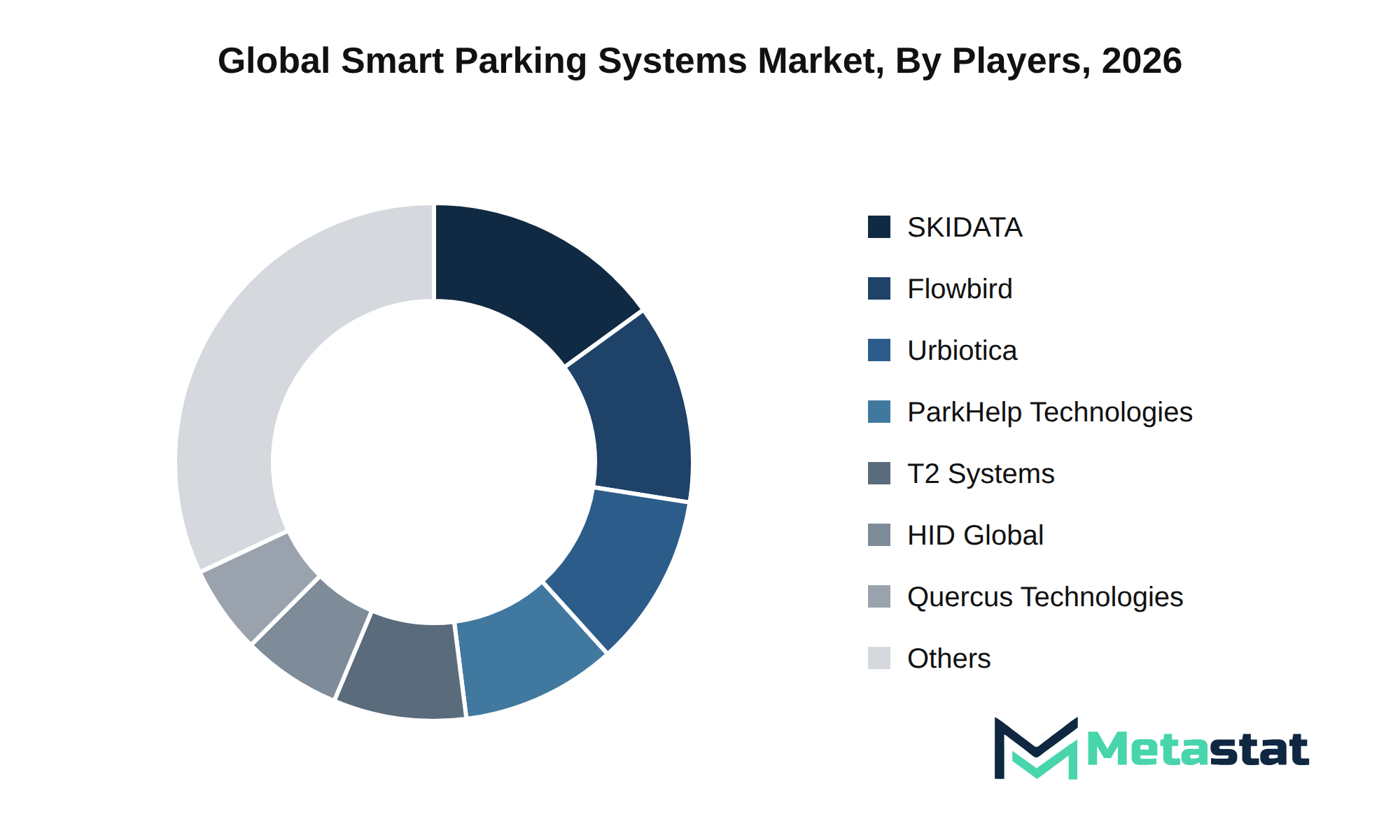
The competitive dynamics within the Smart Parking Systems market reflect a range of strategies among key players. Mergers and acquisitions have been instrumental in shaping company portfolios, allowing firms to enhance technological capabilities and market reach. Collaborations and partnerships among companies, including Urbiotica, ParkHelp Technologies, and Flowbird, enable combined expertise in product differentiation and customer solutions. These strategic alliances allow firms to share resources, optimize R&D pipelines, and develop proprietary technologies that create competitive advantages.
Market participants focus on value chain integration and supply chain dominance to strengthen their positions. Companies including SKIDATA and T2 Systems implement customer retention strategies and brand equity dynamics to build loyalty and minimize switching costs. The presence of established players poses barriers to entry for new entrants, influencing market competition and innovation. Intellectual property portfolios, including patents held by firms including Axis Communications and Robert Bosch GmbH, contribute to the technological defensibility of their offerings, securing their competitive positions in the market.
Looking ahead, the competitive outlook for the Smart Parking Systems market indicates a focus on strategic growth vectors that enhance operational efficiency and market penetration. Companies are expected to navigate the evolving landscape by adopting adaptive go-to-market strategies and refining their commercial models to address changing customer needs.
Market size is forecast to rise from USD 10.3 million in 2025 to over USD 48.7 million by 2033. The base case is USD 10.3 million in 2025 to USD 48.7 million by 2033 at a 21.4% CAGR. The bull case anticipates rapid technological advancements, leading to increased adoption rates across various segments, including commercial and government applications. This scenario could enhance market penetration significantly, driven by the integration of next-generation technologies and improved consumer awareness of smart parking solutions.
The bear case envisions challenges stemming from regulatory changes and economic fluctuations. Delayed compliance milestones inhibit adoption, particularly in regions with stringent regulations. Such conditions create barriers to entry for new players, constraining overall market growth. However, ongoing research and development efforts aimed at streamlining regulatory processes could mitigate these risks, potentially leading to a more favorable environment for market evolution.
Strategic capital allocation and infrastructure commitments from governments and private sectors will play critical roles in shaping the future of the Smart Parking Systems market. Investments in urban infrastructure and smart city initiatives will likely enhance demand for innovative parking solutions. The emergence of white-space opportunities in underserved regions presents avenues for market expansion, enabling providers to address unmet enterprise needs and capitalize on high-growth pockets.
The report strategically identifies and profiles the key market players and analyses their core competencies in each sub-segment of the Smart Parking Systems market.
Report Attributes | Details |
Study Period | 2021-2033 |
Base Year | 2025 |
Estimated Year | 2026 |
Forecast Period | 2026-2033 |
Historical Period | 2021-2025 |
Growth Rate | CAGR 21.4% from 2026 to 2033 |
Revenue Unit | USD million |
Segmentation | By Hardware Type, Software, Parking Type, Application, and Region |
By Region | North America (By Hardware Type, Software, Parking Type, Application, and Country)
|
Europe (By Hardware Type, Software, Parking Type, Application, and Country)
| |
Asia Pacific (By Hardware Type, Software, Parking Type, Application, and Country)
| |
South America (By Hardware Type, Software, Parking Type, Application, and Country)
| |
Middle East and Africa (By Hardware Type, Software, Parking Type, Application, and Country)
|
Find answers to common questions about this report
The Smart Parking Systems market size was valued at USD 10.3 million in 2025, according to the Metastat Insights study.
The Smart Parking Systems market is projected to grow at a CAGR of 21.4% during the forecast period from 2026 to 2033.
The North America Smart Parking Systems market size is estimated to reach USD 16.3 million by 2033.
The Cameras & LPRs segment leads the Smart Parking Systems market, with a projected value of USD 17 million by 2033. This segment shows the highest growth potential compared to others in the market.
Rapid urbanization, increasing vehicle ownership, and the demand for efficient parking solutions drive the Smart Parking Systems market. a shift toward digital solutions and sustainability initiatives further enhances market growth by promoting better traffic flow and optimizing resource efficiency.
North America holds the dominant share of the Smart Parking Systems market, with a projected value of USD 16.3 million in 2033, representing 35.8 percent of the total market.
Regulatory pressures and compliance hurdles significantly restrain growth in the Smart Parking Systems market. Companies face challenges adapting technologies to meet stringent requirements, increasing operational complexity and costs. macroeconomic factors including inflation and supply chain disruptions hinder investment and procurement decisions, further limiting market expansion.
Rapid urbanization and increasing vehicle ownership drive demand for smart parking solutions in densely populated areas. The shift toward digital solutions enhances user experiences, while a focus on sustainability aligns with environmental objectives, further promoting product adoption in the Smart Parking Systems market.
The Smart Parking Systems market is estimated to reach a valuation of USD 48.7 million by 2033.
Key players in the Smart Parking Systems market include Urbiotica, ParkHelp Technologies, TKH Security, SKIDATA, T2 Systems, Flowbird, and Parquery.
The analysts below cover Automotive and Transportation research at Metastat Insights.
LEAD ANALYST
Utkarsh Khirodkar is a Lead Market Research Analyst at MetaStat Insight, specializing in market intelligence, technology sector assessments, and competitive strategy.

ENERGY & INFRASTRUCTURE INDUSTRY CONSULTANT
Automotive and Transportation · Electronics and Semiconductor · Energy and Power · Machinery & Equipment
Saurabh Vasant Ganvir consults for Energy & Infrastructure Industry at MetaStat Insight, specializing in renewable energy, solar EPC, and electric vehicle (EV) infrastructure markets.
Evaluating secondary resin quality across post-consumer packaging streams requires reliable technical segmentation. MetaStat Insight delivered an objective assessment that distinguished between extrusion-grade flake pricing and optical sorting throughput limitations across Western Europe. The competitive positioning breakdown for licensed depolymerization technology providers answered several questions during our feedstock feasibility audit. Their team clarified regional trade restrictions on mixed plastic scrap quickly when our team submitted follow-up requests.
Evaluating sovereign cloud deployments for core banking platforms demands a clear view of data residency regulations and migration exit strategies. MetaStat Insight delivered an exhaustive review of regional latency tolerances, mainframe decommission milestones, and third-party vendor concentration risk. The regulatory compliance mapping across European and Asian financial jurisdictions gave our team a dependable baseline for multi-cloud infrastructure discussions.
Replacing petrochemical surfactants with bio-based alternatives requires realistic timelines on industrial precision fermentation scaling. The market research broke down commercialization timelines, feedstock sugar price sensitivities, and regional cosmetic ingredient regulatory approvals in Europe and East Asia. That supplier readiness mapping gave our formulations team reliable context when comparing renewable chemical sourcing roadmaps.
Explore related market intelligence reports worth reading alongside this one.
Starting from
$2950
Starting from
$2950