
LEAD ANALYST
Utkarsh Khirodkar is a Lead Market Research Analyst at MetaStat Insight, specializing in market intelligence, technology sector assessments, and competitive strategy.

Global Surety Market Size, Share, By Bond Type (Contract Surety Bonds, Commercial Surety Bonds, Judicial Surety Bonds, and Fidelity Bonds), By Contract Bond Type (Performance Bonds, Payment Bonds, Bid Bonds, Maintenance and Warranty Bonds, Supply Bonds, and Others), By Distribution Channel (Broker and Agent-Mediated, Direct Insurer, and Digital and Online Platforms), By End-User Industry (Construction and Engineering, Energy and Utilities, Manufacturing and Industrial, Transportation and Logistics, Real Estate and Property Services, Financial Services and Insurance, Public Sector and Government, Professional and Business Services, and Others), Industry Analysis, Growth, Trends, and Forecast, 2026-2033
Report ID
MSI-5110
Published
September, 2026
Pages
304 Pages
Format
Historical
Base year
Forecast
Forecast period
Report Details
Choose Your License
Global Surety Market
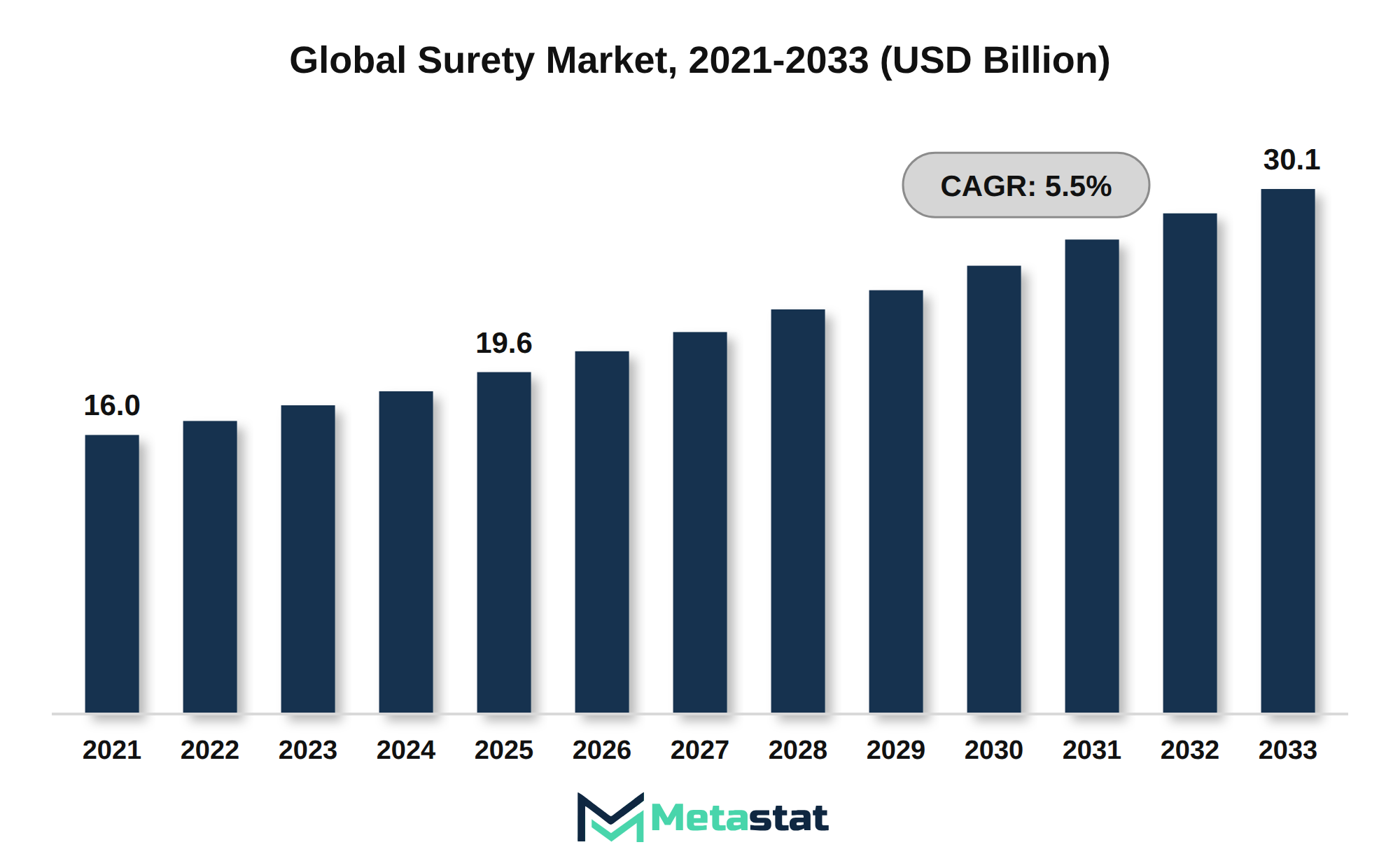
The global Surety market was valued at USD 19.6 billion in 2025 and is projected to reach USD 30.1 billion by 2033, growing at a CAGR of 5.5% over the forecast period.
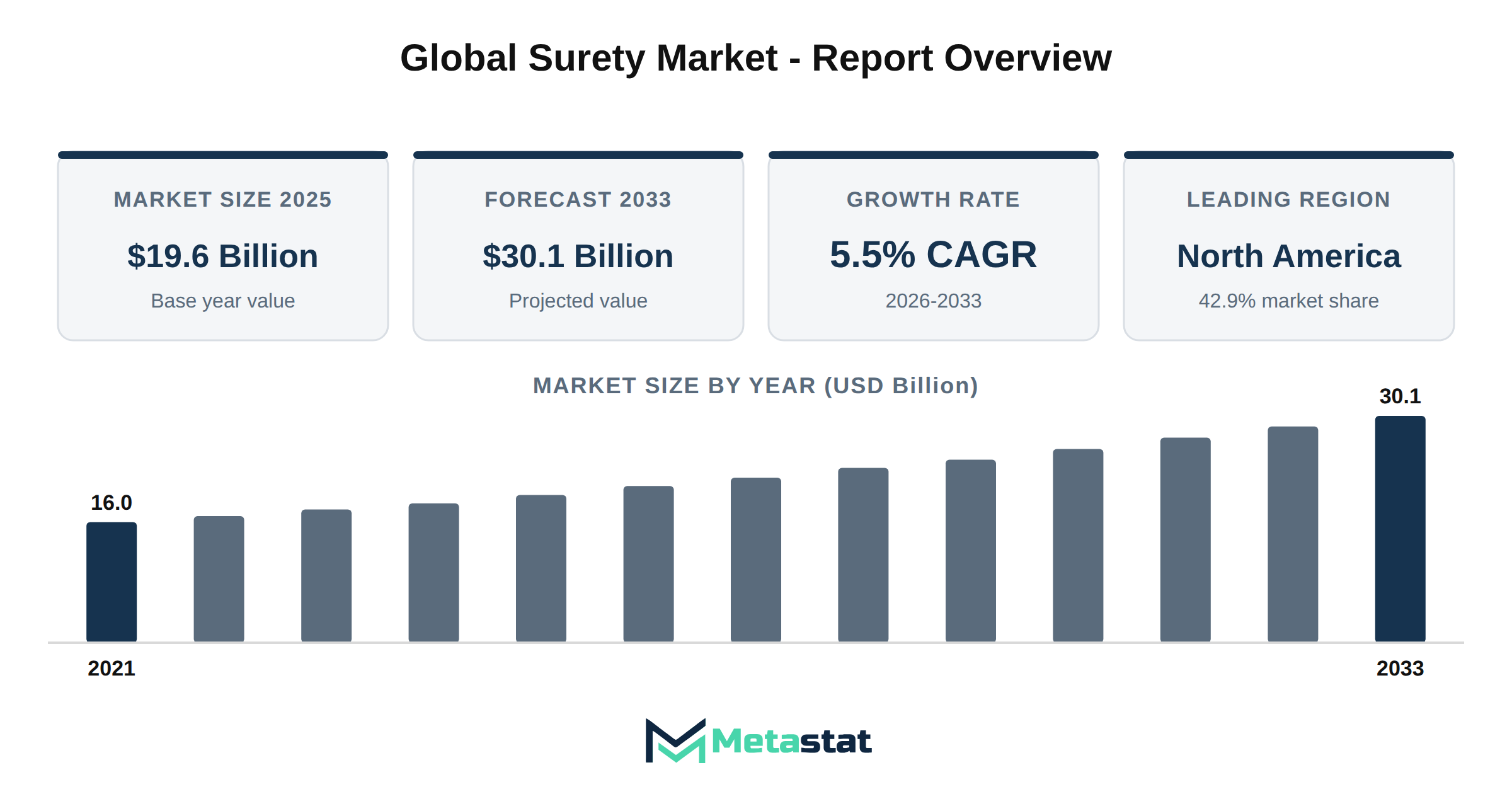
The global Surety market is projected to experience significant growth, increasing from USD 19.6 billion in 2025 to USD 30.1 billion by 2033, reflecting a compound annual growth rate (CAGR) of 5.5%. This expansion is driven by rising demand across multiple sectors, including construction and engineering, which significantly influences the market's dynamics. Adoption of surety bonds within these industries enhances project reliability and mitigates risks associated with contract fulfillment.
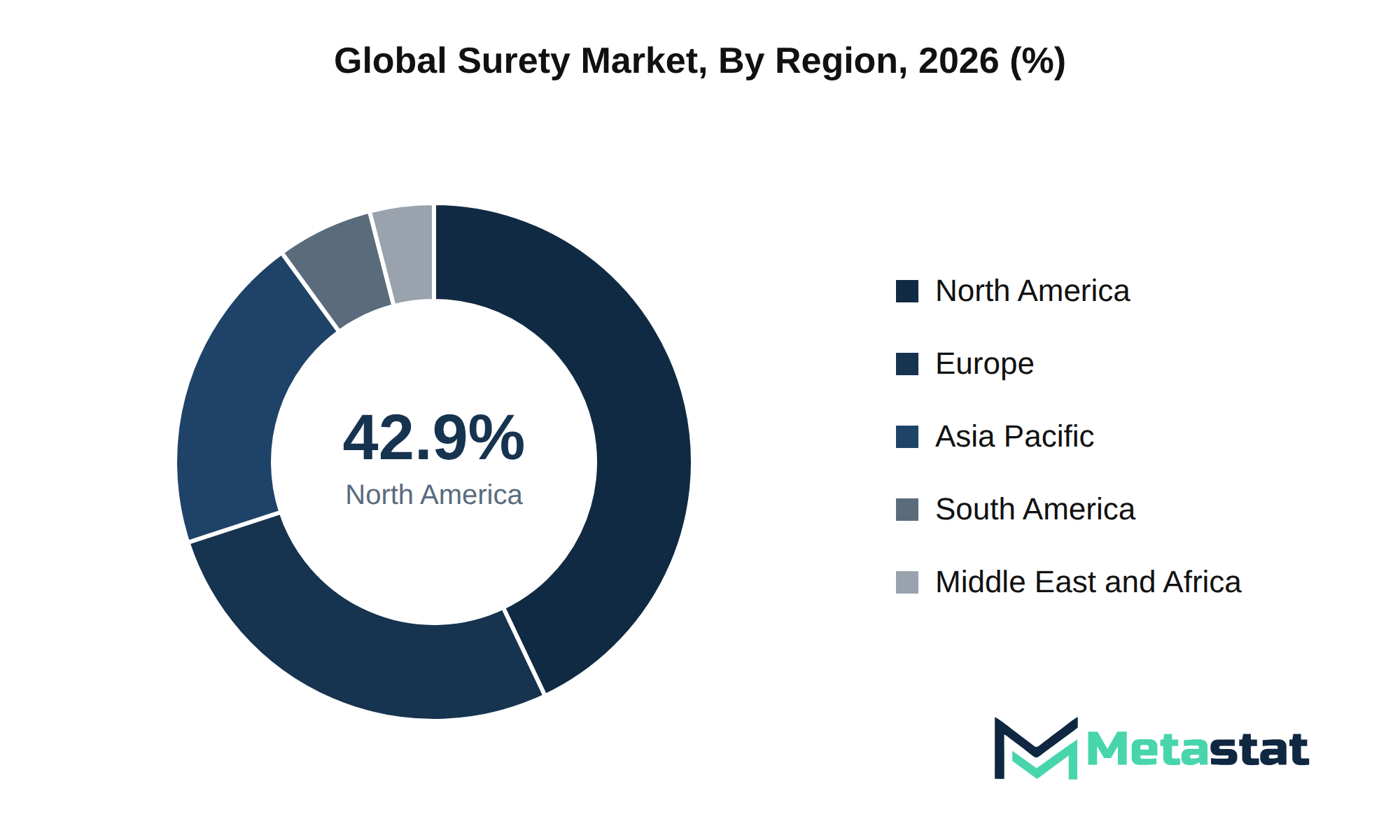
Regional distribution indicates that North America holds the largest market share at 42.9%, followed by Europe at 27% and Asia Pacific at 20%. The North American segment is expected to reach USD 12.7 billion by 2033, growing at a CAGR of 5.5%. The market's expansion in North America benefits from a robust regulatory environment that promotes compliance and risk management, which builds confidence among businesses and investors.
In terms of bond types, Contract Surety Bonds dominate the market, anticipated to grow from USD 12.4 billion in 2026 to USD 17.8 billion by 2033, at a CAGR of 5.3%. This category's growth is driven by increasing construction activities that require performance and payment guarantees. Commercial Surety Bonds are expected to achieve notable growth, reaching USD 7.6 billion by 2033, supported by expanding commercial ventures and regulatory requirements.
Judicial Surety Bonds and Fidelity Bonds represent segments with specific applications, contributing to the overall market. Judicial Surety Bonds are projected to reach USD 3.1 billion by 2033. Meanwhile, Fidelity Bonds are expected to grow steadily, reflecting the increasing importance of fraud protection in various industries.
Regulatory compliance in the Surety market plays a critical role in shaping industry practices and standards. Adherence to regulations ensures that bonding companies operate within legal frameworks, thus mitigating financial risks associated with contractual obligations. The evolving regulatory landscape demands that companies remain vigilant and proactive in updating compliance protocols to safeguard against potential liabilities.
Disruption within the market arises from technological advancements and changing consumer expectations. The integration of digital platforms facilitates quicker access to surety products, enhancing customer experience and streamlining the purchasing process. Companies that leverage these technologies gain a competitive edge, positioning themselves favorably within the market.
Research and development trajectories focus on innovative bonding solutions that cater to emerging industries. These advancements enable providers to develop tailored products that address specific sector needs, thus driving market growth. The continuous pursuit of innovation creates a dynamic environment where companies adapt to shifting demands effectively.
Sustainable transformation and decarbonization efforts significantly influence the Surety market. Increasing awareness of environmental issues compels companies to adopt sustainable practices that appeal to eco-conscious consumers. Incorporating green initiatives into business models not only enhances brand reputation but aligns operations with global sustainability goals.
The supply chain landscape is evolving, with a heightened emphasis on transparency and resilience. Companies within the market are re-evaluating sourcing strategies to mitigate risks associated with supply disruptions. By building strong relationships with suppliers and investing in robust logistics architecture, businesses enhance operational efficiency and reliability.
Market fragmentation characterizes the competitive landscape, with numerous players vying for market share. This fragmentation leads to increased competition, prompting companies to differentiate their offerings through unique value propositions. Mergers and acquisitions (M&A) dynamics further reshape the market, driven by firms seeking strategic partnerships to enhance their service capabilities and expand their reach.
Capital allocation towards infrastructure investments remains a priority for many organizations within the Surety market. These investments support growth initiatives, enabling companies to enhance their service offerings and improve customer satisfaction. Strategic allocation of resources ensures that businesses remain competitive and responsive to market changes.
The future strategic outlook for the Surety market hinges on adapting to technological shifts and evolving consumer expectations. Firms are tasked with developing high-value recommendations that drive innovation while maintaining regulatory compliance. This proactive approach positions companies to capitalize on emerging opportunities and navigate potential challenges effectively.
Increasing capital investment environments significantly influence the surety market. Factors like GDP growth and public-private spending power fuel demand for surety bonds, particularly in sectors including construction and engineering. These sectors often access financing through surety bonds to enhance project credibility and secure contracts. When economic conditions improve, construction projects see a rise, directly impacting the need for contract surety bonds.
Interest rates play a significant role in shaping the investment landscape. Lower interest rates stimulate borrowing, allowing more businesses to invest in expansion and infrastructure projects. This dynamic increases the requirement for surety bonds to guarantee obligations and performance, driving market growth. Venture funding in various industries encourages innovation and new projects, further heightening demand for surety solutions.
Infrastructure development emerges because a critical driver. Governments prioritize modernizing aging infrastructure, creating opportunities for contractors who require surety bonds to qualify for large-scale projects. The effective allocation of capital toward public works and improvement initiatives sustains momentum in the surety market, ensuring continued expansion through the forecast period.
Investment in infrastructure development significantly enhances demand within the Surety market. Governments and private entities prioritize large-scale projects, aiming to upgrade aging facilities and expand digital capabilities. This focus on infrastructure aligns with rising public-private spending power, thus creating a favorable environment for surety bonds, which provide crucial financial guarantees for contractors and project stakeholders.
The increasing emphasis on modernization brings new opportunities across various sectors, including construction and engineering, manufacturing, and utilities. Investment in these sectors drives demand for performance and payment bonds, which are essential for securing contracts and mitigating risks associated with project delivery. Growth in infrastructure projects contributes to higher surety bond values, positively impacting market revenues.
Enhanced infrastructure facilitates the movement of goods and services while improving economic productivity. This trend supports the overall growth of the Surety market, driven by efficient infrastructure that attracts further investment and encourages expansion across multiple industries. The market is projected to grow at a compound annual growth rate of 5.5 percent, reaching USD 30.1 billion by 2033.
Regulatory compliance presents significant challenges within the Surety market, particularly when navigating the complex legal framework surrounding bonding requirements. Companies face considerable pressure to adhere to varying regulations across regions, which complicates operational strategies and increases administrative burdens. This complexity results in higher costs for businesses attempting to ensure compliance, ultimately affecting their ability to compete effectively in the market.
Economic downturns contribute to macroeconomic headwinds, which limit capital availability for construction and engineering projects, a primary driver in the Surety market. Reduced investment in these sectors creates a ripple effect, impacting demand for surety bonds owing to firms scaling back on new projects. Inflationary pressures increase operational costs, further constraining market dynamics because companies adjust pricing strategies to maintain profitability.
Geopolitical instability influences supply chain disruptions, making it difficult for companies to secure the necessary materials and services for projects. This unpredictability adversely affects project timelines and budgets, creating a reluctance among firms to pursue new ventures, which subsequently lowers the demand for surety bonds. The market experiences additional strain from technological obsolescence, with companies needing to invest in updated systems to manage compliance and operational efficiencies.
Resource scarcity and high capital investment requirements deter new entrants and limit expansion opportunities for existing players. The rising costs associated with skilled labor shortages create talent gaps that challenge the market's ability to execute projects efficiently. Workforce overhead continues to rise, placing further financial strain on companies that rely on human capital for success.
Various regulatory compliance hurdles and macroeconomic challenges impede growth within the Surety market. Addressing these issues requires strategic planning and investment to enhance operational capabilities and secure a competitive edge in an evolving landscape.
Geopolitical fragmentation exerts pressure on the Surety market due to increased trade deficits and tariff friction. These factors create a complex environment for businesses, particularly those relying on cross-border transactions. Fragmented trade relationships affect the cost structure for surety providers by increasing compliance overhead and introducing legal liabilities associated with varying regional regulations.
Technological disruptions further complicate the market landscape, necessitating complex research and development integrations. The need for interoperability among different technologies creates barriers that impact the efficiency of surety services. This technological strain leads to delayed project timelines and increased costs for end users across various industries.
Rising input cost structures and market saturation challenge the Surety market. Pricing compression results from increased competition, compelling firms to optimize their offerings. This situation intensifies margin pressures, restricting the ability of providers to invest in innovative solutions and talent retention initiatives.
Environmental lifecycle footprints and sustainability demands drive heightened scrutiny on surety services. Companies face pressure to meet decarbonization mandates, which increase operational costs and complicate compliance efforts. These sustainability pressures limit the market's growth potential if providers cannot adapt swiftly.
Infrastructure gaps and retrofitting barriers present additional challenges. The need for modernization in existing structures often exceeds available resources, causing implementation bottlenecks. Addressing these issues requires strategic investments that do not align with the short-term financial objectives of surety providers, ultimately limiting market opportunities.
Intellectual property protection deficits and cybersecurity risks cast a shadow over the market. The rising frequency of data vulnerabilities increases the risk associated with handling sensitive information, prompting firms to allocate resources to enhance cybersecurity measures. Such reallocations detract from investment in other critical areas, affecting overall market competitiveness.
Regional demands are expanding within the Surety market, driven by robust construction activity and infrastructure development across various regions. Countries are undergoing significant modernization efforts, particularly in Asia Pacific and North America, prompting increased requirements for surety bonds. The demand for Contract Surety Bonds is especially notable, with projections indicating growth from USD 12.4 billion in 2026 to USD 17.8 billion by 2033, representing a compound annual growth rate of 5.3%. This increase reflects the growing importance of securing construction contracts, ensuring compliance, and mitigating risks associated with project completion.
Technological disruptions are reshaping the Surety market, with digital transformation playing a significant role in streamlining operations and enhancing customer engagement. The rise of digital and online platforms is facilitating new distribution channels, allowing companies to reach clients more efficiently. This shift is projected to increase the value of digital platforms to USD 4.7 billion by 2033, indicating a significant trend towards modernizing the way surety services are delivered.
Sustainability imperatives are influencing market strategies, with companies aligning their operations to meet environmental, social, and governance (ESG) criteria. This alignment builds greater trust among clients and stakeholders, enhancing competitive positioning within the Surety market. The focus on sustainable practices and green transformations is expected to drive business growth and support innovation, accommodating evolving consumer preferences.
Cross-industry mergers and acquisitions are reshaping the competitive dynamics, allowing companies to diversify their offerings and expand their market presence. Strategic consolidation is expected to enhance operational efficiencies and broaden service capabilities, enabling players to respond effectively to market demands. This trend supports the overall growth of the Surety market, driven by companies leveraging synergies to capture new opportunities and optimize their value chains.
Overall, the Surety market stands to benefit from these emerging demands, technological advancements, and strategic shifts, driving growth and creating substantial opportunities for stakeholders involved in the sector.
The Global Surety market is segmented based on Bond Type, Contract Bond Type, Distribution Channel, and End-User Industry.
Contract Surety Bonds exhibit a strong growth trajectory, valued at USD 12.4 billion in 2026 and projected to reach USD 17.8 billion by 2033, reflecting a CAGR of 5.3% during the forecast period. Demand for these bonds primarily stems from the construction and engineering sectors, where significant projects require financial assurance for performance and payment obligations. Expanding infrastructure investments across various regions drive this demand, particularly in North America, which remains the largest market share holder, capturing 42.9% of the overall Surety market.
Regulatory compliance in the construction industry further drives the adoption of Contract Surety Bonds, because contractors often require these assurances to participate in public and private projects. This segment benefits from increasing awareness of risk management among businesses, reinforcing the importance of securing financial backing against project failures. The trend towards digitalization within the industry enhances the efficiency of bond issuance processes, leading to a more streamlined customer experience.
Segment expansion catalysts include the ongoing evolution of contract types and their associated requirements, which contribute to greater adoption rates. Technological advancements in risk assessment tools and underwriting processes facilitate quicker bond approvals, appealing to a broader base. Downstream applications across various industries, including transportation and utilities, further emphasize the essential nature of these bonds, establishing them because a critical component of business operations.
The Surety market continues to respond to shifts in consumption patterns, driven by increasing project complexities and the need for enhanced financial security. Strategic opportunities arise through the development of tailored bond products that address emerging market needs, ensuring a resilient response to fluctuations in demand. Overall, the Contract Surety Bonds segment positions itself favorably within the broader Surety market, supported by consistent growth, evolving industry standards, and an unwavering commitment to risk management.
Strong demand characterizes the Commercial Surety Bonds segment, which is estimated to reach USD 7.6 billion by 2033, at a CAGR of 5.6% during the forecast period. Factors driving this demand include an increase in business transactions requiring financial assurance and the prevalence of regulatory frameworks mandating surety bonds across various industries. Industries including construction, real estate, and public sector services frequently require commercial surety bonds to mitigate financial risks associated with contractual obligations.
Technological advancements facilitate the adoption of commercial surety bonds by streamlining the underwriting process, enhancing risk assessment capabilities, and enabling greater transparency in bond management. The integration of digital platforms allows for efficient interactions between insurers and clients, contributing to the segment's growth. The ongoing evolution of financial services and increasing reliance on comprehensive risk management solutions emphasize the importance of commercial surety bonds in maintaining business continuity.
End-use dynamics highlight a shift towards greater utilization of commercial surety bonds within industries focused on public and private projects, leading to increased competition among providers. This competition drives innovation in product offerings and pricing strategies, aligning with evolving customer expectations. Regulatory compliance requirements in various jurisdictions promote the utilization of commercial surety bonds, ensuring that businesses adhere to financial and contractual obligations.
Cost structures within this segment remain influenced by fluctuating pricing models and the margin pressures faced by insurers. The need for effective risk management solutions drives insurers to invest in advanced analytics and technologies that enhance their underwriting processes. Improved supply chain resilience, coupled with strategic investments, supports the sustained growth of the Commercial Surety Bonds segment within the broader Surety market.
Judicial Surety Bonds offer essential financial guarantees in legal contexts, supporting compliance with court mandates and enhancing the security of various judicial procedures. This segment experiences growth driven by increasing demands for security in legal agreements and the evolving regulatory environment, which emphasizes the importance of surety guarantees in litigation and public contracts. The rising number of legal disputes and the need for financial assurance in settlements contribute to this upward trend. Heightened awareness of the risks associated with judicial proceedings increases demand for these bonds among businesses and individuals seeking protection against potential legal liabilities.
The Judicial Surety Bonds segment is projected to reach USD 3.1 billion by 2033. This growth trajectory aligns with trends in the broader Surety market, where stakeholders pursue enhanced financial security and compliance in various sectors. Increased collaboration between insurers and legal professionals creates an environment conducive to the expansion of judicial bond offerings, ultimately benefiting end-users requiring these financial products for legal assurances.
Demand for Fidelity Bonds experiences growth driven by increasing awareness of financial protection among businesses and individuals. This segment acts because a safeguard against potential losses caused by dishonest acts of employees, enhancing trust in various sectors. The expansion of Fidelity Bonds directly correlates with rising instances of fraud, which increase the need for protective measures. Businesses across industries including construction, finance, and healthcare adopt these bonds to mitigate risks and maintain operational integrity.
The Fidelity Bonds segment is projected to grow at a CAGR of 5.7% during the forecast period. The evolution of financial products and services creates a conducive environment for Fidelity Bonds. Technology advancements lead to innovative bonding solutions, enhancing accessibility and efficiency. Increased digitalization facilitates streamlined processes for clients, promoting broader adoption of Fidelity Bonds across different markets.
In the Surety market, regulatory compliance expectations influence the demand for Fidelity Bonds. Strict regulatory standards necessitate businesses to implement measures that protect against employee misconduct, driving up bond procurement rates. The ongoing need for transparent financial practices underpins this segment's growth, ensuring that Fidelity Bonds remain an essential tool for risk management.
Cost structures associated with Fidelity Bonds are relatively stable, providing predictable expense management for businesses. Pricing volatility linked to broader economic conditions and changes in risk assessment criteria impacts overall market dynamics. The strategic opportunity window for Fidelity Bonds continues to expand, with increased focus on risk mitigation and the importance of safeguarding assets in various industries.
Valued at USD 6.4 billion in 2026, the Performance Bonds segment is projected to reach USD 8.9 billion by 2033, at a CAGR of 4.9% during the forecast period. Growth in this segment is driven by the increasing complexity of construction projects that require financial assurance for performance. Contractors and project owners recognize the importance of performance bonds in minimizing risks associated with project completion and financial loss.
Expansion catalysts include heightened construction activity and a focus on regulatory compliance in various regions. Companies seek assurance against non-performance, driving demand for performance bonds. This growth is particularly evident in the construction and engineering sectors, where projects often involve substantial capital investments and stringent timelines.
Technological maturation in risk assessment and underwriting processes enhances the efficiency of performance bond issuance. The adoption of digital platforms facilitates quicker access to bond services, contributing to market competitiveness. Companies investing in next-generation technologies gain a strategic advantage in addressing client needs swiftly.
Changes in end-user dynamics reflect a shift toward larger projects and increased financial scrutiny, necessitating robust performance guarantees. Regulatory compliance standards mandate performance bonds for various types of projects, further supporting the market's expansion. Overall, the Performance Bonds segment within the Surety market demonstrates significant growth potential driven by evolving industry requirements and technological improvements.
Increasing adoption of Payment Bonds reflects a growing emphasis on financial security in contractual agreements. This segment is driven by the continuous expansion of construction projects requiring assurance of timely payments to subcontractors and suppliers. Regulatory frameworks increasingly mandate the use of Payment Bonds, ensuring compliance and creating a sense of security among stakeholders. The segment is expected to reach USD 7.6 billion by 2033, at a compound annual growth rate (CAGR) of 5.6% during the forecast period.
Growth in the Payment Bonds segment aligns with the broader trends observed in the Surety market, where demand for reliable financial instruments is critical. Development in technologies enhancing verification and transaction processes builds confidence among stakeholders, promoting further investment in this segment. The emphasis on risk management strategies among project owners and general contractors strengthens the role of Payment Bonds in mitigating financial disputes, ensuring a steady increase in market share.
Overall, the Payment Bonds segment serves a vital function in the financial landscape of the construction and engineering sectors, directly impacting project execution and completion timelines. Its integration within the Surety market enhances operational efficiency and reliability, contributing positively to the overall growth trajectory of the industry.
Strong growth in the Bid Bonds segment aligns with an expanding construction sector, reflecting a growing need for financial assurances in project bidding. Increasing project complexity and competition among contractors drive demand for Bid Bonds, because they provide necessary guarantees to project owners regarding the contractor's ability to fulfill obligations. While bidding processes become more competitive, the requirement for Bid Bonds strengthens, ensuring that contractors maintain financial credibility in their proposals.
Adoption of Bid Bonds is boosted by regulatory standards requiring contractors to secure financial backing before engaging in large-scale projects. This regulatory landscape promotes stability and trust within the Surety market, facilitating smoother project initiation and execution. The anticipated growth of the construction and engineering industries fuels further demand for Bid Bonds, which are expected to reach USD 7 billion by 2033, highlighting their critical role in securing contracts in competitive environments.
Pricing pressures within the Bid Bonds segment remain manageable due to a stable underwriting environment. Insurers focus on maintaining competitive pricing while offering comprehensive coverage to clients. This equilibrium supports continued demand while enhancing profitability within the market. Strategic investments in technology for processing and evaluating bond applications further streamline operations, enabling quicker decision-making and reinforcing market growth.
The Bid Bonds segment will continue to thrive, driven by regulatory compliance, project demand, and evolving industry practices. The market's growth trajectory positions it because a key component in the broader Surety market, reflecting the increasing importance of financial security in project execution.
Growth in the Maintenance and Warranty Bonds segment aligns with the increasing emphasis on risk management in various industries. Factors driving this demand include heightened project complexity and the necessity for assurance in construction and engineering projects, where these bonds guarantee project completion and performance standards. The segment is projected to grow at a compound annual growth rate (CAGR) of 5.7% during the forecast period, reflecting a commitment to secure financial backing in essential projects.
Technological advancements lead to more effective bonding solutions, catering to the evolving needs of project stakeholders. Enhanced digital platforms streamline the bonding process, providing quicker access to necessary financial instruments. This efficiency attracts a wider customer base seeking reliable and prompt service, further stimulating growth.
End-user industries including construction and engineering significantly contribute to the segment's expansion, requiring robust warranties to secure performance and compliance. The increasing focus on regulatory compliance and standards across sectors necessitates the integration of Maintenance and Warranty Bonds into project planning and execution, positively influencing the market. The evolving nature of the Surety market highlights the importance of these bonds in managing risks while meeting compliance requirements.
Investment in new construction and infrastructure projects directly correlates with the demand for Maintenance and Warranty Bonds. Rising construction activity increases the need for these bonds to assure adherence to contractual obligations. This segment’s performance reflects broader market trends, reinforcing its important role within the Surety market.
Demand for Supply Bonds within the Surety market often correlates with construction projects requiring guarantees for the fulfillment of contractual obligations. Adoption of these bonds primarily stems from the necessity to mitigate risks associated with supplier defaults. The increasing complexity of supply chains increases the need for assurance, prompting businesses to secure these financial instruments to protect against potential losses.
Segment expansion occurs due to industries increasingly recognizing the importance of financial security in maintaining operational integrity. Regulatory compliance standards governing supplier agreements further reinforce the adoption of Supply Bonds. Ensuring adherence to these standards mitigates the risk of contractual breaches, building trust among stakeholders.
Technological maturation presents opportunities for innovation in the issuance and management of Supply Bonds. Digital platforms enhance accessibility and streamline processes, enabling quicker transactions and improved customer experiences. These advancements contribute to the overall growth of the market, positioning suppliers to benefit from enhanced operational efficiency.
Cost structures within the Supply Bonds segment reflect the need for competitive pricing strategies to attract clients. Pricing volatility, often influenced by market conditions, requires careful management to sustain margins. Companies operating in this segment face margin pressures stemming from external factors, necessitating strategic adjustments to maintain profitability.
Strategic opportunity windows emerge because businesses seek to strengthen supply chain resilience. Raw material sourcing risks and logistics vulnerabilities highlight the importance of securing Supply Bonds to navigate uncertainties. This proactive approach positions firms favorably within the market, enhancing their competitiveness and ability to meet client demands.
Increasing importance of License and Permit Bonds, Customs Bonds, and Tax Bonds arises from heightened regulatory compliance requirements across various industries. Organizations require these bonds to ensure adherence to local, state, and federal regulations, facilitating smoother operational processes. The Surety market experiences growing demand for these bond types, reflecting a focus on compliance and risk management strategies within businesses.
Adoption of these bonds aligns with the shifting landscape of regulatory frameworks, which frequently require entities to provide financial assurances. This trend highlights the necessity for businesses to maintain compliance to avoid penalties or operational disruptions. Enhanced awareness of regulatory obligations encourages a proactive approach among organizations, ultimately driving the demand for these specific bond types.
Technological advancements play a role in the evolution of these bond offerings, allowing for streamlined application processes and improved transparency. Digital platforms facilitate access to License and Permit Bonds, Customs Bonds, and Tax Bonds, enhancing user experiences while expediting approvals. This technological maturation contributes to an increase in market participation and supports the broader growth of the Surety market.
Cost structures related to these bond types often reflect the evolving risk profiles of various industries. Providers assess the creditworthiness of applicants meticulously, which influences pricing and margin pressures. Regulatory compliance standards dictate these assessments, necessitating a delicate balance between competitive pricing and risk evaluation.
The potential for disruptions in supply chains and raw material sourcing persists, particularly concerning industries that rely heavily on compliance-driven bonds. Organizations adopting risk mitigation measures experience strategic opportunity windows, positioning themselves favorably within a competitive environment. While businesses navigate complex regulatory environments, demand for License and Permit Bonds, Customs Bonds, and Tax Bonds is expected to strengthen, contributing to the overall expansion of the Surety market.
Growth in the Broker and Agent-Mediated segment within the Surety market reflects essential trends in distribution practices. Valued at USD 12 billion in 2026, this segment is projected to reach USD 15.7 billion by 2033, with a CAGR of 3.9% during the forecast period. Increasing reliance on brokers and agents emerges from the complexity of surety products, requiring expert guidance for effective placement. Industry players benefit from established relationships and market knowledge, ensuring optimal solutions for clients.
Adoption of digital platforms accelerates the evolution of the distribution channel, offering enhanced accessibility and efficiency. Traditional channels integrate next-generation technologies, while brokers and agents leverage these advancements to streamline processes, attract a broader clientele, and adapt to changing consumer preferences. This shift in operational dynamics reinforces the importance of maintaining competitive pricing and service offerings.
Market expansion is supported by the growing demand for surety bonds across various sectors, including construction and engineering. Enhanced project financing and regulatory compliance across industries drive the need for reliable surety solutions, positioning brokers and agents because vital facilitators in this landscape. Increased competition among service providers necessitates strategic approaches to maximize market share and improve customer retention.
Growth within the Direct Insurer segment of the Surety market stems from increasing demand for streamlined risk management solutions. This segment benefits from rising adoption among businesses seeking direct engagement with insurers for surety bond procurement. Enhanced digital platforms and technology integration facilitate quicker processing and accessibility, making direct interactions more appealing to customers.
The channel demonstrates potential for expansion driven by a shift toward transparency and efficiency within the insurance landscape. Direct insurers invest in technological maturation, enabling next-generation upgrades that enhance customer experience and operational efficiency. The focus on product evolution caters to diverse client needs, ensuring that offerings align with current market dynamics.
Regulatory compliance standards influence the segment significantly, mandating that insurers adapt offerings to meet evolving legal requirements. Cost structures remain a critical consideration, owing to direct insurers' aim to maintain competitive pricing while managing operational expenses. Pricing volatility poses challenges, requiring strategic approaches to maintain margins while responding to market conditions.
Growth for this segment remains robust, with the Direct Insurer segment projected to reach USD 9.8 billion by 2033, at a CAGR of 5.6% during the forecast period. Such figures reflect the broader trends affecting the Surety market, because demand continues to evolve in response to external pressures and consumer expectations.
Rapid digitalization within the Surety market drives growth in the Digital and Online Platforms segment. Increasing accessibility to online services enhances the purchasing experience for customers, simplifying the bond acquisition process. This shift towards digital platforms stems from a preference for efficiency and convenience, leading many consumers to seek online solutions for their bonding needs.
Regulatory compliance requires adherence to specific standards, compelling companies to innovate and adapt their offerings. Digital platforms provide streamlined solutions that improve compliance processes, reducing the time and resources required for traditional bonding methods. This adaptation attracts a broader customer base, resulting in heightened market demand.
Technological maturation within the segment supports advancements that enhance user experiences. Innovations including user-friendly interfaces and automated processes appeal to tech-savvy consumers, reinforcing the attractiveness of online platforms. Consequently, this segment is projected to reach USD 4.7 billion by 2033.
Increased competition among key players in the Surety market accelerates the evolution of product offerings within digital channels. Strategic investments in technology and marketing strengthen the position of leading companies, creating a robust ecosystem that supports sustained growth. The focus on digital platforms aligns with ongoing trends in consumer behavior, driving further adoption and expansion.
Valued at USD 8.4 billion in 2026, the Construction and Engineering segment is projected to reach USD 11.7 billion by 2033, at a CAGR of 4.9% during the forecast period. This segment represents a significant portion of the Surety market, driven by strong demand from infrastructure investment and ongoing construction projects globally. Increased government spending on public infrastructure enhances the need for surety bonds to ensure project completion and compliance with regulations.
Technological advancements within construction practices influence the adoption of surety bonds, driven by firms seeking innovative financing solutions to mitigate risks associated with large-scale projects. The segment benefits from a growing focus on sustainable building practices, prompting construction companies to secure bonds that support environmentally friendly initiatives.
Changes in regulatory compliance standards further drive demand, with firms required to obtain various forms of surety bonds to participate in government contracts. Such stipulations create a steady market for surety products within the construction and engineering sectors.
Pricing volatility in raw materials impacts project costs, leading construction firms to seek financial security through bonds, which provide assurance against potential losses. This dynamic reinforces the strategic importance of surety bonds in stabilizing project financing amid fluctuating material costs.
Overall, the Construction and Engineering segment reflects significant growth potential within the Surety market, propelled by ongoing investments in infrastructure, compliance requirements, and evolving industry standards.
Investment in the Energy and Utilities segment aligns with a growing focus on renewable energy projects and infrastructure upgrades. Regulatory compliance standards drive demand for surety bonds in this sector, ensuring financial stability amid the evolving landscape. The segment is projected to reach USD 4.2 billion by 2033, at a compound annual growth rate (CAGR) of 6.3% during the forecast period. Companies in the energy sector seek reliable financial assurances to manage risks associated with project delays and cost overruns, which influences purchasing decisions for surety bonds.
Technological maturation and the adoption of next-generation solutions enhance operational efficiencies within the energy sector. These advancements influence demand for surety bonds, enabling companies to secure large-scale projects with reduced financial exposure. The market sees heightened interest in performance and payment bonds, reflecting industry dynamics that prioritize reliability and accountability in energy supply. Consumption shifts toward sustainable practices, and the market adapts to meet the needs of energy companies investing in innovative technologies and infrastructure.
With a projected value of USD 3.8 billion by 2033, the Manufacturing and Industrial segment within the Surety market reflects significant investment and expanding demand. Factors driving growth include rising industrial activity, increased infrastructure projects, and heightened regulatory requirements. These dynamics encourage firms to seek surety bonds to secure contracts and ensure compliance with various standards.
This segment benefits from technological maturation, where advancements in risk assessment and underwriting practices enhance the efficiency of issuing bonds. Innovations in product offerings support firms in navigating complex regulatory landscapes, increasing the appeal of surety products. Enhanced digital platforms streamline the bonding process, facilitating quicker access for manufacturers and industrial firms.
Consumption shifts towards more sustainable practices influence industries within this segment to prioritize compliance with environmental regulations. This focus on regulatory adherence strengthens the demand for surety bonds, reflecting the critical role these instruments play in safeguarding financial interests. Consequently, the market attracts investments from various stakeholders, including large insurance providers looking to capitalize on this upward trend.
Strategic opportunities arise from the ongoing expansion of manufacturing and industrial sectors worldwide, particularly in emerging markets. Firms adapting to rapidly changing market dynamics leverage surety bonds to maintain competitive advantages. This evolving landscape presents a conducive environment for growth, reinforcing the importance of the Manufacturing and Industrial segment within the broader Surety market.
Growth in the Transportation and Logistics segment results from heightened demand for efficient supply chain solutions and the increasing complexity of logistics operations. This sector experiences robustness driven by the need for timely deliveries and inventory management. Increasing investments in technology and automation contribute to enhancing operational efficiency, allowing firms to optimize routes and reduce delays. Regulatory compliance standards further influence demand, with companies seeking surety bonds to assure compliance with various legal obligations.
Transportation and Logistics segment is projected to grow at a CAGR of 6% during the forecast period. A focus on sustainability drives innovation within the market, prompting firms to adopt next-generation technologies to reduce their environmental impact. This progressive shift encourages the development of advanced logistics solutions, enhancing the competitiveness of firms active in the segment. Ongoing capital investment in infrastructure and technology plays a crucial role in expanding the market.
Pricing volatility within the segment, influenced by fluctuating fuel costs and changing regulations, necessitates careful financial planning for firms. Effective cost management strategies become essential to maintain profit margins, driven by intensifying competition in the market. The establishment of strong supply chain resilience remains critical, allowing companies to adapt to disruptions and ensure uninterrupted service delivery. Overall, the Transportation and Logistics segment within the Surety market is positioned for significant growth fueled by evolving industry dynamics and increasing operational demands.
Growth in the Real Estate and Property Services segment aligns with increased investment in infrastructure and urban development. This investment drives demand for surety bonds, driven by developers and contractors seeking financial guarantees to secure projects and comply with regulatory frameworks. The complex nature of real estate transactions necessitates robust surety solutions, enhancing risk management capabilities in this sector.
Adoption of surety bonds within real estate projects supports compliance with various regulatory standards, ensuring that contractors fulfill contractual obligations. This requirement mitigates financial risks and establishes trust among stakeholders, including investors and property owners. Effective risk management in this segment enhances overall market stability, creating a favorable environment for growth.
Technological advancements contribute to the evolution of surety products tailored for the Real Estate and Property Services segment. Digital platforms facilitate streamlined processes for obtaining bonds, improving accessibility and efficiency. Increased reliance on these technologies strengthens the overall market by reducing transaction times and enhancing customer experience.
Strategic opportunity windows arise because the market adapts to changing consumer preferences and regulatory landscapes. Developers prioritize sustainable building practices and environmental considerations, prompting the need for surety solutions that align with green building certifications. This shift toward sustainability strengthens market demand, driven by stakeholders seeking to mitigate environmental risks in their projects.
Pricing volatility in the surety market influences cost structures within the Real Estate and Property Services segment. Fluctuating premiums and changing underwriting standards impact project budgets and timelines. Awareness of these dynamics allows stakeholders to make informed decisions, ensuring that cost considerations align with financial and operational objectives.
In the Financial Services and Insurance sector, demand continues to rise owing to regulatory requirements and the need for risk management solutions. Companies operating within this space seek to enhance their financial stability through surety bonds, which provide assurance against the failure to fulfill contractual obligations. Regulatory compliance remains a primary driver, with organizations pursuing certifications that align with industry standards to maintain credibility and competitiveness.
Technological advancements facilitate the adoption of next-generation surety products tailored to the unique needs of financial institutions. Digital platforms streamline processes, allowing for efficient underwriting and claims management, which enhances customer experience. The evolution of products in this segment reflects an increasing focus on mitigating risks associated with complex financial transactions.
While firms face pressures from cost structures and pricing volatility, optimizing margins becomes essential. Investment in technology and innovative solutions presents strategic opportunities for expansion within the surety market. Enhanced supply chain resilience, coupled with robust risk assessment tools, enables companies to navigate potential disruptions effectively.
Competition intensifies because organizations strive to differentiate their offerings. Firms that leverage data analytics and agile methodologies stand positioned to capture market share. In this environment, the Financial Services and Insurance segment will continue to evolve, driven by ongoing demand for effective risk management solutions within the broader surety market.
Investment in public sector projects creates significant demand for surety bonds, particularly in the areas of performance and payment bonds. These bonds protect public entities against contractor defaults and ensure that projects complete according to contractual obligations. Increased government spending on infrastructure development enhances the adoption of surety bonds. Stakeholders seek assurances of project fulfillment and compliance with regulations.
Regulatory compliance standards influence bond requirements within the public sector. Stricter governmental regulations around transparency and accountability necessitate enhanced surety solutions, pushing organizations to procure bonds that align with these criteria. This creates a robust framework for growth within the surety market, especially for firms operating within this segment.
Catalysts for segment expansion include ongoing urban development initiatives and public-private partnerships that require financial backing through surety bonds. These initiatives, coupled with demand for technological advancements in bond procurement processes, represent strategic opportunities for stakeholders in the market. Investment in next-generation solutions, including digital platforms for bond issuance and management, drives efficiency and responsiveness in meeting public sector needs.
Challenges related to pricing volatility and margin pressures impact underwriting strategies in this segment. Insurers adopt flexible pricing models to accommodate the unique risk profiles presented by public sector projects. This adaptability to market dynamics ensures competitiveness and sustainability within the surety market for public sector clients.
Supply chain resilience emerges owing to a key focus for firms engaged in public sector projects. Ensuring continuity in the availability of materials and services directly affects project timelines and bond performance. Enhanced collaboration among stakeholders leads to improved risk mitigation strategies, supporting the overall health of the market.
Growth within the Professional and Business Services segment results from multiple factors, including expanding service demands and increasing regulatory requirements. Organizations in this sector increasingly rely on surety bonds to ensure compliance and build trust among stakeholders. The trend towards digital transformation in these industries enhances operational efficiency, prompting firms to invest in reliable surety solutions.
The surge in service-based business models drives the adoption of surety bonds, enabling companies to secure contracts and protect against potential defaults. This shift contributes to a robust demand for fidelity bonds, which act because a safeguard against employee dishonesty, further reinforcing the sector's reliance on surety products. Ongoing advancements in technology ensure that businesses within this segment benefit from innovative surety solutions tailored to their specific needs.
Regulatory compliance standards play a critical role in shaping the landscape of the Professional and Business Services segment. Tightening regulations necessitate adherence to best practices, prompting increased adoption of surety bonds. Firms that successfully navigate these requirements position themselves favorably in the market, enhancing their competitive edge while ensuring compliance with relevant regulations.
Investment in the Professional and Business Services segment reflects a broader trend of capital allocation towards industries poised for growth. Organizations recognize the strategic value of surety bonds to mitigate risks and enable smoother business operations. While the landscape evolves, ongoing demand for tailored surety solutions will continue to influence market dynamics, driving growth in this vital segment.
Demand for surety bonds in the "Others" segment, encompassing Agriculture, Healthcare, Telecommunications, and Hospitality, arises from increasing regulatory requirements and the need for financial assurance across diverse sectors. Adoption of surety bonds within these industries reflects a growing focus on compliance and risk management, driven by organizations seeking to minimize operational uncertainties.
Emerging trends within these industries, particularly technological advancements and evolving consumer preferences, drive segment expansion. New technologies enhance operational efficiencies and improve service delivery, facilitating greater uptake of surety bonds. Adoption of next-generation upgrades within sectors like Telecommunications and Healthcare positions firms to manage risks more effectively, contributing to an upward trajectory in demand.
In Agriculture, the imperative for sustainable practices and compliance with environmental regulations creates a robust environment for surety bonds. Regulatory compliance standards continue to evolve, impacting businesses within this sector. Similarly, the Healthcare industry's focus on patient safety and quality assurance generates demand for financial instruments that underwrite commitments to service delivery.
Pricing volatility in the market influences cost structures across these sectors, compelling businesses to seek financial security through surety bonds. Margin pressures arising from competitive landscapes push companies to leverage surety bonds because risk mitigators, ensuring compliance and operational continuity. Strategic opportunities emerge through the alignment of surety solutions with industry demands, enhancing investment prospects in this segment.
The intersection of regulatory demands, technological maturation, and shifting consumption patterns shapes the Surety market, particularly within the "Others" segment. Organizations increasingly view surety bonds because essential tools for risk management and compliance, creating a stable growth environment across Agriculture, Healthcare, Telecommunications, and Hospitality.
Based on geography, the Global Surety market is divided into North America, Europe, Asia-Pacific, South America, Middle East, and Africa.
North America represents a significant portion of the global Surety market, accounting for 42.9% in 2025. The region is set to expand at a CAGR of 5.5% within the forecast period, reaching a market size (TAM) of USD 12.7 billion by the end of 2033. This growth is driven by heightened construction activities, particularly in the United States, which generates substantial demand for Contract Surety Bonds, especially Performance and Payment Bonds. Investment in infrastructure modernization and energy projects remains a primary driver for expansion across these sectors.
Increased focus on localized procurement dynamics within the United States, Canada, and Mexico enhances the competitiveness of domestic suppliers. Regulatory frameworks across these countries support the adoption of surety solutions, contributing to an environment conducive to growth. The market experiences a shift toward digital platforms for bond distribution, improving accessibility and efficiency for end-users seeking surety bonds.
High-value replacement cycles in construction and engineering projects necessitate a reliable surety framework, thus increasing demand for bonds that ensure project completion and compliance. Emerging market front-runners within the region continue to leverage the stability of the surety market, enhancing their positioning in response to increasing infrastructure needs. Overall, the North America Surety market exhibits robust potential for sustained growth, driven by collaborative efforts among key stakeholders.
The Surety market in Europe presents significant potential, driven by strong demand across various segments including Contract Surety Bonds and Commercial Surety Bonds. Economic stability in key countries including Germany, France, the UK, Italy, and Spain supports a robust construction sector, which contributes to the growth of performance and payment bonds. Infrastructure modernization initiatives across Europe enhance the need for surety products, particularly in public sector projects.
The market benefits from a well-established regulatory framework that encourages compliance and ensures the integrity of construction projects. Geopolitical factors, including trade dynamics and localized manufacturing efforts, influence procurement strategies among various industries. Domestic market participants like The Hartford and Liberty Mutual Insurance are strategically positioned to leverage these trends, enhancing their competitive edge.
Regional procurement dynamics reflect cultural nuances that shape B2B buying behaviors, facilitating tailored offerings in the Surety market. The growing emphasis on localized supply chains and nearshoring initiatives strengthens ties between suppliers and buyers, thereby improving service delivery. These evolving market conditions create an environment conducive to incremental growth and heightened competition among vendors.
The Surety market in the Asia-Pacific region demonstrates substantial growth potential driven by increasing infrastructure investments across countries including China, India, and Australia. The construction sector in these nations experiences significant demand for surety bonds, particularly in large-scale projects, facilitating assurance for contractors and project owners. The ongoing modernization of infrastructure enhances the adoption of contract surety bonds, with a projected market value of USD 11.7 billion by 2033 in the construction and engineering segment.
Growing urbanization in Asia-Pacific countries fuels the expansion of various industries, thereby increasing the need for commercial surety bonds. The region's dynamic manufacturing landscape supports the adoption of payment and performance bonds, with significant growth expected in the energy and utilities sector, projected to reach USD 4.2 billion by 2033. The influence of localized procurement dynamics, cultural nuances, and regional B2B buying behaviors plays a critical role in shaping market trends and vendor strategies.
Investment in localized manufacturing densities and nearshoring initiatives enhances supply chain resilience across the region, positively impacting the Surety market. Strategic entry barriers, along with increasing foreign direct investment flows, create significant opportunities for market players to establish a presence. The competitive landscape features substantial involvement from domestic market leaders and multinational insurers, necessitating strategic partnerships and collaborations to capture emerging opportunities effectively.
Continued advancements in digital and online platforms contribute to improving accessibility and efficiency in purchasing surety bonds. This trend aligns with the increasing acceptance of technology in the financial services sector, promoting an efficient experience for end-users. Overall, the Asia-Pacific region presents a variety of growth vectors that position it because a critical area for investment and expansion within the Surety market.
In South America, the Surety market reflects a growing interest and investment, primarily in Brazil and Argentina. The region holds a 6.0% share of the global market in 2025, indicating significant involvement in construction and infrastructure projects that drive demand for surety bonds. Economic activities, particularly in construction and engineering, create a favorable environment for market growth.
Infrastructure modernization initiatives, aimed at improving local services and facilities, support the expansion of the market. These developments attract foreign direct investment and stimulate local manufacturing sectors, enhancing the overall appeal of surety bonds. Increased government spending on public projects further emphasizes the necessity for contract surety bonds.
Adoption rates for surety products in South America are influenced by local regulatory frameworks and compliance mandates. Businesses increasingly recognize the need for financial guarantees to build credibility and secure contracts. The competitive landscape features domestic players striving to capture market share, reflecting regional procurement dynamics and localized buying behaviors.
The Surety market in the Middle East and Africa experiences unique dynamics influenced by regional economic conditions and regulatory frameworks. Countries including Saudi Arabia and the UAE focus on significant infrastructure projects that drive demand for surety bonds, particularly in construction and engineering sectors. South Africa's market reflects a growing trend towards modernization and urban development, which supports bond adoption across various industries.
Geopolitical factors and local compliance mandates play crucial roles in shaping the market landscape. The prevalence of domestic market participants, alongside the emergence of regional players, creates competitive dynamics that enhance service offerings. Initiatives aimed at local procurement and investment in regional projects further stimulate growth opportunities within the market.
Despite its smaller share of the global market, valued at 4.00% in 2025, the region's underpenetrated territories present avenues for expansion. Effective cross-border trade corridors facilitate access to neighboring markets, enabling businesses to tap into wider networks. These factors contribute to a positive outlook for the Surety market, focusing on continuous adaptation to local needs and preferences.
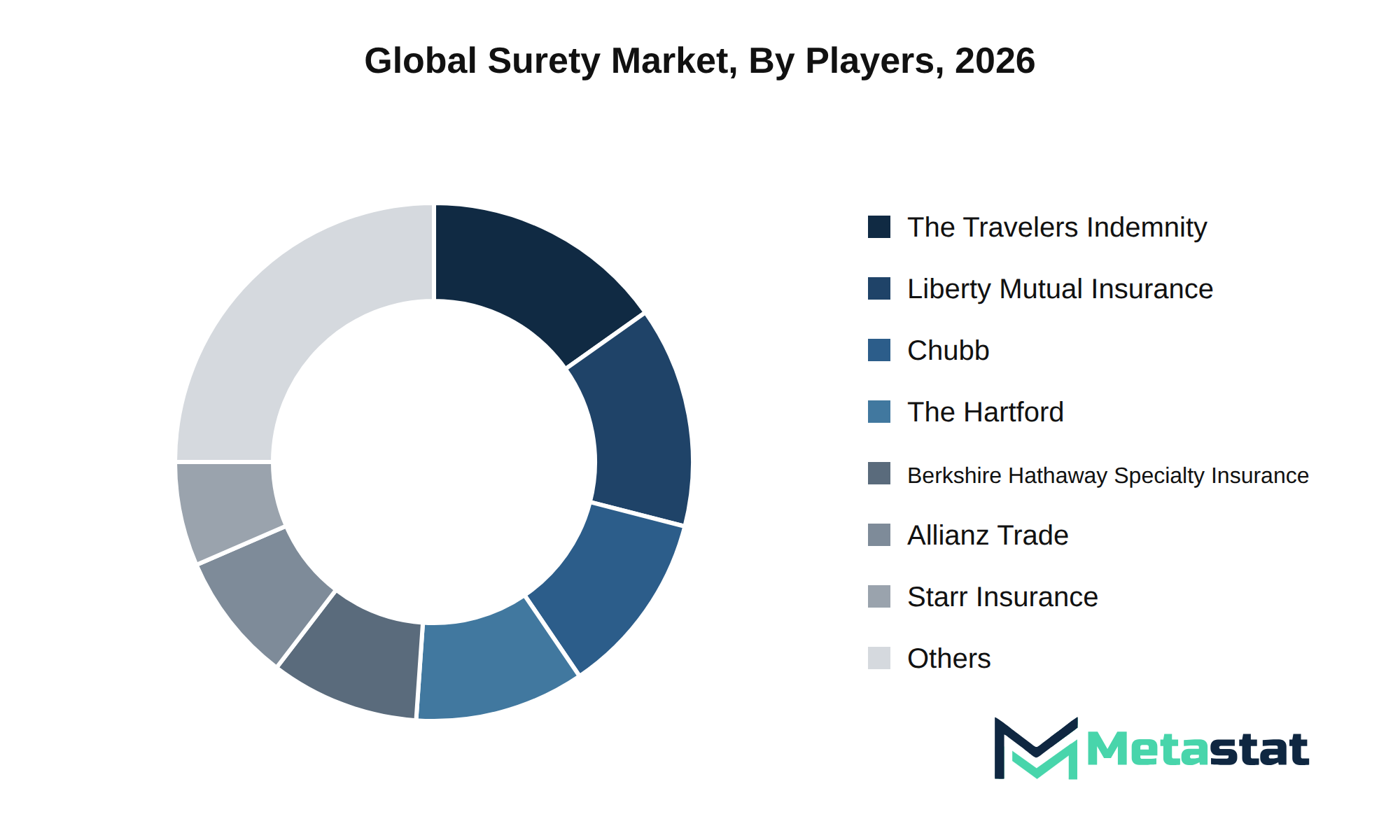
The Surety market experiences ongoing strategic consolidation through mergers and acquisitions, affecting competitive dynamics. Key players, including The Hartford, Liberty Mutual Insurance, and The Travelers Indemnity Company, pursue growth through partnerships and acquisitions to enhance their market positioning and expand service offerings.
Pricing architectures vary among firms, with competition intensifying around contract types and distribution channels. Several companies, including Chubb and Allianz Trade, differentiate their product offerings through innovative solutions that target specific end-user industries, including construction and energy. These strategies contribute to customer retention and drive brand equity and loyalty within the market.
Barriers to entry remain significant, limiting the threat of new entrants. Established firms, including Berkshire Hathaway Specialty Insurance and Zurich, leverage extensive resources and market knowledge to sustain competitive advantages. Existing players focus on strengthening supply chain dominance and enhancing procurement leverage to maintain market leadership.
The future competitive outlook indicates a robust environment driven by strategic growth vectors that emphasize the importance of innovation, collaboration, and market adaptability. Firms will prioritize customer-centric solutions and operational efficiencies, positioning themselves effectively in the evolving Surety market.
Market size is forecast to rise from USD 19.6 billion in 2025 to over USD 30.1 billion by 2033. The base case reflects a compound annual growth rate (CAGR) of 5.5% during this period. Bull case scenarios arise from favorable macroeconomic conditions, heightened infrastructure investments, and robust demand from the construction and engineering sectors. Conversely, bear cases could stem from economic downturns, fluctuating regulatory landscapes, and potential geopolitical tensions affecting trade corridors.
The evolving nature of the surety market involves a shift towards next-generation technology integration, aiming to enhance operational efficiencies and streamline processes. Investment in research and development (R&D) commercialization timelines reflects a growing focus on innovative solutions to address unmet enterprise needs. Strategic capital allocation directives and infrastructure commitments will play significant roles in shaping market dynamics, ensuring alignment with long-term growth objectives.
Structural consumption shifts within key industries indicate a maturation phase, highlighting the importance of understanding downstream demand changes. Executives prioritize defensibility roadmaps to navigate potential compliance milestones and regulatory evolution timelines. Identifying emerging white-space opportunities will facilitate the capture of high-growth pockets, positioning stakeholders to capitalize on market expansion.
The report strategically identifies and profiles the key market players and analyses their core competencies in each sub-segment of the Surety market.
|
Report Attributes |
Details |
|
Study Period |
2021-2033 |
|
Base Year |
2025 |
|
Estimated Year |
2026 |
|
Forecast Period |
2026-2033 |
|
Historical Period |
2021-2025 |
|
Growth Rate |
CAGR 5.5% from 2026 to 2033 |
|
Revenue Unit |
USD billion |
|
Segmentation |
By Bond Type, Contract Bond Type, Distribution Channel, End-User Industry, and Region |
|
By Region |
North America (By Bond Type, Contract Bond Type, Distribution Channel, End-User Industry, and Country)
|
|
Europe (By Bond Type, Contract Bond Type, Distribution Channel, End-User Industry, and Country)
|
|
|
Asia Pacific (By Bond Type, Contract Bond Type, Distribution Channel, End-User Industry, and Country)
|
|
|
South America (By Bond Type, Contract Bond Type, Distribution Channel, End-User Industry, and Country)
|
|
|
Middle East and Africa (By Bond Type, Contract Bond Type, Distribution Channel, End-User Industry, and Country)
|
Find answers to common questions about this report
The Surety market size was valued at USD 19.6 billion in 2025, according to the Metastat Insights study.
The Surety market is projected to grow at a CAGR of 5.5% during the forecast period from 2026 to 2033.
The North America Surety market size is estimated to reach USD 12.7 billion by 2033.
Contract Surety Bonds lead the Surety market, with a projected value of USD 17.8 billion by 2033. This segment demonstrates significant growth potential, with a compound annual growth rate of 5.3 percent.
Increasing capital investment environments, particularly in construction and engineering, significantly drive the Surety market. The focus on infrastructure development and public-private spending power enhances demand for surety bonds, which provide financial guarantees essential for securing contracts and mitigating project risks.
North America holds the dominant share of the Surety market, with a value of USD 12.7 billion projected for 2033, representing 42.9 percent of the total market.
Regulatory compliance challenges and macroeconomic headwinds significantly restrain growth within the Surety market. Companies face increased costs and operational complexities due to varying regional regulations, while economic downturns limit capital availability for construction and engineering projects, impacting demand for surety bonds.
Increasing capital investment environments, particularly in construction and engineering, significantly favor product adoption in the Surety market. Enhanced focus on infrastructure development and public-private spending power drives demand for surety bonds, because contractors require these financial guarantees to secure large-scale projects and mitigate risks.
The Surety market is estimated to reach a valuation of USD 30.1 billion by 2033.
Key players operating in the Surety market include The Hartford, Liberty Mutual Insurance, The Travelers Indemnity Company, Chubb, Allianz Trade, Berkshire Hathaway Specialty Insurance, and Zurich.
The analysts below cover Banking & Finance research at Metastat Insights.
LEAD ANALYST
Utkarsh Khirodkar is a Lead Market Research Analyst at MetaStat Insight, specializing in market intelligence, technology sector assessments, and competitive strategy.

PRINCIPAL CONSULTANT - ENTERPRISE AI & EMERGING TECHNOLOGIES
Banking & Finance · Electronics and Semiconductor · Energy and Power · Healthcare IT · Information & Technology · Professional Services
Vijay Gunti is a Principal Consultant at MetaStat Insight, bringing over two decades of experience across enterprise digital transformation, technology strategy, and intelligent systems.
Ambulatory surgical centers have very different purchasing cycles for robotic-assisted surgery platforms than major hospital networks. The MetaStat Insight study focused squarely on capital expenditure depreciation, procedural reimbursement pathways, and surgeon training overhead. That operational clarity made it much simpler to validate multi-year procedure growth forecasts against actual ambulatory center adoption patterns.
When planning edge sensor rollouts across refinery environments, generic IoT reports typically miss the harsh-environment certification bottlenecks. MetaStat Insight gave an objective evaluation of ATEX and Class 1 Division 2 hardware availability, along with realistic five-year maintenance cycle cost projections. The comparison of wireless mesh versus private cellular backhaul helped our team pressure-test network reliability models for remote processing facilities.
In the biological seed treatment space, registration timelines vary drastically between the European Union, Brazil, and North America. The MetaStat Insight research handled these cross-border regulatory barriers with genuine nuance, mapping commercialization pathways alongside historical field adoption rates. The segmentation between microbial strains and biochemical active ingredients was particularly well structured.
Explore related market intelligence reports worth reading alongside this one.