
LEAD ANALYST
Utkarsh Khirodkar is a Lead Market Research Analyst at MetaStat Insight, specializing in market intelligence, technology sector assessments, and competitive strategy.

Global Trenchless Pipeline Rehabilitation Market Size, Share, By Technology (Cured-in-Place Pipe (CIPP), Spray-in-Place Pipe (SIPP) - Polymeric, Spray-Applied Pipe Lining - Cementitious and Geopolymer, Loose-Fit Sliplining, Close-Fit / Fold-and-Form Lining, Others (Spiral-Wound Lining, Segmental / Panel Lining, Pipe Bursting / Replacement-in-Place)), By Operating Mode (Gravity Pipelines and Pressure Pipelines), By Application (Potable Water & Raw Water Transmission, Wastewater & Sewer, Stormwater, Drainage & Culverts, Oil & Gas Pipelines, Industrial Process & Chemical Pipelines, District Heating & Cooling Pipelines, Firewater & Fire Mains, Others (Irrigation, Mining Slurry & Marine/Seawater Pipelines)), Industry Analysis, Growth, Trends, and Forecast, 2026-2033
MSI-5085
August, 2026
261 Pages
Historical
Base year
Forecast
Forecast period
Report Details
Comprehensive Market Analysis And Insights
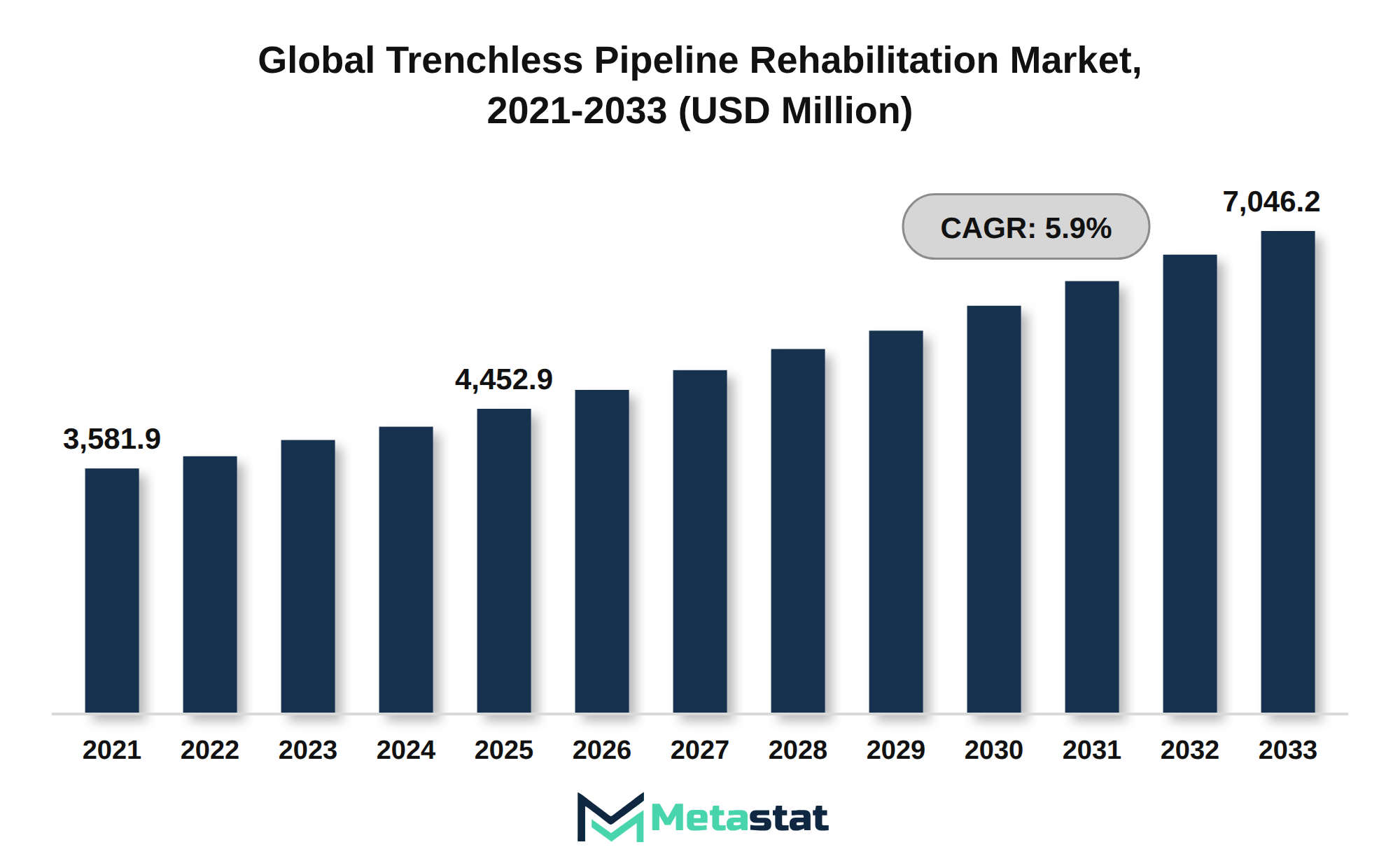
The global Trenchless Pipeline Rehabilitation market was valued at USD 4,452.9 million in 2025 and is projected to reach USD 7,046.2 million by 2033, growing at a CAGR of 5.9% over the forecast period.
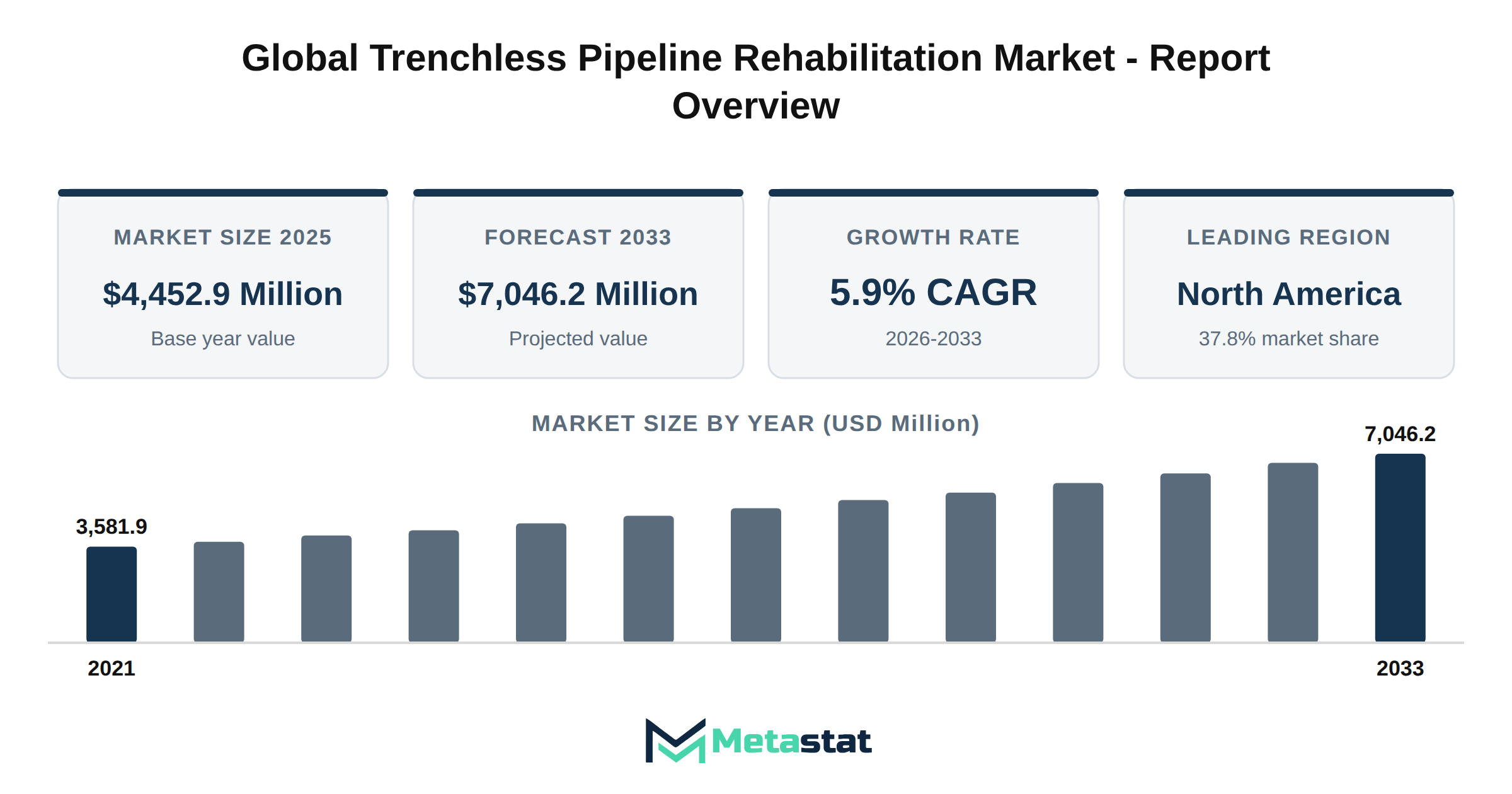
The Trenchless Pipeline Rehabilitation market reached a valuation of USD 4,452.9 million in 2025, reflecting a growth trajectory from USD 3,581.9 million in 2021. The market is anticipated to grow to USD 7,046.2 million by 2033, achieving a compound annual growth rate (CAGR) of 5.9% during the forecast period from 2026 to 2033. This growth is driven by increasing infrastructure renewal investments and the need for efficient rehabilitation technologies.
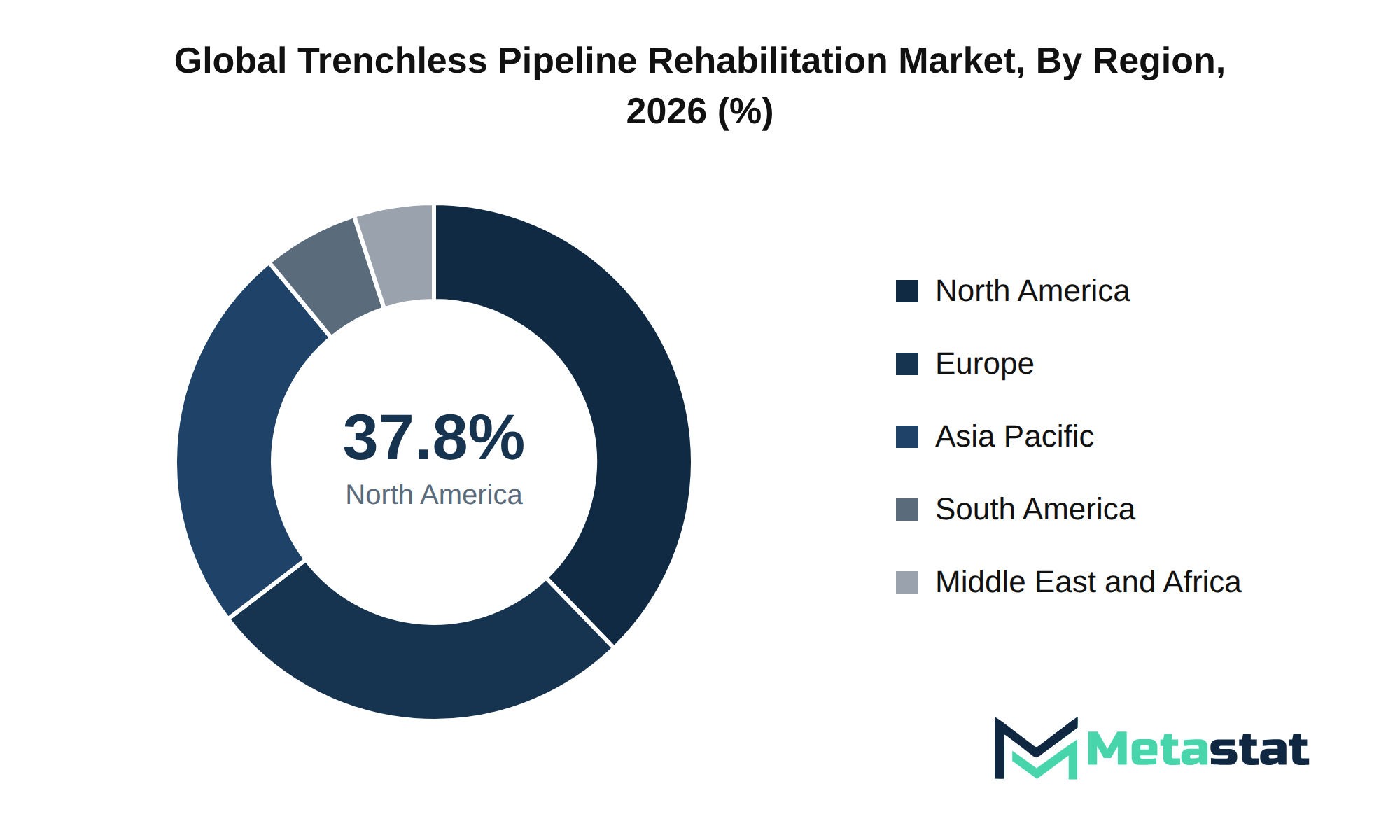
In terms of regional distribution, North America holds the largest share at 37.8%, with a projected market value of USD 2,519 million by 2033. Europe and Asia Pacific follow, accounting for 26.9% and 24.4% of the market, respectively. The allocation of resources towards sustainable pipeline solutions and the rise in regulatory compliance initiatives significantly influence market dynamics.
Technological advancements play a crucial role in shaping the competitive landscape. Key technologies including Cured-in-Place Pipe (CIPP) and Spray-in-Place Pipe (SIPP) - Polymeric are expected to dominate the market, with CIPP projected to increase from USD 2,102.2 million in 2026 to USD 2,967.1 million by 2033, reflecting a CAGR of 5%. Spray-in-Place Pipe (SIPP) - Polymeric is forecasted to reach USD 1,268.3 million by 2033, showing a CAGR of 8%.
Competitive strategies among industry players include partnerships, licensing agreements, and mergers and acquisitions, which enhance technological capabilities and market reach. Companies actively engage in research and development to innovate next-generation solutions aligned with sustainability goals. The increasing focus on decarbonization and circular economy dynamics prompts market participants to explore emerging rehabilitation opportunities.
The ongoing investment in infrastructure renewal significantly influences the Trenchless Pipeline Rehabilitation market. Increasing urbanization and aging pipelines necessitate substantial capital allocation for upgrades and maintenance. Various governments and organizations allocate funding to improve existing infrastructure, driving demand for trenchless rehabilitation solutions. This trend emphasizes the importance of innovative technologies that enhance the efficiency and sustainability of pipeline systems.
Competitive technology and contractor benchmarking establish key performance indicators for market players. Companies differentiate themselves through advanced methodologies and specialized techniques in trenchless rehabilitation. Continuous evaluation of contractor performance enhances project execution and creates a competitive environment, improving service delivery in the market.
Partnerships, licensing agreements, and mergers and acquisitions play a vital role in shaping market dynamics. Collaborations allow firms to utilize complementary strengths, expand their service offerings, and enhance market reach. Strategic mergers enable companies to achieve economies of scale, streamline operations, and respond effectively to market demands.
Emerging opportunities in rehabilitation highlight the demand for innovative solutions in compliance with regulatory standards. Companies invest in research and development to create next-generation technologies that meet evolving regulatory frameworks. This focus on sustainable transformation aligns with decarbonization efforts and circular economy principles, driving growth in the market.
The supply chain landscape for trenchless rehabilitation reflects the dynamic nature of the industry. Logistics architecture and sourcing strategies directly impact project timelines and cost efficiency. A fragmented market necessitates strategic sourcing and procurement practices to ensure availability and timely delivery of materials and services.
Future strategic outlooks for the Trenchless Pipeline Rehabilitation market involve addressing market fragmentation, developing robust value chains, and optimizing capital allocation. High-value recommendations focus on enhancing customer journey dynamics and building long-term relationships with clients. By prioritizing innovation and sustainability, stakeholders position themselves for sustained growth within this evolving market.
Growing emphasis on infrastructure development significantly drives the Trenchless Pipeline Rehabilitation market. Increasing urbanization and aging infrastructure necessitate upgrades and repairs of existing pipelines, leading to investments in trenchless technologies that minimize disruption and reduce costs associated with traditional excavation methods. This modernization effort enhances the efficiency of utility systems while addressing safety and environmental concerns, strengthening long-term demand for trenchless solutions.
Public and private sector initiatives further stimulate market growth by allocating substantial funding towards infrastructure projects. Capital investment environments characterized by favorable interest rates and robust GDP growth support the financing of trenchless rehabilitation projects. This financial backing encourages stakeholders to adopt advanced technologies for pipeline maintenance and enhancement, ultimately resulting in a more resilient and sustainable infrastructure network, reinforcing the segment's position in the market.
The growing focus on sustainability and resource stewardship aligns with the objectives of trenchless rehabilitation solutions. These methods contribute to reduced carbon footprints and lower resource consumption compared to conventional techniques. The intersection of these economic and environmental factors indicates a significant shift in how pipeline infrastructure is approached, directly benefiting the Trenchless Pipeline Rehabilitation market by expanding the addressable base for these innovative solutions.
Digital transformation significantly impacts the Trenchless Pipeline Rehabilitation market by enhancing operational capabilities and improving project outcomes. The integration of advanced technologies including automation, artificial intelligence, and software solutions streamlines processes and increases efficiency across the industry. These technologies enable better data management, predictive maintenance, and real-time monitoring of pipeline conditions, leading to timely interventions and reduced downtime.
Investment in digital tools allows companies to optimize labor utilization and minimize overhead costs, creating a more cost-effective operational environment. The shift towards digitizing legacy processes aligns with broader trends in industrial modernization, which promote efficiency and improve safety standards for workers and the environment.
Evolving consumer behaviors and preferences, particularly in urban areas, drive the demand for more efficient and sustainable solutions in the market. Population growth and increasing infrastructure demands compel companies to adopt innovative methods that support enhanced service delivery and environmental stewardship.
This digital shift supports growth prospects in the Trenchless Pipeline Rehabilitation market by attracting capital investment, reflecting a commitment to modernization and sustainability. The ongoing evolution of technology ensures that market participants remain competitive and responsive to the changing landscape, contributing to the overall expansion of the market through 2033.
Regulatory challenges significantly impact the Trenchless Pipeline Rehabilitation market by creating compliance hurdles that delay project approvals and increase operational costs. Stringent legal mandates often require extensive documentation and adherence to standards, which extends the timeline for infrastructure projects. This situation results in financial burdens for firms that are unable to allocate adequate resources for compliance, thereby restricting investment capacity in new rehabilitation technologies.
Macroeconomic headwinds, including inflationary pressures, further exacerbate these challenges. Rising costs of materials and labor lead to escalated project expenses, which diminish the return on investment for rehabilitation projects. Consequently, stakeholders choose to delay or scale back investments in trenchless technologies, thus constraining market growth.
Supply chain disruptions have emerged because a significant challenge within the market. Issues including geopolitical instability and resource scarcity hinder the availability of critical materials and equipment necessary for trenchless rehabilitation projects. This disruption results in project delays and increased costs, complicating planning and execution for contractors.
Labor shortages complicate the operational landscape further. A deficit of skilled labor creates challenges in executing trenchless projects efficiently, leading to deployment bottlenecks. Companies face difficulties in recruiting and retaining qualified personnel, increasing project timelines and operational overhead. This talent gap slows the adoption of innovative practices and technologies within the market.
Market fragmentation complicates competitive dynamics within the trenchless pipeline sector. Numerous small to medium-sized players compete with established firms, making it challenging for companies to gain market share. The diverse regional adoption rates further contribute to this fragmentation, because cultural barriers and varying regulatory environments affect the speed at which new technologies are accepted.
Ultimately, these factors combine to create a complex landscape for the Trenchless Pipeline Rehabilitation market, where adherence to regulations, economic fluctuations, supply chain issues, and labor shortages collectively hinder growth and innovation.
The Trenchless Pipeline Rehabilitation market faces significant challenges stemming from geopolitical fragmentation and supply chain instability. Disruptions in trade relations lead to increased tariffs, resulting in higher costs for critical materials and components used in trenchless technology. This escalation in costs affects profit margins and pricing strategies for suppliers, leading to market compression. Geopolitical tensions limit access to necessary resources, causing delays in project timelines and increasing operational risks.
The impact of trade deficits further complicates the market, resulting from reliance on imports for specialized technology and equipment that creates vulnerabilities. Companies experience difficulties obtaining essential components, hindering their ability to deliver timely services. This situation affects productivity and creates uncertainties in long-term investment strategies for the trenchless pipeline sector.
Technological disruptions and the need for complex research and development integrations impose extra burdens on companies operating in the market. Rapid advancements in technology necessitate continual adaptation, leading to substantial R&D investments. Firms that struggle to integrate new technologies into existing frameworks face competitive disadvantages, particularly in an increasingly saturated market. Evolving demands in the sector emphasize the necessity for innovation and agility, complicating operational continuity.
Rising input costs and workforce skill gaps present ongoing challenges. Availability of skilled labor becomes critical for implementing advanced trenchless methods, and firms experience pressure to enhance training programs or seek alternatives in automation. The balance between maintaining a skilled workforce and investing in technology ultimately influences operational capacity and market positioning.
Overall, these factors contribute to a challenging environment for the Trenchless Pipeline Rehabilitation market. Companies navigate geopolitical risks, supply chain disruptions, and technological advancements to maintain competitiveness and ensure sustainable growth.
Emerging regional demands significantly stimulate growth in the Trenchless Pipeline Rehabilitation market. Regions including North America, Europe, and Asia Pacific demonstrate an increasing focus on modernizing existing infrastructure, with substantial investments in wastewater management and utility services. The necessity for efficient rehabilitation techniques arises from aging pipelines and the imperative to enhance service delivery while minimizing disruptions.
Infrastructure modernization efforts support the expansion of trenchless technologies. Alignment with sustainability imperatives drives demand for eco-friendly practices in pipeline rehabilitation. Companies actively pursue innovations that reduce environmental impact while addressing infrastructure needs. Advancements in techniques including Cured-in-Place Pipe (CIPP) and Spray-in-Place Pipe (SIPP) enhance operational efficiency and align with green transformation goals.
Geographical expansion strengthens the competitive landscape, with suppliers targeting regions experiencing rapid urbanization and industrial growth. This trend creates opportunities for strategic consolidation and cross-industry collaborations, enabling companies to diversify their offerings and enhance market reach. Evolving buyer behaviors reflect a shift towards digital procurement, emphasizing the importance of integrated solutions and streamlined processes, which further drive market growth.
Asset life-cycle extensions and maintenance upgrades become critical in maximizing efficiency. The focus on retrofitting existing assets aligns with the objective of prolonging pipeline longevity and reducing operational costs. Emphasis on value-chain optimization enhances operational yield, ensuring that market participants remain competitive while meeting the increasing demands for sustainable practices and innovative rehabilitation solutions.
The Global Trenchless Pipeline Rehabilitation market is segmented based on Technology, Operating Mode, and Application.
Cured-in-Place Pipe (CIPP) segment is valued at USD 2,102.2 million in 2026 and is projected to reach USD 2,967.1 million by 2033, at a CAGR of 5% during the forecast period. The increasing need for efficient and sustainable infrastructure solutions drives adoption of CIPP technology, which offers minimal disruption during installation compared to traditional methods. This advantage appeals to municipalities and utility companies seeking to rehabilitate aging pipelines without extensive excavation.
The trend towards urbanization contributes to the demand for updated infrastructure, further emphasizing the importance of CIPP technologies in urban environments. The potential for reduced operational costs through the use of CIPP attracts investment from public and private sectors, enhancing market growth. Regulatory frameworks that encourage the use of environmentally friendly practices support the expansion of CIPP in various regions.
CIPP technology continues to evolve, integrating advancements including smart sensing capabilities for improved diagnostics and monitoring of pipeline conditions. The emergence of next-generation materials enhances the performance and lifespan of rehabilitated pipelines, which influences end-user satisfaction and acceptance. With a growing focus on sustainability, CIPP represents an effective solution to address the challenges posed by aging infrastructure, positioning it because a key segment within the Trenchless Pipeline Rehabilitation market.
Momentum in the Spray-in-Place Pipe (SIPP) - Polymeric segment continues to gain traction owing to the increasing focus on efficient and sustainable pipeline solutions. The segment is projected to reach USD 1,268.3 million by 2033, with a CAGR of 8% during the forecast period. Demand for this technology stems from its ability to rehabilitate existing pipelines without the need for extensive excavation, thus minimizing disruption and reducing costs associated with traditional methods.
This segment's expansion aligns with the growing need for infrastructure enhancements across various industries, including wastewater management and industrial applications. Regulatory compliance standards further promote the adoption of SIPP technologies, because municipalities and companies prioritize environmentally friendly solutions. The shift towards more effective rehabilitation techniques drives investment into this segment, enhancing competition within the market.
Challenges related to raw material sourcing and pricing volatility impact overall cost structures within the SIPP segment. Fluctuations in the prices of polymer materials affect profit margins, necessitating strategic sourcing and supply chain resilience. Despite these pressures, the ongoing evolution of materials and technologies positions the SIPP segment favorably for growth in the Trenchless Pipeline Rehabilitation market.
Increasing awareness regarding environmental sustainability drives the adoption of Spray-Applied Pipe Lining - Cementitious & Geopolymer technology within the Trenchless Pipeline Rehabilitation market. This segment focuses on materials that promote reduced environmental impact, aligning with global initiatives aimed at conserving resources. The increasing demand for efficient and durable solutions further pushes this segment's expansion, particularly in wastewater and sewer applications.
Technological maturation enhances performance characteristics of cementitious and geopolymer materials, making them more attractive for various trenchless applications. Innovations in composition and application techniques lead to significant improvements in durability and resistance to environmental stresses. Continued investment in research and development supports next-generation upgrades that increase the segment's appeal to end-users.
With an expected market value of USD 1,056.9 million by 2033, this segment stands poised for substantial growth. Demand for reliable and sustainable rehabilitation methods in aging infrastructure drives interest from municipalities and industrial sectors. Regulatory compliance standards concerning environmental impact further stimulate adoption, ensuring that products meet national and international guidelines.
Shifts in consumption patterns reflect a growing preference for trenchless solutions that minimize disruption and reduce costs associated with traditional excavation methods. While infrastructure ages, the need for efficient rehabilitation techniques becomes critical. This enables Spray-Applied Pipe Lining - Cementitious & Geopolymer technology to capture a growing share of the market.
Significant expansion in the Loose-Fit Sliplining segment aligns with increasing demand for efficient and cost-effective trenchless rehabilitation solutions. This method provides a non-invasive approach for repairing existing pipelines, appealing to municipalities and industrial sectors focused on minimizing disruption during maintenance operations. The projected growth at a CAGR of 3.5% during the forecast period reflects the rising preference for technologies that enhance pipeline longevity while reducing the need for extensive excavation.
Technological maturation significantly influences the segment's evolution. Enhanced materials and methods for sliplining contribute to improved performance and reliability, attracting investment from stakeholders seeking long-term solutions in the Trenchless Pipeline Rehabilitation market. The integration of smart technologies and monitoring systems further enhances the effectiveness of Loose-Fit Sliplining, promoting greater adoption across various applications, including potable water transmission and wastewater management.
Pricing volatility and margin pressures remain critical factors influencing the market dynamics. Suppliers faced with fluctuating raw material costs implement strategies to maintain competitive pricing without compromising quality. Strategic opportunity windows emerge from compliance with stringent environmental regulations, pushing industries towards sustainable rehabilitation practices. The focus on operational efficiency and resource conservation highlights the importance of Loose-Fit Sliplining within the broader context of pipeline rehabilitation solutions.
Investments in research and development are expected to strengthen the segment's position within the market. Continuous innovation in product offerings and application methods supports the growing trend of infrastructure modernization. While cities and industries prioritize maintaining and upgrading their pipeline systems, the adoption of Loose-Fit Sliplining is expected to accelerate, establishing it because a vital component of future trenchless rehabilitation strategies.
Utilization of Close-Fit / Fold-and-Form Lining in the Trenchless Pipeline Rehabilitation market reflects growing demand for innovative solutions that minimize disruption during pipeline repairs. This technique addresses the need for efficient rehabilitation methods by facilitating the insertion of a new liner into existing pipelines, which reduces the environmental impact and enhances operational efficiency. While municipalities and utility companies seek to maintain aging infrastructure with minimal excavation, adoption of this technology has gained traction.
Expansion catalysts include advancements in materials and technologies that improve the performance and durability of fold-and-form liners. Enhanced product evolution enables higher resistance to environmental factors, thereby extending the lifespan of rehabilitated pipelines. Downstream applications span various sectors, including water, wastewater, and industrial processes, demonstrating versatility and effectiveness in multiple contexts.
Changes in consumption patterns indicate a shift toward more sustainable engineering practices, aligning with regulatory compliance standards that emphasize eco-friendly solutions. The focus on maintaining infrastructure integrity while adhering to environmental guidelines drives investment in technologies like Close-Fit / Fold-and-Form Lining. Strategic opportunity windows arise owing to municipalities allocating budgets toward rehabilitation projects, further stimulating demand within the market.
Market participants face challenges related to cost structures due to fluctuating raw material prices and potential margin pressures. However, ongoing innovations that reduce installation times and minimize overall project costs contribute to a more favorable outlook for this segment. Supply chain resilience remains a critical factor, ensuring timely access to materials and equipment necessary for effective execution of trenchless technology projects.
The sub-segment covering Others, which includes Spiral-Wound Lining, Segmental / Panel Lining, and Pipe Bursting / Replacement-in-Place, presents unique dynamics within the Trenchless Pipeline Rehabilitation market. Demand drivers for this sub-segment stem from the need for efficient and cost-effective rehabilitation solutions, which align with the growing focus on minimizing disruption during pipeline maintenance. The trend toward urbanization and infrastructure development fuels this demand, driven by municipalities seeking to extend the lifespan of existing pipeline systems while reducing excavation costs and environmental impact.
Technological maturation enhances the adoption of these methods. Innovations in materials and processes improve the effectiveness of these rehabilitation techniques, making them more appealing to end-users. The sub-segment benefits from advancements in the capabilities of the equipment used, leading to higher operational efficiency and reliability.
Downstream applications vary widely, encompassing sectors including water and wastewater management, oil and gas, and industrial processes. Each industry faces distinct challenges that these rehabilitation techniques address, including regulatory compliance and the necessity for sustainable practices. Consumption shifts reflect a growing preference for trenchless methods that allow for quicker project completions while minimizing surface disruption.
Cost structures and pricing volatility remain critical considerations. The materials and methods used in the Others sub-segment influence overall project budgets. Strategic opportunity windows exist owing to municipalities and industries recognizing the benefits of these trenchless technologies, driving investment in capacity and resource allocation. The market outlook reflects a favorable investment climate, emphasizing the importance of these innovative solutions within the broader context of the Trenchless Pipeline Rehabilitation market.
Investment in gravity pipelines reflects robust demand for effective wastewater management solutions. Factors driving this trend include a growing population, aging infrastructure, and increasing regulatory pressures to enhance water quality. Municipalities and utility companies prioritize rehabilitation technologies that minimize disruption, boosting the adoption of trenchless methods within their operations.
The gravity pipelines segment is valued at USD 3,270.2 million in 2026 and is projected to reach USD 4,650.5 million by 2033, at a CAGR of 5.2% during the forecast period. This growth results from advancements in trenchless technology, including improved materials and methodologies that enhance the effectiveness and longevity of pipe rehabilitation. Increased emphasis on sustainability and cost efficiency supports ongoing investment in these solutions, providing strategic opportunities for market players.
Technological maturation plays a critical role in shaping consumer preferences towards gravity pipeline solutions. Innovations in materials and processes improve performance metrics, reducing maintenance costs and operational downtime. The evolution of product offerings aligns with the distinct requirements of various end-use sectors, ensuring that the market meets the specific needs of wastewater management and stormwater control.
Regulatory compliance standards significantly influence the operational landscape for gravity pipelines. Utilities prioritize investments in technologies that satisfy stringent environmental regulations, stimulating demand for trenchless rehabilitation methods. These dynamics create favorable conditions for market growth, encouraging companies to explore strategic partnerships and capitalize on emerging opportunities.
Growth in the Pressure Pipelines segment aligns with increasing infrastructure investments and the need for efficient rehabilitation solutions in urban areas. The anticipated rise in demand stems from the growing focus on maintaining the integrity of aging pipelines that facilitate the transportation of critical resources. Pressure pipelines play a significant role in various applications including oil and gas, wastewater management, and industrial processes, which further drives their adoption. The development of advanced rehabilitation technologies strengthens this segment's growth, enabling operators to enhance pipeline performance and extend asset lifespan.
Technological maturation in the field of trenchless rehabilitation provides innovative solutions for addressing deterioration in pipeline systems. Enhanced methods, including advanced materials and smart technologies, contribute to reducing operational disruptions and enabling efficient project execution. Regulatory compliance and environmental considerations reinforce the urgency for effective rehabilitation methods, particularly for pressure pipelines. The segment is projected to reach USD 2,395.7 million by 2033, with a CAGR of 7.3% during the forecast period.
Investment in pressure pipeline rehabilitation creates strategic opportunities for stakeholders within the market. The ongoing evolution of materials and techniques allows for more cost-effective solutions that minimize downtime during rehabilitation projects. Evolving consumption patterns and the need for sustainable practices contribute to the segment's resilience against competitive pressures. Overall, the Pressure Pipelines segment demonstrates strong potential for growth within the broader Trenchless Pipeline Rehabilitation market due to the increasing emphasis on efficiency and sustainability.
Demand for potable water and raw water transmission drives significant growth in the Trenchless Pipeline Rehabilitation market. Increasing urbanization results in higher water consumption, necessitating the rehabilitation of aging water infrastructure. Technological advancements enable efficient trenchless methods, reducing disruption during rehabilitation processes. Enhanced awareness of environmental sustainability encourages the adoption of less invasive techniques, aligning with regulatory requirements for minimal ecological impact.
Investment in next-generation upgrades facilitates modernization of existing systems, enhancing service reliability. Regulatory compliance standards further influence adoption rates, compelling municipalities to prioritize infrastructure improvements. Growing investment in water utilities creates strategic opportunity windows for companies involved in trenchless solutions, resulting in increased market competition. Supply chain resilience remains critical, ensuring timely availability of materials and avoidance of disruptions in project execution.
Shifts in consumption patterns toward sustainable practices push stakeholders to explore innovative rehabilitation methods. Heightened focus on public health and safety emphasizes the importance of maintaining and upgrading potable water systems. These factors position the potable water and raw water transmission sub-segment because a vital contributor to the overall growth of the market.
Demand for effective wastewater and sewer infrastructure significantly influences the Trenchless Pipeline Rehabilitation market. Growing urbanization and population expansion heighten the need for reliable wastewater management systems. Compliance with stringent environmental regulations further drives investments in rehabilitation solutions. Technological advancements address issues related to aging infrastructure, providing cost-effective options for municipalities and private sector entities alike.
Market participants focus on optimizing product offerings to enhance system efficiency and longevity. Innovations in materials and techniques facilitate the swift installation of rehabilitation solutions while minimizing disruptions to service. The integration of smart technologies in wastewater management systems enables real-time monitoring and maintenance, improving overall performance and operational sustainability.
Regulatory frameworks increasingly emphasize the importance of sustainable practices, prompting investments in modern rehabilitation technologies. These regulatory demands create strategic opportunity windows for companies specializing in trenchless solutions. The emphasis on environmental compliance and efficient resource management positions the wastewater and sewer application because a significant segment within the market.
Increasing focus on effective stormwater management drives demand for advanced solutions in the Trenchless Pipeline Rehabilitation market. Rising urbanization leads to higher volumes of stormwater, necessitating efficient drainage systems to mitigate flooding risks. Regulatory compliance regarding stormwater management mandates improved infrastructure, creating opportunities for trenchless technologies.
Technological advancements in materials and methods enhance the efficacy of stormwater, drainage, and culvert rehabilitation. Innovations in lining systems contribute to the increased durability and functionality of existing pipelines. This evolution aligns with the growing emphasis on sustainable practices within the industry, encouraging investment in environmentally friendly solutions.
Adoption of trenchless methods reduces disruption during installation and maintenance, appealing to municipalities and private sector stakeholders. The capacity to rehabilitate aging infrastructure without extensive excavation supports operational efficiency and minimizes public inconvenience. Local governments seek cost-effective solutions, driving the market for stormwater, drainage, and culverts to expand.
Shifts in consumption patterns emerge owing to stakeholders prioritizing long-term investments over short-term fixes. Enhanced understanding of the benefits of trenchless technologies influences decision-making processes among end users. Ongoing investments in infrastructure support growth in the Trenchless Pipeline Rehabilitation market.
Investment in Oil & Gas Pipelines within the Trenchless Pipeline Rehabilitation market reflects a growing recognition of the need for efficient infrastructure maintenance. The rising demand for energy resources intensifies the urgency for effective pipeline rehabilitation solutions. With the increasing number of aging pipelines, operators prioritize rehabilitation technologies that extend the lifespan of existing systems while minimizing disruptions to service.
Technological advancements, including Cured-in-Place Pipe (CIPP) and Spray-in-Place Pipe (SIPP) methods, enhance rehabilitation efficiency, enabling operators to address wear and damage without complete pipeline replacement. This shift toward innovative solutions aligns with the broader trend of modernization in the oil and gas sector, where companies focus on minimizing operational downtime and reducing costs.
Regulatory compliance remains critical for the oil and gas industry, driving the implementation of trenchless rehabilitation techniques. Stringent environmental standards compel operators to adopt less invasive methods that mitigate soil disruption and reduce surface restoration costs. This compliance creates a favorable environment for investment in trenchless technology, supporting the overall growth of the market.
End-use dynamics influence the adoption of trenchless rehabilitation solutions. With fluctuating oil prices, companies seek cost-effective methods to maintain operational integrity while ensuring environmental stewardship. The trend toward sustainability manifests in increased investment in technologies that reduce carbon footprints and enhance pipeline safety.
Strategic opportunities arise owing to companies exploring partnerships and collaborations to expedite the development of advanced rehabilitation technologies. A focus on capital investment in research and development positions firms to respond effectively to evolving market demands. With a commitment to innovation, stakeholders in the oil and gas sector are positioned to leverage the benefits of the Trenchless Pipeline Rehabilitation market.
Increasing emphasis on efficiency and sustainability within industrial processes drives demand for Trenchless Pipeline Rehabilitation market solutions tailored to chemical pipelines. These pipelines require advanced rehabilitation techniques to mitigate risks associated with chemical exposure and corrosion that compromise the integrity of the infrastructure. An uptick in regulatory compliance mandates regarding environmental safety further encourages investment in trenchless technologies, driven by companies seeking to uphold compliance without disrupting operations or public infrastructure.
Technological maturation influences the adoption of innovative rehabilitation methods for chemical pipelines. Advances in materials and application techniques enable operators to enhance the longevity and reliability of existing infrastructure while minimizing downtime. Adoption of next-generation upgrades, including high-performance lining materials, broadens the scope of rehabilitation applications and offers significant operational savings in the long run. In this context, product evolution continues to influence market dynamics by aligning solutions with the specific needs of industrial processes.
End-use dynamics reflect a growing shift towards sustainable practices, prompting industries to prioritize rehabilitation methods that reduce the environmental footprint. The transition towards greener alternatives in raw materials and process management contributes to a competitive advantage for companies that invest in trenchless technologies. Cost structures associated with traditional rehabilitation methods often lead to higher operating expenses. Trenchless solutions present a more economical approach, further driving adoption.
Strategic opportunity windows emerge in response to the increasing complexity of supply chain dynamics. Vulnerabilities in logistics and raw material sourcing affect pricing volatility, prompting the need for resilient supply chains within the market. While industries transition to more sustainable practices, the risk of substitution by disruptive alternatives diminishes, allowing trenchless technologies to maintain relevance in the rehabilitation landscape.
Demand for District Heating & Cooling Pipelines is driven by the increasing need for energy-efficient heating and cooling solutions in urban areas. This trend reflects a commitment to sustainability and carbon reduction goals, leading to wider adoption of trenchless technologies in infrastructure projects. Legislative measures aimed at improving energy efficiency have heightened focus on these pipelines, resulting in upgrades in existing systems to meet regulatory requirements.
Technological maturation in the trenchless rehabilitation sector facilitates the deployment of advanced materials and methods that enhance the durability and efficiency of district heating and cooling systems. Innovations in insulation materials and pipeline design lead to lower energy losses, supporting the operational efficiency of these pipelines. Stakeholder investment in modernization projects aligns with broader urban development strategies, encouraging the use of trenchless techniques.
End-use dynamics within the market reflect a trend toward integrated infrastructure solutions that address multiple utilities simultaneously, including heating, cooling, and water distribution. This integrated approach reduces construction times and minimizes disturbance to urban environments, appealing to cities seeking to upgrade aging infrastructure without major disruptions. Adoption of next-generation technologies enhances the performance and reliability of these systems.
Cost structures within the District Heating & Cooling Pipelines segment benefit from economies of scale associated with larger project implementations. Increased competition among suppliers leads to more competitive pricing, while strategic partnerships and collaborations help mitigate risks associated with raw material sourcing and logistics vulnerabilities. Supply chain resilience is critical in maintaining consistent material availability, ensuring project timelines remain on track.
Regulatory compliance standards shape future investments in the market, with increasing scrutiny on emissions and energy consumption. The transition toward greener alternatives necessitates ongoing capital investment to upgrade aging infrastructure, creating strategic opportunity windows for companies operating within the trenchless pipeline rehabilitation sector. Addressing these challenges effectively strengthens the market's capacity to meet demand.
Investment in firewater and fire mains contributes significantly to the overall infrastructure development within municipalities and industrial sectors. Compliance with stringent regulatory standards surrounding fire safety and emergency response capabilities drives demand for effective firewater systems. The growth of urban populations and the expansion of industrial facilities necessitate the rehabilitation of outdated firewater pipelines to ensure reliable performance and compliance with safety regulations.
Technological advancements in trenchless rehabilitation techniques enable efficient upgrades to existing firewater systems with minimal disruption. Adoption of innovative materials and methods, including Cured-in-Place Pipe (CIPP) and Spray-Applied Pipe Lining, enhances durability and performance of fire mains. This evolution in technology supports the ongoing need for effective fire protection measures, presenting a strategic opportunity for investment within the Trenchless Pipeline Rehabilitation market.
Increasing awareness of the importance of fire safety among stakeholders reinforces the need for reliable and efficient firewater supply systems. Rehabilitation of aged infrastructure improves system reliability and supports broader urban planning initiatives aimed at enhancing public safety. Consequently, the market for trenchless pipeline rehabilitation experiences growth driven by these critical factors.
Growing awareness of sustainable practices drives demand for efficient irrigation, mining slurry, and marine/seawater pipelines within the Trenchless Pipeline Rehabilitation market. This sub-segment benefits from advancements in trenchless technology, which reduce environmental disruption and construction costs. The focus on minimizing water loss and enhancing the reliability of irrigation systems emphasizes the importance of trenchless solutions in agricultural applications.
In mining, the emphasis on efficient slurry transportation through trenchless methods enhances operational efficiency and safety. Regulatory compliance plays a critical role in promoting the adoption of trenchless technologies for marine and seawater pipelines, where environmental regulations necessitate minimal disturbance to coastal ecosystems. These factors contribute to ongoing development and expansion within this specific sub-segment of the market.
Based on geography, the Global Trenchless Pipeline Rehabilitation market is divided into North America, Europe, Asia-Pacific, South America, Middle East, and Africa.
North America represents a significant portion of the global Trenchless Pipeline Rehabilitation market. The market is set to expand at a CAGR of 5.9% within the forecast period, reaching a market size (TAM) of USD 2,519 million by the end of 2033.
The demand for trenchless rehabilitation techniques in the region receives strong support from aging infrastructure and the need for efficient repair solutions. The United States, Canada, and Mexico drive this growth owing to municipalities and private companies prioritizing modernization efforts. Investment in replacement cycles for aging pipelines enhances market dynamics, creating opportunities for technology providers.
Infrastructure modernization initiatives, along with regulatory compliance requirements, stimulate the adoption of trenchless solutions. Local compliance mandates drive the demand for sustainable practices, influencing procurement strategies among regional stakeholders. The emphasis on localized manufacturing and nearshoring initiatives supports supply chain resilience.
Regional competitive landscapes feature several domestic market participants that influence vendor consolidation trends. Effective procurement practices and a focus on cultural nuances among buyers shape the Trenchless Pipeline Rehabilitation market dynamics. Energy grid resiliency and infrastructure readiness play critical roles in determining investment flows.
The European Trenchless Pipeline Rehabilitation market benefits from a growing emphasis on infrastructure modernization, driven by aging pipeline systems in countries including Germany, France, and the UK. A strong regulatory framework addresses environmental concerns and promotes sustainable practices, encouraging investment in rehabilitation technologies.
High-value replacement cycles emerge from upgrading existing infrastructure, particularly in urban areas. The market sees substantial growth in segments like Cured-in-Place Pipe (CIPP) and Spray-in-Place Pipe (SIPP) - Polymeric, with increasing adoption rates across various applications, including wastewater and sewer management.
Localized procurement dynamics exhibit distinct characteristics, influenced by regional buyer behaviors and preferences. Domestic players, including several companies operating in Germany, France, and Italy, adapt strategies to meet localized demands while adhering to compliance mandates, creating competitive advantages.
Geopolitical factors, including cross-border trade corridors, impact the market landscape. Economic stability in the region enhances foreign direct investment flows, while localized manufacturing densities contribute to a reliable supply chain, supporting overall growth in the Trenchless Pipeline Rehabilitation market in Europe.
Emerging market front-runners in Southern and Eastern Europe present opportunities for expansion, particularly in underpenetrated territories. These areas experience an increase in infrastructure projects, promoting demand for innovative trenchless rehabilitation solutions that address the unique challenges faced by local municipalities.
In the Asia-Pacific region, the Trenchless Pipeline Rehabilitation market benefits from a combination of rapid urbanization and increasing infrastructure investment. Countries including China and India experience significant demand for innovative rehabilitation solutions, driven by the modernization of aging pipeline systems. The region's large population centers contribute to heightened pressure on water and wastewater management systems. In addition, increasing environmental regulations prompt investment in advanced trenchless technologies that minimize disruption and reduce environmental impact.
The adoption of Cured-in-Place Pipe (CIPP) technology demonstrates strong growth potential in Asia-Pacific, with its efficiency in rehabilitating existing pipelines without extensive excavation. Countries like Japan and South Korea have high-value replacement cycles, emphasizing the importance of efficient infrastructure maintenance. The growing trend toward localized manufacturing and regional supply chains further supports the market, enabling quicker response times and reduced lead times in project execution.
Emerging market front-runners, including Southeast Asia, exhibit a rising interest in trenchless technologies due to increased government initiatives aimed at enhancing infrastructure capabilities. The regional competitive landscape features both global players and local vendors, ensuring a diverse range of options for consumers. Cultural nuances and specific regional buying behaviors influence procurement dynamics, reflecting the need for tailored solutions that connect with local stakeholders.
Overall, the Asia-Pacific region represents a significant opportunity within the global Trenchless Pipeline Rehabilitation market, characterized by ongoing infrastructure modernization, high-value replacement cycles, and strategic initiatives aimed at improving the efficiency of pipeline management.
South America constitutes a growing sector within the Trenchless Pipeline Rehabilitation market, with a share of 6.00% anticipated in 2025. The primary demand drivers include the need for efficient water management solutions and the modernization of aging infrastructure in countries like Brazil and Argentina.
Infrastructure development remains critical, particularly in urban areas where modernization projects are underway. Localized procurement dynamics and regional compliance mandates influence the competitive landscape, with domestic players seeking to expand their market presence. Brazil and Argentina emerge because front-runners, driving incremental growth through investments in advanced trenchless technologies.
Localized manufacturing densities and cross-border trade corridors facilitate supply chain regionalization. This aspect enhances the availability of trenchless rehabilitation solutions, meeting the growing demand for environmental sustainability in pipeline infrastructure. The market expands with the increasing focus on efficient resource management and the maintenance of existing pipeline systems.
Regional competitive landscapes show a trend toward vendor consolidation, which supports localized procurement strategies. Domestic market leaders leverage their expertise in trenchless technologies, contributing to the overall growth of the market. Demand for Trenchless Pipeline Rehabilitation escalates, while strategic entry barriers and foreign direct investment flows shape the landscape in South America.
The Middle East and Africa region presents unique dynamics within the Trenchless Pipeline Rehabilitation market. A major driver includes the increasing adoption of advanced trenchless technologies, supported by government initiatives aimed at enhancing infrastructure. Countries like Saudi Arabia and the UAE prioritize infrastructure modernization, which aligns with economic diversification plans. This strategic focus aims to reduce dependence on oil and promote growth in sectors including water and wastewater management.
High-value replacement cycles for aging infrastructure contribute to market expansion. Aging pipeline systems in urban areas create demand for efficient rehabilitation solutions, because municipalities seek to minimize disruption during maintenance activities. The region’s limited penetration of trenchless technology indicates significant growth potential, creating opportunities for local and international players to invest.
Localized manufacturing densities and nearshoring initiatives strengthen the supply chain. Domestic market participants and foreign companies pursuing foreign direct investment (FDI) emphasize building local capabilities to cater to regional demands. Cultural nuances and regional B2B buying behaviors influence procurement decisions, which support the need for tailored solutions in the market.
Geopolitical factors and varying regulatory frameworks across countries impact competitiveness. While the market evolves, companies that navigate these complexities while adapting to local compliance mandates will gain an advantage. Overall, the Middle East and Africa region holds promise for growth in the Trenchless Pipeline Rehabilitation market due to its evolving infrastructure needs and strategic investments.
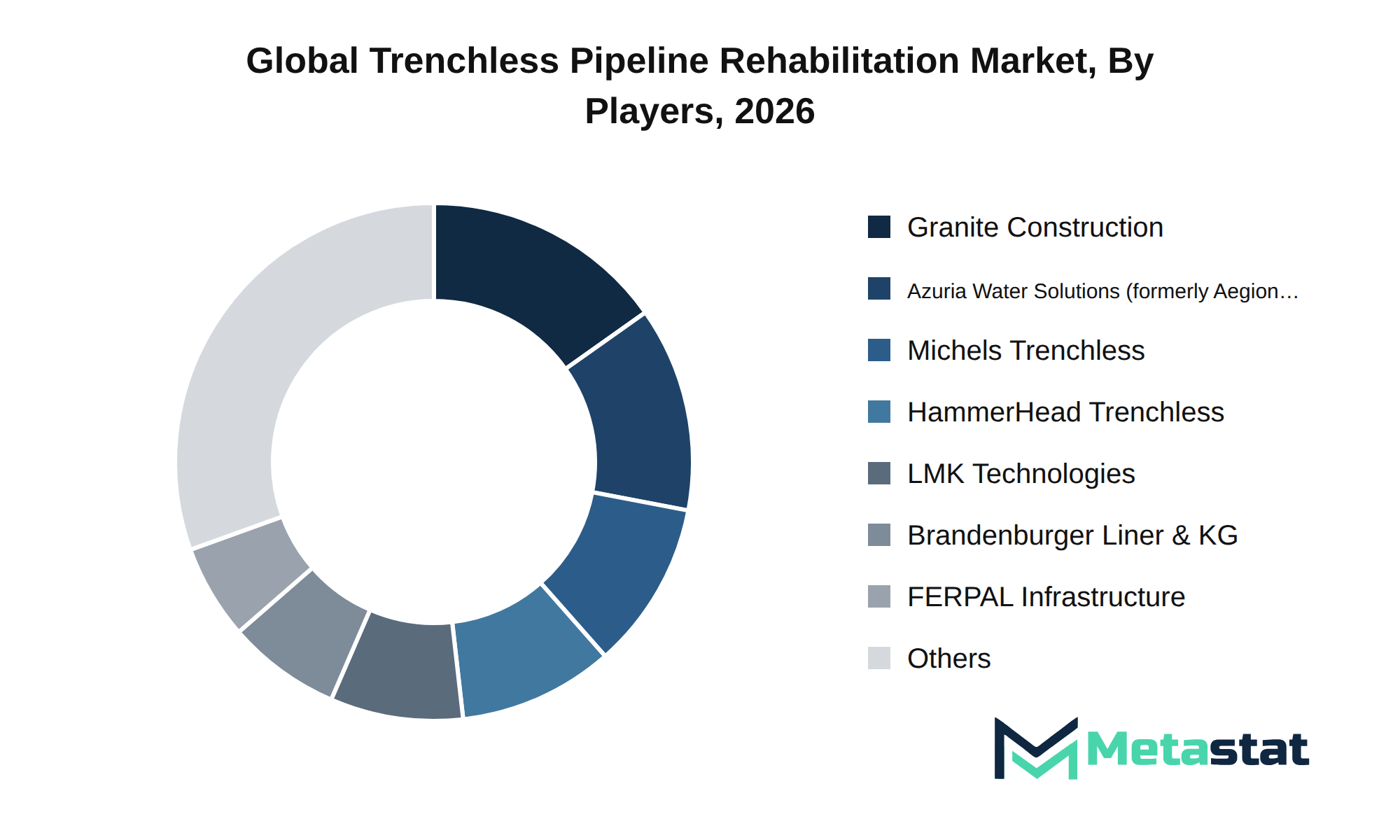
The Trenchless Pipeline Rehabilitation market experiences significant dynamics driven by strategic consolidation, technology differentiation, and evolving customer preferences. Companies including Azuria Water Solutions, Granite Construction, and HammerHead Trenchless engage in targeted mergers and acquisitions to enhance their market presence and fortify their product portfolios. This consolidation allows for improved resource allocation, streamlined operations, and a stronger competitive position in the marketplace.
Product differentiation remains a critical factor for success in the market. Innovators like LMK Technologies and Trelleborg Group leverage proprietary technologies and robust R&D pipelines to develop advanced trenchless rehabilitation solutions. This commitment to innovation builds brand equity and enhances customer retention strategies, positioning these companies favorably against new entrants and startup disruptions.
Strategic alliances and partnerships further contribute to market strength. Collaborations between established players, including Per Aarsleff A/S and SAK Construction, facilitate knowledge sharing and expand access to diverse customer segments. These partnerships enhance supply chain dominance and procurement leverage, making it challenging for new entrants to penetrate the market.
Overall, the competitive outlook for the Trenchless Pipeline Rehabilitation market presents a landscape characterized by ongoing technological advancements, strategic growth vectors, and a focus on customer-centric solutions. Companies are expected to prioritize innovation and collaboration to secure their position within this evolving industry.
Market size is forecast to rise from USD 4,452.9 million in 2025 to over USD 7,046.2 million by 2033. The base case anticipates a progression from USD 4,452.9 million in 2025 to USD 7,046.2 million by 2033 at a 5.9% CAGR. Bull cases predict accelerated growth driven by increased infrastructure investments and heightened demand for efficient pipeline rehabilitation solutions. In contrast, bear cases highlight potential challenges from regulatory changes and economic downturns, which could restrict market expansion.
Factors including evolving trade corridors and global supply chain shifts significantly influence the Trenchless Pipeline Rehabilitation market. Strategic capital allocation directives focus on enhancing infrastructure commitments, while emerging white-space opportunities present avenues for innovation and growth. The integration of next-generation technologies and commercialization timelines for R&D initiatives will further refine product life cycles, allowing stakeholders to address unmet enterprise needs.
Regulatory evolution timelines and imminent compliance milestones serve because critical considerations for market players. Increased policy enforcement horizons will shape operational strategies, ensuring alignment with industry standards. Awareness of geopolitical realignments is essential, because these factors will influence market dynamics and demand patterns in various regions.
Overall, the forecast for the Trenchless Pipeline Rehabilitation market reflects a robust outlook, driven by investments in infrastructure, advancements in technology, and the need for sustainable solutions. Strategic imperatives for executives include prioritizing defensibility roadmaps while identifying high-growth pockets within the market. This approach will guide future growth recommendations and ensure long-term success for market participants.
The report strategically identifies and profiles the key market players and analyses their core competencies in each sub-segment of the Trenchless Pipeline Rehabilitation market.
Report Attributes | Details |
Study Period | 2021-2033 |
Base Year | 2025 |
Estimated Year | 2026 |
Forecast Period | 2026-2033 |
Historical Period | 2021-2025 |
Growth Rate | CAGR 5.9% from 2026 to 2033 |
Revenue Unit | USD million |
Segmentation | By Technology, Operating Mode, Application, and Region |
By Region | North America (By Technology, Operating Mode, Application, and Country)
|
Europe (By Technology, Operating Mode, Application, and Country)
| |
Asia Pacific (By Technology, Operating Mode, Application, and Country)
| |
South America (By Technology, Operating Mode, Application, and Country)
| |
Middle East and Africa (By Technology, Operating Mode, Application, and Country)
|
Find answers to common questions about this report
The Trenchless Pipeline Rehabilitation market size was valued at USD 4,452.9 million in 2025, according to the Metastat Insights study.
The Trenchless Pipeline Rehabilitation market is projected to grow at a CAGR of 5.9% during the forecast period from 2026 to 2033.
The North America Trenchless Pipeline Rehabilitation market size is estimated to reach USD 2,519 million by 2033.
The Cured-in-Place Pipe (CIPP) segment leads the Trenchless Pipeline Rehabilitation market, with a projected value of USD 2,967.1 million by 2033. This segment's growth reflects its significant adoption in pipeline rehabilitation applications.
Key drivers for the Trenchless Pipeline Rehabilitation market include a growing emphasis on infrastructure development, increasing urbanization, and aging pipelines that necessitate upgrades. Public and private sector funding for infrastructure projects and the focus on sustainability further stimulate investments in trenchless technologies, enhancing operational efficiency while minimizing environmental impact.
North America holds the dominant share of the Trenchless Pipeline Rehabilitation market, with a projected value of USD 2,519 million in 2033, representing 37.8 percent of the total market.
Regulatory challenges create compliance hurdles that delay project approvals and increase operational costs, restricting investment in new rehabilitation technologies. supply chain disruptions and labor shortages complicate project execution, leading to increased expenses and prolonged timelines. These factors collectively hinder growth in the Trenchless Pipeline Rehabilitation market.
Growing emphasis on infrastructure development and increasing urbanization drive the adoption of trenchless pipeline rehabilitation. Investments in advanced technologies enhance operational efficiency and align with sustainability goals, attracting capital investment and promoting modernization within the industry. This combination of factors supports a favorable environment for product adoption in the market.
The Trenchless Pipeline Rehabilitation market is estimated to reach a valuation of USD 7,046.2 million by 2033.
Key players operating in the Trenchless Pipeline Rehabilitation market include Amex Sanivar, Azuria Water Solutions (formerly Aegion Corporation), Brandenburger Liner GmbH & Co KG, Granite Construction, HammerHead Trenchless, Michels Trenchless, Inc, and SEKISUI SPR Americas, LLC.
Choose Your License
Global Trenchless Pipeline Rehabilitation Market
The analysts below cover Packaging research at Metastat Insights.
LEAD ANALYST
Utkarsh Khirodkar is a Lead Market Research Analyst at MetaStat Insight, specializing in market intelligence, technology sector assessments, and competitive strategy.

SENIOR RESEARCH ANALYST
Biotechnology · Food and Beverages · Medical Devices · Packaging
Snehal Pasalkar is a Research Analyst at MetaStat Insight, operating at the intersection of life sciences research, competitive strategy, and market intelligence.

INDUSTRY CONSULTANT - CHEMICALS & ADVANCED MATERIALS
Chemicals and Materials · Machinery & Equipment · Packaging
Amit Gadhekar Consultant for Chemicals and Materials at MetaStat Insight, directing sector-specific intelligence, research, and strategic consulting across global chemical and processing markets.
Enterprise zero-trust network rollouts are often slowed down by multi-cloud transit latency and proprietary hardware retirement schedules. This study provided realistic total cost of ownership models comparing cloud-delivered security edge solutions against traditional hardware refreshes. The analysis of contract renewal lengths and software maintenance fees gave us clear visibility into enterprise replacement cycles over the next three to five years.
Scaling antibody-drug conjugate manufacturing hinges on contract manufacturing availability for high-potency active ingredients. The MetaStat Insight analysis looked closely at global cleanroom slot constraints, bioconjugation batch failure rates, and supply chain redundancies between the US, Europe, and India. The supplier capability matrix proved genuinely useful for our team when mapping secondary source options across our clinical pipeline.
Floating offshore wind feasibility relies heavily on specialized installation vessel availability and port crane limits, which most broad renewable energy forecasts ignore. The report delivered a thorough analysis of dry dock capacity, mooring chain supply constraints, and raw material pricing trends for deepwater anchor installations. It served as a solid independent sanity check for our offshore project capital expenditure assumptions.
Explore related market intelligence reports worth reading alongside this one.
Starting from
$2950
Starting from
$2950