
LEAD ANALYST
Utkarsh Khirodkar is a Lead Market Research Analyst at MetaStat Insight, specializing in market intelligence, technology sector assessments, and competitive strategy.

UAE Broiler Chicken & Hatching Egg Market Size, Share, By Product Type (Broiler Chicken Meat and Hatching Eggs), By Distribution Channel (Supermarkets/Hypermarkets, E-commerce/Online Grocery, Specialty Meat Retailers, Convenience Stores, Foodservice Sector and Others), By Region (Abu Dhabi, Dubai, Sharjah and Rest of UAE), Industry Analysis, Growth, Trends, and Forecast, 2026-2033
Report ID
MSI-5030
Published
August, 2026
Pages
260 Pages
Format
Historical
Base year
Forecast
Forecast period
Report Details
Choose Your License
UAE Broiler Chicken & Hatching Egg Market
The UAE Broiler Chicken & Hatching Egg market was valued at USD 937.4 million in 2025 and is projected to reach USD 1,333.5 million by 2033, growing at a CAGR of 4.5% over the forecast period.
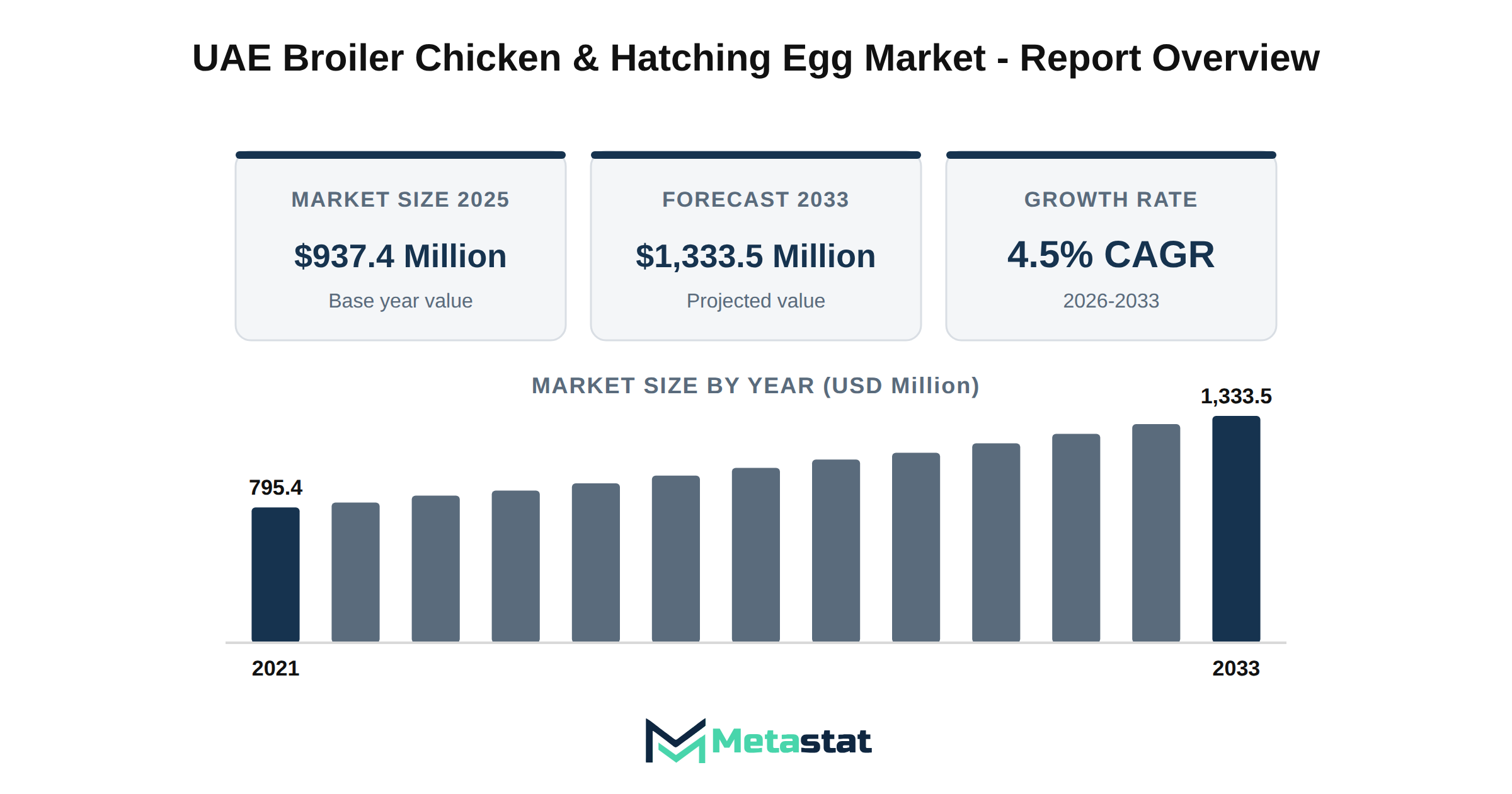
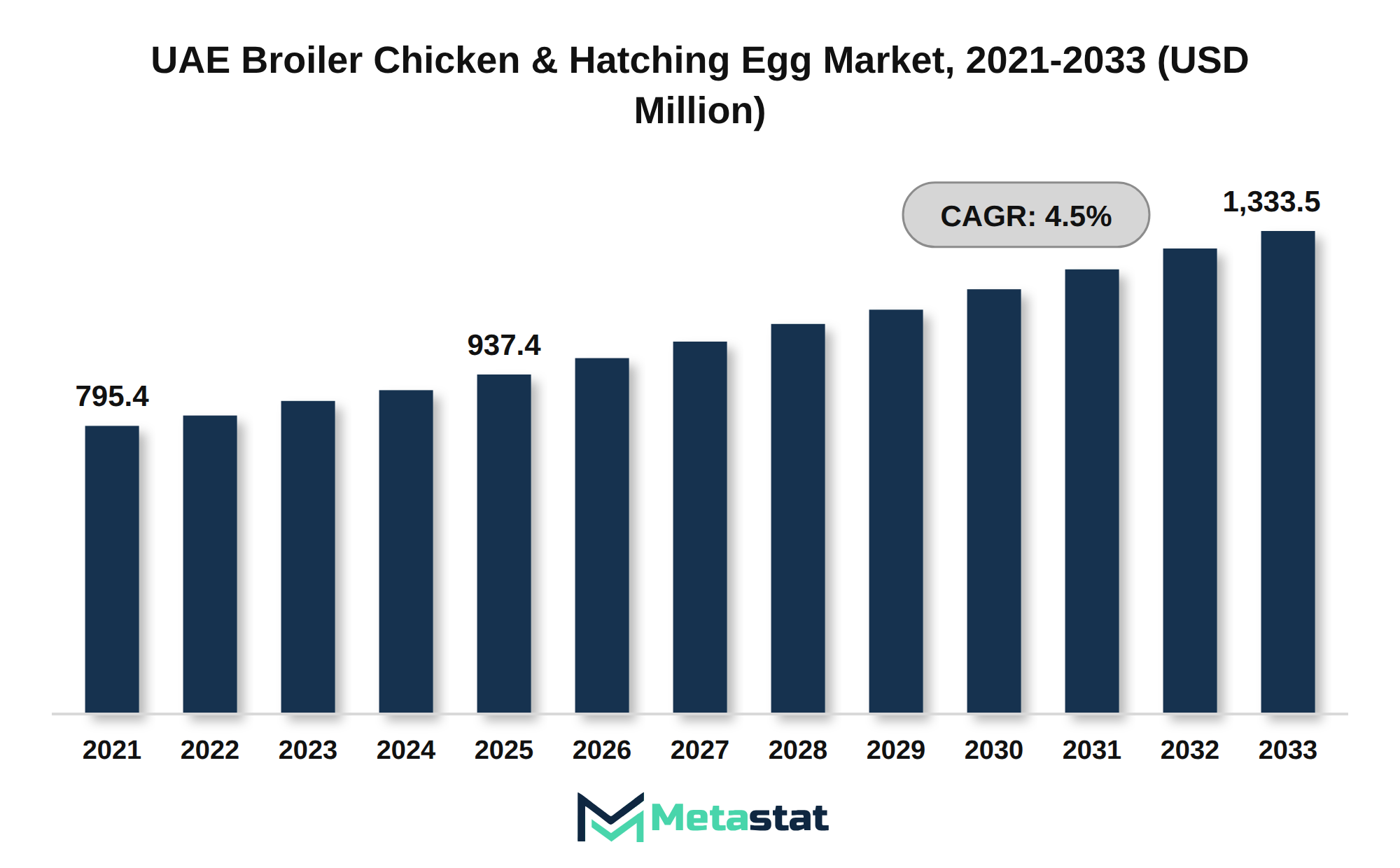
The UAE Broiler Chicken & Hatching Egg market exhibited a base value of USD 937.4 million in 2025, following a historical growth trajectory beginning from USD 795.4 million in 2021. By 2033, the market is projected to reach USD 1,333.5 million, reflecting a compound annual growth rate (CAGR) of 4.5%. This growth is driven by increasing domestic consumption of poultry products and rising consumer preference for fresh, locally sourced meat.
Domestic broiler breeder flock capacity is essential in supporting the market's expansion. An increase in flock size leads to enhanced hatching egg production, which directly influences availability and pricing in the poultry sector. The economics of hatching egg production are vital for maintaining supply chain efficiency and ensuring profitability for producers.
Hatchability and chick yield benchmarks significantly impact overall production efficiency. Optimal hatchability rates contribute to improved productivity, ultimately affecting cost dynamics within the market. Broiler feed cost dynamics represent a key factor influencing profit margins for producers. Fluctuations in feed prices directly correlate with operational costs, necessitating effective management strategies to sustain profitability.
Biosecurity measures and avian disease risk management remain critical in the UAE poultry industry. Ensuring high biosecurity standards reduces the likelihood of disease outbreaks, safeguarding both production capacity and consumer confidence in poultry products. Domestic poultry capacity expansion initiatives align with increasing demand for chicken meat, enhancing competitiveness within the market.
The regulatory landscape surrounding UAE poultry operations involves compliance with various standards and policies, which shape the operational environment for producers. Geopolitical risk frameworks further influence the market, affecting import policies and trade dynamics. Investment in research and development supports the introduction of next-generation innovations, contributing to sustainable transformation initiatives.
Decarbonization efforts and circular economy dynamics are increasingly relevant for the UAE Broiler Chicken & Hatching Egg market. Emphasis on sustainable practices enhances environmental performance and aligns with global trends towards responsible sourcing and production. The supply chain landscape, logistics architecture, and sourcing practices are critical in maintaining operational efficiency and meeting market demands.
The domestic broiler breeder flock capacity influences the overall production capability within the UAE Broiler Chicken & Hatching Egg market. Enhanced genetics and breeding practices contribute to increased efficiency and productivity, providing a foundation for sustainable growth.
Hatching egg production economics play a vital role in determining profitability for producers. Effective management of breeding stock, feed costs, and hatchery operations directly impacts margins and scalability of production, reinforcing the importance of operational excellence.
Hatchability and chick yield benchmarks represent critical performance indicators for hatcheries. High hatchability rates, combined with optimal chick yield, ensure that producers maximize output, contributing to robust market performance.
Broiler feed cost dynamics significantly affect overall production expenses. Fluctuations in feed prices impact profit margins, necessitating strategic sourcing and purchasing decisions that align with market conditions and consumer demand.
Biosecurity measures and avian disease risks remain crucial in safeguarding poultry health. Implementing stringent biosecurity protocols mitigates the risk of disease outbreaks, ensuring a stable supply chain and maintaining consumer confidence in the market.
Domestic poultry capacity expansion aligns with growing demand for broiler chicken products. Investments in infrastructure and technology drive enhancements in production capabilities, positioning local producers to meet consumer preferences for fresh and high-quality poultry.
Regulatory compliance within the UAE Broiler Chicken & Hatching Egg market establishes a framework for operational standards. Adhering to regulations and quality standards creates a competitive environment that promotes food safety and consumer trust.
The relationship of geopolitical risk frameworks influences the market. Political stability and trade agreements impact import policies and domestic production, shaping the strategic outlook for industry players.
Market fragmentation characterizes the competitive environment, with numerous players vying for market share. This fragmentation drives innovation and efficiency, compelling companies to differentiate their offerings and enhance customer engagement.
Future strategic outlooks hinge on corporate imperatives that emphasize sustainable practices and technological advancements. Companies investing in research and development contribute to the evolution of the market, ensuring long-term viability and growth.
Inflationary pressures and currency volatility present challenges in the economic environment. Companies navigating these macroeconomic headwinds employ strategic capital allocation to optimize operational performance and sustain profitability.
Urbanization in the UAE significantly influences the demand for broiler chicken and hatching eggs. Rapid population growth and urban migration lead to increased consumption of poultry products due to changing dietary preferences and convenience. Consumers in urban areas prioritize ready-to-cook meals and processed foods, contributing to rising poultry demand. The economic environment supports this trend, with growing disposable incomes facilitating higher spending on quality food products.
The UAE Broiler Chicken & Hatching Egg market benefits from evolving consumer behaviors, where health consciousness and preferences for protein-rich diets drive consumption patterns. Retailers and foodservice providers respond by expanding offerings of chicken products to meet rising demand. This adaptation enhances market accessibility and encourages investment in production capabilities, subsequently reinforcing growth within the sector.
Investment in modern farming techniques and processing facilities supports increased output and operational efficiency in poultry production. Technological advancements, including automation and digitization, enhance productivity throughout the supply chain. This focus on innovation strengthens the market's capacity to meet consumer demands while ensuring sustainable practices, resulting in long-term growth potential.
Shifting consumer preferences towards health and sustainability significantly influence the UAE Broiler Chicken & Hatching Egg market. Increased awareness of nutrition drives consumers to seek high-quality poultry products, prompting producers to enhance their offerings. The demand for organic and antibiotic-free chicken is growing, compelling suppliers to adapt their production strategies accordingly.
The emphasis on sustainability drives investments in environmentally friendly practices across the sector. Producers implement measures to reduce their carbon footprint and optimize resource management. This shift aligns with consumer expectations and positions suppliers favorably within the market, promoting brand loyalty and increasing market share.
Innovative marketing strategies focusing on health benefits and ethical sourcing appeal to a broader demographic, including younger consumers who prioritize transparency and quality. The market expands due to a well-informed consumer base that values both quality and sustainability in poultry products.
The UAE Broiler Chicken & Hatching Egg market faces constraints due to stringent regulatory frameworks that enforce compliance across various operational stages. These regulations often complicate production processes, imposing additional costs that affect overall profitability. Producers encounter legal mandates that dictate specific production methods, leading to increased operational complexities and resource allocation challenges.
Macroeconomic headwinds further exacerbate the situation, contributing to inflationary pressures that increase costs related to feed and other inputs. Such economic conditions deter investment in new technologies and infrastructure, resulting in capital stagnation in the sector. The combined effects of rising costs and limited investment capabilities restrict producers' ability to scale operations effectively.
Supply chain disruptions, influenced by geopolitical instability and resource scarcity, hinder the timely acquisition of essential materials, pushing production schedules back and exacerbating market fragmentation. With fluctuating availability of key resources, producers experience challenges in maintaining consistent product quality and meeting consumer demand.
Technological obsolescence risks impact operational efficiency, driven by many producers relying on outdated equipment that fails to meet modern production standards. This situation leads to increased maintenance costs and limits the ability to adopt innovative practices that could enhance productivity.
Lastly, rising workforce overhead and talent gaps contribute to operational inefficiencies. With a shortage of skilled labor, the market experiences difficulties in executing advanced production techniques, ultimately affecting output capacity and competitive positioning within the UAE Broiler Chicken & Hatching Egg market. These factors collectively create a challenging environment for growth and sustainability, requiring strategic adjustments by industry participants to navigate the prevailing constraints.
The UAE Broiler Chicken & Hatching Egg market experiences challenges stemming from geopolitical fragmentation and trade deficits, significantly disrupting supply chains. Disruptions lead to increased costs and delays in sourcing essential components and feedstock necessary for production. Tariff friction exacerbates these issues, hindering access to international markets and affecting pricing strategies across the sector.
Technological disruptions pose another challenge, requiring continual adaptation and integration of new processes within existing frameworks. Complex research and development integrations demand substantial time and resources, diverting attention and finances from other operational areas. Interoperability friction complicates collaboration between different market players, reducing efficiency and increasing operational costs.
Logistics disruptions, stemming from regional instability and infrastructure gaps, contribute to supply chain instability. These factors complicate the movement of goods, affecting the timely delivery of both raw materials and finished products. This situation impacts market competitiveness. Pricing compression and margin pressures arise from increased input costs and the necessity to maintain market position amid fluctuating consumer demands.
The market faces workforce skill gaps that challenge talent retention efforts. Rising input costs, stemming from feedstock volatility and environmental sustainability demands, strain financial margins. These elements increase pressure on producers to optimize operations while navigating the complexities of compliance with evolving regulatory standards.
Environmental lifecycle footprints and decarbonization mandates influence production practices, requiring investments in sustainable technologies and processes. These mandates create barriers to entry for smaller players while placing additional operational burdens on established firms, complicating the UAE Broiler Chicken & Hatching Egg market.
The UAE Broiler Chicken & Hatching Egg market benefits from emerging trends in digital transformation, reshaping the purchasing landscape. Increasing adoption of e-commerce platforms facilitates consumer access to broiler chicken and hatching eggs, enabling suppliers to reach a broader audience. Digital procurement shifts enhance operational efficiency, allowing companies to streamline supply chains and reduce costs associated with traditional purchasing methods.
Modernization of infrastructure supports this transition, with improved logistics networks and distribution channels enhancing product availability. Strategic consolidation among suppliers strengthens market position, allowing businesses to leverage shared resources and expertise. Cross-industry mergers drive innovation, creating new product offerings that cater to the evolving needs of consumers.
Next-generation innovations in production techniques and processing technologies contribute to higher quality standards within the market. These advancements enable producers to meet the increasing expectations of health-conscious consumers while maintaining operational yield maximization. The focus on sustainability imperatives and eco-friendly practices aligns with global trends, making the market more attractive to environmentally aware buyers.
Continued growth in the UAE Broiler Chicken & Hatching Egg market hinges on these dynamic shifts, emphasizing the importance of adapting to changing consumer behavior and leveraging technological advancements. Companies prioritizing digital transformation strategies and sustainability considerations position themselves for significant market opportunities in the coming years.
The UAE Broiler Chicken & Hatching Egg market is segmented based on Product Type, Distribution Channel, and Region.
Valued at USD 956.4 million in 2026, the Broiler Chicken Meat segment is projected to reach USD 1,290.9 million by 2033, reflecting a CAGR of 4.4% during the forecast period. Demand for broiler chicken meat continues to increase owing to factors including rising population, urbanization, and changing dietary habits in the UAE. Consumers favor chicken because a primary protein source, contributing to heightened market growth.
Technological advancements in poultry farming enhance production efficiency, enabling suppliers to meet growing consumer demand. Next-generation upgrades in breeding and feeding practices improve yield and reduce costs, benefiting producers operating within the market. Evolving food safety standards and regulatory compliance shape production practices, ensuring meat quality and safety. This influences consumer trust and purchasing decisions.
Cost structures in the broiler chicken meat segment reflect pressures from raw material sourcing and pricing volatility. Factors including feed costs significantly affect profitability for producers. Strategic opportunities arise from diversifying distribution channels, including e-commerce platforms and specialty meat retailers. This expands market reach and facilitates direct consumer engagement.
Consumption shifts toward healthier and more sustainable food options drive innovation in product offerings, including organic and free-range chicken. This evolution in consumer preferences pressures producers to adapt their strategies to capture market share. The UAE Broiler Chicken & Hatching Egg market presents considerable potential for investment, driven by a favorable economic outlook and increasing domestic consumption.
Projected growth in the Hatching Eggs segment is driven by increasing demand for poultry products and advancements in breeding technologies. The segment is estimated to reach USD 42.7 million by 2033, at a CAGR of 7.4% during the forecast period. Enhanced incubation techniques, improvements in genetic quality, and rising consumption of chicken products contribute to this growth trajectory. The ongoing evolution of poultry farming practices, fueled by consumer demand for higher-quality meat, emphasizes the importance of strong breeding programs.
Investment in technology and research plays a critical role in shaping the market landscape. Enhanced breeding techniques that optimize the health and productivity of hatching eggs support higher yield rates. Regulatory compliance standards regarding animal welfare and food safety drive producers to adopt innovative practices. These factors collectively establish a favorable environment for the Hatching Eggs segment within the broader UAE Broiler Chicken & Hatching Egg market.
Changing consumption patterns, influenced by a shift towards protein-rich diets, drive an increase in demand for poultry products, including hatching eggs. Producers and suppliers are adapting to these trends by refining their product offerings and enhancing supply chain efficiency. The segment's growth reflects a proactive response to market dynamics, positioning it for substantial development within the UAE Broiler Chicken & Hatching Egg market.
Consumer preferences increasingly shift towards convenience and quality, driving demand within the Supermarkets/Hypermarkets distribution channel in the UAE Broiler Chicken & Hatching Egg market. Retailers adapt their offerings to meet the expectations of health-conscious consumers, emphasizing fresh and high-quality poultry products. This segment thrives on the consumer's desire for easy access to a variety of broiler chicken and hatching eggs.
Intensifying competition among retailers prompts investments in marketing strategies and promotional campaigns to attract customers. Enhanced product visibility and merchandising initiatives in stores influence purchasing decisions. A robust supply chain enables supermarkets and hypermarkets to maintain adequate stock levels to meet consumer demand efficiently.
Technological advancements facilitate improved inventory management and customer engagement, allowing retailers to cater more effectively to emerging consumer trends. The integration of e-commerce solutions within supermarkets and hypermarkets transforms shopping experiences, enabling online orders and home deliveries of broiler chicken and hatching eggs. This innovation enhances convenience and expands market reach.
Regulatory guidelines regarding food safety and quality standards impact operations within the Supermarkets/Hypermarkets segment. Retailers invest in compliance measures to ensure that products meet stringent requirements, further building consumer trust. These factors contribute to a positive outlook for the segment within the broader UAE Broiler Chicken & Hatching Egg market.
In the UAE Broiler Chicken & Hatching Egg market, the E‑commerce / Online Grocery distribution channel experiences significant growth driven by the increasing shift towards online shopping among consumers. This trend results from a desire for convenience, variety, and competitive pricing. Enhanced digital infrastructure and a growing internet penetration rate support the adoption of online grocery shopping, facilitating easier access to fresh food products, including poultry. While consumers prioritize convenience, demand for poultry products in the online space rises significantly.
Technological advancements in logistics and supply chain management contribute to the efficiency of online grocery platforms. These advancements enable quicker delivery times and improved inventory management, further encouraging consumers to purchase broiler chicken and hatching eggs through digital channels. The integration of mobile applications and user-friendly interfaces creates an engaging shopping experience, prompting consumers to engage with online services for their grocery needs.
Changing consumer habits reflect a notable consumption shift towards online purchasing. With busy lifestyles, many consumers prefer the flexibility offered by e-commerce, choosing to order products from the comfort of their homes. This evolving behavior aligns with the broader trend within the UAE, where young, tech-savvy generations increasingly influence market dynamics.
Regulatory compliance standards play a crucial role in shaping the ecosystem of online grocery sales. Adhering to food safety regulations and quality assurance protocols ensures that products offered through e-commerce platforms meet consumer expectations. Certifications from relevant authorities enhance consumer trust in online purchases, promoting further growth within this distribution channel.
Strategic opportunity windows emerge for businesses operating in the online grocery market, particularly for those specializing in poultry products. Investment in marketing strategies that target specific consumer demographics significantly enhances market penetration and brand loyalty. Companies that capitalize on these opportunities position themselves favorably within the competitive environment of the UAE Broiler Chicken & Hatching Egg market.
Consumer interest in specialty meat products continues to rise within the UAE Broiler Chicken & Hatching Egg market, driven by demands for high-quality and ethically sourced options. Specialty meat retailers play a significant role in meeting this demand, often providing unique offerings that cater to discerning customers seeking premium poultry products.
Regulatory compliance and certifications have become essential factors influencing the operations of specialty meat retailers. Adhering to stringent food safety standards ensures consumer trust while enhancing the overall market credibility. Investments in training and quality assurance processes facilitate alignment with these standards, thereby creating a competitive edge in the market.
Shifts in consumption patterns reflect a growing preference for artisanal and locally sourced meats. Specialty meat retailers capitalize on this trend by offering products that emphasize freshness and provenance, appealing to health-conscious consumers. This trend signals an opportunity for expansion within the market, driven by retailers adapting their product lines to align with evolving consumer preferences.
Pricing volatility in the poultry supply chain presents challenges for specialty meat retailers. Fluctuations in raw material costs pressure margins, necessitating strategic pricing strategies to maintain profitability. These retailers navigate this landscape by leveraging relationships with suppliers and optimizing sourcing strategies.
Technological advancements enable specialty meat retailers to enhance the shopping experience. Innovations in e-commerce platforms and digital marketing strategies facilitate greater customer engagement and accessibility. This evolution supports growth in the market, particularly among younger demographics who prefer online shopping.
Strategic opportunity windows exist for specialty meat retailers to differentiate themselves in a competitive environment. By focusing on product evolution, including the introduction of gourmet and value-added products, these retailers attract a broader customer base while enhancing market presence.
Growth in the Convenience Stores distribution channel significantly impacts the UAE Broiler Chicken & Hatching Egg market. The channel benefits from evolving consumer habits that favor convenient shopping experiences, particularly in urban areas where busy lifestyles increase the demand for ready-to-cook and pre-packaged poultry products. This trend results in enhanced product availability and visibility in retail spaces, encouraging broader adoption among consumers.
Strategic partnerships between poultry producers and convenience store chains facilitate improved product distribution and merchandising. These alliances enable producers to present fresh and high-quality broiler chicken and hatching eggs directly to consumers. Enhanced in-store promotions and product placement effectively drive consumer engagement, building brand loyalty and increasing sales volumes.
Technological advancements in supply chain management and inventory tracking allow convenience stores to maintain optimal stock levels and reduce waste. This operational efficiency contributes to overall profitability, reinforcing the appeal of broiler chicken and hatching eggs among retailers. The ability to respond quickly to consumer preferences and market trends positions convenience stores because significant players in the growth of the market.
Regulatory compliance concerning food safety and quality further shapes the dynamics within this distribution channel. Convenience stores adhering to stringent standards build consumer trust, which translates into increased sales. While health-conscious consumers prioritize transparency and quality in their food choices, the alignment of convenience stores with these values enhances their competitive advantage in the market.
The Convenience Stores distribution channel significantly influences the overall performance of the UAE Broiler Chicken & Hatching Egg market. The combination of evolving consumer preferences, strategic partnerships, technological advancements, and a focus on regulatory compliance creates a conducive environment for growth and expansion within this segment.
Increasing demand for convenience dining options significantly influences the foodservice sector within the UAE Broiler Chicken & Hatching Egg market. Restaurants, cafes, and catering services prioritize efficient supply chains to meet consumer expectations for quality and freshness. This focus on convenience leads to a rise in partnerships between poultry suppliers and foodservice operators, improving product availability in various dining establishments.
Health-conscious consumers drive the demand for high-quality broiler chicken products in the foodservice sector. Operators respond by sourcing poultry that meets stringent quality standards, emphasizing traceability and animal welfare. This shift creates opportunities for suppliers who ensure compliance with evolving regulations and certifications.
Technological advancements in food processing and preparation continue to shape the foodservice sector. Adoption of innovative cooking methods and equipment enhances product quality and consistency, allowing establishments to maintain competitive pricing while improving profit margins. The integration of technology supports operational efficiency and attracts a broader customer base.
Consumer preferences are shifting towards locally sourced and sustainable products, prompting foodservice operators to re-evaluate their supply chains. This trend encourages collaboration between local poultry farms and restaurants, establishing a stronger connection to the community and reducing transportation costs. Such practices enhance brand loyalty and increase foot traffic, positively impacting revenues.
Strategic investment in marketing initiatives focusing on health benefits and unique product offerings plays a crucial role in shaping the growth of the foodservice sector in the UAE Broiler Chicken & Hatching Egg market. Effective marketing campaigns educate consumers about the nutritional advantages of chicken products, further driving demand within this segment.
Consumer demand for broiler chicken and hatching eggs continues to diversify, leading to increased interest in alternative distribution channels including "Others." These channels include local markets, specialty food shops, and non-traditional retail formats. Shifts in consumer purchasing behavior towards personalized experiences drive the growth of these channels, enabling suppliers to tap into niche markets. This segment accommodates consumers seeking unique products and local sourcing, supporting smaller producers in gaining market access.
Regulatory compliance shapes the dynamics of the "Others" segment. Strict food safety and quality standards drive producers to ensure their operations align with local regulations, enhancing consumer trust. The emphasis on certifications and local sourcing strengthens market positioning, influencing purchasing decisions of consumers inclined towards sustainable and ethical practices. This trend reflects a broader shift in the UAE Broiler Chicken & Hatching Egg market towards responsible consumption patterns.
Investment in technology and innovation is notable within this segment. Advances in supply chain management and distribution techniques enhance the efficiency of reaching customers through alternative channels. This technological maturation improves resilience against market fluctuations and supports strategic opportunity windows for market players. While the market evolves, the focus on improving product offerings and consumer engagement drives growth in the "Others" distribution channel.
Rising consumer awareness regarding health and nutrition drives demand for high-quality broiler chicken products in Abu Dhabi. The market experiences an increasing preference for fresh and locally sourced poultry, aligning with broader trends towards sustainability. This shift encourages producers to enhance their offerings, focusing on product quality and transparent sourcing practices. Evolving food safety regulations contribute to the segment's growth, prompting producers to adopt stringent compliance measures that ensure product integrity.
The market experiences significant influence from the distribution channels employed. Supermarkets and hypermarkets remain key avenues, with consumers favoring these platforms for their convenience and variety. E-commerce channels are rapidly gaining traction, reflecting a shift in shopping behaviors, particularly among younger demographics. Enhanced logistics capabilities and the growing availability of online grocery options facilitate this transition, expanding accessibility to poultry products.
Geographically, Abu Dhabi presents distinct opportunities for growth within the UAE Broiler Chicken & Hatching Egg market. The region's affluent population supports premium offerings, creating a demand for specialty products. Strategic investments in production capabilities and technology enhancements enable suppliers to meet this demand effectively. The local market landscape encourages innovative approaches in product development, creating competitive advantages for suppliers positioned to adapt to consumer preferences.
In Dubai, the growing population and increasing urbanization significantly influence the demand landscape within the UAE Broiler Chicken & Hatching Egg market. Urban growth drives higher consumption of poultry products, with consumers seeking quality and convenience. Rising disposable income across various demographics increases purchasing power, allowing residents to opt for premium poultry offerings.
Technological maturation plays a critical role in enhancing production efficiency and product quality. Innovations in breeding techniques and farm management contribute to improved yield rates and healthier poultry. These advancements cater to evolving consumer preferences that prioritize both quality and sustainability in food choices.
End-use dynamics reflect a marked preference for fresh, locally sourced products among consumers in Dubai. This trend aligns with broader shifts towards health-conscious consumption patterns, prompting suppliers to adapt their offerings to meet these expectations. Increased focus on regulatory compliance ensures that products adhere to stringent health and safety standards, reinforcing consumer trust in the market.
Pricing volatility remains a critical factor for market participants. Fluctuations in feed costs and supply chain resilience challenges impact operating margins. Players actively seek strategic opportunities to mitigate these pressures by exploring alternative sourcing strategies and enhancing operational efficiencies.
In this evolving landscape, investment in next-generation upgrades and product evolution remains essential. Companies that prioritize innovative solutions and responsive supply chains capture greater market share in the competitive environment of the UAE Broiler Chicken & Hatching Egg market.
In Sharjah, the consumption of broiler chicken and hatching eggs aligns with regional dietary preferences and growing populations. Demand for high-quality poultry products drives producers to enhance production methods and operational efficiencies. Changing lifestyle patterns increase reliance on convenient food options, thereby increasing the need for readily available chicken products in various distribution channels.
The market experiences a shift towards specialty meat offerings due to heightened consumer awareness regarding health benefits and food quality. Strategic investments in production facilities and technology upgrades facilitate enhanced output and quality assurance. Regulatory compliance with food safety and quality standards influences production processes, compelling producers to maintain high standards throughout the supply chain.
Competition among suppliers intensifies, prompting innovative marketing strategies and product diversification. This dynamic creates an environment conducive to growth within the UAE Broiler Chicken & Hatching Egg market. The increasing focus on sustainable practices and ethical sourcing is expected to shape future business models, reinforcing the importance of supply chain resilience in meeting consumer expectations.
Growth in the Rest of UAE segment reflects increasing consumer interest in locally sourced and fresh poultry products. Demand for broiler chicken and hatching eggs is driven by the region's expanding population and evolving dietary preferences, which emphasize high-quality protein sources. Innovations in poultry farming techniques and breeding strategies enhance sustained production of competitive products, improving the overall market offering.
Investment in local poultry farms supports supply chain resilience, addressing challenges posed by external market fluctuations. Regulatory compliance standards ensure that production adheres to safety and quality measures, further building consumer trust. Pricing volatility stemming from raw material costs impacts profit margins, prompting producers to explore cost-effective solutions and strategic partnerships for raw material sourcing.
Technological maturation in farming techniques enables next-generation upgrades in production efficiency, contributing to segment growth. The heightened focus on sustainability and ethical practices influences consumer choices, leading to shifts towards organic and free-range products within the market. Understanding these dynamics is crucial for stakeholders aiming to navigate the evolving market of the UAE Broiler Chicken & Hatching Egg sector effectively.
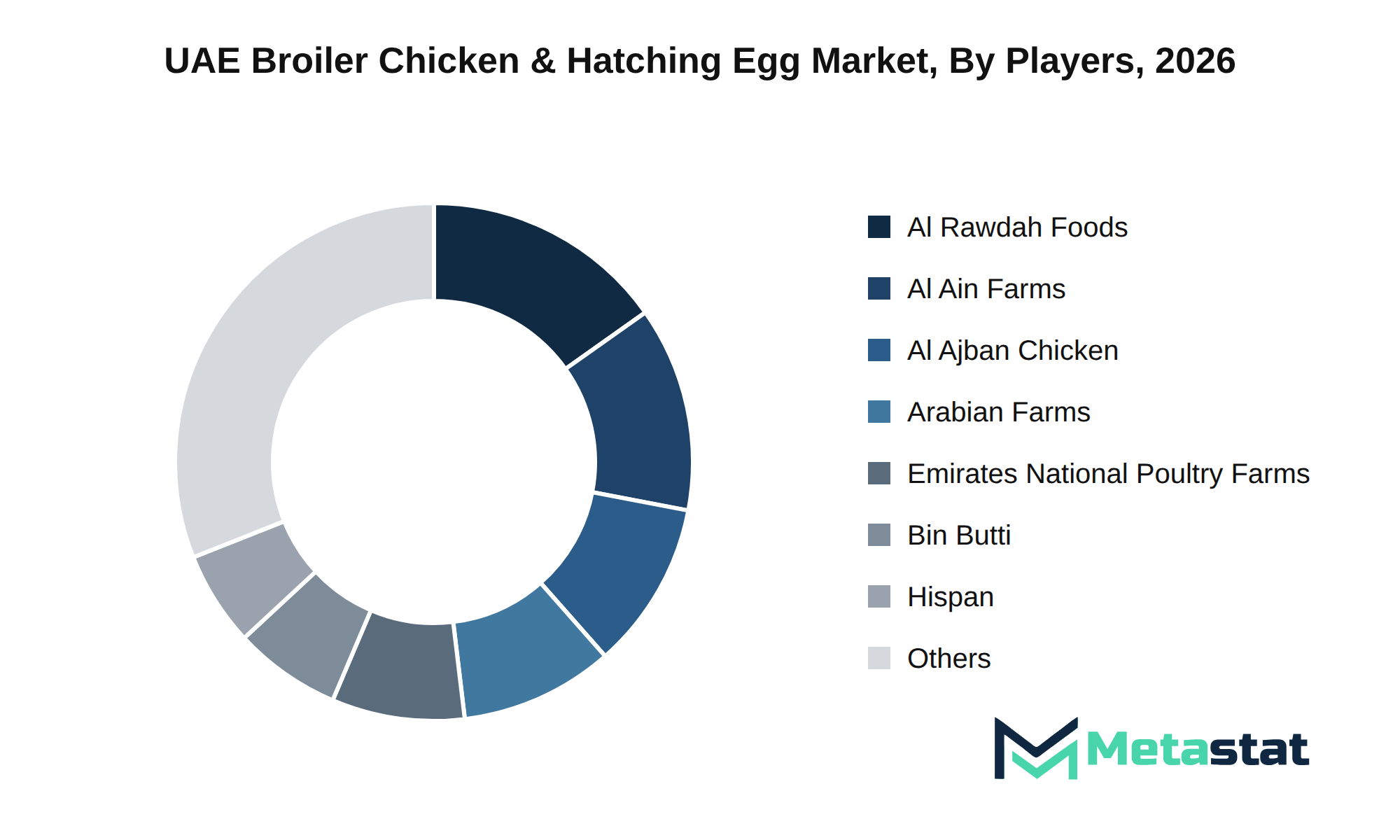
The competitive landscape in the UAE Broiler Chicken & Hatching Egg market presents a dynamic environment characterized by strategic consolidation, partnerships, and product differentiation. Companies including Al Rawdah Foods and Al Ain Farms leverage established brand equity to enhance customer retention strategies, ensuring a loyal customer base amid rising competition.
Strategic alliances play a significant role in the market, with players like Emirates National Poultry Farms - IFFCO and Arabian Farms focusing on cross-industry partnerships to strengthen supply chains. The emphasis on innovation drives investment in R&D pipelines, enabling firms to enhance product offerings and effectively address evolving consumer preferences.
Barriers to entry remain substantial due to established players like Al Ajban Chicken and Bin Butti Group, which benefit from procurement leverage and substantial distribution networks. This environment creates challenges for new entrants, limiting the threat of startup disruptions. Overall, the market outlook suggests significant growth potential, driven by strategic growth vectors and defensive imperatives.
Market size is forecast to rise from USD 937.4 million in 2025 to over USD 1,333.5 million by 2033. The base case reflects this growth trajectory at a 4.5% CAGR. In an optimistic scenario, robust demand driven by shifting consumer preferences toward poultry products and increased health consciousness accelerates growth beyond the base case, enhancing revenue generation for stakeholders. Conversely, in a bearish scenario, challenges including heightened production costs and regulatory compliance pressures constrain growth, leading to a potential slowdown in market expansion.
Factors influencing the UAE Broiler Chicken & Hatching Egg market include macroeconomic conditions, evolving trade corridors, and strategic capital allocation directives. Changes in downstream demand result from shifts in consumer habits and preferences for sustainable practices. Core industry maturation drives consolidation and innovation, while next-generation technology integration enhances production efficiency and product quality. Regulatory evolution and timely compliance with food safety standards remain critical for market players, because adherence ensures long-term sustainability and competitiveness.
Investment in infrastructure and capital expenditures supports expansion efforts, facilitating access to emerging white-space opportunities. Unmet enterprise needs present avenues for innovation by addressing gaps in product offerings and service delivery. Strategic imperatives at the executive level focus on strengthening defensibility and enhancing market positioning through differentiated product strategies. A comprehensive understanding of these dynamics guides stakeholders in navigating the complexities of the UAE Broiler Chicken & Hatching Egg market.
The report strategically identifies and profiles the key market players and analyses their core competencies in each sub-segment of the Broiler Chicken & Hatching Egg market.
Report Attributes | Details |
Study Period | 2021-2033 |
Base Year | 2025 |
Estimated Year | 2026 |
Forecast Period | 2026-2033 |
Historical Period | 2021-2025 |
Growth Rate | CAGR 4.5% from 2026 to 2033 |
Revenue Unit | USD million |
Segmentation | By Product Type, Distribution Channel, Region, and Region |
Find answers to common questions about this report
The Broiler Chicken & Hatching Egg market size in the UAE was valued at USD 937.4 million in 2025.
The Broiler Chicken & Hatching Egg market is expected to grow at a CAGR of 4.5% during the forecast period from 2026 to 2033.
Broiler Chicken Meat leads the UAE Broiler Chicken & Hatching Egg market, with a projected value of USD 1,290.9 million by 2033. This segment shows a compound annual growth rate of 4.4% from 2026 to 2033.
Key drivers for the UAE Broiler Chicken & Hatching Egg market include urbanization, rising disposable incomes, and shifting consumer preferences towards health and sustainability. Increased demand for ready-to-cook meals and protein-rich diets, coupled with investments in modern farming techniques, enhances production capabilities and market accessibility.
The UAE Broiler Chicken & Hatching Egg market growth faces constraints from stringent regulatory frameworks that complicate production processes and increase costs. supply chain disruptions due to geopolitical instability and resource scarcity hinder timely access to essential materials, affecting overall production efficiency and profitability.
Increasing health consciousness and preferences for protein-rich diets favor product adoption in the UAE Broiler Chicken & Hatching Egg market. Urban consumers prioritize convenience and quality, leading to rising demand for ready-to-cook and organic poultry products. Retailers and foodservice providers expand their offerings to meet these evolving consumer behaviors.
The Broiler Chicken & Hatching Egg market is estimated to reach a valuation of USD 1,333.5 million by 2033.
Key players in the UAE Broiler Chicken & Hatching Egg Market include Al Rawdah Foods, Al Ain Farms, Al Ajban Chicken, Arabian Farms, Emirates National Poultry Farms - IFFCO, and Americana Foods Al Islami Foods.
Broiler chicken meat is projected to reach USD 1,290.9 million by 2033, growing from USD 956.4 million in 2026, reflecting a CAGR of 4.4%.
Supermarkets and hypermarkets represent a significant distribution channel in the UAE Broiler Chicken & Hatching Egg market, catering to the majority of consumer purchases.
The analysts below cover Agriculture research at Metastat Insights.
LEAD ANALYST
Utkarsh Khirodkar is a Lead Market Research Analyst at MetaStat Insight, specializing in market intelligence, technology sector assessments, and competitive strategy.
Floating offshore wind feasibility relies heavily on specialized installation vessel availability and port crane limits, which most broad renewable energy forecasts ignore. The report delivered a thorough analysis of dry dock capacity, mooring chain supply constraints, and raw material pricing trends for deepwater anchor installations. It served as a solid independent sanity check for our offshore project capital expenditure assumptions.
Assessing commercial microgrid software adoption requires looking past top-level installation numbers and examining utility interconnection queues. The research provided verifiable data on average permitting timelines, tariff structures, and battery storage integration costs across regional utility territories. That grounded perspective was valuable for our team when building five-year demand projections for industrial microgrid controllers.
Ambulatory surgical centers have very different purchasing cycles for robotic-assisted surgery platforms than major hospital networks. The MetaStat Insight study focused squarely on capital expenditure depreciation, procedural reimbursement pathways, and surgeon training overhead. That operational clarity made it much simpler to validate multi-year procedure growth forecasts against actual ambulatory center adoption patterns.
Explore related market intelligence reports worth reading alongside this one.