
US Agricultural Spray Drone Market
US Agricultural Spray Drone Market Size, Share, By Type (Fixed Wing, Rotary Wing, and Others), By Application (Herbicide Spraying, Pesticide & Insecticide Spraying, Fungicide Spraying, Liquid Fertilizer & Nutrient Spraying, and Others), Industry Analysis, Growth, Trends, and Forecast, 2026-2033
MSI-5023
August 21, 2026
Updated
266 Pages
Historical
Base year
Forecast
Forecast period
Report Details
Comprehensive Market Analysis And Insights
Market Overview
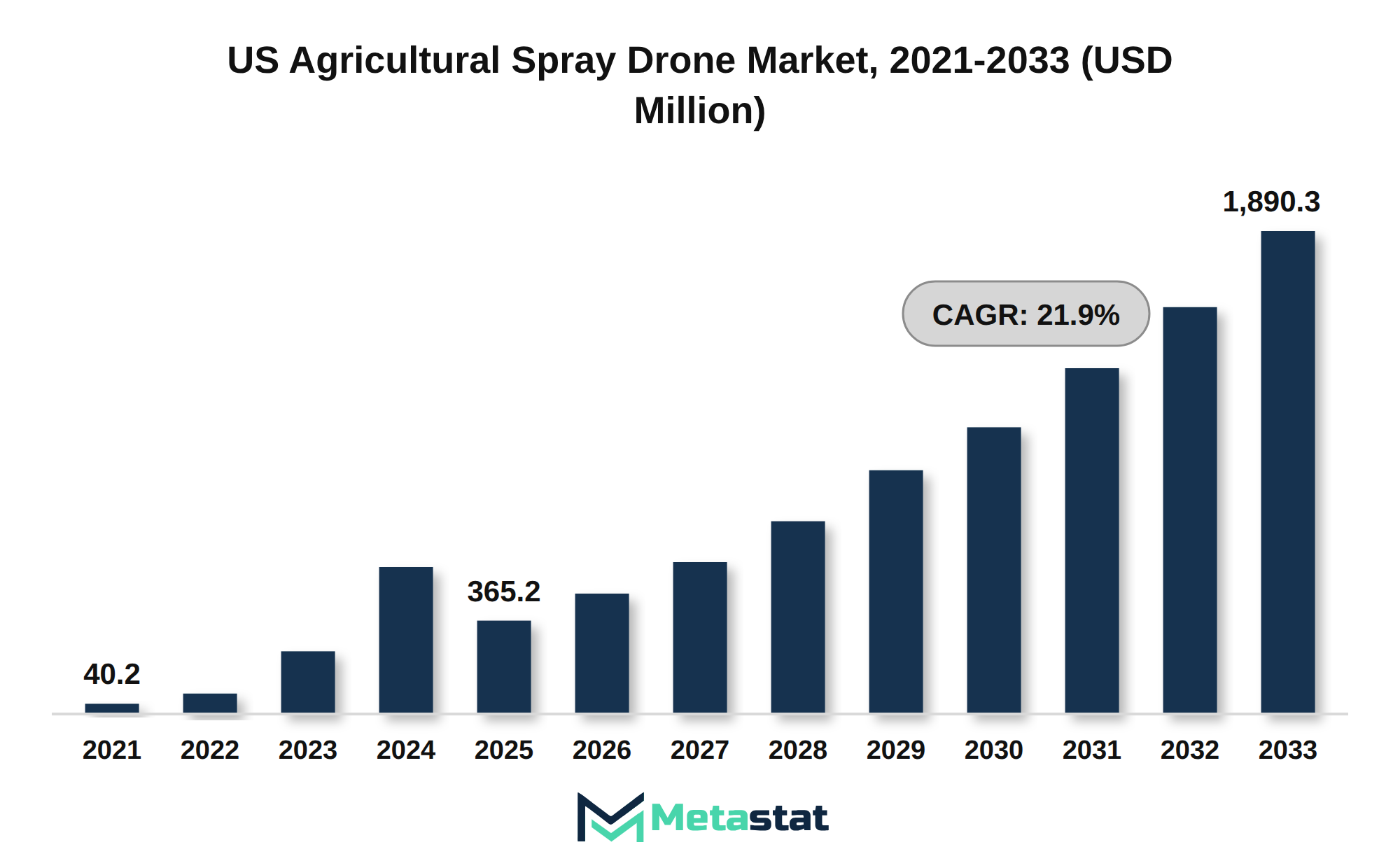
The US Agricultural Spray Drone market was valued at USD 365.2 million in 2025 and is projected to reach USD 1,890.3 million by 2033, growing at a CAGR of 21.9% over the forecast period. Moreover, the United States Agricultural Spray Drone market volume was 3,711 units in 2025 and is projected to reach 15,672 units by 2033, at a CAGR of 17.1% during the forecast period
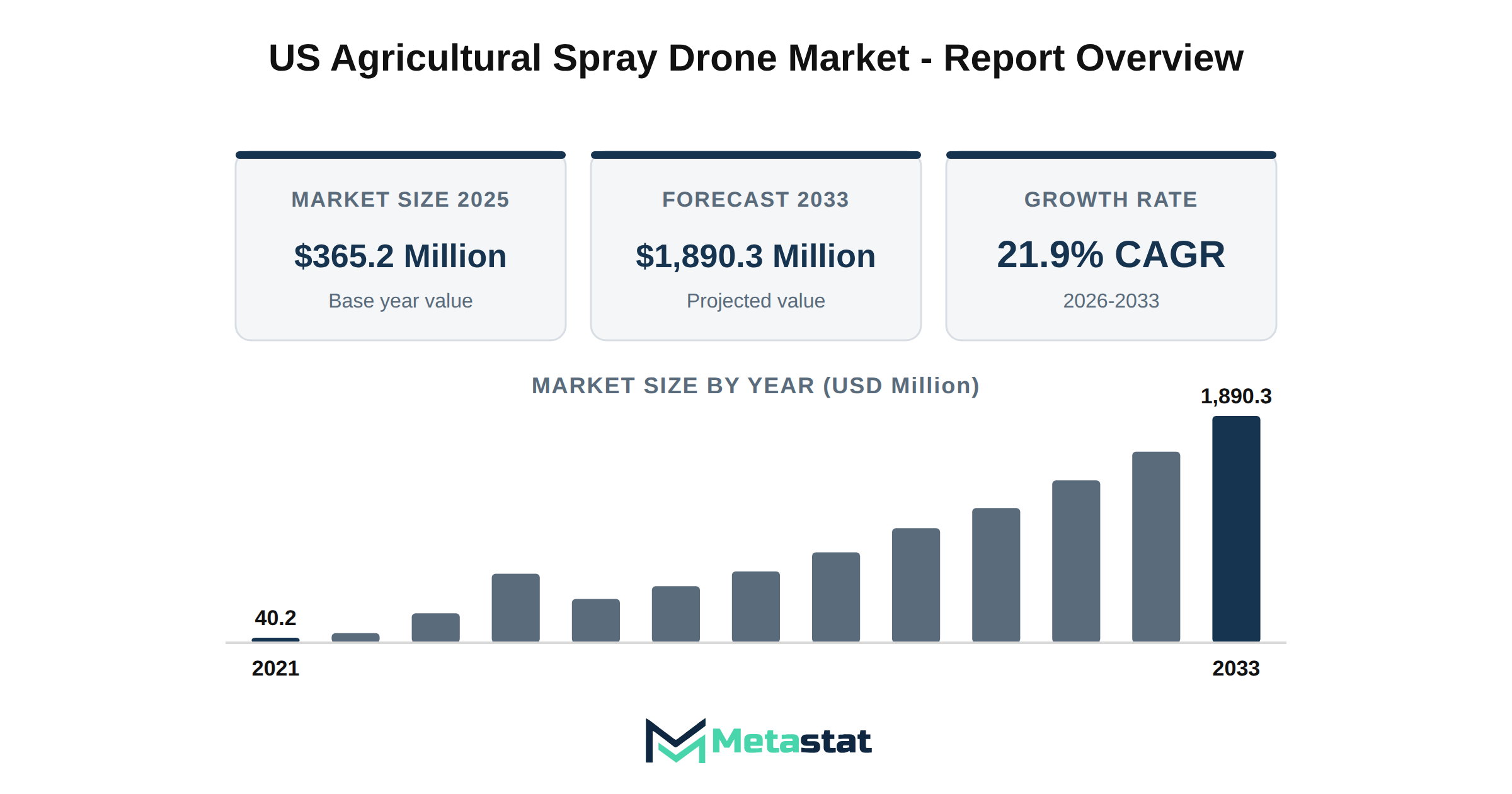
The US Agricultural Spray Drone market is expected to experience significant growth, with a base value of USD 365.2 million in 2025, projecting to reach USD 1,890.3 million by 2033. This growth trajectory represents a compound annual growth rate (CAGR) of 21.9%. Historical data indicates a gradual increase in market size, starting from USD 40.2 million in 2021 and reaching USD 575.2 million by 2024. The forecast period from 2026 to 2033 anticipates steady annual growth, reflecting the increasing adoption of agricultural spray drones across various applications.
Key segments within the market include Fixed Wing, Rotary Wing, and Other types including Hybrid VTOL. The Fixed Wing segment shows potential for substantial expansion, with expectations to grow from USD 55.9 million in 2026 to USD 281.3 million by 2033, translating to a CAGR of 26%. The Rotary Wing category is projected to account for USD 1,326.2 million by 2033, while Other types are expected to reach USD 282.8 million. This diversification in segment growth highlights the varying applications and technological advancements influencing the market dynamics.
Factors driving the growth of the US Agricultural Spray Drone market include advancements in drone technology, increased efficiency in agricultural practices, and the rising demand for precision agriculture. The integration of drones into agricultural operations enhances the effectiveness of herbicide, pesticide, and fungicide applications, optimizing resource use and minimizing environmental impact. The growing emphasis on sustainable farming practices contributes to the market's expansion, driven by drones that facilitate targeted and efficient spraying techniques.
Investment in research and development (R&D) significantly shapes the future of the market. Companies are focusing on developing next-generation drones equipped with enhanced capabilities, including improved flight times, payload capacities, and automated systems. This R&D trajectory aligns with the industry's shift towards sustainable transformation and decarbonization, addressing environmental concerns while improving operational efficiency. While regulations evolve, compliance with emerging standards will further influence market dynamics.
The US Agricultural Spray Drone market faces challenges from regulatory compliance and standards that influence operational practices and product development. Adherence to regulatory frameworks ensures that manufacturers align with safety and environmental requirements, impacting the pace of innovation and market entry for new products. Geopolitical risks, including trade tensions and changing tariffs, complicate the landscape, affecting sourcing strategies and supply chain resilience.
Research and development trajectories in the market emphasize next-generation innovations, focusing on enhanced drone capabilities and efficiency in agricultural applications. Sustainable transformation remains a key trend, with companies investing in technologies that support decarbonization and align with circular economy dynamics. These developments contribute to an evolving competitive environment where firms strive to differentiate their offerings.
The supply chain landscape plays a critical role in shaping market dynamics, with logistics architecture and sourcing strategies impacting operational efficiency. Market fragmentation persists, driven by the presence of numerous players, each targeting specific segments within the agricultural sector. Mergers and acquisitions will influence market consolidation, creating opportunities for firms to enhance their technological capabilities and market share.
Value chain optimization emerges because a priority, with procurement strategies that focus on cost efficiency without compromising quality. Customer journey dynamics reflect an increasing preference for precision agriculture solutions, pushing suppliers to enhance their engagement with end-users. Capital allocation decisions emphasize infrastructure investments that support long-term growth and adaptability in the face of macroeconomic headwinds.
Inflationary pressures and currency volatility present challenges that require strategic responses from market participants. The ongoing pursuit of high-value recommendations involves aligning corporate imperatives with emerging trends, ensuring that investments in the US Agricultural Spray Drone market yield sustainable returns over time.
Market Dynamics
Capital investment boosts agricultural technology adoption
The integration of advanced technology within the agricultural sector drives significant growth in the US Agricultural Spray Drone market. Increased capital investment drives innovation, enabling farmers to adopt sophisticated agricultural practices. Factors including rising interest in precision farming and the necessity for efficient resource management drive investments in spray drone technology.
Higher levels of venture funding and public-private partnerships strengthen the competitive landscape, encouraging the development of new capabilities. The growing focus on digital transformation enhances operational productivity and cost-efficiency for agricultural producers, allowing for the implementation of automation and AI-driven solutions. Investment in digital technologies streamlines legacy processes, enabling the adoption of agricultural spray drones.
The market benefits from a collective push towards enhancing productivity and sustainability, driven by stakeholders prioritizing the reduction of operational costs while maximizing yields. Enhanced capital investment directly correlates with the demand for innovative agricultural solutions, positioning the US Agricultural Spray Drone market for significant growth in the coming years.
Increased operational productivity drives market expansion
The heightened focus on operational productivity within the agricultural sector significantly influences the US Agricultural Spray Drone market. Farmers and agricultural enterprises aim to enhance efficiency and reduce costs, leading to increased adoption of advanced technologies. These technologies, including automation and artificial intelligence, streamline agricultural processes, resulting in optimized labor utilization and improved crop management.
Investment in agricultural drones facilitates precise application of herbicides, pesticides, and fertilizers, enhancing yield while minimizing resource waste. The ability to gather and analyze data in real-time allows operators to make informed decisions, further driving productivity. Improved operational efficiency results in reduced overhead costs and increased margins for stakeholders, creating a favorable environment for the market's continued growth.
The US Agricultural Spray Drone market benefits from this shift towards higher productivity, with firms prioritizing technology integration to remain competitive. Enhanced operational capabilities support existing practices and encourage innovations that transform traditional farming methods. This transformation positions the market for sustained expansion, driven by a collective emphasis on maximizing productivity and reducing costs across the agricultural landscape.
Regulatory compliance hurdles restrict market growth
The US Agricultural Spray Drone market faces significant constraints due to stringent regulatory compliance hurdles. The complexity of navigating the regulatory landscape creates barriers for potential market entrants, inhibiting innovation and adoption rates across the industry. Regulatory bodies impose requirements that demand extensive documentation, testing, and approval processes, extending timelines for new product launches and market entry.
High capital investment requirements compound the challenges for suppliers in this market. Many companies allocate substantial financial resources to meet compliance standards, diverting funds from research and development. This shift in focus limits the capacity of firms to innovate or enhance product offerings, ultimately affecting competitive positioning within the market.
Supply chain disruptions present additional challenges for the US Agricultural Spray Drone market. Global events, including geopolitical instability and resource scarcity, impact the availability of critical components necessary for production. These delays increase costs and hinder timely delivery, affecting customer satisfaction and market penetration.
Cultural barriers and regional adoption resistors further suppress growth in the market. Variability in attitudes towards technology adoption across different agricultural communities creates uneven demand. This fragmentation within the market leads to inconsistent investment levels, stifling overall growth potential.
Technological obsolescence risks loom large. Rapid advancements in drone technology necessitate continuous investment in upgrades and enhancements. Failure to keep pace with innovation results in decreased market relevance for existing products, diminishing revenues and weakening competitive advantage.
Technological disruptions challenge market stability
The US Agricultural Spray Drone market encounters challenges stemming from technological disruptions that hinder the integration and performance of various drone technologies. Rapid advancements in drone capabilities lead to complexity in research and development, raising barriers for manufacturers. Competing technologies frequently induce interoperability friction, complicating the adoption of a unified operational framework among different brands and models.
Supply chain instability exacerbates these technological challenges, with fluctuations in component availability affecting production timelines and costs. Rising input costs restrict profit margins for manufacturers. Logistics disruptions impede timely delivery of vital components. These factors contribute to pricing compression and impact overall market viability, forcing companies to reassess their pricing strategies.
Environmental sustainability demands add another layer of complexity, pushing companies to invest in innovative solutions while managing the costs associated with compliance. Such pressures divert resources from core operational functions and inhibit growth potential. The evolving landscape of data privacy and cybersecurity risks complicates matters, necessitating robust protective measures against potential vulnerabilities.
Workforce skill gaps emerge in the push for automation, and talent retention pressures contribute to operational inefficiencies. Infrastructure gaps and retrofitting barriers hinder the integration of new technologies into existing agricultural practices. The collective impact of these challenges presents a multifaceted obstacle to the growth of the US Agricultural Spray Drone market.
Emerging applications enhance market potential
The increasing adoption of agricultural spray drones in diverse applications presents a significant opportunity within the US Agricultural Spray Drone market. The demand for precision agriculture continues to rise, driven by the need for efficient herbicide, pesticide, insecticide, and liquid fertilizer applications. This trend reflects a broader shift toward more sustainable agricultural practices, encouraging farmers to invest in technologies that improve crop yields while minimizing environmental impacts.
Innovation in drone technology, including advancements in hybrid vertical take-off and landing (VTOL) systems, enhances operational capabilities and efficiency. These technological improvements enable the use of drones in regions with varied terrains and crop types, expanding the market's reach. The integration of drones with data analytics platforms supports real-time monitoring and decision-making, further driving demand.
Geographical expansion into underserved areas, particularly in North America, presents avenues for growth. Farmers in these regions recognize the benefits of adopting agricultural spray drones to optimize resource use and enhance productivity levels. Sustainability imperatives and environmental, social, and governance (ESG) considerations consistently influence buying behaviors, pushing agricultural stakeholders to pursue eco-friendly solutions.
Strategic consolidation and partnerships among industry players create an environment conducive to innovation and market penetration. Collaborations between drone manufacturers and agricultural technology firms facilitate the development of integrated solutions that address specific market needs. The US Agricultural Spray Drone market is projected to benefit significantly from these trends, positioning itself for growth in the coming years.
Market Segmentation Analysis
The US Agricultural Spray Drone market is segmented based on Type, Application.
By Type, the market is further segmented into:
- Fixed Wing
- Rotary Wing
- Others (Hybrid VTOL and Others)
Fixed Wing
Valued at USD 55.9 million in 2026, the Fixed Wing segment is projected to reach USD 281.3 million by 2033, at a CAGR of 26% during the forecast period. This segment benefits from the need for efficient aerial applications in agriculture, enabling precise crop monitoring and targeted treatments. Agricultural producers increasingly prioritize accuracy in applying herbicides and fertilizers, leading to heightened demand for Fixed Wing drones, which offer extended flight ranges and superior coverage capabilities.
Technological advancements play a significant role in shaping this segment. Innovations in drone design and functionality enhance operational efficiency and reduce costs, appealing to a broader range of agricultural operators. The market sees a shift towards the adoption of next-generation drones equipped with advanced sensors and imaging technology, facilitating data-driven decision-making in crop management.
Regulatory compliance regarding pesticide application continues to influence market dynamics. Fixed Wing drones align with these evolving standards by providing precise application methods that minimize chemical runoff and environmental impact. This alignment builds trust among consumers and regulators, encouraging further adoption in the agricultural sector.
The Fixed Wing segment serves various end-use applications, including herbicide, pesticide, and nutrient spraying. This versatility ensures strong market growth, driven by diverse agricultural practices adopting drone technology to enhance productivity and sustainability. The market outlook remains optimistic, supported by continuous investments in research and development, further enhancing the US Agricultural Spray Drone market's position within the broader agricultural technology landscape.
Rotary Wing
Growth in the Rotary Wing segment focuses on increasing agricultural efficiency and precision in crop management. Rising demand for precision agriculture techniques drives adoption among farmers and agricultural enterprises, leading to enhanced productivity and reduced operational costs. This segment is estimated to reach USD 1,326.2 million by 2033, at a CAGR of 21.1% during the forecast period.
The technological maturation of rotary wing drones supports advanced features, including automated flying capabilities and real-time data collection. These advancements enable farmers to apply inputs more effectively, leading to better crop yield outcomes. Downstream applications including herbicide, pesticide, and liquid fertilizer spraying experience significant growth, reflecting changing consumption patterns toward more efficient agricultural practices.
Regulatory compliance standards increasingly influence product design and operational procedures within the market. Ensuring that rotary wing drones adhere to environmental regulations and safety protocols becomes crucial for manufacturers and operators. Strategic opportunity windows arise from the integration of next-gen upgrades, positioning suppliers to capture greater market share.
Pricing volatility remains a concern, driven by fluctuations in raw material costs and supply chain vulnerabilities. Market players navigate these challenges while maintaining competitive pricing structures to enhance margins. Continuous investment in research and development strengthens the competitive position of firms in the Rotary Wing segment, ensuring alignment with evolving agricultural needs in the US Agricultural Spray Drone market.
Others (Hybrid VTOL and Others)
Significant growth in the Others segment of the US Agricultural Spray Drone market reflects increasing demand for versatile and efficient agricultural solutions. The segment is expected to reach USD 282.8 million by 2033, driven by technological advancements and evolving agricultural practices. The rising need for precision in crop management aligns with the capabilities of hybrid VTOL drones, which offer flexible operation across various terrains and crop types.
Adoption of hybrid VTOL drones is influenced by their ability to combine the strengths of fixed-wing and rotary-wing designs. These drones facilitate improved maneuverability and enhanced payload capacities, making them suitable for diverse applications including herbicide spraying and liquid fertilizer application. While agriculture increasingly emphasizes sustainability, these drones support the implementation of targeted spraying techniques that minimize chemical use while maximizing effectiveness.
Technological maturation significantly influences segment expansion, with advancements in battery life, payload technology, and control systems enhancing operational efficiencies. Market participants invest in next-gen upgrades to improve drone performance, which contributes to a competitive landscape characterized by constant innovation. Strategic opportunity windows emerge owing to agricultural stakeholders seeking to incorporate advanced technology into their operations.
Cost structures within the segment remain influenced by raw material sourcing and production processes, where fluctuations in prices impact profit margins. Increased competition among suppliers helps mitigate pricing volatility, allowing for more accessible options for end-users. The resilience of the supply chain in adapting to these challenges ensures consistent availability of key components necessary for the production of hybrid VTOL drones.
Downstream application trends indicate a shift towards integrated systems that incorporate data analytics for precision agriculture. This evolution in end-use dynamics enhances the value proposition of hybrid VTOL drones, positioning them because essential tools in modern farming. Overall, the Others (Hybrid VTOL, etc.) segment is poised for substantial growth, with robust demand stemming from the US Agricultural Spray Drone market.
By Application, the market is further segmented into:
- Herbicide Spraying
- Pesticide & Insecticide Spraying
- Fungicide Spraying
- Liquid Fertilizer & Nutrient Spraying
- Others
Herbicide Spraying
Demand for herbicide spraying in the US Agricultural Spray Drone market significantly influences agricultural productivity and efficiency. Farmers increasingly seek effective solutions to manage herbicide application, driven by the growing need for precision agriculture. This focus allows for targeted spraying, minimizing chemical usage and reducing environmental impact. The trend towards automation in farming operations aligns with the technological advancements in drones, enabling enhanced operational capabilities and efficiency in herbicide application.
Consumer preferences shift towards sustainable farming practices, prompting producers to adopt innovative spraying methods. Compliance with evolving regulatory standards regarding herbicide usage enhances the urgency for adopting drone technology in herbicide spraying applications. These dynamics create a favorable environment for the expansion of this segment within the market, because producers explore advanced technological solutions to remain competitive.
Investment in next-generation drone technology supports the evolution of herbicide spraying capabilities. The incorporation of advanced sensors and real-time data analytics facilitates better decision-making in agricultural practices. Producers increasingly recognize the benefits of technology in optimizing herbicide application. The market experiences sustained growth, leading to a competitive landscape characterized by innovation and efficiency.
Strategic opportunities arise from the need for improved supply chain resilience and raw material sourcing within the market. Addressing logistical vulnerabilities associated with traditional herbicide application methods provides a distinct advantage for drone technology adoption. While the landscape evolves, producers increasingly view agricultural spray drones because essential tools for effective herbicide management, contributing to overall agricultural sustainability.
Pesticide & Insecticide Spraying
Increasing concerns over pest management drive the adoption of drones for pesticide and insecticide spraying in agriculture. The demand for efficient pest control measures leads to higher investments in advanced spraying technologies, enabling farmers to enhance crop yields while minimizing chemical usage. This trend aligns particularly well with regions seeking to improve agricultural sustainability and productivity.
Technological advancements within the market facilitate the integration of automation and precision agriculture techniques. Enhanced features including GPS-guided navigation and real-time data analytics improve the efficiency of pesticide application, reducing waste and ensuring optimal coverage. Continuous innovations in drone capabilities encourage agricultural operators to explore new applications and maximize the benefits of drone technology.
Regulatory compliance related to pesticide application further influences the segment's growth. Stricter guidelines promote the use of drones equipped with precise spraying mechanisms, which ensure adherence to environmental standards. This alignment supports responsible agricultural practices and enhances the appeal of spray drones among environmentally conscious farmers.
Economic factors play a significant role in shaping market dynamics. Rising labor costs and the need for operational efficiency motivate farmers to invest in drone technology. This transition contributes to a reduction in operational expenses over time while increasing the effectiveness of pest management strategies.
Competitive pressures within the agricultural sector compel manufacturers to innovate and differentiate their product offerings. Companies focus on developing next-generation upgrades that deliver enhanced performance and versatility for pesticide and insecticide applications. This competitive environment encourages continuous improvement and drives investment in research and development.
Fungicide Spraying
Fungicide spraying plays a critical role in crop protection and yield enhancement within the agricultural sector. Demand for effective solutions against fungal diseases drives adoption among farmers, particularly in high-value crops including fruits and vegetables. Regulatory compliance standards influence the choice of fungicides, because producers seek products that meet safety and environmental guidelines while ensuring efficacy. This segment faces significant pressure from pricing volatility, because fluctuating costs of raw materials impact profit margins for producers. Technological advancements in drone capabilities streamline application processes, improving efficiency in fungicide delivery. While agricultural practices evolve, a noticeable shift towards precision agriculture occurs, where targeted fungicide application using drones minimizes waste and optimizes resource use. These dynamics in the fungicide spraying sub-segment contribute to overall growth within the US Agricultural Spray Drone market.
Liquid Fertilizer & Nutrient Spraying
Adoption of liquid fertilizer and nutrient spraying within the US Agricultural Spray Drone market aligns with increasing awareness of sustainable agricultural practices. Farmers seek efficient methods to enhance crop yields while minimizing environmental impact. This segment experiences growth driven by the agricultural sector's shift toward precision farming, which emphasizes targeted application of inputs to optimize resources.
Technological maturation supports the expansion of this segment. Advancements in drone technology enable precise application, reducing waste and improving crop health. The integration of real-time data analytics enhances decision-making, allowing farmers to tailor fertilizer application according to specific field conditions.
While regulatory compliance standards evolve, the market responds with innovations designed to meet these requirements. Drones equipped with advanced sensors and mapping technologies offer solutions for accurate application, ensuring adherence to environmental regulations. This alignment builds trust among consumers and supports market growth.
Strategic opportunity windows emerge due to producers seeking to differentiate their offerings. Investment in research and development drives next-generation upgrades, enhancing the performance and efficiency of liquid fertilizer and nutrient spraying drones. This focus on product evolution positions suppliers to capture a larger market share.
End-use dynamics shift owing to farmers increasingly prioritizing sustainable practices. The emphasis on reducing chemical runoff and improving soil health influences purchasing decisions. While awareness of these issues grows, demand for effective liquid fertilizer and nutrient spraying solutions surges, driving further adoption within the market.
Competitive Landscape and Strategic Insights
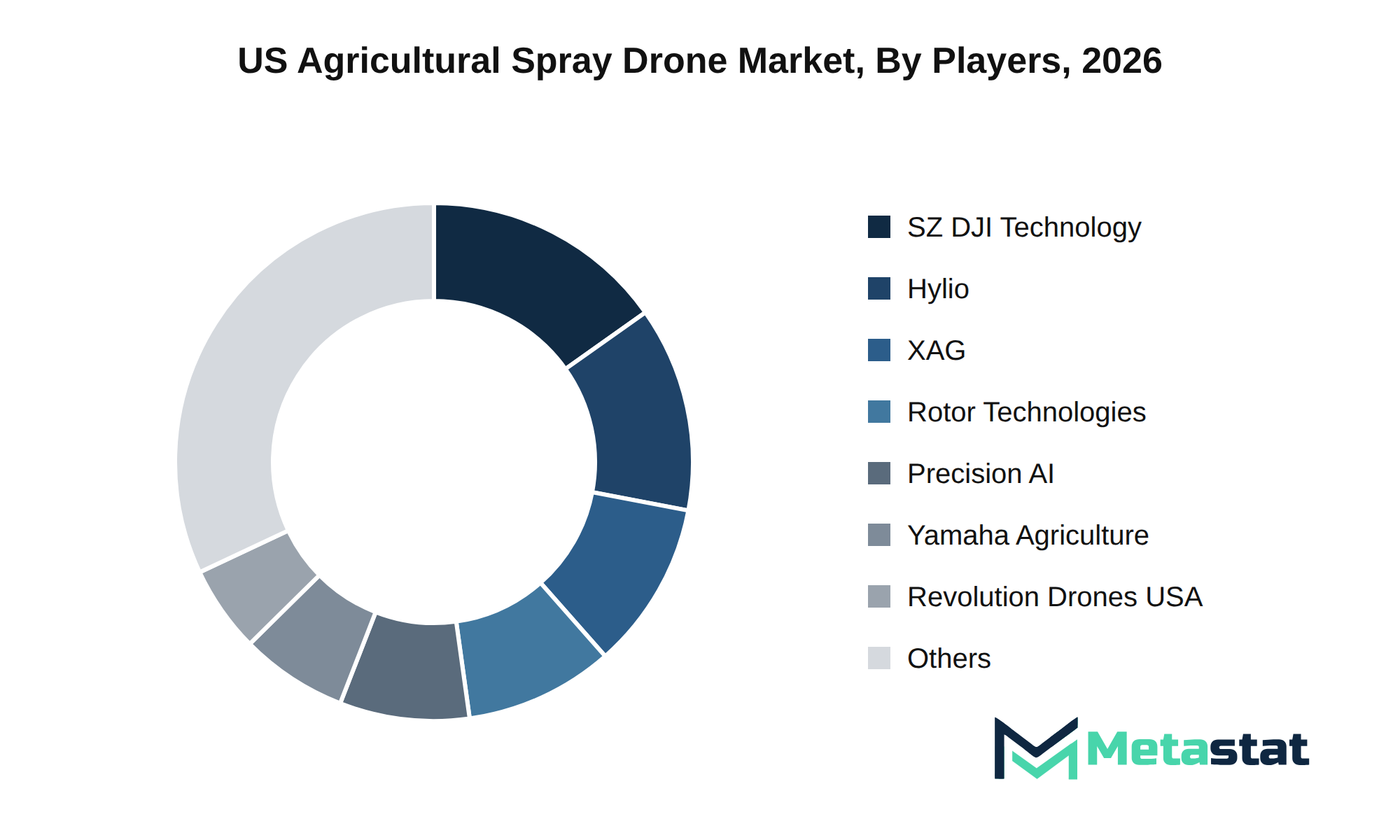
The US Agricultural Spray Drone market features a diverse competitive landscape characterized by strategic alliances and product differentiation. Key players in the market focus on enhancing their offerings through proprietary technology and R&D pipelines, ensuring a competitive edge. Companies including Hylio, Inc. and SZ DJI Technology Co., Ltd. exhibit robust product portfolios, emphasizing innovation in drone technology tailored for agricultural applications.
Strategic consolidation through mergers and acquisitions has become prevalent, aiming to strengthen supply chain dominance and improve procurement leverage. Firms including Yamaha Agriculture and Revolution Drones USA actively pursue joint ventures to broaden their market reach while addressing barriers to entry for new entrants. Evolving market dynamics emphasize the importance of customer retention strategies and brand equity, influencing competitive positioning.
Market size is forecast to rise from USD 365.2 million in 2025 to over USD 1,890.3 million by 2033. The base case reflects a growth trajectory, driven by increasing adoption across various sectors including agriculture and environmental management. The CAGR of 21.9% illustrates strong investor confidence and evolving agricultural practices that integrate advanced technologies.
The bull case suggests accelerated demand resulting from rapid technological advancements and an influx of capital into next-generation drone technologies. These developments are expected to enhance operational efficiencies and expand applicability within the agricultural sector, further propelling market growth.
Conversely, the bear case centers on potential supply chain disruptions and regulatory challenges that could impede growth. Economic fluctuations or geopolitical tensions create uncertainties that affect investment strategies and consumer confidence. However, the general outlook for the US Agricultural Spray Drone market remains positive, supported by structural shifts in consumption patterns and a focus on sustainable agricultural practices.
US Agricultural Spray Drone Market Key Segments
By Type:
- Fixed Wing
- Rotary Wing
- Others (Hybrid VTOL, etc.)
By Application:
- Herbicide Spraying
- Pesticide & Insecticide Spraying
- Fungicide Spraying
- Liquid Fertilizer & Nutrient Spraying
- Others
Key US Agricultural Spray Drone Industry Players
- Hylio, Inc.
- SZ DJI Technology Co., Ltd.
- XAG Co., Ltd.
- Rotor Technologies, Inc.
- Precision AI Inc.
- Revolution Drones USA
- Yamaha Agriculture
- ABZ Innovation
- TopXGun Robotics Co., Ltd
- Talos Drones
- Ceres Air
- Heilongjiang Huida Technology Co., Ltd. (Vector AGR)
- Beijing TT Aviation Technology Co., Ltd. (TTA)
- Drone Spray Pro, Inc.
- Raptor Dynamic
- Pyka Inc.
- Robinson Helicopter Company (Robinson Unmanned)
Report Coverage
The report strategically identifies and profiles the key market players and analyses their core competencies in each sub-segment of the Agricultural Spray Drone market.
|
Report Attributes |
Details |
|
Study Period |
2021-2033 |
|
Base Year |
2025 |
|
Estimated Year |
2026 |
|
Forecast Period |
2026-2033 |
|
Historical Period |
2021-2025 |
|
Growth Rate |
CAGR 21.9% from 2026 to 2033 |
|
Revenue Unit |
USD million |
|
Volume Unit |
Units |
|
Segmentation |
By Type, Application, and Region |
What Report Provides
- Company Market Share, Revenue and Ranking for the US Agricultural Spray Drone Market
- Key Market Leaders and Their Strategies in the US Agricultural Spray Drone Market
- Full In-Depth Analysis of the US Agricultural Spray Drone Industry
- Historical, Ongoing and Projected Market Analysis for the US Agricultural Spray Drone Market
- Segmentation Details of the US Agricultural Spray Drone Market
- Assessment of Niche Industry Developments in the US Agricultural Spray Drone Market
- Competitive Benchmarking of Key Players in the US Agricultural Spray Drone Market
- Emerging Segments and Regional Growth Potential in the US Agricultural Spray Drone Market
Frequently Asked Questions
Find answers to common questions about this report
The Agricultural Spray Drone market size in the United States was valued at USD 365.2 million in 2025.
The Agricultural Spray Drone market is expected to grow at a CAGR of 21.9% during the forecast period from 2026 to 2033.
The Rotary Wing segment leads the US Agricultural Spray Drone market, with a projected value of USD 1,326.2 million by 2033. This segment outpaces the Fixed Wing and Others segments in terms of revenue growth.
The US Agricultural Spray Drone market experiences significant growth driven by increased capital investment in advanced technology and rising interest in precision farming. The focus on operational productivity, efficient resource management, and the integration of automation and AI solutions enhances yield while minimizing waste, positioning the market for robust expansion.
The US Agricultural Spray Drone market faces significant constraints due to stringent regulatory compliance hurdles and high capital investment requirements. These factors inhibit innovation and adoption rates, while supply chain disruptions and technological obsolescence risks further complicate growth. Cultural barriers and regional resistance to technology adoption contribute to uneven demand and stifled investment levels.
The integration of advanced technology and increased capital investment significantly favors product adoption in the US Agricultural Spray Drone market. Farmers prioritize efficiency and cost reduction, leading to the adoption of automation and AI-driven solutions that enhance productivity and sustainability.
The Agricultural Spray Drone market is estimated to reach a valuation of USD 1,890.3 million by 2033.
Key players in the US Agricultural Spray Drone market include Hylio, Inc., SZ DJI Technology Co., Ltd., XAG Co., Ltd., Precision AI Inc., Yamaha Agriculture, and Rotor Technologies, Inc.
The US Agricultural Spray Drone market is projected to reach USD 471.3 million in 2026.
The Rotary Wing segment is anticipated to grow at a compound annual growth rate of 21.1% through 2033.
The US agricultural spryaing drone projected to reach 15,672 units by 2033, at a CAGR of 17.1% during the forecast period
Choose Your License
US Agricultural Spray Drone Market
Related Reports
Explore related market intelligence reports worth reading alongside this one.