
The Nigeria Renewable Energy outlook shows significant growth driven by solar, wind, and mini-grid technologies, influencing various sectors and investments.
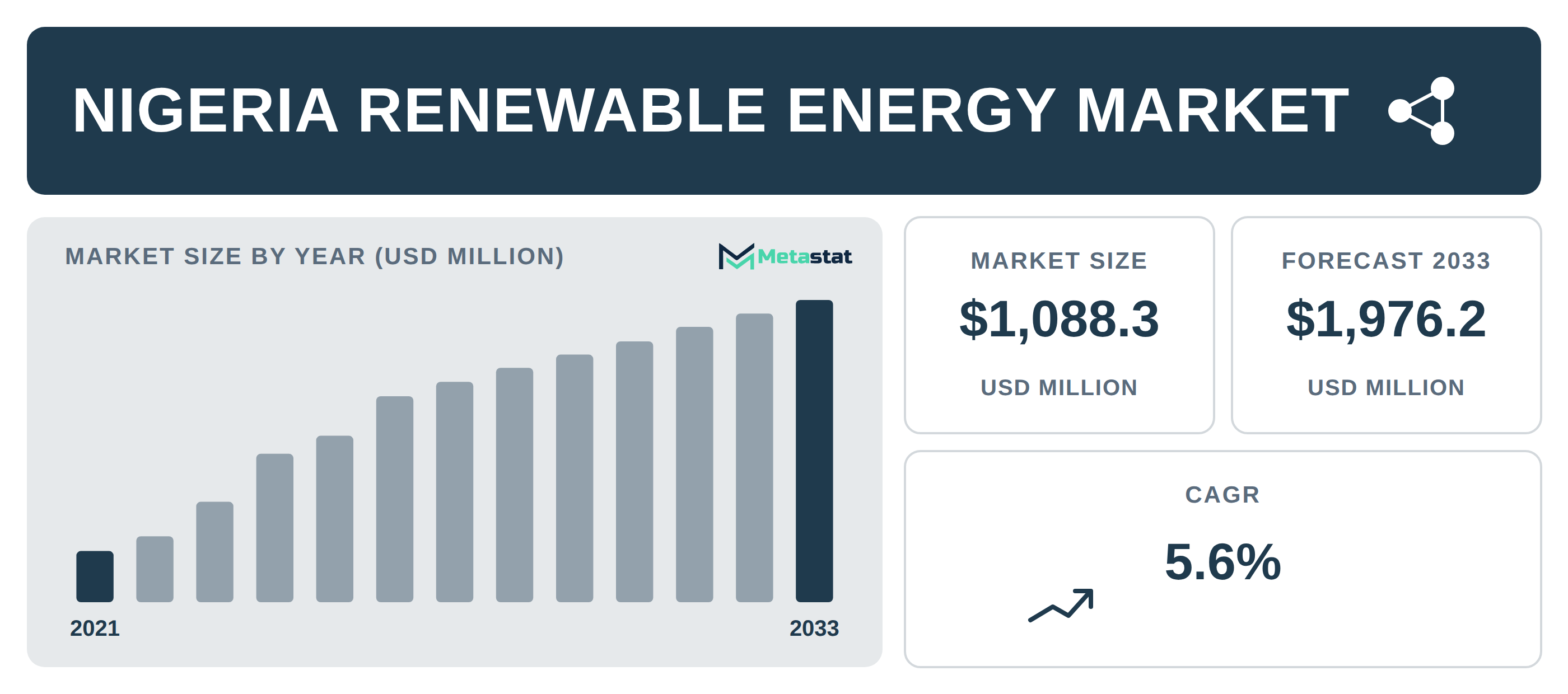
Nigeria's renewable energy landscape is poised for transformation in the years leading to 2033. The notable changes on the horizon arise from advances in technology, shifts in governmental policies, and increasing demand from diverse user segments. Understanding these changes is crucial for stakeholders looking to navigate the evolving dynamics of the energy sector. The full figures are in our Nigeria Renewable Energy market size and forecast report.
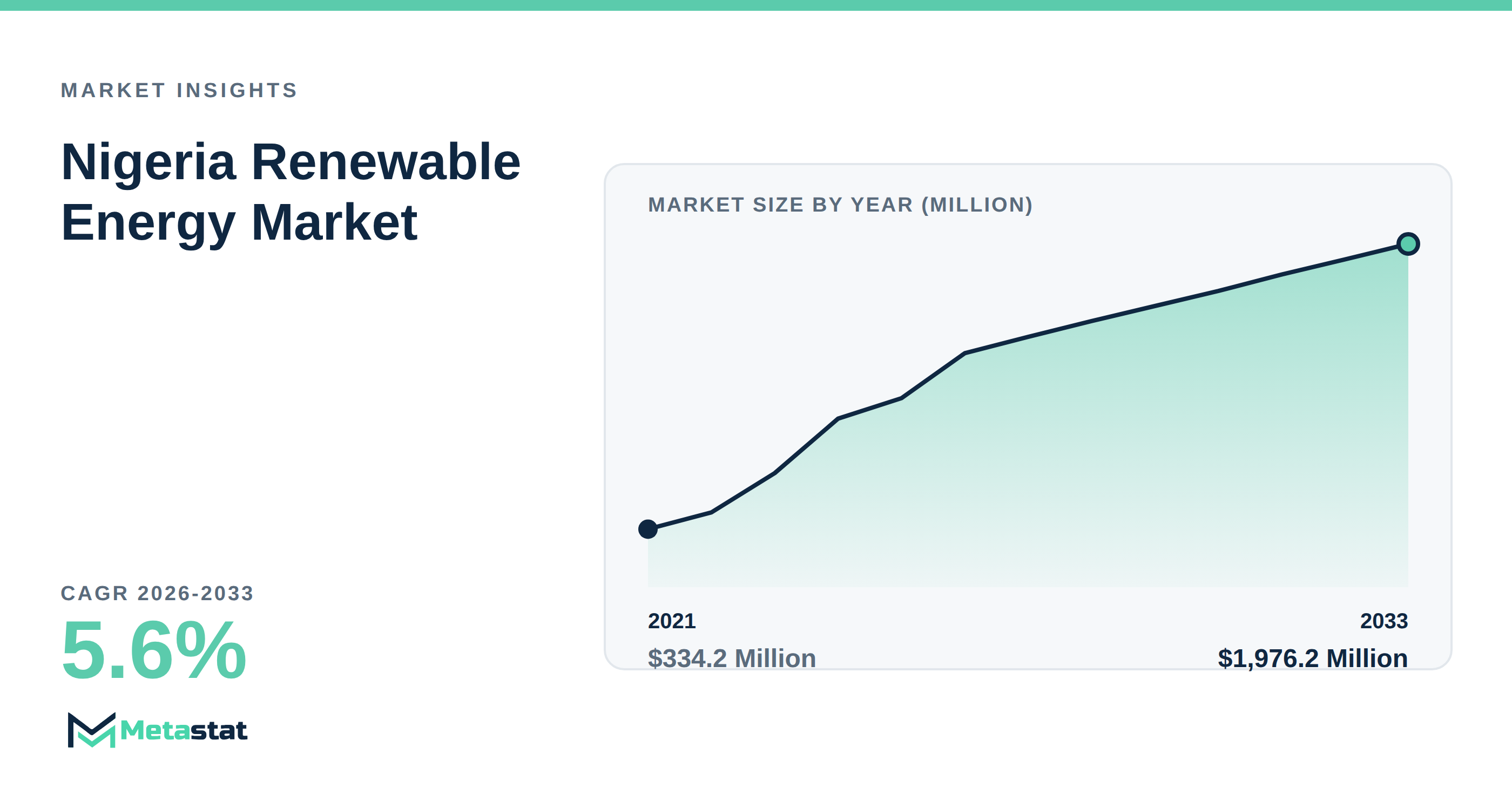
One of the key developments expected is the significant growth in solar energy technologies. Advances in photovoltaic (PV) and concentrated solar power (CSP) systems are anticipated to drive adoption. The increasing availability of financing options further enhances the attractiveness of solar installations, allowing residential and commercial buyers to reduce their dependence on traditional energy sources. This growing segment is driven by a need for sustainable energy solutions amid rising electricity costs and concerns about environmental impacts.
In addition to solar, the wind energy segment is gaining considerable attention due to its projected compound annual growth rate of 24.7% through 2033. Stakeholders should monitor investments in both onshore and offshore wind projects as utilities aim to diversify energy sources and reduce reliance on fossil fuels. This focus on wind energy illustrates a broader push towards a more sustainable energy mix, which is crucial for meeting Nigeria's future energy demands.
Another aspect to keep an eye on is the adoption of renewable mini-grids, especially in rural areas where extending the national grid is economically unfeasible. Projects using interconnected mini-grids are projected to experience considerable growth, providing localized energy solutions to underserved communities. This growth is supported by flexible financing models, allowing local populations to access renewable energy without heavy upfront costs.
Regulatory frameworks play a vital role in shaping the future of renewable energy in Nigeria. Increased government support through feed-in tariffs and tax incentives aims to enhance energy access and sustainability. Stakeholders should watch for evolving policies that influence private investments in renewable technologies, particularly those focused on solar and wind energy.
As competition intensifies, businesses and consumers alike are becoming more proactive about energy independence. An increasing number of enterprises are adopting commercial solar and battery storage solutions to replace diesel generators, resulting in significant cost reductions. The ability to mitigate operational expenses while enhancing reliability positions solar technology as a viable alternative for businesses navigating high electricity prices.
Technological advancements will remain central to the ongoing evolution of the renewable energy ecosystem. Innovations in energy storage, efficiency, and connectivity are expected to enhance the reliability of renewable energy sources. These improvements will not only drive down costs but encourage broader adoption among various end-user categories, including commercial, industrial, and residential buyers.
However, challenges persist, particularly regarding infrastructure development. Inadequate transmission and distribution networks continue to hinder the smooth integration of renewable energy sources into existing systems. Addressing these infrastructure gaps is essential for realizing the full potential of renewables in Nigeria, and stakeholders advocate for improvements to facilitate this process.
The outlook for Nigeria's renewable energy sector through 2033 presents numerous opportunities and challenges. A keen focus on technological advancements, regulatory changes, and evolving consumer demands will be crucial for stakeholders aiming to leverage the growing potential of renewable energy. Staying informed and adaptable will enable businesses, investors, and governments to thrive in this changing energy environment.
Tags
About the Authors

LEAD ANALYST
Utkarsh Khirodkar is a Lead Market Research Analyst at MetaStat Insight, specializing in market intelligence, technology sector assessments, and competitive strategy.

PRINCIPAL CONSULTANT - ENTERPRISE AI & EMERGING TECHNOLOGIES
Banking & Finance · Electronics and Semiconductor · Energy and Power · Healthcare IT · Information & Technology · Professional Services
Vijay Gunti is a Principal Consultant at MetaStat Insight, bringing over two decades of experience across enterprise digital transformation, technology strategy, and intelligent systems.

ENERGY & INFRASTRUCTURE INDUSTRY CONSULTANT
Automotive and Transportation · Electronics and Semiconductor · Energy and Power · Machinery & Equipment
Saurabh Vasant Ganvir consults for Energy & Infrastructure Industry at MetaStat Insight, specializing in renewable energy, solar EPC, and electric vehicle (EV) infrastructure markets.