
LEAD ANALYST
Utkarsh Khirodkar is a Lead Market Research Analyst at MetaStat Insight, specializing in market intelligence, technology sector assessments, and competitive strategy.

Nigeria Renewable Energy Market Size, Share, By Technology (Solar Energy (PV and CSP), Wind Energy (Onshore and Offshore), Hydropower (Small, Large, PSH), Bioenergy), By Deployment Model (Grid-Connected Power Plants, Grid-Connected Behind-the-Meter Systems, Interconnected Mini-Grids, Isolated Mini-Grids and Standalone Off-Grid Systems), By End-User (Electricity Utilities, Residential, Commercial, Industrial, Agricultural and Public and Institutional), Industry Analysis, Growth, Trends, and Forecast, 2026-2033
Report ID
MSI-5684
Published
November, 2026
Pages
250 Pages
Format
Historical
Base year
Forecast
Forecast period
Report Details
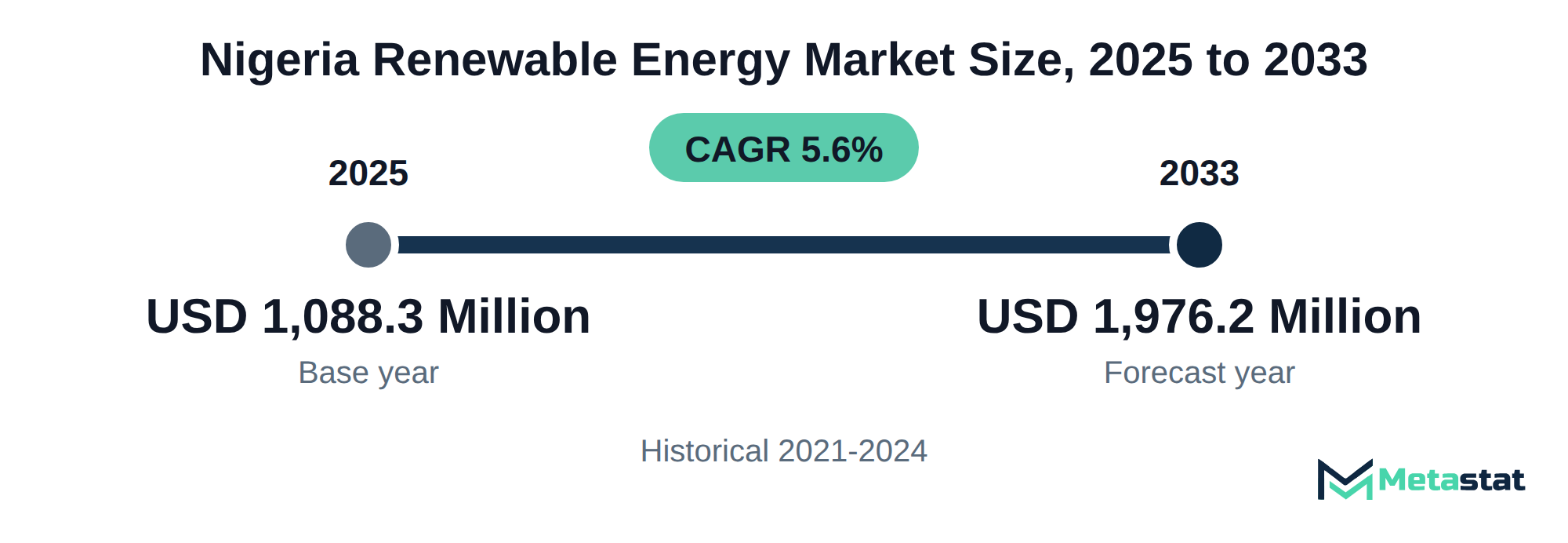
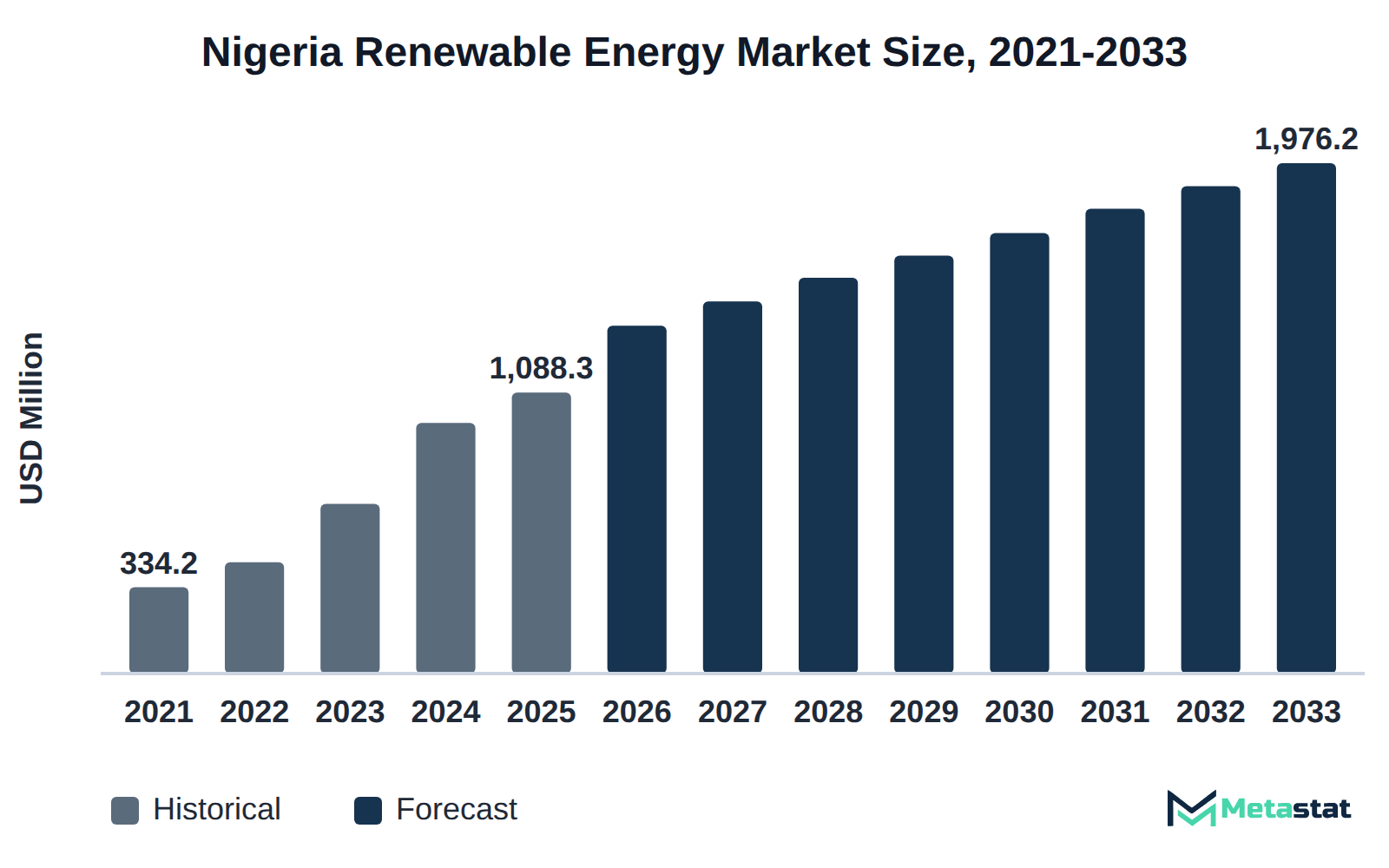
Market Valuation: Valued at $1,088.3 Million in 2025, projected to reach $1,976.2 Million by 2033 at a 5.6% CAGR.
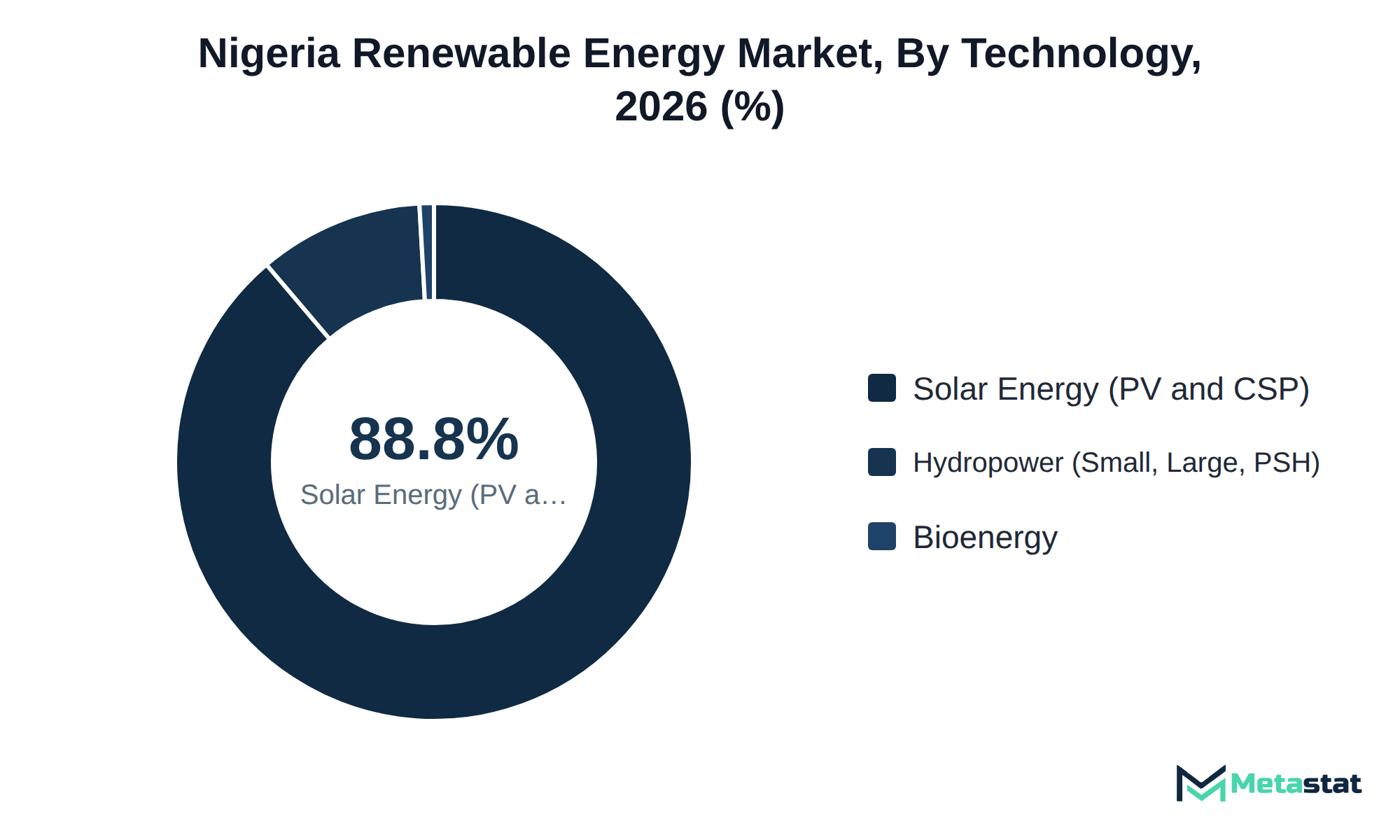
Dominant Segment: Solar energy leads the Nigeria Renewable Energy market, driven by advancements in technology and decreasing costs, making it the preferred choice for residential and commercial applications.
Geographic Lead: The southern region of Nigeria shows the most significant market share, supported by favorable climatic conditions that enhance renewable energy initiatives.
What's Inside: The report provides comprehensive coverage of the competitive landscape, detailed analyses of market segments, and forecasts spanning from 2026 to 2033, focusing on various technologies and deployment models.
Increased Growth in Wind Energy Adoption: The wind energy segment is projected to grow at a CAGR of 24.7% through 2033, driven by a focus on diversifying energy sources and reducing reliance on fossil fuels.
Choose Your License
Nigeria Renewable Energy Market
Our analysis projects Nigeria’s renewable energy market rising from USD 1,413.3 Mn in 2025 to USD 2,566.3 Mn in 2033, a 7.74% CAGR. That headline understates how concentrated the growth is. Most of the increase comes from users buying or financing their own generation, and little comes from power sold to the grid.
Grid-connected behind-the-meter systems add USD 578 Mn between 2025 and 2033, which is half of the market’s total increase. The mechanism is cost avoidance. Petrol-subsidy removal in May 2023 and the naira’s unification raised the running cost of generator-based self-supply, and solar-plus-storage now displaces diesel and petrol at commercial and industrial sites and in households. The commercial implication is that suppliers compete on delivered cost per kilowatt-hour and on financing, not on grid access.
Volume and revenue also move differently here. Annual distributed installations are projected to rise from 1,340 MW to 2,540 MW, while the installed price of a complete system falls from USD 0.82 to USD 0.70 per watt. Revenue therefore grows more slowly than shipments. The sensitivity analysis shows installed volume moves the 2025 market value more than price does. A supplier needs capacity to scale and absorb falling prices, and a price premium will not protect margins.
The Nigeria Renewable Energy market encompasses various technologies and deployment models aimed at addressing the country's growing energy demands. Buyers invest in renewable energy solutions due to the increasing need for sustainable and reliable power sources that support economic development and reduce reliance on fossil fuels. Key segments include solar energy, wind energy, hydropower, and bioenergy, with solar energy leading in value, driven by advancements in technology and decreasing costs.
Growth in the market is primarily fueled by increasing investments in renewable energy infrastructure, reflecting the government's commitment to diversifying energy sources and enhancing energy security. This investment trend is evident in the solar energy segment, which is projected to experience considerable growth over the forecast period. The south holds the largest market share, supported by favorable climatic conditions for renewable energy initiatives.
Market dynamics are influenced by rising demand for clean energy solutions from electricity utilities and commercial sectors. The need for efficient and cost-effective energy generation methods drives adoption across various end-user categories, including residential, industrial, and public institutions. Technological advancements are expected to enhance the market's appeal and support continued growth in the coming years.
The market covers an array of renewable energy technologies, including solar, wind, hydropower, and bioenergy, which address the increasing energy demands of Nigeria. Buyers invest in renewable energy solutions due to the urgent need for sustainable energy sources, driven by high electricity costs and growing awareness of environmental issues.
Growth in this sector is propelled by several factors, with solar energy leading in market value. The grid-connected behind-the-meter systems segment stands out, demonstrating significant potential for expansion. Demand for reliable and clean energy solutions is expected to keep the market growing.
Solar energy (PV and CSP) is the highest-value segment, reflecting its increasing adoption across residential and commercial applications. While competition intensifies, the market's expansion highlights the potential for investment and innovation in renewable energy technologies, positioning Nigeria as a key player in the African energy sector.
Commercial solar and battery storage solutions have emerged as viable alternatives to diesel generators in Nigeria. The transition from diesel to renewable energy sources, particularly solar technology, supports significant cost reductions for businesses reliant on electricity generation. In 2026, the grid-connected behind-the-meter systems segment is projected to reach USD 1,055.1 million by 2033, reflecting growing investment in solar installations that integrate battery storage technology.
This shift reduces operational expenses for companies and improves energy reliability. By pairing solar energy with efficient battery systems, businesses mitigate the environmental impact associated with diesel generators. The integration of solar systems contributes to the overall growth of the market, facilitating a more sustainable energy future.
Commercial enterprises benefit from improved energy independence through these renewable technologies, aligning with global sustainability efforts. This trend positions businesses for long-term economic advantages while responding to increasing energy demands across various sectors. Investment in solar energy and battery technology continues to drive the market.
Renewable mini-grids represent a crucial solution for rural electrification in Nigeria, particularly in areas where extending the national grid proves economically unviable. The increasing adoption of renewable energy technologies, including solar and wind, significantly influences the cost structure of mini-grid projects, enhancing their attractiveness for local communities. This segment of the Nigeria Renewable Energy market is projected to grow, with interlinked mini-grids expected to reach a total value of USD 55.5 million by 2033.
Buyers engage with renewable mini-grid projects through diverse financing models tailored to their specific needs. Common approaches include pay-as-you-go systems, which allow consumers to pay for energy based on their usage, and lease agreements that enable users to access technology without the upfront cost of ownership. These models enhance accessibility for rural populations who lack the necessary capital to invest in renewable solutions outright. The adoption of such flexible payment structures supports sustained growth in the market, encouraging more stakeholders to invest in renewable energy infrastructure.
Partnerships between private investors and local governments further facilitate the development of renewable mini-grids. Such collaborations result in risk-sharing arrangements that incentivize broader participation from various stakeholders. This dynamic supports rural electrification and drives demand for renewable energy solutions in the Nigeria Renewable Energy market.
Pay-As-You-Go (PAYG) financing has emerged as a vital mechanism for enhancing solar home system adoption in Nigeria. This financial model facilitates access to solar energy solutions for households lacking the upfront capital required for outright purchases. The market for solar energy, particularly in the form of photovoltaic (PV) systems, is projected to grow from USD 1,198 million in 2026 to USD 1,779.7 million by 2033, reflecting a compound annual growth rate (CAGR) of 5.8%. This trend highlights increasing demand for affordable and accessible renewable energy sources among consumers.
The PAYG model enables users to pay for solar systems in manageable installments, making renewable energy solutions more attainable for a broader segment of the population. This financing approach acts as a catalyst for expanding electricity access in rural areas, where traditional grid systems remain underdeveloped. The commercial consequence is that growth in solar home systems opens new investment opportunities for stakeholders targeting the off-grid energy sector.
Nigeria's regulatory environment significantly influences private power investment in the renewable energy sector. The government promotes investment through various policies aimed at enhancing energy access and sustainability, contributing to a more favorable market landscape. For instance, grid-connected behind-the-meter systems represent a substantial opportunity for private investors, projected to reach USD 1,055.1 million by 2033, ensuring robust returns on investment.
Regulatory frameworks, including feed-in tariffs and tax incentives, further encourage private sector participation. These measures create a favorable environment for investment in technologies including solar energy. The solar segment is anticipated to grow at a compound annual growth rate of 5.8% during the forecast period, translating into a market size of USD 1,779.7 million by 2033. This growth signifies a financial incentive for private investors, enhancing their potential for profitability in the Nigeria Renewable Energy market.
The segment assessment shows a clear gap between growth leadership and revenue contribution. Agricultural users grow fastest of any end-user group, at 13.4% a year, but from a base too small to matter soon. Residential users grow slowest, at 6.0%, yet they still add more absolute revenue than the agricultural and industrial groups combined. Residential demand is also the most price-sensitive, since it is served mainly by solar kits and component systems. Revenue in this group depends on affordable payment structures and distribution reach, not on product differentiation.
Industrial growth works differently. Commercial and industrial energy-as-a-service is valued in our model as power-purchase receipts, not as equipment sales. Capturing it requires a balance sheet that funds the installation and carries payment risk for years. Customers in this group want guaranteed supply, so contract structure matters as much as hardware quality.
Isolated mini-grids grow at 17.8% a year and double their share of the market, from 3.5% to 7.1%. They still contribute under 12% of the market’s increase. Their revenue combines customer tariffs with results-based grants paid on new connections under the DARES and Nigerian Electrification Project programmes. Our forecast therefore has this revenue plateauing after the 2028 construction peak, once grant-funded building ends. The delivery range in our sensitivity case for 2033 isolated mini-grid revenue is wide, with the high case more than double the low one. Developers can only realise this opportunity if grants are disbursed on schedule and tariff revenue per connection carries the business after the programmes close.
Grid-connected power plants hold the smallest share of the market’s future growth. Because the market counts energy sold at regulated tariffs and excludes construction contracts, announced utility-scale projects do not become market revenue until they deliver power. Construction contract revenue for these plants falls under the power EPC industry instead. Between 2025 and 2033, the highest-return priorities are therefore financing capacity for commercial and industrial customers, low-cost distribution for households, and disciplined exposure to grant-dependent mini-grids.
Electricity utilities increasingly invest in grid-connected power plants, driven by the need for reliable energy sources. This transition reflects a broader shift in energy consumption patterns, where utilities seek sustainable solutions to meet rising demand. The surge in investment results from competitive pressures and the desire to reduce reliance on fossil fuels. The market is expected to experience substantial growth, with grid-connected power plants projected to expand from USD 140.8 million in 2026 to USD 212.2 million by 2033, reflecting a compound annual growth rate of 6%. This trend highlights the urgency among utilities to adopt renewable energy technologies, enhancing energy security and contributing to a cleaner energy future. Adoption of grid-connected systems is rising, in line with global sustainability goals.
Growing awareness of environmental issues and government support further influences shifts in energy consumption behaviors. Utilities actively seek solutions that align with sustainability initiatives, which creates strong demand for renewable energy technologies. The influence of these changes ensures continued growth in the market.
Technological advancements in solar energy systems drive significant growth in the Nigeria Renewable Energy market. Declining costs of photovoltaic (PV) panels and concentrated solar power (CSP) technologies enhance accessibility and affordability for various buyers. Residential customers, electricity utilities, and commercial sectors increasingly adopt solar solutions to meet energy needs efficiently. This trend occurs alongside rising concerns about energy security and sustainability, prompting investments in renewable sources over traditional fossil fuels. Solar energy technologies grow at a compound annual growth rate of 5.8% from 2026 to 2033, indicating strong demand. Innovations including energy storage systems improve the reliability of solar installations, further attracting interest from consumers and businesses alike. The combination of competitive pricing, efficient technology, and increasing awareness of environmental benefits positions solar energy as a key driver in the market's expansion.
Inadequate infrastructure hampers the growth of the Nigeria Renewable Energy market, affecting the ability of buyers to access and implement renewable energy solutions. Essential components including electricity transmission lines and distribution networks often lack the necessary capacity and reach, resulting in slower uptake of technologies. Electricity utilities face challenges in expanding grid connections, delaying the integration of renewable sources into existing systems. Residential and commercial buyers experience difficulties adopting renewable energy solutions due to the absence of supportive infrastructure, including reliable energy storage systems. This situation restricts the potential for widespread implementation, ultimately impacting overall market demand and limiting growth opportunities within the sector.
Rising input costs create significant challenges for suppliers within the Nigeria Renewable Energy market, hindering profitability for many. The increasing prices of materials and components essential for renewable energy systems, particularly solar and wind technologies, impact the overall cost structure for suppliers. Suppliers respond by optimizing supply chains and exploring alternative materials to mitigate the effects of rising costs. Technology adoption and innovation improve operational efficiency, which helps suppliers maintain competitive pricing while delivering quality products. The evolving market encourages collaborations among suppliers to share resources and best practices, enabling them to address cost pressures more effectively. These strategies support continued investment and innovation, ensuring suppliers remain resilient in navigating the financial challenges posed by increasing input costs. The focus on sustainability and efficiency within the market supports long-term growth, creating a more robust renewable energy ecosystem in Nigeria.
The wind energy segment in the Nigeria Renewable Energy market demonstrates significant potential, with a projected compound annual growth rate (CAGR) of 24.7% through 2033. This rapid growth results from an increasing focus on diversifying energy sources and reducing reliance on fossil fuels. Electricity utilities and independent power producers are particularly drawn to wind energy due to its sustainability and lower operational costs compared to traditional energy sources. The anticipated benefits include long-term cost savings and enhanced energy security, positioning wind energy as a strong contender in the renewable energy market. Investments in onshore and offshore wind projects are expected to contribute to meeting the nation's rising energy demands, further supporting Nigeria's renewable energy goals.
Nigeria assembles solar modules but does not make them. Every cell and nearly every other component is imported, and local plants supplied 8% of 2025 module demand. Our analysis identifies cost, not a shortage of buyers, as the reason. That cost position decides which customers local product can reach.
The cost build puts a 550-580 W TOPCon module at USD 0.1245 per watt landed in Lagos from China, against USD 0.149 per watt to assemble from imported parts. After margin, local ex-works pricing sits 13-22% above import wholesale. Local product still sells at the same shelf price as imports, so assemblers earn thinner margins on the same sale.
Price is not what limits local assembly. At wholesale prices, modules represent 15% of the 2025 market’s value, and a 10% local premium on the 8% share would move the TAM by only 0.1%. Volume capacity, product class and bankability are the binding constraints.
Bankability also determines where local modules can sell. Mini-grids and commercial energy-as-a-service, about 9% of the market, rely on debt financing from lenders that tend to specify certified tier-1 equipment. The pool open to local assemblers is the retail behind-the-meter and off-grid segment, valued at USD 1,013 Mn, where price, availability and credit terms drive purchases and unregulated imports set the price floor. The channels that pay most for supply certainty are the hardest for local product to enter.
Nameplate overstates supply, and working capital connects the two weaknesses
Auxano’s 2025 output of 25-30 MW against a 110 MW nameplate shows the gap between installed and productive capacity. At 30% utilisation, depreciation spread over fewer watts lifts local cost by USD 0.0135 per watt and widens the gap to imports toward 30%. Closing it requires duty-free inputs, utilisation above 60% and cheaper working capital together.
Announced projects would take nameplate above 2.5 GW, more than Nigeria’s 2030 module demand of 2.3 GW, and only one has a stated schedule. We therefore weight each project by build probability and utilisation instead of summing the announcements.
Local assembly’s clearest advantage is lead time: 7-10 weeks for a new order against 7-14 weeks for imports, falling to 1-3 weeks when cells are in stock. That advantage belongs only to plants that can fund about two months of cell cover, roughly USD 1 Mn per 100 MW of annual output. Working capital is also the constraint that holds utilisation down, so the strength local plants sell depends on the weakness they share.
Fiscal policy shows the same pattern. Reinstating a 5% duty and 7.5% VAT on finished modules would move the TAM by 1-2%, but it would shift the sale toward local product. The risk is asymmetric. Every 100 MW of module demand left unmet by an import restriction imposed before domestic capacity exists would remove USD 82 Mn of installed-system sales. The downside from a premature ban is therefore far larger than the upside from successful localisation.
Between now and 2033, the defensible role for local assembly is as the in-country stockholder and warranty counterparty for buyers who value both, not as a replacement for imports. The research does not support a plan that depends on matching Chinese costs. The strongest signals to watch are the first Tranos line at Mowe, commissioning of Oando’s first 600 MW line, a funded LONGi agreement, relief on non-cell input duties, and local-content clauses in REA or DARES procurement. If two or more occur by the end of 2027, we would move the base case toward the high scenario, in which local output reaches 1,400 MW by 2033.
The Nigeria Renewable Energy market is segmented based on Technology, Deployment Model, and End-User.
This segment primarily serves residential, commercial, and industrial users seeking cleaner energy alternatives to fossil fuels. Growth is driven by increasing demand for sustainable energy solutions, alongside advancements in photovoltaic and concentrated solar power technologies. Buyers benefit from declining costs of solar installations and the growing availability of financing options. Compared to other segments, Solar Energy (PV and CSP) experiences moderate growth, slower than Wind Energy, which exhibits a CAGR of 24.7%. This technology's price stability and expanding applications across various sectors enhance its attractiveness, positioning it uniquely within the Nigeria Renewable Energy market.
Wind Energy (Onshore and Offshore) segment is estimated to reach USD 3.2 million by 2033, at a CAGR of 24.7% during the forecast period. This segment encompasses the generation of electricity through wind turbines, catering primarily to electricity utilities and commercial users seeking sustainable energy solutions. Rapid growth in this segment results from increased investments in renewable infrastructure and favorable policies promoting clean energy adoption. Compared to other segments including solar energy, which is expected to grow at a CAGR of 5.8%, wind energy presents a more aggressive growth trajectory, attracting significant interest from various stakeholders. Scalability and declining costs associated with wind technology support its adoption, distinguishing it from traditional energy sources and enhancing its competitive position in the Nigeria Renewable Energy market.
Hydropower (Small, Large, PSH) segment is expected to reach USD 170.3 million by 2033. This segment involves generating electricity through the use of flowing water, catering to various end-users, including electricity utilities and commercial entities. Increasing investments in infrastructure and favorable government policies drive growth in this area. The expected compound annual growth rate (CAGR) for hydropower is projected to align with the broader renewable energy goals of the government. Compared to other segments including solar energy, which is projected to grow at a CAGR of 5.8%, hydropower offers a different value proposition. The focus on sustainability and reducing carbon emissions influences adoption, particularly within industries prioritizing green energy solutions. The hydropower segment presents a stable and reliable energy source, appealing to utility companies seeking to diversify their energy portfolios.
Bioenergy segment is projected to grow at a CAGR of 8.7% during the forecast period. This segment involves the generation of biomass energy from organic materials and is used primarily for electricity production, heating, and transportation fuels. Key players include agricultural producers and waste management companies that supply raw materials for energy conversion. Increasing demand for sustainable energy solutions drives growth in this segment, particularly among residential and industrial users seeking alternatives to fossil fuels. Unlike the solar and wind segments, bioenergy growth reflects slower adoption rates, driven by regulatory challenges and the need for technological advancements in conversion processes. The market distinguishes itself by offering energy solutions that utilize local waste products, contributing to improved waste management and energy security in Nigeria.
Grid-connected power plants primarily deliver electricity from renewable sources directly to the grid, serving electricity utilities and large-scale consumers. The push for sustainable energy sources drives growth in this segment, owing to increased demand for reliable electricity in urban areas. Comparatively, this segment exhibits slower growth than the Wind Energy segment, which has a CAGR of 24.7%. Regulatory incentives and technological advancements in renewable energy generation enhance the attractiveness of grid-connected power plants, facilitating their adoption in an energy landscape increasingly focused on sustainability. Strong investments from electricity utilities further contribute to market expansion, ensuring that infrastructure develops to support growing energy needs.
Grid-Connected Behind-the-Meter Systems segment is estimated to reach USD 1,055.1 million by 2033, at a CAGR of 5% during the forecast period. This segment primarily serves residential and commercial users, enabling them to generate renewable energy on-site, thus reducing reliance on the central grid. The increasing demand for energy independence and lower electricity costs drives growth in this segment, with a focus on sustainability. Compared to other deployment models, Grid-Connected Behind-the-Meter Systems demonstrate slower growth in revenue and adoption due to competition from grid-connected power plants and mini-grids. However, regulatory incentives promoting renewable energy adoption enhance its attractiveness. The market exhibits a distinct advantage in catering to specific buyer needs, providing flexibility and control over energy supply.
These systems provide localized electricity to communities, particularly in remote areas where extending the national grid lacks feasibility. Their deployment primarily caters to residential users and small businesses, enabling access to reliable energy sources. The segment experiences growth driven by increasing demand for off-grid solutions, particularly in regions with limited infrastructure. Compared to other deployment models, Interconnected Mini-Grids show a differentiated growth pattern, exhibiting a higher compound annual growth rate (CAGR) of 15.5%. The segment aligns with broader trends in the Nigeria Renewable Energy market, emphasizing sustainable solutions and energy independence. Adoption faces regulatory hurdles and initial investment costs, but the potential for enhanced energy access remains significant.
Isolated Mini-Grids segment is projected to grow at a CAGR of 15.5% during the forecast period. This segment serves small, off-grid communities with energy supply, typically in rural areas lacking reliable electricity access. Demand drivers include the increasing need for localized energy solutions and the push for rural electrification. Isolated Mini-Grids differ from other deployment models by focusing on regions where grid extension remains economically challenging. The anticipated growth rate surpasses that of grid-connected systems, highlighting urgent demand for alternative energy solutions. The market reflects significant interest from private investors aiming to fulfill energy shortages in underserved communities. While these systems become more affordable and technologically advanced, adoption expands across various user groups, including agricultural and residential sectors seeking energy independence.
Standalone off-grid systems provide localized energy solutions, primarily targeting rural and remote areas lacking access to a reliable power grid. These systems serve residential, commercial, and agricultural users who require consistent electricity for daily operations or household needs. Demand for standalone systems is driven by the increasing need for energy access and reliability, particularly in underserved regions. Adoption is influenced by costs associated with installation and maintenance, which deters potential users. Compared to grid-connected models, standalone off-grid systems generally experience slower growth due to higher initial investment requirements and limited financing options. The market shows promise for future expansion driven by technological advancements that reduce costs and improve system efficiency.
Electricity Utilities segment is valued at USD 140.8 million in 2026 and is projected to reach USD 212.2 million by 2033, at a CAGR of 6% during the forecast period. This segment primarily serves the needs of electricity providers, focusing on integrating renewable energy sources into the existing grid infrastructure. Smart grid technologies are one route to managing that integration. Increasing regulatory support for renewable energy integration drives demand for these systems, influencing electricity utilities to adopt cleaner energy solutions. Compared to other segments, including residential or commercial, this segment exhibits a slower growth trajectory due to higher initial investment costs associated with large-scale deployments. Nevertheless, the emphasis on sustainability and the transition towards decarbonization strategies significantly enhances the appeal of renewable energy technologies among electricity utilities, contributing to growth in the overall market.
The residential segment is estimated to reach USD 787.7 million by 2033, at a CAGR of 3.9% during the forecast period. This segment targets households seeking reliable and sustainable energy solutions, enabling them to reduce dependency on traditional fuel sources. Increasing awareness of environmental impacts drives demand for renewable energy solutions, particularly solar installations. The residential sector differs from the commercial and industrial segments, which typically feature larger-scale projects and higher investment capacities. While the commercial segment sees faster growth, the residential market remains crucial for the overall penetration of renewable technologies. Incentives and financing options contribute to adoption, creating a favorable environment for expansion. The growth trajectory indicates steady interest in integrating renewable energy into everyday living, influencing the competitive landscape and supplier strategies in the Nigeria Renewable Energy market.
Commercial applications in the Nigeria Renewable Energy market are projected to reach USD 420.7 million by 2033. This segment primarily serves businesses looking to reduce operational costs and enhance sustainability through renewable energy solutions. An increasing focus on corporate social responsibility drives demand from commercial entities, which seek to align with environmental standards and reduce their carbon footprints. The commercial segment exhibits a slower growth rate compared to the residential sector, which is anticipated to grow at a CAGR of 3.9%. The market for commercial renewable energy solutions benefits from advancements in solar and wind technologies, contributing to cost efficiency. However, challenges remain, including fluctuating energy prices and infrastructure limitations that affect deployment. Overall, the commercial segment significantly influences the market.
Industrial applications within the Nigeria Renewable Energy market are projected to grow at a CAGR of 8.7% during the forecast period. This segment serves heavy industries that rely on consistent and reliable energy sources to power operations. Demand for renewable energy in this sector is driven by increased regulatory pressure to lower carbon emissions and the desire for energy independence. Industrial players seek to adopt renewable solutions to mitigate rising conventional energy costs. Compared to other segments, including Residential, which is anticipated to grow at a slower rate of 3.9%, the Industrial segment engages with larger-scale energy needs, positioning it differently in terms of pricing and energy demands. Growth in this segment reflects broader trends in the energy market.
Agricultural applications rely on renewable energy solutions to optimize operations and enhance productivity. These solutions serve farmers and agribusinesses, enabling them to reduce dependence on conventional energy sources while cutting costs. Demand for renewable energy in agriculture is driven by the increasing focus on sustainable practices and the desire to mitigate the adverse effects of climate change. This sub-segment experiences slower growth due to adoption barriers, including high initial investment costs associated with renewable technologies. While the residential and commercial segments attract more immediate investment interest, agricultural users benefit from long-term savings, positioning them differently in the market.
Public and Institutional users rely on renewable energy solutions to power operations that support community services and institutional needs. These users predominantly include government buildings, schools, hospitals, and non-profit organizations that seek sustainable energy sources to reduce operational costs and minimize environmental impact. Increasing regulatory support for sustainable practices drives this segment, with governments promoting energy efficiency and climate change mitigation. Compared to other end-user segments, this segment generally experiences slower growth due to budget constraints and complex procurement processes. However, it benefits from increased public awareness of renewable energy, which encourages institutional adoption. Investment in public infrastructure to enhance energy resilience further supports opportunities for growth. The Nigeria Renewable Energy market is expected to evolve, with this segment contributing to the broader shift towards sustainable energy solutions.
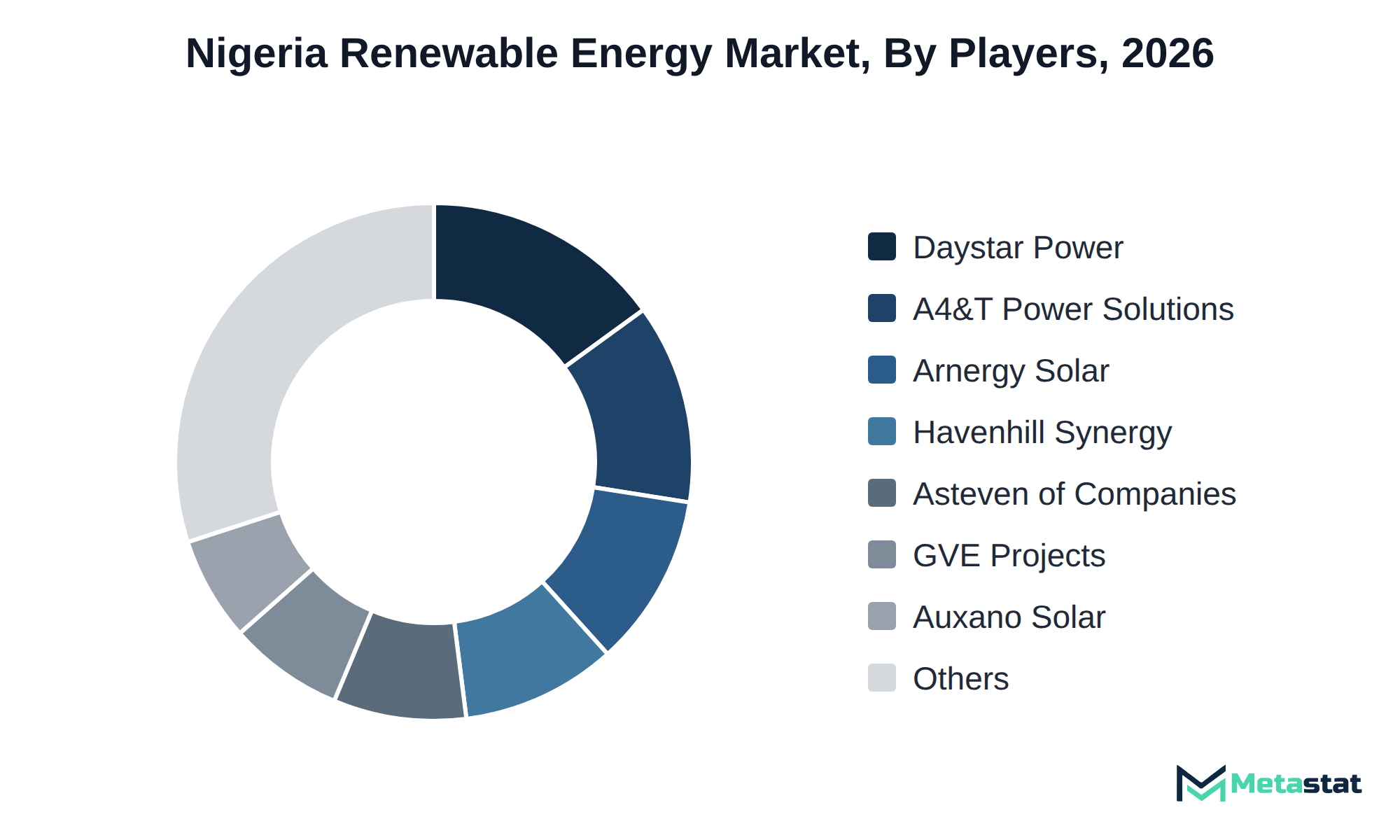
In the Nigeria Renewable Energy market, companies compete across various segments, including technology types and deployment models. The competitive field divides mainly among solar energy providers, wind energy firms, and bioenergy specialists, each focusing on distinct aspects of customer needs and preferences.
Price and customization significantly influence buyer choices in this market. Companies like Daystar Power Group and Jinko Solar Co., Ltd. emphasize service quality and customization to fulfill specific client demands. Meanwhile, TotalEnergies SE and Arnergy Solar Limited focus on scalable solar solutions, catering to both residential and commercial clients.
Firms including A4&T Power Solutions Limited and Lumos Nigeria emphasize grid-connected systems, appealing to electricity utilities and residential end-users. In contrast, GVE Projects Limited and Scatec ASA explore off-grid solutions, targeting underserved regions and rural communities. These strategic differentiations enhance competition and drive innovation within the market.
Key developments driving this growth in the Nigeria Renewable Energy market include increased investment in solar energy technologies and the expansion of grid-connected behind-the-meter systems. The solar segment is poised for significant growth, supported by rising energy demands and favorable government policies. Grid-connected behind-the-meter systems provide consumers with more autonomy over energy use, enhancing energy security and sustainability.
However, risks exist that could hinder progress toward the forecasted figure. Regulatory challenges and infrastructure limitations slow the adoption of renewable energy technologies. In particular, delays in the deployment of grid-connected solutions restrict market penetration. The market's trajectory remains contingent on overcoming these obstacles, ensuring necessary investments and infrastructure enhancements are implemented effectively.
By Technology: Solar Energy (PV and CSP), Wind Energy (Onshore and Offshore), Hydropower (Small, Large, PSH), Bioenergy
By Deployment Model: Grid-Connected Power Plants, Grid-Connected Behind-the-Meter Systems, Interconnected Mini-Grids, Isolated Mini-Grids, Standalone Off-Grid Systems
By End-User: Electricity Utilities, Residential, Commercial, Industrial, Agricultural, Public and Institutional
The report strategically identifies and profiles the key market players and analyses their core competencies in each sub-segment of the Renewable Energy market.
|
Report Attributes |
Details |
|
Study Period |
2021-2033 |
|
Base Year |
2025 |
|
Estimated Year |
2026 |
|
Forecast Period |
2026-2033 |
|
Historical Period |
2021-2025 |
|
Growth Rate |
CAGR 5.6% from 2026 to 2033 |
|
Revenue Unit |
USD million |
|
Segmentation |
By Technology, Deployment Model, End-User, and Region |
Find answers to common questions about this report
The Renewable Energy market size was valued at USD 1,088.3 million in 2025.
The market is projected to grow at a CAGR of 5.6% during the forecast period from 2026 to 2033.
Solar Energy (PV and CSP) leads the Renewable Energy market with a projected value of USD 1,779.7 million by 2033, reflecting the highest growth potential among the segments.
Electricity utilities increasingly invest in grid-connected power plants to enhance energy security and reduce reliance on fossil fuels. Technological advancements in solar energy systems, along with declining costs of photovoltaic panels, drive significant adoption among residential customers, utilities, and commercial sectors.
Inadequate infrastructure hampers market growth, affecting buyers' ability to access and implement renewable energy solutions. Rising input costs create significant challenges for suppliers, hindering profitability and impacting the overall cost structure for renewable energy systems.
Rising awareness of environmental issues and government support influence shifts in energy consumption behaviors, favoring adoption in the Nigeria Renewable Energy market. Utilities actively seek solutions that align with sustainability initiatives, creating a robust market for renewable energy technologies.
The Renewable Energy market is estimated to reach a valuation of USD 1,976.2 million by 2033.
Key players operating in the Renewable Energy market include A4&T Power Solutions Limited, Arnergy Solar Limited, Daystar Power Group, GVE Projects Limited, Husk Power Systems, Jinko Solar Co., Ltd., Lumos Nigeria, and TotalEnergies SE.
The wind energy segment is expected to experience a compound annual growth rate of 24.7 percent through 2033, driven by a focus on diversifying energy sources.
The solar energy market is projected to expand from USD 1,198 million in 2026 to USD 1,779.7 million by 2033, reflecting a compound annual growth rate of 5.8 percent.
The analysts below cover Energy and Power research at Metastat Insights.
LEAD ANALYST
Utkarsh Khirodkar is a Lead Market Research Analyst at MetaStat Insight, specializing in market intelligence, technology sector assessments, and competitive strategy.

PRINCIPAL CONSULTANT - ENTERPRISE AI & EMERGING TECHNOLOGIES
Banking & Finance · Electronics and Semiconductor · Energy and Power · Healthcare IT · Information & Technology · Professional Services
Vijay Gunti is a Principal Consultant at MetaStat Insight, bringing over two decades of experience across enterprise digital transformation, technology strategy, and intelligent systems.

ENERGY & INFRASTRUCTURE INDUSTRY CONSULTANT
Automotive and Transportation · Electronics and Semiconductor · Energy and Power · Machinery & Equipment
Saurabh Vasant Ganvir consults for Energy & Infrastructure Industry at MetaStat Insight, specializing in renewable energy, solar EPC, and electric vehicle (EV) infrastructure markets.
Our team was tracking whether regional recycling infrastructure could realistically absorb the growing volume of lithium iron phosphate batteries over the next decade. The report did a solid job separating announced hydrometallurgical plant capacity from active, permitted operational throughput. That distinction made the feedstock availability projections and regional recovery rate models far more credible than standard commercial overviews.
Tracking capacity expansion in single-use bioprocessing requires dependable data on raw material availability and cleanroom-grade polymer supply chains. The competitive landscape chapter gave a grounded evaluation of secondary component suppliers across North America and Asia-Pacific rather than simply reprinting press releases. Having that level of supplier benchmarking helped clarify dual-sourcing considerations for our clinical pipeline planning.
When evaluating distributed energy resource management systems, standard research summaries tend to gloss over the operational differences between front-of-the-meter utility deployments and behind-the-meter industrial sites. The MetaStat Insight report addressed those distinctions directly, especially regarding software interoperability standards and grid interconnection backlogs. The five-year market sizing across regional transmission organizations provided actionable context for our grid modernization strategy.
Explore related market intelligence reports worth reading alongside this one.