
LEAD ANALYST
Utkarsh Khirodkar is a Lead Market Research Analyst at MetaStat Insight, specializing in market intelligence, technology sector assessments, and competitive strategy.

Global Electricity Transmission & Distribution Market Size, Share, By Equipment (Transformer, Switchgear, Electric Meter, Wires, Cables, Circuit Breaker, Capacitor, and Others), By Services (Engineering Procurement, Construction, Consulting, Testing, Field Testing, and Others), By Technology (Conventional Transmission, Conventional Distribution, Smart Grid, and Microgrid), By End-user (Electric Utility, Industrial, and Renewables), Industry Analysis, Growth, Trends, and Forecast, 2026-2033
Report ID
MSI-4593
Published
April, 2026
Pages
320 Pages
Format
Report Details
Choose Your License
Global Electricity Transmission & Distribution Market
Global Electricity Transmission & Distribution market size is valued at USD 394.4 billion in 2025 and projected to grow at a CAGR of 4.5% during the forecast period, reaching USD 560.5 billion by 2033.
North America accounts for 22.1% of the global market in 2025, led by the U.S.
Transformer segment accounts for a market share of 20.7% in 2025.
Key trends driving growth: Rising electricity demand driven by urbanization, industrialization, and electrification of transport propels grid expansion investments, along with increasing integration of renewable energy sources necessitates modernization and strengthening of transmission and distribution networks.
Opportunities include deployment of smart grids, digital monitoring systems, and advanced grid automation technologies enhances efficiency and network resilience
Key insight: Grid modernization initiatives across emerging economies accelerate demand within the Global Electricity Transmission & Distribution Market.
The Electricity Transmission & Distribution Market forms the backbone of global power infrastructure, linking generation assets with residential, commercial, and industrial end users through high-voltage transmission lines, substations, and lower-voltage distribution networks. Rising electricity consumption, grid expansion requirements, transport electrification, and industrial development are pushing utilities and grid operators to upgrade aging infrastructure, expand interconnection capacity, and improve reliability across national and regional networks.
Renewable energy integration is reshaping transmission and distribution investment priorities across the market. Utility-scale solar, wind, and distributed generation assets require flexible networks, stronger balancing capabilities, digital substations, advanced metering systems, and automated switching solutions to manage variable power flows efficiently. Grid modernization programs are therefore increasing spending on monitoring, control, and network automation technologies that improve resilience, reduce losses, and support long-term energy transition goals.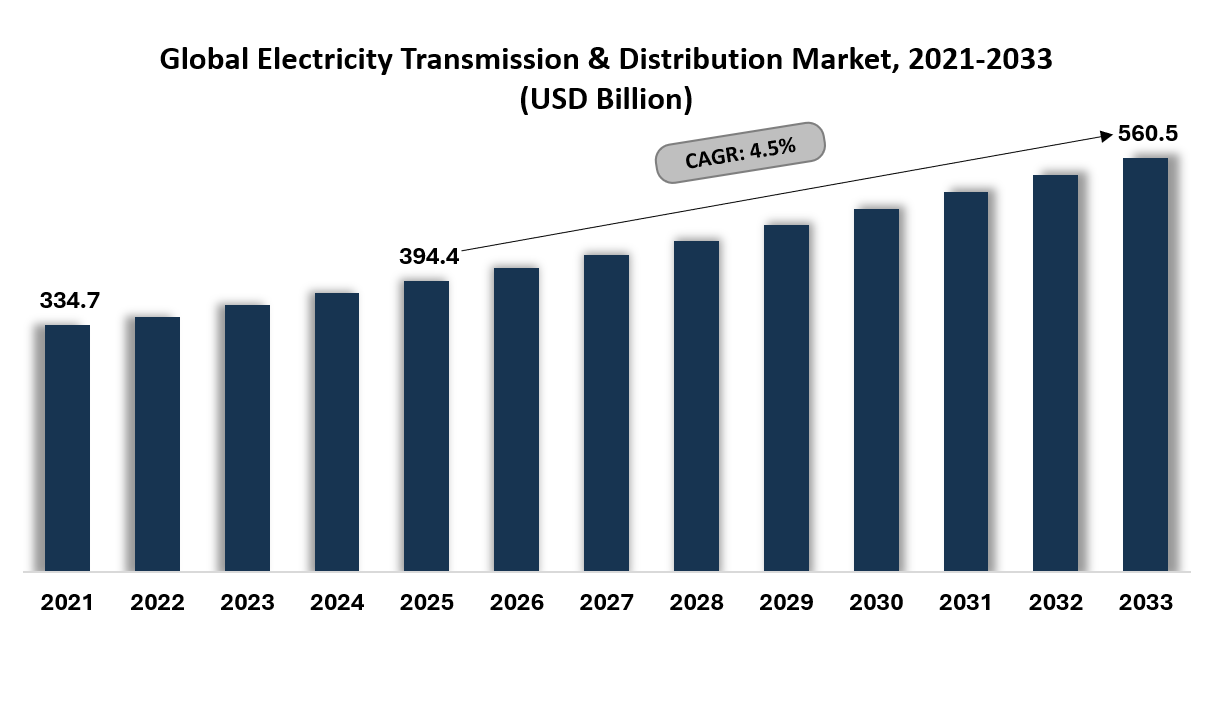
Rising electricity demand driven by urbanization, industrialization, and electrification of transport propels grid expansion investments.
Increasing integration of renewable energy sources necessitates modernization and strengthening of transmission and distribution networks
High capital expenditure requirements and long project approval timelines delay infrastructure development
Grid losses, aging infrastructure, and operational inefficiencies impact reliability and financial performance
Deployment of smart grids, digital monitoring systems, and advanced grid automation technologies enhances efficiency and network resilience
The Global Electricity Transmission & Distribution market is classified based on Equipment, Services, Technology, and End-user.
Transformer segment is valued at USD 85.3 billion in 2026 and is projected to reach USD 117.2 billion by 2033, at a CAGR of 4.6% during the forecast period.
Transformers remain a core component of the Electricity Transmission & Distribution Market, supporting voltage regulation across transmission and distribution systems. Demand continues to rise for high-efficiency power transformers, distribution transformers, and ultra-high-voltage units designed for long-distance electricity transfer. Grid expansion, substation upgrades, and renewable energy integration are further supporting transformer deployment across both developed and emerging markets.
Switchgear segment is valued at USD 78.8 billion in 2026 and is projected to reach USD 103.5 billion by 2033, at a CAGR of 4% during the forecast period.
Switchgear plays a vital role in protecting electrical infrastructure from overloads, short circuits, and operational faults. Modern gas-insulated and air-insulated switchgear solutions help utilities improve network safety, enhance reliability, and reduce downtime across transmission and distribution assets. Rising investments in substation modernization and smart grid infrastructure continue to support demand for advanced switchgear systems.
Electric Meter segment is valued at USD 44.8 billion in 2026 and is projected to reach USD 65.8 billion by 2033, at a CAGR of 5.7% during the forecast period.
Electric meters, particularly smart meters, represent a rapidly evolving segment within the Electricity Transmission & Distribution Market. Digital metering systems provide real-time electricity consumption data and support advanced billing, remote monitoring, outage detection, and demand response programs. Ongoing smart grid deployment and utility digitalization are accelerating the adoption of intelligent metering infrastructure worldwide.
Wires & Cables segment is valued at USD 88.5 billion in 2026 and is projected to reach USD 125.2 billion by 2033, at a CAGR of 5.1% during the forecast period.
Transmission lines and underground cable networks form the foundation of electricity delivery infrastructure. Increasing investment in high-voltage direct current transmission, urban underground cabling, and grid interconnection projects is driving demand for advanced conductive materials and insulation technologies. Expansion of renewable energy networks and rising electricity consumption continue to support long-term growth in this segment.
Circuit Breaker segment is valued at USD 46.6 billion in 2026 and is projected to reach USD 65.2 billion by 2033, at a CAGR of 4.9% during the forecast period.
Circuit breakers are essential for grid protection, automatically interrupting electrical faults, overloads, and abnormal current conditions across transmission and distribution systems. Utilities are increasingly adopting modern vacuum circuit breakers to improve safety, reduce environmental impact, and support regulatory compliance. Grid modernization and substation upgrades continue to strengthen market demand for advanced circuit protection equipment.
Capacitor segment is valued at USD 33.6 billion in 2026 and is projected to reach USD 39.8 billion by 2033, at a CAGR of 2.5% during the forecast period.
Capacitors support power factor correction, voltage stability, and energy efficiency across electricity distribution networks. The role of capacitors is becoming increasingly important in modern grids that integrate renewable energy sources, distributed generation, and variable load conditions. Utilities and industrial users continue to deploy capacitor systems to improve network performance and reduce transmission and distribution losses.
Others segment is valued at USD 34.1 billion in 2026 and is projected to reach USD 43.8 billion by 2033, at a CAGR of 3.6% during the forecast period.
Additional equipment includes transmission towers, insulators, protective relays, busbars, and substation automation systems that collectively support efficient and reliable electricity delivery across large grid networks. Demand for these supporting components is rising with ongoing transmission expansion, distribution upgrades, and grid digitalization programs across major economies.
Engineering Procurement and Construction (EPC) segment is projected to reach USD 210.5 billion by 2033, at a CAGR of 3.7% during the forecast period.
Engineering, Procurement, and Construction services play a central role in electricity transmission and distribution infrastructure development. EPC services cover project design, equipment procurement, transmission line construction, substation installation, and final commissioning. Rising investments in grid expansion, interconnection projects, and renewable energy integration continue to support demand for EPC capabilities across global utility networks.
Consulting segment is projected to reach USD 86.1 billion by 2033, at a CAGR of 3.8% during the forecast period.
Consulting services support utilities, governments, and grid operators in planning transmission expansion, assessing electricity demand trends, improving network reliability, and implementing digital grid strategies. Consulting services are increasingly important in projects involving renewable integration, regulatory compliance, asset optimization, and long-term infrastructure modernization.
Testing segment is projected to reach USD 110.7 billion by 2033, at a CAGR of 5.3% during the forecast period.
Testing services focus on evaluating equipment reliability, grid stability, insulation performance, and electrical safety before full-scale deployment across transmission and distribution networks. Testing is important for ensuring regulatory compliance, operational integrity, and long-term system performance across substations, transformers, switchgear, and cable systems.
Field Testing segment is projected to reach USD 86.2 billion by 2033, at a CAGR of 5.4% during the forecast period.
Field testing services ensure operational safety and performance through on-site inspection and assessment of transmission lines, transformers, substations, and switchgear components. Utilities and service providers rely on field testing to identify faults, validate equipment condition, and improve maintenance planning across critical grid assets.
Others segment is projected to reach USD 67 billion by 2033, at a CAGR of 5.8% during the forecast period.
Other services include maintenance, grid asset management, digital monitoring integration, repair support, and infrastructure modernization programs. These services are becoming increasingly important as utilities focus on improving reliability, reducing outage risk, and extending the life of aging transmission and distribution assets.
Conventional T&D segment is projected to reach USD 330.8 billion by 2033.
Conventional transmission and distribution systems rely on centralized power generation sources and established grid infrastructure to deliver electricity across national and regional networks. Markets continue to depend on these systems while gradually incorporating digital technologies, network monitoring tools, and automation upgrades to improve efficiency and reliability.
Smart Grid segment is projected to reach USD 177 billion by 2033.
Smart grid technology represents a transformative segment within the Electricity Transmission & Distribution Market, enabling two-way communication between utilities and end users. Smart grid systems use digital sensors, automated substations, intelligent metering, and predictive analytics to optimize power flow, improve outage management, and enhance grid efficiency. Rising utility investment in digital infrastructure continues to expand smart grid deployment worldwide.
Microgrid segment is projected to reach USD 52.8 billion by 2033.
Microgrids provide localized electricity networks that can operate independently or in coordination with the main grid. The ability of microgrids is to integrate renewable energy sources, support backup power, and improve local energy resilience makes them increasingly relevant for remote communities, industrial facilities, campuses, and critical infrastructure applications.
Electric Utility segment is projected to grow at a CAGR of 3.9% during the forecast period.
Electric utilities represent the largest end-user segment, responsible for operating and maintaining transmission and distribution infrastructure.
Industrial segment is projected to grow at a CAGR of 4.3% during the forecast period.
Large manufacturing facilities and industrial complexes require dedicated distribution networks and reliable electricity supply to support continuous production processes.
Renewables segment is projected to grow at a CAGR of 6.8% during the forecast period.
Renewable energy developers rely on transmission infrastructure to deliver electricity generated from wind farms, solar parks, and hydroelectric plants to the main grid.
Based on geography, the Global Electricity Transmission & Distribution market is divided into North America, Europe, Asia-Pacific, South America, Middle East, and Africa.
North America Electricity Transmission & Distribution Market is set to expand at a CAGR of 4.5% within the forecast period, reaching a market size (TAM) of USD 121.2 billion by the end of 2033.
Extensive grid modernization projects throughout America force investments in virtual substations, excessive-potential transformers, and automatic grid monitoring technologies.
Rising electrification of transportation infrastructure in Canada and the United States increases demand for stronger distribution networks capable of helping electric automobile charging structures.
Large-scale renewable electricity installations in China and India create demand for superior transmission corridors and lengthy-distance HVDC networks across Asia.
Rapid urbanization throughout Southeast Asia stimulates infrastructure development programs centered on expanding electricity get right of entry to and improving distribution reliability.
Energy infrastructure growth tasks across these areas attention on improving electricity accessibility and grid resilience. Several countries are making an investment in cross-border transmission lines, renewable electricity integration, and rural electrification programs that gradually improve the Electricity Transmission & Distribution Market across emerging economies.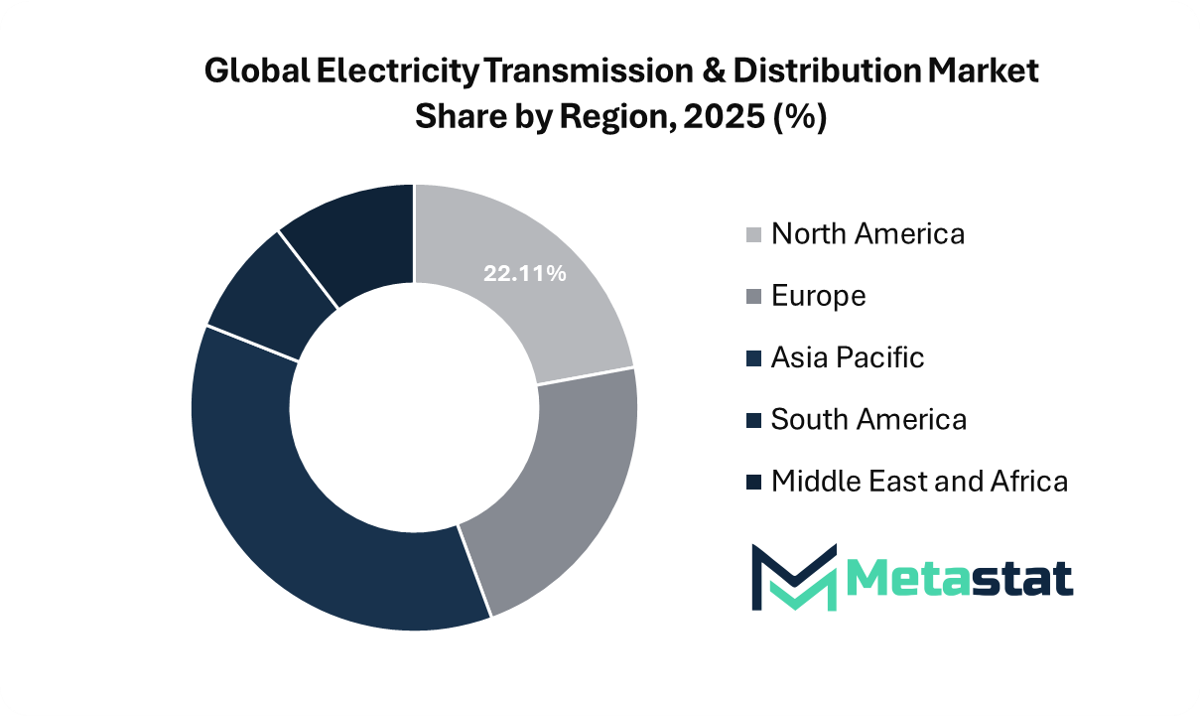
The global electricity transmission and distribution market plays a critical role in delivering power from generation sources to residential, commercial, and industrial end users. Extensive networks of transmission lines, substations, and distribution systems move electricity across cities, regions, and national borders. Rising power demand from urban development, digital infrastructure, electric vehicles, and expanding industrial activity continues to push governments and utilities to strengthen grid capacity. Investments in modern infrastructure, smart grid technologies, and advanced monitoring systems are helping reduce outages, improve efficiency, and enhance network reliability. Stable power supply remains essential for economic development, leading global utilities to upgrade aging networks while expanding service coverage.
Large utility groups and grid operators manage major portions of this infrastructure. Organizations such as State Grid Corporation of China, Power Grid Corporation of India Limited, China Southern Power Grid Co., Ltd., and National Grid plc operate extensive systems that transmit electricity across large territories. European power companies such as Enel SpA, E.ON SE, and Iberdrola, S.A. manage transmission and distribution assets while expanding renewable energy integration. In North America, companies such as NextEra Energy, Inc., Dominion Energy, Inc., American Electric Power Company, Inc., and Duke Energy Corporation continue to strengthen regional grids to support population growth and industrial expansion. These companies operate significant asset bases and work closely with regulators to maintain reliable electricity delivery.
Several national utilities also play an important role in regional grid operations. Companies such as Tokyo Electric Power Company Holdings, Incorporated, Korea Electric Power Corporation, Électricité de France S.A. (EDF), and ENGIE S.A. manage large electricity networks while supporting the transition toward cleaner energy systems. Transmission operators such as Terna S.p.A., Redeia Corporación, S.A., Elia Group SA, RTE - Réseau de Transport d'Électricité S.A., TenneT Holding B.V., and Fingrid Oyj coordinate electricity flows across national and cross-border networks. Their infrastructure remains essential for maintaining grid stability while renewable energy capacity continues to increase across Europe and other regions.
Electricity systems in emerging and developing economies also depend heavily on major public utilities. Organizations such as PT PLN (Persero), Comisión Federal de Electricidad, Eskom SOC Limited, and Hydro-Québec manage extensive distribution networks and national grid operations. Additional utilities such as FirstEnergy Corp., PPL Corporation, Entergy Corporation, Evergy, Inc., Southern Company, Exelon Corporation, National Electricity Transmission System Operator JSC (NESO), and Electricity Distribution and Supply Authority (EDSA) support regional electricity distribution and reliability programs. Rising power demand, grid digitalization, and growing investment in renewable energy connections are expected to support continued development of transmission and distribution systems worldwide.
Market size is forecast to rise from USD 394.4 billion in 2025 to over USD 560.5 billion by 2033.
The long-term outlook for the Electricity Transmission & Distribution Market remains positive, supported by sustained investment in grid expansion, asset modernization, and digital network management. Growing electricity consumption from industrial development, transport electrification, data centers, and smart city infrastructure is expected to increase the need for stronger transmission capacity and more efficient distribution systems. Utilities and grid operators are likely to prioritize resilience, automation, and renewable energy integration over the forecast period.
By Equipment:
By Services:
By Technology:
By End-user:
This research report categorizes the Electricity Transmission & Distribution market based on key segments and regions, forecasts revenue growth, and analyses trends in each submarket. The report analyses the key growth drivers, opportunities, and challenges influencing the Electricity Transmission & Distribution market. Recent market developments and competitive strategies such as expansion, product launch, partnership, merger, and acquisition have been included to draw the competitive landscape in the market.
The report strategically identifies and profiles the key market players and analyses their core competencies in each sub-segment of the Electricity Transmission & Distribution market.
|
Report Attributes |
Details |
|
Study Period |
2021-2033 |
|
Base Year |
2025 |
|
Estimated Year |
2026 |
|
Forecast Period |
2026-2033 |
|
Historical Period |
2021-2025 |
|
Growth Rate |
CAGR 4.5% from 2026 to 2033 |
|
Revenue Unit |
USD billion |
|
Segmentation |
By Equipment, Services, Technology, End-user, and Region |
|
By Region |
North America (By Equipment, Services, Technology, End-user, and Country)
|
|
Europe (By Equipment, Services, Technology, End-user, and Country)
|
|
|
Asia Pacific (By Equipment, Services, Technology, End-user, and Country)
|
|
|
South America (By Equipment, Services, Technology, End-user, and Country)
|
|
|
Middle East and Africa (By Equipment, Services, Technology, End-user, and Country)
|
Find answers to common questions about this report
Top players operating in the Electricity Transmission & Distribution industry include State Grid Corporation of China, Power Grid Corporation of India Limited, China Southern Power Grid Co., Ltd., National Grid plc, and Enel SpA.
Global Electricity Transmission & Distribution market is estimated to reach USD 560.5 billion by 2033.
Rising electricity demand driven by urbanization, industrialization, and electrification of transport propels grid expansion investments and Increasing integration of renewable energy sources necessitates modernization and strengthening of transmission and distribution networks are key driving factors, boosting the market.
The Metastat Insights analysis shows that the North America Electricity Transmission & Distribution market size is estimated to be USD 121.2 billion by 2033.
High capital expenditure requirements and long project approval timelines delay infrastructure development will hamper the market growth within the forecast period.
The Metastat Insights study shows that the Global Electricity Transmission & Distribution market size was USD 394.4 billion in 2025.
The Global Electricity Transmission & Distribution market is expected to grow at a CAGR of 4.5% over the forecast period (2026-2033).
Asia Pacific region dominates the market.
The analysts below cover Energy and Power research at Metastat Insights.
LEAD ANALYST
Utkarsh Khirodkar is a Lead Market Research Analyst at MetaStat Insight, specializing in market intelligence, technology sector assessments, and competitive strategy.

PRINCIPAL CONSULTANT - ENTERPRISE AI & EMERGING TECHNOLOGIES
Banking & Finance · Electronics and Semiconductor · Energy and Power · Healthcare IT · Information & Technology · Professional Services
Vijay Gunti is a Principal Consultant at MetaStat Insight, bringing over two decades of experience across enterprise digital transformation, technology strategy, and intelligent systems.

ENERGY & INFRASTRUCTURE INDUSTRY CONSULTANT
Automotive and Transportation · Electronics and Semiconductor · Energy and Power · Machinery & Equipment
Saurabh Vasant Ganvir consults for Energy & Infrastructure Industry at MetaStat Insight, specializing in renewable energy, solar EPC, and electric vehicle (EV) infrastructure markets.
Enterprise zero-trust network rollouts are often slowed down by multi-cloud transit latency and proprietary hardware retirement schedules. This study provided realistic total cost of ownership models comparing cloud-delivered security edge solutions against traditional hardware refreshes. The analysis of contract renewal lengths and software maintenance fees gave us clear visibility into enterprise replacement cycles over the next three to five years.
Scaling antibody-drug conjugate manufacturing hinges on contract manufacturing availability for high-potency active ingredients. The MetaStat Insight analysis looked closely at global cleanroom slot constraints, bioconjugation batch failure rates, and supply chain redundancies between the US, Europe, and India. The supplier capability matrix proved genuinely useful for our team when mapping secondary source options across our clinical pipeline.
Floating offshore wind feasibility relies heavily on specialized installation vessel availability and port crane limits, which most broad renewable energy forecasts ignore. The report delivered a thorough analysis of dry dock capacity, mooring chain supply constraints, and raw material pricing trends for deepwater anchor installations. It served as a solid independent sanity check for our offshore project capital expenditure assumptions.
Explore related market intelligence reports worth reading alongside this one.