
LEAD ANALYST
Utkarsh Khirodkar is a Lead Market Research Analyst at MetaStat Insight, specializing in market intelligence, technology sector assessments, and competitive strategy.

Global Leak Detection Software Market Size, Share, By Application (Upstream Leak Detection, Midstream Leak Detection, Downstream Leak Detection, and Refineries), By Technology (LDAR-Based Leak Detection Software, Optical Imaging Tools, Infrared Imaging Tools, AI-Based Leak Prediction Tools, ML-Based Leak Prediction Tools, Fenceline Air Quality Monitoring Solutions, and Others), Industry Analysis, Growth, Trends, and Forecast, 2026-2033
Report ID
MSI-4788
Published
June, 2026
Pages
313 Pages
Format
Report Details
Choose Your License
Leak Detection Software Market
Global Leak Detection Software market size is valued at USD 985.8 million in 2025 and projected to grow at a CAGR of 7.1% during the forecast period, reaching USD 1,713.0 million by 2033.
North America holds a 37.1% market share in 2025, with the U.S. leading the regional market.
The Upstream Leak Detection segment accounts for a market share of 20.9% in 2025.
Key trends driving growth: Stringent environmental and safety regulations are forcing industries to adopt continuous leak monitoring solutions and rising demand for real-time pipeline, water network, and industrial asset monitoring is accelerating software adoption.
Opportunities include expansion of oil & gas pipelines and urban water infrastructure is creating strong demand for advanced leak detection software and Integration of AI, cloud analytics, and predictive maintenance models is opening new high-value software-driven solutions.
Key insight: Rapid shift toward AI- and IoT-enabled software platforms is transforming leak detection from reactive inspection to predictive, real-time monitoring.
The Global Leak Detection Software Market represents a rapidly evolving segment within the industrial and utility software industry, focused on identifying, monitoring, and managing leaks in pipelines, tanks, and fluid systems. These software solutions use data analytics, sensor integration, and machine learning algorithms to detect anomalies, prevent losses, and ensure operational safety.
Industries such as oil & gas, water utilities, chemicals, and power generation are increasingly adopting leak detection software to improve efficiency, reduce environmental impact, and comply with regulatory requirements. The growing need for real-time monitoring, predictive maintenance, and asset optimization will support the long-term expansion of the Global Leak Detection Software Market.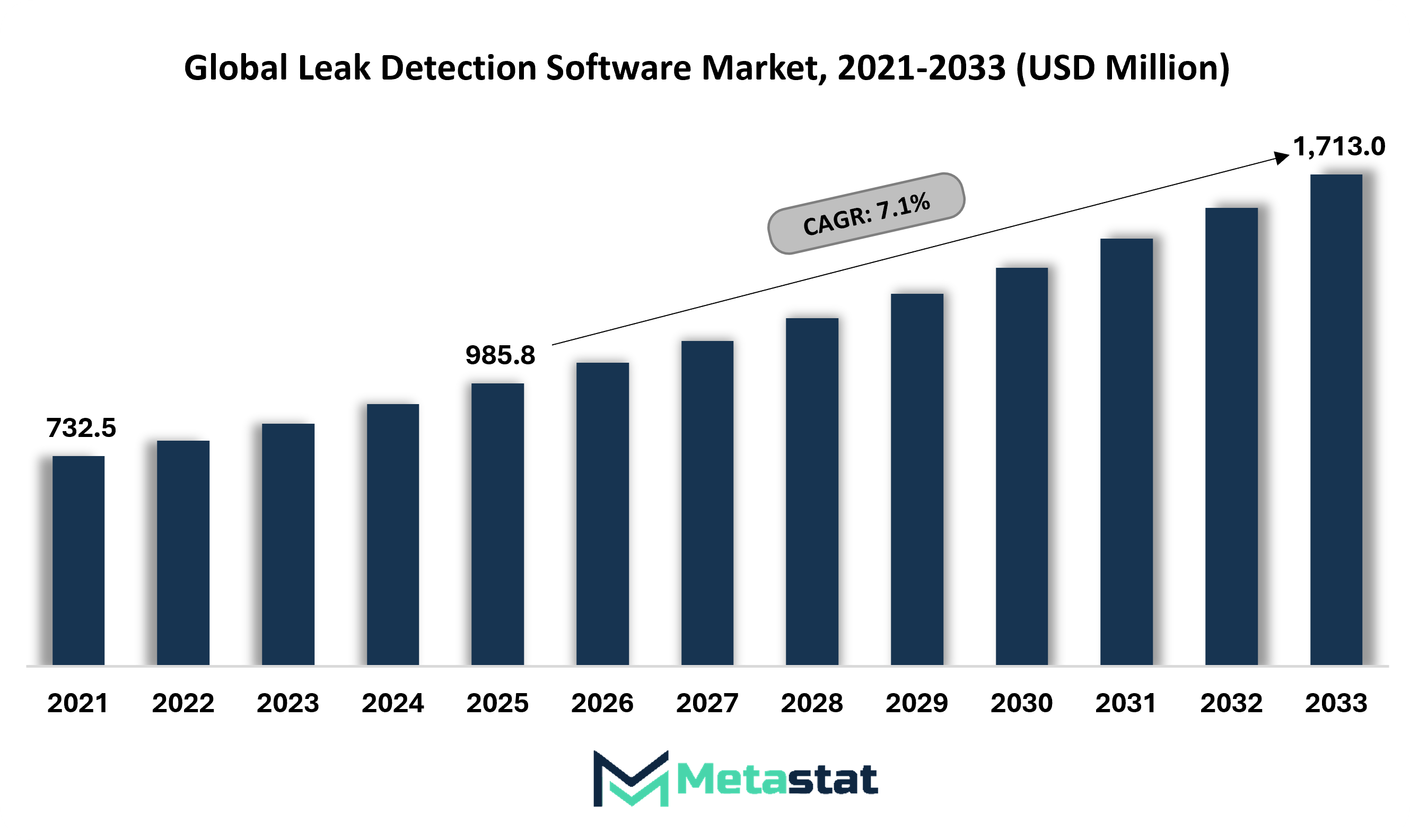
Strict regulatory frameworks across manufacturing, energy, and utility sectors are increasing accountability for emission control and loss prevention. Continuous monitoring systems supported by advanced analytics are gaining wider adoption. Future industrial operations will face stronger compliance norms, pushing investment toward reliable detection systems within the Global Leak Detection Software Market.
Expanding infrastructure networks and industrial assets are increasing dependence on real-time visibility. Digital monitoring tools enable early identification of faults, reducing operational losses. Rapid integration of IoT and data-driven systems indicates sustained adoption growth, strengthening technological advancement within the Global Leak Detection Software Market.
Significant capital requirements linked with software deployment, system calibration, and infrastructure alignment create financial pressure on smaller enterprises. Budget constraints restrict large-scale implementation. Future adoption patterns will depend on cost optimization strategies, subscription-based models, and accessible pricing structures within the Global Leak Detection Software Market.
Technical challenges related to system integration with legacy infrastructure slow the pace of implementation. Skilled professionals capable of managing advanced detection systems remain limited. Long-term scalability will depend on simplified deployment processes, training initiatives, and improved compatibility solutions across the Global Leak Detection Software Market.
Large-scale pipeline projects and urban water distribution upgrades are expanding monitoring requirements. Adoption of detection systems continues to increase with rising infrastructure complexity. Future developments indicate strong reliance on predictive analytics and automated monitoring, creating growth potential across multiple regions within the Global Leak Detection Software Market.
The Global Leak Detection Software Market is classified based on application and technology.
Upstream Leak Detection segment is valued at USD 221.0 million in 2026 and is projected to reach USD 367.5 million by 2033, at a CAGR of 7.5% during the forecast period.
Upstream leak detection focuses on exploration and production sites where pipeline integrity remains critical. Advanced monitoring systems will enable real-time alerts and predictive insights, reducing environmental risk and operational losses. Integration with remote sensing technologies will strengthen surveillance across offshore and onshore assets.
Midstream Leak Detection segment is valued at USD 421.4 million in 2026 and is projected to reach USD 666.1 million by 2033, at a CAGR of 6.8% during the forecast period.
Midstream leak detection addresses transportation networks such as pipelines and storage facilities. Growth within the Global Leak Detection Software Market will be driven by increasing need for continuous monitoring across long-distance infrastructure. Smart sensors and automated diagnostics will enhance accuracy, support regulatory compliance, and reduce downtime across complex distribution networks.
Downstream Leak Detection segment is valued at USD 179.8 million in 2026 and is projected to reach USD 292.8 million by 2033, at a CAGR of 7.2% during the forecast period.
Downstream leak detection emphasizes distribution systems, retail networks, and end-user delivery channels. The Global Leak Detection Software Market will experience expansion, supported by stricter safety standards and the growing need for efficient fuel handling. Digital systems will improve fault detection, optimize maintenance schedules, and reduce financial losses caused by undetected leaks.
Refineries segment is valued at USD 234.6 million in 2026 and is projected to reach USD 386.7 million by 2033, at a CAGR of 7.4% during the forecast period.
Refinery operations require precise leak detection systems owing to high-risk processing environments. The Global Leak Detection Software Market will witness significant adoption across refineries through integrated monitoring solutions capable of managing complex equipment. Future trends will focus on automation, improved analytics, and seamless coordination between safety systems and operational workflows.
LDAR-Based Leak Detection Software segment is projected to reach USD 705.9 million by 2033, at a CAGR of 7.1% during the forecast period.
LDAR-based leak detection software will play an important role in emission control and compliance monitoring. Leak Detection Software will support routine inspections and data logging for industrial facilities. Enhanced reporting capabilities and regulatory alignment will ensure consistent performance and reduced environmental impact across operations.
Optical Gas Imaging (OGI) Tools segment is projected to reach USD 299.1 million by 2033, at a CAGR of 7.3% during the forecast period.
Optical Gas Imaging (OGI) Tools provide visual identification of gasoline leaks through superior imaging strategies. The Global Leak Detection Software Market will advantage from elevated deployment of OGI systems owing to accuracy and non-invasive inspection capabilities. Future innovation will improve sensitivity, portability, and integration with centralized tracking systems.
AI/ML-Based Leak Prediction Tools segment is projected to reach USD 258.8 million by 2033, at a CAGR of 8% during the forecast period.
AI/ML-based leak prediction tools will transform predictive maintenance within the Global Leak Detection Software Market. AI-driven tools will analyze historical and real-time data to forecast potential leak events. Such advancements will reduce response time, enhance decision-making, and improve overall infrastructure reliability across industrial sectors.
Fenceline Air Quality Monitoring Solutions segment is projected to reach USD 135.0 million by 2033, at a CAGR of 6.6% during the forecast period.
Fenceline air quality monitoring solutions focus on detecting emissions around facility boundaries to ensure environmental compliance. Growth within the Global Leak Detection Software Market will be supported by rising awareness of air quality requirements. Continuous monitoring systems will deliver actionable insights and strengthen transparency between industries and regulatory bodies.
Others segment is projected to reach USD 314.2 million by 2033, at a CAGR of 6.8% during the forecast period.
Additional technologies, including acoustic sensors and fiber optic systems, will contribute to market diversification. The Global Leak Detection Software Market will expand through the adoption of such solutions in specialized applications. High sensitivity, rapid detection capabilities, and adaptability across varied environments will support long-term technological advancement.
Based on geography, the Global Leak Detection Software Market is segmented into North America, Europe, Asia-Pacific, South America, and the Middle East & Africa.
North America dominates the Leak Detection Software Market, supported by strict environmental compliance requirements, mature oil & gas infrastructure, and high adoption of digital monitoring technologies
Europe represents a significant market for leak detection software, driven by stringent emission reduction targets, strong environmental governance, and increasing modernization of energy and utility infrastructure.
Asia-Pacific will register strong growth in the Leak Detection Software Market, supported by rapid industrialization, expanding pipeline networks, rising urban water demand, and increasing investment in smart utility infrastructure.
South America is witnessing steady adoption of leak detection software, supported by oil & gas exploration, pipeline modernization, and water infrastructure development.
The Middle East & Africa region is gaining traction in the Leak Detection Software Market, driven by large-scale oil & gas assets, refinery operations, desalination plants, and expanding water distribution networks.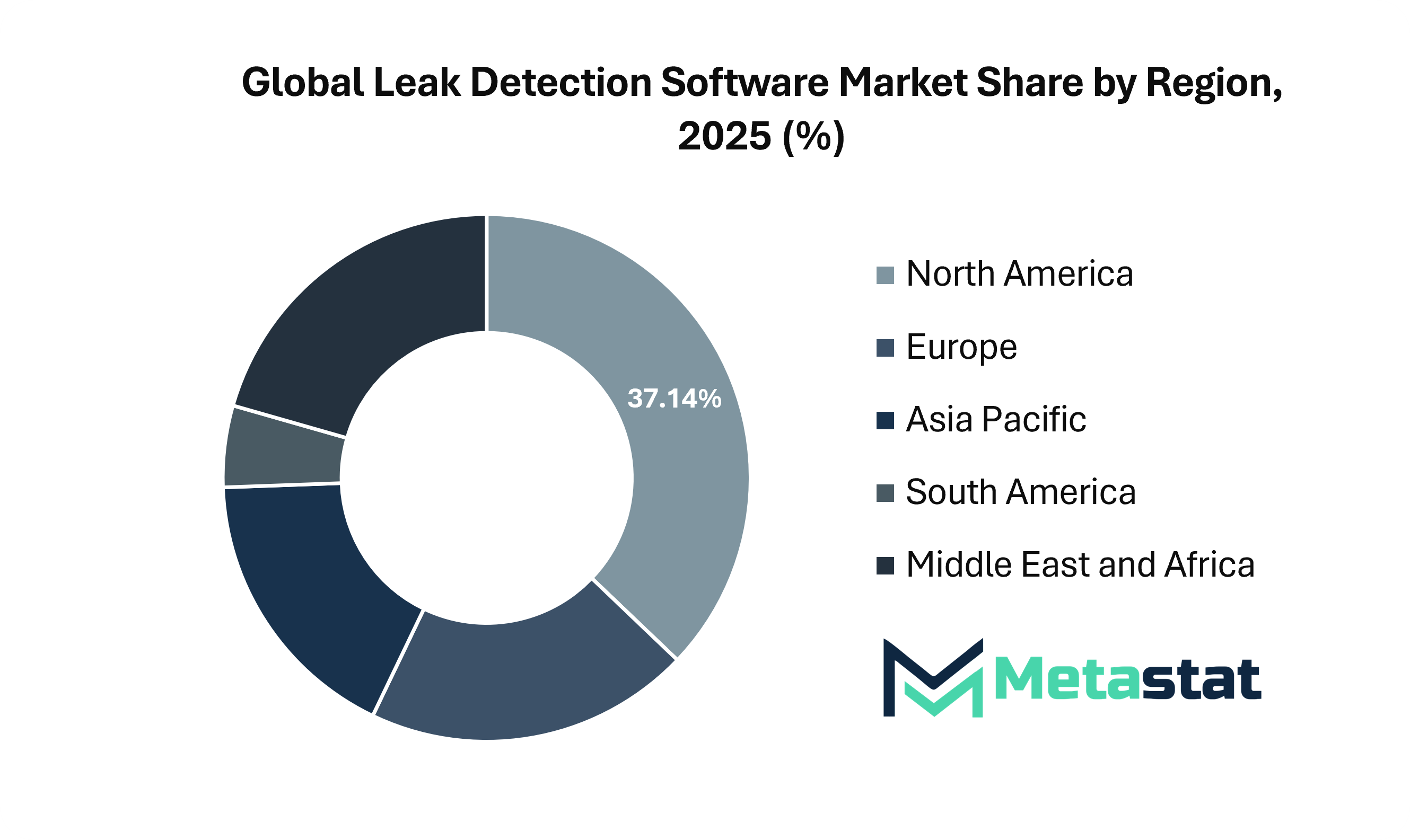
The Global Leak Detection Software Market shows steady growth, driven by the rising need for safety, compliance, and cost control across industries. Companies are paying closer attention to how leaks impact the environment and daily operations. Small leaks often go unnoticed at first, yet they will result in severe damage over time, including financial losses and regulatory penalties. Software solutions help detect such issues early through sensors, data monitoring, and real-time alerts. These tools support industries such as oil & gas, manufacturing, and water management, where even a minor leak will disrupt operations. The Global Leak Detection Software Market continues to gain importance as companies aim to reduce waste and improve performance without adding operational complexity.
The presence of key Global Leak Detection Software industry players plays an important role in shaping market growth and technology adoption. Companies such as LDARtools, Inc. and Montrose Environmental Group, Inc. focus on providing advanced monitoring systems that help track emissions and identify leaks quickly. TriHydro Corporation works closely with industries that require environmental consulting along with detection services, providing a comprehensive solution. MSA Safety Incorporated brings strong expertise in safety equipment, combining hardware with software to ensure improved safety. Emerson Electric Co. is known for its advanced automation systems, which help integrate leak detection into broader operational frameworks, making it easier for companies to manage risks.
Other companies continue to strengthen the market by offering specialized solutions tailored to different operational needs. Alliance Technical Group provides services that support compliance with environmental standards, helping companies meet strict regulations without added operational pressure. SUTO iTEC GmbH specializes in compressed air and gas monitoring, helping industries reduce energy losses linked to leaks. TTK Leak Detection System provides advanced sensing technologies designed for critical environments where accuracy is crucial. DiagSense provides digital tools focused on precision and ease of use, enabling operators to respond quickly when a leak is detected. EnviroData Solutions, Inc. supports data management and reporting, helping businesses identify patterns and improve long-term performance.
The Global Leak Detection Software Market will continue to grow as industries place greater value on prevention and operational efficiency. Technology will continue to improve, making systems easier to use and more reliable. Businesses will adopt these tools not only to meet regulations but also to protect resources and reduce downtime. The role of key Global Leak Detection Software industry players will remain essential, with their innovations guiding how solutions evolve. With steady development and wider adoption, the market will move toward more accurate detection and smarter systems that support safer operations.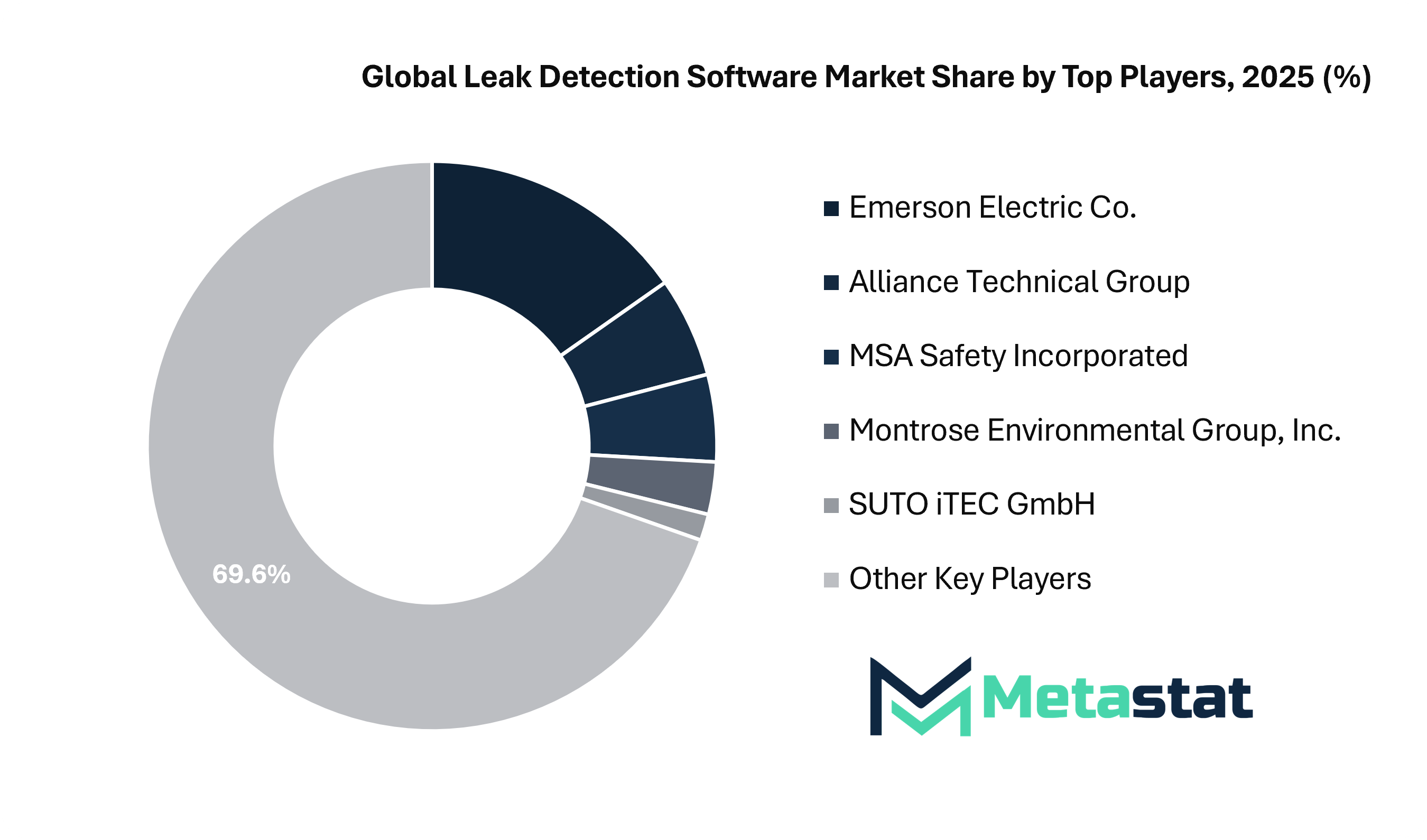
Market size is forecast to rise from USD 985.8 million in 2025 to over USD 1,713.0 million by 2033.
The Global Leak Detection Software Market is expected to benefit from increasing regulatory pressure, digital transformation, and rising adoption of smart infrastructure. Future growth is likely to be driven by AI-based predictive maintenance, IoT integration, cloud-based monitoring systems, and expansion in water conservation and industrial safety applications.
This research report categorizes the Leak Detection Software market based on key segments and regions, forecasts revenue growth, and analyses trends in each submarket. The report analyses the key growth drivers, opportunities, and challenges influencing the Leak Detection Software market. Recent market developments and competitive strategies such as expansion, product launch, partnership, merger, and acquisition have been included to draw the competitive landscape in the market.
The report strategically identifies and profiles the key market players and analyses their core competencies in each sub-segment of the Leak Detection Software market.
|
Report Attributes |
Details |
|
Study Period |
2021-2033 |
|
Base Year |
2025 |
|
Estimated Year |
2026 |
|
Forecast Period |
2026-2033 |
|
Historical Period |
2021-2025 |
|
Growth Rate |
CAGR 7.1% from 2026 to 2033 |
|
Revenue Unit |
USD million |
|
Segmentation |
By Application, Technology, and Region |
|
By Region |
North America (By Application, Technology, and Country)
|
|
Europe (By Application, Technology, and Country)
|
|
|
Asia Pacific (By Application, Technology, and Country)
|
|
|
South America (By Application, Technology, and Country)
|
|
|
Middle East and Africa (By Application, Technology, and Country)
|
Find answers to common questions about this report
Top players operating in the Leak Detection Software industry includes LDARtools, Inc, Montrose Environmental Group, Inc., TriHydro Corporation, MSA Safety Incorporated, Emerson Electric Co., and Alliance Technical Group.
North America region dominates the market.
High initial deployment and integration costs limit adoption, especially among small and mid-sized enterprises will hamper the market growth within the forecast period.
Global Leak Detection Software market is estimated to reach USD 1,713.0 million by 2033.
The Global Leak Detection Software market is expected to grow at a CAGR of 7.1% over the forecast period (2026-2033).
The Metastat Insights study shows that the Global Leak Detection Software market size was USD 985.8 million in 2025.
Stringent environmental and safety regulations are forcing industries to adopt continuous leak monitoring solutions and Rising demand for real-time pipeline, water network, and industrial asset monitoring is accelerating software adoption are key driving factors, boosting the market.
The Metastat Insights analysis shows that the North America Leak Detection Software market size is estimated to be USD 642.3 million by 2033.
The analysts below cover Energy and Power research at Metastat Insights.
LEAD ANALYST
Utkarsh Khirodkar is a Lead Market Research Analyst at MetaStat Insight, specializing in market intelligence, technology sector assessments, and competitive strategy.

PRINCIPAL CONSULTANT - ENTERPRISE AI & EMERGING TECHNOLOGIES
Banking & Finance · Electronics and Semiconductor · Energy and Power · Healthcare IT · Information & Technology · Professional Services
Vijay Gunti is a Principal Consultant at MetaStat Insight, bringing over two decades of experience across enterprise digital transformation, technology strategy, and intelligent systems.

ENERGY & INFRASTRUCTURE INDUSTRY CONSULTANT
Automotive and Transportation · Electronics and Semiconductor · Energy and Power · Machinery & Equipment
Saurabh Vasant Ganvir consults for Energy & Infrastructure Industry at MetaStat Insight, specializing in renewable energy, solar EPC, and electric vehicle (EV) infrastructure markets.
Replacing petrochemical surfactants with bio-based alternatives requires realistic timelines on industrial precision fermentation scaling. The market research broke down commercialization timelines, feedstock sugar price sensitivities, and regional cosmetic ingredient regulatory approvals in Europe and East Asia. That supplier readiness mapping gave our formulations team reliable context when comparing renewable chemical sourcing roadmaps.
Tracking ceramic matrix composite adoption in high-bypass aero engines requires strict attention to material qualification cycles and FAA airworthiness testing milestones. The MetaStat Insight team provided a detailed timeline of silicon carbide fiber manufacturing capacity and commercial foundry lead times. Having clear visibility into upstream thermal barrier coating supply helped us stress-test our long-term component procurement strategy.
Transitioning ultra-class mining haul trucks to alternative power requires concrete data on remote hydrogen refueling infrastructure economics. The report evaluated megawatt-scale electrolyzer installation expenses, onsite storage safety mandates, and heavy-duty fuel cell stack degradation under continuous duty cycles. That technical rigor helped our engineers benchmark realistic total operating cost horizons for off-highway fleet decarbonization.
Explore related market intelligence reports worth reading alongside this one.