
LEAD ANALYST
Utkarsh Khirodkar is a Lead Market Research Analyst at MetaStat Insight, specializing in market intelligence, technology sector assessments, and competitive strategy.

Global Step Voltage Regulator (SVR) Market Size, Share, By Phase Configuration (Single-Phase Step Voltage Regulators and Three-Phase Step Voltage Regulators), By Technology (Electromechanical Step Voltage Regulators, Solid-State Voltage Regulators and Others (Hybrid Voltage Regulation Technologies)), By Voltage (2.4 kV to 15 kV, 15 kV to 25 kV and Above 25 kV to 35 kV), By End-Use Industry (Electric Utilities and Power Distribution, Industrial and Manufacturing, Renewable Energy and Distributed Generation and Commercial and Infrastructure), Industry Analysis, Growth, Trends, and Forecast, 2026-2033
Report ID
MSI-5723
Published
November, 2026
Pages
283 Pages
Format
Historical
Base year
Forecast
Forecast period
Report Details
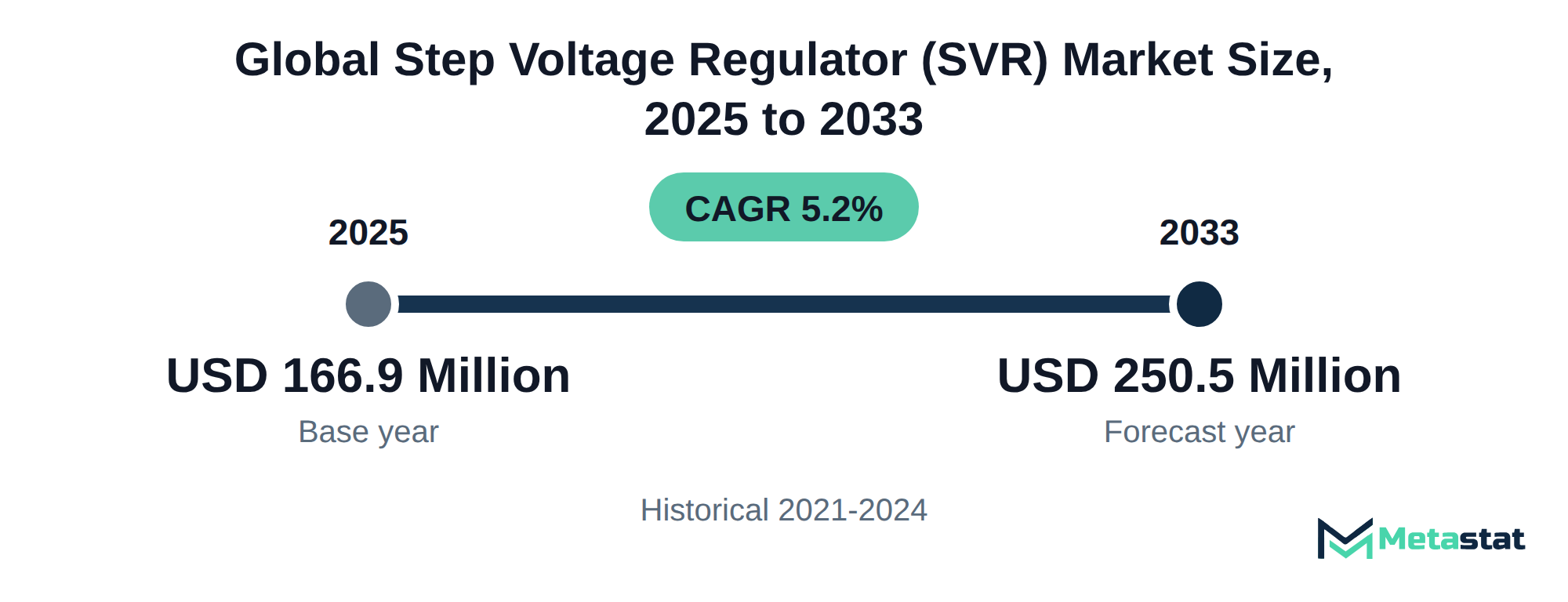
Market Valuation: Valued at $166.9 Million in 2025, projected to reach $250.5 Million by 2033 at a 5.2% CAGR.
Dominant Segment: Single-Phase Step Voltage Regulators lead the market, driven by their widespread adoption in power distribution applications.
Geographic Lead: North America holds a significant market share of 27.0% in 2025, with the US expected to maintain its leadership position in 2026 due to strong investment in electrical infrastructure.
What's Inside: The report provides comprehensive coverage of market dynamics, competitive landscape, and detailed forecasts from 2026 to 2033, focusing on various segments and technologies.
Emerging Demand: The Three-Phase Step Voltage Regulators segment is projected to grow at a CAGR of 5.7%, reflecting increasing applications in industrial and manufacturing sectors.
Technological Advancements: Solid-State Voltage Regulators are anticipated to experience significant growth, with a projected market value of USD 46.7 million by 2033, due to their efficiency and reliability.
Choose Your License
Global Step Voltage Regulator (SVR) Market
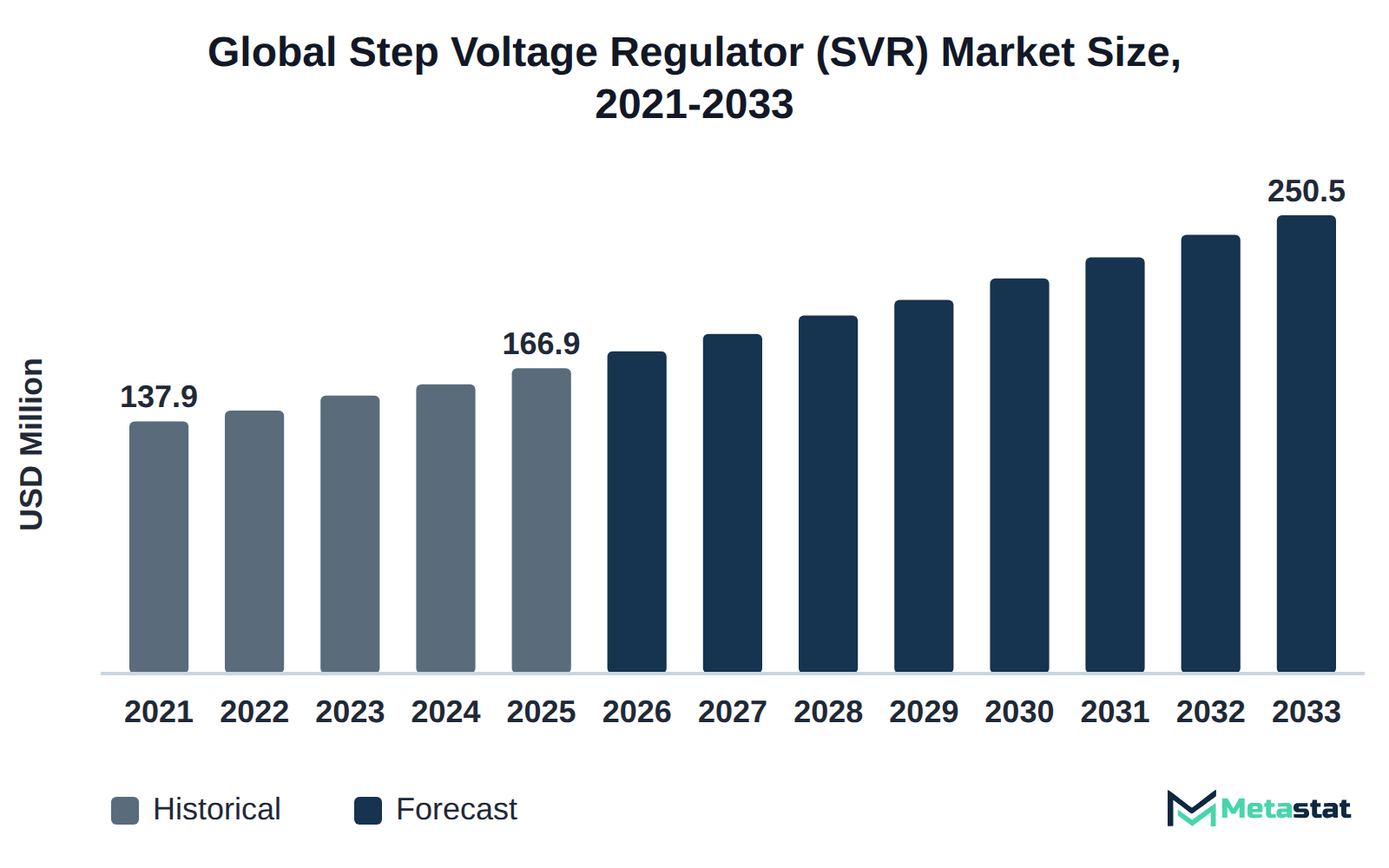
The global Step Voltage Regulator (SVR) market was valued at USD 166.9 million in 2025 and is projected to reach USD 250.5 million by 2033, growing at a CAGR of 5.2% over the forecast period.
The Step Voltage Regulator (SVR) market focuses on devices that maintain a consistent voltage level in electrical systems. Buyers invest in these technologies primarily to enhance energy efficiency and ensure reliable power distribution. Key industries including electric utilities, industrial manufacturing, and renewable energy heavily rely on SVRs to manage fluctuations in voltage, leading to equipment damage and operational inefficiencies.
Growth in the market is driven by increasing demand for reliable power supply solutions and the transition toward renewable energy sources. Among the various segments, Single-Phase Step Voltage Regulators hold the most significant value, thanks to their widespread adoption in power distribution applications. North America holds 27.0% of the market in 2025, with the US leading in 2026. This regional dominance reflects established infrastructure and high investment in electrical upgrades.
Technological advancements expand the market by improving the efficiency and operating capability of voltage regulation systems. The Solid-State Voltage Regulators segment is projected to experience significant growth, appealing to industries focusing on modernizing their electrical systems. Rising emphasis on energy efficiency and sustainability also drives demand for SVRs across multiple sectors.
The Step Voltage Regulator (SVR) market encompasses devices crucial for maintaining stable voltage levels across various electrical applications. Step voltage regulators also fall within the broader AC voltage regulator and stabilizer category. Buyers invest in this technology primarily to enhance operational efficiency and protect sensitive equipment from voltage fluctuations. Key sectors driving expenditures include electric utilities, industrial manufacturing, and renewable energy, all of which rely on consistent power quality to meet operational demands.
Growth in the market is propelled by increasing demand for reliable power distribution systems, particularly in regions experiencing rapid industrialization. Among the segments, Single-Phase Step Voltage Regulators represent the highest value, attributed to their widespread use in residential and commercial applications. North America holds 27.0% of the market in 2025, with the US leading in 2026, highlighting the region's significant investment in electrical infrastructure and modernization efforts.
Technological advancements are shaping the market, and innovation in solid-state voltage regulation is gaining traction. This shift reflects the industry's response to the growing demand for more efficient and compact solutions. The Step Voltage Regulator (SVR) market is projected for steady growth, driven by evolving power management strategies and greater emphasis on energy efficiency across sectors.
The shift from electromechanical to solid-state voltage regulation technologies significantly impacts the Step Voltage Regulator (SVR) market. The market shows a growing preference for solid-state voltage regulators, projected to reach USD 46.7 million by 2033, at a compound annual growth rate (CAGR) of 8.3%. This advancement stems from solid-state technology's ability to improve efficiency and reliability, meeting rising demand for high-performance power distribution systems.
Electromechanical step voltage regulators, while still valuable with a projected market value of USD 186 million by 2033, show a slower growth trajectory at a CAGR of 4.5%. The limitations of electromechanical solutions, including slower response times and higher maintenance requirements, contribute to the shift toward solid-state alternatives. Buyers in the electric utilities and power distribution sectors favor technologies that promise lower operating costs and greater resilience against fluctuating demand.
This transition influences purchasing decisions across various industries. The growing adoption of solid-state technology supports improved grid stability and enables integration with renewable energy sources, enhancing the overall efficiency of power distribution networks. Suppliers focusing on solid-state voltage regulators position themselves strategically within the market, tapping into the demand for innovative and efficient solutions.
The rise in utility grid modernization significantly influences purchasing practices within the Step Voltage Regulator (SVR) market. Utility companies increasingly focus on enhancing grid efficiency and reliability, driving demand for advanced voltage regulation solutions. Automatic step voltage regulators are a key component of these modernization efforts, enabling utilities to manage voltage levels. In 2026, the market for single-phase step voltage regulators is projected to reach USD 102 million, reflecting the growing relevance of these technologies.
Buyers engage in varied contract models that reflect the transition toward more sophisticated technologies. Long-term agreements and performance-based contracts are becoming common, allowing utilities to ensure the successful implementation and operation of step voltage regulators. These arrangements often include stipulations regarding maintenance, performance metrics, and warranties, aligning supplier incentives with utility goals. The focus on performance guarantees enhances buyer confidence in capital expenditures related to grid enhancements, influencing overall investment strategies in voltage regulation technologies.
The shift toward automatic step voltage regulators improves operational efficiency and also affects pricing within the market. Utilities prioritize advanced technologies, and competition among suppliers intensifies, resulting in more favorable terms for buyers. The emphasis on innovation drives suppliers to offer bundled services and competitive pricing, further enabling utility companies to enhance their infrastructure while managing costs effectively.
The integration of renewable energy sources into power grids presents significant voltage stability requirements across distributed power networks. The growing reliance on renewable energy, particularly from solar and wind sources, necessitates advanced solutions for maintaining voltage levels. The demand for Step Voltage Regulators (SVR) provides essential voltage stabilization to ensure grid reliability and efficiency.
The Electric Utilities and Power Distribution segment of the Step Voltage Regulator (SVR) market expands from USD 99.9 million in 2026 to USD 136 million by 2033, reflecting a compound annual growth rate of 4.5%. This growth highlights the increasing importance of voltage regulation technologies in supporting the fluctuating output from renewable energy sources. The ability to effectively manage voltage levels in real-time enhances grid resilience and facilitates a higher penetration of renewable energy, aligning with global sustainability targets.
Investing in advanced voltage regulation solutions, including step voltage regulators, presents a viable approach for energy providers aiming to manage the challenges of renewable energy integration. The adoption of these technologies aids in minimizing operational disruptions and maintaining service quality, ultimately supporting continued growth in the market.
Rising focus on grid stability fuels demand for Step Voltage Regulators (SVR) in power distribution systems. These devices maintain the voltage levels that electrical equipment needs to operate efficiently. This increase indicates a growing recognition of the importance of voltage regulation in the management of electrical grids.
Several factors contribute to this heightened demand. The transition toward renewable energy sources necessitates robust voltage regulation to accommodate the variable nature of power generation. Geographical expansion of power distribution networks, particularly in developing regions, highlights the necessity for reliable voltage management solutions. With the market for Step Voltage Regulators evolving, investments in advanced technologies become critical for enhancing operational efficiency and reliability. Stakeholders in the electric utilities sector prioritize the integration of SVRs to meet both current and future demands for stable and reliable power distribution.
The demand for Step Voltage Regulators (SVR) increasingly stems from a heightened focus on grid reliability. Electric utilities prioritize stability and efficiency in their operations, prompting investments in advanced voltage regulation technologies. Reliability issues in aging infrastructure drive utilities to replace outdated systems with modern solutions that ensure consistent voltage levels. The shift reflects a broader trend of increasing scrutiny on electrical grid performance, compelling buyers to enhance their operational capabilities. This growing emphasis on reliability and performance leads to wider market participation and higher spending by utilities.
Continued growth in industrial applications
Industrial and manufacturing sectors exhibit a discernible uptick in spending on Step Voltage Regulators (SVR) due to expanding operational demands. Increased production rates and the integration of advanced machinery necessitate robust voltage regulation solutions to manage power fluctuations effectively. Industries recognize the financial implications of voltage instability, leading to proactive investments in devices that safeguard against potential disruptions. The market for industrial applications is expected to reach USD 59.2 million by 2033, marking a significant increase in demand. This trend signifies a shift toward modernizing infrastructure, enabling industries to maintain productivity and operational efficiency through reliable voltage management.
Advancements in solid-state voltage regulation technologies drive growth in the Step Voltage Regulator (SVR) market. These technologies offer enhanced reliability and efficiency compared to traditional electromechanical alternatives, addressing increasing demands for energy management and voltage stability across various applications. Solid-state regulators exhibit improved performance characteristics, including faster response times and greater precision in voltage regulation. This shift attracts buyers from sectors including electric utilities, industrial manufacturing, and renewable energy.
The rising adoption of solid-state technologies aligns with the industry's focus on minimizing maintenance costs and extending the operational lifespan of voltage regulation equipment. The transition from mechanical components to solid-state designs allows for more compact installations and lowers the overall footprint of systems. Investment strategies prioritize solid-state solutions to remain competitive in an evolving market. The market's progression towards these advanced technologies enhances its overall value proposition and drives further demand.
Price fluctuations in raw materials hinder broader adoption of Step Voltage Regulators (SVR) within the market. The persistent increase in prices for essential components, including transformers and capacitors, significantly impacts operational costs for manufacturers. Electric utilities and power distribution companies face heightened expenses when procuring these materials, leading to slower project timelines and reduced capital investment in infrastructure. As a result, buyers delay replacements or consider alternatives, which slows overall market growth. The pressure on budgets results in smaller order sizes, with companies managing expenditures effectively while maintaining operational efficiency. This price sensitivity affects immediate purchasing decisions and long-term planning and investment strategies, limiting the potential for revenue growth within the SVR market.
Suppliers in the Step Voltage Regulator (SVR) market face increasing challenges related to rising compliance costs. Compliance with evolving regulatory standards for electrical devices necessitates investments in updated technologies and processes, straining financial resources. These financial pressures compel suppliers to innovate and implement more efficient practices to maintain margins. Many suppliers invest in automation and digital transformation to streamline operations and enhance productivity. By optimizing production processes, suppliers aim to mitigate the financial impact of compliance requirements. Collaboration with technology partners offers opportunities for cost sharing and access to advanced solutions that reduce overall operational costs. This strategic approach enables resilience amid the competitive landscape, allowing suppliers to adapt and thrive despite the challenging cost environment. The market's evolution depends on suppliers' ability to manage these pressures.
Growing demand for three-phase step voltage regulators (SVRs) creates a significant market opportunity. This segment is projected to have a compound annual growth rate (CAGR) of 5.7% through 2033, indicating robust demand driven by increased applications in industrial and manufacturing sectors. Companies increasingly adopt three-phase SVRs to enhance operational efficiency and power distribution reliability. By addressing this specific demand, manufacturers capture higher market share and improve revenue streams. The potential for growth within this segment illustrates the changing dynamics in the Step Voltage Regulator (SVR) market, with industries seeking advanced solutions for voltage regulation challenges. The focus on three-phase technologies aligns with broader trends in energy management and industrial automation, creating fertile ground for investment and innovation. Strong performance in the three-phase segment is expected to contribute significantly to the overall growth trajectory of the market.
The Global Step Voltage Regulator (SVR) market is segmented based on Phase Configuration, Technology, Voltage, and End-Use Industry.
Single-Phase Step Voltage Regulators segment is valued at USD 102 million in 2026 and is projected to reach USD 140.9 million by 2033, at a CAGR of 4.7% during the forecast period. This segment is essential for maintaining stable voltage levels in various electrical systems, particularly in residential and commercial applications. Demand arises primarily from electric utilities and power distribution companies that require reliability in their grid operations. The steady adoption of renewable energy sources contributes to this segment's growth, with these systems often necessitating voltage regulation for optimal performance. Compared to the Three-Phase Step Voltage Regulators, Single-Phase devices exhibit slower growth due to a narrower application scope and typically lower voltage requirements. The market evolves in response to technological advancements and increasing demands for energy efficiency.
Three-Phase Step Voltage Regulators segment is estimated to reach USD 109.6 million by 2033, at a CAGR of 5.7% during the forecast period. These regulators are widely used in industrial and commercial applications requiring stable voltage levels across three-phase power systems. The primary users include electric utilities, industrial manufacturing facilities, and renewable energy operators. Demand for this segment is driven by the increasing complexity of modern power systems, which necessitate efficient voltage management solutions. This segment exhibits faster growth relative to Single-Phase Step Voltage Regulators, which are anticipated to grow at a CAGR of 4.7%. The adoption of three-phase technologies typically involves higher initial costs but offers enhanced operational efficiency, making them a preferred choice in applications where reliability and performance are critical. The ongoing expansion of smart grid initiatives highlights the importance of these regulators in maintaining voltage quality across diverse energy distribution networks.
These regulators primarily serve electric utilities and power distribution companies, providing essential voltage regulation to maintain operational efficiency in electrical grids. The segment experiences growth driven by the increasing emphasis on grid reliability, pushing utilities to invest in stable voltage regulation solutions. Compared to solid-state voltage regulators, which exhibit a higher projected CAGR of 8.3%, electromechanical regulators face slower growth due to technological advancements driving the latter's adoption. Nonetheless, the affordability of electromechanical options appeals to budget-conscious buyers, ensuring steady demand within the market.
This technology is essential for maintaining voltage stability for various applications, particularly in renewable energy integration and smart grid systems. Electric utilities and power distribution companies heavily rely on solid-state voltage regulators to ensure precise voltage control and improve system reliability. The increasing emphasis on energy efficiency and reduced operational costs drives the adoption of this segment. Solid-state voltage regulators offer advantages over electromechanical counterparts, including faster response times and lower maintenance requirements. This segment exhibits a higher growth rate compared to other technologies, including electromechanical regulators, which are projected to grow at a CAGR of 4.5%. Such dynamics contribute to a competitive edge within the market, enhancing the overall value proposition for stakeholders investing in modern electrical infrastructure.
USD 17.8 million by 2033 highlights the value of the Others (Hybrid Voltage Regulation Technologies) segment. This segment serves various applications by integrating different voltage regulation technologies, appealing to industries that require flexible solutions for voltage consistency. Factors driving this segment include a shift toward advanced hybrid technologies that offer enhanced performance and efficiency. The adoption of hybrid solutions supports electric utilities and manufacturing sectors seeking to modernize and optimize their systems. Compared to traditional electromechanical and solid-state options, this segment experiences slower growth, characterized by a unique combination of technologies that address specific user needs. The anticipated growth reflects an increasing focus on innovative solutions, aligning with broader trends toward energy efficiency and reliability. This segment distinguishes itself with its versatility, attracting a diverse customer base across multiple industries.
Valued at USD 84 million in 2026, the 2.4 kV to 15 kV segment is projected to reach USD 113.4 million by 2033, at a CAGR of 4.4% during the forecast period. This segment finds application primarily in electric utilities and power distribution, serving to stabilize voltage levels for various electrical systems. Demand for this segment stems from the increasing necessity for reliable power supply amid growing energy consumption. The segment's growth rate is slower than that of the 15 kV to 25 kV segment, which has a CAGR of 5.6%. Continued advancements in technology and increasing investment in infrastructure further influence its demand. This segment stands out due to its specific application in the lower voltage range, differentiating it from higher voltage segments that cater to industrial and commercial uses.
The 15 kV to 25 kV segment is estimated to reach USD 89.3 million by 2033, at a CAGR of 5.6% during the forecast period. This segment primarily serves electric utilities, which rely on it for voltage regulation in medium-voltage applications. Factors driving growth in this segment include the increasing need for reliable power distribution systems and advancements in voltage regulation technologies. Compared to the 2.4 kV to 15 kV segment, which exhibits a CAGR of 4.4%, the 15 kV to 25 kV segment benefits from a stronger emphasis on enhancing grid stability and efficiency. Electric utilities prioritize investments in voltage regulation solutions to mitigate voltage fluctuations, supporting higher adoption rates. The segment's growth aligns with broader trends in the Step Voltage Regulator (SVR) market, reflecting a transition toward improved power distribution practices.
Above 25 kV to 35 kV segment is expected to reach USD 47.8 million by 2033. This segment serves critical applications in high-voltage power distribution, primarily serving electric utilities and industrial facilities. The increasing demand for enhanced voltage regulation in these settings drives growth, with operators focusing on improving energy efficiency and reliability. The segment features a growth rate of 5.6%, which is slower compared to other voltage segments. Unlike the 15 kV to 25 kV segment, which has a higher growth rate of 5.6%, this segment experiences a moderate pace due to its specialized use cases and the higher costs associated with high-voltage equipment. The Step Voltage Regulator (SVR) market supports continued advancements in technologies that improve performance and adaptability, further influencing adoption in this specific voltage range.
This segment primarily serves electric utility companies and power distribution entities, facilitating the stable delivery of electricity. A growing focus on grid reliability and the rising integration of renewable energy resources drive demand for step voltage regulators. Compared to other segments, this sub-segment experiences moderate growth, influenced by the consistent need for reliable power distribution solutions. The importance of maintaining voltage levels during peak demand periods distinguishes this segment, emphasizing its role in ensuring stability across power networks. While the market faces challenges related to pricing pressures, ongoing investments in grid infrastructure contribute positively to expansion opportunities.
Industrial and Manufacturing segment is estimated to reach USD 59.2 million by 2033, at a CAGR of 5.9% during the forecast period. This segment serves a variety of sectors, including automotive, aerospace, and consumer goods, where precise voltage regulation is essential for machinery and equipment. The growing focus on improving production efficiency drives demand, particularly in industries that rely heavily on automated processes. Compared to the Electric Utilities and Power Distribution segment, which grows at a CAGR of 4.5%, the Industrial and Manufacturing segment experiences faster growth. Increased adoption of advanced manufacturing technologies necessitates reliable voltage regulation, presenting opportunities for innovation and development in the Step Voltage Regulator (SVR) market. Continued investments in industrial infrastructure and technology upgrades further support this segment's expansion, distinguishing it from other end-use applications.
Renewable Energy and Distributed Generation segment is expected to reach USD 35.5 million by 2033. This segment primarily serves the growing demand for sustainable energy solutions, focusing on the integration of renewable energy sources into existing power systems. Stakeholders, including energy providers and grid operators, increasingly prioritize efficient voltage regulation to maintain system stability. The significant rise in renewable energy installations drives this segment, with the need for advanced voltage regulation technologies gaining importance for effective energy distribution. Compared to other segments, the Renewable Energy and Distributed Generation segment experiences slightly slower growth, with a distinct focus on technological advancements and regulatory support affecting its trajectory. The dynamic nature of energy markets and the transition to greener solutions influence the adoption of step voltage regulators specifically designed for renewable applications, distinguishing it from traditional utility-focused segments. The Step Voltage Regulator (SVR) market is expected to continue adapting to these evolving needs.
The Commercial and Infrastructure segment is projected to grow at a CAGR of 4.7% during the forecast period. This segment addresses the voltage regulation requirements of commercial buildings, infrastructure projects, and related applications, where maintaining a stable voltage supply is critical for operational efficiency. Demand arises primarily from construction and property development sectors that rely on stable electrical systems for various applications, including lighting, HVAC, and machinery. Growth in urbanization and infrastructure development drives the segment's expansion, presenting opportunities for investment. Comparatively, the segment experiences slower growth than the Industrial and Manufacturing segment, which benefits from a CAGR of 5.9%. The market sees heightened demand for innovative technologies that provide enhanced reliability, setting this segment apart from others that primarily focus on utility applications. Demand for commercial and infrastructure solutions emphasizes the necessity for advanced regulation technologies to support ongoing development projects.
Based on geography, the Global Step Voltage Regulator (SVR) market is divided into North America, Europe, Asia-Pacific, South America, Middle East, and Africa.
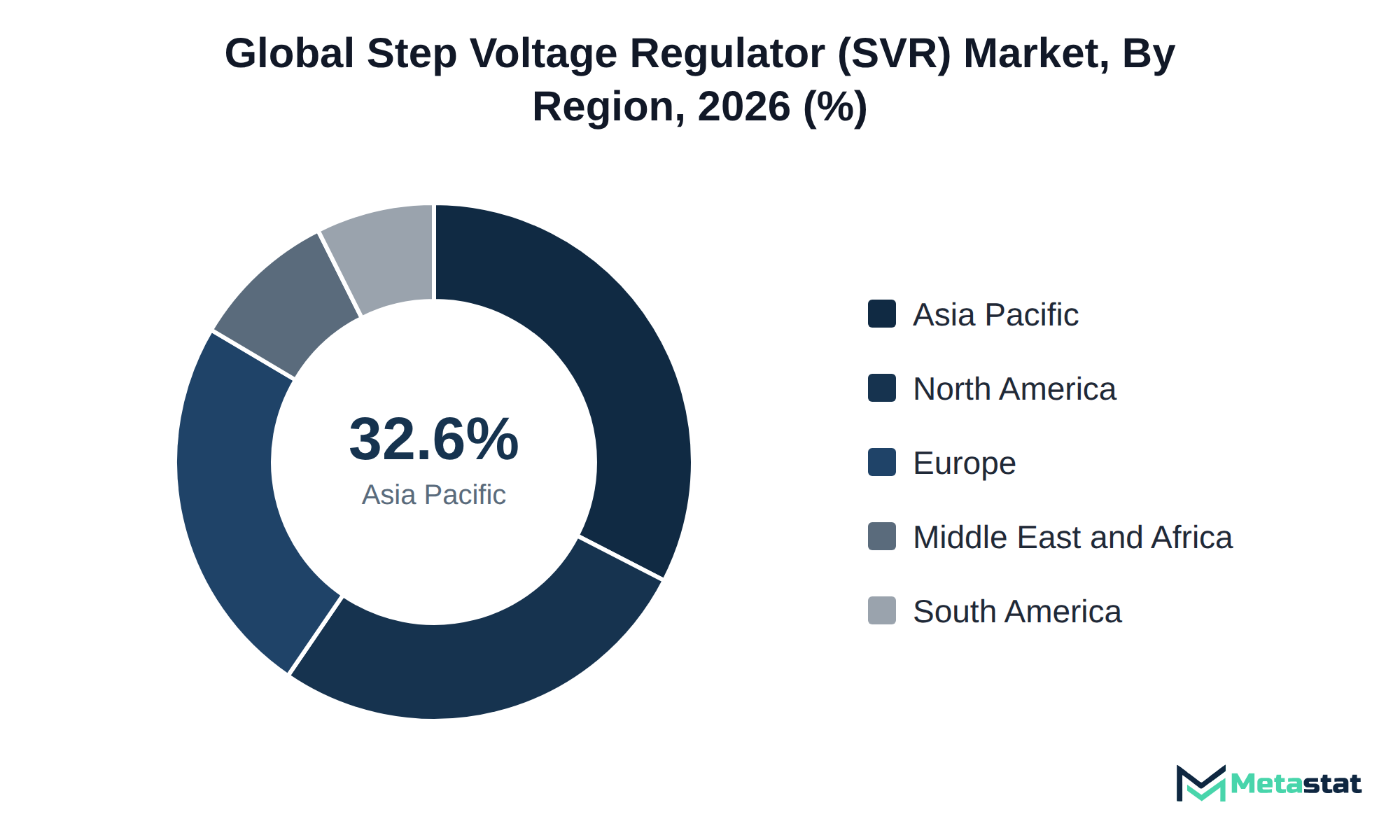
Demand for the Step Voltage Regulator (SVR) market in North America stems from the strong emphasis on efficient power distribution across various sectors, particularly in electric utilities. The region benefits from a robust infrastructure that supports energy management, significantly influencing buyer decisions. The market in North America is projected to reach USD 63.7 million by the end of 2033, with a share of 27.0% in 2025. Countries including the United States, Canada, and Mexico play critical roles in driving advancements in voltage regulation technologies. The growing adoption of renewable energy sources in these countries drives further interest in innovative solutions, enhancing overall market dynamics.
Demand in the Step Voltage Regulator (SVR) market in Europe draws from a diverse range of sectors, particularly electric utilities and power distribution. Countries like Germany and France emphasize the integration of advanced voltage regulation systems to support their expanding energy infrastructure. Regulatory frameworks aimed at enhancing energy efficiency and reducing carbon emissions drive investments in these technologies. The market experiences distinct growth patterns, with countries including the UK and Italy focusing on solid-state voltage regulators, reflecting a shift toward more efficient and reliable solutions. The region's share of the global market stands at 24.00%, indicating its significant role in the broader landscape of voltage regulation.
Demand for the Step Voltage Regulator (SVR) market in Asia-Pacific stems from the region's expansive electric utilities and power distribution sector. Rapid industrialization in countries like China and India contributes significantly, driving the need for reliable voltage regulation technologies. Infrastructure developments focusing on renewable energy projects in Australia and Japan further enhance market potential. The region's projected market share stands at 32.6% in 2025. Regional advancements in technology, particularly solid-state voltage regulators, facilitate improvements in efficiency and performance. Market participants are increasing investments to capture growth opportunities in emerging markets within Southeast Asia. An emphasis on sustainable energy solutions increases the importance of voltage regulation systems, promoting further adoption across various industries.
In South America, the market experiences growth driven by the demand for reliable power distribution, particularly in Brazil and Argentina. Investments in electric utilities reflect a commitment to enhancing infrastructure and meeting the power requirements of both industrial and commercial sectors. The 7.4% share of the global market in 2025 indicates stable interest in adopting advanced voltage regulation technologies. Regional players focus on improving service efficiency and reliability, which further supports demand. The Step Voltage Regulator (SVR) market in this region aligns with ongoing efforts to modernize electrical systems and accommodate the increasing energy demand across various industries.
The presence of electric utilities and power distribution sectors in Saudi Arabia and the UAE drives significant demand for the Step Voltage Regulator (SVR) market within the Middle East and Africa. Infrastructure investments in renewable energy projects in South Africa further support market growth. A focus on enhancing grid stability and reliability through advanced voltage regulation technologies influences purchasing decisions among industries. With a market share of 9.1% in 2025, this region highlights a growing recognition of the importance of efficient voltage regulation solutions. The market benefits from an increasing number of private and public infrastructure initiatives aimed at modernizing power distribution networks, contributing to overall market expansion in the coming years.
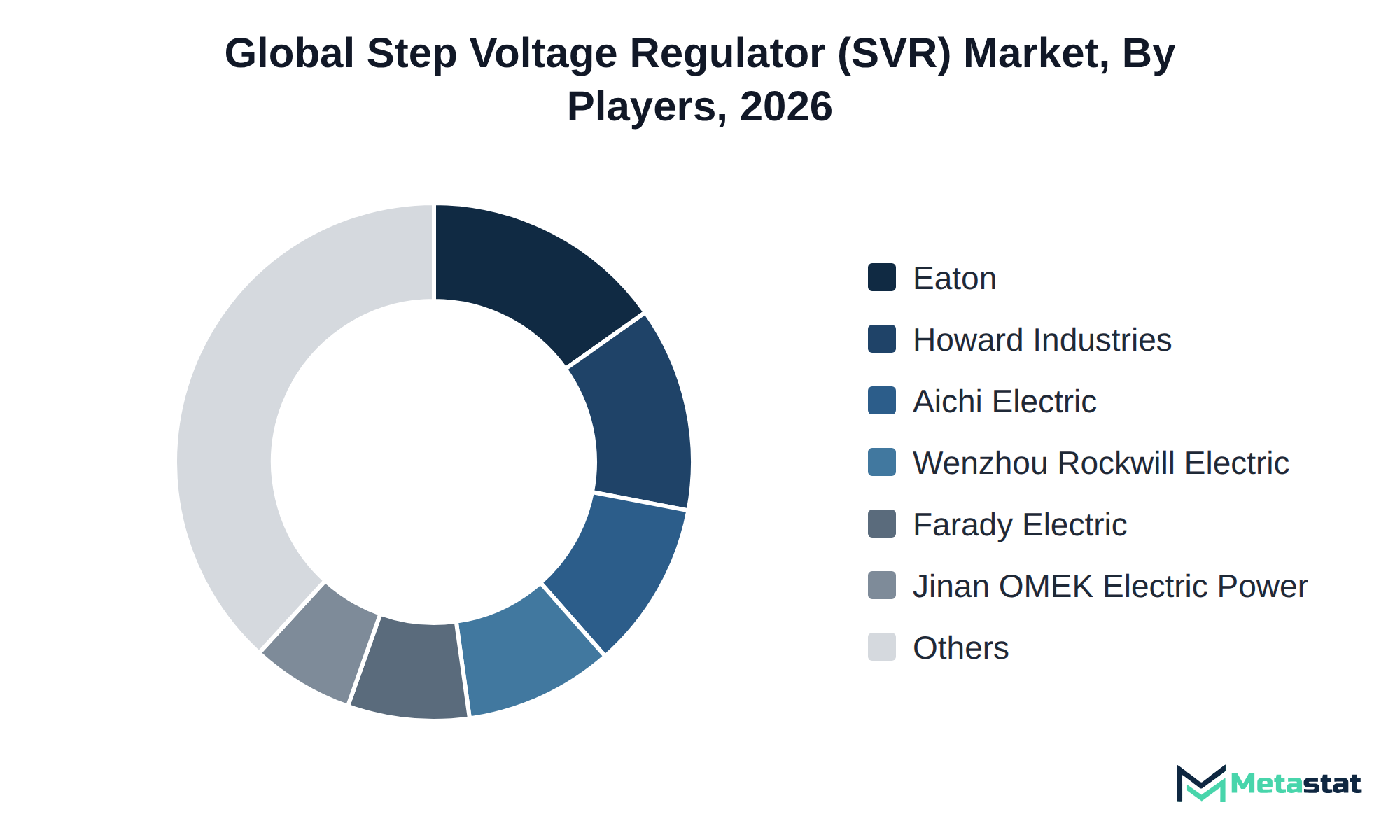
The Step Voltage Regulator (SVR) market features a competitive environment with various companies focusing on different aspects of product offerings and customer requirements. Companies compete based on factors including price, certification, customization, service quality, and the ability to provide a comprehensive ecosystem of solutions. Buyers prioritize these elements when choosing among suppliers.
Companies like Eaton Corporation and Howard Industries, Inc. emphasize their technological capabilities and comprehensive service offerings to attract clients in the electric utilities and power distribution sector. Aichi Electric Co., Ltd. and Farady Electric Co., Ltd. focus on specific voltage ranges and customization options to meet the diverse needs of industrial and manufacturing applications.
Wenzhou Rockwill Electric Co., Ltd. and Jinan OMEK Electric Power Co., Ltd. highlight their certifications and compliance with industry standards, enhancing their appeal to buyers seeking reliability and quality assurance in the Step Voltage Regulator (SVR) market. This strategic behavior ensures that companies maintain competitiveness while addressing evolving market demands.
The growth relies on several developments within the Step Voltage Regulator (SVR) market. Secondly, advancements in solid-state voltage regulator technology are expected to boost the market, achieving a value of USD 46.7 million by 2033, while experiencing a robust CAGR of 8.3%. The Asia Pacific region, accounting for 32.6% of the market share, will play a critical role in the anticipated growth, driven by rising industrial demand and renewable energy projects. A primary risk to this growth stems from potential supply chain disruptions, which could hinder production and delay market expansion. Addressing these challenges will be essential for reaching the projected market size, ensuring sustained growth and competitiveness in the evolving energy landscape.
By Technology: Electromechanical Step Voltage Regulators, Solid-State Voltage Regulators, Others (Hybrid Voltage Regulation Technologies)
By End-Use Industry: Electric Utilities and Power Distribution, Industrial and Manufacturing, Renewable Energy and Distributed Generation, Commercial and Infrastructure
The report strategically identifies and profiles the key market players and analyses their core competencies in each sub-segment of the Step Voltage Regulator (SVR) market.
Report Attributes | Details |
Study Period | 2021-2033 |
Base Year | 2025 |
Estimated Year | 2026 |
Forecast Period | 2026-2033 |
Historical Period | 2021-2025 |
Growth Rate | CAGR 5.2% from 2026 to 2033 |
Revenue Unit | USD million |
Segmentation | By Phase Configuration, Technology, Voltage, End-Use Industry, and Region |
By Region | North America (By Phase Configuration, Technology, Voltage, End-Use Industry, and Country)
|
Europe (By Phase Configuration, Technology, Voltage, End-Use Industry, and Country)
| |
Asia Pacific (By Phase Configuration, Technology, Voltage, End-Use Industry, and Country)
| |
South America (By Phase Configuration, Technology, Voltage, End-Use Industry, and Country)
| |
Middle East and Africa (By Phase Configuration, Technology, Voltage, End-Use Industry, and Country)
|
Find answers to common questions about this report
The Step Voltage Regulator (SVR) market size was valued at USD 166.9 million in 2025.
The market is projected to grow at a CAGR of 5.2% during the forecast period from 2026 to 2033.
The North America Step Voltage Regulator (SVR) market size is estimated to reach USD 63.7 million by 2033.
Single-Phase Step Voltage Regulators lead the market with a projected value of USD 140.9 million by 2033, compared to the Three-Phase Step Voltage Regulators, which are expected to reach USD 109.6 million in the same year.
The demand for Step Voltage Regulators is driven by a heightened focus on grid reliability, prompting electric utilities to invest in advanced voltage regulation technologies. the industrial sector exhibits increased spending due to expanding operational demands and the need for robust voltage regulation solutions to manage power fluctuations effectively.
Asia Pacific holds the dominant share of the Step Voltage Regulator market, accounting for 32.6 percent of the total market. This region's significant share reflects its robust demand and industrial activity.
Price fluctuations in raw materials hinder broader adoption of Step Voltage Regulators (SVR) within the market. Rising compliance costs for suppliers strain financial resources, compelling them to innovate and implement more efficient practices to maintain margins.
Factors favoring adoption in the Step Voltage Regulator (SVR) industry include increased demand for three-phase SVRs driven by applications in industrial and manufacturing sectors. This trend enhances operational efficiency and improves power distribution reliability, contributing to a growing market.
The Step Voltage Regulator (SVR) market is estimated to reach a valuation of USD 250.5 million by 2033.
Key players operating in the Step Voltage Regulator (SVR) industry include Eaton Corporation, Howard Industries, Inc., Aichi Electric Co., Ltd., Wenzhou Rockwill Electric Co., Ltd., Farady Electric Co., Ltd., Jinan OMEK Electric Power Co., Ltd., Jiangsu Dingxin Electric Co., Ltd., and HENAN NPC ELECTRIC CO., LTD.
The analysts below cover Energy and Power research at Metastat Insights.
LEAD ANALYST
Utkarsh Khirodkar is a Lead Market Research Analyst at MetaStat Insight, specializing in market intelligence, technology sector assessments, and competitive strategy.

PRINCIPAL CONSULTANT - ENTERPRISE AI & EMERGING TECHNOLOGIES
Banking & Finance · Electronics and Semiconductor · Energy and Power · Healthcare IT · Information & Technology · Professional Services
Vijay Gunti is a Principal Consultant at MetaStat Insight, bringing over two decades of experience across enterprise digital transformation, technology strategy, and intelligent systems.

ENERGY & INFRASTRUCTURE INDUSTRY CONSULTANT
Automotive and Transportation · Electronics and Semiconductor · Energy and Power · Machinery & Equipment
Saurabh Vasant Ganvir consults for Energy & Infrastructure Industry at MetaStat Insight, specializing in renewable energy, solar EPC, and electric vehicle (EV) infrastructure markets.
Evaluating sovereign cloud deployments for core banking platforms demands a clear view of data residency regulations and migration exit strategies. MetaStat Insight delivered an exhaustive review of regional latency tolerances, mainframe decommission milestones, and third-party vendor concentration risk. The regulatory compliance mapping across European and Asian financial jurisdictions gave our team a dependable baseline for multi-cloud infrastructure discussions.
Replacing petrochemical surfactants with bio-based alternatives requires realistic timelines on industrial precision fermentation scaling. The market research broke down commercialization timelines, feedstock sugar price sensitivities, and regional cosmetic ingredient regulatory approvals in Europe and East Asia. That supplier readiness mapping gave our formulations team reliable context when comparing renewable chemical sourcing roadmaps.
Tracking ceramic matrix composite adoption in high-bypass aero engines requires strict attention to material qualification cycles and FAA airworthiness testing milestones. The MetaStat Insight team provided a detailed timeline of silicon carbide fiber manufacturing capacity and commercial foundry lead times. Having clear visibility into upstream thermal barrier coating supply helped us stress-test our long-term component procurement strategy.
Explore related market intelligence reports worth reading alongside this one.
Starting from
$2950