
LEAD ANALYST
Utkarsh Khirodkar is a Lead Market Research Analyst at MetaStat Insight, specializing in market intelligence, technology sector assessments, and competitive strategy.

Global Smart Grid Market Size, Share, By Deployment (On-Premises and Cloud-Based), By Technology (Advanced Metering Infrastructure, Distribution Automation, Supervisory Control, Data Acquisition, Demand Response, and Others), By Application (Generation, Transmission, Distribution, Consumption, and Others), By End User (Utility, Industrial, Residential, and Commercial), Industry Analysis, Growth, Trends, and Forecast, 2026-2033
Report ID
MSI-4757
Published
May, 2026
Pages
316 Pages
Format
Report Details
Choose Your License
Smart Grid Market
Global Smart Grid market size is valued at USD 86.4 billion in 2025 and projected to grow at a CAGR of 16.9% during the forecast period, reaching USD 301.0 billion by 2033.
North America holds 32.6% in 2025 with US leading the market share in 2025.
On-Premises segment account for a market share of 62.1% in 2025.
Key trends driving growth: Integration of Renewable Energy and Distributed Energy Resources, Grid Modernization and Aging Power Infrastructure.
Opportunities include AI-Enabled Grid Analytics, DERMS, and Grid-Edge Intelligence Expansion.
Key insight: The Global Smart Grid market is transitioning from centralized infrastructure toward decentralized, intelligent energy ecosystems driven by digitalization and renewable integration.
The Global Smart Grid market continues to gain traction as governments and utilities focus on upgrading aging power infrastructure. Traditional grids are being replaced by intelligent systems capable of real-time communication, automation, and efficient power distribution. Utilities are investing heavily in advanced technologies to improve grid resilience, reduce transmission losses, and enhance operational efficiency. These investments remain critical across regions experiencing rapid urbanization and increasing electricity demand.
The growing need for reliable and sustainable energy systems is further accelerating adoption, positioning the Global Smart Grid market as a key component of future energy infrastructure. Increased adoption of renewable energy and rising electrification across sectors will further support market expansion. The Global Smart Grid market is positioned for long-term growth, supported by technological advancements and global energy transition initiatives.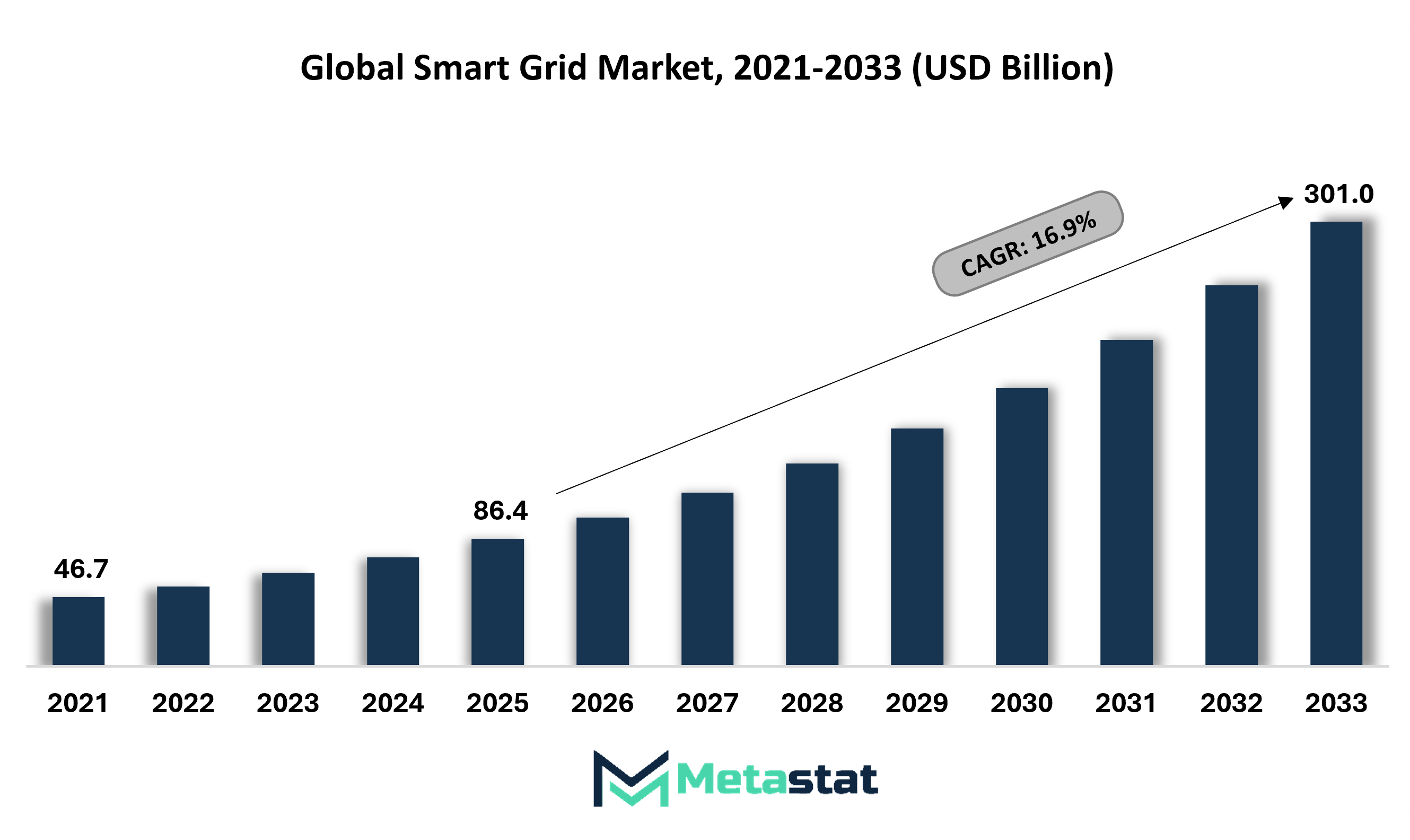
Integration of Renewable Energy and Distributed Energy Resources.
Rising deployment of renewable energy assets, including solar installations and wind facilities, will accelerate transformation across the Global Smart Grid market. Decentralized generation systems will require advanced monitoring, adaptive load balancing, and intelligent distribution frameworks. Energy ecosystems will shift toward flexible architectures where distributed energy resources support stability, improve efficiency, and enhance resilience across interconnected networks.
Grid Modernization and Aging Power Infrastructure.
Aging transmission networks and outdated distribution assets will drive large-scale upgrades in the Global Smart Grid market. Utilities will adopt advanced metering infrastructure, automated substations, and digital control systems to replace legacy infrastructure. Investment in modernization will improve operational visibility, reduce transmission losses, and support reliable power delivery through predictive maintenance and real-time system optimization.
High Upfront Capital Requirements and Complex Deployment Cycles
Significant capital investment will remain a barrier to expansion in the Global Smart Grid market. Deployment cycles will involve long planning timelines, regulatory approvals, and integration challenges across legacy systems. Financial constraints will restrict adoption in developing regions, while project delays and cost overruns will create operational pressure for utilities managing large-scale infrastructure transformation programs.
Cybersecurity, Data Privacy, and Interoperability Challenges.
Digitalization across grid systems will increase exposure to cybersecurity risks in the Global Smart Grid market. Large volumes of data generated through connected devices will raise concerns related to privacy, data protection, and secure transmission. Lack of standardized protocols will create interoperability challenges, limiting seamless communication between systems and complicating integration across diverse technology platforms.
AI-Enabled Grid Analytics, DERMS, and Grid-Edge Intelligence Expansion.
Advanced analytics powered by artificial intelligence will unlock new growth avenues in the Global Smart Grid market. Deployment of distributed energy resource management systems will enable real-time decision-making and optimized power flows. Grid-edge intelligence will enhance demand response capabilities, support predictive insights, and improve overall system performance through adaptive and automated energy management solutions.
The Global Smart Grid market is classified based on Deployment, Technology, Application, and End User.
On-Premises segment is valued at USD 62.6 billion in 2026 and is projected to reach USD 150.1 billion by 2033, at a CAGR of 13.3% during the forecast period.
On-premises deployment will sustain relevance through enhanced control over critical infrastructure and data security requirements. Large utilities will invest in localized systems to manage grid reliability, reduce latency, and ensure compliance with regulatory mandates while maintaining operational continuity across complex power distribution environments.
Cloud-Based segment is valued at USD 38.3 billion in 2026 and is projected to reach USD 150.9 billion by 2033, at a CAGR of 21.7% during the forecast period.
Cloud-based deployment will accelerate adoption across the Smart Grid market owing to scalability, cost efficiency, and remote accessibility. Energy providers will transition toward centralized digital platforms to enable real-time analytics, predictive maintenance, and seamless integration of renewable energy sources, supporting dynamic grid management and improved decision-making capabilities.
Advanced Metering Infrastructure segment is projected to reach USD 79.6 billion by 2033, at a CAGR of 15.5% during the forecast period.
Advanced Metering Infrastructure will expand through intelligent data collection and two-way communication between utilities and customers. Smart meters will improve billing accuracy, monitor consumption patterns, and support demand-side management, creating a more transparent and responsive energy environment aligned with digital transformation objectives.
Distribution Automation segment is projected to reach USD 77.8 billion by 2033, at a CAGR of 17.9% during the forecast period.
Distribution automation will improve grid resilience in the Global Smart Grid market through automated fault detection, isolation, and restoration processes. Utilities will deploy intelligent sensors and control systems to minimize outages, improve service reliability, and optimize energy flow across distribution networks, supporting efficient energy delivery in increasingly complex grids.
Supervisory Control and Data Acquisition segment is projected to reach USD 55.8 billion by 2033, at a CAGR of 15.8% during the forecast period.
Supervisory Control and Data Acquisition systems will remain foundational in the Global Smart Grid market by enabling centralized monitoring and control of grid operations. Real-time data acquisition will support rapid response to system disturbances, improve operational visibility, and facilitate the integration of distributed energy resources across large-scale infrastructure.
Demand Response segment is projected to reach USD 56.9 billion by 2033, at a CAGR of 19.8% during the forecast period.
Demand response technology will gain prominence in the Global Smart Grid market by balancing energy supply and consumption during peak periods. Utilities will implement incentive-driven programs to adjust usage patterns, reduce stress on grid infrastructure, and promote energy efficiency and cost savings across residential and industrial segments.
Others segment is projected to reach USD 30.9 billion by 2033, at a CAGR of 15.4% during the forecast period.
Other technologies in the Smart Grid market will include energy storage systems, electric vehicle integration, and advanced analytics platforms. These innovations will enhance grid flexibility, stabilize renewable energy inputs, and strengthen system intelligence, creating a more adaptable and future-ready energy network.
Generation segment is projected to reach USD 40.2 billion by 2033.
Generation applications within the Smart Grid market will evolve with the integration of renewable energy assets and decentralized power generation. Smart grid technologies will optimize generation efficiency, monitor output variability, and support grid stability, enabling sustainable electricity development aligned with environmental and regulatory targets.
Transmission segment is projected to reach USD 54.9 billion by 2033.
Transmission applications in the Smart Grid market will focus on improving long-distance power transfer efficiency and reducing transmission losses. Advanced monitoring systems and real-time analytics will enable better load balancing, fault detection, and infrastructure optimization, supporting reliable electricity delivery across interconnected regions.
Distribution segment is projected to reach USD 116.1 billion by 2033.
Distribution applications will dominate the Smart Grid market through intelligent control of power flow to end users. Automation, real-time monitoring, and predictive analytics will improve operational performance, reduce outages, and ensure consistent service quality across urban and rural distribution networks.
Consumption segment is projected to reach USD 72.8 billion by 2033.
Consumption applications in the Smart Grid market will emphasize energy optimization and user engagement. Smart devices and digital platforms will provide insights into usage behavior, enabling efficient energy management, cost reduction, and active participation in grid operations through responsive consumption patterns.
Others segment is projected to reach USD 17.0 billion by 2033.
Other applications within the Smart Grid market will include grid analytics, electricity trading platforms, and microgrid management. Innovative solutions will improve system adaptability, support decentralized energy ecosystems, and drive technological advancement across evolving power landscapes.
Utility segment is projected to grow at a CAGR of 15.6% during the forecast period.
The Utility segment within the Smart Grid market will lead adoption, supported by large-scale infrastructure modernization initiatives. Utilities will deploy advanced technologies to improve grid reliability, manage demand fluctuations, and integrate renewable energy sources, ensuring efficient and sustainable electricity distribution systems.
Industrial segment is projected to grow at a CAGR of 16.4% during the forecast period.
Industrial end users will adopt smart grid solutions in the Smart Grid market to optimize energy consumption and reduce operational costs. Advanced monitoring and automation systems will enable efficient energy usage, improve productivity, and support compliance with energy efficiency regulations across manufacturing and production facilities.
Residential segment is projected to grow at a CAGR of 18.8% during the forecast period.
The Residential segment within the Smart Grid market will witness growth through increased adoption of smart meters and home energy management systems. Consumers will gain better control over energy usage, reduce electricity bills, and contribute to demand response initiatives, supporting overall grid efficiency.
Commercial segment is projected to grow at a CAGR of 18.7% during the forecast period.
The Commercial segment in the Smart Grid market will integrate smart energy solutions to manage high consumption levels and improve operational efficiency. Smart grid technologies will enable real-time monitoring, reduce electricity wastage, and support sustainability goals across offices, retail spaces, and service-oriented establishments.
Based on geography, the Global Smart Grid market is divided into North America, Europe, Asia-Pacific, South America, Middle East, and Africa.
In North America, strong government support and funding for grid modernization initiatives are accelerating the adoption of smart grid technologies.
High penetration of advanced technologies and established utility infrastructure support market expansion in North America.
Europe represents a significant market for smart grid technologies, supported by strong renewable energy integration, grid modernization programs, and strict energy efficiency targets.
Countries such as Germany, the UK, France, Italy, and Spain are investing in advanced metering infrastructure, distribution automation, and digital grid management systems to improve grid reliability and support decentralized energy generation.
Rapid urbanization and increasing electricity demand are creating sizable opportunities for smart grid deployment across the Asia Pacific region.
In Asia Pacific, government initiatives promoting renewable energy integration are driving demand for advanced grid solutions in the Global Smart Grid market.
Growing investments in power infrastructure and increasing focus on reducing electricity losses are contributing to steady adoption of smart grid technologies across South America, the Middle East, and Africa.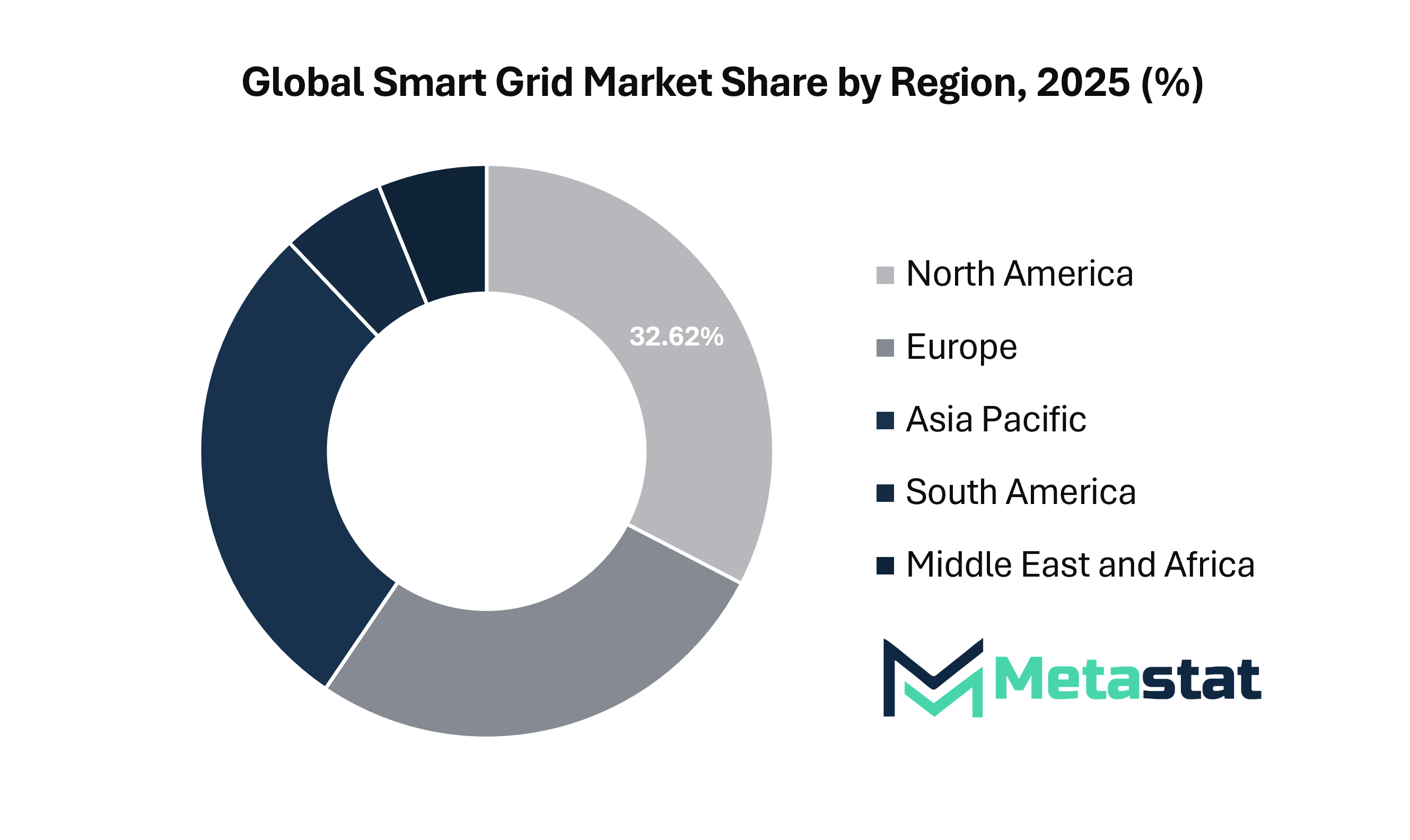
The global Smart Grid market is reshaping how power systems will operate in the coming years, marking a shift from traditional networks to more responsive and data-driven infrastructure. Utilities and governments are focusing on improving grid reliability, reducing power losses, and supporting the integration of renewable energy assets. With rising electricity demand and increasing pressure to manage power effectively, smart grids will play a vital role in modernizing electricity distribution. Advanced metering, automation, and real-time monitoring are helping utilities respond quickly to outages and balance supply with demand more efficiently.
Technology remains at the center of this transition, with digital communication systems and sensors enabling better control over electricity flow. Smart meters and grid analytics are helping utilities collect and use data more effectively, supporting accurate billing and improved customer engagement. These systems will also help detect faults early and reduce downtime, which is vital for industries and urban areas that rely on stable energy supply. The use of cloud platforms and cybersecurity tools will further strengthen grid operations, ensuring that data remains secure while systems remain connected.
Large corporations are actively investing in smart grid solutions, bringing a combination of hardware, software, and services to the market. Key Global Smart Grid Industry Players include Siemens AG, GE Vernova Inc., ABB Ltd., Schneider Electric SE, Hitachi Energy Ltd., Eaton Corporation plc, Itron, Inc., Wipro, Landis+Gyr Group AG, Hubbell Incorporated, Cisco Systems, Inc., Kamstrup A/S, Trilliant Holdings, Inc., Genus Power Infrastructures Ltd., Fluentgrid Limited, Oracle Corporation, Aspen Technology, Inc., Open Access Technology International, Inc., Xylem Inc., Mitsubishi Electric Corporation, Honeywell International Inc., EDMI Limited, Iskraemeco, d.d., ZIV Automation, LEM Holding SA, Westermo Network Technologies AB, G&W Electric Company, Schweitzer Engineering Laboratories, Inc., and Smarter Grid Solutions, Inc. These players will continue to focus on partnerships, product improvements, and regional expansion to strengthen their market presence and address changing energy requirements.
The market will also receive strong support from government policies and funding programs aimed at building smarter electricity systems. Many countries are investing in grid upgrades to handle renewable energy assets such as solar and wind, which require flexible and responsive infrastructure. Smart grids will help manage these variable energy inputs while maintaining network stability. At the same time, urban development and smart city projects will create further demand for intelligent energy systems that support electric vehicles, digital services, and connected homes.
Looking ahead, the Smart Grid market will continue to expand as utilities move toward cleaner and more efficient electricity systems. The focus will remain on improving performance, reducing operational costs, and enhancing customer experience. With increased adoption of digital energy solutions across regions, collaboration between technology vendors, utilities, and policymakers will become increasingly important. The shift toward smarter grids is not only about technology but also about building a more reliable and sustainable energy future capable of meeting rising global electricity demand.
Market size is forecast to rise from USD 86.4 billion in 2025 to over USD 301.0 billion by 2033.
The Global Smart Grid market is expected to witness strong growth, supported by increasing demand for efficient, reliable, and sustainable energy systems. Future developments will focus on the integration of artificial intelligence, advanced analytics, and decentralized energy systems. Utilities are expected to invest in grid-edge technologies and real-time monitoring solutions to enhance operational efficiency, improve outage response, and support renewable energy integration.
This research report categorizes the Smart Grid market based on key segments and regions, forecasts revenue growth, and analyses trends in each submarket. The report analyses the key growth drivers, opportunities, and challenges influencing the Smart Grid market. Recent market developments and competitive strategies such as expansion, product launch, partnership, merger, and acquisition have been included to draw the competitive landscape in the market.
The report strategically identifies and profiles the key market players and analyses their core competencies in each sub-segment of the Smart Grid market.
|
Report Attributes |
Details |
|
Study Period |
2021-2033 |
|
Base Year |
2025 |
|
Estimated Year |
2026 |
|
Forecast Period |
2026-2033 |
|
Historical Period |
2021-2025 |
|
Growth Rate |
CAGR 16.9% from 2026 to 2033 |
|
Revenue Unit |
USD billion |
|
Segmentation |
By Deployment, Technology, Application, End User, and Region |
|
By Region |
North America (By Deployment, Technology, Application, End User, and Country)
|
|
Europe (By Deployment, Technology, Application, End User, and Country)
|
|
|
Asia Pacific (By Deployment, Technology, Application, End User, and Country)
|
|
|
South America (By Deployment, Technology, Application, End User, and Country)
|
|
|
Middle East and Africa (By Deployment, Technology, Application, End User, and Country)
|
Find answers to common questions about this report
Top players operating in the Smart Grid industry includes Siemens AG, GE Vernova Inc., ABB Ltd., Schneider Electric SE, Hitachi Energy Ltd., and Eaton Corporation plc, Itron, Inc.
High Upfront Capital Requirements and Complex Deployment Cycles will hamper the market growth within the forecast period.
Global Smart Grid market is estimated to reach USD 301.0 billion by 2033.
The Global Smart Grid market is expected to grow at a CAGR of 16.9% over the forecast period (2026-2033).
Integration of Renewable Energy and Distributed Energy Resources and Grid Modernization and Aging Power Infrastructure. are key driving factors, boosting the market.
North America region dominates the market.
The Metastat Insights analysis shows that the North America Smart Grid market size is estimated to be USD 93.5 billion by 2033.
The Metastat Insights study shows that the Global Smart Grid market size was USD 86.4 billion in 2025.
The analysts below cover Energy and Power research at Metastat Insights.
LEAD ANALYST
Utkarsh Khirodkar is a Lead Market Research Analyst at MetaStat Insight, specializing in market intelligence, technology sector assessments, and competitive strategy.

PRINCIPAL CONSULTANT - ENTERPRISE AI & EMERGING TECHNOLOGIES
Banking & Finance · Electronics and Semiconductor · Energy and Power · Healthcare IT · Information & Technology · Professional Services
Vijay Gunti is a Principal Consultant at MetaStat Insight, bringing over two decades of experience across enterprise digital transformation, technology strategy, and intelligent systems.

ENERGY & INFRASTRUCTURE INDUSTRY CONSULTANT
Automotive and Transportation · Electronics and Semiconductor · Energy and Power · Machinery & Equipment
Saurabh Vasant Ganvir consults for Energy & Infrastructure Industry at MetaStat Insight, specializing in renewable energy, solar EPC, and electric vehicle (EV) infrastructure markets.
Most industry reports on warehouse automation bundle autonomous mobile robots and fixed conveyor installations into the same top-level numbers, which complicates advisory work. This study split the market cleanly by payload tiers, navigation technology, and fleet management software layers. The regional forecast for Western Europe gave our team defensible adoption benchmarks when evaluating capital allocation for logistics clients, saving us days of secondary data scrubbing.
Analyzing the transition from natural gas to green hydrogen in iron ore reduction requires realistic infrastructure timelines. Meta stat insight supplied a detailed regional assessment of DRI plant conversion costs and scrap metal availability in North America and Western Europe. Their report carefully examined pellet quality specs and electrical grid access constraints without making oversimplified market assumptions. The research material served as a practical reference during internal technology roadmap discussions.
Integrating zero-trust access controls across legacy electronic health record systems involves complex compliance overhead. Team produced an analysis that clearly separated identity governance and administration tools from privileged access management platforms. Their evaluation of HIPAA and GDPR compliance features across cloud native solutions gave our architecture group clear baseline criteria. The custom data request regarding biometric authentication adoption in hospital networks was returned promptly with clear documentation.
Explore related market intelligence reports worth reading alongside this one.