
LEAD ANALYST
Utkarsh Khirodkar is a Lead Market Research Analyst at MetaStat Insight, specializing in market intelligence, technology sector assessments, and competitive strategy.

Global Well Stimulation Market Size, Share, By Stimulation Technique (Hydraulic Fracturing, Matrix Acidizing, Acid Fracturing, and Refracturing), By Reservoir / Formation Type (Shale, Tight Oil and Gas, Carbonate, Sandstone, and Coalbed Methane), By Customer Type (International Oil Companies (IOCs), National Oil Companies (NOCs), Independent Oil & Gas Operators, and Oilfield Service Companies), By Deployment Environment (Onshore and Offshore), Industry Analysis, Growth, Trends, and Forecast, 2026-2033
Report ID
MSI-4907
Published
August, 2026
Pages
283 Pages
Format
Historical
Base year
Forecast
Forecast period
Report Details
Choose Your License
Global Well Stimulation Market
The global Well Stimulation market was valued at USD 9.1 billion in 2025 and is projected to reach USD 15.1 billion by 2033, growing at a CAGR of 6.6% over the forecast period.
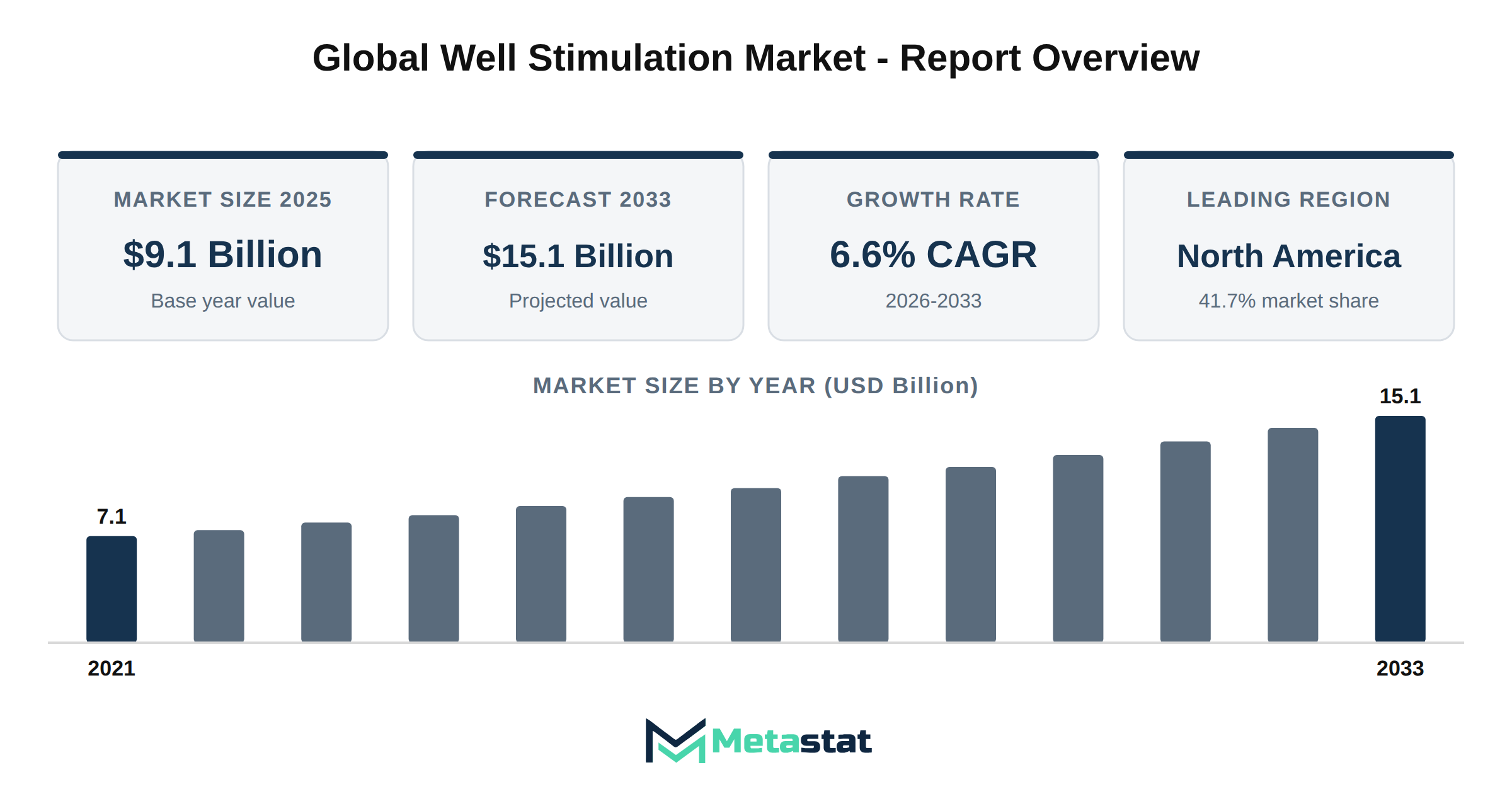
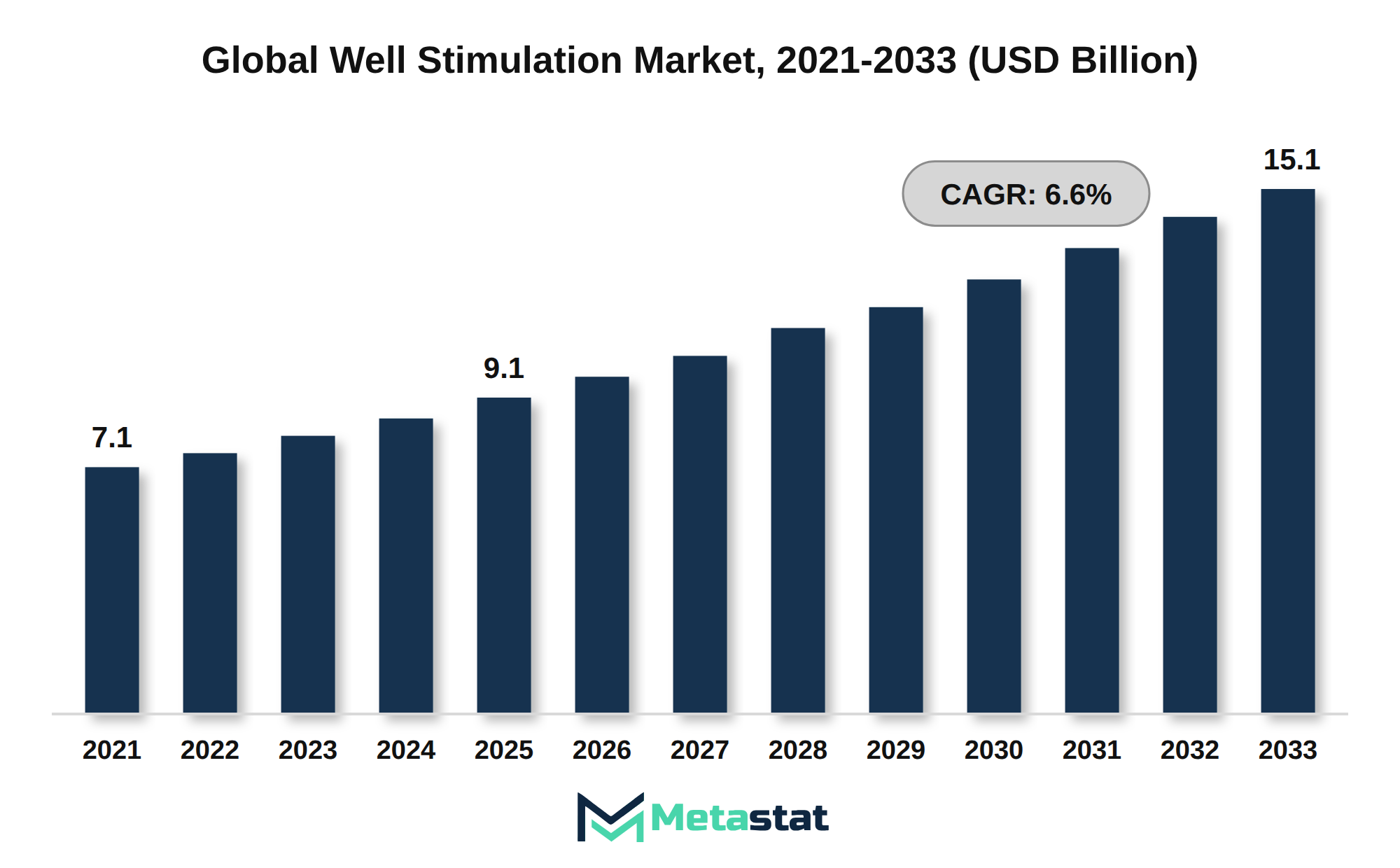
The Well Stimulation market is projected to reach USD 15.1 billion by 2033, growing from USD 9.1 billion in 2025. This expansion reflects a compound annual growth rate (CAGR) of 6.6% during the forecast period from 2026 to 2033. The market experienced growth from USD 7.1 billion in 2021 to USD 9.1 billion in 2025. This trend indicates a steady increase in demand for stimulation techniques in oil and gas extraction.
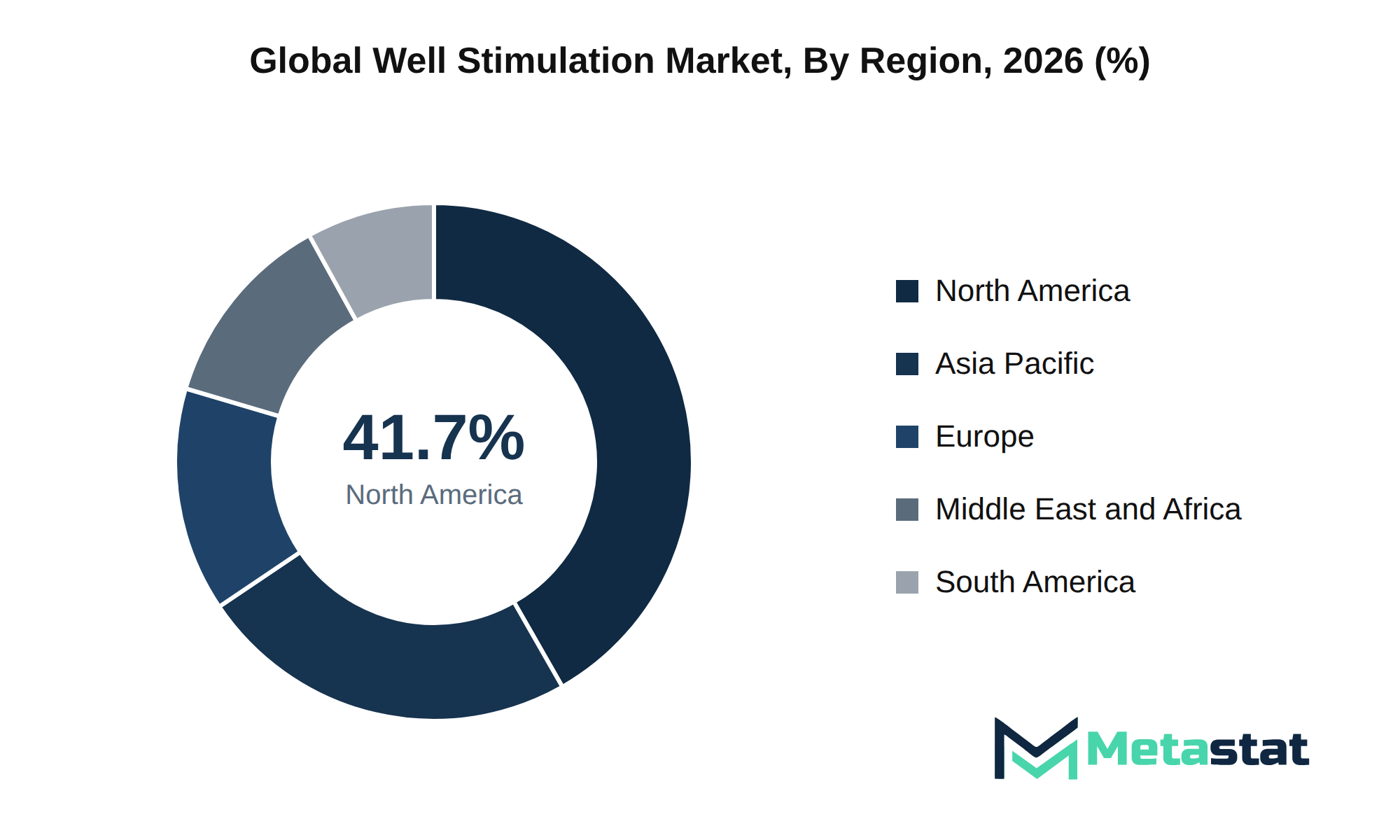
North America represents the largest share of the market, accounting for 41.7% of the total revenue. The region's projected value by 2033 is USD 5.9 billion, with a CAGR of 6.6%. Asia Pacific follows with a share of 23.8%, reflecting increasing adoption of advanced extraction methods in countries including China and India. Europe, South America, and the Middle East and Africa contribute 14%, 8%, and 12.4% respectively to the market.
Key techniques in well stimulation include hydraulic fracturing, matrix acidizing, acid fracturing, and refracturing. Hydraulic fracturing, in particular, is expected to grow from USD 6 billion in 2026 to USD 9.2 billion by 2033, achieving a CAGR of 6.3%. Matrix acidizing shows significant potential, with an anticipated value of USD 2.8 billion by 2033 at a CAGR of 7.1%.
Different reservoir types drive demand for well stimulation services. Shale formations are expected to grow from USD 3.2 billion in 2026 to USD 5.2 billion by 2033, with a CAGR of 7.5%. Tight oil and gas reservoirs are projected to reach USD 2.8 billion, demonstrating the continued importance of these formations in the energy sector.
The Well Stimulation market experiences significant influences from regulatory compliance and geopolitical risk frameworks. Companies operating within this environment navigate complex regulations that dictate operational protocols, impacting their strategic decision-making. Compliance with these regulations often incurs additional costs, which affect profit margins. Regulatory frameworks push companies to adopt innovative technologies to meet standards, driving demand for next-generation solutions.
Disruptions within the market arise from technological advancements and evolving customer expectations. Research and development trajectories focus on enhancing efficiency and reducing environmental impact, aligning with global trends toward sustainable transformation. The push for decarbonization and circular economy dynamics shapes investment priorities, prompting firms to re-evaluate traditional practices and adopt more sustainable methodologies.
The supply chain landscape remains a critical factor influencing market dynamics. Companies optimize logistics architecture and sourcing strategies to mitigate risks associated with inflationary pressures and currency volatility. Effective procurement strategies enhance operational resilience, allowing firms to respond swiftly to market fluctuations and maintain competitive advantages.
The market exhibits fragmentation, with numerous players operating across various segments. M&A dynamics occur owing to companies seeking to consolidate capabilities and expand market share. This fragmentation leads to a diverse value chain where partnerships and alliances play essential roles in driving innovation and enhancing customer offerings.
Capital allocation strategies focus on balancing operational expenditures and infrastructure investments. Companies allocate resources toward CapEx and OpEx to support growth initiatives while ensuring financial stability. Macroeconomic headwinds, including inflation and economic uncertainty, influence these financial strategies, necessitating a careful evaluation of investment opportunities.
The corporate imperatives driving the Well Stimulation market reflect a broader commitment to operational excellence and sustainable practices. Firms prioritize high-value recommendations that align with their strategic goals, ensuring long-term viability and competitiveness in an evolving landscape. Future strategic outlook emphasizes adaptability, innovation, and market responsiveness because critical components for success.
Infrastructure development drives growth within the Well Stimulation market. Significant investments in upgrading and modernizing drilling and extraction facilities enhance operational efficiency and production capacities. This trend aligns with rising global demand for energy, particularly from emerging economies, which influences exploration and production activities in oil and gas sectors.
Capital investments in infrastructure, including drilling rigs and processing facilities, strengthen the market's foundation. Improved capabilities enable companies to leverage advanced technologies, including automation and big data analytics, to optimize extraction processes. The integration of these technologies reduces costs and enhances overall productivity and resource management.
Regions experiencing heightened economic growth experience increased infrastructure spending, which directly benefits the Well Stimulation market. For instance, North America, accounting for 41.7 percent of the market share, demonstrates a robust commitment to enhancing its oil and gas infrastructure. Such developments contribute to maintaining the region's competitive edge in energy production.
The anticipated growth in infrastructure investment is projected to drive the Well Stimulation market from USD 9.1 billion in 2025 to USD 15.1 billion by 2033, reflecting a compound annual growth rate of 6.6 percent. This upward trajectory highlights the importance of infrastructure in supporting the energy transition and meeting rising global energy demands.
The Well Stimulation market experiences significant growth driven by increased investment in technological integration. Companies actively pursue automation, artificial intelligence, and software adoption to optimize performance and reduce operational costs. This trend is particularly pronounced among independent oil and gas operators and international oil companies, because they seek to enhance productivity while maintaining compliance with safety and environmental standards.
These advancements lead to improved efficiency in well stimulation processes, allowing operators to manage resources more effectively. The adoption of digital technologies facilitates streamlined operations, reducing the time required for drilling and stimulation activities. Enhanced data analytics capabilities enable firms to make informed decisions based on real-time insights, further driving operational excellence.
The competitive landscape benefits from these technological integrations, because firms that adopt advanced solutions capture greater market share and improve their profitability. While the Well Stimulation market continues to evolve, investment in innovative technologies and processes will serve because a key driver of growth, expanding operational capabilities and establishing a foundation for long-term success.
The Well Stimulation market faces significant constraints due to regulatory challenges. Stricter environmental regulations and compliance hurdles result in increased operational costs for companies within the sector. These regulations require advanced technologies and processes to meet emission standards, consequently raising capital expenditure and operational budgets. The financial burden associated with compliance disproportionately affects smaller players in the market, limiting their ability to compete effectively.
Macroeconomic headwinds, including inflationary pressures and supply chain disruptions, exacerbate these challenges. Rising costs for materials and labor hinder investment in new projects, resulting in delayed deployment of well stimulation techniques. Geopolitical instability adds another layer of risk, with disruptions to supply chains and fluctuations in energy prices impacting overall market performance.
The high capital investment requirements for advanced stimulation technologies present a barrier to entry for new participants. Companies allocate substantial resources for the research and development of innovative solutions, which strains financial capabilities. Technological obsolescence becomes a concern, driven by rapid advancements in technology that necessitate continuous investment to remain competitive.
Market fragmentation and cultural barriers complicate adoption rates across different regions. Variations in regulatory frameworks and regional market dynamics lead to inconsistent growth patterns, affecting the overall market. Slowing downstream demand in certain sectors creates additional pressures, making it essential for companies to adapt strategies promptly to maintain profitability.
Overall, these restraints pose significant challenges to the Well Stimulation market, impacting its growth trajectory and shaping competitive dynamics within the industry. Addressing these issues requires strategic planning and investment from industry players to navigate the complexities of the regulatory environment and ensure sustainable growth.
The Well Stimulation market faces significant challenges due to geopolitical fragmentation that influences trade dynamics and increases operational uncertainties. Tensions between nations often lead to trade deficits and tariff friction, impacting the availability and cost of necessary materials and technology. Such disruptions affect suppliers who experience difficulties in securing feedstock and components, leading to increased project costs and delayed timelines.
Technological disruptions further complicate the landscape, requiring complex research and development integrations that demand substantial investment and skilled personnel. The market contends with interoperability friction between existing systems and new technologies, which hinder efficiency and innovative capacity. These factors collectively pressure companies to maintain competitive pricing while managing margin pressures, ultimately affecting growth potential.
Environmental considerations, including tightening regulatory standards and decarbonization mandates, impose additional compliance overhead that companies navigate. The push for sustainability increases operational complexity and deters investment in new projects, further straining market dynamics.
Workforce skill gaps and talent retention pressures create further hurdles, driven by firms seeking to implement advanced technologies to remain competitive. These gaps hinder automation efforts and reduce operational efficiency, ultimately impacting the overall productivity of companies within the Well Stimulation market. The combination of these challenges creates a complex environment for stakeholders, necessitating strategic adaptations to sustain market presence and profitability.
Growing regional demands significantly influence the Well Stimulation market. The shift towards enhanced oil recovery and the need for efficient energy production encourage investments in advanced stimulation techniques. Emerging economies, particularly in Asia Pacific and South America, actively seek to optimize resource extraction, creating robust opportunities for service providers. This trend facilitates regional expansion and supports operational capabilities.
Infrastructure modernization is essential for enabling market growth. Upgraded facilities increase capacity and efficiency, allowing for the adoption of innovative technologies including hydraulic fracturing and acidizing. These advancements reduce operational costs and enhance productivity, benefiting national oil companies and independent operators. The resulting improvements in resource management contribute to a more competitive landscape.
Technological disruptions further reshape the market, with digital transformation driving efficiencies in well stimulation practices. Advanced data analytics and automation streamline workflows, enhancing decision-making and resource allocation. This transformation attracts investments from players seeking to capitalize on these advancements, creating a more agile marketplace.
Sustainability imperatives and ESG-driven alignments increasingly dictate operational strategies. Companies focus on eco-friendly solutions and compliance with environmental standards, which influence investment decisions. These priorities encourage investment in green technologies and novel stimulation methods, aligning with global sustainability goals. The emphasis on environmental stewardship positions the market for future growth.
Strategic consolidation through mergers and acquisitions enhances market competitiveness. Companies pursue collaborations to integrate services and expand capabilities, resulting in improved offerings for clients. This consolidation allows firms to leverage synergies and optimize service delivery, ultimately leading to increased market penetration.
Evolving buying behaviors and digital procurement shifts facilitate market adaptability. Operators increasingly prefer integrated service models that streamline procurement processes. This trend highlights a movement towards more collaborative relationships between service providers and customers, enhancing project efficiency and cost-effectiveness.
Overall, opportunities within the Well Stimulation market arise from various factors, including regional demand, technological advancements, and sustainability initiatives. Companies positioned to capitalize on these dynamics drive future growth, with expectations for the market to reach USD 15.1 billion by 2033, reflecting a CAGR of 6.6 percent from the base year of 2025.
The Global Well Stimulation market is segmented based on Stimulation Technique, Reservoir / Formation Type, Customer Type, and Deployment Environment.
Hydraulic fracturing represents a critical component within the Well Stimulation market, driving significant advancements in resource extraction. The segment is valued at USD 6 billion in 2026 and is projected to reach USD 9.2 billion by 2033, at a CAGR of 6.3% during the forecast period. Increasing demand for energy resources, particularly from shale formations, fuels growth in hydraulic fracturing. This technique optimizes oil and gas production, enabling operators to access previously untapped reserves.
The evolution of hydraulic fracturing technology contributes to segment expansion, with advancements in proppants and fluid systems enhancing efficiency and effectiveness. Increased investment in research and development supports the introduction of next-generation upgrades, which improve operational performance and reduce environmental impact. Regulatory compliance and the need for sustainable practices push operators to adopt innovative hydraulic fracturing methods, aligning with industry trends towards greener solutions.
Pricing volatility affects the hydraulic fracturing segment, driven by fluctuations in raw material costs that influence operational margins. However, the ability to optimize production processes helps mitigate these pressures, ensuring profitability. Companies operating within this space, including SLB (Schlumberger Limited), Halliburton, and Baker Hughes Company, actively pursue strategic opportunities to enhance supply chain resilience and capitalize on emerging market demands.
End-use dynamics shift towards more efficient extraction techniques, prompting players in the market to refine their service offerings. The hydraulic fracturing segment stands to benefit from increasing consumption shifts, because operators seek to maximize recovery rates from existing wells. This trend points to a robust outlook for hydraulic fracturing within the Well Stimulation market, highlighting its essential role in meeting global energy needs.
Matrix Acidizing is important in the Well Stimulation market, driven by the necessity for enhanced oil recovery and improved reservoir performance. The segment benefits from advancements in acid formulation technologies, allowing for better penetration and effectiveness in stimulating hydrocarbon production. Increased investments in unconventional oil and gas reserves, particularly in shale formations, accelerate the adoption of Matrix Acidizing, which provides operators with the ability to optimize production rates efficiently.
Market dynamics indicate strong demand for Matrix Acidizing, with key players focusing on developing innovative solutions tailored to specific reservoir characteristics. The segment is projected to reach USD 2.8 billion by 2033, at a CAGR of 7.1% during the forecast period. Regulatory compliance and environmental considerations prompt the industry to pursue more sustainable acidizing techniques, thereby influencing product evolution and technology maturation.
Cost structures and pricing volatility challenge operators in the segment. Technological advancements and increased efficiency in acidizing processes help mitigate these pressures. Strategic opportunities arise in optimizing existing wells and enhancing production from mature fields. The growing need for extraction methods that improve recovery rates aligns with overall demand trends in the Well Stimulation market.
Acid fracturing is a key component in the Well Stimulation market, driven by the need for enhanced oil recovery and improved production rates from existing wells. Increasing global energy demands compel operators to adopt more effective stimulation techniques, ensuring that resources are used efficiently. This sub-segment benefits from advancements in chemical formulations, which optimize acid systems for specific reservoir characteristics, enhancing overall performance and reducing operational costs.
Investment in acid fracturing technology is evident, driven by companies seeking to expand their market presence and enhance their competitive edge. The segment is expected to reach USD 1.8 billion by 2033, reflecting a growing recognition of its effectiveness in challenging formations. Key players in the market actively pursue innovations that offer improved safety, efficiency, and environmental compliance, aligning with stringent regulatory requirements.
Downstream applications of acid fracturing extend to various sectors, including shale gas extraction and tight oil production. The shifting dynamics of energy production, particularly in North America, drive demand for effective stimulation solutions. While oil and gas operators adapt to fluctuating market conditions, acid fracturing presents a strategic opportunity to maximize production while minimizing costs, further reinforcing its position within the Well Stimulation market.
Significant growth in the refracturing segment aligns with rising enhanced production from existing wells. Increasing operational efficiency and reducing costs drive operators to reconsider previously fractured wells. This segment is projected to grow at a CAGR of 7.4% during the forecast period, indicating robust expansion in the market.
Technological advancements enable the adoption of refracturing techniques, allowing operators to effectively address challenges related to reservoir depletion and optimise recovery rates. Upgrading existing infrastructure and incorporating advanced methods support this growth trajectory. Enhanced production capabilities particularly benefit independent operators and national oil companies, which seek to maximise returns on existing investments.
Cost structures associated with refracturing impact overall profitability. Operators invest in advanced technologies, including multi-stage fracturing, to improve efficiency and reduce operational downtime. This investment addresses immediate production needs and contributes to long-term sustainability in the market.
Regulatory compliance standards shape operational strategies within this segment. Adhering to environmental regulations while implementing refracturing techniques requires careful planning and execution. Successful navigation of these regulatory landscapes strengthens market positions for companies prioritising compliance while pursuing innovation.
Strategic opportunity windows emerge for suppliers developing innovative refracturing technologies. Enhanced capabilities enable operators to tap into previously inaccessible resources, creating a more dynamic market. While competition intensifies, companies prioritising research and development stand to gain significant market share.
The refracturing segment’s growth signals an evolving environment within the Well Stimulation market. Increased emphasis on production efficiency and technological innovation drives demand, shaping investment priorities and operational strategies across the industry.
Valued at USD 3.2 billion in 2026, the shale segment is projected to reach USD 5.2 billion by 2033, achieving a compound annual growth rate (CAGR) of 7.5% during the forecast period. This segment experiences substantial demand driven by the increasing extraction of oil and gas from shale formations. Enhanced recovery techniques and advancements in drilling technologies significantly contribute to the segment's growth.
Adoption of shale stimulation techniques reflects a strong response to the energy market's evolving landscape. Companies are investing in next-generation upgrades to improve efficiency and reduce costs associated with shale well stimulation. This evolution includes the integration of innovative technologies, which enhances recovery rates and boosts overall production from shale reservoirs.
Downstream applications of shale stimulation directly impact various sectors, including energy supply and manufacturing. This segment attracts significant capital investment attributed to companies prioritizing exploration and production activities within shale formations. Regulatory compliance and standards further influence operational practices, pushing operators to adopt efficient stimulation methods that align with environmental guidelines.
Pricing volatility within the market affects the cost structures associated with shale operations. Fluctuations in raw material prices impact profitability, compelling companies to manage their supply chains effectively. The need for resilience in sourcing and logistics remains critical, especially in a market characterized by disruptive alternatives and technological advancements.
Overall, the shale segment of the Well Stimulation market presents a strategic opportunity window for growth, driven by increasing demand for energy and technological evolution in extraction methods. Companies operating within this segment are positioned to capitalize on expanding production activities, ensuring a robust competitive position in the marketplace.
Growth in the Tight Oil and Gas segment stems from increasing exploration and production activities driven by rising energy demand. Companies implement advanced extraction techniques to optimize resource recovery, leading to greater efficiency and profitability. This segment benefits from technological advancements in hydraulic fracturing and matrix acidizing, enabling operators to enhance output from challenging reservoirs.
Investment in infrastructure and the adoption of next-generation upgrades contribute to segment expansion. Favorable regulatory environments and strategic partnerships support industry growth. Tight Oil and Gas operations typically require significant capital investment, influencing pricing structures and margin dynamics in the market.
By 2033, the Tight Oil and Gas segment is projected to reach USD 2.8 billion, with a CAGR of 7.1% during the forecast period. This growth reflects ongoing demand and the necessity for effective stimulation methods in extracting hydrocarbons from dense formations.
Significant growth in the carbonate segment aligns with increasing investments in enhanced oil recovery techniques. Companies aim to optimize production from carbonate formations, which possess unique properties that enhance hydrocarbon extraction efficiency. Demand for advanced stimulation technologies, including hydraulic fracturing and acidizing, drives this segment's expansion. The carbonate segment is projected to reach USD 2.1 billion by 2033, reflecting a growing focus on maximizing resource recovery from these geological formations.
Technological maturation plays a role in shaping the carbonate market. Innovations in stimulation techniques lead to improved extraction rates and reduced operational costs for companies operating in carbonate reservoirs. The adoption of next-generation upgrades contributes to enhanced production capabilities, allowing operators to tap into previously inaccessible resources.
End-use dynamics further influence growth within the carbonate segment. The oil and gas industry increasingly recognizes the potential of carbonate formations, particularly in regions with established infrastructure. Regulatory compliance standards related to environmental sustainability highlight the need for improved practices, prompting investments in eco-friendly stimulation technologies.
Pricing volatility impacts the overall market, with fluctuations in raw material costs affecting profitability. Companies in the carbonate segment navigate these challenges by implementing strategic supply chain resilience measures. By diversifying sourcing strategies and investing in logistics resilience, operators enhance their ability to manage cost structures and maintain competitiveness in this evolving environment.
Growth in the Sandstone segment is projected to occur at a CAGR of 5.5% during the forecast period. This expansion results from increased exploration and production activities in regions rich in sandstone formations, particularly in North America. Operators increasingly favor sandstone due to its permeability and porosity, which enhance hydrocarbon recovery rates, driving demand for well stimulation services.
Technological advancements in hydraulic fracturing specifically benefit the sandstone segment by optimizing extraction techniques. Enhanced recovery methods allow operators to maximize output while maintaining cost efficiency. The market experiences a shift towards innovative stimulation technologies that improve operational performance and reduce environmental impact.
End-use dynamics for sandstone formations highlight strong demand from independent oil and gas operators, who seek efficient methods to optimize production. Regulatory compliance plays a critical role in shaping operational standards, driving companies to adopt advanced well stimulation techniques to meet stringent environmental regulations.
Fluctuating raw material costs exert pressure on pricing structures within the segment. Increased competition among service providers further influences pricing, impacting profit margins. Strategic investments in research and development enable companies to innovate and improve service offerings, enhancing their competitive position in the market.
The Sandstone segment is poised for growth driven by evolving market dynamics and an emphasis on sustainable practices. Ongoing investments in technology and a focus on environmental compliance support expansion efforts, positioning the market for a robust outlook through 2033.
Coalbed methane (CBM) presents unique opportunities within the Well Stimulation market due to its specific geological characteristics and production processes. The demand for coalbed methane arises primarily from its role because a cleaner-burning alternative to conventional fossil fuels. This demand aligns with global energy transition goals, emphasizing the need for lower carbon emissions in the energy sector.
Technological advancements in drilling and extraction techniques, including enhanced hydraulic fracturing methods, facilitate more efficient CBM production. These technologies improve recovery rates and reduce operational costs, further encouraging investment in this segment. The increasing integration of digital technologies, including real-time monitoring systems, enhances the management of CBM resources, leading to better decision-making and operational efficiency.
Regulatory compliance continues to shape the dynamics for CBM operations. Stricter environmental regulations require producers to adopt sustainable practices, driving the need for innovative solutions in production and waste management. Certified technologies that minimize environmental impact are becoming increasingly important in maintaining operational licenses and ensuring market access.
The market experiences shifts in consumption patterns, with growing interest from industries seeking sustainable energy sources and potential applications in hydrogen production. This transition is expected to drive further investment in coalbed methane extraction and utilization technologies.
Strategic opportunity windows exist for companies focusing on coalbed methane, particularly in regions rich in coal seams. Collaboration between oil and gas companies and technology providers creates competitive advantages while enhancing resource recovery rates. Maintaining robust supply chain resilience in the face of market fluctuations and logistical challenges remains critical for sustained growth.
Overall, the coalbed methane segment within the Well Stimulation market benefits from a combination of technological maturation, regulatory support, and evolving consumer preferences, positioning it because a key player in the future energy landscape.
Conventional reservoirs play a critical role in the Well Stimulation market by providing a stable production base for oil and gas extraction. Demand for conventional reservoirs stems from established infrastructure and operational familiarity among industry players. The presence of mature fields in various regions supports sustained activity, allowing operators to maximize recovery rates through effective stimulation techniques.
Adoption of stimulation methods in conventional reservoirs benefits from extensive historical data and proven methodologies. Operators apply hydraulic fracturing and acid treatments to enhance well productivity, aligning with the industry's shift towards optimizing existing assets. Segment expansion catalysts include technological advancements that facilitate more efficient extraction processes, thereby reducing overall costs and enhancing profitability.
Technological maturation influences the techniques deployed in conventional reservoirs. Next-generation upgrades, including improved fracturing fluids and real-time monitoring systems, enhance the efficiency and safety of operations. These innovations support growth by increasing recovery rates and extending the productive life of conventional wells.
Downstream applications involve the integration of stimulation techniques to enhance oil and gas output, directly impacting the overall profitability of operators. End-use dynamics reflect the demand for reliable and consistent supply, which conventional reservoirs typically provide. Consumption shifts towards cleaner extraction methods and more efficient technologies align with regulatory compliance standards, promoting sustainable practices in the sector.
Cost structures in this segment benefit from established supply chains and raw material sourcing. Pricing volatility impacts operational margins; however, the relatively stable nature of conventional reservoirs often mitigates these risks. Strategic opportunity windows arise from ongoing investments in technological enhancements that enable the market to adapt to evolving challenges.
Overall, conventional reservoirs present a stable and evolving segment within the Well Stimulation market, characterized by strategic investment and operational efficiencies that align with industry demands.
Heavy oil and bitumen reservoirs, along with unconsolidated formations and volcanic or igneous formations, contribute unique dynamics within the Well Stimulation market. Increasing global energy demands drive interest in these reservoirs, particularly in regions with substantial heavy oil resources. Companies focusing on unconventional production techniques are pushing forward with advancements in stimulation methods tailored to these formations.
Technological maturation enhances recovery rates from these challenging environments. Operators employ advanced stimulation strategies that improve well output and reduce operational costs, driven by pressures for efficiency and sustainability. Market participants invest in next-generation upgrades and product evolution to optimize well performance, enabling the extraction of resources from these complex reservoirs.
End-use dynamics reflect a diverse range of applications, with organizations targeting heavy oil production for both domestic consumption and international markets. Regulatory compliance standards impact operational strategies, influenced by companies navigating environmental regulations while striving for efficiency. Pricing volatility in the energy sector influences margin pressures, necessitating flexible approaches in project execution.
Supply chain resilience remains critical, particularly concerning raw material sourcing for stimulation fluids and additives. Logistics vulnerabilities hinder project timelines and increase costs, prompting companies to develop strategies that mitigate these risks. Identifying strategic opportunity windows within this segment yields returns, especially in underserved markets.
Investments in these formations offer potential for growth, supported by an increasing focus on energy security and reduced dependence on conventional sources. Companies in the market are likely to explore innovative solutions that enhance recovery from heavy oil and unconventional reservoirs, positioning themselves for future success within the evolving Well Stimulation market.
Valued at USD 4.3 billion in 2026, the International Oil Companies (IOCs) segment is projected to reach USD 6.7 billion by 2033, reflecting a CAGR of 6.3% during the forecast period. Growing demand for energy, driven by increasing global consumption and the need for energy security, supports the expansion of this segment. IOCs prioritize advanced well stimulation techniques to enhance oil and gas recovery, influenced by competition and the optimize production from existing reservoirs. Significant investments in technology and innovation contribute to improving efficiency and reducing operational costs in well stimulation processes.
Regulatory compliance regarding environmental impacts influences IOCs to adopt cleaner and more efficient stimulation techniques. The shift toward sustainable practices leads to increased demand for next-generation technologies that minimize adverse environmental effects, aligning with global sustainability goals. Strong competition among IOCs encourages innovation in stimulation methods, resulting in evolving products and services tailored to meet specific reservoir characteristics and operational challenges.
The market benefits from a robust supply chain, allowing IOCs to efficiently manage raw material sourcing and logistics. Strategic partnerships with technology providers enhance access to advanced stimulation solutions while improving resilience against potential disruptions. The focus on cost structures and margin pressures necessitates ongoing evaluation of stimulation techniques that optimize return on investment. Overall, the International Oil Companies (IOCs) segment plays a critical role in the growth of the Well Stimulation market through innovation, strategic investments, and responsiveness to regulatory requirements.
Growth within the National Oil Companies (NOCs) segment aligns with several factors driving demand for well stimulation services. The segment is estimated to reach USD 4.2 billion by 2033, at a CAGR of 6.8% during the forecast period. Increasing investments in upstream oil and gas production constitute a primary demand driver, particularly in regions where NOCs have a significant role in energy supply. Ongoing technological maturation enables NOCs to enhance recovery rates, optimizing their existing assets.
Continuous advancements in stimulation techniques, including hydraulic fracturing and acidizing, contribute to the evolution of service offerings tailored specifically for NOCs. Strategic opportunity windows arise from meeting regulatory compliance standards and environmental policies, prompting NOCs to invest in more efficient and sustainable stimulation practices. Competitive dynamics within the market drive innovation, with many players developing next-generation upgrades that directly benefit NOCs.
Margin pressures persist due to fluctuating oil prices and operational costs, which challenge NOCs to implement effective cost structures. However, the increasing focus on domestic resource development and energy independence strengthens the NOCs' position in the market. Consumption shifts toward cleaner, more efficient extraction methods present opportunities for NOCs to adapt their strategies and enhance profitability.
Supply chain resilience supports NOCs, particularly in ensuring reliable access to raw materials and minimizing logistical vulnerabilities. While the demand for well stimulation services continues to expand, strategic partnerships formed within the ecosystem will influence market dynamics and capital investment outlooks, ultimately shaping the future of the Well Stimulation market.
Growth within the Independent Oil & Gas Operators segment aligns with increased exploration and production activities, driven by rising global energy demand. Independent operators focus on optimizing well performance through innovative stimulation techniques, enhancing recovery rates and reducing operational costs. Technological advancements in hydraulic fracturing and matrix acidizing contribute to operational efficiency, supporting this segment's expansion. Investment in advanced technologies, including automated systems and data analytics, strengthens competitive positioning and operational effectiveness. Regulatory frameworks emphasizing sustainability practices align with the operational strategies of independent operators, promoting long-term viability and growth.
Valued at USD 3.1 billion by 2033, the Independent Oil & Gas Operators segment faces pressure from fluctuating commodity prices, impacting profit margins and investment capacity. Economic conditions and market volatility shape decision-making processes, influencing project timelines and funding availability. Strategic partnerships with oilfield service companies enhance access to advanced technologies and resources, driving innovation and improving service quality. Increased capital investment in unconventional resources and enhanced oil recovery techniques supports segment growth, aligning with overall trends within the Well Stimulation market.
The growth trajectory of oilfield service companies aligns with the increasing complexity of exploration and production activities within the Well Stimulation market. Demand drivers include advancements in technology that enhance the efficiency and effectiveness of stimulation techniques. Increased production from unconventional oil and gas reservoirs necessitates sophisticated well stimulation services, allowing oilfield service companies to expand their service offerings.
Market expansion for this segment experiences significant support from rising investments in oil and gas exploration, particularly in regions with challenging geological formations. Enhanced recovery techniques, including hydraulic fracturing and matrix acidizing, directly contribute to increased demand for well stimulation services. Consequently, oilfield service companies play an essential role in meeting the production requirements of both national and international operators.
Continuous technological maturation influences the service offerings of oilfield service companies, driving innovation in stimulation methods and equipment. Investment in next-generation technologies positions these companies favorably to address evolving market demands and maintain competitiveness. The anticipated growth of the oilfield service companies segment is projected to occur at a CAGR of 6.1% during the forecast period.
Cost structures and pricing volatility remain critical factors in shaping the operational landscape for oilfield service companies. Fluctuations in raw material prices impact the overall cost of service delivery, thereby affecting profit margins. Strategic investment, alongside adaptation to regulatory compliance standards, enhances the resilience of these companies within the market.
Overall, the oilfield service companies segment contributes significantly to the Well Stimulation market's growth, driven by technological advancements, increased operational demands, and strategic investments in service capabilities.
Valued at USD 6.5 billion in 2026, the onshore segment is projected to reach USD 10 billion by 2033, at a CAGR of 6.2% during the forecast period. Growth in this segment is driven by increasing demand for oil and gas, particularly in North America, where significant reserves exist. The rise in hydraulic fracturing and other stimulation techniques supports extraction from shale and tight oil formations, enhancing production efficiency and recovery rates.
Technological maturation drives adoption, with advancements in equipment and methods improving performance and reducing operational risks. The ongoing evolution of stimulation techniques, including acid fracturing and matrix acidizing, facilitates better recovery from various reservoir types. An increasing number of independent oil and gas operators adopt these technologies, contributing to segment expansion.
Regulatory compliance standards influence market dynamics, with operators focusing on environmentally friendly practices. This shift aligns with trends toward sustainable development, affecting decisions related to investment and operational strategies. Cost structures remain critical; players manage pricing volatility and margin pressures while maintaining competitiveness in the market.
Strategic opportunity windows arise from emerging markets, particularly in regions with untapped resources. Capital investment outlook reflects a strong commitment from key players to enhance their onshore operations. Companies including SLB (Schlumberger Limited), Halliburton, and Baker Hughes Company pursue expansion strategies in this segment, anticipating substantial returns in the Well Stimulation market.
Investment in offshore oil and gas operations drives demand for well stimulation techniques, especially hydraulic fracturing and matrix acidizing. Factors including the enhanced production efficiency from mature fields and access to untapped reserves in deepwater locations contribute to the expansion of the offshore segment. While exploration and production companies seek to maintain profitability during fluctuating oil prices, the implementation of advanced well stimulation technologies becomes crucial.
Offshore operations demand specialized techniques due to unique geological conditions and the complex logistics involved in accessing these resources. This segment experiences a compound annual growth rate (CAGR) of 7.3% and is estimated to reach USD 5.1 billion by 2033. Increasing regulatory pressures regarding environmental compliance alongside the push for enhanced recovery solutions highlight the importance of well stimulation in offshore projects.
Technological maturation significantly influences the offshore segment. The adoption of next-generation stimulation technologies enhances operational efficiency, improving recovery rates and reducing costs. Players in the well stimulation market develop innovative solutions tailored to specific offshore conditions, aligning with the overall growth trajectory of energy demand and production optimization efforts.
While the offshore sector evolves, competition intensifies among service providers, including firms including SLB (Schlumberger Limited), Halliburton, and Baker Hughes Company. These firms invest heavily in research and development to create advanced well stimulation techniques that meet the dynamic needs of offshore operations. The ongoing transition towards more sustainable practices drives continuous improvement in the efficiency and environmental impact of well stimulation processes.
The strategic opportunity windows for investment in offshore well stimulation remain robust. With global energy demands expected to rise, oil and gas companies will prioritize investments in technologies that enhance production efficiency and recovery rates from offshore fields. The emphasis on maximizing the output from existing wells while minimizing environmental risks positions the offshore segment because a critical area for growth within the wider well stimulation market.
Based on geography, the Global Well Stimulation market is divided into North America, Europe, Asia-Pacific, South America, Middle East, and Africa.
North America stands because a dominant region in the Well Stimulation market, accounting for a share of 41.7% of the global market in 2025. The region's market is set to expand at a CAGR of 6.6% within the forecast period, reaching a market size (TAM) of USD 5.9 billion by the end of 2033. The United States, Canada, and Mexico drive this growth through significant investments in hydraulic fracturing and other stimulation techniques.
Hydraulic fracturing remains the leading stimulation technique, with projected growth from USD 6 billion in 2026 to USD 9.2 billion by 2033, reflecting a CAGR of 6.3%. The shale formations in the United States will play a crucial role in this growth, with demand for well stimulation in these areas expected to increase. Similarly, the market for matrix acidizing is anticipated to reach USD 2.8 billion by 2033, growing at a CAGR of 7.1%.
Regional infrastructure modernization significantly impacts the market landscape. Investments in energy grid resiliency and local infrastructure readiness enhance operational capabilities, creating a favorable environment for well stimulation activities. The presence of major players, including SLB (Schlumberger Limited), Halliburton, and Baker Hughes Company, contributes to a competitive landscape that supports innovation and service expansion.
Emerging trends including nearshoring initiatives and localized manufacturing densities further strengthen the market. Proximity to significant reserves allows companies to optimize their supply chains, reducing operational costs and improving service delivery. This trend drives the growth of independent oil and gas operators, with projected market size reaching USD 3.1 billion by 2033.
Continued investments in research and development, coupled with a focus on sustainable practices, will drive further advancements in the Well Stimulation market. Regional compliance mandates and regulatory frameworks will shape operational strategies, enhancing the competitive positioning of local suppliers. Overall, the North American market demonstrates robust potential driven by technological advancements and strategic partnerships.
The Well Stimulation market in Europe accounts for a share of 14.00% of the global market in 2025, reflecting the region's strategic importance in the energy sector. Various factors contribute to the market's dynamics, including the push for energy security and the transition towards sustainable energy sources. Countries including Germany and the UK lead in implementing innovative stimulation techniques to enhance oil and gas recovery rates, ensuring efficient resource management.
Investment in technological advancements, particularly in hydraulic fracturing and matrix acidizing, drives operational efficiencies across the region. Local operators, including International Oil Companies (IOCs) and National Oil Companies (NOCs), prioritize these techniques to boost production in aging fields and optimize output from new discoveries. Emerging markets within the region, especially in Eastern Europe, exhibit underpenetrated territories, presenting opportunities for growth.
Infrastructure modernization supports the adoption of well stimulation technologies. Enhanced energy grid resiliency and local infrastructure readiness facilitate the implementation of advanced techniques, enabling regions to meet increasing energy demands effectively. The competitive landscape includes a mix of established players and local firms, promoting vendor consolidation trends and strategic partnerships that improve service delivery capabilities.
The regulatory framework in Europe significantly influences market dynamics. Compliance mandates and trade policy shifts drive operational adjustments among local suppliers, impacting procurement dynamics. Cultural nuances and regional B2B buying behaviors shape interactions among stakeholders, ensuring that service providers align with local market expectations while navigating regulatory challenges.
Foreign Direct Investment (FDI) flows support the market by attracting capital for technological enhancements and infrastructure improvements. This financial influx enables geographic expansion windows, allowing firms to explore new opportunities across various countries. Overall, the Well Stimulation market in Europe is projected to experience steady growth, driven by strategic initiatives, technological adoption, and evolving customer demands.
The Asia-Pacific region is a significant player in the Well Stimulation market, accounting for an increasing share of the global market in 2025. Countries including China, India, Japan, South Korea, and Australia contribute to this presence, driven by the increasing demand for energy resources and the enhanced production from existing fields.
Investment in infrastructure modernization and technological advancements plays a critical role in stimulating growth across various segments within the market. High-value replacement cycles, particularly in hydraulic fracturing and acid fracturing, indicate a shift toward more efficient and effective stimulation techniques. Regional adoption of these technologies leads to improved recovery rates, particularly in shale and tight oil and gas formations.
Emerging market front-runners, including India and China, exhibit rapid growth due to their expanding energy requirements and government initiatives aimed at enhancing domestic production capabilities. The presence of localized manufacturing and procurement dynamics provides competitive advantages for regional players, enabling them to meet the unique demands of these markets effectively.
Geopolitical factors influence the market, with cross-border trade corridors facilitating the movement of resources and technology. The competitive landscape features several key players, including SLB (Schlumberger Limited), Halliburton, and Baker Hughes Company. These companies invest significantly in research and development to maintain their positions in this dynamic environment.
Overall, the Asia-Pacific market for well stimulation presents numerous growth opportunities, driven by technological advancements, regulatory frameworks, and the ongoing push for energy independence among its member countries. The combination of these factors positions the region for sustained expansion in the coming years.
South America holds a significant position in the Well Stimulation market, accounting for an 8.00% share of the global market in 2025. Brazil leads the region in oil production and exploration activities, driving demand for well stimulation services. Argentina, with its developing shale resources, presents opportunities for growth within the segment, particularly in hydraulic fracturing and matrix acidizing. The Rest of South America includes various countries that are gradually increasing their investments in oil and gas infrastructure, contributing to the overall market expansion.
Infrastructure modernization plays an essential role in enhancing the efficiency of well stimulation projects. Regional players invest in advanced technologies and equipment to optimize production capabilities. The market benefits from increased foreign direct investment (FDI), which supports the development of local resources, thereby strengthening competitive dynamics. Domestic market participants collaborate closely with international oil companies (IOCs) and national oil companies (NOCs) to meet the rising demand for well stimulation services.
Localized procurement dynamics influence the purchasing behavior of operators in the region. Cultural nuances shape the decision-making process, driven by companies seeking reliable vendors that align with their operational standards. Regional resource availability, energy grid resiliency, and local infrastructure readiness significantly impact project timelines and cost structures. The market is projected to experience incremental growth vectors, driven by high-value replacement cycles and nearshoring initiatives that improve supply chain efficiencies.
The Middle East and Africa region represents a substantial share of the Well Stimulation market, accounting for 12.4% of the global market in 2025. Saudi Arabia and the UAE lead the market, driven by significant investments in oil and gas exploration and production. South Africa's growing energy sector enhances local operations and stimulates market demand.
Infrastructure modernization and localized manufacturing initiatives contribute to sector growth across the region. National Oil Companies (NOCs) in Saudi Arabia and UAE actively pursue advanced stimulation techniques, including hydraulic fracturing and matrix acidizing, to increase production efficiency. The adoption of these technologies supports the region’s energy goals and enhances operational competitiveness.
Emerging market front-runners including Saudi Arabia and UAE exhibit high adoption rates of innovative well stimulation techniques. Increased energy demand, coupled with underpenetrated territories in South Africa and the Rest of Middle East and Africa, highlights potential for future market expansion. Localized procurement dynamics and cultural nuances influence B2B buying behaviors, shaping competitive strategies among regional players.
Strategic entry barriers for foreign investment, particularly in new technologies and services, reflect the region's evolving regulatory frameworks and compliance mandates. Geopolitical conditions impact market dynamics, while ongoing foreign direct investment (FDI) flows facilitate growth and expansion. The presence of domestic market players, including SLB and Halliburton, creates a competitive landscape that drives technological advancements and service quality.
Energy grid resiliency and readiness of local infrastructures support market growth. The ongoing high-value replacement cycles for aging infrastructure create incremental growth opportunities, especially in areas with significant existing operations. Overall, the region's unique characteristics and strategic initiatives position it because a key player in the global Well Stimulation market.
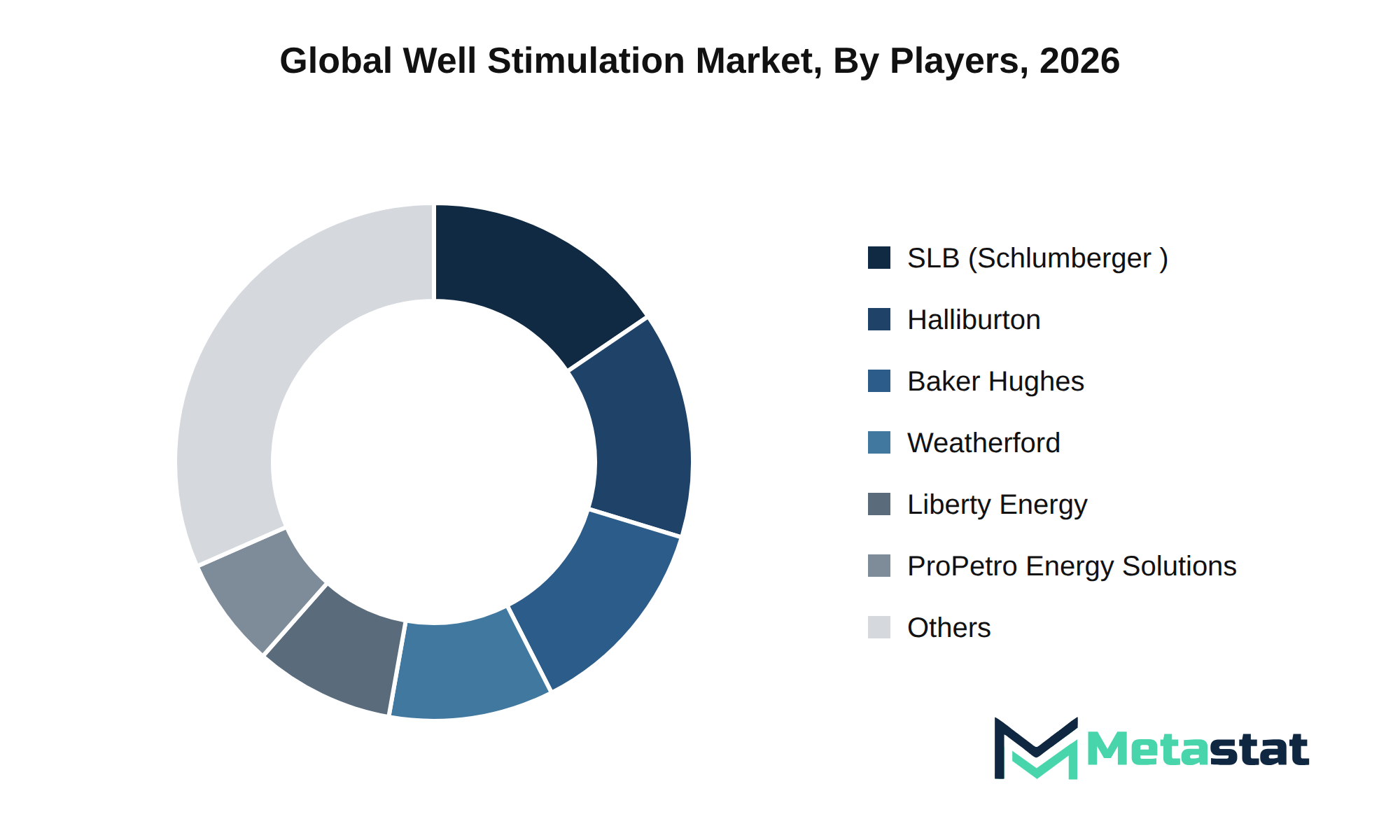
The Well Stimulation market features a diverse competitive landscape marked by strategic consolidation and collaborative efforts among key players. Mergers and acquisitions have become prevalent owing to companies seeking to enhance their market positions and expand their service offerings. Notable industry participants include SLB (Schlumberger Limited), Halliburton, and Baker Hughes Company, all of which engage in strategic alliances to strengthen their technological capabilities and market reach.
Pricing architectures demonstrate varied approaches, with several firms focusing on competitive pricing strategies to attract a broader customer base, while others emphasize premium services to differentiate themselves. Companies including Weatherford and Anton Oilfield Services Group are adopting innovative commercial models that cater to evolving customer demands, enabling access to advanced well stimulation techniques.
Research and development efforts play a critical role in maintaining technological defensibility within the market. Firms invest significantly in proprietary technologies and R&D pipelines to secure their competitive edge. Strategic alliances, joint ventures, and partnerships with cross-industry ecosystems enhance product differentiation and drive innovation among participants like Liberty Energy, Inc. and ProPetro Energy Solutions, LLC.
The threat of new entrants remains significant, driven by emerging startups that challenge established players through innovative solutions. Established companies, including Calfrac Well Services Ltd. and Trican, leverage their supply chain dominance and procurement leverage to reinforce barriers to entry, ensuring sustained market share. Customer retention strategies focus on creating brand loyalty and minimizing switching costs, which enhances the overall competitive outlook.
Future competitive dynamics will hinge on the ability to navigate changing regulatory environments and adapt to shifting market demands. Companies like RPC, Inc. and National Energy Services Reunited Corp. are expected to prioritize growth vectors that align with sustainability trends and technological advancements, positioning themselves effectively in the Well Stimulation market.
Market size is forecast to rise from USD 9.1 billion in 2025 to over USD 15.1 billion by 2033, reflecting a compound annual growth rate (CAGR) of 6.6%. This growth results from several factors, including advancements in extraction technologies and increasing energy demands. The Well Stimulation market experiences heightened demand from international and national oil companies, driven by enhanced production yields from existing wells.
The bullish scenario anticipates accelerated adoption of next-generation technologies, leading to increased investment in research and development. This scenario supports higher revenue growth, particularly in emerging markets where energy demand remains robust. The bearish outlook considers potential economic downturns, regulatory changes, or geopolitical tensions that could restrict market growth. In this context, firms focus on improving operational efficiencies to mitigate adverse impacts, allowing for continued investment in core operations.
Regional dynamics influence growth trajectories, with North America accounting for a substantial share of the market. Ongoing infrastructure commitments and capital expenditures among major players position the region favorably for growth. The evolution of supply chains and trade corridors remains crucial to meeting future demand, particularly in the context of geopolitical realignments.
Strategic capital allocation emphasizes emerging white-space opportunities. Firms identify unmet enterprise needs and high-growth pockets, tailoring approaches to align with executive-level strategic imperatives. Future growth recommendations include enhancing technological integration and prioritizing compliance with evolving regulations, ensuring a defensible market position amid changing landscapes.
The report strategically identifies and profiles the key market players and analyses their core competencies in each sub-segment of the Well Stimulation market.
Report Attributes | Details |
Study Period | 2021-2033 |
Base Year | 2025 |
Estimated Year | 2026 |
Forecast Period | 2026-2033 |
Historical Period | 2021-2025 |
Growth Rate | CAGR 6.6% from 2026 to 2033 |
Revenue Unit | USD billion |
Segmentation | By Stimulation Technique, Reservoir / Formation Type, Customer Type, Deployment Environment, and Region |
By Region | North America (By Stimulation Technique, Reservoir / Formation Type, Customer Type, Deployment Environment, and Country)
|
Europe (By Stimulation Technique, Reservoir / Formation Type, Customer Type, Deployment Environment, and Country)
| |
Asia Pacific (By Stimulation Technique, Reservoir / Formation Type, Customer Type, Deployment Environment, and Country)
| |
South America (By Stimulation Technique, Reservoir / Formation Type, Customer Type, Deployment Environment, and Country)
| |
Middle East and Africa (By Stimulation Technique, Reservoir / Formation Type, Customer Type, Deployment Environment, and Country)
|
Find answers to common questions about this report
The Well Stimulation market size was valued at USD 9.1 billion in 2025, according to the Metastat Insights study.
The Well Stimulation market is projected to grow at a CAGR of 6.6% during the forecast period from 2026 to 2033.
The North America Well Stimulation market size is estimated to reach USD 5.9 billion by 2033.
Hydraulic Fracturing leads the Well Stimulation market with a projected value of USD 9.2 billion in 2033, representing the highest growth among the stimulation techniques. This segment demonstrates a compound annual growth rate (CAGR) of 6.3% from 2026 to 2033.
Infrastructure development and technological integration drive growth in the Well Stimulation market. Significant investments in upgrading drilling and extraction facilities enhance operational efficiency and production capacities. This trend aligns with rising global energy demand, particularly from emerging economies, influencing exploration and production activities in the oil and gas sectors. The market is projected to grow from USD 9.1 billion in 2025 to USD 15.1 billion by 2033, reflecting a compound annual growth rate of 6.6 percent.
North America holds the dominant share of the Well Stimulation market, accounting for 41.7 percent in 2025. This region is projected to generate USD 5.9 billion by 2033.
The Well Stimulation market faces significant constraints from regulatory challenges, increased operational costs, and macroeconomic headwinds. Stricter environmental regulations raise capital expenditures, while inflation and supply chain disruptions hinder investment in new projects, impacting overall growth potential. Geopolitical instability further complicates trade dynamics, adding to operational uncertainties.
Significant investments in infrastructure development and technological integration favor product adoption in the Well Stimulation market. Enhanced operational efficiency, driven by advanced technologies including automation and data analytics, enables companies to optimize extraction processes and meet rising global energy demands. This trend is particularly evident in regions experiencing economic growth, including North America.
The Well Stimulation market is estimated to reach a valuation of USD 15.1 billion by 2033.
Key players in the Well Stimulation market include SLB (Schlumberger Limited), Halliburton, Baker Hughes Company, Weatherford, Liberty Energy, Inc., ProPetro Energy Solutions, LLC, and Trican.
The analysts below cover Energy and Power research at Metastat Insights.
LEAD ANALYST
Utkarsh Khirodkar is a Lead Market Research Analyst at MetaStat Insight, specializing in market intelligence, technology sector assessments, and competitive strategy.

PRINCIPAL CONSULTANT - ENTERPRISE AI & EMERGING TECHNOLOGIES
Banking & Finance · Electronics and Semiconductor · Energy and Power · Healthcare IT · Information & Technology · Professional Services
Vijay Gunti is a Principal Consultant at MetaStat Insight, bringing over two decades of experience across enterprise digital transformation, technology strategy, and intelligent systems.

ENERGY & INFRASTRUCTURE INDUSTRY CONSULTANT
Automotive and Transportation · Electronics and Semiconductor · Energy and Power · Machinery & Equipment
Saurabh Vasant Ganvir consults for Energy & Infrastructure Industry at MetaStat Insight, specializing in renewable energy, solar EPC, and electric vehicle (EV) infrastructure markets.
Integrating zero-trust access controls across legacy electronic health record systems involves complex compliance overhead. Team produced an analysis that clearly separated identity governance and administration tools from privileged access management platforms. Their evaluation of HIPAA and GDPR compliance features across cloud native solutions gave our architecture group clear baseline criteria. The custom data request regarding biometric authentication adoption in hospital networks was returned promptly with clear documentation.
Evaluating calorific value requirements and air permit compliance across municipal waste facilities requires localized data. Metastat Insight structured their analysis around operational throughput capacity and feedstock composition variations in Latin America and Eastern Europe. Their competitive mapping of sorting equipment vendors helped clarify technology differences between optical separators and heavy media systems. The study provided an objective baseline during our capital expenditure reviews.
Decarbonizing industrial thermal processes hinges on refrigerant regulations and compressor efficiency limits. Metastat Insights delivered a thorough market analysis that evaluated natural refrigerants like CO2 and hydrocarbons against synthetic low-GWP alternatives. The breakdown of utility incentives and grid capacity constraints across key European manufacturing hubs offered valuable perspective. The follow-up conversation with their sector analysts addressed our specific questions on mechanical vapor recompression systems efficiently.
Explore related market intelligence reports worth reading alongside this one.
Starting from
$2950
Starting from
$2950