
LEAD ANALYST
Utkarsh Khirodkar is a Lead Market Research Analyst at MetaStat Insight, specializing in market intelligence, technology sector assessments, and competitive strategy.

Global Renewable Energy Market Size, Share, By Type (Wind, Solar, Bioenergy and Others), By End-User (Residential, Commercial, Industrial and Utility), Industry Analysis, Growth, Trends, and Forecast, 2026-2033
Report ID
MSI-4778
Published
October, 2026
Pages
309 Pages
Format
Historical
Base year
Forecast
Forecast period
Report Details
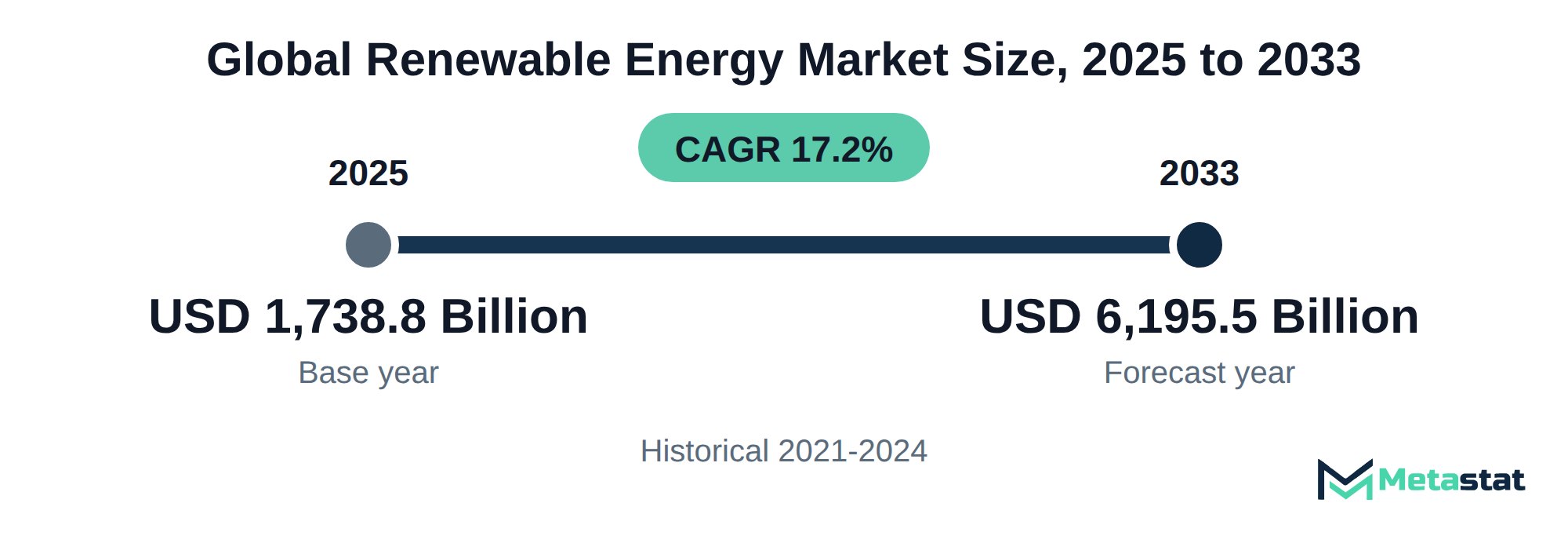
Market Valuation: Valued at $1,738.8 Billion in 2025, projected to reach $6,195.5 Billion by 2033 at a 17.2% CAGR.
Dominant Segment: The solar segment leads the Renewable Energy market, projected to reach USD 2,401.5 billion by 2033, driven by rising demand for clean energy solutions and technological advancements.
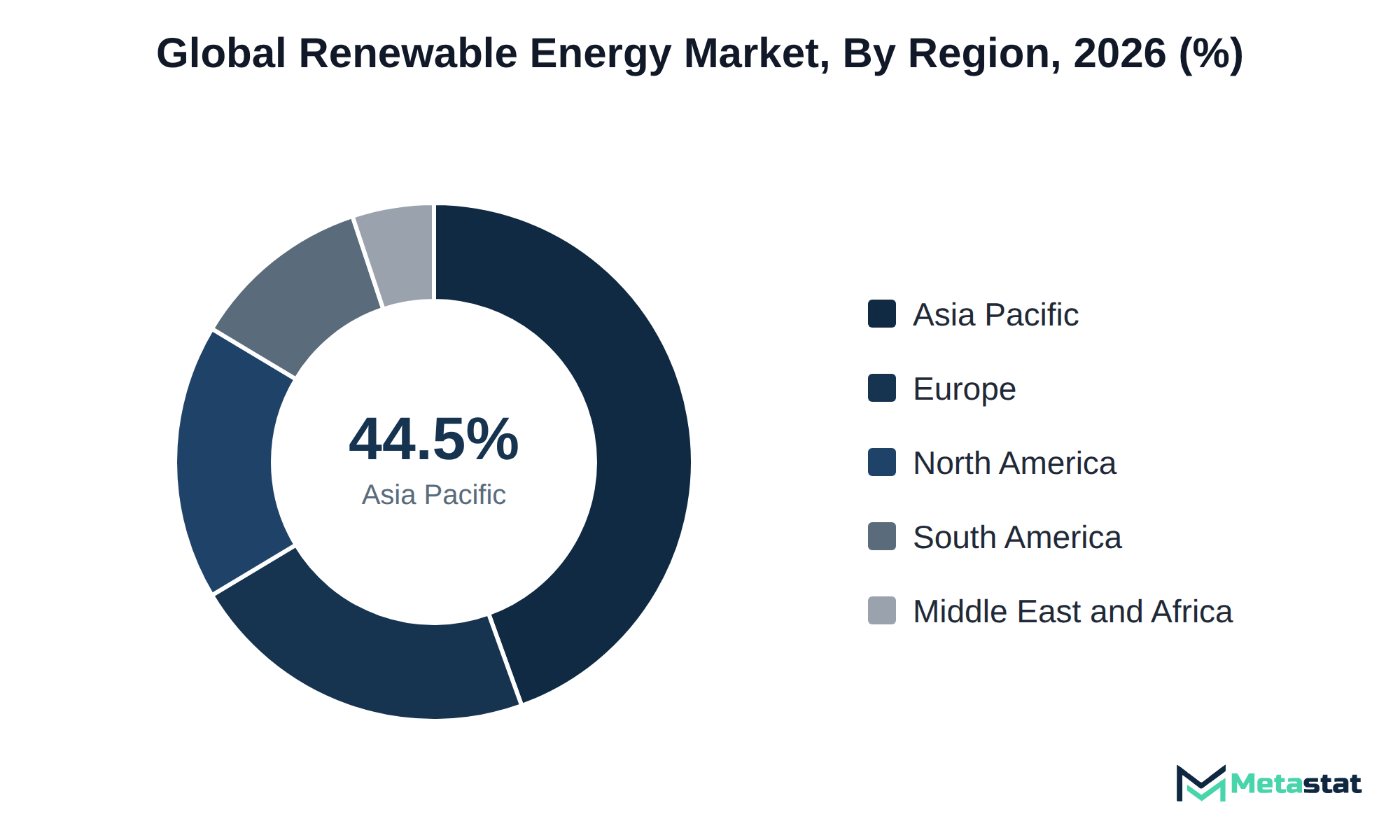
Geographic Lead: Asia Pacific dominates the market with a 44.5% share in 2025, fueled by substantial investments in renewable infrastructure and supportive government policies.
What's Inside: The report provides a comprehensive analysis of the Renewable Energy market, covering key segments, competitive landscape, and forecasts from 2026 to 2033.
Emerging Trends: The integration of long-duration energy storage systems is reshaping market dynamics, enhancing grid reliability and operational efficiency.
Investment Drivers: Corporate Power Purchase Agreements (PPAs) are accelerating utility-scale solar and offshore wind projects, reflecting a growing trend in sustainable energy procurement.
Choose Your License
Global Renewable Energy Market
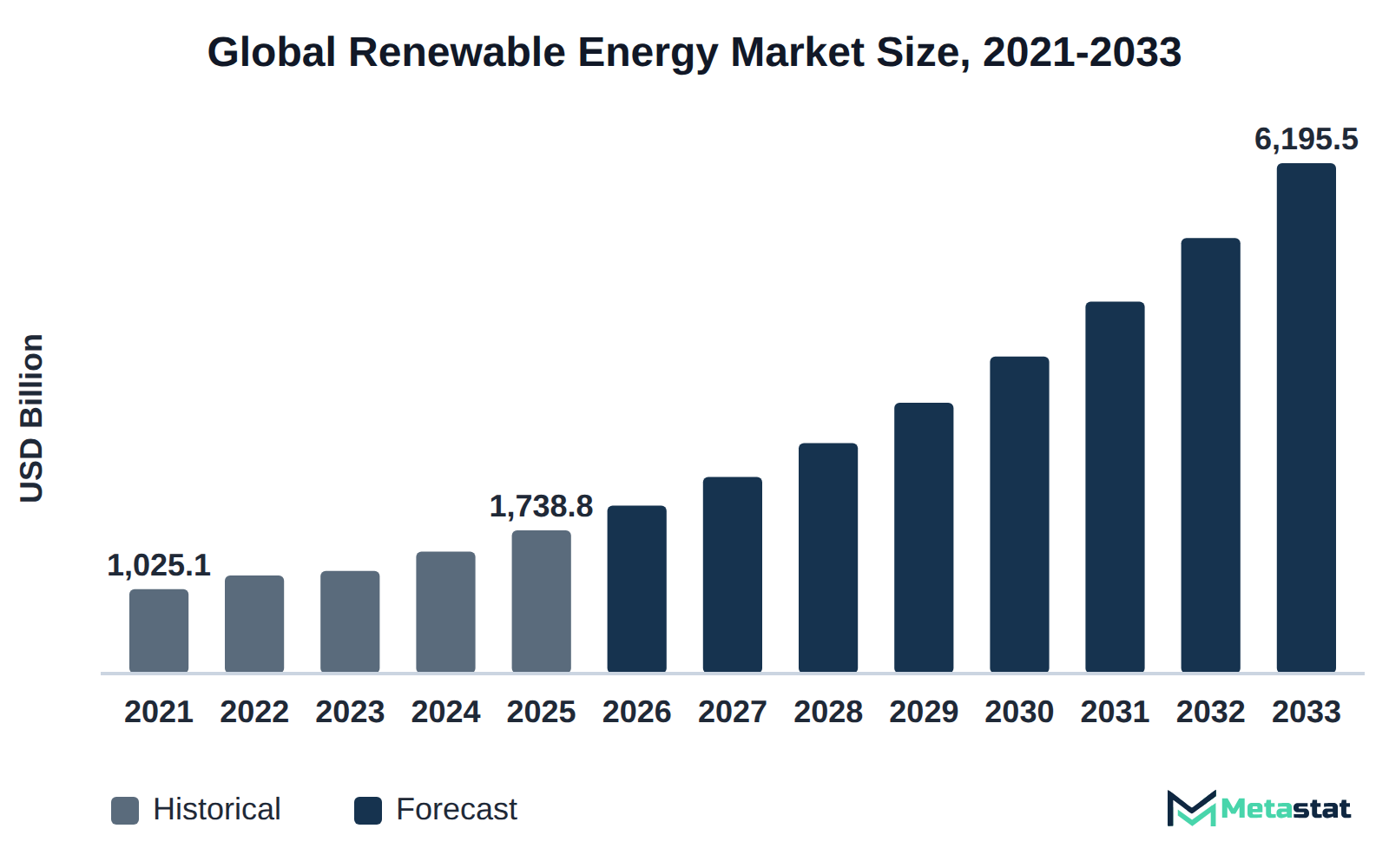
The global Renewable Energy market was valued at USD 1,738.8 billion in 2025 and is projected to reach USD 6,195.5 billion by 2033, growing at a CAGR of 17.2% over the forecast period.
The Renewable Energy market encompasses various technologies designed to generate energy from renewable sources, including solar, wind, and bioenergy. Buyers invest in these solutions to reduce reliance on fossil fuels, address environmental concerns, and comply with regulatory mandates. Increasing demand for cleaner energy options fuels significant spending across residential, commercial, and industrial sectors, contributing to an upward trend in market growth.
Driving factors behind this growth include advancements in technology, decreasing costs, and heightened awareness of climate change. The solar segment holds the most substantial value within the market, reflecting its widespread adoption and ongoing innovations. Asia Pacific dominates with a 44.5% share of the market in 2025, followed by Europe at 21.9% and North America at 17.2%. North America holds 17.2% of the market in 2025, with the US leading in 2026.
Investment in renewable energy infrastructure enhances capacity and efficiency, further stimulating growth. The utility segment, characterized by significant demand for large-scale energy production, is expected to expand rapidly. This surge in utility-scale renewable projects highlights the market potential for continued development and widespread adoption across various industries.
The Renewable Energy market spans technologies that provide sustainable alternatives to traditional fossil fuels, including wind, solar, and bioenergy systems. Buyers invest in these technologies to reduce greenhouse gas emissions, meet regulatory requirements, and capitalize on cost savings associated with energy efficiency. The shift towards renewable energy sources is driven by growing awareness of climate change and the urgency of the energy transition toward cleaner energy solutions.
Significant growth in the Renewable Energy market is propelled by technological advancements and decreasing costs of key components, particularly in the solar segment. Solar energy emerges as the most valuable segment, projected to reach USD 2,401.5 billion by 2033. Regionally, Asia Pacific holds the largest share of the market at 44.5%, significantly outpacing other regions.
Rapid investments in renewable infrastructure and supportive government policies contribute to growth in North America, which holds 17.2% of the market in 2025. Increasing demand for sustainable energy solutions drives innovation and competition among industry players, enhancing the overall market landscape.
The integration of long-duration energy storage systems represents a significant shift in the Renewable Energy market, fundamentally enhancing grid reliability and operational efficiency. Long-duration energy storage technologies provide the capability to store energy generated from renewable sources for extended periods, enabling a more stable energy supply during peak demand fluctuations. Utility-scale battery energy storage systems apply this principle at grid level. This innovation aligns with the projected market value of USD 6,195.5 billion by 2033, reflecting an increasing reliance on renewable energy solutions.
A notable trend within this integration involves the deployment of advanced battery technologies, which contribute significantly to renewable energy systems' adaptability. The residential sector is expected to grow substantially, with demand forecast to rise from USD 393.9 billion in 2026 to USD 1,149 billion by 2033. This illustrates the importance of residential buyers in driving energy storage solutions adoption. The capability to utilize renewable energy efficiently creates a more resilient grid, reducing dependence on fossil fuels and enhancing energy security.
This evolution supports the transition towards cleaner energy sources and positions energy storage as a significant contributor to economic optimization for energy providers. Enhanced grid reliability, driven by smart grid integration technologies, influences investment strategies and operational frameworks, establishing long-term growth potential in the Renewable Energy market.
Corporate Power Purchase Agreements (PPAs) significantly influence the procurement of utility-scale solar and offshore wind projects. These arrangements enable companies to commit to purchasing electricity at a fixed price over a set duration, providing financial predictability for both buyers and suppliers. In the Renewable Energy market, the use of PPAs facilitates substantial investments in solar and wind infrastructure, essential for meeting rising energy demands.
In 2026, the solar segment is projected to reach a value of USD 2,401.5 billion by 2033, reflecting the growing reliance on these agreements. Corporations pursuing sustainability goals increasingly turn to long-term contracts to secure renewable energy while stabilizing costs. This trend drives broader adoption across various industries, including commercial and industrial sectors, which actively seek to minimize their carbon footprints.
The proliferation of corporate PPAs not only enhances the market's growth trajectory but increases competition among renewable energy suppliers. Enhanced contract models improve project financing and operational efficiency, driving down costs. The Renewable Energy market stands to benefit from this evolution in procurement methods, enabling further investment and innovation in clean energy technologies.
The Renewable Energy market faces significant challenges related to critical mineral supply chain constraints, which directly impact the development of clean technologies. These constraints arise from increasing demand for essential minerals including lithium, cobalt, and rare earth elements, necessary for manufacturing batteries and renewable energy systems. The market's expected growth, projected to reach USD 6,195.5 billion by 2033, intensifies competition for these vital resources.
Domestic manufacturing mandates further complicate this landscape. Countries are implementing policies to enhance local production of critical minerals, including rare earth elements, aiming to reduce reliance on foreign sources and improve national security. The North American market, projected to attain a value of USD 961.5 billion by 2033, emphasizes the need for domestic capabilities to ensure a stable supply of these minerals. This focus on local sourcing aligns with broader trends toward sustainability and energy independence.
Consequently, the relationship between supply chain constraints and domestic manufacturing initiatives influences investment decisions across the sector. Companies engaged in renewable energy manage both pressures to ensure long-term viability and competitiveness within the market.
Decarbonization mandates significantly influence the Renewable Energy market by driving regulatory support and investment in sustainable technologies. Governments worldwide implement stringent targets to reduce carbon emissions, compelling industries to transition towards cleaner energy sources. The total market value is expected to grow from USD 1,738.8 billion in 2025 to USD 6,195.5 billion by 2033, reflecting a compound annual growth rate of 17.2%. This substantial increase highlights the urgency for companies to adopt renewable solutions.
Simultaneously, the declining levelized cost of energy (LCOE) is essential in enhancing renewable energy adoption, particularly in the Solar segment. By 2033, solar energy capacity is projected to reach USD 2,401.5 billion, driven by advancements in technology and economies of scale, resulting in lower prices for consumers. These factors enable organizations to invest more confidently in renewable solutions, leading to increased market penetration and competition among suppliers.
Consequently, growing regulatory frameworks and falling energy costs encourage businesses across various sectors to embrace renewable technologies. This shift supports sustainable practices and helps companies secure long-term savings and a stronger brand reputation with increasingly eco-conscious consumers.
Residential buyers increasingly invest in solar energy systems, driven by a combination of rising energy costs and heightened awareness of environmental sustainability. This demographic shift reflects a growing preference for clean energy solutions among homeowners, leading to greater demand for residential solar installations. The segment is projected to grow from USD 393.9 billion in 2026 to USD 1,149 billion by 2033, resulting in a compound annual growth rate of 16.5%. Increasing costs of traditional energy sources compel homeowners to seek cost-effective, sustainable alternatives, pushing the market toward higher adoption rates. This transition to solar energy significantly influences the overall dynamics of the Renewable Energy market, contributing to growth across various segments.
Heightened demand for utility-scale projects
Utility buyers prioritize large-scale renewable energy projects to meet rising energy needs and comply with sustainability goals. The shift towards utility-scale solar and wind farms reflects a strategic move to enhance energy efficiency while diversifying energy sources. Increased investments in infrastructure and technology drive significant capacity expansions, with projected demand for utility solutions resulting in higher market valuations. The utility segment is expected to experience strong growth, reinforcing the competitive landscape of the Renewable Energy market.
Supply chain optimization emerges as a critical factor in enhancing the efficiency of the Renewable Energy market. Improved logistics and procurement strategies significantly lower production costs, allowing suppliers to offer competitive pricing. Enhanced collaboration between manufacturers and suppliers facilitates better inventory management, reducing lead times and minimizing delays in project execution. This efficiency captures interest from various buyer groups, including commercial and industrial sectors, seeking to implement renewable solutions at lower operational costs.
Cost reductions attributed to supply chain optimization drive greater adoption of renewable technologies. Operational expenses decline, allowing organizations to experience improved financial viability in integrating these solutions. Increased capacity in manufacturing and distribution drives investment and strengthens market competitiveness. Consequently, suppliers who effectively streamline their processes establish a stronger foothold in the market, reinforcing the trend toward sustainable energy solutions.
Price volatility in the Renewable Energy market affects commercial buyers' investment decisions. Fluctuating prices for raw materials, particularly in solar and wind technologies, create uncertainty surrounding project feasibility and return on investment. Companies frequently delay project initiation or limit order sizes to mitigate financial risks associated with unpredictable price changes. The impact is evident among commercial and industrial sectors, where budget constraints influence energy procurement strategies. The unpredictable pricing environment hampers long-term planning, limiting commitment to large-scale renewable energy projects. Inconsistent energy pricing contributes to slower adoption rates, hindering overall market growth and investment potential.
Supplier profitability in the Renewable Energy market faces significant challenges due to rising input costs associated with raw materials and components. Increased demand for renewable technologies strains the supply chain, leading to higher prices for essential inputs including solar cell materials and wind turbine components. Suppliers respond by seeking alternative sourcing strategies and increasing operational efficiencies to mitigate these costs. Several manufacturers focus on vertical integration to control their supply chains, thus reducing reliance on external suppliers. Others invest in research and development, aiming to innovate more cost-effective materials and processes. These strategies enhance competitive positioning while addressing the financial pressures exerted by escalating input costs. The overall impact on the market includes a potential slowdown in the pace of new project launches and adoption, affecting long-term growth trajectories.
The solar segment within the Renewable Energy market demonstrates significant growth potential, driven by an increasing focus on sustainable energy sources. This segment is projected to achieve a compound annual growth rate (CAGR) of 17.8% and reach USD 2,401.5 billion by 2033. Rising demand for solar solutions, particularly among residential and commercial users, reflects a shift toward cleaner energy alternatives and efficient energy systems. Economic incentives, including tax credits and rebates, further stimulate investment in solar technologies. Growing awareness of climate change and the desire for energy independence fuel this transition. The market is set to benefit from advancements in solar technology, resulting in improved efficiency and lower installation costs, making solar energy more accessible and appealing to a broader audience. This trajectory positions solar energy as a key element of the overall growth in the Renewable Energy market through the forecast period.
The Global Renewable Energy market is segmented based on Type, End-User.
The wind segment of the Renewable Energy market is valued at USD 590.9 billion in 2026 and is projected to reach USD 1,801.7 billion by 2033, at a CAGR of 17.3% during the forecast period. This segment serves utilities and industrial clients, focusing on large-scale energy generation from wind resources. The shift towards sustainable energy solutions significantly enhances demand for wind energy, with critical investments from both public and private sectors driving expansion. The segment's rapid growth outpaces the bioenergy segment, which expands at a slower rate, reflecting a growing preference for cleaner energy alternatives. Advancements in turbine technology contribute to decreasing costs and increasing efficiency, further strengthening wind energy's position. Increased regulatory support and favorable government policies continue to encourage investment and deployment, positioning the segment as a crucial component of the renewable energy market.
The solar segment of the Renewable Energy market primarily supplies energy for residential, commercial, and industrial applications, enabling users to reduce reliance on traditional energy sources. A significant driver for growth stems from increasing energy costs, propelling residential and commercial buyers to invest in solar solutions for long-term savings. Compared to other segments, including wind and bioenergy, solar demonstrates faster growth rates, reflecting stronger demand for accessible and scalable energy solutions. While both wind and solar technologies advance, solar's versatility in installation and integration with existing structures provides unique advantages, attracting diverse buyer groups across multiple sectors. This growing preference for solar technology highlights its role in broader trends shaping the Renewable Energy market.
Bioenergy segment is expected to reach USD 817.7 billion by 2033. This segment generates biomass energy from organic materials, serving various applications in residential, commercial, and industrial settings. Demand for bioenergy finds momentum in the increasing focus on sustainable energy alternatives, particularly in sectors aiming for lower carbon footprints. This segment is projected to grow at a compound annual growth rate (CAGR) of 16.6%, slower than the 17.8% CAGR of solar. Factors driving adoption include advancements in technology for biofuel production and supportive regulations promoting renewable energy sources. The market differentiates itself through unique feedstock requirements and conversion processes, appealing to buyers seeking diverse renewable solutions.
The Others segment is projected to grow at a CAGR of 16.6% during the forecast period. This segment encompasses various renewable energy technologies that do not fall under the primary categories of wind, solar, or bioenergy. Wave and tidal energy is an example of a technology that falls outside those three categories. Industries apply these technologies for diverse applications, including waste-to-energy solutions and hydropower innovations. The increasing emphasis on sustainability and regulatory support for renewable initiatives drives significant interest in this segment. Unlike the solar and wind segments, which experience higher growth rates of 17.8% and 17.3% respectively, the Others segment displays unique characteristics, catering to niche markets with specific requirements. This distinction reflects slower growth than more mainstream renewable technologies, though the segment remains important to broader energy strategies. Market players pursuing development in this segment often focus on tailored solutions that address localized energy needs and environmental challenges.
This segment primarily serves homeowners seeking to reduce energy costs and enhance energy independence through renewable solutions, including photovoltaic solar panels and home energy storage systems. An increasing focus on sustainable energy practices and rising energy prices drives significant demand in this segment. Compared to other end-user segments, the residential segment experiences relatively slower growth, influenced by initial installation costs and regulatory challenges in specific regions. In contrast, commercial and utility segments present faster growth rates due to larger-scale projects and more substantial investment capabilities. Residential buyers prioritize affordability and long-term savings, creating unique dynamics in the market compared to commercial and industrial customers.
The commercial segment is estimated to reach USD 1,627.5 billion by 2033, at a CAGR of 17.4% during the forecast period. This segment primarily serves businesses and organizations seeking to reduce energy-related expenses while enhancing sustainability. Key drivers influencing this segment include increasing regulatory pressure to adopt renewable energy solutions and the economic benefits of transitioning to cleaner energy sources. Unlike the residential and utility segments, the commercial segment experiences significant growth due to larger energy demands and investment capacities. Commercial users typically adopt renewable solutions to achieve corporate sustainability and ESG goals and reduce operational costs, distinguishing this segment with higher price sensitivity compared to the industrial segment. The market reflects a significant shift toward renewable energy resources, supported by technological advancements and decreasing costs associated with solar and wind energy options.
The industrial segment is expected to reach USD 1,090 billion by 2033. This segment supplies energy solutions for manufacturing processes, warehouses, and facilities that require substantial power for operations. Demand is driven by the increasing focus on sustainability and the need for cost-effective energy sources to reduce operational expenses. The industrial segment exhibits a higher growth trajectory compared to the residential segment, which has a CAGR of 16.5%. Investments in renewable technology and advancements in energy efficiency enhance the overall appeal for industrial buyers. Industries strive to meet regulatory requirements and reduce carbon footprints, making the transition to renewable sources essential. Competitive pricing of renewable energy technologies positions this segment favorably against traditional energy sources, enabling broader adoption among industrial enterprises that increasingly favor sustainable energy solutions.
The utility segment of the Renewable Energy market is projected to grow at a CAGR of 18% during the forecast period. This segment focuses on providing energy to large-scale consumers, including municipalities and industrial facilities, through various renewable sources. Demand for utility-scale solutions primarily stems from the growing emphasis on reducing greenhouse gas emissions and meeting regulatory frameworks aimed at enhancing sustainability. The urgency to transition from fossil fuels to renewable energy sources supports this segment's expansion. Compared to other segments, including commercial and residential, the utility segment typically offers larger-scale projects with higher investment requirements. The expected increase in competition among utility providers drives innovation and cost efficiency, enabling further growth in the market.
Based on geography, the Global Renewable Energy market is divided into North America, Europe, Asia-Pacific, South America, Middle East, and Africa.
Demand for renewable energy in North America experiences growth driven by a strong focus on environmental regulations and sustainability initiatives. The residential and commercial sectors play significant roles in this demand, with consumers increasingly adopting solar energy solutions to mitigate rising energy costs. Infrastructure improvements throughout the region support this transition, with advancements in energy storage and grid integration enhancing system reliability and efficiency. North America is projected to reach USD 961.5 billion by the end of 2033. The market's share of the global renewable energy sector reflects significant investment and commitment to building a sustainable energy future. Increased focus on clean energy aligns with governmental policies aimed at reducing carbon emissions and driving economic growth through renewable energy projects.
Investment in the Renewable Energy market in Europe remains strong, driven by increasing energy independence and aggressive targets for emissions reduction. Countries including Germany, France, and the UK focus on transitioning to sustainable energy sources, supported by national policies promoting renewable initiatives. The European Union drives infrastructure investments and provides financial incentives to enhance renewable capacity and improve energy efficiency. In 2025, Europe holds a share of 21.9% in the global market. In Spain and Italy, the emphasis on solar energy aligns with regional efforts to capitalize on favorable climatic conditions for power generation. Utility and commercial sectors increasingly invest in renewable technologies, with substantial growth projected in the coming years. The market expansion aligns with a broader commitment to environmental sustainability across various industries in Europe.
Asia-Pacific stands out for its considerable share of the global market, accounting for 44.5% in 2025. The region experiences robust demand driven by significant investments in wind and solar energy, particularly from countries including China, India, and Japan. Rapid urbanization and industrialization contribute to this demand, alongside government initiatives focusing on energy security and emissions reduction. Infrastructure improvements in renewable energy technology enable more efficient energy generation and distribution. Countries in Southeast Asia prioritize solar projects, while Australia invests heavily in both solar and wind capacities. The Renewable Energy market in Asia-Pacific is expected to experience substantial growth, supported by favorable regulatory frameworks and an increasing focus on sustainable practices.
South America experiences notable growth in the Renewable Energy market, driven primarily by a strong push for sustainable energy in Brazil and Argentina. Investments in solar and wind energy projects are gaining momentum, fueled by governmental initiatives aimed at improving energy security and reducing greenhouse gas emissions. The region's abundant natural resources facilitate the expansion of renewable energy sources, enhancing competitiveness in the global market. In 2025, South America holds an 11.3% share of the global market, reflecting increasing adoption across various sectors. Continuous development of infrastructure supporting renewable energy generation enhances access and affordability for consumers, further stimulating demand in the market.
The Middle East and Africa demonstrate a unique position within the Renewable Energy market, characterized by emerging investments in solar and wind projects. Countries like Saudi Arabia and the UAE pursue aggressive renewable energy targets, driven by initiatives to diversify their energy portfolios and reduce reliance on fossil fuels. In South Africa, the government focuses on expanding renewable energy sources to address energy shortages and enhance grid stability. These regional dynamics are expected to encourage significant growth, leading to an estimated market share of 5.1% in 2025. The market benefits from favorable sunlight exposure in these regions, enhancing the viability of solar technologies. Emerging financing models and public-private partnerships contribute to overall development, positioning the region for substantial growth through 2033.
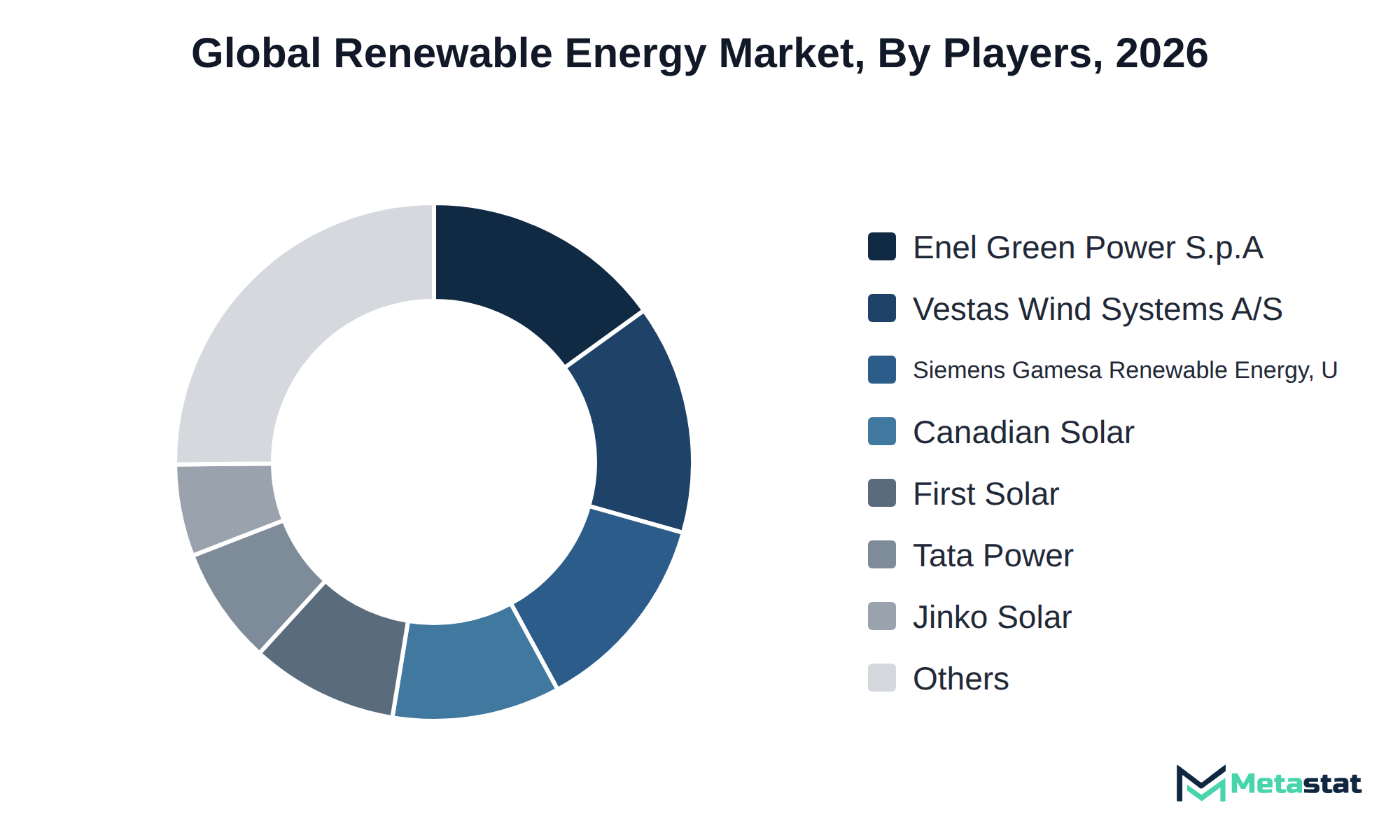
The Renewable Energy market features companies competing across the wind, solar, bioenergy, and other segments. Companies differentiate themselves based on factors including pricing, certification, customization, service offerings, and ecosystem integration. Buyers evaluate options carefully, influenced by operational efficiencies and sustainability goals.
Enel Green Power S.p.A. focuses on expanding its renewable energy portfolio, emphasizing solar and wind technologies. Canadian Solar Inc. specializes in solar energy solutions and has developed a strong commitment to innovation and efficiency within its product lines. Vestas Wind Systems A/S prioritizes the wind segment and emphasizes advanced turbine technologies to enhance energy output and reliability.
Other players, including Siemens Gamesa Renewable Energy, S.A.U. and Engie Group, concentrate on sustainable energy solutions and aim to provide comprehensive service offerings that support long-term relationships with clients. The market's competitive dynamics drive innovation and strategic partnerships, shaping the future of renewable energy.
Achieving this target relies on several developments within the Renewable Energy market. The residential segment, with a projected value increase from USD 393.9 billion in 2026 to USD 1,149 billion by 2033, requires greater adoption of solar technologies. The solar segment itself is anticipated to grow significantly, reaching USD 2,401.5 billion by 2033, driven by advancements in efficiency and decreasing costs. Meanwhile, the utility segment, characterized by an 18% CAGR, necessitates investment in large-scale renewable projects to meet rising demand for clean energy sources. Potential risks could hinder this growth trajectory. Regulatory challenges or market uncertainties, particularly in the Asia Pacific region, could delay necessary investments and infrastructure development. The market's ability to navigate these challenges will determine whether it achieves its forecasted growth, affecting various segments and regional dynamics.
By Type: Wind, Solar, Bioenergy, Others
By End-User: Residential, Commercial, Industrial, Utility
The report strategically identifies and profiles the key market players and analyses their core competencies in each sub-segment of the Renewable Energy market.
|
Report Attributes |
Details |
|
Study Period |
2021-2033 |
|
Base Year |
2025 |
|
Estimated Year |
2026 |
|
Forecast Period |
2026-2033 |
|
Historical Period |
2021-2025 |
|
Growth Rate |
CAGR 17.2% from 2026 to 2033 |
|
Revenue Unit |
USD billion |
|
Segmentation |
By Type, End-User, and Region |
|
By Region |
North America (By Type, End-User, and Country)
|
|
Europe (By Type, End-User, and Country)
|
|
|
Asia Pacific (By Type, End-User, and Country)
|
|
|
South America (By Type, End-User, and Country)
|
|
|
Middle East and Africa (By Type, End-User, and Country)
|
Find answers to common questions about this report
The Renewable Energy market size was valued at USD 1,738.8 billion in 2025.
The market is projected to grow at a CAGR of 17.2% during the forecast period from 2026 to 2033.
The North America Renewable Energy market size is estimated to reach USD 961.5 billion by 2033.
Solar leads the Renewable Energy market with a projected value of USD 2,401.5 billion by 2033, surpassing other segments in growth potential.
Rising energy costs and heightened awareness of environmental sustainability drive investment in renewable energy solutions. Increased demand for utility-scale projects reflects a strategic move by utility buyers to enhance energy efficiency while diversifying energy sources.
Price volatility in the Renewable Energy market restrains growth by affecting investment decisions, leading to project delays and limited order sizes. Rising input costs for raw materials and components challenge supplier profitability, resulting in a potential slowdown in new project launches and adoption.
Rising energy costs and increased awareness of environmental sustainability favor the adoption of renewable energy solutions. Economic incentives including tax credits and rebates further stimulate investment, driving a transition towards cleaner energy alternatives.
The Renewable Energy market is estimated to reach a valuation of USD 6,195.5 billion by 2033.
Key players operating in the Renewable Energy market include Enel Green Power S.p.A., Canadian Solar Inc., First Solar Inc., Jinko Solar Holding, Tata Power, and Vestas Wind Systems A/S.
The solar segment is projected to achieve a compound annual growth rate of 17.8%, reaching USD 2,401.5 billion by 2033.
The analysts below cover Energy and Power research at Metastat Insights.
LEAD ANALYST
Utkarsh Khirodkar is a Lead Market Research Analyst at MetaStat Insight, specializing in market intelligence, technology sector assessments, and competitive strategy.

PRINCIPAL CONSULTANT - ENTERPRISE AI & EMERGING TECHNOLOGIES
Banking & Finance · Electronics and Semiconductor · Energy and Power · Healthcare IT · Information & Technology · Professional Services
Vijay Gunti is a Principal Consultant at MetaStat Insight, bringing over two decades of experience across enterprise digital transformation, technology strategy, and intelligent systems.

ENERGY & INFRASTRUCTURE INDUSTRY CONSULTANT
Automotive and Transportation · Electronics and Semiconductor · Energy and Power · Machinery & Equipment
Saurabh Vasant Ganvir consults for Energy & Infrastructure Industry at MetaStat Insight, specializing in renewable energy, solar EPC, and electric vehicle (EV) infrastructure markets.
Ambulatory surgical centers have very different purchasing cycles for robotic-assisted surgery platforms than major hospital networks. The MetaStat Insight study focused squarely on capital expenditure depreciation, procedural reimbursement pathways, and surgeon training overhead. That operational clarity made it much simpler to validate multi-year procedure growth forecasts against actual ambulatory center adoption patterns.
When planning edge sensor rollouts across refinery environments, generic IoT reports typically miss the harsh-environment certification bottlenecks. MetaStat Insight gave an objective evaluation of ATEX and Class 1 Division 2 hardware availability, along with realistic five-year maintenance cycle cost projections. The comparison of wireless mesh versus private cellular backhaul helped our team pressure-test network reliability models for remote processing facilities.
In the biological seed treatment space, registration timelines vary drastically between the European Union, Brazil, and North America. The MetaStat Insight research handled these cross-border regulatory barriers with genuine nuance, mapping commercialization pathways alongside historical field adoption rates. The segmentation between microbial strains and biochemical active ingredients was particularly well structured.
Explore related market intelligence reports worth reading alongside this one.
Starting from
$2950