
LEAD ANALYST
Utkarsh Khirodkar is a Lead Market Research Analyst at MetaStat Insight, specializing in market intelligence, technology sector assessments, and competitive strategy.

Global Fuel Management Systems Market Size, Share, By Component (Software, Hardware, and Professional and Managed Services), By Application (Fuel Procurement and Strategic Sourcing, Supplier and Contract Management, Order and Delivery Management, Fuel Inventory and Tank Monitoring, Fuel Dispensing and Access Control, Fuel Card and Transaction Management, Invoice Audit and Reconciliation, Fuel Consumption and Efficiency Optimization, Compliance and Fuel Tax Reporting), By Deployment Model (Cloud-Based, On-Premises, and Hybrid), By End-Use Industry (Transportation and Logistics, Construction, Mining and Quarrying, Energy and Utilities, Manufacturing and Industrial Facilities, Government and Municipal Fleets, Data Centers, Aviation and Marine, and Agriculture), Industry Analysis, Growth, Trends, and Forecast, 2026-2033
Report ID
MSI-4863
Published
August, 2026
Pages
278 Pages
Format
Historical
Base year
Forecast
Forecast period
Report Details
Choose Your License
Global Fuel Management Systems Market
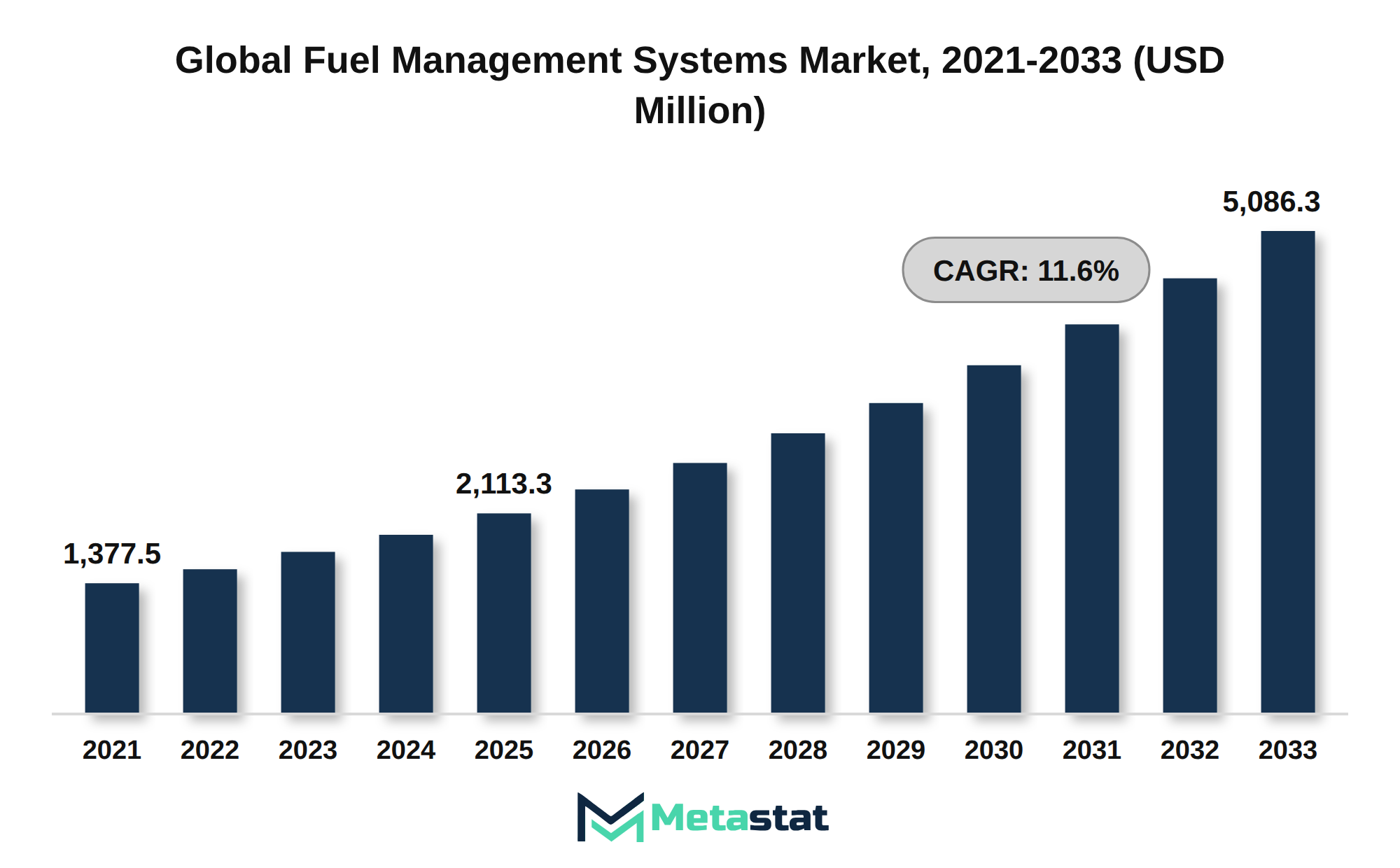
The global Fuel Management Systems market was valued at USD 2,113.3 million in 2025 and is projected to reach USD 5,086.3 million by 2033, growing at a CAGR of 11.6% over the forecast period.
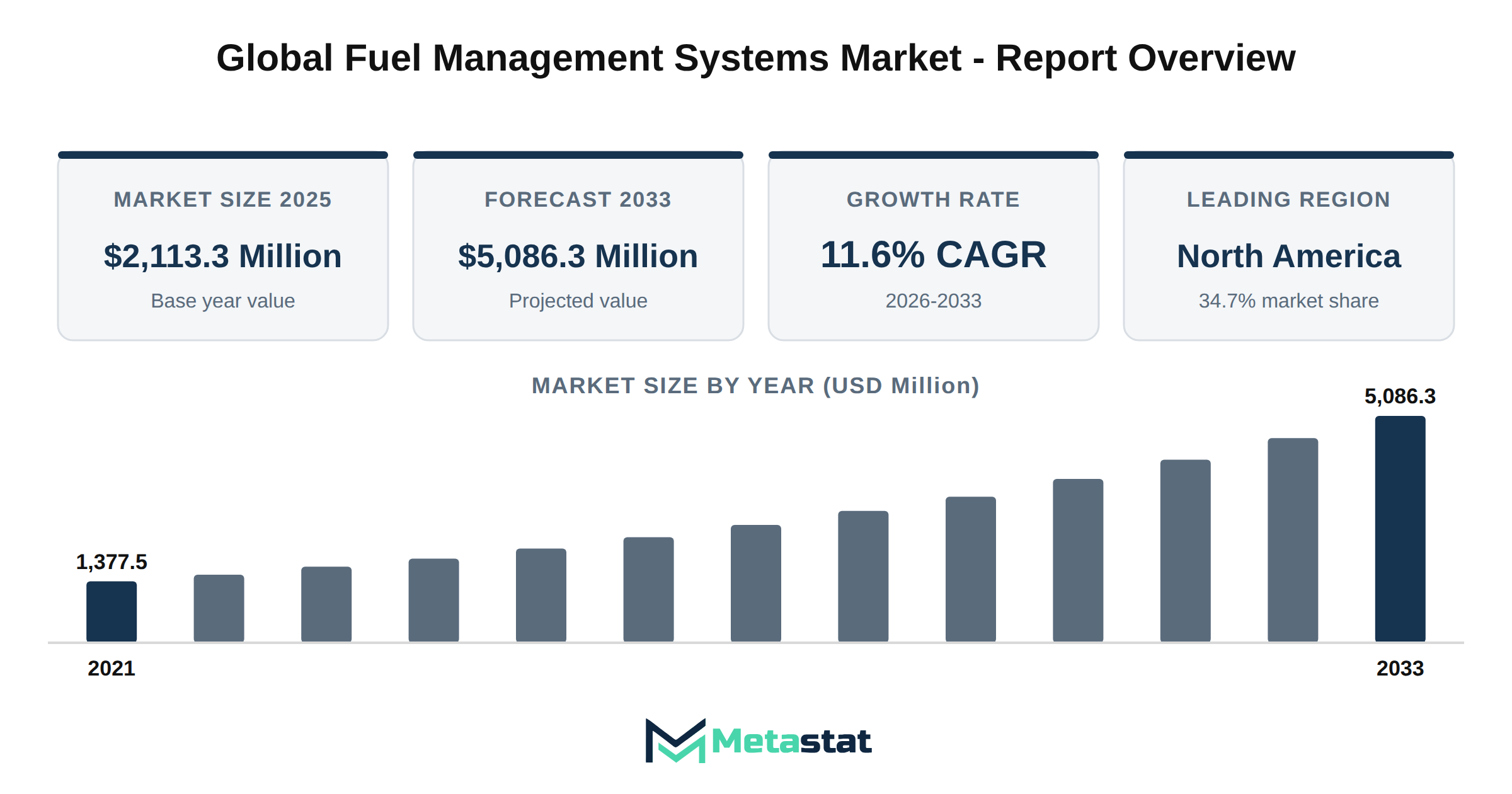
The Fuel Management Systems market displays growth potential, projected to expand from USD 2,113.3 million in 2025 to USD 5,086.3 million by 2033, with a compound annual growth rate (CAGR) of 11.6%. This expansion is driven by increasing demand for efficient fuel management solutions across various industries, particularly in transportation and logistics, energy, and utilities. The integration of advanced technologies, including AI-driven fuel optimization and automated auditing, enhances operational efficiency and supports compliance with regulatory standards.
Regional dynamics significantly influence the market landscape. North America holds the largest share at 34.7%, followed by Europe at 26.6% and Asia Pacific at 25%. Growth in North America is attributed to a strong focus on technological advancements and supply chain optimization. Enterprises in this region invest strategically in fuel procurement trends and supplier management, enhancing their competitiveness and operational efficiency.
Market fragmentation remains a crucial factor, with numerous players actively engaging in mergers and acquisitions to consolidate their positions. Key participants in the Fuel Management Systems market include PDI Technologies, Inc, Titan Cloud Software, DTN, LLC, and OPW Fuel Management Systems. These companies focus on innovation and sustainable transformation, aiming to meet the evolving needs of their customers while addressing challenges related to decarbonization and circular economy dynamics.
Investment in research and development (R&D) trajectories has led to next-generation innovations that drive market growth. Companies increasingly focus on predictive inventory management and compliance with fuel tax reporting standards, strengthening their value chains and procurement processes. These developments position the market favorably for future growth, aligning with corporate imperatives in managing capital allocation and infrastructure investments.
Enterprise fuel procurement trends emphasize the importance of optimizing fuel management systems to enhance efficiency and reduce costs. AI-driven fuel optimization technologies are increasingly being adopted by industries seeking to improve fuel consumption and operational efficiency. Supplier management practices evolve to ensure reliability and cost-effectiveness in fuel procurement, addressing the challenges posed by fluctuating prices and availability.
Automated auditing processes streamline compliance with regulatory requirements, reducing the administrative burden on organizations. Predictive inventory technologies enable companies to maintain optimal fuel levels while minimizing waste, enhancing overall operational performance. Regulatory compliance and standards related to fuel management have become critical owing to organizations navigating geopolitical risk frameworks that impact supply chains and fuel prices.
Disruption in the market drives innovation, with R&D trajectories focusing on next-gen solutions that support sustainable transformation. Decarbonization initiatives align with the circular economy dynamics, encouraging the adoption of eco-friendly fuel management practices. The changing supply chain influences logistics architecture and sourcing strategies, compelling businesses to adapt to new market realities.
Market fragmentation presents opportunities for mergers and acquisitions, enabling players to consolidate resources and enhance competitive positioning. The value chain of fuel management systems undergoes continuous refinement, ensuring that procurement processes align with customer journey dynamics. Capital allocation reflects the increasing importance of infrastructure investments, aligning with the realities of CapEx and OpEx in the industry.
Macroeconomic headwinds, including inflationary pressures and currency volatility, create additional challenges for organizations operating in the market. Future strategic outlooks emphasize the need for corporate imperatives that prioritize efficiency and sustainability. High-value recommendations for stakeholders highlight the necessity of staying ahead in a changing market environment.
The adoption of closed-loop fuel management systems is gaining momentum owing to stringent emission limits imposed by governments worldwide. These regulations compel industries to minimize their carbon footprints, pushing organizations to invest in advanced fuel management technologies. The focus on environmental sustainability increases demand in sectors including transportation and logistics, construction, and energy management.
Investing in fuel management systems allows companies to monitor fuel usage in real-time, optimize consumption, and reduce waste. This operational efficiency contributes to lower costs while enhancing compliance with environmental regulations. Organizations seeking to improve their sustainability profiles increasingly turn to these systems, driving growth in the Fuel Management Systems market.
While the market evolves, technological integration through automation and AI enhances system performance and data accuracy. Businesses that implement these technologies achieve better insights into fuel management, allowing for more informed decision-making and strategic resource allocation. The shift towards digital transformation supports the adoption of sophisticated fuel management solutions, reinforcing market growth.
The ongoing digital transformation significantly influences the Fuel Management Systems market by enhancing operational efficiency across various industries. Organizations increasingly adopt advanced technologies, including automation and artificial intelligence, to streamline fuel management processes. These technologies enable real-time data monitoring, predictive analytics, and improved decision-making, allowing businesses to optimize fuel consumption and reduce waste.
Industries including transportation, logistics, and manufacturing benefit from integrating sophisticated software solutions that digitize legacy systems. This transition minimizes manual errors and reduces overhead costs while improving compliance with regulatory standards. Companies within these sectors experience enhanced productivity and profitability through more efficient fuel management practices.
Growth in venture funding for innovative solutions accelerates the development of digital tools tailored to fuel management. Startups and established players contribute to a competitive ecosystem, introducing solutions that address the complexities of fuel procurement, inventory tracking, and transaction management. This environment drives continuous improvements and adoption of the latest technologies, further propelling the Fuel Management Systems market.
Overall, the focus on digital transformation positions organizations to respond effectively to market demands and environmental regulations, ensuring sustained growth and competitiveness in the Fuel Management Systems market.
High capital investment requirements present a significant restraint for the Fuel Management Systems market. The deployment of these systems demands substantial upfront expenditures in technology, infrastructure, and training. Many organizations, especially small to medium-sized enterprises, face challenges in allocating the necessary financial resources, which restricts their ability to adopt advanced fuel management solutions.
Inflationary pressures further exacerbate the situation by increasing the costs of raw materials and labor. Rising costs deter investment in new technologies, leading to delayed or scaled-back implementation of fuel management systems. Consequently, businesses experience difficulties in optimizing their fuel procurement and inventory management, which reduces overall operational efficiency.
Supply chain disruptions contribute to the escalation of costs, making it challenging for companies to procure the necessary components for fuel management systems. This situation creates further delays and hinders market growth. Companies struggle to maintain consistent operations amid fluctuating supply chains.
The need for skilled labor to install and manage these systems adds another layer of complexity. Many organizations encounter difficulties in recruiting and retaining qualified personnel, which limits their ability to fully adopt advanced fuel management solutions. This deficiency impacts operational efficiency and reduces the market’s overall attractiveness to potential investors.
High capital investment requirements, coupled with inflationary pressures and supply chain disruptions, create significant obstacles for the Fuel Management Systems market. These factors inhibit broader adoption and slow the anticipated growth of the market.
The Fuel Management Systems market faces challenges stemming from geopolitical fragmentation, which disrupts global supply chains and creates instability. Trade deficits and tariff friction escalate operational costs for businesses, compelling them to reassess procurement strategies. Volatility in feedstock and component availability intensifies competition among suppliers, driving prices upwards and squeezing margins.
Technological disruptions arise from rapid advancements that require significant investment in R&D while introducing hurdles in interoperability among existing systems. This complexity results in delayed implementation timelines and increased costs for businesses seeking to integrate new technologies into their operations.
Logistics disruptions further complicate the market, leading to inconsistent delivery schedules and heightened operational risks. These factors necessitate robust contingency planning and supply chain optimization efforts from companies within the market.
Tightening global regulatory standards increase compliance overhead, forcing organizations to allocate additional resources towards meeting evolving legal liabilities. These financial strains impact overall profitability, compelling businesses to navigate complex regulatory environments.
Rising input cost structures challenge profitability, placing pressure on pricing strategies and forcing firms to evaluate their cost structures. Talent retention pressures and workforce skill gaps hinder operational efficiency, impacting the ability to leverage advanced technologies effectively.
Environmental lifecycle footprints and decarbonization mandates require businesses to adapt their operations toward sustainability, introducing additional costs associated with retrofitting existing infrastructure. The need for enhanced sustainability measures contributes to competitive dynamics, with organizations vying to meet consumer demands for environmentally responsible practices.
Overall, the combination of these challenges creates a complex environment for the Fuel Management Systems market. Success hinges on the ability of firms to navigate these obstacles while capitalizing on growth opportunities within a rapidly changing environment.
The Fuel Management Systems market experiences expansive opportunities driven by emerging regional demands and infrastructure modernization. Increased investments in energy efficiency and sustainability initiatives prompt industries to adopt advanced fuel management solutions. Geographical expansion into developing regions enhances market potential, providing access to previously untapped customer bases.
Technological disruptions and digital transformation influence operational efficiencies, leading to the adoption of next-generation innovations. Companies increasingly align with sustainability imperatives and ESG-driven objectives, creating demand for eco-friendly fuel management systems. Downstream market diversification and product integration enable suppliers to expand offerings and capture new revenue streams.
Strategic consolidation through cross-industry mergers and acquisitions enhances competitive positioning within the market. Evolving buying behaviors driven by digital procurement shifts reshape purchasing strategies, compelling suppliers to adapt to changing consumer preferences. Supply chain localization and strategic buffering contribute to operational resilience, ensuring companies respond effectively to fluctuations in demand.
Asset life-cycle extensions and maintenance upgrades create opportunities within the market. Investment in retrofitting dynamics enhances the operational efficiency of existing fuel management systems, maximizing asset utilization. Value-chain optimization and process automation streamline operations, leading to improved yield and profitability during the forecast period.
The Global Fuel Management Systems market is segmented based on Component, Application, Deployment Model, and End-Use Industry.
Valued at USD 1,111.4 million in 2026, the software segment is projected to reach USD 2,543.2 million by 2033, reflecting a CAGR of 12.6% during the forecast period. Primary demand drivers include the increasing need for efficient fuel management solutions across various industries, particularly transportation and logistics, where accurate data analytics and real-time monitoring enhance operational efficiency. Adoption of software solutions in fuel management systems has accelerated owing to the rising focus on regulatory compliance and fuel tax reporting, compelling organizations to invest in robust software solutions for maintaining compliance and improving reporting accuracy.
Technological maturation plays a critical role in segment expansion. The development of next-gen upgrades, including cloud-based and hybrid deployment models, caters to diverse customer preferences while enhancing accessibility and scalability. Product evolution continues with the introduction of advanced features including fuel consumption optimization and transaction management, which address the evolving needs of end-users.
End-use dynamics in sectors including construction and energy utilities drive the demand for sophisticated software solutions that facilitate effective fuel procurement and strategic sourcing. These industries require streamlined operations and accurate inventory monitoring to optimize fuel usage and reduce costs. Consumption shifts towards environmentally sustainable practices prompt the integration of fuel management software that supports sustainability reporting, positioning organizations favorably in an increasingly eco-conscious market.
Strategic opportunity windows arise owing to organizations seeking to enhance fuel efficiency and reduce operational costs. Capital investment in software solutions is expected to increase because firms recognize the long-term benefits of digital transformation in fuel management. Key players in the Fuel Management Systems market, including PDI Technologies, Inc., Titan Cloud Software, and DTN, LLC, continue to innovate and expand their product offerings, strengthening their competitive position in this growing segment.
The rapid growth of the Hardware segment within the Fuel Management Systems market reflects significant advancements in technology and increased demand for efficient fuel management solutions. A rising focus on operational efficiency across various industries drives this expansion. Users in sectors including transportation, logistics, and construction prioritize hardware solutions for real-time monitoring and management of fuel consumption. This focus leads to enhanced operational performance, strengthening long-term demand.
Technological maturation plays a critical role in this segment. Next-generation hardware systems integrate advanced features including IoT connectivity, data analytics, and automated reporting. This evolution enables users to optimize fuel use, comply with regulatory standards, and reduce operational costs. Increased investment in smart fuel management solutions encourages the adoption of sophisticated hardware, driving overall segment growth.
The Hardware segment is projected to reach USD 1,627.6 million by 2033, at a CAGR of 9.5% during the forecast period. Demand for reliable and efficient hardware components continues to grow, supported by a shift toward digital transformation in fuel management practices. The increasing complexity of fuel supply chains necessitates robust hardware solutions to address compliance and efficiency challenges, reinforcing the segment's position.
Market players in the hardware segment face pricing volatility and margin pressures due to fluctuating raw material costs and increased competition. Strategic opportunity windows emerge for companies that innovate and offer differentiated hardware solutions tailored to specific industry needs. Addressing these dynamics enhances market position and capitalizes on growth within the Fuel Management Systems market.
Demand for professional and managed services in the Fuel Management Systems market is driven by the increasing complexity of fuel management processes and the need for specialized expertise in optimizing fuel efficiency. Clients across various industries seek these services to enhance operational efficiency, reduce costs, and ensure compliance with regulatory standards. Growth in sectors including transportation, construction, and energy significantly boosts demand for these services, reflecting the shifting focus towards sustainable practices and improved fuel management strategies.
The segment's expansion is supported by advancements in technology, which facilitate the integration of managed services into existing fuel management frameworks. Innovations including cloud-based solutions and data analytics enhance service delivery and support real-time decision-making. This technological maturation aligns with the growing trend of leveraging next-gen upgrades, allowing businesses to upgrade their fuel management capabilities without substantial capital investment.
Investment in professional and managed services is projected to reach USD 915.5 million by 2033. Increased consumer awareness regarding fuel consumption efficiency and sustainability emphasizes the importance of these services. Regulatory compliance standards drive companies to adopt comprehensive fuel management solutions, creating a competitive landscape among service providers. This environment encourages firms to offer specialized services tailored to individual client needs, enhancing market positioning.
Cost structures associated with professional and managed services highlight the balance between service pricing and the value delivered. Service providers face margin pressures due to the competitive nature of the market and the necessity to maintain service quality while controlling operational costs. Strategic opportunities for growth exist in expanding service offerings to cater to diverse industries, ensuring resilience against potential market fluctuations.
Fuel procurement and strategic sourcing in the Fuel Management Systems market incorporate essential methodologies for reducing operational costs and enhancing fuel efficiency. Demand for efficient procurement processes arises from the need for organizations to optimize fuel expenditures and mitigate risks associated with price volatility. Industries including transportation and logistics, energy, and manufacturing increasingly prioritize strategic sourcing to ensure effective supply chain operations.
Technological maturation drives the adoption of advanced solutions in fuel procurement, integrating software systems that provide real-time data analytics and insights. These systems enable organizations to make informed purchasing decisions, align with market trends, and leverage contractual agreements effectively. Strategic opportunity windows emerge owing to innovation among players within the market, developing next-generation upgrades that enhance procurement processes and drive competitive advantage.
Regulatory compliance standards and environmental policies shape the operational frameworks for fuel procurement. Organizations face pressures to conform to emissions regulations while optimizing their fuel consumption strategies. The evolution of certifications and policies influences sourcing dynamics, compelling entities to seek compliant and sustainable fuel options.
Consumption shifts reflect changing fuel usage patterns, prompting firms to adopt flexible procurement strategies that align with fluctuating demand. Cost structures within the market evolve, reflecting the need for organizations to navigate pricing volatility while maintaining profitability. Supply chain resilience remains critical, with companies focusing on diversifying sources to minimize vulnerabilities and counter substitution risks. These dynamics contribute to a robust environment for fuel procurement and strategic sourcing within the Fuel Management Systems market.
Supplier and contract management plays a critical role in the Fuel Management Systems market. The demand for streamlined supplier relationships and efficient contract handling arises from the increasing complexity of fuel procurement processes. Companies recognize that effective supplier management leads to cost savings and enhances service delivery, driving adoption of advanced systems for better contract compliance and performance tracking.
Technological maturation significantly influences the expansion of this segment. Organizations increasingly adopt integrated software solutions that enable real-time monitoring of supplier performance and contract adherence. This shift toward digital solutions supports improved decision-making and enhances overall operational efficiency, positively impacting demand for fuel management systems.
Regulatory compliance standards impose strict requirements for managing contracts and supplier relationships. Robust systems streamline compliance processes, reducing the risk of penalties and ensuring adherence to industry regulations. This compliance-driven approach presents significant growth opportunities in the market. Organizations prioritize systems that facilitate regulatory adherence and operational transparency.
Cost structures present both challenges and opportunities within supplier and contract management. The need for effective cost control measures drives organizations to seek integrated solutions that enhance visibility into spending and supplier performance. By optimizing contract terms and managing supplier relationships, companies mitigate cost pressures while enhancing service delivery.
Future developments in this segment rely on strategic opportunity windows arising from technological advancements and evolving market dynamics. Companies focusing on next-generation upgrades and product evolution will benefit from ongoing digital transformation in the fuel management landscape. Investments in innovative solutions will enhance competitive positioning and drive growth in the market.
Order and delivery management plays a critical role in enhancing operational efficiencies within the Fuel Management Systems market. Demand for timely and accurate delivery of fuel products drives the adoption of advanced management systems that integrate real-time tracking and automated order processing. Industries including transportation, logistics, and construction particularly benefit from these systems, resulting in reduced lead times and improved supply chain visibility.
Technological maturation contributes significantly to the evolution of order and delivery management solutions. Innovations in cloud computing and mobile technologies facilitate integration of order management systems with existing infrastructure. These advancements enable companies to optimize delivery routes, enhance inventory management, and increase responsiveness to changing customer requirements.
Regulatory compliance standards exert a substantial influence on the market. Companies operating in sectors heavily regulated for environmental and safety standards require robust systems to ensure adherence. The ability to provide accurate reporting and traceability strengthens market positioning while ensuring compliance with local and international regulations.
Downstream application dynamics, including fuel consumption optimization and cost reduction initiatives, further enhance the relevance of order and delivery management solutions. By implementing these systems, organizations achieve greater operational efficiency, leading to improved margins and competitive advantages. Investment in next-generation technologies is expected to drive ongoing innovation, expanding opportunities for growth within the market.
Strategic opportunity windows will emerge for companies that prioritize the development and integration of advanced order and delivery management systems. Organizations that successfully leverage these solutions will capture increased market share owing to their enhancement of service delivery and customer satisfaction. The ongoing evolution in this segment highlights the critical nature of effective management in the complexities of the fuel supply chain.
Investment in fuel inventory and tank monitoring systems improves efficiency and reduces operational costs across various industries. The rising demand for accurate fuel measurements and real-time tracking drives adoption among sectors including transportation, logistics, and construction. Enhanced visibility into fuel levels and usage patterns supports organizations in optimizing their fuel management strategies.
Technological advancements in IoT and cloud-based solutions contribute to segment expansion by enabling data integration and remote monitoring capabilities. These innovations enhance the functionality and usability of fuel management solutions, attracting more customers seeking advanced monitoring systems. The emphasis on regulatory compliance further increases demand, driven by companies striving to meet stringent environmental and safety standards.
Cost structures related to installation and maintenance of monitoring systems influence purchasing decisions. Companies evaluate the return on investment through potential savings in fuel theft prevention and inventory management. Pricing volatility in the fuel market drives organizations to seek more effective monitoring solutions that ensure better control over fuel supplies.
The fuel inventory and tank monitoring segment experiences a shift in consumption patterns. End-users increasingly prioritize sustainability and efficiency. Adoption of smart technologies positions firms to respond proactively to market changes, allowing for improved fuel consumption strategies. This proactive approach strengthens supply chain resilience by reducing risks associated with fuel shortages or disruptions.
Strategic opportunity windows for new product offerings emerge from rising interest in next-generation upgrades, including enhanced analytics and predictive maintenance features. Investing in these innovations enables companies to gain a competitive edge in the fuel management systems market. The ongoing evolution of products to meet the changing needs of customers highlights the importance of continuous improvement and adaptation in this sector.
Significant advancements in technology underpin the Fuel Dispensing and Access Control segment. Enhanced automation and digitization streamline fuel management processes across various industries, leading to improved accuracy and efficiency. The demand for secure and efficient fuel dispensing systems drives investments in advanced access control technologies, which serve to minimize unauthorized access and enhance operational safety. Industries including transportation, construction, and logistics increasingly adopt these systems to manage fuel consumption effectively and reduce operational risks.
Regulatory compliance standards are critical, pushing organizations to implement robust fuel management practices. Compliance with environmental regulations and fuel tax reporting requirements necessitates the integration of comprehensive fuel dispensing systems that provide accurate data for auditing purposes. This trend promotes a proactive approach to regulatory adherence while providing a competitive edge in the market.
Technological maturation has led to the evolution of next-generation upgrades in fuel dispensing systems. Features including real-time monitoring, remote access capabilities, and integrated payment solutions enhance user experience and operational efficiency. These innovations position players within the Fuel Management Systems market to address the evolving demands of end-users effectively.
Cost structures and pricing volatility influence decision-making regarding fuel dispensing systems. Rising raw material costs and logistics vulnerabilities create pressures on manufacturers and suppliers. Strategic opportunity windows arise owing to organizations seeking to optimize their fuel management practices amid these challenges, leading to the exploration of disruptive alternatives that enhance cost-effectiveness.
Market participants focus on supply chain resilience and raw material sourcing to mitigate risks associated with fuel dispensing system production. Companies invest in strengthening their supply chains to ensure continuity and reliability in product availability. This strategic focus promotes stability in pricing and enhances competitiveness, ultimately contributing to the growth of the Fuel Management Systems market.
Fuel card and transaction management systems play a critical role in enhancing the efficiency and accuracy of fuel-related transactions across various industries. The increasing emphasis on cost control and operational efficiency drives demand for these systems, allowing organizations to manage fuel purchases, monitor fuel consumption, and streamline transaction processes more effectively. Key industries benefiting from fuel card solutions include transportation and logistics, construction, and government fleets, where managing fuel costs is vital for maintaining profitability.
Technological advancements in digital payment systems and mobile applications significantly contribute to the evolution of fuel card management. Enhanced security features, including real-time transaction tracking and reporting, improve oversight and accountability, which aligns with regulatory compliance standards. Businesses use these systems to reduce fraud and optimize fuel usage, leading to more informed decision-making regarding fuel procurement and consumption.
Shifts in consumer behavior towards digital solutions influence the adoption of fuel card systems, with many end-users preferring contactless payment options. This shift has led to increased investment in next-generation upgrades to existing systems, promoting integration with telematics and fleet management solutions. Companies that implement these advanced features improve operational efficiency. This improvement translates into cost savings and better resource allocation.
The fuel management systems market continues to expand owing to businesses seeking innovative solutions to address rising fuel costs and enhance transaction management. With a focus on strategic opportunity windows, organizations prioritize investments in technology that facilitate better management of fuel-related transactions, ensuring compliance with evolving regulatory requirements while maximizing operational efficiency.
Invoice audit and reconciliation processes play a crucial role in optimizing financial accuracy within the Fuel Management Systems market. These processes ensure that fuel-related transactions align with the actual consumption, helping organizations mitigate discrepancies that lead to financial losses. Factors driving adoption include the increasing complexity of fuel procurement and the demand for enhanced transparency in financial operations. Regulatory compliance standards necessitate thorough tracking and reporting, further establishing the importance of efficient invoice audits.
Technological maturation supports advancements in invoice audit and reconciliation capabilities, allowing for automated systems that enhance accuracy and reduce manual errors. Next-generation upgrades in software solutions facilitate real-time data integration, streamlining the auditing process. The evolution of these products aligns with shifting consumer expectations for accountability and efficiency in fuel management practices.
Cost structures associated with invoice audit and reconciliation emphasize the need for organizations to invest in reliable systems that minimize errors and enhance overall productivity. Regulatory compliance impacts operational costs, making efficient auditing processes essential for maintaining profitability. The market experiences dynamic shifts due to these pressures, driven by organizations seeking solutions that balance cost management with operational efficiency.
The prevalence of audit-related challenges illustrates the necessity for strategic opportunity windows within this segment. Organizations actively pursue investments in technological solutions that enhance invoice auditing capabilities while addressing compliance and accuracy issues. In an increasingly complex regulatory environment, effective invoice audit and reconciliation stand because critical components for businesses aiming to optimize their fuel management systems.
Fuel consumption and efficiency optimization enhances operational performance within the Fuel Management Systems market. This segment focuses on maximizing fuel utilization while minimizing waste, which directly impacts cost savings and environmental compliance. Technological advancements, including real-time monitoring and analytics, facilitate precise fuel tracking, enabling organizations to identify inefficiencies and implement corrective measures effectively.
Demand for improved operational efficiency drives investments in fuel management technologies. Industries including transportation and logistics, construction, and energy sectors increasingly prioritize fuel consumption optimization to achieve sustainability goals and regulatory compliance. Enhanced fuel efficiency reduces greenhouse gas emissions and operational costs, aligning with global sustainability initiatives and government regulations.
Companies actively seek next-generation upgrades to legacy systems to improve fuel consumption tracking and reporting capabilities. Integration of IoT and AI technologies supports predictive analytics, allowing businesses to forecast fuel needs accurately and optimize procurement strategies. This shift toward data-driven decision-making enhances overall operational efficiency while reducing dependency on traditional fuel procurement methods.
Increased focus on compliance standards significantly influences fuel consumption and efficiency optimization strategies. Regulatory frameworks across various regions impose stringent emissions limits, motivating industries to adopt advanced fuel management systems that ensure adherence to these standards. This dynamic creates strategic opportunity windows for technology providers to innovate and deliver solutions that meet evolving regulatory demands.
Cost structures associated with fuel procurement and management impact industries’ operational budgets. Fuel pricing volatility poses a challenge, prompting organizations to adopt proactive management strategies that mitigate risks associated with fluctuating fuel prices. Efficient fuel consumption practices address margin pressures, allowing companies to maintain profitability even when faced with unpredictable market conditions.
Supply chain resilience emerges because a critical consideration in fuel management. Companies invest in robust systems that enhance visibility and control over fuel procurement, transportation, and usage. This strategic focus strengthens operational agility, enabling businesses to respond effectively to market disruptions and supply chain vulnerabilities.
Regulatory compliance standards significantly influence the Compliance and Fuel Tax Reporting segment within the Fuel Management Systems market. Organizations face increased scrutiny regarding their fuel tax obligations, which drives demand for comprehensive solutions that ensure accurate reporting and adherence to legislative requirements. An elevated focus on compliance increases investment in automated reporting systems, enhancing operational efficiency and reducing the risk of errors associated with manual processes.
Technological maturation contributes to the expansion of this segment, with advanced software solutions streamlining fuel tax reporting. These tools enable organizations to integrate real-time data analysis and reporting capabilities, improving accuracy and facilitating timely compliance. Next-generation upgrades, including cloud-based platforms, enhance accessibility and scalability, catering to the evolving needs of diverse industries.
Adoption of fuel management solutions is expanding among end-users in the transportation and logistics, construction, and energy sectors, driven by the necessity to optimize fuel usage and maintain compliance with regulations. Organizations prioritize systems that offer robust reporting features and analytics, allowing for informed decision-making regarding fuel procurement and consumption. This shift toward comprehensive solutions indicates an increasing recognition of the importance of compliance in overall fuel management strategies.
Challenges in cost structures and pricing volatility impact organizations within this segment, driven by fluctuating fuel prices and regulatory changes that create pressures on profit margins. Companies seek to mitigate these pressures by investing in technology that yields cost savings and efficiency gains. Strategic opportunity windows arise for vendors that offer innovative solutions addressing the unique compliance challenges faced by various industries.
Supply chain resilience is crucial in maintaining compliance, because disruptions in fuel supply hinder reporting accuracy. Organizations prioritize partnerships with reliable suppliers to ensure consistent fuel availability and accurate record-keeping. This dynamic reinforces the need for robust systems that support compliance and reporting accuracy, ultimately driving growth within the Compliance and Fuel Tax Reporting segment of the market.
Emergency fueling coordination and sustainability reporting represent critical components within the Fuel Management Systems market. Increasing regulatory focus on environmental sustainability drives demand for enhanced reporting capabilities, allowing organizations to monitor and report fuel consumption and emissions effectively. This segment reflects growing awareness among companies regarding their environmental impact and the importance of sustainability in operational practices.
Adoption of advanced technologies facilitates better tracking and reporting of fuel usage, leading to improved transparency and accountability. This trend appeals to industries including transportation, logistics, and government agencies, all of which face stringent regulations and public scrutiny regarding their environmental footprint. Investment in these systems aligns with corporate social responsibility goals while ensuring compliance with evolving regulatory frameworks.
Organizations seek comprehensive solutions that integrate emergency fueling coordination with sustainability efforts. By leveraging data analytics and reporting tools, companies enhance their decision-making processes and optimize fuel management practices. This dual focus on emergency preparedness and sustainability positions organizations to respond effectively to operational challenges and regulatory demands.
In addition, the increasing complexity of fuel logistics creates vulnerabilities that necessitate robust systems for emergency coordination. Companies prioritize investments in technologies that streamline fuel access during emergencies, ensuring continuity of operations. Addressing these challenges improves organizational resilience and operational efficiency within the broader context of the Fuel Management Systems market.
Adoption of cloud-based fuel management systems significantly influences the Fuel Management Systems market. This deployment model aligns with the growing demand for flexible and scalable solutions that improve operational efficiency. Organizations across various industries increasingly recognize the advantages of cloud-based systems, including remote accessibility, real-time data analytics, and lower upfront infrastructure costs.
Technological maturation drives advancements in cloud capabilities, allowing for integration with existing systems and improved data security. Various end-use industries, including transportation, logistics, and energy, actively seek to leverage these benefits for better resource allocation and fuel consumption tracking. The increasing emphasis on operational transparency and regulatory compliance enhances the appeal of cloud-based solutions.
Cost structures associated with cloud-based models often present operational savings, resulting from reduced maintenance requirements and centralized data management. The evolution of subscription-based pricing models makes these systems attractive for organizations looking to minimize capital expenditures. This shift in consumption patterns supports the market's continued expansion, reflecting a growing trend toward digital transformation across sectors.
Strategic opportunity windows for providers emerge from rising competition and increasing demand for next-gen upgrades. Companies focusing on innovative solutions within the cloud-based segment are well positioned to capture market share and establish long-term partnerships with clients. Ongoing investments in cloud technologies reinforce the segment's growth potential, enhancing its crucial role in the broader context of the Fuel Management Systems market.
The On-Premises deployment model within the Fuel Management Systems market exhibits distinct characteristics driven by specific demand factors. Organizations favor on-premises solutions for their heightened security and control over sensitive data. Such systems provide businesses with customized integrations and tailored analytics, enabling optimal performance in fuel tracking and management. Technological maturation continues to enhance the capabilities of on-premises systems, allowing for advanced features including real-time monitoring and sophisticated reporting. This trend supports organizations transitioning from traditional methods to automated management solutions, addressing the increasing need for operational efficiency and cost reduction. Investment in next-generation upgrades remains a key catalyst for growth. Many operators prioritize modernizing their existing infrastructure to leverage improved performance and enhanced features. This evolution results in increased efficiency in fuel procurement, inventory management, and compliance tracking. End-use dynamics reflect a growing preference among industries including transportation, logistics, and energy for robust on-premises solutions. Organizations in these sectors require reliable fuel management systems to minimize downtime and optimize fuel consumption, thereby supporting sustainability initiatives. Regulatory compliance standards exert significant influence on the adoption of on-premises systems. Many organizations select this model to ensure adherence to stringent regulations and maintain operational transparency. This compliance requirement creates a competitive environment where firms invest in comprehensive fuel management solutions to mitigate risks and enhance accountability.
Hybrid deployment models in the Fuel Management Systems market provide a balanced approach, integrating both on-premises and cloud-based solutions. This duality supports organizations seeking operational flexibility while maintaining data security and compliance. Industries including transportation and logistics, energy, and manufacturing benefit from this model, allowing them to optimize fuel management processes across diverse operational environments.
Rapid technological maturation drives interest in hybrid systems. Organizations increasingly recognize the potential for next-generation upgrades that enhance usability and functionality. Demand for real-time data access and analytics supports adoption, enabling firms to increase efficiency and reduce costs. Regulatory compliance standards further influence the shift toward hybrid solutions, compelling businesses to adopt strategies that align with evolving requirements.
Cost structures and pricing volatility represent significant challenges for organizations using hybrid models. Firms experience pressures from fluctuating fuel costs and expenses related to system integration. Maintaining supply chain resilience becomes crucial under these circumstances, owing to companies navigating raw material sourcing and logistics vulnerabilities. Identifying strategic opportunity windows within the market allows businesses to capitalize on technological advancements and evolving consumer demands.
Product evolution within the hybrid segment significantly impacts downstream applications. Enhanced functionalities lead to improved performance across end-use industries, including government fleets and agriculture. Such advancements drive consumption shifts, with organizations increasingly prioritizing efficiency and sustainability in fuel management practices. The market continues to evolve, reflecting a growing focus on integrated solutions that address diverse operational needs.
Investment in fuel management systems within the transportation and logistics sector reflects a growing focus on efficiency and sustainability. Demand for these systems arises from the necessity to optimize fuel consumption, manage costs, and ensure compliance with regulatory standards. Operational efficiency benefits from advanced technologies that enhance fuel tracking and monitoring capabilities. The transition to digital solutions supports real-time data access, facilitating informed decision-making across logistics operations.
Adoption of fuel management systems significantly improves supply chain resilience. Enhanced visibility into fuel inventory and consumption patterns aids businesses in mitigating disruptions arising from fluctuating fuel prices and supply chain vulnerabilities. Improved management practices contribute to cost savings and operational efficiency, positively impacting profit margins within the sector.
Technological advancements drive the evolution of fuel management products tailored for transportation and logistics. Next-generation upgrades focus on integrating Internet of Things (IoT) technologies and data analytics, enabling companies to predict fuel needs and optimize delivery schedules effectively. This evolution aligns with the broader shift toward automation and efficiency in the logistics industry.
Regulatory compliance standards continuously shape the operational landscape within the market. Companies face growing expectations to maintain accurate fuel records and submit timely reports, highlighting the importance of streamlined processes. Compliance with environmental regulations emphasizes the need for efficient fuel management systems, prompting investments in technologies that facilitate accurate reporting and sustainable practices.
Strategic opportunity windows arise from shifting consumption patterns and an increasing emphasis on sustainability. Companies focus on reducing their carbon footprint, leading to greater investment in fuel-efficient technologies and practices. This focus on sustainability aligns with consumer expectations and governmental policies aimed at promoting environmentally friendly practices, reinforcing the importance of robust fuel management systems in the transportation and logistics sector.
Investment in fuel management technologies within the construction industry experiences growth driven by increased project complexities and the need for efficiency. This sector demands streamlined fuel procurement and monitoring systems, addressing operational challenges associated with multiple job sites and variable fuel requirements. The transition towards advanced fuel management systems reflects a broader industry trend towards digital transformation. Construction firms seek real-time data analytics and enhanced fuel tracking to optimize consumption and reduce waste.
Technological maturation facilitates the adoption of next-generation upgrades, allowing construction companies to leverage integrated solutions that provide comprehensive fuel management. Enhanced capabilities in fuel inventory management and tank monitoring significantly influence operational efficiency, supporting adherence to regulatory compliance standards. These systems ensure accurate reporting and effective management of fuel taxes, aligning with the industry's focus on sustainability and accountability.
Cost structures within the construction segment encourage firms to adopt fuel management systems that improve margins through better resource allocation. Pricing volatility poses challenges. Reliable fuel management solutions mitigate risks associated with fluctuating fuel prices. By investing in robust systems, construction firms enhance supply chain resilience, ensuring consistent fuel availability despite market disruptions.
Strategic opportunity windows arise owing to construction firms increasingly recognizing the benefits of fuel management systems in driving profitability. The evolution of these technologies, alongside a growing emphasis on sustainability, positions the market for substantial growth. The construction industry's ongoing transition towards more efficient operations highlights the vital role of fuel management systems in enhancing productivity and supporting long-term project success.
Investment in fuel management systems within the mining and quarrying sector arises from the need for efficient fuel consumption and enhanced operational efficiency. Rising fuel costs and the demand for sustainable practices drive this investment, compelling companies to adopt advanced technologies that optimize fuel usage and reduce waste. Companies within this sector focus on ensuring compliance with environmental regulations and safety standards, leading to increased demand for solutions that offer comprehensive monitoring and reporting capabilities.
Technological maturation continues to influence the market, with next-generation upgrades improving system capabilities. Integration of IoT and data analytics into fuel management systems enhances real-time monitoring and predictive maintenance, allowing operators to respond swiftly to potential issues. This progress results in improved operational reliability and reduced downtime, which is crucial for mining and quarrying operations reliant on continuous fuel supply.
Adoption of software solutions that facilitate fuel procurement and inventory management has gained traction, enabling companies to streamline operations and reduce manual workload. Increased focus on strategic sourcing and supplier management contributes to cost efficiencies, enhancing profitability within the sector. The demand for fuel management systems aligns with broader trends of digital transformation across industries, compelling companies to invest in technology that supports scalability and adaptability.
Challenges including pricing volatility and margin pressures remain prevalent, necessitating innovative approaches to fuel management. Companies navigate the complexities of fluctuating fuel prices and ensure that supply chain resilience is maintained. The incorporation of risk management strategies and alternative fuel sources mitigates these challenges, allowing for sustained growth and operational excellence.
Strategic opportunity windows emerge owing to firms exploring partnerships and collaborations to enhance technological capabilities and expand their market reach. Investment outlooks remain positive, driven by the ongoing demand for sustainable practices and compliance with regulatory frameworks. This dynamic environment positions mining and quarrying companies to leverage fuel management systems because integral components of their operational strategies, ensuring efficiency and competitiveness in the market.
Investment in fuel management systems within the Energy and Utilities sector derives from the increasing focus on efficiency and cost reduction. Entities in this field adopt advanced technologies to optimize fuel consumption, streamline operations, and improve compliance with evolving regulatory frameworks. Adoption of these systems facilitates improved monitoring and management of fuel supply chains, essential for maintaining operational continuity and reducing environmental impact.
Technological maturation within the sector influences the inclination toward next-generation upgrades, with innovations in software and hardware driving enhanced functionality. Enhanced data analytics capabilities enable organizations to make informed decisions regarding fuel procurement and inventory management. Growth in renewable energy initiatives and sustainability goals among utility providers further increases demand for efficient fuel management solutions.
Emerging regulations concerning emissions and fuel usage create a landscape where compliance becomes critical, driving investments in systems that offer real-time monitoring and reporting capabilities. Market players navigate a complex web of certification requirements and environmental standards, necessitating robust fuel management systems that support regulatory adherence.
Downstream applications within the Energy and Utilities segment highlight the importance of fuel management systems in ensuring operational efficiency. Increasing consumption shifts toward cleaner fuels and alternative energy sources present strategic opportunity windows for companies that specialize in fuel management technology. Competitive pressures prompt ongoing improvements and adaptations in product offerings to meet the dynamic needs of this segment.
Cost structures within the Energy and Utilities sector face challenges from fluctuating fuel prices and margin pressures. Organizations prioritize investment in robust fuel management systems to mitigate these risks and enhance supply chain resilience. Logistics vulnerabilities, arising from supply chain disruptions, necessitate agile solutions capable of responding to changing market conditions.
Strategic opportunity windows present themselves through technological obsolescence, prompting industry players to invest in modern, scalable solutions that align with future operational demands. The capital investment outlook remains positive, driven by increasing recognition of the value derived from efficient fuel management practices within the Energy and Utilities sector. The Fuel Management Systems market continues to evolve, reflecting the critical role these systems play in facilitating sustainable and efficient energy production and distribution.
Investment in fuel management systems within manufacturing and industrial facilities reflects a proactive response to increasing operational efficiency and regulatory compliance. Primary demand drivers include the necessity for accurate fuel consumption tracking, which enhances cost management and reduces waste. Adoption of these technologies improves fuel procurement and strategic sourcing processes, aligning with corporate sustainability goals.
Technological maturation influences the expansion of this segment, with advancements in software and hardware solutions streamlining fuel inventory management and access control. Next-gen upgrades offer real-time monitoring capabilities, enhancing decision-making and operational responsiveness across facilities. Product evolution emphasizes integration with existing enterprise resource planning systems, enabling data flow and improved analytics.
Downstream applications within manufacturing and industrial facilities encompass diverse operations, from energy-intensive production processes to logistics management. Consumption shifts towards more sustainable practices highlight the importance of compliance with regulatory standards, which increasingly mandate emissions tracking and reporting. Certifications related to fuel management practices enhance credibility and support market acceptance.
Cost structures and pricing volatility pose challenges within this segment, necessitating strategic opportunity windows for investment in innovative solutions. Supply chain resilience becomes critical, ensuring that raw material sourcing aligns with fluctuating demand and market conditions. Addressing substitution risks and disruptive alternatives remains vital to maintaining competitive advantage.
Technological obsolescence drives ongoing investment in fuel management systems, with facilities seeking to avoid outdated solutions that limit operational efficiency. Strategic opportunity windows arise from emerging trends in automation and data analytics, presenting avenues for enhanced productivity. The capital investment outlook is positive, reflecting a commitment to adopting advanced technologies that promote long-term growth within the Fuel Management Systems market.
Increasing emphasis on sustainability within government and municipal fleets drives the adoption of fuel management systems. These fleets prioritize efficient fuel utilization and reduced emissions, aligning with regulatory requirements and environmental policies. This focus leads to investments in advanced technologies that enhance monitoring and reporting capabilities, ensuring compliance with fuel consumption regulations and sustainability goals.
Technological maturation supports the segment's growth. Innovations in software solutions facilitate real-time tracking and analytics, allowing fleet managers to optimize fuel usage and identify inefficiencies. Government entities that adopt these technologies experience improved operational efficiency and reduced costs. This advancement encourages the development of next-generation upgrades, including integration with electric vehicle (EV) infrastructure, enhancing the overall sustainability of fleet operations.
The landscape of government and municipal fleets is influenced by cost structures and pricing volatility. Budget constraints challenge fleet managers, prompting them to seek cost-effective solutions. Fuel management systems provide insights into consumption patterns, enabling more informed decision-making regarding fuel procurement and inventory management, which contributes to overall cost savings.
Regulatory compliance standards impact fleet operations, necessitating adherence to various reporting and performance metrics. Government fleets align with local and national regulations, which drive the demand for automated fuel reporting systems. Meeting these standards ensures compliance while avoiding potential penalties, further incentivizing investments in fuel management technologies.
Strategic opportunity windows arise owing to municipalities increasingly adopting smart city initiatives, integrating fuel management systems with broader urban planning efforts. This integration enhances efficiency across multiple sectors, including transportation and public services. Capital investment outlooks remain positive, with funding allocated for modernization efforts within government fleets, promoting growth within the fuel management systems market.
Data Centers increasingly adopt fuel management systems driven by rising energy consumption and operational efficiency requirements. The expansion of cloud computing and data processing capabilities intensifies the demand for reliable power sources, prompting the need for effective fuel management solutions to ensure uninterrupted operations. Regulatory compliance standards in energy efficiency and emissions control further shape the market dynamics, compelling data center operators to implement advanced fuel management technologies.
Technological maturation in fuel management systems drives innovation, allowing data centers to leverage next-generation upgrades. Integration of IoT and AI technologies enhances monitoring and predictive maintenance capabilities, leading to improved fuel consumption metrics and reduced operational costs. An evolving product ecosystem in this sector supports ongoing investment and development, aligning with shifting consumption patterns within the data center industry.
Downstream applications, particularly related to energy procurement and consumption monitoring, highlight the necessity of robust fuel management systems. Operational dynamics within data centers require real-time data analytics to optimize fuel usage while adhering to compliance mandates. Strategic opportunity windows emerging from increased capital investment in energy efficiency offer significant growth potential for the fuel management systems market tailored to the data center sector.
Logistics vulnerabilities, particularly in raw material sourcing and delivery, challenge operators to maintain efficient fuel supply chains. Substitution risks arise due to alternative energy sources gaining traction, prompting data centers to evaluate their fuel management strategies. The market adapts, focusing on resilience and sustainability while navigating the pressures of pricing volatility and cost structures associated with fuel management systems.
High efficiency in fuel utilization drives demand within the Aviation and Marine segment. The increasing focus on fuel efficiency and sustainability leads operators to invest in advanced fuel management systems, which optimize consumption and minimize waste. Rising energy costs and stringent environmental regulations increase the need for improved fuel monitoring and management practices, enhancing operational efficiency and reducing emissions.
Technological advancements in fuel management systems enable real-time data access and analytics, allowing for better decision-making and resource allocation. The widespread adoption of next-generation technologies, including IoT and cloud computing, enhances system capabilities, leading to improved operational efficiency in aviation and marine operations. Integration of these systems with existing infrastructure supports efficient operations and encourages innovation.
Regulatory compliance standards in the aviation and marine industries necessitate robust fuel management practices. Adherence to these standards ensures safe and efficient operations, reducing the risk of penalties and operational disruptions. Companies that prioritize compliance position themselves competitively within the market by enhancing their reputations and attracting environmentally conscious customers.
Investment in fuel management systems reflects broader trends in emissions reduction and energy efficiency. Companies increasingly recognize the financial benefits associated with reduced fuel consumption and operational costs. Strategic investments in technology provide opportunities for growth within the Aviation and Marine segment, supporting the transition to more sustainable practices.
Supply chain resilience and raw material sourcing challenges impact operational costs. The Aviation and Marine segment faces unique logistical vulnerabilities due to fluctuating fuel prices and geopolitical factors. Companies that successfully navigate these challenges position themselves for sustained growth within the market. This segment's dynamics create a complex environment that requires adaptability and strategic foresight.
Overall, the Aviation and Marine segment represents a crucial area for the Fuel Management Systems market, driven by regulatory pressures, technological advancements, and a focus on sustainability. Continued investment and innovation within this segment are expected to yield significant returns, creating competitive advantages for stakeholders.
Significant demand for Fuel Management Systems in agriculture arises from the necessity to optimize fuel usage and manage costs effectively. Farmers increasingly adopt technology to monitor fuel consumption and enhance operational efficiency, driven by pressures to increase productivity and reduce environmental impacts. The need for improved fuel management aligns with agricultural sustainability goals, leading to investments in advanced systems that provide real-time data and analytics.
Technological maturation significantly influences segment expansion, with innovations including IoT integration and data analytics enhancing fuel monitoring capabilities. Next-gen upgrades in fuel management systems, including improved software solutions, enable agricultural operations to streamline processes and enhance decision-making. Enhanced visibility into fuel usage supports better planning and resource allocation, essential for larger agricultural enterprises.
Regulatory compliance continues to influence the demand for fuel management systems within agriculture. Strict environmental regulations necessitate that agricultural businesses adhere to fuel usage and emissions standards, prompting the implementation of systems that facilitate compliance. Investments in these technologies provide long-term cost savings while reinforcing sustainable practices.
Consumption shifts within the agricultural sector reflect a growing reliance on data-driven decision-making. Stakeholders prioritize systems that not only manage fuel resources effectively but provide insights into overall operational efficiency. This trend creates a strategic opportunity for fuel management system providers to cater to the unique needs of the agriculture sector, driving continued growth in the market.
Investment in fuel management systems for rail and emergency services benefits from increasing safety and regulatory compliance requirements. These sectors demand efficient fuel utilization and monitoring to ensure operational readiness during emergencies. The critical nature of these services drives the adoption of advanced fuel management technologies, enhancing both operational resilience and efficiency.
Technological maturation shapes solutions tailored to the unique needs of rail and emergency services. Innovations in real-time tracking, fuel inventory management, and integration with other operational systems support these industries. Enhanced data analytics capabilities allow for improved decision-making, reducing waste and ensuring compliance with regulatory standards.
End-use dynamics change owing to the focus on sustainability and environmental compliance. Rail operators and emergency services increasingly prioritize green initiatives, influencing purchasing decisions. The integration of fuel management systems aligns with these goals, facilitating effective reporting on emissions and sustainability metrics.
Consumption shifts within these sectors reflect a growing emphasis on cost management and efficiency. Organizations seek strategies to optimize fuel consumption, resulting in heightened demand for solutions that provide comprehensive monitoring and analytics. This trend drives long-term investments in advanced fuel management technologies.
Regulatory compliance standards exert pressure on rail and emergency services to enhance operational practices. Compliance requirements surrounding fuel management compel organizations to adopt sophisticated systems that streamline reporting processes and ensure adherence to environmental regulations. This demand creates a favorable environment for technological advancements in the fuel management systems market.
Strategic opportunity windows appear for suppliers that address the specific challenges faced by rail and emergency services. Solutions that offer integrated platforms for fuel management, operational efficiency, and regulatory compliance position themselves because attractive options. Such opportunities impact market growth and competitive positioning within this sub-segment.
Based on geography, the Global Fuel Management Systems market is divided into North America, Europe, Asia-Pacific, South America, Middle East, and Africa.
North America stands because a significant market for fuel management systems, accounting for 34.7% of the global market share in 2025. The region's market is set to expand at a CAGR of 11.6% within the forecast period, reaching a market size (TAM) of USD 1,627.6 million by the end of 2033. Key drivers of this growth include heightened regulatory requirements focused on fuel efficiency and environmental compliance, particularly in the United States, Canada, and Mexico.
The adoption of advanced technologies including cloud-based solutions and integrated software platforms significantly influences the fuel management systems market. Companies increasingly seek to enhance operational efficiencies, reduce costs, and improve fuel tracking and reporting capabilities. This necessitates investments in sophisticated fuel management solutions across various sectors, including transportation, construction, and energy.
Infrastructure modernization is essential for expanding market opportunities. Many regions are updating their fuel distribution networks and storage facilities, which enhances the capacity for advanced fuel management systems. The integration of Internet of Things (IoT) technologies and data analytics further supports operational improvements, driving demand for innovative solutions. Emerging market front-runners in North America leverage these advancements to gain competitive advantages.
Regional competitive dynamics feature several established players, including PDI Technologies, Inc, Titan Cloud Software, and Gilbarco Veeder-Root. These companies continuously innovate their offerings to meet evolving customer needs and regulatory standards. Local procurement dynamics reflect a preference for vendors that provide comprehensive solutions tailored to regional requirements, influencing buyer behaviors across various industries.
Investments in localized manufacturing densities and nearshoring initiatives enhance supply chain resilience, ensuring timely delivery of fuel management systems. The combination of these factors creates a conducive environment for growth, positioning North America because a key player in the global fuel management systems market.
Europe represents a growing share of the global Fuel Management Systems market. The drive towards sustainability and regulatory compliance across various industries in the region escalates the adoption of advanced fuel management solutions. Countries including Germany and the UK lead in technology implementation, influenced by stringent environmental regulations and the need for greater operational efficiency within the transportation and logistics sectors.
The market experiences growth driven by infrastructure modernization initiatives. Italy and Spain show an increasing trend in adopting cloud-based solutions, which enhance operational efficiencies and reduce costs. Emerging opportunities exist in Russia and the Rest of Europe, where underpenetrated territories present potential for market expansion owing to businesses seeking to optimize fuel usage and streamline procurement processes.
Investment in high-value replacement cycles is crucial, particularly in sectors like energy and utilities, where aging infrastructure necessitates upgrades to fuel management systems. The competitive landscape in Europe features several key players, including PDI Technologies, Titan Cloud Software, and OPW Fuel Management Systems, which intensify innovation and service offerings. This competition encourages advancements in technology and customer service.
Localized procurement dynamics and cultural nuances significantly influence B2B buying behaviors, with organizations favoring vendors that offer tailored solutions. Enhanced energy grid resiliency and regional resource availability further support the expansion of the market, creating a conducive environment for adoption through strategic foreign direct investment flows.
The Asia-Pacific region accounts for 25.00% of the Fuel Management Systems market, projected in 2025. Growth in this region derives from rising demand for advanced fuel management solutions across various industries including transportation, construction, and energy. Increasing urbanization and infrastructure development in countries like China and India contribute to heightened adoption rates, facilitating a shift toward more efficient fuel management practices.
Investment in fuel management solutions is supported by government initiatives promoting sustainability and energy efficiency. In South Korea and Japan, there is a notable focus on technological advancements, driving innovation in software and hardware components of these systems. Localized procurement dynamics and cultural nuances influence B2B buying behaviors, necessitating tailored approaches for different markets within the region.
Infrastructure modernization efforts across Asia-Pacific create opportunities for market expansion. Countries including Australia experience high-value replacement cycles, encouraging investments in newer, more efficient fuel management technologies. The ongoing trend of nearshoring initiatives and regional supply chain strategies enhances the competitive environment, influencing vendor consolidation trends and driving growth across the market.
With an expected compound annual growth rate of 11.6% through 2033, the Fuel Management Systems market in Asia-Pacific shows strong potential. Strategic entry barriers, foreign direct investment flows, and collaborative efforts among domestic market participants will play essential roles in shaping the market's future dynamics.
Brazil stands because the largest market for fuel management systems in South America, driven by the country’s active transportation sector and significant industrial activities. Argentina follows closely, with a growing emphasis on fuel efficiency and cost management across various industries. The rest of South America, including countries including Chile and Colombia, presents emerging opportunities for market expansion owing to these nations modernizing their infrastructure and enhancing fuel management practices.
Infrastructure modernization efforts significantly contribute to the market's growth, with initiatives aimed at improving supply chain efficiencies and optimizing fuel consumption in various sectors. Domestic market participants invest in advanced technologies to enhance service delivery and meet rising demands from local businesses.
In Brazil, increasing foreign direct investment (FDI) facilitates the introduction of innovative fuel management solutions, while Argentina benefits from localized procurement dynamics that enhance competitive positioning. The overall demand for fuel management systems is expected to rise, supported by regional resource availability and energy grid resiliency. This trend positions South America because a critical player in the global fuel management systems market.
The Middle East and Africa region accounts for USD 1,004.1 million of the global Fuel Management Systems market in 2025. A growing emphasis on fuel efficiency and cost management within industries including transportation, logistics, and energy contributes significantly to market expansion. Countries like Saudi Arabia and the UAE exhibit strong investment levels driven by the need for improved fuel procurement and management practices. South Africa's increasing focus on infrastructure development further enhances adoption rates, while the rest of the region benefits from rising awareness of fuel management technologies.
Infrastructure modernization in these countries promotes a shift toward advanced fuel management solutions. This transition is supported by government initiatives aimed at enhancing energy sustainability. Local compliance mandates and regulatory frameworks influence procurement dynamics, prompting organizations to invest in sophisticated fuel management systems that comply with emerging standards.
The regional competitive landscape features a mix of domestic and international players. Companies including PDI Technologies, Titan Cloud Software, and OPW Fuel Management Systems are among those actively contributing to market growth through innovative solutions tailored for local needs. Strategic partnerships and vendor consolidation trends facilitate the delivery of comprehensive services, enhancing the overall value proposition for customers.
Investment in localized manufacturing densities further strengthens supply chain resilience, allowing quicker response times and lowering operational costs. Geographic expansion windows, particularly in underpenetrated territories, present significant opportunities for market players. The forecast period from 2026 to 2033 anticipates strong growth in the Fuel Management Systems market, with increasing emphasis on efficiency and regulatory compliance driving demand across the region.
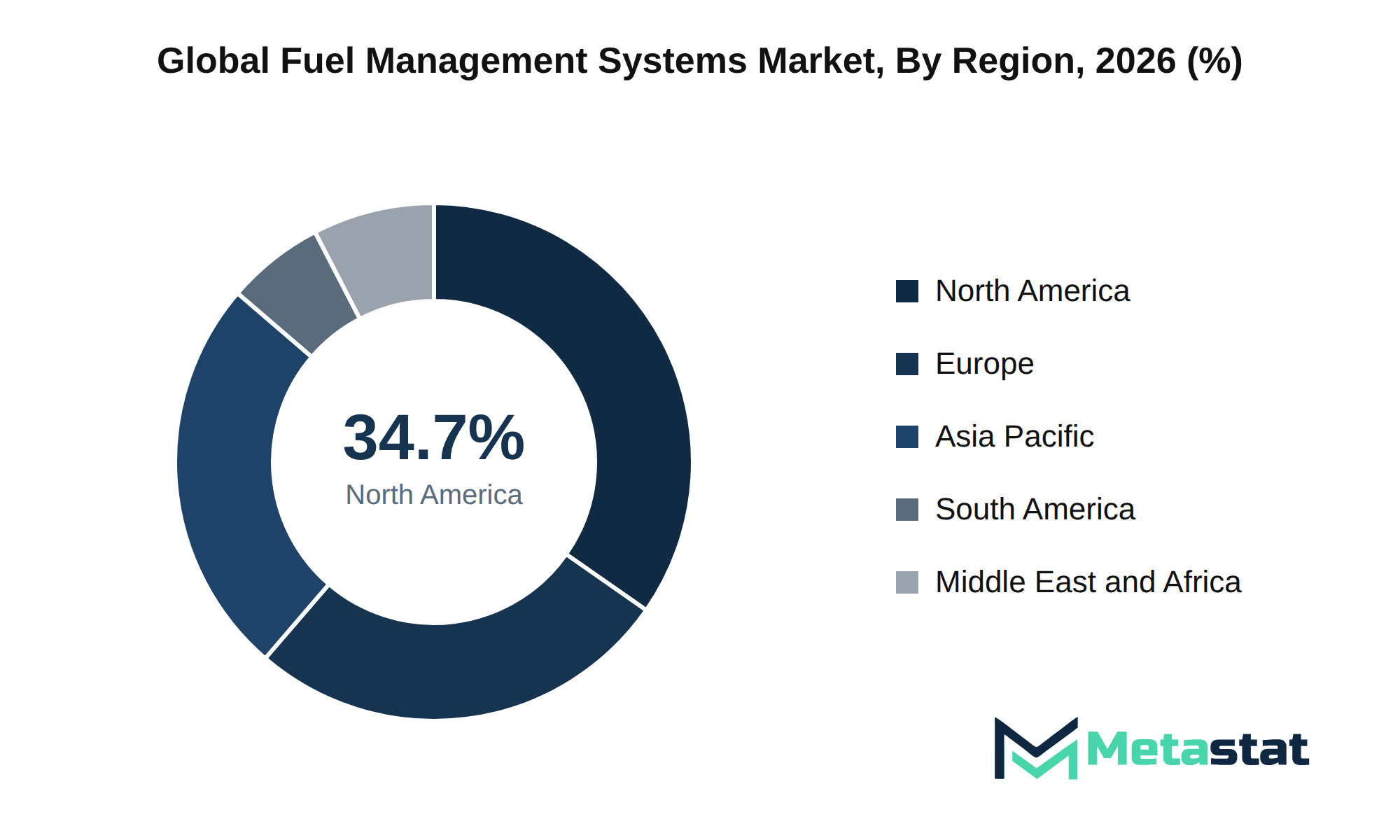
The Fuel Management Systems market features a diverse array of players focusing on strategic consolidation, partnerships, and product differentiation to enhance their competitive positions. Companies prioritize mergers and acquisitions to strengthen their market presence and extend their technological capabilities. Firms pursue strategic alliances to leverage complementary strengths in technology and customer access while addressing the evolving needs of end-users.
Pricing architectures within the market reflect varying strategies aimed at maximizing value for both customers and suppliers. Companies including PDI Technologies, Inc and Titan Cloud Software emphasize innovative pricing models that accommodate different customer segments, enhancing customer retention. Proprietary technology moats play a significant role in differentiating offerings, with firms investing heavily in research and development to create unique solutions tailored for specific applications.
Barriers to entry and the threat of new entrants significantly influence competitive dynamics. Established players, including Gilbarco Veeder-Root and Dover Fueling Solutions, benefit from robust intellectual property portfolios and extensive brand equity. This situation creates challenges for new entrants trying to penetrate the market. The integration of supply chains and value chains allows leading companies to enhance procurement leverage, driving cost efficiencies and improving service delivery.
The ongoing evolution of the Fuel Management Systems market involves a continual reassessment of growth vectors and defensive imperatives. Companies strive to adapt to shifting market conditions and customer demands while maintaining competitive edge through strategic insights and operational excellence.
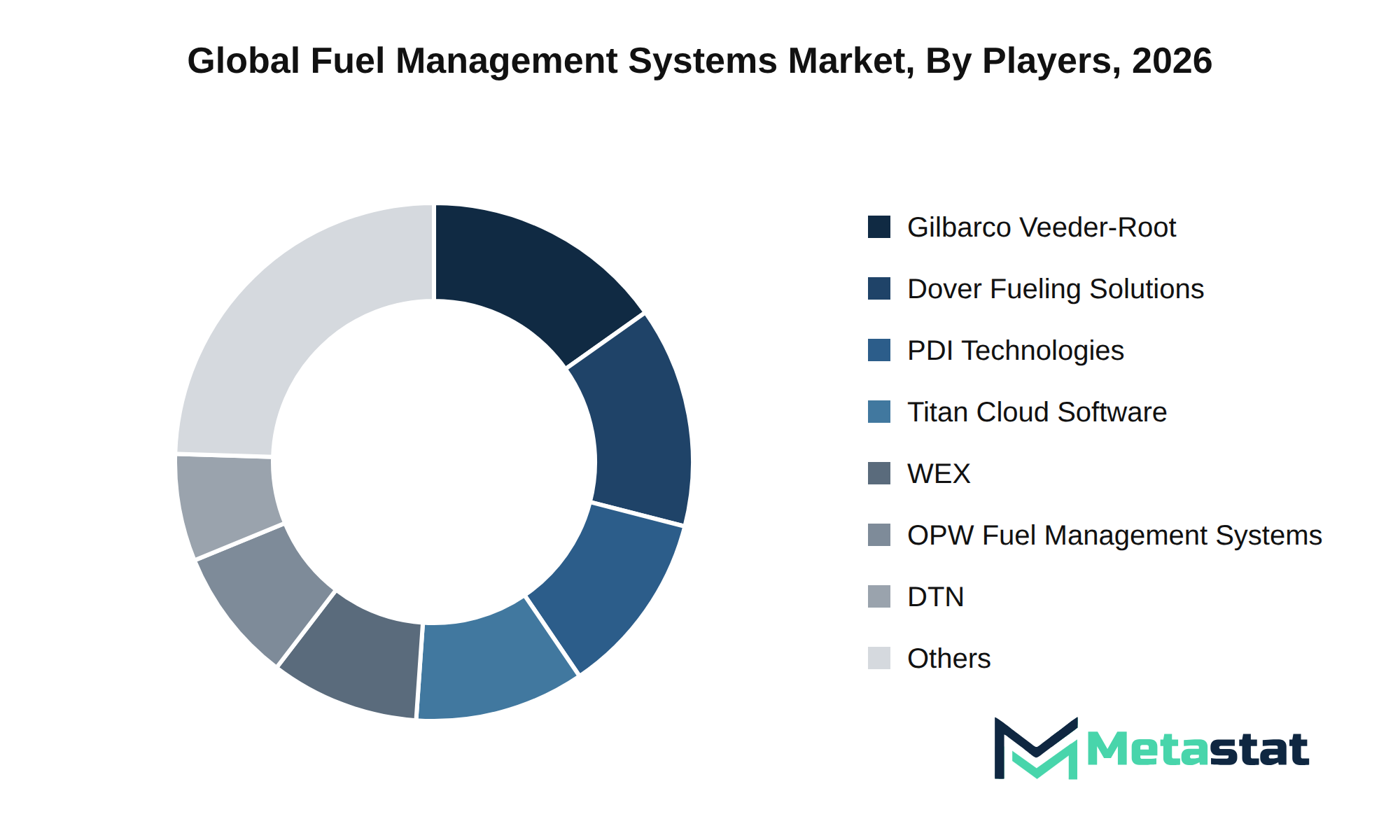
The Fuel Management Systems market size is forecast to rise from USD 2,113.3 million in 2025 to over USD 5,086.3 million by 2033, reflecting a compound annual growth rate (CAGR) of 11.6%. This growth trajectory results from increasing demand for efficient fuel management solutions across various sectors, driven by rising fuel costs and the need for improved operational efficiency.
The base case scenario anticipates steady growth, supported by the integration of next-generation technologies and a greater focus on sustainability. Potential economic downturns could impact investment levels, leading to a more conservative growth outlook. In contrast, bullish scenarios envision accelerated demand driven by rapid technological advancements and heightened regulatory compliance, creating new opportunities within the market.
Regional dynamics further influence the outlook, with North America representing a significant share of the market. The commitment to infrastructure development and capital allocation in this region enhances growth potential. In Europe and Asia Pacific, evolving trade corridors and geopolitical realignments present challenges and opportunities, impacting supply chains and market access.
Long-term trends in R&D commercialization will shape the competitive landscape, with companies prioritizing innovation to address unmet enterprise needs. Strategic imperatives include focusing on emerging white-space opportunities, ensuring defensibility in shifting market conditions, and aligning with regulatory evolution timelines. These factors will play a critical role in shaping the Fuel Management Systems market's future growth trajectory.
The report strategically identifies and profiles the key market players and analyses their core competencies in each sub-segment of the Fuel Management Systems market.
Report Attributes | Details |
Study Period | 2021-2033 |
Base Year | 2025 |
Estimated Year | 2026 |
Forecast Period | 2026-2033 |
Historical Period | 2021-2025 |
Growth Rate | CAGR 11.6% from 2026 to 2033 |
Revenue Unit | USD million |
Segmentation | By Component, Application, Deployment Model, End-Use Industry, and Region |
By Region | North America (By Component, Application, Deployment Model, End-Use Industry, and Country)
|
Europe (By Component, Application, Deployment Model, End-Use Industry, and Country)
| |
Asia Pacific (By Component, Application, Deployment Model, End-Use Industry, and Country)
| |
South America (By Component, Application, Deployment Model, End-Use Industry, and Country)
| |
Middle East and Africa (By Component, Application, Deployment Model, End-Use Industry, and Country)
|
Find answers to common questions about this report
The Fuel Management Systems market size was valued at USD 2,113.3 million in 2025, according to the Metastat Insights study.
The Fuel Management Systems market is projected to grow at a CAGR of 11.6% during the forecast period from 2026 to 2033.
The North America Fuel Management Systems market size is estimated to reach USD 1,627.6 million by 2033.
The Software segment leads the Fuel Management Systems market, with a projected value of USD 2,543.2 million by 2033. This figure reflects the highest growth potential compared to other segments, driven by an anticipated compound annual growth rate of 12.6%.
Key drivers for the Fuel Management Systems market include stringent emission regulations that compel industries to adopt advanced technologies for real-time fuel monitoring and optimization. The focus on environmental sustainability and digital transformation enhances operational efficiency and compliance, driving demand across sectors including transportation, logistics, and energy management.
North America holds the dominant share of the Fuel Management Systems market, with a value of USD 1,627.6 million projected for 2033, representing 34.7 percent of the total market share.
High capital investment requirements, inflationary pressures, and supply chain disruptions significantly restrain the Fuel Management Systems market growth. These factors limit the financial resources available for adopting advanced solutions, resulting in delayed implementations and reduced operational efficiency for businesses.
The adoption of fuel management systems is driven by stringent emission regulations and a focus on environmental sustainability. Industries including transportation, logistics, and energy management invest in these systems to optimize fuel consumption, reduce waste, and enhance compliance, resulting in improved operational efficiency and cost savings.
The Fuel Management Systems market is estimated to reach a valuation of USD 5,086.3 million by 2033.
Key players in the Fuel Management Systems market include PDI Technologies, Inc, Titan Cloud Software, DTN, LLC, OPW Fuel Management Systems, Gilbarco Veeder-Root, Dover Fueling Solutions, and AssetWorks LLC.
The analysts below cover Energy and Power research at Metastat Insights.
LEAD ANALYST
Utkarsh Khirodkar is a Lead Market Research Analyst at MetaStat Insight, specializing in market intelligence, technology sector assessments, and competitive strategy.

PRINCIPAL CONSULTANT - ENTERPRISE AI & EMERGING TECHNOLOGIES
Banking & Finance · Electronics and Semiconductor · Energy and Power · Healthcare IT · Information & Technology · Professional Services
Vijay Gunti is a Principal Consultant at MetaStat Insight, bringing over two decades of experience across enterprise digital transformation, technology strategy, and intelligent systems.

ENERGY & INFRASTRUCTURE INDUSTRY CONSULTANT
Automotive and Transportation · Electronics and Semiconductor · Energy and Power · Machinery & Equipment
Saurabh Vasant Ganvir consults for Energy & Infrastructure Industry at MetaStat Insight, specializing in renewable energy, solar EPC, and electric vehicle (EV) infrastructure markets.
Tracking capacity expansion in single-use bioprocessing requires dependable data on raw material availability and cleanroom-grade polymer supply chains. The competitive landscape chapter gave a grounded evaluation of secondary component suppliers across North America and Asia-Pacific rather than simply reprinting press releases. Having that level of supplier benchmarking helped clarify dual-sourcing considerations for our clinical pipeline planning.
When evaluating distributed energy resource management systems, standard research summaries tend to gloss over the operational differences between front-of-the-meter utility deployments and behind-the-meter industrial sites. The MetaStat Insight report addressed those distinctions directly, especially regarding software interoperability standards and grid interconnection backlogs. The five-year market sizing across regional transmission organizations provided actionable context for our grid modernization strategy.
Most industry reports on warehouse automation bundle autonomous mobile robots and fixed conveyor installations into the same top-level numbers, which complicates advisory work. This study split the market cleanly by payload tiers, navigation technology, and fleet management software layers. The regional forecast for Western Europe gave our team defensible adoption benchmarks when evaluating capital allocation for logistics clients, saving us days of secondary data scrubbing.
Explore related market intelligence reports worth reading alongside this one.
Starting from
$2950