
LEAD ANALYST
Utkarsh Khirodkar is a Lead Market Research Analyst at MetaStat Insight, specializing in market intelligence, technology sector assessments, and competitive strategy.

Global Transformer Market Size, Share, By Type (Power Transformer, Distribution Transformer, Isolation Transformer, and Instrument Transformer), By Phase Configuration (Single-Phase Transformers and Three-Phase Transformers), By Voltage Class (Up to 35 kV, Above 35 kV to 110 kV, Above 110 kV to 220 kV, Above 220 kV to 500 kV, and Above 500 kV), By End-Use Sector (Utilities and Grid Infrastructure, Industrial and Manufacturing, Commercial and Institutional Facilities, Data Centers and Digital Infrastructure, Conventional Power Generation, Renewable Power Generation, Transportation and Rail, Residential and Mixed-Use Developments, and Others (Marine, Telecommunications, Defense Infrastructure)), Industry Analysis, Growth, Trends, and Forecast, 2026-2033
Report ID
MSI-5445
Published
October, 2026
Pages
272 Pages
Format
Historical
Base year
Forecast
Forecast period
Report Details
Market Valuation: Valued at $73.8 Billion in 2025, projected to reach $122.6 Billion by 2033 at a 6.5% CAGR.
Dominant Segment: Power transformers generate the highest revenue, projected to reach USD 57.8 billion by 2033, driven by their critical role in utility-scale transmission and substation projects.
Geographic Lead: Asia Pacific leads the market with a 43.3% share, supported by rapid urbanization, industrial growth, and substantial investments in power infrastructure.
Fastest-Growing Segment: Data Centers and Digital Infrastructure is the fastest-growing end-use sector, posting a projected CAGR of 10.0% through 2033 as demand rises for high-efficiency, low-loss transformers supporting digital expansion.
High-Growth Voltage Class: Transformers in the above 220 kV to 500 kV segment are anticipated to grow at a 7.0% CAGR through 2033, reflecting increased deployment in grid modernization and long-distance transmission projects.
What's Inside: The report provides detailed segmentation by type, phase configuration, voltage class, and end-use sector, with regional analysis, competitive landscape, and forecasts through 2033.
Choose Your License
Global Transformer Market
The global Transformer market was valued at USD 73.8 billion in 2025 and is projected to reach USD 122.6 billion by 2033, growing at a CAGR of 6.5% over the forecast period.
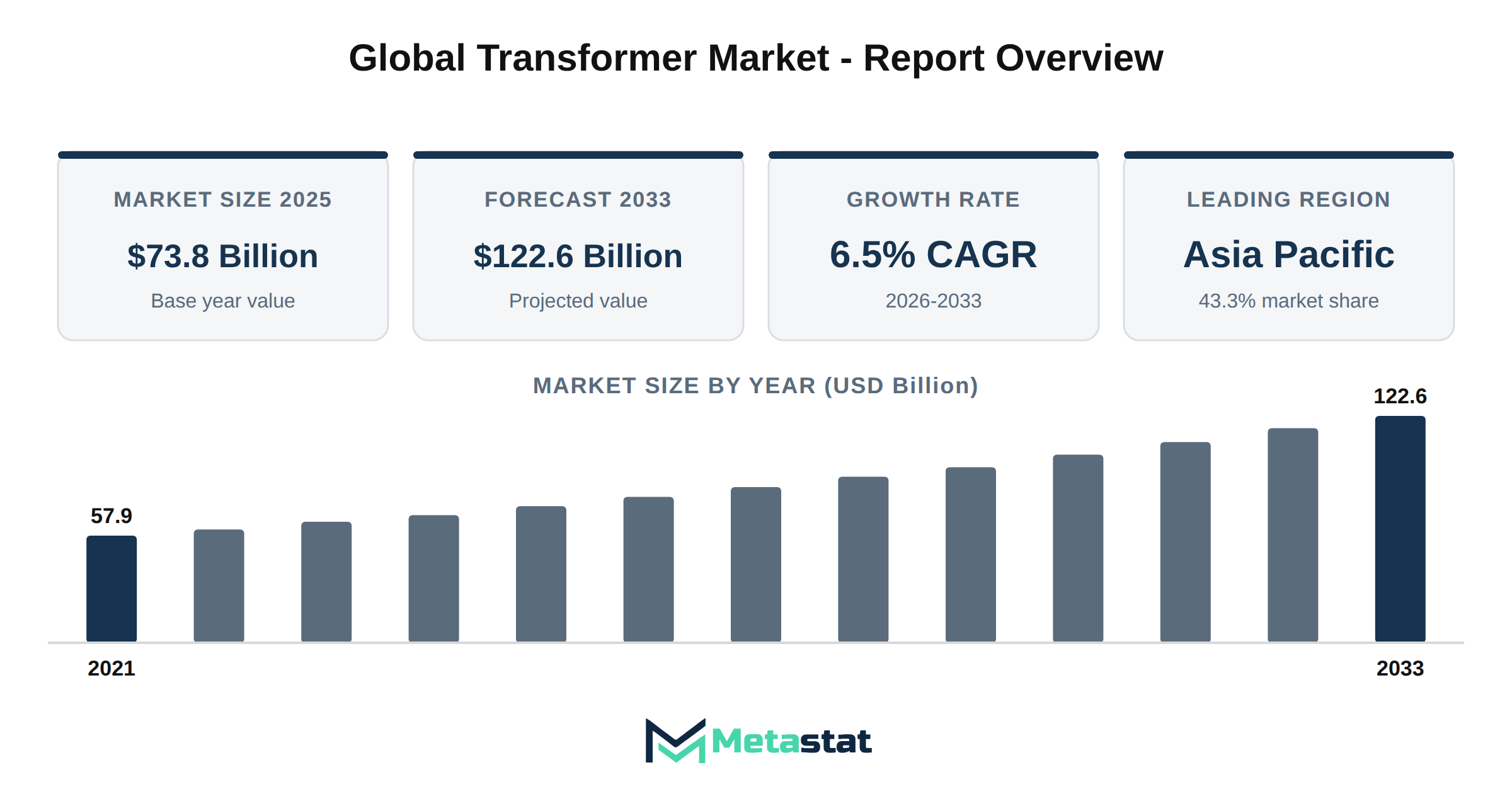
The Transformer market covers electrical devices that transfer energy between circuits through electromagnetic induction, supporting voltage regulation and reliable power distribution across industries. Buyers invest in transformers to upgrade grid infrastructure, meet growing energy demands, and improve efficiency across broader power T&D equipment networks. Utilities, industrial facilities, and data centers initiate purchase cycles when modernizing systems or expanding capacity. These purchases enable stable operations. Grid upgrades reduce losses and facilitate the integration of renewable energy sources.
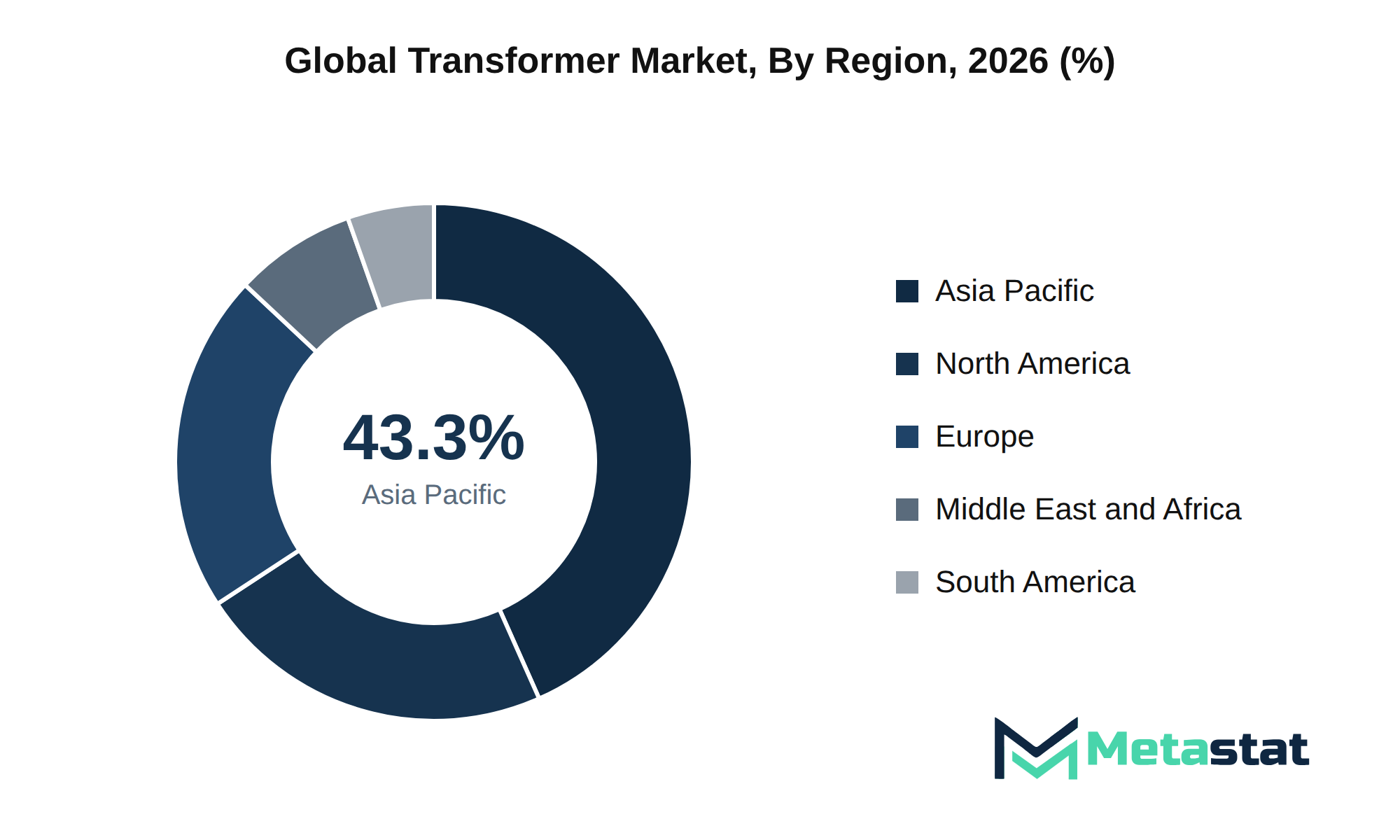
Utilities and grid infrastructure represent the largest end-use sector by value, reflecting ongoing grid modernization and expansion. Power transformers contribute the most value among product types due to widespread application in high-voltage transmission alongside metal clad removable switchgear in substation projects. Asia Pacific accounts for the largest regional share at 43.3%, driven by rapid urbanization and industrial growth. Substantial investments in power infrastructure further support this lead. North America holds 22.4% of the market in 2025. The US is projected to lead within the region in 2026.
Urbanization and rising electricity consumption drive robust demand for new and replacement transformers across developing and developed economies. Structural shifts in energy usage, including grid reinforcement and renewable energy integration, support the market. Industrial and commercial customers increase spending to support higher load requirements and grid stability, which supports expansion.
Utilities, manufacturers, and infrastructure developers invest in transformers to ensure efficient power conversion and network reliability. Replacement of aging grid assets, expansion of renewable energy installations, and integration of utility-scale BESS installations drive purchase decisions. Buyers prioritize equipment that supports stable voltage, minimizes transmission losses, and aligns with evolving regulatory and operational requirements. Grid modernization and digital infrastructure upgrades intensify adoption. In areas where population growth and industrialization increase electricity demand, investment in advanced transformer solutions accelerates.
Power transformers generate the highest revenue, with a projected value of USD 57.8 billion in 2033. This segment serves utility-scale transmission and heavy industrial applications. Distribution, isolation, and instrument units, as well as specialized electric arc furnace transformers, address specific operational needs. Demand for high-capacity units rises in regions developing large-scale renewable energy projects and urban infrastructure. Reliability and load management remain critical for sustained operations and network resilience.
Asia Pacific leads with a 43.3% share, reflecting rapid urbanization, expanding manufacturing, and significant infrastructure investment. North America holds 22.4% of the market in 2025, with the US leading in 2026. Increasing integration of renewable energy sources drives growth, requiring advanced transformer technologies to manage fluctuating loads and support new grid architectures. Operators often install them alongside capacitor bank systems to regulate voltage stability and minimize transmission losses.
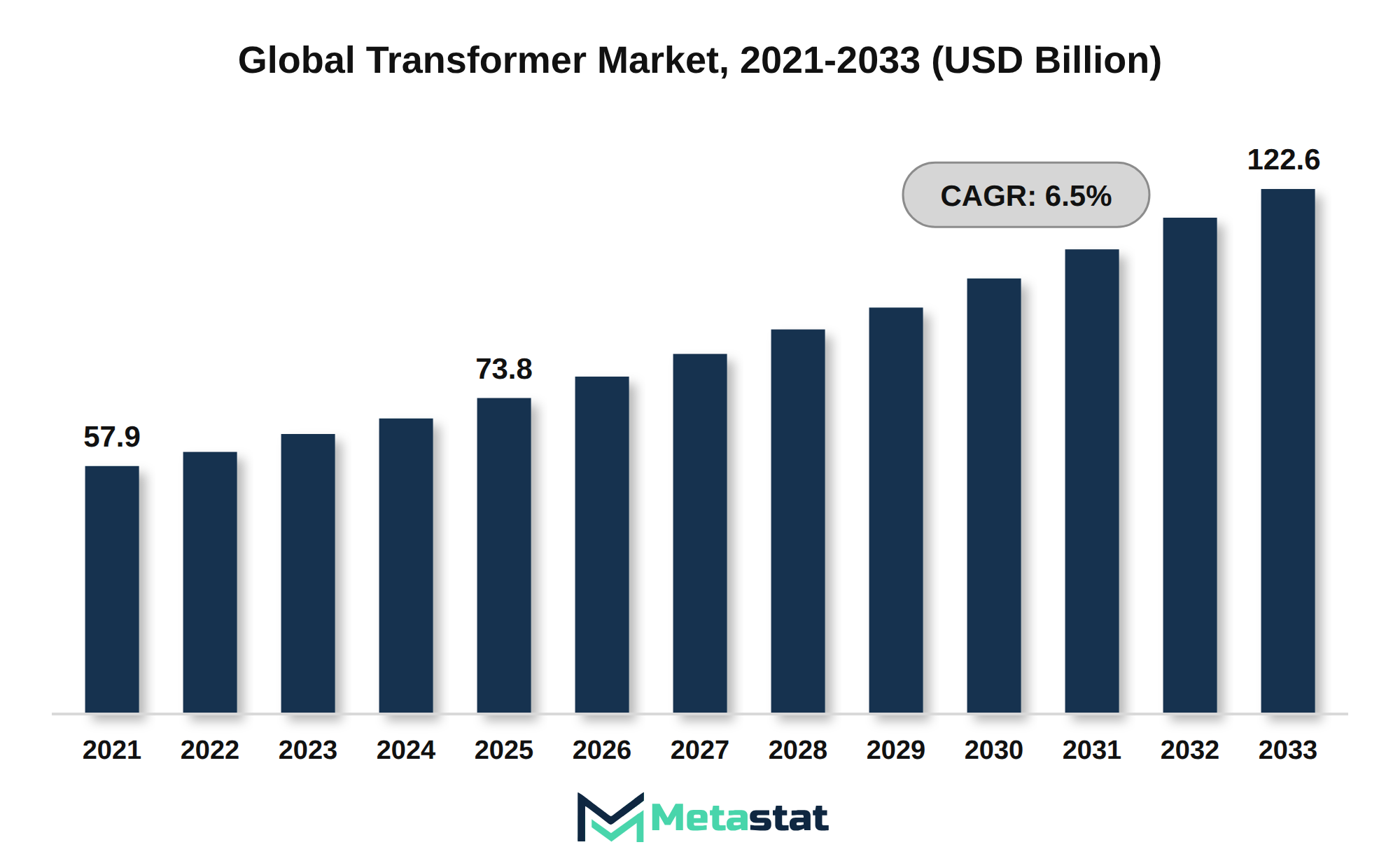
Expansion of national and cross-border electricity grids is driving large-scale deployment of high-voltage transformers with advanced monitoring and control capabilities. Utilities and power infrastructure operators are investing heavily in grid modernization to accommodate higher renewable energy penetration, electrification of transport, and increased urban demand. High-voltage transformers rated above 220 kV are seeing increased adoption to support new transmission corridors and reinforce aging infrastructure, reflecting a technology shift within the market. The segment for transformers above 220 kV to 500 kV is anticipated to grow at a CAGR of 7.0% through 2033, outpacing lower voltage categories. This stronger growth rate aligns with utility and government priorities to reduce losses and ensure grid reliability across longer distances and high-load hubs.
Deployment of digital-ready and smart transformer designs is rising in parallel, integrating online condition monitoring, automated tap changers, and real-time data connectivity. These capabilities support predictive maintenance, dynamic load balancing, and integration with distributed energy resources, shifting procurement priorities in the market. Buyers now evaluate not only capacity and voltage class, but digitalization potential and total ownership cost. Manufacturers respond by expanding portfolios with modular, sensor-equipped models tailored to utility and grid infrastructure buyers. This product evolution supports larger project values and strengthens supplier relationships. Utilities seek future-proof equipment that aligns with long-term grid investment strategies.
Procurement strategies in the Transformer market are shifting rapidly with data center operators and renewable energy developers increasing their investments. Large-scale digital infrastructure projects, particularly in the data centers and digital infrastructure segment, are driving demand for transformers with robust performance specifications and flexible delivery terms. This segment posts a projected CAGR of 10.0 percent, outpacing the broader market and prompting a change in purchasing behavior. Buyers, especially those developing hyperscale data centers or utility-scale renewables, are prioritizing contract models that enable phased deliveries, customization, and integrated service agreements, rather than simple spot purchases.
Payment terms are evolving in tandem, with rising use of milestone-based contracts that align transformer payments with project construction schedules. This approach supports cash flow management for developers facing capital-intensive buildouts. Utilities and renewable power generators are increasingly requesting price adjustments linked to commodity cost indices and extended warranty coverage that mitigates operational risk during long asset lifecycles. The presence of advanced requirements in the data centers and digital infrastructure segment, combined with the sector’s rapid expansion, is pressuring suppliers to refine their commercial offerings and respond more quickly to complex requests for proposal.
These shifts in transformer procurement are enhancing supplier differentiation and supporting premium pricing for advanced technical capabilities and service flexibility. Project-driven contract models are changing the commercial dynamic, allowing buyers to optimize capital deployment and operational reliability while infrastructure investments accelerate.
Electrical steel and copper shortages present persistent challenges for transformer manufacturers, translating into volatile input costs and margin compression. Both power and distribution transformer segments depend on high-grade electrical steel laminations for core assembly and copper for windings. Fluctuations in global steel and copper supply chains - especially those resulting from production limits, export restrictions, or surges in demand for renewable power infrastructure - directly influence manufacturing expenses and delivery timelines for utilities and large industrial buyers. Within the market, the Power Transformer segment is forecast to grow from USD 36.2 billion in 2026 to USD 57.8 billion in 2033, reflecting a compound annual growth rate of 6.9%. This expansion intensifies competition for premium core and winding materials, increasing cost pressures across the supplier ecosystem.
Procurement teams in utilities and grid infrastructure, industrial and manufacturing, and data center segments increasingly face budget volatility when sourcing transformers. Supply-side disruptions or price hikes in electrical steel and copper lead buyers to renegotiate contracts, postpone projects, or shift procurement strategies toward suppliers with more stable material access. Manufacturers respond by seeking long-term supply agreements, exploring alternative core designs, or passing increased costs to end-users in the form of higher unit prices. Price volatility tied to raw material constraints shapes both purchasing behavior and supplier relationships throughout the market, influencing deal structures and capital allocation decisions for large-scale infrastructure investments.
Grid expansion initiatives and rising electrification rates are driving a structural shift in global demand for transformers. Utilities and grid infrastructure operators increase their investments in new substations, network upgrades, and long-distance transmission to accommodate renewable energy integration and urbanization. Within the Transformer market, the Utilities and Grid Infrastructure segment stands out with a projected increase from USD 25.1 billion in 2026 to USD 37.9 billion by 2033. This gain reflects the segment’s central role in large-scale grid projects linked to decarbonization and capacity upgrades.
End-users in fast-industrializing regions, including Asia Pacific, accelerate deployment to support distributed generation and strengthened urban networks. Grid expansion triggers orders not only for new installations but for replacement of aging transformer fleets. Industrial and manufacturing buyers add to the volume with electrification deepening in production and processing. Larger and higher-voltage transformers become standard for transmission lines that connect distant generation sources to consumption centers.
For suppliers, ongoing electrification and grid modernization projects lock in predictable, long-cycle demand pipelines. This environment allows investments in advanced product designs and scalable manufacturing. The market therefore benefits from increased procurement consistency, supporting competitive pricing and innovation across core and auxiliary product lines.
Industrial and manufacturing facilities are increasing automation and digital control integration across production lines, which places new demands on electrical infrastructure reliability and flexibility. This shift is driving higher investment in advanced transformers that enable precise voltage regulation, improved energy efficiency, and stable power quality under variable and high-load conditions. Manufacturers in sectors including automotive, electronics, and food processing are replacing legacy transformer units to support new automated machinery and interconnected systems. Utilities and industrial buyers seek solutions that minimize downtime and accommodate higher operational complexity, resulting in a replacement cycle that strengthens demand for advanced transformers. Rising adoption in the industrial and manufacturing segment, projected to reach USD 23.9 billion by 2033, supports sustained volume and revenue growth. Upgrading to modern transformer technologies directly addresses operational risks tied to automation expansion, resulting in increased sales and recurring replacement demand across global manufacturing hubs.
Utilities and grid infrastructure operators face delays in upgrading aging equipment due to protracted capital approval cycles and constrained public spending. These delays restrict the pace at which older transformer units are replaced, particularly in regions where grid modernization programs move slowly or where budget allocations prioritize network maintenance over new installations. The replacement cycle lengthens and demand for new transformers softens, limiting order frequency and project size for manufacturers. Utilities segment growth lags during periods of fiscal restraint or policy uncertainty. For suppliers depending on large-scale upgrades and planned substation expansions, these investment delays reduce visibility on future demand, slow contract awards, and intensify competition for limited procurement opportunities. In turn, margin pressure increases and the sales cycle extends, particularly when public sector clients postpone or scale down infrastructure renewal.
Escalating costs for insulation materials put sustained pressure on supplier margins in the Transformer market. Premium-grade insulating oils, resins, and high-temperature materials are critical to transformer safety and performance, particularly for high-voltage and high-capacity units. Recent volatility in chemical feedstock prices and increased specification standards have driven up procurement expenses for these inputs. Suppliers are responding by reengineering product designs to lower raw material intensity and by qualifying alternative insulation systems where standards permit. These measures support margin protection but require up-front investment in product validation and customer certification. Competitive dynamics in the Transformer market limit the ability to pass through the full extent of cost increases, leading to tighter profit windows for producers, especially in large-volume tenders.
Digital infrastructure expansion fuels segment outperformance
Rising deployment of data centers and digital infrastructure creates a concentrated pocket of high-value growth within the market. Data Centers and Digital Infrastructure is the only end-use sector segment posting a double-digit CAGR, projected at 10.0% through 2033. Operators in this segment require specialized transformers engineered for high-efficiency, low-loss operation and advanced thermal management, supporting uninterrupted uptime for critical IT loads. This demand profile differs from utility or industrial buyers, who primarily target grid reliability or process continuity. Suppliers addressing hyperscale, colocation, and edge data center requirements through rapid delivery, modular design, and custom configurations position themselves to capture above-market growth. The market’s evolution in this area reflects both underlying digitalization trends and the growing sophistication of power distribution solutions tailored to mission-critical infrastructure.
The Global Transformer market is segmented based on Type, Phase Configuration, Voltage Class, and End-Use Sector.
Used primarily by utilities and grid infrastructure operators, power transformers handle high-voltage transmission and facilitate long-distance power delivery with minimal energy loss. Demand in this segment is driven by utility-scale grid expansion and the replacement of aging high-capacity equipment in both developed and emerging economies. Power transformers differ from distribution and isolation types by serving higher voltage classes and commanding a higher average selling price due to their larger capacity and more complex engineering requirements. This segment outpaces distribution transformers, supported by its 6.9% CAGR versus 6.3% for distribution, reflecting stronger capital investment from grid modernization projects worldwide. Utilities and public power operators are prioritizing robust transmission infrastructure, while power transformer adoption accelerates in response to grid interconnections supporting renewable integration and regional power flows. Ongoing technology upgrades and regulatory pressure for grid reliability further influence procurement decisions in this segment, reinforcing its premium position.
Distribution Transformer segment is estimated to reach USD 42.4 billion by 2033, at a CAGR of 6.3% during the forecast period. These transformers step down voltage for safe and efficient delivery to residential, commercial, and smaller industrial consumers. Utilities and municipal distributors form the largest buyer group, driven by urbanization and the densification of electricity networks that underpin city infrastructure and suburban expansion. Rising investment by public-sector utilities in upgrading low- and medium-voltage distribution lines creates steady volume growth, supporting the robust expansion of this segment. Distribution transformers grow at a slower pace than power transformers, with the power transformer segment projected at a 6.9% CAGR. End-users prioritize reliability and operational lifespan in procurement decisions, given the criticality of these assets in delivering consistent service to consumers. Technology upgrades in monitoring and efficiency improvements further distinguish the Distribution Transformer segment’s evolution, reflecting utilities’ response to rapid changes in consumption patterns and grid architectures. The market sees differentiation between distribution and power transformers in terms of buyer priorities, price points, and deployment scale.
Isolation Transformer segment is expected to reach USD 11.7 billion by 2033. These transformers are designed to provide galvanic separation between input and output circuits, which safeguards sensitive equipment and personnel in industrial, healthcare, and specialized commercial settings. The primary users include hospitals, laboratories, semiconductor manufacturing, and installations where electrical noise or transient suppression is critical. Demand in the segment is influenced by regulatory standards that enforce strict isolation for medical and high-precision industrial applications, raising adoption among buyers seeking enhanced safety and system reliability. Unlike power or distribution transformers that scale with grid infrastructure, isolation transformers serve niche applications where insulation and protection outweigh volume. Growth in this segment is slower compared to power transformers, with only one CAGR provided for the broader group: power transformers are projected at 6.9%. Pricing typically trends higher per unit due to specialized manufacturing and rigorous compliance requirements, distinguishing isolation transformers in the overall value chain of the Transformer market.
Instrument Transformer segment is projected to grow at a CAGR of 6.2% during the forecast period. These transformers serve in power system measurement and protection, translating high currents or voltages to standardized, manageable levels for meters and relays in utilities, substations, and large industrial plants. Utilities and grid operators drive segment demand, prioritizing reliability and accuracy in energy metering and system protection. Heightened adoption of instrument transformers results from stricter grid protection requirements and network automation initiatives. Power transformers grow at a faster pace, with a CAGR of 6.9%, reflecting their role in bulk energy transfer rather than measurement. Buyers in this segment focus on compliance and operational safety, rather than capacity expansion. Regulatory standards for accuracy and protection class specifications remain decisive purchasing criteria for utilities and high-reliability industrial infrastructure. Instrument transformers differ from distribution and isolation types by serving metering and protection functions instead of stepping voltage for delivery or isolating circuits for safety.
Single-Phase Transformers segment is valued at USD 29.2 billion in 2026 and is projected to reach USD 44 billion by 2033, at a CAGR of 6% during the forecast period. These transformers serve a critical role in residential distribution, small commercial facilities, and rural electrification projects, where moderate power loads and lower installation costs drive selection. Utilities and infrastructure developers prefer single-phase transformers for overhead and pole-mounted applications supporting localized grid extensions and housing developments. Rising investments in rural electrification and distributed energy resources intensify demand, particularly in emerging economies upgrading their grid access. Compared to three-phase transformers, this segment registers a slightly lower CAGR of 6% versus 6.8%, reflecting slower adoption in high-capacity, industrial settings where three-phase systems dominate. Single-phase units attract buyers seeking reliable, cost-effective solutions for dispersed load centers, while three-phase units target large-scale manufacturing, urban substations, and high-load corridors. The evolving grid architecture and the market’s focus on last-mile delivery continue to support steady volume growth in this segment, underpinning its role in expanding electrification initiatives across developing regions. Market participants leverage streamlined designs and scalable production to address the cost sensitivities of these buyers.
Three-Phase Transformers segment is estimated to reach USD 78.6 billion by 2033, at a CAGR of 6.8% during the forecast period. Utilities, large commercial facilities, and industrial complexes use these transformers to support distribution and transmission of power where three-phase supply is required for heavy machinery and extensive electrical loads. Growth in this segment reflects the rising demand for grid stability and expansion of high-capacity distribution infrastructure, particularly in regions scaling their industrial base and urban energy systems. Unlike single-phase transformers, which serve smaller loads or residential supply, three-phase units command higher average prices and address buyers requiring scalable, reliable power delivery. The CAGR of 6.8% for three-phase transformers is faster than the 6% rate for single-phase transformers in the Transformer market, underlining a shift to higher-capacity solutions. The market’s focus on grid modernization and integration of renewable energy sources further accelerates adoption, with three-phase designs delivering operational efficiency and meeting complex voltage requirements across advanced networks.
USD 34.2 billion in segment value is projected for 2026, with growth reaching USD 51.9 billion by 2033 at a 6.1% CAGR. Products in the Up to 35 kV voltage class deliver power to low- and medium-voltage distribution grids, commercial sites, smaller industrial facilities, and residential developments. Utilities and private developers rely on these transformers to support urbanization and grid densification, with frequent investment cycles triggered by city expansion and the integration of distributed renewable energy. The Up to 35 kV segment’s user base is broader and more distributed compared to higher voltage classes, encompassing municipal utilities and small-scale infrastructure projects alongside traditional grid operators. This segment grows at a slower pace than Above 35 kV to 110 kV, which records a 6.4% CAGR, reflecting more intense upgrade demand for regional and national transmission. Price sensitivity, driven by competitive procurement for high-volume deployments, shapes the segment’s commercial dynamics in the market, distinguishing it from higher-voltage classes that prioritize performance and technical enhancements. Market participants address this segment with scalable, cost-efficient solutions tailored for reliability in urban and peri-urban grid applications.
Above 35 kV to 110 kV segment is estimated to reach USD 25.2 billion by 2033, at a CAGR of 6.4% during the forecast period. This segment forms a critical link between medium- and high-voltage power networks, supporting regional distribution grids, heavy industry, and large-scale commercial hubs. Utilities and industrial buyers use transformers in this voltage range to manage intermediate load centers, stabilize voltage, and ensure reliable supply while urban and peri-urban areas expand. Growth reflects regional grid reinforcement projects and sustained investments in power infrastructure across emerging economies, where intermediary voltage classes address the step-up and step-down needs between legacy lower-voltage equipment and newly deployed high-capacity lines. The CAGR of 6.4% positions this segment ahead of the Up to 35 kV class, which holds a 6.1% CAGR, reflecting the stronger demand for network upgrades and rising industrial load profiles. Such voltage classes bridge operational and commercial gaps, particularly where transmission distances and distributed generation sources increase grid complexity.
Above 110 kV to 220 kV segment is expected to reach USD 19.6 billion by 2033. This voltage class is integral for regional transmission grids, regional interconnectors, and large-scale infrastructure projects, serving utilities and industrial buyers managing substantial load flows across cities and industrial clusters. Demand in this segment is supported by urban grid reinforcement and electrification in emerging economies, where population growth and industrialization drive upgrades from lower voltage equipment. Compared to segments below 110 kV, the Above 110 kV to 220 kV category addresses higher capacity corridors and delivers increased reliability. However, it tends to involve longer procurement cycles and more stringent technical standards, which limit adoption speed. The market in this range moves at a pace distinct from both the higher-growth Above 220 kV to 500 kV segment, which is forecast to grow at a 7% CAGR, and the Up to 35 kV segment, which is projected at 6.1%. These dynamics position this segment as a core, though not the fastest expanding, contributor to the overall market.
This segment serves high-capacity transmission networks handling bulk power transfer over long distances, typically selected by grid operators and large-scale renewable developers expanding regional or cross-country interconnections. Utilities are investing in higher voltage infrastructure to accommodate renewable integration, reduce line losses, and comply with evolving grid codes, which accelerates demand. With a 7% CAGR, this segment outpaces Up to 35 kV, Above 35 kV to 110 kV, and Above 110 kV to 220 kV classes, reflecting the greater capital commitment and technical complexity of these installations. Buyers targeting this segment often prioritize efficiency and reliability, accepting higher upfront costs in exchange for operational stability and regulatory compliance. The adoption of digital monitoring and advanced insulation technology further distinguishes this segment, supporting increased deployment while electrification and renewable penetration intensify.
Ultra-high-voltage transformers rated above 500 kV serve bulk power transmission over long distances and are primarily deployed by national utility operators and grid consortia. These units support megaprojects linking remote generation - often hydropower or utility-scale renewables - to major consumption centers, where demand is driven by electrification commitments and grid interconnection mandates. This segment is distinguished by its demanding technical requirements and high procurement cost, resulting in longer lead times and project-specific customization compared to lower voltage classes. Stringent testing protocols and imported core materials increase capital intensity, which restricts adoption to regulated infrastructure programs and high-value export corridors. In contrast to segments below 500 kV, buyers for this class are exclusively large-scale grid operators and public authorities with access to multiyear infrastructure budgets and central procurement powers. Adoption in this segment is limited by national-level permitting complexity and extended tender cycles, which restrict the pace of deployment despite structural demand for transmission reinforcement.
USD 25.1 billion in projected value for 2026, with growth reaching USD 37.9 billion by 2033 at a CAGR of 6.1%, signals sustained investment in grid modernization and reliability enhancement. This segment serves public utilities and grid operators responsible for transmission and distribution infrastructure, addressing the demand for stable power delivery in growing urban and rural areas. The primary force shaping segment growth is the requirement for grid resilience against outages and surges, which drives replacement cycles and procurement of higher-rated equipment. In comparison with Industrial and Manufacturing, which is forecast to reach USD 23.9 billion by 2033 at a 6.0% CAGR, the Utilities and Grid Infrastructure segment shows a marginally faster expansion rate. Segment customers typically prioritize long asset life and regulatory compliance, supporting higher average selling prices and a preference for advanced monitoring features. Policy-driven mandates for integrating renewables into national grids directly influence purchasing patterns, positioning this segment as a foundation for broader energy transition initiatives. Strengthening public network infrastructure supports ongoing electrification and distributed generation trends.
Industrial and Manufacturing segment is estimated to reach USD 23.9 billion by 2033, at a CAGR of 6% during the forecast period. This segment is driven by demand from heavy industries, process plants, and advanced manufacturing facilities that require reliable power management to maintain continuous operations and reduce downtime. Purchases in this segment are typically triggered by plant expansion, modernization, or the integration of automation and robotics, where power quality and voltage stability are critical. Compared to Utilities and Grid Infrastructure, the Industrial and Manufacturing segment experiences slightly slower growth, with Utilities and Grid Infrastructure tracking a 6.1% CAGR, reflecting the steadier pace of industrial capital investment relative to grid expansion. Adoption barriers in this segment often revolve around capital expenditure sensitivity and the preference for custom-engineered solutions tailored to specific load profiles. In recent years, rising energy efficiency standards and the push for resilient supply chains have increased interest in advanced transformer designs. Stakeholders targeting industrial buyers focus on lifecycle cost, reliability, and support for evolving production technologies, which helps define this segment’s role within the broader Transformer market.
Commercial and Institutional Facilities segment is expected to reach USD 12.8 billion by 2033. This segment serves corporate offices, hospitals, schools, and government buildings that require stable power delivery and voltage management for uninterrupted operations. Growth in the market for this segment is driven by urbanization and expansion of service-sector infrastructure, with buyers prioritizing reliability to protect sensitive electronics and ensure public safety. Compared with Industrial and Manufacturing, which is projected to reach USD 23.9 billion by 2033, commercial and institutional buyers focus less on heavy-load handling and more on energy efficiency and compact installations. Heightened energy efficiency standards and building codes influence adoption, encouraging facility managers to upgrade older units and select higher-performance equipment. Unlike Utilities and Grid Infrastructure, which show higher absolute value, this segment’s demand patterns reflect a steady influx of small to mid-scale projects rather than a few large capital deployments. The market in this area responds to regulatory incentives and the modernization of public and private infrastructure.
Projected at a 10% CAGR during the forecast period, demand for transformers supporting data centers and digital infrastructure outpaces every other end-use segment in the market. This segment is driven by hyperscale, cloud, and enterprise data center operators, who require highly reliable power distribution and voltage adaptation for uninterrupted operation. Rapid digitization, surging cloud computing traffic, and the deployment of 5G networks intensify the need for new capacity and infrastructure upgrades, fueling procurement. Buyers in this segment focus on energy efficiency and robust load-handling, given the density of mission-critical IT equipment and rising sustainability targets. Compared to utilities or industrial buyers, data center operators prioritize premium features, resulting in higher unit values and technical specifications for transformers procured. Faster growth in this segment reflects a global surge in digital services and the centrality of resilient electrical infrastructure. Suppliers targeting digital infrastructure secure stronger margins and a concentrated, high-value customer base relative to other sectors in the market.
Conventional power generation involves the use of fossil fuel-based and nuclear plants to supply baseload electricity across industrial, commercial, and residential grids. Utilities, power plant operators, and independent power producers invest in transformers for these sites to step up voltage for transmission or step down voltage for integration with local distribution networks. Within the market, this segment draws investment from stakeholders seeking to replace aging assets, comply with evolving grid reliability standards, or boost efficiency amid pressure on operational costs. Unlike the rapid expansion seen in data center or renewable end-use segments, conventional power generation faces flat or modest demand due to the transition toward low-carbon sources. The segment stands apart in the market by handling higher-capacity, continuous-duty requirements, often with custom engineering for thermal management and grid stability. Technical upgrades and refurbishment cycles drive revenue, while capital allocation reflects both regulatory requirements and the longevity of installed generation fleets.
Accelerating renewable power deployment is reshaping segment priorities, with solar, wind, and hybrid energy projects requiring robust grid integration solutions. Equipment buyers in this segment include independent power producers, renewable project developers, and utilities focused on expanding clean generation portfolios. Demand is driven by the global shift toward decarbonization and supportive policy frameworks, including national renewable energy targets and grid modernization programs. Renewable-based buyers, compared with conventional power generation, emphasize transformers engineered for intermittent loads, variable voltage management, and optimized efficiency in distributed energy settings. Project size and location influence adoption rates; offshore wind and utility-scale solar installations seek higher-capacity, custom-engineered transformer solutions. Capital costs for renewable project transformers often exceed those for standard grid applications. Buyers prioritize life-cycle efficiency and reliability to secure long-term project returns. Increased volume and specification complexity draw innovation and new product launches from global manufacturers. Transformer suppliers address these requirements by advancing material science and digital monitoring features tailored to renewable plant integration.
Rail electrification projects rely on transformers to deliver safe and efficient power to overhead lines, traction substations, and on-board systems, supporting both passenger and freight rail operations. Urban transit authorities and national rail operators drive adoption, with demand influenced by infrastructure upgrades, rolling stock modernization, and expansion of metro, suburban, and high-speed rail lines. One of the key forces shaping this sub-segment is the global shift toward sustainable mobility, which pushes investment into new and retrofitted electrified rail routes, especially in densely populated or high-traffic corridors. Compared to other end-use sectors tracked in the market, procurement processes in transportation and rail are shaped by stringent safety and reliability requirements, and by long project cycles that differ from the faster purchasing cycles seen in industrial or commercial applications. Unlike the data centers and digital infrastructure end-use, which is the fastest growing in the market, transportation and rail rely on established deployment models and multi-year capital plans, affecting both the pace and profile of transformer installations.
Residential and mixed-use developments segment supplies critical power distribution and voltage regulation for apartment complexes, housing estates, and integrated urban spaces that merge residential, retail, and public amenities. Purchasers in this segment range from real estate developers and municipal authorities to construction consortia, who prioritize reliability and efficiency to support dense occupancy and fluctuating load demands. A primary force shaping this segment is the shift toward urban densification and smart community planning, which drives specification of advanced and compact transformer technologies. Unlike the commercial and institutional facilities segment, where power requirements are typically higher per site, residential and mixed-use projects often demand customized, lower-capacity solutions and place greater weight on cost sensitivity and spatial footprint. Adoption in this segment is further influenced by grid modernization policies in large metropolitan areas, where integration of distributed energy and energy-saving standards accelerates upgrades and new installations. Tightening energy efficiency codes in several regions is expected to support demand for more technologically advanced units, reinforcing revenue opportunities for suppliers.
Specialized transformers for marine, telecommunications, and defense infrastructure are adopted where operational resilience and compliance with safety-critical standards remain essential. Operators in these sectors deploy custom-engineered units to maintain system reliability in environments exposed to salinity, vibration, electromagnetic interference, or security threats. Demand in this segment is shaped by the requirement for uninterrupted power delivery aboard ships, at remote communication installations, or within defense facilities where equipment failure results in operational or security risks. Compared to segments that serve utilities, industrial, or commercial users, buyers in this category often prioritize ruggedization, redundancy, and lifecycle support over volume pricing. Procurement cycles tend to reflect stringent technical specifications and procurement oversight, setting the segment apart from more commoditized end-use groups. Suppliers that demonstrate proficiency in certification, specialized materials, and integration services are best positioned to serve marine, telecom, and defense buyers who value operational continuity over cost efficiency.
Based on geography, the Global Transformer market is divided into North America, Europe, Asia-Pacific, South America, Middle East, and Africa.
Grid modernization projects across the United States, Canada, and Mexico remain a prime catalyst for regional investment, with utility providers focusing on advanced voltage management to accommodate distributed energy resources and electrification trends. The region accounted for 22.4% of global market value in 2025, reflecting its established infrastructure and the ongoing replacement cycle of aging assets. Utilities and independent transmission operators prioritize the deployment of high-efficiency and smart transformer systems, responding to regulatory incentives and reliability standards unique to North America. The market is projected to reach USD 26.8 billion in this region by 2033, shaped by persistent upgrades of substation equipment and integration of renewable energy. Shifting power consumption patterns in industrial and commercial segments drive demand for digitally enabled transformer technologies, supporting sustained volume growth. Data-driven monitoring and asset management are expected to continue influencing supplier offerings in North America through the forecast period.
In Europe, a strong emphasis on grid resilience and modernization has pushed utilities and governments to prioritize equipment upgrades, driving sustained demand for high-efficiency power and distribution transformers. With renewable integration targets accelerating across Germany, France, and the UK, project developers and grid operators are specifying advanced transformer solutions that support variable generation and distributed networks. The region demonstrates ongoing investment by utilities and infrastructure operators in both urban and interconnection projects, supporting growth in transformer deployment. Large-scale refurbishment of aging grid assets in Italy and Spain supports deployment of new transformer installations, while industrial electrification and decarbonization initiatives in Germany and France influence product specifications and supplier selection. Local engineering standards and procurement frameworks shape equipment preferences, encouraging manufacturers to develop compliant, energy-efficient models that address evolving regulatory and operational requirements.
Asia Pacific is a primary center of transformer adoption in 2025, reflecting the region’s strong influence in transformer procurement. Utility investments in China, India, and Southeast Asia are supported by government programs targeting grid modernization and rural electrification, which stimulate requirements for new and upgraded transformer installations. Ongoing urbanization and industrial expansion in these economies drive sustained volume growth by increasing both the number and scale of energy-intensive projects. In Japan and South Korea, replacement demand is influenced by aging substation infrastructure, which supports adoption of higher-efficiency transformer solutions to meet updated energy efficiency targets. Australia’s focus on renewable energy integration prompts deployment of specialized transformers to support dispersed wind and solar assets. Robust manufacturing capacity throughout the region, particularly in China and India, enables rapid scaling of supply and price competitiveness, which attracts utility and industrial buyers seeking both reliability and cost efficiency in transformer procurement.
Brazil and Argentina anchor demand in South America, where utility-scale projects and continued industrialization shape investment priorities in the Transformer market. Brazil’s ongoing electrification efforts within both urban and rural grids drive volume, while manufacturing expansion in Argentina supports steady procurement of distribution transformers. The region remains a moderate but stable contributor to global demand, with its role defined by consistent infrastructure investment and utility-driven purchasing. Localized sourcing strategies are increasingly adopted to address regional currency fluctuations and cross-border supply risk, particularly for projects funded by public utilities. Market participants in Rest of South America focus on cost-effective, medium-voltage solutions tailored for decentralized grid architectures and rural communities. Upgrades to existing infrastructure dominate procurement cycles, with buyers prioritizing lifecycle value and reliability over high-specification imports. This operational environment encourages suppliers to introduce modular, easily maintainable products and strengthens competition on aftersales service and delivery speed.
Power system expansion projects led by Saudi Arabia, the UAE, and South Africa underpin demand across Middle East and Africa, where grid modernization and capacity upgrades remain a priority for utilities and infrastructure developers. Utilities and large-scale infrastructure developments, particularly in the Gulf states, are investing in new grid connections and substation upgrades to meet rising energy consumption from urbanization and industrial activity. The presence of large oil and gas operations, along with efforts to diversify energy resources, drives adoption of advanced high-capacity transformers and voltage class upgrades. For South Africa, grid reliability improvements and transmission capacity additions have prompted a focus on replacing aging assets and integrating renewables. In the broader region, government-backed investment in electrification accelerates transformer procurement cycles, while regional suppliers compete with global manufacturers for major utility contracts. Market participants pursue projects that require higher technical specifications to address harsh climate and operational demands unique to the region. Demand in Middle East and Africa reflects a combination of infrastructure modernization and energy sector diversification initiatives, resulting in increased adoption of technologically advanced transformers tailored to local conditions.
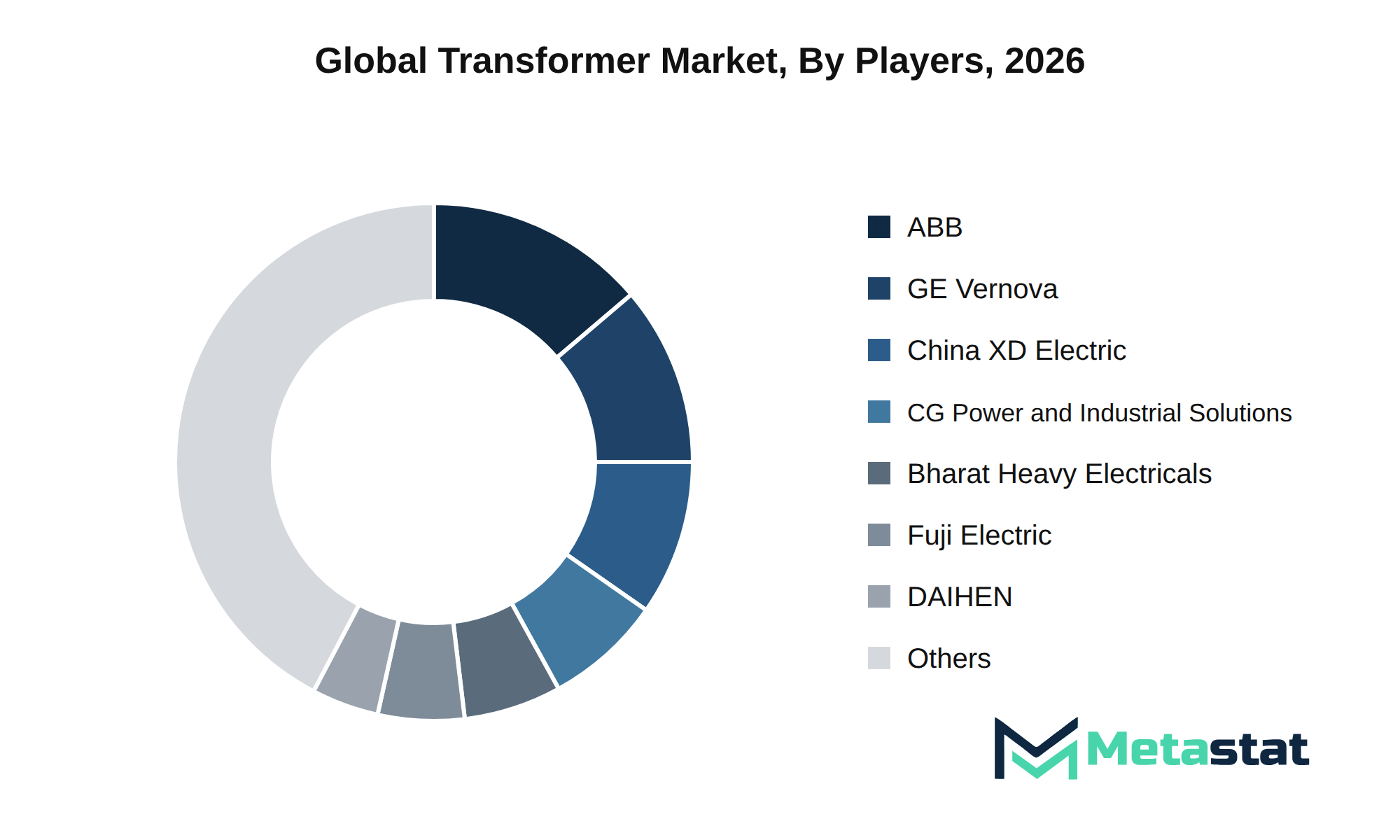
The Transformer market features competition centered on technical differentiation, range of voltage and phase offerings, and customer need for efficiency upgrades. Buyers evaluate suppliers on product reliability, the ability to customize for unique voltage or application requirements, and track record in high-demand segments. Utilities and grid operators prioritize large-capacity and higher-voltage transformers, while industrial and manufacturing buyers seek reliability and efficient performance within budget constraints. Procurement decisions frequently hinge on certification standards, after-sales support, and the breadth of product portfolios, which support complex infrastructure upgrades and grid expansions.
Several companies in the Transformer market focus on distinct strengths. ABB Ltd offers a broad portfolio supporting both power and distribution transformer applications, addressing the sector’s need for scalable solutions. Siemens Energy AG emphasizes advanced technology and system integration, appealing to buyers upgrading digital infrastructure or modernizing grids. CG Power and Industrial Solutions Ltd. and Bharat Heavy Electricals Ltd have established strong positions with products tailored to local requirements, supporting utilities and industrial customers during capacity expansion cycles. Meanwhile, TBEA Co., Ltd. addresses demand in high-growth regions with a focus on large-scale projects and voltage classes above 110 kV, serving utilities advancing grid reliability and renewable integration. Companies including Schneider Electric SE and Hitachi Energy Ltd. supply transformers across end-use sectors, supporting data center requirements and enabling energy transition investments. The strategic emphasis on customization, technical support, and the ability to serve emerging digital and renewable segments shapes ongoing supplier positioning and buyer selection in the sector.
Growth in the Transformer market depends on sustained grid modernization in Asia Pacific and North America, driven by large-scale renewable energy integration and expanding urban infrastructure. Utilities and grid infrastructure buyers in these regions accelerate investment in higher-capacity power transformers, reflecting a shift toward resilient and flexible networks required for distributed generation and digital monitoring. Industrial and manufacturing end users in Europe and Asia Pacific are expected to upgrade equipment to support electrification and energy efficiency standards, supporting demand for both distribution and instrument transformers. Rising adoption in data centers, particularly in North America and Europe, generates higher volume in the data centers and digital infrastructure segment, which is projected for the fastest compound annual growth rate among end uses.
The main risk centers on cost inflation for raw materials and components, impacting suppliers’ ability to deliver large transformers on time and at competitive prices. Supply chain constraints or regulatory delays in transmission projects could slow growth in high-voltage transformer segments. If capital expenditure cycles in utilities or industrial sectors are delayed, expansion in the Transformer market could underperform the projected trajectory for 2033.
By Type: Power Transformer, Distribution Transformer, Isolation Transformer, Instrument Transformer
By End-Use Sector: Utilities and Grid Infrastructure, Industrial and Manufacturing, Commercial and Institutional Facilities, Data Centers and Digital Infrastructure, Conventional Power Generation, Renewable Power Generation, Transportation and Rail, Residential and Mixed-Use Developments, Others (Marine, Telecommunications, Defense Infrastructure)
The report strategically identifies and profiles the key market players and analyses their core competencies in each sub-segment of the Transformer market.
Report Attributes | Details |
Study Period | 2021-2033 |
Base Year | 2025 |
Estimated Year | 2026 |
Forecast Period | 2026-2033 |
Historical Period | 2021-2025 |
Growth Rate | CAGR 6.5% from 2026 to 2033 |
Revenue Unit | USD billion |
Segmentation | |
By Region | North America (By Type, Phase Configuration, Voltage Class, End-Use Sector, and Country)
|
| |
Asia Pacific (By Type, Phase Configuration, Voltage Class, End-Use Sector, and Country)
| |
| |
Middle East and Africa (By Type, Phase Configuration, Voltage Class, End-Use Sector, and Country)
|
Find answers to common questions about this report
The Transformer market size was valued at USD 73.8 billion in 2025.
The projected CAGR is 6.5% for the forecast period from 2026 to 2033.
The North America Transformer market size is estimated to reach USD 26.8 billion by 2033.
Power Transformer leads by value, reaching USD 57.8 billion in 2033, ahead of Distribution Transformer at USD 42.4 billion on the same basis.
Automation and digital control integration in industrial and manufacturing facilities is increasing demand for advanced transformers that deliver precise voltage regulation and improved energy efficiency. Expansion of data centers and digital infrastructure is driving rapid growth for specialized transformers designed for high-efficiency, low-loss operation and advanced thermal management.
Asia Pacific holds the dominant share with 43.3 percent of the total market, leading all other regions by a significant margin. North America follows with 22.4 percent.
Delays in upgrading aging equipment due to slow capital approval cycles and constrained public spending restrict the pace of transformer replacement, especially among utilities. Escalating costs for insulation materials tighten supplier margins as competitive pressures limit the ability to pass through higher input expenses.
Adoption is favored by increasing automation in manufacturing, rising demand for advanced voltage regulation, and the replacement of legacy transformer units to support digital infrastructure and higher operational complexity. Expansion in data centers and digital infrastructure, with a projected 10.0 percent CAGR for this segment, further accelerates uptake.
The Transformer market is estimated to reach a valuation of USD 122.6 billion by 2033.
Companies active in this industry include ABB Ltd, Siemens Energy AG, Hitachi Energy Ltd., Mitsubishi Electric Corporation, Schneider Electric SE, GE Vernova Inc., TBEA Co., Ltd., and Virginia Transformer Corp. These firms manufacture and supply transformers for a range of applications and end-use sectors worldwide.
The analysts below cover Energy and Power research at Metastat Insights.
LEAD ANALYST
Utkarsh Khirodkar is a Lead Market Research Analyst at MetaStat Insight, specializing in market intelligence, technology sector assessments, and competitive strategy.

PRINCIPAL CONSULTANT - ENTERPRISE AI & EMERGING TECHNOLOGIES
Banking & Finance · Electronics and Semiconductor · Energy and Power · Healthcare IT · Information & Technology · Professional Services
Vijay Gunti is a Principal Consultant at MetaStat Insight, bringing over two decades of experience across enterprise digital transformation, technology strategy, and intelligent systems.

ENERGY & INFRASTRUCTURE INDUSTRY CONSULTANT
Automotive and Transportation · Electronics and Semiconductor · Energy and Power · Machinery & Equipment
Saurabh Vasant Ganvir consults for Energy & Infrastructure Industry at MetaStat Insight, specializing in renewable energy, solar EPC, and electric vehicle (EV) infrastructure markets.
Tracking ceramic matrix composite adoption in high-bypass aero engines requires strict attention to material qualification cycles and FAA airworthiness testing milestones. The MetaStat Insight team provided a detailed timeline of silicon carbide fiber manufacturing capacity and commercial foundry lead times. Having clear visibility into upstream thermal barrier coating supply helped us stress-test our long-term component procurement strategy.
Transitioning ultra-class mining haul trucks to alternative power requires concrete data on remote hydrogen refueling infrastructure economics. The report evaluated megawatt-scale electrolyzer installation expenses, onsite storage safety mandates, and heavy-duty fuel cell stack degradation under continuous duty cycles. That technical rigor helped our engineers benchmark realistic total operating cost horizons for off-highway fleet decarbonization.
Enterprise zero-trust network rollouts are often slowed down by multi-cloud transit latency and proprietary hardware retirement schedules. This study provided realistic total cost of ownership models comparing cloud-delivered security edge solutions against traditional hardware refreshes. The analysis of contract renewal lengths and software maintenance fees gave us clear visibility into enterprise replacement cycles over the next three to five years.
Explore related market intelligence reports worth reading alongside this one.
Starting from
$2950