
LEAD ANALYST
Utkarsh Khirodkar is a Lead Market Research Analyst at MetaStat Insight, specializing in market intelligence, technology sector assessments, and competitive strategy.

Global Waste Heat Recovery System Market Size, Share, By System Type (Waste Heat Recovery Boilers and Heat Recovery Steam Generators (HRSGs), Exhaust Gas Economizers, Heat Exchanger-Based Recovery Systems, Organic Rankine Cycle (ORC) Heat-to-Power Systems, Industrial Heat Pumps, Absorption Heat Pumps and Chillers), By Temperature Band (Low Temperature (Below 200°C), Medium Temperature (200°C to 650°C), High Temperature (Above 650°C), By Application (Steam Generation, Electricity Generation, Process Heating and Preheating, Combined Heat and Power (CHP), District Heating, Cooling and Refrigeration), By End-Use Industry (Oil and Gas, Chemicals and Petrochemicals, Cement, Iron and Steel, Glass, Pulp and Paper, Food and Beverage, Power Generation, Marine, Others (Mining, Non-Ferrous Metals and Data Centres)), Industry Analysis, Growth, Trends, and Forecast, 2026-2033
Report ID
MSI-5809
Published
November, 2026
Pages
272 Pages
Format
Historical
Base year
Forecast
Forecast period
Report Details
Market Valuation: Valued at $69.3 Billion in 2025, projected to reach $127.3 Billion by 2033 at a 7.9% CAGR.
Dominant Segment: Heat Exchanger-Based Recovery Systems lead the market, driven by their widespread adoption across various industries seeking to enhance energy efficiency and reduce operational costs.
Geographic Lead: The Asia Pacific region is projected to capture the largest market share, driven by its robust industrial base and a strong focus on energy recovery solutions.
What's Inside: The report provides a comprehensive analysis of market segmentation by system type, temperature band, application, and end-use industry, along with competitive coverage and growth forecasts.
Opportunities in Oil and Gas: The oil and gas sector is expected to see significant growth, projected to reach USD 20.5 billion by 2033, as companies invest in waste heat recovery technologies to comply with stringent emissions regulations.
Low Temperature Segment Growth: The low temperature segment is set to grow from USD 23.3 billion in 2026 to USD 43.6 billion by 2033, reflecting a strong CAGR of 9.4%, driven by demand for energy-efficient solutions in various industries.
Choose Your License
Global Waste Heat Recovery System Market
The global Waste Heat Recovery System market was valued at USD 69.3 billion in 2025 and is projected to reach USD 127.3 billion by 2033, growing at a CAGR of 7.9% over the forecast period.
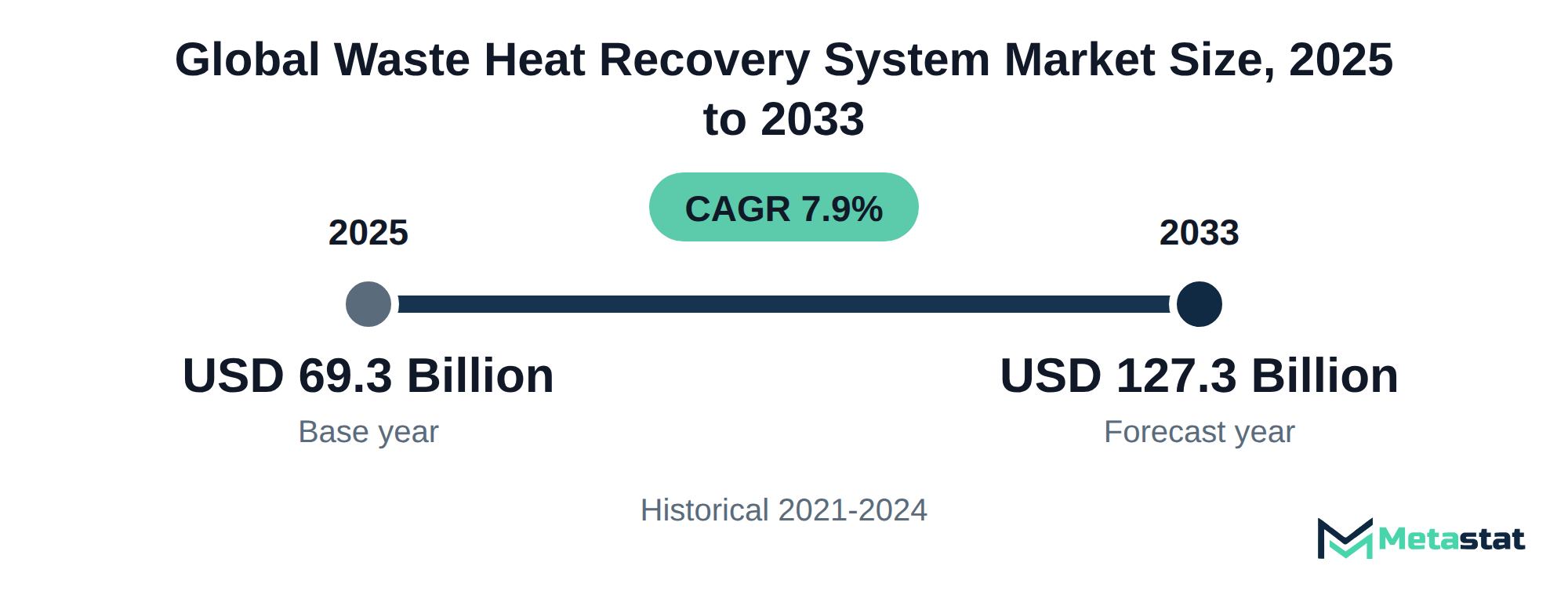
The Waste Heat Recovery System market encompasses various technologies that capture and repurpose waste heat generated by industrial processes, thereby enhancing energy efficiency. Buyers invest in these systems to reduce operational costs and meet sustainability goals, driven by increasing energy prices and regulatory pressures to minimize emissions. The market covers applications from steam generation to electricity generation, serving numerous industries that seek economic and environmental benefits.
Growth in the market is significantly influenced by the rising demand for energy-efficient solutions. Among the different segments, Heat Exchanger-Based Recovery Systems represent the largest share in terms of value, reflecting their widespread adoption across multiple sectors. North America holds 26.9% of the market in 2025, with the US leading in 2026. This region benefits from advanced industrial infrastructure and increasing investments in renewable energy technologies.
One primary driver of market expansion stems from the need for enhanced energy efficiency amid rising operational costs. Industries including oil and gas, chemicals, and petrochemicals actively pursue waste heat recovery solutions to optimize their processes. Significant cost savings and improved productivity further underpin the increasing adoption of these systems across various sectors.
The Waste Heat Recovery System market includes a variety of applications designed to improve energy efficiency across multiple industries. Buyers invest in these systems primarily to reduce operational costs and enhance sustainability efforts. The growing emphasis on environmental regulations and energy conservation drives demand, leading to increased investments from sectors including oil and gas, chemicals, and cement.
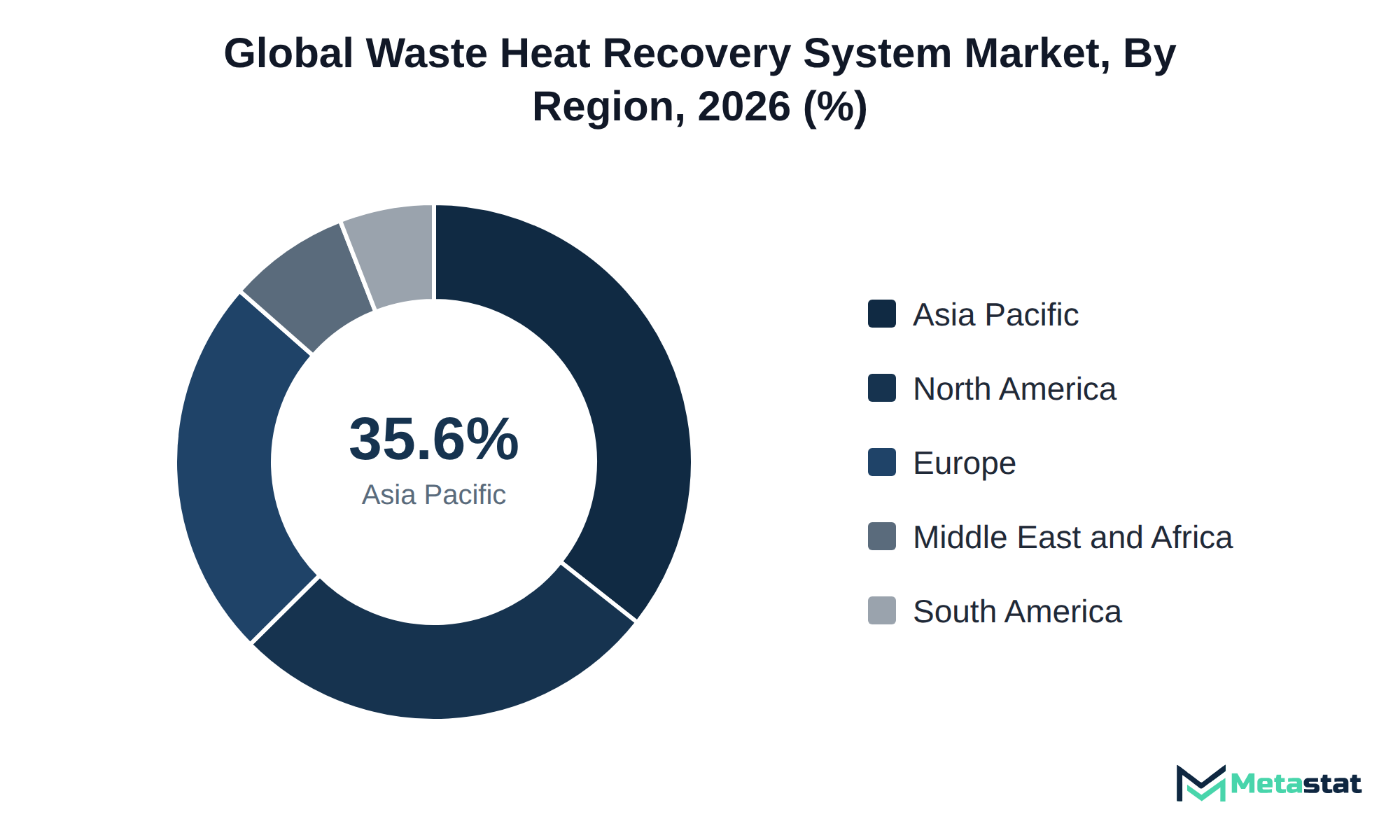
In terms of value, Heat Exchanger-Based Recovery Systems represent the most significant segment within the market, contributing substantially to overall revenue. The Asia Pacific region captures 35.6% of the market share in 2025, reflecting its robust industrial base and increasing focus on energy recovery solutions. North America follows closely, holding a substantial share, with the US leading in 2026.
Key factors fueling growth in the Waste Heat Recovery System market include rising energy costs and the urgent need to minimize greenhouse gas emissions. The transition toward renewable energy sources further drives the adoption of waste heat recovery technologies, enabling industries to optimize their energy use and achieve economic benefits. Continuous advancements in technology will support the market's expansion, encouraging innovations that enhance system efficiencies and performance.
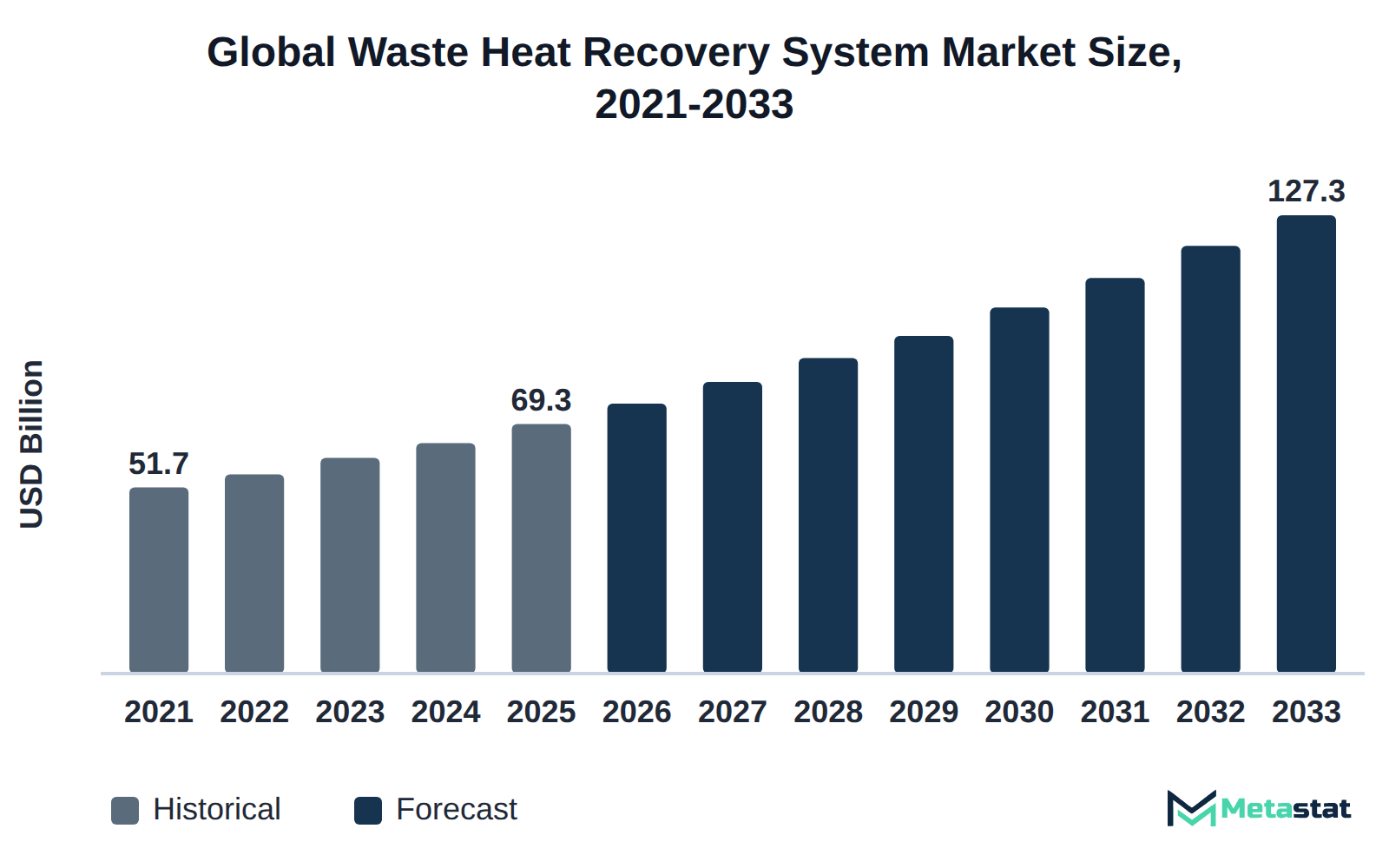
The adoption of Organic Rankine Cycle (ORC) heat-to-power systems represents a significant advancement in industrial waste heat-to-power technologies within the Waste Heat Recovery System market. These systems leverage low-temperature waste heat, transforming it into usable electrical energy, which enhances overall energy efficiency in industrial operations. By 2033, the ORC segment is projected to achieve a compound annual growth rate (CAGR) of 9.3%, reflecting rising interest among industries in this technology.
Increasing energy costs and environmental regulations push industries toward sustainable practices, and ORC systems provide an effective way to convert otherwise wasted thermal energy into power. This capability appeals particularly to industries experiencing high levels of waste heat, including oil and gas, chemicals, and cement. Consequently, companies investing in ORC technology improve operational efficiency and align with global sustainability goals.
The commercial implications for stakeholders in the Waste Heat Recovery System market are profound. Enhanced energy recovery via ORC systems translates into reduced operational costs and improved energy security for industrial players. This transition supports long-term growth prospects for companies involved in ORC technology, promoting broader adoption and further innovations in waste heat recovery solutions.
Low-grade waste heat recovery through industrial heat pumps and thermal upgrading presents a viable financial opportunity for businesses aiming to enhance energy efficiency. Industrial heat pumps transform low-temperature waste heat into usable energy, significantly reducing operational costs. In the Waste Heat Recovery System market, this technology is projected to demonstrate a compound annual growth rate (CAGR) of 9.4% from 2026 to 2033 within the low-temperature segment, indicating strong potential for investment.
Purchasing decisions in this sector revolve around factors including initial capital investment, operating costs, and long-term savings from energy efficiency. Suppliers offer various pricing models, including fixed pricing, performance contracts, and leasing options, enabling businesses to select arrangements that align with their financial capabilities and operational goals. For instance, a performance contract allows a firm to pay for the equipment based on the energy savings generated, minimizing upfront expenses and spreading costs over time.
The growing demand for sustainable practices in industries including oil and gas and chemicals and petrochemicals drives interest in advanced heat recovery systems. By adopting industrial heat pumps, companies achieve significant carbon footprint reductions while optimizing energy use. This trend makes strategic purchasing approaches important for buyers in the Waste Heat Recovery System market.
Decarbonization investments in energy-intensive industries use heat recovery integration to improve operational efficiency and reduce emissions. Industries including oil and gas and chemicals and petrochemicals increasingly seek systems that support sustainability objectives while maintaining productivity levels. The Waste Heat Recovery System market is projected to experience significant growth due to this trend.
In the oil and gas industry, the integration of Waste Heat Recovery Systems leads to operational savings and improved environmental compliance. These systems reclaim energy that would otherwise be wasted, transforming it into useful power or heat for various processes. By 2033, the market for waste heat recovery technologies in the oil and gas sector is expected to reach USD 20.5 billion, reflecting a compound annual growth rate of 7.1% from its 2026 value of USD 12.7 billion.
This growth stems from stringent regulatory frameworks focused on emissions reduction and the industry's commitment to sustainability. Energy transition investment in these technologies enables energy-intensive sectors to move toward greener practices while meeting production demands. The market's growth gives suppliers of Waste Heat Recovery Systems an opportunity to align their offerings with industries seeking efficiency and lower carbon footprints.
Industrial facilities enhance energy efficiency by implementing Waste Heat Recovery Systems (WHRS), which capture and reuse heat that would otherwise be lost. This technology reduces overall energy consumption and operational costs. For example, in the medium temperature band (200°C to 650°C), the market is projected to reach USD 58.8 billion by 2033, reflecting a compound annual growth rate of 7.3%. This growth highlights the increasing adoption of WHRS across various sectors.
Industries including oil and gas, chemicals and petrochemicals, and cement focus on integrating WHRS into their operations. The oil and gas industry is set to expand from USD 12.7 billion in 2026 to USD 20.5 billion by 2033, driven by the need for improved energy efficiency amid rising costs and environmental regulations. By employing WHRS, these industries significantly lower their energy expenses while contributing to sustainability efforts.
The implementation of Waste Heat Recovery Systems represents a strategic move for industrial facilities aiming to optimize energy efficiency. This trend is expected to strengthen while industries focus on achieving cost savings and complying with regulatory demands, ultimately creating a more sustainable operational model within the market.
The rising focus on energy efficiency among industrial operators drives investments in advanced technologies. Key buyers include organizations in the oil and gas, chemicals, and cement industries, which seek solutions to optimize energy utilization and reduce operational costs. A shift toward sustainable practices and the need for cost savings prompts these industries to adopt Waste Heat Recovery Systems. The market is projected to reach USD 127.3 billion by 2033, reflecting an increasing volume of installations. This transition towards more efficient systems enhances energy security and profitability, enabling companies to maintain competitiveness in a demanding economic environment. Through the adoption of waste heat recovery technologies, significant improvements in performance metrics validate the financial rationale behind these investments.
The growth of the Waste Heat Recovery System market aligns with environmental objectives, encouraging businesses to innovate in energy management. Sustained demand across various sectors contributes to long-term market expansion.
Advancements in manufacturing processes reduce operational costs significantly, prompting industries to adopt Waste Heat Recovery Systems. Enhanced efficiency in these systems contributes to lower energy bills and improved profit margins, particularly within energy-intensive sectors. For instance, industries including oil and gas, chemicals, and cement consistently experience high energy expenditures, creating an environment where cost-effective solutions are essential.
The integration of innovative technologies in heat recovery systems improves their performance and economic viability. Increased automation, coupled with smart monitoring systems, streamlines operations, leading to optimized energy consumption. Consequently, businesses that invest in these systems gain a competitive edge, as they effectively manage energy resources while adhering to sustainability goals. The Waste Heat Recovery System market is expected to show strong growth, driven by these technological enhancements which yield both cost savings and environmental benefits.
High initial investment costs significantly limit adoption among industrial operators considering waste heat recovery solutions. The substantial financial outlay required for system installation deters businesses, particularly small and medium-sized enterprises, from pursuing these technologies. Financial constraints lead to smaller order sizes and delayed replacement of aging systems, further hindering market growth. The demand for systems that efficiently capture and repurpose waste heat remains strong, but ongoing cost concerns create a barrier to accessing these advanced technologies. These factors limit the overall competitiveness of the waste heat recovery system market, impacting the ability of industries to enhance energy efficiency and reduce operational costs.
Operators in sectors including oil and gas and chemicals exhibit caution when evaluating investment in waste heat recovery technologies, often waiting for more favorable economic conditions. The financial implications of adopting these systems contribute to a slower uptake in the market, highlighting the need for innovative financing solutions and incentives to stimulate growth.
Suppliers in the Waste Heat Recovery System market face increasing material costs that challenge profit margins. The prices of key components, including heat exchangers and turbines, have escalated due to supply chain disruptions and fluctuations in raw material availability. This situation pressures suppliers to reassess their pricing strategies and operational efficiencies to maintain competitiveness.
In response, several suppliers focus on optimizing their procurement processes and investing in alternative materials that offer cost benefits without compromising performance. Innovations in manufacturing techniques, including advanced welding and fabrication technologies, further enhance productivity and reduce waste. These strategies support suppliers in navigating the challenging environment while striving to offer affordable solutions to various industries.
The impact of rising material costs extends beyond immediate profitability and also influences overall market dynamics, including pricing structures and demand elasticity. Suppliers adapting to these pressures shift the market's landscape, potentially affecting investment levels and long-term growth trajectories.
The low temperature (below 200°C) segment of the Waste Heat Recovery System market presents a significant growth opportunity, driven by increasing demand for energy efficiency across various industries. Currently valued at USD 23.3 billion in 2026, this segment is projected to reach USD 43.6 billion by 2033, reflecting a compound annual growth rate (CAGR) of 9.4%. Industries including food and beverage, chemical processing, and residential heating are notable adopters of low temperature technologies, enabling them to repurpose waste heat for operational efficiency. This adoption aligns with sustainable practices and environmental goals set by many organizations. The growing emphasis on minimizing energy consumption while maximizing output supports the expansion of this segment, contributing to the overall market's growth trajectory.
Investments in low temperature waste heat recovery technologies, including absorption heat pumps and heat exchangers, are likely to enhance competitive positioning for suppliers. By addressing the specific needs of under-penetrated industries, these technologies provide a viable pathway for organizations aiming to improve their sustainability profiles while achieving cost savings. The growth of this segment highlights the market's responsiveness to evolving energy demands and environmental initiatives.
The Global Waste Heat Recovery System market is segmented based on System Type, Temperature Band, Application, and End-Use Industry.
Waste Heat Recovery Boilers and Heat Recovery Steam Generators (HRSGs) segment is valued at USD 17.1 billion in 2026 and is projected to reach USD 26.8 billion by 2033, at a CAGR of 6.7% during the forecast period. This segment primarily serves industries seeking to optimize energy efficiency through the recovery of waste heat generated during industrial processes. The oil and gas sector, along with chemicals and petrochemicals, commonly employs HRSGs for steam and electricity production. Demand for this segment is driven by rising energy costs and increasing regulatory pressure to reduce emissions. Compared to other segments including Exhaust Gas Economizers, the HRSG segment displays a steady growth rate. It benefits from dependable performance in high-demand applications that require reliable energy recovery, which encourages investment in advanced technologies to enhance operational efficiency.
Exhaust Gas Economizers segment is estimated to reach USD 16.6 billion by 2033, at a CAGR of 6.8% during the forecast period. These systems optimize energy extraction from exhaust gases, enhancing overall efficiency in industrial applications. Commonly used in sectors including oil and gas, chemicals, and power generation, exhaust gas economizers reduce fuel consumption and lower operational costs. The segment experiences growth driven by increasing regulatory pressures for emission reductions and rising energy prices. Compared to other system types, exhaust gas economizers exhibit moderate growth rates, attracting several buyers focused on both cost savings and compliance with environmental standards. Their installation often leads to quicker returns on investment, making them an appealing choice for industries prioritizing energy efficiency and sustainability. The market anticipates a steady demand for these solutions, reflecting broader trends in energy management and carbon reduction strategies.
Heat Exchanger-Based Recovery Systems segment is expected to reach USD 29.5 billion by 2033. This technology captures heat from industrial processes and transfers it to another medium for reuse, primarily in steam generation or process heating applications. Industries including chemicals, oil and gas, and power generation leverage these systems to enhance energy efficiency and reduce operational costs. The segment's growth is driven by increasing regulatory pressure to minimize emissions and improve energy efficiency, alongside rising energy costs. In comparison to other sub-segments, this segment shows a competitive CAGR, outperforming several segments including Exhaust Gas Economizers, which reflects strong adoption among industrial operators. The versatility of heat exchangers enables their application across various temperature bands, further contributing to their appeal in the market. Heat exchangers are also core products within the wider heat transfer equipment industry.
Organic Rankine Cycle (ORC) Heat-to-Power Systems segment is projected to grow at a CAGR of 9.3% during the forecast period. These systems convert low-temperature waste heat into electricity, primarily used by industries including oil and gas, chemicals, and manufacturing, which rely on this technology for energy recovery and efficiency enhancement. This segment experiences strong demand driven by the urgent need for sustainable energy solutions and regulatory pressures to reduce carbon emissions. Compared to other segments, ORC systems offer higher growth potential, attributed to their ability to convert low-grade heat, making them particularly attractive for sectors with significant waste heat generation. With an increasing focus on energy efficiency, investments in ORC technology reflect a strategic shift toward integrating renewable energy sources across industrial operations, thereby enhancing overall market value and adoption rates.
Industrial heat pumps focus on recovering low-grade waste heat from industrial processes, improving energy efficiency in sectors including food and beverage, chemicals, and manufacturing. These systems serve applications requiring heating or hot water, converting waste heat into usable energy. Demand for industrial heat pumps is driven by the increasing emphasis on sustainability and energy conservation among manufacturers, who aim to reduce operational costs and carbon footprints. Compared to other segments, industrial heat pumps often involve higher initial costs; however, they offer substantial long-term savings through enhanced energy efficiency. This segment supports growth in the Waste Heat Recovery System market, primarily influenced by technological advancements that enhance performance and reduce energy losses.
Absorption Heat Pumps and Chillers focus on harnessing waste heat for cooling applications, significantly enhancing energy efficiency in various industrial processes. This technology finds application primarily in sectors including chemicals and petrochemicals, where cooling requirements are essential for operational processes. A driving force for this segment involves increasing demand for energy-efficient solutions, prompting many manufacturers to explore advanced cooling technologies. Differentiating features include its niche application compared to other waste heat recovery systems, which target power generation or process heating. This segment experiences distinct growth patterns influenced by regulations promoting sustainable practices, encouraging competitive pricing and innovative technology adoption. The segment's trajectory is significant in the broader Waste Heat Recovery System market, contributing to overall energy efficiency advancements across multiple industries.
Others, including Recuperators and Kalina Cycle Systems, focus on enhancing energy recovery through advanced heat exchange technology. These systems target industries with specific heat recovery needs, particularly in sectors like chemicals and petrochemicals, where energy efficiency plays a critical role in operational cost reduction. Demand for these systems is driven primarily by the urgency to minimize energy consumption and reduce greenhouse gas emissions, reflecting a broader trend toward sustainability in industrial operations. Compared to other segments, the growth trajectory for this category aligns closely with industry trends, making it a crucial element in the overall landscape of the Waste Heat Recovery System market. Regulatory pressures favor investments in innovative solutions that contribute to energy efficiency and sustainability, further emphasizing the relevance of this sub-segment. Broader use of waste heat recovery technologies reinforces the value of this segment in driving operational improvements.
This segment primarily serves industries that require heat recovery for processes operating at lower temperatures, including food and beverage, chemicals, and manufacturing. Increased emphasis on energy efficiency and sustainability drives demand for these systems. The segment differentiates itself from others through its higher growth rate compared to the Medium Temperature segment, which has a CAGR of 7.3%. Adoption barriers, including initial capital investment, persist, but long-term savings and efficiency gains drive investment decisions. The market benefits from technological innovations enhancing system performance, making low-temperature recovery solutions increasingly attractive to energy-intensive sectors.
This segment finds application in various industrial processes that operate within this temperature range, including steam generation and process heating. Industries including chemical manufacturing and oil refining leverage these systems to optimize energy use and reduce operational costs. Demand for this segment grows primarily due to increasing regulatory pressures aimed at enhancing energy efficiency and lowering greenhouse gas emissions. Compared to other segments, the Medium Temperature segment offers a balanced growth rate, distinguishing itself with stable demand and strategic investments in technology. While the growth rate aligns closely with the overall market, the segment's ability to cater to energy-intensive processes makes it particularly valuable for sectors focused on sustainable practices.
High Temperature (Above 650°C) segment is expected to reach USD 24.9 billion by 2033. This segment focuses on high-temperature applications, primarily applied in industries that require substantial energy input, including oil and gas, cement, and iron and steel. The increasing demand for energy efficiency in these sectors drives investments in high-temperature waste heat recovery systems. The segment experiences a significant growth rate, with a CAGR of 8.1% during the forecast period. Compared to other temperature bands, it targets specific industrial processes that require high thermal energy recovery, distinguishing it from low and medium temperature segments. Technological advancements in materials and design enhance system efficiency, promoting an accelerated adoption rate among industrial players. The market growth reflects a broader commitment to reducing emissions and improving energy efficiency across high-energy-demand industries.
Steam Generation segment is valued at USD 20.8 billion in 2026 and is projected to reach USD 33.2 billion by 2033, at a CAGR of 6.9% during the forecast period. This segment serves industries including oil and gas, chemicals, and power generation, focusing on recovering waste heat for generating steam, which is essential for various processes. Increasing pressure on industries to enhance energy efficiency drives demand for steam generation solutions. The competitive landscape within the market features significant differentiation, with steam generation experiencing stronger growth compared to other applications. The need for sustainable practices fuels investments in technology that captures waste heat. This segment's growth trajectory reflects a wider shift towards energy conservation and cost savings, making it an attractive option for industrial operators aiming to optimize overall operational efficiency.
Electricity Generation segment is estimated to reach USD 25.7 billion by 2033, at a CAGR of 8.4% during the forecast period. This segment is essential in converting waste heat from industrial processes into electricity, primarily used by power generation facilities and large manufacturing operations. Increased regulatory pressure for lower emissions alongside rising energy costs drives demand for advanced electricity generation methods. Unlike other segments, the Electricity Generation sub-segment displays a higher growth rate, reflecting the urgent need for sustainable energy solutions. The focus on integrating renewable energy sources within existing infrastructures enhances the attractiveness of waste heat recovery for electricity generation, allowing industries to improve energy efficiency and overall competitiveness. This sub-segment stands out due to its significant financial implications and environmental benefits, contributing to the broader scope of the Waste Heat Recovery System market.
Process Heating and Preheating segment is expected to reach USD 29.4 billion by 2033. This segment focuses on utilizing waste heat to facilitate heating processes in various industries, particularly in refining and materials processing. Key users include the oil and gas sector, where thermal efficiency strongly influences operational costs. The demand for efficient energy solutions drives growth, with technological advancements enhancing process efficiencies. Compared to other applications, this segment exhibits a strong growth rate, supported by a CAGR of 6.9% during the forecast period. By leveraging waste heat, industries achieve significant energy savings, distinguishing this segment from others, including electricity generation and steam generation, which focus primarily on power output rather than direct process heating.
Combined Heat and Power (CHP) segment is projected to grow at a CAGR of 8.8% during the forecast period. This segment focuses on simultaneously generating electricity and useful heat from the same energy source, making it particularly valuable for industrial processes and large facilities requiring both power and thermal energy. Industries including oil and gas, chemicals, and manufacturing implement CHP systems to enhance energy efficiency and reduce operational costs. The push for greater energy efficiency and reduction of greenhouse gas emissions drives demand for this segment. Compared to other applications, CHP offers a unique advantage by providing both power and heat, distinguishing it from segments focused solely on electricity or steam generation. Its anticipated growth aligns with broader objectives of sustainable energy practices, reflecting a commitment to energy conservation and environmental stewardship in the market.
District Heating involves the distribution of heat generated from a centralized location for residential and industrial heating purposes. This application serves multiple sectors, including urban areas where energy efficiency and cost savings are prioritized. Increasing emphasis on reducing carbon emissions fuels demand for District Heating solutions, driven by waste heat from industrial processes or power generation. This segment stands out by integrating renewable energy sources, enhancing its appeal among industries focused on sustainability. Compared to other applications, District Heating generally experiences moderate growth, driven by urbanization trends and regulatory support aimed at improving energy efficiency. The market benefits from advancements in technology, which facilitate the integration of various heat sources, allowing for versatile applications across different regions. Adoption within the Waste Heat Recovery System market is projected to rise as industries seek innovative solutions for efficient energy use.
Cooling and Refrigeration involves the recovery of waste heat for cooling applications, enhancing energy efficiency across various industrial processes. This segment finds extensive use in sectors including food and beverage, chemicals, and manufacturing, where cooling requirements are critical. A significant driver for this segment stems from the increasing demand for energy-efficient solutions amid rising energy costs, pushing industries to adopt waste heat recovery technologies. The market experiences unique dynamics compared to other applications; the focus on maintaining cooling temperatures necessitates specific technological adaptations, which influence pricing and investment decisions. Unlike electricity generation or steam generation, which offer more straightforward cost benefits, the integration of cooling and refrigeration systems demands careful consideration of existing infrastructure and operational requirements for effective implementation.
This segment primarily serves the oil and gas industry, focusing on enhancing energy efficiency and reducing emissions through the recovery of excess heat during production processes. The demand for waste heat recovery systems in this sector is driven by increasing emphasis on sustainability and cost reduction. Compared to other segments, including Chemicals and Petrochemicals, which is projected to grow at a CAGR of 7.8%, the Oil and Gas segment exhibits a slightly slower growth rate. Nevertheless, its significant market value shows how much it contributes to operational efficiency and compliance with regulations on emissions and energy usage. Investments in advanced technologies continue to support growth in this segment of the Waste Heat Recovery System market.
Chemicals and Petrochemicals segment is estimated to reach USD 19.2 billion by 2033, at a CAGR of 7.8% during the forecast period. This segment enhances overall efficiency and reduces operational costs in energy-intensive processes, where waste heat recovery systems are utilized. Industries including chemical manufacturing and petrochemical production leverage these systems to capitalize on excess heat generated during operations. A significant driver for growth in this segment arises from increasing environmental regulations that promote energy efficiency and carbon reduction. The market exhibits a stronger growth trajectory compared to other segments, supported by continuous advancements in technology and a heightened focus on sustainability. These factors position the Chemicals and Petrochemicals segment as a contributor to the growth of the market.
Cement segment is expected to reach USD 9.6 billion by 2033. This segment involves the recovery of waste heat in cement manufacturing processes, which is essential for enhancing operational efficiency and reducing energy costs. Key players in this industry include cement manufacturers and related construction firms that rely heavily on energy-intensive processes. Demand for waste heat recovery systems in cement production is driven by the need for sustainable practices and energy cost reduction. The growth of this segment, projected at a CAGR of 7.1%, reflects a stronger focus on environmental regulations and energy efficiency compared to other segments in the market. Cement production's reliance on high-temperature processes distinguishes it from segments focused on lower temperature applications, leading to unique technological advancements in recovery systems tailored for higher operational demands.
Iron and Steel segment is projected to grow at a CAGR of 8.1% during the forecast period. This segment primarily involves the application of waste heat recovery systems to improve energy efficiency in steel production, which is crucial for reducing operational costs and enhancing sustainability. Key players in this segment include large steel manufacturers, who apply these systems to capture and recycle heat generated during various stages of steel manufacturing. Increasing regulations concerning emissions and energy consumption drive demand for more efficient technologies, prompting investments in advanced recovery systems. Compared to other end-use industries, the Iron and Steel segment experiences faster growth due to escalating energy costs and a strong focus on reducing carbon footprints. The Waste Heat Recovery System market is expected to continue to see significant advancements in technology, further supporting this growth trend.
Glass manufacturing involves the production of glass products through high-temperature processes that generate substantial waste heat. This waste heat recovery is crucial for improving energy efficiency and reducing operational costs within glass production facilities. Manufacturers in this segment include traditional glass producers and companies that focus on specialty glass applications. The increasing emphasis on sustainable manufacturing practices drives demand for waste heat recovery solutions in the glass sector. Regulatory pressures related to energy consumption and emissions further compel manufacturers to adopt these systems. Compared to other segments, the glass segment experiences slower growth due to higher initial installation costs and the need for specialized technology tailored to glass production processes. However, the push for greener manufacturing processes presents opportunities for technological advancement and innovation in heat recovery solutions.
Pulp and Paper focuses on the production of paper products through various processes that generate significant amounts of waste heat. This segment enhances energy efficiency within manufacturing facilities, allowing for the recovery and utilization of waste heat in processes like drying and pulping. Demand for waste heat recovery systems in this industry rises due to stringent regulations aimed at reducing greenhouse gas emissions and improving energy efficiency. Compared to other segments, including Oil and Gas, the Pulp and Paper segment operates under unique regulatory pressures that drive investment in innovative technologies to optimize heat recovery. The market for these systems is expected to grow due to increasing awareness of sustainable practices and the economic benefits associated with energy recovery.
Food and Beverage encompasses various processes involved in the production and processing of edible goods and beverages. This sub-segment employs waste heat recovery systems to enhance energy efficiency throughout operations, contributing to cost savings and reduced environmental impact. Key players in this segment include food processors and beverage manufacturers, who increasingly adopt these systems to meet sustainability goals and regulatory requirements. Growth in the Food and Beverage sub-segment is driven by increasing consumer demand for energy-efficient production methods and a heightened focus on sustainability. Compared to segments like Oil and Gas, which experience slower growth, the market sees faster advancements in Food and Beverage, aided by ongoing innovations in heat recovery technologies. The market for waste heat recovery systems is expected to expand as industries prioritize energy efficiency and environmental responsibility.
Power Generation employs waste heat to generate electricity, contributing to increased energy efficiency. This application finds extensive use in various industries, including oil and gas, chemicals, and power generation facilities. Demand is driven by the growing emphasis on sustainability and energy cost reductions, compelling companies to adopt energy recovery solutions. Compared to other applications, Power Generation stands out with a higher potential for efficiency improvements and financial returns, appealing to buyers focused on maximizing output and minimizing operational costs. The market continues to evolve, with advancements in technology supporting enhanced performance and reliability in energy recovery systems. Such trends position this segment favorably, attracting investments and encouraging innovation in the Waste Heat Recovery System market.
Marine applications focus on the effective recovery and utilization of waste heat generated during various maritime operations. This segment serves industries involved in shipping and marine transportation, where efficient energy management is critical for operational success. Key factors driving this segment include increasing regulations on emissions and the demand for enhanced fuel efficiency among ship operators. These emission rules also feed into broader maritime decarbonization efforts. Compared to other segments in the market, including Oil and Gas or Chemicals, the Marine segment experiences unique challenges due to the highly specialized and regulated nature of maritime operations. Regulatory pressures are prompting shipbuilders and operators to invest in technologies that improve energy efficiency and reduce environmental impact, supporting growth within the segment.
This segment encompasses applications in mining, non-ferrous metals, and data centers, focusing on the recovery and utilization of waste heat generated during various processes. Industries involved include mining operations and data centers, which produce substantial waste heat due to their energy-intensive activities. Demand for waste heat recovery systems in this sub-segment is driven by increasing emphasis on energy efficiency and sustainability. Mining operations enhance energy utilization while managing costs, whereas data centers seek to optimize energy consumption and reduce environmental impact. Unlike other segments, this sub-segment experiences unique challenges related to regulatory requirements and varying operational environments, making it distinct within the market. The focus on efficiency in these industries drives ongoing investment in innovative technologies that facilitate waste heat recovery, contributing to a more sustainable operational approach.
Based on geography, the Global Waste Heat Recovery System market is divided into North America, Europe, Asia-Pacific, South America, Middle East, and Africa.
Projected growth in North America emphasizes significant demand for the Waste Heat Recovery System market. The oil and gas sector significantly contributes to driving this demand, with investments in technologies that enhance energy efficiency. Regulations promoting sustainability and energy recovery enhance the market's attractiveness, particularly in the United States, Canada, and Mexico. North America holds a 26.9% share of the global market in 2025, reflecting a strong investment environment. By 2033, the region is projected to reach USD 31.9 billion, with advancements in heat recovery technologies enhancing operational efficiencies across various industries. A favorable outlook for the market creates significant opportunities for innovation and investment.
The Waste Heat Recovery System market experiences significant growth in Europe due to a strong focus on energy efficiency and sustainability. Industries including oil and gas, chemicals, and cement drive demand, leveraging waste heat recovery to reduce operational costs. Regulations targeting emissions reduction and energy consumption efficiency push companies to adopt these systems. In countries like Germany and France, the implementation of stricter energy regulations promotes investment in advanced waste heat recovery technologies. Increasing investments are projected to enhance technology adoption across the region. By 2033, the market value in Europe is projected to reflect ongoing industrial advancements and regulatory support in energy efficiency initiatives.
Asia-Pacific accounted for 35.6% of the market in 2025. The region’s demand is primarily driven by the oil and gas, chemicals and petrochemicals, and iron and steel industries, which rely on recovery systems to enhance energy efficiency and lower operational costs. Key countries including China and India exhibit substantial investment in industrial infrastructure, particularly in manufacturing processes that produce considerable waste heat. This infrastructure growth supports the adoption of waste heat recovery systems. Government initiatives promoting energy conservation and sustainability enhance market opportunities, leading to expected growth in the Waste Heat Recovery System market. The competitive landscape features numerous players, including local and international firms that contribute to technological advancements in this field.
Brazil and Argentina drive demand within the Waste Heat Recovery System market due to their growing industrial sectors, particularly in the oil and gas, chemicals, and cement industries. Investments in energy efficiency and sustainability initiatives influence local companies to adopt waste heat recovery technologies. The region’s infrastructure challenges, coupled with rising energy costs, create a favorable environment for enhancing energy recovery in industrial processes. By 2025, South America is projected to account for 5.9% of the global market, reflecting an increasing focus on adopting innovative solutions. The market experiences growth in response to the increasing need for energy-efficient systems that reduce operational costs and environmental impact.
The Middle East and Africa region plays a significant role in the Waste Heat Recovery System market, driven by the oil and gas industry. Saudi Arabia and the UAE stand out due to substantial investments in energy efficiency projects aimed at optimizing resource utilization. South Africa contributes significantly, focusing on enhancing energy recovery in various industrial applications. The region's market share is projected at 7.6% in 2025, emphasizing high-temperature applications. Increasing awareness of energy conservation and regulatory pressures supports steady growth while industries strive for sustainability. The Waste Heat Recovery System market aligns well with regional objectives of reducing energy waste and improving operational efficiencies.
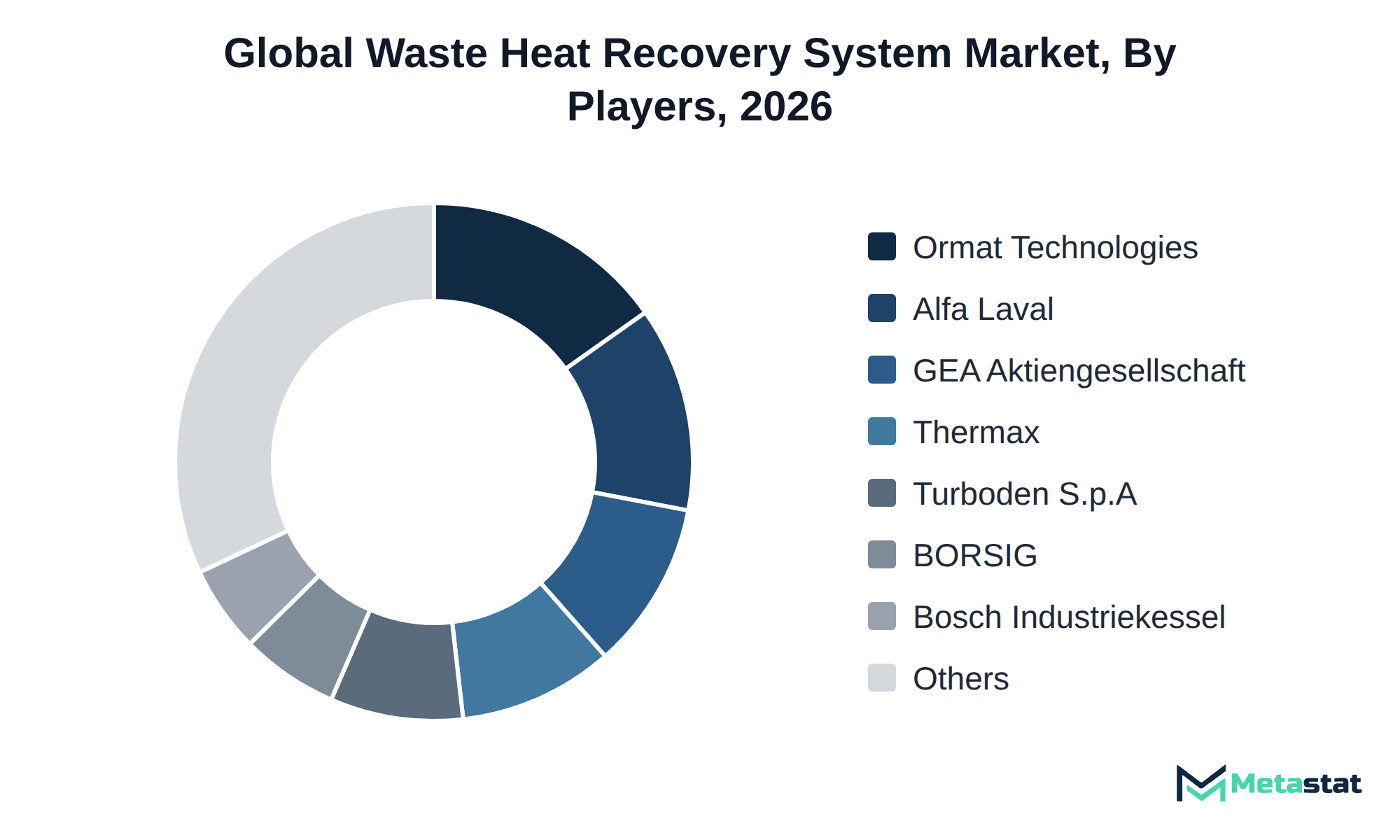
The Waste Heat Recovery System market exhibits competitive dynamics driven by various strategic behaviors among key players. Companies differentiate themselves through pricing strategies, certifications, customization options, and the quality of service. Buyers prioritize these factors when selecting suppliers, influencing their purchasing decisions in the market.
Alfa Laval emphasizes advanced heat recovery technologies, positioning itself as a key player in offering efficient solutions. Thermax Limited capitalizes on a strong service network and broad product range, ensuring customer support in various applications. GEA Group Aktiengesellschaft incorporates innovative designs into its systems, targeting specific industry needs while maintaining competitive pricing.
Waste Heat Recovery System market growth relies on several key developments. First, the expansion of low-temperature systems is expected to drive significant demand, particularly in industries including oil and gas and chemicals, contributing to this upward trajectory. The expected growth of steam generation applications will further support the market, with companies increasingly seeking efficient solutions to maximize energy recovery. The rise of the Asia Pacific region, projected to hold the largest market share, represents a vital factor, reflecting robust industrial growth and increasing investments in energy efficiency technologies. However, potential risks to market expansion exist. Fluctuations in global energy prices could hinder investments in waste heat recovery solutions, particularly in regions reliant on fossil fuels. Regulatory changes or a slowdown in industrial activity could impact the adoption rate of these systems. Addressing these challenges while capitalizing on growth opportunities will define the market's trajectory toward the anticipated USD 127.3 billion by 2033.
By System Type: Waste Heat Recovery Boilers and Heat Recovery Steam Generators (HRSGs), Exhaust Gas Economizers, Heat Exchanger-Based Recovery Systems, Organic Rankine Cycle (ORC) Heat-to-Power Systems, Industrial Heat Pumps, Absorption Heat Pumps and Chillers, Others (Recuperators, Kalina Cycle Systems)
By Application: Steam Generation, Electricity Generation, Process Heating and Preheating, Combined Heat and Power (CHP), District Heating, Cooling and Refrigeration
By End-Use Industry: Oil and Gas, Chemicals and Petrochemicals, Cement, Iron and Steel, Glass, Pulp and Paper, Food and Beverage, Power Generation, Marine, Others (Mining, Non-Ferrous Metals and Data Centres)
The report strategically identifies and profiles the key market players and analyses their core competencies in each sub-segment of the Waste Heat Recovery System market.
Report Attributes | Details |
Study Period | 2021-2033 |
Base Year | 2025 |
Estimated Year | 2026 |
Forecast Period | 2026-2033 |
Historical Period | 2021-2025 |
Growth Rate | CAGR 7.9% from 2026 to 2033 |
Revenue Unit | USD billion |
Segmentation | By System Type, Temperature Band, Application, End-Use Industry, and Region |
By Region | North America (By System Type, Temperature Band, Application, End-Use Industry, and Country)
|
Europe (By System Type, Temperature Band, Application, End-Use Industry, and Country)
| |
Asia Pacific (By System Type, Temperature Band, Application, End-Use Industry, and Country)
| |
South America (By System Type, Temperature Band, Application, End-Use Industry, and Country)
| |
Middle East and Africa (By System Type, Temperature Band, Application, End-Use Industry, and Country)
|
Find answers to common questions about this report
The Waste Heat Recovery System market size was valued at USD 69.3 billion in 2025.
The market is projected to grow at a CAGR of 7.9% during the forecast period from 2026 to 2033.
The North America Waste Heat Recovery System market size is estimated to reach USD 31.9 billion by 2033.
The leading segment in the Waste Heat Recovery System market is Heat Exchanger-Based Recovery Systems, projected to reach USD 29.5 billion by 2033. This segment surpasses others in terms of revenue potential within the market.
Rising focus on energy efficiency among industrial operators drives investments in advanced technologies. High initial investment costs significantly limit adoption among industrial operators considering waste heat recovery solutions.
High initial investment costs significantly limit adoption among industrial operators considering waste heat recovery solutions. Financial constraints lead to smaller order sizes and delayed replacement of aging systems, hindering market growth.
Rising focus on energy efficiency and sustainability drives adoption of Waste Heat Recovery Systems across industries. Organizations seek solutions to optimize energy utilization and reduce operational costs, particularly in oil and gas, chemicals, and cement sectors. This trend supports investments in technologies that enhance operational efficiency.
The Waste Heat Recovery System market is estimated to reach a valuation of USD 127.3 billion by 2033.
Key players operating in the Waste Heat Recovery System market include Alfa Laval, Thermax Limited, Turboden S.p.A., Ormat Technologies, Inc., GEA Group Aktiengesellschaft, BORSIG GmbH, and Bosch Industriekessel GmbH.
The low temperature segment is projected to grow from USD 23.3 billion in 2026 to USD 43.6 billion by 2033, reflecting a compound annual growth rate of 9.4%.
The analysts below cover Energy and Power research at Metastat Insights.
LEAD ANALYST
Utkarsh Khirodkar is a Lead Market Research Analyst at MetaStat Insight, specializing in market intelligence, technology sector assessments, and competitive strategy.

PRINCIPAL CONSULTANT - ENTERPRISE AI & EMERGING TECHNOLOGIES
Banking & Finance · Electronics and Semiconductor · Energy and Power · Healthcare IT · Information & Technology · Professional Services
Vijay Gunti is a Principal Consultant at MetaStat Insight, bringing over two decades of experience across enterprise digital transformation, technology strategy, and intelligent systems.

ENERGY & INFRASTRUCTURE INDUSTRY CONSULTANT
Automotive and Transportation · Electronics and Semiconductor · Energy and Power · Machinery & Equipment
Saurabh Vasant Ganvir consults for Energy & Infrastructure Industry at MetaStat Insight, specializing in renewable energy, solar EPC, and electric vehicle (EV) infrastructure markets.
Evaluating secondary resin quality across post-consumer packaging streams requires reliable technical segmentation. MetaStat Insight delivered an objective assessment that distinguished between extrusion-grade flake pricing and optical sorting throughput limitations across Western Europe. The competitive positioning breakdown for licensed depolymerization technology providers answered several questions during our feedstock feasibility audit. Their team clarified regional trade restrictions on mixed plastic scrap quickly when our team submitted follow-up requests.
Evaluating sovereign cloud deployments for core banking platforms demands a clear view of data residency regulations and migration exit strategies. MetaStat Insight delivered an exhaustive review of regional latency tolerances, mainframe decommission milestones, and third-party vendor concentration risk. The regulatory compliance mapping across European and Asian financial jurisdictions gave our team a dependable baseline for multi-cloud infrastructure discussions.
Replacing petrochemical surfactants with bio-based alternatives requires realistic timelines on industrial precision fermentation scaling. The market research broke down commercialization timelines, feedstock sugar price sensitivities, and regional cosmetic ingredient regulatory approvals in Europe and East Asia. That supplier readiness mapping gave our formulations team reliable context when comparing renewable chemical sourcing roadmaps.
Explore related market intelligence reports worth reading alongside this one.
Starting from
$2950