
LEAD ANALYST
Utkarsh Khirodkar is a Lead Market Research Analyst at MetaStat Insight, specializing in market intelligence, technology sector assessments, and competitive strategy.

Global Food and Beverages Market Size, Share, By Packaging Type (Plastic Containers, Glass Containers, Metal Cans, Cartons and Flexible Packaging), By Product Category (Packaged Foods, Beverages, Dairy Products, Confectionery and Snacks), By Nature (Conventional and Organic/Natural), By Distribution Channel (Supermarkets and Hypermarkets, Convenience Stores, Online Retail, Specialty Stores and Food Service Outlets), Industry Analysis, Growth, Trends, and Forecast, 2026-2033
Report ID
MSI-5322
Published
September, 2026
Pages
285 Pages
Format
Historical
Base year
Forecast
Forecast period
Report Details
Market Valuation: Valued at $9,998.6 Billion in 2025, projected to reach $16,102 Billion by 2033 at a 6.1% CAGR.
Dominant Segment: The Plastic Containers segment leads the market, driven by rising demand for convenient and ready-to-eat products, projected to grow from USD 4,409.9 billion in 2026 to USD 6,403.3 billion by 2033.
Geographic Lead: Asia Pacific is the fastest-growing region, fueled by an increasing population and rising disposable incomes, which enhance demand for diverse and sustainable food products.
What's Inside: The report provides comprehensive competitive coverage, detailed analyses of market dynamics, and forecasts from 2026 to 2033, focusing on key segments such as packaging types and product categories.
Emerging Trends: Technological advancements are driving product innovation and operational efficiency, with a notable rise in plant-based alternatives and clean label reformulation responding to consumer health consciousness.
Regulatory Challenges: Regulatory compliance and inflationary pressures are significant challenges, impacting operational costs and influencing consumer preferences towards more affordable alternatives.
Choose Your License
Global Food and Beverages Market
The global Food and Beverages market was valued at USD 9,998.6 billion in 2025 and is projected to reach USD 16,102 billion by 2033, growing at a CAGR of 6.1% over the forecast period.
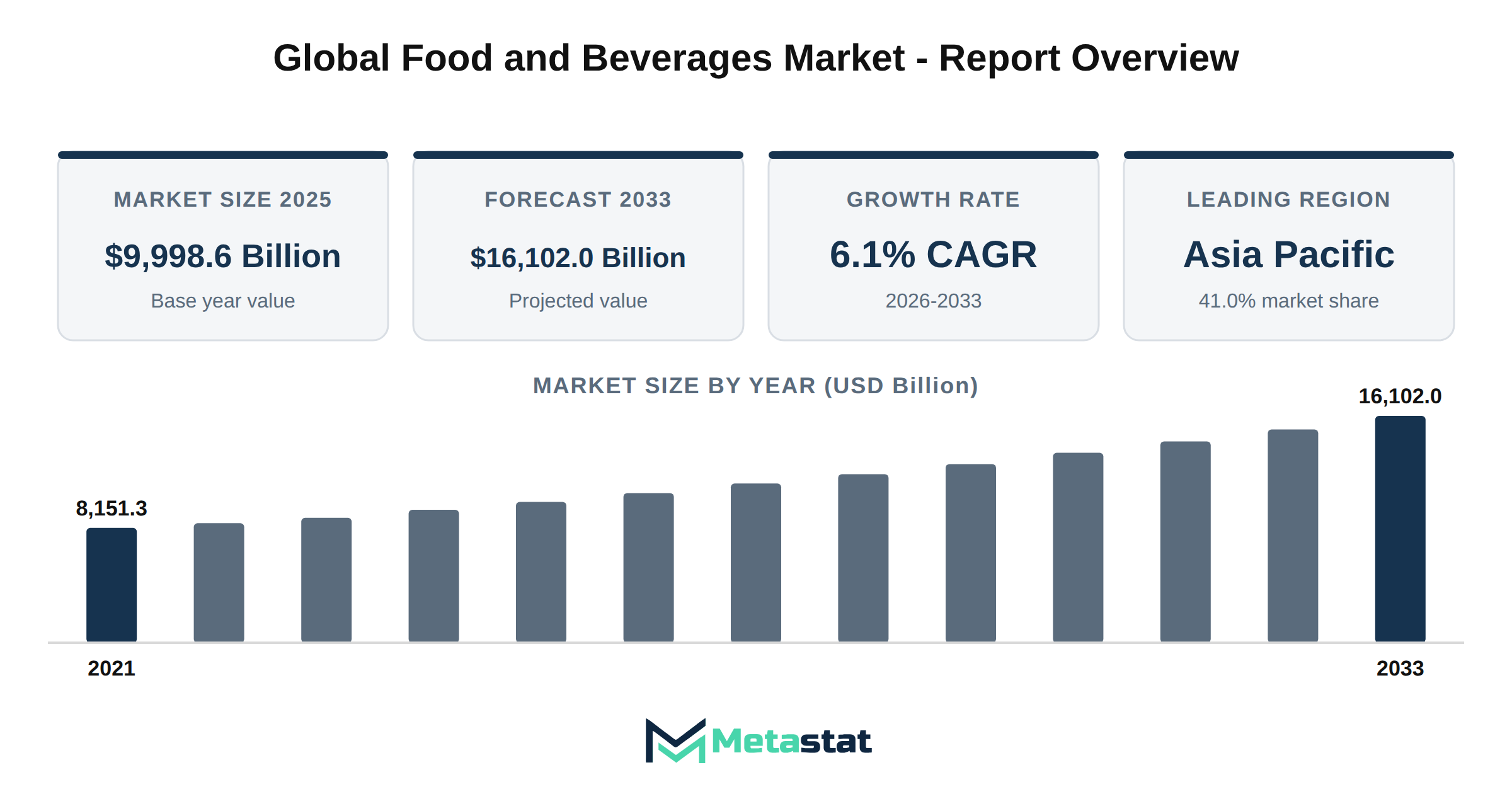
The global Food and Beverages market reached a valuation of USD 9,998.6 billion in 2025, with projections indicating substantial growth. By 2033, the market expands to USD 16,102 billion, reflecting a compound annual growth rate (CAGR) of 6.1%. This upward trajectory aligns with evolving consumption patterns driven by macroeconomic shifts, including changes in consumer preferences and economic conditions that influence demand across diverse regions.
Significant trends include a shift towards clean label reformulation, responding to surging consumer demand for functional ingredients. This trend emphasizes transparency and health benefits, encouraging brands to innovate their product offerings. Plant-based alternatives and novel protein adoption gain traction, particularly in food service and retail sectors, catering to a growing segment of health-conscious consumers.
The expansion of e-commerce disrupts traditional distribution channels in the packaged food and drink sector. Direct-to-consumer models enhance accessibility, allowing consumers to engage with brands directly and influencing purchasing decisions. This shift necessitates a robust online presence and agile supply chain strategies for manufacturers to remain competitive.
Cold chain logistics play a crucial role in ensuring product integrity and safety within the global food supply. Enhanced traceability measures are essential for maintaining consumer trust and compliance with evolving food safety regulations. Investments in automation and AI-driven processing technologies enhance operational efficiency in food manufacturing, supporting scalability and precision in production.
The Food and Beverages market is projected to experience significant shifts due to various macroeconomic factors. Economic growth across emerging markets and changes in consumer preferences drive increased demand for diverse food products. Urbanization and rising disposable incomes enhance spending power, resulting in higher consumption patterns that reshape the market landscape.
Clean label reformulation emerges because a critical trend, reflecting consumer demand for transparency and healthier ingredients. Manufacturers focus on reducing artificial additives while incorporating functional ingredients that promote health benefits. This trend aligns with the growing inclination towards better-for-you products, influencing purchasing decisions across demographics.
Adoption of plant-based alternatives continues to expand within both food service and retail sectors. Innovation in protein sources, driven by consumer interest in sustainability and health, influences the development of novel offerings. This trend not only caters to vegetarians and vegans but attracts flexitarians seeking to reduce meat consumption.
The expansion of e-commerce reshapes the Food and Beverages market, enabling direct-to-consumer models that disrupt traditional retail channels. Online platforms facilitate broader access to diverse products, enhancing convenience for consumers and creating new growth opportunities for brands. This shift encourages companies to refine their digital strategies to capture a larger market share.
Cold chain logistics and enhanced traceability play essential roles in ensuring food safety and supply chain resilience. With increasing consumer awareness regarding food origin and quality, companies invest in technologies that monitor product conditions throughout the supply chain. This investment strengthens brand trust and builds customer loyalty.
Technological advancements including automation and AI-driven processing significantly enhance efficiency in food manufacturing. Precision fermentation techniques improve production processes, resulting in higher yields and reduced waste. These innovations contribute to operational effectiveness and cost management within the market.
Compliance with environmental, social, and governance (ESG) standards influences operations within the Food and Beverages market. Companies adopt sustainable packaging solutions and implement carbon reduction strategies to meet regulatory expectations and consumer preferences. This commitment to sustainability enhances brand reputation and attracts environmentally conscious consumers.
Global food safety regulations and labeling compliance continue to evolve, challenging manufacturers to adapt rapidly. Ingredient bans and strict guidelines push companies to innovate while ensuring product safety and quality. Compliance activities become integral to maintaining market access and consumer trust.
Private equity inflows and venture capital funding into Food and Beverages brands indicate robust investor interest. Strategic mergers and acquisitions further consolidate market positions, enabling companies to expand their portfolios and diversify offerings. This financial activity enhances competitive dynamics and influences market growth trajectories.
The competitive landscape features a diverse range of players, including major multinational corporations and emerging brands. Market share analysis shows shifting dynamics because established companies adapt to new trends while newcomers introduce disruptive innovations. This competitive environment shapes strategies and influences future market developments.
High-growth regional corridors in Asia-Pacific, North America, and Europe highlight the importance of emerging economies. These regions exhibit dynamic consumption patterns, driven by urbanization and changing lifestyles. Understanding regional nuances becomes crucial for companies aiming to penetrate diverse markets effectively.
The outlook for the Food and Beverages market remains promising, supported by disruptive food tech innovations and evolving consumer preferences. Projections for the next decade indicate sustained growth, driven by ongoing shifts in consumption patterns and technological advancements that reshape the industry.
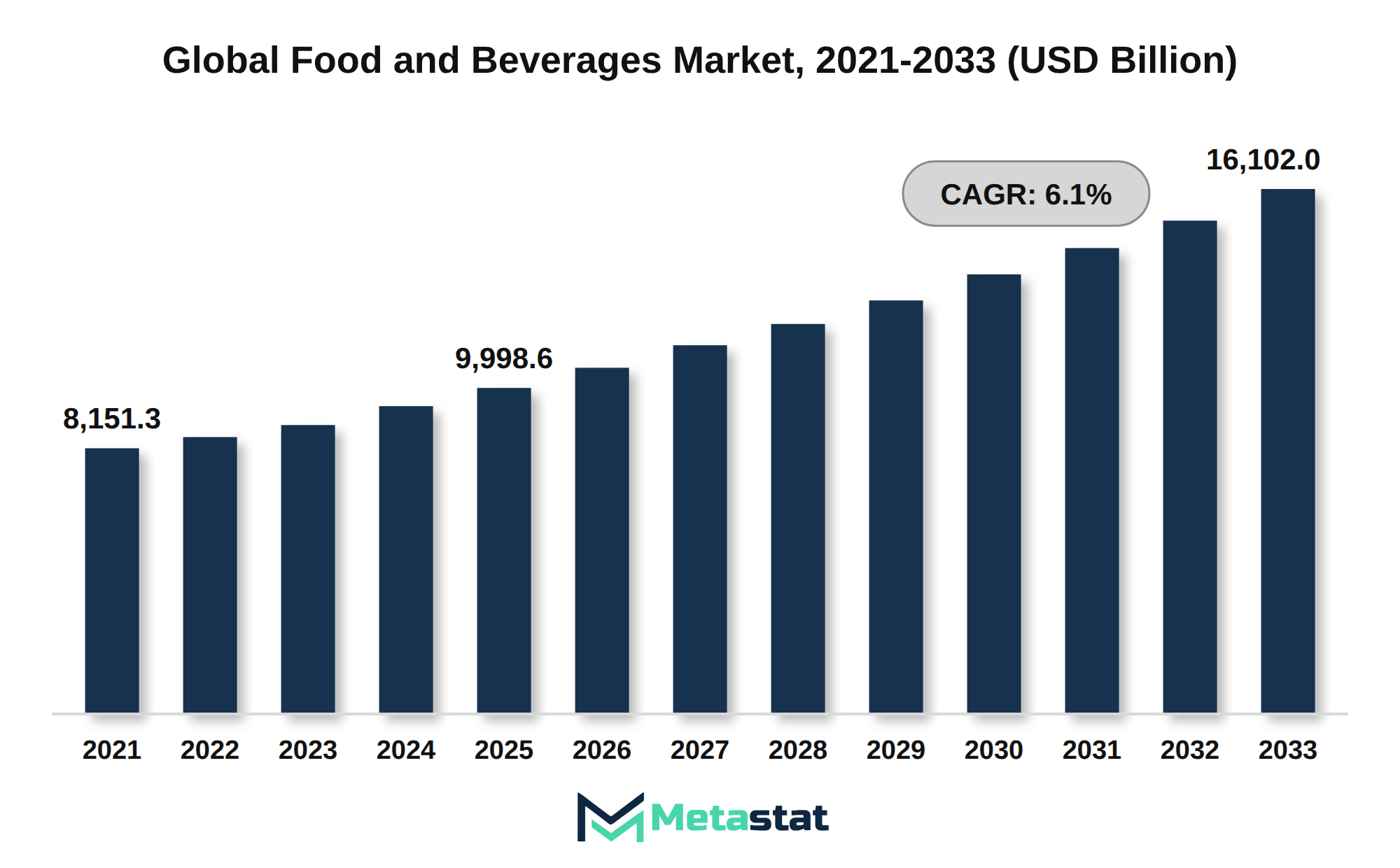
Growing consumer interest in convenience foods drives substantial growth in the Food and Beverages market. This trend stems from various factors, including the increasing pace of urbanization and the evolving lifestyles of consumers prioritizing time-saving solutions. Packaged foods and ready-to-eat meals experience heightened demand, prompting manufacturers to adapt their offerings to meet these changing preferences.
The expansion of e-commerce platforms enhances access to a diverse range of products, further fueling consumer choices in the market. The adoption of online retail channels boosts convenience by allowing consumers to purchase food and beverages from the comfort of their homes. This shift influences purchasing behaviors and encourages brands to invest in digital marketing strategies to capture the attention of tech-savvy consumers.
The industry's response to these evolving demands involves innovation in product development, emphasizing convenience without compromising quality. Manufacturers integrate processing technologies that ensure longer shelf life and enhanced convenience features, including easy-open packaging. This focus on convenience aligns with the increasing consumer emphasis on health, enabling the creation of healthier options that cater to the busy lifestyles of modern consumers.
Overall, the rising demand for convenience foods and beverages signifies a significant opportunity for growth within the market. While manufacturers continue to innovate and adapt to consumer preferences, the market is projected to expand, driving increased competition among key players striving to capture market share in this evolving environment.
Technological advancements significantly influence the Food and Beverages market by enabling product innovation and enhancing operational efficiency. Increased automation, artificial intelligence, and software adoption streamline processes and reduce costs, allowing suppliers to respond quickly to changing consumer preferences. The integration of advanced technologies aids manufacturers in optimizing production lines and minimizing waste, contributing to overall cost-efficiency and sustainability efforts.
Innovation in product development, fueled by technological integration, responds to evolving consumer behaviors, including preferences for healthier or sustainably sourced options. The rise of plant-based alternatives and functional foods illustrates how companies utilize technology to meet specific dietary needs and capitalize on shifting demographic patterns. This trend enhances market competitiveness and attracts a broader customer base, driving revenue growth.
Investments in digital transformation initiatives strengthen market access and supply chain resilience. Enhanced data analytics and user-friendly e-commerce platforms facilitate better consumer engagement and purchasing experiences. Suppliers within the Food and Beverages market experience increased visibility and adaptability to market changes, promoting growth and innovation.
Regulatory compliance poses significant challenges for the Food and Beverages market, particularly because regulations adapt to evolving health and safety standards. Compliance costs add to operational expenses, affecting profit margins across various segments. Smaller producers, in particular, face difficulties in meeting these requirements, hindering their market entry and growth capabilities.
Inflationary pressures further exacerbate the situation, driving up the costs of raw materials, labor, and transportation. These rising expenses strain manufacturers and lead to increased prices for consumers, potentially dampening demand for certain products within the market. Such economic conditions encourage consumers to shift preferences toward more affordable alternatives, impacting overall growth metrics.
Supply chain disruptions, intensified by geopolitical instability and resource scarcity, create additional constraints. Fluctuations in the availability of essential ingredients delay production timelines and increase costs, leading to product shortages and reduced market competitiveness. The combined effects of these factors introduce a complex operational environment for companies aiming to maintain their market share.
Talent gaps represent another challenge, particularly in specialized roles requiring skilled labor. A shortage of qualified professionals hinders innovation and efficiency within the market. Companies struggle to implement new technologies or processes, limiting their ability to respond effectively to market demands and competitive pressures.
The Food and Beverages market faces challenges from market fragmentation, where diverse consumer preferences complicate product offerings. Cultural barriers complicate entry into new regional markets, making it essential for companies to tailor their approaches to meet local tastes. Such complexities slow down overall market adoption and growth, necessitating advanced strategies to navigate this fragmentation.
Geopolitical fragmentation significantly impacts the Food and Beverages market, creating challenges in supply chain stability and international trade. Increased trade deficits and tariff friction complicate the import and export of essential goods, resulting in higher operational costs for businesses. Volatility in feedstock and component availability directly affects production capacities and profitability.
Technological disruptions, including rapid advancements in automation and digitalization, introduce complexities in research and development integrations. Companies face interoperability challenges when implementing new technologies across diverse platforms and processes. This challenge leads to increased compliance overhead, resulting from organizations ensuring that their systems adhere to evolving legal liabilities and tightening global regulatory standards.
Rising input costs further strain the market, driven by inflationary pressures and workforce skill gaps that hinder productivity and talent retention. Companies experience margin pressures, compelling them to explore innovative strategies to maintain competitiveness while addressing consumer demands for sustainability and environmental responsibility. These shifting dynamics create an environment where businesses adapt quickly to survive.
Infrastructure gaps and retrofitting barriers present additional challenges for the Food and Beverages market. Investment in modernizing facilities and processes becomes essential to meet sustainability mandates and fulfill changing downstream demands. Failure to address these issues results in operational bottlenecks that limit growth opportunities within the market.
Overall, the combination of geopolitical fragmentation, trade tensions, and rising costs creates a challenging environment for the Food and Beverages market. Companies navigate these complexities to sustain growth and enhance their competitive position.
Growth in the Food and Beverages market stems from emerging regional demands driven by shifting consumer preferences towards diverse and sustainable products. Regions including Asia Pacific, with an increasing population and rising disposable incomes, contribute significantly to market expansion. This demographic shift encourages the adoption of innovative packaging solutions and organic food options, aligning with health-conscious consumer behavior.
Infrastructure modernization enhances supply chains and distribution networks across various regions. Improved transportation systems and storage facilities enable efficient delivery of products, reducing waste and ensuring freshness. This modernization supports the market by allowing suppliers to meet the increasing demand for a wider range of food and beverage products in urban areas.
Geographical expansion into underserved markets provides opportunities for industry players to increase their footprint. Emerging economies exhibit a growing appetite for packaged foods and beverages, prompting companies to invest in local manufacturing facilities. This localization reduces import costs and allows manufacturers to cater to specific regional tastes and preferences, thus enhancing market penetration.
Technological disruptions and digital transformations reshape the Food and Beverages market. Advancements in e-commerce, automation, and data analytics facilitate targeted marketing strategies and personalized consumer experiences. Businesses leveraging these technologies gain a competitive edge, enhancing operational efficiency and improving customer engagement.
Sustainability imperatives drive companies to align their strategies with environmentally friendly practices. The emphasis on green transformations encourages the adoption of eco-friendly materials and processes, appealing to environmentally conscious consumers. This shift enhances brand loyalty and positions companies favorably in the market.
Downstream market diversification promotes growth opportunities by enabling companies to expand product lines and enter new segments. Firms integrating niche applications into their offerings capitalize on emerging consumer trends, including plant-based diets and functional beverages. This diversification strategy enhances overall revenue potential and strengthens market positions.
Strategic consolidation through mergers and acquisitions allows players to enhance their capabilities and broaden their market reach. By combining resources and expertise, companies innovate more effectively and respond to evolving consumer preferences. This consolidation encourages a competitive environment, driving further investment and development in the Food and Beverages market.
The evolving buying behaviors of consumers, influenced by digital procurement shifts, significantly shape market dynamics. Consumers increasingly seek convenience and accessibility, driving demand for online retail channels. Companies that adapt their commercial models to embrace these changes enhance their ability to capture market share and improve revenue streams.
The Global Food and Beverages market is segmented based on Packaging Type, Product Category, Nature, and Distribution Channel.
Expansion in the Plastic Containers segment of the Food and Beverages market aligns with increasing demand for convenient and ready-to-eat products. Valued at USD 4,409.9 billion in 2026, this segment is projected to reach USD 6,403.3 billion by 2033, at a CAGR of 5.5% during the forecast period. A growing focus on sustainability has prompted manufacturers to adopt innovations in plastics, leading to the emergence of eco-friendly packaging options. The shift towards lightweight and durable materials enhances consumer appeal, particularly in developing markets. Increased awareness of food safety and hygiene standards further drives the adoption of plastic containers, ensuring product integrity and shelf life. Regulatory compliance regarding packaging materials supports the development of advanced plastic solutions, aligning with consumer expectations for quality and sustainability. This segment's growth reflects evolving consumer preferences and the industry's responsiveness to market dynamics.
Increasing consumer preference for sustainable packaging contributes to the growth of the Glass Containers segment within the Food and Beverages market. These containers provide a recyclable option that aligns with eco-conscious consumer behavior, driving demand for glass products across various applications. The segment is projected to reach USD 1,571.8 billion by 2033, at a CAGR of 4.5% during the forecast period.
Technological maturation in glass production enhances the efficiency and cost-effectiveness of manufacturing processes, attracting investment and promoting innovation within the segment. Producers adopt advancements in molding, forming, and coating technologies to meet evolving regulations and consumer preferences, thereby expanding market opportunities. The adoption of next-generation glass containers reflects a commitment to quality and sustainability in product offerings.
Changes in consumption patterns, particularly the shift towards premium products, significantly influence the Glass Containers segment. High-end beverages and gourmet food products often use glass for packaging, emphasizing brand image and product integrity. This trend encourages producers to invest in specialized glass solutions that cater to niche markets, ultimately boosting segment growth.
Regulatory compliance regarding food safety and environmental concerns shapes the operational landscape for glass container manufacturers. Stricter guidelines on materials and production processes necessitate ongoing investment in compliance measures, which impacts cost structures. Nevertheless, these regulations provide a competitive edge for companies that prioritize safety and sustainability in their offerings.
Market players face challenges related to pricing volatility and margin pressures, primarily driven by raw material costs and fluctuating demand. Strategic opportunities arise from expanding distribution channels, including e-commerce, which enables broader access to glass-packaged products. By enhancing supply chain resilience and addressing substitution risks from alternative packaging materials, companies within the segment capitalize on growth potential in the Food and Beverages market.
Demand for Metal Cans in the Food and Beverages market reflects a strong consumer preference for sustainable and recyclable packaging solutions. This preference drives manufacturers to innovate and enhance production processes, resulting in increased adoption across various beverage and food sectors. The expansion of product lines that prioritize sustainability will further increase demand within the segment.
The Metal Cans segment is projected to reach USD 1,899.6 billion by 2033. Several factors contribute to this growth, including advancements in canning technology and the rising popularity of ready-to-drink products. High durability and excellent sealability of metal cans enhance their appeal to manufacturers, leading to greater market penetration.
Growing consumer awareness regarding environmental issues and the importance of reducing waste influences purchasing decisions towards products packaged in Metal Cans. Brands that align with these trends gain competitive advantages, further fueling growth. The shift towards online retail channels provides additional opportunities for metal cans, catering to an evolving consumer base seeking convenient shopping experiences.
Strategic investments in modernizing production facilities and adopting next-generation technologies improve operational efficiency. Companies focusing on upgrading their offerings to meet consumer preferences for organic and natural products capture a larger market share. With an estimated compound annual growth rate of 6.1%, the future outlook for the Metal Cans segment remains promising.
Demand for cartons within the Food and Beverages market experiences significant growth driven by a notable shift towards eco-friendly packaging solutions. Consumers increasingly prioritize sustainability, pushing manufacturers to adopt more recyclable and biodegradable materials. This heightened awareness around environmental concerns enhances the appeal of cartons, especially in sectors like dairy and beverages, where packaging integrity and product freshness play important roles.
The cartons segment is projected to grow at a CAGR of 7.6% during the forecast period. Expansion catalysts include innovations in carton design and functionality, including easy-open and resealable features, which enhance user convenience. Advancements in printing technology enable attractive branding, contributing to increased consumer engagement and product differentiation. This combination of factors supports growth in the segment.
Market dynamics reflect a shift towards online retail channels, with cartons offering efficient storage and transportation solutions. This trend aligns with the broader movement in the Food and Beverages market towards e-commerce, where packaging plays an essential role in product appeal and logistics efficiency. The adaptability of cartons satisfies the changing preferences of both retailers and consumers, reinforcing their demand in diverse settings.
Regulatory compliance regarding packaging waste management continues to shape market strategies, driving investment in recyclable materials and sustainable production processes. Manufacturers investing in eco-friendly carton solutions align with governmental initiatives aimed at reducing plastic waste, creating a favorable market environment. This compliance enhances brand reputation and positions companies advantageously for future growth opportunities.
In the context of the Food and Beverages market, flexible packaging offers significant advantages due to its lightweight nature and adaptability across various product categories. This packaging type aligns with the growing consumer preference for convenience and on-the-go consumption. Manufacturers increasingly focus on sustainability, and the demand for flexible packaging reflects trends toward reducing environmental impact, thus supporting market expansion.
Technological advancements play a crucial role in enhancing the capabilities of flexible packaging. Innovations in materials and production processes lead to improved barrier properties, extending shelf life and maintaining product quality. Such enhancements appeal to brands seeking to differentiate their products in a competitive marketplace. The evolving nature of consumer tastes and preferences necessitates constant adaptation in packaging solutions, driving investment in next-generation upgrades.
Consumption shifts, particularly toward ready-to-eat and single-serve products, further increase the need for flexible packaging solutions. Brands leverage this packaging type to meet the demands of health-conscious consumers who prioritize convenience without compromising quality. Regulatory compliance regarding safety and sustainability standards influences packaging choices, ensuring that flexible options align with increasing environmental regulations.
Flexibility in design and functionality positions this packaging type favorably among manufacturers aiming for a competitive edge. Price volatility in raw materials challenges profitability within the segment, prompting manufacturers to adopt strategic sourcing practices. Evaluating disruptive alternatives and maintaining supply chain resilience remain critical for companies within the market, ensuring effective responses to changing industry conditions.
Investment outlook remains positive for flexible packaging, driven by ongoing demand across various food and beverage applications. Identifying strategic opportunities and expanding into underutilized markets presents avenues for growth. Consequently, players in the Food and Beverages market prioritize flexible packaging solutions to capture evolving consumer preferences and maintain relevance in a changing environment.
Valued at USD 3,139.3 billion in 2026, the Packaged Foods segment is projected to reach USD 4,626.5 billion by 2033, at a CAGR of 5.7% during the forecast period. Rising demand for convenient meal solutions, driven by busy lifestyles and greater consumer interest in ready-to-eat options, significantly fuels market growth. Manufacturers innovate by adapting to shifting dietary preferences and developing products that cater to health-conscious consumers. The proliferation of e-commerce platforms enhances accessibility, allowing consumers to purchase packaged food items conveniently, which further drives sales.
Adoption of clean-label products and organic options reflects a heightened focus on health and nutrition. This trend is evident in the increasing market share of organic packaged foods, which aligns with consumer preferences for transparency and sustainability in sourcing. Competitive pressures throughout the Food and Beverages market compel brands to enhance product offerings and diversify portfolios, creating opportunities for emerging players and established companies. The evolving landscape encourages investment in technology and supply chain improvements to meet consumer expectations effectively.
The beverages segment is projected to reach USD 5,419.9 billion by 2033, at a CAGR of 6.3% during the forecast period. Consumer preferences increasingly lean towards healthier and more diverse beverage options, reflecting a broader trend in the Food and Beverages market. The shift towards organic and natural products enhances market demand, with consumers seeking beverages that align with health-conscious lifestyles. Enhanced distribution channels, particularly online retail, enable easier access to a variety of beverage products, driving consumption growth.
Technological maturation enhances product innovation within the beverages segment. Producers invest in advanced production techniques, ensuring higher quality and improved flavors. Competitive pricing strategies result from ongoing innovations, influencing consumer purchasing behavior. While new entrants emerge, strategic opportunity windows arise for established brands to expand their market share through robust product offerings and targeted marketing campaigns.
With a focus on sustainability, the packaging of beverages evolves, incorporating environmentally friendly materials. Regulatory compliance regarding health standards and labeling enhances consumer trust, impacting purchasing decisions. The relationship between traditional beverage options and innovative alternatives fuels market dynamism, driving manufacturers to adapt and respond to shifting consumer expectations. Effective raw material sourcing remains crucial, minimizing costs while maintaining product quality, which in turn supports profitability in the segment.
In the Food and Beverages market, the Dairy Products segment continues to gain traction, driven by rising health consciousness and a shift towards nutrient-rich diets. The increasing demand for functional dairy products, including probiotic yogurts and lactose-free options, reflects changing consumer preferences. This segment is projected to reach USD 1,824.7 billion by 2033, highlighting its significant role in overall market growth.
Technological maturation in dairy processing techniques enhances product quality and shelf life, attracting both manufacturers and consumers. Innovations including ultra-high temperature processing and advanced fermentation methods support the introduction of next-generation dairy products that cater to diverse consumer needs. Evolving dietary choices, including plant-based alternatives, influence traditional dairy product consumption, prompting manufacturers to adapt their offerings.
Regulatory compliance standards, particularly concerning food safety and labeling, impact operational practices in the dairy sector. Certification processes for organic and natural products gain importance, aligning with consumer demand for transparency and sustainability. This focus on compliance builds trust between consumers and brands, further driving demand for high-quality dairy products.
Pricing volatility in raw materials, including milk and additives, poses challenges for dairy producers. Fluctuations in supply chains require strategic sourcing and cost management to maintain profitability. Price sensitivity among consumers influences purchasing decisions, leading manufacturers to offer competitive pricing while ensuring product integrity.
Strategic opportunity windows arise from shifting consumption trends, including the increased popularity of dairy-based snacks and ready-to-eat options. These trends present avenues for innovation and brand differentiation within the Dairy Products segment. Capital investment in new technologies and processes enhances production efficiency, enabling companies to take advantage of emerging market opportunities.
Growing consumer demand for indulgent treats drives notable growth within the confectionery segment of the Food and Beverages market. This segment is projected to grow at a CAGR of 6.2% during the forecast period, reflecting an increasing preference for chocolate, candies, and specialty sweets. Changing lifestyles and the rise of social media influence consumption patterns, leading to higher demand for unique and artisanal products.
Innovation in product offerings enhances market dynamics, with manufacturers investing in next-generation upgrades and healthier formulations to appeal to health-conscious consumers. This evolution includes the introduction of organic and natural ingredients, aligning with the trend toward healthier eating. Increased focus on sustainability among consumers encourages brands to adopt environmentally friendly practices in production and packaging.
Price volatility in raw materials, including sugar and cocoa, impacts margin pressures for manufacturers. Effective supply chain management becomes essential in mitigating these challenges and maintaining competitive pricing. Strategic investment in product development and marketing strengthens brand positioning in this growing market segment.
Increased availability of confectionery products through various distribution channels, including supermarkets and online retail, expands consumer access, further propelling market growth. The confectionery segment of the Food and Beverages market demonstrates resilience and adaptation in response to evolving consumer preferences and economic conditions.
Consumer interest in convenient snacking options significantly influences the Snacks segment within the Food and Beverages market. Increasing working hours and busy lifestyles drive demand for on-the-go snack products, leading manufacturers to innovate in flavors, formats, and packaging. Health-conscious trends shape product development, prompting brands to offer healthier alternatives, including low-calorie, high-protein, and gluten-free snacks, appealing to diverse consumer preferences.
The rise of e-commerce and advancements in online retailing enhance consumer access to snack products, enabling companies to reach wider audiences. Social media marketing and influencer partnerships boost brand visibility, contributing to higher sales in this segment. Competition among brands intensifies, compelling companies to focus on unique product offerings, including organic and natural snacks that align with growing health awareness.
Regulatory compliance influences product quality and safety, impacting manufacturers' operational strategies. Adapting to changing regulations ensures that companies remain competitive while meeting consumer expectations. Fluctuations in cost structures arise from raw material sourcing and pricing volatility, impacting overall profitability.
Strategic investment in product evolution and technological advancements supports growth in the Snacks segment. By prioritizing innovation and consumer insights, brands position themselves effectively within the market, catering to shifting consumption patterns and preferences. The outlook for the Snacks segment anticipates continuous evolution driven by consumer demands for new flavors and healthier options, reinforcing its relevance within the broader Food and Beverages market.
Increasing interest in diverse food and beverage offerings drives the "Others" sub-segment within the Food and Beverages market. Innovative flavors, unique product formulations, and niche offerings appeal to a growing base of consumers seeking variety beyond traditional categories. This sub-segment expands due to evolving tastes and preferences of consumers, who actively explore new options in their food and beverage choices.
Technological advancements play a vital role in product evolution within this sub-segment. Manufacturers prioritize research and development to create distinctive products that cater to specific dietary needs, lifestyle choices, and regional preferences. These innovations enhance product offerings and enable businesses to respond to shifting consumer demands in a timely manner.
Supply chain resilience underpins the growth of the "Others" sub-segment by ensuring the availability of diverse ingredients and raw materials. Companies invest in building robust supply chains to manage sourcing challenges and mitigate risks associated with raw material shortages. This focus on supply chain stability supports consistent product availability and quality, contributing to customer satisfaction and loyalty.
Market dynamics reflect a shift in consumption patterns, with consumers gravitating towards unique and experiential food and beverage options. The market evolves, and businesses that effectively identify and capitalize on strategic opportunities within the "Others" sub-segment position themselves for sustained growth. This proactive approach enhances competitive edge in a rapidly changing environment.
Valued at USD 7,888 billion in 2026, the Conventional segment is projected to reach USD 11,482.2 billion by 2033, at a CAGR of 5.5% during the forecast period. This growth arises from increasing consumer awareness surrounding food safety and quality, which drives demand for conventional products. The market attracts consumers seeking familiarity and consistency in taste and packaging. A broad distribution network enhances accessibility to conventional food and beverage products, facilitating market penetration.
Adoption of conventional products benefits from effective marketing strategies that leverage brand loyalty and trust built over decades. Established brands maintain significant market shares through targeted advertising and promotional activities, appealing to diverse consumer demographics. This strategic positioning enhances competition among suppliers and drives product innovation within the conventional segment.
Consumption shifts toward convenience and ready-to-eat offerings contribute to segment expansion. Busy lifestyles among consumers favor packaged products that provide quick meal solutions without sacrificing quality. This trend aligns with the overall growth trajectory within the Food and Beverages market, where convenience and quality remain significant.
Regulatory compliance standards play an important role in shaping segment dynamics. Adherence to food safety regulations ensures product integrity and consumer confidence. While regulatory frameworks evolve, suppliers invest in maintaining compliance, which subsequently impacts pricing structures and margin pressures. This investment ultimately fortifies the reliable image of conventional products in the eyes of consumers.
The future outlook for the Conventional segment appears promising with increasing capital investments aimed at enhancing production capabilities. Strategic opportunities arise for businesses focusing on optimizing supply chain resilience and raw material sourcing. By addressing logistical vulnerabilities, suppliers position themselves competitively within the market, catering to shifting consumer demands while maintaining operational efficiency.
Growing consumer awareness regarding health and wellness significantly drives the Organic/Natural segment within the Food and Beverages market. This heightened interest increases demand for organic and natural products, compelling companies to innovate and reformulate offerings. Regulatory compliance standards, including certifications for organic labeling, further shape the market landscape, encouraging manufacturers to pursue organic certifications and enhance product credibility.
The Organic/Natural segment is projected to reach USD 4,619.8 billion by 2033, at a CAGR of 7.8% during the forecast period. The increasing focus on clean-label products, devoid of artificial ingredients, fuels market growth. Shifts in consumption patterns reflect preferences for organic options across various demographics, influencing product distribution strategies. Retail channels, including supermarkets and specialty stores, play a critical role in making organic products accessible to consumers.
Technological maturation in organic farming methods enhances supply chain resilience, while innovations in packaging further support product integrity. Companies investing in strategic opportunity windows focused on organic offerings position themselves favorably in a competitive market. The combination of evolving consumer preferences and growth potential highlights the significance of the Organic/Natural segment in the broader Food and Beverages market.
Valued at USD 4,293.1 billion in 2026, the Supermarkets and Hypermarkets segment is projected to reach USD 6,236.9 billion by 2033, at a CAGR of 5.5% during the forecast period. This segment benefits from a broad consumer base seeking convenience, variety, and the ability to purchase food and beverage items in one location. Increased disposable income and changing lifestyles contribute to heightened traffic in these retail formats, driving demand.
Technological advancements in inventory management and supply chain optimization enhance the efficiency of Supermarkets and Hypermarkets. Integration of online shopping capabilities and mobile applications facilitates customer experiences, catering to the growing preference for e-commerce. Offering promotions and discounts through these platforms strengthens customer loyalty, contributing positively to market growth.
Changing consumer preferences towards organic and healthier food options influence product offerings in Supermarkets and Hypermarkets. Retailers that adapt their stock to include organic products attract health-conscious buyers, creating a competitive edge within the Food and Beverages market. This adaptation highlights the importance of catering to evolving consumer trends to maintain relevance in the marketplace.
Cost structures within Supermarkets and Hypermarkets play a crucial role in operational efficiency. Managing pricing volatility in raw materials and sourcing strategies directly impacts profit margins. Retailers emphasizing effective cost management strategies navigate market challenges, positioning themselves favorably against competitors.
Strategic investment in store layouts and customer experience initiatives enhances the appeal of Supermarkets and Hypermarkets, encouraging increased footfall. Creating inviting environments with well-organized product displays promotes higher sales volumes, while investments in employee training ensure excellent customer service, further enhancing brand loyalty.
Convenience stores represent a vital distribution channel within the Food and Beverages market, driven by rising consumer preferences for convenient and on-the-go shopping experiences. These stores offer a variety of products in easily accessible locations, catering to busy lifestyles and providing quick access to essential food and beverage items. Evolving shopping habits significantly contribute to the growth trajectory of this segment.
Technological advancements in inventory management and supply chain operations enhance the efficiency of convenience stores, enabling them to respond swiftly to consumer demands. A focus on innovative product offerings, including ready-to-eat meals and health-conscious snacks, aligns with changing consumer preferences, driving further segment expansion. In addition, strategic partnerships with local suppliers allow convenience stores to offer fresh and unique products, appealing to diverse consumer tastes.
Valued at USD 2,144.1 billion by 2033, the segment experiences a CAGR of 5.6% during the forecast period. This growth reflects the increasing consumer inclination towards rapid shopping solutions and the ability of convenience stores to adapt to these needs effectively. The market for convenience stores continues to evolve, driven by shifting consumption patterns and a focus on convenience-oriented retail experiences.
Online Retail stands poised for significant growth within the Food and Beverages market, projected to reach USD 2,145 billion by 2033. This growth emerges from a combination of increasing consumer preference for convenience, especially post-pandemic, and the rising penetration of e-commerce platforms. The ongoing evolution in digital marketing strategies and logistics capabilities enhances the ability of retailers to reach broader audiences, driving a surge in online food and beverage sales.
Technological advancements facilitate faster payment solutions, streamlined user experiences, and improved inventory management, contributing to market expansion. Consumers increasingly seek convenient shopping options, fueling demand for online retail channels where a diverse range of products is readily available. This shift aligns with broader consumption trends emphasizing convenience and accessibility in the food and beverage sector.
Competitive pricing structures within online retail attract consumers. Retailers leverage data analytics to optimize pricing strategies and promotional offers, ensuring alignment with customer expectations. The ability to provide competitively priced products enhances market attractiveness and supports growth in the online channel.
Online Retail demonstrates resilience against economic fluctuations, with many customers turning to online shopping for food and beverages during challenging economic conditions. This resilience contributes to sustained growth and presents strategic opportunities for investment in technology and logistics infrastructure. The market evolves continuously, adapting to shifts in consumer behaviors and preferences, which positions Online Retail because a crucial component of the overall Food and Beverages market.
Significant growth occurs within the Specialty Stores segment, projected to grow at a CAGR of 6.5% during the forecast period. This growth derives from an increasing consumer preference for unique and premium food and beverage products, often found in specialty retail environments. Factors including the rising trend of artisanal and organic offerings drive demand, attracting health-conscious consumers seeking high-quality options. Specialty stores facilitate direct engagement with customers, creating personalized shopping experiences that enhance brand loyalty. The shift toward experiential shopping influences consumer behavior, encouraging visits to specialty retailers. Current market dynamics highlight the importance of adapting to evolving consumer preferences, positioning specialty stores because crucial players within the Food and Beverages market.
Food service outlets represent a crucial distribution channel within the Food and Beverages market, catering to a diverse range of consumer needs. Increasing consumer preference for dining experiences enhances demand for food service outlets, with many seeking convenience and high-quality options. More consumers engage in dining out, prompting food establishments to adapt their offerings to include healthier and sustainable choices, aligning with evolving trends in health consciousness.
Adoption of technology within food service outlets drives improvements in efficiency and customer experience. Implementation of digital ordering systems, contactless payments, and online reservations leads to streamlined operations and enhanced customer satisfaction. Upgrades in food preparation technologies influence the competitiveness of these outlets, enabling them to meet growing customer expectations for speed and quality.
Market dynamics shift with changing consumer behaviors, including an increased interest in local and organic food products. Food service outlets that embrace these trends position themselves favorably within the market, attracting a loyal customer base. Regulatory compliance regarding food safety and quality standards shapes operational practices, ensuring that food service outlets maintain high standards that meet consumer demands.
Cost structures continue to evolve, with fluctuations in raw material prices impacting profitability. Pricing volatility challenges the margins of food service outlets, necessitating strategic planning to mitigate risks. Supply chain resilience remains critical, because disruptions affect the availability of essential ingredients and packaging materials.
Investment in marketing and customer engagement strategies presents significant opportunities for food service outlets. Increased capital investment supports innovation, enabling these establishments to expand their reach and adapt to consumer preferences. By leveraging strategic opportunity windows, food service outlets enhance their market presence and drive revenue growth within the Food and Beverages market.
Growth within the Others sub-segment of the Food and Beverages market arises from evolving consumer preferences and the increasing emphasis on unique and niche products. This segment benefits from the diversification of distribution channels, appealing to specific demographics seeking specialty items. Enhanced product visibility through various retail formats strengthens brand recognition and supports sales performance within this sub-segment.
Regulatory compliance standards play a key role in shaping the product offerings in the Others segment. Adhering to these standards builds consumer trust and promotes acceptance of new products in the market. Increased investment in compliance by companies ensures the availability of high-quality products that meet consumer expectations.
Supply chain resilience enhances the ability of businesses within the Others sub-segment to adapt to market fluctuations and consumer demands. Effective raw material sourcing strategies minimize disruptions. Companies maintain consistent product availability through this adaptability, supporting ongoing growth and innovation within the Food and Beverages market.
Technological advancements contribute to the evolution of products in this sub-segment. Manufacturers leverage new technologies to optimize production processes and improve product quality. These innovations attract consumers seeking convenient and unique food and beverage options, driving growth in this competitive environment.
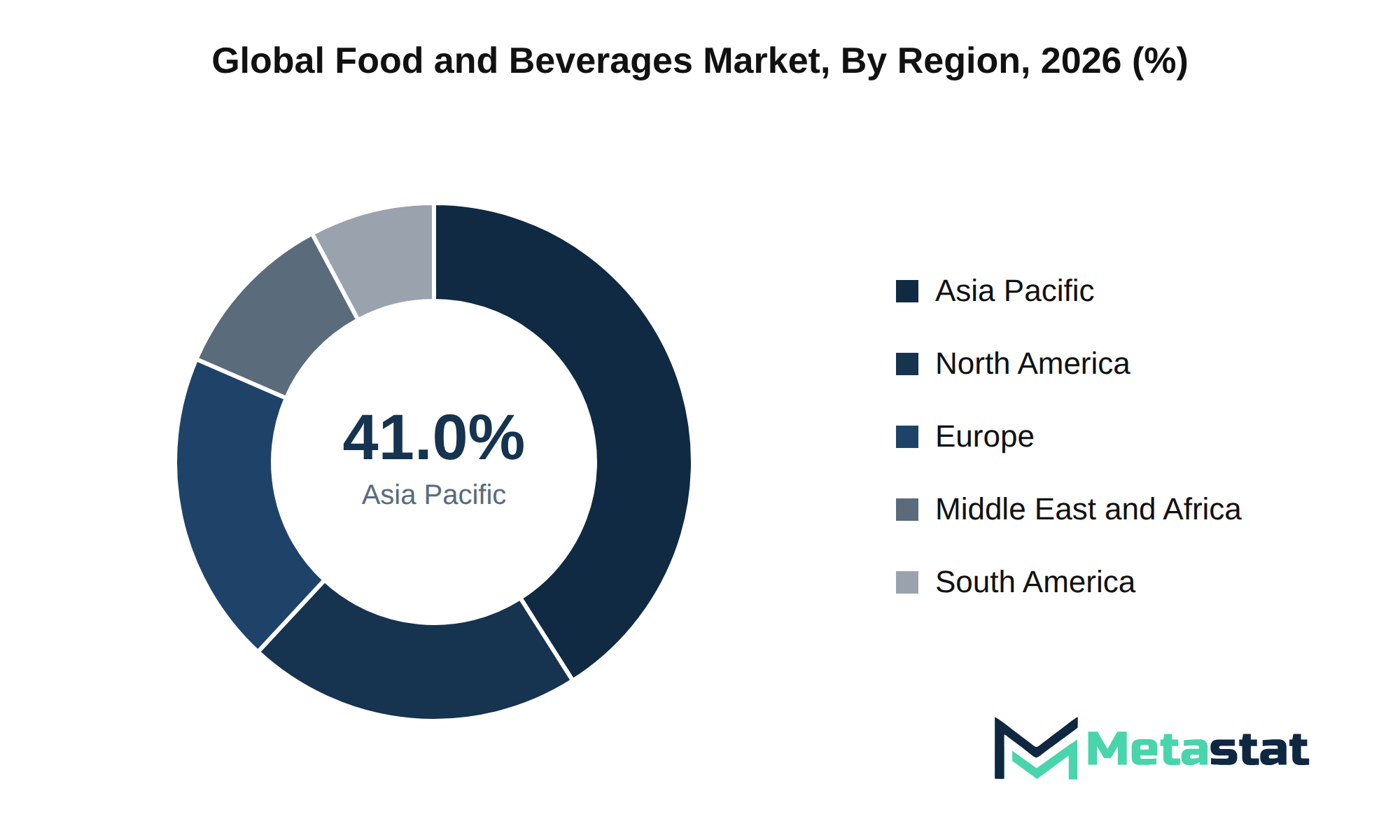
Based on geography, the Global Food and Beverages market is divided into North America, Europe, Asia-Pacific, South America, Middle East, and Africa.
Significant expansion within the North America Food and Beverages market aligns with a projected CAGR of 6.1% during the forecast period, reaching a market size (TAM) of USD 3,100.5 billion by the end of 2033. The region accounts for 20.9% of the global market in 2025, reflecting a strong position in overall market dynamics.
Consumer preferences continue to evolve, with a strong emphasis on convenience and health-conscious offerings driving demand across various segments. Packaged Foods and Beverages present substantial growth opportunities, fueled by shifting lifestyles and increased focus on quality and innovation. The Dairy Products segment attracts attention, spurred by rising interest in plant-based alternatives and enhanced nutritional profiles.
Regional factors contribute to a robust competitive landscape, with prominent players actively pursuing strategies to capture market share. Nestlé S.A., The Coca-Cola Company, and PepsiCo, Inc. operate in the market, implementing localized procurement strategies to better align with regional consumer preferences. The presence of established distribution channels, including Supermarkets and Hypermarkets, facilitates access to a broad customer base.
The ongoing modernization of infrastructure supports market growth, enabling efficient supply chain operations and enhancing product availability. Increased investment in localized manufacturing and nearshoring initiatives aims to strengthen resilience and streamline production processes. Geographic regulatory frameworks and compliance mandates further shape the operational environment, with companies adapting to local standards to enhance market entry.
The North America Food and Beverages market demonstrates strong growth potential, driven by evolving consumer trends, competitive dynamics, and supportive infrastructure developments. While demand for diverse and convenient food and beverage options continues to rise, stakeholders in the market are well-positioned to capitalize on emerging opportunities.
The Food and Beverages market in Europe demonstrates robust performance. This region benefits from a diverse consumer base with evolving preferences for high-quality and organic products. Strong demand for packaged foods and beverages drives growth, particularly in countries including Germany, France, the UK, Italy, and Spain. The increasing focus on health and wellness further drives the consumption of organic and natural food options, creating opportunities for brands prioritizing these attributes.
Regulatory frameworks across European nations influence market dynamics, requiring compliance with strict safety and quality standards. These mandates enhance consumer trust, boosting sales for compliant brands. Emerging market front-runners like Germany and France display significant growth potential, fueled by innovation in product offerings and sustainable practices.
Supply chain regionalization and localized manufacturing continue to reshape the competitive landscape. Companies invest in nearshoring initiatives to reduce operational risks and enhance supply chain resilience, optimizing responsiveness to local market demands. Geopolitical factors influence trade flows, prompting companies to reassess their strategies for the Food and Beverages market.
Cultural nuances and regional B2B buying behaviours affect procurement dynamics, with emphasis on local sourcing and partnerships. European consumers exhibit a preference for products with local origins, motivating brands to enhance their regional footprints. This trend positions local vendors favorably, allowing them to capture market share through tailored offerings.
Overall, the Food and Beverages market in Europe is projected to sustain growth through a combination of regulatory support, cultural alignment, and innovative product strategies. These factors collectively enhance market penetration and improve competitive differentiation in an increasingly complex environment.
The Asia-Pacific region represents a significant portion of the global Food and Beverages market, accounting for 41.0% in 2025. This high market share stems from robust consumer demand and a rapidly growing population, particularly in countries like China, India, and Japan. Urbanization in these nations contributes to increased purchasing power and a preference for diverse food offerings.
Emerging markets within Southeast Asia experience heightened growth rates, driven by changing dietary preferences and a surge in disposable income. Infrastructure modernization in the region facilitates improved distribution channels, enabling brands to penetrate previously underserved areas effectively. Localized manufacturing initiatives enhance supply chain efficiencies and reduce costs, benefiting producers and consumers.
Cultural nuances significantly influence consumer behavior, with preferences for both traditional and modern food products observed across the region. The market sees a blend of international and local brands vying for consumer attention, each adapting strategies to align with regional tastes. This competitive environment promotes innovation, ensuring that the market remains dynamic and responsive to evolving consumer needs.
Investment flows into Asia-Pacific exhibit a strong trajectory, with increasing foreign direct investment (FDI) supporting the establishment of new manufacturing plants and distribution facilities. Local compliance mandates and regulatory frameworks encourage adherence to food safety standards, enhancing consumer confidence. These factors collectively position the Asia-Pacific market for sustained growth through 2033.
Brazil and Argentina represent key players within the Food and Beverages market in South America, contributing significantly to regional dynamics. South America plays a notable role in the global landscape. Consumer preferences shift increasingly towards packaged foods and beverages, driven by urbanization and a growing middle class seeking convenience and quality. Local manufacturers respond with innovative products tailored to regional tastes and dietary patterns, enhancing competition and segment growth.
Investments in infrastructure modernization enhance supply chain efficiencies, with initiatives focusing on localized manufacturing and nearshoring strategies. These efforts create opportunities for domestic players to scale operations and meet rising demand effectively. Cultural nuances shape purchasing behaviors, influencing how products are marketed and distributed across various channels.
The competitive landscape features both multinational corporations and local entities, with established brands like Nestlé S.A. and The Coca-Cola Company competing alongside regional innovators. This dynamic enhances a varied marketplace characterized by product diversity and strategic vendor consolidation trends. Overall, the Food and Beverages market in South America is positioned for incremental growth, driven by evolving consumer demands and enhanced operational capabilities.
The Food and Beverages market in the Middle East and Africa is characterized by its share of 10.7% of the global market in 2025. Factors driving demand in this region include a growing population, urbanization, and an increasing inclination towards packaged and convenient food options. Saudi Arabia and the UAE emerge because front-runners, focusing on modernization and infrastructure improvements that support distribution and retail growth.
Investment in the food and beverage sector enhances local production capabilities and supply chain efficiency. Infrastructure development, including logistics and warehousing, creates opportunities for manufacturers to expand their reach. Consumers exhibit a preference for diverse product offerings, particularly in the beverage and packaged food segments. This trend leads to increased competition among market players.
The market features local and international companies competing aggressively, with established brands investing in regional expansion initiatives. South Africa plays a critical role in the market due to its established retail networks and consumer base. Cultural factors influence purchasing behaviors, prompting brands to adapt their offerings to local tastes. This adaptation is vital for success in the region.
Compliance with regional regulations and standards impacts operational strategies for market participants. Foreign direct investment flows into the region stimulate growth, resulting in the emergence of new players and consolidation trends among existing firms. Overall, the Middle East and Africa present a dynamic environment for the Food and Beverages market, driven by demographic shifts and evolving consumer preferences.
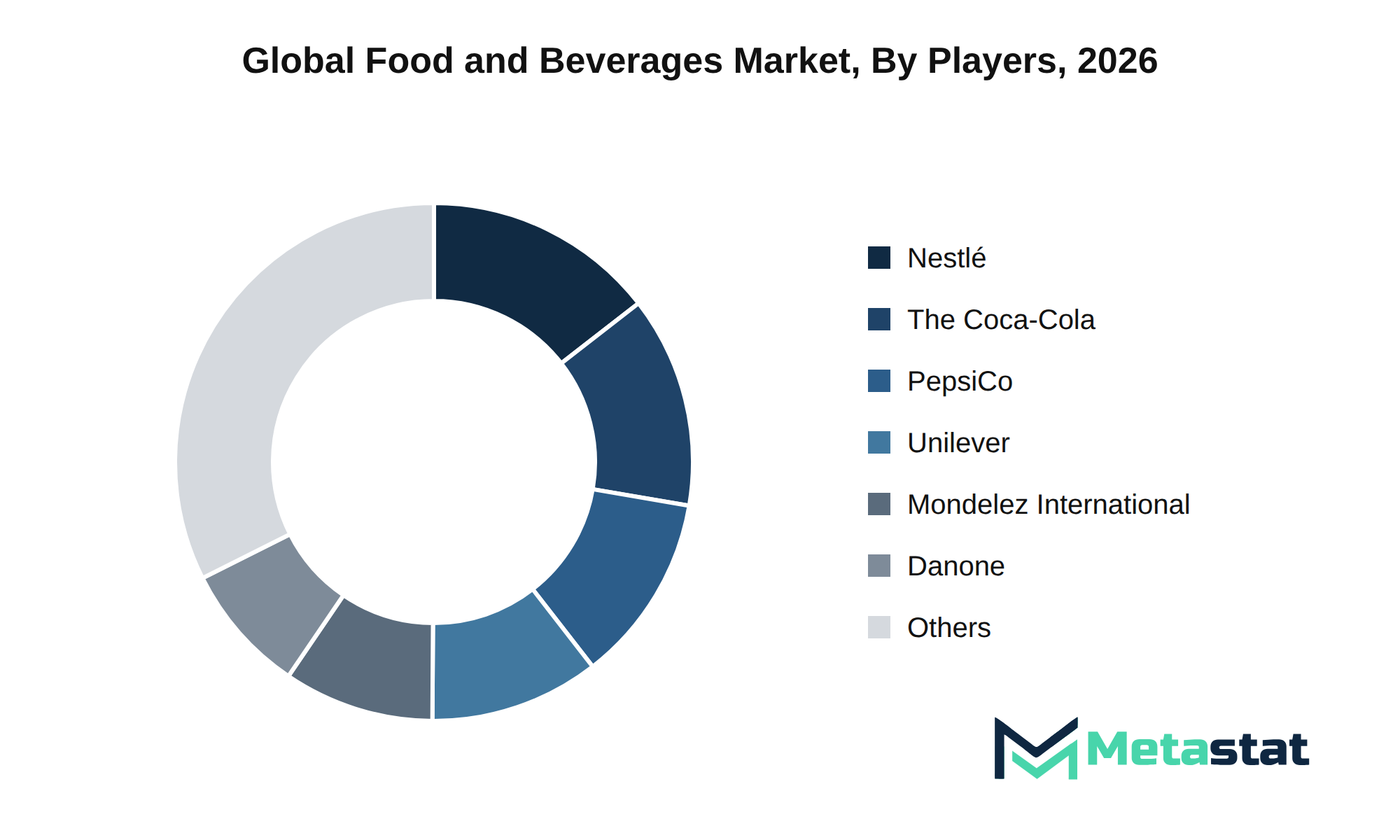
The Food and Beverages market exhibits a dynamic competitive environment, with key players engaging in various strategic initiatives. Mergers, acquisitions, and strategic consolidation continue to shape the landscape, facilitating market expansion and enhancing product portfolios. Companies including Nestlé S.A., The Coca-Cola Company, and PepsiCo, Inc. actively pursue these strategies to strengthen their market positions.
Go-to-market strategies are tailored to specific regional demands, with companies applying local insights to optimize their offerings. For instance, Unilever PLC and Mondelez International, Inc. focus on product differentiation, investing in R&D pipelines to introduce innovative solutions aligned with consumer preferences. This emphasis on innovation builds brand loyalty and heightens competitive advantages within the market.
Strategic alliances and joint ventures play a significant role in establishing cross-industry partnerships that enhance supply chain integration. Firms including Danone S.A. and General Mills, Inc. engage in these collaborations to improve procurement leverage and achieve economies of scale. Such integrations contribute to cost efficiencies, ultimately benefiting the end consumer.
Value chain integration remains a critical factor in maintaining competitiveness. Companies like The Campbell's Company and The Kraft Heinz Company prioritize operational excellence to enhance their supply chain dominance. Strong intellectual property portfolios offer technological defensibility against new entrants, safeguarding market share.
Anticipated trends in customer retention strategies emphasize brand equity dynamics and switching costs. The market increasingly rewards firms that cultivate strong relationships with consumers, exemplified by brands including JBS Foods and Tyson Foods, Inc. These strategies contribute to a robust competitive outlook in the coming years.
Overall, the Food and Beverages market presents a landscape characterized by strategic growth vectors, where established players continuously adapt to evolving consumer preferences and competitive pressures.
Market size is forecast to rise from USD 9998.6 billion in 2025 to over USD 16102 billion by 2033. The base case reflects a growth trajectory from USD 9,998.6 billion in 2025 to USD 16,102 billion by 2033, with a 6.1% CAGR. This forecast incorporates various macroeconomic factors influencing the Food and Beverages market, including changes in downstream demand and structural consumption shifts. Economic cycles will continue to impact consumer behavior, influencing spending patterns and preferences.
The maturation of core industries contributes to the market's dynamics. Companies focus on integrating next-generation technologies to enhance efficiencies and product offerings. Research and development timelines for new products evolve, reflecting shifting consumer preferences toward innovative and healthier options.
Regulatory changes will shape market conditions, with compliance milestones impacting operational strategies across the Food and Beverages market. Geopolitical realignments and evolving trade corridors introduce new challenges and opportunities within global supply chains. Strategic capital allocation becomes essential because firms navigate these complexities, targeting high-growth pockets of demand.
Emerging white-space opportunities present avenues for growth, addressing unmet enterprise needs across various segments. Businesses investing in infrastructure commitments and capital expenditures will position themselves advantageously for future developments. Executive-level strategic imperatives will guide organizations because they adapt to an evolving market landscape, ensuring sustained competitiveness and growth.
The report strategically identifies and profiles the key market players and analyses their core competencies in each sub-segment of the Food and Beverages market.
Report Attributes | Details |
Study Period | 2021-2033 |
Base Year | 2025 |
Estimated Year | 2026 |
Forecast Period | 2026-2033 |
Historical Period | 2021-2025 |
Growth Rate | CAGR 6.1% from 2026 to 2033 |
Revenue Unit | USD billion |
Segmentation | By Packaging Type, Product Category, Nature, Distribution Channel, and Region |
By Region | North America (By Packaging Type, Product Category, Nature, Distribution Channel, and Country)
|
Europe (By Packaging Type, Product Category, Nature, Distribution Channel, and Country)
| |
Asia Pacific (By Packaging Type, Product Category, Nature, Distribution Channel, and Country)
| |
South America (By Packaging Type, Product Category, Nature, Distribution Channel, and Country)
| |
Middle East and Africa (By Packaging Type, Product Category, Nature, Distribution Channel, and Country)
|
Find answers to common questions about this report
The Food and Beverages market size was valued at USD 9,998.6 billion in 2025.
The Food and Beverages market is projected to grow at a CAGR of 6.1% during the forecast period from 2026 to 2033.
The North America Food and Beverages market size is estimated to reach USD 3,100.5 billion by 2033.
The segment leading the Food and Beverages market is Packaging Type, specifically Plastic Containers, with a projected value of USD 6,403.3 billion by 2033. This segment demonstrates significant growth potential, driven by increasing demand for convenient and sustainable packaging solutions.
Growing consumer interest in convenience foods significantly drives the Food and Beverages market. This trend results from urbanization and evolving lifestyles that prioritize time-saving solutions, leading to increased demand for packaged foods and ready-to-eat meals. Technological advancements further enhance product innovation and operational efficiency, supporting market growth.
Asia Pacific holds the dominant share of the Food and Beverages market, accounting for 41 percent in 2025. This region's significant market presence reflects its large population and growing consumer demand.
Regulatory compliance challenges and associated costs hinder operational efficiency in the Food and Beverages market, particularly affecting smaller producers. Inflationary pressures increase raw material and labor costs, straining manufacturers and potentially dampening consumer demand. Supply chain disruptions further complicate production timelines, leading to shortages and reduced competitiveness.
Growing consumer interest in convenience foods drives product adoption in the Food and Beverages market. This trend arises from urbanization and evolving lifestyles that prioritize time-saving solutions, prompting manufacturers to innovate and expand offerings to meet changing preferences. Enhanced access through e-commerce platforms further supports consumer choices and purchasing behaviors.
The Food and Beverages market is estimated to reach a valuation of USD 16,102 billion by 2033.
Key players in the Food and Beverages market include Nestlé S.A., The Coca-Cola Company, PepsiCo, Inc., Unilever PLC, Mondelez International, Inc., and Danone S.A.
The analysts below cover Food and Beverages research at Metastat Insights.
LEAD ANALYST
Utkarsh Khirodkar is a Lead Market Research Analyst at MetaStat Insight, specializing in market intelligence, technology sector assessments, and competitive strategy.

LEAD PRINCIPAL ANALYST, PHARMA AND HEALTHCARE
Food and Beverages · Healthcare · Healthcare IT · Medical Devices
Ajay Devgire is the Lead Healthcare Analyst at MetaStat Insight, leading strategic research and market intelligence initiatives across the global healthcare domain.

SENIOR RESEARCH ANALYST
Biotechnology · Food and Beverages · Medical Devices · Packaging
Snehal Pasalkar is a Research Analyst at MetaStat Insight, operating at the intersection of life sciences research, competitive strategy, and market intelligence.
Floating offshore wind feasibility relies heavily on specialized installation vessel availability and port crane limits, which most broad renewable energy forecasts ignore. The report delivered a thorough analysis of dry dock capacity, mooring chain supply constraints, and raw material pricing trends for deepwater anchor installations. It served as a solid independent sanity check for our offshore project capital expenditure assumptions.
Assessing commercial microgrid software adoption requires looking past top-level installation numbers and examining utility interconnection queues. The research provided verifiable data on average permitting timelines, tariff structures, and battery storage integration costs across regional utility territories. That grounded perspective was valuable for our team when building five-year demand projections for industrial microgrid controllers.
Ambulatory surgical centers have very different purchasing cycles for robotic-assisted surgery platforms than major hospital networks. The MetaStat Insight study focused squarely on capital expenditure depreciation, procedural reimbursement pathways, and surgeon training overhead. That operational clarity made it much simpler to validate multi-year procedure growth forecasts against actual ambulatory center adoption patterns.
Explore related market intelligence reports worth reading alongside this one.