
LEAD ANALYST
Utkarsh Khirodkar is a Lead Market Research Analyst at MetaStat Insight, specializing in market intelligence, technology sector assessments, and competitive strategy.

Global Reduced Sugar Food & Beverages Market Size, Share, By Product (Bakery, Beverages, Confectionery, Dairy, Snacks and Others), By Distribution Channel (Supermarkets and Hypermarkets, Convenience Stores, Online Retail and Specialty and Health-Food Stores), By Sugar-Reduction Claim (Zero Sugar, Sugar-Free, No Added Sugar, Reduced and Lower Sugar), Industry Analysis, Growth, Trends, and Forecast, 2026-2033
Report ID
MSI-4815
Published
July, 2026
Updated
Pages
256 Pages
Format
Report Details
Choose Your License
Global Reduced Sugar Food & Beverages Market
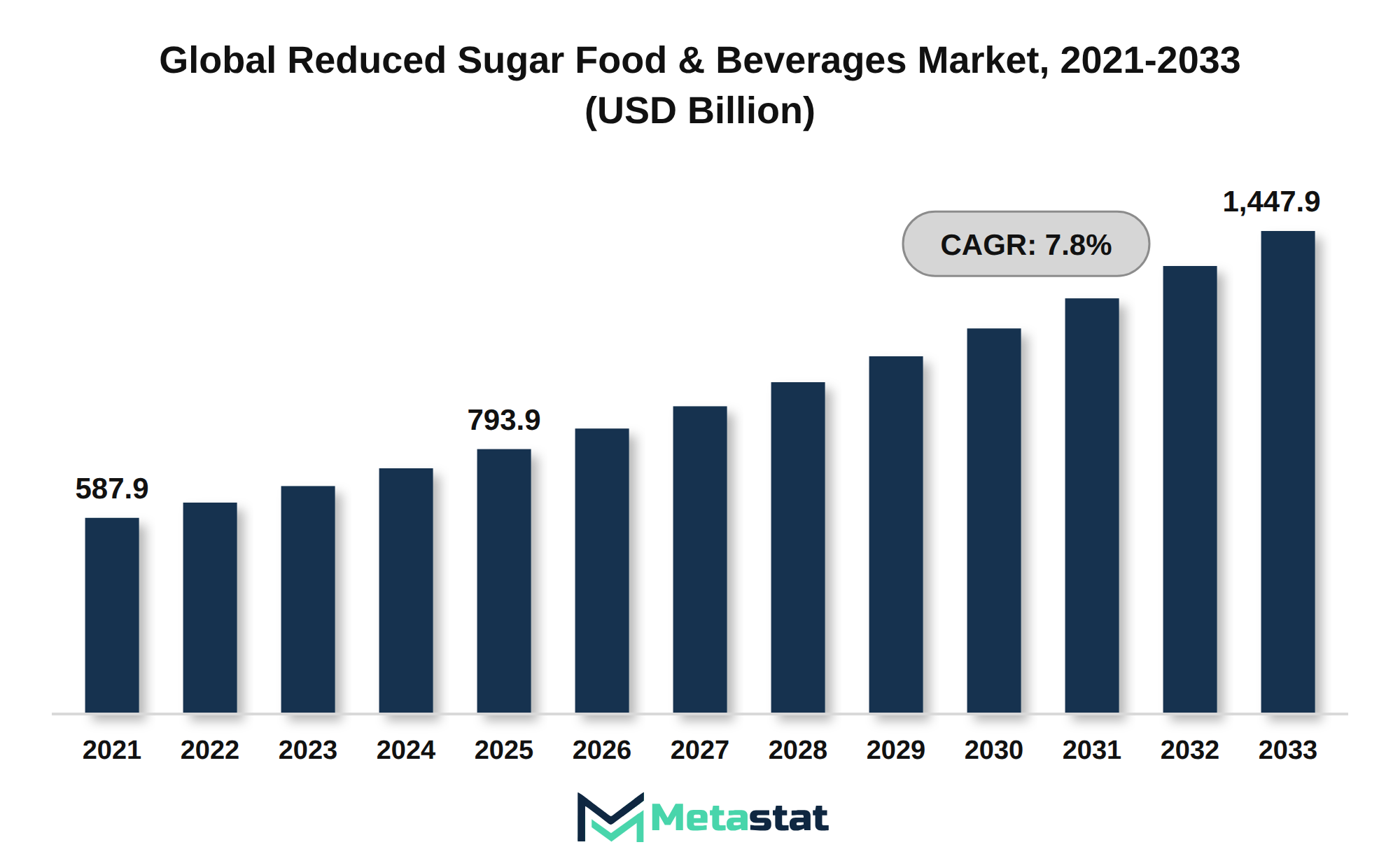
The global Reduced Sugar Food & Beverages market was valued at USD 793.9 billion in 2025 and is projected to grow at a CAGR of 7.8% during the forecast period, reaching USD 1,447.9 billion by 2033.
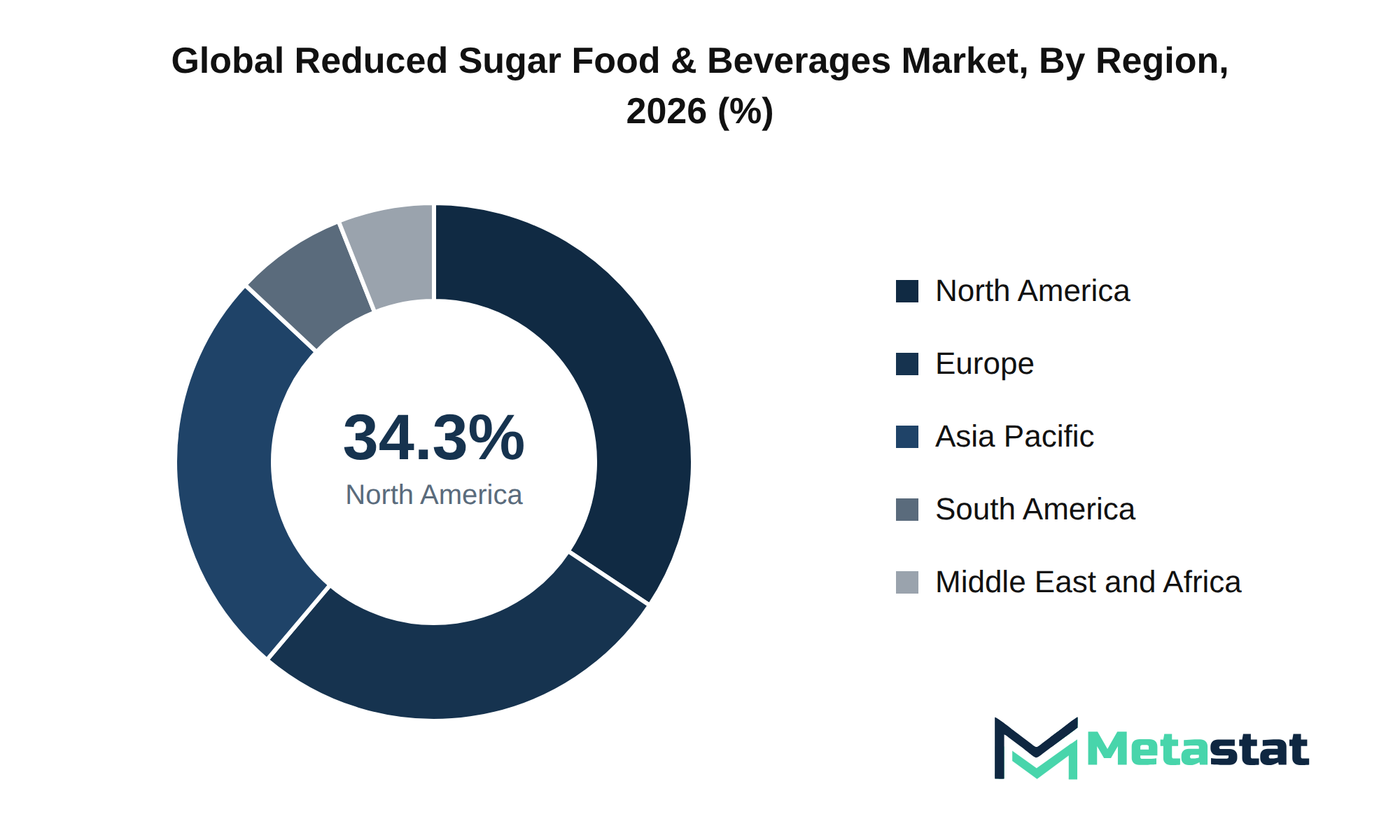
The global Reduced Sugar Food & Beverages market is positioned for significant growth, with a base value of USD 793.9 billion in 2025 and a projected forecast value of USD 1,447.9 billion by 2033. This equates to a compound annual growth rate (CAGR) of 7.8% during the forecast period from 2026 to 2033. The regional distribution of market share highlights North America holding 34.3% in 2025, with the United States leading the market share in 2026. Following North America, Europe and Asia Pacific represent substantial portions of the market, holding 26.8% and 25.8% respectively.
North America is expected to maintain its leading position, with a projected market value of USD 469.1 billion by 2033. The rise in health consciousness among consumers is pushing the demand for reduced sugar options, particularly in the United States. This trend is expected to be complemented by increasing regulatory pressures for healthier product formulations and labeling transparency.
In Europe, the market is supported by stringent regulations on sugar content in food products and a growing preference for healthier alternatives. The European market is anticipated to adapt to these regulations, driving innovation in product formulations that meet consumer demand for lower sugar options. Additionally, the Asia Pacific region is seeing a gradual shift towards reduced sugar products, driven by urbanization and changing lifestyles. As the market evolves, manufacturers are likely to invest in research and development to introduce innovative products that cater to the health-conscious consumer base in these regions.
The competitive environment within the Reduced Sugar Food & Beverages market is characterized by a mix of established players and emerging companies focusing on innovative product offerings. Major companies are actively investing in R&D to enhance their product portfolios and meet evolving consumer preferences. This competitive environment encourages continuous innovation across product segments, including bakery, beverages, confectionery, and dairy.
Additionally, the rise of e-commerce and online retail channels is reshaping distribution strategies. Supermarkets and hypermarkets continue to dominate, with a projected value increase from USD 370 billion in 2026 to USD 579.1 billion by 2033. Convenience stores and specialty health-food stores are also gaining traction, reflecting the changing shopping habits of consumers seeking healthier options. As a result, companies are re-evaluating their supply chain resilience and logistics architecture to adapt to these evolving distribution channels.
The demand for reduced sugar products is also influencing production practices, leading to a focus on sustainable transformation and decarbonization strategies. Companies are increasingly considering the environmental impact of their operations and sourcing strategies. This shift towards sustainability is critical, as consumers become more aware of the environmental footprint associated with their food choices.
The Reduced Sugar Food & Beverages market is on a trajectory of significant growth, driven by a confluence of health trends, regulatory changes, and evolving consumer preferences. As companies navigate this dynamic environment, the need for innovation, sustainability, and effective distribution strategies will be essential to capturing market share and meeting the demands of health-conscious consumers.
The supply chain dynamics in the Reduced Sugar Food & Beverages market are increasingly complex, influenced by various external factors. Manufacturers face challenges related to sourcing raw materials, particularly as the demand for natural sweeteners rises. These sweeteners often undergo stringent quality control and regulatory assessments, affecting procurement timelines. Disruptions in global logistics due to geopolitical tensions and trade regulations have necessitated the reevaluation of sourcing strategies. Companies are actively seeking to build resilient supply chains that can adapt to these challenges, ensuring a steady flow of ingredients while minimizing cost fluctuations.
Digitalization is reshaping operations across the Reduced Sugar Food & Beverages market. Companies are investing in smart operations and Industry 4.0 technologies to enhance production efficiency, improve quality control, and streamline supply chain management. Data analytics and machine learning play crucial roles in understanding consumer preferences and optimizing product development. These advancements drive innovation in product offerings and enable companies to respond swiftly to market trends. The integration of digital tools across the value chain enhances transparency and allows for better inventory management, contributing to overall market growth.
The Reduced Sugar Food & Beverages market is not insulated from macroeconomic headwinds. Inflationary pressures have impacted production costs, influencing pricing strategies across the industry. Fluctuations in currency values complicate international trade, affecting profit margins for companies operating in multiple regions. In response, market players are focusing on capital allocation strategies that optimize operational expenditures while ensuring sustainable growth. Investments in automation and efficient production processes are becoming vital to maintain competitiveness amid these financial challenges. Companies must navigate these economic uncertainties while continuing to innovate and meet consumer demands.
As the Reduced Sugar Food & Beverages market evolves, companies must establish clear strategic imperatives to thrive. Emphasizing research and development is essential for creating next-generation products that align with consumer preferences for healthier options. Collaboration with suppliers and distributors enhances market penetration and improves customer engagement. Companies are also urged to prioritize sustainability initiatives, aligning with global trends toward eco-friendly practices. By integrating sustainability into their core strategies, businesses can address consumer concerns while enhancing brand loyalty. The ability to adapt to changing market conditions will be crucial for long-term success.
In recent years, consumers have increasingly prioritized health and wellness, leading to a noticeable shift in their purchasing behavior. This change has translated into a growing demand for products that meet reduced sugar criteria, particularly in the Reduced Sugar Food & Beverages market. As individuals become more aware of the health implications associated with high sugar consumption, they actively seek alternatives that align with their dietary goals. This trend is driven by a combination of health awareness campaigns, increased access to information, and a generational shift towards healthier eating habits. Consequently, food and beverage manufacturers are responding to this demand by reformulating products to reduce sugar content, enhancing the appeal of these offerings to health-conscious consumers.
This shift in consumer behavior is particularly pronounced in regions such as North America and Europe, where awareness of the adverse effects of sugar on health is at an all-time high. For instance, in North America, the market is projected to experience a compound annual growth rate (CAGR) of 7.8% from 2026 to 2033, with a market value reaching approximately USD 469.1 billion by 2033. In Europe, similar trends contribute to a robust market presence, driven by a growing population that is increasingly inclined to adopt reduced sugar products. This regional demand highlights the necessity for players in the market to innovate and develop new product lines that cater to this evolving consumer base.
For suppliers, this shift presents both challenges and opportunities. Adapting to changing consumer preferences requires investment in research and development to create lower-sugar alternatives without compromising taste or quality. Suppliers must navigate the complexities of ingredient sourcing, as they look to incorporate alternative sweeteners and natural ingredients that appeal to health-focused consumers. Building strategic partnerships with manufacturers and retailers will also be crucial, as suppliers aim to position their products effectively within the growing Reduced Sugar Food & Beverages market.
Changes in demographic patterns and consumer behaviors significantly influence the Reduced Sugar Food & Beverages market. An aging population, coupled with increasing lifestyle-related health concerns, is driving demand for healthier food and beverage options. Younger consumers are also shifting their preferences toward products that align with their wellness goals, which includes reducing sugar intake. This heightened awareness of health issues is prompting many consumers to scrutinize ingredient labels more closely and seek out reduced sugar alternatives. As a result, manufacturers are responding by reformulating existing products and developing new offerings that meet these changing preferences.
Regions most affected include North America and Europe, where health-conscious consumers have embraced reduced sugar options. In North America, for example, the market is projected to reach USD 469.1 billion by 2033, driven by a CAGR of 7.8% during the forecast period. European consumers are also increasingly prioritizing reduced sugar foods, reflecting a similar trend toward health and wellness. In these regions, demographic shifts, such as increased life expectancy and a higher prevalence of obesity, intensify the demand for products that promote better health outcomes, leading to significant market expansion.
For suppliers, this shift in consumer behavior necessitates innovation in product development and marketing strategies. Companies must invest in research and development to create appealing and effective reduced sugar products that cater to evolving consumer preferences. They also need to adapt their marketing efforts to emphasize health benefits, which connect with the target audience. As competition intensifies, suppliers that successfully align their offerings with consumer demands may capture greater market share, thereby benefiting from the growth anticipated in the Reduced Sugar Food & Beverages market.
The Reduced Sugar Food & Beverages market faces significant constraints due to high capital investment requirements and rising operational costs. These financial burdens stem from several sources, including the need for advanced manufacturing technologies, compliance with stringent quality standards, and the development of innovative product formulations. As companies strive to reduce sugar content while maintaining taste and quality, substantial investments in research and development become essential. This results in a challenging financial climate, particularly for smaller players who may struggle to meet these demands.
North America and Europe experience the most pronounced impacts from these financial constraints. In North America, the market value is projected to reach USD 469.1 billion by 2033, highlighting the robust demand for reduced sugar offerings, yet also reflecting the pressure on manufacturers to invest heavily in production capabilities. The regional distribution reflects a competitive environment where high operational costs can hinder smaller companies from entering or expanding within the market, limiting innovation and product diversity.
Industry players are attempting various strategies to mitigate these challenges. Some are forming partnerships to share the financial burden of new technology implementation or opting for outsourcing production to reduce overhead. However, these workarounds often fall short of addressing the root issues. Relying on external manufacturing can lead to quality control challenges and increase vulnerability to supply chain disruptions. As a result, while companies seek to adapt to the market's demands, the high capital and operational costs continue to constrain growth and innovation in the Reduced Sugar Food & Beverages market.
The Reduced Sugar Food & Beverages market faces considerable operational challenges stemming from pricing compression and rising input costs. As consumer preferences shift towards healthier options, brands must balance maintaining competitive pricing with the escalating costs of raw materials and production. Factors such as volatile feedstock prices and logistical disruptions contribute to these challenges, forcing companies to manage tighter margins while satisfying demand for lower-sugar products.
These challenges are particularly pronounced in segments such as beverages and bakery products, where the competition is intense and brand loyalty is hard to establish. North America, which holds a significant market share of 34.3%, experiences heightened pressure due to its established consumer base and strong regulatory frameworks. In Europe, similar dynamics are observed, with firms facing both market saturation and increased regulatory scrutiny, making it difficult to maintain profitability while investing in compliance and product innovation.
To address these pressures, firms are investing in more efficient production techniques and striving to optimize supply chains. This often involves the adoption of advanced technologies, which can incur substantial upfront costs. Companies may seek to reformulate products to reduce sugar content without compromising taste, requiring significant research and development investments. Overall, the financial implications of these strategies are significant, as firms must navigate the complexities of a competitive environment while managing the rising costs associated with sourcing and compliance in the Reduced Sugar Food & Beverages market.
Growing health consciousness among consumers has created a substantial opportunity in the Reduced Sugar Food & Beverages market. As awareness of the negative effects of excessive sugar intake rises, demand for products with reduced sugar content has expanded significantly. This shift is particularly pronounced in regions such as North America and Europe, where preferences increasingly lean towards healthier options. The market's base value reached USD 793.9 billion in 2025 and is projected to nearly double, reaching USD 1,447.9 billion by 2033, reflecting a compound annual growth rate (CAGR) of 7.8% during the forecast period.
Key players in this market include established food and beverage manufacturers as well as innovative startups. Companies positioned to capitalize on this opportunity must invest in advanced technologies that support the development and production of reduced sugar products. This includes leveraging new sweetening technologies, optimizing production processes for efficiency, and enhancing product formulation to meet consumer expectations. A focus on marketing strategies that highlight health benefits and sustainability can further attract health-conscious consumers. Companies that adapt quickly to these technological advancements and changing consumer preferences will likely lead the market.
The window of opportunity is influenced by several factors, including regulatory changes and evolving consumer trends. As governments worldwide implement stricter guidelines on sugar content in food and beverages, companies must remain agile to adapt to these regulations. The rapid pace of digital transformation in retail, including the growth of online sales channels, will significantly impact market dynamics. Companies that fail to respond to these changes risk losing market share to more adaptable competitors. Thus, maintaining a keen awareness of industry trends and consumer preferences will be essential for capturing growth in this evolving market.
The Global Reduced Sugar Food & Beverages market is segmented based on Product, Distribution Channel, Sugar-Reduction Claim, and undefined.
Valued at USD 156.2 billion in 2026, the bakery segment is projected to reach USD 249 billion by 2033, growing at a CAGR of 6.9% during the forecast period. This growth is driven by increasing consumer demand for healthier options, as more individuals seek to reduce their sugar intake without sacrificing taste. Innovative ingredient substitutions and advancements in baking technology are facilitating the production of reduced sugar bakery products that maintain desirable flavor profiles and textures.
As consumers become more health-conscious, adoption rates for reduced sugar bakery items are rising, leading to a significant shift in purchasing behavior. The segment is also benefiting from the adoption of regulatory compliance standards aimed at promoting healthier food choices, which encourages manufacturers to invest in product reformulation. This reformulation aligns with growing trends toward clean label products and transparency in ingredient sourcing.
Cost structures within the bakery segment are influenced by raw material sourcing efficiencies and fluctuations in ingredient prices. Increased competition among manufacturers is creating pricing pressures, driving firms to streamline operations while maintaining quality. This dynamic environment opens strategic opportunity windows for new entrants and established brands alike, as they navigate the competitive environment of the reduced sugar food and beverages market.
Overall, the bakery segment presents significant growth potential, supported by evolving consumer preferences and industry innovation. The emphasis on healthier choices will likely continue to shape the market's trajectory in the coming years.
By 2033, the beverages segment is anticipated to reach USD 485 billion, growing at a compound annual growth rate (CAGR) of 8.7% during the forecast period. This growth stems from various factors including rising health consciousness among consumers and a shift towards lower-calorie options. As more individuals become aware of the health implications associated with excessive sugar consumption, demand for reduced sugar beverages is projected to increase. This trend reflects a broader consumer preference for healthier alternatives, which is shaping the overall dynamics of the Reduced Sugar Food & Beverages market.
Technological advancements also play a critical role in this segment's expansion. Innovations in sweetener technology, including the development of natural sugar substitutes, have enabled manufacturers to create beverages that maintain taste while reducing sugar content. These advancements not only cater to health-conscious consumers but also align with regulatory compliance standards aimed at limiting sugar in food and beverages. As companies increasingly adopt these next-generation upgrades, competition within the market is expected to intensify.
Effective supply chain management and raw material sourcing remain essential to address rising costs and maintain quality. Suppliers who can efficiently provide alternative sweeteners and ingredients will likely gain a competitive edge. As market dynamics evolve, brands that successfully address these challenges will find strategic opportunity windows to enhance their market presence.
By 2033, the confectionery segment is expected to reach USD 228.8 billion. This growth is propelled by an increasing consumer preference for healthier options without sacrificing sweetness. As more customers become aware of the health risks associated with high sugar consumption, manufacturers are responding by innovating their product lines to include reduced sugar options. This trend aligns with broader shifts within the Reduced Sugar Food & Beverages market, which emphasizes health-conscious choices.
Technological advancements play a critical role in the evolution of reduced sugar confectionery. Innovations in sweetener technologies, such as the use of natural substitutes and sugar alternatives, allow for the creation of products that maintain sweetness while lowering calorie content. These advancements not only address consumer demand but also provide manufacturers with opportunities to market their products more effectively.
Regulatory compliance and standards have also become increasingly important. Governments and health organizations around the world are implementing policies aimed at reducing sugar consumption in processed foods. This creates an environment where companies must adapt quickly to comply with new regulations while also meeting consumer expectations for healthier choices.
Supply chain dynamics further influence the confectionery segment, as sourcing raw materials becomes a strategic focus. Leveraging sustainable practices in sourcing while maintaining product integrity can enhance brand reputation and consumer trust. As competition intensifies, the ability to navigate these challenges will be vital for players in the market.
The Dairy segment is projected to grow at a CAGR of 8.3% during the forecast period. This growth is driven by increasing health awareness among consumers, pushing them towards reduced sugar alternatives in dairy products. Innovations in product formulations are also contributing to this trend, as manufacturers seek to enhance taste while minimizing sugar content, aligning with dietary preferences. Products labeled as low or reduced sugar are gaining traction, appealing to a broader audience, including those with diabetes or those simply monitoring sugar intake.
As consumer preferences shift towards healthier options, the Dairy segment is seeing a rise in demand for yogurts, milk, and cheeses that meet these criteria. The market is responding with a range of dairy products that incorporate alternative sweeteners and natural flavors, providing taste without compromising on health objectives. This aligns with the broader trends observed in the Reduced Sugar Food & Beverages market, where consumer demand for transparency and healthier ingredients continues to influence purchasing decisions.
However, manufacturers face challenges related to cost structures and pricing volatility, especially as raw material sourcing becomes increasingly complex. Fluctuations in dairy prices can impact overall profitability, which may affect product pricing strategies. Maintaining quality while adhering to reduced sugar claims requires a careful balancing act, particularly in a competitive market environment where innovation is key to capturing consumer interest.
Health trends significantly influence snack consumption, driving a shift towards reduced sugar options. As consumers become more health-conscious, they seek snacks that align with their dietary preferences while still satisfying cravings. This change has spurred innovation in product formulation, leading to the development of snacks that use alternative sweeteners and ingredients to maintain flavor without the added sugar. Consequently, manufacturers are focusing on enhancing product offerings through next-generation upgrades in recipe development and packaging.
Market dynamics also reflect evolving consumption patterns, particularly among younger demographics who prioritize convenience and health. Increased interest in on-the-go snacking options has prompted brands to diversify their product lines to cater to this demand. As a result, snacks featuring clean labels and functional benefits, such as added fiber or protein, are gaining traction. These shifts highlight the importance of aligning product development with consumer preferences in the reduced sugar food and beverages market.
Regulatory compliance remains a critical factor, as companies must navigate various standards related to sugar content and labeling. Adherence to these regulations not only helps in maintaining market access but also builds consumer trust. The costs associated with sourcing high-quality raw materials for reduced sugar products can influence pricing strategies, highlighting the need for manufacturers to balance quality with affordability.
This sub-segment aggregates a variety of products that do not fit neatly into the main categories of bakery, beverages, confectionery, or dairy. It remains residual due to the diversity of items it encompasses, which can include niche offerings and specialty items that may have limited market presence. Regulatory compliance standards and niche certifications often affect the adoption rates of these products, as brands seek to ensure they meet specific health claims. The evolving consumer preferences for reduced sugar options also influence the dynamics within this segment, reflecting broader trends in the Reduced Sugar Food & Beverages market.
Valued at USD 370 billion in 2026, the Supermarkets and Hypermarkets segment is projected to expand significantly, reaching USD 579.1 billion by 2033, at a CAGR of 6.6% during the forecast period. This growth can be attributed to the increasing consumer demand for healthier food options, which is driving retailers to stock a wider range of reduced sugar products. Supermarkets and hypermarkets serve as critical distribution channels, offering convenience and a variety of products that cater to health-conscious consumers.
The market dynamics indicate a shift towards sustainable sourcing and transparency in product labeling, which are crucial for attracting today's informed shoppers. Technological advancements in logistics and inventory management enhance these retailers' ability to respond to market demands efficiently. As consumers become more aware of the health implications of sugar intake, the demand for reduced sugar items is expected to rise, leading to greater availability in these larger retail settings.
Another factor contributing to the segment's growth is the increasing prevalence of dietary-related health issues, which prompts consumers to seek out better nutrition choices. This trend is reflected in the diverse product offerings available in supermarkets and hypermarkets, positioning the segment as a key player in the broader Reduced Sugar Food & Beverages market. Strategic partnerships between manufacturers and retailers will likely enhance the visibility and accessibility of reduced sugar options in these venues.
By 2033, the Convenience Stores segment is estimated to reach USD 246.1 billion, growing at a CAGR of 7.1% during the forecast period. This growth is primarily driven by the increasing consumer demand for on-the-go food and beverage options that align with healthier lifestyles. The convenience offered by these retail channels is important in shaping purchasing behaviors, as consumers seek quick access to reduced sugar options.
Adoption rates for reduced sugar products in convenience stores are rising, influenced by a growing awareness of health concerns related to high sugar consumption. As consumers increasingly turn to these retail formats for their grocery needs, convenience stores are emerging as vital distribution channels for reduced sugar food and beverages. This trend reflects broader end-use dynamics, where health-conscious consumers prioritize convenience without sacrificing nutritional value.
Price volatility and margin pressures unique to convenience stores may affect product pricing strategies, impacting overall market dynamics. As the market evolves, regulatory compliance standards surrounding labeling and health claims further complicate the situation. However, these challenges present strategic opportunity windows for brands innovating in product formulations to meet consumer preferences while adhering to compliance guidelines.
By 2033, the online retail segment is expected to reach USD 304.1 billion. This growth is driven by the increasing consumer preference for the convenience of online shopping, particularly for health-focused products like reduced sugar food and beverages. The rise in digital penetration and the availability of diverse product options online are significant factors enabling this trend.
Technological advancements in e-commerce platforms, including enhanced user experiences and streamlined payment processes, have facilitated greater consumer adoption. The growing awareness of health and wellness among consumers has led to an increased search for healthier food options, further boosting online sales. As consumers become more health-conscious, they are likely to explore and purchase reduced sugar alternatives more frequently through online channels.
Increased competition among online retailers also plays a role in driving down prices, ensuring greater accessibility for consumers. However, the segment faces challenges related to logistics and supply chain management, particularly in ensuring timely deliveries and maintaining product quality. Regulatory compliance in advertising and product labeling remains crucial, influencing how businesses operate within the online retail space.
The reduced sugar food and beverages market is evolving, with online retail emerging as a key distribution channel that complements traditional shopping methods. This segment is poised for substantial growth, providing strategic opportunities for companies looking to capitalize on the health and wellness trend.
With a projected compound annual growth rate (CAGR) of 8.2%, the Specialty and Health-Food Stores segment is well-positioned for significant expansion between 2026 and 2033. This growth can be attributed to increasing consumer awareness regarding health and wellness, which has driven demand for products with reduced sugar content. As consumers become more health-conscious, they actively seek alternatives that align with their dietary preferences, leading to greater sales in this retail channel.
Strategically, these stores often provide an environment conducive to educating consumers about the benefits of reduced sugar products. They typically feature a curated selection of items that meet specific health criteria, allowing for a better customer experience. Increased foot traffic in these stores correlates with higher adoption rates of reduced sugar food and beverages.
The segment benefits from favorable supply chain dynamics, as specialty retailers often establish direct relationships with manufacturers. This can lead to more favorable pricing structures and improved product availability, enhancing customer satisfaction and loyalty. As the market continues to evolve, these factors will likely contribute to sustained growth in the Specialty and Health-Food Stores segment of the Reduced Sugar Food & Beverages market.
This sub-segment encompasses distribution channels that are not classified under the major categories of supermarkets, convenience stores, online retail, or specialty and health-food stores. It includes various smaller and less common retail formats, which contribute to a residual bucket due to their limited market share and presence. The lack of significant growth drivers within these channels results in their classification as "Others." As consumer preferences evolve, these smaller channels may face challenges in attracting attention compared to larger retail formats, which dominate the Reduced Sugar Food & Beverages market.
In 2026, the Zero Sugar segment is valued at USD 256.7 billion and is projected to reach USD 477.8 billion by 2033, growing at a CAGR of 9.3% during this forecast period. This strong growth trajectory is driven primarily by the increasing consumer demand for healthier food and beverage options, alongside rising awareness of the negative health impacts associated with high sugar intake.
Technological advancements in sweetener formulations and product development have driven the evolution of Zero Sugar products. Companies are using innovative ingredients to create alternatives that maintain flavor while eliminating sugar content. This trend aligns with broader shifts in consumer preferences towards low-calorie and low-sugar options, as seen across the Reduced Sugar Food & Beverages market.
Regulatory compliance and health certifications are becoming crucial factors influencing market dynamics. Manufacturers are focusing on obtaining relevant certifications to meet consumer expectations and regulatory standards. These certifications assure quality and enhance brand reputation in a competitive marketplace.
Supply chain resilience is another aspect of the Zero Sugar segment that requires attention. Sourcing high-quality ingredients while managing logistics effectively remains a challenge. Companies are investing in strategic partnerships and local sourcing to mitigate risks associated with supply chain disruptions, ensuring product availability and consistency in quality.
By 2033, the Sugar-Free segment is estimated to reach USD 325.8 billion, growing at a CAGR of 7% during the forecast period. This growth is driven primarily by increasing health consciousness among consumers, who seek alternatives to traditional sugary products. The shift towards healthier lifestyles is prompting a robust demand for sugar-free offerings across various food and beverage categories, influencing consumer preferences and purchasing decisions.
As manufacturers innovate and improve formulations, technological maturation is crucial in expanding the Sugar-Free sub-segment. Advances in sweetening technologies, including the development of natural sweeteners and improved taste profiles, are enhancing the appeal of sugar-free products. Product evolution vectors are pushing brands to introduce new sugar-free options that cater to diverse consumer needs, including gluten-free, vegan, and organic options.
Regulatory compliance standards and niche certifications are also notable factors affecting this segment. As consumers become more discerning, products that meet specific health claims and certifications are favored, giving brands a competitive edge in the market. Pricing volatility and margin pressures are challenges that manufacturers face as they balance quality and affordability in sugar-free products.
In the context of supply chain resilience, raw material sourcing has become crucial. Companies must navigate logistics vulnerabilities while ensuring consistent quality and availability of sugar substitutes. As the demand for sugar-free items rises, strategic opportunity windows are opening for investments in production capabilities and market expansion within the Reduced Sugar Food & Beverages market.
By 2033, the No Added Sugar segment is expected to reach USD 333 billion. This growth can be attributed to increasing consumer awareness regarding health and wellness, which drives the demand for products with no added sugars. Many consumers are actively seeking alternatives that align with healthier lifestyles, contributing to the popularity of these products.
The evolution of product offerings within the Reduced Sugar Food & Beverages market facilitates this trend. Innovations in natural sweeteners and flavor enhancers play a crucial role in enhancing the taste of no added sugar products, making them more appealing to a broader consumer base. Advancements in food processing technology enable manufacturers to create products that maintain flavor without compromising on health benefits.
Regulatory compliance also impacts this segment positively. As governments impose stricter guidelines and encourage healthier food options, products with no added sugar become more desirable for manufacturers aiming to meet these standards. Such regulations can enhance market potential by pushing companies to reformulate existing products or develop new ones.
Distribution channels are expanding, enabling greater access to no added sugar products across various markets. Emerging retail formats and enhanced online shopping experiences make it easier for consumers to find these healthier options. The No Added Sugar segment is positioned for significant growth in the coming years.
Anticipated to grow at a compound annual growth rate (CAGR) of 6% during the forecast period, the Reduced and Lower Sugar segment reflects a significant trend in the Reduced Sugar Food & Beverages market. Increasing health awareness among consumers is driving demand for products that provide lower sugar content without sacrificing taste. This shift is largely fueled by a growing recognition of the adverse health effects associated with high sugar consumption, prompting manufacturers to reformulate existing products and innovate new offerings.
Technological maturation plays an important role in this segment's expansion. Advances in food technology enable the development of natural sweeteners and sugar substitutes, improving flavor profiles and consumer acceptance. As these technologies evolve, they reduce production costs, thereby addressing potential margin pressures that can arise from sourcing premium ingredients or navigating complex supply chains.
Regulatory compliance standards also influence market dynamics. Stricter sugar regulations in various regions encourage manufacturers to align their product formulations with health guidelines, further promoting the adoption of reduced and lower sugar options. This creates a competitive advantage for brands that position themselves as health-conscious alternatives.
As consumers increasingly gravitate towards healthier options, the Reduced and Lower Sugar segment is expected to capture a larger share of the market. With strategic opportunity windows emerging from heightened demand for clean-label products, brands are likely to intensify their focus on this sub-segment, ensuring its growth trajectory remains robust through 2033.
This aggregation includes products that do not fit into the other defined sugar-reduction claims. A variety of specialty items and niche products find their way into this category. Since these products are less prevalent in the broader market, their presence remains residual. Regulatory compliance and niche certifications often dictate the marketability of these items, shaping their adoption rates. The evolution of consumer preferences impacts the dynamics of this sub-segment, as shifts toward more standardized sugar-reduction claims gain traction in the Reduced Sugar Food & Beverages market.
Based on geography, the Global Reduced Sugar Food & Beverages market is divided into North America, Europe, Asia-Pacific, South America, Middle East, and Africa.
Growth in the North America Reduced Sugar Food & Beverages market is driven by increasing consumer awareness regarding health and wellness. This focus has led to a significant shift in purchasing behavior, pushing manufacturers to innovate and offer products that cater to health-conscious consumers. By 2033, the market is projected to reach USD 469.1 billion, expanding at a compound annual growth rate (CAGR) of 7.8% during the forecast period.
The United States, Canada, and Mexico are key players in this regional market, with the United States alone accounting for a substantial share of the overall consumption. Adoption rates for reduced sugar options are high in urban areas, where consumers prioritize healthier alternatives. The trend is further supported by an array of local compliance mandates and geographical regulatory frameworks that encourage the reduction of sugar in food and beverage products.
Increasing infrastructure modernization facilitates the distribution of these products across various channels. Supermarkets and hypermarkets are poised for significant growth, with a projected value of USD 579.1 billion by 2033. Online retail also has a key role, as the convenience of purchasing is appealing to busy consumers seeking reduced sugar options.
Local market leaders are emerging, driving vendor consolidation trends and increasing competition among manufacturers. As companies focus on product innovation and marketing strategies, they are increasingly tailoring offerings to meet regional preferences and cultural nuances. The competitive environment includes a mix of established companies and newer entrants that are agile in adapting to consumer demands.
Overall, the North America Reduced Sugar Food & Beverages market is experiencing strong growth fueled by shifting consumer preferences, regulatory initiatives, and innovations in product offerings, positioning it as a vital segment within the global market.
Europe holds a significant share of the global Reduced Sugar Food & Beverages market, accounting for 26.8% in 2025. The region's market growth is largely fueled by a combination of health-conscious consumer preferences and increasing regulatory support for reduced sugar products. Countries like Germany, France, and the UK are leading the way in adoption rates, driven by heightened awareness of health issues related to sugar consumption.
Mature market dynamics characterize the European market, where established players are progressively replacing traditional sugar-laden products with healthier alternatives. Incremental growth vectors emerge through the introduction of innovative flavors and formulations that align with consumers’ demand for both taste and health benefits. In particular, the Dairy and Beverages segments show promising growth trajectories, with a projected CAGR of 8.3% and 8.7%, respectively.
Localized procurement dynamics play a crucial role, as cultural nuances influence purchasing decisions across different European countries. In Italy and Spain, for instance, traditional recipes are increasingly being modified to meet reduced sugar claims, appealing to local tastes while adhering to health trends. The rise of online retailing has facilitated easier access to these products, enhancing their visibility and availability across diverse demographics.
The competitive environment in Europe is marked by domestic market leaders who are consolidating their positions through strategic collaborations and innovative product offerings. As the region shifts towards healthier consumption patterns, companies are investing in localized manufacturing densities and nearshoring initiatives to optimize supply chains and reduce production costs. This shift enhances efficiency and supports the growing demand for fresh, locally sourced ingredients.
Overall, the European Reduced Sugar Food & Beverages market is positioned for significant expansion, driven by consumer demand for health-oriented products, innovative formulations, and a supportive regulatory framework. With these factors at play, the region is set to remain a key player in the global market.
Asia-Pacific holds a significant share of the global Reduced Sugar Food & Beverages market. This region is marked by a diverse consumer base driven by rising health awareness and increasing demand for low-sugar alternatives. Countries such as China, India, and Japan are experiencing strong growth patterns in product adoption.
Infrastructure modernization is important in enhancing the distribution channels across Asia-Pacific. The expansion of supermarkets and hypermarkets facilitates the availability of reduced sugar products, catering to evolving consumer preferences. The shift towards online retail is gaining traction, with projections indicating substantial growth as convenience becomes a priority for consumers.
Localized procurement dynamics play a crucial role in this region. Cultural nuances influence buying behaviors, with consumers increasingly opting for products that align with their health and wellness goals. This trend is particularly evident in urban areas where health-focused marketing is prevalent, aiding in the acceptance of reduced sugar options.
Emerging markets like India and Southeast Asia are witnessing rapid adoption rates due to underpenetrated territories. Companies are focusing on strategic entry barriers and foreign direct investment (FDI) flows, allowing them to tap into these growing markets effectively. The potential for significant incremental growth in these regions remains high as consumer education and product awareness improve.
The competitive environment is evolving, with domestic market leaders investing in innovative product formulations to meet local tastes. As a result, vendor consolidation trends are emerging, enabling firms to optimize supply chains and improve market positioning. The overall outlook for the Reduced Sugar Food & Beverages market in Asia-Pacific is positive, with continuous growth anticipated through 2033.
The Reduced Sugar Food & Beverages market in South America is projected to account for 7.0% of the global market by 2025. Brazil leads the regional demand, driven by an increasing consumer preference for healthier alternatives as health consciousness rises. The population's growing concerns regarding obesity and diabetes are prompting more consumers to seek reduced sugar options in their diets.
Argentina also has a strong influence in the regional dynamics, exhibiting a strong inclination towards reduced sugar products. The market in Argentina is fueled by a combination of cultural trends and health campaigns aimed at reducing sugar consumption. This aligns with the global push for healthier food options, making Argentina a noteworthy player in the market.
Emerging market front-runners in South America benefit from infrastructure modernization, which enhances distribution and accessibility of reduced sugar products. Improved supply chain capabilities and localized manufacturing densities further support the efficient delivery of these products to consumers. As a result, substantial penetration potential exists in underdeveloped markets within the region.
The competitive landscape includes a mix of local and international players, with domestic market leaders focusing on innovative product offerings to capture consumer interest. Vendor consolidation trends are evident as companies aim to streamline their operations and expand their market reach. This consolidation might enhance competitiveness and create more robust distribution networks across South America.
Localized procurement dynamics contribute to the success of the market, as cultural nuances allow brands to tailor their offerings to meet regional tastes and preferences. This customization is crucial in engaging consumers and building brand loyalty. As South America continues to evolve in response to health trends, the demand for reduced sugar food and beverages is expected to grow significantly in the coming years.
The Middle East and Africa holds a 6.00% share of the global Reduced Sugar Food & Beverages market in 2025, indicating a significant engagement in health-conscious consumer trends. Saudi Arabia and the UAE are leading contributors to this growth, driven by increasing health awareness and a rising demand for low-sugar alternatives. South Africa also demonstrates an expanding market presence, supported by a growing middle class seeking healthier lifestyle options.
Emerging market front-runners in the region are modernizing infrastructure and addressing underpenetrated territories. This focus on modernization enhances distribution networks, making it easier for companies to deliver reduced sugar products to consumers. The rising health consciousness among consumers has led to an increased focus on product offerings that prioritize lower sugar content, aligning with local compliance mandates and cultural preferences.
The regional competitive environment is evolving, with domestic market leaders responding to consumer demands for healthier options. Increased interest from foreign direct investment (FDI) flows into the region suggests that global players are recognizing market potential. Localized manufacturing densities are also becoming more prevalent as companies seek to optimize their supply chains and meet local demands effectively.
With a projected compound annual growth rate (CAGR) of 7.8% from 2026 to 2033, the market is expected to see incremental growth vectors emerge. The presence of cross-border trade corridors supports the availability of diverse product offerings while also posing challenges related to geopolitical fragmentation.
The Middle East and Africa presents a dynamic market environment characterized by emerging opportunities in the Reduced Sugar Food & Beverages market. The relationship between local and international players, as well as evolving consumer preferences, will shape the future of this sector in the region.
The Reduced Sugar Food & Beverages market is undergoing significant consolidation, as larger players seek to enhance their market presence through mergers and acquisitions. Companies are acquiring smaller, innovative firms to quickly broaden their product offerings and tap into new consumer segments. This trend is evident among major players such as PepsiCo, Inc. and Nestlé S.A., which have demonstrated interest in expanding their portfolios to include reduced sugar options.
Strategic alliances are also prevalent, allowing companies to share resources and expertise to stay competitive. Collaborations between food manufacturers and technology firms are increasingly common, enabling the development of new formulations and production techniques. Such partnerships help address the growing consumer demand for healthier products and cater to the rising trend of sugar reduction.
Market players are employing diverse go-to-market strategies to secure a foothold in the competitive landscape. Many companies are focusing on direct-to-consumer models, particularly through online retail platforms, to reach health-conscious consumers effectively. The market is projected to see considerable growth in online retail, with an expected value of USD 304.1 billion by 2033. Traditional distribution channels such as supermarkets and hypermarkets remain vital, with a forecasted value of USD 579.1 billion.
Pricing architectures are adapting to accommodate the increasing costs associated with reduced sugar formulations. Companies like The Coca-Cola Company and Danone S.A. are navigating this challenge by maintaining competitive pricing while emphasizing the health benefits of their products. This approach is crucial for retaining consumer loyalty in a market where consumers are becoming more price-sensitive due to economic fluctuations.
Product differentiation is essential in the strategies of market leaders. By developing unique product lines that cater to specific dietary needs, companies can appeal to niche markets. Innovations in flavors and formulations, as seen with brands like Chobani, LLC and Magic Spoon, Inc., assist in maintaining a competitive edge. These efforts in research and development contribute to proprietary technology moats that help secure market share.
Barriers to entry are significant in this market, primarily due to the high costs associated with compliance, quality control, and research and development. New entrants face challenges in scaling their operations and competing with established brands that benefit from economies of scale. Brand equity dynamics contribute to customer retention, as consumers often prefer familiar brands with a proven track record in health-focused offerings.
The value chain integration amongst key players enhances procurement leverage, allowing companies to manage costs effectively while ensuring quality. Companies such as Cargill Inc. and Givaudan SA leverage their extensive supply chain networks to maintain a competitive advantage while optimizing their production processes.
Intellectual property (IP) portfolios are becoming increasingly important within the Reduced Sugar Food & Beverages market. Companies with strong patent landscapes, such as Mars, Incorporated and Unilever plc, can protect their innovations and maintain a competitive edge. As the market matures, the technological defensibility of proprietary formulations will likely shape competitive dynamics.
Looking forward, the competitive outlook remains robust, with a projected compound annual growth rate (CAGR) of 7.8% from 2025 to 2033. Firms will need to address defensive imperatives by continuously innovating and adapting their strategies to meet evolving consumer preferences. Strategic growth vectors will revolve around expanding product lines, enhancing marketing efforts, and leveraging technology to meet the demands of health-conscious consumers.
The Reduced Sugar Food & Beverages market is positioned for significant growth, with the market size projected to rise from USD 793.9 billion in 2025 to over USD 1,447.9 billion by 2033. This trajectory indicates a compound annual growth rate (CAGR) of 7.8%. As consumers increasingly prioritize health and wellness, demand for reduced sugar options is transforming the food and beverage sector. Several factors will influence this growth, including downstream demand transformations, core industry maturation, and structural consumption shifts.
In the base case, the market will benefit from growing consumer awareness regarding health issues linked to sugar consumption. This heightened awareness is driving innovation and product development in the reduced sugar segment. Companies are expected to invest in research and development, resulting in new product launches that cater to health-conscious consumers. Moreover, regulatory evolution, including potential sugar taxes and stricter labeling requirements, will create both compliance challenges and opportunities for growth in the market.
Underbull case assumptions, economic downturns may lead consumers to prioritize affordability over health benefits, potentially stunting growth in premium reduced sugar products. Conversely, the bull case hinges on the sustained momentum of health trends, where a robust economy encourages spending on health-oriented food and beverage options. Companies focusing on premium quality and innovative formulations may capture a larger market share, benefiting from increased consumer willingness to pay for healthier alternatives.
Investment strategies will be crucial in navigating the evolving market. Firms should consider diversifying their supply chains to mitigate risks associated with geopolitical realignments and global supply chain shifts. Qualifying a second supplier outside the current concentration region would enhance resilience. Aligning capital allocation with strategic initiatives in next-generation technology integration can drive production efficiencies and product quality improvement.
As the market matures, emerging white-space opportunities will become more apparent. Identifying unmet consumer needs, such as clean-label products or low-calorie options, can create new growth avenues. Collaborating with health professionals and leveraging consumer insights will be critical to developing products that appeal to target demographics. Investment in online retail channels also offers a pathway to reach a broader audience, particularly as convenience continues to dominate consumer preferences.
Future growth in the Reduced Sugar Food & Beverages market will be contingent upon several key factors. These include the successful integration of new technologies, adherence to evolving regulatory standards, and effective capital investment in production capabilities. In addition, maintaining agile supply chains that can quickly respond to market demands will also be essential for sustained growth. Should these conditions hold, the projected market size of USD 1,447.9 billion by 2033 stands achievable.
The report strategically identifies and profiles the key market players and analyses their core competencies in each sub-segment of the Reduced Sugar Food & Beverages market.
|
Report Attributes |
Details |
|
Study Period |
2021-2033 |
|
Base Year |
2025 |
|
Estimated Year |
2026 |
|
Forecast Period |
2026-2033 |
|
Historical Period |
2021-2025 |
|
Growth Rate |
CAGR 7.8% from 2026 to 2033 |
|
Revenue Unit |
USD billion |
|
Segmentation |
By Product, Distribution Channel, Sugar-Reduction Claim, and Region |
|
By Region |
North America (By Product, Distribution Channel, Sugar-Reduction Claim, and Country)
|
|
Europe (By Product, Distribution Channel, Sugar-Reduction Claim, and Country)
|
|
|
Asia Pacific (By Product, Distribution Channel, Sugar-Reduction Claim, and Country)
|
|
|
South America (By Product, Distribution Channel, Sugar-Reduction Claim, and Country)
|
|
|
Middle East and Africa (By Product, Distribution Channel, Sugar-Reduction Claim, and Country)
|
Find answers to common questions about this report
The Reduced Sugar Food & Beverages market size was valued at USD 793.9 billion in 2025, according to the Metastat Insights study.
The Reduced Sugar Food & Beverages market is expected to expand at a CAGR of 7.8% during the forecast period from 2026 to 2033.
According to Metastat Insights analysis, the North America Reduced Sugar Food & Beverages market size is projected to reach USD 469.1 billion by 2033.
Beverages lead the Reduced Sugar Food & Beverages market with a projected value of USD 485 billion by 2033. This figure surpasses other product segments, indicating a strong preference for reduced sugar beverages among consumers.
Key drivers for the Reduced Sugar Food & Beverages market include heightened health awareness among consumers and a shift towards healthier eating habits. This trend is particularly strong in North America and Europe, where individuals increasingly seek reduced sugar options due to concerns over health implications associated with high sugar consumption.
North America holds the dominant share of the Reduced Sugar Food & Beverages market, with a regional share of 34.3% in 2025.
The Reduced Sugar Food & Beverages market growth is restrained by high capital investment requirements and rising operational costs. These financial burdens arise from the need for advanced manufacturing technologies and compliance with stringent quality standards, which can hinder smaller companies from entering or expanding in the market.
Consumers increasingly prioritize health and wellness, driving demand for reduced sugar products. This trend is particularly strong in North America and Europe, where health awareness campaigns and demographic shifts towards healthier eating habits enhance product adoption in the Reduced Sugar Food & Beverages market.
The Reduced Sugar Food & Beverages market is estimated to reach a valuation of USD 1,447.9 billion by 2033.
Key players in the Reduced Sugar Food & Beverages market include The Coca-Cola Company, Cargill Inc., Danone S.A., Nestlé S.A., PepsiCo, Inc., and Mondelēz International, Inc. These companies are significant contributors to the industry, offering a range of reduced sugar products that cater to changing consumer preferences.
The analysts below cover Food and Beverages research at Metastat Insights.
LEAD ANALYST
Utkarsh Khirodkar is a Lead Market Research Analyst at MetaStat Insight, specializing in market intelligence, technology sector assessments, and competitive strategy.

LEAD PRINCIPAL ANALYST, PHARMA AND HEALTHCARE
Food and Beverages · Healthcare · Healthcare IT · Medical Devices
Ajay Devgire is the Lead Healthcare Analyst at MetaStat Insight, leading strategic research and market intelligence initiatives across the global healthcare domain.

SENIOR RESEARCH ANALYST
Biotechnology · Food and Beverages · Medical Devices · Packaging
Snehal Pasalkar is a Research Analyst at MetaStat Insight, operating at the intersection of life sciences research, competitive strategy, and market intelligence.
Last Updated: August, 2026
When planning edge sensor rollouts across refinery environments, generic IoT reports typically miss the harsh-environment certification bottlenecks. MetaStat Insight gave an objective evaluation of ATEX and Class 1 Division 2 hardware availability, along with realistic five-year maintenance cycle cost projections. The comparison of wireless mesh versus private cellular backhaul helped our team pressure-test network reliability models for remote processing facilities.
In the biological seed treatment space, registration timelines vary drastically between the European Union, Brazil, and North America. The MetaStat Insight research handled these cross-border regulatory barriers with genuine nuance, mapping commercialization pathways alongside historical field adoption rates. The segmentation between microbial strains and biochemical active ingredients was particularly well structured.
Our team was tracking whether regional recycling infrastructure could realistically absorb the growing volume of lithium iron phosphate batteries over the next decade. The report did a solid job separating announced hydrometallurgical plant capacity from active, permitted operational throughput. That distinction made the feedstock availability projections and regional recovery rate models far more credible than standard commercial overviews.
Explore related market intelligence reports worth reading alongside this one.