
LEAD ANALYST
Utkarsh Khirodkar is a Lead Market Research Analyst at MetaStat Insight, specializing in market intelligence, technology sector assessments, and competitive strategy.

Global Food & Beverage Process Plants Market Size, Share, By Plant Type (Dairy & Liquid Dairy Processing Plants, Beverage Processing Plants, Bakery & Confectionery Processing Plants, Meat, Poultry & Seafood Processing Plants, Processed Food & Convenience Food Plants, Fruits, Vegetables & Potato Processing Plants, Oils, Fats, Sauces & Condiments Processing Plants, Plant-Based & Alternative Protein Processing Plants and Others), By Process Technology (Thermal Processing & Pasteurization, Mixing, Blending & Homogenization, Separation, Filtration & Centrifugation, Evaporation & Concentration, Drying & Powder Processing, Fermentation & Brewing, Membrane Processing, Material Handling, Dosing & Conveying, CIP & SIP and Process Utilities & Refrigeration), By Solution Type (Process Plant Engineering & P&ID Software, 3D Plant Design & Digital Twin Solutions, Process Simulation & Optimization Software, Electrical, Instrumentation & Control Engineering, Process Automation & Control Systems, MES & Plant Information Systems, Process Equipment, Skids & Modular Systems, Turnkey Plant Engineering & Integration and Lifecycle Management & Modernization Services), By Production Category (Packaged Foods, Beverages, Dairy Products, Bakery & Confectionery, Meat, Poultry & Seafood, Fruits, Vegetables & Potato Products, Oils, Fats, Sauces & Condiments, Plant-Based & Alternative Protein Products and Others), Industry Analysis, Growth, Trends, and Forecast, 2026-2033
Report ID
MSI-5121
Published
September, 2026
Pages
280 Pages
Format
Historical
Base year
Forecast
Forecast period
Report Details
Choose Your License
Global Food & Beverage Process Plants Market
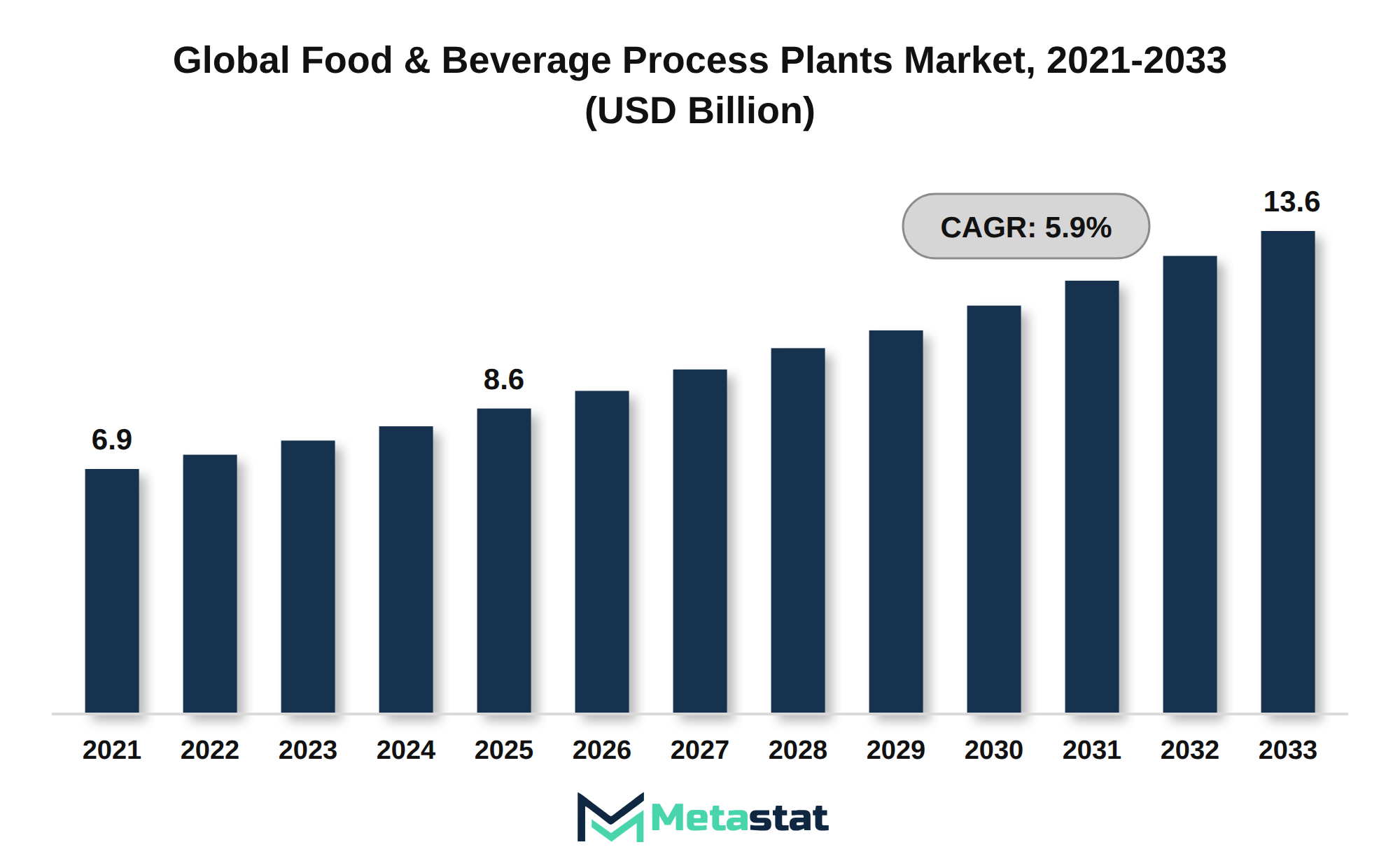
The global Food & Beverage Process Plants market was valued at USD 8.6 billion in 2025 and is projected to reach USD 13.6 billion by 2033, growing at a CAGR of 5.9% over the forecast period.
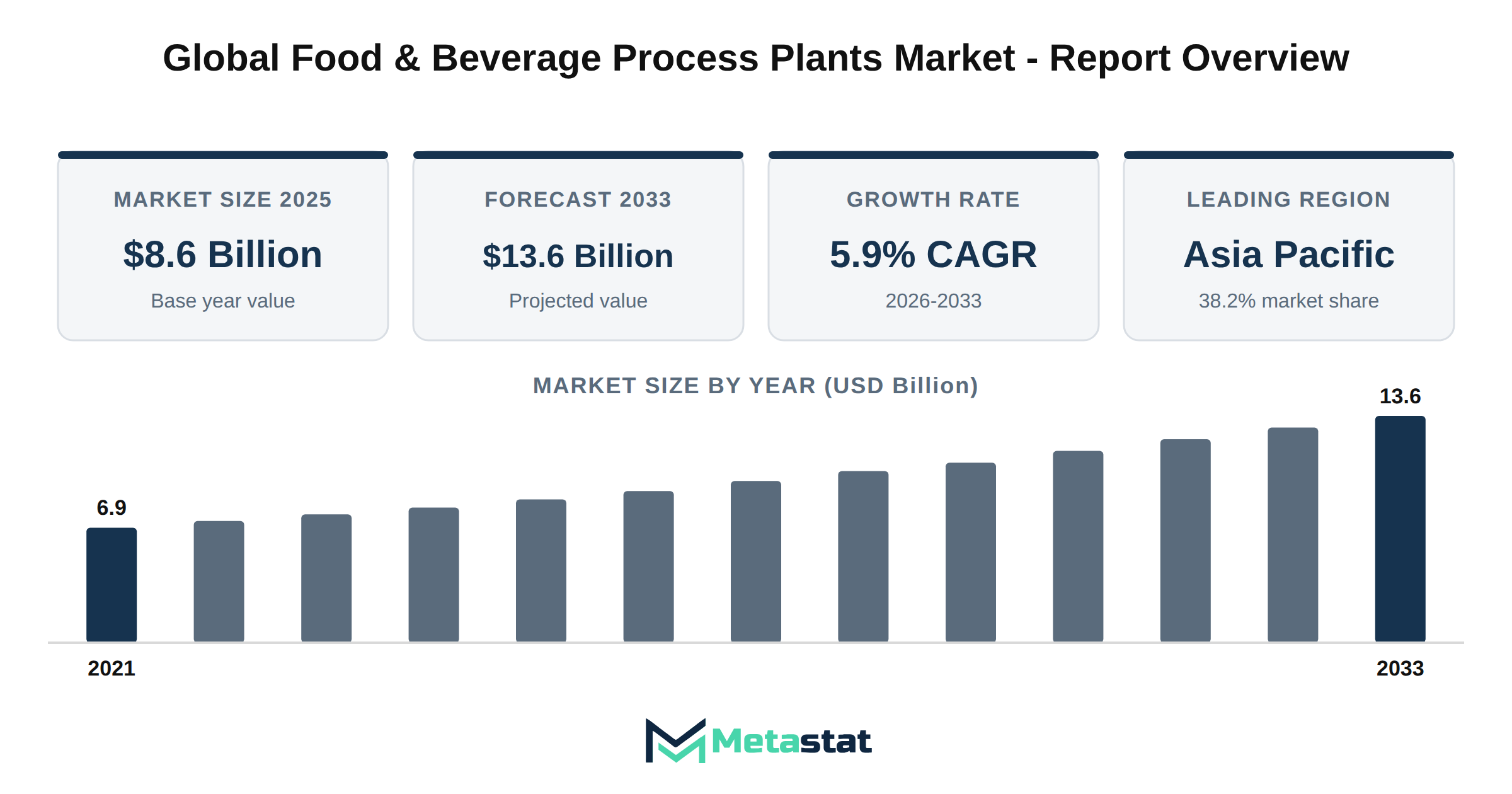
The Food & Beverage Process Plants market is projected to expand from USD 8.6 billion in 2025 to USD 13.6 billion by 2033, representing a compound annual growth rate (CAGR) of 5.9%. Historical data shows growth from USD 6.9 billion in 2021, USD 7.3 billion in 2022, and USD 7.7 billion in 2023, culminating in USD 8.1 billion in 2024. The market reaches USD 8.6 billion in the base year of 2025, indicating a steady progression.
Regional distribution of the market highlights that Asia Pacific occupies the largest share at 38.2%, followed by North America at 31.7% and Europe at 19.1%. South America and the Middle East and Africa contribute smaller shares, at 6% and 5.1%, respectively. By 2033, North America is expected to achieve a value of USD 3.9 billion, maintaining a CAGR of 5.9%. This regional performance reflects diverse demand across various geographies, influenced by local consumer preferences and production capabilities.
Market drivers include technological advancements in processing methods, increased demand for packaged foods, and a growing focus on sustainability in food production. Investments in R&D trajectories seek to enhance processing efficiency and product quality. Next-gen innovations, particularly in digital solutions including 3D plant design and digital twin technologies, shape future market dynamics.
Regulatory compliance and standards impact the market, with manufacturers adhering to stringent safety and quality regulations while navigating regional risk frameworks. Efforts toward decarbonization and circular economy dynamics gain traction, influencing procurement strategies and operational practices within the industry. This emphasis on sustainability reflects the market's response to evolving consumer expectations and environmental challenges.
The Food & Beverage Process Plants market experiences significant influences from regulatory compliance and standards. Various international regulations shape operational practices within the sector, ensuring safety and quality across food production processes. Adhering to these regulations requires ongoing investment in technology and training, impacting overall operational costs and efficiency.
Research and development trajectories advance technology within the market. Companies invest in innovative solutions to enhance production efficiency and product quality. This emphasis on R&D enhances competitiveness, allowing businesses to adapt to changing consumer preferences and market demands.
Sustainable transformation processes are increasingly prioritized in the market. Organizations focus on integrating environmentally friendly practices into their operations, aligning with global sustainability goals. Efforts include reducing waste, optimizing resource usage, and adopting renewable energy sources, which contribute to the long-term viability of the market.
Decarbonization efforts contribute to the market's evolution. Companies pursue strategies aimed at minimizing carbon emissions throughout the production lifecycle. This commitment to environmental responsibility enhances brand reputation and meets consumer expectations for sustainable products.
The supply chain landscape has adapted to meet emerging challenges. Disruptions caused by global events necessitate increased flexibility and resilience within the supply chain. Companies prioritize strategic partnerships and diversification of suppliers to mitigate risks associated with supply chain vulnerabilities.
Market fragmentation influences competitive dynamics within the Food & Beverage Process Plants market. A diverse range of players operates in the sector, from large multinational corporations to smaller niche providers. This fragmentation encourages innovation and allows customers access to various solutions tailored to their specific needs.
The value chain within the market reflects a complex interaction of various stakeholders, including suppliers, manufacturers, and retailers. Each participant contributes to delivering quality products to consumers, necessitating effective collaboration and communication throughout the chain.
Capital allocation strategies influence investment decisions across the market. Companies prioritize funding towards innovative technologies and infrastructure enhancements. Such investments drive growth, improve operational efficiency, and facilitate the adoption of next-generation solutions.
Infrastructure investments remain a focus, driven by modernization of facilities that is crucial for maintaining competitiveness. Upgrading equipment and technologies enhances production capabilities, ensuring alignment with contemporary industry standards and consumer expectations.
The future strategic outlook for the Food & Beverage Process Plants market emphasizes adaptability and responsiveness to evolving trends. Organizations that prioritize innovation, sustainability, and regulatory compliance will secure a competitive advantage in an increasingly dynamic marketplace.
Growth in the Food & Beverage Process Plants market is significantly influenced by macroeconomic factors, particularly in capital investment environments. Increased interest in infrastructure development correlates with rising GDP, which supports investments in food and beverage processing facilities. Enhanced public and private spending power facilitates access to funding for modernization projects and the adoption of advanced technologies.
Digital transformation initiatives are increasingly evident, with businesses prioritizing automation and software integration. The adoption of digitized processes enhances operational efficiency, reducing long-term operational costs. This shift attracts substantial venture funding, directly contributing to market expansion.
Consumer behavior trends, particularly lifestyle changes and urbanization, create higher demand for packaged and processed food products. While consumers seek convenience, the market adapts by investing in innovative processing technologies and efficient production methods. These consumer trends lead to diversification in product offerings, enhancing revenue streams for manufacturers.
Operational productivity remains a critical focus within the market. Process optimization initiatives streamline workflows, helping businesses meet growing consumer demand while minimizing costs. This drive for efficiency aligns with sustainability goals, where companies aim to reduce their carbon footprints while enhancing productivity.
Capital investment acts because a key driver for growth in the Food & Beverage Process Plants market, facilitating technological upgrades, meeting consumer needs, and enhancing operational efficiency. These factors collectively position the market for continued growth through 2033.
The Food & Beverage Process Plants market experiences accelerated growth driven by advancements in technology. The integration of automation and artificial intelligence optimizes production processes, enhancing operational efficiency and reducing labor costs. Digital transformation initiatives, including the adoption of software solutions for process simulation and optimization, streamline workflows, contributing to improved productivity across various plant types, including dairy, beverage, and meat processing plants.
Investment in modern technologies supports the market's expansion by enabling manufacturers to digitize legacy processes. This transition improves data management and enhances decision-making capabilities. Increased reliance on technology leads to better resource management, cost reduction, and overall profitability. The emphasis on innovation encourages participants within the Food & Beverage Process Plants market to explore new revenue streams through the development of proprietary technologies and services.
Continuous improvements in process technologies, including thermal processing and mixing, allow companies to meet evolving consumer demands for quality and efficiency. Adoption of these technological advancements increases competitive advantage, strengthening market positions and driving further investments in modernization. The ongoing trend toward technological integration establishes a robust foundation for sustainable growth within the Food & Beverage Process Plants market.
Regulatory tightening contributes to heightened compliance hurdles within the Food & Beverage Process Plants market. Adherence to various legal mandates complicates operational processes for manufacturers, pushing them toward increased expenditure on compliance-related measures. These challenges deter investment in newer technologies, creating a cycle where the inability to remain compliant leads to operational inefficiencies and increased costs.
Macroeconomic headwinds, including inflationary pressures, exacerbate existing challenges. Rising costs associated with raw materials and labor present significant hurdles for producers, leading to decreased margins and reluctance to invest in process innovations. This situation results in stagnation within the market, hindering growth opportunities.
Supply chain disruptions, influenced by geopolitical instability, impact the availability of critical components necessary for plant operations. These disruptions delay production timelines and inflate operational costs, forcing companies to reassess their investment strategies. The cumulative effect of these factors contributes to a constrained market environment, where competition intensifies and profitability is jeopardized.
Infrastructure gaps and connectivity deficits pose additional challenges, particularly in emerging regions. The absence of adequate infrastructure hampers the efficient deployment of advanced processing technologies and limits access to essential resources. This situation emphasizes the need for investment in regional capabilities to drive the evolution of the Food & Beverage Process Plants market.
Talent shortages and rising workforce overhead create significant operational barriers. The lack of skilled labor limits the ability of companies to optimize processes and implement innovative solutions. Workforce costs continue to rise, and companies face pressure to balance operational efficiency with financial sustainability, complicating the market landscape.
Geopolitical fragmentation impacts the Food & Beverage Process Plants market by disrupting established trade networks and creating uncertainty in supply chains. Rising trade deficits and tariff friction between nations contribute to increased costs for raw materials and components, affecting manufacturers' pricing strategies. Producers face challenges in sourcing materials internationally, leading to operational delays and potential shortages within the market.
Technological disruptions introduce complexities in research and development (R&D) integrations. The requirement for advanced machinery and processes necessitates significant investment in new technologies, deterring smaller companies from competing effectively. This situation creates barriers to entry and limits innovation within the market.
Environmental sustainability demands and decarbonization mandates influence operational costs. Companies encounter pressures to reduce their carbon footprints, often requiring investment in cleaner technologies and processes. These sustainability initiatives present immediate financial burdens that strain profit margins.
Workforce skill gaps pose another challenge impacting the Food & Beverage Process Plants market. The rapid advancement of automation technologies displaces traditional roles, leading to a shortage of skilled workers capable of managing new systems. Talent retention pressures complicate staffing, resulting from experienced employees seeking opportunities in other sectors.
Logistics disruptions stemming from geopolitical tensions and infrastructure gaps hinder efficient operation. Transportation bottlenecks and increased shipping costs challenge companies in meeting consumer demands, resulting in reduced competitiveness. The cumulative effect of these factors creates an environment of instability that impedes consistent growth across the market.
The Food & Beverage Process Plants market sees robust opportunities driven by emerging regional demands. The increasing consumer preference for processed foods, beverages, and dairy products influences investments in modern processing plants. Regional markets like Asia Pacific exhibit significant growth potential due to rising disposable incomes and shifting dietary patterns, prompting stakeholders to expand operational capacities.
Infrastructure modernization enhances efficiency and productivity across the market. Upgraded facilities facilitate the adoption of advanced processing technologies, including automation and digital solutions, improving operational yield. The integration of next-generation innovations aligns with sustainability imperatives, reflecting a growing emphasis on eco-friendly practices and ESG-driven alignments across the sector.
Geographic expansion into developing regions promotes diversification in production capabilities, addressing local consumer preferences and market trends. Strategic consolidation through cross-industry mergers enhances competitive positioning and resource sharing, enabling suppliers to adapt to changing demands. The market responds to evolving buying behaviors, spotlighting digital procurement shifts and the importance of adapting commercial models to meet customer expectations.
Supply chain localization emerges because a critical factor, promoting resilience and efficiency in operations. This approach mitigates risks associated with global sourcing and enhances compliance with eco-friendly regulations. Asset life-cycle extensions and maintenance upgrades provide further opportunities for operators to optimize existing resources, keeping pace with technological progress.
Overall, these factors collectively contribute to a dynamic environment in the Food & Beverage Process Plants market, enhancing growth prospects and attracting investment in innovative solutions and sustainable practices.
The Global Food & Beverage Process Plants market is segmented based on Plant Type, Process Technology, Solution Type, and Production Category.
Dairy & Liquid Dairy Processing Plants represent a significant segment within the Food & Beverage Process Plants market, valued at USD 1.5 billion in 2026, with expectations to reach USD 2.1 billion by 2033, exhibiting a CAGR of 5.4% during the forecast period. This segment's growth derives primarily from rising consumer preferences for dairy products, driven by health-conscious trends that emphasize nutritional benefits and dietary diversity.
Technological advancements play a crucial role in segment expansion. Innovations in automation, process optimization, and dairy product formulation facilitate enhanced efficiency and product quality. These technological maturation trends attract investment, further driving the adoption of modern processing technologies across the industry.
Regulatory compliance remains a key factor influencing operations within dairy processing. Stricter food safety and quality standards compel producers to adopt advanced technologies and practices, thereby affecting cost structures and operational strategies. Meeting these standards is essential for maintaining market position and ensuring consumer trust.
Shifts in consumption patterns indicate a growing demand for value-added dairy products, including lactose-free and organic options. This trend significantly impacts product evolution, leading to the development of innovative offerings that cater to diverse consumer needs. Capital investment in new processing technologies and product lines enhances competitive advantages.
The Dairy & Liquid Dairy Processing Plants segment continues to evolve in response to market dynamics, with strategic opportunity windows emerging from an increased focus on sustainability and waste reduction practices. Companies that prioritize these aspects position themselves favorably within the Food & Beverage Process Plants market, capitalizing on both consumer and regulatory trends.
Growth within the Beverage Processing Plants segment reflects evolving consumer preferences for diverse beverage options, including health-conscious products and premium alcoholic beverages. This segment is estimated to reach USD 2 billion by 2033, at a CAGR of 6.7% during the forecast period. Increasing demand for ready-to-drink beverages, coupled with innovation in flavors and formulations, drives significant investments in production capabilities.
Technological advancements enhance efficiency and quality in beverage production, leading to the adoption of automated processing systems and smart technologies. These technologies improve production speed, precision, and flexibility, allowing companies to respond swiftly to market trends and consumer demands. The Food & Beverage Process Plants market benefits from these innovations, driven by manufacturers' aim to optimize their operations while maintaining high-quality standards.
Regulatory factors influence the Beverage Processing Plants segment, with stringent safety and quality regulations driving the need for compliance in production processes. Companies investing in certifications and adhering to industry standards strengthen their market position while ensuring consumer trust. Cost structures within the segment experience pressures due to raw material price volatility, prompting manufacturers to explore alternative sourcing strategies and operational efficiencies.
Strategic investments in next-generation upgrades and enhancements contribute to the segment's growth. The focus on sustainability and eco-friendly practices influences product development, driving the introduction of organic and low-impact production methods. These shifts align with contemporary consumer expectations and support brand loyalty, further enhancing the growth trajectory of the Beverage Processing Plants segment within the broader Food & Beverage Process Plants market.
Bakery & Confectionery Processing Plants segment is projected to reach USD 1.6 billion by 2033. Demand for this segment is driven by increasing consumer preferences for convenient and ready-to-eat products. The expansion of retail channels and e-commerce platforms facilitates accessibility to bakery and confectionery goods, enhancing their consumption. Technological advancements in processing equipment improve production efficiency and product quality, supporting growth in this segment.
Shifts in dietary preferences, including a rise in indulgence-oriented items, further increase market demand. Consumers increasingly seek innovative products, including gluten-free and organic offerings, prompting manufacturers to adapt their production capabilities. Regulatory compliance regarding food safety standards influences operational practices, compelling investments in improved processing technologies.
Pricing volatility in raw materials, particularly in ingredients like sugar and flour, impacts profit margins for producers within the segment. Competitive pressures require operational efficiencies to maintain profitability. Strategic opportunities arise from the increasing trend toward sustainability, where adopting eco-friendly practices enhances brand equity and attracts environmentally conscious consumers.
Growth within the Meat, Poultry & Seafood Processing Plants segment contributes significantly to the overall expansion of the Food & Beverage Process Plants market. Increased consumer demand for protein-rich diets drives investments in processing technologies designed to enhance efficiency and product quality. This segment is projected to grow at a CAGR of 5% during the forecast period, reflecting strong market dynamics influenced by evolving dietary preferences and health consciousness among consumers.
Technological advancements in processing techniques, including automation and improved food safety standards, support the segment's growth. Enhanced processing capabilities lead to higher production yields and reduced operational costs. Regulatory compliance, particularly regarding food safety and quality, shapes operational practices in meat processing, adding complexity to the manufacturing landscape.
Consumer trends indicate a shift towards sustainable and ethically sourced meat products, prompting companies to adapt their offerings and invest in marketing strategies that highlight sustainability credentials. The importance of traceability in the supply chain influences processing practices, driving demand for advanced tracking and monitoring technologies.
Pricing volatility in raw materials poses challenges for the Meat, Poultry & Seafood Processing Plants segment. Fluctuations in meat prices impact overall production costs, necessitating strategic sourcing and inventory management to mitigate financial pressures. Competitive dynamics in the market push producers to optimize operational efficiencies while addressing rising costs.
Strategic opportunity windows arise from the growing demand for processed meat products, positioning players within the segment to capitalize on emerging trends. Enhanced product offerings, including ready-to-eat meals and value-added products, reflect shifting consumer preferences and provide avenues for revenue growth. Investment in next-generation processing technologies supports the segment's long-term viability within the Food & Beverage Process Plants market.
Shifts in consumer preferences toward convenient and processed food options drive demand for Processed Food & Convenience Food Plants. Increasing urbanization and busier lifestyles prompt consumers to seek quick meal solutions, boosting production in this sector. Manufacturers recognize this trend and invest in advanced processing technologies to enhance efficiency and product quality.
Regulatory compliance regarding food safety and quality standards intensifies, compelling companies to adopt modern processing techniques that meet these criteria. Certifications related to health and safety regulations serve because a crucial differentiator in a competitive market. This focus on compliance supports the rise of innovative processing solutions and promotes consumer trust in processed food products.
Technological advancements play a vital role in shaping the Food & Beverage Process Plants market. These advancements enable companies to implement automation and digital solutions, optimizing production lines and minimizing waste. Manufacturers achieve improved margins and enhanced operational resilience.
Strategic investments in this segment target sustainability and waste reduction, aligning with growing consumer concerns for environmental responsibility. Emphasizing sustainability attracts eco-conscious consumers, further propelling demand for advanced processing solutions. The evolving regulatory environment, along with these consumer preferences, creates opportunities for growth and innovation.
Demand for Fruits, Vegetables & Potato Processing Plants remains robust, driven by increasing consumer preference for fresh and healthy food options. Rising consumer preference influences food manufacturers to invest in advanced processing technologies that enhance product quality, shelf life, and nutritional value. Technological maturation plays a critical role in facilitating the adoption of innovations including automated sorting, washing, and packaging systems, enabling processors to meet stringent safety standards and consumer expectations.
Segment expansion catalysts include rising health consciousness and growing demand for convenience foods, prompting manufacturers to explore new product lines and processing methods. Transitioning toward organic and sustainably sourced produce further aligns with evolving consumer values, necessitating strategic investments in processing capabilities. Cost structures face pressures from raw material sourcing and fluctuations in pricing, compelling processors to optimize operations and control overheads to maintain profitability.
Regulatory compliance standards present both challenges and opportunities for the industry. Adherence to food safety regulations influences operational practices and technological investments, ensuring product integrity and consumer trust. Downstream application dynamics highlight the importance of aligning processing methods with end-use requirements, particularly in sectors including food service and retail, where quality and presentation drive purchasing decisions.
Strategic opportunity windows arise from the increasing demand for value-added products, prompting processors to innovate and diversify their offerings. Investments in next-gen upgrades, including smart processing technologies and data analytics, enhance operational efficiency and market responsiveness. Supply chain resilience becomes critical, with emphasis on securing raw material sources and mitigating logistics vulnerabilities, ensuring a consistent supply of high-quality inputs for the Fruits, Vegetables & Potato Processing Plants segment.
Consumer interest in healthy and natural food products drives demand for oils, fats, sauces, and condiments processing plants. End-users increasingly favor products made from high-quality ingredients, reflecting a shift towards minimal processing and clean labels. This trend emphasizes the importance of sustainable and organic sourcing practices, influencing manufacturers to invest in advanced processing technologies that preserve flavor and nutritional quality.
Technological maturation within the market drives innovation in production methodologies, enhancing efficiency and product quality. Next-generation upgrades in processing equipment focus on automation and real-time monitoring, enabling manufacturers to optimize production processes while reducing waste. Continuous improvements in processing technology align with consumer preferences for fresh and minimally processed foods.
Regulatory compliance standards significantly shape operational frameworks within this segment. Adherence to food safety regulations and labeling requirements enhances product integrity, thereby strengthening consumer trust. Compliance with these standards often necessitates investment in quality assurance systems and certifications, which further influences cost structures and pricing strategies.
Consumption shifts towards plant-based alternatives create strategic opportunities for expansion within the oils, fats, sauces, and condiments segment. The growing popularity of vegan and vegetarian diets prompts manufacturers to innovate and develop new products, catering to a diverse consumer base. This evolving landscape presents avenues for capital investment and reinforces the importance of agility in addressing changing consumer demands.
Supply chain resilience emerges because a critical consideration, particularly in raw material sourcing. Fluctuating prices for key ingredients impact overall production costs and profit margins. Effective risk management strategies become essential to mitigate potential vulnerabilities, ensuring stable access to quality ingredients for manufacturers.
The focus on health-conscious consumption, technological advancements, and regulatory compliance positions the oils, fats, sauces, and condiments processing plants segment because a dynamic component of the Food & Beverage Process Plants market. The evolving landscape presents both challenges and opportunities, driving manufacturers to adapt and innovate in response to changing market demands.
Food ingredients, starch, and sugar processing plants play a vital role in the Food & Beverage Process Plants market. Demand for these plants stems from the increasing use of processed food products and the growing trend toward healthier diets. Consumers seek natural and organic ingredients, driving manufacturers to adopt more sophisticated processing techniques to meet these preferences.
Segment expansion stems from technological maturation, enabling the development of advanced processing technologies that improve efficiency and product quality. Upgrades to next-generation equipment enhance production capabilities while minimizing waste, aligning with sustainability objectives. Regulatory compliance remains a critical factor, with standards governing food safety and quality pushing manufacturers to invest in state-of-the-art processing solutions.
Cost structures and pricing volatility significantly influence market dynamics. Fluctuating prices of raw materials, including sugar and starch, create margin pressures for manufacturers, compelling them to optimize production processes. Companies focus on supply chain resilience, exploring alternative sourcing strategies and diversifying suppliers to mitigate risks associated with price volatility.
Technological obsolescence prompts constant innovation, driven by manufacturers seeking to integrate disruptive technologies that enhance operational efficiency. Strategic opportunity windows arise from the shift toward plant-based products, stimulating investment in processing capabilities tailored for plant-based ingredients. Such shifts reflect broader consumption trends, positioning the sector for growth within the Food & Beverage Process Plants market.
Consumer interest in Plant-Based & Alternative Protein Processing Plants reflects a growing focus on healthier lifestyles and sustainable food sources. This shift in dietary preferences drives demand for innovative processing solutions that enable the production of plant-based proteins. Manufacturers in the food and beverage sector increasingly adopt these technologies to enhance product offerings, catering to health-conscious consumers and those seeking environmentally friendly options.
Technological advancements play a significant role in the expansion of this segment. Innovations in processing technologies, including extrusion and fermentation, enhance the quality and versatility of plant-based products. These improvements allow companies to offer a wider range of flavors and textures, appealing to diverse consumer tastes. Increased investment in research and development supports the evolution of plant-based alternatives, contributing to market growth.
Downstream applications for plant-based proteins continue to evolve. Food manufacturers incorporate these ingredients in various products, including meat substitutes, dairy alternatives, and snack foods. The ability to integrate plant-based proteins into mainstream foods drives higher consumption rates, further enhancing the segment's position within the broader Food & Beverage Process Plants market.
Regulatory compliance standards influence production processes and product labeling in the segment. While consumer awareness regarding nutrition and sustainability rises, regulatory bodies implement stricter guidelines. Compliance with these standards ensures consumer trust and drives companies to invest in certification processes that validate the quality and sustainability of their offerings.
In terms of pricing dynamics, fluctuations in raw material costs impact overall profitability within the segment. The sourcing of high-quality plant ingredients poses challenges, particularly in maintaining competitive pricing without compromising quality. Companies develop resilient supply chains to mitigate risks associated with raw material volatility, ensuring consistent product availability and cost-effectiveness.
The strategic opportunity windows for Plant-Based & Alternative Protein Processing Plants continue to expand due to shifting consumer preferences. Investment in this segment aligns with broader trends toward plant-based diets, offering avenues for growth and differentiation in the competitive environment. The focus on developing innovative processing technologies and enhancing product offerings positions companies for long-term success within the market.
Trends in consumer lifestyles increasingly favor ready-to-consume products, significantly impacting the Others (Coffee & Tea, Nutraceutical Food) segment within the Food & Beverage Process Plants market. This shift reflects a growing demand for convenience and health-oriented options, driving manufacturers to innovate product offerings. Emphasis on health and wellness fuels interest in nutraceuticals, leading to investment in advanced processing technologies for coffee and tea products to enhance quality and preserve nutrients.
Technological advancements support the development of sustainable and efficient processes, aligning with consumer expectations for transparency and quality. Companies exploring next-generation upgrades in processing techniques prioritize innovations that maintain the integrity of ingredients, particularly in the nutraceutical domain. These enhancements appeal to health-conscious consumers seeking products that deliver functional benefits.
Regulatory compliance remains a critical focus, pushing producers to align with standards that ensure safety and efficacy in product offerings. Navigating these regulations requires investment in quality control measures and certifications, impacting overall product viability in the market. Consequently, companies prioritize building resilient supply chains to mitigate risks associated with sourcing raw materials while maintaining regulatory standards.
Strategic opportunity windows emerge because companies explore untapped segments within functional beverages and nutraceuticals. Investment in research and development enhances the ability to create innovative products that cater to evolving consumer preferences. This proactive approach strengthens competitive positions in the Food & Beverage Process Plants market while addressing demand for diverse and health-focused options.
Valued at USD 2.1 billion in 2026, the Thermal Processing & Pasteurization segment is projected to reach USD 3.1 billion by 2033, reflecting a CAGR of 5.4% during the forecast period. This segment plays a critical role within the Food & Beverage Process Plants market, driven by increasing demand for safe and high-quality food products. Regulatory compliance standards promote the adoption of advanced thermal processing technologies to enhance food safety and extend shelf life, influencing manufacturers to invest in upgraded equipment and processes.
The trend toward convenience and ready-to-eat food products fuels the segment's growth. With shifting consumer preferences, manufacturers prioritize efficient processing methods that maintain flavor, nutritional value, and safety. Innovations in thermal processing techniques, including pasteurization, significantly contribute to product evolution, allowing for the production of diverse food items while meeting strict quality standards.
Technological maturation within the segment enhances operational efficiency and reduces costs. Manufacturers benefit from adopting next-generation processing technologies that improve production speed and consistency. This factor, combined with a growing focus on energy-efficient solutions, positions the Thermal Processing & Pasteurization segment favorably for future growth within the broader market.
Continued investment in infrastructure and the development of state-of-the-art equipment facilitate expansion opportunities. Stakeholders identify strategic windows for capital investments, enabling the segment to align with evolving market demands. Overall, the Thermal Processing & Pasteurization segment represents a vital component of the Food & Beverage Process Plants market, supporting the industry's commitment to safety, quality, and innovation.
Increased investment in advanced technologies drives growth in the Mixing, Blending & Homogenization segment, emphasizing efficiency and consistent product quality. Industries focusing on the production of beverages and dairy products heavily influence this segment through higher demand for uniformity in texture and taste. Adoption of new processing technologies facilitates enhanced operational performance and productivity, benefiting manufacturers who prioritize modernization. Expected advancements in automation and process control systems enhance precision, leading to reduced waste and improved margins for producers.
The Mixing, Blending & Homogenization segment is projected to reach USD 2.7 billion by 2033, at a CAGR of 5.9% during the forecast period. Growing consumer trends toward customized products highlight the need for flexible manufacturing solutions, prompting investments in sophisticated blending technologies that accommodate varied ingredient profiles. The market responds to these trends by integrating innovative solutions that support diverse applications, aligning with the broader objectives of the Food & Beverage Process Plants market.
Increasing focus on efficiency and productivity within the Food & Beverage Process Plants market drives demand for separation, filtration, and centrifugation technologies. Industries including dairy, beverage, and food processing recognize the importance of these technologies in enhancing product quality and consistency. The segment is projected to reach USD 2 billion by 2033.
Investments in advanced processing technologies contribute significantly to innovation within this segment. Technological maturation, combined with growing regulatory compliance standards, creates a favorable environment for the adoption of separation, filtration, and centrifugation solutions. Efficient processes reduce operational costs and improve overall output, aligning with the industry's shift towards sustainable practices.
End-use dynamics indicate a clear trend towards higher quality products, necessitating reliable separation technologies. The focus on health and safety, alongside consumer preferences for purity in food and beverages, increases the demand for advanced filtration and separation systems. Sustained growth in this segment results from strategic investments and innovations aimed at addressing these end-user requirements.
The market for separation, filtration, and centrifugation technologies remains resilient, despite potential disruptions. Ongoing capital investment outlooks point towards steady growth, positioning this segment well within the Food & Beverage Process Plants market. The anticipated growth rate reflects increasing adoption across various applications, further enhancing its critical role in modern food processing.
Growth in the Evaporation & Concentration segment reflects increasing demand for efficient processing techniques within the Food & Beverage Process Plants market. This segment is projected to grow at a CAGR of 4.6% during the forecast period. Technological advancements in evaporation and concentration processes enhance operational efficiency, enabling manufacturers to meet strict quality standards while reducing waste. The need for energy-efficient solutions drives investments in next-generation technologies, promoting segment expansion.
End-use dynamics show a rising focus on preserving product quality while optimizing resources, aligning with consumer preferences for sustainable and minimally processed food products. Regulatory compliance standards regarding food safety and quality regulations influence manufacturers to adopt advanced evaporation and concentration technologies to maintain competitive advantage. Businesses navigate pricing volatility and margin pressures, and investment in innovative solutions ensures profitability within the increasingly competitive landscape.
Strategic opportunity windows emerge because producers seek to enhance their product lines through effective concentration methods. Capital investments in this area indicate a commitment to technological maturation, which supports long-term growth within the Food & Beverage Process Plants market. Supply chain resilience remains critical owing to raw material sourcing and logistics vulnerabilities that challenge producers, but advancements in evaporation and concentration technologies provide viable solutions to counter these risks.
Technological maturation in drying and powder processing transforms approaches across the Food & Beverage Process Plants market. Increasing demand for shelf-stable and concentrated products drives advancements in techniques and equipment. These improvements enhance operational efficiencies, reduce energy consumption, and improve product quality, aligning with consumer preferences for convenience and long shelf life.
Market participants invest in next-generation upgrades, including automation and control systems, to optimize processes and ensure consistent quality. Regulatory compliance standards increasingly dictate performance metrics, pushing manufacturers to adopt advanced technologies that meet stringent requirements. This shift creates a competitive environment where companies strive to innovate and streamline operations.
Consumption shifts toward healthier and more natural food options influence product evolution in drying and powder processing. Consumers increasingly seek products that retain nutritional value while offering convenience. This trend prompts manufacturers to explore new formulations and processing methods, enhancing the appeal of dried and powdered products.
Cost structures remain a critical consideration, with pricing volatility impacting profit margins. Fluctuating raw material prices and energy costs challenge manufacturers, necessitating strategic adjustments to maintain competitiveness. Companies focus on supply chain resilience and efficient sourcing practices to mitigate these pressures. Strategic opportunity windows arise from the need for sustainable practices in drying and powder processing.
Environmental concerns encourage investment in energy-efficient technologies and waste reduction strategies, aligning with broader goals of sustainability in the Food & Beverage Process Plants market. This focus on sustainability positions companies favorably amid growing consumer scrutiny of environmental impact.
Interest in Fermentation & Brewing technology continues to rise owing to consumer demand for craft beverages and innovative flavor profiles. The market benefits from advancements in fermentation processes, enhancing product quality and production efficiency. This shift drives increased investments in equipment and technology, enabling manufacturers to meet evolving consumer tastes.
Technological maturation facilitates the development of next-generation fermentation systems, allowing for greater control over fermentation conditions. These upgrades support the production of diverse beverage products, appealing to a broad consumer base. Enhanced automation and monitoring systems streamline operations, reducing labor costs while increasing overall productivity.
Regulatory compliance standards play a significant role in shaping the fermentation landscape. Adherence to safety and quality regulations influences production processes, prompting investments in technology that ensure compliance. Certifications related to organic and sustainable practices attract environmentally conscious consumers, offering opportunities for product differentiation.
Strategic opportunity windows emerge because companies explore innovative fermentation techniques and product evolution. The market sees a trend toward plant-based and low-alcohol beverages, driven by consumer health consciousness and changing consumption patterns. This evolution promotes the introduction of new product lines, expanding market reach and engagement with diverse consumer segments.
Raw material sourcing and supply chain resilience remain critical factors in the fermentation sector. Access to high-quality ingredients directly impacts product quality and production timelines. Companies face challenges related to sourcing specific ingredients, necessitating strategic partnerships and diversification of suppliers to mitigate risks associated with supply disruptions.
Pricing volatility in raw materials affects production costs and profit margins within the brewing segment. Fluctuations in commodity prices lead to adjustments in pricing strategies, influencing market positioning and consumer pricing perceptions. Effective cost management strategies are essential for maintaining competitiveness in the evolving Food & Beverage Process Plants market.
Technological advancements within membrane processing significantly influence efficiency and sustainability in the Food & Beverage Process Plants market. This technique enhances separation processes, particularly in the dairy and beverage sectors, leading to increased product quality and reduced waste. Companies adopting membrane processing technology experience improved operational efficiencies, enabling them to meet rising safety and quality compliance standards more effectively.
Growing regulatory pressures regarding food safety and environmental sustainability drive adoption of membrane processing technologies. These technologies align with stringent regulations, ensuring that businesses remain compliant while optimizing their processing capabilities. The shift towards sustainable practices and the reduction of carbon footprints across industries encourage further investment in this area.
Investment in membrane processing reflects a broader market trend favoring innovative solutions that optimize resource utilization. Enhanced performance characteristics, including energy efficiency and reduced chemical usage, create significant advantages for producers. While businesses strive to remain competitive, leveraging membrane processing technologies becomes essential for meeting evolving consumer demands in the Food & Beverage Process Plants market.
Technological maturation within this segment promotes the development of next-generation upgrades, offering enhanced capabilities and performance improvements. Continued research and development efforts yield more efficient membrane systems, facilitating better integration into existing processing lines. The emphasis on product evolution encourages firms to explore disruptive alternatives, further reinforcing membrane processing's role in the market.
Investment in material handling, dosing, and conveying technology significantly impacts operational efficiency across the Food & Beverage Process Plants market. Enhanced accuracy in dosing systems and improved material handling techniques remain essential for optimizing production workflows, reducing waste, and minimizing downtime. The growing emphasis on automation drives demand for advanced solutions that enable integration with existing production lines.
Technological maturation drives the introduction of next-generation upgrades, leading to superior performance and reliability. Manufacturers increasingly adopt smart technologies, including IoT-enabled devices, to monitor and control material flow, thus enhancing supply chain resilience. These advancements result in substantial improvements in productivity and accuracy, attracting investments in innovative solutions that align with evolving consumer preferences.
Rapid changes in end-use dynamics reflect shifting consumption patterns, influencing the demand for optimized material handling solutions. The market recognizes the need for flexible systems capable of adapting to diverse product ranges while maintaining efficiency. Regulatory compliance standards further drive the adoption of sophisticated equipment that ensures safety and quality in handling food products.
Strategic opportunity windows arise from the increasing focus on sustainability within the Food & Beverage Process Plants market. Eco-friendly solutions in material handling and dosing processes contribute to reduced environmental impact, appealing to environmentally conscious consumers and businesses alike. The integration of sustainable practices aligns with corporate objectives, promoting growth while addressing regulatory challenges.
Technological maturation within the CIP & SIP segment enhances sanitation and cleanliness standards across the Food & Beverage Process Plants market. This segment experiences rising adoption driven by stringent regulatory requirements concerning hygiene and food safety. Companies within the market focus on implementing Cleaning in Place (CIP) and Sterilization in Place (SIP) systems to streamline processes and minimize downtime while ensuring compliance with evolving regulations.
Investment in automation and control technologies supports the segment's growth by providing advanced monitoring and control capabilities. The shift toward Industry 4.0 emphasizes data integration and real-time analytics, allowing manufacturers to optimize cleaning processes while maintaining product quality. Increased emphasis on sustainability influences the segment, prompting producers to adopt methods that reduce water and chemical waste during cleaning.
Market dynamics indicate growing interest in modular and scalable CIP & SIP solutions that accommodate varying production volumes. This flexibility appeals to a range of end-users, including dairy, beverage, and processed food manufacturers seeking to enhance operational efficiency. Ongoing advancements in sensor technologies contribute to the segment's evolution, allowing for enhanced automation and precise control over cleaning cycles.
Competitive pressures compel manufacturers to innovate and differentiate their CIP & SIP solutions. This includes developing integrated systems that combine cleaning and sterilization processes, thereby enhancing productivity and reducing operational costs. Strategic investments in research and development create significant opportunities for growth within the CIP & SIP segment of the Food & Beverage Process Plants market.
Investment in Process Utilities & Refrigeration enhances efficiency within the Food & Beverage Process Plants market. The demand for reliable cooling and utility systems drives manufacturers to adopt advanced technologies that ensure product quality and safety. Regulatory compliance has become essential, compelling companies to meet stringent standards for food preservation and safety. This regulatory environment encourages innovation, driven by manufacturers seeking to implement solutions that adhere to health and safety regulations.
Technological maturation within this segment presents opportunities for next-generation upgrades, allowing companies to optimize energy consumption and reduce operational costs. The evolution of products in Process Utilities & Refrigeration emphasizes sustainability and reduction of environmental impact, aligning with global trends toward eco-friendly practices. Shifts in consumption patterns, particularly towards ready-to-eat and refrigerated items, directly influence the demand dynamics, leading to increased investments in robust refrigeration systems.
Cost structures in this segment have come under pressure due to fluctuating energy prices and the need for high-performance systems. Strategic investment in energy-efficient solutions not only addresses cost concerns but enhances overall operational resilience. The Food & Beverage Process Plants market continues to evolve, with stakeholders focusing on innovative technologies and practices that improve product quality while addressing consumer demands and regulatory challenges.
Valued at USD 1.4 billion in 2026, the Process Plant Engineering & P&ID Software segment is projected to reach USD 1.7 billion by 2033, at a CAGR of 2.8% during the forecast period. Demand for Process Plant Engineering & P&ID Software arises from the increasing complexity of food and beverage processing operations, driving the necessity for advanced design and simulation tools. Regulatory compliance standards impose strict requirements on food safety and quality, propelling companies to adopt sophisticated software solutions that ensure adherence to these regulations.
Technological maturation within the industry drives innovation in software capabilities, enabling enhanced process optimization and efficiency. Ongoing investment in next-gen upgrades allows firms to access advanced features, including real-time monitoring and predictive analytics, which further support productivity. Downstream applications across various end-use segments, including dairy and beverage processing, highlight the versatility and necessity of these software tools in modern operations.
Shifts in consumption patterns toward more complex and diverse food products necessitate robust software solutions that accommodate dynamic production needs. Strategic opportunities arise from the growing trend of digital transformation, providing avenues for companies to streamline operations and improve overall effectiveness. Continuous advancements in product evolution within the segment enhance user experiences and operational outcomes, facilitating sustained growth in the Food & Beverage Process Plants market.
Investments in 3D Plant Design & Digital Twin Solutions drive significant advancements within the Food & Beverage Process Plants market. This segment is projected to reach USD 1.4 billion by 2033, at a CAGR of 8.7% during the forecast period. Adoption of these solutions stems from their ability to enhance operational efficiency, reduce design time, and improve collaboration among teams. Increased demand for precision and flexibility in plant design supports the growth of this segment.
Technological maturation facilitates the integration of advanced modeling capabilities and real-time data analytics into 3D plant design processes. The continuous evolution of digital twin technology enables manufacturers to simulate and optimize production scenarios, leading to cost savings and improved productivity. End-use dynamics reflect a shift towards more sophisticated manufacturing processes and increased automation, positioning 3D Plant Design & Digital Twin Solutions because essential components in modern food and beverage production.
Regulatory compliance standards drive the need for accurate and efficient plant designs. Solutions that adhere to evolving standards allow companies to maintain competitiveness while ensuring safety and quality. Pricing volatility and margin pressures in the market enhance the focus on solutions that optimize resource allocation and minimize waste.
Strategic opportunity windows arise from the growing emphasis on sustainability and environmental responsibility within the food and beverage sector. The integration of 3D plant design technologies aligns with these priorities by enabling more efficient energy use and resource management. Overall, the 3D Plant Design & Digital Twin Solutions segment reflects a critical area of growth and innovation within the Food & Beverage Process Plants market.
Growth in the Food & Beverage Process Plants market benefits from the adoption of Process Simulation & Optimization Software. This software enhances operational efficiencies by enabling precise modeling and analysis of production processes. Manufacturers increasingly rely on these tools to optimize resource allocation, reduce waste, and improve overall productivity, resulting in strengthened long-term demand.
Strategic investments in digital transformation underpin the rising demand for Process Simulation & Optimization Software. Companies seek advanced solutions to streamline workflows and enhance decision-making capabilities. Such technological maturation supports the segment's expansion and drives increased adoption across various production categories within the market, reinforcing competitive positioning.
Regulatory compliance standards further drive the need for robust software solutions. Evolving regulatory landscapes require manufacturers to utilize tools that ensure adherence to safety and quality standards while maintaining cost efficiency. This trend contributes to growth in the market valuation by 2033, reflecting the importance of compliance in operational strategies.
Technological obsolescence in legacy systems encourages transitions towards modern solutions. Businesses face increased pressure to upgrade their software capabilities to remain competitive. Process Simulation & Optimization Software facilitates this transition, offering opportunities for innovation and enhanced operational agility within the market, enabling companies to adapt to evolving consumer preferences.
Investment in Electrical, Instrumentation & Control Engineering reflects the growing need for automation and efficiency across food and beverage processing. This segment is projected to grow at a CAGR of 5.2% during the forecast period. Increasing regulatory requirements for safety and quality control drive demand for advanced control systems. These systems enhance operational effectiveness and compliance with industry standards, which remains critical for producers in the Food & Beverage Process Plants market.
Technological advancements contribute significantly to the evolution of this segment. Innovations in control engineering enable improved process accuracy and reduce waste, aligning with industry trends toward sustainability. The shift toward digitalization within the market facilitates greater integration of smart technologies, offering opportunities for significant operational improvements. Companies prioritize efficiency, and the market for Electrical, Instrumentation & Control Engineering expands, driven by the necessity for modernized systems that address evolving consumer preferences and production demands.
Investment in Process Automation & Control Systems significantly shapes operations within the Food & Beverage Process Plants market. Growing emphasis on efficiency drives manufacturers to adopt advanced automation technologies, facilitating real-time monitoring and control throughout production cycles. This trend enhances consistency, reduces waste, and improves product quality, benefiting various stakeholders, including food producers and equipment suppliers.
The evolution of these systems integrates new technologies including artificial intelligence and machine learning, enabling predictive maintenance and optimizing resource allocation. These advancements directly impact end-use dynamics, allowing producers to respond swiftly to changing market demands and regulatory requirements. Compliance with increasing food safety and quality standards necessitates robust automation solutions, further propelling investments in this segment.
Cost structures remain a critical consideration, with suppliers facing pressures related to material sourcing and technological upgrades. Fluctuations in raw material prices affect operational margins, encouraging companies to explore innovative automation solutions that enhance productivity while controlling costs. Strategic opportunities exist for players within the market to innovate and develop advanced automation technologies aimed at streamlining processes and minimizing resource consumption.
With a keen focus on sustainability, automation systems play a crucial role in supporting environmentally-friendly practices. The shift towards sustainable production methods aligns with consumer preferences for eco-conscious products, influencing consumption patterns across the food and beverage sectors. This trend creates a fertile ground for investment in new technologies designed to meet these evolving demands, highlighting the importance of Process Automation & Control Systems within the broader Food & Beverage Process Plants market.
Demand for MES & Plant Information Systems in the Food & Beverage Process Plants market stems from the optimization of manufacturing processes and enhancement of data management capabilities. Increasing requirements for real-time monitoring and analytics drive adoption across various food and beverage sectors, enabling producers to improve operational efficiency and reduce waste.
Advancements in digital technologies fuel segment expansion, allowing for better integration of automation and control systems. The focus on Industry 4.0 concepts increases the importance of these systems, resulting in heightened investments in smart manufacturing solutions. Enhanced visibility and control over production processes enable manufacturers to respond more quickly to market dynamics, further propelling growth.
Regulatory compliance standards play a significant role in shaping the demand for MES & Plant Information Systems. Stringent food safety regulations necessitate comprehensive tracking and reporting mechanisms, pushing companies to adopt sophisticated systems for quality management and traceability. Compliance requirements drive the need for solutions that streamline data reporting and ensure adherence to evolving standards.
Cost structures and margin pressures in the food and beverage sector influence the adoption of MES & Plant Information Systems. Companies seek to reduce operational costs while maintaining high-quality standards, necessitating investments in technologies that improve efficiency. This investment trend reflects a strategic pivot toward automation, enabling businesses to mitigate the impact of fluctuations in raw material prices and labor costs.
Strategic opportunity windows arise from the shift toward sustainability and environmental responsibility within the food and beverage industry. Companies prioritize systems that support waste reduction and resource conservation. This growing emphasis on sustainability encourages the adoption of MES & Plant Information Systems, which provide insights into resource usage and operational performance, aligning with broader corporate social responsibility goals.
Overall, the MES & Plant Information Systems segment represents a critical component of the Food & Beverage Process Plants market, playing a vital role in enhancing productivity, ensuring compliance, and promoting sustainability across manufacturing operations.
Investments in Process Equipment, Skids & Modular Systems drive efficiencies in the Food & Beverage Process Plants market. This segment experiences growth due to rising demand for flexible manufacturing solutions that support diverse product lines. Increased consumer preferences for customized food and beverage products necessitate modular systems that accommodate rapid changes in production lines while maintaining high-quality standards.
Technological maturation influences the adoption of advanced equipment, enabling improved production capabilities across various sectors. Innovations in automation and control technologies enhance system reliability and reduce operational costs, reinforcing the value proposition of these modular systems. The ability to integrate advanced technologies positions manufacturers favorably within the highly competitive market.
Regulatory compliance and certifications related to food safety and operational efficiency contribute to segment dynamics. Stricter standards compel manufacturers to adopt advanced systems that ensure product quality and adherence to safety regulations. Investments in compliance-oriented equipment provide a strategic advantage, facilitating market entry and expansion across regions.
Demand shifts towards sustainable production methods increase interest in modular systems, driven by businesses seeking to minimize waste and optimize resource utilization. These systems offer scalability, allowing companies to adapt to changing market conditions while managing costs effectively. The ongoing transition toward eco-friendly practices supports growth opportunities within the segment.
Raw material sourcing challenges and supply chain resilience impact the availability and pricing of equipment. Strategic partnerships and local sourcing initiatives enhance supply chain stability while mitigating risks associated with global logistics. The market's adaptability to these pressures highlights the importance of innovation in securing a competitive edge.
Investment in Turnkey Plant Engineering & Integration responds to increasing demand for customized, efficient solutions within the Food & Beverage Process Plants market. Clients seek comprehensive systems that enable integration of processes, thereby enhancing operational efficiency. Technological maturation in automation and engineering solutions drives the adoption of these systems. Enhanced collaboration between stakeholders promotes timely project deliveries and reduces overall costs, appealing to manufacturers aiming for competitiveness.
Downstream applications highlight the need for tailored solutions that address specific production requirements. While market dynamics evolve, businesses adapt their processes to meet changing consumer preferences, emphasizing product quality and safety compliance. Regulatory compliance standards further necessitate advanced engineering solutions, ensuring operations align with industry guidelines. Companies investing in Turnkey Plant Engineering & Integration position themselves strategically, enhancing their potential for growth within a competitive environment.
Strategic opportunity windows arise, driven by advancements in digital technologies and process optimization tools. Key players are likely to explore augmented reality and IoT applications to enhance system capabilities, improving the overall quality of engineering services offered in the Food & Beverage Process Plants market. These developments improve existing offerings and open avenues for innovative solutions that address emerging market challenges.
Investment in Lifecycle Management & Modernization Services plays a significant role in enhancing the efficiency and sustainability of Food & Beverage Process Plants. Driven by the optimize existing infrastructure and integrate advanced technologies, companies increasingly seek solutions that enable them to extend the lifespan of their facilities while reducing operational costs. The ongoing emphasis on sustainability and regulatory compliance standards influences the demand for these services, reflecting organizations' efforts to meet environmental requirements and improve energy efficiency.
Technological maturation within this segment facilitates next-gen upgrades and product evolution. Organizations pursue upgrades that incorporate automation, process simulation, and optimization software to enhance operational performance. This trend reflects a broader consumption shift towards more efficient production methodologies, allowing businesses to adapt to fluctuating market demands without incurring substantial capital expenditures.
Adoption of Lifecycle Management & Modernization Services aligns with strategic opportunity windows that emphasize innovation and efficiency. Companies increasingly recognize the value of integrating modern solutions into existing processes, which improves productivity and reduces waste. This strategic alignment positions the market for continued growth, driven by investment in advanced technologies and the need for operational resilience.
Amid challenges in raw material sourcing and supply chain vulnerabilities, Lifecycle Management & Modernization Services offer a pathway for organizations to mitigate risks associated with technological obsolescence. By investing in these services, companies enhance their competitive positioning within the Food & Beverage Process Plants market, ensuring adaptability in a changing environment.
Growth in the Packaged Foods segment reflects shifting consumer preferences towards convenience and ready-to-eat options. Valued at USD 1.8 billion in 2026, the segment is projected to reach USD 2.6 billion by 2033, at a CAGR of 5.4% during the forecast period. Increasing demand for healthy and organic packaged foods drives innovation and product diversification, compelling manufacturers to enhance their offerings.
Technological advancements in automation and processing efficiency contribute to margin improvement in this segment. The adoption of smart packaging solutions, which extend shelf life and provide consumer information, supports market expansion by addressing food safety concerns. Regulatory compliance, particularly related to labeling and food safety standards, influences production practices and product development within the market.
Cost pressures related to raw material sourcing and pricing volatility impact operational dynamics. Manufacturers focusing on supply chain resilience and cost-effective sourcing strategies mitigate risks associated with market fluctuations. Strategic opportunities arise for businesses investing in innovative processing technologies and sustainable practices, aligning with evolving consumer expectations and regulatory requirements.
Demand for beverages continues to drive growth within the Food & Beverage Process Plants market. The segment is estimated to reach USD 2.4 billion by 2033, at a CAGR of 6.5% during the forecast period. Factors influencing this growth include an increasing global population, rising consumer preferences for healthier drink options, and the expansion of flavored and functional beverages. These trends prompt manufacturers to invest in advanced processing technologies that enhance product quality and operational efficiency.
Technological advancements in beverage processing contribute significantly to market dynamics. Innovations in automation, mixing, blending, and homogenization processes improve production consistency while reducing waste. Regulatory compliance standards necessitate adherence to safety and quality measures, further pushing companies to adopt state-of-the-art equipment and practices. The evolving nature of consumer preferences creates strategic opportunity windows for brands that effectively adapt their offerings to meet changing tastes.
Cost structures in the beverage segment reflect both raw material sourcing and production efficiencies. Fluctuations in ingredient prices impact margins, prompting manufacturers to diversify supply sources and streamline production processes. In response to consumption shifts, companies focus on clean labeling and sustainable packaging solutions that appeal to health-conscious consumers. The integration of digital technologies for process optimization enhances productivity and minimizes operational risks.
Market expansion strategies emphasize the importance of agility and resilience within supply chains. Firms strategically position themselves to mitigate logistics vulnerabilities, ensuring reliable product distribution. The interaction of competitive dynamics and regulatory pressures drives innovation and influences pricing strategies. Investments in next-generation upgrades and product evolution remain essential for securing significant market share in the beverages sector.
Expectations indicate the Dairy Products segment will reach USD 1.7 billion by 2033. Factors driving this growth include rising consumer demand for dairy alternatives and increased health awareness, leading to a shift towards organic and low-fat dairy products. Innovations in processing technologies enhance product quality and extend shelf life, contributing to higher market penetration.
End-use dynamics reflect a growing preference for convenient and ready-to-consume dairy items, supporting the segment’s expansion. Regulatory compliance standards, particularly those related to food safety and quality, influence production practices, ensuring that manufacturers adapt to maintain market relevance. Price volatility in raw materials impacts profit margins, necessitating strategic sourcing and cost management approaches.
Supply chain resilience has become critical in the dairy sector, addressing challenges including raw material sourcing and logistics vulnerabilities. The emergence of disruptive alternatives, including plant-based dairy products, poses a competitive threat, driving traditional dairy producers to innovate and diversify their product offerings. Companies investing in next-generation upgrades and technological advancements create strategic opportunities, positioning themselves favorably within the Food & Beverage Process Plants market.
Growth in the Bakery & Confectionery segment significantly contributes to the Food & Beverage Process Plants market, projected to expand at a CAGR of 5.2% during the forecast period. Increasing consumer demand for baked goods and confectioneries drives manufacturers to enhance production capabilities and efficiency. The segment benefits from rising preferences for artisanal and specialty products, prompting investments in advanced processing technologies.
Technological advancements facilitate the adoption of automated solutions, allowing for faster production and improved product consistency. Manufacturers leverage innovations in mixing, blending, and homogenization technologies to enhance the quality of baked products and confections. The integration of smart technologies into production lines supports operational efficiency while addressing food safety and compliance regulations.
Production shifts towards healthier and premium offerings influence the segment's dynamics. Demand for clean label and organic products drives suppliers to adapt their processing techniques, ensuring compliance with evolving consumer preferences. This shift aligns with regulatory compliance standards, compelling manufacturers to enhance ingredient sourcing and product formulations.
Pricing volatility in raw materials, including flour and sugar, introduces margin pressures for producers in the segment. Strategic partnerships with suppliers for stable sourcing mitigate risks associated with fluctuations in raw material costs. Capital investment in modernizing production facilities enhances resilience against supply chain vulnerabilities and supports sustainable practices.
The Bakery & Confectionery segment remains a vital component of the Food & Beverage Process Plants market. Continuous innovations and consumer trends shape its growth trajectory, presenting strategic opportunities for stakeholders aiming to capitalize on emerging market demands.
Consumer preferences increasingly favor high-quality meat, poultry, and seafood products, driving demand for advanced processing technologies within the Food & Beverage Process Plants market. This segment experiences growth fueled by heightened health awareness and the demand for safer, more sustainable food options. Compliance with stringent regulatory standards influences investment in processing technologies to enhance product safety and quality.
Technological maturation in processing methods, including automation and state-of-the-art preservation techniques, supports efficiency and product quality. Investments in next-generation upgrades enable producers to respond swiftly to evolving consumer trends and maintain competitive advantage. Product evolution, particularly in plant-based alternatives, expands market opportunities, catering to diverse dietary preferences and promoting sustainable consumption.
End-use dynamics within the meat, poultry, and seafood segment demonstrate a shift towards convenience and ready-to-eat options. While consumers prioritize convenience, processors focus on innovative packaging and processing methods that enhance shelf life and ease of use. This trend influences consumption patterns and shapes the future trajectory of the market.
Regulatory compliance standards and certifications play critical roles in shaping operational practices within the segment. Adherence to health and safety regulations influences production processes and establishes credibility among consumers. Shifting consumption patterns reflect broader trends towards transparency and sustainability, pushing producers to adopt practices that align with consumer values.
Sourcing raw materials remains a key factor, with supply chain resilience becoming increasingly essential. Challenges related to logistics and resource availability necessitate strategic planning and investment in efficient supply chain management practices. These considerations affect cost structures and pricing strategies, ultimately impacting profit margins. Overall, the meat, poultry, and seafood segment represents a vital area of growth within the Food & Beverage Process Plants market, responding to evolving consumer demands and regulatory landscapes.
Growing consumer interest in health and wellness drives demand for fruits, vegetables, and potato products, influencing production strategies within the Food & Beverage Process Plants market. This segment experiences significant growth due to rising preference for fresh and minimally processed foods, aligning with health-conscious dietary trends. Innovations in processing techniques enhance product quality and extend shelf life, catering to increasingly discerning consumers.
Technological advancements in processing methods, including freezing, drying, and preservation, contribute to improved product offerings and operational efficiency. Enhanced automation and data analytics streamline production processes, allowing manufacturers to respond swiftly to market demands. These developments create an environment that encourages investments in next-generation processing technologies, enabling participants in the market to maintain competitive advantages.
Regulatory compliance standards regarding food safety and quality further shape the operational landscape. Adherence to these standards influences production processes and necessitates investments in modern equipment and technology. This regulatory environment encourages manufacturers to innovate while ensuring consumer safety and satisfaction.
Supply chain resilience remains a crucial factor in the segment's success. Raw material sourcing strategies focus on sustainability and quality, minimizing vulnerabilities associated with climate change and geopolitical factors. By prioritizing strategic sourcing and local partnerships, companies mitigate risks and enhance reliability in their supply chains.
The fruits, vegetables, and potato products segment within the Food & Beverage Process Plants market features a landscape ripe for growth. Evolving consumer preferences, coupled with technological advancements and stringent regulations, present strategic opportunity windows for manufacturers aiming to capitalize on the increasing demand for healthier food options.
Growing consumer health awareness drives demand for oils, fats, sauces, and condiments, influencing product formulations across various applications. Increased interest in healthier options, including low-fat and reduced-sugar products, shapes manufacturer strategies and product development. The expansion of the segment traces back to the rising adoption of plant-based oils and premium sauces, which cater to evolving consumer tastes.
Technological advancements facilitate the production of these products, enabling manufacturers to enhance processing efficiency and product quality. Innovations in processing techniques, including cold pressing and natural extraction methods, contribute to product evolution by maintaining flavor and nutritional value. This evolution leads to broader applications in culinary practices, thus broadening the segment's market reach.
Regulatory compliance standards, including food safety regulations and labeling requirements, impact production practices within the sector. Adhering to these regulations ensures product quality and safety, which enhances consumer trust and loyalty. In turn, certifications like organic or non-GMO status provide competitive advantages, influencing purchasing decisions and further driving market growth.
Shifts in consumption patterns toward convenience foods spur demand for ready-to-use sauces and condiments. Households increasingly seek convenience while cooking, and products that simplify meal preparation gain traction. This trend strengthens the growth trajectory of the food sector, driven by consumer preference for products that align with busy lifestyles.
Raw material sourcing remains a critical factor for the segment, with fluctuations in commodity prices impacting cost structures. The volatility in prices of key ingredients, including oils, affects margins and pricing strategies for manufacturers. Addressing these challenges requires robust supply chain resilience and strategic planning to mitigate risks associated with raw material sourcing.
Strategic opportunity windows emerge for players launching innovative, premium products that meet consumer demand for quality and sustainability. Investments in research and development facilitate the introduction of new flavors and formulations, thus enhancing brand profiles within the Food & Beverage Process Plants market. Continuous innovation is essential for maintaining competitive advantages and capturing market share.
In the Food & Beverage Process Plants market, the Food Ingredients, Starch & Sugar Products segment experiences growth driven by evolving consumer preferences toward healthier and more sustainable food options. The shift in consumption patterns towards plant-based and natural ingredients increases demand for diverse food products. Innovations in food processing technologies enable manufacturers to enhance product quality, optimize formulations, and reduce production costs, contributing to segment expansion.
Technological maturation is significant, with advancements in processing methods, including enzyme application and fermentation technologies, driving product evolution. Regulatory compliance standards influence production practices, encouraging manufacturers to adopt cleaner and safer processing techniques. The need for certifications, including organic or non-GMO labels, increasingly shapes market dynamics by affecting consumer trust and purchasing decisions.
Cost structures within the segment face pressures due to fluctuating raw material prices and supply chain vulnerabilities. Risks associated with sourcing raw materials for food ingredients, starches, and sugars create challenges for manufacturers aiming to maintain profitability. Disruptive alternatives, including synthetic and plant-based substitutes, emerge owing to potential competition, compelling traditional producers to adapt their strategies.
Strategic opportunity windows arise through investments in research and development, focusing on innovative ingredient solutions. Players in the market assess white-space analysis to identify gaps and unmet needs, creating opportunities for new product introductions. The outlook for capital investment remains promising, because stakeholders recognize the segment's importance within the broader food production ecosystem.
Consumer interest in plant-based and alternative protein products drives significant transformations within the Food & Beverage Process Plants market. The shift toward sustainable and healthy food options fuels demand, creating opportunities for manufacturers to innovate product lines. Increased awareness about environmental impacts associated with traditional protein sources enhances the appeal of plant-based alternatives. This growing focus on health and sustainability aligns with changing consumption patterns, positioning plant-based products because a preferred choice among health-conscious consumers.
Technological advancements play a crucial role in the segment's evolution, facilitating the development of high-quality plant-based proteins. Innovations in processing techniques enable manufacturers to enhance texture and flavor, making alternative proteins more appealing to a broader audience. Continuous improvements in formulations contribute to the expansion of this segment, attracting investments directed at enhancing production efficiencies and meeting the diverse needs of consumers.
The regulatory landscape influences market dynamics, because certifications and compliance standards enhance the credibility of plant-based products. Adherence to these regulatory frameworks builds consumer trust, encouraging higher adoption rates. Partnerships between manufacturers and regulatory bodies help shape policies that support the growth of plant-based and alternative protein products, creating a conducive environment for market expansion.
Supply chain resilience is vital for the ongoing success of this segment. Challenges in raw material sourcing and logistics impact production timelines and costs. Strategic investments in supply chain optimization help mitigate risks associated with disruptions, ensuring consistent availability of essential ingredients. This proactive approach supports manufacturers in maintaining competitive pricing while navigating potential market fluctuations.
Overall, the plant-based and alternative protein products segment presents significant growth potential within the Food & Beverage Process Plants market. The combination of consumer demand, technological advancements, regulatory support, and strategic supply chain management positions this segment for continued expansion. Businesses that align their strategies with these trends will likely capture an increasing share of the evolving market.
In recent years, consumer preferences for specialty beverages, including coffee and tea, have surged, influencing the Food & Beverage Process Plants market. This trend aligns with rising interest in health and nutritional benefits, particularly in nutraceutical products. Increased awareness surrounding health and wellness has prompted manufacturers to innovate and enhance product offerings, capturing the attention of health-conscious consumers. Adoption of advanced processing technologies allows for the production of high-quality, nutrient-rich beverages, appealing to both individual and commercial buyers.
The expansion of the segment facilitates access to diverse markets, reflecting shifts in consumption patterns. Growing demand for personalized nutrition contributes to the interest in nutraceutical food products, leading manufacturers to explore novel formulations and processing methods. Regulatory compliance around health claims and product safety remains crucial, impacting production practices and driving investments in quality assurance. Manufacturers focus on sustainability and sourcing raw materials responsibly to meet consumer expectations while maintaining competitive pricing structures.
Investment in innovative processing technologies enhances efficiency and improves product quality. The market experiences a shift toward automation, enabling producers to optimize operations and respond quickly to evolving consumer trends. Competitive pressures encourage companies to strengthen their supply chains and explore strategic partnerships, ensuring resilience amid fluctuating market conditions. The segment presents numerous strategic opportunity windows for investments in next-generation upgrades and technological advancements, positioning players for long-term growth in the Food & Beverage Process Plants market.
Based on geography, the Global Food & Beverage Process Plants market is divided into North America, Europe, Asia-Pacific, South America, Middle East, and Africa.
Growth in the Food & Beverage Process Plants market in North America emanates from several factors, including increased consumer demand for diverse food products and a strong emphasis on food safety and quality. The presence of major industry players in the United States, Canada, and Mexico drives innovation and enhances competitive dynamics, influencing advancements in technology and process efficiency. Investment in infrastructure modernization, particularly in processing and manufacturing capabilities, supports expansion efforts and facilitates the adoption of advanced processing techniques.
The North American market's projected CAGR of 5.9% indicates significant growth potential, expected to reach USD 3.9 billion by 2033. This growth aligns with the region's focus on high-value replacement cycles for outdated equipment and technologies, ensuring continued advancements in production capabilities. Awareness regarding sustainability and environmental impacts influences manufacturers to adopt greener practices, further stimulating market demand.
Regional supply chain dynamics show an inclination toward localized manufacturing densities and nearshoring initiatives, enhancing responsiveness to market changes. These trends, coupled with emerging market front-runners in the plant-based sector, contribute to an evolving landscape. The alignment of cross-border trade corridors and established trade relationships facilitates easier access to raw materials and finished products, improving market performance.
Compliance with geographic regulatory frameworks influences operational protocols within the market, necessitating adherence to local mandates and standards. This regulatory environment shapes competitive dynamics, where domestic market participants strive to maintain compliance while optimizing operations. Regional resource availability, combined with energy grid resiliency, positions North America favorably in its pursuit of sustained growth in the Food & Beverage Process Plants market.
The Food & Beverage Process Plants market in Europe demonstrates substantial growth potential, driven by increasing consumer demand for diverse food products and advanced processing technologies. Countries including Germany, France, the UK, Italy, and Spain contribute significantly to this expansion, supported by a strong focus on modernization and innovation in food processing infrastructure. The focus on regulatory compliance and stringent safety standards shapes the operational landscape, prompting investments in high-efficiency technologies.
Emerging trends in localized manufacturing and nearshoring initiatives highlight the region's adaptive strategies to enhance supply chain resilience. While Russia's market dynamics display unique challenges, the overall competitive landscape features several domestic market participants, creating a climate of vendor consolidation and collaboration. The Food & Beverage Process Plants market remains poised for steady growth, with a projected share of 19.1% of the global market in 2025.
Shifts in cultural preferences and regional buying behaviors significantly influence procurement dynamics in Europe. The increasing emphasis on sustainability and healthy consumption patterns drives innovation across various segments, including dairy, beverages, and packaged foods. Such factors contribute to the ongoing evolution of the market, reinforcing Europe's position because a key player in the global food and beverage processing industry.
Asia-Pacific represents 38.2% of the Food & Beverage Process Plants market in 2025. The region's diverse population and increasing urbanization drive demand for processed foods, beverages, and dairy products. Countries like China, India, and Japan experience rapid growth in the beverage processing and dairy sectors, fueled by a shift toward convenience and quality.
Infrastructure modernization enhances production capabilities, with many countries investing in advanced technologies and efficient processing techniques. Japan's focus on automation and South Korea's investments in smart manufacturing contribute to overall market growth. Australia and Southeast Asia experience rising demand for plant-based and alternative protein products, reflecting changing consumer preferences.
In this region, local compliance mandates and regulatory frameworks influence market dynamics, emphasizing the need for sustainable practices and quality assurance. Domestic market participants, including Krones AG and Alfa Laval, adapt to these requirements, strengthening their competitive position. The Food & Beverage Process Plants market sees incremental growth vectors through strategic partnerships and localized manufacturing densities, further enhancing regional supply chains.
Geopolitical fragmentation and nearshoring initiatives continue to reshape the market, encouraging companies to establish manufacturing facilities closer to key markets. This trend facilitates cross-border trade and reduces lead times, allowing for more responsive production strategies. Overall, the Asia-Pacific region is poised for continued growth, driven by evolving consumer preferences and strategic investments in food processing technologies.
Brazil and Argentina emerge because key contributors to the Food & Beverage Process Plants market in South America, representing a combined market share of 6.00% in 2025. The demand for diverse food and beverage products drives investment in modern processing technologies, enhancing production efficiency and quality. Growth stems from increasing consumer preferences for convenience and ready-to-eat options, alongside a rising middle class seeking premium products.
Infrastructure modernization is essential for market expansion. Governments in Brazil and Argentina focus on enhancing processing capabilities, which strengthens local manufacturing and attracts foreign direct investment. Efforts to boost production capacity and improve supply chains lead to heightened competition among domestic and international players.
The market experiences emerging dynamics related to localized manufacturing densities. Companies prioritize nearshoring initiatives to streamline operations and reduce logistical challenges. This trend enables the establishment of efficient cross-border trade corridors within the region, facilitating access to raw materials and finished goods.
Regional resource availability influences production decisions. South America is rich in agricultural resources, enabling manufacturers to source ingredients locally, which reduces costs and supports sustainability efforts. This availability of resources, coupled with energy grid resiliency, enhances the operational readiness of food and beverage processing plants.
Competitive landscapes in Brazil and Argentina reflect a blend of domestic market participants and multinational corporations. Local firms adapt rapidly to changing consumer demands, while international players leverage advanced technologies to maintain a competitive edge. This rivalry encourages innovation and drives incremental growth vectors within the market.
The Food & Beverage Process Plants market in the Middle East and Africa is characterized by a growing emphasis on modernization and local production capabilities. Emerging markets like Saudi Arabia and the UAE show significant investment in upgrading existing infrastructure, which enhances operational efficiencies and drives demand for advanced processing technologies. South Africa's investment in food safety regulations influences domestic production practices, further stimulating market growth.
Regulatory frameworks and compliance mandates in these regions impact the adoption of modern processing techniques. Local compliance requirements encourage manufacturers to optimize processes, thereby enhancing product quality and safety. The market experiences incremental growth driven by the integration of innovative technologies that support processing automation and efficiency.
The geopolitical landscape influences supply chain dynamics, prompting companies to explore nearshoring initiatives and localized manufacturing strategies. These efforts aim to reduce dependency on distant suppliers and mitigate risks associated with global supply chain disruptions. Competitive dynamics in the region highlight domestic players focusing on expanding their operational footprints, strategically positioning themselves to capitalize on local demand.
Energy availability and infrastructure readiness play essential roles in the growth trajectory of the market. Regions with resilient energy grids and supporting infrastructure attract foreign direct investment, driving innovation and enhancing operational capabilities. The Food & Beverage Process Plants market in this region is projected to expand significantly, driven by these strategic efforts and the ongoing evolution of consumer preferences.
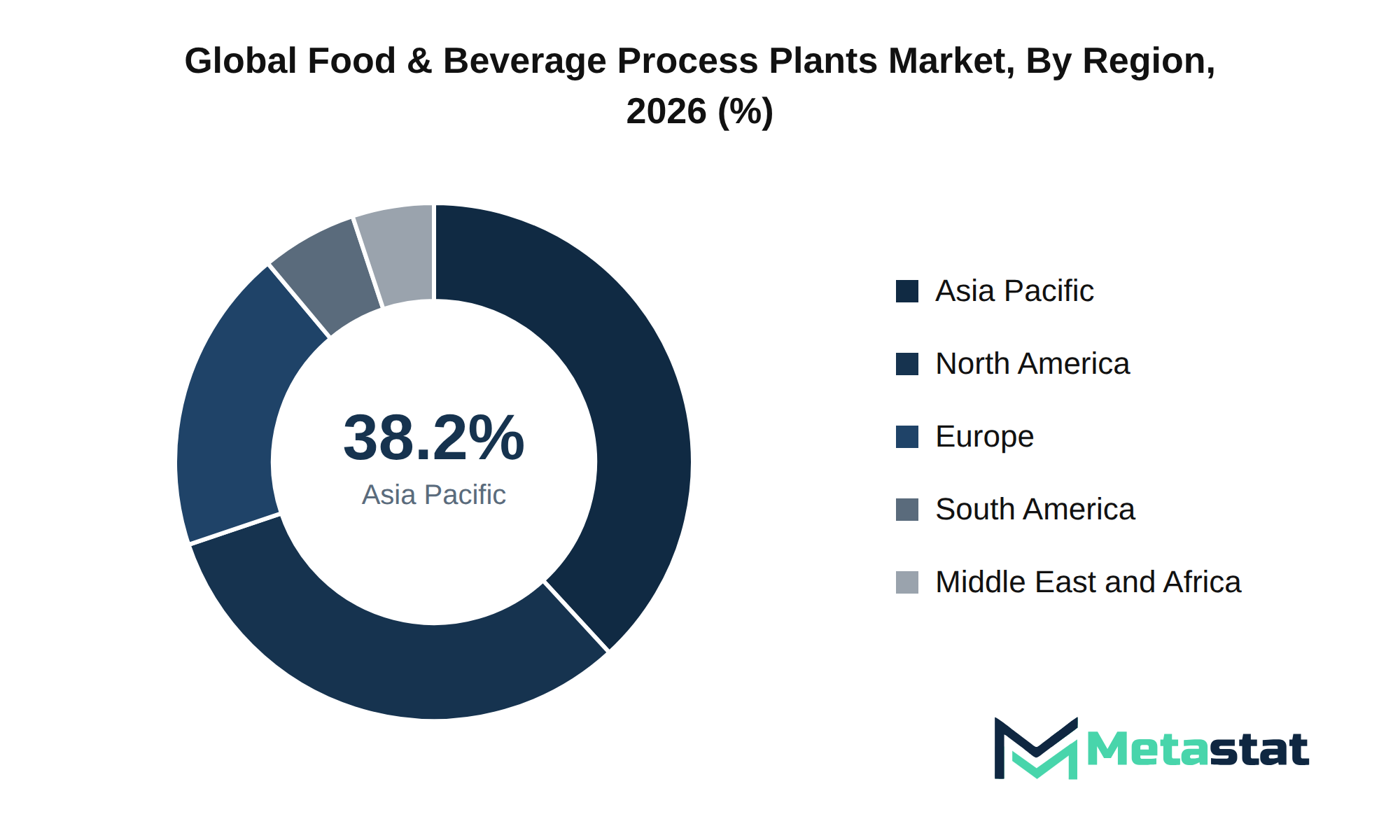
The Food & Beverage Process Plants market experiences significant strategic consolidation, driven by mergers and acquisitions among key industry players. Major companies including Krones AG, Alfa Laval, and Siemens engage in strategic alliances to enhance their market positioning and expand service offerings. Collaborations among technology providers facilitate the integration of advanced process automation solutions, improving operational efficiencies across processing plants.
Companies invest in research and development pipelines to create proprietary technologies that differentiate their offerings. Emerson Electric Co. and Rockwell Automation focus on developing innovative process control systems, enhancing product capabilities. The market sees a trend toward value chain integration, where firms like Schneider Electric and ABB leverage their supply chain dominance to streamline procurement processes, resulting in cost efficiencies and improved customer retention strategies.
The competitive outlook indicates that barriers to entry remain significant due to high capital requirements and the need for advanced technological expertise. This dynamic strengthens brand equity among established players, creating a challenging environment for new entrants. Companies continually adapt their go-to-market strategies to maintain market share while responding to evolving customer expectations and industry demands.
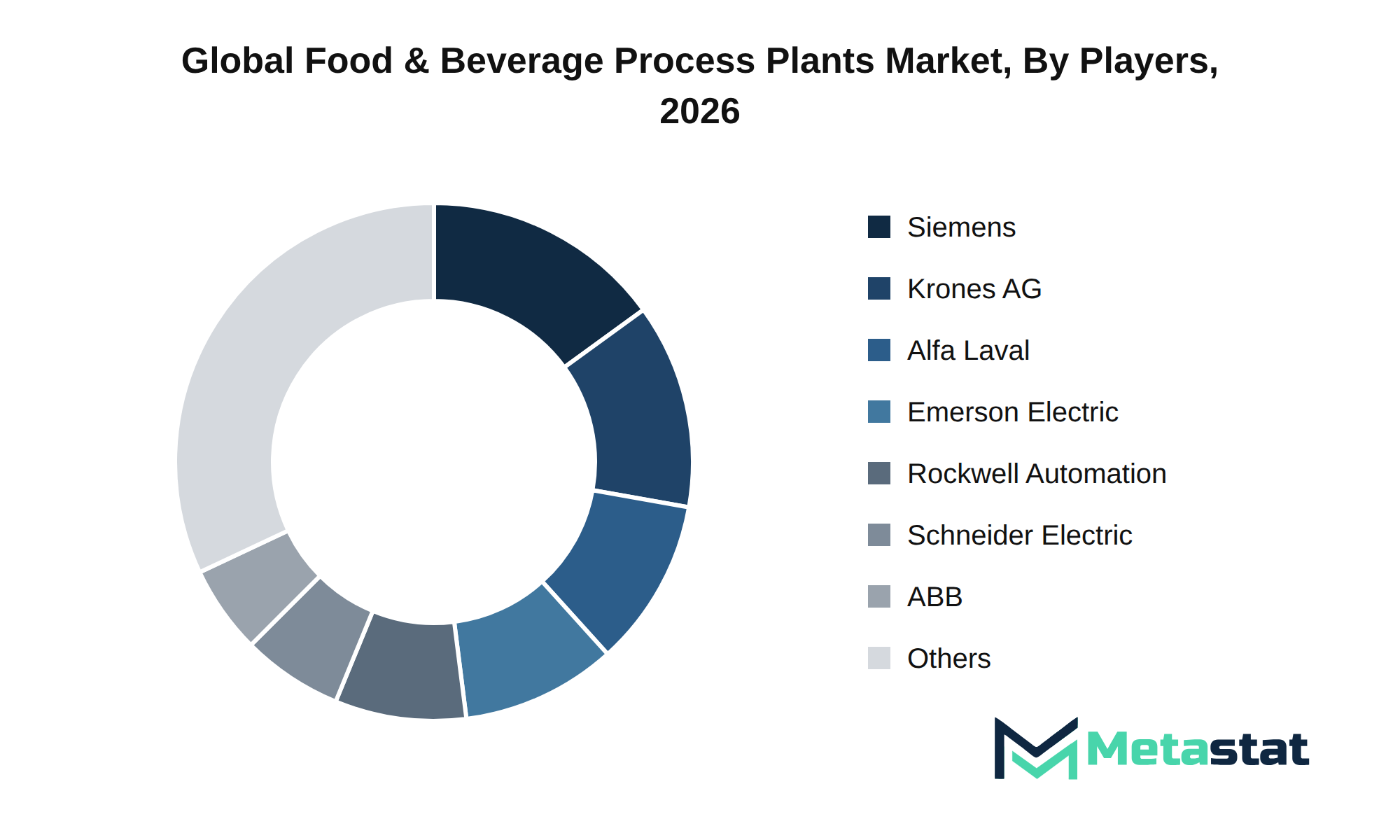
Market size is forecast to rise from USD 8.6 billion in 2025 to over USD 13.6 billion by 2033. This growth reflects a compound annual growth rate (CAGR) of 5.9%. The base case anticipates steady demand driven by advancements in technology, increased consumer preferences for processed foods, and the need for efficient production processes.
In a bullish scenario, factors including significant technological integration, rapid R&D commercialization, and favorable regulatory environments could expedite growth, leading to enhanced operational efficiencies and higher market penetration. A bearish case arises from geopolitical tensions, economic downturns, or unforeseen regulatory changes that hinder investment and innovation within the market.
Downstream demand shifts towards healthier and more sustainable food options create new opportunities for producers. Companies focusing on modernization and compliance with evolving regulations find themselves positioned favorably in the Food & Beverage Process Plants market. These strategic initiatives support the shift towards automation and digital solutions, enhancing productivity and competitiveness in the coming years.
The report strategically identifies and profiles the key market players and analyses their core competencies in each sub-segment of the Food & Beverage Process Plants market.
Report Attributes | Details |
Study Period | 2021-2033 |
Base Year | 2025 |
Estimated Year | 2026 |
Forecast Period | 2026-2033 |
Historical Period | 2021-2025 |
Growth Rate | CAGR 5.9% from 2026 to 2033 |
Revenue Unit | USD billion |
Segmentation | By Plant Type, Process Technology, Solution Type, Production Category, and Region |
By Region | North America (By Plant Type, Process Technology, Solution Type, Production Category, and Country)
|
Europe (By Plant Type, Process Technology, Solution Type, Production Category, and Country)
| |
Asia Pacific (By Plant Type, Process Technology, Solution Type, Production Category, and Country)
| |
South America (By Plant Type, Process Technology, Solution Type, Production Category, and Country)
| |
Middle East and Africa (By Plant Type, Process Technology, Solution Type, Production Category, and Country)
|
Find answers to common questions about this report
The Food & Beverage Process Plants market size was valued at USD 8.6 billion in 2025, according to the Metastat Insights study.
The Food & Beverage Process Plants market is projected to grow at a CAGR of 5.9% during the forecast period from 2026 to 2033.
The North America Food & Beverage Process Plants market size is estimated to reach USD 3.9 billion by 2033.
The Beverage Processing Plants segment leads the Food & Beverage Process Plants market, with a projected value of USD 2.0 billion by 2033. This segment demonstrates the highest growth potential compared to others in the market.
Key drivers for the Food & Beverage Process Plants market include increased capital investment in infrastructure, rising consumer demand for packaged foods, and advancements in automation and technology. These factors enhance operational efficiency, support modernization efforts, and drive growth through improved productivity and innovative processing solutions.
Regulatory tightening increases compliance costs for manufacturers, creating operational inefficiencies that deter investment in new technologies. Macroeconomic headwinds, including inflation and rising raw material costs, further strain margins, while supply chain disruptions and talent shortages complicate operational capabilities. These factors collectively hinder growth opportunities in the Food & Beverage Process Plants market.
Advancements in technology, particularly automation and artificial intelligence, enhance operational efficiency and reduce labor costs, favoring product adoption in the Food & Beverage Process Plants market. increasing consumer demand for convenience drives investments in innovative processing technologies, further supporting the expansion and modernization of production facilities.
The Food & Beverage Process Plants market is estimated to reach a valuation of USD 13.6 billion by 2033.
Key players in the Food & Beverage Process Plants market include Krones AG, Alfa Laval, Siemens, Emerson Electric Co., Rockwell Automation, Schneider Electric, and ABB.
The Dairy & Liquid Dairy Processing Plants segment is expected to grow from USD 1.5 billion in 2026 to USD 2.1 billion by 2033, reflecting a CAGR of 5.4.
The analysts below cover Food and Beverages research at Metastat Insights.
LEAD ANALYST
Utkarsh Khirodkar is a Lead Market Research Analyst at MetaStat Insight, specializing in market intelligence, technology sector assessments, and competitive strategy.

LEAD PRINCIPAL ANALYST, PHARMA AND HEALTHCARE
Food and Beverages · Healthcare · Healthcare IT · Medical Devices
Ajay Devgire is the Lead Healthcare Analyst at MetaStat Insight, leading strategic research and market intelligence initiatives across the global healthcare domain.

SENIOR RESEARCH ANALYST
Biotechnology · Food and Beverages · Medical Devices · Packaging
Snehal Pasalkar is a Research Analyst at MetaStat Insight, operating at the intersection of life sciences research, competitive strategy, and market intelligence.
Assessing 200mm wafer transition schedules and substrate supply bottlenecks requires precise technical intelligence. MetaStat Insight supplied an actionable breakdown comparing planar and trench MOSFET architectures across automotive and industrial drive markets. The regional capacity estimates for Asia-Pacific foundries helped clarify lead-time uncertainties during our strategic planning session. When we needed additional clarification on high-purity raw material sourcing, their analyst team responded with helpful context within twenty-four hours.
Tracking maintenance cycle demand for secondary flight display units and terrain collision avoidance systems across regional jet fleets involves complex aftermarket dynamics. MetaStat Insight provided practical analysis separating airline retrofit programs from OEM forward-fit production schedules in North America and Southeast Asia. The supplier matrix highlighted component obsolescence timelines without resorting to vague generalizations. The dataset served as a dependable reference during our annual program review meetings.
Evaluating secondary resin quality across post-consumer packaging streams requires reliable technical segmentation. MetaStat Insight delivered an objective assessment that distinguished between extrusion-grade flake pricing and optical sorting throughput limitations across Western Europe. The competitive positioning breakdown for licensed depolymerization technology providers answered several questions during our feedstock feasibility audit. Their team clarified regional trade restrictions on mixed plastic scrap quickly when our team submitted follow-up requests.
Explore related market intelligence reports worth reading alongside this one.