
LEAD ANALYST
Utkarsh Khirodkar is a Lead Market Research Analyst at MetaStat Insight, specializing in market intelligence, technology sector assessments, and competitive strategy.

Chemical Process Simulation Software Market Size, Share, By Deployment (Cloud, On-premises, and Hybrid), By Application (Large Enterprises, SMEs, and Others), By Software Type (Steady-State Simulation Software, Dynamical Simulation Software, Optimization Software, Data Analysis Tools, and Others), By End-User Industry (Chemical Manufacturing, Petroleum Refining, Pharmaceuticals, Food & Beverage Processing, Water Treatment, Environmental Engineering, and Others), Industry Analysis, Growth, Trends, and Forecast, 2026-2033
Report ID
MSI-2713
Published
March, 2026
Pages
255 Pages
Format
Report Details
Choose Your License
Chemical Process Simulation Software Market
In chemical engineering, the Global Chemical Process Simulation Software Market stands as a technological cornerstone, facilitating innovation and efficiency in the design and optimization of complex industrial processes. This specialized market caters to the distinctive needs of the chemical industry by providing advanced simulation tools that empower engineers to model and analyze intricate chemical processes with precision.
The Global Chemical Process Simulation Software Market serves as a nexus for cutting-edge technology, where software solutions are tailored to meet the unique challenges posed by chemical process engineering. These tools play a pivotal role in the development and refinement of processes, allowing engineers to simulate various scenarios, assess potential outcomes, and optimize operations in a virtual environment before implementation.
One of the primary applications of chemical process simulation software is in enhancing the safety and reliability of industrial processes. Engineers can simulate hazardous scenarios, assess potential risks, and devise effective safety measures, contributing to the overall risk management strategy of chemical plants. This not only safeguards personnel and assets but also ensures compliance with stringent industry regulations and standards.
Moreover, the Global Chemical Process Simulation Software Market fosters innovation by providing a platform for the exploration of novel process designs and technologies. Engineers can experiment with different parameters, evaluate their impact, and identify optimal conditions for enhanced productivity and resource utilization. This capability is instrumental in accelerating the research and development efforts within the chemical industry.
The market's significance extends to the realm of sustainability, where it plays a crucial role in minimizing the environmental impact of chemical processes. Through advanced simulation, engineers can analyze and optimize resource consumption, energy efficiency, and waste generation, contributing to the industry's broader goals of eco-friendly and sustainable practices.
Furthermore, the Global Chemical Process Simulation Software Market is instrumental in reducing time-to-market for new products and processes. By enabling engineers to quickly iterate through design variations and assess their viability, the software expedites the innovation cycle, allowing companies to stay competitive in a fast-paced industry.
The Global Chemical Process Simulation Software Market emerges as a vital component in the arsenal of tools available to chemical engineers. Its role in enhancing safety, fostering innovation, promoting sustainability, and expediting the development of new processes positions it as a cornerstone in the ever-evolving landscape of chemical engineering. As industries continue to rely on advanced technologies for efficiency and competitiveness, the significance of the Global Chemical Process Simulation Software Market is poised to grow, shaping the future of chemical process engineering.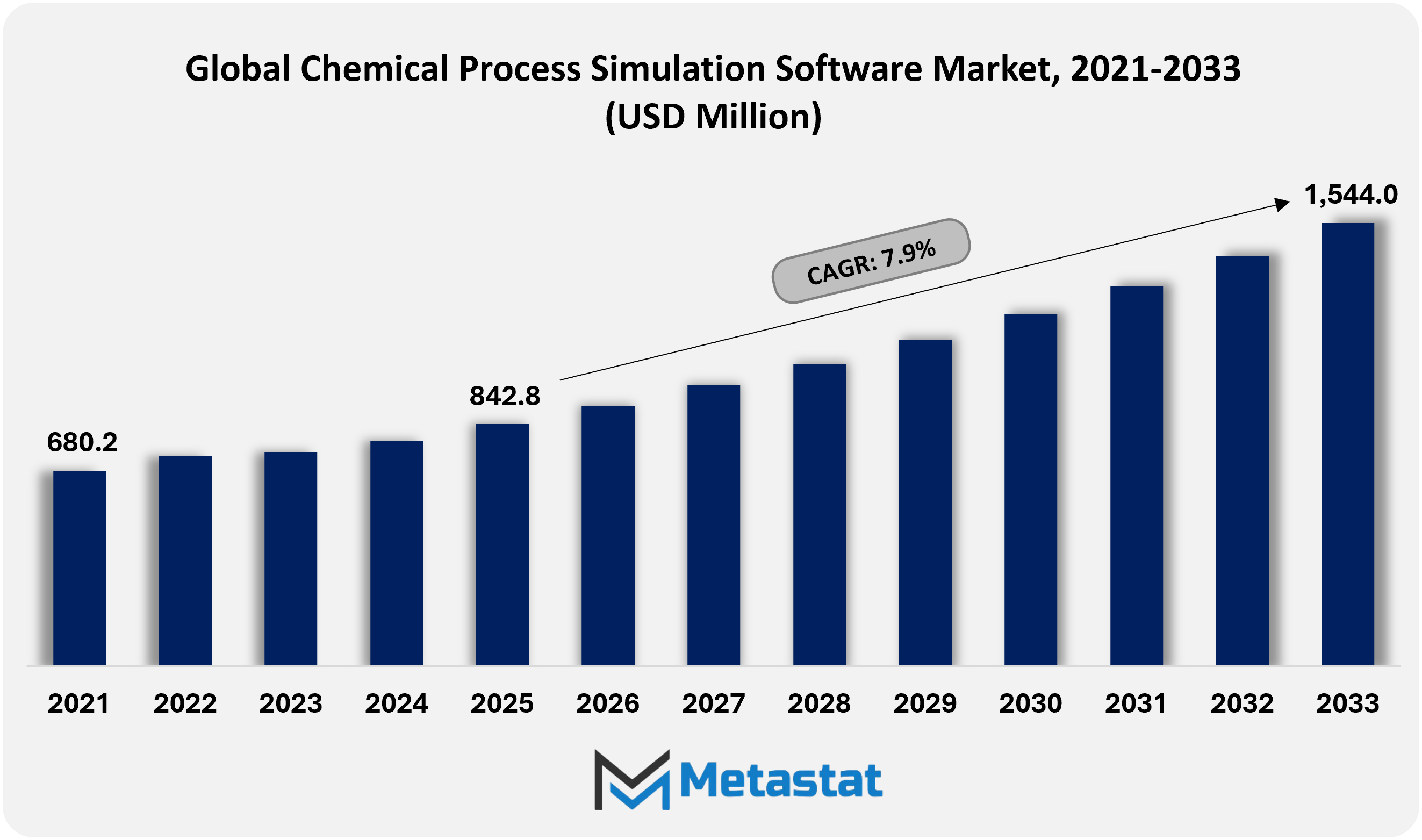
The Global Chemical Process Simulation Software Market is propelled by various growth factors that contribute to its expansion. One key driver is the increasing demand for enhanced operational efficiency in chemical processes. This software enables simulation and analysis, aiding in the optimization of processes, thereby enhancing overall efficiency. The emphasis on achieving cost-effectiveness and sustainability in chemical manufacturing further fuels the market's growth.
Additionally, the growing adoption of digitalization and automation in the chemical industry serves as another significant driving factor. As industries globally embrace digital transformation, the need for advanced simulation tools becomes paramount. Chemical process simulation software aligns with this trend, offering tools for modeling and analyzing processes in a digital environment.
While these factors drive market growth, challenges persist. Issues related to the complexity of integrating simulation software into existing systems can hinder the seamless adoption of these solutions. The learning curve associated with implementing such technologies may pose initial obstacles for industries aiming to incorporate them into their processes.
Moreover, concerns about data security and privacy represent another potential hurdle. As chemical process simulation involves handling sensitive and proprietary data, ensuring robust security measures becomes imperative. The reluctance to entrust critical information to digital platforms might impede the widespread adoption of simulation software.
Despite these challenges, the market holds promise, with emerging opportunities on the horizon. The continuous evolution of Industry 4.0 and the Internet of Things (IoT) presents a fertile ground for the growth of chemical process simulation software. Integrating these technologies with simulation tools opens avenues for smarter, more connected manufacturing processes.
The Global Chemical Process Simulation Software Market experiences robust growth driven by the increasing need for operational efficiency and the broader trend of digitalization in the chemical industry. While challenges related to integration complexity and data security exist, the potential for lucrative opportunities, especially through the convergence of simulation software with Industry 4.0 and IoT, paints a promising picture for the market's future.
The Global Chemical Process Simulation Software Market, in its diverse landscape, is characterized by various types of software catering to the needs of the industry. One significant segmentation lies in the distinction between Cloud-based and On-premises solutions.
Cloud-based segment is valued at USD 539.8 million in 2026 and is projected to reach USD 932.2 million by 2033, at a CAGR of 8.1% during the forecast period.
The Cloud-based option offers a flexible and scalable approach, leveraging the power of cloud computing to provide simulation capabilities. This allows for accessibility from anywhere, facilitating collaboration and ease of use. Users can harness the software's potential without the constraints of physical location or extensive hardware requirements.
On the other hand, On-premises solutions involve installing and running the software on local servers and computers. This traditional approach provides users with a certain level of control and security over their data and the software itself. It suits industries with specific privacy or regulatory concerns, where keeping data in-house is a priority.
Each type of software meets distinct needs, reflecting the varied preferences and requirements of users in the chemical processing domain. The Cloud-based option embraces flexibility and accessibility, while the On-premises solution emphasizes control and security. In essence, this segmentation ensures that the Global Chemical Process Simulation Software Market caters to a wide spectrum of user preferences, allowing industries to choose the type that aligns best with their operational priorities.
By Application
The Global Chemical Process Simulation Software Market unfolds with distinct applications, with a focus on meeting the needs of different business sizes. It’s a versatile landscape, and two primary categories shape its dynamics.
Large Enterprises segment is projected to reach USD 999.3 million by 2033, at a CAGR of 7.9% during the forecast period.
These industry giants leverage chemical process simulation software to streamline complex operations, optimize efficiency, and ensure seamless workflows. The application of such software in large enterprises resonates with their extensive and intricate processes, aiming for enhanced productivity.
On the other side of the spectrum, we have SMEs, a segment that carved its niche with a value of 275.7 USD Million in 2022. Small and Medium-sized Enterprises, while not as massive as their larger counterparts, find immense value in chemical process simulation software. For them, this technology acts as a catalyst for efficiency, helping them compete in dynamic markets by refining their processes and decision-making.
The significance of this segmentation lies in its reflection of the adaptability of chemical process simulation software. It caters to the diverse needs of both large enterprises and smaller players in the business landscape. While large enterprises seek optimization in their intricate operations, SMEs utilize the software to enhance their agility and competitiveness.
The Global Chemical Process Simulation Software Market is not a uniform entity but a dynamic ecosystem catering to different business sizes. Whether it's streamlining operations in a large corporation or empowering agility in a small business, the applications of this software resonate across the business spectrum, showcasing its relevance and impact in diverse operational landscapes.
The global Chemical Process Simulation Software market undergoes regional analysis to discern its geographical distribution. This examination unveils distinct market trends and dynamics across various regions. Two significant players in this geographical spectrum are North America and Europe.
North America, a key participant, brings substantial influence to the Chemical Process Simulation Software market. Its technologically advanced landscape and robust industrial infrastructure contribute significantly to the demand for simulation software. The region's proactive approach towards adopting innovative technologies further propels the market, making it a noteworthy player in the global scenario.
Similarly, Europe plays a pivotal role in shaping the landscape of the Chemical Process Simulation Software market. With a well-established industrial base and a focus on sustainability, European industries exhibit a growing reliance on simulation software for optimizing their chemical processes. This regional market's emphasis on eco-friendly practices aligns with the broader global trend, fostering the adoption of simulation tools for enhanced efficiency and reduced environmental impact.
Together, North America and Europe form integral segments of the global Chemical Process Simulation Software market, each contributing to its vibrancy and growth. Their distinct industrial landscapes and technological inclinations shape the demand for simulation software, reflecting the dynamic nature of the market on a regional scale.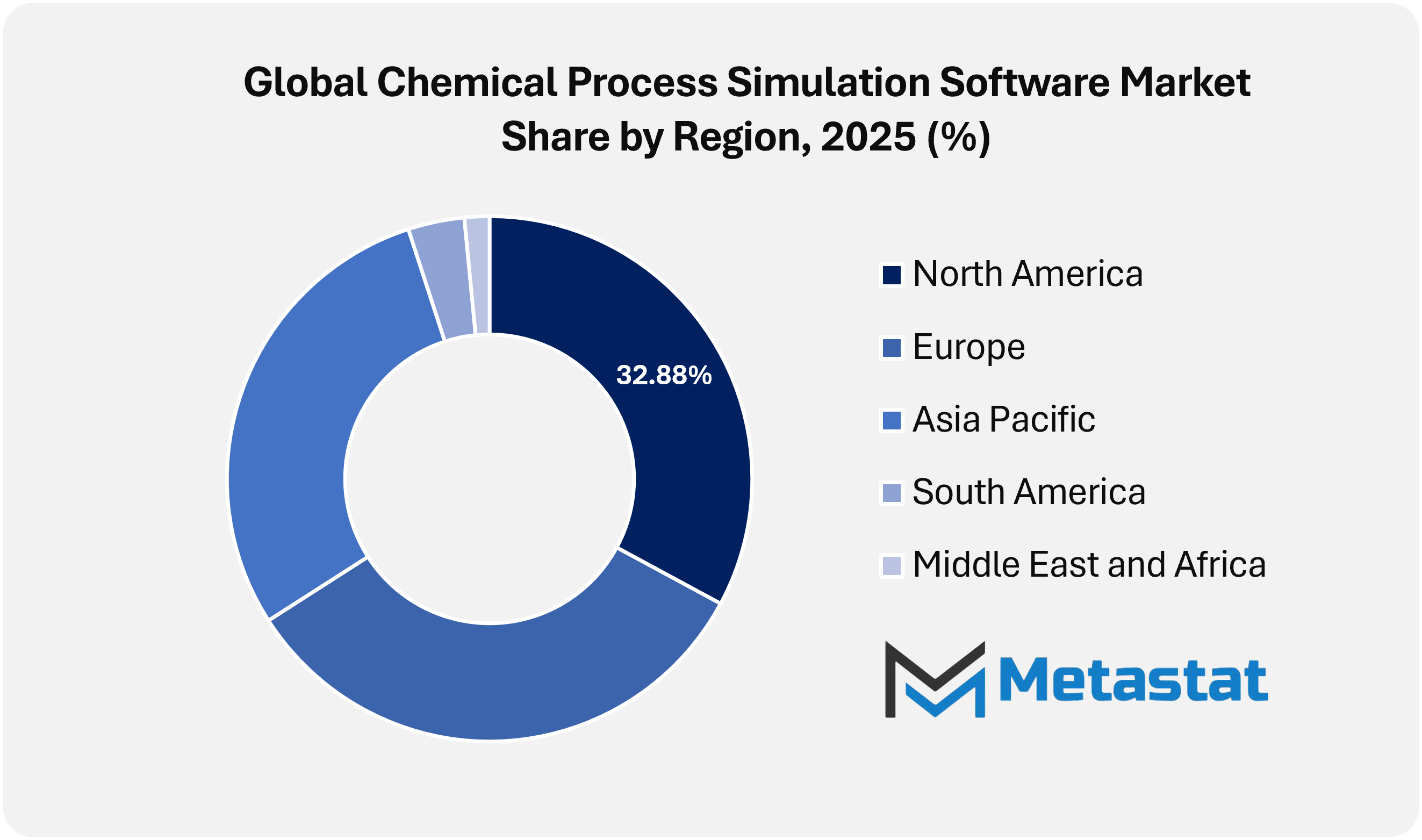
The Global Chemical Process Simulation Software Market is a dynamic landscape where key players are instrumental in shaping the industry's trajectory. Among these players, Fives ProSim and Aspen Technology Inc. stand out, contributing significantly to the advancements in chemical process simulation.
Fives ProSim, as a key player, brings expertise and innovation to the forefront of the Chemical Process Simulation Software Market. The company's commitment to excellence is reflected in its contributions to enhancing simulation capabilities, providing tools that empower chemical engineers and professionals in optimizing processes and achieving operational efficiency.
Similarly, Aspen Technology Inc. plays a crucial role in driving advancements within the industry. With a focus on cutting-edge solutions, Aspen Technology Inc. leverages its technological prowess to deliver simulation software that caters to the evolving needs of the chemical process sector. Their contributions extend beyond mere software provision, encompassing a commitment to pushing the boundaries of what is achievable in process simulation.
These key players not only provide essential software solutions but also serve as industry influencers. Their active involvement and contributions in research and development have a ripple effect, influencing the standards and practices adopted by professionals in the field. The impact of these players is not confined to their products alone; it extends to shaping the overall landscape of chemical process simulation.
In the Global Chemical Process Simulation Software Market, Fives ProSim and Aspen Technology Inc. are more than entities delivering software solutions—they are catalysts for progress and innovation. Their roles go beyond market competition; they actively contribute to the evolution of simulation technologies, playing a vital part in defining the benchmarks for efficiency, accuracy, and adaptability within the chemical process industry.
As the industry continues to advance, the contributions of key players like Fives ProSim and Aspen Technology Inc. become increasingly pivotal. Their commitment to pushing the boundaries of what is achievable in process simulation sets the tone for the entire sector, influencing how professionals approach challenges and opportunities in this dynamic and crucial field.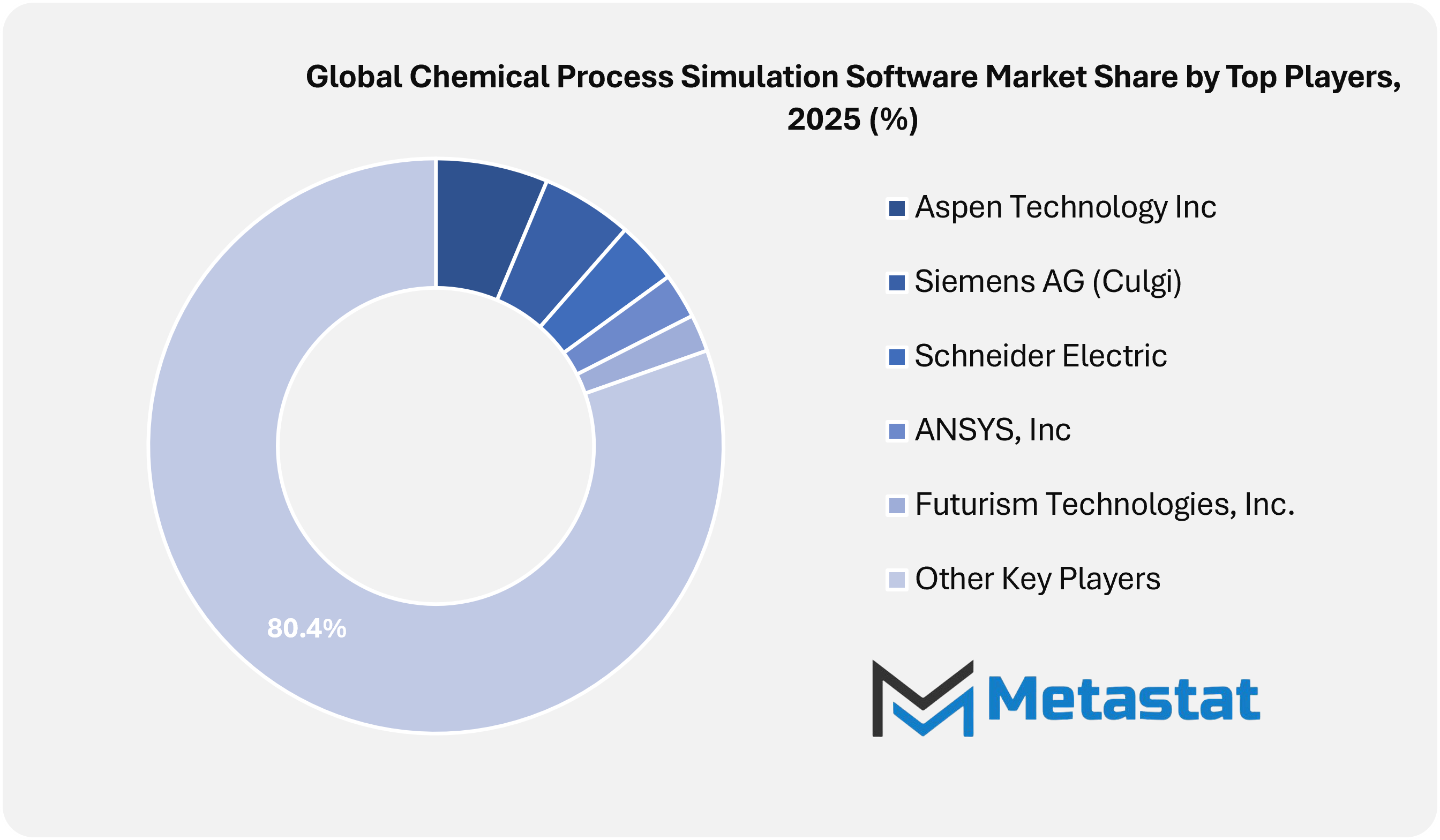
By Deployment:
By Application:
By Software Type:
By End-User Industry:
|
Report Attributes |
Details |
|
Study Period |
2021-2033 |
|
Base Year |
2025 |
|
Estimated Year |
2026 |
|
Forecast Period |
2026-2033 |
|
Historical Period |
2021-2025 |
|
Growth Rate |
CAGR 7.9% from 2026 to 2033 |
|
Revenue Unit |
USD million |
|
Segmentation |
By Deployment, Application, Software Type, End-User Industry, and Region |
|
By Deployment |
|
|
By Application |
|
|
By Software Type |
|
|
By End-User Industry |
|
|
By Region |
North America (By Deployment, Application, Software Type, End-User Industry, and Country)
|
|
|
Europe (By Deployment, Application, Software Type, End-User Industry, and Country)
|
|
|
Asia Pacific (By Deployment, Application, Software Type, End-User Industry, and Country)
|
|
|
South America (By Deployment, Application, Software Type, End-User Industry, and Country)
|
|
|
Middle East and Africa (By Deployment, Application, Software Type, End-User Industry, and Country)
|
Find answers to common questions about this report
The Metastat Insights study shows that the Global Chemical Process Simulation Software market size was USD 842.8 million in 2025.
The Global Chemical Process Simulation Software market is expected to grow at a CAGR of 7.9% over the forecast period (2026-2033).
The Metastat Insights analysis shows that the North America Chemical Process Simulation Software market size is estimated to be USD 510.1 million by 2033.
Global Chemical Process Simulation Software market is estimated to reach USD 1544 million by 2033.
Chemical, Petroleum Refining, Pharmaceuticals, Food and Beverage Processing, Water Treatment, Environmental Engineering Industries will benefit from Chemstations-Like Software.
Aspen Technology Inc, Siemens AG (Culgi), Schneider Electric, ANSYS, Inc, and Futurism Technologies, Inc.are top chemical simulation softwares in the market.
Aspen Technology Inc, Siemens AG (Culgi), Schneider Electric, ANSYS, Inc, Aurel Systems, and AVEVA are top companies Offer Advanced Flow Modeling Software for Chemical Systems.
The analysts below cover Information & Technology research at Metastat Insights.
LEAD ANALYST
Utkarsh Khirodkar is a Lead Market Research Analyst at MetaStat Insight, specializing in market intelligence, technology sector assessments, and competitive strategy.

PRINCIPAL CONSULTANT - ENTERPRISE AI & EMERGING TECHNOLOGIES
Banking & Finance · Electronics and Semiconductor · Energy and Power · Healthcare IT · Information & Technology · Professional Services
Vijay Gunti is a Principal Consultant at MetaStat Insight, bringing over two decades of experience across enterprise digital transformation, technology strategy, and intelligent systems.

LEAD CONSULTANT - COMMUNICATION, TELECOM, AND IT
Electronics and Semiconductor · Information & Technology · Machinery & Equipment · Professional Services
Ravindra Sathe Consultants for Communication, Telecom, and IT at MetaStat Insight. He leads the firm's industry research initiatives across telecommunications infrastructure, digital connectivity, enterprise networking, and emerging information technology domains.
Tracking capacity expansion in single-use bioprocessing requires dependable data on raw material availability and cleanroom-grade polymer supply chains. The competitive landscape chapter gave a grounded evaluation of secondary component suppliers across North America and Asia-Pacific rather than simply reprinting press releases. Having that level of supplier benchmarking helped clarify dual-sourcing considerations for our clinical pipeline planning.
When evaluating distributed energy resource management systems, standard research summaries tend to gloss over the operational differences between front-of-the-meter utility deployments and behind-the-meter industrial sites. The MetaStat Insight report addressed those distinctions directly, especially regarding software interoperability standards and grid interconnection backlogs. The five-year market sizing across regional transmission organizations provided actionable context for our grid modernization strategy.
Most industry reports on warehouse automation bundle autonomous mobile robots and fixed conveyor installations into the same top-level numbers, which complicates advisory work. This study split the market cleanly by payload tiers, navigation technology, and fleet management software layers. The regional forecast for Western Europe gave our team defensible adoption benchmarks when evaluating capital allocation for logistics clients, saving us days of secondary data scrubbing.
Explore related market intelligence reports worth reading alongside this one.