
LEAD ANALYST
Utkarsh Khirodkar is a Lead Market Research Analyst at MetaStat Insight, specializing in market intelligence, technology sector assessments, and competitive strategy.

Global Video Bar Conferencing Device Market Size, Share, By Type (1080p, 4K and Others), By Area (Small Rooms and Large Rooms), By Enterprise Size (Small & Medium Enterprises and Large Enterprises), Industry Analysis, Growth, Trends, and Forecast, 2026-2033
Report ID
MSI-2421
Published
November, 2026
Pages
309 Pages
Format
Historical
Base year
Forecast
Forecast period
Report Details
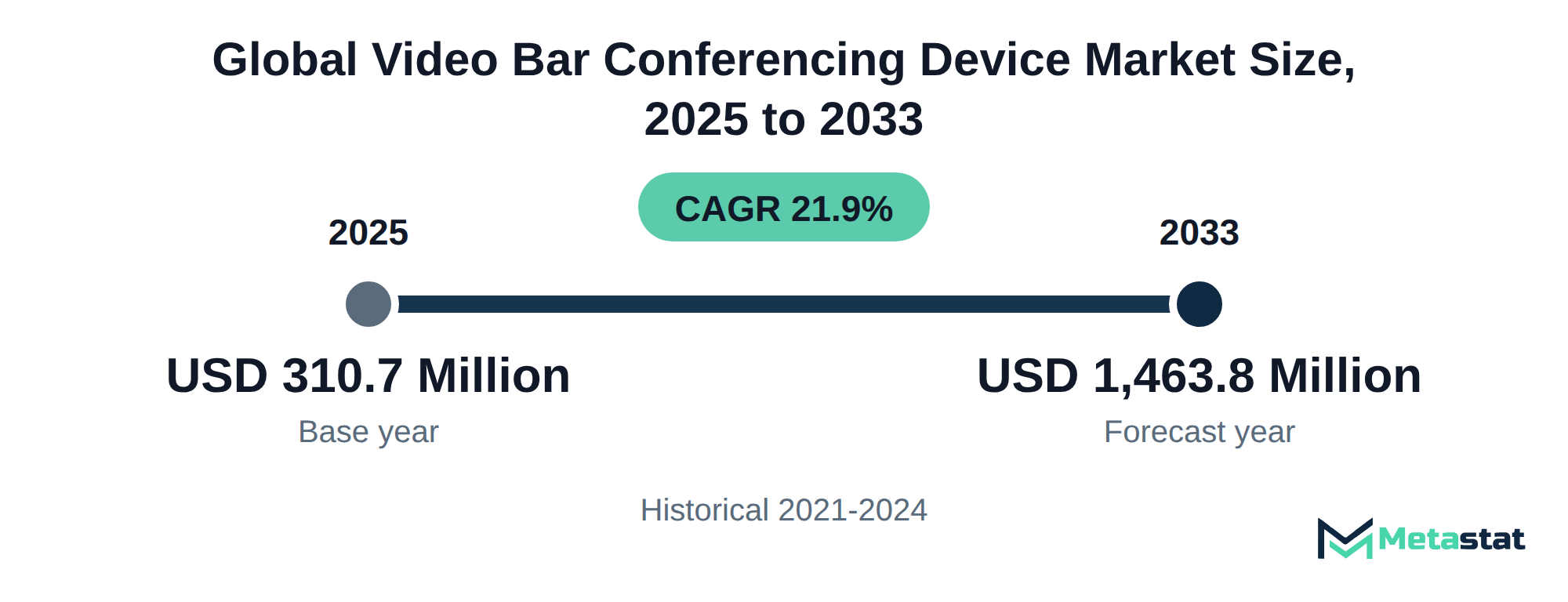
Market Valuation: Valued at $310.7 Million in 2025, projected to reach $1,463.8 Million by 2033 at a 21.9% CAGR.
Dominant Segment: The 1080p segment leads the market, driven by its cost-effectiveness and widespread adoption among small and medium enterprises seeking reliable video communication solutions.
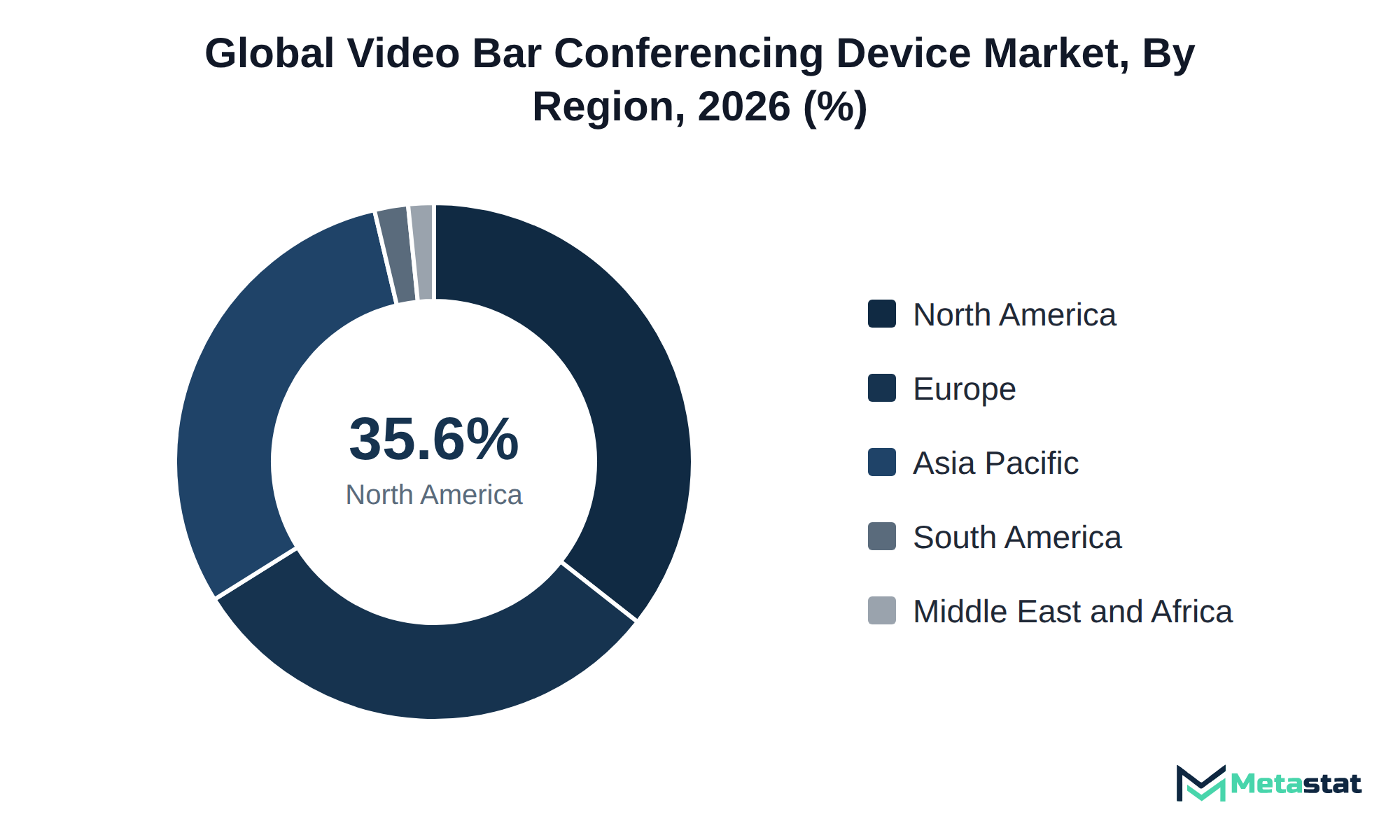
Geographic Lead: North America is the leading region, projected to capture 35.6% of the market in 2025, supported by strong demand for high-quality video conferencing technologies amidst hybrid work trends.
What's Inside: The report provides a comprehensive analysis of the competitive landscape, market segmentation by type, area, and enterprise size, along with detailed forecasts through 2033.
Small Rooms Growth: The small rooms segment is expected to experience significant growth, with revenue projected to rise from USD 120.9 million in 2026 to USD 498.6 million by 2033, reflecting the increasing demand for effective communication in flexible workspaces.
Choose Your License
Global Video Bar Conferencing Device Market
The global Video Bar Conferencing Device market was valued at USD 310.7 million in 2025 and is projected to reach USD 1,463.8 million by 2033, growing at a CAGR of 21.9% over the forecast period.
The Video Bar Conferencing Device market encompasses a range of solutions designed for effective communication and collaboration in various settings. Buyers invest in these devices to enhance remote interaction experiences, particularly in businesses where efficient video communication is essential. The technology facilitates effective virtual meetings, contributing to increased productivity and operational efficiency across various sectors, including corporate, education, and healthcare. In healthcare, video conferencing also underpins telehealth and telemedicine services.
Growth in the market is driven by increasing demand for high-quality video conferencing solutions. The 1080p segment represents the largest value within the market, reflecting strong adoption among organizations seeking to improve their remote communication capabilities. North America holds 35.6% of the market in 2025, with the US leading in 2026, reflecting strong regional support for video conferencing technologies. The rising trend of hybrid work arrangements further increases demand, with companies seeking reliable solutions to connect with dispersed teams.
Technological advancements contribute significantly to the expansion of the video bar conferencing device market. Enhanced features, including superior audio and video quality, integration with other collaboration tools, and user-friendly interfaces, attract buyers seeking to optimize their communication setups. This trend is evident across various regions, with Europe and Asia Pacific closely following North America in market share. Continued investment in these technologies will shape the future of video conferencing.
The Video Bar Conferencing Device market addresses the growing demand for efficient communication solutions, particularly in professional environments. Buyers invest in these devices to enhance collaboration capabilities, streamline meetings, and support remote work initiatives. The primary segments in the market include devices tailored for small and large rooms, with significant focus on providing high-quality audio and visual experiences that cater to varying business needs. These products belong to the wider professional audio-visual category used in meeting rooms and presentation spaces.
Growth drivers for the market include the increasing adoption of remote working practices and the need for effective communication tools. The 1080p segment stands out, representing the highest value among the various types available. This region's dominance reflects strong demand from businesses prioritizing comprehensive conferencing solutions to improve productivity and collaboration.
Investments in advanced technologies including artificial intelligence and cloud integration further fuel market expansion. Enterprises seek devices that facilitate traditional video conferencing while integrating with existing digital infrastructure. Changing workplace dynamics increase the need for versatile video conferencing solutions and support future growth in the Video Bar Conferencing Device market.
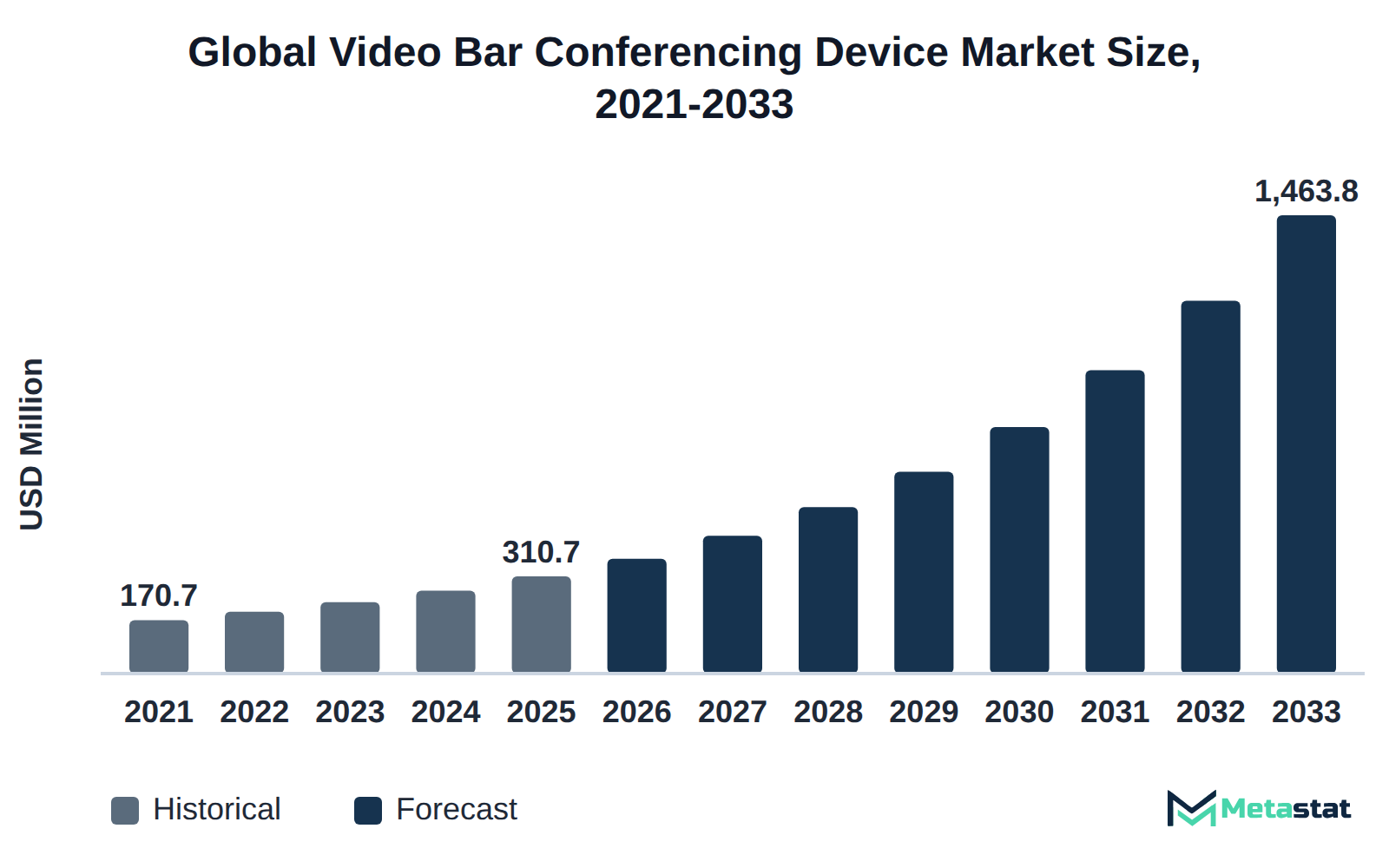
The integration of AI-powered auto-framing technology into video bar conferencing devices enhances user experience by optimizing camera positioning during meetings. This technology automatically adjusts the conference camera's focus based on the number of participants and their movements, improving the meeting experience. The Video Bar Conferencing Device market is growing, with the 1080p segment expected to increase from USD 185.6 million in 2026 to USD 738.7 million by 2033, indicating strong demand for high-quality video solutions.
Incorporating acoustic intelligence into these devices significantly improves audio quality, eliminating background noise and enhancing voice clarity during calls. This feature is particularly beneficial in environments with multiple audio distractions, ensuring clear communication among participants. The commercial advantage of such innovations lies in their ability to facilitate virtual collaboration, which is essential for remote work and global business interactions.
Adoption of these advanced technologies within video bar conferencing devices offers businesses a competitive edge, promoting more effective communication. Features such as auto-framing draw on AI in computer vision to recognize participants in the room. Improved audio and video capabilities address common pain points in remote meetings, contributing to the overall growth of the market. Organizations increasingly prioritize efficient collaboration tools, driving demand for these sophisticated devices and further propelling market expansion.
The procurement of USB-based plug-and-play systems for huddle spaces reflects a significant trend among enterprises prioritizing flexibility and ease of use. Enterprises increasingly favor solutions that simplify installation and integration into existing IT environments, enabling rapid deployment across diverse meeting spaces.
The pricing structure for these devices typically includes competitive upfront costs, along with ongoing support and service agreements, which appeal to small and medium enterprises and large organizations. For instance, small and medium enterprises represent a substantial segment, with a projected revenue increase from USD 102.9 million in 2026 to USD 421.7 million by 2033. This pricing flexibility supports broader adoption and shows that cost-effectiveness strongly shapes decision-making.
Investments in USB-based plug-and-play systems yield enhanced operational efficiency and improved collaboration capabilities. Reducing the complexity of traditional conferencing solutions lets enterprises allocate resources more effectively, which drives growth in the market. The focus on streamlined procurement processes alongside user-friendly technologies highlights the demand for innovative conferencing solutions across various organizational sizes.
The shift from standalone hardware to cloud-native unified communication ecosystems transforms how businesses engage in video conferencing. Small and medium enterprises increasingly seek integrated solutions that enhance collaboration while ensuring cost efficiency. The Video Bar Conferencing Device market aligns with this trend. Projections indicate that small and medium enterprises will expand their segment revenue from USD 102.9 million in 2026 to USD 421.7 million by 2033, reflecting a compound annual growth rate of 22.3%.
This growth is driven by the need for flexible and scalable communication tools that support remote and hybrid work environments. Small and medium enterprises often face challenges in maintaining effective communication with limited resources, making advanced conferencing solutions appealing. The integration of cloud video conferencing technologies allows these enterprises to enhance their operational capabilities, streamline processes, and improve team collaboration without the high upfront costs associated with traditional hardware setups.
The emergence of subscription-based models further facilitates access to these technologies, allowing businesses to adopt solutions tailored to their specific needs while minimizing capital expenditures. Hardware-as-a-service offerings follow the same logic by replacing a large initial purchase with recurring payments. Adopting cloud-native platforms enhances productivity and positions small and medium enterprises competitively within their industries. Consequently, investment in video bar conferencing devices becomes critical for these enterprises aiming to modernize their communication strategies and drive growth in a digital landscape.
The transition to permanent hybrid work significantly drives demand for video bar conferencing devices. A notable example is the expected revenue growth in the small rooms segment, projected to increase from USD 120.9 million in 2026 to USD 498.6 million by 2033, reflecting a compound annual growth rate of 22.4%. This shift highlights the growing need for effective communication tools tailored for smaller, flexible workspaces within organizations adapting to hybrid models.
Organizations increasingly recognize the importance of ensuring effective collaboration between in-office and remote employees. Video bar conferencing devices facilitate this interaction, providing high-quality audiovisual experiences necessary for effective team meetings. While companies seek to enhance productivity and communication, investments in these devices become essential. This trend positions the Video Bar Conferencing Device market for strong expansion and improves business performance as work environments change.
Rapid growth in remote and hybrid work arrangements drives increased collaboration among businesses, significantly impacting spending on video bar conferencing devices. Companies prioritize effective communication tools to facilitate meetings across distributed teams, leading to heightened demand from small and medium enterprises. Investments in these technologies enhance operational efficiency and support effective connectivity. This shift emphasizes the necessity for reliable and user-friendly conferencing solutions, resulting in greater adoption and market expansion.
The rise in remote work cultures increases the importance of advanced video conferencing solutions, prompting businesses to upgrade existing systems and invest in new technologies. Demand for high-quality video and audio experiences drives growth in the market, ensuring that companies remain competitive and connected in a virtual environment.
Adoption of higher video resolution technology, particularly 4K, contributes significantly to market growth. Enhanced image clarity and detail improve user experience during virtual meetings, driving demand for advanced video bar conferencing devices. Image sensor performance is one of the technical factors behind this gain in clarity. The increasing preference for 4K capabilities stems from organizations seeking to improve visual communication, particularly in creative industries including media, advertising, and design.
This technological shift influences buyer purchasing decisions, with small and medium enterprises and large enterprises prioritizing devices that support high-definition video. Enhanced resolution technology aligns with the escalating demand for immersive meeting experiences, supporting collaborative efforts among geographically dispersed teams. Manufacturers innovate and refine their offerings, integrating superior features that attract investment and drive competition within the market.
Expected growth in 4K video bar conferencing devices, with the segment anticipated to reach USD 433.6 million by 2033, reflects a broader trend toward high-quality visual solutions. This shift is significant in the overall trajectory of the Video Bar Conferencing Device market, indicating a strong future focus on superior visual quality as a competitive differentiator.
Price sensitivity among small and medium enterprises significantly impacts the adoption of video bar conferencing devices. High costs associated with advanced features and technologies deter potential buyers, leading to slower uptake and smaller order volumes. These enterprises operate under tighter budgets, making them cautious in investing in high-end conferencing solutions. The market experiences a pronounced effect, especially in regions where economic conditions constrain spending capabilities. Price-sensitive buyers prioritize lower-cost alternatives, resulting in delayed replacement cycles for existing conferencing equipment. This challenge restricts market expansion, particularly in segments focusing on small rooms, where cost-effective solutions dominate. Vendors face pressure to provide budget-friendly options while maintaining competitive technology standards to capture this crucial segment of the market.
Large enterprises, while possessing higher budgets, exhibit sensitivity to total cost of ownership, including maintenance and operational expenses. Consequently, suppliers navigate pricing strategies that appeal to both segments in the market, ensuring that the balance between cost and quality remains accessible. Addressing these pricing concerns enhances adoption rates and drives revenue growth.
Increasing raw material prices present a significant challenge for suppliers in the Video Bar Conferencing Device market. Suppliers face heightened costs associated with production inputs, impacting profit margins and pricing strategies. Fluctuations in the availability of essential components create pressure on operational budgets, which directly affects product pricing. In response, suppliers diversify their supply chains to enhance resilience against material shortages and price hikes. Securing long-term contracts with key manufacturers streamlines procurement processes and stabilizes costs. Suppliers invest in technological enhancements to improve manufacturing efficiency, aiming to offset rising expenses. Collaboration with component manufacturers ensures access to alternative materials that reduce dependence on volatile sources. This proactive approach helps suppliers maintain competitive pricing as input costs rise. Companies that successfully manage these pressures strengthen their market positioning and profitability in the evolving environment.
The small rooms segment in the Video Bar Conferencing Device market presents a notable opportunity for expansion. A growing number of organizations prioritizing flexible meeting spaces drives this demand. Increasing focus on enhancing collaboration in smaller environments positions video bar conferencing devices as a crucial solution. Companies targeting this segment build on the need for compact yet powerful communication tools to capture market share. The market's emphasis on innovative technology, including user-friendly installation and high-quality video, supports this growth trajectory while meeting the demands of evolving workspaces. The focus on small rooms leads to new design and functionality trends, making this segment ripe for investment and development.
The Global Video Bar Conferencing Device market is segmented based on Type, Area, and Enterprise Size.
Valued at USD 185.6 million in 2026, this segment is projected to reach USD 738.7 million by 2033, with a CAGR of 21.8% during the forecast period. The 1080p video bar conferencing devices are widely used in professional settings for high-definition video communication, catering primarily to small and medium enterprises that prioritize cost-effectiveness while ensuring quality. The demand for 1080p solutions stems from organizations seeking reliable performance due to lower costs compared to higher-end models. Compared to the 4K segment, which exhibits faster growth driven by increased demand for ultra-high-definition video, the 1080p segment holds a steadier appeal due to its lower price point and broad accessibility. Enterprises continue to invest in scalable solutions, and the market for 1080p video bar conferencing devices is expected to maintain strong growth.
The 4K video bar conferencing device segment is estimated to reach USD 433.6 million by 2033, at a 22.7% CAGR during the forecast period. This segment primarily caters to enterprises seeking high-definition video conferencing solutions, enhancing visual clarity and engagement during remote meetings. Increasing adoption of advanced video technology among large enterprises and specialized use cases in creative industries drives demand. Compared to the 1080p segment, which has a CAGR of 21.8%, growth in the 4K segment reflects the premium pricing strategy, appealing to buyers prioritizing superior quality. The difference in growth rates highlights a shift toward high-resolution solutions for businesses aiming to enhance communication experiences. Competitive advancements in video processing technology further support this upward trend, positioning the segment favorably in the evolving landscape of the Video Bar Conferencing Device market.
The Others segment is expected to reach USD 291.5 million by 2033. This segment includes various video bar conferencing devices that do not fall into the specific categories of 1080p or 4K. Organizations frequently employ these devices for niche applications, often where standard high-definition or ultra-high-definition solutions do not meet their needs. Factors including technological innovation drive growth in this segment, facilitating access to advanced features at competitive prices. Compared to the 1080p segment, which exhibits a CAGR of 21.8%, the Others segment shows a slower growth trajectory. Buyers seek cost-effective solutions that deliver essential functionalities rather than premium features found in higher-end categories. This positioning allows the Others segment to appeal to budget-conscious enterprises prioritizing basic conferencing capabilities without extensive features.
Small Rooms configurations serve businesses needing effective communication solutions in limited spaces. The segment is primarily used by small to medium enterprises that prioritize collaboration without requiring expansive setups. Increased adoption of remote work and hybrid models significantly drives demand in this segment, prompting organizations to invest in efficient video conferencing tools tailored for smaller environments. Compared to Large Rooms, which have a projected value of USD 965.2 million by 2033, the Small Rooms segment experiences faster growth due to lower barriers to entry and a higher proportion of budget-conscious buyers. This dynamic creates a competitive landscape focused on providing high-quality, compact solutions specifically designed for limited spaces.
The Large Rooms segment is estimated to reach USD 965.2 million by 2033, at a CAGR of 21.6% during the forecast period. This segment caters to businesses requiring solutions for larger meeting spaces, where collaboration demands high-quality video and audio performance. Larger rooms often call for AV system integration to coordinate cameras, microphones, and displays. Growing remote work trends drive enterprises to invest in advanced video conferencing capabilities, enhancing communication across dispersed teams. With an increasing emphasis on hybrid work settings, enterprises prioritize these devices for effective collaboration. Compared to the small rooms segment, which focuses on compact solutions, the Large Rooms segment benefits from a growing emphasis on high-capacity systems that facilitate larger gatherings, resulting in higher revenue potential. The distinct requirements of larger spaces often lead to greater investment per unit, justifying the segment's projected growth trajectory.
Small and Medium Enterprises engage video bar conferencing devices primarily for enhancing communication and collaboration among teams, especially in hybrid work environments. The emphasis on cost-effective solutions drives demand; these enterprises seek affordable yet efficient technology to facilitate remote interactions. This segment exhibits faster growth compared to larger enterprises, reflecting increasing investment in digital communication tools. The heightened need for reliable connectivity and collaboration drives adoption, while budget constraints limit spending on higher-end devices. In contrast to larger enterprises, which often invest in more sophisticated systems, small and medium enterprises focus on practical solutions that balance performance and cost-effectiveness.
Large Enterprises segment is estimated to reach USD 1,042.1 million by 2033, at a CAGR of 21.7% during the forecast period. This segment serves large companies that prioritize advanced video conferencing solutions to support extensive collaboration across various departments and locations. Increasing demand for high-quality video communication tools significantly impacts spending in this segment, driven by reliable connectivity among geographically dispersed teams. Compared to the Small & Medium Enterprises segment, which is projected to attain USD 421.7 million by 2033 at a CAGR of 22.3%, Large Enterprises focus on higher-priced solutions that offer extensive features including multi-camera setups and enhanced audio capabilities. The ongoing transition to hybrid work environments further accelerates adoption, particularly in larger organizations seeking robust systems to facilitate effective communication. Investment in advanced technology remains essential for Large Enterprises to maintain a competitive advantage in the Video Bar Conferencing Device market.
Based on geography, the Global Video Bar Conferencing Device market is divided into North America, Europe, Asia-Pacific, South America, Middle East, and Africa.
In North America, demand for the Video Bar Conferencing Device market is driven by a combination of hybrid work models and the increasing need for effective remote communication tools. The region demonstrates a strong preference for high-quality video solutions, contributing to the growth of both 1080p and 4K device segments. The reliance on advanced technology has been particularly pronounced in large enterprises that prioritize effective collaboration. North America is projected to reach USD 512 million by the end of 2033. The presence of key players in countries including the United States, Canada, and Mexico significantly influences market dynamics, encouraging innovation and competition. Factors including infrastructure investments and a growing emphasis on remote workforce capabilities position the market for continued expansion through 2033.
Demand for video conferencing solutions in Europe is driven by industries including technology, finance, and healthcare. The region's emphasis on remote collaboration and an increasingly digital workforce underpins this demand. Countries including Germany and the UK make significant investments in video infrastructure to enhance communication capabilities. With a market share of 30.5% in 2025, Europe represents a substantial portion of the global video bar conferencing device market. Developments in video technology standards and regulatory frameworks supporting digital transformation contribute to the market's growth trajectory. The integration of high-definition video solutions into business operations distinguishes the European market, increasing competition among various providers aiming to meet escalating user expectations.
China, Japan, and India significantly drive demand for video bar conferencing devices, reflecting the growing emphasis on digital collaboration across various industries. The technology sector, particularly in these countries, experiences rapid adoption due to enhanced communication capabilities and the need for effective integration into existing systems. Infrastructure advancements, including improved internet connectivity, support this trend, enabling more businesses to implement video bar conferencing solutions effectively. Australia and South Korea contribute to market growth, focusing on enterprise applications and remote work solutions. Southeast Asia shows increasing interest, particularly among small and medium enterprises that prioritize cost-effective communication tools. The video bar conferencing device market in this region holds a share of 30.2% in 2025, highlighting its critical role in the ongoing digital transformation of businesses.
Demand for video conferencing solutions in South America is influenced by the growing remote work culture, particularly in Brazil and Argentina. Small and medium enterprises in the region typically seek affordable and effective communication solutions, driving interest in budget-friendly options. Infrastructure challenges, including inconsistent internet access in certain areas, hinder widespread adoption of advanced video conferencing technologies. Regulatory support for digital transformation initiatives further enhances the potential of the video bar conferencing device market. Valued at USD 310.7 million in 2025, the market's share of global demand stands at 2.1%. By 2033, significant growth is projected, reflecting increasing emphasis on collaborative technologies across various sectors.
In the Middle East and Africa, the video bar conferencing device market experiences unique dynamics driven by increasing digital communication requirements. Countries including Saudi Arabia and the UAE invest heavily in technology infrastructure, particularly in sectors like education and government, which stimulates demand for effective conferencing solutions. South Africa's growing emphasis on remote work arrangements further supports market expansion. The low market share of 1.6% reflects challenges including limited adoption among smaller enterprises. However, rising awareness of the benefits of effective communication technologies promotes adoption across various industries. The market's progression aligns with the broader trend toward remote collaboration and the integration of advanced video technologies.
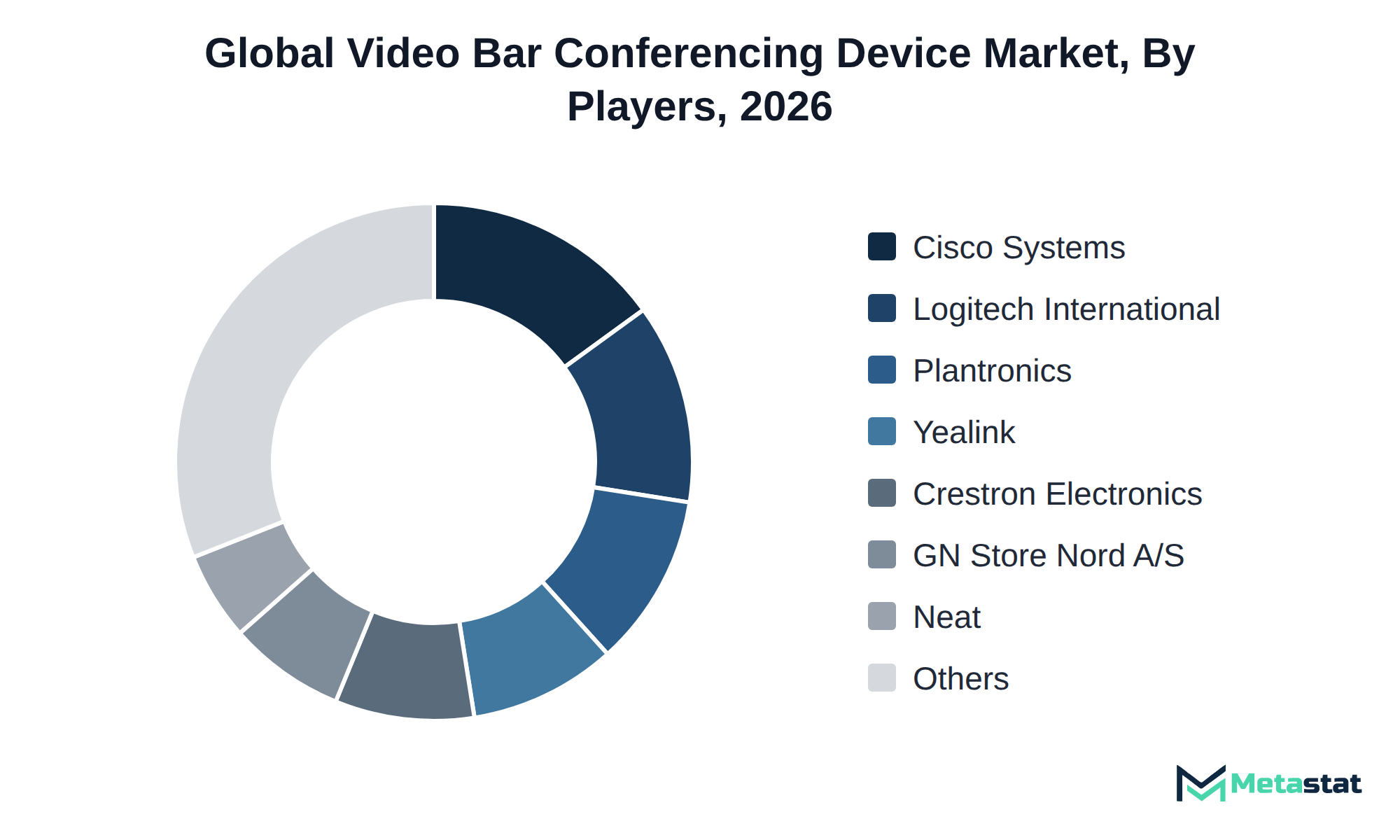
Companies within the Video Bar Conferencing Device market engage in competition through various strategies, focusing on product features, pricing, and customer support. Buyers prioritize factors including price, certification, customization, and service when selecting devices, which impacts the competitive dynamics significantly.
Logitech International S.A. emphasizes integration with broader communication ecosystems, enhancing user experience through reliable connectivity. Neat Company, Inc. focuses on innovative design, creating products that appeal to users seeking aesthetic and functional value. Yealink Inc. positions itself on the competitive edge of affordability while maintaining quality, appealing to price-sensitive segments of the market.
Companies like Crestron Electronics, Inc. target enterprise clients with solutions designed for large-scale deployments, ensuring reliability and extensive support. AVer Information Inc. introduces versatile products that cater to a range of room sizes, aligning with the market's increasing demand for adaptable conferencing solutions. These differentiated approaches enable companies to establish a foothold in the evolving dynamics of the market.
Several developments influence video bar conferencing device market growth. Increased adoption of video conferencing solutions across various enterprise sizes, particularly in large enterprises, drives demand significantly. The shift towards remote work and hybrid models necessitates enhanced collaboration tools, which fuels market expansion. Advancements in technology, including the transition from 1080p to 4K video conferencing devices, support revenue growth by attracting businesses seeking high-quality solutions. North America, representing the largest regional share, significantly contributes to this growth, with an expected market value of USD 512 million by 2033. However, several risks could impede this upward trend. Economic downturns or budget constraints in organizations, particularly small and medium enterprises, limit investment in new technologies. Such factors slow the market momentum, affecting overall adoption rates. Despite these challenges, the Video Bar Conferencing Device market remains positioned for substantial growth, driven by evolving workplace dynamics and technological advancements.
By Type: 1080p, 4K, Others
By Area: Small Rooms, Large Rooms
By Enterprise Size: Small & Medium Enterprises, Large Enterprises
The report strategically identifies and profiles the key market players and analyses their core competencies in each sub-segment of the Video Bar Conferencing Device market.
|
Report Attributes |
Details |
|
Study Period |
2021-2033 |
|
Base Year |
2025 |
|
Estimated Year |
2026 |
|
Forecast Period |
2026-2033 |
|
Historical Period |
2021-2025 |
|
Growth Rate |
CAGR 21.9% from 2026 to 2033 |
|
Revenue Unit |
USD million |
|
Segmentation |
By Type, Area, Enterprise Size, and Region |
|
By Region |
North America (By Type, Area, Enterprise Size, and Country)
|
|
Europe (By Type, Area, Enterprise Size, and Country)
|
|
|
Asia Pacific (By Type, Area, Enterprise Size, and Country)
|
|
|
South America (By Type, Area, Enterprise Size, and Country)
|
|
|
Middle East and Africa (By Type, Area, Enterprise Size, and Country)
|
Find answers to common questions about this report
The Video Bar Conferencing Device market size was valued at USD 310.7 million in 2025.
The market is projected to grow at a CAGR of 21.9% during the forecast period from 2026 to 2033.
The North America Video Bar Conferencing Device market size is estimated to reach USD 512 million by 2033.
The 4K segment leads the Video Bar Conferencing Device market with a projected value of USD 433.6 million by 2033. This segment demonstrates the highest growth potential compared to others.
Rapid growth in remote and hybrid work arrangements drives increased collaboration among businesses, significantly impacting spending on video bar conferencing devices. The rise in remote work cultures increases the importance of advanced video conferencing solutions, prompting businesses to upgrade existing systems and invest in new technologies.
North America holds the dominant share of the Video Bar Conferencing Device market, accounting for 35.6 percent of the total market. This region is projected to reach USD 512 million by 2033.
Price sensitivity among small and medium enterprises restrains growth in the Video Bar Conferencing Device market, with high costs associated with advanced features deterring potential buyers. Increasing raw material prices challenge suppliers, impacting profit margins and pricing strategies.
Several factors favor adoption in the Video Bar Conferencing Device industry. The shift toward remote and hybrid work arrangements drives demand for effective communication tools. the increasing preference for high-quality video and audio experiences enhances the need for advanced conferencing solutions, particularly in small and medium enterprises.
The Video Bar Conferencing Device market is estimated to reach a valuation of USD 1,463.8 million by 2033.
Key players operating in the Video Bar Conferencing Device market include Logitech International S.A., Plantronics, Inc., Cisco Systems, Inc., Neat Company, Inc., Yealink Inc., and GN Store Nord A/S.
The analysts below cover Information & Technology research at Metastat Insights.
LEAD ANALYST
Utkarsh Khirodkar is a Lead Market Research Analyst at MetaStat Insight, specializing in market intelligence, technology sector assessments, and competitive strategy.

PRINCIPAL CONSULTANT - ENTERPRISE AI & EMERGING TECHNOLOGIES
Banking & Finance · Electronics and Semiconductor · Energy and Power · Healthcare IT · Information & Technology · Professional Services
Vijay Gunti is a Principal Consultant at MetaStat Insight, bringing over two decades of experience across enterprise digital transformation, technology strategy, and intelligent systems.

LEAD CONSULTANT - COMMUNICATION, TELECOM, AND IT
Electronics and Semiconductor · Information & Technology · Machinery & Equipment · Professional Services
Ravindra Sathe Consultants for Communication, Telecom, and IT at MetaStat Insight. He leads the firm's industry research initiatives across telecommunications infrastructure, digital connectivity, enterprise networking, and emerging information technology domains.
Evaluating sovereign cloud deployments for core banking platforms demands a clear view of data residency regulations and migration exit strategies. MetaStat Insight delivered an exhaustive review of regional latency tolerances, mainframe decommission milestones, and third-party vendor concentration risk. The regulatory compliance mapping across European and Asian financial jurisdictions gave our team a dependable baseline for multi-cloud infrastructure discussions.
Replacing petrochemical surfactants with bio-based alternatives requires realistic timelines on industrial precision fermentation scaling. The market research broke down commercialization timelines, feedstock sugar price sensitivities, and regional cosmetic ingredient regulatory approvals in Europe and East Asia. That supplier readiness mapping gave our formulations team reliable context when comparing renewable chemical sourcing roadmaps.
Tracking ceramic matrix composite adoption in high-bypass aero engines requires strict attention to material qualification cycles and FAA airworthiness testing milestones. The MetaStat Insight team provided a detailed timeline of silicon carbide fiber manufacturing capacity and commercial foundry lead times. Having clear visibility into upstream thermal barrier coating supply helped us stress-test our long-term component procurement strategy.
Explore related market intelligence reports worth reading alongside this one.