
LEAD ANALYST
Utkarsh Khirodkar is a Lead Market Research Analyst at MetaStat Insight, specializing in market intelligence, technology sector assessments, and competitive strategy.

Global AV System Integration Market Size, Share, By Type (Displays, Cameras, Control Systems, Customer User Interfaces, Projectors, and Others), By Application (Education, Government, Hospitality, Retail, and Other), By Installation Type (Fixed Installations and Temporary Installations), By Project Type (New Installations and Retrofits), Industry Analysis, Growth, Trends, and Forecast, 2026-2033
Report ID
MSI-2462
Published
October, 2026
Pages
266 Pages
Format
Historical
Base year
Forecast
Forecast period
Report Details
Market Valuation: Valued at $12 Billion in 2025, projected to reach $38.4 Billion by 2033 at a 15.7% CAGR.
Dominant Segment: The Displays segment leads the AV System Integration market, driven by the increasing demand for high-quality visual content across various sectors.
Geographic Lead: North America holds the largest market share, with the US expected to maintain its lead due to strong investments in technological advancements and infrastructure.
What's Inside: The report provides a comprehensive analysis of market dynamics, competitive landscape, and detailed forecasts, covering various segments and applications within the AV System Integration market.
Emerging Trends: The rise of AV-over-IP technology is transforming the market by enhancing scalability and flexibility, particularly in networked control systems.
Growth Drivers: The increasing adoption of hybrid learning solutions and smart building technologies significantly propels market growth, as organizations seek to enhance user engagement and operational efficiency.
Choose Your License
Global AV System Integration Market
The global AV System Integration market was valued at USD 12 billion in 2025 and is projected to reach USD 38.4 billion by 2033, growing at a CAGR of 15.7% over the forecast period.
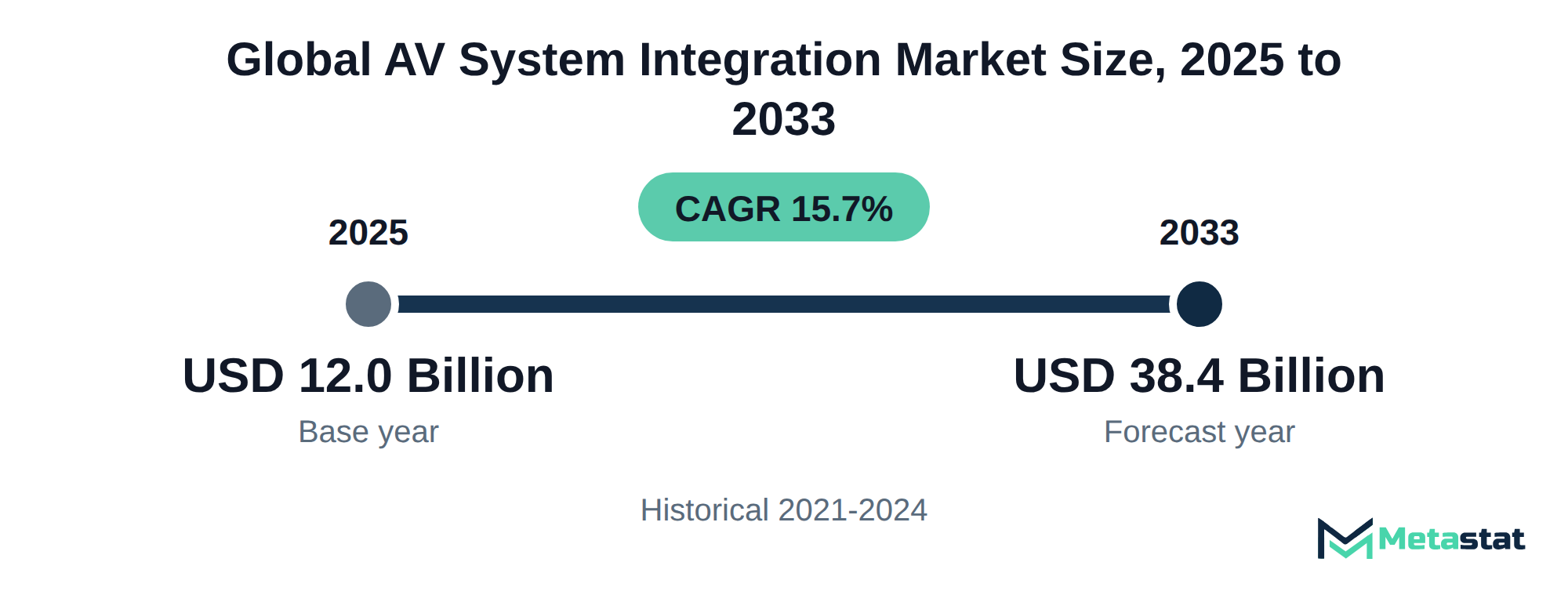
The AV System Integration market encompasses a range of technologies and services that enhance professional audio-visual communication across various sectors. Buyers invest in these solutions to improve operational efficiency, facilitate effective communication, and enhance user experiences. Demand stems from education, government, hospitality, and retail, where growing reliance on integrated technology in daily operations raises the requirement for advanced systems.
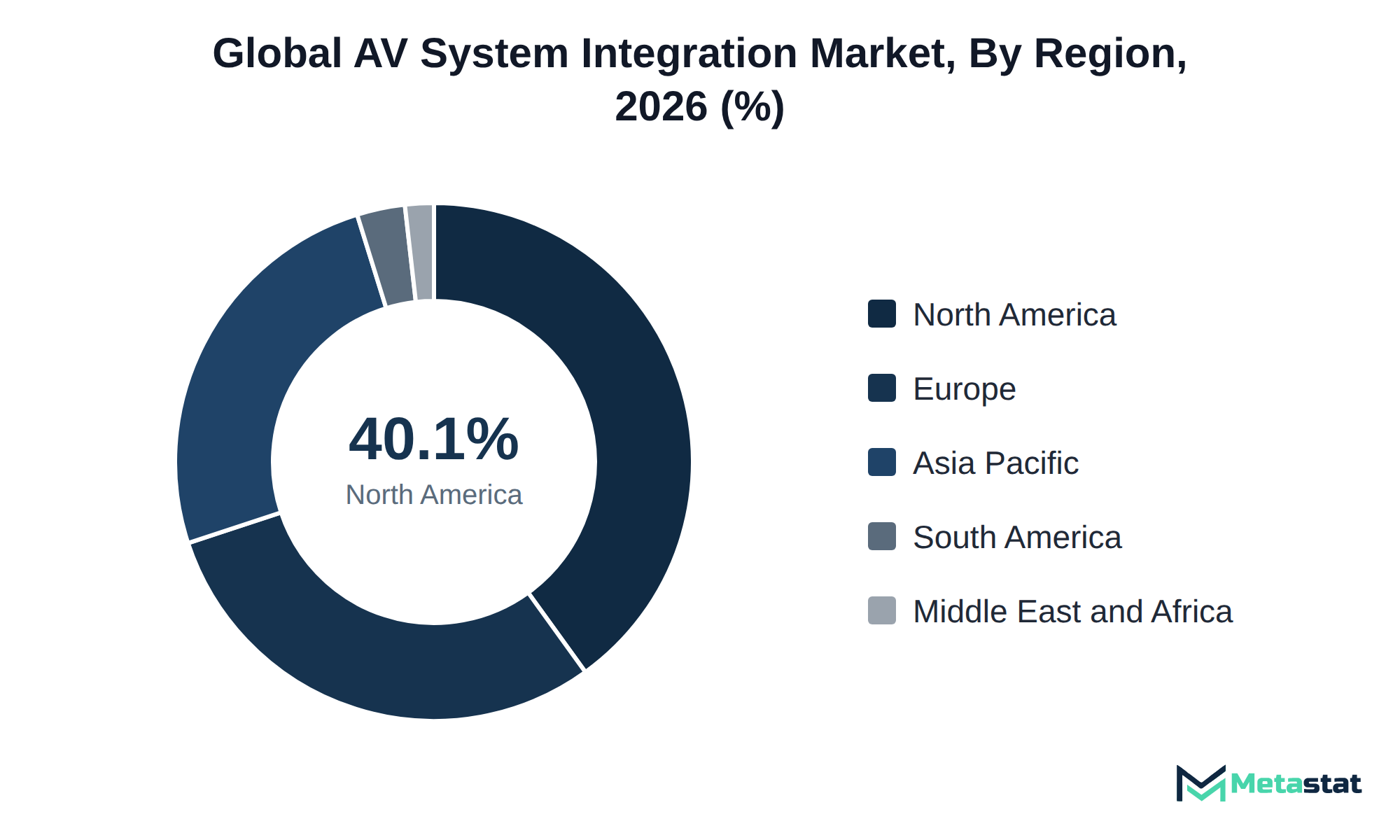
Growth in the market is driven by the rising adoption of smart technologies and digital transformations across sectors. Displays is the highest-value segment and contributes significantly to overall market expansion. North America holds 40.1% of the market in 2025, with the US leading in 2026. This regional dominance reflects strong investment in technological advancements and infrastructure developments.
Continued growth is supported by increasing investments in fixed installations that cater to both new projects and upgrades. The market is expected to experience substantial advancements in system integration, enhancing the ability to meet diverse client requirements. The shift toward more interactive and engaging environments fuels demand for innovative solutions, enabling businesses to create immersive experiences for their customers.
The AV System Integration market supports the integration of various audio-visual components, enhancing communication and collaboration in sectors including education, government, hospitality, and retail. Demand arises from the increasing focus on creating immersive environments that facilitate effective communication. These solutions improve productivity and engagement through high-quality audio and video experiences. Organizations therefore invest significantly in these technologies to remain competitive and meet evolving customer expectations.
Rising adoption of advanced display technologies propels growth, particularly in North America, which holds 40.1% of the market in 2025, with the US leading in 2026. Displays represent the largest segment, projected to grow from USD 3.9 billion in 2026 to USD 11.2 billion by 2033, reflecting a compound annual growth rate of 16.4%. This growth aligns with trends in digital transformation and the increasing reliance on high-quality visual communication tools.
Regional dynamics show that North America leads in market share, while Europe and Asia Pacific follow, with 29.9% and 25.3% respectively. Diverse applications of AV systems across industries drive investment in these technologies. The demand for integrated solutions that combine hardware and software components continues to influence market trajectories and investment strategies within the AV System Integration market.
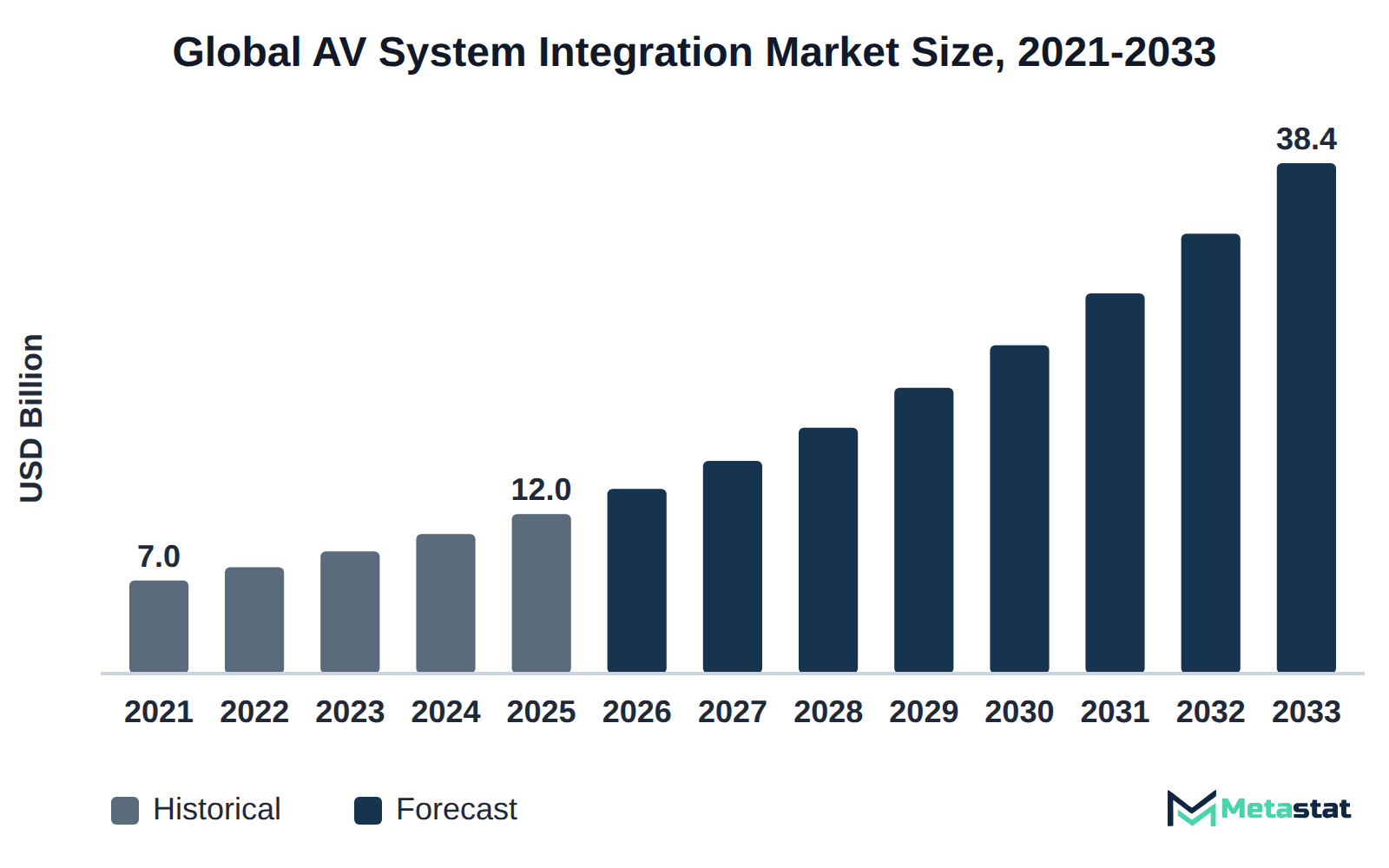
AV-over-IP adoption is transforming the AV System Integration market, particularly the deployment of networked control systems. This transition allows for the integration of audio and video signals over standard IP networks, enhancing scalability and flexibility for users. Audio over IP networking supports the audio portion of this transition. This rapid growth in display technology aligns with the increasing demand for efficient communication systems across various sectors.
Educational institutions, corporate environments, and entertainment venues increasingly use AV-over-IP solutions to streamline operations. The integration of networked control systems enables more intuitive management of AV resources, resulting in reduced operational costs and improved user experiences. The enhanced capabilities provided by AV-over-IP technology support better collaboration and communication, essential for modern enterprises. This growth reflects a broader shift toward digitization and network reliance, which is changing how AV systems are designed and operated within the market.
Investment in display and camera upgrades significantly influences the adoption of hybrid learning and collaboration solutions within the AV System Integration market.These upgrades also fit the wider shift toward digital education. These upgrades enhance user engagement and interaction, leading to improved educational and professional outcomes. Demand for modernized educational environments is reflected in the education application segment. It is projected to increase from USD 3 billion in 2026 to USD 8.5 billion by 2033, at a compound annual growth rate (CAGR) of 16.1%.
Buyers increasingly prefer subscription-based pricing models for these upgrades, which provide flexibility and scalability. Hardware-as-a-service models follow a similar recurring-fee structure for equipment. Contract structures often include options for maintenance and support, ensuring that institutions keep their AV systems updated with the latest technology without incurring substantial upfront costs. Such arrangements support ongoing investments in quality upgrades, which are essential for creating effective hybrid environments that facilitate collaboration between remote and in-person participants.
Educational institutions and businesses prioritize modern AV solutions, so vendors in the market need to understand these purchasing trends. By aligning pricing strategies with the evolving needs of buyers, companies enhance their competitive positioning. This focus reinforces demand for high-quality AV system integrations and supports market growth.
Organizations with multiple sites require tailored managed AV services to optimize their audiovisual systems and ensure integration across locations. The increasing trend toward remote and hybrid work models drives demand for consistent presentation quality and reliable communication tools among diverse teams. This demand is reflected in the AV System Integration market, particularly in fixed installations. That segment is expected to expand from USD 12.4 billion in 2026 to USD 34.7 billion by 2033, a CAGR of 15.8%.
Lifecycle spending is essential in maximizing the return on investment for organizations deploying AV systems across multiple sites. Managed services cover installation, maintenance, and upgrades, which reduce downtime and improve performance. Companies that invest in these services achieve higher operational efficiency and better collaboration among employees. Effective lifecycle management reflects growing recognition that AV technology enhances organizational productivity, which further drives growth in the AV System Integration market.
Integrated AV systems significantly enhance guest and in-store experiences by offering effective communication and engagement features. Retail environments increasingly adopt these systems to create captivating digital signage displays that attract customers, leading to improved sales performance. The Education application segment shows a projected growth from USD 3.0 billion in 2026 to USD 8.5 billion by 2033, reflecting the growing recognition of the importance of immersive learning experiences. This trend demonstrates how organizations prioritize investing in technology that enhances user interaction.
Organizations implementing advanced AV solutions streamline operations and improve customer service delivery. For example, fixed installations within retail spaces emphasize brand messaging and promotional activities, ensuring strong visual communication. Fixed installations are projected to grow from USD 12.4 billion in 2026 to USD 34.7 billion by 2033, highlighting the commercial implications for businesses adopting these integrated solutions. Enhanced customer experiences result in increased brand loyalty and higher conversion rates, contributing to overall market growth within the AV System Integration market.
Educational institutions increasingly invest in advanced audio-visual systems to support hybrid learning environments. This transition arises from shifts in teaching methodologies, where a blend of in-person and remote learning enhances accessibility and engagement. Schools and universities are upgrading their AV capabilities, resulting in higher demand for integrated systems that facilitate interaction between students and educators. Investment in technology-driven solutions allows institutions to improve learning outcomes and attract a broader student base. The trend toward hybrid learning significantly influences the AV System Integration market, driving up demand for displays, cameras, and control systems tailored to educational needs.
Growing interest in interactive and immersive experiences fuels demand across various sectors. Businesses increasingly prioritize the enhancement of customer engagement through AV installations. This trend highlights the importance of advanced technology in retail and hospitality, where the integration of innovative systems improves the overall customer experience. Accordingly, the market for AV System Integration expands, driven by the need for sophisticated solutions that deliver meaningful interactions.
The integration of smart building technologies drives the growth of the AV System Integration market. Innovations including Internet of Things (IoT) devices enhance system interoperability, improving overall operational efficiency. Enhanced connectivity and automation allow for effective integration of audio-visual systems with other building management systems, optimizing performance and user experience. End-users in sectors including hospitality and retail benefit from these advancements, leading to increased demand for integrated solutions that enhance customer interaction and engagement.
Smart building technologies deliver improved energy management and monitoring solutions, resulting in cost savings over time. These cost efficiencies attract organizations seeking to modernize their facilities while maintaining budgetary control. The market is expected to experience growth, fueled by the increasing adoption of these technologies and the demand for advanced integrated solutions that improve the functionality of audio-visual systems across various applications.
Price sensitivity presents a notable restraint in the AV System Integration market. Buyers within the education and government sectors often face budget constraints, leading to slower uptake of advanced audio-visual systems. High initial costs for installation and integration frequently result in postponed upgrades or smaller project scopes. End users in these sectors prioritize cost-effective solutions, delaying the adoption of newer technologies that could enhance operational efficiency. Emerging companies operating within tighter budgets struggle to justify investments in sophisticated AV systems, further inhibiting market expansion. This price sensitivity results in reduced overall market size and restricts growth potential among suppliers focused on providing high-end solutions.
Increasing talent costs represent a significant challenge for suppliers in the AV System Integration market. Hiring skilled professionals with expertise in audio-visual technologies and system integration has become expensive, leading to higher operational costs. This situation affects profitability, especially for companies relying on specialized talent for project execution and client support.
To address rising talent costs, suppliers are implementing various strategies. Investment in training and development programs aims to enhance the skills of existing employees, reducing reliance on external hires. Several companies are adopting automation and advanced technologies to streamline processes and lessen the dependency on manual labor. By optimizing project workflows, firms maintain service quality while managing personnel expenses.
The competitive nature of the market necessitates that suppliers remain agile in their approach to talent management. Adapting to these increasing costs influences pricing strategies and operational efficiencies, ultimately affecting overall market dynamics.
Retail environments experience a significant transformation, driven by the increasing demand for integrated audio-visual systems. This sector is expected to achieve a compound annual growth rate (CAGR) of 17% due to the substantial opportunities for suppliers focused on enhancing customer engagement and operational efficiency. The integration of displays, cameras, and control systems forms the backbone of these solutions, allowing retailers to create immersive shopping experiences that attract and retain customers. These deployments fit within smart retail, where advanced systems streamline store operations. The market is projected to reach a value of USD 5 billion by 2033, reflecting the prioritization of technology investments in this sector. This growth aligns with broader trends in digital retail strategies, where advanced systems facilitate personalized interactions and streamline operations. The shift toward integrated AV solutions in retail highlights the market's responsiveness to evolving consumer preferences and the necessity for businesses to adopt innovative technologies.
The Global AV System Integration market is segmented based on Type, Application, Installation Type, and Project Type.
This segment is essential for facilitating communication and presentations across various sectors, including education, corporate environments, and entertainment venues. The increasing demand for high-quality visual content drives growth in this segment, particularly in educational institutions and corporate offices that require engaging and informative displays. Compared to other segments within the market, the Displays segment demonstrates a higher growth rate, reflecting its expanding applications in modern environments. The rapid advancement of display technologies, including LED and OLED displays, influences purchasing decisions, enabling organizations to enhance their visual communication capabilities effectively.
Cameras is estimated to reach USD 5.9 billion by 2033, at a CAGR of 17% during the forecast period. This segment serves various industries, including education, government, and retail, facilitating activities including surveillance, event recording, and live streaming. Rising demand for high-definition video quality and advanced features drives growth, particularly in sectors emphasizing security and engagement. Compared to other segments in the Type category, the Cameras segment experiences significant growth due to increasing investments in security infrastructure and multimedia capabilities. The focus on integrating artificial intelligence in camera technology, including AI-powered surveillance systems, further enhances its appeal, attracting buyers seeking innovative solutions. The segment's growth trajectory outpaces others, reflecting the trend towards enhanced visual communication solutions.
Control Systems segment is expected to reach USD 6.8 billion by 2033. This segment includes technologies that support the management and operation of audio-visual systems, enabling users to control multiple devices seamlessly. Typically employed by educational institutions, corporate entities, and government agencies, these systems enhance operational efficiency and user experience. Growth in this sector is driven by the push for smarter, more integrated solutions that streamline control processes and improve user interaction. This segment shows faster growth compared to other types, with a projected CAGR of 16.3%. The increasing complexity of AV installations necessitates sophisticated control systems, setting this segment apart from others including Displays and Cameras, which experience different growth dynamics and market demands.
Customer User Interfaces segment is projected to grow at a CAGR of 16.1% during the forecast period. This segment encompasses technologies that facilitate user interaction with AV systems, widely used in sectors including education, hospitality, and corporate environments. Increasing demand for intuitive and user-friendly interfaces drives growth, especially due to the rise of hybrid learning and remote collaboration. Educational institutions and corporate clients invest significantly in these systems to enhance communication and engagement. Compared to other segments, including Displays and Cameras, which focus on hardware, Customer User Interfaces prioritize software and user experience, resulting in a unique growth trajectory. The reliance on intuitive design differentiates this segment, emphasizing the importance of user engagement in optimizing AV system performance.
Projectors serve a vital component in various AV applications, enhancing visual communication in settings including corporate environments, educational institutions, and entertainment venues. These devices facilitate large-scale presentations, interactive learning, and immersive experiences. Demand for projectors is driven by the increasing emphasis on engaging and dynamic content delivery, particularly in education and corporate training. This segment distinguishes itself from other types through a focus on larger viewing experiences, catering to different buyer needs compared with displays and cameras. Technological advancements in projection quality and portability contribute to its appeal, while competition from advanced display technologies presents challenges. The market continues to adapt to evolving customer preferences and technological innovations, ensuring relevance and functionality in diverse applications.
This segment focuses on equipping educational institutions with advanced audio-visual technologies for classrooms and lecture halls, enabling enhanced teaching and learning experiences. Increasing adoption of hybrid learning models drives demand for innovative AV solutions tailored for educational environments. Unique to this segment, the growth trajectory surpasses other applications in the AV System Integration market, reflecting a strong emphasis on technological advancement in learning. Institutions prioritize investments in integrated systems that improve engagement and facilitate interactive learning experiences, which sets the education segment apart from slower-growing applications including government. The ongoing evolution in educational methodologies necessitates continued investment in AV infrastructures, ensuring institutions remain competitive in delivering quality education.
Government segment is estimated to reach USD 5.4 billion by 2033, at a CAGR of 15.2% during the forecast period. This segment caters to government entities, enabling effective communication and coordination through advanced audiovisual solutions. Demand for reliable AV systems in government organizations drives significant investments, particularly for enhancing public service delivery and facilitating remote engagement. The regulatory environment, including mandates for digital transformation, acts as a primary influence on growth. Compared to other application segments, the government segment experiences consistent growth trends and generally higher value projects due to stringent requirements for reliability and security, distinguishing it from sectors with more variable demand patterns. Overall, the market continues to evolve, influenced by these specific dynamics within the government sector.
The hospitality segment is expected to reach USD 5 billion by 2033. This segment focuses on providing advanced audiovisual solutions in hotels, restaurants, and event spaces, enhancing guest experiences and operational efficiency. The demand for innovative technology solutions to support effective communication and immersive environments drives growth in this area. Rapid expansion in the hospitality sector, particularly in emerging markets, contributes to this upward trend. Compared to other segments, hospitality experiences slower growth with a unique focus on customer engagement, differentiating it from markets like education and retail, which experience more accelerated expansion. The sector's growth at a CAGR of 15.2% reflects the increasing integration of AV systems that cater specifically to the needs of hospitality firms aiming to improve service delivery and customer satisfaction. The market continues to evolve with new technology adoption and the rising importance of creating engaging experiences for guests.
Retail is projected to grow at a CAGR of 17% during the forecast period. This segment focuses on delivering integrated audio-visual solutions designed to enhance customer engagement and improve in-store experiences. Retailers invest in these systems to create immersive environments that attract customers and facilitate effective communication. Increasing demand for innovative technologies in retail environments drives this growth, owing to businesses seeking to leverage AV solutions to differentiate themselves in a competitive market. Retail stands out from other applications due to its higher growth rate compared to sectors like education and government, which exhibit slower expansion. The investment in integrated systems offers retailers advantages in attracting foot traffic and improving sales performance, reflecting the segment's potential within the AV System Integration market.
This segment serves a wide range of applications including corporate settings, educational institutions, and public venues, facilitating efficient communication and collaboration. The increasing emphasis on permanent AV solutions drives demand, with businesses seeking to enhance operational efficiency and user experience. Compared to Temporary Installations, Fixed Installations exhibit a higher growth trajectory due to the growing need for long-term, cost-effective solutions. The difference in pricing structures reinforces this trend, with fixed solutions typically offering better value over time. The market continues to evolve through technological advancements, with innovations in integration capabilities further promoting adoption across various sectors.
Temporary Installations segment is estimated to reach USD 3.7 billion by 2033, at a CAGR of 14.3% during the forecast period. This segment finds application in various settings, including events, exhibitions, and temporary setups that require flexible audio-visual solutions. Key drivers include the growing demand for portable and adaptable systems among users including event organizers and corporate clients. Compared to other segments, Temporary Installations experience a faster growth rate, reflecting an increasing trend in temporary setups for both corporate and entertainment purposes. This segment's adaptability and lower upfront investment requirements offer distinct advantages, positioning it uniquely within the market. Expanding event-driven activities drive demand for these solutions significantly, propelling market expansion.
New Installations segment is valued at USD 6 billion in 2026 and is projected to reach USD 15.9 billion by 2033, at a CAGR of 14.8% during the forecast period. This segment serves educational institutions, corporate offices, and entertainment venues, facilitating the implementation of new AV systems tailored to specific user needs. Increased demand for interactive and engaging environments drives growth, particularly in educational settings emphasizing blended learning techniques. Unlike other segments, New Installations experiences a faster growth rate, reflecting a strong push toward modernization and improved user experiences. The growing focus on immersive technologies and integration into existing infrastructures contributes to this trend, positioning New Installations as a key driver in the broader AV System Integration market.
Retrofits and Upgrades segment is estimated to reach USD 22.5 billion by 2033, at a CAGR of 16.3% during the forecast period. This segment focuses on enhancing and modernizing existing AV setups in various environments, including corporate offices, educational institutions, and government facilities. The push for improved functionality and integration drives demand from organizations seeking to optimize their audio-visual systems without incurring the costs associated with new installations. Factors influencing this segment include technological advancements in AV equipment and the increasing need for systems to support hybrid work and learning environments. Compared to other project types, this segment shows faster growth due to the widespread desire for upgrades to existing infrastructure, which is more cost-effective than completely new installations. The market continues to evolve, reflecting the ongoing commitment to innovative and efficient AV solutions.
Based on geography, the Global AV System Integration market is divided into North America, Europe, Asia-Pacific, South America, Middle East, and Africa.
In North America, significant demand for the AV System Integration market arises from diverse sectors, including education and government. The region's strong adoption of technology, particularly in schools and public institutions, drives investment in integrated audio-visual systems. North America holds a global market share of 40.1% in 2025, reflecting robust infrastructure supporting advanced AV solutions. Regulatory initiatives promoting modern educational environments contribute to this growth, enhancing the need for upgraded systems. By 2033, North America is projected to reach USD 15 billion, highlighting the market's potential for expansion driven by increasing integration across multiple applications and project types.
The European market demonstrates a strong commitment to enhancing integrated audio-visual systems, particularly in education and government sectors. Significant investments in infrastructure and technology modernization drive demand across countries like Germany and France. The market benefits from initiatives aimed at improving digital learning environments and government communication systems. With a share of 29.9% of the global market in 2025, the region is projected to experience significant expansion. Countries including the UK and Italy are actively adopting AV technologies to support interactive learning and efficient public services. The increasing focus on sustainable practices within AV installations is reflected in the design and implementation of integrated solutions. Overall, the AV System Integration market in Europe is expected to experience substantial expansion in the upcoming years.
In Asia Pacific, the demand for the AV System Integration market reflects substantial growth opportunities, driven primarily by the educational and retail sectors. Countries including China, Japan, and India prioritize advanced audio-visual technologies for enhancing learning environments and customer experiences. Rapid urbanization and infrastructure development support increased investment in integrated systems. The market in this region represents 25.3% of the global share in 2025. Significant advancements in technology and the increasing focus on digital transformation further enhance the adoption of AV solutions across diverse applications. The potential for growth remains robust, especially in fixed installations, where substantial investments are expected through 2033.
Demand in the AV System Integration market within South America is driven predominantly by the education and government sectors, with significant investments in technology infrastructure. Brazil and Argentina prioritize enhancing audio-visual capabilities across various platforms, resulting in increased demand for modern integrated solutions. Challenges including limited technological infrastructure in certain areas affect the pace of adoption, though ongoing initiatives to upgrade facilities present opportunities for growth. The market's share of the global AV System Integration market is projected at 3.00% in 2025, reflecting a commitment to improving the quality and accessibility of audio-visual systems. The focus on upgrading existing installations remains crucial, particularly in educational institutions aiming to incorporate advanced teaching technologies.
Demand in the Middle East and Africa for the AV System Integration market is influenced by growth in sectors including education and government. Investment in educational infrastructure, particularly in Saudi Arabia and the UAE, drives the need for advanced AV solutions to enhance learning experiences. In South Africa, the government sector increasingly adopts integrated AV systems for improved communication and operational efficiency. The region's market share highlights its developing role in the global landscape. Various initiatives and infrastructure projects aimed at modernizing facilities contribute to the market's expansion. The integration of AV technology within corporate environments and public spaces continues to support demand, reflecting a trend toward enhanced interaction and collaboration.
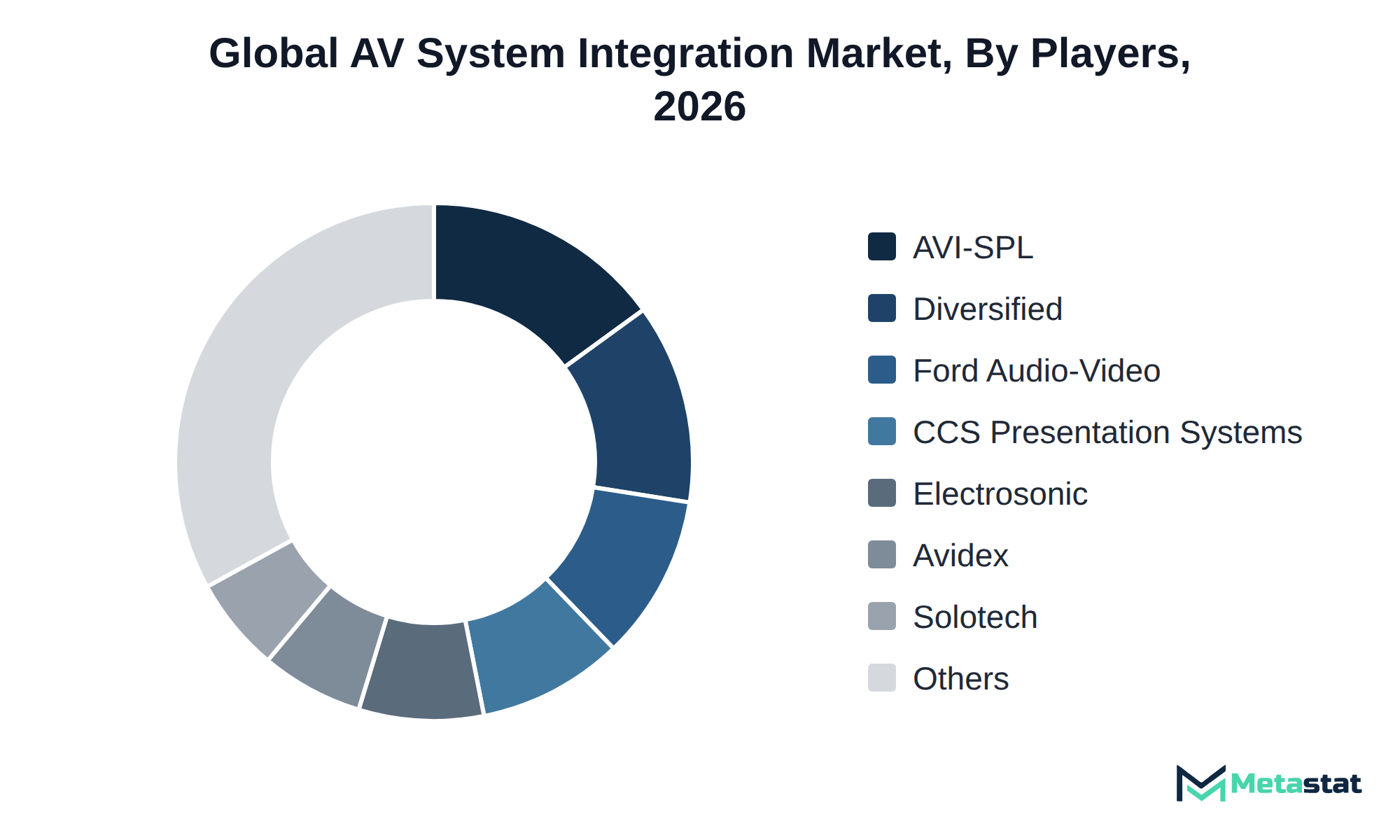
In the AV System Integration market, competition revolves around various strategic behaviors, with companies differentiating themselves through service offerings and customer engagement models. Buyers prioritize factors including price, customization, certification, and overall service quality. The ability to tailor solutions to specific client requirements significantly influences purchasing decisions.
A notable group of players focuses on specific service types to address diverse customer needs. For instance, AVI-SPL and Diversified emphasize large-scale installations and advanced integration solutions, enabling them to capture substantial market share. Companies like Electrosonic and Ford Audio-Video cater to niche applications within the education and entertainment sectors, respectively, further illustrating the varied competitive landscape.
Innovation is significant in the market, with companies striving to enhance their technical capabilities and service offerings. Avidex and Solotech focus on integrating advanced technologies into their solutions, appealing to customers seeking advanced audiovisual experiences. Firms including CCS Presentation Systems and SKC Communications prioritize customer support and service reliability, establishing strong relationships with clients who value long-term partnerships.
The anticipated growth hinges on several developments within the AV System Integration market. Increased adoption of advanced display technologies, expected to reach USD 11.2 billion by 2033, will drive demand for innovative solutions across multiple sectors, including education and retail. The expansion of fixed installations, projected to grow to USD 34.7 billion during the same timeframe, will enhance operational efficiencies in various industries. However, risks exist, particularly related to economic fluctuations that could impact investment strategies in sectors heavily reliant on audiovisual systems. This concern is especially pertinent in North America, which represents over 40% of the market. Ensuring steady demand from key sectors and mitigating potential economic setbacks will be essential for the market to achieve its projected growth trajectory.
By Type: Displays, Cameras, Control Systems, Customer User Interfaces, Projectors, Others (Audio Equipment, Signal Processors, Switching and Distribution Equipment, Encoders/Decoders, Cabling, Connectors, Racks, and Mounts)
By Application: Education, Government, Hospitality, Retail, Other (Corporate Offices, Healthcare Facilities, Entertainment and Sports Venues, Museums, Houses Of Worship, Transportation Facilities, and Industrial Sites.)
By Installation Type: Fixed Installations, Temporary Installations
By Project Type: New Installations, Retrofits and Upgrades
The report strategically identifies and profiles the key market players and analyses their core competencies in each sub-segment of the AV System Integration market.
|
Report Attributes |
Details |
|
Study Period |
2021-2033 |
|
Base Year |
2025 |
|
Estimated Year |
2026 |
|
Forecast Period |
2026-2033 |
|
Historical Period |
2021-2025 |
|
Growth Rate |
CAGR 15.7% from 2026 to 2033 |
|
Revenue Unit |
USD billion |
|
Segmentation |
By Type, Application, Installation Type, Project Type, and Region |
|
By Region |
North America (By Type, Application, Installation Type, Project Type, and Country)
|
|
Europe (By Type, Application, Installation Type, Project Type, and Country)
|
|
|
Asia Pacific (By Type, Application, Installation Type, Project Type, and Country)
|
|
|
South America (By Type, Application, Installation Type, Project Type, and Country)
|
|
|
Middle East and Africa (By Type, Application, Installation Type, Project Type, and Country)
|
Find answers to common questions about this report
The AV System Integration market size was valued at USD 12 billion in 2025.
The market is projected to grow at a CAGR of 15.7% during the forecast period from 2026 to 2033.
The North America AV System Integration market size is estimated to reach USD 15 billion by 2033.
Displays lead the AV System Integration market with a projected value of USD 11.2 billion by 2033, surpassing other segments in growth potential.
Investment in advanced audio-visual systems supports hybrid learning environments, enhancing accessibility and engagement in educational institutions. The integration of smart building technologies improves operational efficiency and user experience, driving demand for sophisticated solutions across various sectors.
North America holds the dominant share of the AV System Integration market, with a projected value of USD 15 billion in 2033, representing 40.1 percent of the total market.
Price sensitivity presents a notable restraint, as buyers in the education and government sectors face budget constraints, leading to slower uptake of advanced systems. Increasing talent costs represent a significant challenge, raising operational expenses for suppliers reliant on skilled professionals for project execution and client support.
Increasing demand for integrated audio-visual systems in retail and educational sectors drives adoption. The focus on enhancing customer engagement and improving learning outcomes through advanced technology solutions supports this trend.
The AV System Integration market is estimated to reach a valuation of USD 38.4 billion by 2033.
Key players operating in the AV System Integration market include AVI-SPL, Diversified, AVI SYSTEMS, Ford Audio-Video, CCS Presentation Systems, Solutionz, Electrosonic, Avidex, Solotech, SKC Communications, HB Communications, IVCI, Washington Professional Systems, and Carousel Industries.
The analysts below cover Information & Technology research at Metastat Insights.
LEAD ANALYST
Utkarsh Khirodkar is a Lead Market Research Analyst at MetaStat Insight, specializing in market intelligence, technology sector assessments, and competitive strategy.

PRINCIPAL CONSULTANT - ENTERPRISE AI & EMERGING TECHNOLOGIES
Banking & Finance · Electronics and Semiconductor · Energy and Power · Healthcare IT · Information & Technology · Professional Services
Vijay Gunti is a Principal Consultant at MetaStat Insight, bringing over two decades of experience across enterprise digital transformation, technology strategy, and intelligent systems.

LEAD CONSULTANT - COMMUNICATION, TELECOM, AND IT
Electronics and Semiconductor · Information & Technology · Machinery & Equipment · Professional Services
Ravindra Sathe Consultants for Communication, Telecom, and IT at MetaStat Insight. He leads the firm's industry research initiatives across telecommunications infrastructure, digital connectivity, enterprise networking, and emerging information technology domains.
Assessing commercial microgrid software adoption requires looking past top-level installation numbers and examining utility interconnection queues. The research provided verifiable data on average permitting timelines, tariff structures, and battery storage integration costs across regional utility territories. That grounded perspective was valuable for our team when building five-year demand projections for industrial microgrid controllers.
Ambulatory surgical centers have very different purchasing cycles for robotic-assisted surgery platforms than major hospital networks. The MetaStat Insight study focused squarely on capital expenditure depreciation, procedural reimbursement pathways, and surgeon training overhead. That operational clarity made it much simpler to validate multi-year procedure growth forecasts against actual ambulatory center adoption patterns.
When planning edge sensor rollouts across refinery environments, generic IoT reports typically miss the harsh-environment certification bottlenecks. MetaStat Insight gave an objective evaluation of ATEX and Class 1 Division 2 hardware availability, along with realistic five-year maintenance cycle cost projections. The comparison of wireless mesh versus private cellular backhaul helped our team pressure-test network reliability models for remote processing facilities.
Explore related market intelligence reports worth reading alongside this one.