
LEAD ANALYST
Utkarsh Khirodkar is a Lead Market Research Analyst at MetaStat Insight, specializing in market intelligence, technology sector assessments, and competitive strategy.

US Construction and Design Software Market Size, Share, By Function (Project Design and BIM Software, Construction Estimation and Quantity Takeoff Software, Project Management and Scheduling Software, Cost Management and Budgeting Software, Field Management and Reporting Software, Safety Management and Compliance Software, Document Management and Collaboration Software, Others (Bid Management and Cost Accounting)), By Deployment Mode (Cloud-Based Software, On-Premises Software and Hybrid Deployment Software), By End User (Architects and Design Firms, General Contractors and Builders, Specialty Contractors and Subcontractors, Residential Remodelers and Renovation Contractors, Owners, Developers and Construction Managers), By Project Type (Residential New Construction, Residential Remodeling and Renovation, Commercial Construction, Industrial Construction, Infrastructure and Civil Construction and Institutional Construction), Industry Analysis, Growth, Trends, and Forecast, 2026-2033
Report ID
MSI-5771
Published
November, 2026
Pages
299 Pages
Format
Historical
Base year
Forecast
Forecast period
Report Details
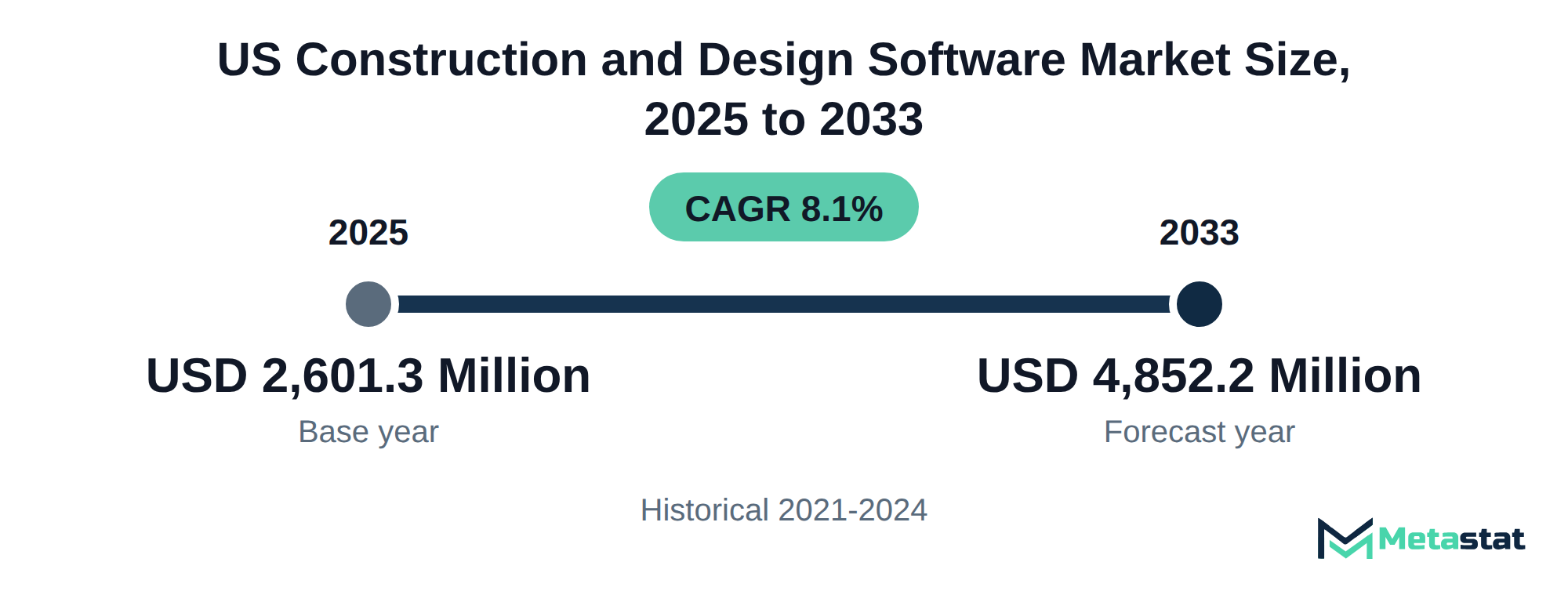
Market Valuation: Valued at $2,601.3 Million in 2025, projected to reach $4,852.2 Million by 2033 at a 8.1% CAGR.
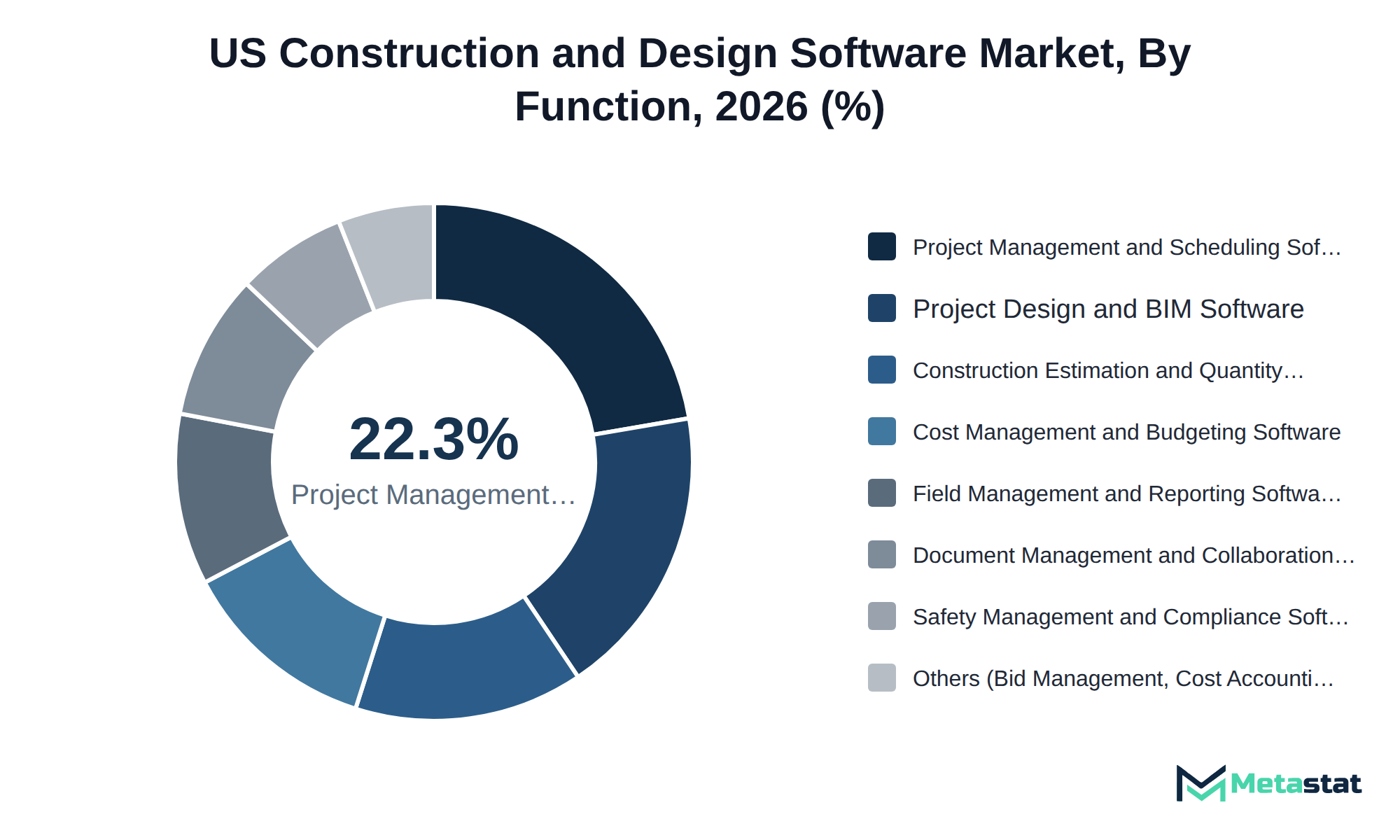
Dominant Segment: The Project Management and Scheduling Software segment leads the market, driven by strong demand for tools that enhance task coordination and resource management.
Geographic Lead: North America remains the leading region in market share, with emerging markets showing significant growth potential due to increased infrastructure development.
What's Inside: The report provides a comprehensive analysis of the competitive landscape, detailed segment breakdowns, and growth forecasts from 2026 to 2033.
Emerging Demand: There is a notable increase in demand for Construction Estimation and Quantity Takeoff Software, reflecting the need for precise cost management in complex projects.
Cloud-Based Software Growth: Cloud-Based Software is projected to experience rapid growth, reaching USD 3,017.1 million by 2033, driven by the need for enhanced collaboration and flexibility.
Choose Your License
US Construction and Design Software Market
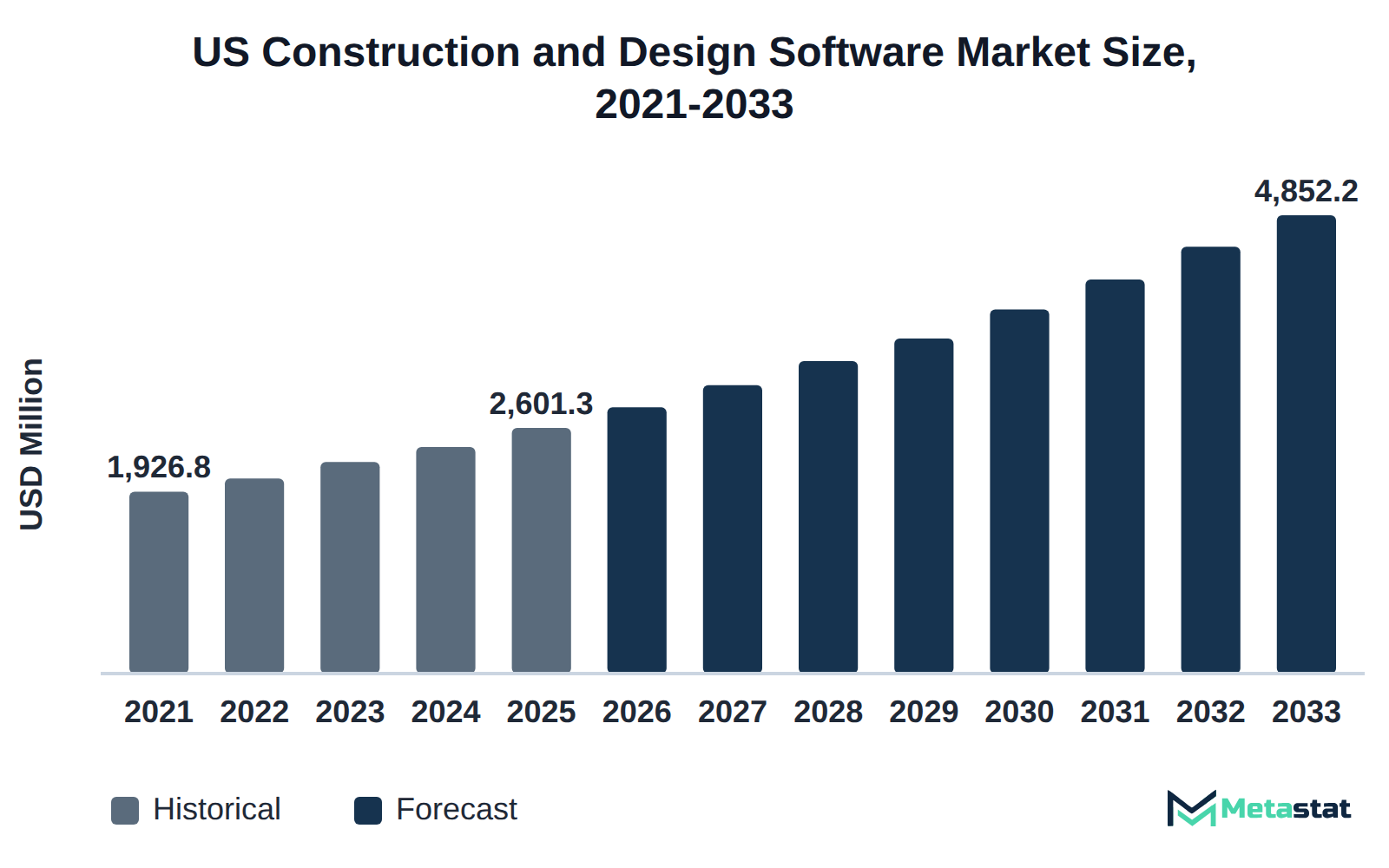
The US Construction and Design Software market was valued at USD 2,601.3 million in 2025 and is projected to reach USD 4,852.2 million by 2033, growing at a CAGR of 8.1% over the forecast period.
The US Construction and Design Software market encompasses a range of architecture, engineering and construction (AEC) software solutions that facilitate project design, management, and execution. Buyers invest in these tools to enhance efficiency, streamline communication, and improve project outcomes across various construction and design processes. The market serves a diverse group of end users, including architects, general contractors, and specialty subcontractors, who rely on these solutions to address the complexities of modern construction projects.
Growth in this market is driven by increasing adoption of cloud-based solutions, which offer flexibility and scalability in project management. The Project Management and Scheduling Software segment holds the most value, reflecting strong demand for tools that assist in coordinating tasks and resources effectively. While North America typically leads in market share, emerging regions exhibit significant potential for growth, particularly with infrastructure development accelerating globally.
Investment in advanced software features, including Building Information Modeling (BIM), supports market expansion. Improved collaboration and data sharing capabilities enhance project efficiency, attracting more stakeholders to adopt these solutions. Firms recognize the value of integrating technology into workflows, and spending on construction and design software is expected to continue its upward trajectory.
In the US, construction and design software provides essential tools for improving productivity and efficiency across construction projects. This software facilitates tasks including project design, scheduling, and cost management, resulting in significant time and resource savings for buyers. Primary users include architects, contractors, and engineers, who invest in these solutions to streamline operations and maintain competitiveness in an evolving industry.
Growth in the market is driven by increasing demand for advanced software solutions that integrate technologies including Building Information Modeling (BIM) and cloud computing. Among the functional segments, Project Management and Scheduling Software holds the largest share, supporting a significant portion of overall spending. North America ranks highly in software adoption, while emerging markets show increasing interest, expanding the global footprint of construction software technologies.
Architects and design firms are leading adopters of these solutions, reflecting a shift towards more digitally oriented project workflows. The trend towards cloud-based deployment models enhances accessibility and collaboration, further fueling market expansion. These developments position the market for sustained growth, driven by technological advancements and the increasing need for efficient project execution.
Cloud-based construction software is transforming workflows within the US Construction and Design Software market, facilitating an effective approach to project management. The transition to cloud solutions is evident in the anticipated growth of cloud-based software, projected to reach USD 3,017.1 million by 2033, reflecting a compound annual growth rate (CAGR) of 10% from 2026. This shift is driven by the need for enhanced collaboration and real-time data access among project stakeholders.
Architects, general contractors, and subcontractors increasingly adopt cloud-based platforms to streamline processes and improve overall project outcomes. These solutions enable integrated project workflows, allowing teams to collaborate effectively from any location, thus reducing delays and miscommunication. The scalability and flexibility of cloud services further support project efficiency, allowing businesses to adapt to changing requirements without significant upfront investments in infrastructure.
Growing reliance on cloud-based construction software marks a major shift in the US market, improving productivity and cost-effectiveness across projects. Organizations that embrace this technology position themselves to gain a competitive edge in an increasingly digital environment, ultimately enhancing their project delivery capabilities and client satisfaction.
Pricing models in the US Construction and Design Software market increasingly reflect the shift toward cloud-based solutions. Cloud-Based Software, projected to reach USD 3,017.1 million by 2033, offers flexible subscription-based pricing, which appeals to various buyer segments including architects and design firms.
Subscription models provide predictable costs and eliminate large upfront investments, allowing firms to allocate resources more effectively. In contrast, traditional on-premises software often relies on one-time licensing fees, which strain budgets. The growing preference for cloud solutions indicates a shift in buyer behavior, with companies seeking scalable options that align with current project demands.
Contract models frequently include tiered pricing based on user numbers or software features, enabling buyers to select packages that match their operational needs. This flexibility encourages market penetration among smaller firms that have hesitated to adopt expensive software solutions previously. Consequently, the transformation in pricing and contract structures creates a more competitive environment, driving innovation and enhancing overall market growth.
General contractors and builders require efficient real-time collaboration, accurate cost estimation, and effective scheduling solutions in the US Construction and Design Software market. The growing complexity of projects necessitates streamlined communication among teams, improving decision-making and project delivery timelines. In 2026, general contractors and builders are expected to represent a significant portion of the market, with a projected value of USD 1,501.7 million by 2033. This demand arises from the need to manage resources effectively and improve project outcomes.
Cost estimation tools help contractors stay competitive in a market characterized by fluctuating material costs and labor rates. Advanced cost-estimating software facilitates accurate forecasting, supporting budgeting and financial planning. Construction scheduling solutions enable contractors to optimize project timelines, thereby enhancing productivity and minimizing delays.
For general contractors and builders, a growing focus on real-time collaboration, precise cost estimation, and efficient scheduling improves operational efficiency and profitability. It also reinforces their competitive position.
Digital construction platforms significantly enhance project efficiency and cost control across the United States. These platforms provide functionalities that streamline project management, budgeting, and collaboration. For instance, the Project Management and Scheduling Software segment is projected to reach USD 1,060.7 million by 2033, reflecting a growing emphasis on effective project oversight and resource allocation. This software supports real-time project tracking and resource management, enabling timely decision-making and reducing delays.
Cost Management and Budgeting Software, experiencing a compound annual growth rate of 7.8%, plays a critical role in helping contractors maintain financial control. By providing accurate forecasting and expenditure tracking, this software enables users to manage budgets effectively and mitigate cost overruns. The integration of these platforms leads to more informed spending decisions and optimized resource allocation, ultimately resulting in increased profitability for construction firms.
The US Construction and Design Software market experiences ongoing advancements in digital and smart construction solutions that prioritize cost efficiency and operational effectiveness. With these technologies, construction professionals are better able to complete projects within budget and on schedule, which improves overall project outcomes.
General contractors and builders experience heightened demand for construction and design software due to increased investment in residential remodeling projects. Demographic shifts indicate more individuals are investing in home improvement, driven by a desire for enhanced living spaces and increased property value. The trend towards residential remodeling leads to a greater need for efficient project management, cost estimation, and design solutions, resulting in higher software expenditures. The market is projected to reach USD 730.7 million by 2033 in the residential remodeling and renovation project type segment, reflecting a compound annual growth rate of 8.7%. This upward trajectory highlights the significant role of residential investment in driving software demand.
Adoption of cloud-based solutions is rising among architects and design firms, enhancing collaboration and efficiency throughout the design process. These developments add to overall market growth.
Growing adoption of cloud-based software significantly influences the US Construction and Design Software market. This shift facilitates improved collaboration, real-time data sharing, and enhanced accessibility for users across various locations. Architects and design firms, general contractors, and specialty contractors increasingly prefer cloud-based solutions due to their ability to streamline project management and reduce operational delays. The need for remote access to project data further drives this trend, enabling teams to work efficiently regardless of location.
Cloud-based software enhances scalability, allowing firms to adjust their resource allocation according to project requirements. Consequently, smaller firms gain access to sophisticated software solutions that previously required substantial investments in infrastructure. This wider access to technology brings a broader range of participants into the construction industry and creates a competitive environment. Overall, the ongoing shift towards cloud-based solutions is projected to significantly boost the market's growth, shaping future service offerings and driving demand for innovative applications.
Price sensitivity significantly impacts the adoption of construction and design software within the market. Many buyers, particularly residential remodelers and renovation contractors, face budget constraints that limit their ability to invest in advanced software solutions. This financial pressure leads to slower uptake and smaller order sizes, resulting in delayed project timelines and reduced operational efficiency. Competition from lower-cost alternatives further complicates the decision-making process, with buyers weighing the benefits of premium software against more affordable options. Consequently, potential users postpone upgrades or forgo investments in new technologies altogether, affecting overall market growth and innovation. The influence of price sensitivity on purchasing decisions highlights the challenges faced by specific buyer segments in adopting the latest advancements in construction and design software.
Increasing talent costs present significant challenges for suppliers in the US Construction and Design Software market. Industry professionals, including software developers and project managers, demand competitive compensation packages, driving up operational costs. Many companies focus on enhancing recruitment strategies and investing in employee training programs to improve retention and productivity. This focus on talent development allows suppliers to maintain service quality while addressing rising costs. Several firms explore automation technologies to streamline processes, reducing reliance on a large workforce. These strategies aim to mitigate the impact of escalating talent costs on profit margins, ensuring sustained competitiveness in the evolving market. By effectively managing these costs, suppliers enhance their capacity to innovate and meet the demands of clients across various projects.
Project management and scheduling software represents a significant growth opportunity within the US Construction and Design Software market. With a projected value of USD 1,060.7 million by 2033, this segment exhibits increasing demand driven by the necessity for enhanced project oversight and resource allocation. General contractors and builders particularly benefit from such solutions, seeking tools that streamline operations and improve productivity. The software's capacity to integrate with cloud-based platforms further supports its appeal, enabling real-time updates and collaboration among various stakeholders. Rising project complexity drives investment in such software, which firms need to maintain a competitive advantage. Enhanced project management software facilitates better adherence to timelines and budgets, significantly impacting overall project success in the construction sector.
The US Construction and Design Software market is segmented based on Function, Deployment Mode, End User, and Project Type.
Project Design and BIM Software segment is valued at USD 521.3 million in 2026 and is projected to reach USD 942.8 million by 2033, at a CAGR of 8.8% during the forecast period. This software serves architects and design firms by facilitating the creation, modification, and visualization of construction projects. Increasing demand for Building Information Modeling (BIM) solutions drives growth in this segment, reflecting the industry's shift towards integrated design approaches. Compared to other segments, Project Design and BIM Software exhibits a higher growth rate, supported by advancements in 3D modeling technologies. Digital transformation reshapes the construction landscape, resulting in heightened interest in innovative design tools that enhance project collaboration and efficiency.
Construction Estimation and Quantity Takeoff Software segment is estimated to reach USD 714.2 million by 2033, at a CAGR of 8.4% during the forecast period. This software is primarily used by general contractors, builders, and estimators to calculate project costs accurately and efficiently. Enhanced demand for precise cost estimation and quantity takeoff capabilities drives growth in this segment, linked to increasing project complexity. This segment stands out with a significant growth rate compared to others, offering tools tailored to specific estimating needs. In contrast to Project Management and Scheduling Software, which supports broader project timelines and team coordination, Construction Estimation and Quantity Takeoff Software focuses on detailed, upfront cost analysis, essential for effective budget management. Rising demand from builders striving to optimize bidding processes significantly influences this segment's expansion, reflecting its critical role in ensuring financial viability in construction projects.
This software supports planning, tracking, and managing construction projects, serving architects, general contractors, and builders. The push for efficient project timelines and resource management drives engagement with this software, enabling stakeholders to coordinate tasks and timelines effectively. Rapidly increasing project complexity necessitates robust software solutions, influencing adoption rates among users. Compared to other segments, including Construction Estimation and Quantity Takeoff Software, which grows at a CAGR of 8.4%, Project Management and Scheduling Software shows a strong emphasis on real-time updates and collaboration tools, ensuring stakeholders remain aligned throughout project lifecycles. These features improve operational efficiency and project delivery timelines, making this segment a core part of the market.
Cost Management and Budgeting Software segment is projected to grow at a CAGR of 7.8% during the forecast period. This software assists professionals in tracking project costs, managing budgets, and ensuring financial efficiency throughout construction projects. Primarily used by general contractors and builders, this segment supports effective financial decision-making and resource allocation. The increasing complexity of projects drives demand for precise cost management tools. Compared to other segments, this category exhibits slower growth, reflecting the competitive nature of pricing strategies and the need for integration with broader project management solutions. In contrast, segments including Project Management and Scheduling Software experience faster expansion, highlighting differing buyer priorities and technological adoption within the market.
Field Management and Reporting Software focuses on the efficient management of field operations, including task assignment, reporting, and compliance tracking in construction projects. This software is primarily used by construction managers and site supervisors who require real-time data and communication tools to enhance operational efficiency. Demand for this segment is driven by the increasing complexity of construction projects, necessitating streamlined workflows and better collaboration among teams. Compared to other function segments, this software faces slower growth dynamics, with contractors prioritizing project design and estimation tools first. While this segment supports essential aspects of project execution, overall investment and focus typically lean towards software that directly influences project planning and cost management.
Safety Management and Compliance Software focuses on ensuring that construction projects adhere to safety regulations and standards. This segment primarily serves general contractors, builders, and specialized contractors who prioritize compliance and risk management. Increased regulatory scrutiny and a strong emphasis on occupational health and safety drive demand for these software solutions. Companies leverage such tools to streamline compliance processes, track safety incidents, and ensure that safety protocols are followed, ultimately reducing liability and improving project outcomes. Compared to other segments, this software faces slower growth due to the established nature of compliance requirements and potential barriers related to training and implementation. While segments like Project Management and Scheduling Software focus on broader project efficiency, Safety Management emphasizes regulatory adherence and safety risk mitigation, highlighting a distinct role within the market.
Document Management and Collaboration Software streamlines the collection, organization, and sharing of project-related documents among various stakeholders in construction projects. This segment supports architects, contractors, and project managers in maintaining accurate records and facilitating communication. The push for remote collaboration drives demand for this software, allowing teams to work efficiently regardless of location. The integration of cloud-based solutions enhances accessibility and real-time updates, which supports adoption across the industry. Compared to other segments, including Project Management and Scheduling Software, this sub-segment experiences slower growth due to a more mature market. However, the software remains essential for cohesive teamwork and document integrity across construction projects.
Bid management and cost accounting software streamlines the procurement process, ensuring that project bids are effectively managed and costs are accurately tracked. This segment serves architects, general contractors, and specialized subcontractors, enhancing their ability to execute projects within budget constraints. Demand for these solutions is driven by a growing emphasis on financial accountability and the increasing complexity of bidding processes in construction projects. Unlike other segments, including project management software, this segment faces distinct challenges due to the need for integration with accounting software and other financial systems. While other segments experience rapid growth, the adoption of bid management and cost accounting software demonstrates steady progress, reflecting a more cautious approach from buyers prioritizing budgetary control over expansive feature sets. The market is expected to evolve in response to the heightened focus on transparency and efficiency in project financials.
This software type is widely used for its flexibility and remote accessibility, making it a preferred choice among architects, general contractors, and specialty subcontractors. The increasing demand for real-time collaboration and streamlined project management solutions drives the growth of this segment. Unlike On-Premises Software, which often incurs higher maintenance costs and upfront investments, Cloud-Based Software offers lower entry barriers and scalability, appealing to several smaller firms. The expected growth rate outpaces other deployment modes, highlighting its significance in the US Construction and Design Software market, where digital transformation remains a key focus for enhancing operational efficiency and cost-effectiveness.
On-Premises Software segment is estimated to reach USD 884.5 million by 2033, at a CAGR of 3.3% during the forecast period. This software type primarily serves construction firms that require robust solutions for project management, cost estimation, and reporting without reliance on external servers. General contractors and builders use on-premises software for its security and control over sensitive project data. However, a slower growth rate compared to cloud-based solutions indicates a shift in preference toward more flexible deployment models that cloud offerings provide. The increasing emphasis on real-time collaboration and accessibility in the market challenges the traditional on-premises approach, which often restricts user access to local networks. On-premises software remains vital for certain users, but demand is shifting as cloud solutions gain traction in the market.
Hybrid Deployment Software segment is expected to reach USD 950.5 million by 2033. This software type combines on-premises and cloud-based solutions, appealing to firms seeking flexibility in deployment and management of construction projects. Architects and design firms, general contractors, and specialty contractors leverage hybrid deployment for its adaptability to project needs and resource availability. Demand for hybrid deployment is driven by the growing preference for flexible work environments that facilitate collaboration among distributed teams. Compared to cloud-based software, which is projected to grow at a CAGR of 10%, hybrid deployment experiences a relatively slower growth rate of 3.3%. The balance between cloud and on-premises features provides unique advantages, allowing organizations to tailor their software usage to specific project requirements while addressing security and compliance concerns effectively. As the market evolves, hybrid deployment offers a strategic option for businesses looking to optimize their software investment.
Architects and Design Firms segment is valued at USD 549.6 million in 2026 and is projected to reach USD 963.2 million by 2033, at a CAGR of 8.3% during the forecast period. This segment focuses on providing design and architecture solutions to professionals, including architects and design firms, enhancing project planning and execution. Demand stems from increased investments in residential and commercial projects, driving software adoption for design and collaboration purposes. Increased automation and advancements in Building Information Modeling (BIM) technologies, which enable efficient design processes, support growth in this segment. Compared to other segments, Architects and Design Firms exhibit higher growth rates due to a rising emphasis on innovative design solutions and sustainability practices. This emphasis positions the segment favorably against other segments facing slower growth, highlighting the important role that architects and design firms play in the overall US Construction and Design Software market.
General Contractors and Builders segment is estimated to reach USD 1,501.7 million by 2033, at a CAGR of 7.9% during the forecast period. This segment encompasses companies responsible for the construction and management of various projects, including residential and commercial buildings. These firms employ construction and design software to streamline project management, enhance communication, and improve efficiency in operations. Demand for this segment is driven by the increasing complexity of construction projects, requiring advanced tools for scheduling, cost estimation, and resource allocation. Compared to other segments, General Contractors and Builders experience a moderate growth rate, influenced by ongoing economic recovery and infrastructure investments. Technology adoption in this segment occurs at a different pace than that of Architects and Design Firms, which shows a higher CAGR of 8.3%. This distinction highlights the unique needs and operational frameworks present in the construction industry.
Specialty Contractors and Subcontractors segment is expected to reach USD 913.2 million by 2033. This segment primarily serves construction firms that focus on specific trades, including electrical, plumbing, and HVAC services. Adoption of advanced software solutions enhances project management efficiency and collaboration for these specialized contractors. Growth in this segment is driven by the increasing complexity of construction projects and the demand for precise budgeting and scheduling. Compared to other segments, this group experiences a relatively faster growth trajectory, supported by a CAGR of 8.3%. The emphasis on technology integration specifically addresses the challenges faced by these contractors, including labor shortages and rising costs. Streamlining operations and improving communication through these software solutions positions specialty contractors and subcontractors to adapt quickly to market fluctuations.
Residential Remodelers and Renovation Contractors segment is projected to grow at a CAGR of 8.7% during the forecast period. This segment focuses on providing services for enhancing, updating, or modifying existing residential properties, catering primarily to homeowners seeking improvements. The demand for such software is driven by the increasing popularity of home renovations and the desire for custom designs among homeowners. This segment exhibits faster growth compared to other end-user segments, including General Contractors and Builders, which has a CAGR of 7.9%. The shift toward sustainable and energy-efficient renovations further contributes to this rapid expansion, driven by residential remodelers adopting technologies that support environmentally friendly practices. Enhanced project management tools and budgeting software specifically tailored for renovation projects facilitate better planning and execution, distinguishing this segment from the other segments in this group.
This segment focuses on Owners, Developers and Construction Managers, who oversee construction projects. These stakeholders employ construction and design software to manage projects efficiently, ensuring that timelines, budgets, and quality standards are met. The segment experiences growth driven by increasing project complexities and the adoption of advanced technological solutions. Owners and developers prioritize tools that enhance overall project visibility and control. Compared to other segments, this group faces unique challenges related to regulatory compliance and project financing, making the demand for specialized software solutions vital. The market reflects growing recognition that tailored software matters for these stakeholders, supporting better decision-making and resource allocation.
Residential New Construction segment is valued at USD 481.3 million in 2026 and is projected to reach USD 816.1 million by 2033, at a CAGR of 7.8% during the forecast period. This segment primarily supports the development of new residential properties, used mainly by builders and contractors focused on creating single-family homes and multifamily units. The growing demand for housing drives this segment's expansion, influenced by population growth and urbanization trends. Compared to other segments, this sub-segment experiences a moderate growth rate, reflecting higher consumer interest in new builds rather than renovations. The focus on sustainable construction practices and the integration of advanced technologies further differentiate this segment, attracting investments from both private and public sectors within the US Construction and Design Software market. The need for efficient project management tools tailored specifically for new construction projects contributes to the demand for sophisticated software solutions, enhancing productivity and cost-effectiveness in the construction process.
This segment primarily involves updating and enhancing existing residential properties, catering to homeowners seeking improvements in aesthetics, functionality, or energy efficiency. Key players in this segment include residential remodelers and renovation contractors, who use specialized software to manage project timelines, budgets, and resource allocation efficiently. Rising homeowner interest in sustainable living and the implementation of smart home technology significantly influences this segment. Compared to other project types, including Residential New Construction, which experiences a lower CAGR of 7.8%, the Residential Remodeling and Renovation segment demonstrates stronger growth potential, driven by ongoing trends in urbanization and increasing disposable income among consumers. The market reflects this trend, with software tailored to the remodeling and renovation sector growing in importance.
Commercial Construction segment is expected to reach USD 1,150.4 million by 2033. This segment involves the design and construction of commercial buildings, including offices, retail spaces, and industrial facilities. General contractors, builders, and developers employ specialized software to manage projects efficiently, ensuring compliance with regulations and budget constraints. Growth in this segment is primarily driven by increasing investments in infrastructure development and urbanization, leading to a higher demand for commercial spaces. The sector exhibits moderate growth compared to others, with a projected CAGR of 8.3% during the forecast period. Unlike residential projects, which see more significant fluctuations, commercial construction tends to stabilize over time due to consistent demand from businesses and investors. The US Construction and Design Software market continues to expand, reflecting a broader trend of digitization within the industry.
Industrial Construction segment is projected to grow at a CAGR of 8.3% during the forecast period. This segment encompasses large-scale construction projects, including factories, power plants, and other infrastructure developments. It involves general contractors, construction managers, and specialty subcontractors, who leverage specific software solutions for project management, scheduling, and cost estimation. Key drivers for this segment include increasing investments in infrastructure development and ongoing industrialization trends. Compared to other segments, including Residential New Construction, which focuses on smaller-scale projects, Industrial Construction incurs higher project costs and longer timelines. By 2033, the Industrial Construction segment is expected to reflect significant growth, emphasizing its essential role in the broader US Construction and Design Software market.
Infrastructure and Civil Construction involves projects related to public works, including roads, bridges, and utilities. These projects cater to various stakeholders, including government agencies, engineering firms, and construction companies responsible for large-scale developments. Demand for this segment is driven by increasing urbanization and infrastructure investments aimed at enhancing connectivity and sustainability. The emphasis on infrastructure improvements leads to a surge in software adoption among firms engaged in civil engineering and project management. Compared to other project types, this segment typically experiences slower growth due to the complexity and regulatory challenges associated with public projects. However, the ongoing need for infrastructure upgrades enhances the segment's appeal, leading to sustained interest from buyers. The US Construction and Design Software market evolves, reflecting changing priorities and investment patterns in infrastructure and civil construction.
Institutional construction encompasses projects focused on public and private institutions, including schools, hospitals, and government buildings. This segment primarily serves architects, contractors, and project managers specializing in delivering complex structures that meet specific regulatory and operational standards. The demand for institutional construction is driven by increasing investment in infrastructure and public service facilities, reflecting broader economic patterns. Regulatory requirements lead to higher costs and extended timelines, influencing decision-making in project financing and execution. Compared to other project types, institutional construction involves longer project durations and higher budget allocations, impacting overall market dynamics. The US Construction and Design Software market benefits from advancements in technology that streamline project management and compliance processes, enhancing efficiency and supporting growing demand for sophisticated design solutions.
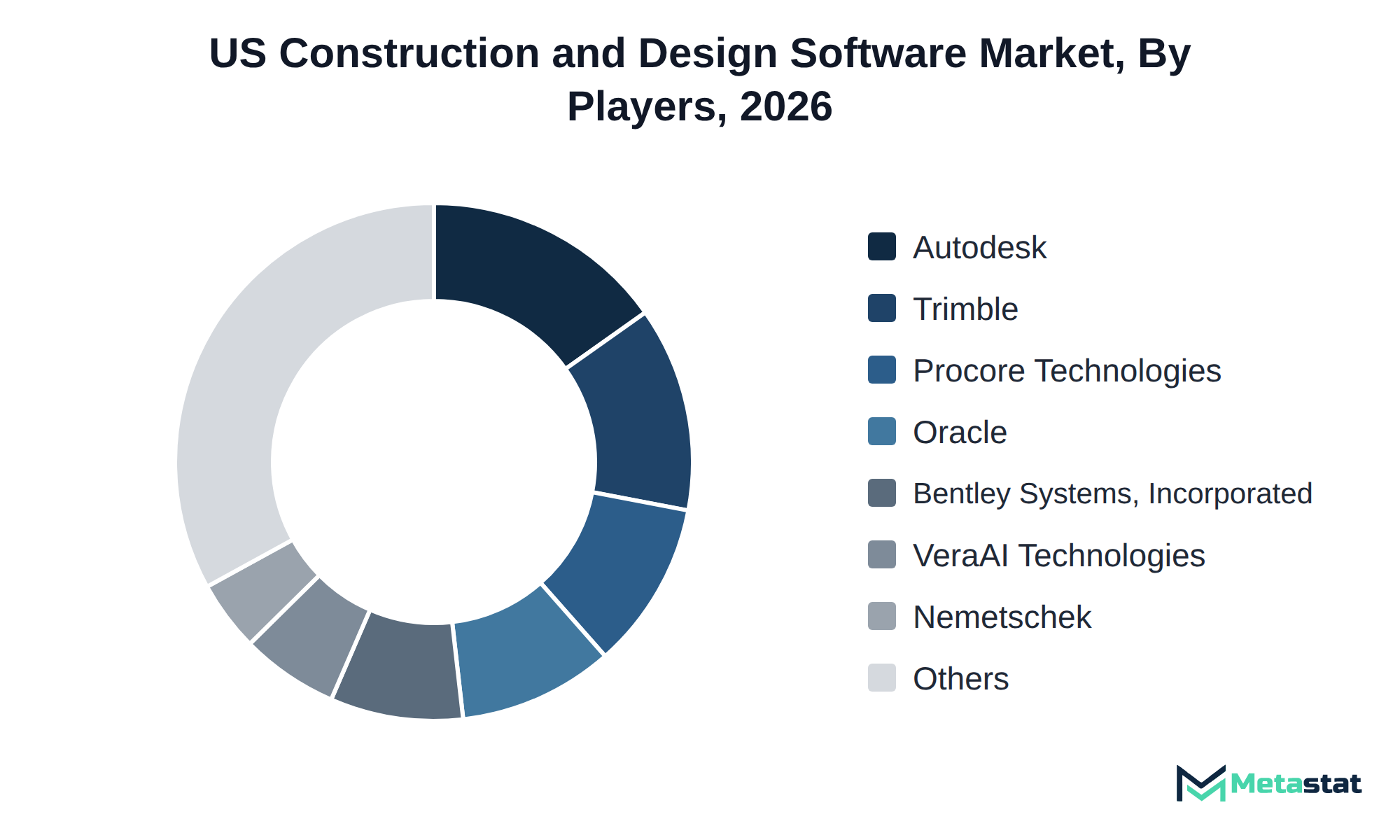
Companies in the US Construction and Design Software market differentiate themselves through various service types and deployment modes. The primary divisions include cloud-based software, on-premises software, and hybrid deployment solutions. Buyers select products based on factors including price, customization, and overall ecosystem compatibility, which influences their purchasing decisions.
VeraAI Technologies Inc. emphasizes software solutions that enhance project design and building information modeling (BIM). Autodesk, Inc. targets a similar space, focusing on integrating design and construction workflows within its platform. Procore Technologies, Inc. specializes in project management software, offering a comprehensive suite for construction management across various project types, which drives operational efficiency for its users.
Achieving this growth relies on several key developments within the US Construction and Design Software market. First, increased adoption of cloud-based software contributes to expanding the market. This deployment mode is expected to drive higher revenues, with anticipated growth from USD 1,547.7 million in 2026 to USD 3,017.1 million by 2033. Second, the demand for project design and BIM software is projected to rise, enhancing collaboration among architects and design firms. This segment's growth from USD 521.3 million in 2026 to USD 942.8 million by 2033 reflects the industry's shift towards integrated design solutions. A main risk to this positive outlook involves economic fluctuations that could affect US construction spending and investments. If general contractors and builders face tighter budgets, overall demand for software solutions declines. Such challenges could slow the upward trajectory of the market, impacting expected revenue growth through 2033.
By Function: Project Design and BIM Software, Construction Estimation and Quantity Takeoff Software, Project Management and Scheduling Software, Cost Management and Budgeting Software, Field Management and Reporting Software, Safety Management and Compliance Software, Document Management and Collaboration Software, Others (Bid Management, Cost Accounting)
By End User: Architects and Design Firms, General Contractors and Builders, Specialty Contractors and Subcontractors, Residential Remodelers and Renovation Contractors, Owners, Developers and Construction Managers
By Project Type: Residential New Construction, Residential Remodeling and Renovation, Commercial Construction, Industrial Construction, Infrastructure and Civil Construction, Institutional Construction
The report strategically identifies and profiles the key market players and analyses their core competencies in each sub-segment of the Construction and Design Software market.
Report Attributes | Details |
Study Period | 2021-2033 |
Base Year | 2025 |
Estimated Year | 2026 |
Forecast Period | 2026-2033 |
Historical Period | 2021-2025 |
Growth Rate | CAGR 8.1% from 2026 to 2033 |
Revenue Unit | USD million |
Segmentation | By Function, Deployment Mode, End User, Project Type, and Region |
Find answers to common questions about this report
The Construction and Design Software market size was valued at USD 2,601.3 million in 2025.
The market is projected to grow at a CAGR of 8.1% during the forecast period from 2026 to 2033.
Project Management and Scheduling Software leads the Construction and Design Software market with a projected value of USD 1,060.7 million by 2033. This segment surpasses others in terms of revenue potential within the forecast period.
Heightened demand for construction and design software arises from increased investment in residential remodeling projects, driven by demographic shifts favoring home improvement. The growing adoption of cloud-based solutions enhances collaboration and efficiency, significantly influencing market growth.
Price sensitivity significantly impacts adoption, as budget constraints limit investment in advanced software solutions. Increasing talent costs present challenges for suppliers, driving up operational expenses and affecting profit margins.
Project management and scheduling software represents a significant growth opportunity, with a projected value of USD 1,060.7 million by 2033. The increasing demand for enhanced project oversight and resource allocation drives adoption among general contractors and builders seeking to improve productivity and maintain a competitive advantage.
The Construction and Design Software market is estimated to reach a valuation of USD 4,852.2 million by 2033.
Key players operating in the Construction and Design Software market include VeraAI Technologies Inc., Autodesk, Inc., Trimble Inc., Procore Technologies, Inc., Oracle Corporation, Bentley Systems, Incorporated, and Nemetschek Group.
Project management and scheduling software is projected to reach USD 1,060.7 million by 2033, driven by the increasing demand for enhanced project oversight and resource allocation.
Construction estimation and quantity takeoff software is projected to reach USD 714.2 million by 2033, driven by the need for accurate cost assessments and efficient project planning.
The analysts below cover Information & Technology research at Metastat Insights.
LEAD ANALYST
Utkarsh Khirodkar is a Lead Market Research Analyst at MetaStat Insight, specializing in market intelligence, technology sector assessments, and competitive strategy.

PRINCIPAL CONSULTANT - ENTERPRISE AI & EMERGING TECHNOLOGIES
Banking & Finance · Electronics and Semiconductor · Energy and Power · Healthcare IT · Information & Technology · Professional Services
Vijay Gunti is a Principal Consultant at MetaStat Insight, bringing over two decades of experience across enterprise digital transformation, technology strategy, and intelligent systems.

LEAD CONSULTANT - COMMUNICATION, TELECOM, AND IT
Electronics and Semiconductor · Information & Technology · Machinery & Equipment · Professional Services
Ravindra Sathe Consultants for Communication, Telecom, and IT at MetaStat Insight. He leads the firm's industry research initiatives across telecommunications infrastructure, digital connectivity, enterprise networking, and emerging information technology domains.
When planning edge sensor rollouts across refinery environments, generic IoT reports typically miss the harsh-environment certification bottlenecks. MetaStat Insight gave an objective evaluation of ATEX and Class 1 Division 2 hardware availability, along with realistic five-year maintenance cycle cost projections. The comparison of wireless mesh versus private cellular backhaul helped our team pressure-test network reliability models for remote processing facilities.
In the biological seed treatment space, registration timelines vary drastically between the European Union, Brazil, and North America. The MetaStat Insight research handled these cross-border regulatory barriers with genuine nuance, mapping commercialization pathways alongside historical field adoption rates. The segmentation between microbial strains and biochemical active ingredients was particularly well structured.
Our team was tracking whether regional recycling infrastructure could realistically absorb the growing volume of lithium iron phosphate batteries over the next decade. The report did a solid job separating announced hydrometallurgical plant capacity from active, permitted operational throughput. That distinction made the feedstock availability projections and regional recovery rate models far more credible than standard commercial overviews.
Explore related market intelligence reports worth reading alongside this one.
Starting from
$2950
Starting from
$2950