
LEAD ANALYST
Utkarsh Khirodkar is a Lead Market Research Analyst at MetaStat Insight, specializing in market intelligence, technology sector assessments, and competitive strategy.

India Data Center Cooling Market Size, Share, By Cooling Technology (Air-Based Cooling and Liquid-Based Cooling), By Cooling Component (Computer Room Air Conditioning (CRAC), Computer Room Air Handling Units (CRAH), Chillers, Heat Exchangers, Cooling Towers, Dry Coolers, Cooling Distribution Units (CDUs) and Others (Control and Monitoring Systems)), By Data Center Type (Hyperscale Data Centers, Colocation Data Centers, Enterprise Data Centers and Edge Data Centers), By End-User Industry (IT and Telecommunications, BFSI, Government and Public Sector, Healthcare and Life Sciences, Retail and E-commerce, Media and Entertainment, Manufacturing and Industrial, Energy and Utilities and Others (Education, Transportation and Research)), Industry Analysis, Growth, Trends, and Forecast, 2026-2033
Report ID
MSI-5772
Published
November, 2026
Pages
255 Pages
Format
Historical
Base year
Forecast
Forecast period
Report Details
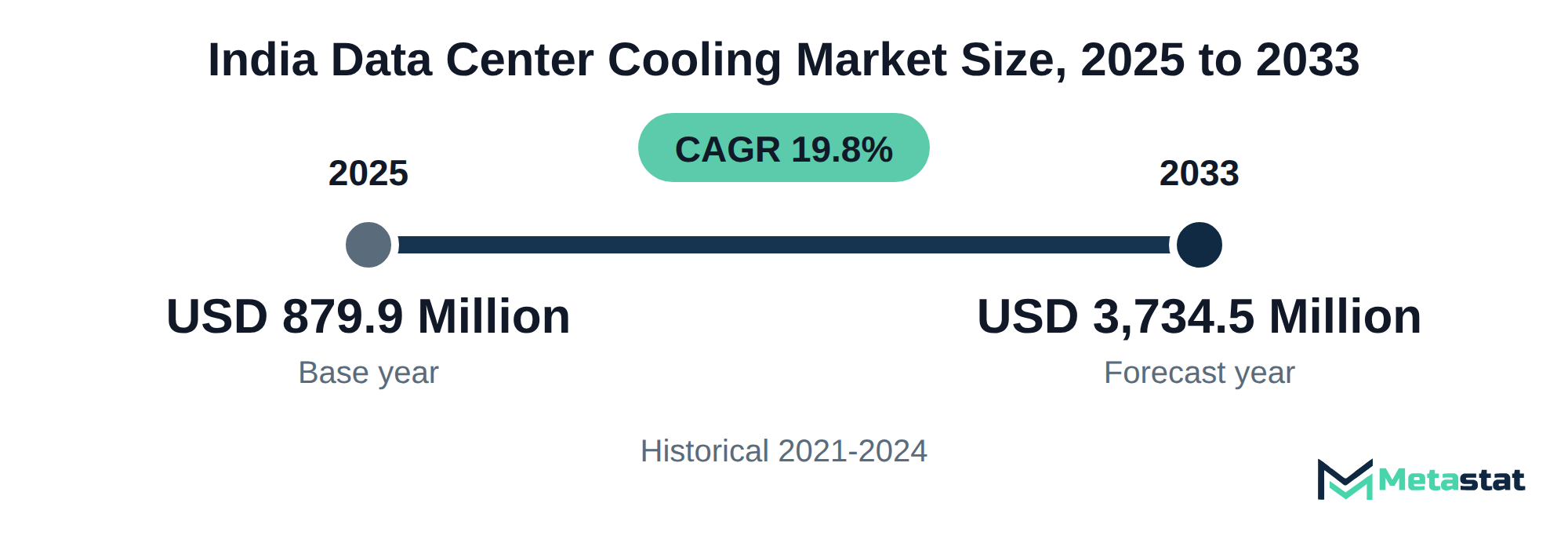
Market Valuation: Valued at $879.9 Million in 2025, projected to reach $3,734.5 Million by 2033 at a 19.8% CAGR.
Dominant Segment: Hyperscale data centers lead the India Data Center Cooling market, driven by the expansion of cloud services and the need for increased storage capacity. This segment is projected to reach USD 1,443 million by 2033, reflecting a CAGR of 20.9%.
Geographic Lead: The growth of the India Data Center Cooling market is primarily concentrated in India, where the IT and telecommunications sector is expanding rapidly, necessitating robust cooling solutions to support digital transformation.
What's Inside: The report provides a comprehensive analysis of the India Data Center Cooling market, including detailed segmentation by cooling technology, components, data center types, and end-user industries. It also features competitive coverage and forecasts through 2033.
Liquid Cooling Growth: Liquid-based cooling technologies are set to experience the highest growth rate in the market, projected to reach USD 1,515.5 million by 2033, with a CAGR of 23.1%, driven by the demands of high-density computing and AI workloads.
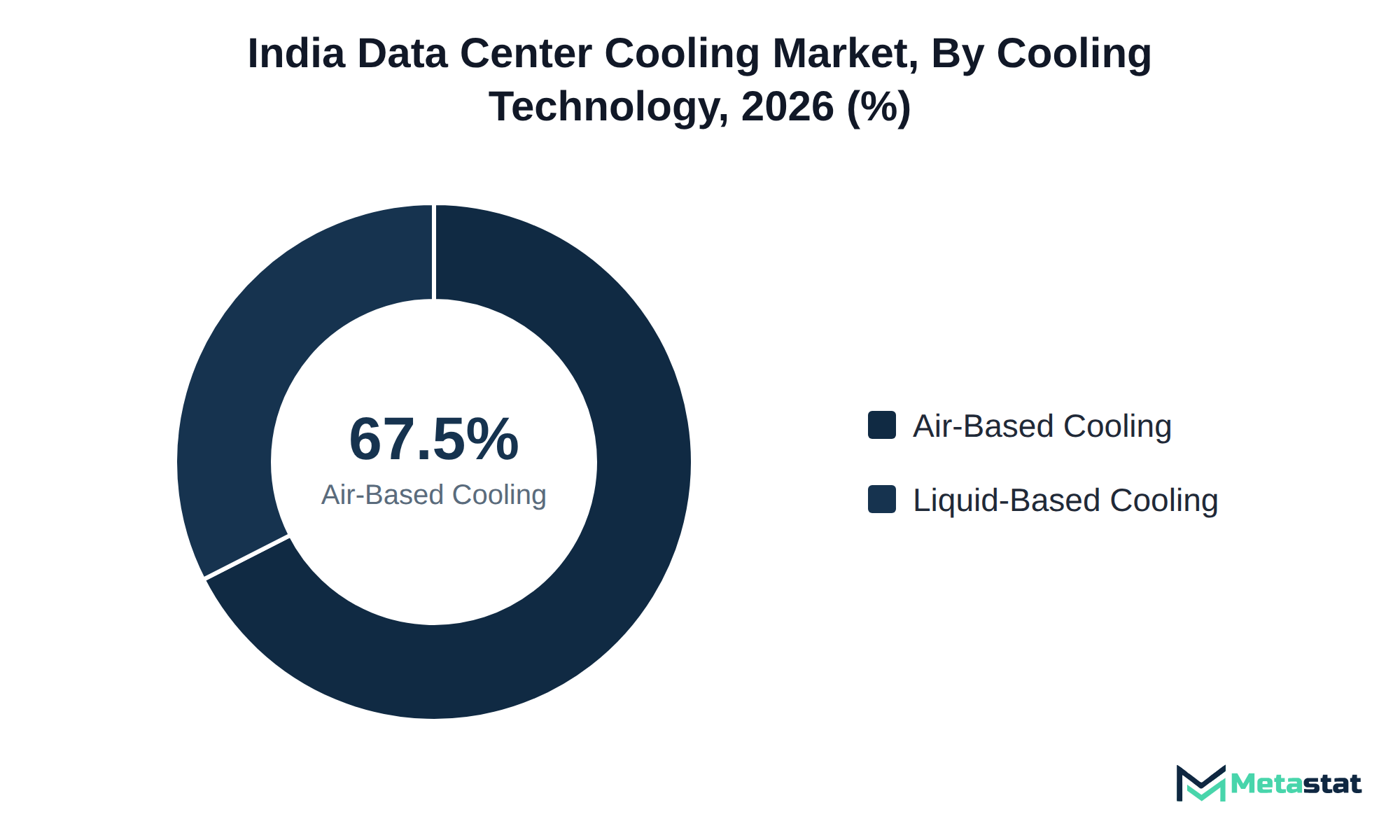
Air-Based Cooling Innovation: Air-based cooling solutions are expected to grow from USD 703.5 million in 2026 to USD 2,219 million by 2033, at a CAGR of 17.8%, as buyers increasingly prioritize energy efficiency and sustainability.
Choose Your License
India Data Center Cooling Market
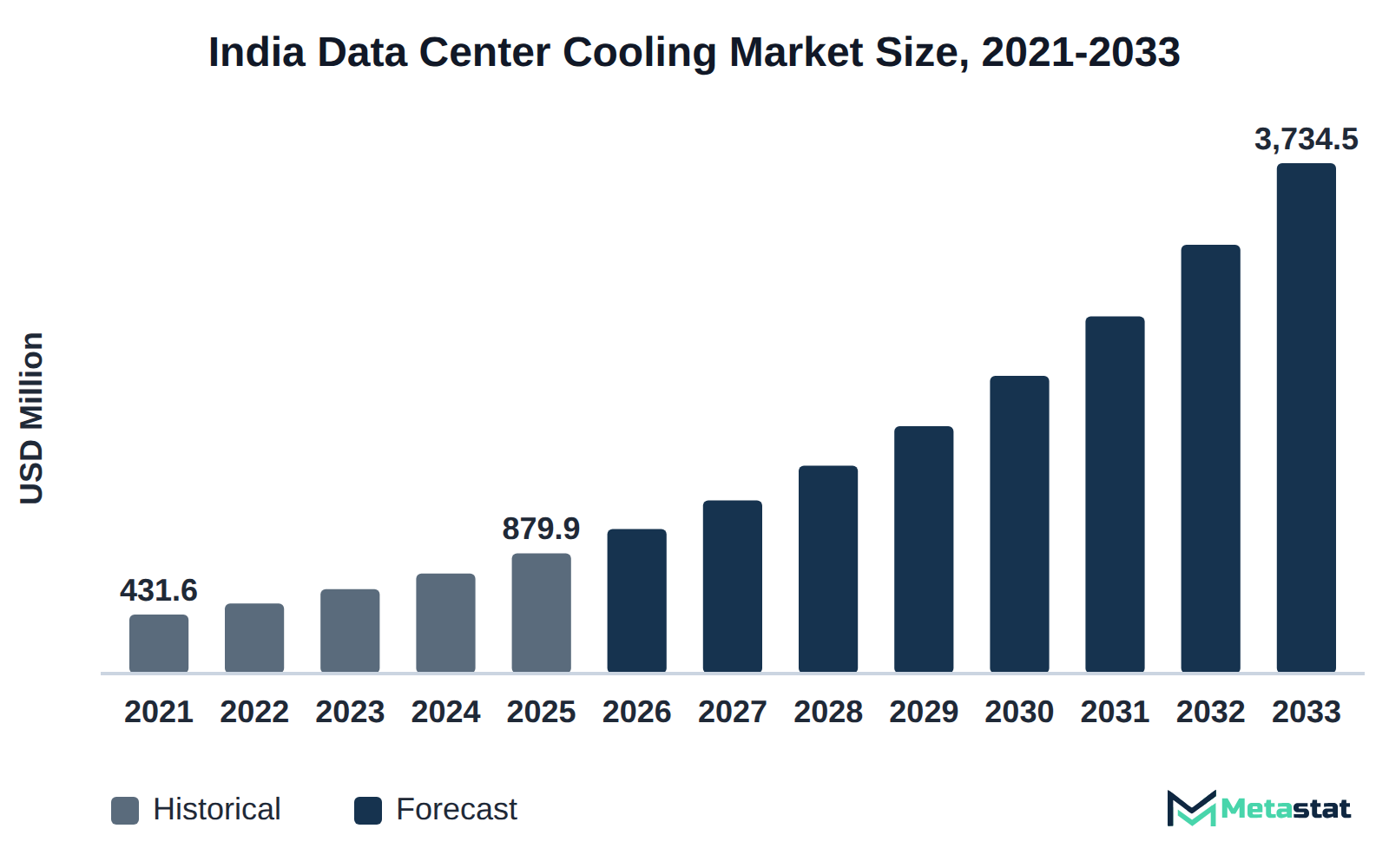
The India Data Center Cooling market was valued at USD 879.9 million in 2025 and is projected to reach USD 3,734.5 million by 2033, growing at a CAGR of 19.8% over the forecast period.
The India Data Center Cooling market encompasses solutions that facilitate temperature regulation within data centers, ensuring optimal performance and longevity of equipment. Buyers invest in these systems to maintain efficiency, prevent overheating, and support the increasing demands for data processing. Key sectors driving this expenditure include IT and telecommunications, where rapid digital transformation necessitates robust cooling solutions to handle growing workloads.
Growth in the market is attributed to the escalating need for efficient data management infrastructure. Hyperscale data centers represent the segment with the highest value, driven by the expansion of cloud services and increased demand for storage capacity. This segment's prominence highlights the critical role of cooling technology in maintaining operational efficiency in large-scale facilities.
Technological advancements in cooling systems influence market dynamics. Innovations in liquid-based cooling solutions offer enhanced performance and energy efficiency, aligning with the sustainability goals of many enterprises. These advances help offset the rising operational costs of traditional cooling methods and support overall market growth.
The market includes a range of cooling technologies, components, and configurations tailored for various data center types and end-user industries. Buyers invest in advanced cooling solutions to enhance operational efficiency, ensure system reliability, and meet the growing demands for data processing and storage capacity. The increasing volume of data generated across industries drives the need for effective cooling systems, prompting organizations to allocate budgets toward innovative solutions and infrastructure upgrades.
Significant growth in the market is attributed to the rising adoption of liquid-based cooling technologies, which offer enhanced efficiency in heat management. Among the cooling technologies, air-based cooling holds the largest share, reflecting its widespread usage and established presence. The IT and telecommunications sector represents the most valuable segment in the India Data Center Cooling market, driven by the continuous expansion of digital services and cloud computing, which necessitate robust cooling systems to maintain performance levels.
The demand for effective cooling solutions strengthens due to the increasing focus on energy efficiency and sustainability in data center operations. Liquid-based cooling technologies are projected to experience the highest growth rate, driven by their ability to provide superior thermal management in densely packed environments. Technological innovation and environmental considerations increasingly shape investment decisions in the market.
Liquid cooling has become essential in high-density and AI data centers due to the increasing heat generated by advanced computing technologies. The shift towards liquid-based cooling systems results from the demand for efficient electronics thermal management solutions capable of handling the significant power requirements of modern data centers. Liquid cooling technologies, including those incorporating heat exchangers, offer effective alternatives to traditional air-based cooling methods.
The India Data Center Cooling market reflects this transition, with liquid-based cooling projected to reach USD 1,515.5 million by 2033, growing at a compound annual growth rate (CAGR) of 23.1%. This rapid adoption is driven by the proliferation of high-performance computing applications and AI workloads that require consistent cooling to maintain optimal performance. Consequently, integrating liquid cooling improves operational efficiency and cuts both energy consumption and overall cooling costs for data center operators.
Investing in liquid cooling systems positions data center operators to meet the evolving requirements of advanced applications. This anticipated growth points to the importance of innovative cooling technologies for managing increasing power density and thermal loads.
Innovation in air-based cooling solutions significantly impacts purchasing decisions within the India Data Center Cooling market. Buyers increasingly prioritize energy efficiency in contracts, reflecting a shift toward sustainability and operational cost reductions. The market for air-based cooling is projected to grow from USD 703.5 million in 2026 to USD 2,219 million by 2033, demonstrating a compound annual growth rate (CAGR) of 17.8%. This substantial growth indicates that buyers are willing to invest in advanced technologies that promise lower energy consumption and reduced environmental impact.
The pricing models for air-based cooling systems vary, often influenced by the technology's complexity and installation scale. Many buyers opt for performance-based contracts, where costs align with energy savings achieved. Such models reduce upfront expenditure and give manufacturers an incentive to improve the energy efficiency of their systems. Buyers effectively manage total cost of ownership over the lifespan of their cooling systems.
Escalating energy costs and growing awareness of environmental sustainability make energy-efficient solutions increasingly important in the India Data Center Cooling market. Buyers adopting innovative air-based cooling technologies experience potential for long-term savings and enhanced operational performance, driving further investment in this segment.
The growth of hyperscale data centers in India intensifies the need for effective thermal management solutions. This segment is projected to reach USD 1,443 million by 2033, reflecting a compound annual growth rate (CAGR) of 20.9% from 2026 to 2033. These investments indicate a shift towards larger-scale operations that need dependable cooling systems to maintain performance and reliability.
Hyperscale data centers, often operated by major cloud service providers, possess unique needs that differ from traditional data centers. The vast infrastructure generates substantial heat, necessitating advanced cooling technologies that efficiently manage thermal output. These systems allow operators to dissipate heat efficiently, protecting system performance and longevity.
These trends indicate that the India Data Center Cooling market presents opportunities for suppliers to develop innovative solutions tailored to the specific requirements of hyperscale facilities. Providers prioritizing energy-efficient and scalable cooling technologies stand to gain a competitive edge while investments in hyperscale infrastructure continue to accelerate.
The increasing density of artificial intelligence (AI) workloads significantly impacts cooling requirements in the India Data Center Cooling market. With the rise of AI applications, data centers face higher thermal loads that necessitate advanced cooling solutions. This growth highlights the urgent demand for effective cooling mechanisms to manage elevated temperatures resulting from densely packed computing resources.
Cooling technology evolves to accommodate these increased thermal demands. Liquid-based cooling solutions, which exhibit a compound annual growth rate of 23.1%, offer greater efficiency in managing heat compared to traditional air-based systems. The adoption of these technologies is critical for ensuring operational efficiency and reliability in data centers tasked with AI workloads. With AI-driven applications proliferating, the market is expected to experience a shift towards innovative cooling strategies that enhance performance and reduce energy consumption, driving commercial growth in the sector.
The IT and telecommunications sector drives significant investment in data center cooling solutions, reflecting a shift in consumer behavior toward increased reliance on digital infrastructure. Rising demand for cloud services, data storage, and high-speed connectivity compels companies in this sector to prioritize efficient cooling systems to maintain operational performance and reliability. This dynamic affects the volume of cooling equipment purchased and contributes to a projected growth rate of 19.8% from the base year of 2025 to 2033. Over this period, the market expands from USD 879.9 million to USD 3,734.5 million. Increased budget allocations for data center enhancements highlight the commitment of IT firms to optimize their cooling technologies, enhancing system longevity while reducing energy costs. The India Data Center Cooling market evolves to accommodate these changing demands, with cooling solutions tailored specifically for high-density applications, ensuring that the infrastructure supports advanced digital services effectively.
Technological advancements in energy-efficient cooling systems drive demand within the India Data Center Cooling market. Increased awareness of energy consumption and operational costs necessitates the implementation of solutions that lower energy usage without compromising performance. These systems employ innovative materials and designs to enhance thermal management, ensuring optimal performance while reducing environmental impact.
Data centers prioritizing sustainability, often described as green data centers, benefit from lower operating costs and improved regulatory compliance. The shift toward energy-efficient solutions influences purchasing decisions, particularly among enterprises aiming to reduce their carbon footprints. Rising energy costs drive demand for these advanced cooling solutions and encourage suppliers to innovate further.
Investment in energy-efficient technologies is anticipated to differentiate competitive offerings in the market. The integration of smart monitoring and control systems allows for optimized energy usage, responding dynamically to changing workloads. This evolution positions the market for significant growth, aligning with global trends toward sustainability and operational efficiency.
High costs associated with advanced cooling systems hinder adoption among end-user industries, particularly in the IT and telecommunications sector. The significant upfront investment required for modern cooling technologies creates a barrier, leading to slower uptake of these systems. Smaller enterprises, in particular, face challenges in allocating budget for such investments, resulting in deferred replacement of outdated cooling solutions. This delay impacts operational efficiency and increases the risk of equipment failure, which further raises operational costs. These pricing pressures constrain growth in the India Data Center Cooling market and affect demand for innovative cooling solutions. Buyers remain cautious, preferring to extend the lifecycle of existing systems rather than invest in new, potentially more efficient technologies, limiting overall market expansion.
Rising input costs pose a significant challenge for suppliers in the India Data Center Cooling market. Increased prices for essential components, including refrigerants and electrical parts, have escalated the overall cost of deploying advanced cooling solutions. Suppliers face margin pressure, requiring them to absorb these costs or pass them on to customers, impacting demand. In response, many suppliers focus on optimizing their supply chains and exploring alternative materials that reduce dependence on expensive inputs. Investments in research and development play a crucial role in innovating cost-effective cooling technologies. Suppliers prioritize efficiency in production processes to mitigate the impact of rising expenses. These strategies help suppliers stay competitive, and the market is expected to keep growing despite these financial hurdles. This adaptation reflects the industry's resilience and its focus on meeting the changing demands of end users across sectors.
Rapid expansion in hyperscale data centers creates significant demand for liquid cooling solutions in the India Data Center Cooling market. Liquid-based cooling systems exhibit a compound annual growth rate (CAGR) of 23.1% through 2033, reflecting their critical role in managing thermal loads associated with increased processing capabilities. The efficient heat management provided by these systems enhances overall data center performance, appealing to organizations prioritizing high-density computing environments.
Investment in hyperscale facilities continues to rise, driven by the IT and telecommunications sectors, which prioritize scalable and effective cooling solutions. This growth creates opportunities for suppliers to expand their offerings, focusing on advanced liquid cooling technologies tailored to meet the specific needs of large-scale data operations. The ongoing trend toward digital transformation further increases the demand for effective cooling systems, presenting a significant market opportunity for stakeholders in the data center cooling ecosystem.
The India Data Center Cooling market is segmented based on Cooling Technology, Cooling Component, Data Center Type, and End-User Industry.
This segment is primarily applied in various data center types to maintain optimal temperatures and prevent equipment overheating. Key end-user industries including IT and telecommunications rely on these solutions to support critical operations and ensure system reliability. The segment benefits from increasing demand for energy-efficient solutions, driven by the growing focus on sustainability and operational cost reduction initiatives. Compared to Liquid-Based Cooling, this segment experiences moderate growth, reflecting its established position in the market. However, continued technological advancements in air-based systems enhance efficiency and performance, positioning it favorably against alternative cooling methods. Expanding demand in the India Data Center Cooling market reflects a strong emphasis on effective thermal management.
This technology efficiently removes heat generated by high-density computing environments, making it ideal for sectors including IT and telecommunications, where managing heat output is critical for performance and reliability. The segment gains traction due to rising thermal management demands associated with sophisticated computing tasks, particularly in hyperscale and edge data centers. Compared to air-based cooling, liquid-based solutions offer superior cooling efficiency and energy performance, positioning them as a preferred choice for large-scale operations. This segment exhibits faster growth than air-based cooling, driven by the increasing need for effective cooling solutions that support high-performance computing workloads. In this environment, end-users seek advanced technologies that ensure optimal equipment operation while minimizing energy consumption.
Computer Room Air Conditioning (CRAC) segment is valued at USD 252 million in 2026 and is projected to reach USD 790.2 million by 2033, at a CAGR of 17.7% during the forecast period. This segment provides critical temperature control for data centers, ensuring the reliability of IT infrastructure. Predominantly used by IT and telecommunications companies, CRAC systems, a specialized category of commercial HVAC equipment, play a vital role in maintaining optimal operating conditions for servers and networking equipment. The segment experiences growth driven by increasing demand for high-density computing solutions, which require effective cooling mechanisms to manage heat output. Compared to other cooling components, CRAC exhibits a slightly lower growth rate than Computer Room Air Handling Units (CRAH), which are projected to grow at a CAGR of 19.2%. The focus on energy efficiency in data center cooling technologies further influences the adoption of CRAC systems, driven by companies seeking to minimize operational costs associated with cooling.
Computer Room Air Handling Units (CRAH) segment is estimated to reach USD 650.5 million by 2033, at a CAGR of 19.2% during the forecast period. This segment serves critical functions in maintaining air circulation and temperature control within data centers, ensuring optimal operational conditions for equipment. Data centers, particularly those in the IT and telecommunications industry, rely heavily on CRAH systems to manage heat generated by high-density server environments. The demand for efficient cooling solutions drives the segment's growth, with an increasing focus on energy-efficient technologies. Compared to other cooling components, including Computer Room Air Conditioning (CRAC), which has a CAGR of 17.7%, CRAH units exhibit a stronger growth trajectory due to their ability to enhance airflow management. This focus on sustainability and performance fuels interest among data center operators looking to optimize energy usage while minimizing operational costs.
Chillers segment is expected to reach USD 699.1 million by 2033. This segment serves a critical role in maintaining optimal temperatures in data centers, primarily serving IT and telecommunications companies that require consistent cooling for their equipment and operations. The increasing density of data center workloads drives demand for chillers, particularly among hyperscale and colocation data centers. The segment anticipates a compound annual growth rate (CAGR) of 19.2%, indicative of its robust expansion potential. Compared to other cooling components, chillers exhibit a more stable price point, providing cost-effective solutions for large-scale operations. This differentiates them from technologies including Computer Room Air Conditioning (CRAC) units, which incur higher operational costs due to energy consumption. The emphasis on energy efficiency and advanced thermal management solutions drives further adoption of chillers in the market.
Heat Exchangers segment is projected to grow at a CAGR of 22.4% during the forecast period. Heat exchangers play a critical role in cooling systems by transferring thermal energy between two or more fluids. This segment finds application across various data center types, including hyperscale and enterprise facilities, where efficient temperature regulation is essential. Demand for heat exchangers is driven by the increasing need for energy-efficient solutions in data centers, particularly within the IT and telecommunications sectors. Compared to other cooling components, the heat exchangers segment exhibits a strong growth trajectory, supported by rising energy costs and regulatory pressures to enhance efficiency. The anticipated growth in hyperscale data centers further accelerates investment in heat exchanger technologies, ensuring their significance in the evolving dynamics of the India Data Center Cooling market.
Cooling Towers serve a vital function in managing thermal loads by dissipating heat from water-cooled systems, thus ensuring efficient operation within data centers. These systems are widely used by large enterprises, including IT firms and telecommunications companies, which require stable environmental conditions to protect critical infrastructure. The demand for Cooling Towers is primarily driven by the increasing scale of data center operations and the need for effective heat management solutions. Compared to other components in the cooling segment, Cooling Towers benefit from lower operational costs and simpler maintenance, positioning them as a cost-effective choice for many operators. This segment experiences steady growth, supported by advancements in technology that enhance efficiency and performance, making it attractive for a variety of buyers focused on long-term operational reliability. In the competitive environment of the India Data Center Cooling market, Cooling Towers distinguish themselves through their ability to adapt to varying cooling needs, ensuring optimal performance across diverse data center types.
Dry coolers function to disperse heat from data centers. These systems are employed by various end-user industries, particularly those with large-scale data operations, including IT and telecommunications. Increasing energy efficiency requirements drive demand for dry coolers, particularly among organizations aiming to reduce operational costs and carbon footprints. Compared to other cooling components, dry coolers typically involve lower upfront investment and operational expenses. However, competition with more advanced cooling technologies, including liquid-based systems, impacts their adoption rates. This segment's growth remains steady due to its cost-effectiveness and reliability, appealing to budget-conscious operators in the market.
Cooling Distribution Units (CDUs) serve a critical role in maintaining optimal temperatures and humidity levels within data centers. These units facilitate the distribution of cooled air or liquid to various components in the data center, ensuring efficient thermal management. They find application primarily in hyperscale and colocation data centers, where demand for reliability and performance remains high. The growing emphasis on energy efficiency drives investment in CDUs, particularly in light of rising operational costs. Compared to other cooling components, this segment experiences varied growth rates influenced by advancements in technology and shifting market dynamics. Adoption barriers include the initial capital investment, which remains a consideration for organizations seeking to upgrade their cooling infrastructure. The market's significant shift toward sustainable and effective cooling solutions makes CDUs strategically important in the India Data Center Cooling market.
Control and Monitoring Systems encompass various technologies that ensure optimal performance and efficiency in cooling operations. These systems are essential for managing temperature and humidity levels in data centers, enabling operators to maintain ideal conditions for critical IT equipment. Demand for this segment is influenced by the increasing complexity of data center environments, which necessitates advanced monitoring solutions to enhance operational reliability. Regulatory pressures regarding energy consumption and environmental impact drive the adoption of efficient control systems. Compared to other cooling component segments, this sub-segment typically experiences slower growth due to the specialized nature of these technologies and the need for integration with existing infrastructure. Investments in these systems often require a higher upfront cost, deterring potential buyers. However, organizations focusing on long-term operational efficiency recognize the value these solutions bring to their cooling strategies, impacting decision-making processes.
These facilities serve large-scale cloud computing and data storage applications, primarily serving major technology companies and service providers seeking efficient and scalable infrastructure. Factors driving growth within this segment include increasing demand for cloud services and the necessity for enhanced computing resources to support digital transformation initiatives across various industries. Compared to other data center types, hyperscale data centers exhibit faster growth, influenced by their ability to accommodate rapidly expanding workloads and significant investments in advanced cooling technologies. The market's focus on energy efficiency and sustainability further differentiates hyperscale data centers, prompting greater adoption of innovative cooling solutions designed to optimize performance and reduce operational costs.
Colocation Data Centers segment is estimated to reach USD 1,296.6 million by 2033, at a CAGR of 20.8% during the forecast period. This segment primarily serves businesses requiring scalable and flexible data storage solutions, allowing multiple clients to share infrastructure while maintaining individual security and operational needs. The surge in demand is attributed to rapid digital transformation and increasing data consumption across various sectors. Compared to hyperscale data centers, which experience a CAGR of 20.9%, colocation data centers show slightly slower growth but provide more tailored solutions for smaller to medium-sized enterprises. The focus on reducing operational costs while ensuring robust data management contributes to the segment's attractiveness, distinguishing it from other data center types in the India Data Center Cooling market.
Enterprise Data Centers segment is expected to reach USD 740.5 million by 2033. This segment serves businesses that operate their own data centers, typically requiring dedicated infrastructure for specific applications, including IT services, cloud computing, and enterprise resource management. Growth in this segment is driven by increasing demand for specialized data management and storage solutions. With a CAGR of 20.9%, this segment exhibits faster growth compared to other data center types, including colocation data centers, which have a CAGR of 20.8%. Higher operational costs associated with maintaining enterprise data centers necessitate advanced cooling solutions to optimize energy efficiency, a key factor influencing purchasing decisions. Investment in cooling technologies remains critical as organizations seek to enhance system reliability while managing operational expenditures in the India Data Center Cooling market.
Edge Data Centers segment is projected to grow at a CAGR of 21.2% during the forecast period. This segment serves critical functions for industries relying on low-latency data processing and real-time analytics, catering primarily to telecommunications and IT service providers. Demand for efficient cooling solutions is driven by the increasing deployment of edge computing applications, which require optimized thermal management due to higher heat loads in compact environments. Compared to other data center types, including hyperscale and colocation centers, edge data centers typically require different cooling strategies due to their distributed architecture and localized operation. The unique operational demands lead to adaptations in cooling technology, enhancing flexibility and energy efficiency in the India Data Center Cooling market.
IT and Telecommunications segment is valued at USD 328 million in 2026 and is projected to reach USD 1,127.1 million by 2033, at a CAGR of 19.3% during the forecast period. This segment primarily serves organizations that rely on data centers for managing IT infrastructure and telecommunications services. Rising demand for efficient data management and cloud-based solutions drives this segment, leading to the adoption of advanced cooling technologies. The increasing reliance on digital communication and data processing fuels significant growth in the IT and Telecommunications segment. Substantial investments in network infrastructure and the expansion of cloud services enhance demand for effective cooling solutions. This segment distinguishes itself with a higher growth rate compared to others, reflecting the ongoing digital transformation and the critical need for efficient cooling systems. The market continuously evolves, adapting to newer technologies that support these advancements.
BFSI segment is estimated to reach USD 700.6 million by 2033, at a CAGR of 20% during the forecast period. This segment primarily serves banks, financial institutions, and insurance companies, providing essential infrastructure for their data storage and processing needs. Increased digitalization and the growing reliance on data analytics drive demand for advanced cooling solutions in this sector. Compared to other segments, BFSI experiences rapid growth due to its higher reliance on data center operations and stringent regulatory requirements. With a CAGR of 20%, the BFSI segment demonstrates faster growth compared to the Government and Public Sector segments. The sector's focus on compliance and operational efficiency further supports the adoption of innovative cooling technologies in the India Data Center Cooling market.
Government and Public Sector segment is expected to reach USD 401.1 million by 2033. This segment serves various governmental agencies and public institutions that require reliable data center cooling solutions to support their operations. Increasing digitalization and the demand for efficient public services drive growth in this segment. The focus on enhancing public infrastructure and the need for secure data management further influence adoption. Unlike other segments, governmental projects involve longer procurement cycles and a focus on compliance with regulations, resulting in a more cautious investment approach. The Government and Public Sector segment is projected to grow at a CAGR of 20.5%, slightly behind the IT and Telecommunications segment, which is expected to grow at a higher CAGR of 19.3% during the forecast period. Overall, the India Data Center Cooling market reflects significant opportunities for cooling solutions tailored to the needs of the public sector.
Healthcare and Life Sciences segment is projected to grow at a CAGR of 20.5% during the forecast period. This segment includes facilities including hospitals, pharmaceutical companies, and research laboratories that rely on efficient cooling systems to maintain optimal operating conditions for sensitive equipment and data storage. Increased reliance on advanced medical technologies and the growing demand for telemedicine drive the need for robust data center cooling solutions. Compared to other segments, the Healthcare and Life Sciences segment experiences rapid growth due to heightened focus on data security and stringent regulatory standards governing the handling of sensitive health information. This sector's unique requirements necessitate specialized cooling solutions that ensure reliability and compliance, differentiating it from other segments in the market.
Retail and e-commerce involve businesses that deliver products and services through online platforms, requiring robust data center solutions for efficient operations. These entities rely on advanced cooling systems to maintain optimal server performance, ensuring minimal downtime and high-speed transactions. Rapid growth in online shopping drives demand for data center cooling solutions, pushing retailers to invest in efficient cooling technology. Increasing data traffic prompts retailers to enhance their data handling capabilities to remain competitive. This segment experiences significant growth, driven by the surge in online consumer activities, contrasting with slower growth in more traditional sectors. The India Data Center Cooling market reflects this shift, emphasizing the need for efficient cooling technologies tailored to the retail and e-commerce industry.
The Media and Entertainment segment focuses on content production, distribution, and broadcasting, employing data centers for efficient operations. This sector serves various businesses, including film studios, streaming services, and gaming companies, relying heavily on data centers for processing and storing large amounts of visual and audio content. The sector experiences robust demand driven by escalating consumption of digital media and the increasing need for high-quality streaming services. Compared to other segments, Media and Entertainment demonstrates a unique reliance on rapid technological advancements, emphasizing the necessity for advanced cooling solutions to maintain optimal performance in data centers. Factors including content delivery efficiency and rising competition among streaming platforms significantly influence the segment's dynamics, highlighting the critical role of effective cooling technologies in supporting growth in the India Data Center Cooling market.
Manufacturing and Industrial applications employ advanced cooling solutions to maintain optimal operational conditions within data centers. This segment serves industries reliant on consistent and effective cooling systems to support their critical infrastructure. Demand rises from the increasing need for energy efficiency and the push towards automation in manufacturing processes. Factors including rising operational costs and the adoption of smart manufacturing technologies drive this segment. Compared to other segments within End-User Industries, the Manufacturing and Industrial sector exhibits slower growth trends, influenced by higher initial capital investments associated with advanced cooling technologies. The market is expected to evolve, with increasing emphasis on sustainable practices and integrated cooling solutions to enhance productivity.
The Energy and Utilities segment involves cooling solutions tailored for utilities providers, ensuring optimal performance of data centers that support energy management and distribution. This segment attracts investment due to growing demand for reliable and efficient cooling systems, driven by increasing energy consumption and the need for sustainable operations. The heightened focus on renewable energy sources further drives the adoption of advanced cooling technologies. Compared to other segments, this area demonstrates unique operational requirements and longer-term investments, distinguishing it from sectors including IT and Telecommunications or BFSI, which exhibit more immediate returns. Effective cooling solutions are essential for maintaining operational efficacy, enhancing reliability, and complying with environmental regulations, thereby supporting the evolving dynamics of the India Data Center Cooling market.
This sub-segment focuses on sectors including education, transportation, and research, which support various applications including online learning platforms, logistics management, and data analysis. Demand for efficient cooling solutions in these sectors is driven by increasing reliance on technology and data-driven decision-making. Educational institutions require effective cooling for their data centers to facilitate e-learning and administrative processes, while transportation companies rely on data centers to manage logistics and real-time tracking. Compared to other segments, growth in this sub-segment is expected to be slower due to varying investment levels and technology adoption in education and transportation sectors. The India Data Center Cooling market reflects this diverse usage, highlighting the need for tailored cooling solutions that meet specific operational requirements.
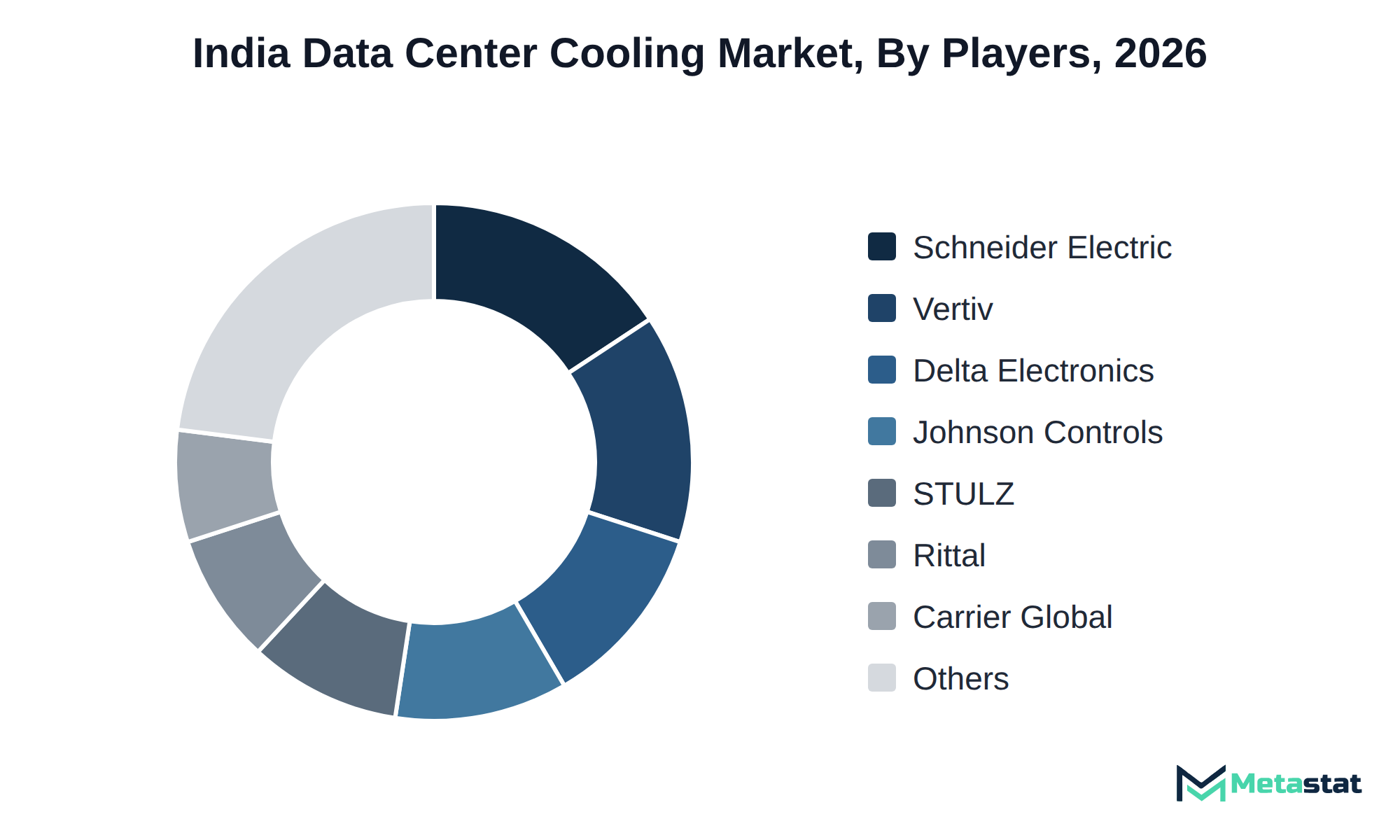
Competition within the India Data Center Cooling market reflects a diverse array of strategies aimed at meeting the needs of various buyers. Companies differentiate themselves based on product offerings, customization, service quality, and pricing. Buyers prioritize operational efficiency, energy sustainability, and total cost of ownership when selecting solutions. Certification and compliance with industry standards influence purchasing decisions.
Vertiv Group Corp. emphasizes innovative cooling technologies and tailored solutions for hyperscale data centers. Schneider Electric focuses on integrated cooling systems that enhance energy efficiency and sustainability. Delta Electronics specializes in energy-saving solutions, positioning itself towards clients seeking to minimize operational costs. Other players, including Johnson Controls and Mitsubishi Electric Corporation, concentrate on optimizing performance through advanced technologies and customized systems for various data center types.
Growth in the India Data Center Cooling market relies on several key developments. Liquid-based cooling, with a CAGR of 23.1%, will contribute to market growth, driven by the need for efficient cooling solutions in hyperscale and colocation data centers. The hyperscale segment alone is expected to see substantial growth, reaching USD 1,443 million by 2033. Potential risks including rising energy costs could hinder growth, impacting operational budgets for data center operators. If these costs rise significantly, adoption rates for advanced cooling technologies decline, affecting revenue projections. Overall, the successful expansion of the India Data Center Cooling market relies on the continued demand for innovative cooling solutions and the ability to mitigate risks associated with operational expenses.
By Cooling Component: Computer Room Air Conditioning (CRAC), Computer Room Air Handling Units (CRAH), Chillers, Heat Exchangers, Cooling Towers, Dry Coolers, Cooling Distribution Units (CDUs), Others (Control and Monitoring Systems)
By End-User Industry: IT and Telecommunications, BFSI, Government and Public Sector, Healthcare and Life Sciences, Retail and E-commerce, Media and Entertainment, Manufacturing and Industrial, Energy and Utilities, Others (Education, Transportation and Research)
The report strategically identifies and profiles the key market players and analyses their core competencies in each sub-segment of the Data Center Cooling market.
Report Attributes | Details |
Study Period | 2021-2033 |
Base Year | 2025 |
Estimated Year | 2026 |
Forecast Period | 2026-2033 |
Historical Period | 2021-2025 |
Growth Rate | CAGR 19.8% from 2026 to 2033 |
Revenue Unit | USD million |
Segmentation | By Cooling Technology, Cooling Component, Data Center Type, End-User Industry, and Region |
Find answers to common questions about this report
The Data Center Cooling market size was valued at USD 879.9 million in 2025.
The market is projected to grow at a CAGR of 19.8% during the forecast period from 2026 to 2033.
Liquid-Based Cooling leads the Data Center Cooling market with a projected value of USD 1,515.5 million by 2033. This segment exhibits the highest growth rate compared to other cooling technologies.
Investment in the IT and telecommunications sector drives significant demand for data center cooling solutions, reflecting a shift toward increased reliance on digital infrastructure. The ongoing trend toward digital transformation increases the need for effective cooling systems, creating a significant market opportunity for stakeholders.
High costs associated with advanced cooling systems hinder adoption among end-user industries, particularly in the IT and telecommunications sector. Rising input costs for essential components have escalated the overall cost of deploying advanced cooling solutions, creating margin pressure for suppliers.
Several factors favor adoption in the India Data Center Cooling market. Increased investment in energy-efficient technologies differentiates competitive offerings, while the ongoing trend of digital transformation drives the demand for effective cooling systems. These elements create significant opportunities for stakeholders in the industry.
The Data Center Cooling market is estimated to reach a valuation of USD 3,734.5 million by 2033.
Key players operating in the Data Center Cooling market include Vertiv Group Corp., Schneider Electric, STULZ, Delta Electronics, Johnson Controls, Modine Manufacturing Company, and Rittal.
Liquid-based cooling solutions exhibit a compound annual growth rate (CAGR) of 23.1% through 2033, reflecting their critical role in managing thermal loads in high-density environments.
Hyperscale data centers are expected to reach USD 1,443 million by 2033, growing from USD 382.6 million in 2026, with a CAGR of 20.9%.
The analysts below cover Information & Technology research at Metastat Insights.
LEAD ANALYST
Utkarsh Khirodkar is a Lead Market Research Analyst at MetaStat Insight, specializing in market intelligence, technology sector assessments, and competitive strategy.

PRINCIPAL CONSULTANT - ENTERPRISE AI & EMERGING TECHNOLOGIES
Banking & Finance · Electronics and Semiconductor · Energy and Power · Healthcare IT · Information & Technology · Professional Services
Vijay Gunti is a Principal Consultant at MetaStat Insight, bringing over two decades of experience across enterprise digital transformation, technology strategy, and intelligent systems.

LEAD CONSULTANT - COMMUNICATION, TELECOM, AND IT
Electronics and Semiconductor · Information & Technology · Machinery & Equipment · Professional Services
Ravindra Sathe Consultants for Communication, Telecom, and IT at MetaStat Insight. He leads the firm's industry research initiatives across telecommunications infrastructure, digital connectivity, enterprise networking, and emerging information technology domains.
In the biological seed treatment space, registration timelines vary drastically between the European Union, Brazil, and North America. The MetaStat Insight research handled these cross-border regulatory barriers with genuine nuance, mapping commercialization pathways alongside historical field adoption rates. The segmentation between microbial strains and biochemical active ingredients was particularly well structured.
Our team was tracking whether regional recycling infrastructure could realistically absorb the growing volume of lithium iron phosphate batteries over the next decade. The report did a solid job separating announced hydrometallurgical plant capacity from active, permitted operational throughput. That distinction made the feedstock availability projections and regional recovery rate models far more credible than standard commercial overviews.
Tracking capacity expansion in single-use bioprocessing requires dependable data on raw material availability and cleanroom-grade polymer supply chains. The competitive landscape chapter gave a grounded evaluation of secondary component suppliers across North America and Asia-Pacific rather than simply reprinting press releases. Having that level of supplier benchmarking helped clarify dual-sourcing considerations for our clinical pipeline planning.
Explore related market intelligence reports worth reading alongside this one.
Starting from
$2950
Starting from
$2950
Starting from
$2950