
LEAD ANALYST
Utkarsh Khirodkar is a Lead Market Research Analyst at MetaStat Insight, specializing in market intelligence, technology sector assessments, and competitive strategy.

Global Unified Communications and Collaboration (UC&C) Market Size, Share, By Solution Type (Enterprise Voice & Telephony, Video Conferencing & Virtual Meetings, Team Messaging & Persistent Collaboration, Content & Document Collaboration, Work & Project Collaboration, Visual Collaboration & Digital Whiteboarding, Meeting Room Collaboration Hardware & Systems, Enterprise Social Networking & Intranet Collaboration, Others), By Deployment Model (Cloud/SaaS, On-Premises, Hybrid), By Organization Size (Small Enterprises, Medium-Sized Enterprises, Large Enterprises), By End-Use Industry (IT & Telecommunications, Banking, Financial Services & Insurance, Healthcare & Life Sciences, Government & Public Sector, Education, Manufacturing, Retail & E-commerce, Professional Services, Media & Entertainment, Others), Industry Analysis, Growth, Trends, and Forecast, 2026-2033
Report ID
MSI-5317
Published
September, 2026
Pages
296 Pages
Format
Historical
Base year
Forecast
Forecast period
Report Details
Market Valuation: Valued at $73.5 Billion in 2025, projected to reach $171.9 Billion by 2033 at a 11.2% CAGR.
Dominant Segment: The Enterprise Voice & Telephony segment leads the market, driven by the increasing demand for integrated communication solutions that enhance collaboration among teams.
Geographic Lead: The Asia Pacific region is poised for significant growth, fueled by rapid urbanization and expanding digital economies that support advanced communication technologies.
What's Inside: The report provides comprehensive competitive coverage, detailed analyses of market dynamics, and a forecast window extending from 2026 to 2033.
Emerging Trends: The shift towards hybrid work environments is reshaping demand for UC&C solutions, with organizations prioritizing tools that facilitate effective remote collaboration.
Regulatory Challenges: Compliance hurdles related to data security and privacy regulations present significant challenges for organizations seeking to adopt UC&C technologies.
Choose Your License
Global Unified Communications and Collaboration (UC&C) Market
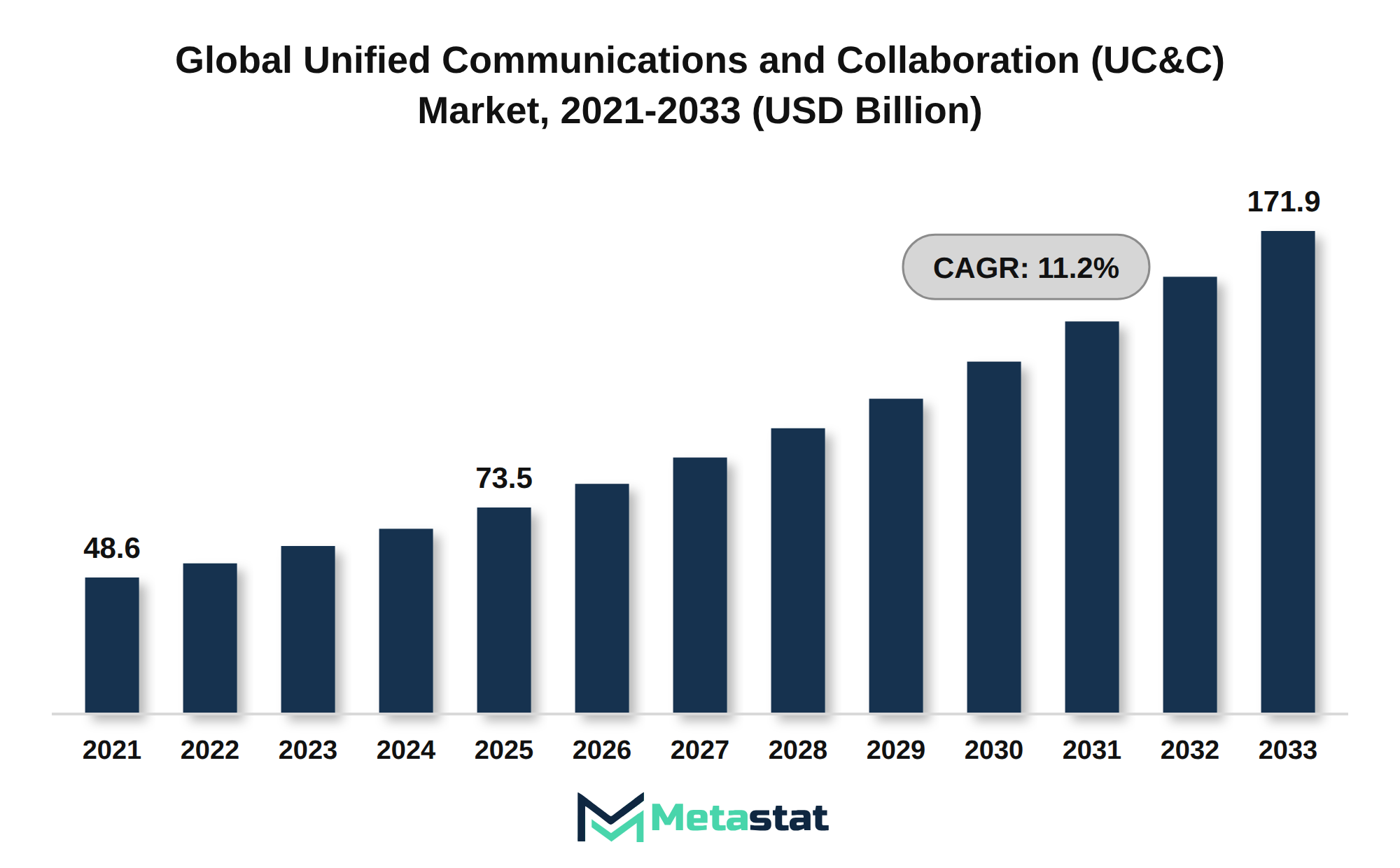
The global Unified Communications and Collaboration (UC&C) market was valued at USD 73.5 billion in 2025 and is projected to reach USD 171.9 billion by 2033, growing at a CAGR of 11.2% over the forecast period.
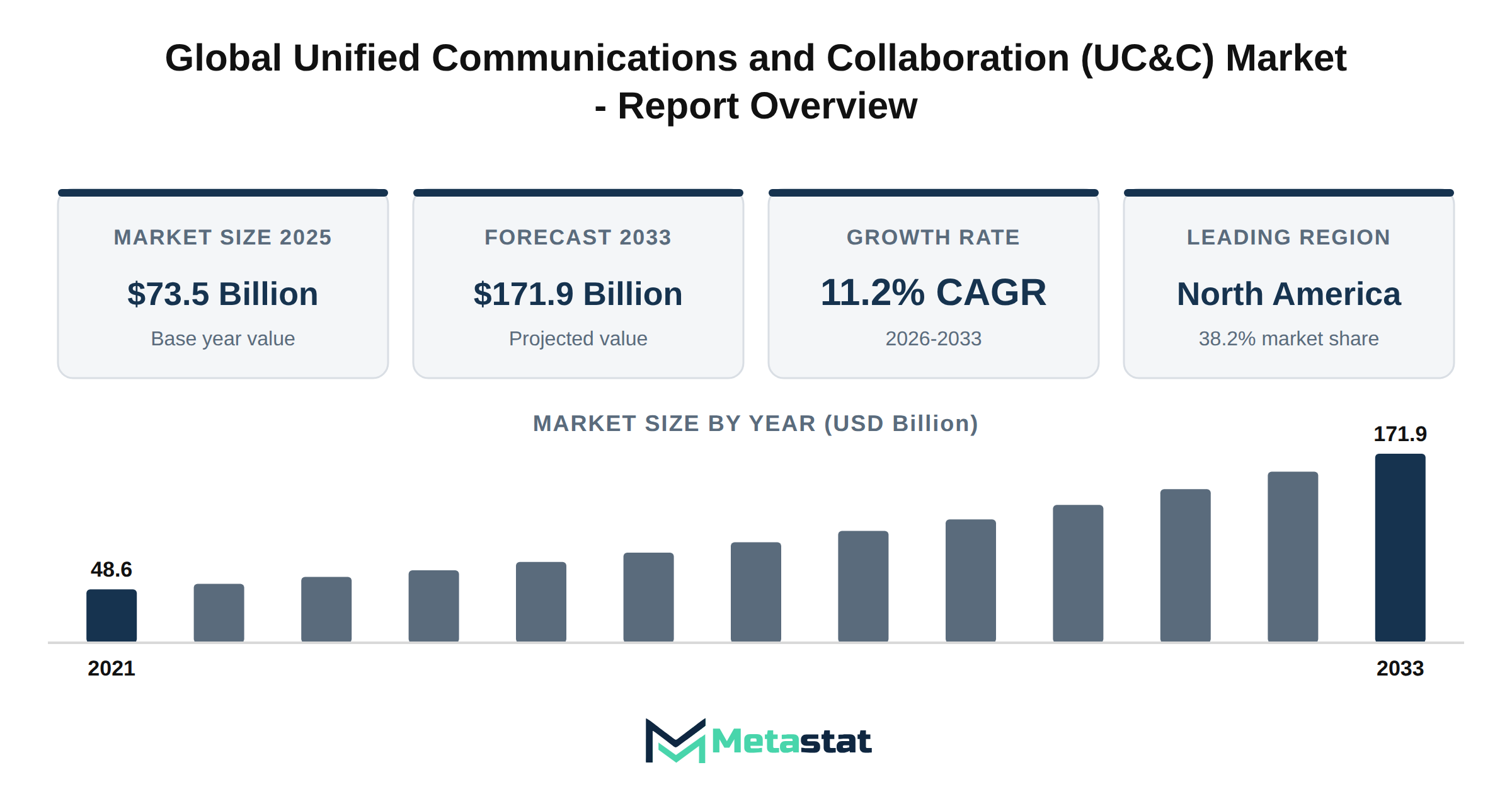
The Unified Communications and Collaboration (UC&C) market reached USD 73.5 billion in 2025, demonstrating significant growth from USD 48.6 billion in 2021. The market is projected to expand to USD 171.9 billion by 2033, reflecting a compound annual growth rate (CAGR) of 11.2%. This rapid increase indicates strong demand for integrated communication solutions across various sectors.
Several factors drive this growth, including the rising need for effective collaboration tools in the modern workplace. Enterprises are increasingly adopting cloud-based solutions, shifting from traditional on-premises systems. This transition enhances flexibility and scalability, which are crucial for organizations in a competitive environment.
The collaboration channel ecosystem is evolving, with diverse players participating in the market. Key segments include enterprise voice and telephony, video conferencing, and team messaging, all contributing to a comprehensive communication strategy for enterprises. Demand for integrated platforms that enable effective communication across channels continues to rise.
Technological advancements in video conferencing and virtual meeting solutions drive innovation in the market. Enterprises seek solutions that improve engagement and productivity, enabling effective remote collaboration. This trend aligns with the broader shift toward hybrid work environments, where video, voice, and messaging integration become essential for team collaboration.
AI-powered unified communications are transforming enterprise collaboration, enhancing user experience and operational efficiency. Enhanced features including intelligent routing and automated workflows streamline communication processes. This technological integration supports organizations in optimizing their collaboration strategies while addressing security and compliance requirements.
The UCaaS segment exhibits significant growth, driven by increasing enterprise demand for cloud communication solutions. While businesses prioritize flexibility and cost-effectiveness, migration to cloud-based platforms accelerates. This trend highlights the importance of evaluating total cost of ownership and pricing models when selecting UC&C solutions.
Market competition intensifies among leading platforms including Microsoft Teams, Zoom, and Cisco Webex. The environment features vendor consolidation, partnerships, and M&A activity, driving innovation and expanding service offerings. This competitive environment encourages continuous improvements in features and functionalities, enabling enterprises to select solutions that best fit their needs.
The collaboration channel ecosystem mapping emphasizes the integration of various communication tools and platforms. This integration enhances interaction among users, improving productivity across enterprises. Companies prioritize interoperability and multi-vendor integration to meet diverse business needs and maintain competitive advantages.
Enterprise buyer and use-case mapping illustrates the specific requirements and preferences of different sectors. Tailored solutions address the unique challenges faced by industries including banking, healthcare, and government. Solutions that cater to distinct use cases drive greater adoption and demand for specialized UC&C offerings.
Unified Communications and Collaboration (UC&C) market trends indicate a significant shift towards cloud adoption and migration from on-premises systems. Enterprises increasingly recognize the benefits of cloud-based solutions, including scalability and reduced operational costs. This transition facilitates enhanced collaboration and communication capabilities, aligning with the growing demand for remote work solutions.
AI-powered technologies are transforming enterprise collaboration by augmenting communication tools with intelligent features. Automation, real-time analytics, and enhanced user experiences contribute to improved efficiency and decision-making. The integration of AI in UC&C platforms supports businesses in optimizing their collaboration strategies.
Growth in UCaaS (Unified Communications because a Service) reflects the rising demand for cloud communication solutions. Organizations prioritize flexibility and cost-effectiveness, driving the shift towards subscription-based models. This trend promotes the market's expansion by allowing businesses to adapt to evolving communication needs.
Hybrid work environments are driving trends in video, voice, messaging, and collaboration integration. Enterprises seek comprehensive solutions that support diverse communication needs, enhancing collaboration among remote and on-site employees. This integration promotes a cohesive work culture, vital for maintaining productivity in hybrid settings.
Enterprise demand for integrated communication and collaboration platforms accelerates because businesses recognize the advantages of combined solutions. Unified platforms streamline workflows and reduce the need for multiple tools, improving overall efficiency. This trend influences purchasing decisions, prompting investments in all-in-one UC&C solutions.
Innovation in video conferencing and virtual meeting technology significantly impacts the market. Advanced features, including high-definition video and interactive tools, enhance user experiences and drive adoption. Companies increasingly prioritize these innovations to facilitate effective communication, especially in remote collaboration scenarios.
Team messaging and persistent collaboration adoption trends indicate a shift towards continuous communication among teams. These solutions enable real-time collaboration, promoting greater engagement and productivity. Organizations recognize the importance of maintaining open lines of communication, leading to increased investments in messaging platforms.
Meeting room collaboration systems and intelligent workplace technologies are gaining traction. Organizations invest in advanced solutions that integrate hardware and software for effective meeting experiences. This investment supports improved collaboration and communication in physical meeting spaces.
Enterprise voice and telephony modernization trends drive the demand for advanced voice solutions. Businesses seek innovative voice communication tools that enhance user experiences and improve call quality. This modernization aligns with the broader goal of optimizing communication strategies across organizations.
Content and document collaboration in distributed work environments is essential for maintaining productivity. Businesses invest in solutions that enable secure sharing and collaborative editing of documents. This focus on content collaboration aligns with the demands of a remote workforce.
Visual collaboration and digital whiteboarding growth opportunities present significant potential in the market. Companies recognize the value of interactive tools for brainstorming and ideation, enhancing creative processes. This trend promotes the adoption of visual collaboration solutions across various industries.
Security, privacy, and compliance requirements in enterprise UC&C influence purchasing decisions. Organizations prioritize solutions that meet stringent regulatory standards, ensuring data protection and compliance. This focus on security shapes the development of UC&C offerings, promoting trust among users.
UC&C pricing models and total cost of ownership trends reflect the evolving landscape of communication solutions. Businesses seek transparent pricing structures that align with their budgets and usage patterns. This emphasis on cost-effectiveness encourages the adoption of cloud-based solutions.
The competitive landscape features major players including Microsoft Teams, Zoom, and Cisco Webex, driving innovation and shaping market dynamics. Ongoing competition drives advancements in features and technologies, benefiting users across the industry. Strategic partnerships and vendor consolidation influence market positioning and offerings.
Enterprise collaboration hardware and software convergence enhances the overall user experience. Integrated solutions that combine hardware, including cameras and microphones, with software platforms support effective communication. This convergence aligns with the trend toward integrated collaboration solutions.
Small and medium enterprise adoption of cloud collaboration solutions reflects the democratization of advanced communication technologies. These businesses leverage cloud-based tools to compete effectively in their respective markets. This trend enhances accessibility to sophisticated UC&C solutions, driving growth in this segment.
Industry-specific UC&C adoption across banking, financial services, healthcare, and manufacturing highlights tailored solutions that address unique communication challenges. This targeted approach drives greater market penetration and supports the development of specialized offerings.
In North America, UC&C market demand continues to rise alongside enterprise cloud adoption. Companies in the region prioritize advanced communication solutions to support operational efficiency, driving significant investments in UC&C technologies.
Asia Pacific UC&C market growth reflects ongoing digital workplace expansion. Enterprises in this region increasingly adopt cloud-based solutions to enhance collaboration, positioning themselves for competitive advantages in the global market.
Europe UC&C market trends emphasize data sovereignty and cloud adoption. Organizations in this region navigate complex regulatory landscapes while prioritizing secure, compliant communication solutions, influencing their UC&C investment strategies.
Emerging markets present regional expansion opportunities in the UC&C sector. Businesses in developing regions seek advanced communication solutions to enhance operational capabilities, driving demand for tailored UC&C offerings.
The future of unified communications with generative AI and intelligent collaboration builds anticipation for further advancements. Organizations are set to leverage AI technologies to enhance communication strategies and improve user experiences. This evolution will shape the UC&C market landscape in the coming years.
Unified Communications and Collaboration (UC&C) market growth outlook through 2033 indicates continued expansion. Factors including technological advancements, evolving workplace trends, and increasing demand for integrated communication solutions will drive this growth trajectory.
Digital transformation drives the adoption of Unified Communications and Collaboration (UC&C) solutions across various industries. Organizations increasingly seek to enhance operational efficiency and improve communication processes, compelling them to integrate advanced technologies including automation, artificial intelligence, and cloud computing. These technological integrations streamline legacy processes and support flexible work environments, appealing to both remote and in-office employees.
The demand for digital tools significantly influences the overall growth of the market. With remote work becoming a standard practice, the need for reliable communication and collaboration platforms intensifies. Companies prioritize investments in UC&C technologies to facilitate effective interactions among teams, regardless of their location. This shift aligns with the rising expectations of employees and consumers for responsive and efficient communication methods.
While organizations pursue digital transformation initiatives, the market is expected to experience significant growth in the coming years. Companies increasingly recognize that adopting UC&C solutions enhances productivity, reduces operational costs, and drives innovation. Consequently, the emphasis on digital transformation strengthens its role because a key driver of the Unified Communications and Collaboration (UC&C) market's expansion.
Changing consumer behaviors significantly influence the Unified Communications and Collaboration (UC&C) market. Demographic shifts, particularly aging populations and urbanization, create new communication preferences, driving demand for more flexible and accessible solutions. Consumers increasingly favor remote work options and digital interactions, compelling organizations to adopt UC&C technologies that facilitate these preferences.
Evolving lifestyle changes impact purchasing patterns, leading to a demand for integrated communication tools that promote collaboration and efficiency. This shift encourages organizations to invest in UC&C solutions that enhance employee engagement and productivity. Businesses responding to these changes experience improvements in operational efficiency and customer satisfaction, which strengthens their competitive position.
The impact of these consumer behavior shifts extends to the competitive dynamics within the market. Firms enhancing their UC&C capabilities position themselves favorably against competitors, increasing market share and establishing stronger customer relationships. Organizations prioritizing adaptation to these evolving behaviors experience accelerated growth within the market, reinforcing their long-term viability.
In the Unified Communications and Collaboration (UC&C) market, compliance hurdles associated with various regulatory frameworks hinder the adoption of collaborative technologies. Organizations face increasing pressure to adhere to stringent data security and privacy regulations, which require significant investments in compliance-related infrastructure and processes. These requirements lead to higher operational costs, ultimately affecting scalability and profitability.
Macroeconomic headwinds, including inflationary pressures and capital stagnation, restrict the financial capacity of enterprises to invest in advanced UC&C solutions. The market experiences challenges due to rising costs of technology implementation, which deters organizations from upgrading their existing systems. Geopolitical instability and supply chain disruptions complicate the procurement of essential components, further delaying deployment timelines and increasing project costs.
Technological obsolescence presents another significant restraint in the market. Rapid advancements in technology necessitate constant updates and replacements, leading to ongoing expenses for organizations. The presence of alternative offerings and substitutes divert attention from established solutions, creating a competitive environment that prolongs traditional purchasing cycles.
Infrastructure gaps and connectivity deficits in various regions create barriers for effective UC&C implementation, limiting the reach and effectiveness of solutions. Skilled labor deficiencies further complicate challenges, because organizations struggle to recruit and retain qualified personnel capable of managing complex UC&C systems. Talent gaps in the workforce consequently slow down the deployment of innovative solutions, impacting overall market growth.
Concerns related to data security vulnerabilities and privacy risks remain critical for organizations considering UC&C investments. The increasing frequency of cyber threats prompts caution, compelling potential adopters to prioritize security measures over new technology adoption. This dynamic contributes to a fragmented market, where varying levels of preparedness among organizations lead to uneven adoption rates across different sectors.
The Unified Communications and Collaboration (UC&C) market continues to face these challenges, which ultimately shape its growth trajectory. Addressing these compliance and infrastructural barriers will be crucial for stakeholders aiming to capitalize on emerging opportunities within the market.
The Unified Communications and Collaboration (UC&C) market experiences significant challenges due to geopolitical fragmentation. Various global tensions disrupt trade relationships and lead to uncertainty in supply chains. This fragmentation results in rising tariffs and trade deficits, complicating the procurement of essential components for UC&C solutions. Manufacturers face additional costs, which compress pricing structures and pressure margins across the industry.
Technological disruptions further complicate the market, with rapid advancements creating interoperability friction among different communication systems. This friction challenges organizations in effectively integrating diverse technologies, often leading to increased research and development costs. The complexity involved in ensuring effective collaboration across platforms deters investment in new solutions, ultimately hindering growth in the market.
Workforce skill gaps pose a challenge, because organizations struggle to find qualified talent to manage and implement advanced UC&C solutions. Automation displacements contribute to these skill shortages, because roles evolve and require new competencies. Employers face pressures in talent retention, further exacerbating the difficulty in maintaining a skilled workforce capable of supporting the evolving demands of the market.
Environmental sustainability demands impact the market, with organizations feeling pressure to adopt greener technologies and practices. Compliance overhead related to tightening regulatory standards deters investments in sustainable solutions, thus limiting the availability of innovative offerings. The cumulative effect of these challenges creates an environment where the Unified Communications and Collaboration (UC&C) market experiences slower growth, despite the increasing demand for connected and efficient communication solutions.
The Unified Communications and Collaboration (UC&C) market experiences significant growth driven by emerging regional demands. Increasing investment in infrastructure modernization across diverse geographies facilitates the adoption of advanced communication technologies. Regions including Asia Pacific and South America exhibit significant potential due to rapid urbanization and expanding digital economies. This evolution creates opportunities for service providers to enter new markets, thus increasing revenue streams.
Technological disruptions fuel the momentum in the market, enabling next-generation innovations that enhance user experience and operational efficiency. The surge in remote work and hybrid work models continues to reshape business communication dynamics, prompting organizations to seek solutions that support effective collaboration. This shift towards flexible work environments necessitates product integration and the development of specialized applications tailored to industry-specific needs.
Strategic consolidation through cross-industry mergers and acquisitions increases market competitiveness. Companies in the UC&C landscape pursue partnerships to diversify their offerings and meet evolving consumer preferences. Evolving buying behaviors, particularly the trend towards digital procurement, highlight the necessity for tailored solutions that align with the requirements of various sectors, including IT, healthcare, and finance. This trend encourages vendors to adapt their commercial models and enhance service delivery.
Supply chain localization and import substitution strategies emerge due to vital components in securing market position. Companies focus on developing local partnerships to streamline operations and reduce dependency on international suppliers. This tactical approach supports resilience and ensures uninterrupted service delivery, building trust among clients.
The Unified Communications and Collaboration (UC&C) market stands poised for sustained growth through asset life-cycle extensions and maintenance upgrades. This focus on retrofitting existing systems with modern functionalities enhances operational yield, allowing businesses to maximize their investments. Value-chain optimization and process automation play critical roles in driving efficiency and profitability, further supporting the market's growth trajectory.
The Global Unified Communications and Collaboration (UC&C) market is segmented based on Solution Type, Deployment Model, Organization Size, and End-Use Industry.
Valued at USD 14.7 billion in 2026, the Enterprise Voice & Telephony segment is projected to reach USD 27.2 billion by 2033, at a CAGR of 9.2% during the forecast period. Adoption within this segment arises from increasing demand for integrated communication solutions that enhance effective collaboration among teams. Organizations recognize the importance of robust voice services in enhancing productivity and operational efficiency, driving significant investments in this area.
Technological advancements play a critical role in segment expansion, with next-generation upgrades enabling superior call quality, enhanced security features, and integration with other collaboration tools. The evolution of VoIP technology has reshaped the sector, allowing enterprises to leverage cloud-based solutions that offer scalability and flexibility, further encouraging adoption across various sectors.
End-use dynamics indicate that sectors including IT and telecommunications, banking, financial services, and insurance significantly contribute to the segment's growth. These industries increasingly depend on effective communication systems to streamline workflows, reduce costs, and improve customer engagement. The market's response to these needs reflects a shift in consumption patterns, with businesses prioritizing solutions that align with their operational goals.
Regulatory compliance standards further influence the Enterprise Voice & Telephony segment, necessitating robust solutions capable of ensuring data security and adherence to industry regulations. Organizations invest in certified systems that mitigate risks associated with communication vulnerabilities, reinforcing the importance of compliance in the decision-making process.
Cost structures show that while initial investments in advanced voice solutions are substantial, the long-term benefits include reduced operational costs and improved efficiency. Pricing volatility remains a concern, driven by suppliers adapting to fluctuations in raw material costs and emerging technologies. However, strategic opportunity windows exist for players in the market to innovate and capture emerging demands.
Supply chain resilience has become evident because providers seek to enhance sourcing strategies and address potential disruptions. The emergence of disruptive alternatives, including enhanced mobile applications and integration with AI-driven analytics, presents challenges and opportunities for established players. This evolving environment requires companies to continually adapt, ensuring their offerings remain relevant and competitive within the Unified Communications and Collaboration (UC&C) market.
Growth in the Video Conferencing & Virtual Meetings segment of the Unified Communications and Collaboration (UC&C) market is driven by the surge in remote work and the increasing need for real-time communication among dispersed teams. Businesses prioritize effective collaboration tools to maintain productivity, which increases demand for advanced video conferencing solutions. In addition, advancements in technology enhance user experiences, resulting in wider adoption across various sectors.
This segment is expected to reach USD 32.2 billion by 2033, at a CAGR of 12.2% during the forecast period. The rising number of enterprises investing in cloud-based solutions contributes significantly to the expansion of this segment. Companies increasingly recognize the value of integrating video conferencing capabilities into their operations, promoting interaction and collaboration.
Major industries leveraging video conferencing technology include IT and telecommunications, healthcare, and education. Each sector demands tailored solutions that address specific communication challenges. The transition towards hybrid work models emphasizes the necessity for reliable video conferencing systems, reinforcing their role in organizational strategies.
Regulatory compliance standards concerning data privacy and security shape the development of video conferencing solutions. Vendors actively seek certifications to meet these requirements, ensuring customer confidence and enhancing market penetration. Continuous investments in next-generation upgrades support the segment's adaptation to evolving consumer expectations, positioning it for sustained growth within the broader UC&C market.
Growing interest in digital collaboration tools drives demand for the Team Messaging & Persistent Collaboration segment within the Unified Communications and Collaboration (UC&C) market. The transition to remote and hybrid working environments encourages businesses to adopt these solutions for enhanced team interactions and productivity. A surge in organizations prioritizing communication efficiency facilitates this growth, driven by employees increasingly relying on instant messaging, file sharing, and collaborative platforms to streamline workflows.
Technological advancements in cloud infrastructure significantly enhance the functionality and accessibility of messaging solutions. These improvements lead to rapid adoption across various industries, including IT, healthcare, and finance, where real-time communication is crucial for operational success. The growing emphasis on integration with existing tools and platforms reinforces the need for persistent collaboration solutions, ensuring a unified user experience.
Team Messaging & Persistent Collaboration segment is expected to reach USD 27.4 billion by 2033. Increased investment in next-generation upgrades and product evolution supports this trajectory, with providers focusing on innovative features including advanced analytics and AI-driven insights to enhance user engagement. While organizations continue to recognize the importance of effective communication, the demand for robust messaging solutions remains strong.
Content and Document Collaboration represents a vital segment within the Unified Communications and Collaboration (UC&C) market. This segment is projected to grow at a CAGR of 10.6% during the forecast period. Increasing emphasis on effective remote work solutions drives demand for advanced collaboration tools that facilitate information sharing and document management. The rise of hybrid work environments further accelerates the need for robust collaboration platforms, enhancing teamwork and productivity across organizations.
Technological maturation influences growth within this segment, with next-generation upgrades enhancing user experiences through improved functionality and integrated features. Organizations prioritize solutions that adapt to evolving business needs, including enhanced security protocols and compliance with regulatory standards. Consumption shifts towards cloud-based solutions facilitate greater accessibility and flexibility, appealing to enterprises of all sizes.
Investment in Content and Document Collaboration tools reflects a strategic opportunity for both suppliers and buyers. Organizations benefit from streamlined workflows and improved operational efficiency, leading to cost savings and better resource allocation. Ongoing product evolution and innovative solutions will play a significant role in meeting the demands of diverse end-use industries.
The importance of effective collaboration tools becomes apparent owing to organizations striving for enhanced productivity and effective communication. Increased remote work arrangements drive demand for versatile solutions that enable real-time collaboration, project management, and document sharing. Businesses prioritize platforms that support teamwork, streamlined workflows, and centralized communication, ensuring that teams remain connected regardless of location.
Technological advancements contribute to the evolution of work and project collaboration solutions. Innovations in artificial intelligence and machine learning enhance functionality, allowing tools to adapt to user preferences and improve the overall experience. Features including automated scheduling, intelligent task management, and integrated communication channels play vital roles in attracting new users and retaining existing customers.
End-use dynamics indicate a growing trend toward the integration of work and project collaboration tools across diverse sectors, including IT, healthcare, and education. Organizations recognize the need for systems that improve operational efficiency while addressing specific industry challenges. This demand drives ongoing investments in product development and strategic partnerships to expand capabilities and enhance user experiences.
Consumption shifts emphasize the importance of mobile compatibility, enabling users to collaborate effectively from any device. Businesses prioritize solutions that offer accessibility and responsiveness, ensuring that teams remain productive regardless of their work environments. The shift toward hybrid work models fuels the demand for adaptable collaboration tools, supporting the need for consistent engagement and communication.
In the context of regulatory compliance, organizations seek solutions that address data protection and privacy requirements. Certification standards become increasingly critical because firms navigate legal frameworks governing information security. Compliance with such standards strengthens trust among users, driving further adoption of collaboration tools across various industries.
Strategic opportunity windows arise in the market because businesses seek to differentiate themselves through innovative features and enhanced user experiences. Capital investment in research and development remains a priority, with firms actively pursuing new technologies to stay competitive. These trends position the work and project collaboration segment because an essential component of the broader Unified Communications and Collaboration (UC&C) market.
Recent advancements in Visual Collaboration & Digital Whiteboarding reflect evolving user needs within the Unified Communications and Collaboration (UC&C) market. Significant demand drivers arise from an increase in remote work and the growing need for interactive and engaging collaborative tools. Organizations seek solutions that enhance visual communication, streamline workflow, and promote real-time collaboration among distributed teams, driving innovation and productivity.
Adoption of this sub-segment benefits from technological maturation, with enhanced features including cloud integration and mobile accessibility. These advancements have expanded the functionality of visual collaboration tools, enabling integration with existing platforms and enhancing user experience. The shift towards digital solutions in education, IT, and creative industries creates an environment where these tools thrive, driving segment expansion and product evolution.
End-use dynamics play a critical role in shaping demand, particularly in sectors where collaboration directly influences operational efficiency and decision-making. Regulatory compliance standards further enforce the need for secure and reliable collaboration tools, motivating organizations to invest in compliant solutions that support their operational frameworks.
Strategic opportunity windows arise from evolving consumption shifts, with organizations prioritizing digital collaboration in their operational strategies. This trend highlights the importance of investing in innovative solutions that enhance collaboration effectiveness, positioning organizations competitively within the market. Overall, the Visual Collaboration & Digital Whiteboarding sub-segment contributes significantly to the overall growth of the Unified Communications and Collaboration (UC&C) market, reflecting the increasing focus on collaborative efficiency and technological integration.
Investment in Meeting Room Collaboration Hardware & Systems reflects a trend toward enhancing collaborative environments. Demand stems from increasing reliance on real-time communication tools and the need for integration with existing technologies. Organizations prioritize hybrid work models, which drive the necessity for efficient meeting room solutions. This segment encounters challenges related to technological maturity, owing to companies pursuing upgrades to accommodate evolving user requirements.
Technological advancements contribute to product evolution within the meeting room hardware domain. Integration of artificial intelligence and smart technology enhances user experience, enabling intuitive interactions during meetings. The rise of remote work has increased pressure on organizations to invest in effective collaboration systems. Consequently, the segment experiences significant growth opportunities, with companies continuously seeking innovative solutions.
Cost structures play a crucial role in shaping investment decisions for meeting room collaboration systems. Pricing volatility impacts procurement strategies, necessitating careful budgeting and planning. Organizations consider long-term operational costs while evaluating technology investments. The market for Meeting Room Collaboration Hardware & Systems demonstrates resilience. Firms prioritize high-quality solutions that deliver tangible results in productivity and efficiency.
Supply chain resilience influences availability and pricing of meeting room hardware. Fluctuations in raw material sourcing and logistics vulnerabilities disrupt the market. Organizations increasingly evaluate alternative suppliers to mitigate risks associated with disruptions. Strategic opportunity windows arise because demand for hybrid collaboration solutions grows. This environment provides a pathway for companies to innovate and differentiate their offerings in the competitive landscape of the Unified Communications and Collaboration (UC&C) market.
Organizations increasingly emphasize the importance of enhancing communication and collaboration through social networking and intranet platforms. These tools improve connectivity among teams, promoting efficient information-sharing and teamwork in real time. Adoption of Enterprise Social Networking & Intranet Collaboration solutions is influenced by the need for faster decision-making processes within various sectors, including IT, healthcare, and financial services. While remote work becomes a standard practice, the demand for cohesive digital environments that support collaboration rises.
The ongoing evolution of collaborative technologies supports significant improvements in user experience and functionality. Next-generation upgrades introduce advanced features including artificial intelligence-driven insights and integration with existing enterprise systems, driving further adoption. Downstream applications indicate a shift towards using these platforms for employee engagement and knowledge sharing, contributing to increased productivity and innovation within organizations.
Regulatory compliance standards increasingly dictate the need for secure and reliable communication channels, leading organizations to invest in robust solutions. Cost structures associated with deploying these platforms remain competitive, although pricing volatility and margin pressures from technological advancements affect budgets. Strategic opportunity windows emerge because organizations look to enhance collaborations to improve operational efficiencies and market responsiveness. The Unified Communications and Collaboration (UC&C) market is positioned for sustained growth because enterprises recognize the critical role of these tools in modern business practices.
Virtual events and webinars play an increasingly critical role within the Unified Communications and Collaboration (UC&C) market, driven by ongoing digital transformation across various sectors. These platforms enable effective communication and engagement, appealing to organizations seeking to enhance outreach and improve customer relations. The shift towards remote interaction has heightened the importance of asynchronous video collaboration, allowing businesses to maintain productivity regardless of geographical constraints.
The demand for innovative solutions continues to rise, prompting significant investments in technology that supports virtual events. Enhanced user experiences, driven by advanced features including real-time collaboration tools and high-definition video capabilities, have become essential for attracting participants. Organizations prioritize platforms that offer scalability and flexibility, enabling adaptation to evolving requirements and events of varying sizes.
End-user dynamics play a vital role in shaping the market landscape. Industries including education, healthcare, and professional services increasingly adopt webinars and virtual events to reach broader audiences and facilitate knowledge sharing. This trend reflects a growing recognition of the effectiveness of digital engagement strategies in building connections and driving participation.
Technological maturation continues to influence segment expansion, with advancements in streaming technology and interactive features broadening the scope of what is achieved through virtual events. While organizations look to maximize return on investment, aligning these technologies with overall communication strategies becomes essential. This alignment enhances operational efficiency and strengthens brand presence in a competitive market.
Valued at USD 44.9 billion in 2026, the Cloud/SaaS segment is projected to reach USD 106.3 billion by 2033, at a CAGR of 13.1% during the forecast period. Increasing adoption of cloud-based solutions among enterprises serves because a primary demand driver, enabling organizations to enhance operational efficiency and reduce costs associated with on-premises infrastructure. The ability to scale services rapidly and integrate advanced features including AI-driven analytics enhances value for users, particularly in sectors like IT & Telecommunications and Banking, Financial Services & Insurance.
Investment in next-generation upgrades and technological maturation supports the segment's growth trajectory. Enhanced connectivity and continuous product evolution, including features like real-time collaboration and improved security protocols, directly address the needs of modern businesses. Regulatory compliance standards and certifications influence adoption, particularly in sensitive industries including healthcare and finance, where organizations seek to align with stringent guidelines.
Consumption shifts toward remote and hybrid work models reflect changing workforce dynamics, driving demand for robust collaboration solutions. The Cloud/SaaS model provides flexibility and cost-effectiveness, aligning with the priorities of small and medium-sized enterprises seeking to leverage advanced communication tools without substantial capital investment. Segment expansion catalysts include increasing reliance on digital solutions, enabling collaboration across geographically dispersed teams.
Competitive pressures in the Unified Communications and Collaboration (UC&C) market fuel innovation, prompting providers to enhance features and reduce pricing volatility. Margin pressures challenge suppliers to optimize operational efficiencies while maintaining service quality, influencing strategic opportunities within the segment. Overall, the Cloud/SaaS segment's growth serves because a barometer for the broader health of the market, reflecting shifts in organizational priorities and advancements in communication technologies.
Investments in On-Premises deployment models drive stability and control for organizations, particularly those handling sensitive data or operating in regulated environments. The ongoing emphasis on data security and compliance encourages enterprises to maintain in-house infrastructure. This segment is projected to reach USD 32 billion by 2033, at a CAGR of 6.5% during the forecast period.
Organizations prioritizing tailored solutions and direct management of their communication infrastructure find On-Premises offerings increasingly attractive. Customizable features and integration with existing systems enhance operational efficiency. The combination of these elements contributes to sustained growth within the market.
Companies in sectors including IT & Telecommunications and Banking, Financial Services & Insurance adapt strategies to include On-Premises solutions, with demand for robust, secure communication systems continuing to expand. This trend highlights the necessity for ongoing technological advancements and product evolution to satisfy the specific needs of diverse end-use industries.
Hybrid deployment models in the Unified Communications and Collaboration (UC&C) market are expected to reach USD 33.6 billion by 2033. This growth results from a shift in organizational preferences for flexible communication solutions that balance on-premises infrastructure with cloud capabilities. Companies increasingly adopt hybrid models to enhance collaboration efficiency while maintaining control over sensitive data and applications.
Demand drivers for hybrid deployment models include the need for scalability and adaptability in communication tools. Organizations across various sectors, including IT, finance, and healthcare, prioritize solutions that integrate seamlessly with existing systems while offering the flexibility to expand when requirements change. The rising trend towards remote work and distributed teams further fuels adoption, driven by hybrid models that facilitate collaboration across geographies.
Technological maturation significantly influences this segment’s expansion. Advancements in cloud technology and increased internet bandwidth have enabled organizations to implement sophisticated hybrid solutions effectively. This environment supports product evolution, with vendors continuously enhancing their offerings through next-gen upgrades, ensuring compatibility with emerging technologies like artificial intelligence and machine learning.
Cost structures in hybrid deployments reflect a blend of upfront investments and ongoing operational expenses, impacting pricing volatility. Organizations experience margin pressures while navigating the balance between initial costs and long-term savings associated with cloud capabilities. Strategic opportunity windows arise from the growing need for interoperability among different communication and collaboration tools, pushing providers to innovate and differentiate their services.
The hybrid segment within the Unified Communications and Collaboration (UC&C) market demonstrates significant growth potential driven by flexibility, technological advancements, and evolving end-use dynamics. Organizations seeking to optimize their communication infrastructure will increasingly turn to hybrid models, reflecting a broader trend towards integrated, efficient collaboration solutions.
Valued at USD 15.8 billion in 2026, the Small Enterprises segment is projected to reach USD 36.9 billion by 2033, exhibiting a CAGR of 12.9% during the forecast period. Strong demand for cost-effective communication solutions drives adoption among small businesses, driven by the requirement for efficient, scalable tools to facilitate collaboration and enhance productivity. Increasing reliance on digital communication platforms, coupled with the need for remote work solutions, fuels segment growth.
Technological maturation of UC&C tools, including advancements in voice, video, and messaging capabilities, positions small enterprises to leverage these innovations effectively. Adoption of cloud-based solutions offers flexibility and reduces infrastructure costs, further encouraging investment in UC&C systems. Adoption catalysts including affordability, ease of use, and integration capabilities distinguish this segment within the broader Unified Communications and Collaboration (UC&C) market.
Small enterprises continue to explore varied solutions to address unique operational challenges. The demand for tailored products, including team messaging and virtual meeting tools, reflects evolving user expectations. Innovations within the segment facilitate collaboration and enhance engagement across distributed teams, leading to improved operational efficiency.
While regulatory frameworks evolve, compliance with data security and privacy standards becomes vital for small enterprises implementing UC&C solutions. Adhering to these regulations increases costs, but enables businesses to build trust with customers and partners. This focus on compliance influences the purchase decisions of small organizations, emphasizing the importance of choosing reliable providers within the market.
Investment in the Small Enterprises segment contributes significantly to overall market dynamics. Companies that prioritize collaboration technologies are better positioned to navigate competitive pressures and emerging market trends. This proactive approach enhances resilience and supports sustained growth within the Unified Communications and Collaboration (UC&C) market.
Medium-Sized Enterprises represent a dynamic segment within the Unified Communications and Collaboration (UC&C) market, estimated to reach USD 50.1 billion by 2033, at a CAGR of 12.2% during the forecast period. Increasing reliance on effective communication tools drives organizations to adopt advanced collaboration solutions. This trend aligns with a fundamental shift toward hybrid work environments, wherein connectivity and collaboration become essential for productivity.
Technological maturation within the UC&C market facilitates the emergence of innovative solutions tailored for medium-sized enterprises. These organizations benefit from enhanced functionalities that improve operational efficiency and employee engagement. The ongoing evolution of cloud-based and hybrid deployment models supports scalability, enabling medium-sized enterprises to respond effectively to changing market conditions.
Adoption of team messaging and persistent collaboration tools reflects a growing preference for real-time communication among medium-sized enterprises. While demand for integrated solutions continues to rise, organizations are expected to prioritize investments in technologies that enhance collaboration and streamline workflows. This strategic focus on improving collaboration capabilities strengthens competitive positioning, ultimately driving market growth.
Market dynamics indicate a significant impact from end-use industries, particularly in IT & Telecommunications and Banking, Financial Services & Insurance, which increasingly rely on advanced UC&C solutions. Regulatory compliance standards contribute to the complexity of communication systems, prompting medium-sized enterprises to invest in secure and efficient collaboration technologies. Enhanced focus on data security and user privacy will continue to influence purchasing decisions within this segment.
The Medium-Sized Enterprises segment of the Unified Communications and Collaboration (UC&C) market presents substantial opportunities for growth, driven by technological advancements, evolving workplace dynamics, and increasing demand for integrated collaboration solutions.
Large Enterprises represent a significant market segment within the Unified Communications and Collaboration (UC&C) market, projected to reach USD 84.8 billion by 2033. This growth results from increasing demand for integrated communication solutions, which enhance productivity and streamline operations across various industries. Large Enterprises often seek advanced features in UC&C solutions, including effective collaboration tools, scalability, and security, which align with their operational complexities.
Investment in next-generation upgrades fuels adoption within this segment. Large Enterprises prioritize technological maturation, driving vendors to innovate their offerings continuously. Enhanced functionalities, including artificial intelligence integration and data analytics, support improved decision-making processes and operational efficiency. The evolution of products tailored for large organizations reflects the competitive dynamics within the market, compelling providers to differentiate their solutions.
End-use dynamics significantly influence consumption patterns in this segment. Industries including IT & Telecommunications and Banking, Financial Services & Insurance drive substantial demand, driven by their transition towards digital-first strategies. Regulatory compliance standards and policy headwinds create additional considerations for large organizations, necessitating solutions that adhere to data protection regulations while maintaining operational effectiveness. The relationship between these factors shapes market growth and investment outlook for large enterprises.
Overall, the Large Enterprises segment experiences significant growth fueled by evolving adoption patterns and strategic investments in innovative communication technologies, positioning it because a critical component of the Unified Communications and Collaboration (UC&C) market.
Investment in Unified Communications and Collaboration (UC&C) systems in the IT & Telecommunications sector demonstrates substantial growth potential. Valued at USD 15 billion in 2026, this segment is projected to reach USD 29.6 billion by 2033, at a CAGR of 10.2% during the forecast period. The demand for advanced communication tools stems from the industry's requirement for real-time collaboration, enhancing operational efficiency and responsiveness to market challenges.
Organizations prioritize technological maturation to support integrated solutions that improve workflows. The adoption of next-gen upgrades, including AI-driven analytics and enhanced security features, reinforces the importance of these tools in maintaining competitive advantage. These advancements drive market expansion by catering to increased expectations for effective communication and collaboration.
Regulatory compliance standards influence purchasing decisions within the sector, compelling companies to adopt systems that meet stringent security and data protection requirements. This heightened focus on compliance contributes to a shift in consumption patterns, with firms favoring solutions that demonstrate resilience and adaptability in dynamic environments.
Cost structures and pricing volatility remain critical considerations for stakeholders in this segment. Providers that offer flexible pricing models, including subscription-based services, enhance their appeal to organizations seeking to optimize budgets while investing in advanced technology. Such approaches facilitate broader adoption across varying enterprise sizes within the market.
The persistent evolution of communication tools encourages strategic opportunity windows for new entrants and existing players alike. With rapid advancements in technology, companies in the IT & Telecommunications sector continuously explore innovative ways to enhance product offerings, ensuring alignment with market demands and consumer expectations. This focus on product evolution strengthens the segment's position within the larger Unified Communications and Collaboration (UC&C) market.
Investments in advanced communication technologies within the financial services sector drive demand for robust Unified Communications and Collaboration (UC&C) solutions. Compliance with stringent regulatory standards, particularly in data security and privacy, drives organizations to adopt integrated communication platforms that enhance operational efficiency while ensuring regulatory adherence. The growing reliance on digital channels for customer engagement reflects a significant trend, driven by financial institutions seeking to improve client experiences through effective communication. This shift toward digital transformation creates the need for innovative solutions that enable collaboration across teams and departments.
Banking, Financial Services & Insurance segment is estimated to reach USD 29 billion by 2033, at a CAGR of 11.5% during the forecast period. The integration of artificial intelligence and machine learning technologies within communication tools presents opportunities for enhanced analytics and personalized customer interactions. Increased investment in cloud-based solutions supports scalability and flexibility, enabling organizations to adapt to evolving market demands. This environment encourages competition among providers to deliver advanced features that address the specific needs of financial institutions, ultimately driving growth within the market.
Investment in Unified Communications and Collaboration (UC&C) technologies within the Healthcare & Life Sciences sector drives significant market growth. The sector places a strong emphasis on enhanced patient engagement and streamlined communication, leading to increased adoption of advanced collaboration tools. Integration of telehealth solutions and remote patient monitoring systems creates a demand for robust communication frameworks that facilitate real-time interaction between healthcare providers and patients.
Technological maturation further stimulates this segment, with innovations in cloud-based solutions and artificial intelligence enhancing the capabilities of communication platforms. Regulatory compliance standards, particularly regarding data security and patient privacy, influence the development and deployment of these technologies. Organizations seek solutions that meet stringent regulations while ensuring efficient communication.
The Healthcare & Life Sciences segment is projected to reach USD 20.9 billion by 2033. Strategic opportunity windows arise from the growing need for interoperability among various systems and applications, leading to a more collaborative environment within healthcare settings. Investments directed towards next-generation upgrades and product evolution support the ongoing evolution of communication technologies, addressing the unique needs of healthcare professionals.
Market dynamics reflect a shift in consumption patterns, with greater emphasis on integrated solutions that combine voice, video, and messaging capabilities. The demand for effective collaboration tools influences capital investment outlooks, ensuring that healthcare organizations prioritize technology that enhances patient care and operational efficiency.
Investment in Unified Communications and Collaboration (UC&C) technologies within the Government and Public Sector segment focuses on enhancing communication efficiency and collaboration among various governmental agencies. This sector has identified the need for streamlined operations and improved citizen engagement through robust communication platforms. Increased adoption of digital tools facilitates real-time communication, which is essential for effective governance and public service delivery.
Government organizations prioritize regulatory compliance and data security, driving the demand for reliable communication solutions. The evolving technology landscape encourages the integration of next-generation upgrades, including AI-driven analytics and cloud-based services, which enhance operational efficiency. This transition supports a more connected and responsive public sector.
The Government & Public Sector segment is projected to grow at a CAGR of 10.7% during the forecast period. Continued investment in infrastructure and digital transformation initiatives fuels growth in this segment. The market presents strategic opportunities for vendors to offer tailored solutions that meet specific governmental needs, driving adoption and enabling comprehensive service delivery.
Increased focus on collaboration within government agencies leads to improved service delivery and operational effectiveness. The market encourages the development of innovative solutions that address the unique challenges faced by public sector organizations. Investments in Unified Communications and Collaboration (UC&C) technologies continue to expand, reflecting the importance of effective communication in enhancing public service outcomes.
Educational institutions prioritize the integration of Unified Communications and Collaboration (UC&C) technologies to enhance teaching and learning experiences. Increased demand for online learning platforms and remote education drives the adoption of these solutions, facilitating real-time interaction between educators and students regardless of location. This shift towards digital learning environments highlights the necessity for robust communication tools that support collaboration and engagement.
Investment in video conferencing and virtual meeting solutions significantly influences adoption within the education sector. Educational institutions utilize these technologies to bridge the gap between traditional classroom settings and remote learning, accommodating diverse learning styles and preferences. Advancements in educational content and document collaboration tools enhance the overall learning experience, enabling the creation and sharing of resources among educators and students.
Regulatory compliance and policy mandates surrounding digital education drive the need for effective communication solutions. Institutions face pressure to meet standards related to accessibility and data privacy, prompting investments in UC&C technologies that ensure compliance while enhancing operational efficiency. The evolving landscape of education highlights the importance of strategic opportunity windows, allowing institutions to adopt innovative solutions that align with their educational objectives.
Cost pressures associated with traditional educational models compel institutions to explore more economical and efficient communication solutions. The transition to digital environments reduces overhead costs, enabling institutions to allocate resources toward improving educational outcomes. Overall, the emphasis on improving student engagement, promoting collaboration, and adapting to regulatory requirements shapes the dynamics of the Unified Communications and Collaboration (UC&C) market within the education sector.
Manufacturing increasingly adopts Unified Communications and Collaboration (UC&C) technologies to enhance efficiency and streamline processes. The push for automation and real-time data sharing drives demand for integrated communication systems. This sector prioritizes operational efficiency, leading to investments in tools that facilitate collaboration among geographically dispersed teams.
The rise of Industry 4.0 increases the need for next-gen upgrades, with smart factories relying on advanced communication platforms to support IoT devices and data analytics. Increased competition within global markets compels manufacturers to innovate continually, reinforcing the adoption of UC&C solutions. Effective communication tools enable quicker decision-making and responsiveness to market changes, contributing to improved operational performance.
Cost structures in manufacturing have begun to shift, emphasizing the need for scalable solutions that allow flexibility in deployment. Organizations experience pressure from pricing volatility in raw materials, which drives the necessity for efficient communication. Regulatory compliance standards in manufacturing demand that organizations maintain clear lines of communication to ensure adherence to safety and operational protocols.
Strategic opportunity windows arise from the increasing emphasis on supply chain resilience, where effective communication is essential in mitigating risks associated with disruptions. Manufacturers face the challenge of technological obsolescence, highlighting the need for continuous investment in modern UC&C solutions. The integration of these systems into existing workflows supports a more collaborative environment, ultimately enhancing competitiveness in the evolving market.
While the market continues to evolve, the demand for UC&C solutions within the manufacturing sector highlights the importance of adaptability and innovation. Organizations that invest in these technologies position themselves favorably to leverage emerging trends and enhance their overall operational capabilities within the Unified Communications and Collaboration (UC&C) market.
Rapid advancements in technology fuel demand within the retail and e-commerce sector, where businesses increasingly rely on Unified Communications and Collaboration (UC&C) solutions for streamlined operations. Enhanced customer experience and engagement play a critical role, driving organizations to adopt sophisticated communication tools that facilitate real-time interactions with customers. Integration of various communication channels, including chat, video, and voice, enhances efficiency and supports customer relationship management.
In this segment, competition intensifies due to the need for businesses to differentiate themselves through superior service delivery. Retailers leverage UC&C technologies to ensure effective collaboration across teams, enabling quicker decision-making and agile responses to market changes. The evolution of customer preferences towards digital interactions necessitates a focus on effective communication strategies, leading to increased investment in next-generation upgrades that enhance service capabilities.
Regulatory compliance standards, including data protection and privacy regulations, influence the adoption of UC&C technologies. Retailers prioritize solutions that ensure compliance while providing robust security measures to safeguard customer data. This focus impacts the pricing structures within the market, where investments in secure and compliant systems are essential to maintain consumer trust.
Market players recognize strategic opportunity windows to innovate and adapt their offerings in response to shifting consumption patterns. The retail and e-commerce sector experiences a growing demand for collaboration tools that support remote work and hybrid business models, reflecting broader organizational shifts towards flexibility. Such dynamics drive investment in UC&C solutions that cater to the evolving needs of both businesses and consumers.
Investment in Unified Communications and Collaboration (UC&C) technologies within the Professional Services segment reflects a response to increasing demands for enhanced communication and collaboration capabilities. The adoption of advanced tools facilitates interactions among teams, promoting efficiency and productivity. Factors including the shift towards remote and hybrid work environments fuel this demand, because organizations seek to maintain connectivity and collaboration across dispersed locations.
The Professional Services segment benefits from technological maturation, with ongoing product evolution enhancing user experiences. Next-generation upgrades enable organizations to leverage the latest features and functionalities, driving satisfaction among users. This continuous improvement supports a competitive edge, positioning firms to respond effectively to client needs and market dynamics.
Downstream application influences demand significantly, because professional service firms integrate UC&C solutions into their operational frameworks. The ability to streamline processes, reduce response times, and enhance customer engagement becomes increasingly essential for maintaining market relevance. Regulatory compliance standards further motivate investment in UC&C technologies, ensuring adherence to industry guidelines and building trust among clients.
Cost structures within the Professional Services segment highlight the importance of effective budgeting and resource allocation. Organizations face pricing volatility pressures because they navigate the evolving landscape of UC&C solutions. Strategic opportunity windows emerge for vendors offering competitive pricing models and flexible solutions, allowing firms to optimize their investments while mitigating margin pressures.
Supply chain resilience remains crucial for the Professional Services segment, with firms focusing on robust partnerships to ensure reliable service delivery. Risks associated with raw material sourcing and logistics vulnerabilities prompt organizations to diversify their supplier networks. Disruptive alternatives in technology necessitate agility and innovation to remain competitive in the market.
Investment outlook trends indicate a growing commitment to UC&C technologies within the Professional Services segment. Firms that prioritize integration and innovation position themselves to leverage market opportunities effectively. The emphasis on collaboration tools serves because a catalyst for transformation, enabling professional service organizations to thrive in a digitally-driven environment.
Demand for Unified Communications and Collaboration (UC&C) solutions in the Media & Entertainment sector benefits from the increasing need for effective communication and collaboration across various production teams. The evolution of content creation and distribution processes creates a reliance on technologies that enhance real-time interactions among creative professionals. Adoption of advanced conferencing tools and collaborative platforms improves workflows, enabling teams to produce high-quality content efficiently.
Technological maturation drives this segment, with next-generation upgrades advancing the development of immersive experiences that combine video, audio, and interactive elements. The shift towards remote work and hybrid environments accelerates the integration of these technologies, allowing for flexible content production and distribution methods. This transformation influences consumption patterns, with an increasing number of viewers engaging with content through multiple platforms, necessitating robust UC&C solutions to support diverse end-user experiences.
Regulatory compliance standards in the media industry demand adherence to specific guidelines for content management and security, prompting organizations to invest in secure communication infrastructures. Cost structures and pricing volatility remain critical factors, driven by organizations seeking to balance investment in innovative technologies with budget constraints. Strategic opportunity windows arise for UC&C providers that offer tailored solutions addressing the unique challenges faced by the sector.
Supply chain resilience is important in the Media & Entertainment industry, where disruptions significantly impact production schedules. Organizations focus on establishing partnerships with reliable UC&C providers to maintain continuity and prevent potential setbacks. Overall, the Media & Entertainment segment represents a dynamic area within the Unified Communications and Collaboration (UC&C) market, characterized by evolving demands and opportunities for innovation.
Investment in communication technologies within the energy and utilities, transportation and logistics, and hospitality sectors drives demand for Unified Communications and Collaboration (UC&C) market solutions. Enhanced collaboration and streamlined operations in these industries fuel adoption, facilitating improved communication among teams and stakeholders.
Technological maturation enables the integration of next-generation upgrades, allowing for more efficient workflows and improved service delivery. Within these sectors, the evolution of products, including advanced video conferencing and messaging platforms, enhances operational capabilities and supports real-time communication needs.
End-use dynamics influence consumption patterns, with a growing emphasis on regulatory compliance and the need for adaptable solutions. Businesses increasingly recognize the importance of maintaining compliance standards, prompting investment in reliable communication systems that align with industry regulations.
Price volatility around communication technologies presents challenges, impacting budget allocations and strategic planning for organizations. Companies assess cost structures closely to ensure optimal resource utilization while navigating competitive pressures.
Strategic opportunity windows arise for suppliers offering tailored solutions that address specific industry needs, presenting potential for growth and market capture. Investment in these areas strengthens supply chain resilience, providing a competitive edge in the evolving Unified Communications and Collaboration (UC&C) market.
Based on geography, the Global Unified Communications and Collaboration (UC&C) market is divided into North America, Europe, Asia-Pacific, South America, Middle East, and Africa.
North America represents a significant portion of the Unified Communications and Collaboration (UC&C) market, with a projected compound annual growth rate (CAGR) of 11.2% during the forecast period, reaching a market size of USD 61.7 billion by the end of 2033. The region accounts for 38.2% of the global market share in 2025, highlighting the importance of North America because a primary hub for UC&C solutions.
Investment in infrastructure modernization drives the market, leading to increased adoption of advanced communication technologies across various sectors. Key industries including IT and telecommunications, financial services, and healthcare actively seek enhanced collaboration tools to improve operational efficiency and customer engagement. The growing trend of remote work and hybrid work environments further accelerates demand for video conferencing, team messaging, and document collaboration solutions.
The region's competitive landscape features numerous domestic market participants, with companies including Cisco Systems, Microsoft Corporation, and Amazon Web Services playing important roles in shaping market dynamics. Local procurement dynamics reflect the cultural nuances of businesses in the United States, Canada, and Mexico, influencing B2B buying behaviors and driving demand for tailored communication solutions.
Geographic regulatory frameworks and compliance mandates significantly impact market development. Organizations prioritize adhering to local data privacy regulations, which affects the deployment and management of UC&C solutions. High-value replacement cycles in aging communication systems create incremental growth opportunities for vendors, driving a shift toward cloud-based solutions.
Nearshoring initiatives and localized manufacturing densities contribute to supply chain regionalization, enhancing the availability of advanced technologies within the market. While businesses increasingly focus on maintaining energy grid resiliency, investments in sustainable communication technologies are expected to grow, further enhancing the region's position in the global UC&C market.
Significant growth opportunities exist within the Unified Communications and Collaboration (UC&C) market in Europe, with the region holding a 27.0% share of the global market in 2025. The ongoing modernization of infrastructure across European countries, including Germany, France, the UK, Italy, Spain, and Russia, drives adoption rates and demand for advanced communication solutions.
European enterprises increasingly recognize the value of cloud-based communication and collaboration tools, emphasizing improved operational efficiency and enhanced customer engagement. This shift towards cloud/SaaS deployment models contributes to the anticipated growth of the market, with organizations prioritizing scalable solutions that adapt to evolving business needs.
The emergence of localized manufacturing densities and nearshoring initiatives supports the demand for UC&C solutions, allowing organizations to optimize supply chains and enhance responsiveness to market changes. The region's competitive landscape features both established players and new entrants, which encourages innovation and compels vendors to differentiate their offerings.
Geopolitical factors and regulatory frameworks play a crucial role in shaping market dynamics. Compliance with local regulations and adaptation to trade policy shifts influence procurement strategies among enterprises, further impacting the growth trajectory of the market. The increasing focus on regional resource availability and energy grid resiliency enhances the attractiveness of UC&C investments.
While the market matures, high-value replacement cycles emerge, prompting enterprises to upgrade outdated systems and embrace next-generation communication technologies. This transition enhances operational capabilities and aligns with the demand for advanced collaboration solutions that meet the needs of today's workforce.
The Asia-Pacific region represents a significant portion of the Unified Communications and Collaboration (UC&C) market, contributing 25.2% of the global market share in 2025. Rapid growth in this region results from increasing digital transformation initiatives and a heightened focus on remote work solutions. Countries including China, Japan, India, and South Korea exhibit strong demand for advanced communication tools, driven by growing technology infrastructure and evolving business practices.
Infrastructure modernization enhances the implementation of UC&C solutions. Ongoing investments in telecommunications and internet services across Southeast Asia and Australia support the expansion of high-quality communication systems. Emerging market front-runners leverage cloud-based solutions, enabling adoption among various sectors including finance, healthcare, and education.
The regional competitive landscape consists of a mix of domestic market participants and international players who contribute to innovation and service diversification. A trend toward localized procurement dynamics emerges, with companies seeking suppliers that align with regional compliance mandates and cultural nuances. This shift leads to vendor consolidation trends, enhancing operational efficiency and market presence.
High-value replacement cycles significantly influence purchasing decisions, particularly among medium-sized and large enterprises. These organizations prioritize communication solutions that offer improved functionality to support operational needs. Cultural and regional B2B buying behaviors impact procurement processes, leading to tailored solutions that address specific market requirements.
Looking ahead, the Asia-Pacific region is expected to present numerous opportunities for growth within the Unified Communications and Collaboration (UC&C) market. Factors including rising foreign direct investment (FDI) flows and strategic entry barriers will further enhance market dynamics, stimulating demand for innovative communication solutions that align with evolving business strategies.
The Unified Communications and Collaboration (UC&C) market in South America presents opportunities for growth, driven by increasing digital transformation initiatives in Brazil and Argentina. The region's share of the global market is projected at 4.6% in 2025, reflecting a growing demand for integrated communication solutions.
Infrastructure modernization plays a critical role in advancing UC&C adoption. Enhanced connectivity, particularly in urban centers, supports the deployment of cloud-based solutions, making it easier for businesses to leverage these technologies. The rising trend of remote work accelerates the need for effective collaboration tools, expanding the potential customer base.
Emerging market front-runners, including Brazil and Argentina, lead the charge in adopting Unified Communications and Collaboration (UC&C) solutions. The substantial population and increasing internet penetration in these countries facilitate a favorable environment for technology providers to penetrate the market.
Localized procurement dynamics significantly influence the competitive landscape, with domestic players emphasizing tailored solutions that address unique regional challenges. The presence of local vendors enhances market accessibility, allowing organizations to implement cost-effective communication strategies.
Strategic entry barriers, including regulatory frameworks and compliance mandates, shape the market dynamics. Companies entering the region navigate local regulations effectively, ensuring alignment with governmental policies to facilitate smoother market entry.
Investment in the UC&C market continues to rise, fueled by foreign direct investment (FDI) flows that enhance competitive capabilities. This influx of capital supports the development of localized manufacturing and service delivery models, driving growth and innovation in the sector.
Energy grid resiliency and local infrastructure readiness further enhance the market landscape, ensuring that businesses operate efficiently while leveraging advanced communication technologies. While the region continues to evolve, opportunities for UC&C adoption will expand, positioning South America because a significant player in the global market.
The Unified Communications and Collaboration (UC&C) market in the Middle East and Africa is characterized by a gradual increase in adoption rates, driven primarily by the region's ongoing digital transformation initiatives. Several industries are embracing these technologies to enhance communication efficiency and collaboration. Countries including Saudi Arabia and the UAE lead in this transition, supported by government-backed initiatives aimed at modernization and infrastructure improvement.
Investment in the market is encouraged by a growing recognition of the importance of effective communication in driving productivity. South Africa, along with the GCC nations, displays significant potential for growth, fueled by high-value replacement cycles and emerging demand for advanced collaboration tools. This trend signifies a shift towards more sophisticated communication solutions across various sectors.
The regional competitive landscape features a mix of domestic players and established global vendors. Local compliance mandates and regulatory frameworks impose specific requirements that influence purchasing decisions. Cultural nuances shape B2B buying behaviors, impacting vendor selection and partnership dynamics.
Continued investment in infrastructure modernization enhances local capabilities and readiness for UC&C solutions. The market is projected to benefit from increased foreign direct investment (FDI) flows, indicating confidence in the region's growth potential. With a share of 5.00% in the global market by 2025, the Middle East and Africa will likely see substantial advancements in UC&C adoption.
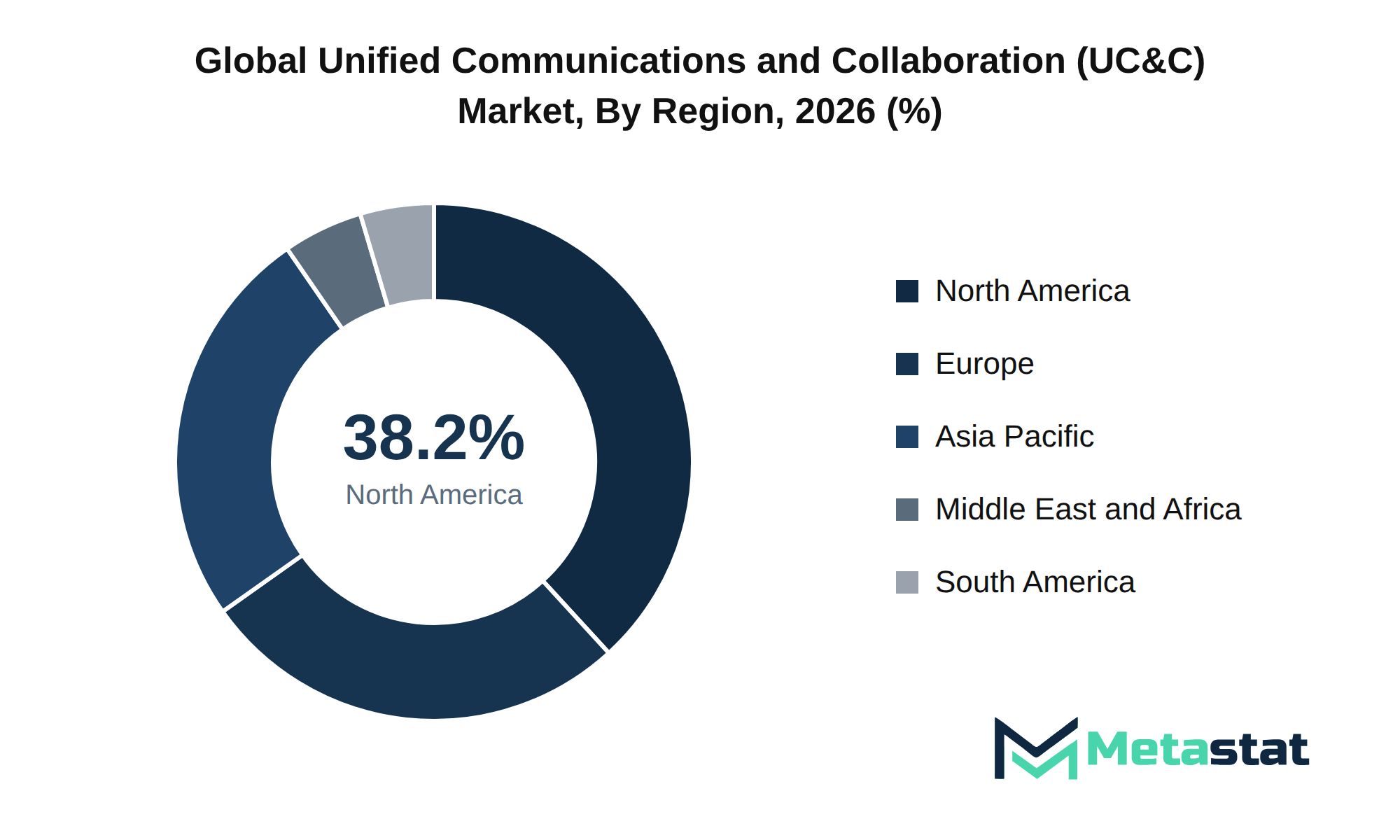
The Unified Communications and Collaboration (UC&C) market features a dynamic competitive environment driven by strategic mergers, acquisitions, and partnerships. Companies including Cisco Systems, Inc. and Microsoft Corporation pursue aggressive go-to-market strategies to enhance product offerings and strengthen market presence. Strategic alliances, including those formed by Google LLC and Amazon Web Services, Inc., facilitate cross-industry collaboration, enabling firms to access new technologies and customer segments.
Product differentiation remains critical, with participants investing in research and development to create proprietary technologies that enhance user experience. For instance, Avaya, Inc. and RingCentral, Inc. focus on innovative solutions that cater to evolving customer demands. The market experiences barriers to entry due to established brands and customer loyalty, with significant switching costs for businesses transitioning between providers, contributing to brand equity dynamics.
The current landscape indicates robust competition, with a notable emphasis on customer retention strategies and value chain integration to maintain operational efficiency. Companies leverage procurement strategies to ensure supply chain dominance, effectively managing costs while maximizing service delivery. Future competitive outlooks suggest continued strategic growth vectors that emphasize technological defensibility and intellectual property portfolios, shaping market dynamics in the coming years.
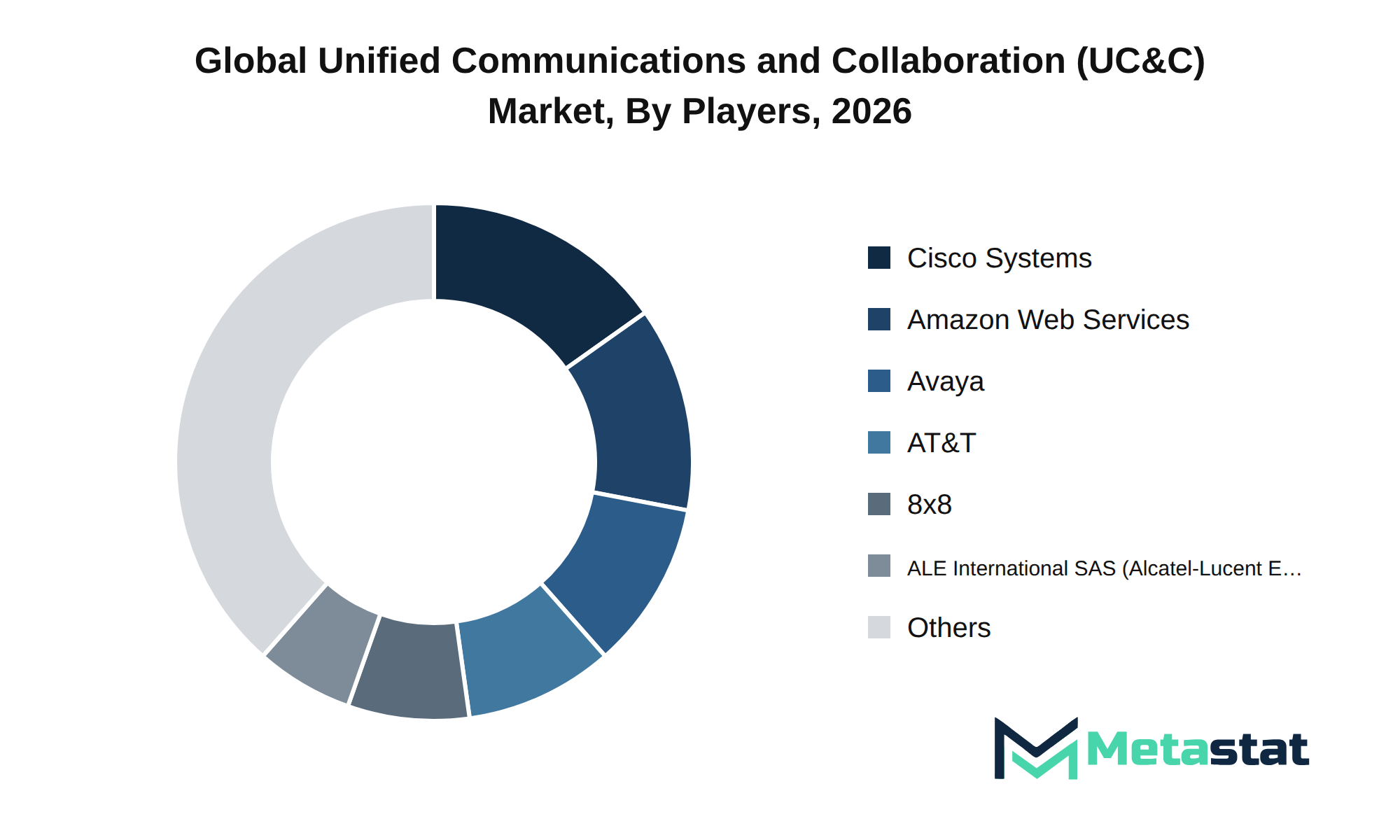
Market size is forecast to rise from USD 73.5 billion in 2025 to over USD 171.9 billion by 2033. The base case is USD 73.5 billion in 2025 to USD 171.9 billion by 2033 at an 11.2% CAGR. Factors including macroeconomic conditions, downstream demand changes, and core industry maturation influence the Unified Communications and Collaboration (UC&C) market trajectory. Next-generation technology integration and R&D commercial timelines contribute to shaping market dynamics, alongside regulatory evolution and compliance milestones that require strategic adaptation by organizations.
Geopolitical realignments and evolving trade corridors affect supply chain shifts that organizations navigate strategically. These shifts create emerging white-space opportunities that address unmet enterprise needs while identifying high-growth pockets for investment. Executive-level strategic imperatives guide firms in developing defensibility roadmaps and future growth recommendations in a competitive environment. Comprehensive planning is essential for leveraging opportunities in the Unified Communications and Collaboration (UC&C) market.
The report strategically identifies and profiles the key market players and analyses their core competencies in each sub-segment of the Unified Communications and Collaboration (UC&C) market.
Report Attributes | Details |
Study Period | 2021-2033 |
Base Year | 2025 |
Estimated Year | 2026 |
Forecast Period | 2026-2033 |
Historical Period | 2021-2025 |
Growth Rate | CAGR 11.2% from 2026 to 2033 |
Revenue Unit | USD billion |
Segmentation | By Solution Type, Deployment Model, Organization Size, End-Use Industry, and Region |
By Region | North America (By Solution Type, Deployment Model, Organization Size, End-Use Industry, and Country)
|
Europe (By Solution Type, Deployment Model, Organization Size, End-Use Industry, and Country)
| |
Asia Pacific (By Solution Type, Deployment Model, Organization Size, End-Use Industry, and Country)
| |
South America (By Solution Type, Deployment Model, Organization Size, End-Use Industry, and Country)
| |
Middle East and Africa (By Solution Type, Deployment Model, Organization Size, End-Use Industry, and Country)
|
Find answers to common questions about this report
The Unified Communications and Collaboration (UC&C) market size was valued at USD 73.5 billion in 2025, according to the Metastat Insights study.
The Unified Communications and Collaboration (UC&C) market is projected to grow at a CAGR of 11.2% during the forecast period from 2026 to 2033.
The North America Unified Communications and Collaboration (UC&C) market size is estimated to reach USD 61.7 billion by 2033.
The segment leading the Unified Communications and Collaboration (UC&C) market is Video Conferencing & Virtual Meetings, with a projected value of USD 32.2 billion by 2033. This segment demonstrates significant growth potential compared to others in the market.
Digital transformation drives the adoption of Unified Communications and Collaboration (UC&C) solutions, with organizations seeking to enhance operational efficiency and improve communication processes. The demand for reliable communication platforms intensifies with the rise of remote work, compelling companies to invest in UC&C technologies that increase productivity and encourage innovation.
North America holds the dominant share of the Unified Communications and Collaboration (UC&C) market, with a projected value of USD 61.7 billion in 2033, representing 38.2 percent of the total market.
Compliance hurdles related to data security and privacy regulations increase operational costs, affecting scalability and profitability. Macroeconomic headwinds, including inflation and supply chain disruptions, restrict investment in Unified Communications and Collaboration (UC&C) technologies. Technological obsolescence and infrastructure gaps hinder effective implementation, contributing to challenges within the market.
Digital transformation drives the adoption of Unified Communications and Collaboration (UC&C) solutions by enhancing operational efficiency and improving communication processes. The increasing demand for flexible work environments and integrated communication tools motivates organizations to invest in UC&C technologies, ultimately boosting productivity and customer satisfaction.
The Unified Communications and Collaboration (UC&C) market is estimated to reach a valuation of USD 171.9 billion by 2033.
Key players operating in the Unified Communications and Collaboration (UC&C) market include 8x8, Inc., Amazon Web Services, Inc., AT&T Inc., Cisco Systems, Inc., Microsoft Corporation, and Mitel Networks Corporation.
The analysts below cover Information & Technology research at Metastat Insights.
LEAD ANALYST
Utkarsh Khirodkar is a Lead Market Research Analyst at MetaStat Insight, specializing in market intelligence, technology sector assessments, and competitive strategy.

PRINCIPAL CONSULTANT - ENTERPRISE AI & EMERGING TECHNOLOGIES
Banking & Finance · Electronics and Semiconductor · Energy and Power · Healthcare IT · Information & Technology · Professional Services
Vijay Gunti is a Principal Consultant at MetaStat Insight, bringing over two decades of experience across enterprise digital transformation, technology strategy, and intelligent systems.

LEAD CONSULTANT - COMMUNICATION, TELECOM, AND IT
Electronics and Semiconductor · Information & Technology · Machinery & Equipment · Professional Services
Ravindra Sathe Consultants for Communication, Telecom, and IT at MetaStat Insight. He leads the firm's industry research initiatives across telecommunications infrastructure, digital connectivity, enterprise networking, and emerging information technology domains.
Replacing petrochemical surfactants with bio-based alternatives requires realistic timelines on industrial precision fermentation scaling. The market research broke down commercialization timelines, feedstock sugar price sensitivities, and regional cosmetic ingredient regulatory approvals in Europe and East Asia. That supplier readiness mapping gave our formulations team reliable context when comparing renewable chemical sourcing roadmaps.
Tracking ceramic matrix composite adoption in high-bypass aero engines requires strict attention to material qualification cycles and FAA airworthiness testing milestones. The MetaStat Insight team provided a detailed timeline of silicon carbide fiber manufacturing capacity and commercial foundry lead times. Having clear visibility into upstream thermal barrier coating supply helped us stress-test our long-term component procurement strategy.
Transitioning ultra-class mining haul trucks to alternative power requires concrete data on remote hydrogen refueling infrastructure economics. The report evaluated megawatt-scale electrolyzer installation expenses, onsite storage safety mandates, and heavy-duty fuel cell stack degradation under continuous duty cycles. That technical rigor helped our engineers benchmark realistic total operating cost horizons for off-highway fleet decarbonization.
Explore related market intelligence reports worth reading alongside this one.
Starting from
$2950